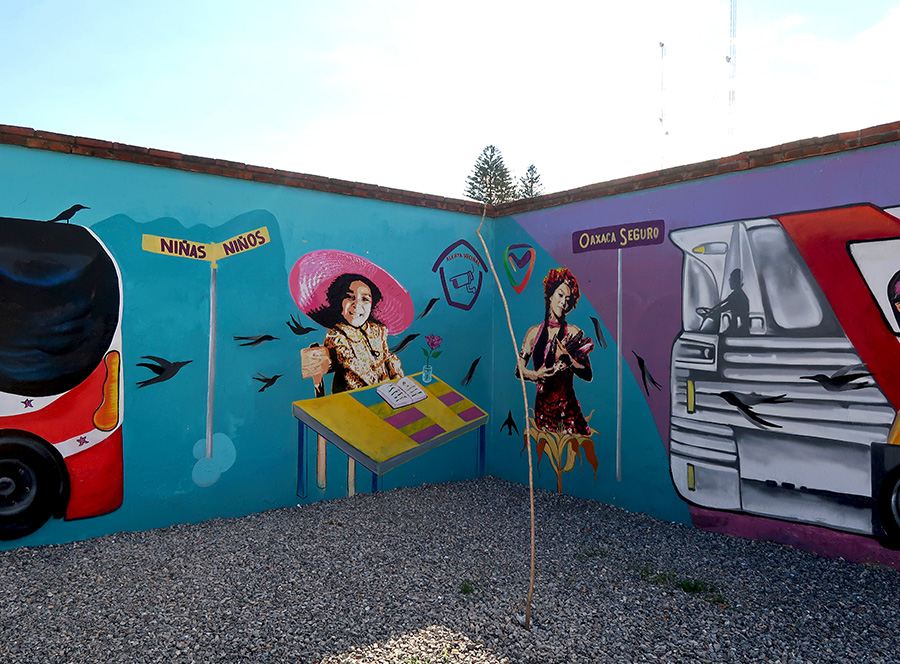
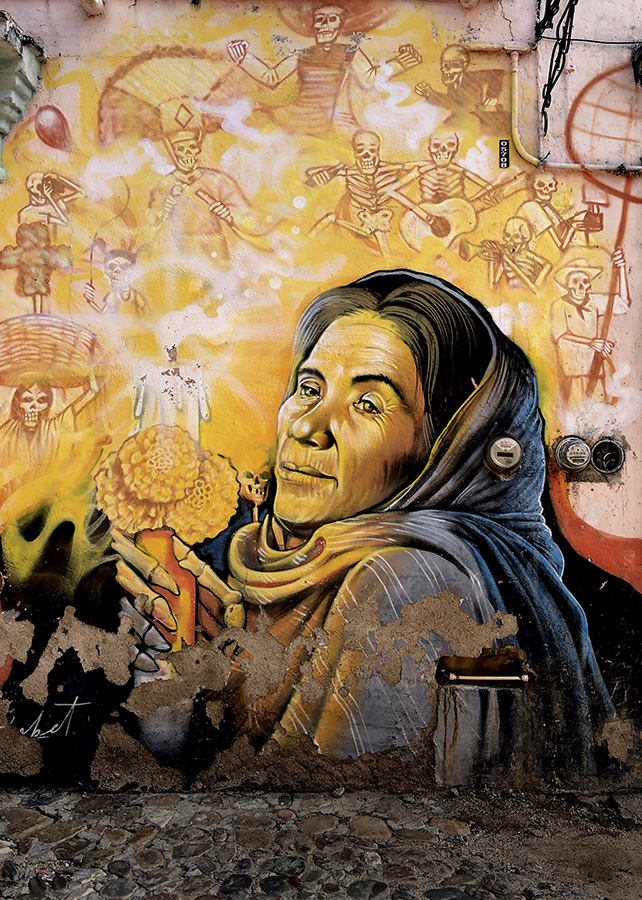
Mural by the Mad In crew celebrating the life of María Antonieta Chagoya Méndez, a lawyer who, among many other notable activities, shared her legal knowledge with civil associations and founded the Rotary Center for Autism Intervention, which served children with special needs.
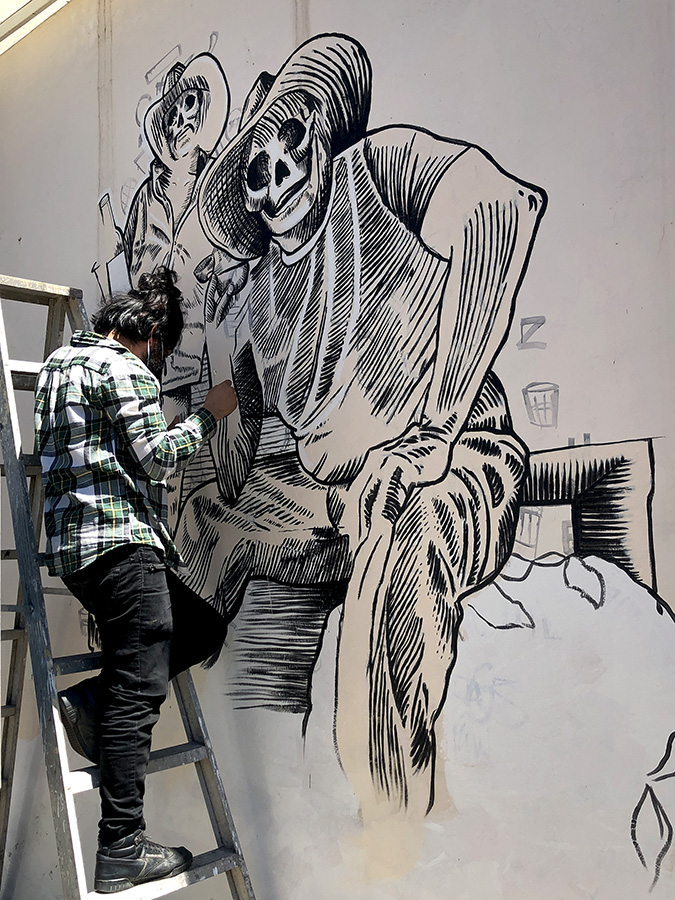
Three days ago, as I was walking up Calle 5 de mayo in Barrio de Jalatlaco to pay my cable TV bill, I came upon an artist at work.
This afternoon, I retraced my steps to see if the artist known as HAZHE IS had completed this newest mural in the neighborhood.
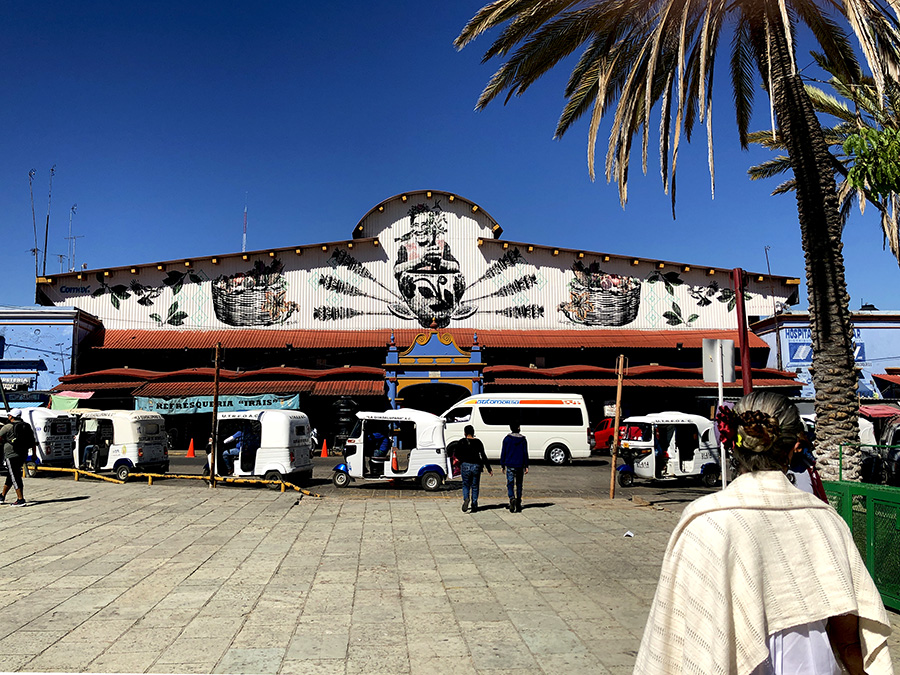
I don’t know if it’s finished, but I do know (IMHO) it is a welcome (and welcoming) addition to the view when departing the ADO bus station across the street. ¡Salud!
Last Thursday my BFF took me on an out-of-the-city birthday excursion. She hired a by-the-hour driver, picked me up a little after 9:00 AM, and off we went. Our first stop was Ocotlán de Morelos and besides wandering through the mercado, we stopped at the Municipal Palace to take in the magnificent murals painted by Rodolfo Morales in 1955 celebrating the four hundredth anniversary of the founding of Ocotlán. The murals, which honor its beauty, bounty, and people take up the entire room, including the ceiling.
Main entrance to the mercado in Ocotlán de Morelos.
Doorway murals by Rodolfo Morales in the Ex-Sala del Cabildo, Ocotlán de Morelos.
Murals by Rodolfo Morales in the Ex-Sala del Cabildo, Ocotlán de Morelos.
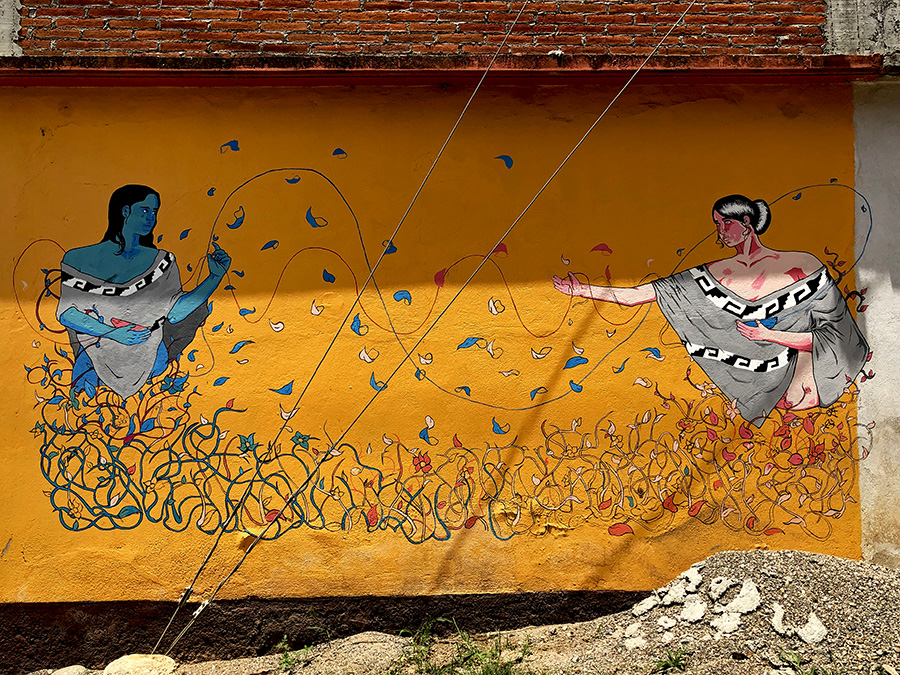
Next on the day’s agenda was San Antonino Castillo Velasco. As its murals remind one, this is a town famous for its floral embroidery and empanadas de amarillo. I should add, it is also known for Taller Manos Que Ven, the home and workshop of clay sculpture Don José Garcia Antonio (aka, the Blind Potter) and his lovely wife and inspiration, Doña Teresita de Jesús. We did a little clothes shopping (thank you, Miriam Campos), ate empanadas, and stopped in to say “hola” to the aforementioned, Don José and Doña Teresita — where we also made a couple of purchases.
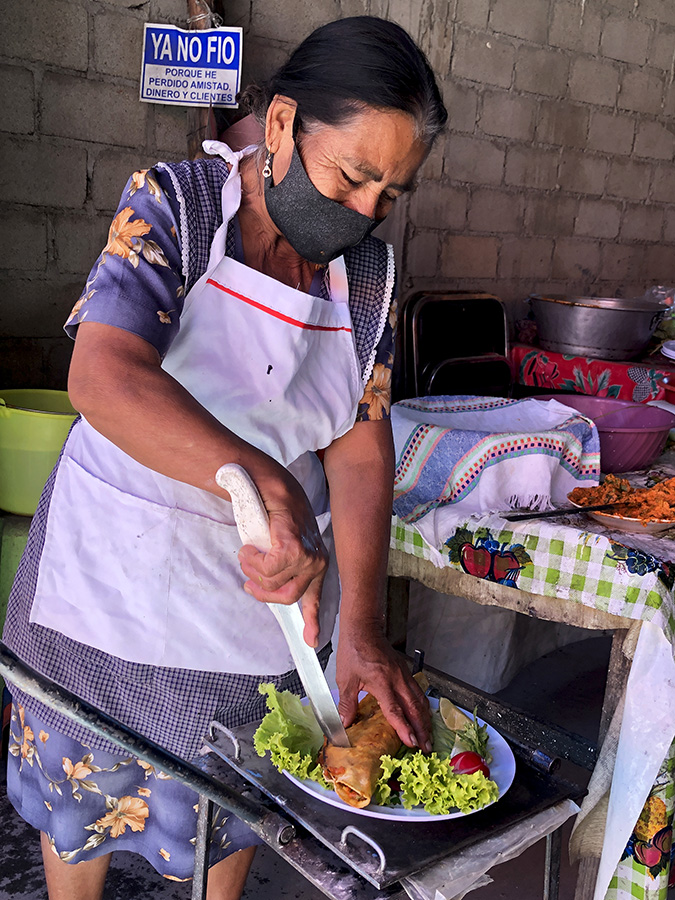
Empanadas de amarillo, San Antonino Castillo Velasco.
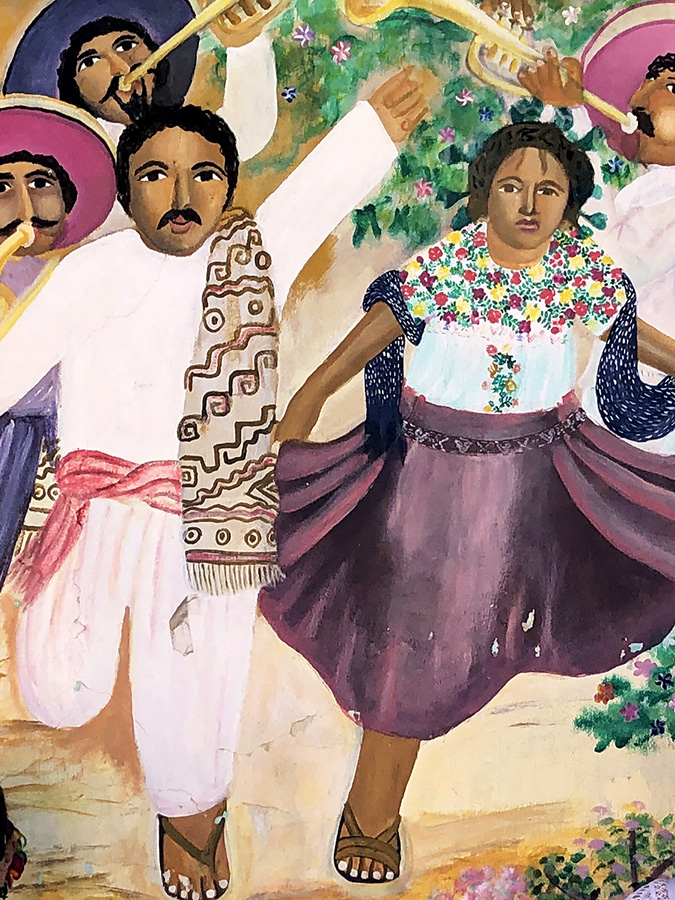
Mural in San Antonino Castillo Velasco.
Mural in San Antonino Castillo Velasco.
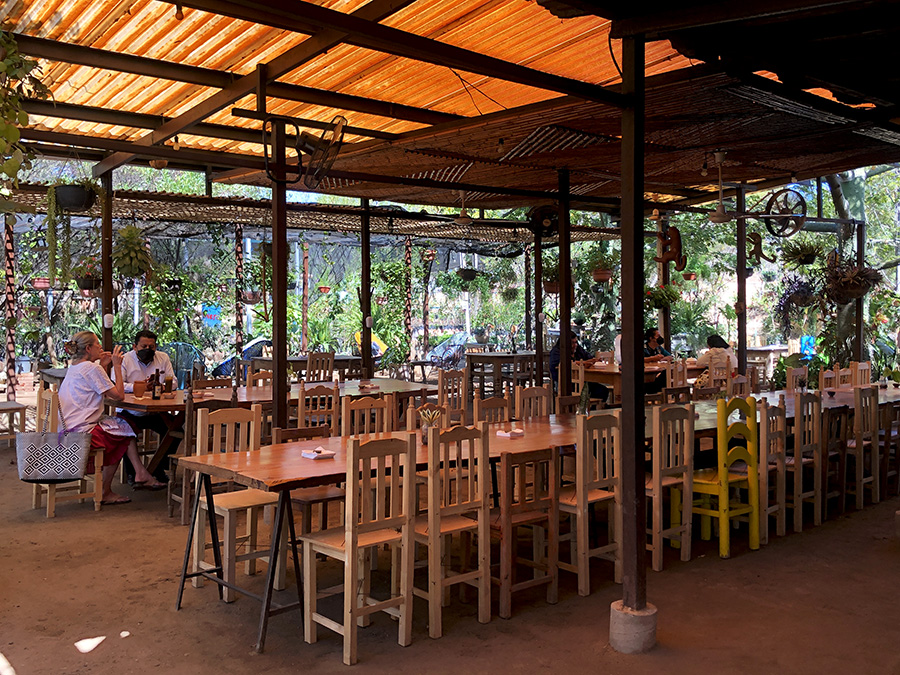
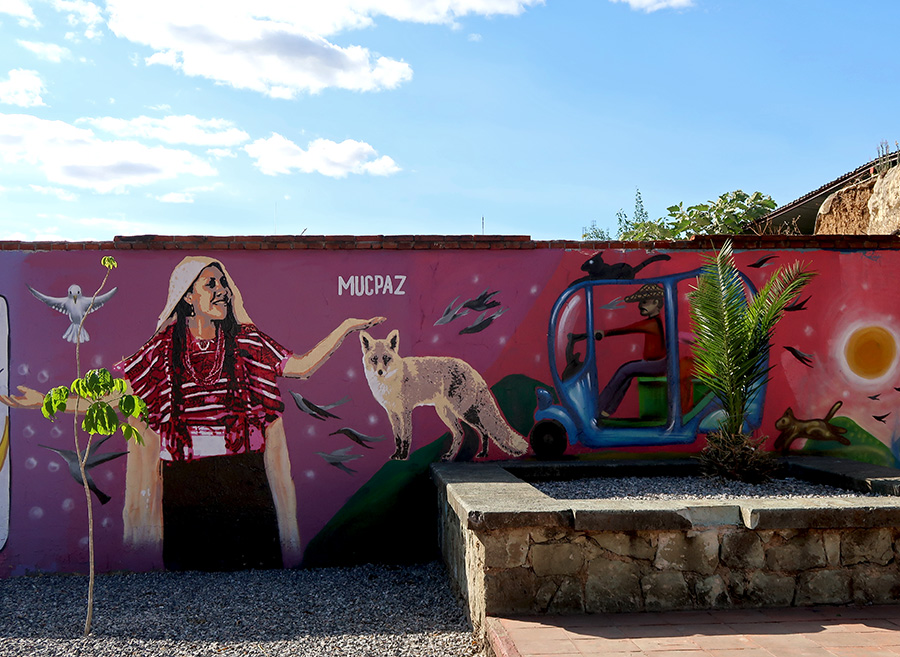
Our final stop of the day was for comida at the new open air restaurant and vivero (nursery), Almú, set in a reforestation campo (field) in San Martín Tilcajete. Murals throughout the town reflect a village celebrated for its woodcarving and colorful painting of masks and alebrije and where moto taxis (tuk-tuks) are a common form of transportation for locals.
Dining area of Almú restaurant in San Martín Tilcajete.
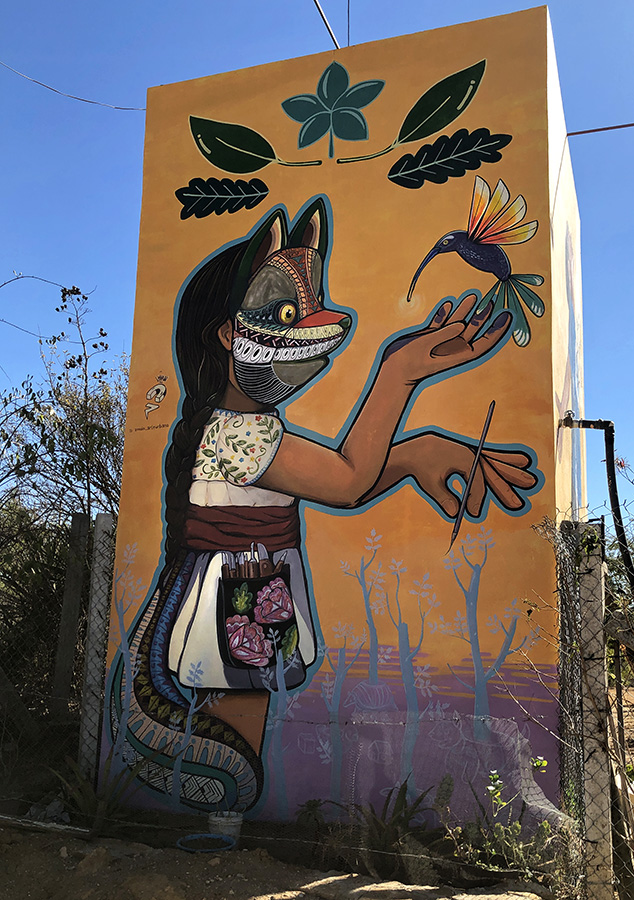
Mural in San Martín Tilcajete.
Mural in San Martín Tilcajete.
It was a delightful, delicious, and art filled day!
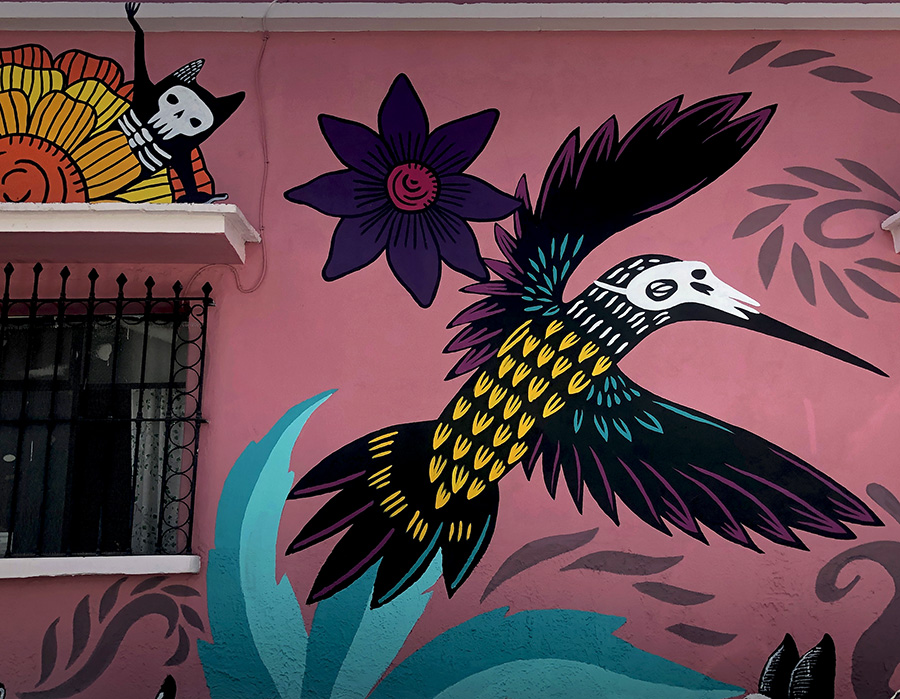
It’s been a crazy busy visit to el norte gratefully sprinkled with some fun with family and friends. However, now I’m getting ready for my return to Oaxaca and the hummingbirds in my Jalatlaco ‘hood.
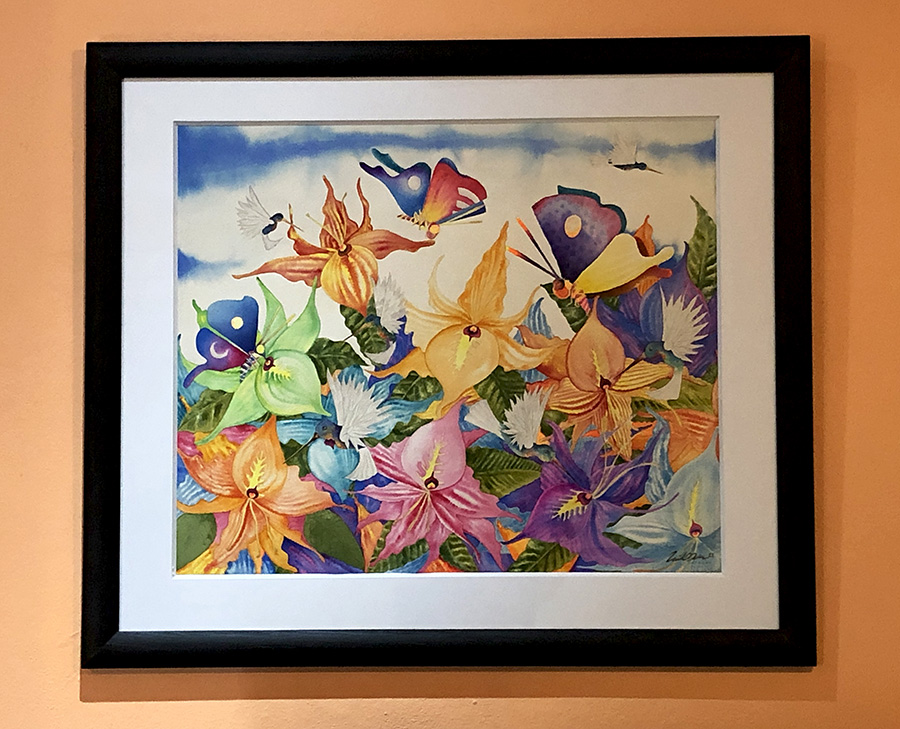
The last image is a commissioned watercolor by Raul Baños hanging in my living room. How many colibríes (hummingbirds) can you see?
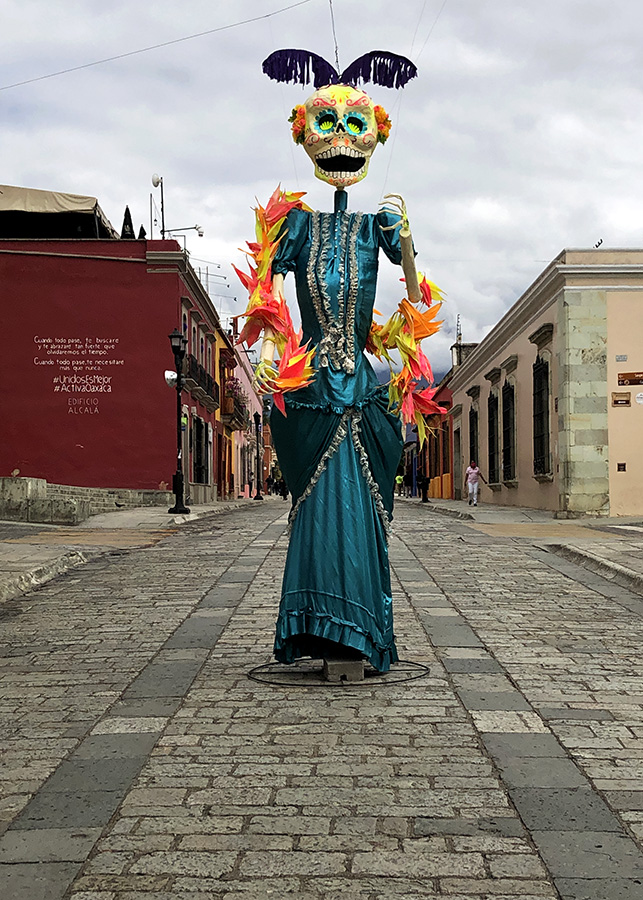
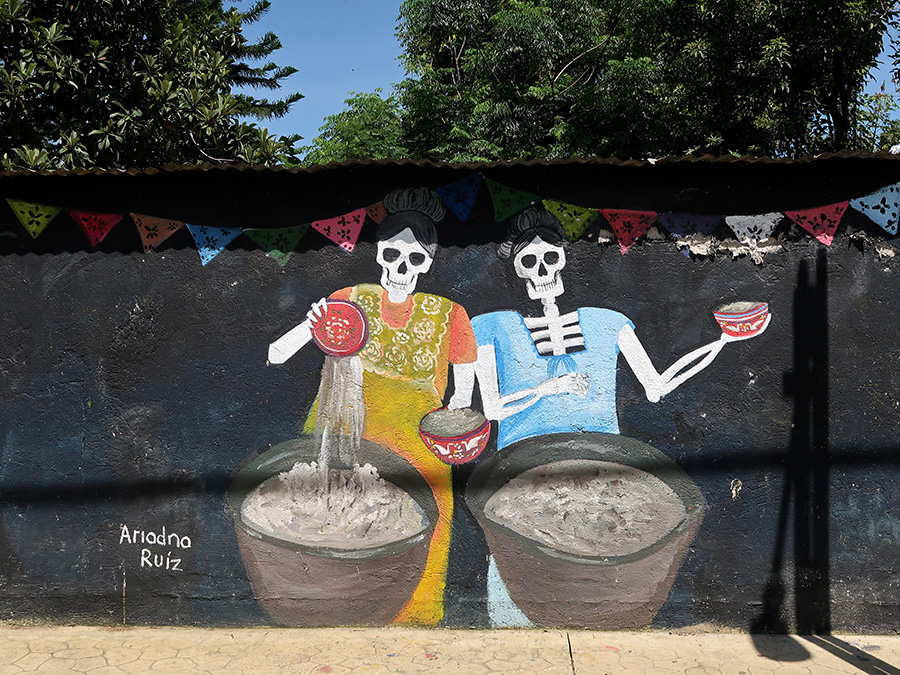
Oaxaca is getting ready for the annual arrival of her difuntos (souls of the dead), so a pause in the Day in the country posts is in order. Blue sky or grey, ran or shine, and village or city, they come…
Oaxaca City
Villa de Zaachila
Villa de Zaachila
They come to eat and drink…
Villa de Zaachila
Oaxaca City
Villa de Zaachila
They come to sing and dance, contemplate life and death, and be with loved ones.
Villa de Zaachila
Villa de Zaachila
Oaxaca City
Our hearts are filled with joy to welcome them to the fiesta we have lovingly prepared in their honor.
Thursday is market day in Villa de Zaachila. Thus, once we turned off the carretera, we crawled our way into town joining scores of other cars, trucks, tuk tuks, motorcycles, bicycles, pedestrians, dogs, and the occasional goat. The scenes were pure country village. Once parked, we meandered our way along the street stalls, stopping to examine their wares and chat with vendors.
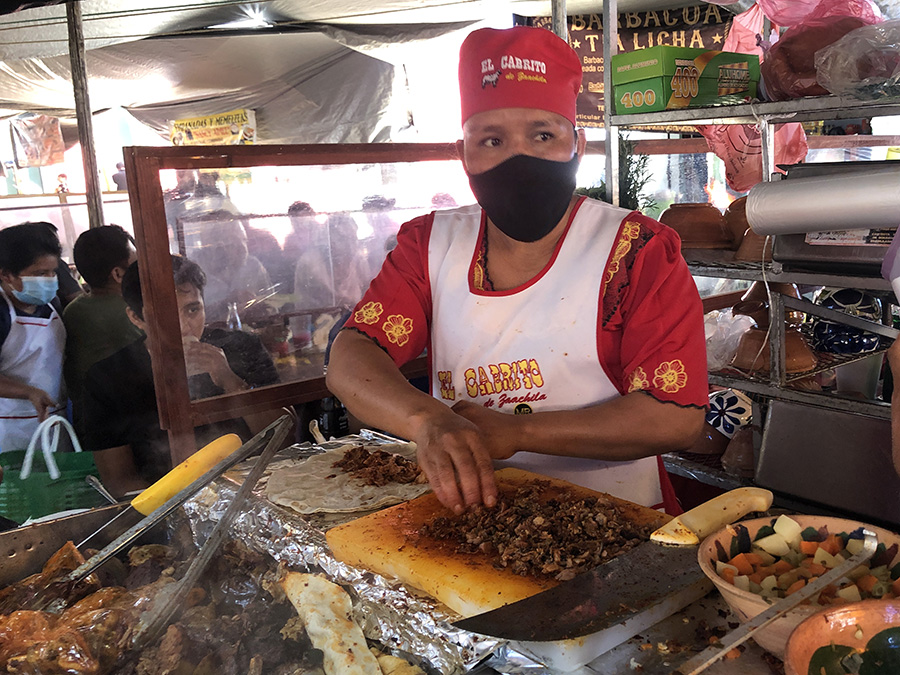
However, our stomachs were grumbling and our trajectory was set — Zaachila’s mouthwatering barbacoa de chivo (goat) beckoned!
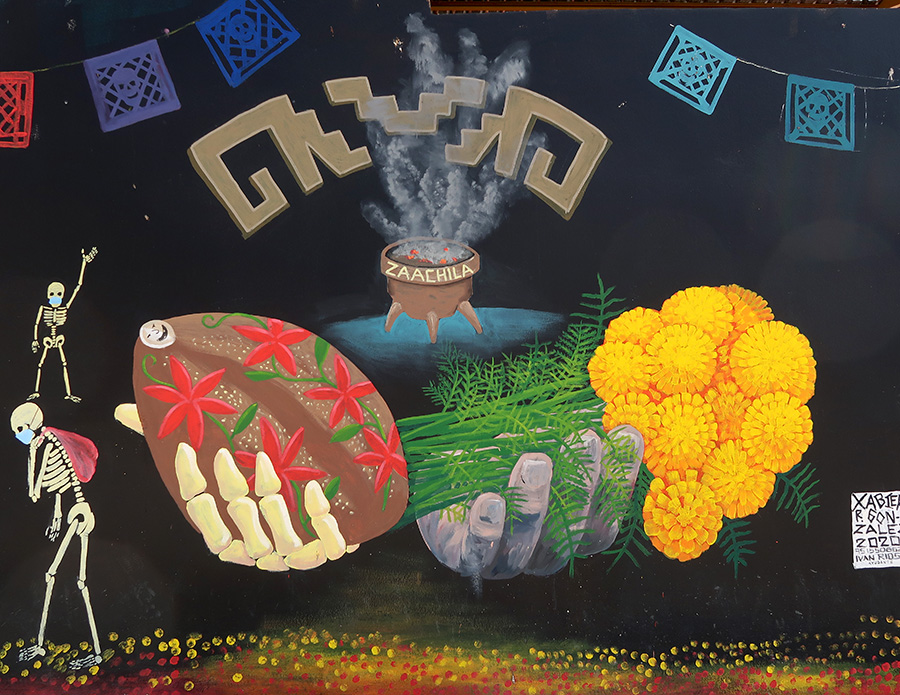
Once sated, we went in search of Zaachila’s beautifully decorated pan de muerto (Day of the Dead bread). It was still a little early in the season but, zigzagging up and down the bread aisles, we eventually found a couple of vendors and bought a few to be placed on our ofrendas.
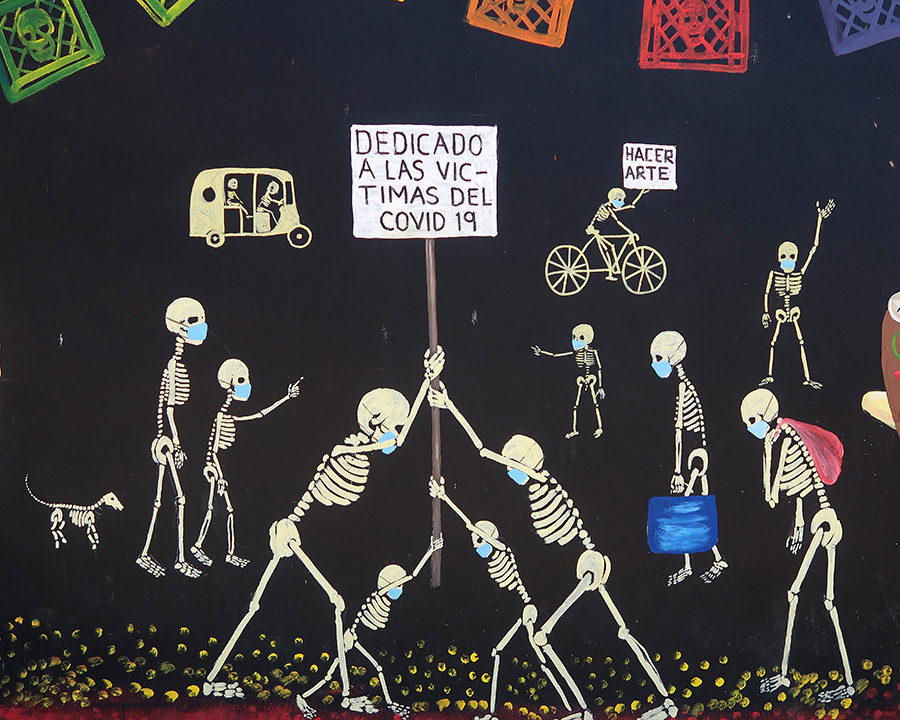
Being members of the “clean plate club” and needing to walk off our very filling lunch, we walked toward the Templo de Santa Maria de la Natividad to begin the Muertos mural walk to the Panteón. However, before even reaching the church, we were stopped in our tracks by this massive and incredibly moving mural dedicated to the victims of Covid-19.
New Day of the Dead murals had been painted along calle Coquiza since I was last in Zaachila two years ago and I will post pictures later. In the meantime, next stop — a mezcal palenque in Zimatlán de Álvarez.
Sometime last night, the recently inaugurated mural by the Tlacolulokos was defaced. And we are left asking, why?
The message, purportedly by anarchists (given the presence of their symbol) is calling the artists “Oaxaca indigenous traitors.” Due to their collaboration on the mural with the Canadian government??? I don’t know. But what I do know is that I am sad and angry at this attack on the right of artists to create without censorship or intimidation.
Update: The mural has been repaired. However, click HERE for a communiqué regarding why it was defaced.
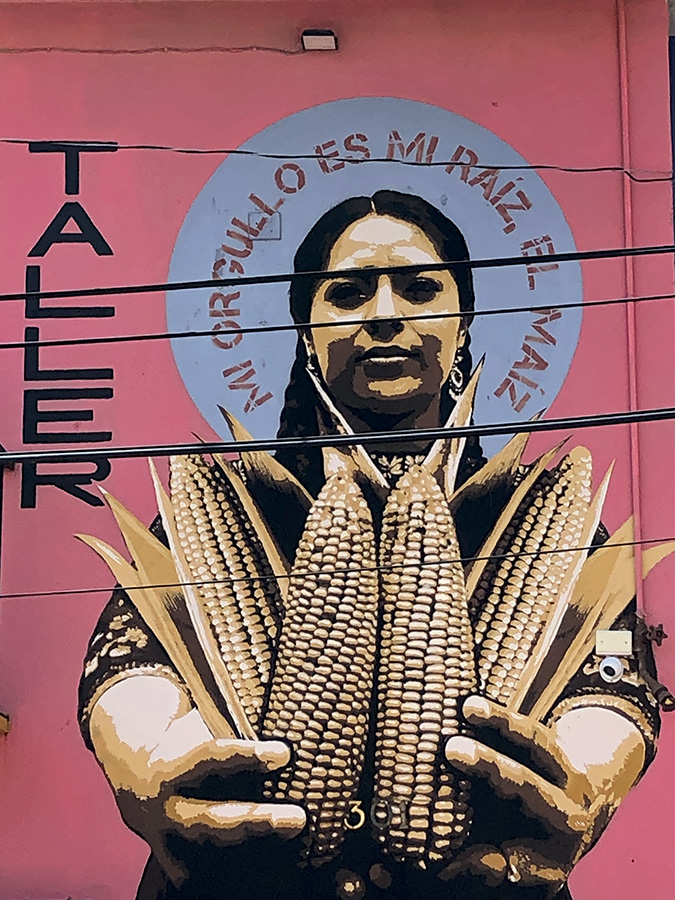
Mi orgullo es mi raiz, el maíz (My pride is my root, the corn).
But what would corn be without the hands that have cared for it for hundreds of years. — CONABIO (National Commission for the Knowledge and Use of Biodiversity)
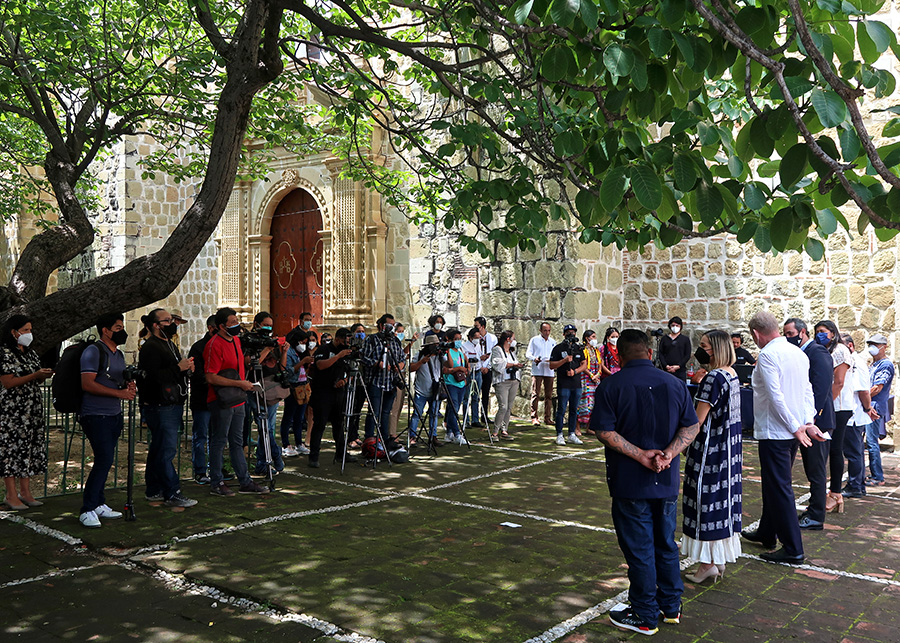
Under the shade of the 361 year old Coquito de la Iglesia de Jalatlaco tree, onlookers (and bloggers like yours truly), dignitaries, media, and the artists of the Tlacolulokos collective gathered for the inauguration of the previously mentioned new mural in Jalatlaco.
“Nuestro sol se ha ido” mural in Barrio de Jalatlaco.
The mural, “Nuestro sol se ha ido” (Our sun has gone) is a collaboration between Rolande Souliere of the “Anishinaabe” people in Canada and the Zapotec Tlacolulokos urban art collective from Oaxaca’s central valley.
Indigenous Encounter Canada/Mexico, “Our sun has gone” by Tlacolulokos and Rolande Souliere.
Media and dignitaries gathered in the atrium of the Templo de San Matías Jalatlaco.
Unfortunately, Rolande Souliere could not travel to Oaxaca. However she described some of the symbolism of the mural: “We decided to portray the mythological beings of the Canadian thunderbird and the Zapotec deity of the Cosijo throne, these fantastic beings are responsible for the thunder and rain that the world experiences and that come together thanks to the clouds…. symbolic imageries such as Zapotec patterns, the route of thunder and the four directions of the first nations represented by the colors red, black, yellow and white… important signifiers in both communities since they represent the continuation of indigenous culture in contemporary society.”
Inaugural ribbon cutting (Canadian Ambassador wearing white shirt in center and artist Dario Canul on the far right) for the “Nuestro sol se ha ido” mural.
Dario Canul, representative of the Tlacolulokos colective further explained, “The mural, ‘Our sun has gone,’ is a representation of celebration, life, rain, thunder, and tears that all indigenous peoples have shed over time.”
Drone filming the inauguration of the “Nuestro sol se ha ido” mural.
The inauguration launched the 2-1/2 week long Encuentros indígenas: Canadá-Oaxaca 2021 (Indigenous encounters: Canada-Oaxaca 2021) — a series of activities in Oaxaca city and surrounding villages — that runs from September 20 to October 8, 2021.
Tlacolulokos artists in front of the mural, “Nuestro sol se ha ido” mural.. Dario Canul (center).
In remarks by Graeme C. Clark, the Canadian Ambassador, at the inaugural event and reports from this article, the collaboration seems to be an expression of the mea culpa by the Canadian government with regard to their historic treatment of the first peoples of the territory that is now called Canada. Better late than never. The indigenous peoples of the USA are still waiting.
Today, I decided to change up what has become my Friday shopping routine. Instead of walking north to the fruit and veggie vendor, I headed south to explore the Friday tianguis — relocated from Llano Park a couple of years ago and now residing near the Polideportivo.
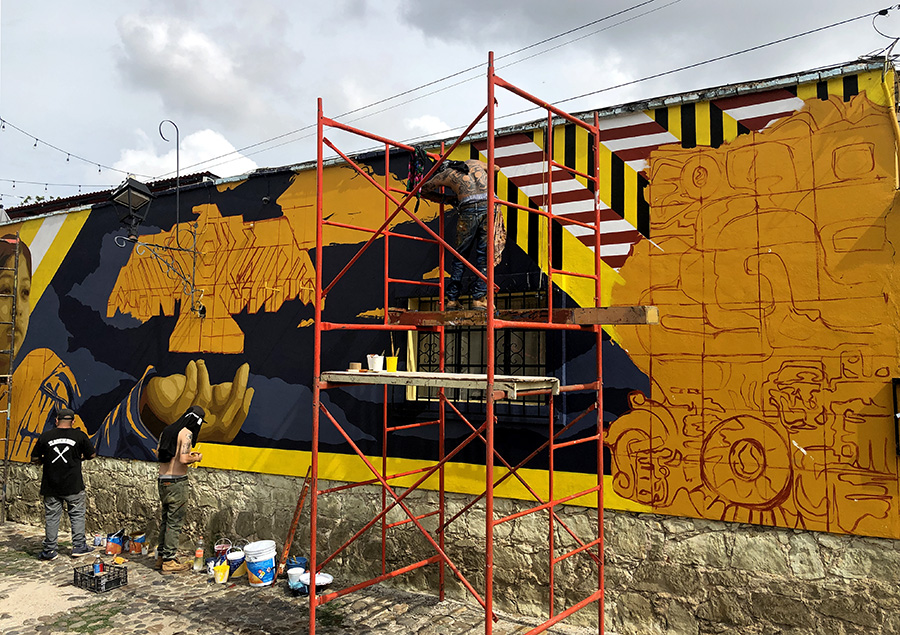
And, what an excellent decision it was! Only blocks from home, I came across a massive mural in progress on Calle de la Noche Triste at the corner of Calle Ignacio Aldama.
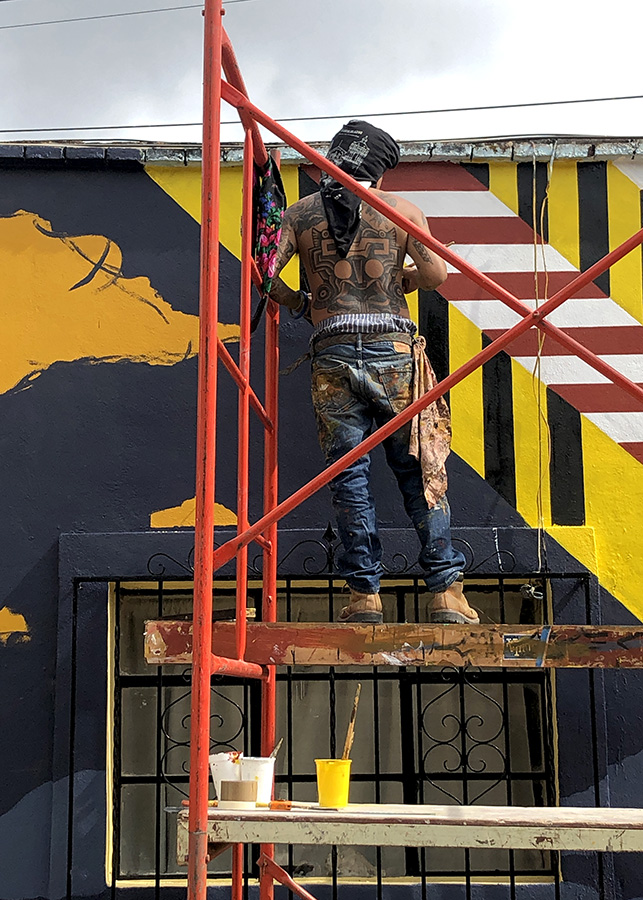
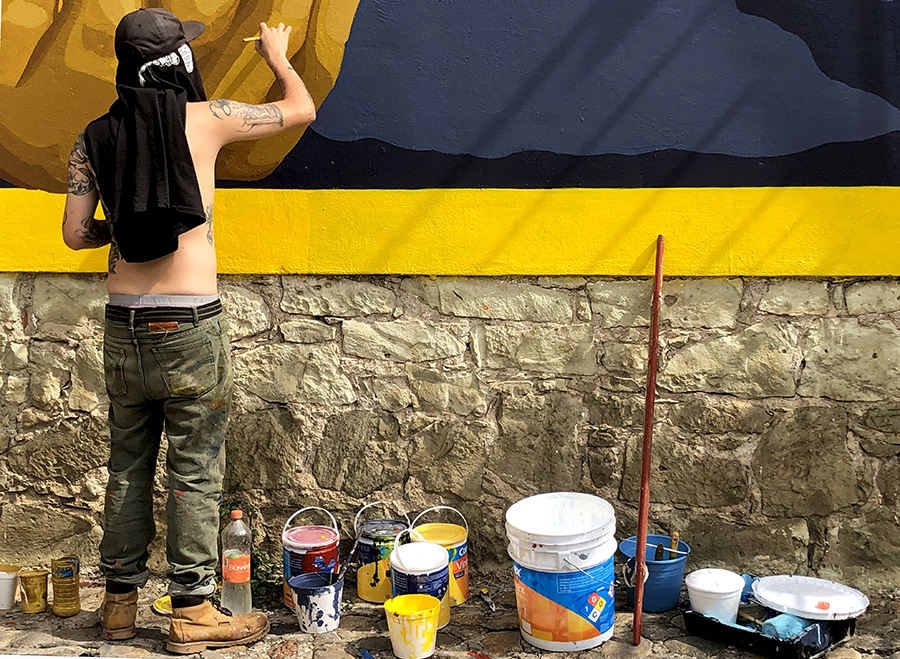
With scaffolding and tools of the trade in place, men were at work.
The style looked familiar, so I stopped to ask, and discovered they were the Tlacolulokos – my favorite artist collective from Tlacolula de Matamoros!
I think the guy I spoke to was a bit taken aback to find that this gringa was quite familiar with their work — including the murals for the Downtown Central Library in Los Angeles, California. Stay tuned…
In the first chapter of The Labyrinth of Solitude, Octavio Paz reflects on the face of an old man… “features are seen as a face, and later as a mask, a meaning, a history.”
Mural seen on Calle de Narciso Mendoza in Barrio de Jalatlaco.
And John Dalberg-Acton wrote, “History is not a burden on the memory but an illumination of the soul.”
Unsurprisingly, on Monday Oaxaca went back to Covid-19 Semáforo Naranja (orange traffic light) — meaning there is a high risk of contagion of the virus. On Wednesday, it was reported there were 479 new COVID-19 patients, the highest figure of the year.
Unfortunately, having had to run a few errands over the past few days, I haven’t seen any changes in people’s behavior, business/government/museum closings, nor enforcement of the mask wearing mandate — only an announcement by the archbishop that churches would be limited to 25% capacity.
It is demoralizing and infuriating and all I can do is continue to wear a cubreboca (face mask) whenever I’m out and about, practice social distancing, and try to stay sane. As for the latter, I’m choosing to concentrate on and appreciate my favorite things.
People, real and imagined, waiting for the bus on Av. Benito Juárez.
Ensalada de pulpo (Octopus salad) at Barrio de Jalatlaco Restaurante.
A turquoise building, meters, and mural on Calle La Alianza in Barrio de Jalatlaco.
Water lily in the pond of Museo de Filatelia de Oaxaca (Stamp Museum).
We are all tired. However, unless people take this extremely seriously, get vaccinated, and continue to mask up and practice social distancing, “normal” will not return and our fellow humans (including loved ones) will needlessly continue to suffer and die. As a current meme suggests, let us all practice humility, kindness, and community.
The pandemic hit soon thereafter and my adventures outside the city ceased.
Needless to say, I got a little emotional as I reconnected with sights, sounds, and, most of all, friends.
There wasn’t nearly enough time to check in with everyone as we (visitors from California and I) had been invited for comida at Tierra Antigua.
We spent hours and hours dining on delicious food prepared by Carina Santiago and her staff and catching up with her family and Kalisa, who is now based in Teotitlán.
However, now that I and many of my older friends in Teotitlán are fully vaccinated, I will be back soon!


































 Mexican Peso Converter

 View From Casita Colibrí