Feeds:
Posts
Comments

Posts Tagged ‘marigolds’

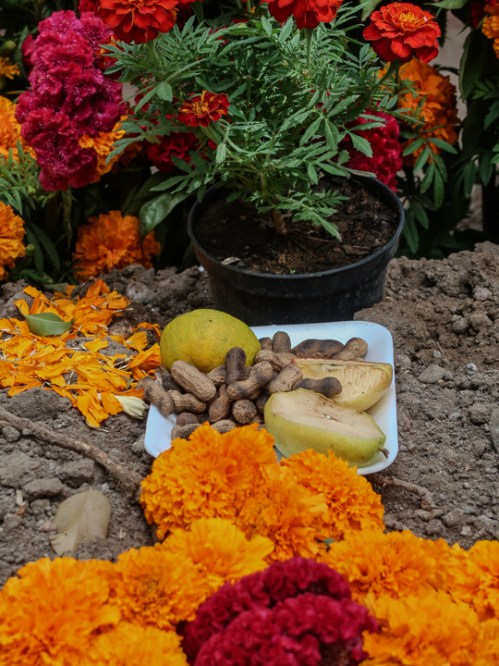
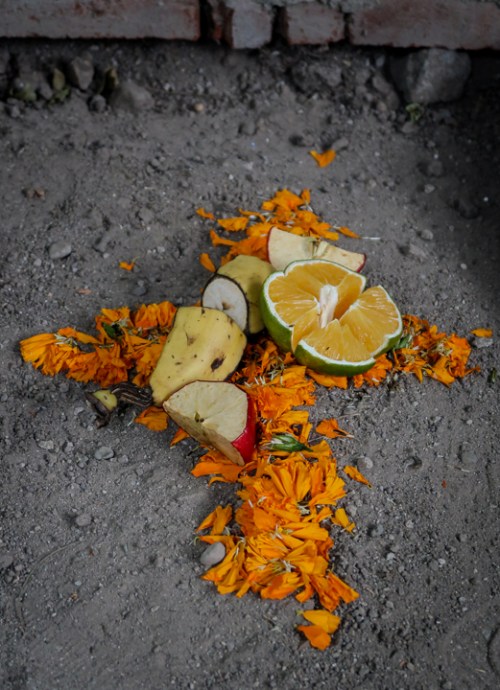
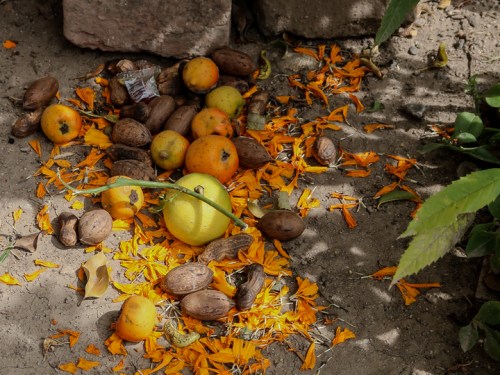
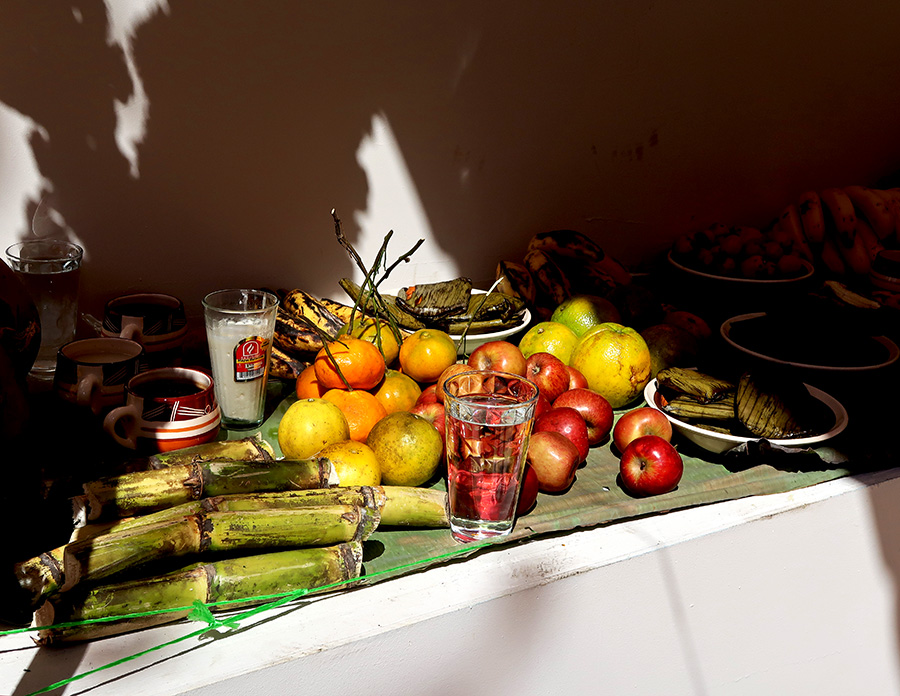
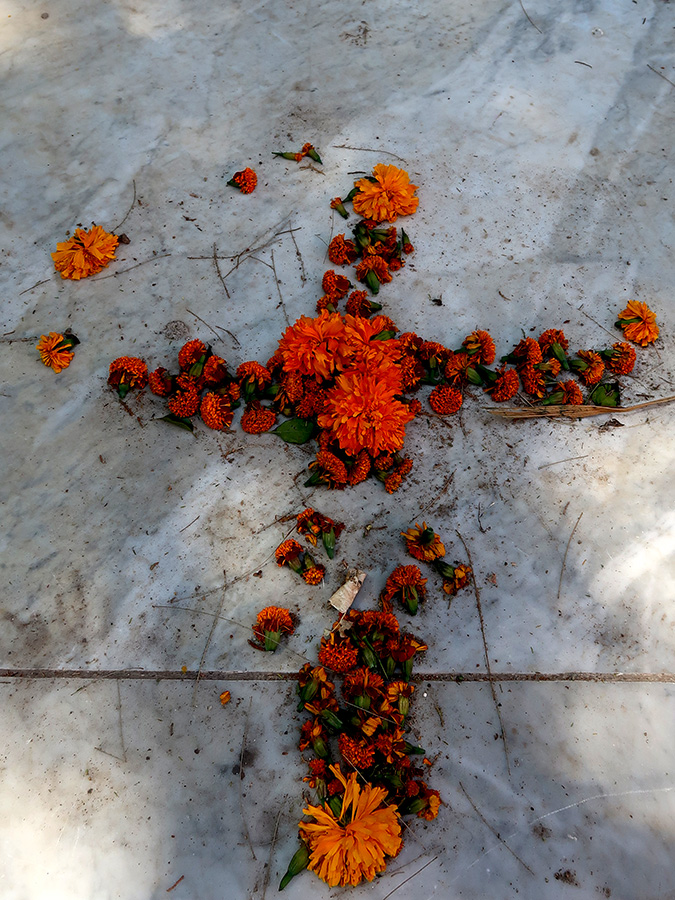
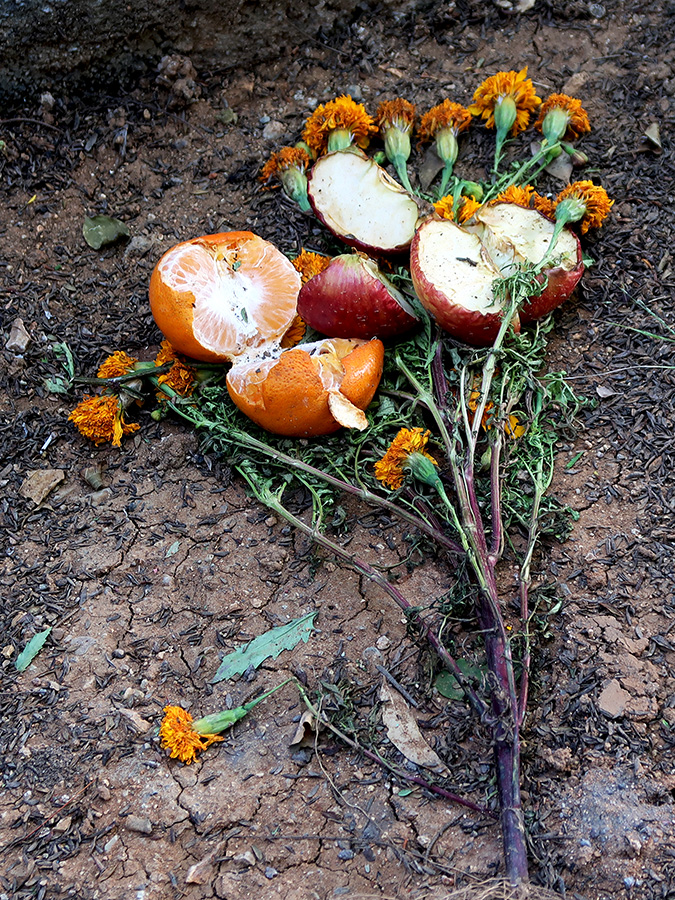
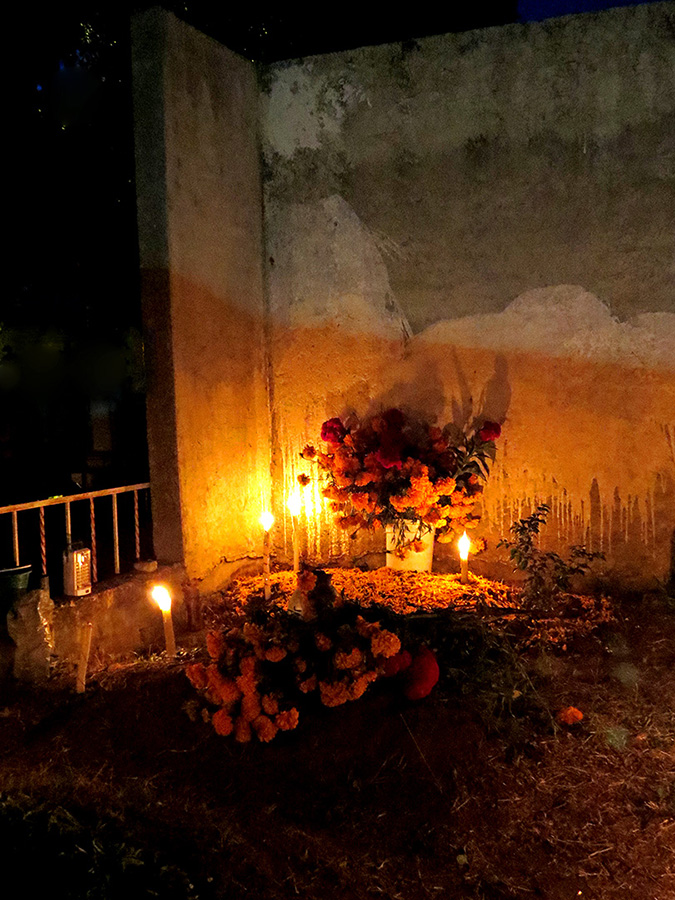
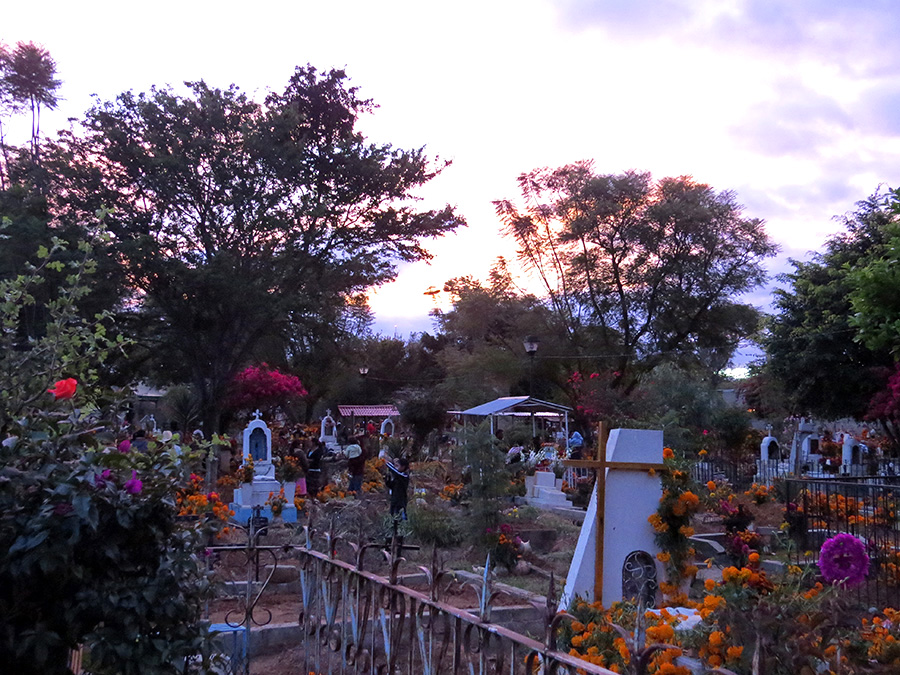
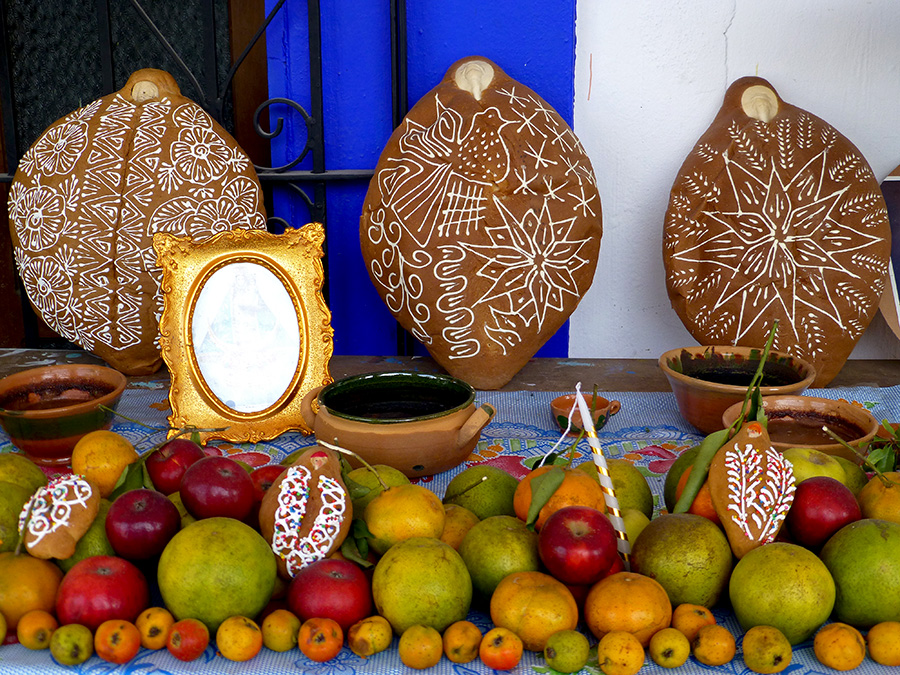
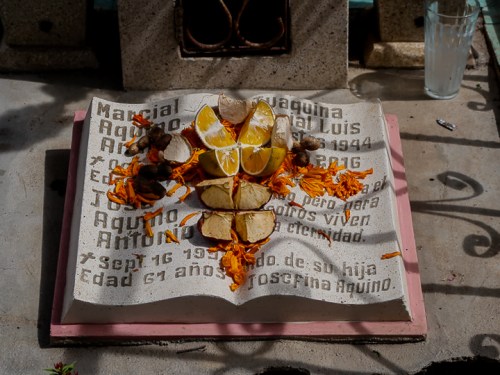
During Día de Muertos (Day of the Dead), under the sun dappled light filtering through graceful several centuries old ahuehuete trees in the panteón of Tlacolula de Matamoros, the living offer the scent of cempasúchil (marigolds) to guide their departed home. And, to nourish them during their journey between the worlds of the living and the dead, fruit (thoughtfully opened), along with nuts and beverages are provided.

The fruit and flowers during Día de Muertos also beckon me to this Zapotec village in the Valley of Oaxaca and they nourish my soul.

Read Full Post »

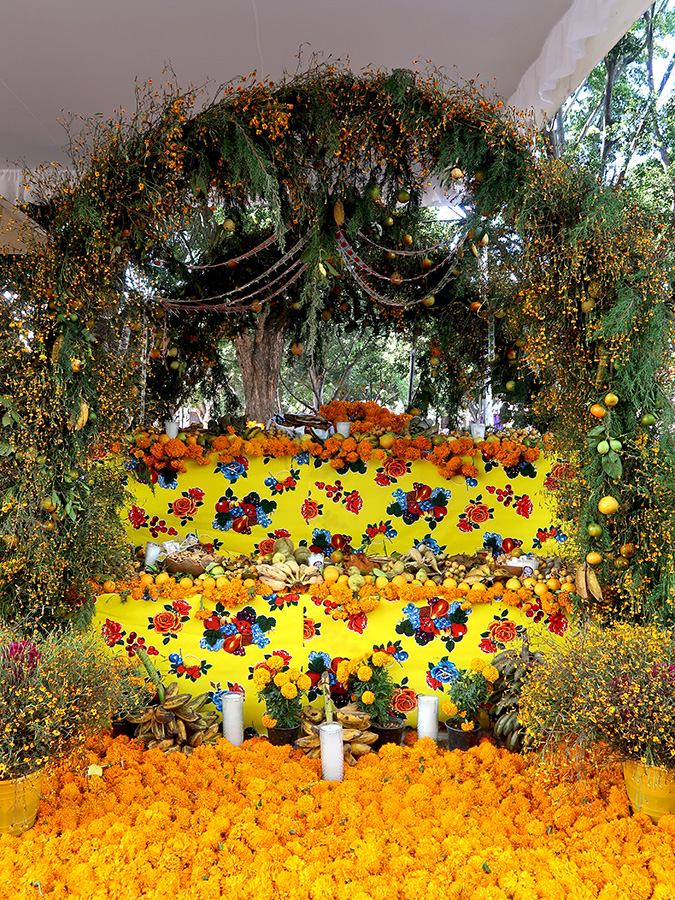
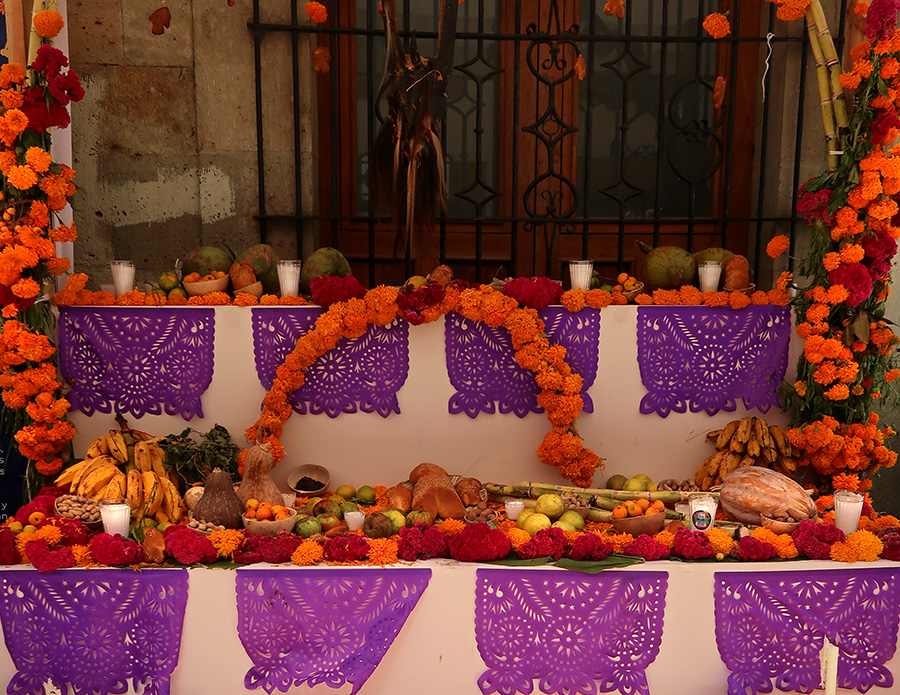
Oaxaca is alive with preparations for Día de Muertos and the Zócalo is filled with altars from her indigenous and Afromexican communities.

Zapoteco – San Melchor Betaza, Oaxaca – Altar Bkog Tse Bene Wat
Náhuatl – Santa María Teopoxco, Oaxaca – Tlamanal-Miquilistle
Cuicateco – San Juan Bautista Cuicatlán, Oaxaca – Altar Cuicateco
Amuzgo – San Pedro Amuzgos, Oaxaca – Altar Ncué Ndó’ Tzjón Noán
Mixe – Santa María Tlahuitoltepec, Oaxaca
Zapoteco – Santo Domingo Tehuantepec, Oaxaca
Mixteco – Villa de Tamazulápam del Progreso, Oaxaca
Mazateco – Huautla de Jiménez, Oaxaca – Altar El Portal
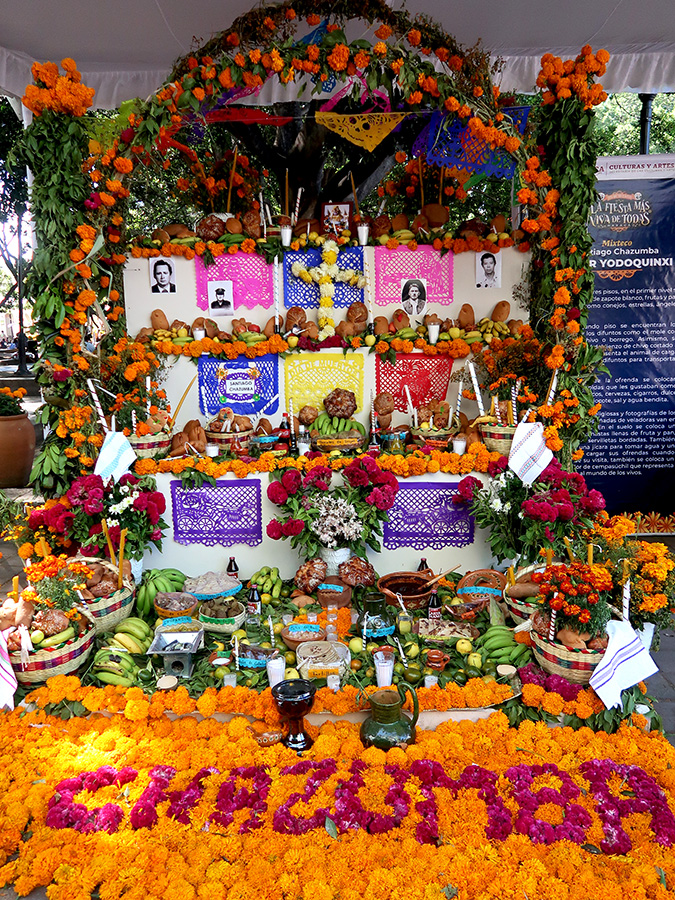
Mixteco – Santiago Chazumba, Oaxaca – Altar Yodoquinxi
Chatino – Santiago Yaitepec, Oaxaca – Mesa de las Ánimas
Mixtecos Ñuu Savi – Santiago Ixtayutla, Oaxaca
Chontal – Santiago Astata, Oaxaca
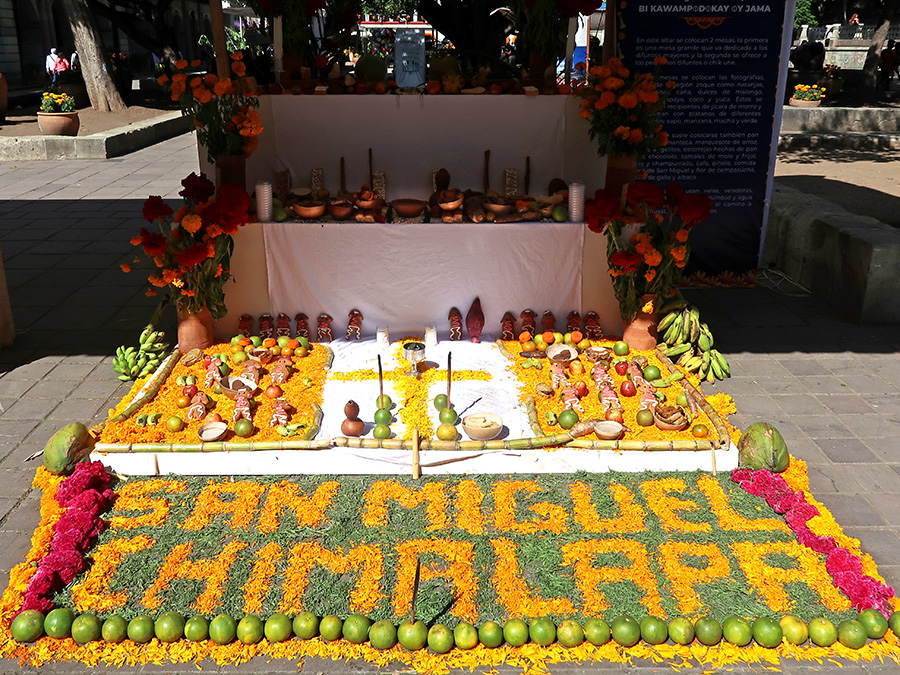
Zoque – San Miguel Chimalapas, Oaxaca – Bi KawampΦdΦkay Φy Jama
Chinanteco – San Juan Bautista Valle Nacional, Oaxaca – Altar Tradicional Chinanteco
Triqui – San Juan Copala, Oaxaca – Altar Se Inaj Xhi Aj
Mazateco – San Pedro Ixcatlán, Oaxaca – Altar Autóctono
Ikoots – San Mateo del Mar, Oaxaca – Altar De Tikambaj
Pueblos Afromexicanos – Altar de los Pueblos Afromexicanos de la Costa de Oaxaca

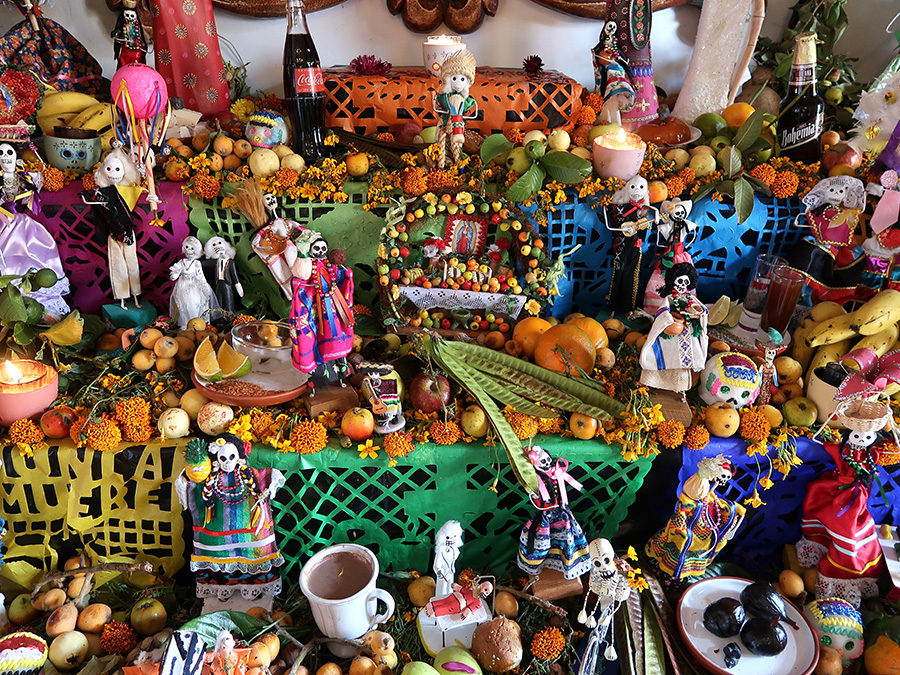
The scent of cempasúchil (marigolds) fills the air and beckons the difuntos (souls of the departed) to eat, drink, and be merry with their living loved ones.

Read Full Post »

Under the sun dappled light filtering through the 500 year old ahuehuete trees, there was stillness and peace.

November 2, 2022 in the panteón of Tlacolula de Matamoros.

Read Full Post »

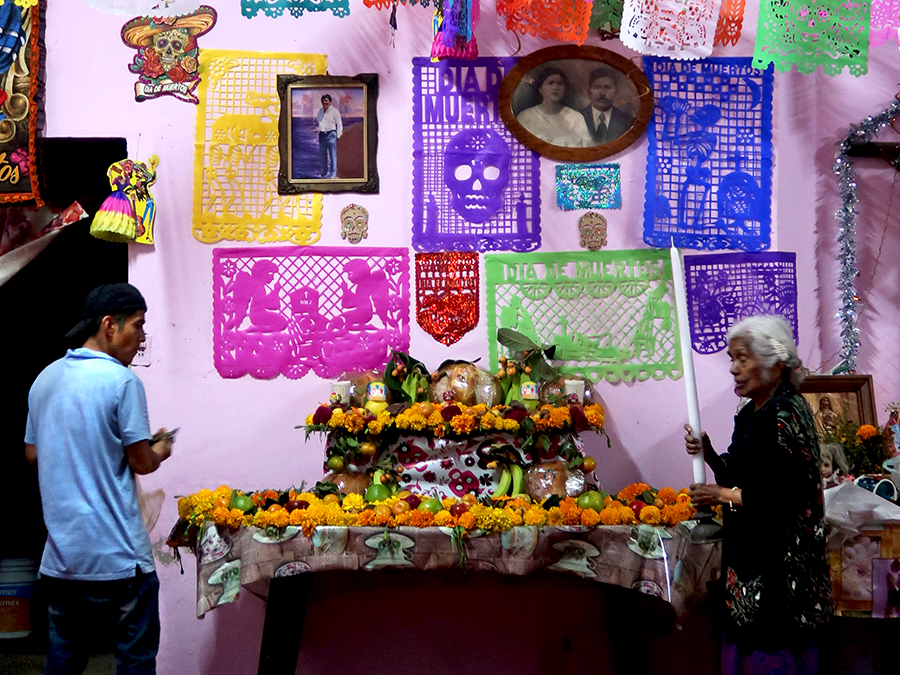
Every Día de Muertos, I love seeing the artistry of public ofrendas, feel honored being welcomed into the homes of friends and placing pan de muertos on their very personal ofrendas, and enjoy assembling my own ofrenda to departed loved ones. (Click on each image to see the details.)

Mitla – Ofrenda in the home of master weaver Arturo Hernandez Quero.
Mitla – Public ofrenda in the main plaza. Note the intricately decorated pan de muertos.
Teotitlán del Valle – Ofrenda of the weaver Pedro Montaño and cocinera Carina Santiago family in the Tierra Antigua restaurant and gallery.
Teotitlán del Valle – Ofrenda in the family home of weaver Zacarias Ruiz and Emilia Gonzalez.
Barrio de Jalatlaco – Private ofrenda open for public viewing at the corner of 5 de mayo and La Alianza.
Barrio de Jalatlaco – Family adding the finishing touches to their ofrenda. (They graciously gave me permission to take the photo.)
Casita Colibrí – My ofrenda in the daylight.
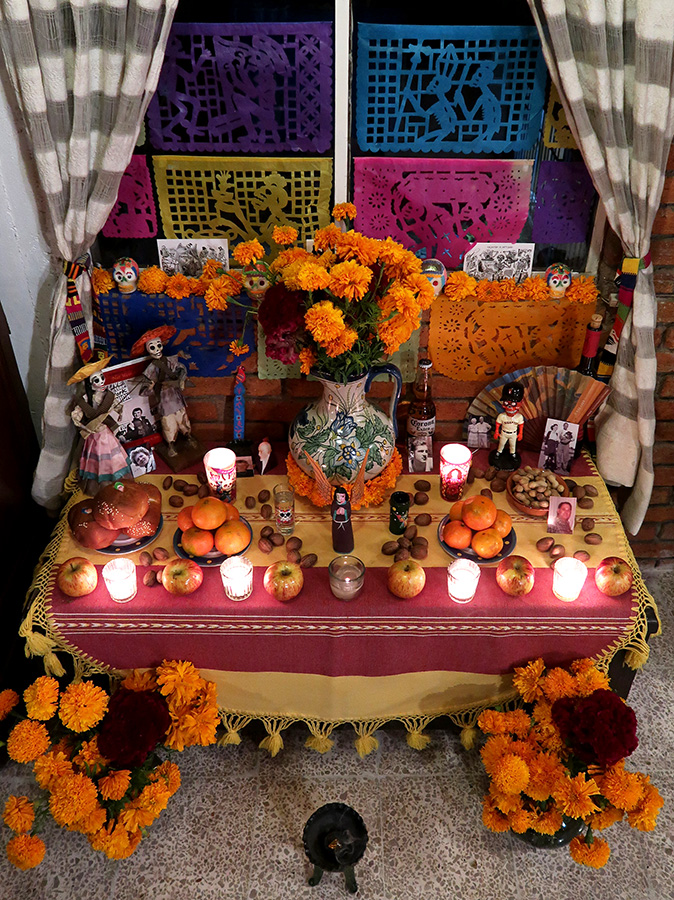
Casita Colibrí – My ofrenda at night awaiting the arrival of my departed.

I love the spicy and welcoming scents of cempasúchitl (marigolds), lacy flor de muerto from the Sierra Norte, pan de muertos, and incense of copal.

Read Full Post »

Our Day in the country’s final destination was San Bernardo Mixtepec. The scenery was spectacular as we drove south from Zimatlán de Álvarez, through the valley, and northeast up into the mountains. It was mid October, nearing Día de Muertos and in the valley there were fields filled with cempasúchitl (marigolds) and cresta de gallo (cockscomb) waiting to be picked for altars. In the meantime, they were being enjoyed by a local grasshopper.

Navigating the narrow, winding, and steep roads, we eventually arrived at the palenque and family home of José Alberto Pablo and his father Mario. Perched on the side of a mountain, it offers stunning views.

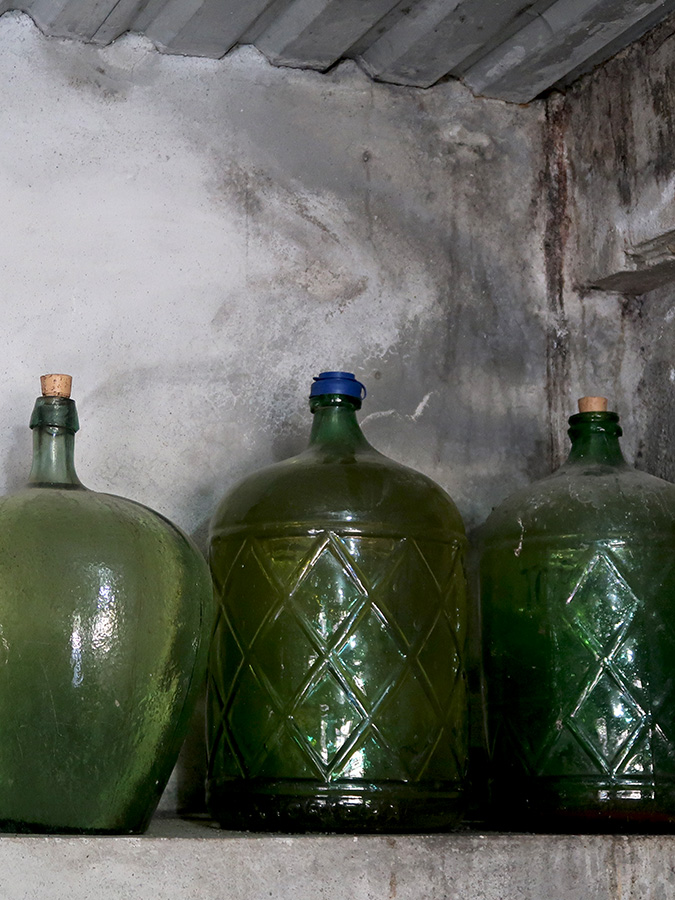
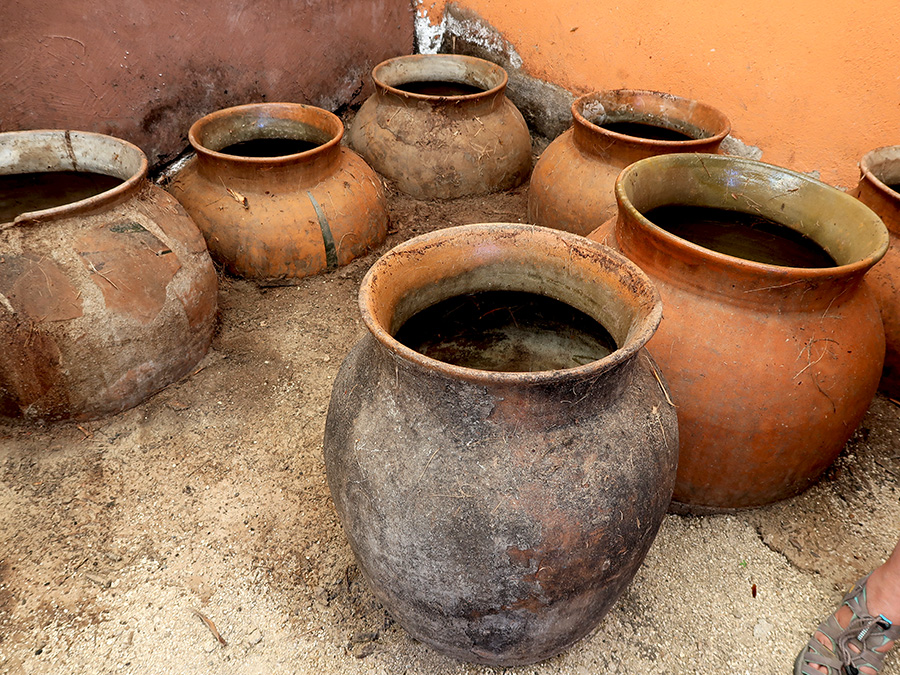
Fermentation is done in clay pots in a specially built room, and clay pots are used for distillation. In an eco-friendly feature, he recirculates the condenser water rather than letting it drain into a stream.

At some point in the history of San Bernardo Mixtepec, a persuasive vendor must have introduced the palenqueros to enameled metal condensers. Over time they rust and deposit a small amount of rust into the mezcal — giving it a distinctive yellow-orange color. According to José Alberto, the villagers have become so accustomed to the color, they are reluctant to drink clear mezcal.

José Alberto Pablo, his father Mario, and Craig T. (middle) — a very happy mezcal aficionado.

Yes, we bought! I came away with a lovely rusty tobalá. By the way, they also use stainless and copper condensers to make clear rust-less mezcal — for the less adventurous and to satisfy the mezcal regulatory board.

Read Full Post »

Day of the Dead altars and their offerings to the departed vary from region to region and, within those regions, from family to family. Ofrendas (offerings) are an integral part of Día de Muertos. They are a beacon to the departed, an ephemeral work of art, and the sum of their lovingly chosen parts. As you can see from the photos below from several in Barrio de Jalatlaco, even on public display, they are intensely personal and creative.

Galería Shadai – Flowers, papel picado, candles, incense, pan de muertos, fruit, nuts, a casserole, and beverages.

And, there is a catrina tapete de arena (sand carpet) made of sand, beans, and flowers.

However, the only photo is of Maestro Francisco Toledo placed on a side pedestal.

Los Pilares Hotel and Restaurant – Flowers, papel picado, catrinas and catrins, candles, fruit, pan de muertos, and beverages.

And, there is a beautiful floral arch.

No photos of loved ones, but it’s a love story to the state of Oaxaca.

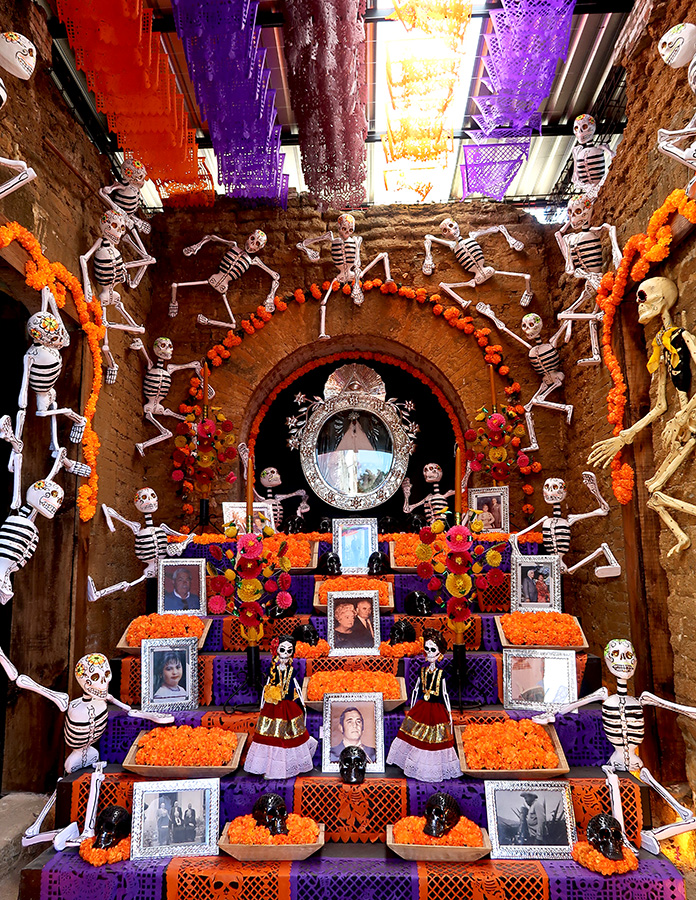
Family ofrenda – 5 de mayo at the corner of La Alianza. Family photos of the departed take center stage with papel picado, cempasúchitl (marigolds), and skeletons playing supporting roles.

Then there are those magnificent floral candles like one sees in Teotitlán del Valle.

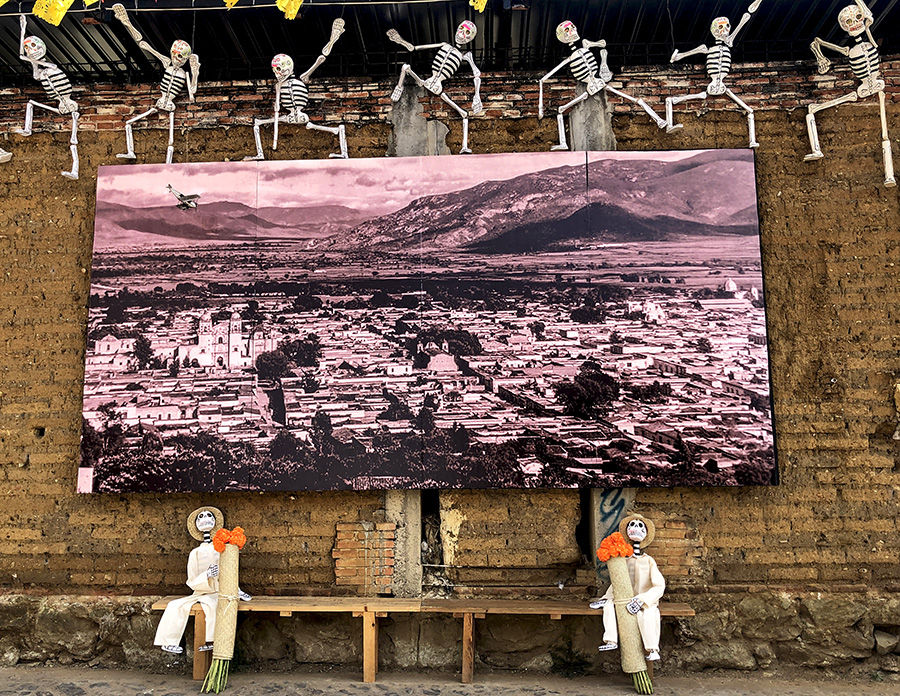
And, lest the departed can’t find their way home in the greatly expanded city, an old photo and skeletons await outside the altar alcove to show the way.

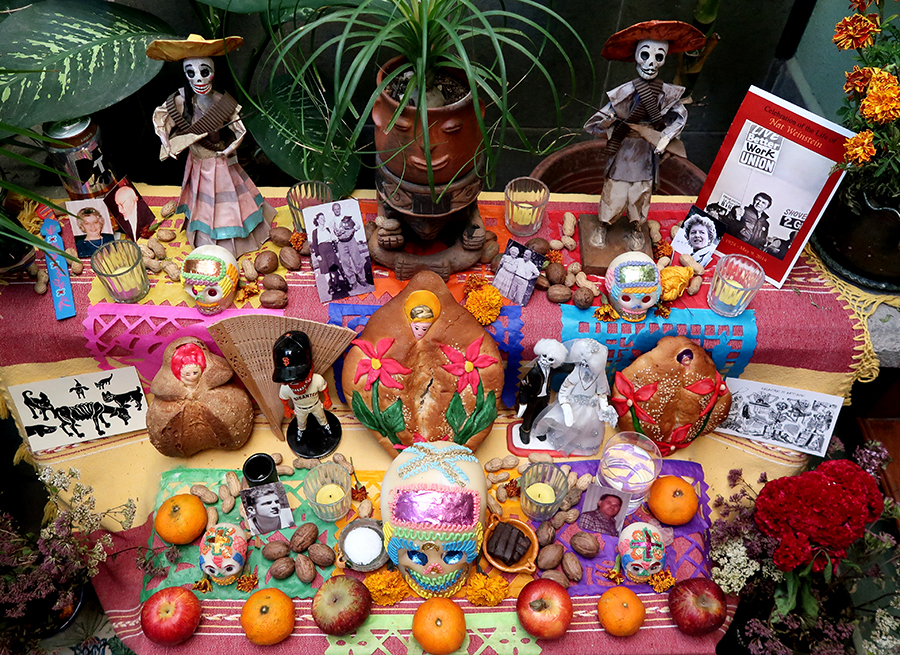
Last but not least, my altar and offerings. It was a creative challenge to set up in the new Casita Colibrí.

It’s smaller than previous years, but I have figured out a way to make it bigger and better next year.

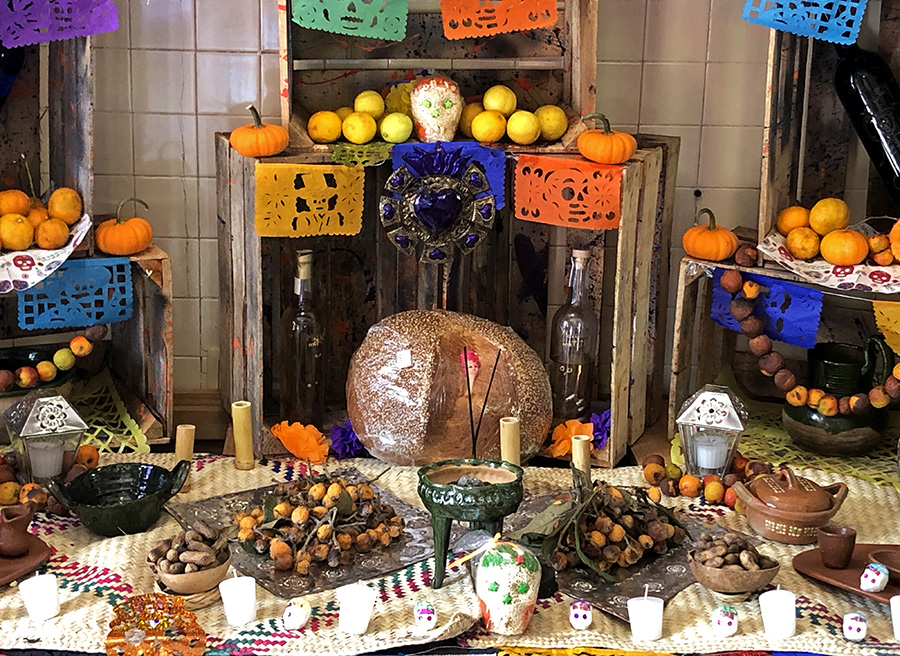
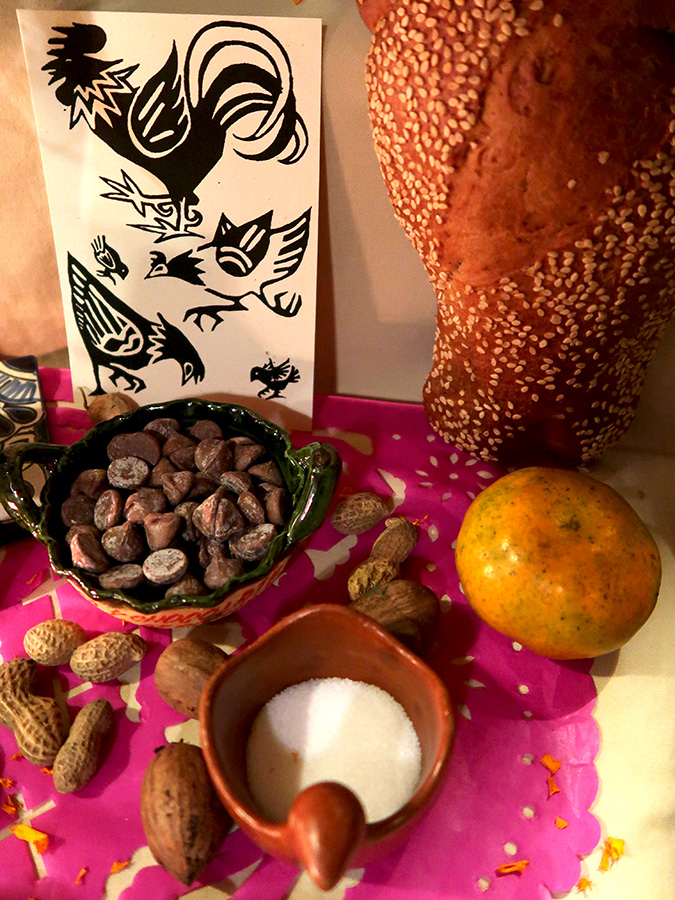
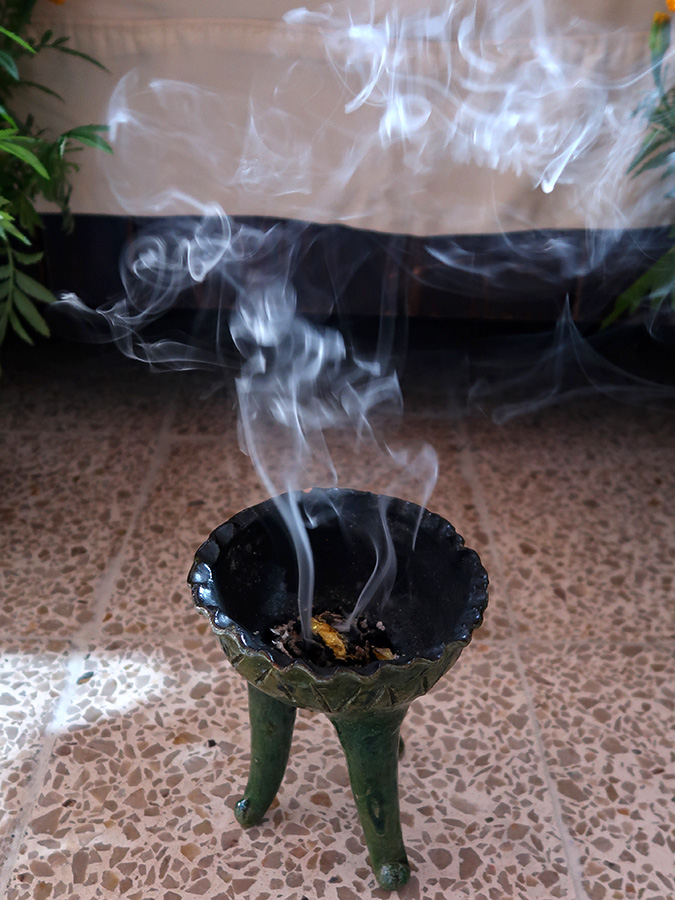
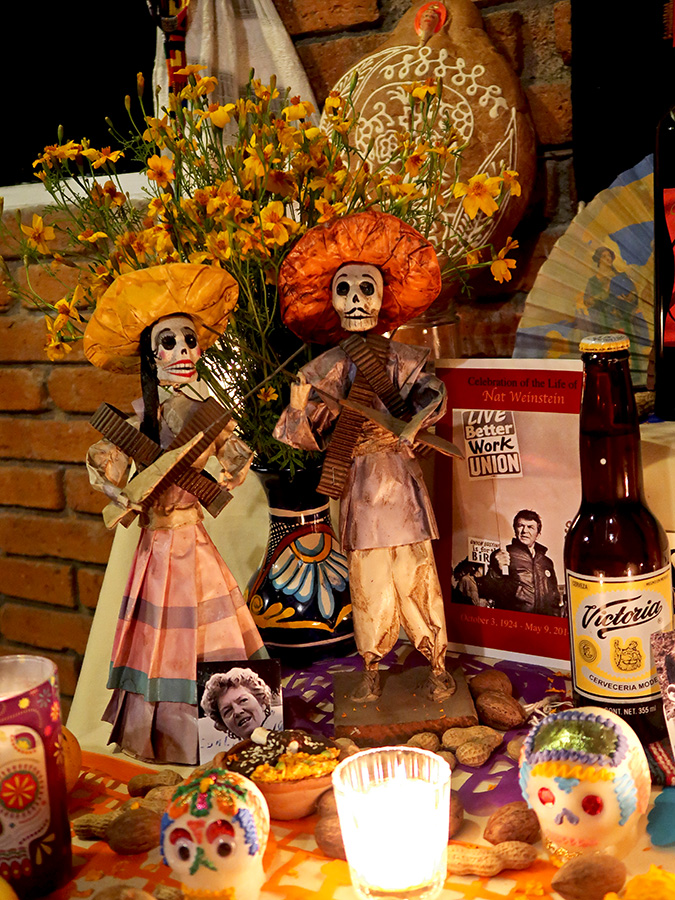
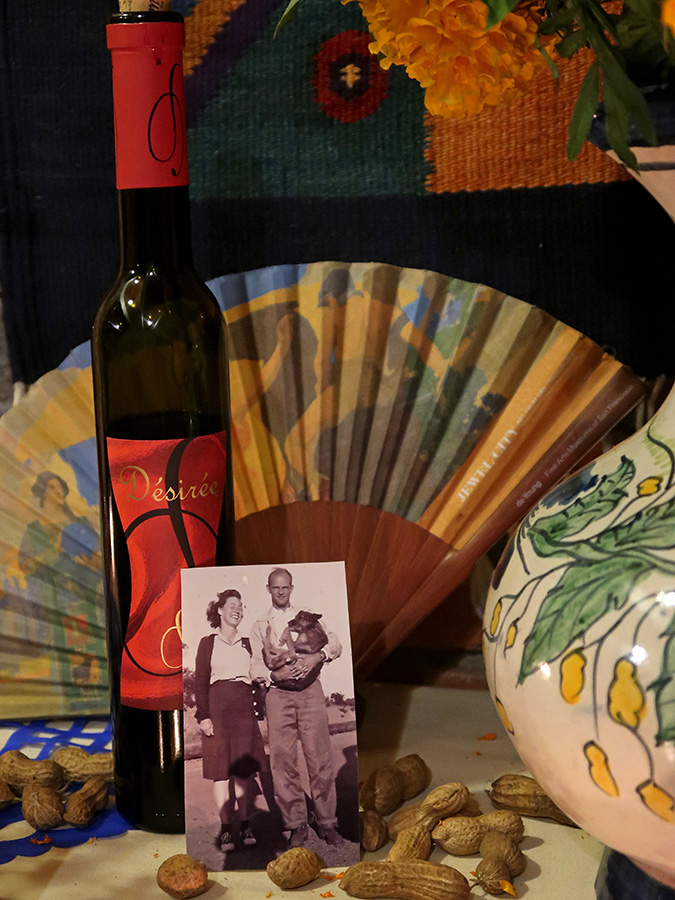
A yellow (color of death in pre-hispanic southern Mexico) tablecloth; papel picado (cut tissue paper) signifying the union between life and death; cempasúchitl (marigolds) and flor de muerto from the Sierra Norte, their scent to guide the spirits; and cresta de gallo (cockscomb) to symbolize mourning. There is salt to make sure the souls stay pure and chocolate, peanuts, pecans, apples, mandarin oranges, and pan de muertos (Day of the Dead bread) to nourish them. The sweet smell of copal incense and its smoke help guide my loved ones to the fiesta I have prepared for them. There is water to quench their thirst, as they travel between worlds, not to mention mezcal and cervesa (beer). And, there are the tangible remembrances of my departed — photos and some of their favorite things.

With candles lit and incense burning, I’m loving it and hoping my very dearly departed will find it warm, nourishing, and welcoming.

Read Full Post »
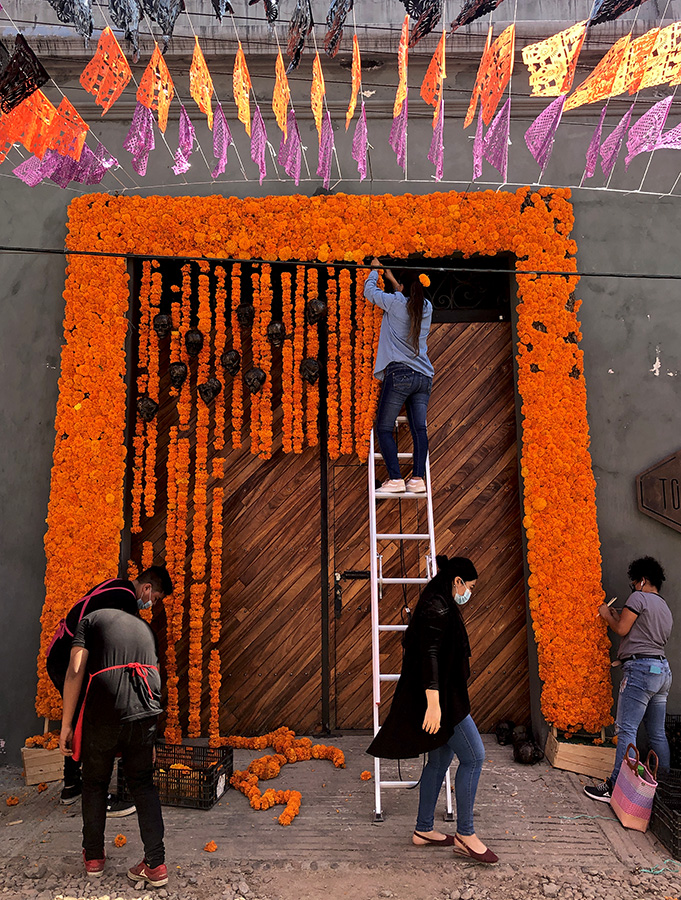
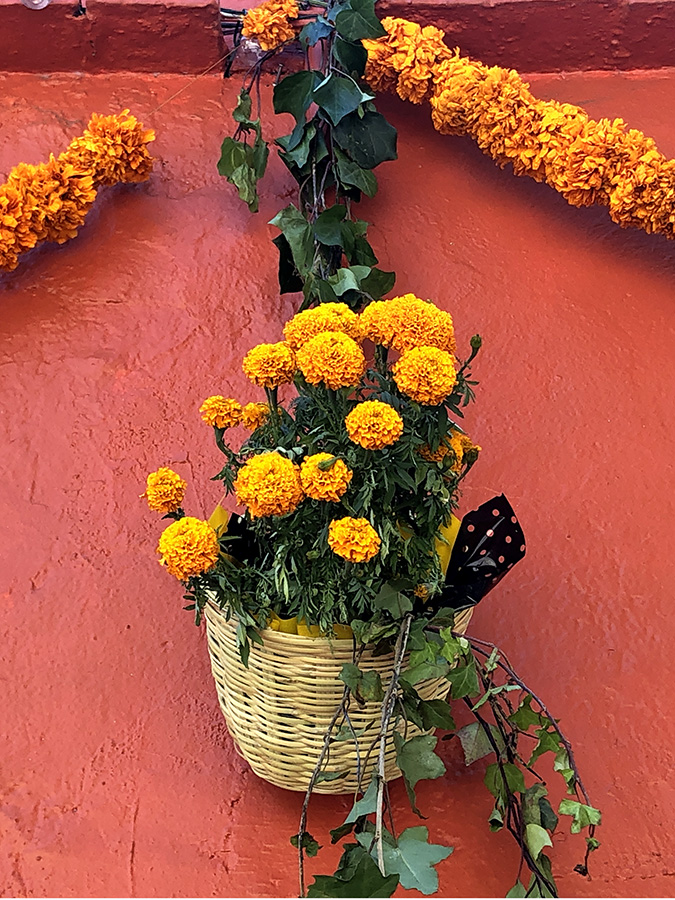
My new neighborhood, Barrio de Jalatlaco, has a long history — one that predates the arrival of the Spanish. Community spirit and traditions are strong, including making her departed feel welcome during Día de Muertos. Thus the bright orange and spicy scent of the flor de muerto, cempasúchitl (flower of the dead, marigolds) are everywhere.

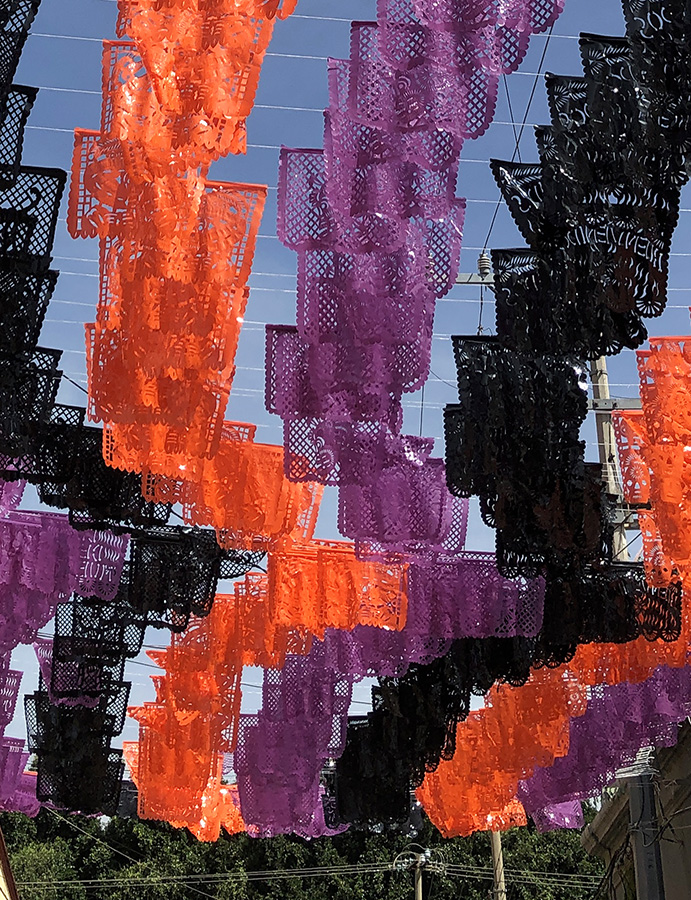
Papel picado, in seasonal colors, ripple above the streets and cast fluttering shadows.

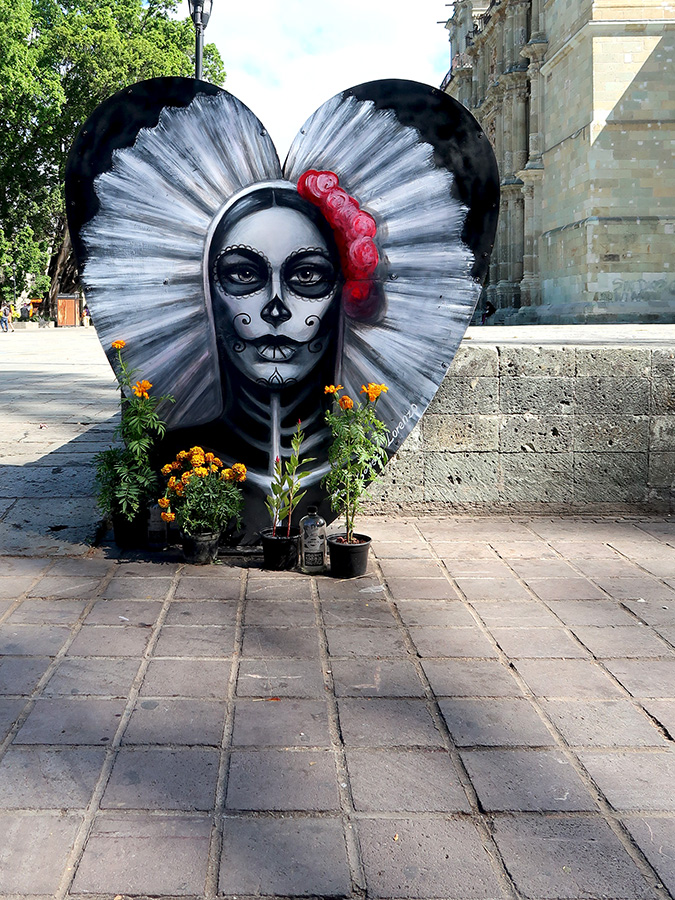
Floral arches welcome the living and the departed.

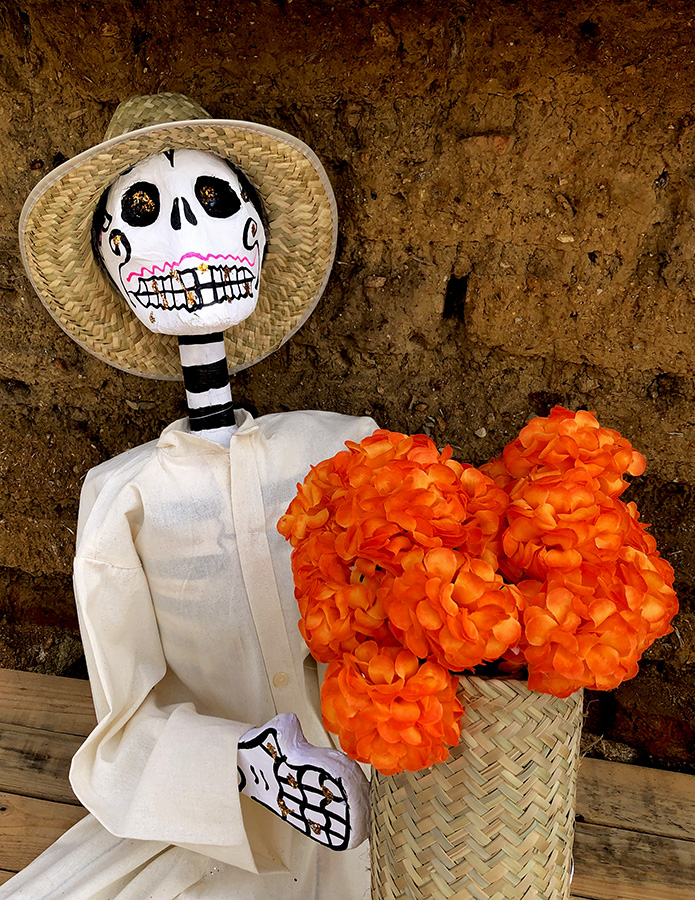
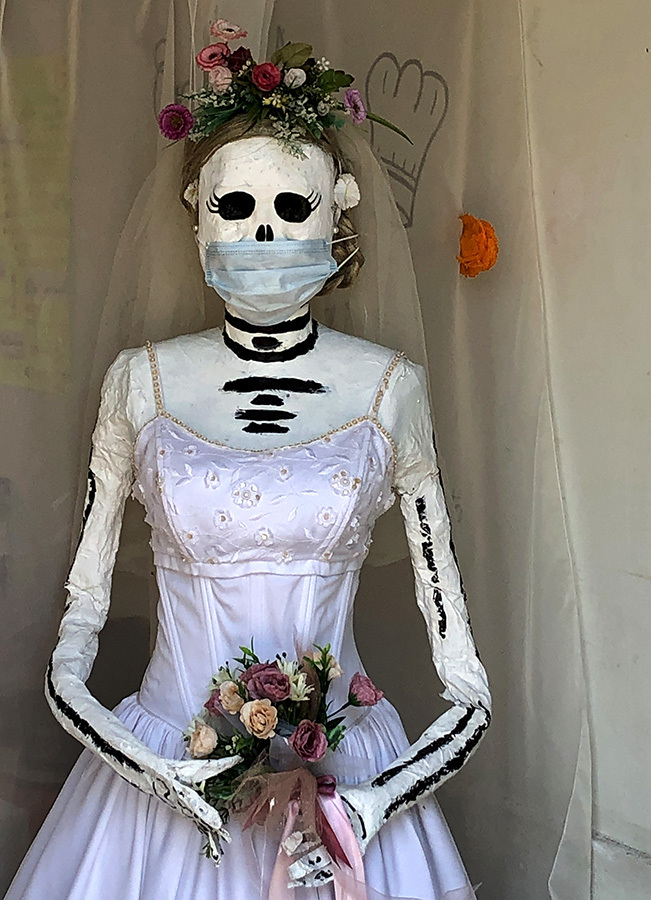
And skeletons are seen hanging out in doorways, windows, and sidewalks.

Tomorrow, altars and their offerings.

Read Full Post »

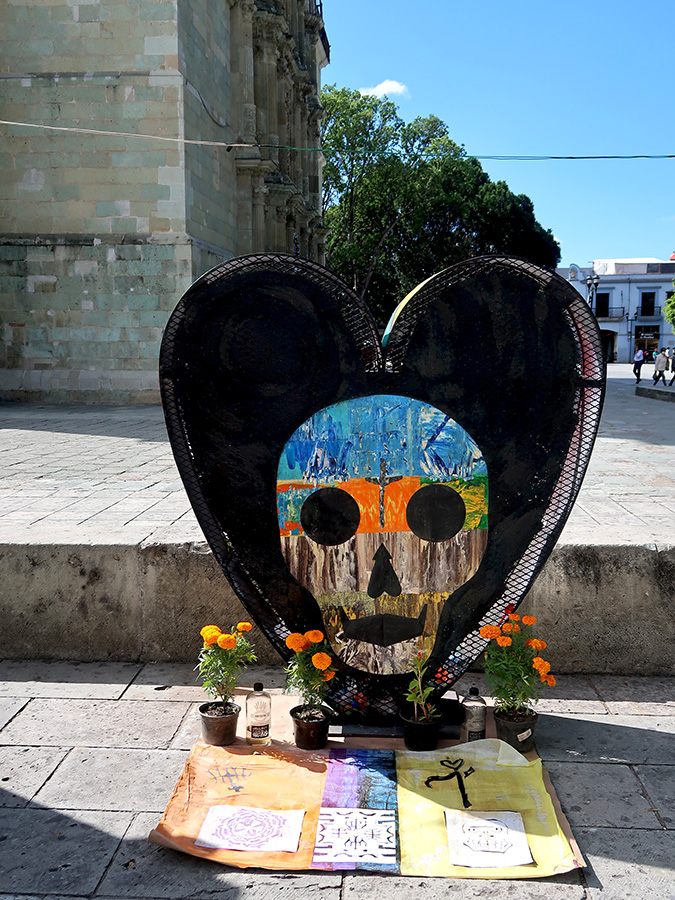
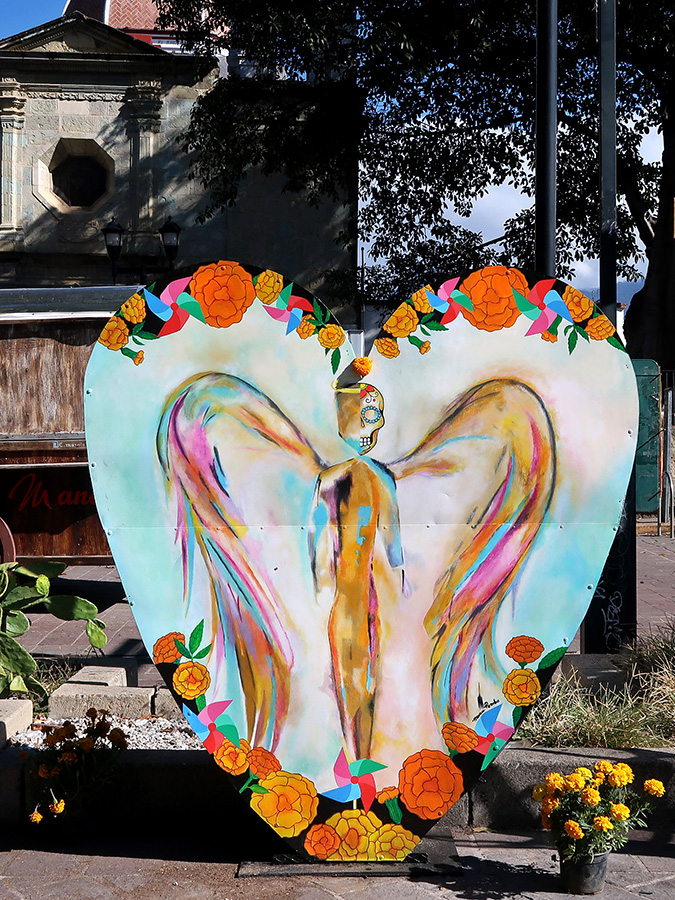
Even the recycling bins in Oaxaca are getting into the spirit of Day of the Dead.

Calle Independencia side of the Catedral de Nuestra Señora de la Asunción
In front of the Iglesia de Guadalupe
Zócalo side of the Catedral de Nuestra Señora de la Asunción

And cempasúchil (marigolds) to beckon the difuntos (departed), plastic bottles, and tin cans.

Read Full Post »

These are strange days leading up to our departed coming to call while we are living in the time of Covid-19. With public activities canceled, thus no nightly calendas (parades) filling the streets and our ears, and fewer tourists, Oaxaca is experiencing more peace and tranquility this Day of the Dead season — albeit laced with a touch of melancholy and anxiety.

Masked and shielded, I braved the mostly local crowds south of the zócalo, to shop for cempasuchil (marigolds), cresta de gallo (cockscomb), apples, mandarin oranges, peanuts and pecans, chocolate, and pan de muertos (Day of the Dead bread) — but it wasn’t nearly as much fun as years past.

However, the joy returned when I unwrapped photographs of my parents, grandparents, and other loved ones; selected some of their favorite things to put on my ofrenda; placed the fruit, nuts, bread, and chocolate among the photos; positioned candles, flowers, and incense; and poured my departed a copita (little cup) of water and another of mezcal — all to beckon, entertain, and sustain them during their brief stay.

I’m looking forward to a more personal and reflective Día de Muertos this year.

Read Full Post »

Cempasúchil (marigolds), the flowers synonymous with Day of the Dead, have begun appearing throughout the city. Alas, not in the quantity we are used to.

As I have written previously, because of the acceleration of the Covid-19 cases, the City of Oaxaca will not permit public Day of the Dead celebrations and events.

So it’s a subdued Día de Muertos season we are living.

While the yellows and oranges of the marigolds seem to mirror the semáforo amarillo and naranja (yellow and orange Covid-19 traffic lights) we are bouncing between, they brighten the days and impart a familiar and welcome scent.

Read Full Post »

As my grandchildren finished their trick or treating up in el norte, I put the final touches on my Día de los Muertos ofrenda (offering) here in Oaxaca.

IMG_1662

A yellow (the color of death in pre-hispanic southern Mexico) cloth covers two chests; papel picado (cut tissue paper), signifying the union between life and death, has been added, along with the traditional flowers of Day of the Dead — cempasúchil and veruche (domesticated and wild marigolds), their scent to guide the spirits, and cockscomb to symbolize mourning.  Visitors brought the sunflower and, since my grandfather, father, and father-in-law were avid gardeners, it is for them!

IMG_1645

There is salt to make sure the souls stay pure and chocolate, peanuts, pecans, apples, mandarin oranges, and pan de muertos (Day of the Dead bread) to nourish them.

IMG_1665

The sweet smell of copal incense and its smoke help guide my loved ones to the feast I have prepared.  And, there is water to quench their thirst, as they travel between worlds, not to mention mezcal and cervesa (beer).

IMG_1767

But, most important of all, there are the tangible remembrances of my departed — photos and some of their favorite things.

IMG_1655

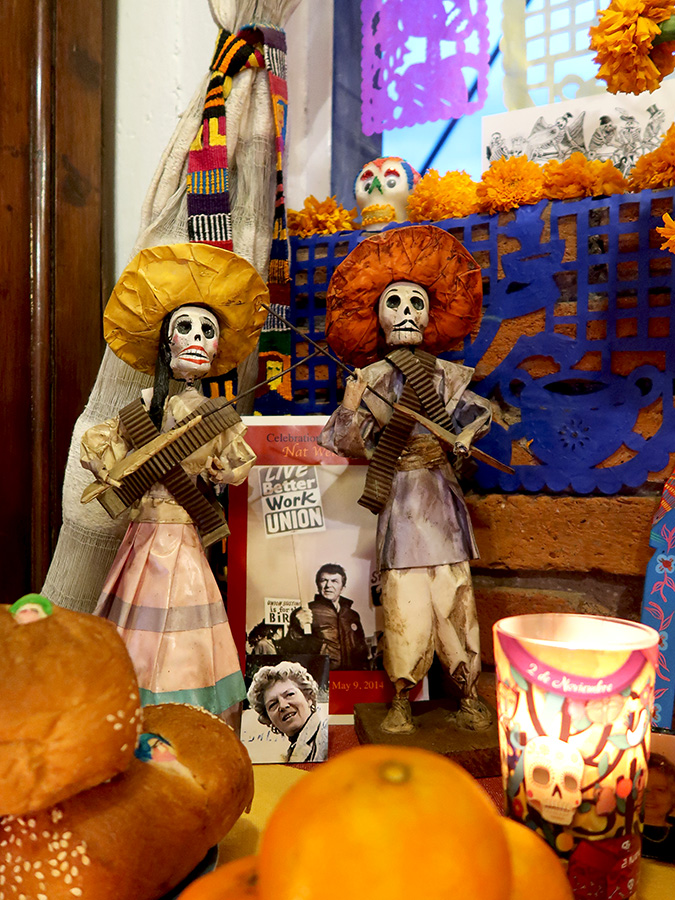
Revolutionary catrina and catrin for my revolutionary comadre and compadre, Sylvia and Nat.

IMG_1765

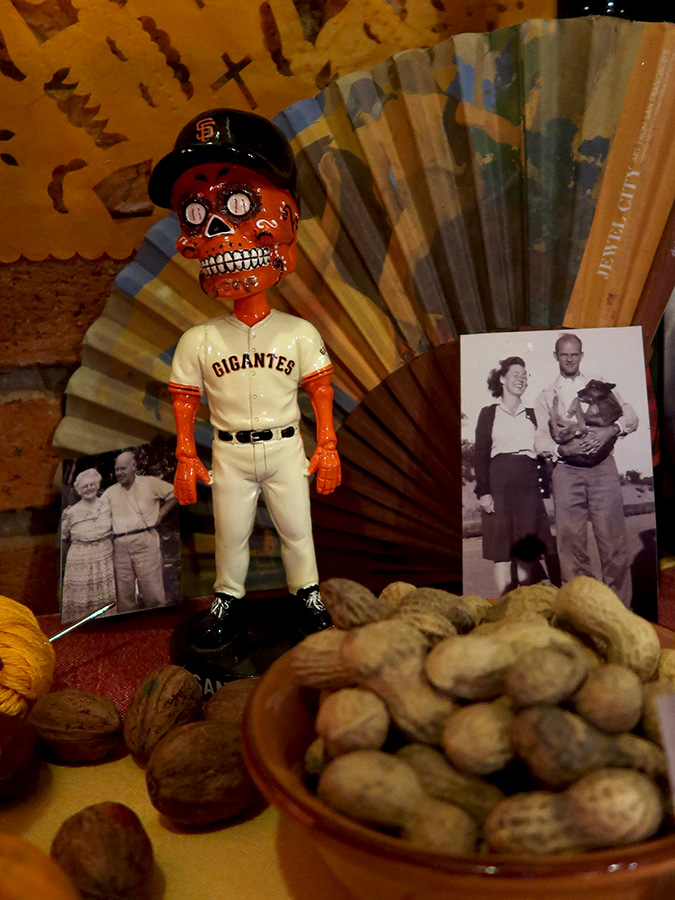
Yarn and a crochet hook for my dear grandmother who many of the abuelas (grandmothers) in Oaxaca remind me of — always wearing an apron, never wearing pants, and incredibly adept with crochet and embroidery thread.  And, for my adored grandfather, a San Francisco Giants baseball cap.  My grandparents moved next door at the same time the Giants moved from New York to San Francisco and grandpa and I listened to many games together on his transistor radio, as I helped him in the garden.

IMG_1660

There are other cherished friends and relatives on my altar, but pride of place goes to my parents.  For my father, who was killed when I was only two and a half, there is beer (below the above photo) — alas Victoria not Burgermeister!  And for my mother, a fan to cool herself as she dances and a bottle of port to sip before she sleeps.

IMG_1794

It’s been a two-day labor of love as I wanted everything to be perfect for my difutos (departed) to find their way and feel welcome in my Oaxaca home.

Read Full Post »

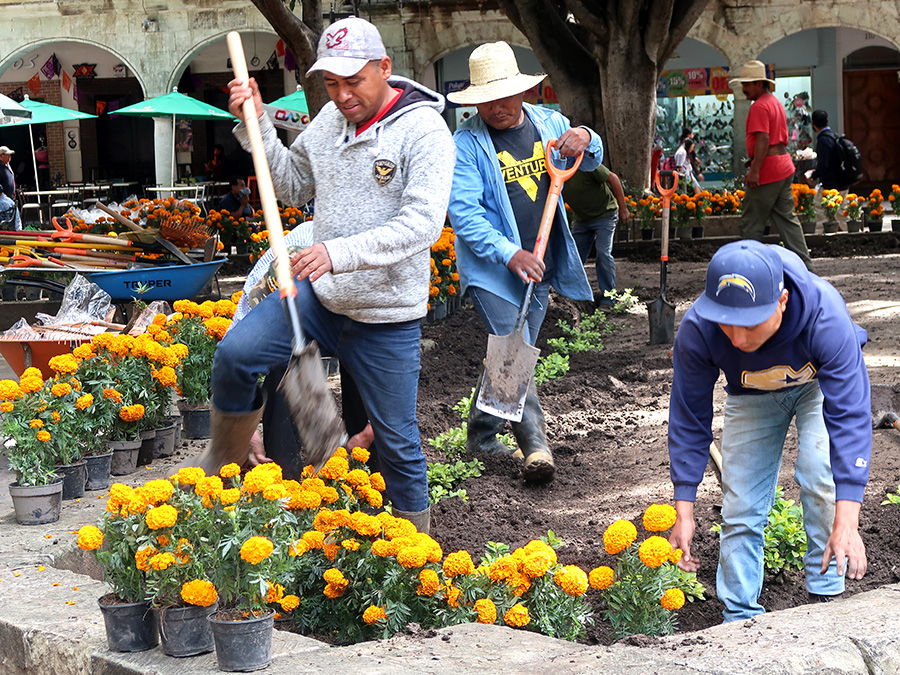
Today the sun (finally) came out and hundreds (thousands?) of pots of cempasúchil (aka, cempoalxóchitl, cempaxochitl, cempoal, zempoal, flor de muertos) arrived in the city center.

IMG_1089

This was a photo op not only for yours truly but also the local press, as they trailed after the wife of Oaxaca’s governor while she viewed the unloading…

IMG_1078_land

and planting of the iconic Día de los Muertos flowers in the beds of the Zócalo and Alameda.

IMG_1076_crop2

The color and fragrance of the cempasúchil provide a lovely setting to sit and contemplate the world (and check your cell phone).

IMG_1077_port

Oaxaca is putting on her best to welcome her difuntos (deceased) along with the thousands of tourists who will soon be arriving.

Read Full Post »

Celebrations in Oaxaca surrounding Día de Muertos are beginning.  This past week, we, members of the Mexico Travel Photography Facebook group, were issued a 5-day “Day of the Dead” photo challenge by moderator, Norma Schafer.  There are always so many favorite images from so many events that I never get around to posting, so this was my opportunity.  My five…

img_0085

Panteón, Santa María Atzompa, Oaxaca on Oct. 31, 2015

img_0125

Offering on tomb in Panteón Municipal de Tlacolula de Matamoros, Oaxaca on Nov. 1, 2015

p1030655

Muerteada, morning after the night before, Nov. 2, 2014, San Agustín Etla, Oaxaca

img_6545

Sun sets on Santa María Atzompa panteón, Oct. 31, 2014

p1030223_bw

On the Alcalá in Oaxaca City, Oct. 31, 2014

And, five more, just because…

img_0079

Santa María Atzompa, Oct. 31, 2015

p1030402

San Pablo Villa de Mitla, ofrenda with pan de muertos, Nov. 1, 2014

p1030148

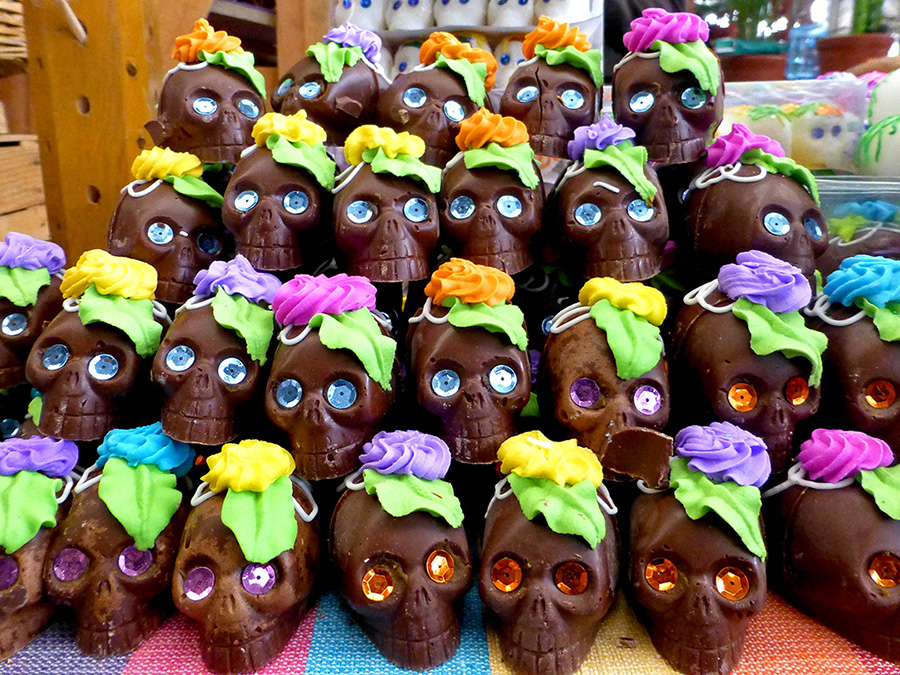
Chocolate calaveras at Villa de Etla, Oct. 31, 2014

p1030157

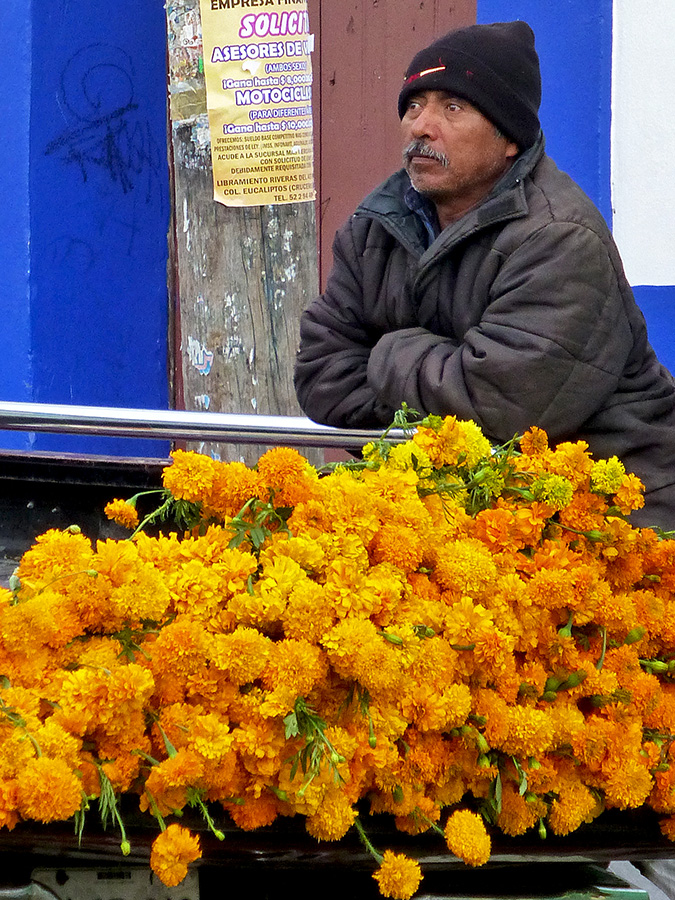
Cempasuchil (marigold) vendor at Villa de Etla, Oct. 31, 2014

p1150252

Casa de las Artesanías de Oaxaca, Oct. 31, 2015

That’s all folks, for now.  Stay tuned for more to come from this year.

Read Full Post »

Marigolds have begun appearing in the city.  The yellow of this flor de muertos (flower of the dead) will help guide the difuntos (deceased) home to feast with their families during the upcoming Día de Muertos (Day of the Dead) celebrations. Known as cempazuchil (also spelled cempasúchitl), flower pots and/or vases of marigolds may find their way onto ofrendas (the offerings on home altars for the difuntos).  Some scatter the petals on their muertos altar, others in a trail leading from the street into the house and up to the ofrenda.

p1220698

Next week, seasonal Day of the Dead markets will spring up and shopping will go into high gear.  Needless to say, I will join in buying the traditional fruits, nuts, flowers, and sugar skulls to place on my ofrenda.  And, along with friends, I will pay my respects to the difuntos of friends in Teotitlán del Valle.  It’s a special time of year in Oaxaca.

Once a librarian, always a librarian, thus a few resources about Day of the Dead:

A brief note:  Celebrations vary throughout Mexico and, even in the valley of Oaxaca, traditions differ from village to village, but the above articles will give you a general idea.  You can also click HERE for my Día de Muertos blog posts from previous years.

Read Full Post »

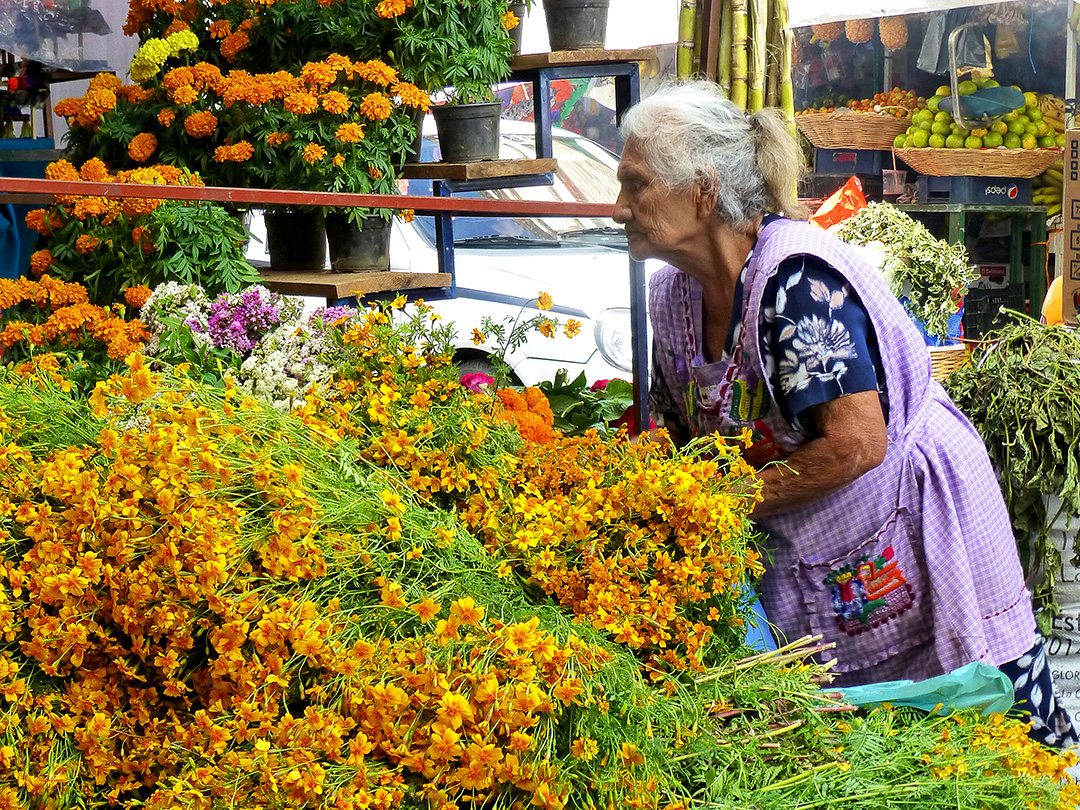
Today I ventured down to Calle de Ignacio Rayón (the block between the Benito Juárez and 20 de Noviembre mercados) to purchase flowers for my Día de Muertos ofrenda (an altar of offerings).  On the list was cockscomb (cresta de gallo or borla de Santa Teresa), marigolds (cempasúchitl), and veruche (also known as flor de muertos).  I wasn’t alone, the sidewalks were crowded with other shoppers in search of the same traditional flowers, fruits, nuts, copal, and other items to place on their ofrendas.

P1150140

Veruche is a tiny relative of the marigold that grows wild in the valley of Oaxaca at this time of year.  Yellow was the color of death in southern Mexico, long before the Spanish set foot on the continent and, along with the scent of the flowers and smoke from the candles and copal, it is thought to attract the difuntos (spirits of the dead) to bring them to the ofrendas prepared for them.

Muchisimas gracias to Shawn D. Haley for his informative presentation at the Oaxaca Lending Library on the Zapotec celebration of Día de Muertos.  Needless to say, I also purchased the book he coauthored with photographer Curt Fukuda, The Day of the Dead: When Two Worlds Meet in Oaxaca.

Read Full Post »

Older Posts »