November 5, 2012 by spixl
an offering.
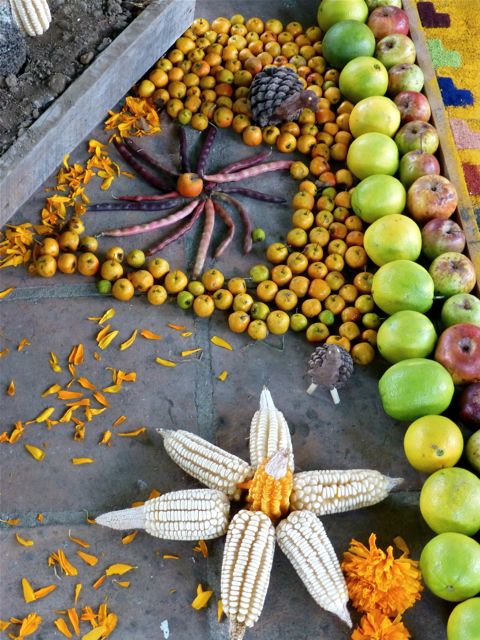
an integral part of the Day(s) of the Dead celebration.
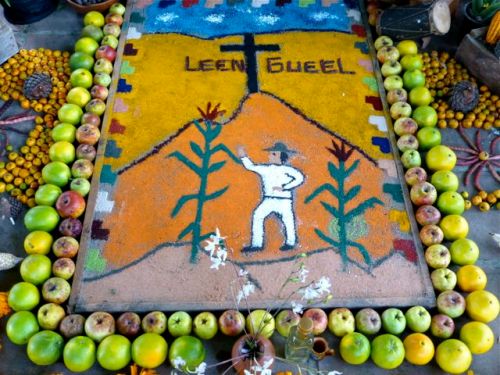
filled with meaning.

a beacon to the departed.
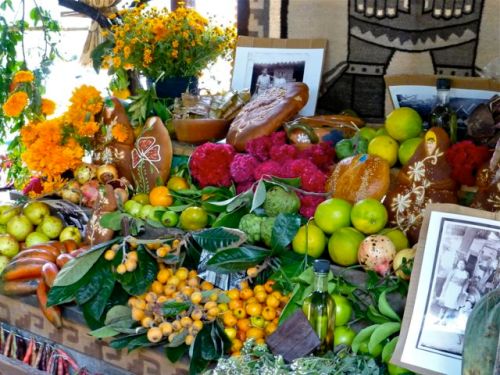
an ephemeral work of art.
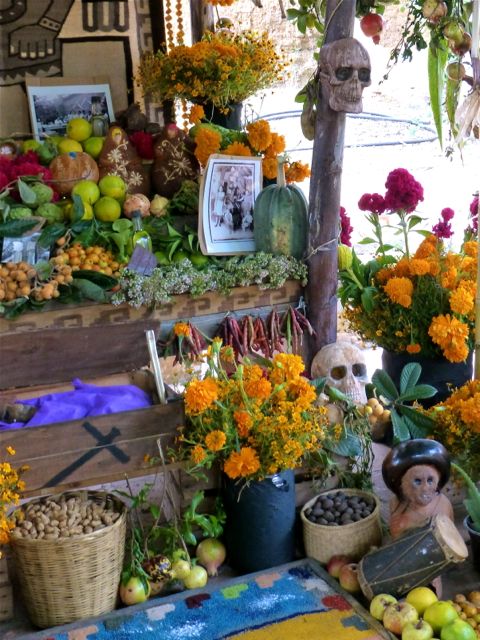
the sum of its lovingly chosen parts.
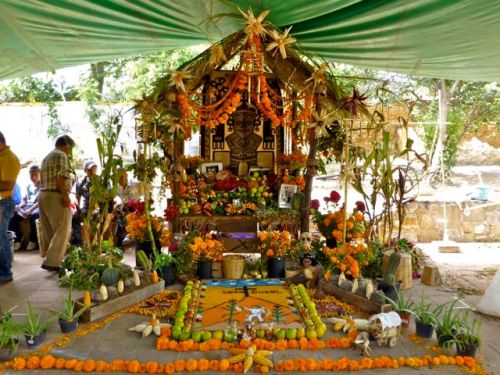 This is another ofrenda from the previously mentioned “altar decorating” competition on the plaza in front of Santo Tomás in Oaxaca’s Xochimilco barrio.
Posted in Celebrations, Creativity, Culture, Neighborhoods, Parks & Plazas, Religion, Travel & Tourism | Tagged altars, Barrio de Xochimilco, Day of the Dead, Día de los Muertos, Mexico, Oaxaca, ofrendas, photographs, photos, popular travel destinations, Santo Tomás | Leave a Comment »
November 3, 2012 by spixl
Living and being in Oaxaca during the Días de los Muertos is hard to put into words. There is so much to experience and to think about. Sensory overload challenges the limits of heart and mind and my emotions are running the gamut from extreme exhilaration to a quiet joy to being moved to tears.
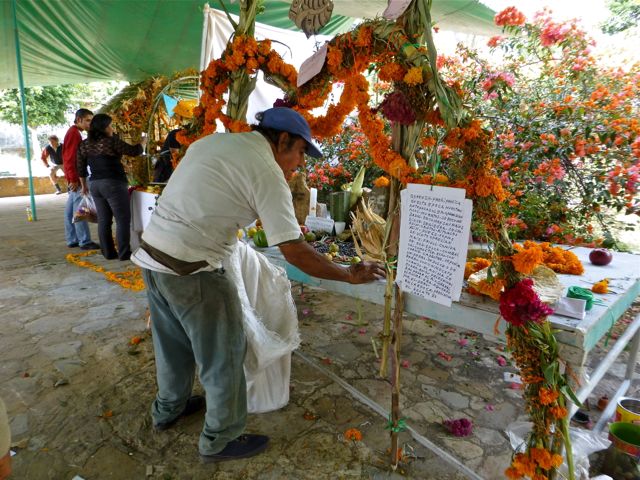
The latter occurred a few days ago, when I walked up to the Templo de Santo Tomás in Oaxaca’s Xochimilco barrio (neighborhood) where an “altar decorating” contest was in progress. Altars were to be judged on authenticity, originality, and creativity. When I arrived, friends and relatives were in the midst of putting the final touches on their altars. Some were elaborate and some exhibited real artistry, but one really touched my heart.
He was alone — no one to help, no playful banter. When I first arrived, he was carefully etching a cross with a piece of charred wood on a stone.

He worked silently and with purpose, pulling items out of a well-worn sugar bag and carefully placing them on his altar.

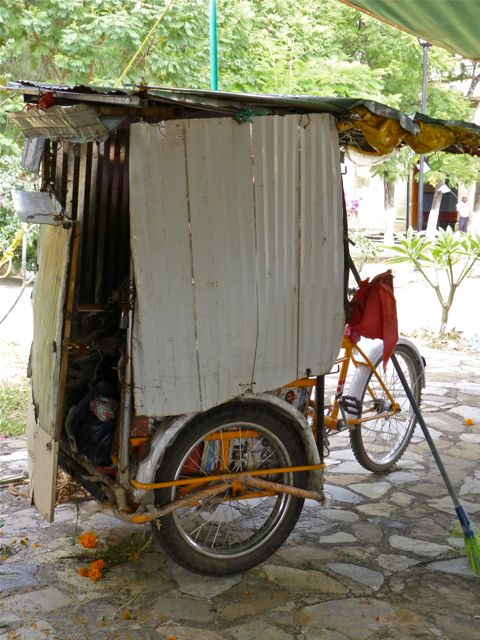
When the bag was empty, he walked over to a cart and pulled out another one.
Slowly, his vision emerged, with symbology I have only a cursory grasp of and won’t presume to explain.
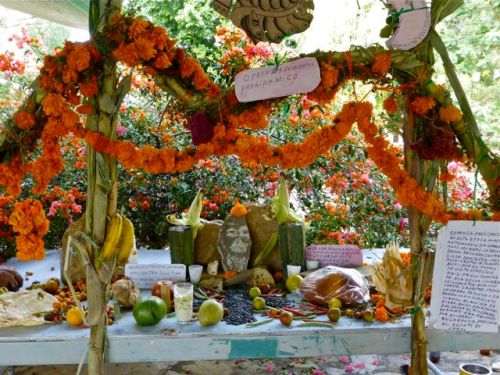
I don’t know who won the 5000 peso first prize or second or third place purses, and I don’t know if he was doing it for the money (he certainly looked like he could use it).

All I do know is he and his ofrenda moved me deeply.
Posted in Celebrations, Creativity, Culture, Neighborhoods, Parks & Plazas, Religion, Travel & Tourism | Tagged altars, Barrio de Xochimilco, Day of the Dead, Día de los Muertos, Mexico, Oaxaca, ofrendas, photographs, photos, popular travel destinations, Santo Tomás | 7 Comments »
November 1, 2012 by spixl
Last night we went to my favorite panteon (cemetery) at Atzompa, today we visited six villages, and tonight I went with out-of-town guests to the Panteon General here in Oaxaca. First thing tomorrow morning a comparsa (parade) and then probably off to Teotitlán del Valle. I’ve already taken hundreds and hundreds of photos, but there has been no time to even look at them!
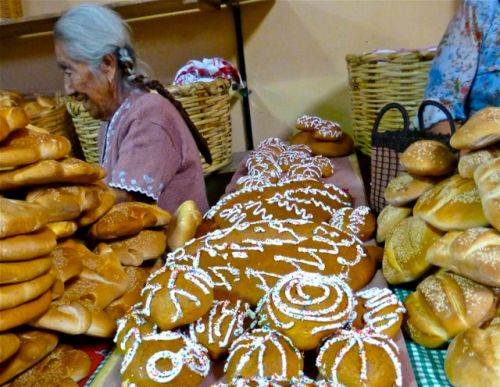
So, in the meantime… My pan de muerto (Day of the Dead bread) from Sunday’s trip to Tlacolula.
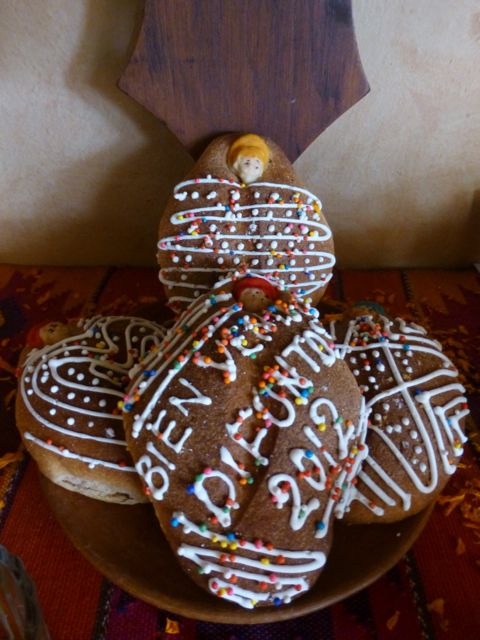
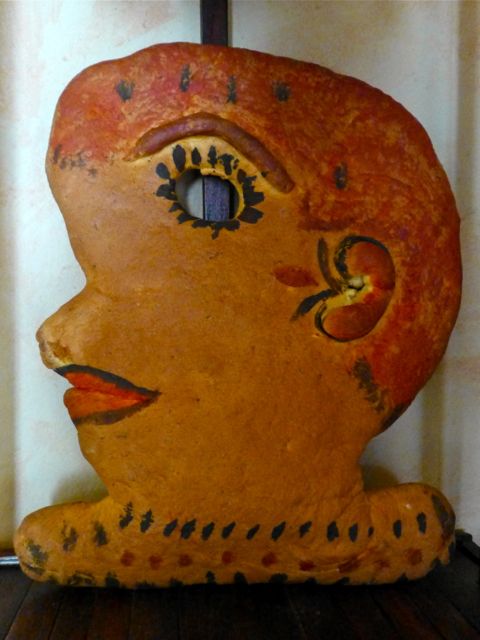
Very special pan de muerto from Restaurante La Abeja just a few blocks from Casita Colibrí. This one will eventually get two coats of shellac and join her sister (purchased last year) hanging on the wall.

Last, but not least, my altar where photos of departed family and friends join apples, tangerines, pan de muerto, sugar skulls, candles, and incense of copal.

This is a magical time to be in Oaxaca.
Posted in Celebrations, Culture, Food, Holidays, Travel & Tourism | Tagged altar, Day of the Dead, day of the dead bread, Día de los Muertos, food, Mexico, Oaxaca, ofrenda, pan de muerto, photographs, photos, sugar skulls | 3 Comments »
October 31, 2012 by spixl
Lighting, costumes, music, and dance combined to envelop last night’s audience at the Teatro Macedonio Alcalá in an other worldly experience. Catrina is a magical tale where the world of the living converges with the world of the dead and the central theme is the pain of a mother losing her daughter.
This slideshow requires JavaScript.
The show is a celebration of the pre-Columbian traditions and culture of Oaxaca, especially the ritual and meaning surrounding Día de los Muertos. Much of the music was traditional Oaxacan and most performers were Oaxaqueños, including Alejandra Robles, singing the title role.
At 48% (that’s over 1.6 million people), the state of Oaxaca has the second highest indigenous population in Mexico. Perhaps that is why the belief systems of the ancient Mexicans Octavio Paz, cites in The Labyrinth of Solitude, remain strong today. He writes, “Life extended into death, and vice-versa. Death was not the natural end of life but one phase of an infinite cycle.” Healthier, more realistic, and more comforting, I think…
Posted in Celebrations, Creativity, Culture, Music, Travel & Tourism | Tagged Alejandra Robles, catrina, Day of the Dead, Día de los Muertos, Mexico, Oaxaca, photographs, photos, popular travel destinations | Leave a Comment »
October 30, 2012 by spixl
Sunday, blogger buddy Chris and I drove out to Tlacolula for market day. It didn’t take long to realize this wasn’t your usual Sunday market — there seemed to be twice the number vendors and twice as many shoppers. It was the Sunday before the Días de los Muertos and this mega mercado was providing those who live in the surrounding area with everything they could possible need for their ofrendas (Day of the Dead altars).
Mounds of apples, tangerines, and other fruit.

Rows upon rows of pan de muerto (the special Day of the Dead bread).
Wheelbarrows full of peanuts and pecans.

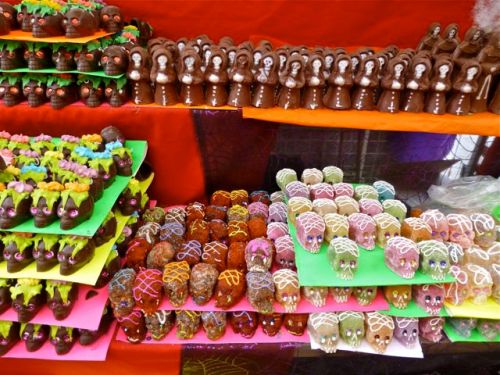
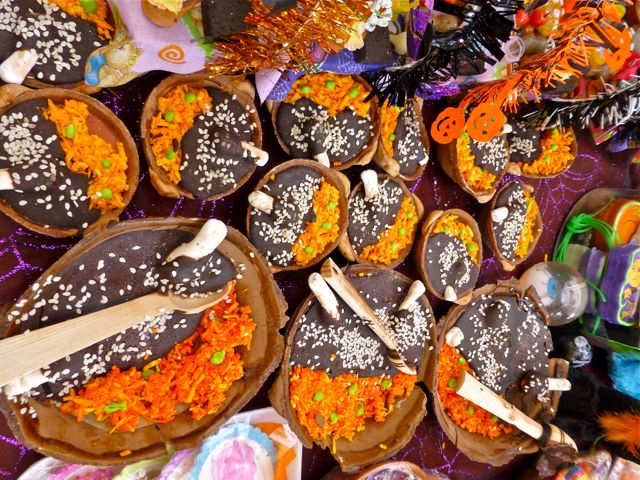
And, in the city of Oaxaca, special Muertos vendor stalls have been set up between the Benito Juárez Mercado and 5 de Mayo Mercado for city dwellers to stock up. Intricately decorated sugar and chocolate skulls (calaveras) to satisfy the sweet tooth of Mictlantecuhtli (Goddess of Death).
Decorated clay incense burners…
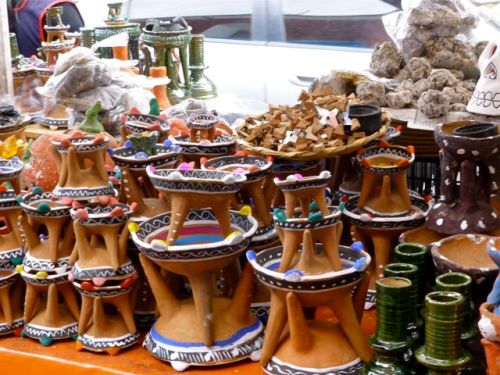
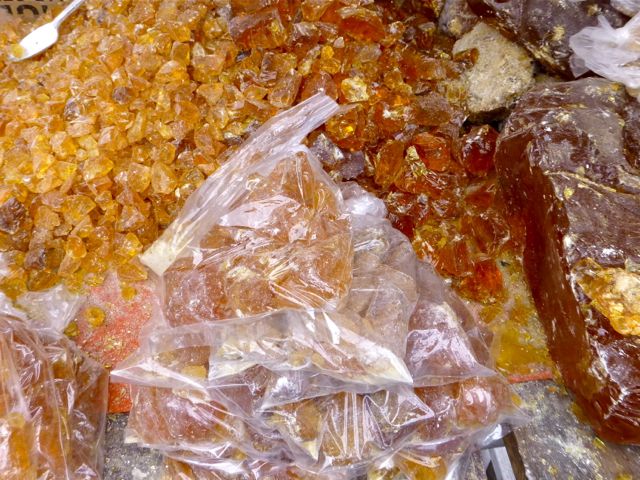
waited to burn copal resin and perfume the air with its wonderful, and now familiar, scent.

Doll house size tables were filled with miniature clay food and beverages (favorites of the departed) …

and included these diminutive plates of mole and arroz (rice) — which I couldn’t resist buying for my altar!

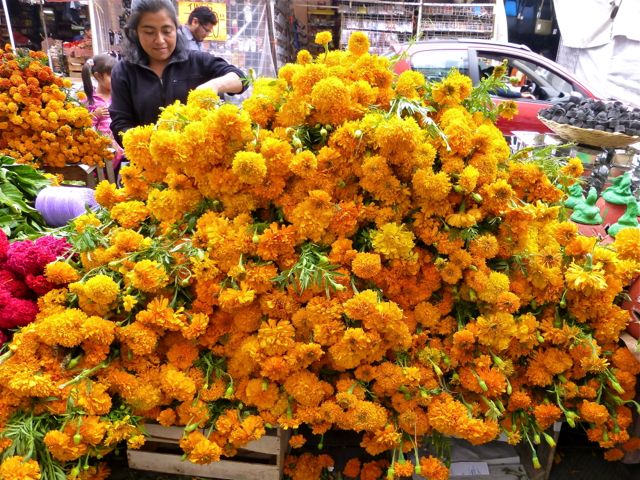
And, of course, there were mounds and mounds of Cempazuchitl (marigolds), the flower of the dead, that grows wild in Oaxaca at this time of year.

All the necessary purchases have been made, now to build my ofrenda.
Posted in Celebrations, Culture, Food, Holidays, Markets, Travel & Tourism | Tagged calaveras, cempasuchitl, Day of the Dead, day of the dead bread, Días de Muertos, food, incense burners, marigolds, markets, mercados, Mexico, Oaxaca, ofrenda, popular travel destinations, puestos, sugar skulls, Tlacolula de Matamoros, vendor stalls | 2 Comments »
October 28, 2012 by spixl
Friends from the USA arrived on Friday and yesterday I played tour guide, showing them around the city. It was great fun! Up to Organic Market we went, pausing along the way to photograph the always amazing street art (future blog posts), stumbling on a vela in honor of San Judas Tadeo (aka, St. Jude, patron of desperate causes and hospitals) at Carmen Alta church with women in full Tehuana traje (think: Frida Kahlo), and catching a wedding at Santo Domingo, with requisite band, dancers, monos, marmota, and women wearing impossibly high heels.

I don’t think I could even stand on a smooth flat surface, let alone walk on cobblestones in stilettos like that. If I even tried, I suspect I would wind up on the ground and severely tempted to start praying to San Judas Tadeo!

However, weddings at Santo Domingo are for the socially prominent and wealthy.
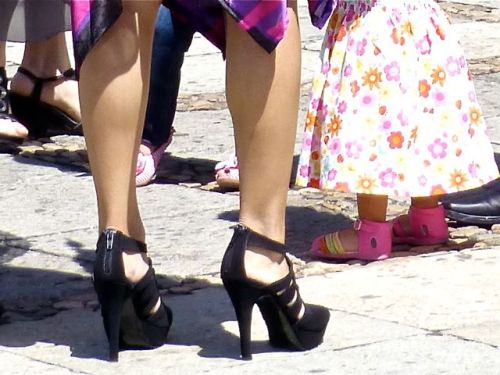
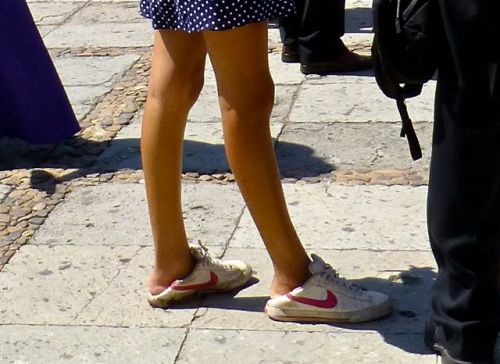
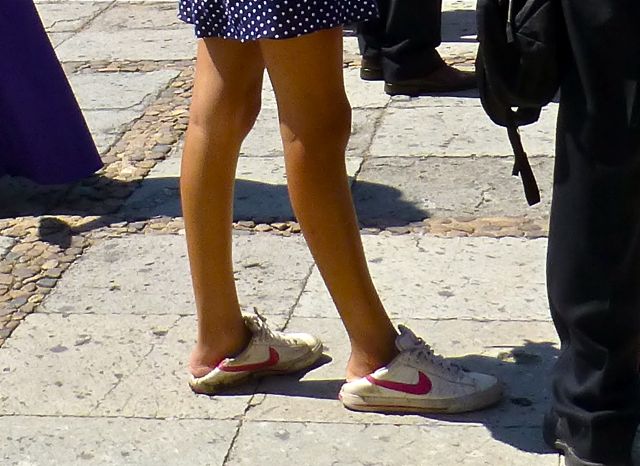
I am neither well connected nor well heeled, so I don’t think I will be called upon to go shopping for tacones (high heels) in the near future. If such an unlikely invite were to come my way, I might be tempted to follow this young guest’s lead…
Unbelievably, according to Mexico Retold’s recent humorous blog post, Tacos y Tacones, Mexico City actually played host to a 100 meter High Heel Race. My ankles ached just watching the video and I’m inclined to think the only thing high heels are good for is reclining…

As the old saying goes, “Come on in, take a load off!”
Posted in Churches, Culture, Religion, Travel & Tourism | Tagged clothing, high heels, Mexico, Oaxaca, photographs, photos, popular travel destinations, San Judas Tadeo, Santo Domingo, St. Jude, style, tacones, weddings | 5 Comments »
October 26, 2012 by spixl
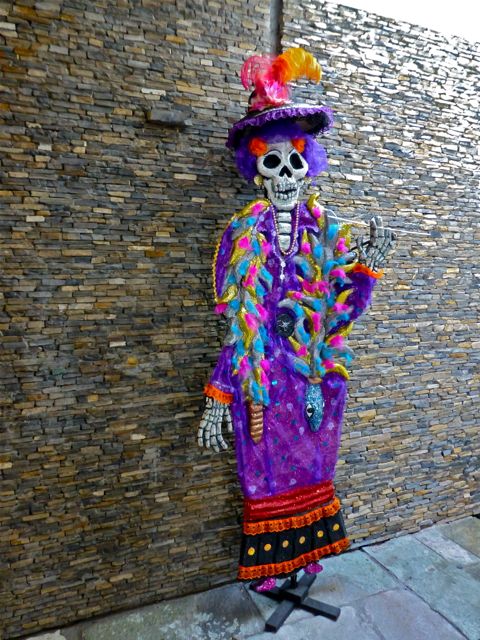
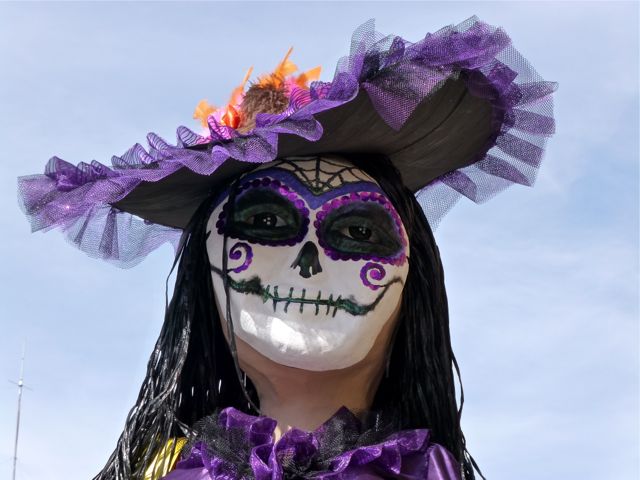
This Catrina arrived styling and ready to party.

Manicured fingers and toes, flower in her hair, and umbrella drink in hand, all she needs is a guy (or gal).
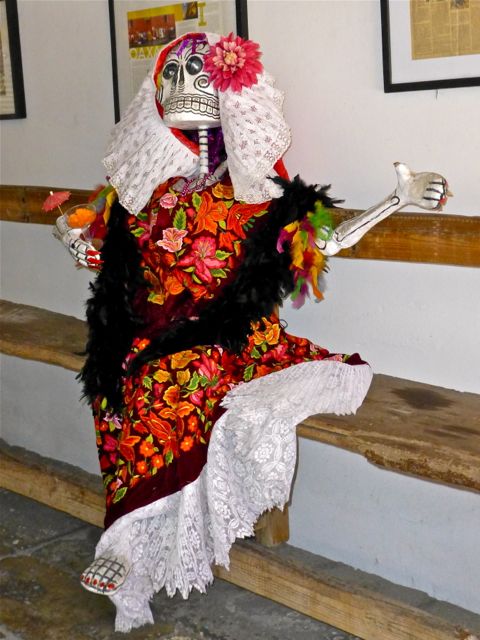
Young man beware — she has her eye on you!
Posted in Celebrations, Creativity, Culture, Holidays, Travel & Tourism | Tagged calaveras, catrina, Catrinas, Day of the Dead, Día de Muertos, Días de Muertos, Mexico, Oaxaca, photographs, photos, popular travel destinations, skeletons | Leave a Comment »
October 25, 2012 by spixl
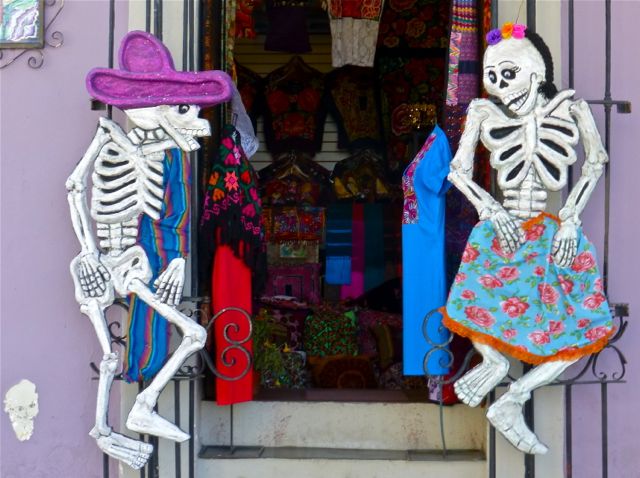
And, guess who’s coming to dinner? Catrinas, pinkies up!
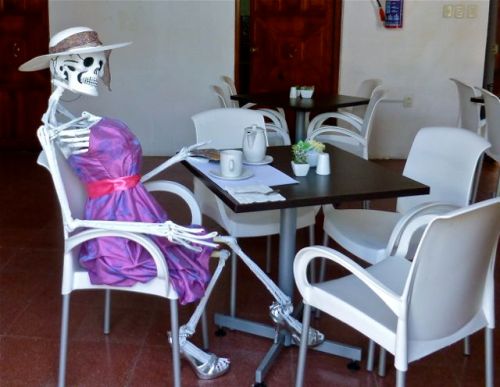
Dahling, don’t start the party without me!
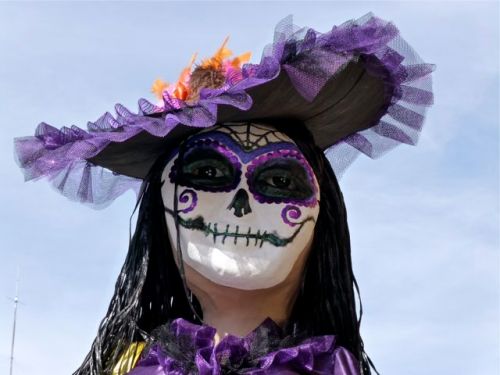
Lo siento mis amigas, sending regrets from Juchitán.

Decisions, decisions, decisions… Shall I take the Jetta, Crossfox, Suburban, or Express Van???

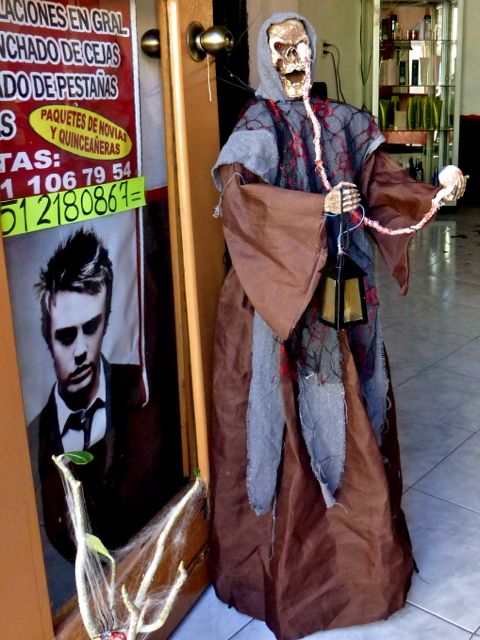
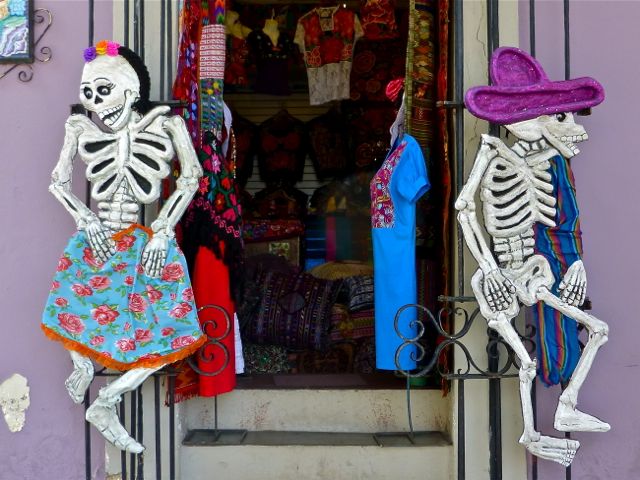
As for these two…
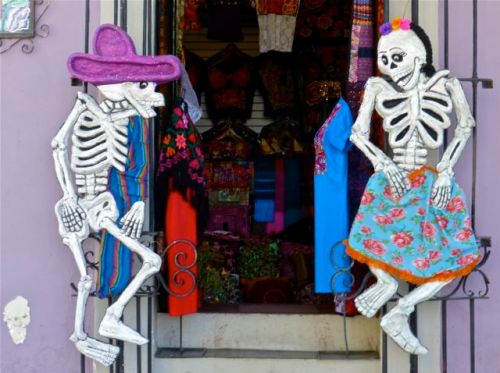
I’m not sure they are coming.
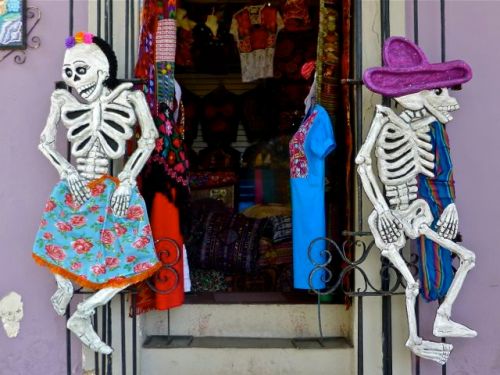
Hmmm… a lover’s quarrel? Sheesh, even in the afterlife??!!!
Posted in Celebrations, Creativity, Culture, Holidays, Travel & Tourism | Tagged calaveras, Catrinas, Day of the Dead, Día de Muertos, Días de Muertos, Mexico, Oaxaca, photographs, photos, popular travel destinations, skeletons | Leave a Comment »
October 23, 2012 by spixl
The announcement came at midnight with the ringing of the Cathedral’s bells and explosions of cohetes (rockets). Today el Señor del Rayo is having his day! Like Guelaguetza, Noche de Rabanós (Night of the Radishes), and Día de la Samaritana (Good Samaritan Day), this is an “only in Oaxaca” celebration.

The carving of Christ on the Cross was brought to Oaxaca during the 16th century and was placed in the temple of San Juan de Dios, a church which had adobe walls and a straw (or possibly wood) roof. Legend has it that lightning struck the church and everything was destroyed, save for this figurine. Un milagro! It was christened Señor del Rayo (Lord of Lightning), was given its own chapel in the newly built cathedral, and has been much venerated ever since.
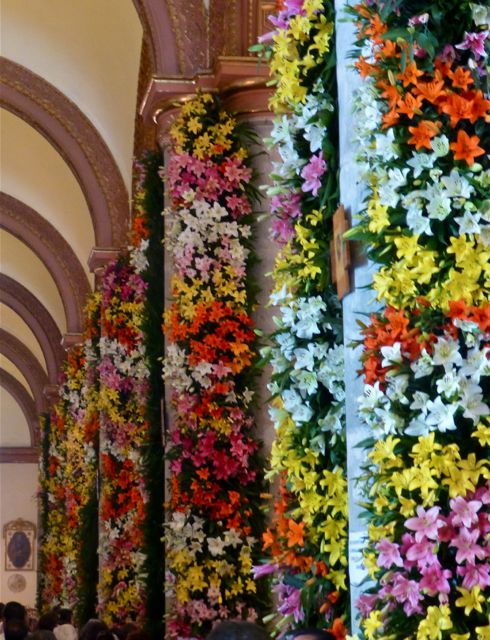
On Sunday, October 21, el Señor del Rayo is moved from his capilla (last chapel on the left) to the main altar. The cathedral fills with lilies (the scent “breathtaking”), and the faithful flock to pray before Señor del Rayo. When one inhales the fragrance, one exhales a heavenly, “ahhhh…”
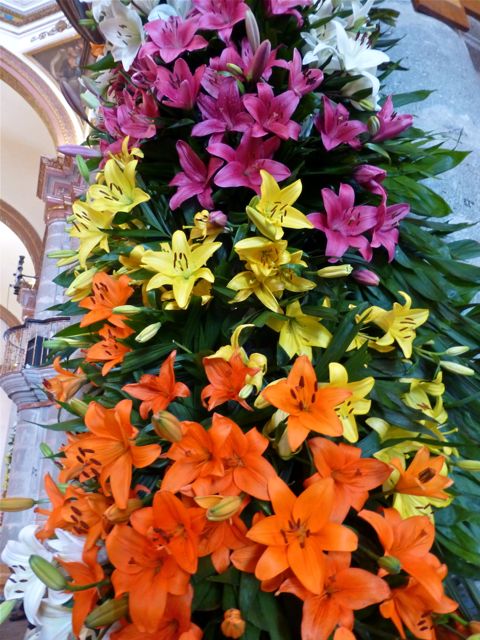
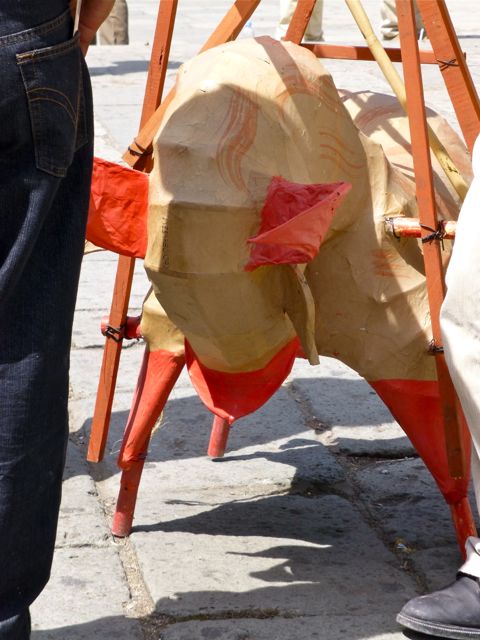
Like all good Mexican celebrations, be they religious or secular, there will be pirotécnicos tonight. Toritos de luces (little paper-mache bulls wired with fireworks) have begun gathering.

And, as I write, the frame of the castillo below has been raised to its “upright and locked position,” its various spinning appendages have been affixed, and gunpowder tracks are waiting to be lit.

Alas, the action doesn’t begin until around 10:00 PM. The spirit is willing, but it’s been a busy day, and this “too too solid flesh” is looking forward to melting into her bed. Think I’ll just watch the fireworks from the terrace. I know, what a wimp!!!
Posted in Celebrations, Churches, Culture, Holidays, Religion, Travel & Tourism | Tagged castillo, Catedral de Oaxaca, Cathedral, lilies, Mexico, Oaxaca, photographs, photos, popular travel destinations, religion, Señor del Rayo, torito | 6 Comments »
October 22, 2012 by spixl
For lovers of textiles and Mexico, the latest online issue of the magazine, HAND/EYE (love the title!), has a terrific interview with friend and textile designer/collector/researcher, Sheri Brautigam. The article, Documenting the Lives of Textiles, covers a wide range of topics, including preservation and revival of traditions and concerns re traditional versus modern designs. As would be expected, given the subject matter, it includes lots of photos!
BY Annie Waterman | October 10, 2012
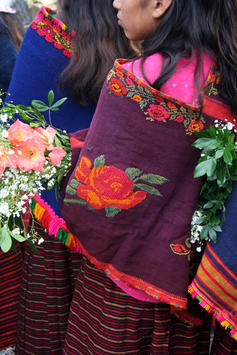
Courtesy of Sheri Brautigam
An Interview with Sheri Brautigam
Textile expert, Sheri Brautigam, shares with HAND/EYE Online, her experience as a documenter of “living” indigenous textiles.
HAND/EYE: How did you first find yourself in Mexico and documenting “living” indigenous textiles?
Sheri Brautigam: I went to the university in Mexico City in the 60’s and that was the beginning of my lifelong relationship and many in-depth experiences with Mexico. This time, I was training Mexican English teachers through the English Language fellowship with the U.S. State Department—sort of like the English Teachers’ Peace Corps. My location was in a small town in the State of Mexico—Atlacomulco, surrounded by many different indigenous villages. When I went to a nearby village Mazahua ‘Saints Day’ festival and saw the amazing garments the ladies were wearing, I started my documentation.
H/E: How did you first get into becoming a researcher/ textile collector?
SB: I had a textiles design studio (surface design textiles) in San Francisco for about 18 years, so I had been collecting world textiles since the 1960s. That was when they were readily available from world travelers. I have loved and been involved with textiles most of my life and always want to know how these beautiful things are made … and now in Mexico, it’s even more exciting to see them in context.
H/E: What sort of future do you predict for the world of traditional textiles? What changes have you noticed over the years?
SB: I’m very hopeful that many traditional Mexican textiles will survive and become even finer. This I have seen in Oaxaca and Chiapas. When appreciation comes from the outside world and the artisans can earn money, they have an incentive to keep producing. The more money they can earn from superior work also encourages some artisans with higher skills to train their children. The more affluent indigenous people become, the more pride they have in their own culture and the continuation of their textile traditions.
Certainly some of the indigenous will leave their village and go to the towns and cities to work and wear jeans and t-shirts—but when they come home they will wear a huipil for the feast day. It’s their cultural identity.
Click HERE to read full article.
Posted in Creativity, Culture, People, Textiles, Travel & Tourism | Tagged Annie Waterman, Chiapas, Documenting the Lives of Textiles, HAND/EYE, indigenous peoples, indigenous textiles, Mexico, Oaxaca, popular travel destinations, Sheri Brautigam, textiles, traje | Leave a Comment »
October 20, 2012 by spixl
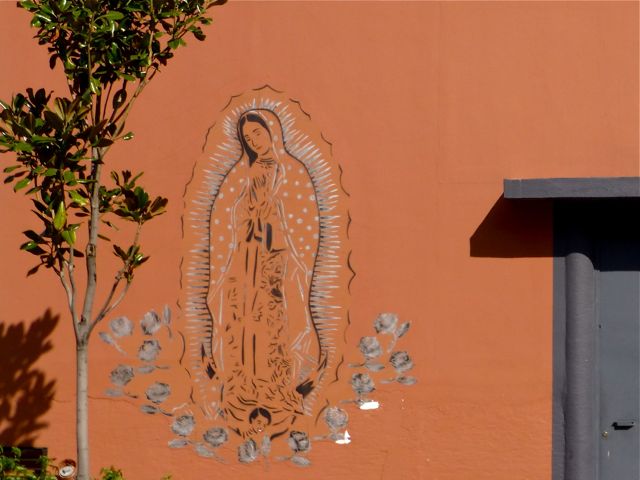
I’ve got my eye on you…

I’m praying for you…
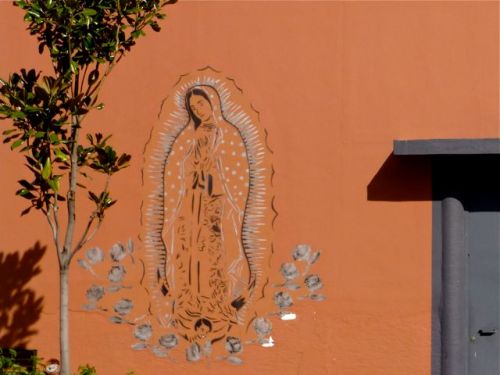
You just never know who might be looking over your shoulder.

Días de los Muertos are coming…
Posted in Celebrations, Creativity, Culture, Religion, Travel & Tourism | Tagged calaveras, Day of the Dead, Día de los Muertos, Días de Muertos, Mexico, Oaxaca, photographs, photos, popular travel destinations, skeletons, stencils, Virgen de Guadalupe, Virgin of Guadalupe, wall art | Leave a Comment »
October 18, 2012 by spixl
At long last, and with not much fanfare, the Atzompa archeological site is open to the public!

The winding road, cut into the side of the mountain, has been visible for a while and we could see platforms when we were up at Monte Alban (about 5 miles away) two weeks ago.

It’s a bit of a hike up a newly paved road from the small (temporary?) parking area under the pine trees, but we eventually reached the site and the ball court.

It is small, but the setting is spectacular.

One can see a recreation of the 1,000+ year old Zapotec kiln that was uncovered 8 feet down — offering proof of continuity to today’s renown potters of Santa María Atzompa.

Then there is the vegetation…. The architecture of native trees adds to aura of this ancient site.

And, the white flowers of one of the trees has attracted the tiniest hummingbirds I’ve ever seen.

Nopal cactus, in full fruit (tunas) at this time of year, dot the landscape.

Archaeologists and their crews continue their work excavating and restoring, and much is blocked from amateur exploration, including the 1,100-year-old burial chamber. Darn!

The only “facilities” available at the site, thus far, are bathrooms (which were a trip, but I won’t go into it). Lest you worry about comida for the workers, it arrived by motorcycle and was waiting in insulated boxes in the parking area.

Aside from those working at the site, we had the place to ourselves… no tour groups and no vendors. We were left alone to listen to the birds and insects and imagine a highly developed culture, alive with the ancestors of the energetic, creative, and spiritual people we are privileged to live among.
Posted in Archaeology, Culture, Travel & Tourism | Tagged archaelogical site, archaeological zone, archaeology, Mexico, nature, Oaxaca, photography, photos, plants, popular travel destinations, Santa María Atzompa, Zona Arqueologica de Atzompa | 8 Comments »
October 16, 2012 by spixl
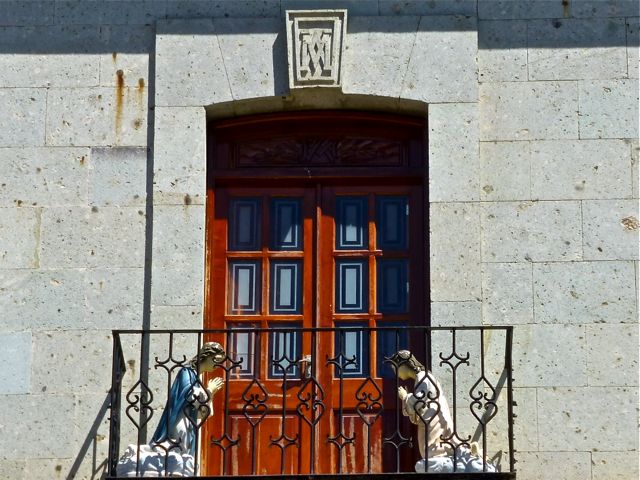
I don’t know about these two hanging out on a balcony above Independencia, yesterday.
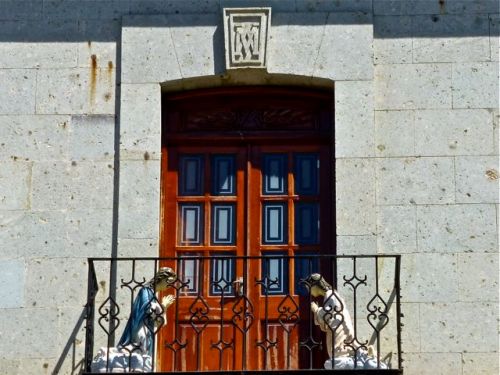
But, who could resist these two??? Waiting for the convite in Teotitlán del Valle last week.
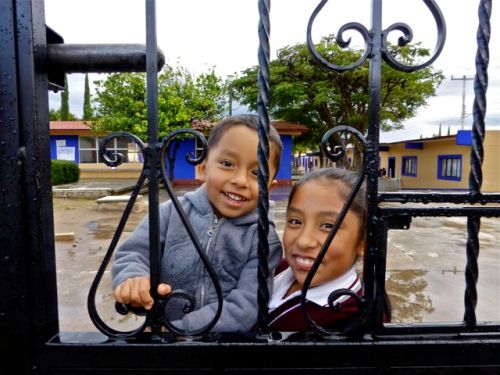
Posted in Culture, Religion, Travel & Tourism | Tagged balcony, children, decorative iron bars, Mexico, Oaxaca, photographs popular travel destinations, photos, praying figurines, Teotitlán del Valle | Leave a Comment »
October 14, 2012 by spixl
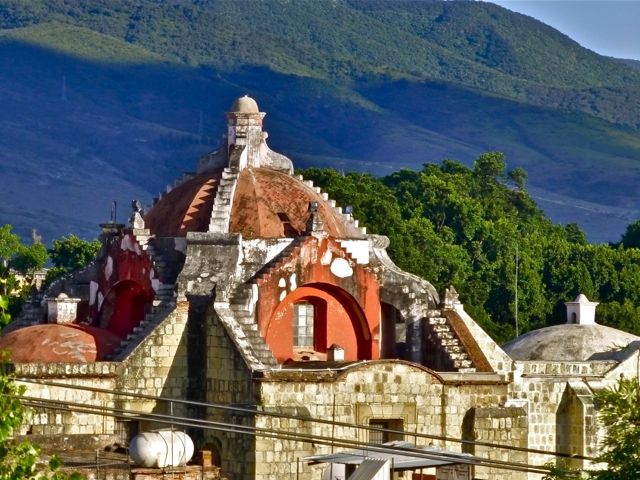
Yesterday, standing on the terrace, playing with the zoom on my new camera. Looking southeast, as the sun was about to disappear behind the sierras to the west.
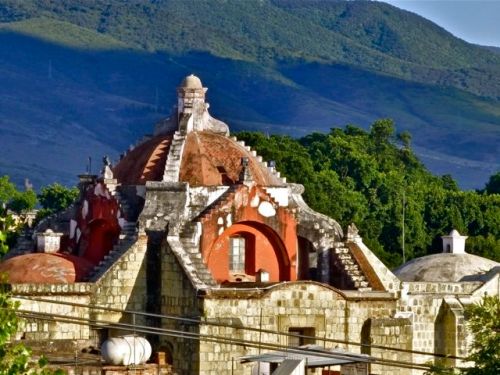
Templo de San Felipe Neri, a couple of blocks from Casita Colibrí.

Templo de San Francisco, about twelve blocks away. Going to keep working on it, but liking my little Lumix!
h/t Chris
Posted in Buildings, Churches, Religion, Travel & Tourism | Tagged architecture, churches, iglesias, Mexico, Oaxaca, photographs, photos, popular travel destinations, Templo de San Felipe Neri | 5 Comments »
October 12, 2012 by spixl
While Oaxaca is filled with music, art, and dance, it hasn’t been known for its contribution to live theater. However, there are signs that this may change. In August, the cultural monthly journal, El Jolgorio featured theater in Oaxaca. One of the articles explained, that thanks to the work of Teatro Juárez and the Fundación Cultural Crisol, a drama workshop was established in Oaxaca and in three years, fifteen plays have been written, with eleven being presented in Oaxaca and Mexico City. As ex-pat playwright Kurt Hackbarth asked at the press discussing his newest play, El Ostrakón, “Oaxaca is a destination for art. Oaxaca is a destination for music. Why not now make Oaxaca as a national destination for original theater…?”
By the way, you may remember Kurt Hackbarth from my post on his comedy, La [medio] diezmada. This time around he penned a well received drama, El Ostrakón, that premiered on August 29, 2012 and ran through September 2 — a long run here! It “is a contemporary tragedy which, by using elements of farce and social criticism, tells the story of Gabriel, a homeless youth, and his attempts to avoid the traps laid by the chameleonic narrator, the incarnation of a hostile society.” (translated from El Ostrakón Facebook page)

If you missed it the first time around (or would like to see it again) and will be in Oaxaca on Monday, October 15 at 6 pm, you are in luck. El Ostrakón will be performed at the beautiful Teatro Macedonio Alcalá as part of the inauguration of the Oaxaca State Theater Festival. And, the performance is free, though a 5 peso (that’s only about 40¢ US!!!) donation is requested to help support the festival. El Ostrakón is in Spanish, but English-only language speakers can download an English language synopsis from the website.
Full disclosure: I designed the El Ostrakón website.
Posted in Creativity, Culture, Travel & Tourism | Tagged El Ostrakón, Kurt Hackbarth, Mexico, Oaxaca, plays, theater | 3 Comments »
« Newer Posts - Older Posts »


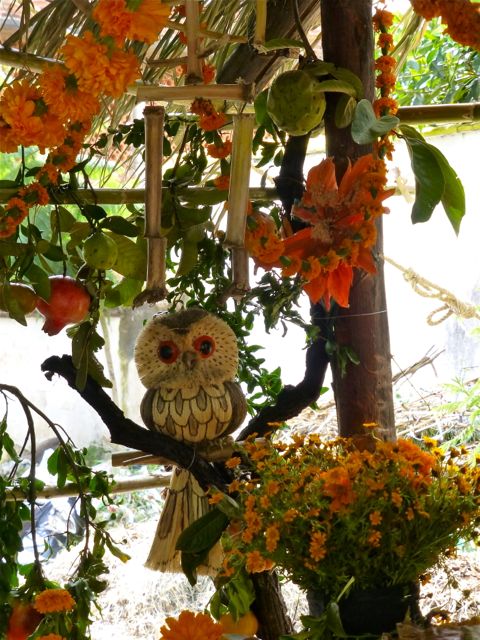

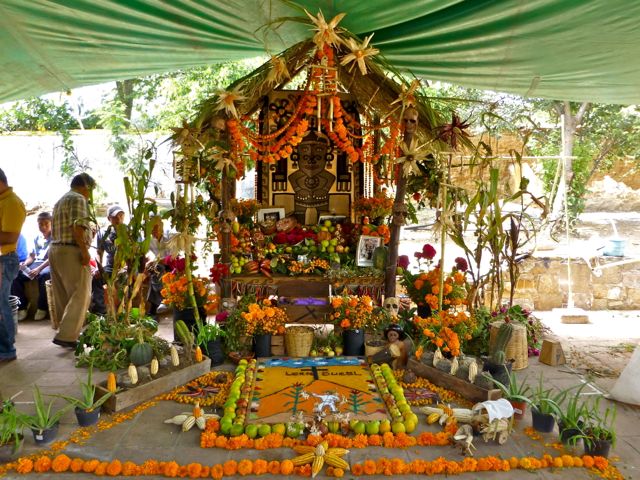 This is another ofrenda from the previously mentioned “altar decorating” competition on the plaza in front of Santo Tomás in Oaxaca’s Xochimilco barrio.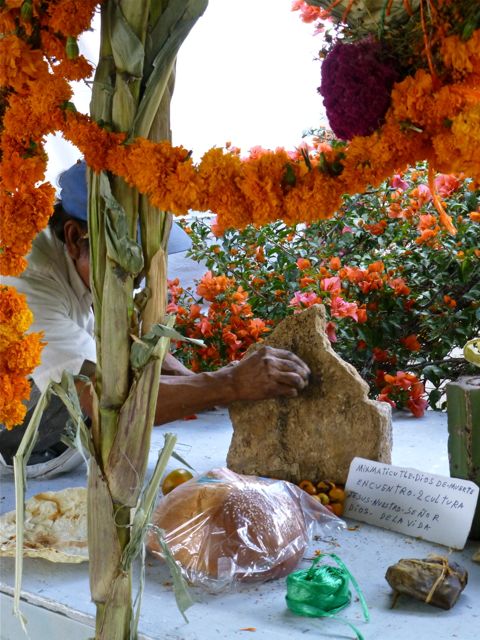






















 Mexican Peso Converter

 View From Casita Colibrí