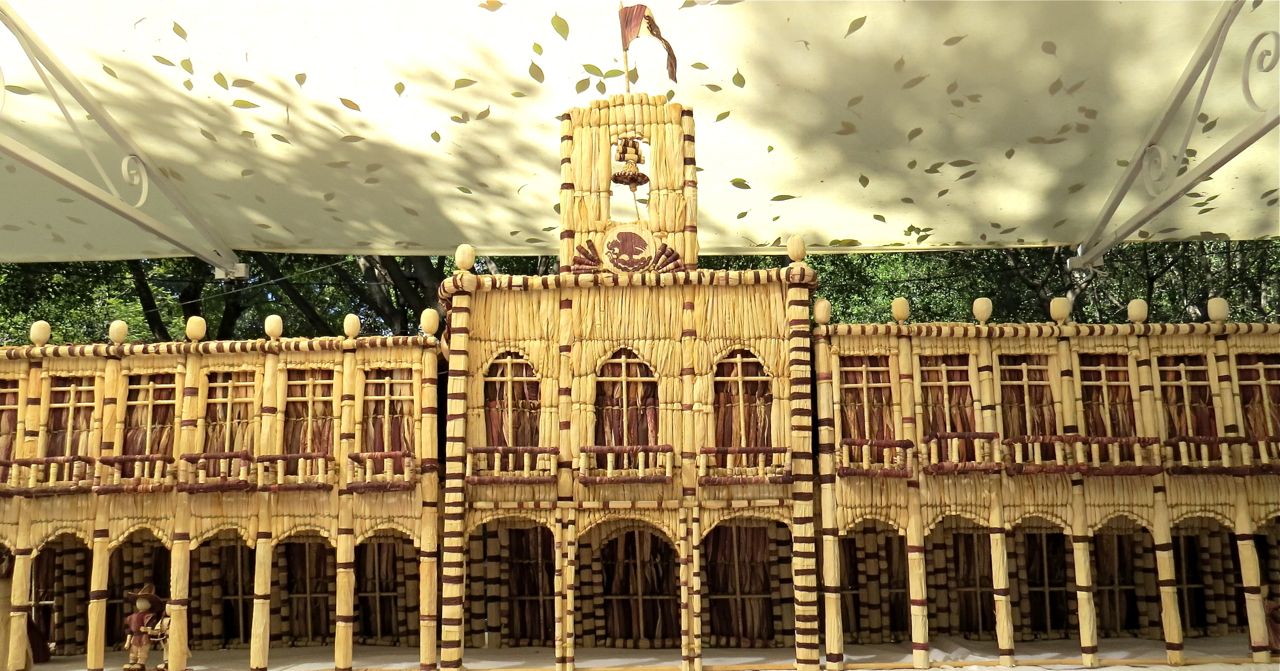
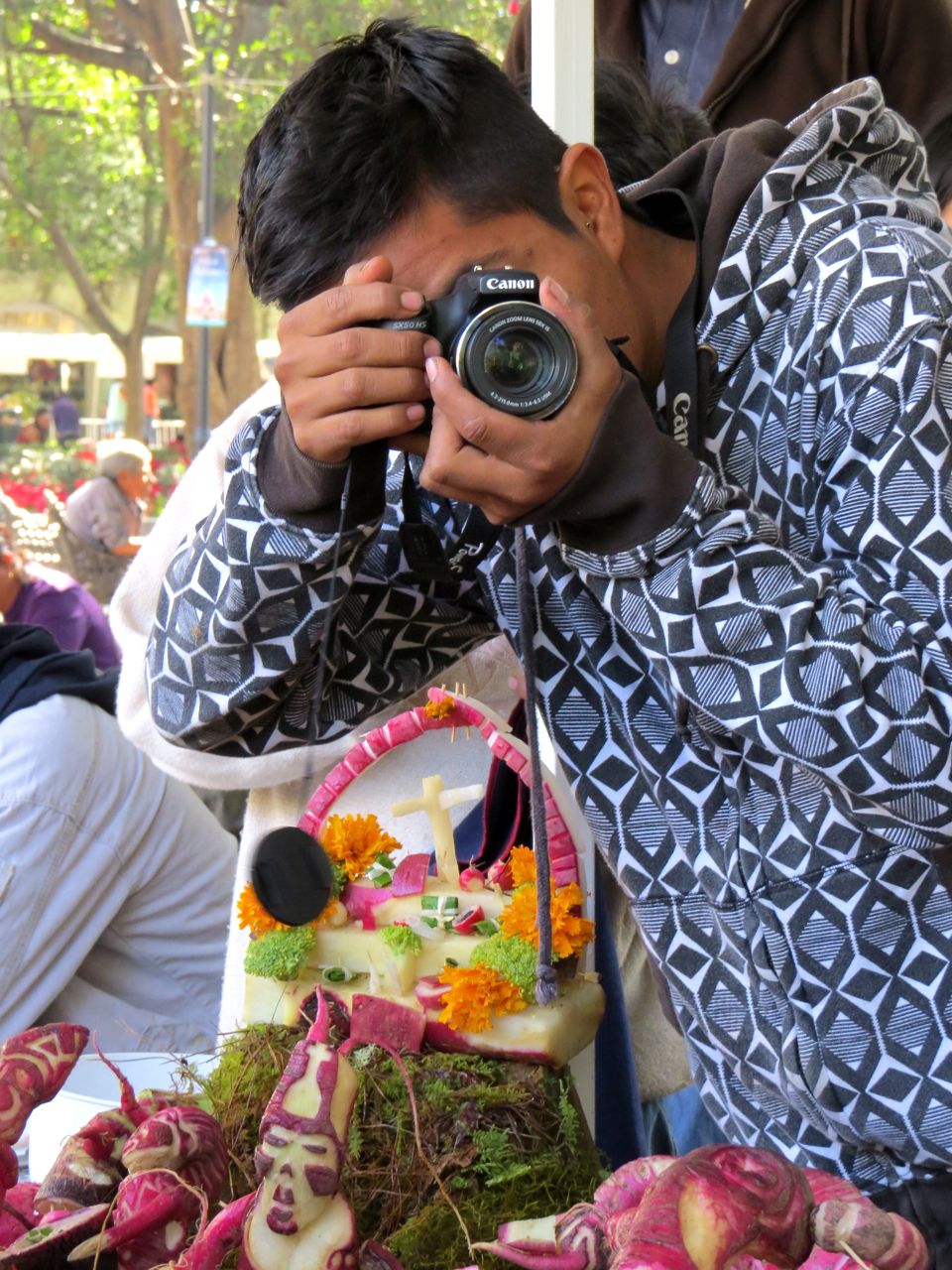
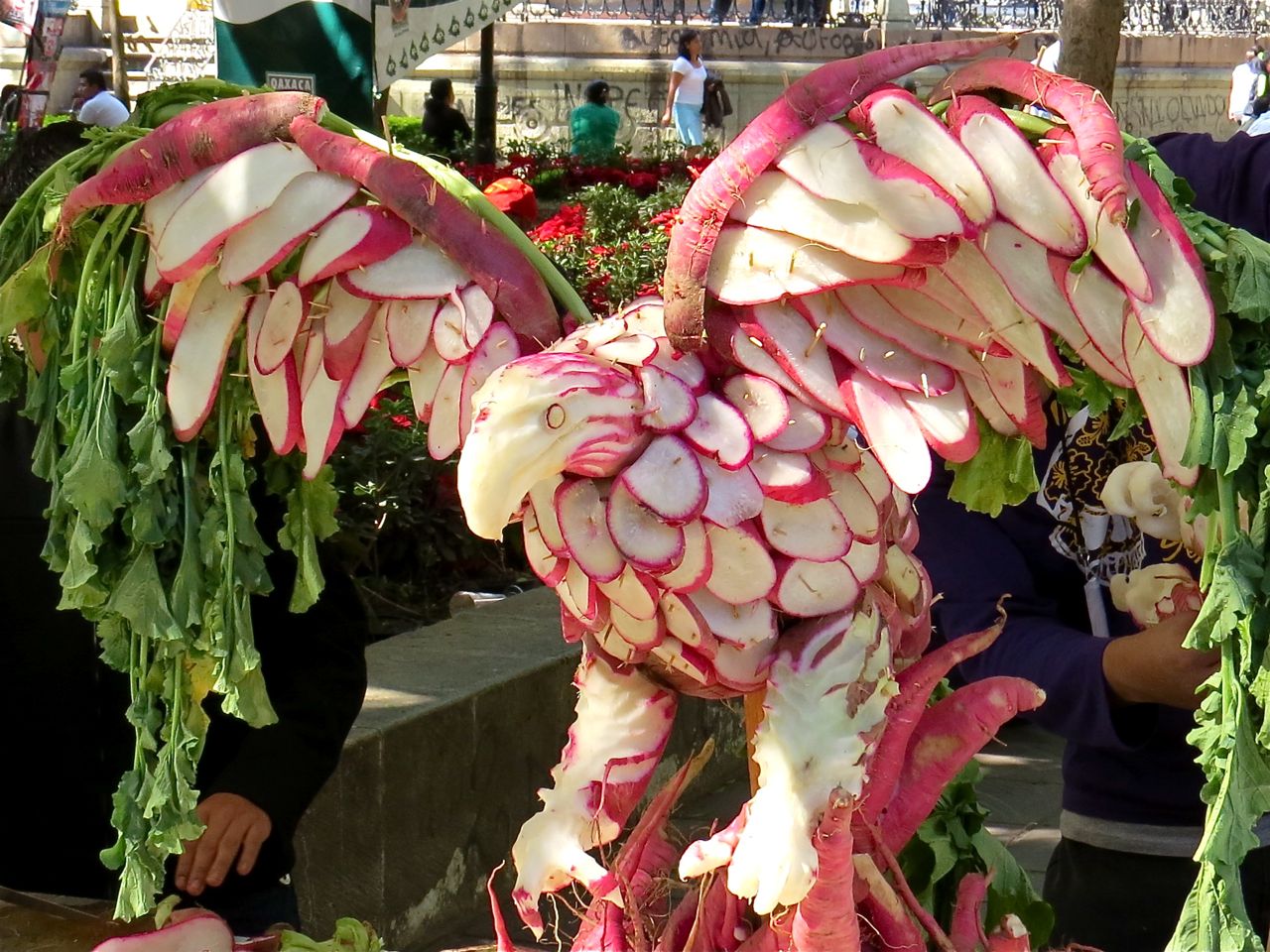
Despite of the name, Noche de Rábanos isn’t just about carving radishes. The creativity and ingenuity of the gardeners and artisans of Oaxaca in several other categories are also on display — Flor Inmortal (dried flowers), Totomoxtle (dried corn husks) Natural, and Totomoxtle Decorated, as well as two Children’s categories.
First place in the Totomoxtle Natural category went to Elpidio Adrián González López and his amazing creation, Mercado Antiguo en la Plaza de las Armas 1885.
If you missed it December 23 on the zócalo, or want to see it up close and personal, head over to CaféCafé, on the corner of Porfirio Díaz and M. Bravo.
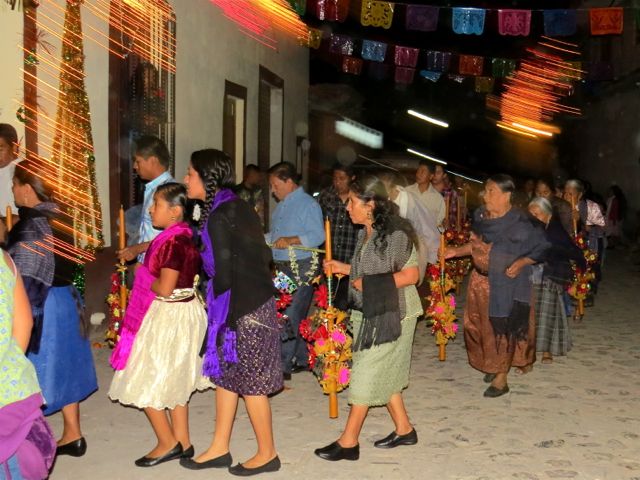
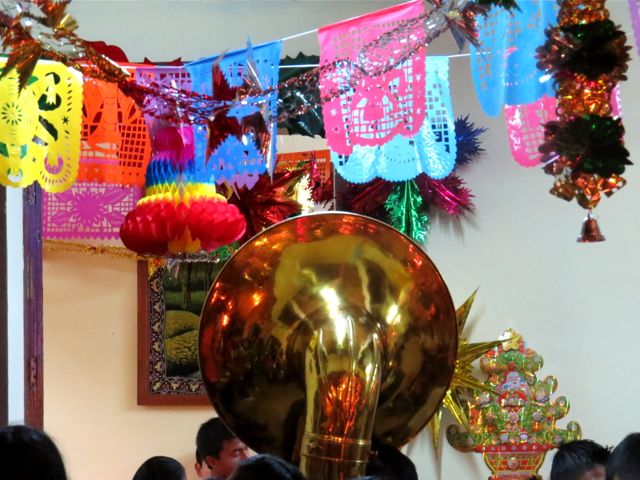
Noche Buena (Christmas Eve) in Oaxaca means posadas from churches around the city converge on the zócalo. Flatbed trucks carrying Jesus, Mary, and Josephs; fireworks, pinwheels, and sparklers; brass bands; China Oaxaqueña folkloric dancers; and the faithful carrying candles arrive to circle the zócalo again and again and again. Spectators, young and old wave sparklers, take photos, and crack powder or confetti filled eggs on each others heads — and it’s quite a scene!
This slideshow requires JavaScript.
And, in what has become a Christmas Eve tradition (it was still Christmas Eve when I began this post) on my blog, Ernie Villarreal’s version of the song, Pancho Claus, by Chicano music legend, Eduardo “Lalo” Guerrero.
Pancho Claus
‘Twas the night before Christmas and all through la casa Not a creature was stirring, Caramba! ¿Que pasa?
Los ninos were all tucked away in their camas, Some in vestidos and some in pajamas. While Mama worked late in her little cocina, El viejo was down at the corner cantina.
The stockings were hanging con mucho cuidado, In hopes that St. Nicholas would feel obligado To bring all the children, both buenos y malos, A Nice batch of dulces and other regalos.
Outside in the yard, there arouse such a grito, That I jumped to my feet, like a frightened cabrito.
I went to the window and looked out afuera, And who in the world, do you think que era?
Saint Nick in a sleigh and a big red sombrero Came dashing along like a crazy bombero!
And pulling his sleigh instead of venados, Were eight little burros approaching volados.
I watched as they came, and this little hombre Was shouting and whistling and calling by nombre.
Then standing erect with his hand on his pecho He flew to the top of our very own techo. With his round little belly like a bowl of jalea, He struggled to squeeze down our old chimenea.
Then huffing and puffing, at last in our sala, With soot smeared all over his red suit de gala.
He filled the stockings with lovely regalos, For none of the children had been very malos.
Then chuckling aloud and seeming contento, He turned like a flash and was gone like the viento.
And I heard him exclaim and this is VERDAD, Merry Christmas to all, And to All ¡Feliz Navidad!

This morning I walked down to the zócalo to watch artists at work — it’s Noche de Rábanos (Night of the Radishes). This December 23 “only in Oaxaca” tradition has been a mainstay of the holiday season since 1897. I know, who would have thought radishes could elicit such creativity? But, they definitely do! Here is Adrián Antonio Flores Peña working on his piece, Quebrantahueso (bearded vulture).
More to come… I just have to weed through the 300+ other photos I took!
UPDATE: Adrián Antonio Flores Peña won first place in the “Free” (as opposed to “Traditional”) category.
Last night, just about this time, a posada through the calles of Teotitlán del Valle was arriving at the home where Mary and Joseph would find shelter for the night. Each night, images of Mary and Joseph wander the streets looking for refuge. The posadas began on December 15 and will last through December 24, la última posada, and the arrival of Jesus.
Women and men arrive at the home where Mary and Joseph had spent the previous night.
Prayers are said in front of the images of Mary and Joseph and then women line up on one side and men on the other, as the procession begins.
There is a band. Actually, there are two bands. The first, at the front of the procession, plays a dirge-like tune and the second, back near the statues of Mary and Joseph, plays marching music (think, John Philip Sousa).
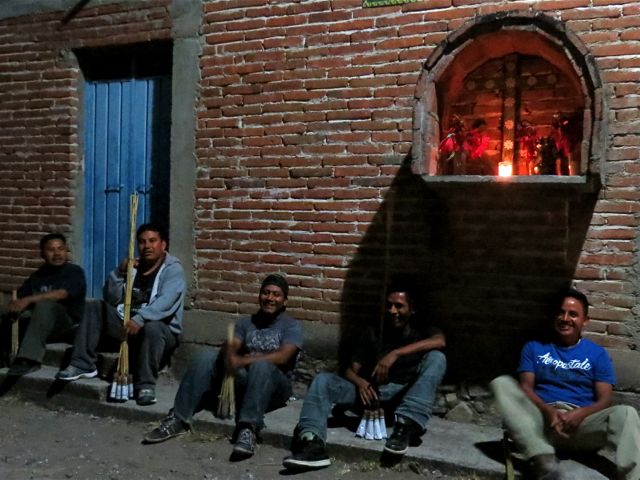
Naturally, there are fireworks. These are the pyrotechnic guys, waiting to lead the parade.
Mary and Joseph en route. Please note, they are carried by young, and from what I was told, unmarried women.
Primarily lit by elaborate beeswax velas labradas (carved candles), the procession wound its way through Teotitlán del Valle.
Through the uneven cobblestone streets, young and old walked for over two hours. It was massive and it seemed as if the entire village was either in the parade or watching.
Eventually, we arrived at the home where Mary and Joseph would be given refuge for this night. There was no mistaking this was the destination — it was lit up like a Christmas tree.
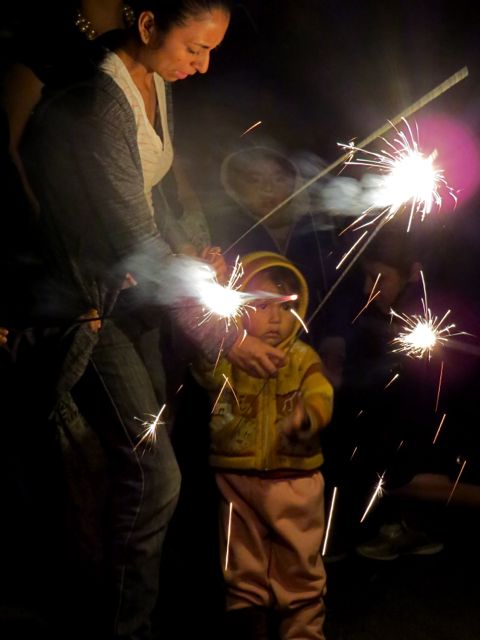
Inside, there was more religious ritual, but outside, there were sparklers!
(ps) If anyone has any tips for taking photos of nighttime processions of people under challenging lighting conditions, please feel free to offer your suggestions. Muchisimas gracias.
It may be the Winter Solstice, but here in Oaxaca my doors and windows are already open and I’m looking at a clear blue sky and an 85° F temperature forecast. Ahhh…
This is about as close as we get to Old Man Winter…
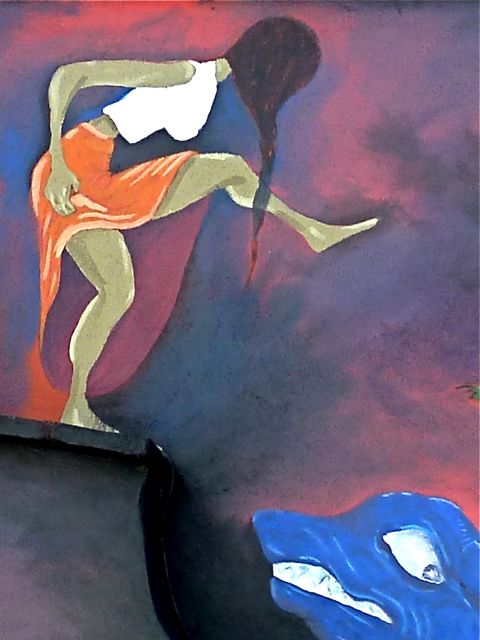
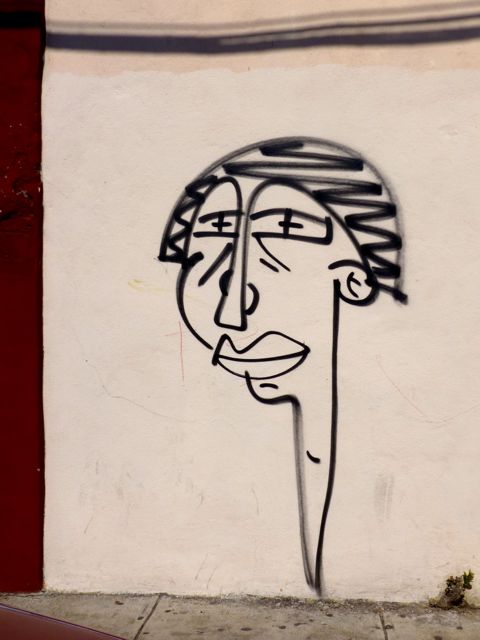
Mural on a wall along Niños Heroes, Oaxaca
Happy Winter Solstice to all in the northern latitudes and happy Summer Solstice to those south of the equator.
If you enter the word “soledad” into a Spanish to English translation program, “solitude” and “loneliness” result. However, for the past ten days, Our Lady of Solitude hasn’t had much of an opportunity to be lonely. On December 15, she was taken down from her glass encased niche in the Basílica, that bears her name, and carried out into the fresh air of the church plaza. On the 16th, she took a road trip through the streets of Oaxaca, stopping to visit several other churches along the route.
The faithful have been coming to honor her.
And, over the past 24 hours, she has been entertained by fireworks, bands, and the ringing of bells.
Food stalls surround her from Morelos to Independencia…
along with vendors of the sacred…
and the profane.
There is even a carnival for the kids.
With crowds, like these…
Nuestra Señora de la Soledad might just be looking forward to returning to the solitude of her glass enclosed niche. I know I’m looking forward to a quiet night’s sleep!
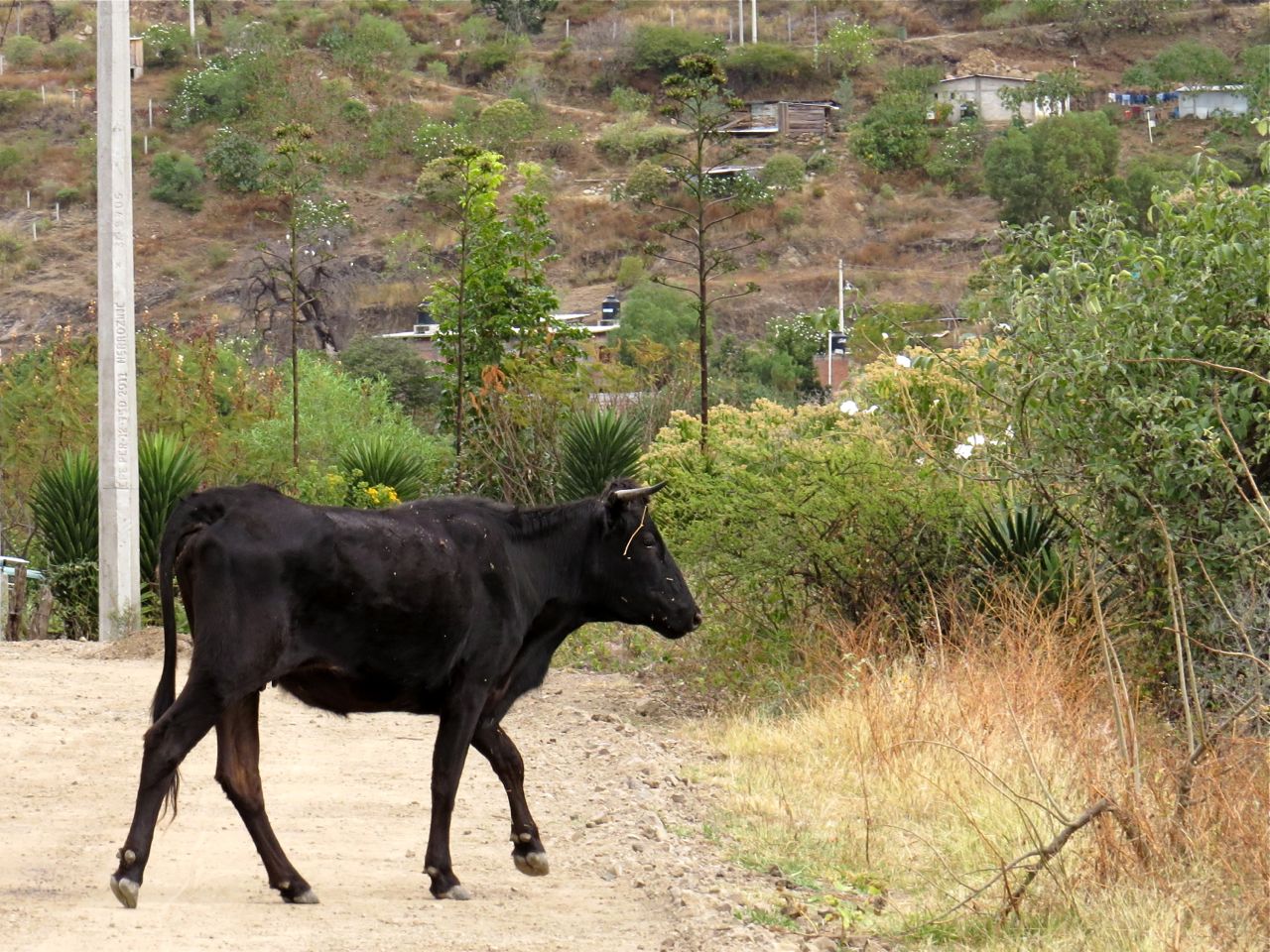
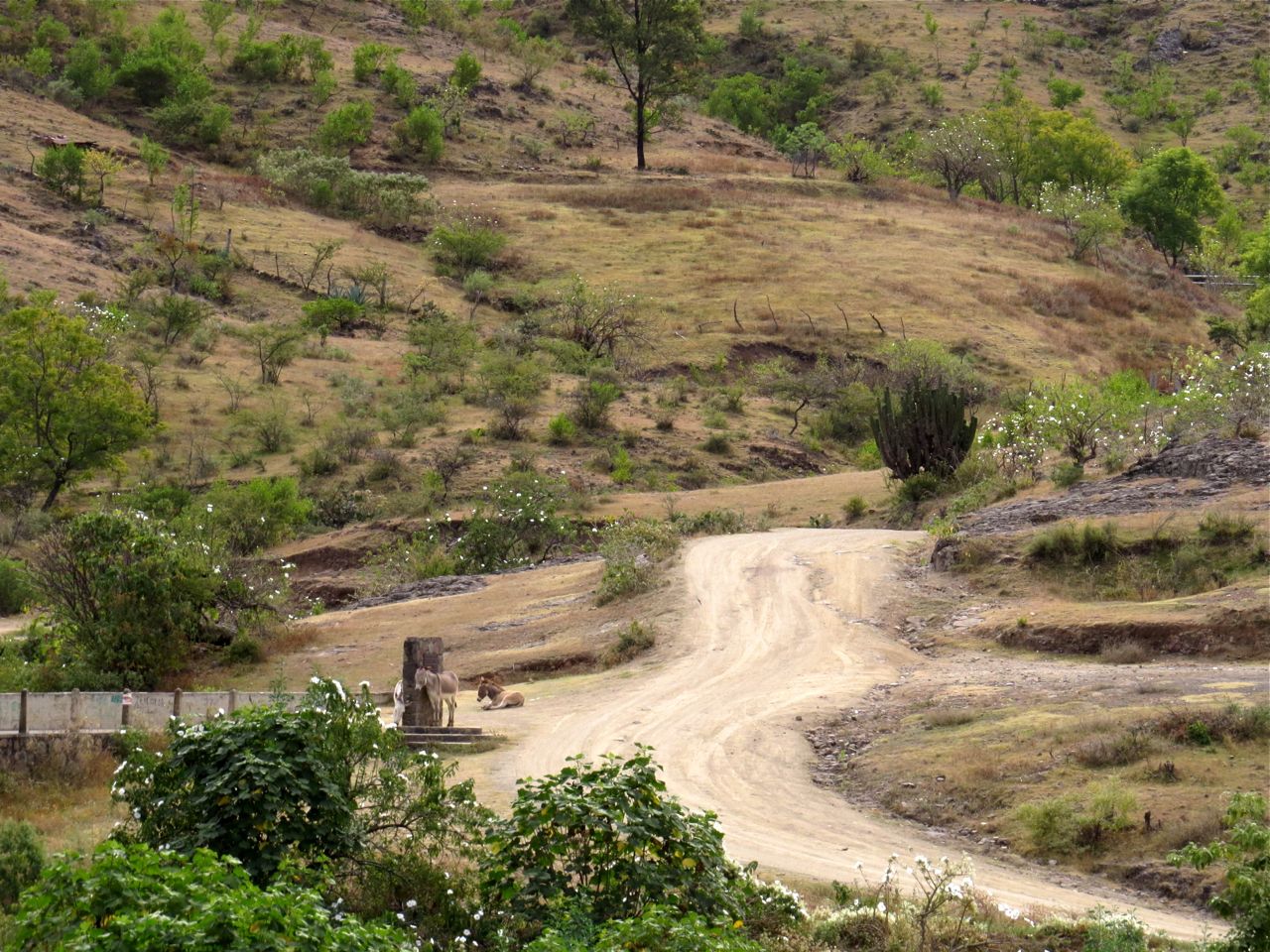
I went to Teotitlán del Valle yesterday for the annual Virgen de Guadalupe performance of the Danza de la Pluma. As many of you know, I’ve seen it many times, BUT I’ve never stayed until the end, as the dance lasts for eight hours. Yes, 8 hours! It would mean returning to the city late at night — and driving at night is something most try to avoid. Thus, I decided to spend the night at Las Granadas, one of the few B&Bs in town. However, the thought of waking to the sounds of roosters crowing, burros braying, sheep bleating, AND going for a morning walk in the country sealed the deal.
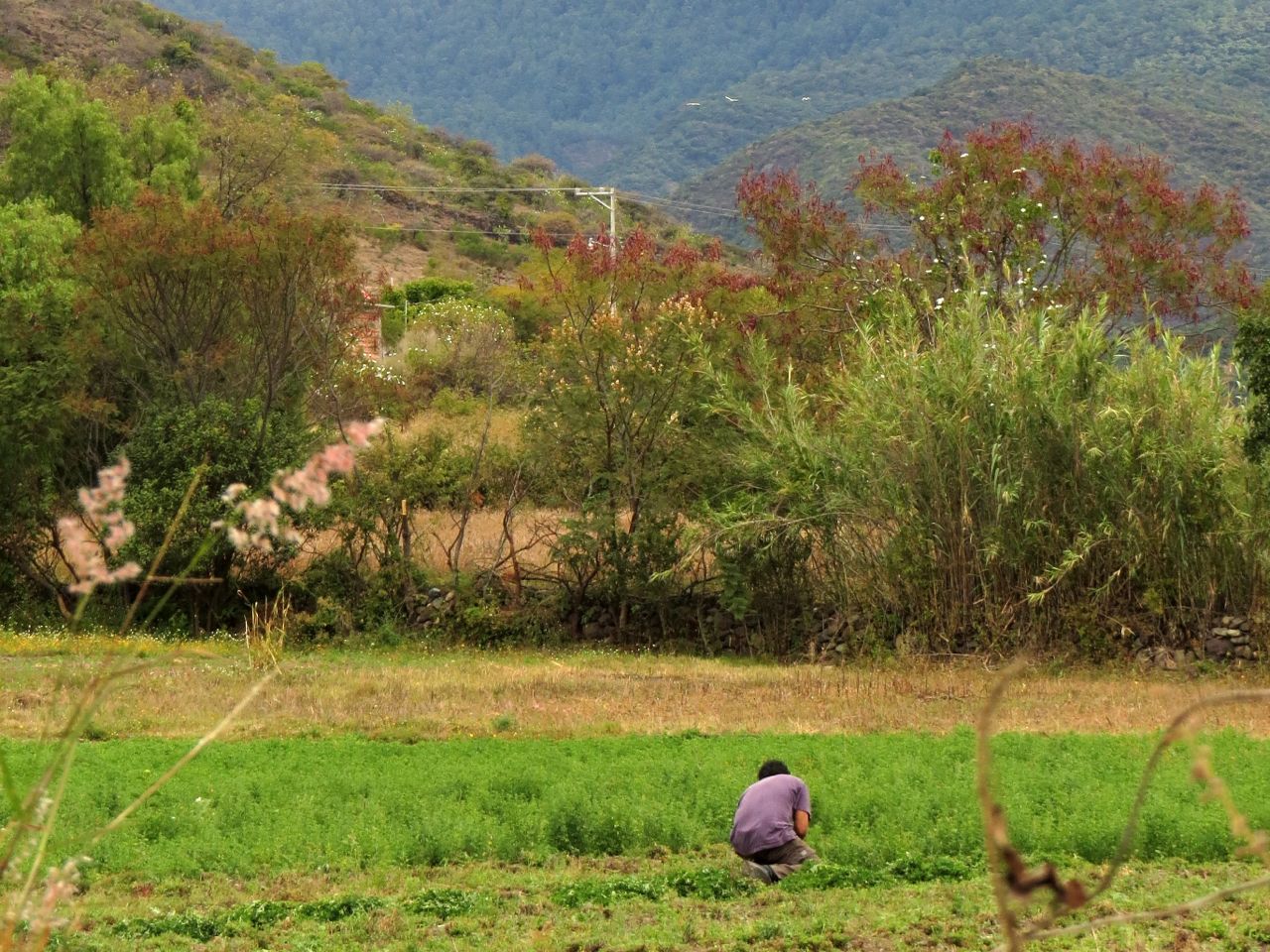
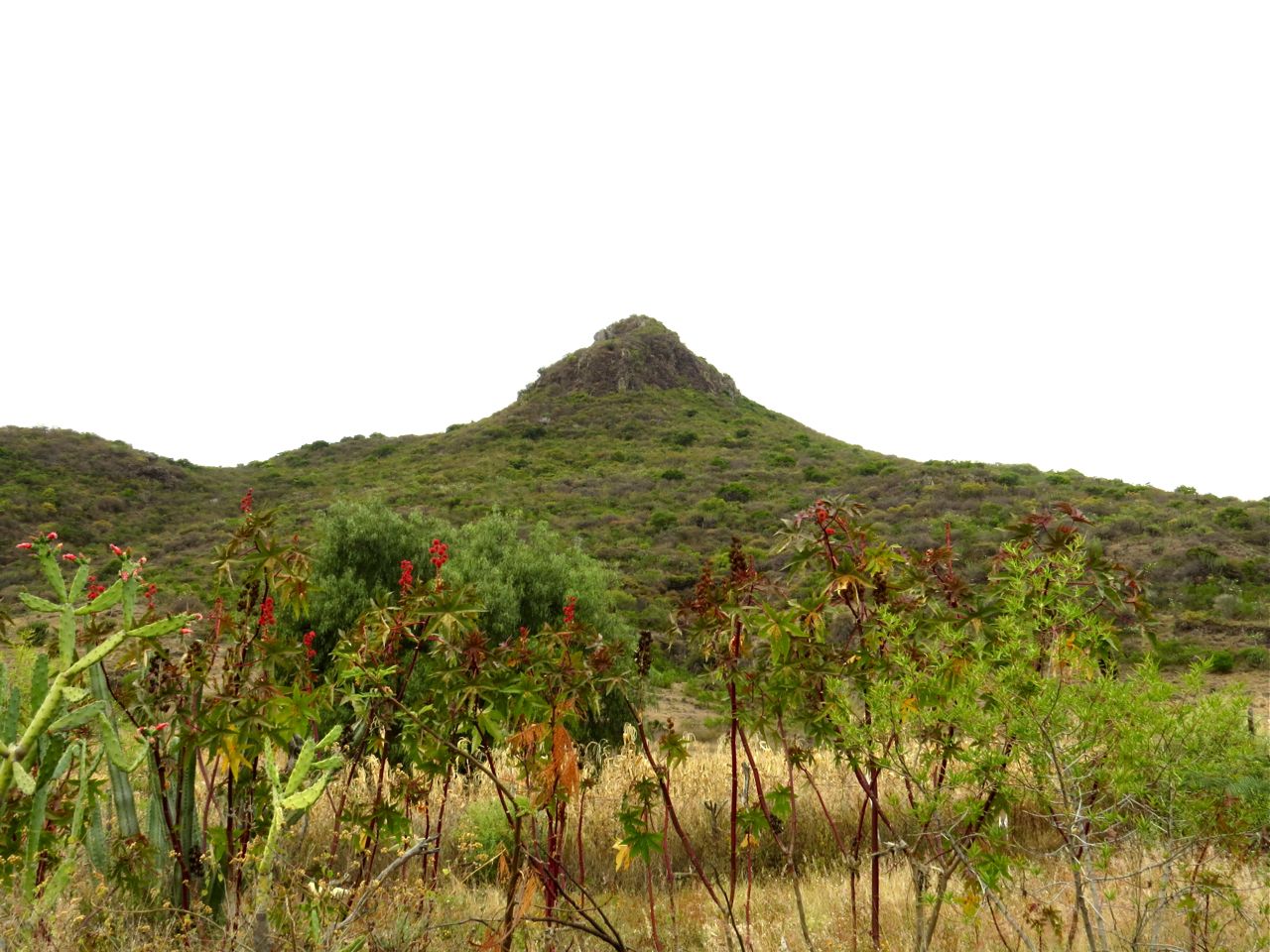
And so, a little before 9 AM today, I headed up (down?) Calle 2 de abril toward El Picacho. The work day had long since begun…
Crossing the Arroyo Grande, I turned right to begin the trek up Revolución. El Picacho kept a watchful eye as I kept pausing to snap photos and just take in the sights and sounds of being out in the country.
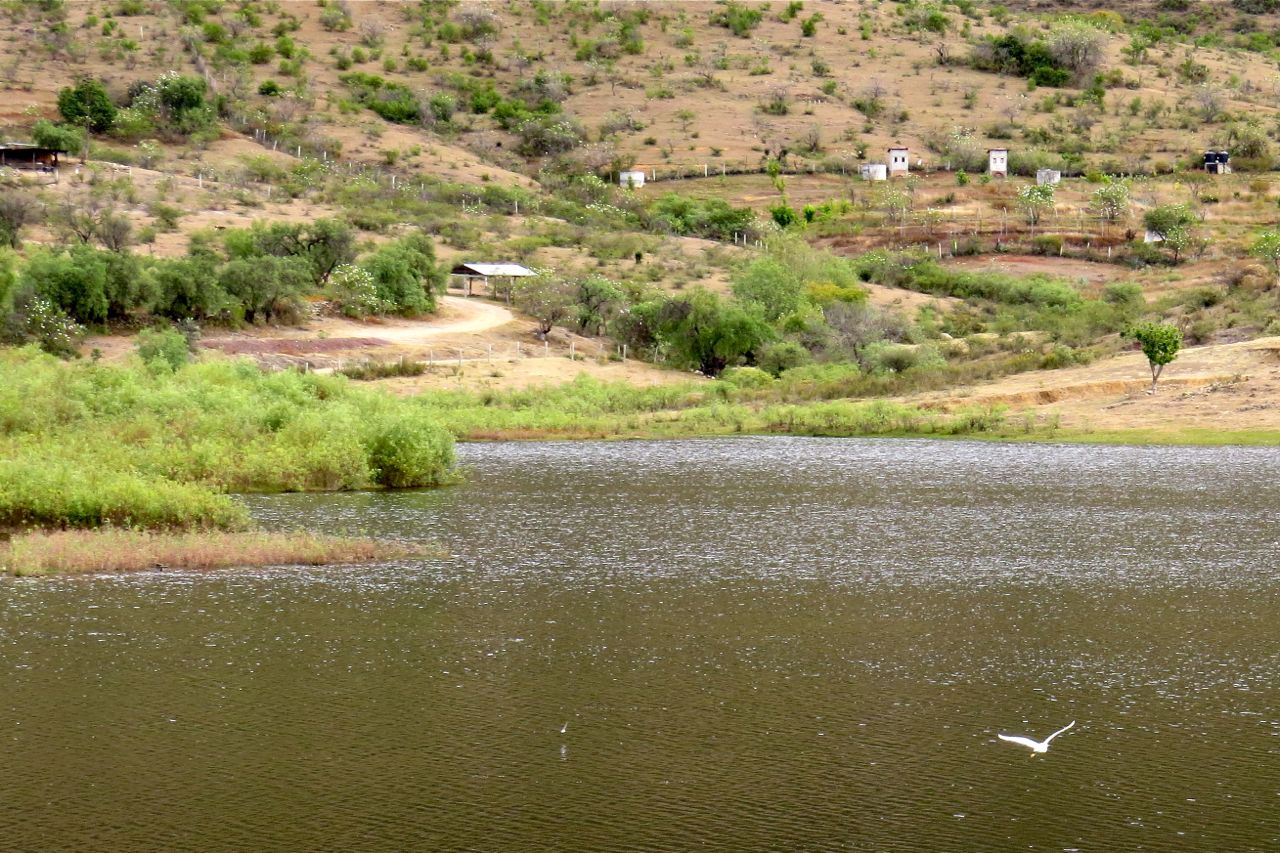
My destination was the presa (dam) and its precious reservoir. Most of my life has been spent living five minutes from the San Francisco Bay and fifteen minutes from the Pacific Ocean — and now living in a landlocked city, I do miss bodies of water.
Crossing to the other side of the arroyo, I turned right on Avenida Benito Juárez for the return trip to the B&B.
As I walked, the lyrics to Al Kooper’s, House in the Country kept playing in my mind.
No need to worry Folks in a hurry Leave them behind you No one can find you House in the country House in the country
All the relaxin` Will soon fill the cracks in Good for your head too If you are led to House in the country House in the country Green surrounding Love abounding You won`t find a manhole there
Tomorrow, December 12, is el Día de la Virgen de Guadalupe, aka, Queen of Mexico, Empress of America, and patron saint of México.
Legend and belief has it that in, “1525, only four years after the conquest, the Aztec Quauhtlatoatzin was baptized by a Franciscan priest, who named him Juan Diego. Six years later, on December 9th, Juan Diego witnessed the first appearance of the Virgin of Guadalupe. She told him she wanted a church built on Tepeyac Hill and told him to communicate her wish to the authorities. Mexico’s first Bishop, Juan de Zumárraga, didn’t believe him.” She appeared to Juan Diego three more times and with her last apparition, “she asked him to go gather some flowers: roses, which had never grown there, much less in mid-winter. He wrapped them in his ayate or tilma, a sort of coarsely woven cape, and the Virgin told him not to open it until he was before the Bishop. When Juan Diego opened the tilma in front of Bishop Zumárraga, the roses cascaded out and they discovered the image of the Virgin imprinted upon it. ” Thus, her iconic cloak we see in paintings and statues.
In Oaxaca, her fiesta began on December 2 and will end with a mass at 7 PM on December 13. Today, little boys of the city, dressed as Juan Diego, and little girls, in the traditional traje (costume), were brought by parents (and grandparents) to the Templo de Nuestra Señora de Guadalupe (at the north end of Llano Park), where they waited patiently in long lines to enter the church to be blessed. Once they exited, fifteen (más o menos) “Guadalupe settings” designed and constructed by photographers and their assistants, vied for pesos for portraits.
This slideshow requires JavaScript.
By the way, there was a reward awaiting the little Juan Diegos and his sisters — rows upon rows of food stalls, carnival rides, and puestos selling toys, Santa hats, Christmas lights.
Tomorrow, I’m off to Teotitlán del Valle for their traditional Virgen de Guadalupe performance of the Danza de la Pluma. And, did I mention yesterday’s national Day of the Clown festivities? Stay tuned…
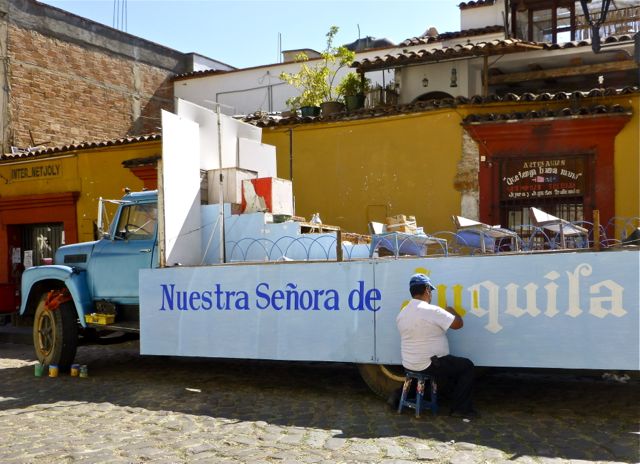
No doubt, tomorrow I will be awakened, long before the crack of dawn, by the cracks and pops of cohetes (rockets — all bang no bling) and the seemingly non-stop clangs and bongs emanating from the bell towers of the countless churches that surround me in Oaxaca city’s historic district. And, I’m sure, I will hear the sounds of a procession — December 8 is the feast day of the Virgin of Juquila (La Virgen de Juquila).
Flatbed truck on Constitución in Oaxaca city, Dec. 6, 2012.
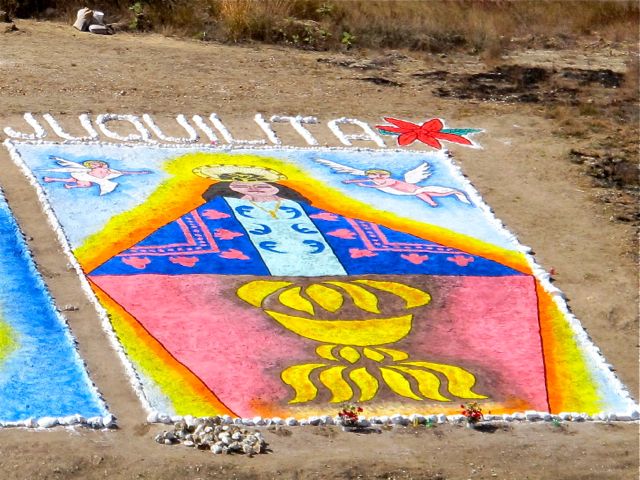
According to legend, in 1633, when a fire burned the small Chatino village of Amialtepec to the ground, a small wooden statue of the Virgin Mary was rescued amidst the ashes. She was undamaged, save for her light skin color, which was permanently darkened by the smoke, causing her to more closely resemble the Chatino people, who live in this remote mountainous region. Local priests declared her survival a miracle and she has been venerated ever since and her image appears throughout Oaxaca.
Image of La Virgen de Juquila along highway 175.
In 1776, the Bishop had a new temple built for La Virgen de Juquila in the nearby, but larger, village of Santa Catarina Juquila. Today, pilgrims continue to come, not just on her feast day, often making the arduous journey up into the mountains by bicycle or even on foot. They go to La Capilla del Pedimento in Amialtepec to fashion images from its clay soil — replicas of wished for items (cars, houses, healed body parts, etc.) to lay at her feet.
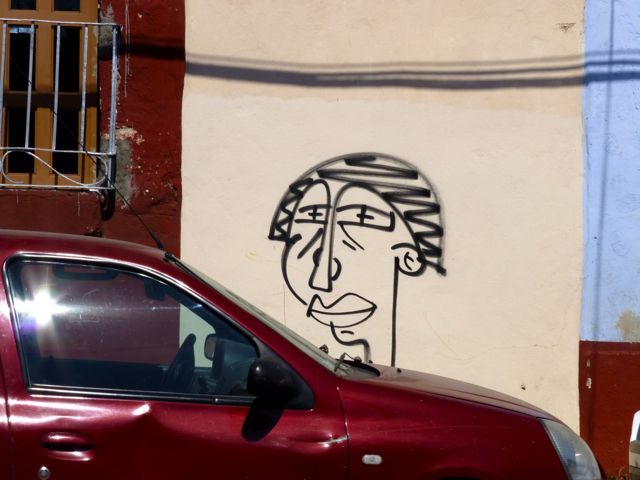
Side of a building in residential neighborhood of Santa Cruz Xoxocotlán, Oaxaca
According to this morning’s Noticias, the Archbishop of Antequera Oaxaca has called upon Catholics, as part of tomorrow’s feast day, to pray for reconciliation and peace in Oaxaca. That’s a tall order. The miracle of her survival has given La Virgen de Juquila the power to bestow miracles — such is the faith of her believers. We shall see…
Last night, flipping through my Cablemas channels, I happened upon Martin Scorsese’s 2011 film, George Harrison: Living in the Material World. I’ve seen this beautiful documentary before, could watch it many more times, and how could I resist, on Black Friday night, the wonderful irony of the title? I’m sure George is chuckling somewhere.
Yesterday marked the twelfth anniversary of George’s death (no doubt the reason it was being shown) and, as I watched and listened to Olivia describe the importance George placed on preparing for one’s death, I couldn’t help but reflect on Día de los Muertos. All things must pass; death as a part of the journey of being. And, some of this year’s Muertos photos seemed to be ready to let go of most of their color…
Sunrise doesn’t last all morning A cloudburst doesn’t last all day Seems my love is up and has left you with no warning It’s not always going to be this grey
All things must pass All things must pass away
Sunset doesn’t last all evening A mind can blow those clouds away After all this, my love is up and must be leaving It’s not always going to be this grey
All things must pass All things must pass away All things must pass None of life’s strings can last So, I must be on my way And face another day
Now the darkness only stays the night-time In the morning it will fade away Daylight is good at arriving at the right time It’s not always going to be this grey
All things must pass All things must pass away All things must pass All things must pass away