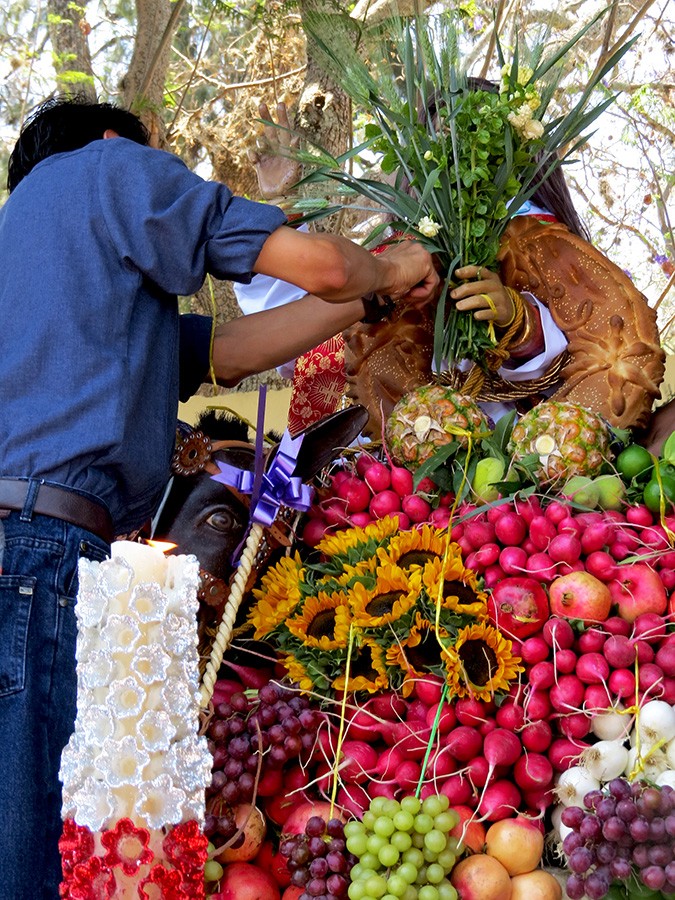
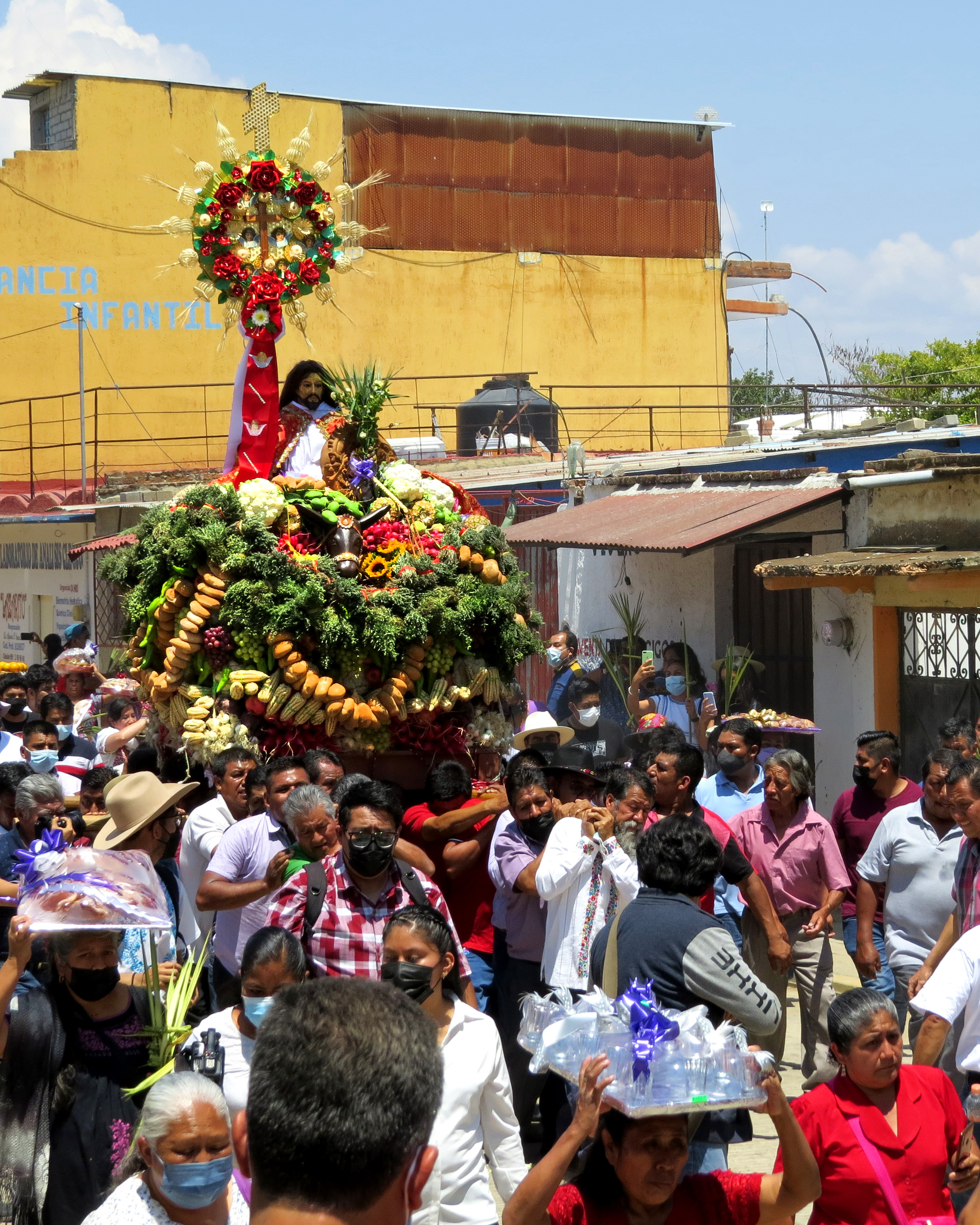
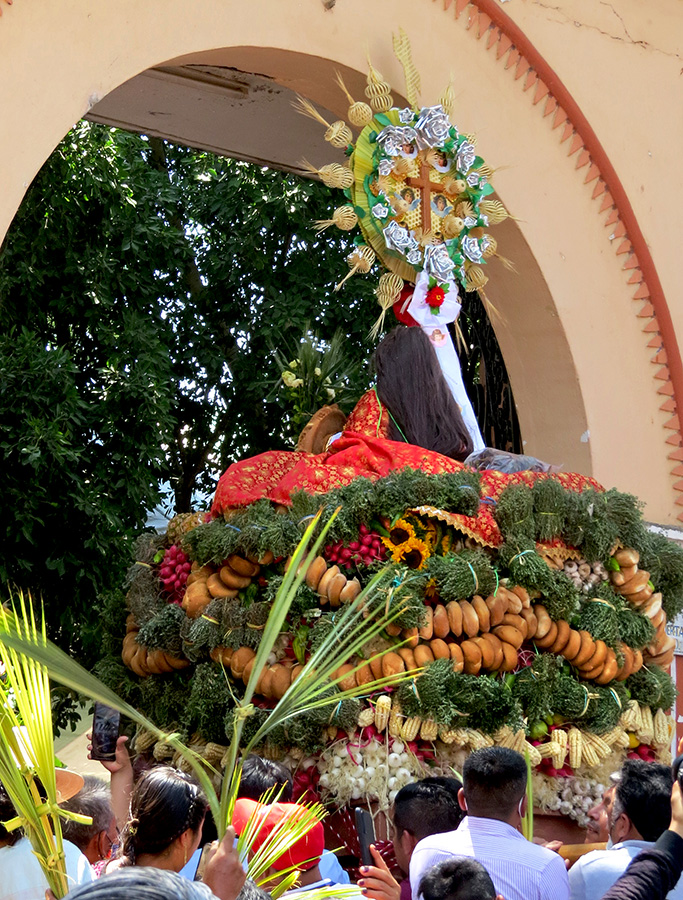
How wonderful it was to return to San Antonino Castillo Velasco on Domingo de Ramos and once again see and experience San Salvador atop his burro being piled high with the best and most beautiful bounty.
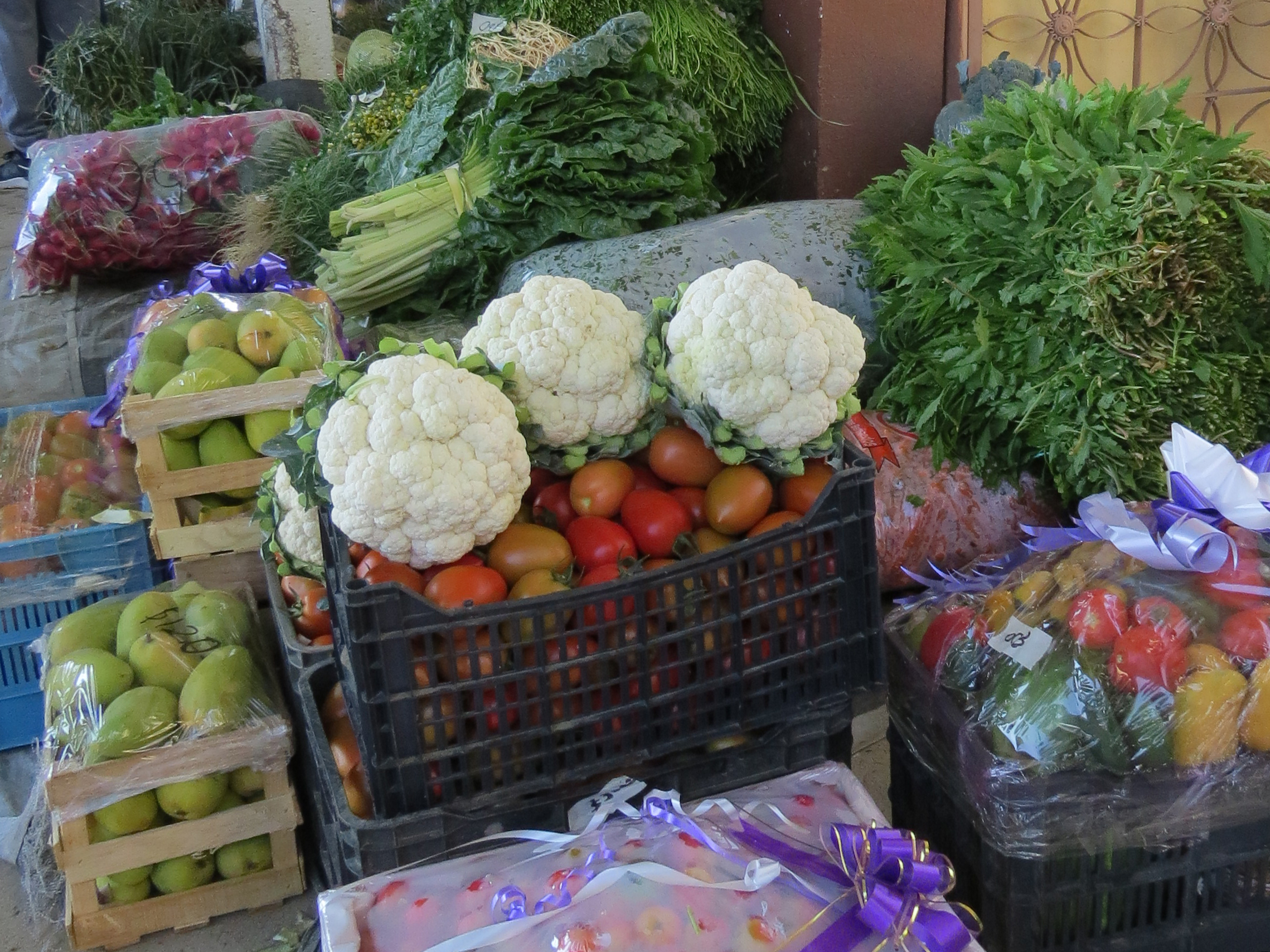
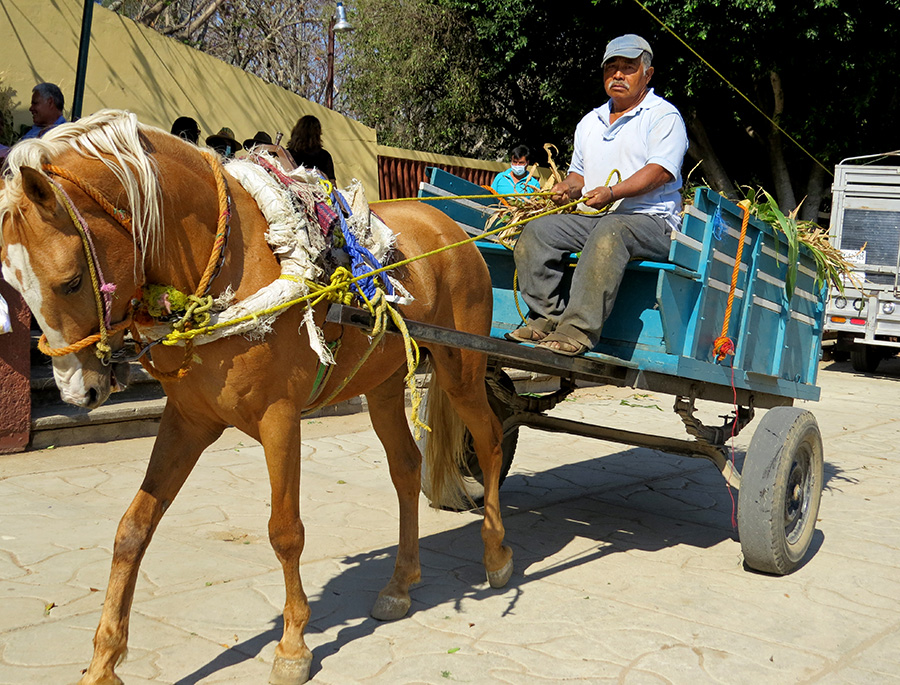
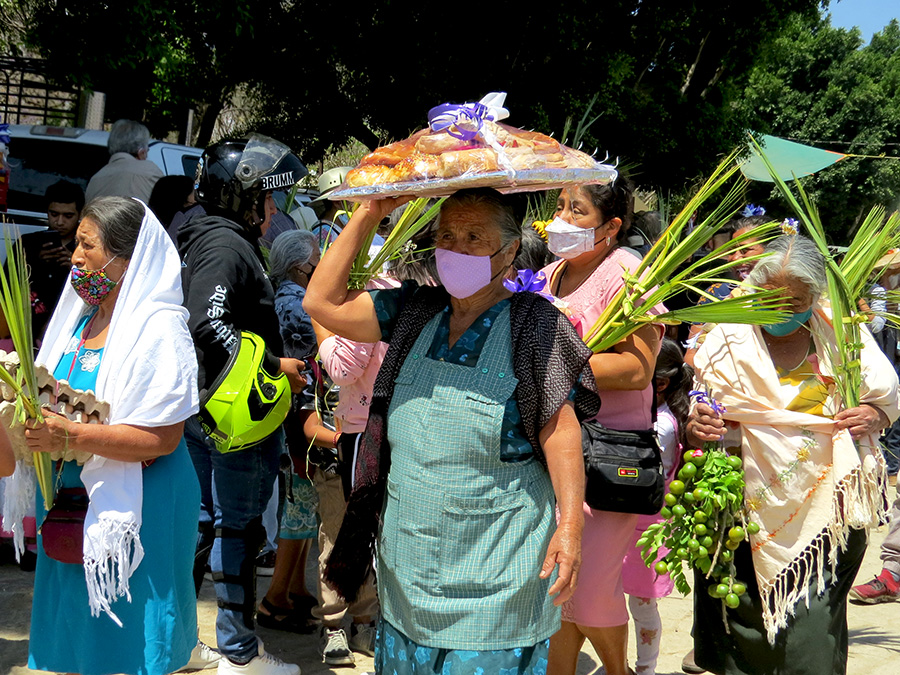
Covid precautions had caused the 2020 and 2021 Palm Sunday celebrations to be canceled. But, at long last, this year villagers, young and old, on bikes and on foot, in carts and in trucks, once again were allowed to return to the street outside the panteón (cemetery) bearing fruit, vegetables, herbs, breads, flowers…
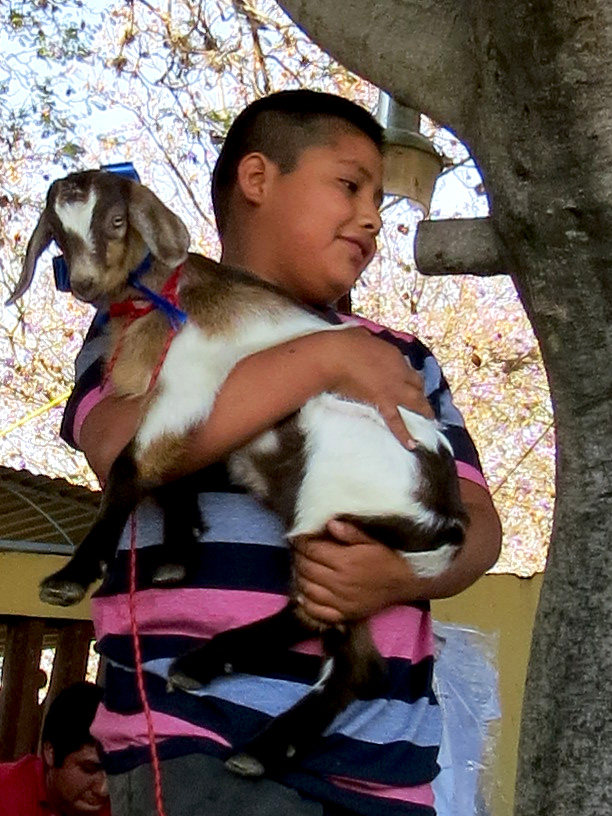
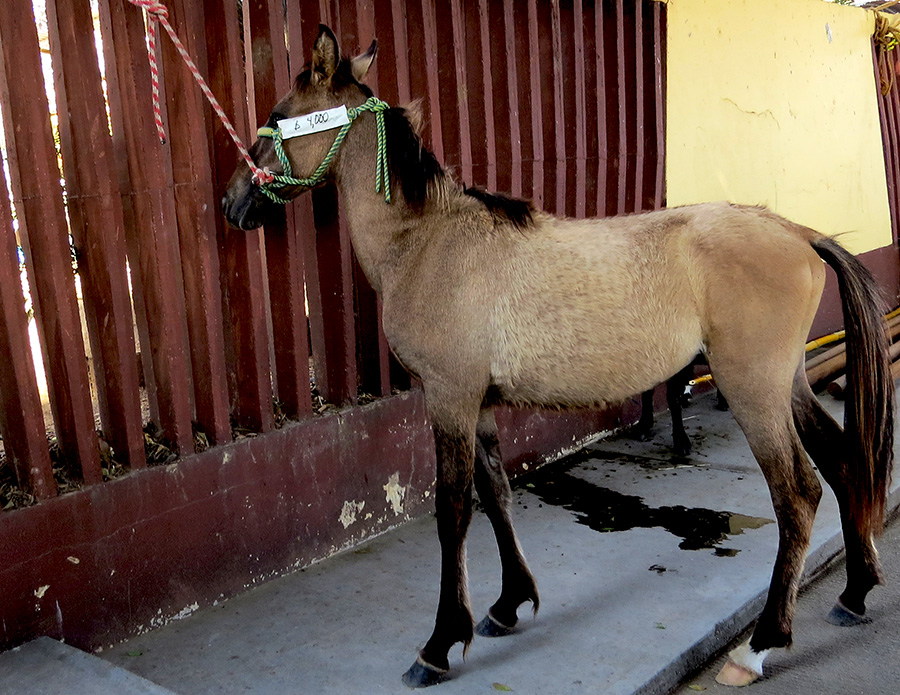
… and farm animals! Their offerings were received and priced by a committee — to be sold later in the day to benefit a local project. By the way, the price tag for the colt read $4000 pesos.
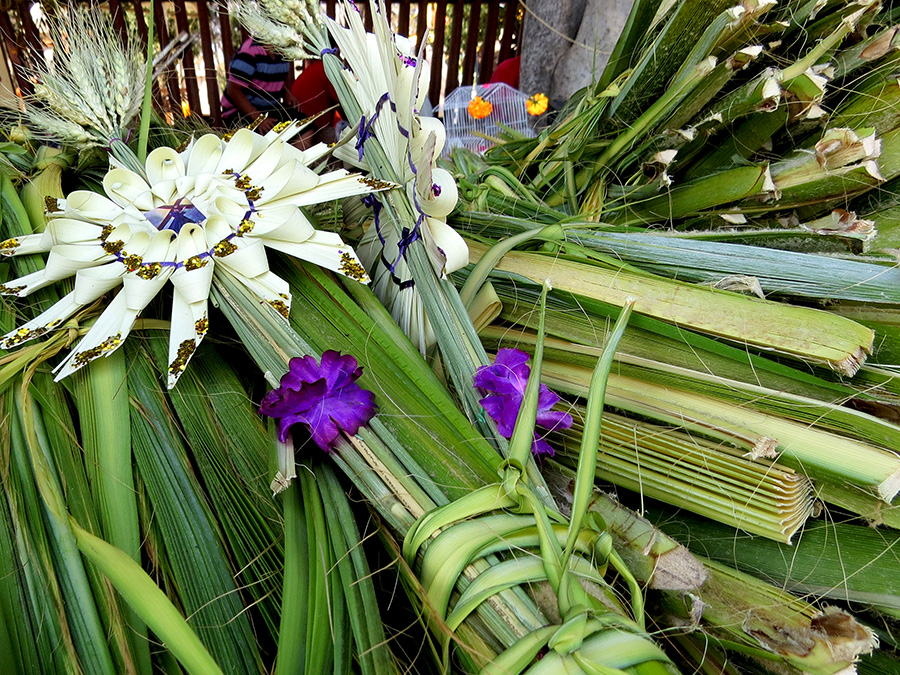
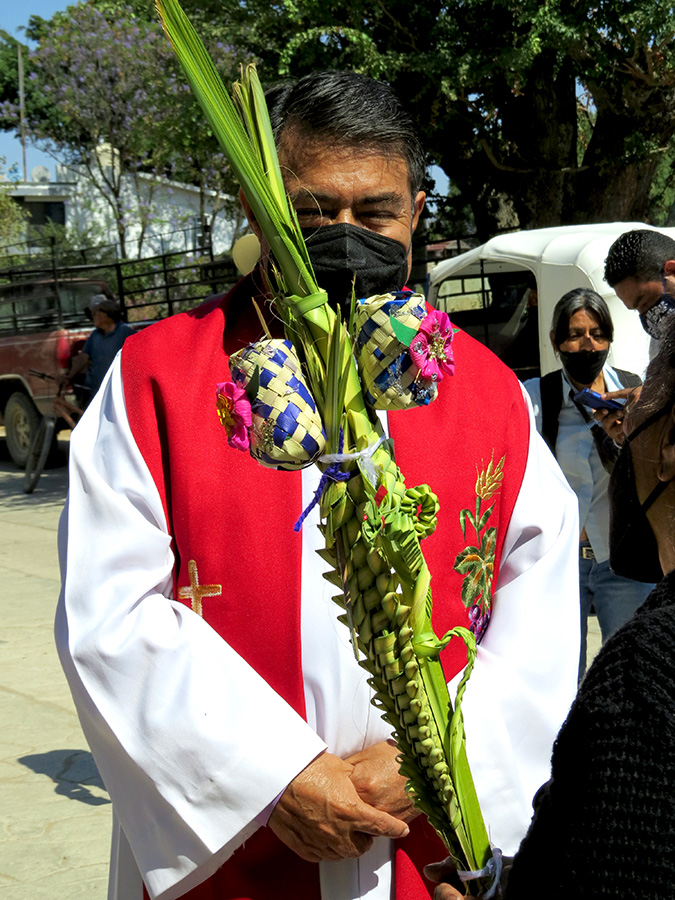
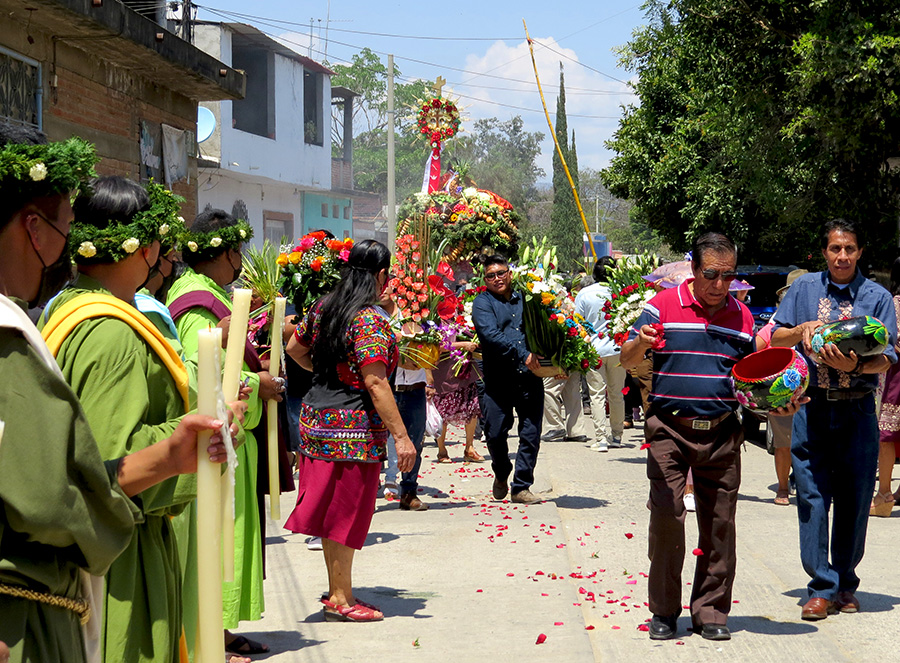
Once the burro was “filled to the brim,” with only his face peeking out, the priest arrived to bless the offerings and faithful with holy water. Dare I confess, it was hot under the noonday sun and the sprinkling of cold water felt good! The palm fronds, having been blessed, were distributed to all. Fireworks began exploding and the rhythmic sounds of the teponaxtles (drums) and chirimía (small oboe) began playing — announcing the start of the procession. Led by smoke from burning copal and a trail of bougainvillea bracts, the litter carrying San Salvador atop his burro set off on the kilometer long journey to the atrium of the church. They were accompanied by villagers and visitors clutching palm fronds and carrying the remainder of the goods collected.
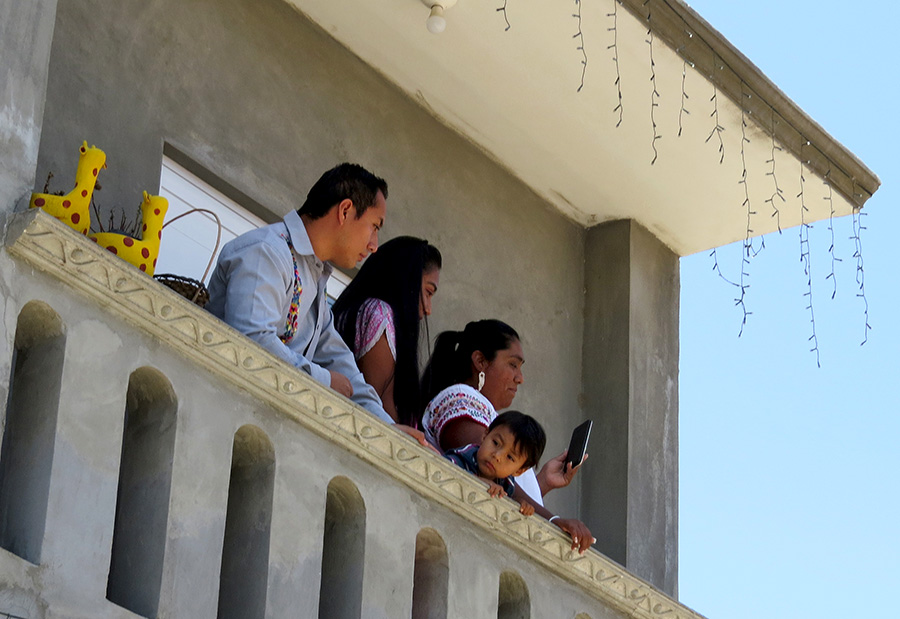
This is a reenactment of the Biblical story of Jesus entering Jerusalem to celebrate the Passover. A few spectators chose to watch from balconies, but mostly the route teemed with a growing mass of followers as 30+ hardy men bore the litter along the “hazardous” street — ducking wires above and navigating topes (speed bumps) below.
Once inside the church atrium, San Salvador and his burro were carefully maneuvered onto a stage where the priest joined them to say mass. At this point, blogger buddy Chris and I swam against the crowd and made our way to the food stalls set up just outside the atrium — San Antonino’s mouthwatering empanadas de amarillo beckoned.
(ps) Chris made a video of the procession which you can view HERE.
After two years of quiet contemplation, the streets of Barrio de Jalatlaco were once again alive on the sixth Friday of Lent in celebration of La Virgén de Dolores (Our Lady of Sorrows).
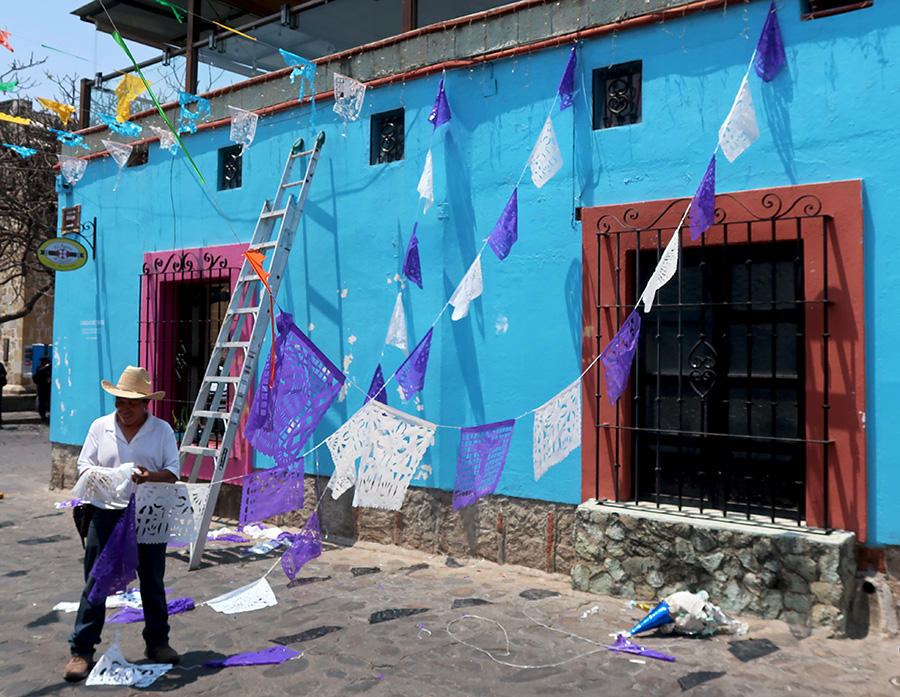
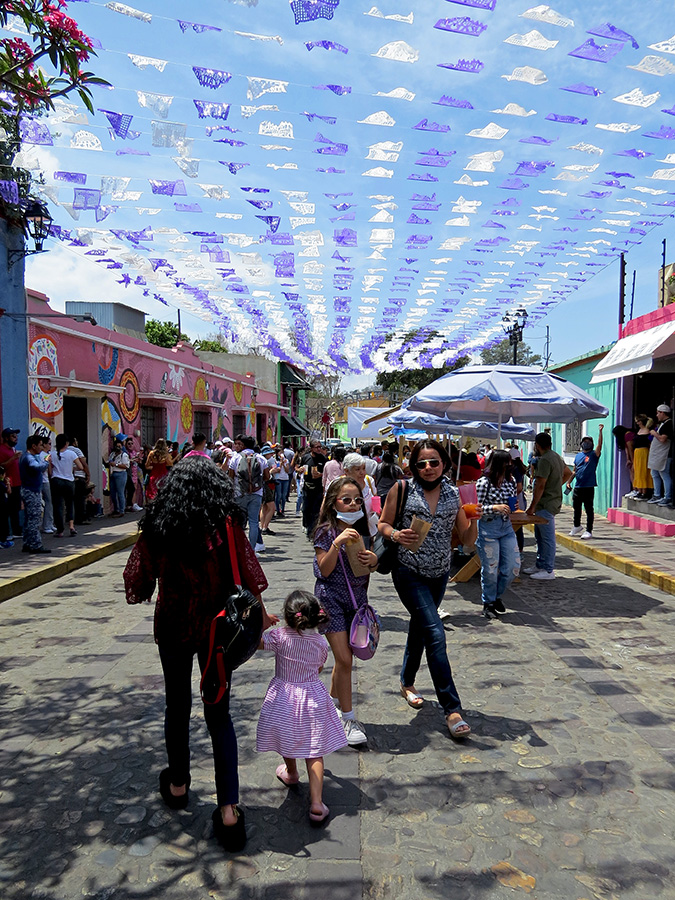
Here in my new neighborhood even more purple and white papel picado was strung from building to building.
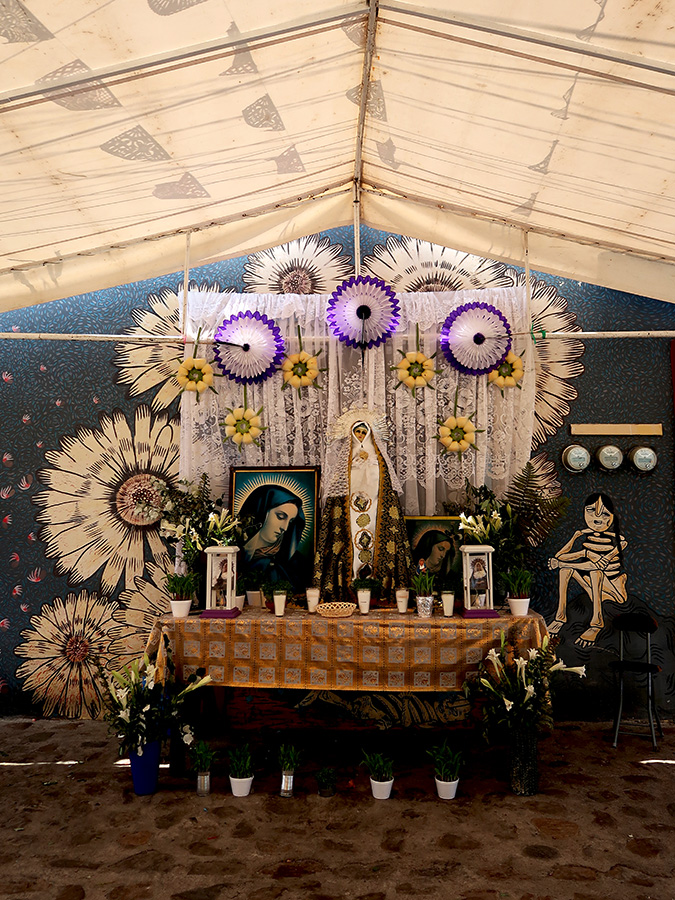
At the far end of Calle Hidalgo, an altar to La Virgén was lovingly assembled.
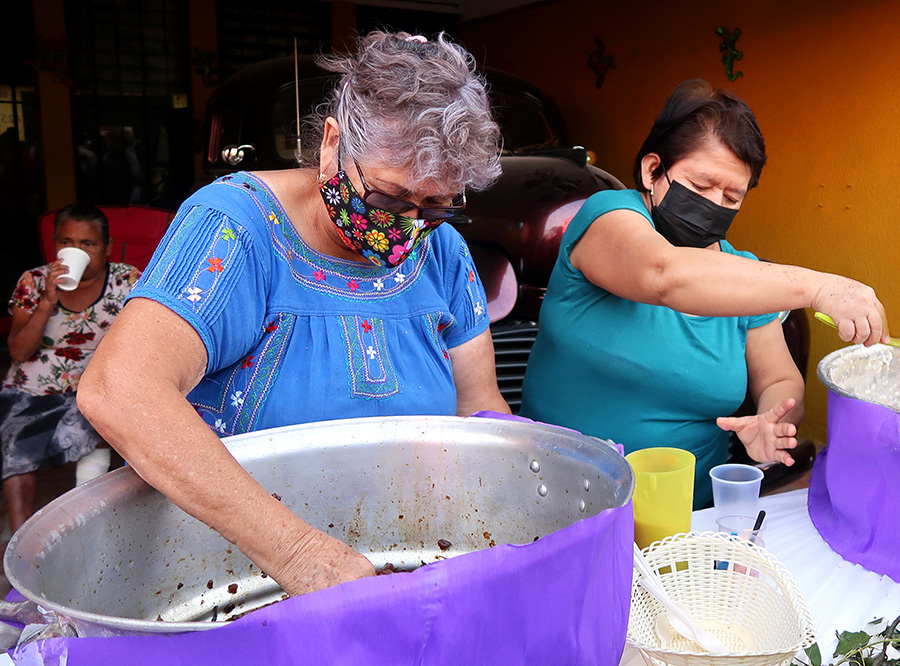
In the late afternoon, stalls were set up along Calle Hidalgo and lines of neighbors and visitors formed to sample the freely offered aguas (flavored waters), nieves (ices), and traditional arroz con leche y garbanzos (rice pudding with chickpeas).
Mass was celebrated in Templo de San Matías Jalatlaco and music filled the street.
A generous, albeit temporary, antidote to the sorrows of our current world. I feel incredibly fortunate to have landed in this amazing neighborhood!
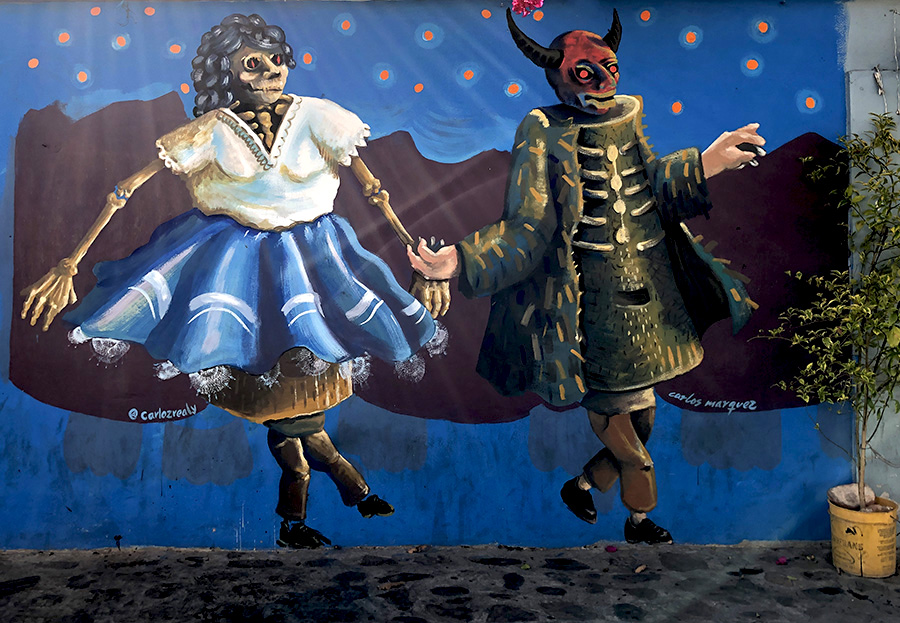
On the walls of Barrio de Jalatlaco, there is always dancing on the cobblestone streets.
And, it’s not just during La Guelaguetza that the sights and sounds of real life dancers can be heard and seen in the neighborhoods of Oaxaca, calendas (parades) celebrating festivals, weddings, graduations, and more are part of the life and soundtrack of Oaxaca.
After a two-year absence, she’s back! The Good Samaritan returned to the sidewalks, streets, and church atriums of Oaxaca. The fourth Friday of Lent is Día de la Samaritana, an “only in Oaxaca” celebration. It was with great joy, I ventured onto the streets of Barrio de Jalatlaco clutching my cup, from which to drink the aguas being offered.
My neighborhood!
Jacob’s Well in front of Templo de San Matías Jalatlaco
Reenactment of the Good Samaritan offering water to Jesus
The Day of the Good Samaritan was inspired by the Gospel of John story in the New Testament of the Bible where a tired and thirsty Jesus, on his way to Galilee, asks a Samaritan woman at Jacob’s Well in Sychar for some water. His request was highly unusual because, according to the Old Testament, “Jews regarded the Samaritans as foreigners and their attitude was often hostile.” The woman complied with his request and the rest is history.
Not just women are Good Samaritans
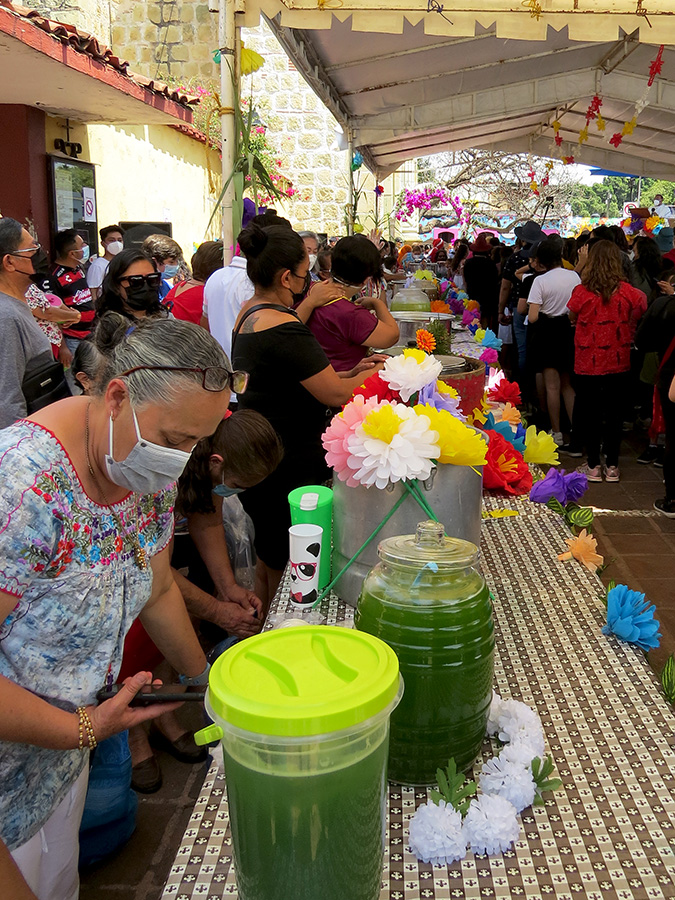
Agua stations in the middle of Calle Hidalgo
Horchata on offer at a language school
Celebrating the Good Samaritan in Oaxaca began in the atriums of churches at the end of the 19th century. It is a popular and much-loved tradition that has expanded beyond Oaxaca’s church Samaritans to businesses, government offices, schools, and even private homes.
Marimba players providing the musical accompaniment
Violet and white (colors of Lent) papel picado fluttering above Calle Hidalgo
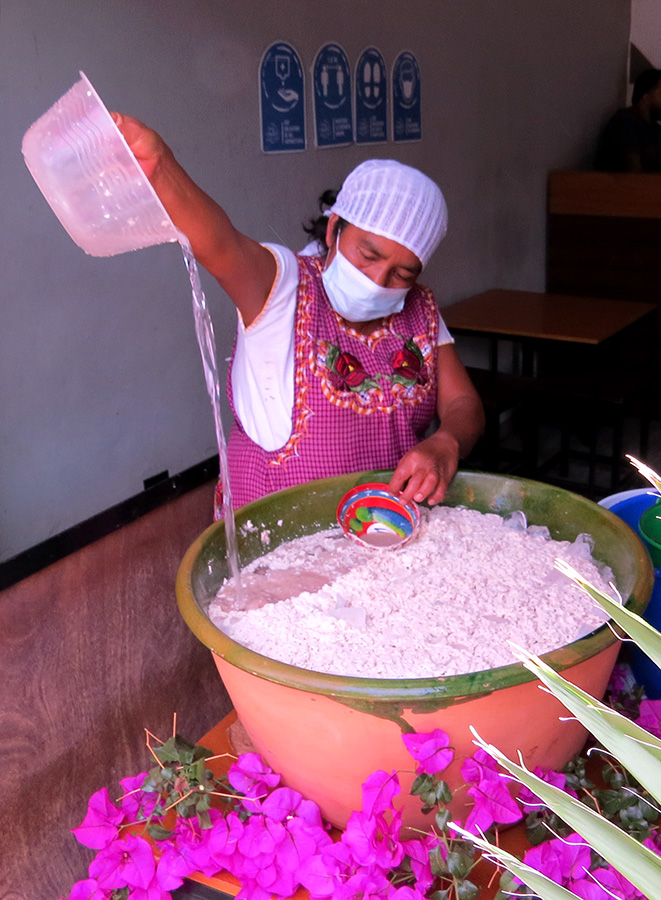
Tejate being poured
This year the first block of Calle Hidalgo was closed to traffic so agua stations could be set up in the middle of the street and naturally, as with most celebrations, there was music — this time a marimba provided the soundtrack.
Lines going to stations on the right and left at the corner of Calles Hidalgo and Aldama
Outside Templo de San Matías Jalatlaco, most, though not all, listened to the priest (upper right corner)
A refreshing cup of tejate on a hot day
As in pre-Covid years, people of all ages, from small children to grandparents, lined up at bougainvillea and palm decorated booths to sample agua de jamaica (hibiscus), horchata, chilacayote (squash), tamarindo, sandia (watermelon), tejate, and other creative and refreshing concoctions.
The guys, gals, and aguas
The friendly Samaritan at Coffee Deep serving horchata
The end!
After an hour of wandering the streets of my neighborhood and sampling several aguas and even a cookie or two, I happily returned home with my heart full of love and gratitude for the traditions and people of Oaxaca.
Spring has sprung in the valley of Oaxaca and that means the hottest and driest months are upon us. Despite conventional wisdom, the temperatures actually cool down a little in the summer, when the afternoon/evening rains come. I confess, this time of year, when the thermometer hovers around 90º (Fahrenheit), by early afternoon my energy is sapped and motivation melts away. Hence, blog posts are few and far between. However, today is a little cooler and my blog’s namesake inspired me to let my fingers not just hover over keyboard, but actually type!
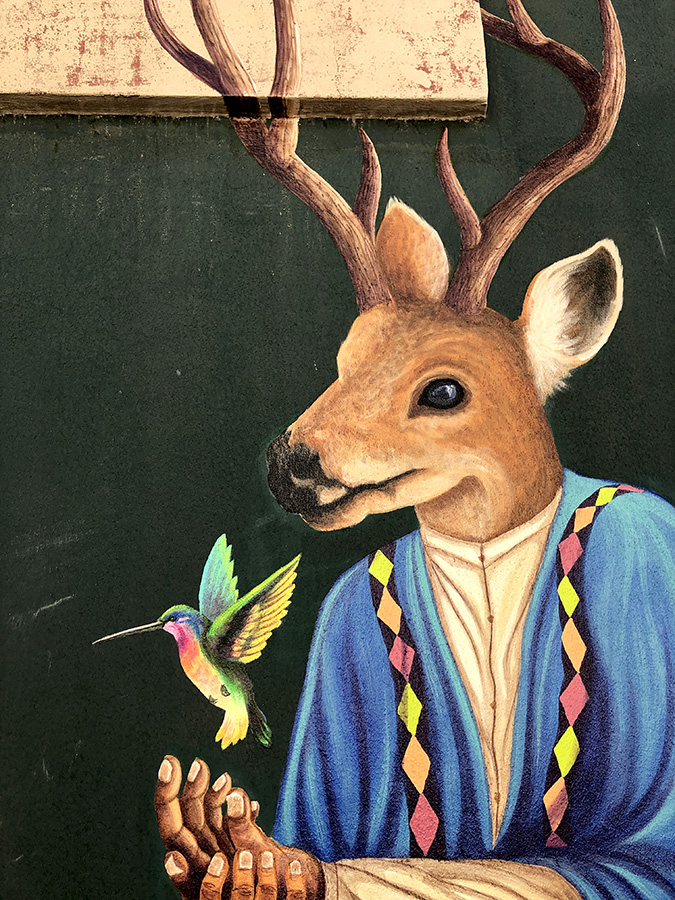
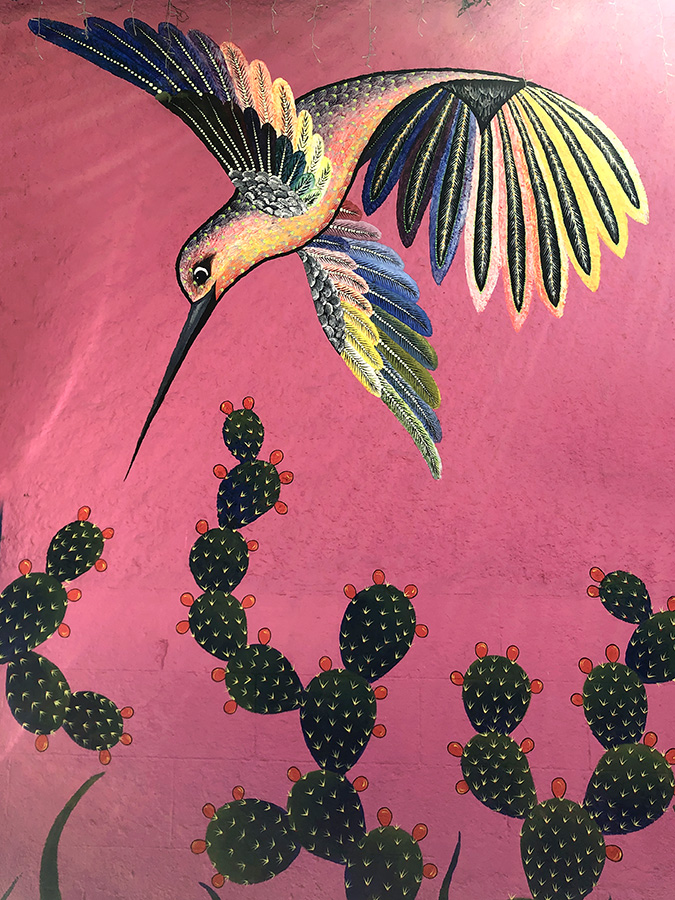
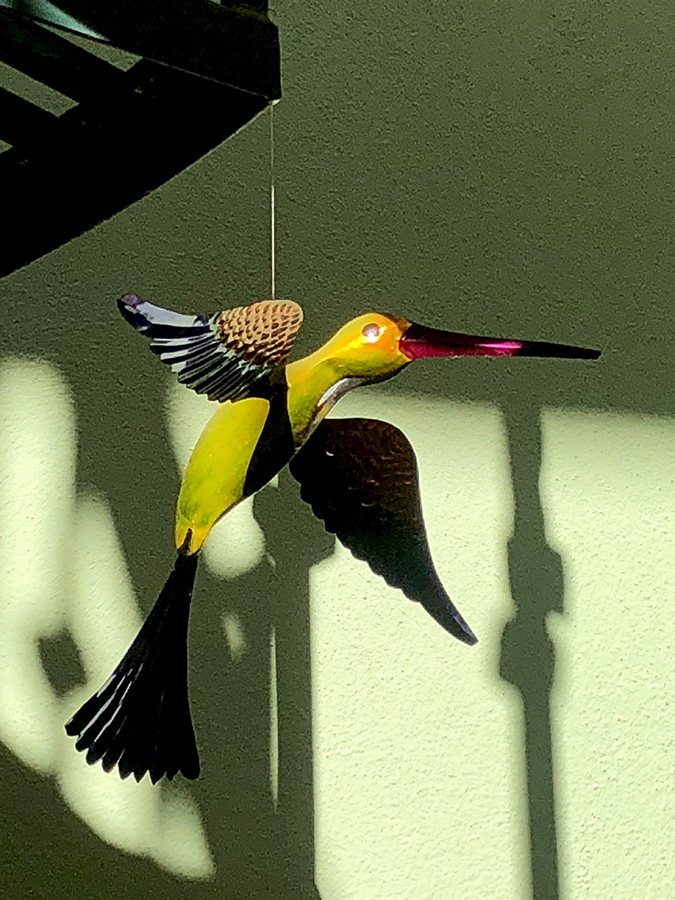
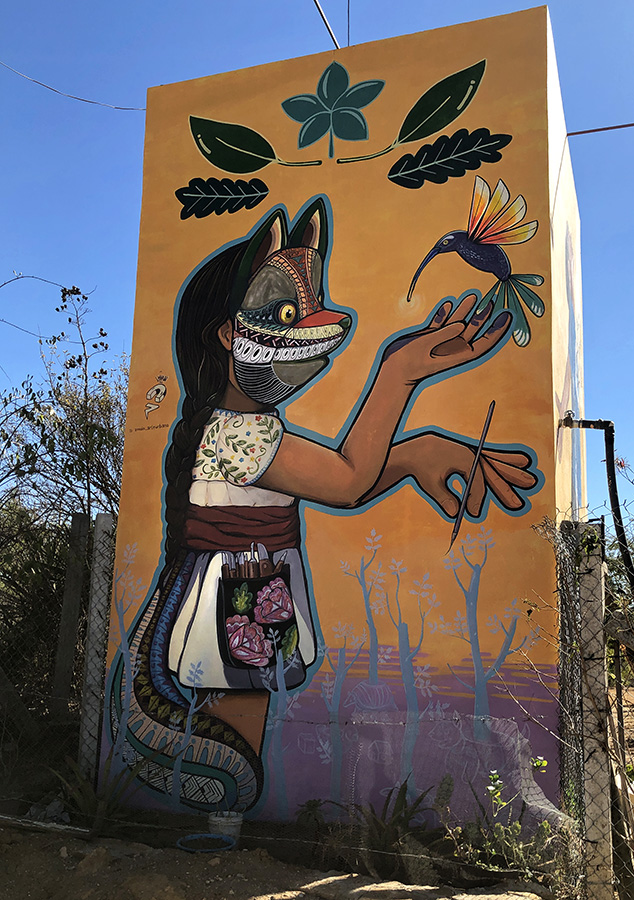
Colibríes in murals seen on walls around the city…
Hummingbirds are noted for their incredible ability to fly. They can hover suspended in the air and can fly in any direction, even sideways and backwards, allowing them to reach their food anywhere. Their powerful chest muscles are extremely developed (they can account for around 30% of their body mass) and this allows them to beat their wings very rapidly, from an incredible 80 wing beats per second, up to a staggering 200 wing beats per second when performing certain maneuvers during courtship. Their muscles also allow them to reach amazing speeds, ranging from 50 to 95 km/hr when diving in flight during courtship.
A .pdf of the book is free to download from the above link.
Late yesterday afternoon… What was that smell? What was that sound? I climbed the spiral staircase up to the rooftop terrace and what did I see?
The little dark dots on the terrace floor confirmed my suspicion. The smell was rain, the sound was rain, those spots on the terrace floor were rain drops, and there was even a hint of a rainbow!
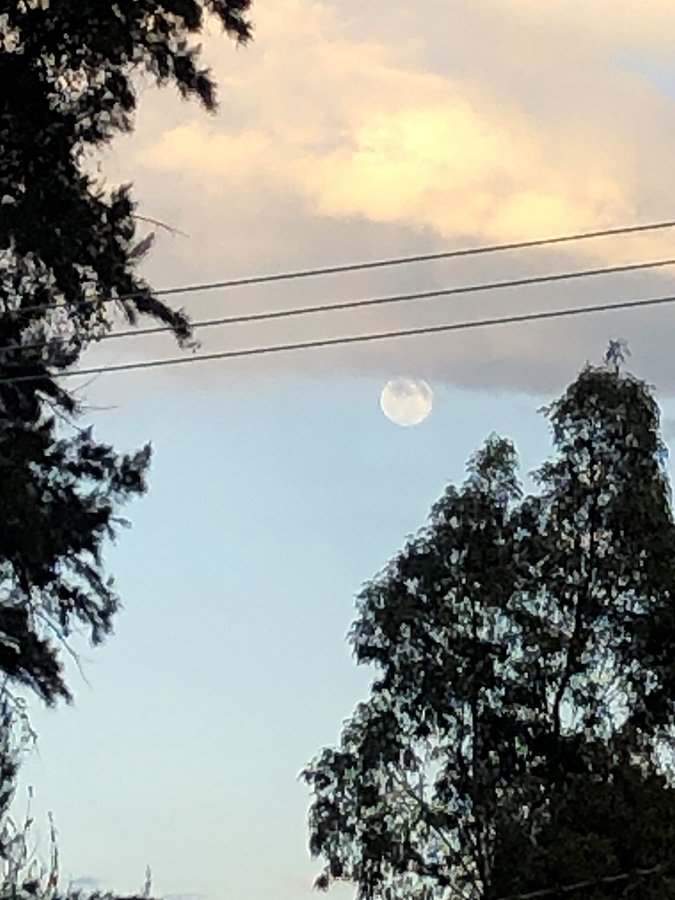
I stood watching and listening and savoring this infrequent, but much welcome, dry season development, when the clouds moved to reveal the rising moon.
The old Blood, Sweat & Tears tune began playing in my head, Sometimes in Winter. Thank you Steve Katz for your beautiful and evocative song.
Mural by the Mad In crew celebrating the life of María Antonieta Chagoya Méndez, a lawyer who, among many other notable activities, shared her legal knowledge with civil associations and founded the Rotary Center for Autism Intervention, which served children with special needs.
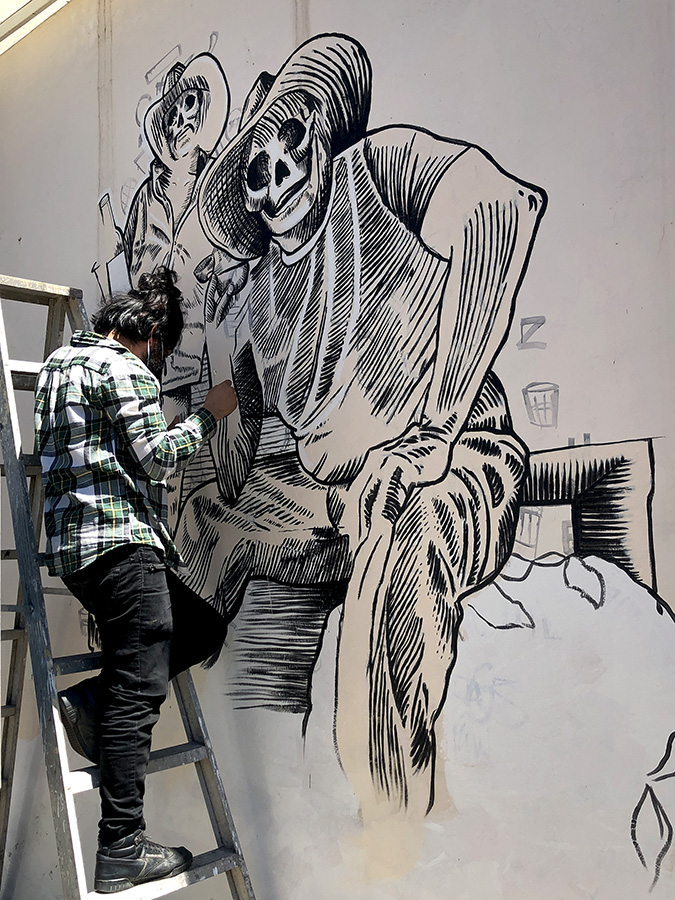
Three days ago, as I was walking up Calle 5 de mayo in Barrio de Jalatlaco to pay my cable TV bill, I came upon an artist at work.
This afternoon, I retraced my steps to see if the artist known as HAZHE IS had completed this newest mural in the neighborhood.
I don’t know if it’s finished, but I do know (IMHO) it is a welcome (and welcoming) addition to the view when departing the ADO bus station across the street. ¡Salud!
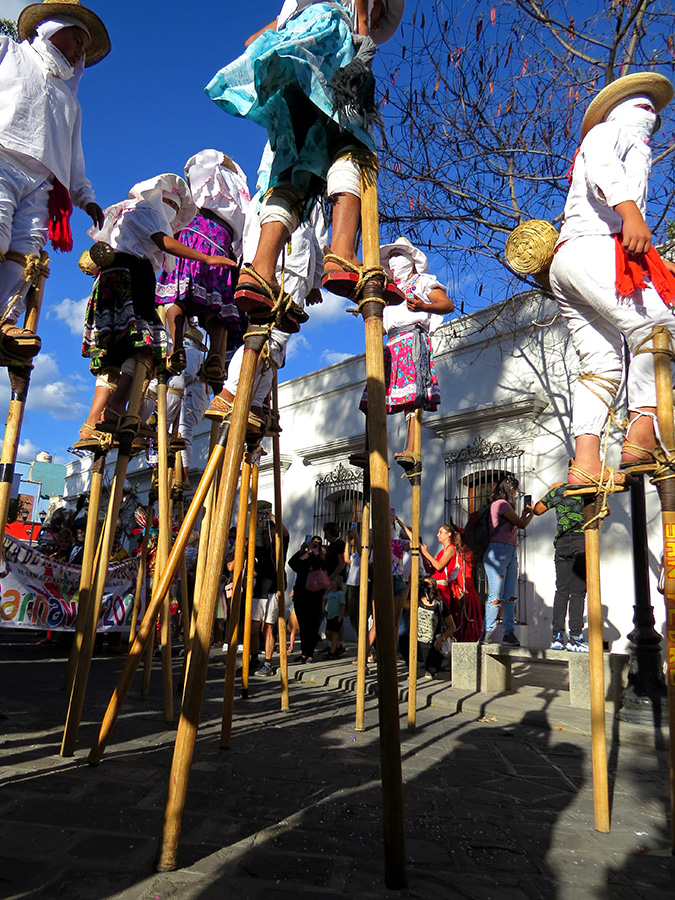
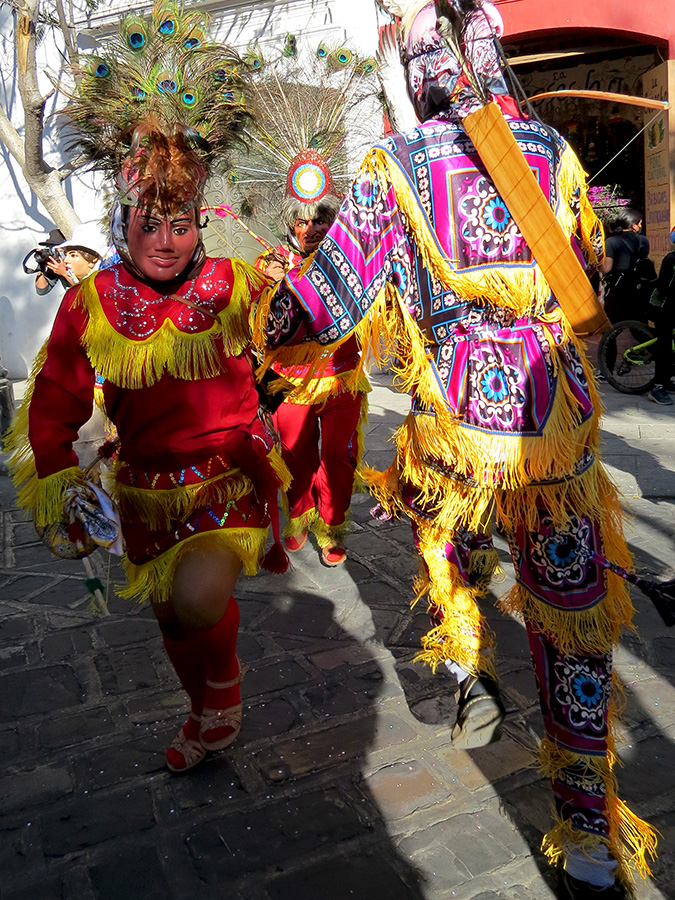
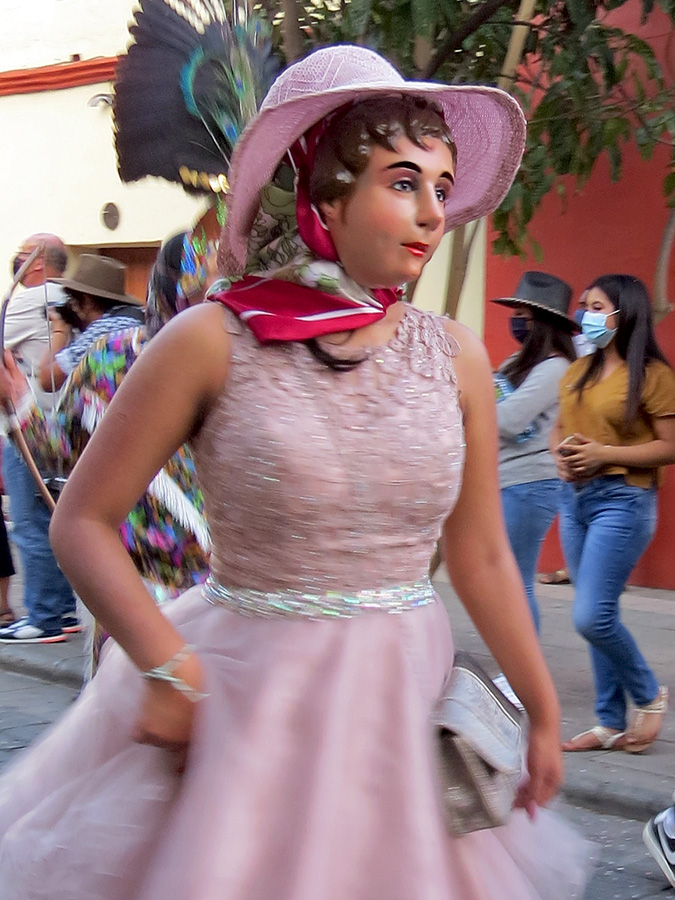
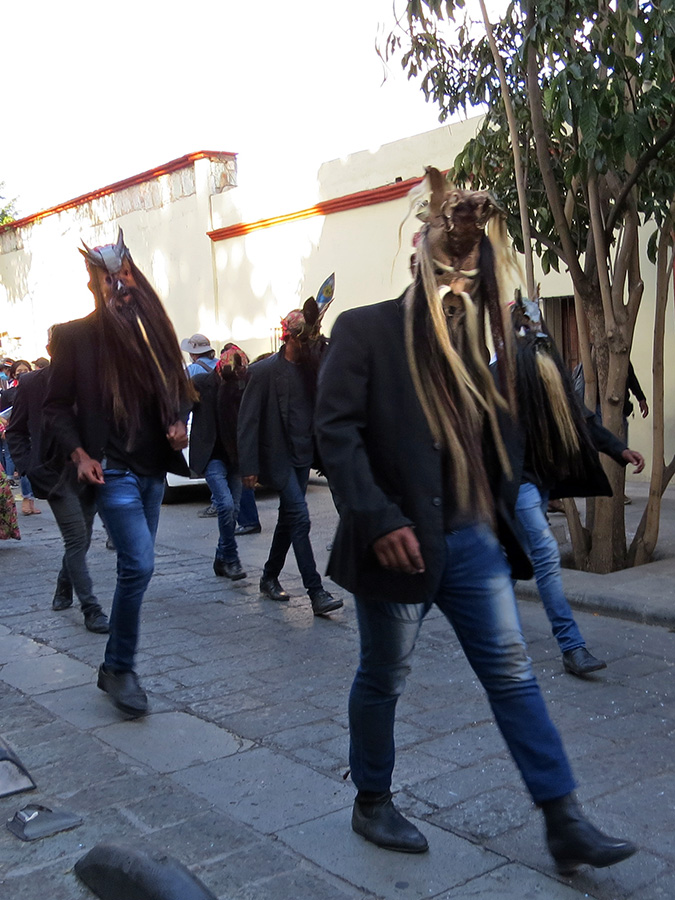
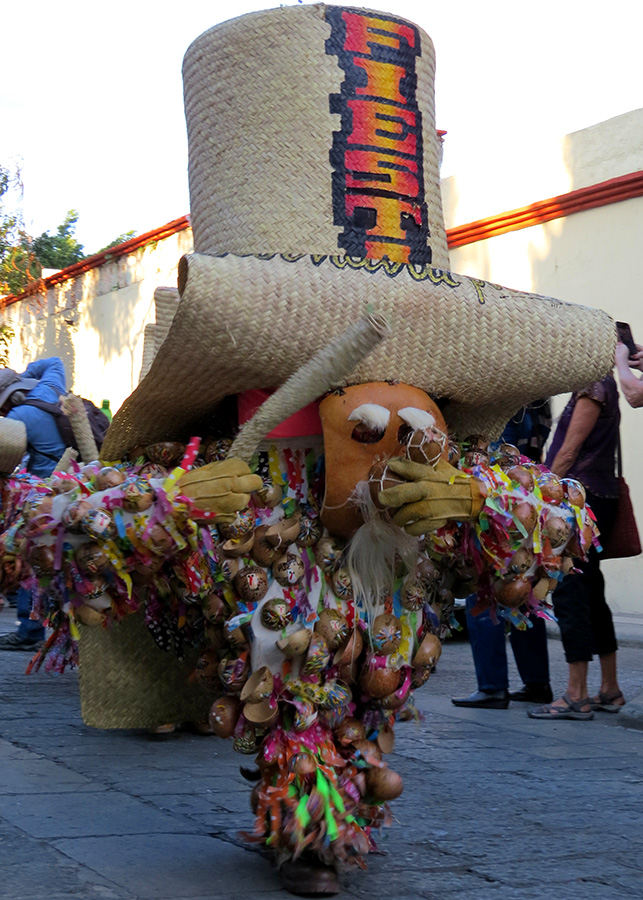
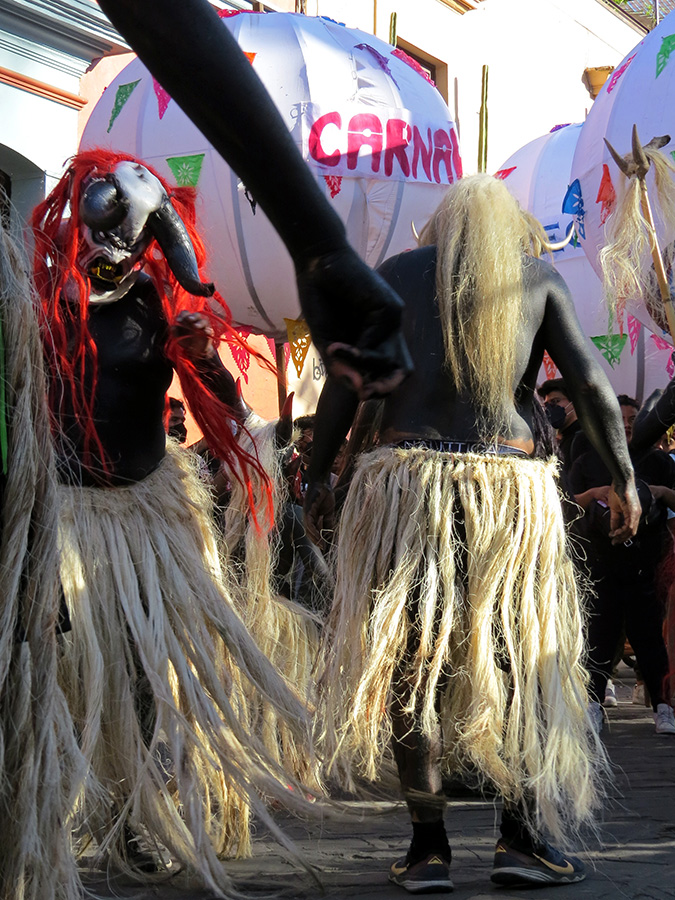
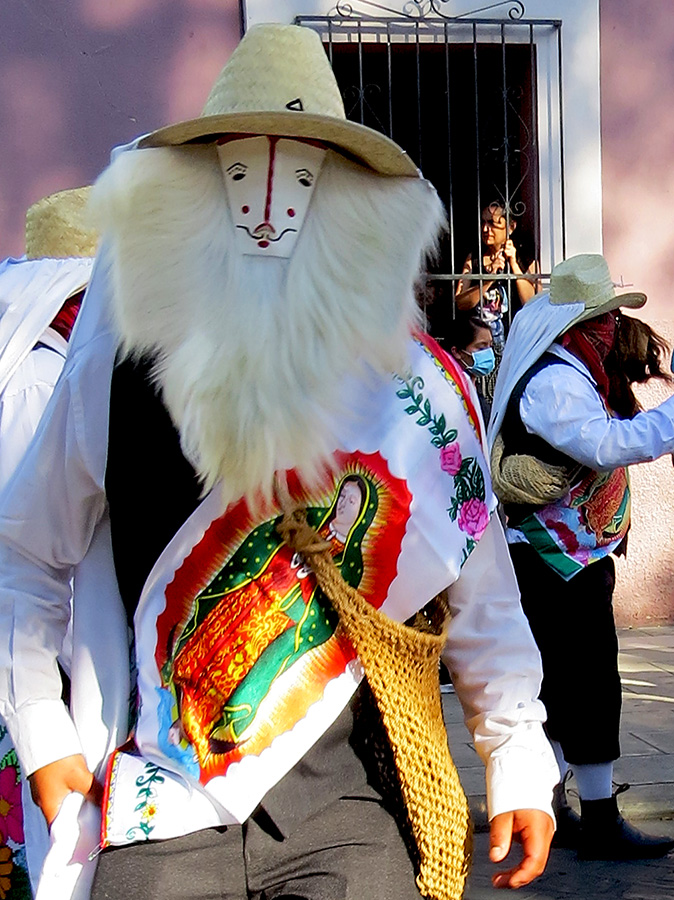
After the 2021 hiatus due to the pandemic, Oaxaca city resumed its annual Carnavales Oaxaqueños calenda. This parade, held on the Saturday before the start of Lent, was begun in 2019 to promote the traditional Carnaval celebrations in various villages in Oaxaca’s Central Valleys and the Mixteca on Shrove Tuesday (aka, Carnival, Mardi Gras, and Fat Tuesday). This riot of music, costumes, masks, and even stilts assembled at the Cruz de Piedra, processed down the Macedonio Alcalá, and concluded at the Alameda de León — to cheering, chanting, and picture/video taking by residents and visitors.
Villages participating were San Bartolo Coyotepec, San Juan Bautista La Raya, Villa de Zaachila, San Bartolome Quialana, Santiago Juxtlahuaca, Magdalena Teitipac, San Mateo Macuilxóchitl, Santa Catarina Minas, Santiago Llano Grande, San Sebastián Tecomaxtlahuaca, Santa María Coyotepec, Chalcatongo de Hidalgo, and Putla Villa de Guerrero.
Of course the pandemic isn’t over and a couple of weeks ago Oaxaca went back up to semáforo amarillo (yellow), so the impact of crowds gathering (albeit outside) remains to be seen. At least up near the parade’s starting point, most onlookers were wearing cubrebocas (protective masks). Unfortunately, the exceptions seemed to be young tourists. I am pleased to note that the poster for San Martín Tilcajete’s very popular Carnaval celebration states, “Uso obligatorio de cubrebocas” (Use of a protective mask is obligatory). Let us hope that the unmasked will respect the locals and put on a cubreboca!
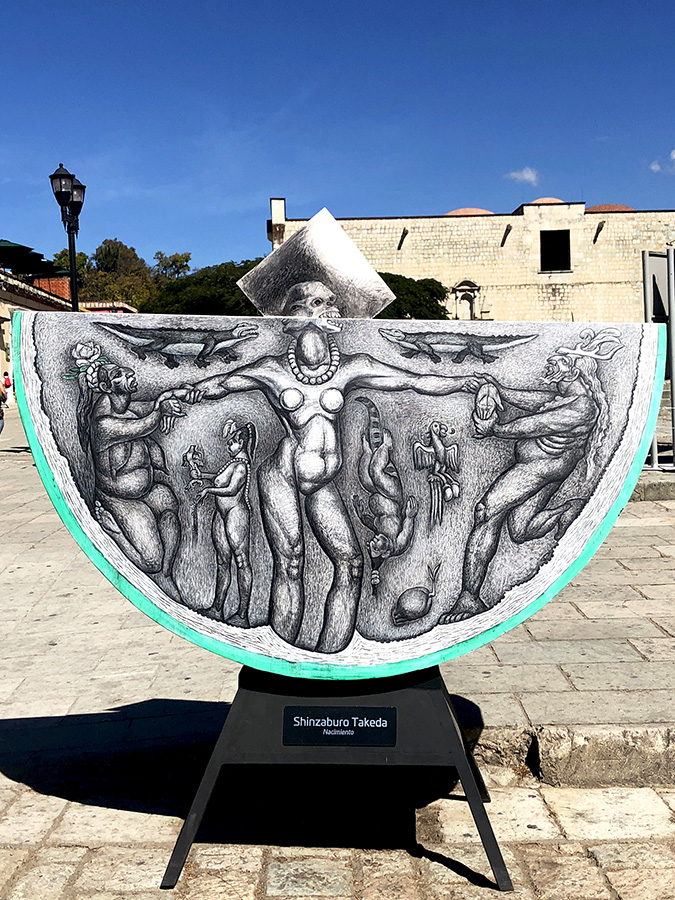
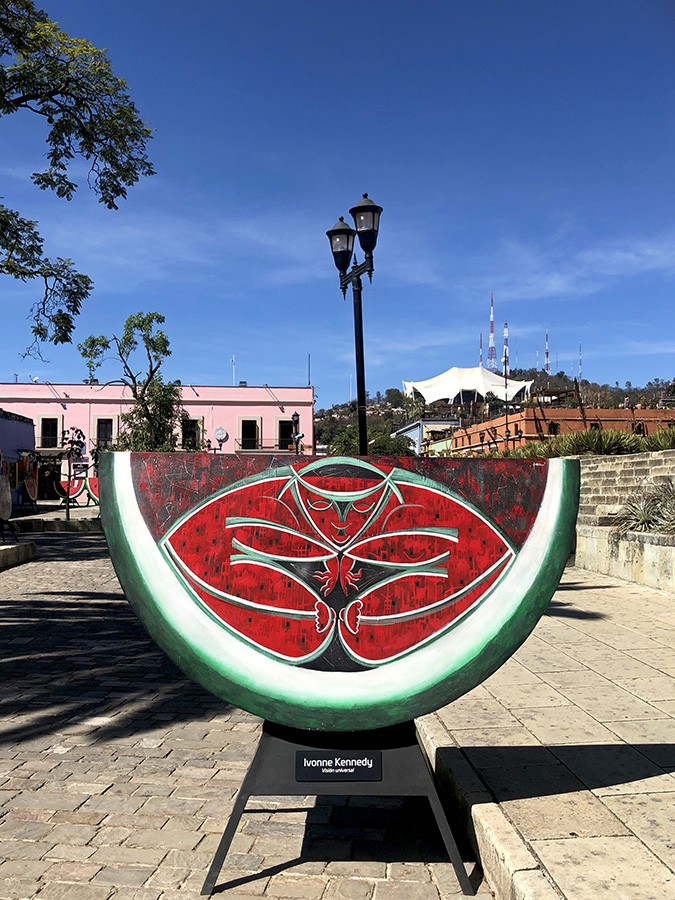
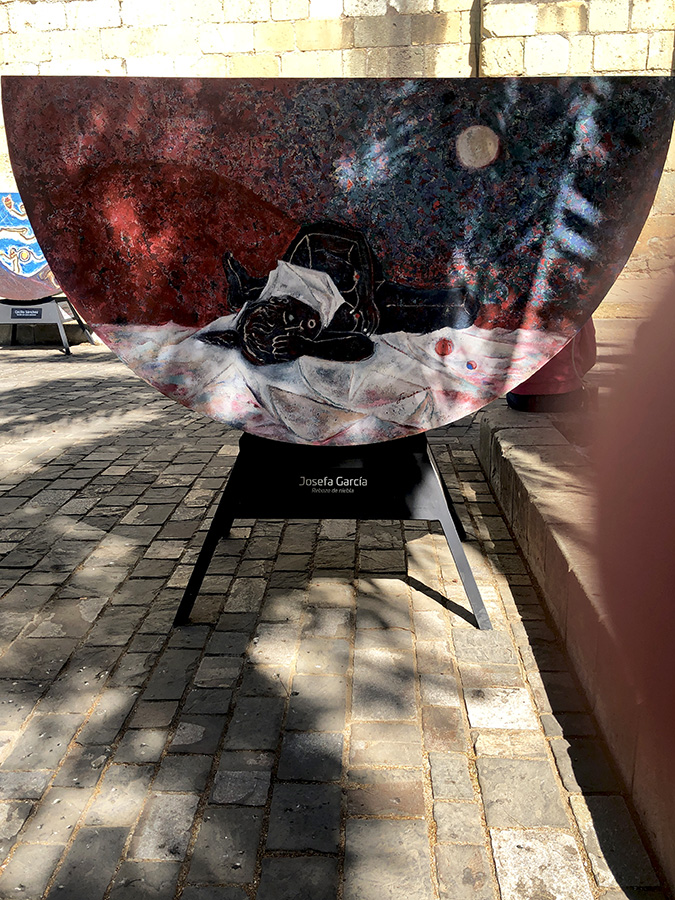
Rufino Tamayo’s iconic sandía paintings and the thirtieth anniversary of the Oaxaca painter’s death, provided the inspiration for a tribute to the artist commissioned by promoter and curator, Nancy Mayagoitia. In an homage, thirty artists, all with connections to Oaxaca, interpreted large sculptural watermelon slices. The free public exhibition opened at the end of October 2021 in the Plaza de la Danza and then moved outside Templo de Santo Domingo de Guzmán adjacent to Oaxaca’s walking street, Macedonio Alcalá — where, as of a few of days ago, it continues to reside.
“Nuevo amanecer y eclipse” by Felipe Morales
“Tamayo coleccionista” by Guillermo Olguín
“Ser infinito” by Ana Santos“Familia y universo” by Enrique Flores
“Reunión de cinco reinos” by Román Llaguno
“Nacimiento” by Shinzaburo Takeda“Visión universal” by Ivonne Kennedy
“Tierra del sol” by Eddie Martínez
“Devenir del tiempo” by Adán Paredes “Sandía con seres cósmicos” by Cecilio Sánchez“Sonata para Tamayo” by Ixrael Montes“El Rockanrolero y sus fans” by Hugo Vélez“Rebozo de niebla” by Josefa García
“Gallos y mujer sin mandolina” by Saúl Castro
“El rockanrolero y sus fans” by Hugo Vélez
After working on this blog post, I can’t get “Watermelon Man” by Mongo Santamaria out of my head. The link is from their performance at the 1969 Harlem Cultural Festival. If you want to watch something singularly special and significant, I highly recommend that you to check out Summer of Soul, a 2021 documentary that beautifully chronicles the festival.
In Mexico, Valentine’s Day is known as Día del Amor y la Amistad (Day of Love and Friendship) — a sentiment that honors and celebrates more than just romantic love.
Recyclying heart by Noel Gómez Lorenzo — in front of Oaxaca’s Cathedral during the summer of 2021.
From my heart and home to yours, I wish all my blog readers, ¡Feliz Día del Amor y la Amistad!
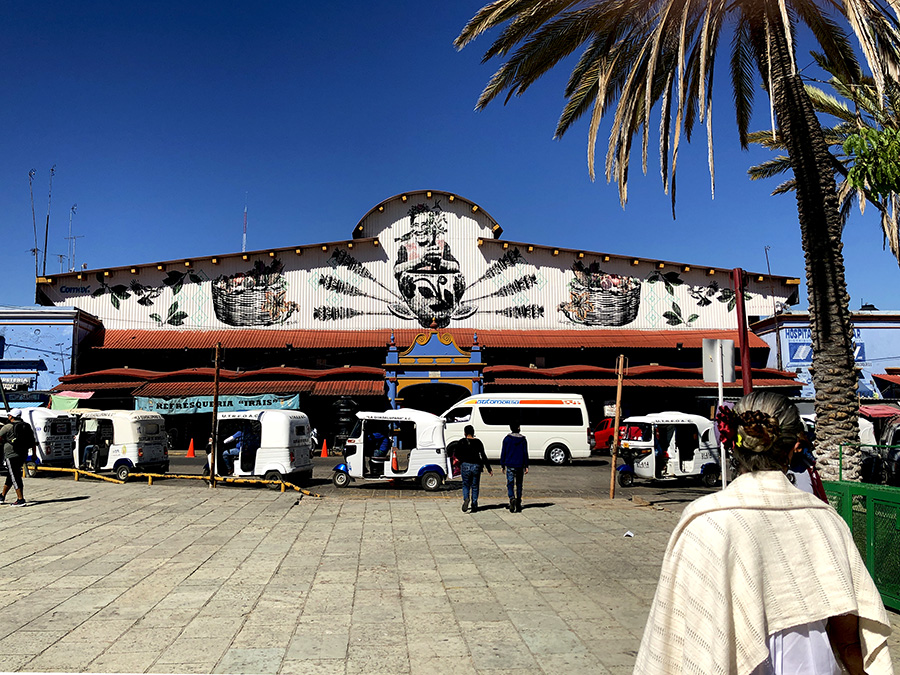
Last Thursday my BFF took me on an out-of-the-city birthday excursion. She hired a by-the-hour driver, picked me up a little after 9:00 AM, and off we went. Our first stop was Ocotlán de Morelos and besides wandering through the mercado, we stopped at the Municipal Palace to take in the magnificent murals painted by Rodolfo Morales in 1955 celebrating the four hundredth anniversary of the founding of Ocotlán. The murals, which honor its beauty, bounty, and people take up the entire room, including the ceiling.
Main entrance to the mercado in Ocotlán de Morelos.
Doorway murals by Rodolfo Morales in the Ex-Sala del Cabildo, Ocotlán de Morelos.
Murals by Rodolfo Morales in the Ex-Sala del Cabildo, Ocotlán de Morelos.
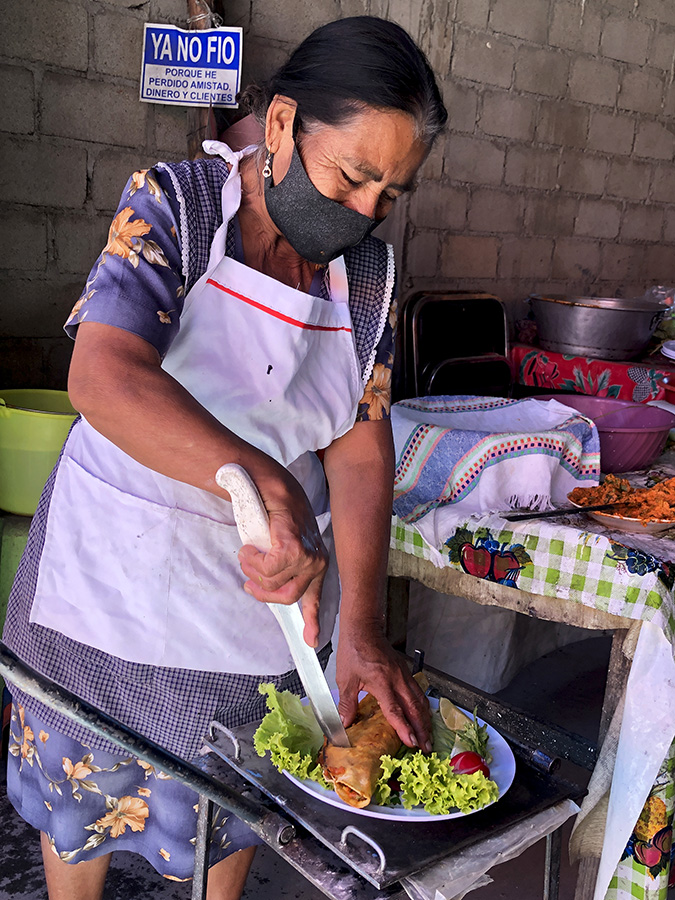
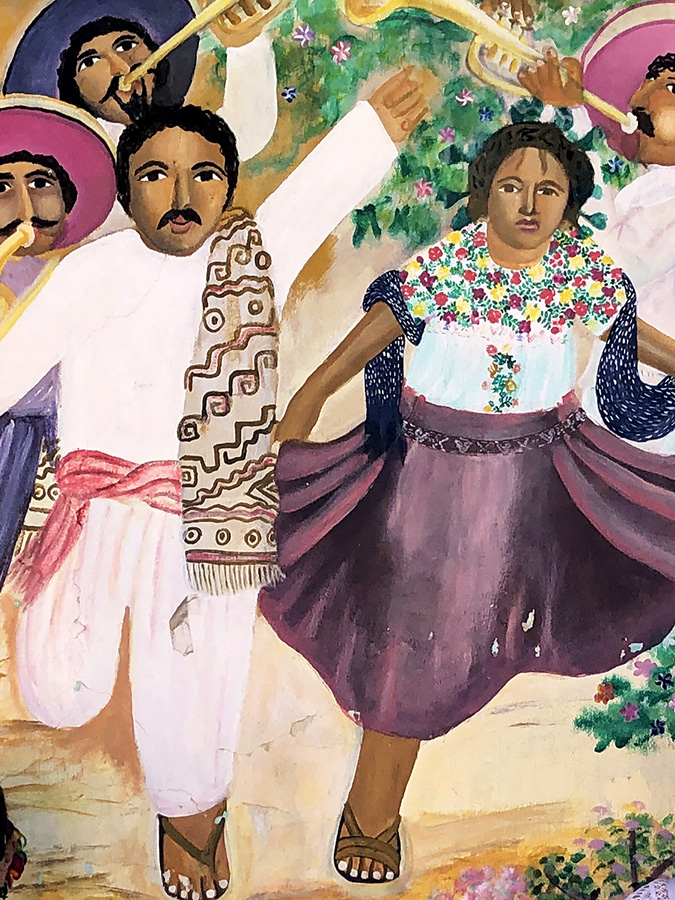
Next on the day’s agenda was San Antonino Castillo Velasco. As its murals remind one, this is a town famous for its floral embroidery and empanadas de amarillo. I should add, it is also known for Taller Manos Que Ven, the home and workshop of clay sculpture Don José Garcia Antonio (aka, the Blind Potter) and his lovely wife and inspiration, Doña Teresita de Jesús. We did a little clothes shopping (thank you, Miriam Campos), ate empanadas, and stopped in to say “hola” to the aforementioned, Don José and Doña Teresita — where we also made a couple of purchases.
Empanadas de amarillo, San Antonino Castillo Velasco.
Mural in San Antonino Castillo Velasco.
Mural in San Antonino Castillo Velasco.
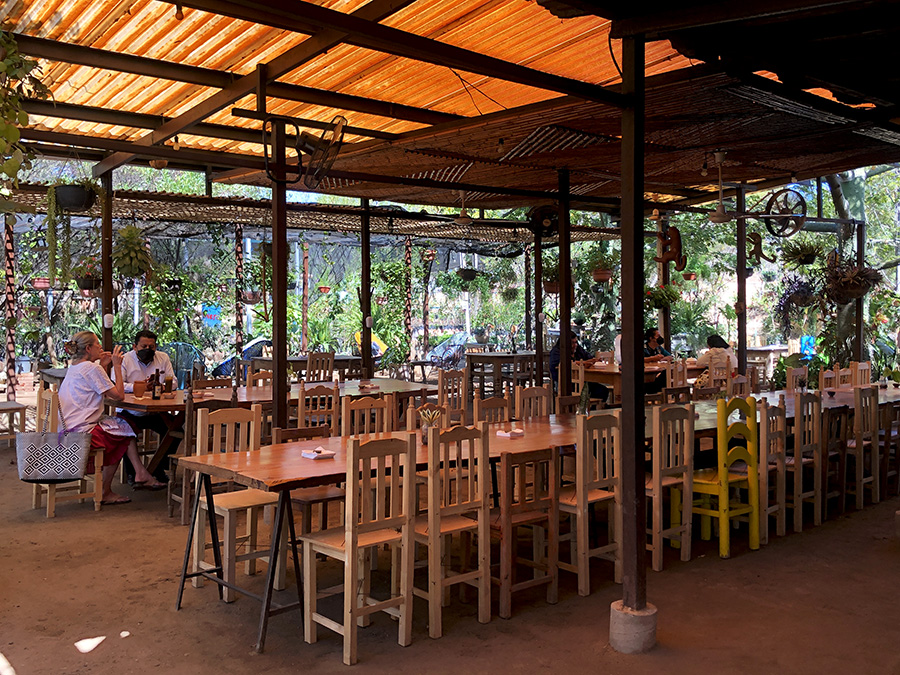
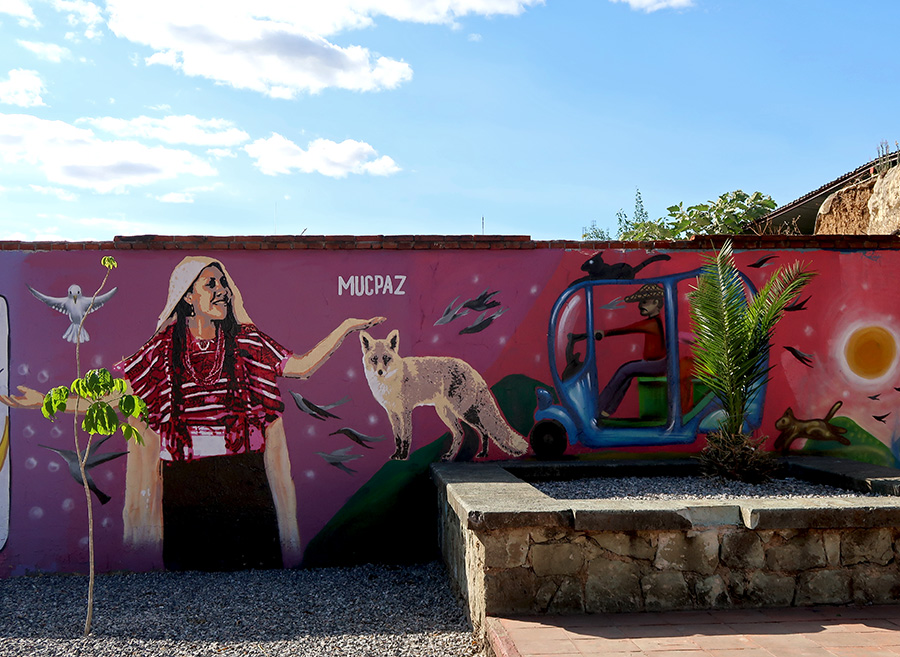
Our final stop of the day was for comida at the new open air restaurant and vivero (nursery), Almú, set in a reforestation campo (field) in San Martín Tilcajete. Murals throughout the town reflect a village celebrated for its woodcarving and colorful painting of masks and alebrije and where moto taxis (tuk-tuks) are a common form of transportation for locals.
Dining area of Almú restaurant in San Martín Tilcajete.
Mural in San Martín Tilcajete.
Mural in San Martín Tilcajete.
It was a delightful, delicious, and art filled day!
I’m home in Barrio de Jalatlaco — rested, recovered, and caught-up — after a three-day fiesta at the home of my compadres in Teotitlán del Valle. Tranquil before photos…
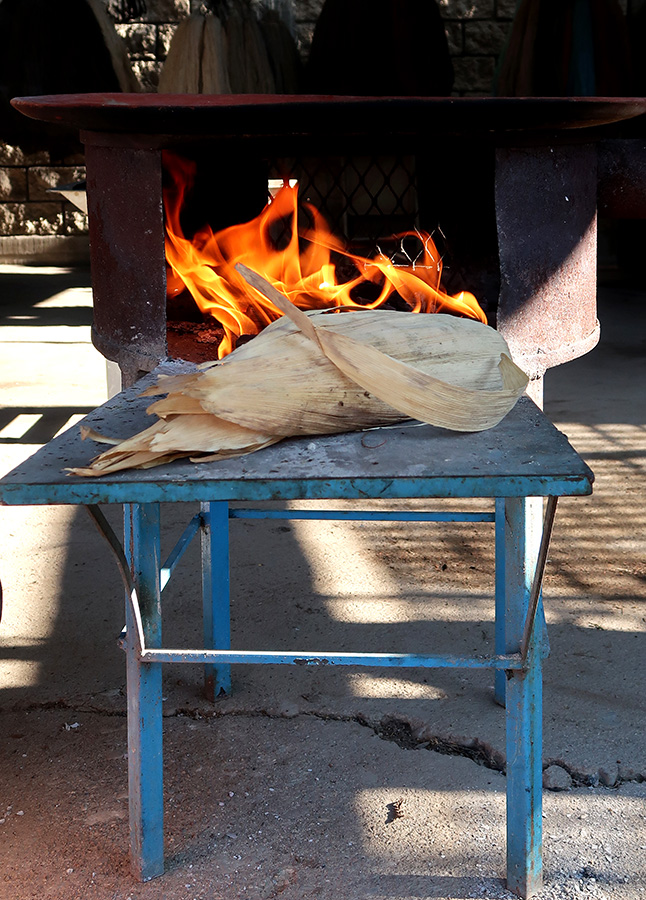
Dried corn husks in waiting.
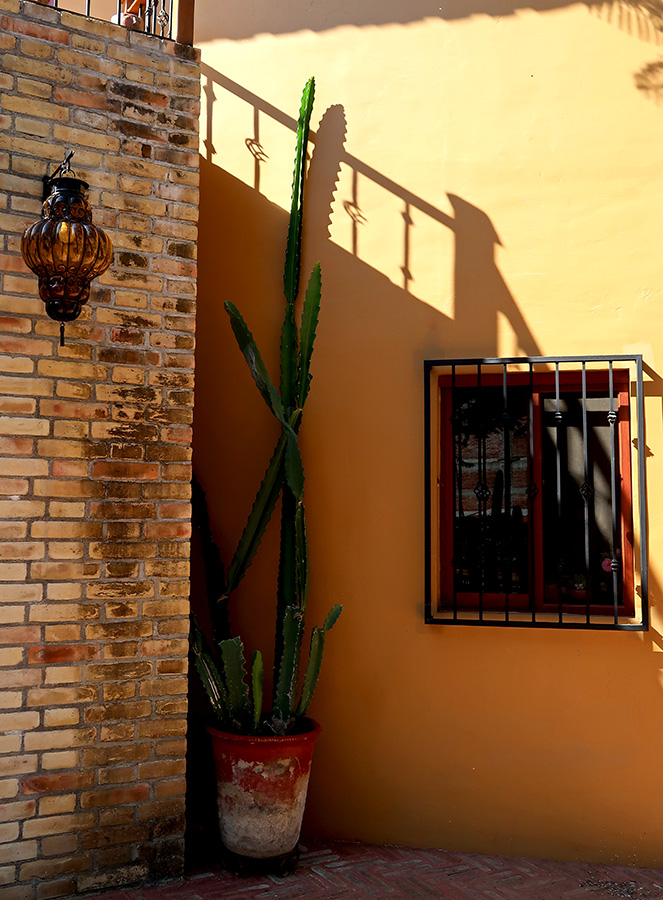
Shadows on the wall.
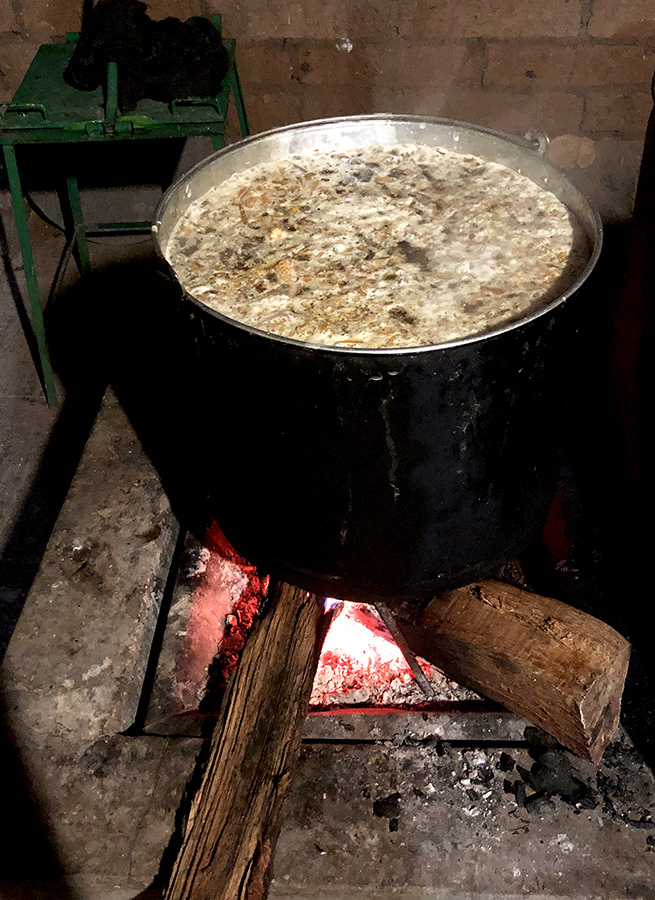
Nixtamalizing dried corn kernels.
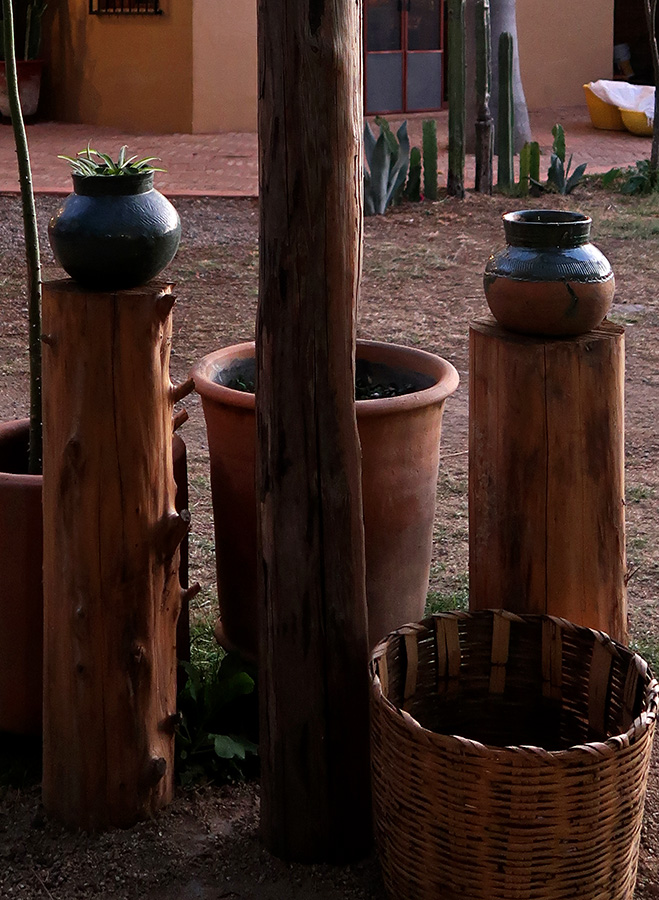
Courtyard art of the arrangement.
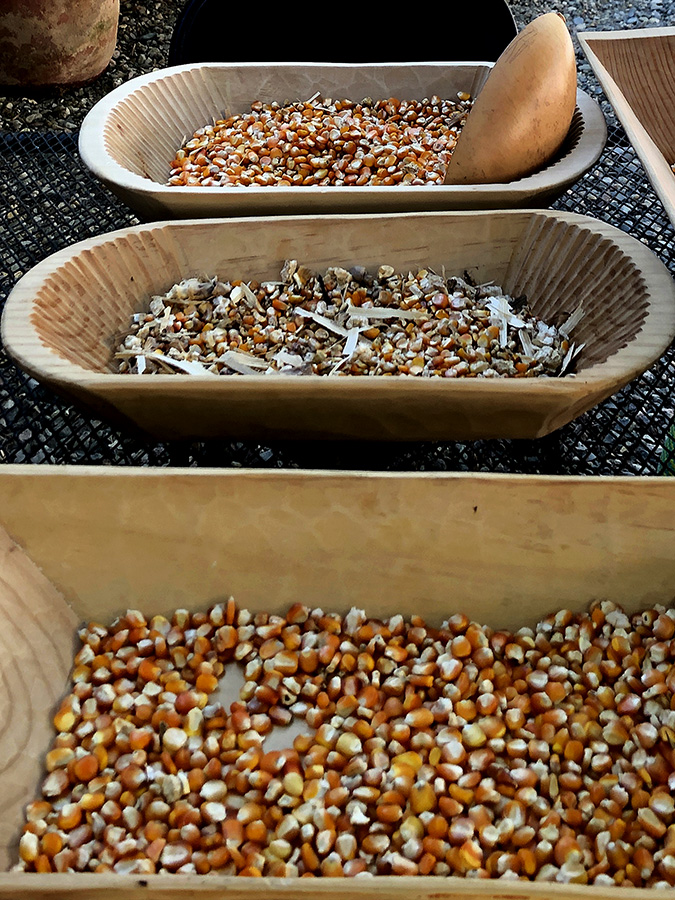
Dried corn: To be cleaned, rejected, and keepers (top to bottom).
Three days of breakfasts, lunches, and dinners with 20 to 160 family members and compadres, formal presentations, and a ritual ceremony — all to acknowledge and celebrate the promise of marriage between the youngest daughter and her intended. More from the celebrations to come.











































 Mexican Peso Converter

 View From Casita Colibrí