Feeds:
Posts
Comments

Archive for the ‘Religion’ Category

The sunburned shoulders have turned brown and the leg muscles are no longer sore.  I’ve fully recovered from last Sunday’s annual Día de la Santa Cruz (Day of the Holy Cross) hike up Cerro Picacho (in zapoteco, Quie Guia Betz), the sacred mountain in Teotitlán del Valle.

P1090302

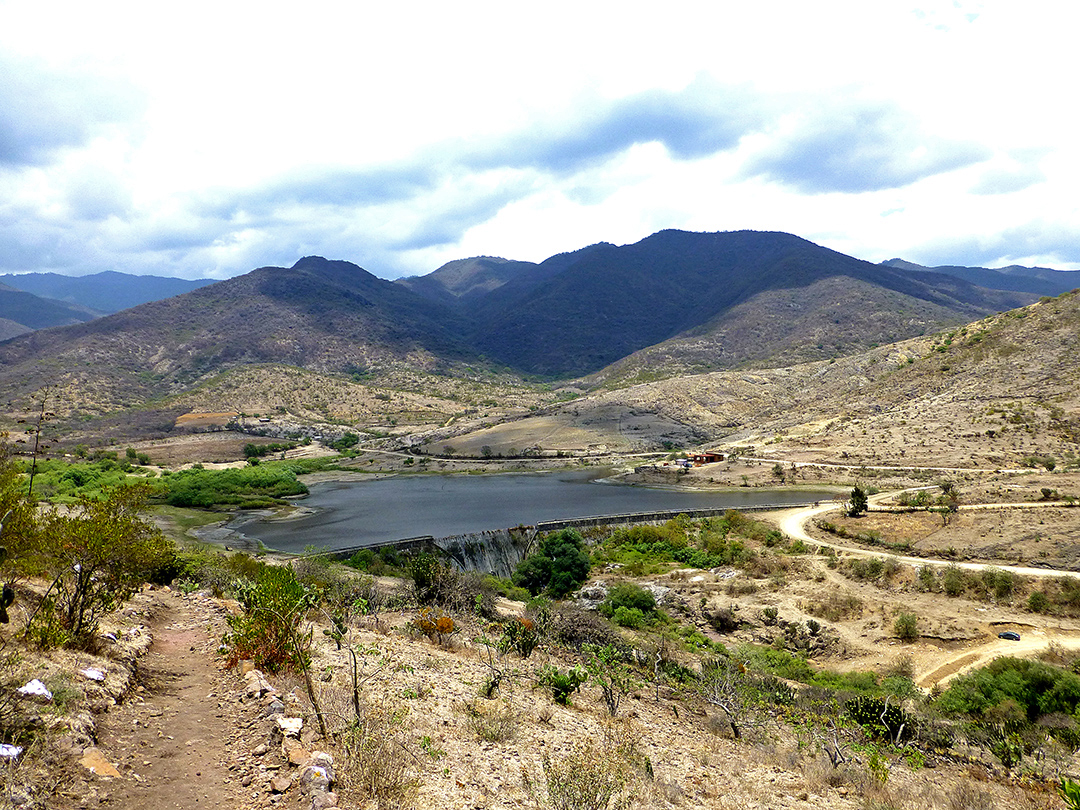
All that remains, are memories and photographs from another lovely, if strenuous, day.  The cicadas (cigarras or chicharras, en español) again provided the  soundtrack, as we wound our way up the trail from the presa (dam).  The climb begins rather benignly but rapidly gets steeper and steeper.  That little speck in the lower right of the photo below is the car — and this was less than a tenth of the way to the summit!
P1090300copy

At 10 AM, when we began our ascent, it was already hot and experience told us shade trees were few and far between.  We were the only extranjeros (foreigners) on the trail and were frequently passed by Teotitecos (people from Teotitlán) going up and coming down and never failing to greet us with “buenos días.”  After several rest and water sipping breaks, we eventually reached our destination.

P1090273

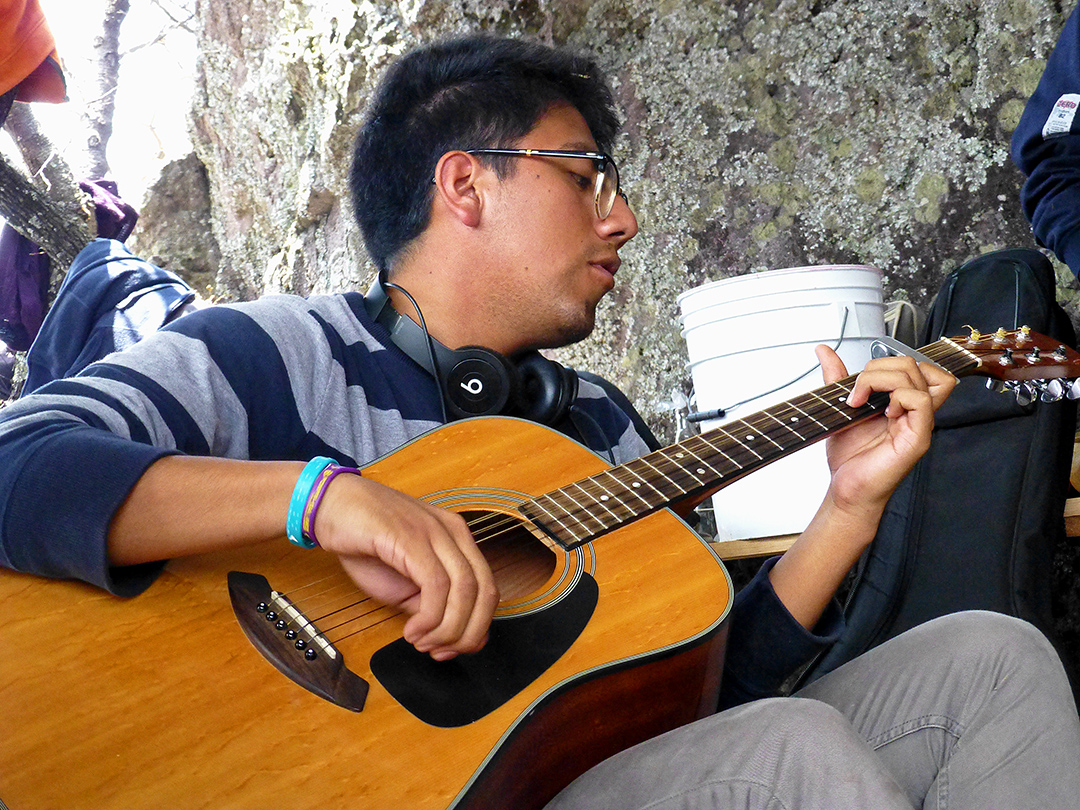
This 2.9 mile (4.7 km) hike took us from 5,750 feet (1,752 meters) to 6,830 feet (2,082 meters).  However, once we arrived, we were immediately offered much-needed and appreciated cups of agua de jamaica (hibiscus water) and later we were fed amarillo tamales pulled from steaming pots in the makeshift kitchen.  No doubt, the gals in this alfresco cocina appreciated the newly constructed shade structure and counter that had been bolted into the side of the mountain, as I’m sure did the young man who sat down to serenade us.
P1090272

However, the best was yet to come — the spectacular views of the village and the mountains beyond that unfold when one reaches the summit.

P1090292

Even more overwhelming is the sense of oneness with the natural world and with generations of Zapotecos who have been climbing and honoring El Picacho for thousands of years.

P1090266As I mentioned at the beginning of this post, May 3 is Día de la Santa Cruz.  The committee members who organize Teotitlán’s celebration change from year to year, so each year takes on a slightly different character.  This year brought the newly built kitchen space and, unlike last year, no foot race up the mountain and the absence of massive speakers blasting music — for which we were grateful!
P1090281

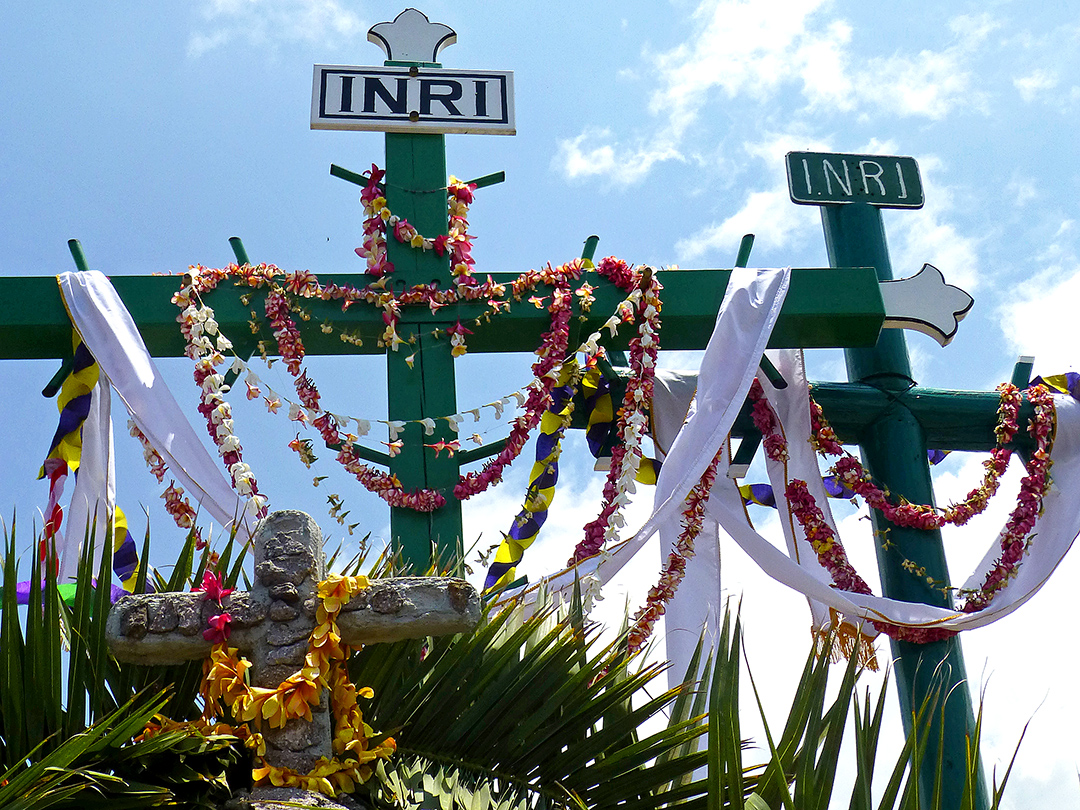
Three permanent crosses can be found atop Picacho and for Día de la Santa Cruz, all were decorated with fragrant garlands of frangipani blossoms.  A cross of concrete and stone crowns an altar and two wooden crosses, which I’ve been told were carved in Chiapas, preside above the altar and look out over the valley.
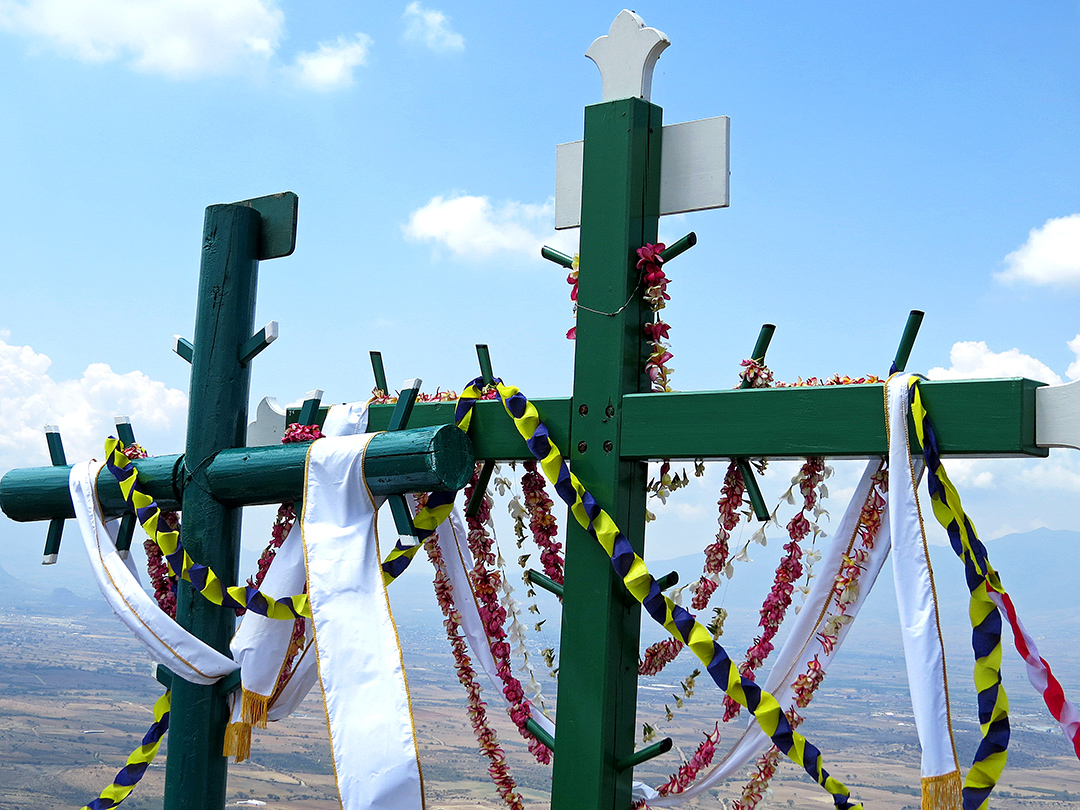
IMG_7662

Teotitlán (Teocaltitlán, in náhuatl) means “land of the gods.”  Sitting on top of Cerro Picacho, it certainly felt as if I was indeed gazing out at the land of the gods.
Read Full Post »

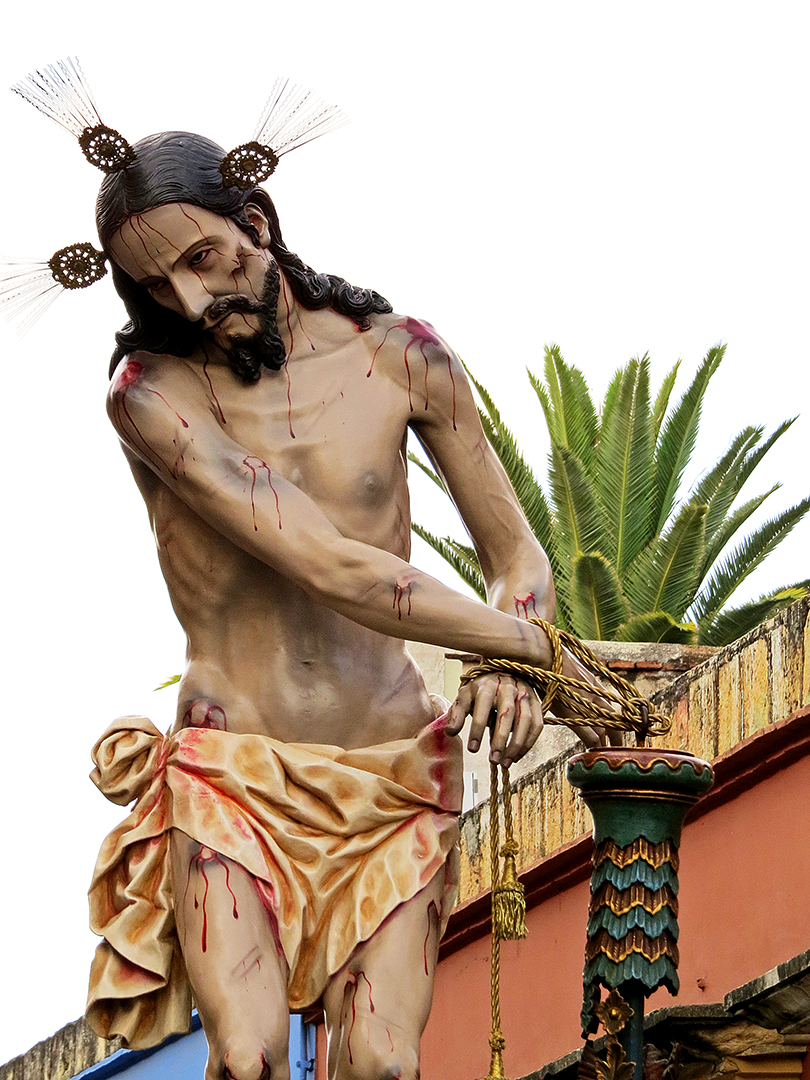
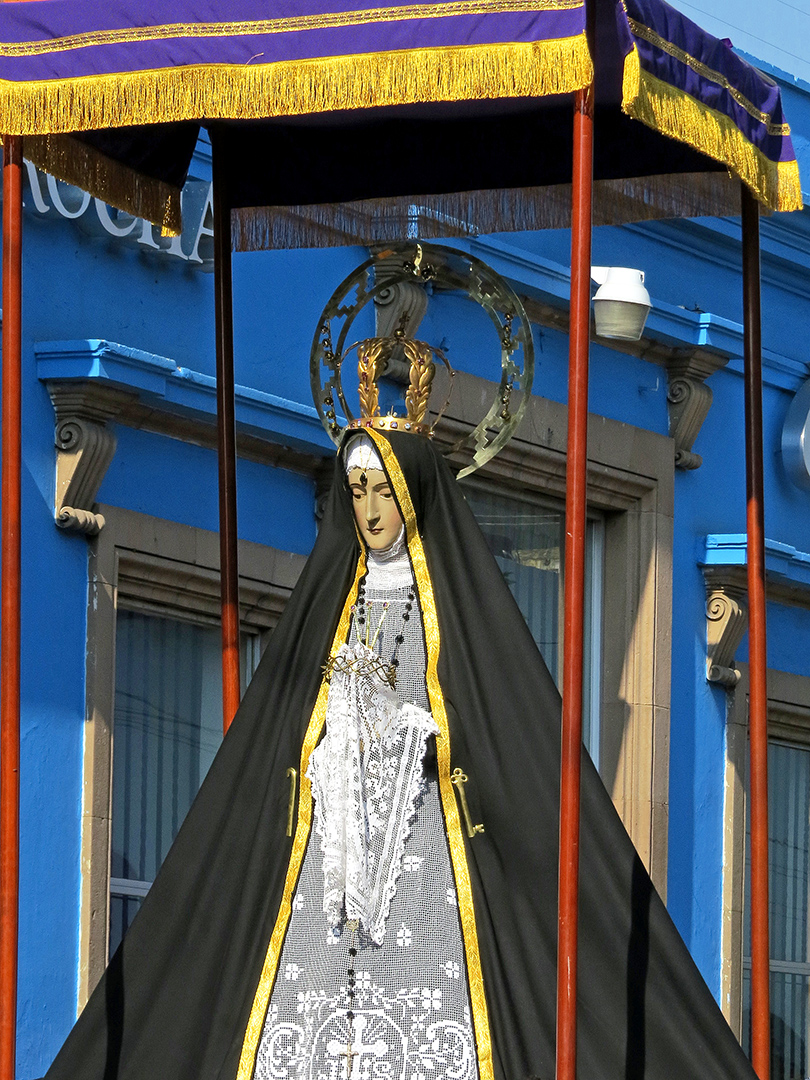
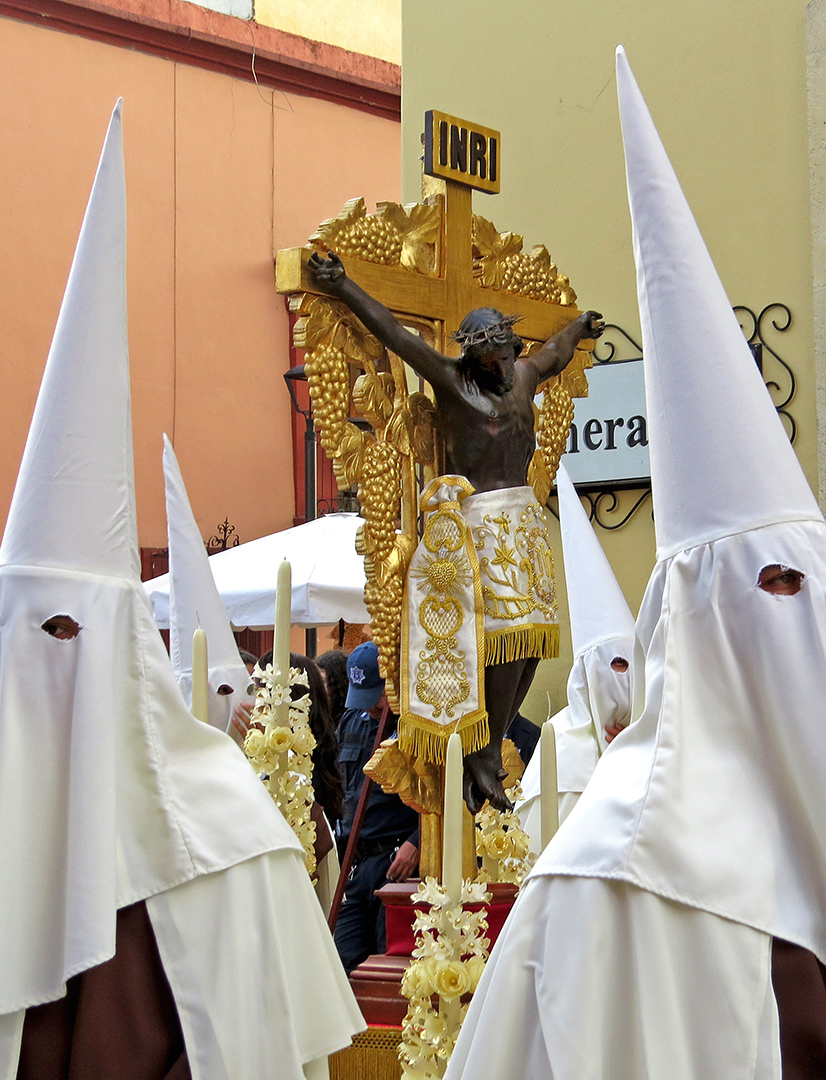
I wasn’t brought up in the Virgin and crucified Christ tradition.  No baggage, no boredom — perhaps that is why I find the multiplicity of María and Jesús images so fascinating.  Thus, I can’t resist a little “up close and personal” at the Procession of Silence.

Señor de Esquipulas

Señor de Esquipulas – Parroquia de Nuestra Señora del Carmen Alto

Nuestra Señora de Los Dolores - Parroquia de Santo Tomas Xochimilco

Nuestra Señora de Los Dolores – Parroquia de Santo Tomas Xochimilco

Señor de Las Tres Caídas - Parroquia de Santo Tomás Xochimilco

Señor de Las Tres Caídas – Parroquia de Santo Tomás Xochimilco

La Piedad

La Piedad

Jesús con la Cruz a Cuestas - Capellanía de Nuestra Señora del Patracinio

Jesús con la Cruz a Cuestas – Capellanía de Nuestra Señora del Patracinio

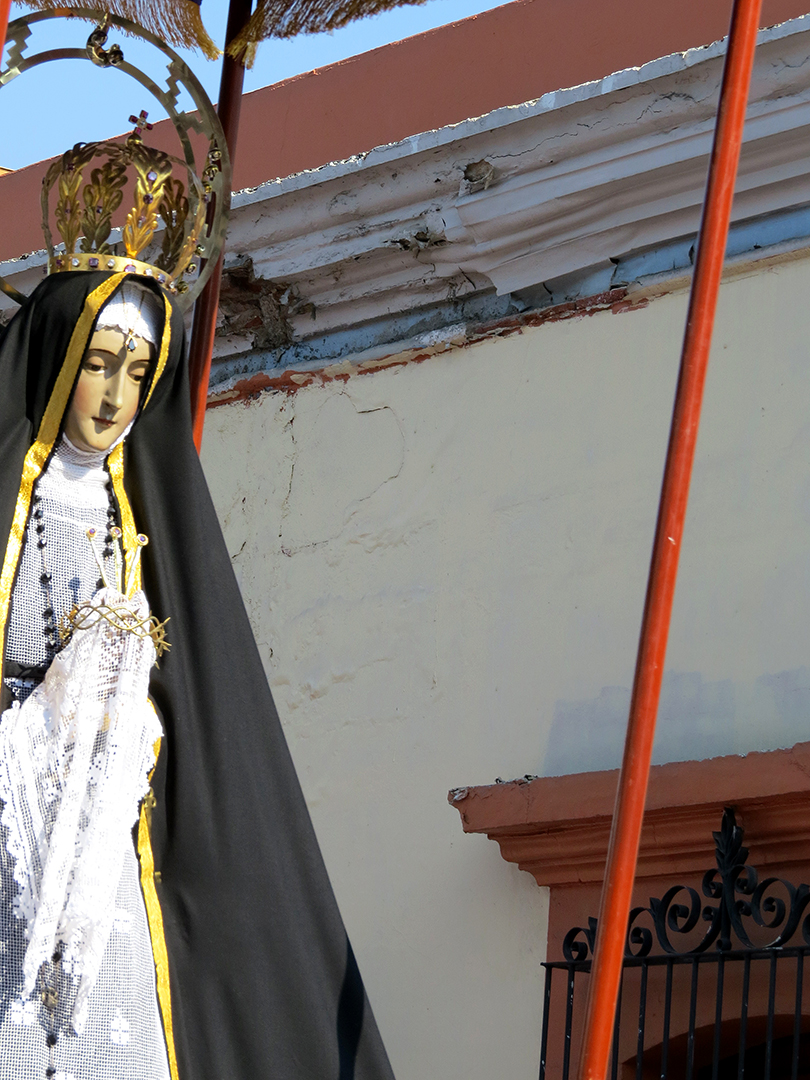
Nuestra Señora de los Dolores -  Capellanía de Nuestra Señora del Patrocinio

Nuestra Señora de los Dolores – Capellanía de Nuestra Señora del Patrocinio

Señor de La Columna - Templo de Santo Domingo de Guzmán

Señor de La Columna (front) – Templo de Santo Domingo de Guzmán

Señor de La Columna (back) - Templo de Santo Domingo de Guzmán

Señor de La Columna (back) – Templo de Santo Domingo de Guzmán

The rituals and images continue to remain alien to me, but I can’t help but appreciate them as cultural expressions.

Read Full Post »

Good Friday morning, the streets of Oaxaca are quiet, and solitude seems to be the order of the day.  The only sounds that could be heard coming from the streets in my ‘hood were prayers being sung as Our Lady of Solitude left her eponymous home at the Basílica de Nuestra Señora de la Soledad.

IMG_7356

As you can see, alone, Oaxaca’s patron saint was not; acolytes carried and accompanied her on her morning stroll.

IMG_7364

A crystal clear, brilliant blue sky provided a backdrop for her sojourn.

IMG_7379

Slowly she made her way down Independencia en-route to the Cathedral.

IMG_7378

She was one of the first to arrive at this ritual Viernes Santo gathering.

IMG_7398

The guys took over and maneuvered her into position at the side of the Cathedral, as the faithful awaited.

IMG_7404

There, she would soon be joined by other images of the Santísima Virgen and Jesús from many of the numerous churches in the Historic District.

IMG_7401

After at least two hours of prayers and songs and more prayers, Soledad returned to the Basilica, perhaps to rest (like me) before again taking to the streets for this evening’s Procession of Silence.

Read Full Post »

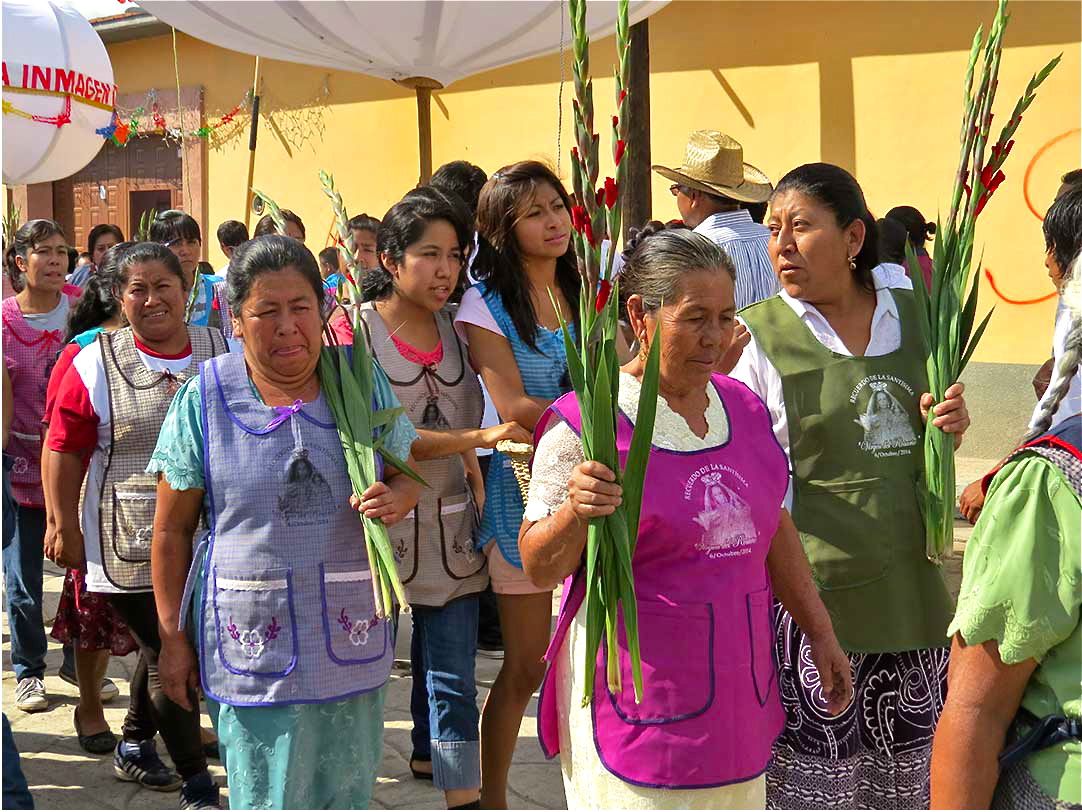
Another magical Domingo de Ramos spent in San Antonino Castillo Velasco.  Experiencing Palm Sunday in this small Zapotec village never fails to nourish the soul.

A band played outside the panteón as villagers, from niños and niñas to abuelas and abuelos, arrived bringing their biggest and most beautiful fruits and vegetables, breads and baked goods, carved wooden toys and embroidered clothing, not to mention, goats, chickens, rabbits, and even a pig or two.  Three silver-haired abuelas inspected each donation; their faces expressing gratitude and appreciation for each offering, as they affixed a price tag.  Following the procession to the templo and a mass, all would be sold to raise money for the work of the church.

These were offerings to San Salvador, who sat proudly atop el Señor del Burrito, who was up to his ears in produce and bread.

At 11:00 AM, after prayers were offered in gratitude and for continued abundance in this fertile valley, led by the beat of two tambors and the high-pitched lilt of a chirimía, a procession to the church began.  Palm crosses were distributed to villagers and visitors, alike, and many carried (or led, in the case of the livestock) the offerings that had been collected.

Once secured, it took twenty men to hoist and carry the bounty-laden anda, with San Salvador and the burro, a ritual reenactment of the Biblical story of Jesus entering Jerusalem riding on a burro to celebrate the Passover.  As the procession made its way to the church, the rhythmic sounds were occasionally overpowered by shouts warning the men of topes (speed bumps) and low hanging telephone wires that must be navigated, and then there were the stairs leading up to the church atrium.

I cannot begin to express how warm and welcoming the people of San Antonino Castillo Velasco were.  Countless times, as I was taking photos, officials encouraged me to come closer and villagers ushered me to the front.  How many magical experiences can one person have?

Read Full Post »

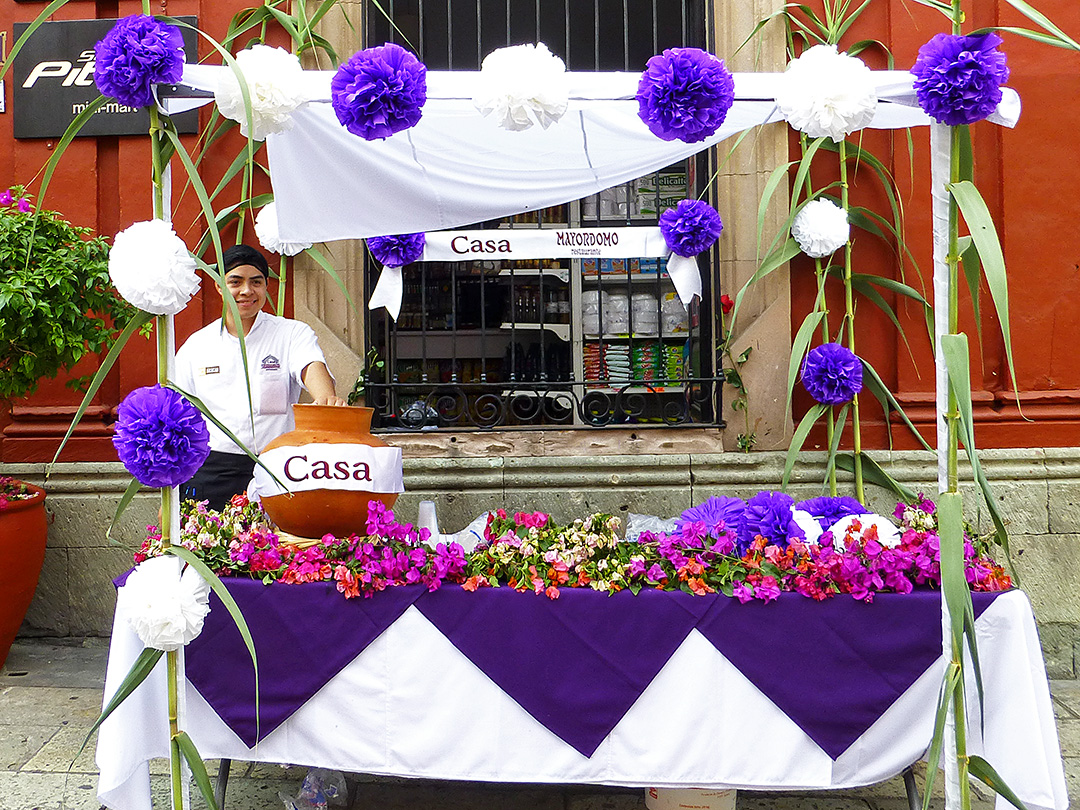
Yesterday was the fourth Friday of Lent and, if you are in Oaxaca, that means Día de la Samaritana, where, believer or not, you will be offered aguas from doorways and street-side tables set up in front of churches, restaurants, hotels, government agencies, and private homes.

P1070368 (1)

I got a late start; unseasonable rain was threatening and the grey sky had made it hard to leave my cozy apartment. 

P1070372

But, what can I say?  Horchata, sandia, guayaba, coco, chilacayota, chía con limón, and even tejate and nieves were offered with smiles, free of charge, to all passersby.

P1070348

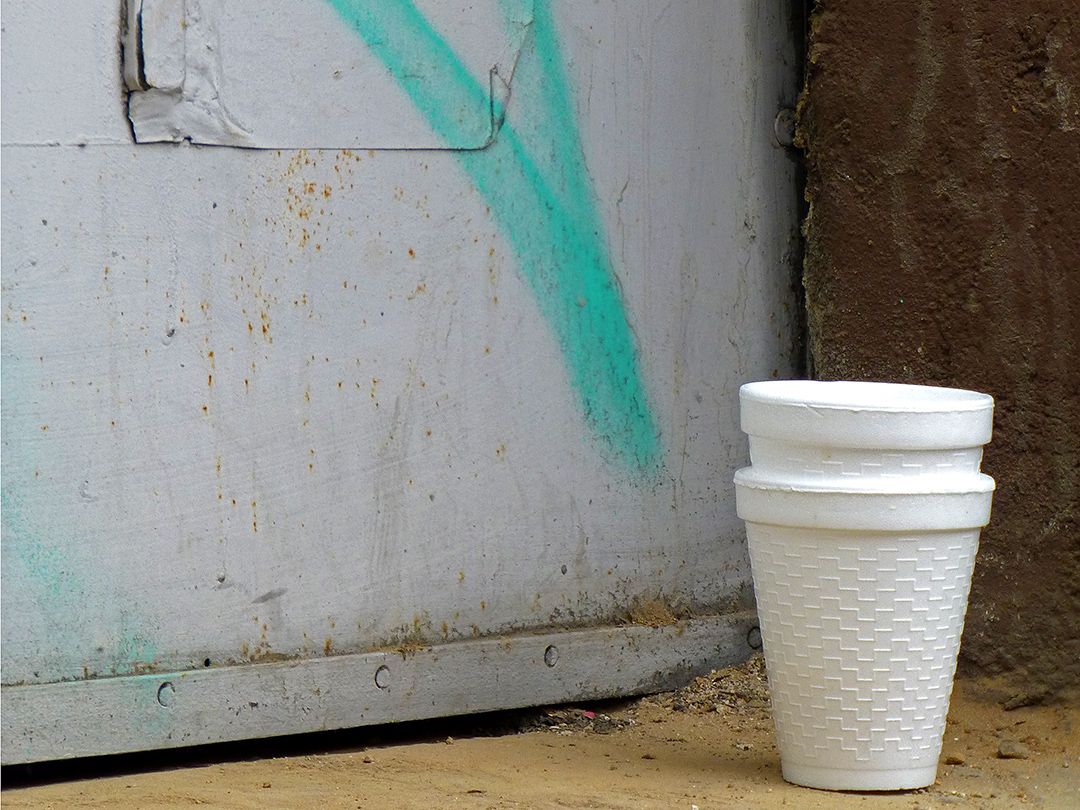
Within a block, I happily and gratefully accepted a large plastic cup of horchata; another one followed, and later, a styrofoam cup of chilacayota.

P1070385

It had begun at noon, but by 2 PM, all that remained were branches of Bougainvillea, empty ollas (pots), ladles with nothing to dip into…

P1070392

and empty cups.

Read Full Post »

Today is Guadalupe’s feast day.  This Queen of Mexico, Empress of America, and patron saint of Mexico is being celebrated all over Mexico and, apparently for the first time in Vatican history, today Pope Francis to Say Mass in Honor of the Virgin of Guadalupe.

In Mexico, it’s not just a one-day event.  Wednesday afternoon, while Chris and I were giving our previously mentioned presentation at the Oaxaca Lending Library, only blocks away festivities began with a religious ceremony at the Shrine of Our Lady of Guadalupe on the side of Llano Park.  It was followed that night with a calenda through the streets of the city.  Yesterday, Guadalupe’s children, the little Juan Diegos and their peasant sisters, were brought by parents (and grandparents) to the Templo de Nuestra Señora de Guadalupe (at the north end of Llano Park), where they waited patiently in long lines to enter the church to be blessed and then be photographed in “Guadalupe” scenes.

However, on the streets of Oaxaca, Guadalupe is seen everywhere and everyday…

The other big news from Rome, that Oaxaqueños are celebrating, is the Wealth of Oaxaca craft present in the Vatican Museum — a Christmas tree and Nativity scene decorated with artesania crafted by 142 Oaxacan families from 25 municipalities in the state.  The exhibition was inaugurated on December 10 and will run through February 2015 — should you be planning a trip to Italy!

Read Full Post »

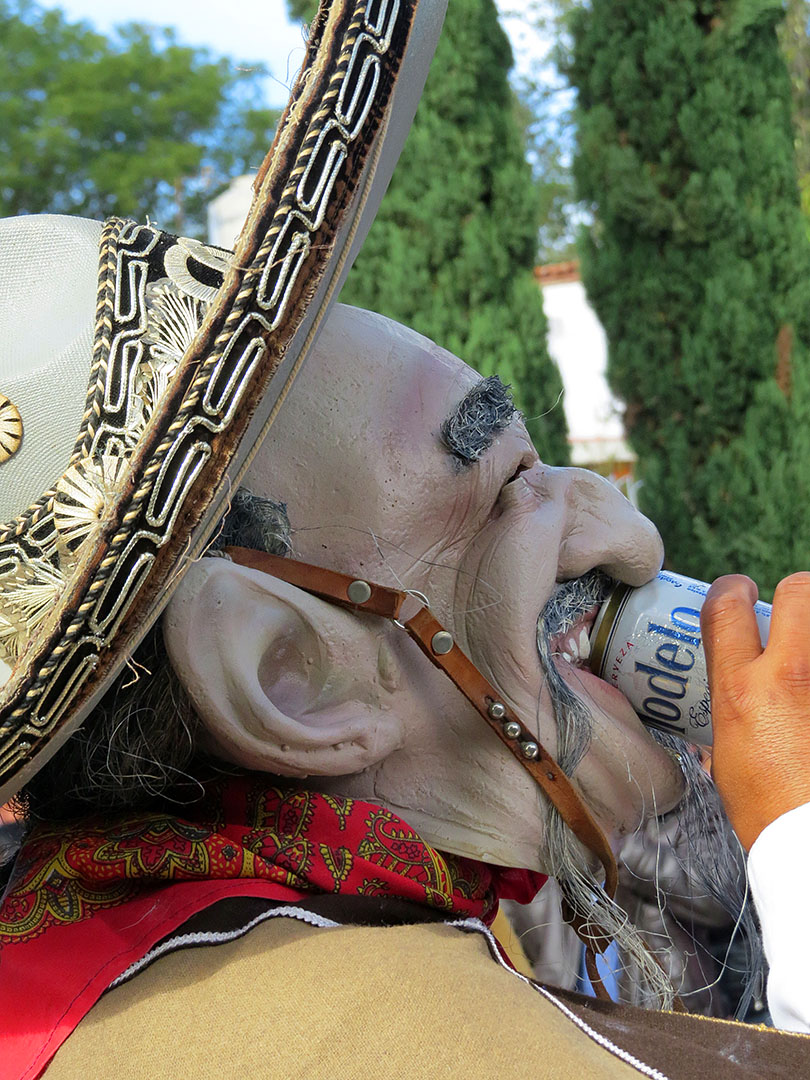
If it’s November 2nd, it must be morning muerteada madness in San Agustín Etla .  A few faces in the crowd from the Barrio San José contingent…

IMG_6663

These guys had been dancing through the streets all night.  Cervesa seemed to be the beverage of choice this morning, though, bottles of clear liquid was also being passed around — and I’m sure it wasn’t  water!

P1030771

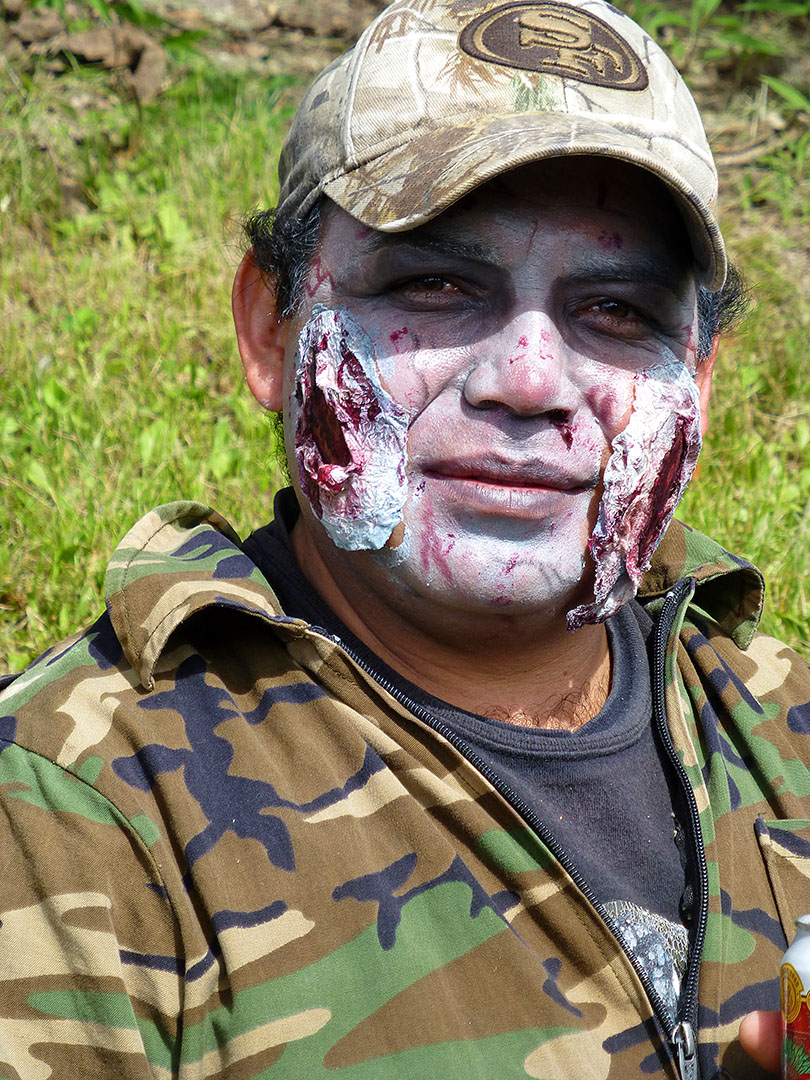
Had to snap this guy — not only was his makeup gory and great, he topped it off with a San Francisco 49er cap.

P1030731 copy

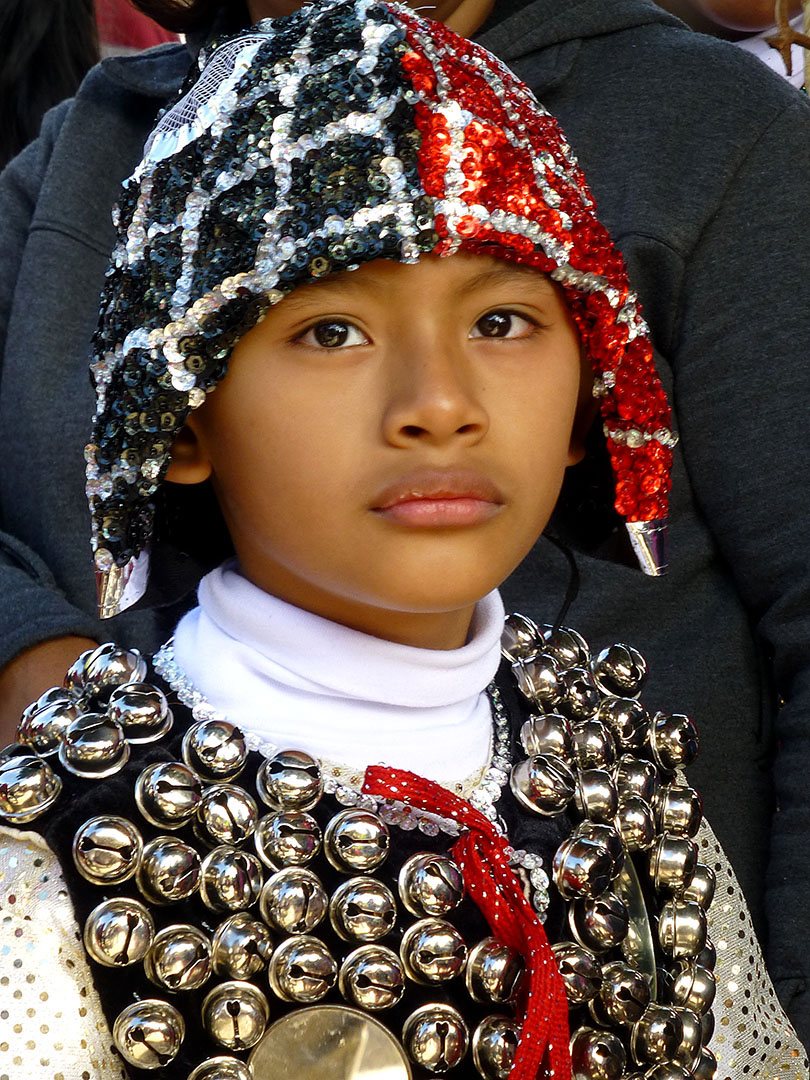
And, then there was this boy…  As with all the traditions here, children observe, learn, and participate at a very young age.


Read Full Post »

As a treat for residents and visitors during the Muertos festivities, last night and tonight, the City of Oaxaca is presenting, “Manjares de Todos Santos” — a video mapping light and sound show at Santo Domingo de Guzmán and the Basílica de la Soledad.  Last night was a mob scene at Santo Domingo, so we opted for Soledad, where we had a ringside seat.

This slideshow requires JavaScript.

¡Espectacular!

Chris, of Oaxaca-The Year After fame, shot video and I will post a link when he gets it uploaded to YouTube.  Update:  And the link is: http://oaxacanyear.blogspot.mx/2014/11/mapping-la-soledad.html

Read Full Post »

Today, in Santa Catarina Juquila, about 200 km southwest of the city of Oaxaca, la Virgen de Juquila, is receiving a papal coronation.  Roads leading to this remote mountain village have been repaired and repaved and extra emergency services have been in place since Monday, all in anticipation of the thousands of pilgrims who were expected to descend on Juquila.

However, for those who chose to stay closer to the city, celebrations in honor of the Virgen del Rosario (Virgin of the Rosary) have been occurring for the past week throughout the valley of Oaxaca.

IMG_6012_copy2

Thus, blogger buddy Chris and I headed to Tlacolula de Matamoros on Friday for their annual procession.

IMG_6076_copy2

Beginning on the street in front of the panteón, young women wearing traditional red wool skirts and beautifully crocheted white cotton blouses…

IMG_6124_copy2

…danced their way through the streets balancing towering canastas (baskets) on their heads — the letters spelling out “Virgen del Rosario.”

IMG_6105_copy2

The arm and neck strength it takes to carry the canastas is phenomenal and can only come from years of practice.  As you can see, they begin early…

IMG_6152_copy2

Rockets announced the procession’s arrival.

IMG_6131_copy2

Bandas provided the music.

IMG_6122_copy2

And, “boys to men” carrying marmotas two-stepped and twirled their way along the route.

IMG_6148_copy2

Years of practice is required to do this, too!

IMG_6162_copy2

Participants stop at altars throughout the village, where prayers are recited, rest breaks are taken, and tamales, sweets, and beverages (yes, including mezcal) are consumed.

IMG_6127_copy2

This goes on until 1:00 or 2:00 AM.  We arrived at 4:00 PM, stayed for a couple of hours, carried nothing heavier than our cameras and daypacks, and were ready to call it a day!

However, this is a bittersweet post.  While we were reveling in the festivities, a family in Tlacolula de Matamoros was in agony.  It was reported last night that 18-year old, Cristian Tomás Colón Garnica, from Tlacolula de Matamoros, is one of the 43 students at Normal Rural ‘Raúl Isidro Burgos’ in Ayotzinapa who went missing on September 26 in Iguala, Guerrero after police opened fire on the students, who were soliciting funds for an Oct. 2 demonstration protesting funding cuts to their state-financed school.

Read Full Post »

The calm after the storm.  What a difference 36 hours makes!

Basilica de la Soledad and blue sky

The beginning of the dry season?  Only Mother Nature knows…

Read Full Post »

Yesterday, the Virgen del Rosario convite beckoned us to Tlacolula (more to come).  After an hour and a half of photographing and relishing in the music, marmotas, monos, impossibly cute kids, and hospitality, we began losing the light as a dark and threatening sky began moving in.  However, Mother Nature put on quite an extravaganza for our drive back to the city — towering clouds, sheets of rain, lightening streaking towards the ground, brilliant sun, and rainbows.

Basílica de La Soledad with red-gray sky

Once home, a weird and wondrous sunset.


Read Full Post »

Defining the terms…

According to Harrap’s Spanish and English Pocket Dictionary, convite means reception.  However, if I drag my weighty Larousse Standard Diccionario down from the shelf, convite translates to “invitation” or “banquet.”  And, if one turns to Google or Bing translation programs, a convite is a “treat.”

All pretty much agree, the English translation for cochinilla is cochineal.  As Wikipedia explains, “Cochineal is probably from French cochenille, Spanish cochinilla, Latin coccinus, meaning ‘scarlet-colored,’ and Latin coccum, meaning ‘berry (actually an insect) yielding scarlet dye.'”  It has been called, A Perfect Red and was much sought after by Europeans.  Home to said insect is the nopal cactus and guess who and where it was probably first cultivated?  In the valley of Oaxaca by her indigenous people, long before the Spanish set foot on the continent.

Which brings us to last Saturday (September 6) in Teotitlán del Valle, under the watchful eye of el Picacho, the sacred brother/sister mountain, for the convite that precedes the Virgen de la Natividad (Nativity of Mary) festival day, held annually on September 8…

This slideshow requires JavaScript.

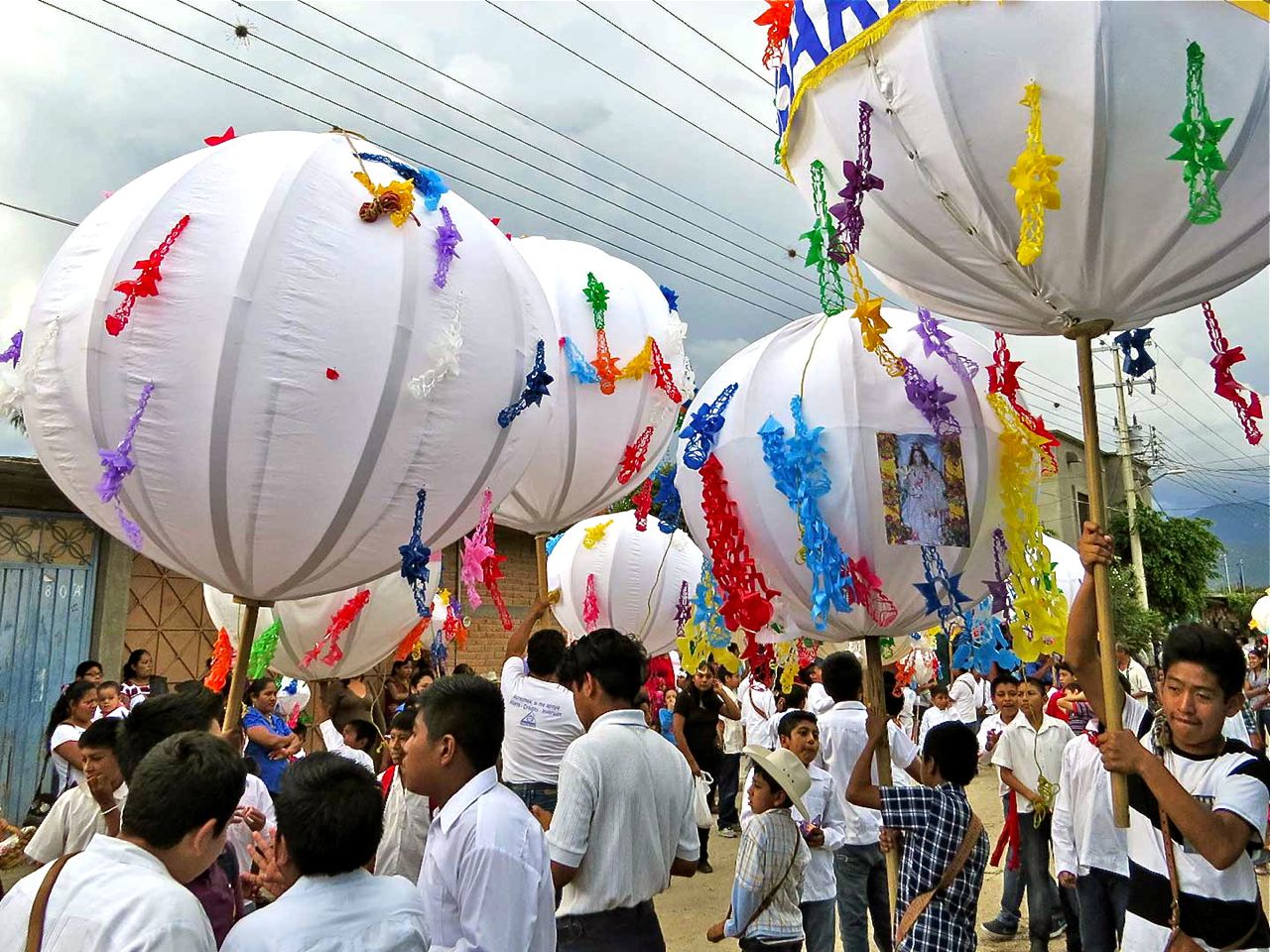
It is the custom in this Zapotec village for the unmarried women of the village to process through the streets two days before this (and a couple of other) important religious festivals, elegantly balancing handmade canastas (baskets), decorated with Catholic and Zapotec imagery, on their heads.  They wear brightly embroidered blusas (blouses) and, in this village known worldwide for its weaving, enredos, hand-woven red wool wrap skirts — the yarn dyed red with cochinilla.  They are accompanied by bands, men carrying enormous (and heavy!) marmotas (cloth globes), little boys carrying poles topped with miniature marmotas, sheep, and airplanes (the significance of the latter is a mystery to me), fearless pirotécnicas announcing the convite’s progress by shooting thunderous rockets into the air, and the dancers who will be performing the Danza de la Pluma in the church courtyard during the following two days’ of festivities.

Borrowing from the definitions above of convite, I would like to think of these processions as a lovely treat, an invitation to the impending fiestas/feast (banquet) days for the saints venerated by the village.  The beauty of the welcoming faces of the young, old, male, and female in the convite provide a warm reception to villagers, visitors, Catholic saints, and Zapotec ancestors, alike.

Read Full Post »

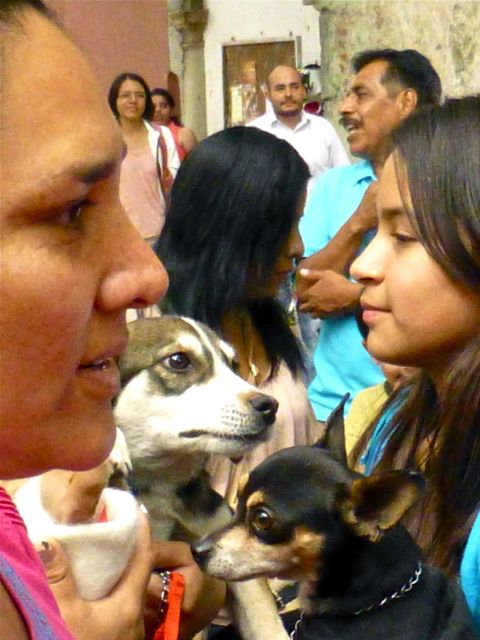
Under a cloudy sky, the faithful and their mascotas (pets) gathered in the plaza in front of the Templo de Nuestra Señora de la Merced for the Bendición de los Animales (Blessing of the Animals).
Human and dog faces
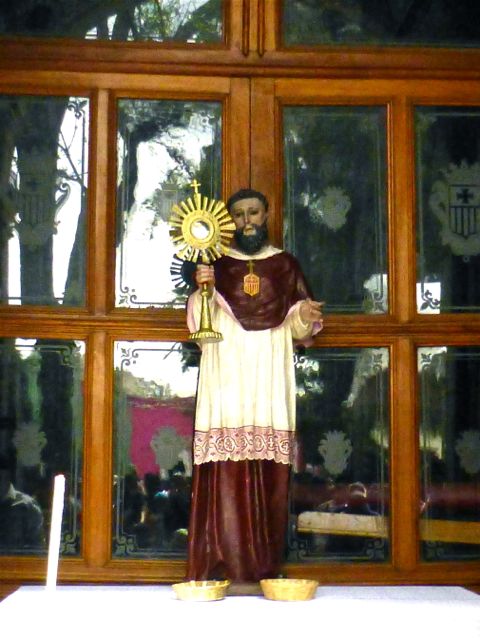
This annual event, held on August 31, celebrates the feast day of San Ramón de Nonato (aka, St. Raymond Nonnatus), patron saint of women in labor, persons falsely accused, and keeper of animals.  This last, though not often mentioned, seems to come from the story that he was raised on a farm and, according to this website, “chose for his occupation the care of the sheep, in order to gain more time for prayer and meditation.”  Today’s El Imparcial states that La Merced is the only church in the city with an image of the saint.
Figure of San Ramón Nonato
Here in Oaxaca, instead of sheep, San Ramón was surrounded by dogs of all sizes, shapes, and temperament.  By far, they outnumbered all other animal species put together — except humans.  Over the past few years, there has been a noticeable increase in pet (as opposed to roof and street) dogs in Oaxaca.  Perhaps a sign of a growing middle class?  And, many dressed for the occasion.  However this dalmatian must have also paid a visit to a makeup artist.  Lipstick on the collar (muzzle, forehead, and ear) of a new friend tells the tale (tail?).
2 dogs nuzzle to nuzzle
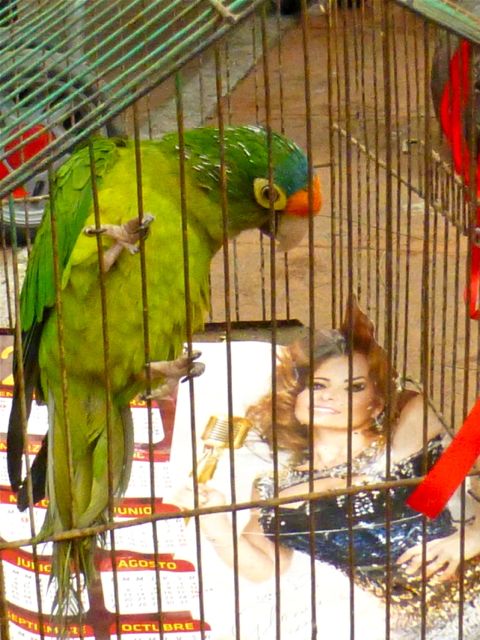
There were also the other usual pet suspects — cats and kittens, though most looked like they would like to be anywhere else but there, and canaries and cockatiels, the latter both in cages and perched on shoulders.  This guy seemed more interested in the pin-up girl lining his cage than getting blessed by a few drops of holy water from the temple’s priest, Víctor Hernández Antonio.
Parakeet in cageHowever, my vote for the most exotic pet of the day goes to the hurón, known in English as a ferret.  Oh those piercing eyes and those claws.  I’d hate to get on her wrong side!
Ferret with red bow on head
I wonder…  What do you think the abuelas and abuelos, who remembered the old days when it was donkeys, goats and farm animals who were led along Oaxaca’s dirt streets to be blessed, thought?

Read Full Post »

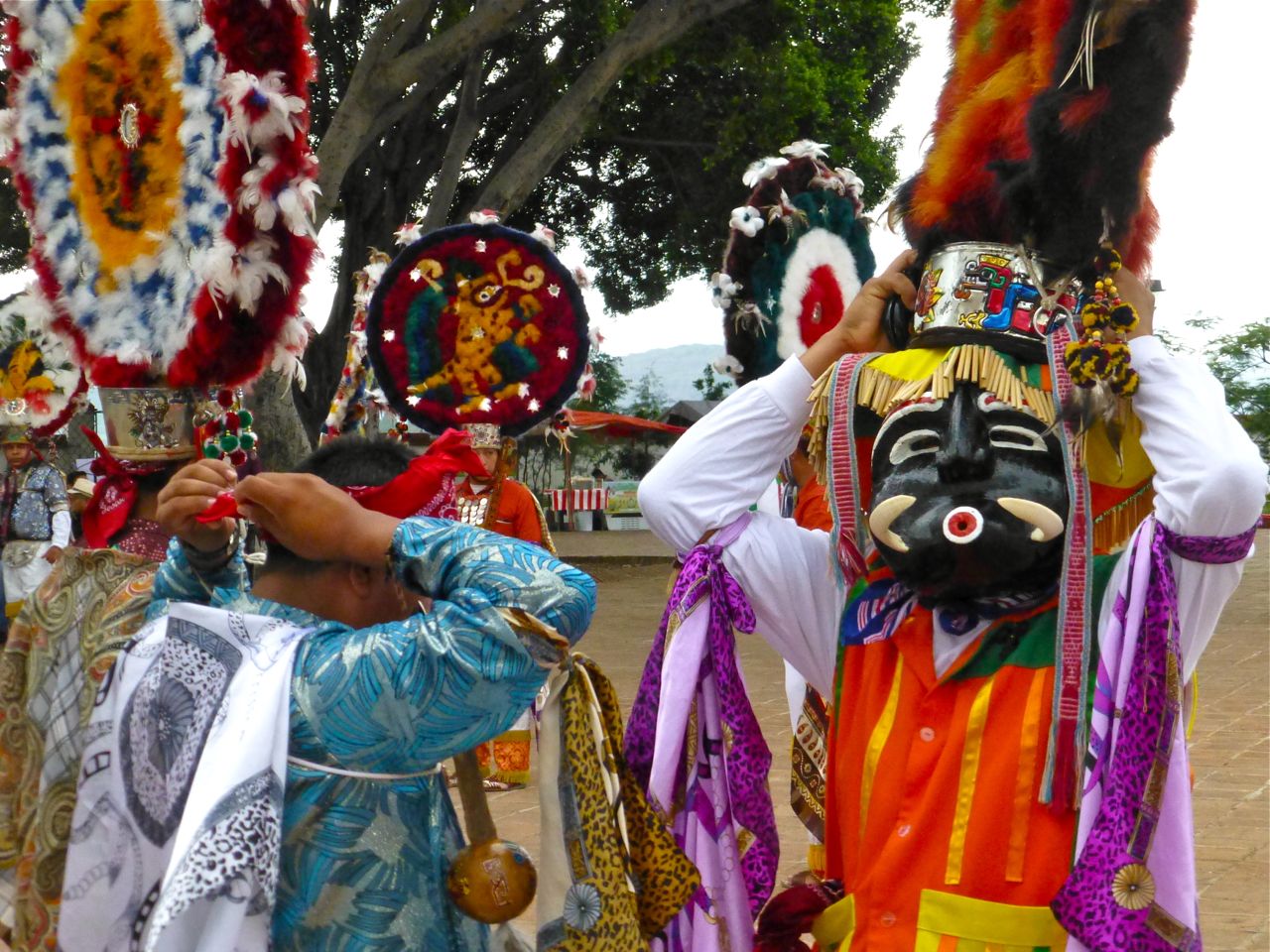
We returned to Teotitlán del Valle on Tuesday and Wednesday the Danza de la Pluma — more of the multi-day fiesta honoring Preciosa Sangre de Nuestro Señor Jesucristo.

Moctezuma and Danzantes

An airborne Moctezuma and the Danzantes

The Danza de la Pluma is a ritual re-enactment of the Spanish conquest.  The story is told in 41 bailes (dances) and lasts from early afternoon into the night.  It is an honor to be a participant — the Danzantes, Moctezuma, the Subalternos, Malinche, and Doña Marina are selected years in advance and make a promise to the church and community to perform their roles for 3 years.

Dance of Malinche and Doña Marina

Dance of Malinche and Doña Marina

All is not completely serious — the Subalternos provide a little levity along the way.

Subalterno trying on the Penacho of a Danzante

Subalterno trying on the Penacho of a Danzante

The subtext and “hidden” narratives of the danza are multiple and complex and after 5 years, I’m only in the infant stages of understanding.  I will leave it to the two scholarly articles listed below to attempt interpretation.

Danzantes with El Picacho in background

References:

Cohen, Jeffrey.  Danza de la Pluma:  Symbols of submission and separation in a Mexican Fiesta.  Anthropological Quarterly, Jul 93, Vol. 66 Issue 3, p. 149-158.

Harris, Max. The Return of Moctezuma.  The Drama Review, Sp 97, Vol. 41 Issue 1, p. 106, 29 p.

Read Full Post »

July in the valley of Oaxaca has begun!  There will be festivals of mole, mushrooms, cheeses, and tamales.  And, there will be the costumes, calendas, and music of Guelaguetza in the city and in several of the surrounding villages.  But first…

Subalterno with open arms

Under a dark and threatening sky, the people of Teotitlán del Valle began their week-long Fiesta titular a la Preciosa Sangre de Nuestro Señor Jesucristo (Festival to the Precious Blood of Our Lord Jesus Christ).  Wearing traditional embroidered blouses and wool skirts woven in this Zapotec village known for its weaving, the unmarried young women and girls gathered in front of the church (Templo de la Preciosa Sangre de Cristo) for the convite (procession) that kicks off Teotitlán’s most important fiesta of the year.

Young Zapotec women and girls in front of church

The rain held off and the procession left the confines of the church courtyard.

Marmotas and people leaving entry gate

Marmotas (giant cloth globes), music, and pyrotechnics led the way…

Banda marching down street

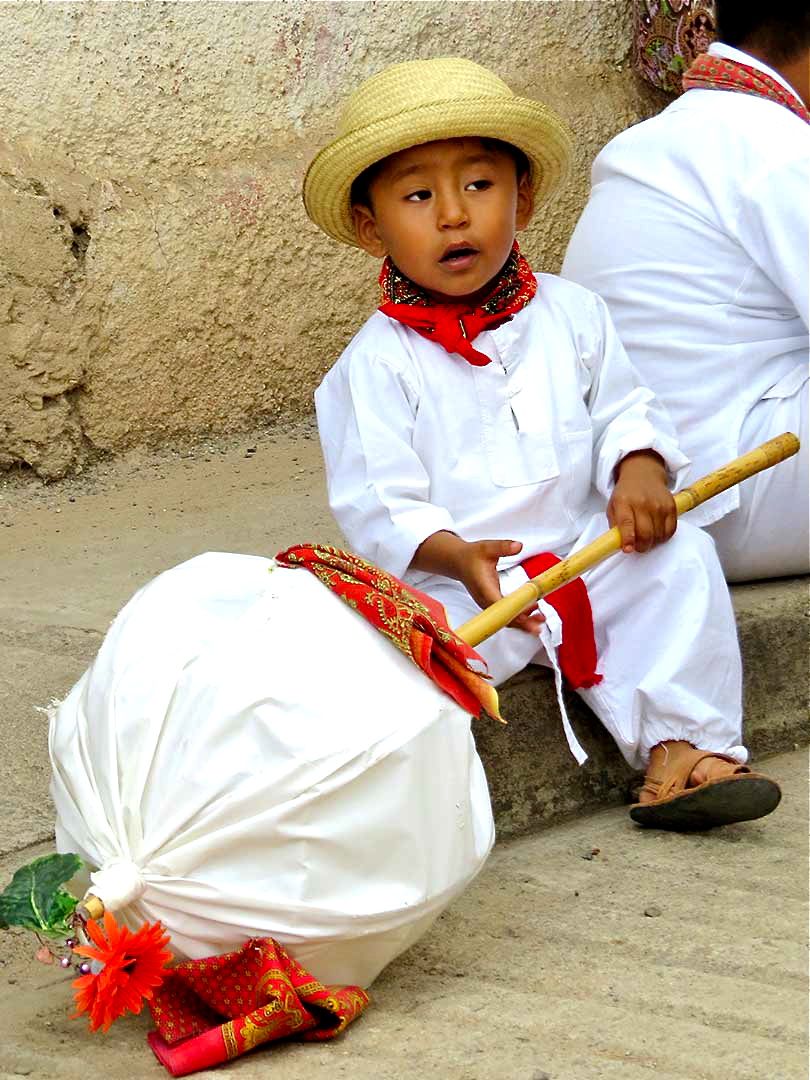
along with little boys holding canes of carrizo and poles topped with small marmotas, fluffy sheep, and airplanes (don’t ask me).

Little boy carrying small marmota

And then came the young women and girls, carrying canastas with images of the saints on their heads.  I have to note here, these baskets are REALLY heavy.  I know, because last year one of the gals asked if I’d like to try — I did for all of about five seconds.  They carry them for almost an hour!!!

Young women with carry canastas on their heads

Most of the residents came out to watch at prime viewing locations.  (Teenage boys were especially prominent, but they deserve another blog post.)

Men, women, and children standing on street

Under the watchful eye of El Picacho (the sacred mountain of Teotitlán), the procession wound its way up and down the cobblestone streets…

Procession in mid-ground and mountain in background

and eventually returned to the church courtyard, where it all began.

For more photos, including some of the pyrotechnic guys in action, check out Oaxaca-The Year After.

Read Full Post »

« Newer Posts - Older Posts »