Feeds:
Posts
Comments

Archive for the ‘Parks & Plazas’ Category

Yesterday, I walked down to the zócalo twice; once in mid-morning and again late in the afternoon.  My Spanish teacher had advised her students of the probable presence of army trucks, soldiers, and federal police; but to be assured this was standard operating procedure on election day.  However, all I saw were the normal transit police directing traffic and only 2 federales.  From my terrace, I did watch a helicopter circle the zócalo a few times.  A friend filmed a tussle re lack of ballots about the same time as my helicopter siting.

This slideshow requires JavaScript.

To begin to understand the Mexican electoral system, the Instituto Federal Electoral has a FAQ page, in English, where it answers, 30 Essential Questions.  In addition, readers might be interested in Robert Pastor’s article, 8 things the U.S. election system could learn from Mexico’s.  While I don’t agree with some of his points (his conclusions re the PRI and the issue of voter ID cards in the US; problematic given its troubling history), I think the article is worth a read.  By the way, the Yo Soy 132 movement was present yesterday on the zócalo and vows to continue.

Read Full Post »

Last night, under starry skies, I returned to Casita Colibrí.  The streets were wet and potholed (more than usual) and even in the dark, my garden looked green and lush, all thanks to the rains Hurricane Carlotta brought and a storm track that continues to have Oaxaca in its sights.

After a verrry slow morning spent renewing my apartment’s acquaintance (remember, no TP in the toilet), gazing at the view, and unpacking, armed with two shopping bags, I headed down to Mercado IV Centenario (my local mercado) for some much-needed restocking, only to find doors locked.   Ooops!  I’d forgotten, as of mid May it was temporarily relocated to Jardín Morelos, due to a long overdue renovation project.  So, down the stairs and across Independencia to the new site, I went.  How nice it was to see the familiar faces of my favorite vendors and what warm greetings I received.   Ahhh… it’s good to be back!

The route home took me up through the Plaza de la Danza.  And, what to my wondering eyes did appear?   A boxing ring, boxing fans, and a boxing match in progress.  Darn, I neglected to bring my camera.  Hey, it was just supposed to be a grocery shopping trip!  However, this from my iPod Touch camera.

2 boxers in boxing ring with referee in background.

Concerts, dance exhibitions, fireworks staging site, ferias and now boxing in the Plaza de la Danza.  As I’ve said, the public spaces in Oaxaca are well used!

Read Full Post »

On my first visit to Oaxaca, I was introduced to Jardín Sócrates, part of the Templo de la Soledad/Plaza de la Danza complex, between Independencia and Morelos.  The original Jardín Sócrates was constructed as a public garden in 1881 and remodeled for its 100th birthday.

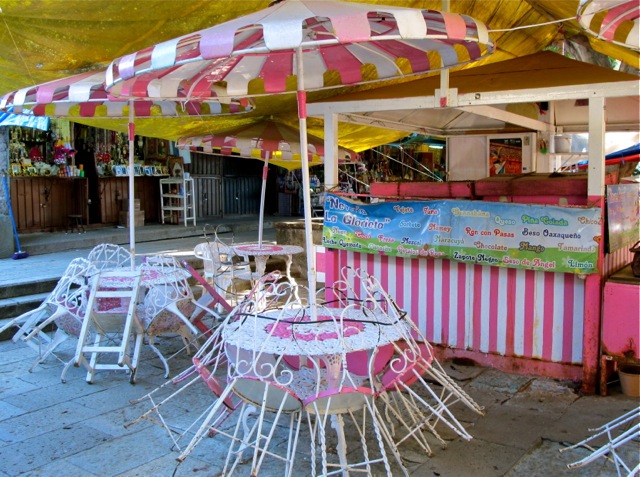
Pink and white iron chairs and umbrella in front of a neveria stand.

I have a weakness for ice cream, sherbet, and gelato and, thus, was completely “in heaven” being surrounded by stands selling the most amazing flavors of  milk and water based frozen desserts.

Green and yellow iron chairs and umbrellas in front of a neveria stand.

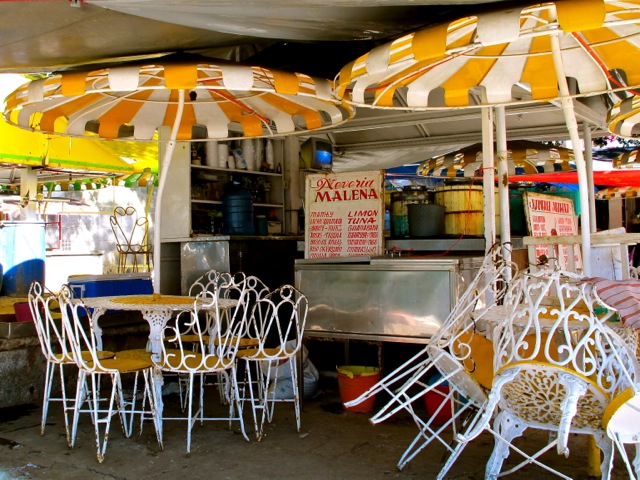
Everyone has their favorite vendor, my friend G was partial to Nevería Malena, and so we sat down at one of their yellow and white iron tables.

Yellow and white iron chairs and umbrellas in front of the Nevería Malena stand.

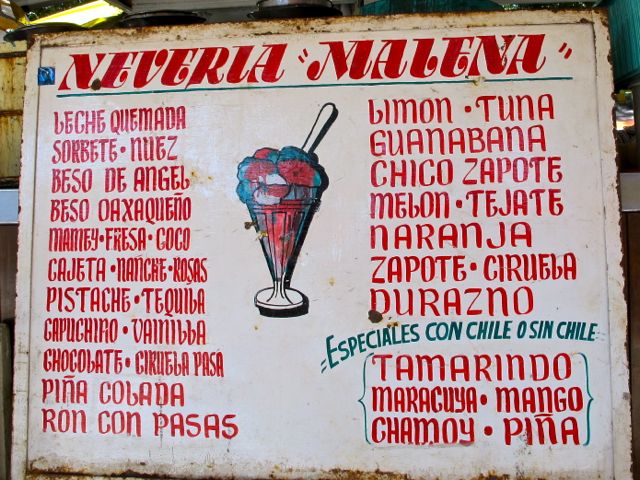
It was SO hard to decide what to order; being tempted by too many choices and being mystified by what many of the flavors actually were.

Nevería Malena sign listing 34 flavors

What in the world is Beso de Angel?  I settled on a scoop of Leche Quemada (burnt milk) with a scoop of Tuna (fruit of the nopal cactus NOT the fish) on top.  I was hooked!

Bowl of leche quemada and tuna nieve on yellow and white iron table.

As it worked out, two years later I moved into an apartment only a block away and I pass by Jardín Sócrates at least a couple of times a week.   However, in mid October 2011, carpenters began constructing wooden puestos along Independencía below the Jardín.  Ready for a feria?  I wondered.  Then they were painted!  These took on a semi-permanent character.  Hmmm…

Wooden puestos lining sidewalk.

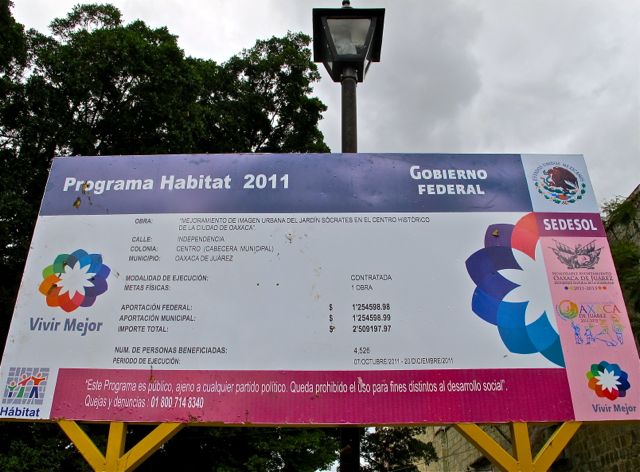
Soon, a sign went up explaining the Jardín Sócrates was undergoing an “image enhancement,” courtesy of the federal and municipal governments.

Programa Habitat 2011; Gobierno Federal sign.

Demolition soon began, including the removal of the original green cantera (stone) pavement.

Pile of old paving stones

And, the neverías began moving down to the temporary puestos on Independencia.  I found Nevería Malena, ordered my usual, and asked how long the relocation was going to last.  “No sé.”  (“Don’t know.”) was the answer.

Iron tables, chairs, and puestos on sidewalk.

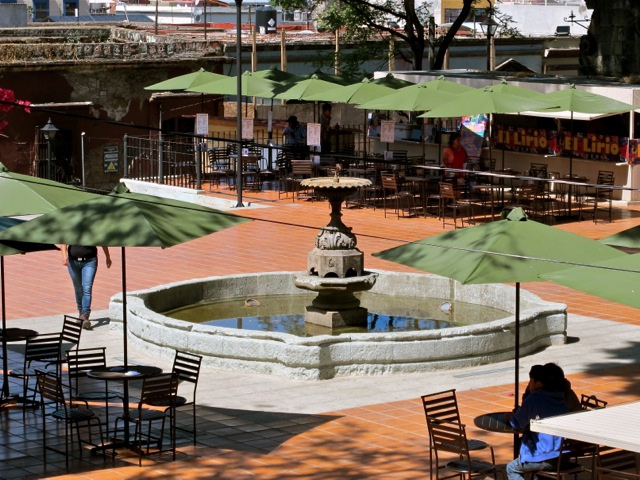
Eight new stalls were constructed, the cantera was replaced with red terracotta tile, and new tables, chairs, and umbrellas materialized.  After five months,  the newly “enhanced” Jardín Sócrates opened on March 29, 2012.

Fountain and green umbrellas on terracotta paved terrace.

It does look lovely — orderly and coordinated — but I kind of miss the color and funkiness of the old.

Read Full Post »

The public spaces of Oaxaca are well-used.  The cobblestone-paved Jardín del Pañuelito (Little Handkerchief Garden), that borders the south side of the Templo de Santo Domingo de Guzmán, complex is no exception.

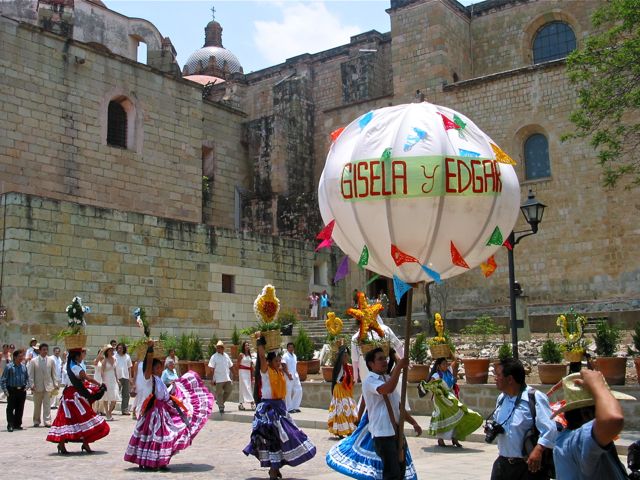
Especially on Saturdays, when it is often used for wedding processions…

Wedding procession with dancers

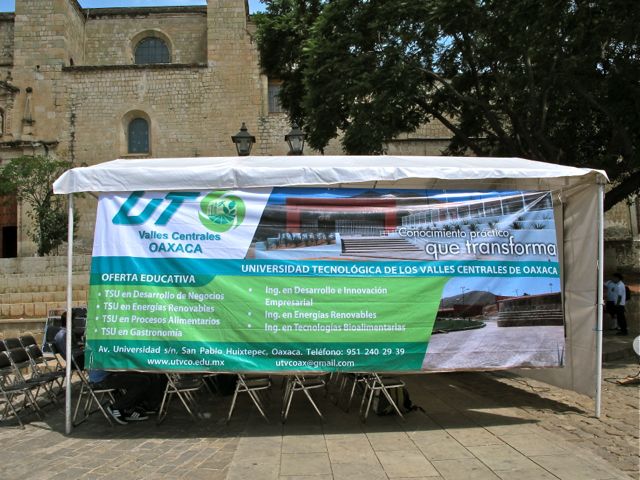
Occasionally, it is converted into a conference venue…

Folding chairs set up under a partial tent

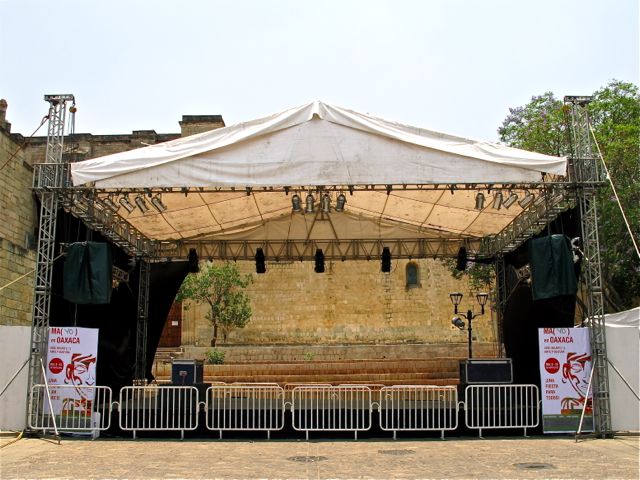
Frequently, a stage is set up and a concert ensues…

Outdoor stage

And, last year it was transformed into a movie set!

Movie set depicting early 1800s Mexican camp site

Read Full Post »

As the promotional material for Ma (yo) en Oaxaca, Mujer (es) Arte y Cultura explains (loose translation), like a skilled weaver, women create the fabric of life… part of the history of humanity, intelligence that moves, the look that looks, which is regarded in the construction of better horizons of life for her and those who are around her.  And so, from May 3rd through 13th, the women of Oaxaca are being celebrated with workshops, exhibitions, lectures, and concerts.

Last night, under the supermoon, one of the accomplished women of Oaxaca, Alejandra Robles, gave a free concert, just a block away, in the Plaza de la Danza…

Ma (yo) en Oaxaca is a party for all of the principles of inclusion and participation to make possible the knowledge and appreciation of the cultural richness of groups which, for various reasons, have been marginalized.

¡Viva las mujeres!

Read Full Post »

…fighting in Oaxaca.

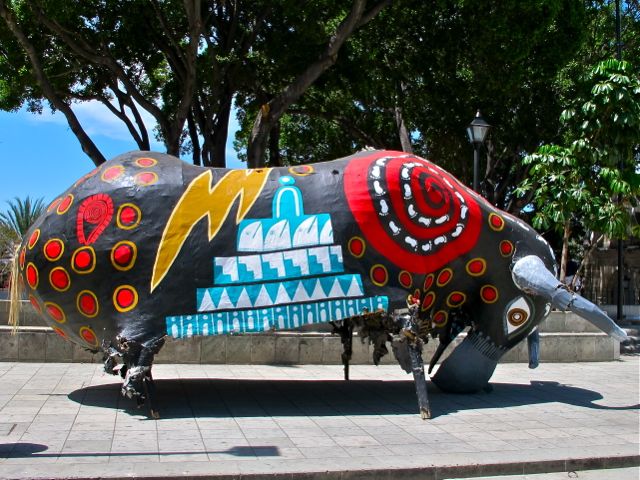
Colorful gigantic papermache bull

Corrida de Toros, as it is known in Mexico, was outlawed by, then governor of Oaxaca, Benito Juárez.  The ban was instituted throughout Mexico in 1867 by Juárez during his presidency.  Some say it was to “civilize” Mexico, but others contend it was for nationalistic reasons, as bullfighting had been a legacy of the Spanish conquest.  I tend to think the latter tipped the scales.

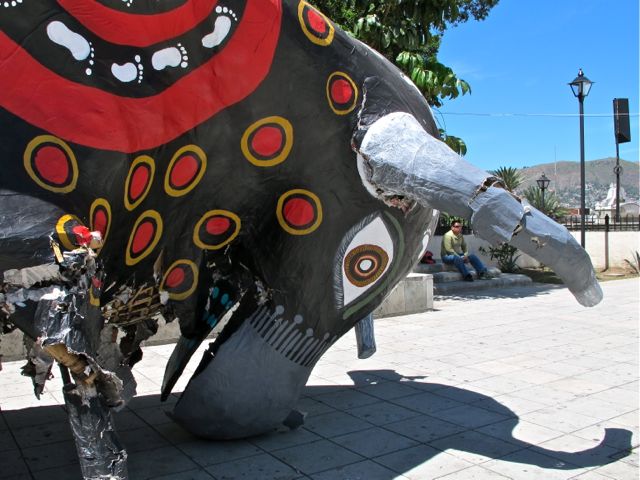
Close-up of the head of a colorful giant papermache bull

However, Porfirio Díaz reinstated it during his presidency, but the ban remained in Oaxaca in honor of her favorite son.  And thus, on the Plaza de la Danza, we have only a paper mache bull ready to charge at his shadow…

Design of fish heads, Mitla frets, triangular mountains, etc.

and serve as a canvas for imagery, ancient and contemporary.

Read Full Post »

…under my feet.  Well, actually I didn’t feel the 7.4 terremoto (earthquake) about noon today.   I heard it!  I was walking up the Álcala and the windows on one of the university buildings started rattling and people began pouring into the streets, murmuring “un terremoto, un terremoto!”

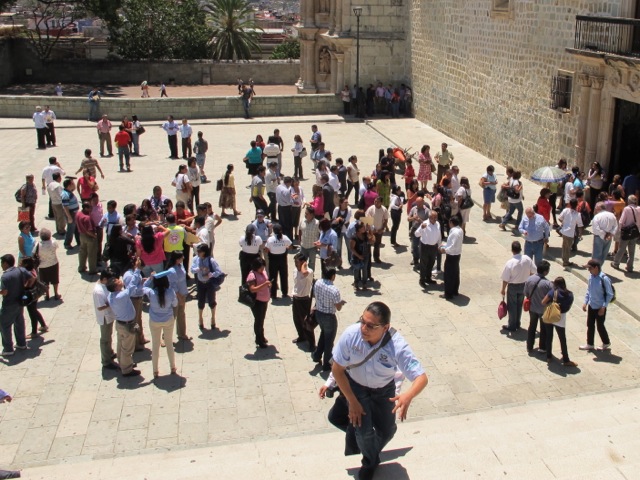
People standing around in the Plaza de la Danza in front of the Palacio Municipal

The above photo was taken from above the Plaza de la Danza, outside the Palacio Municipal, about a half an hour after the initial shake and shortly before sirens went off and a 5.0 aftershock struck — which I also didn’t feel!

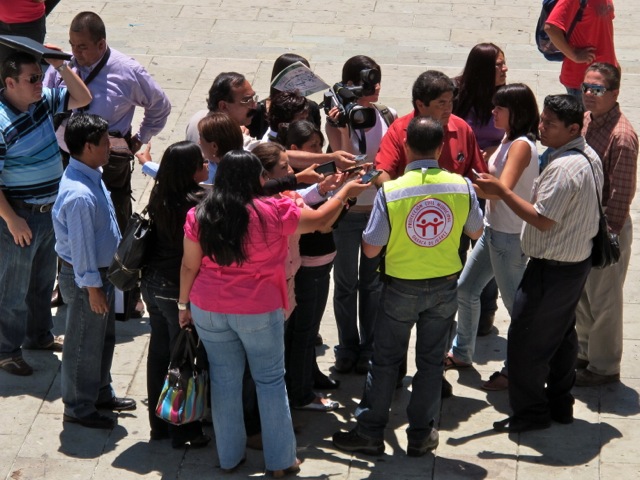
Representative of the Proteccíon Civil Municipal de Oaxaca in a yellow vest giving a press conference.

I continued on with my shopping and when I passed by the Palacio Municipal again, the media was all over the place, and more press conferences out on the sidewalk were being conducted.  The fellow above is from the Proteccíon Civil Municipal of Oaxaca.  The fellow below was speaking about the schools.

Video cameraman focused on man speaking.

Though there is concern for the rural villages closer to the epicenter, currently all is well in the city.   And one of the members of the municipal police force assured me the daughter of “my” president was fine.

Read Full Post »

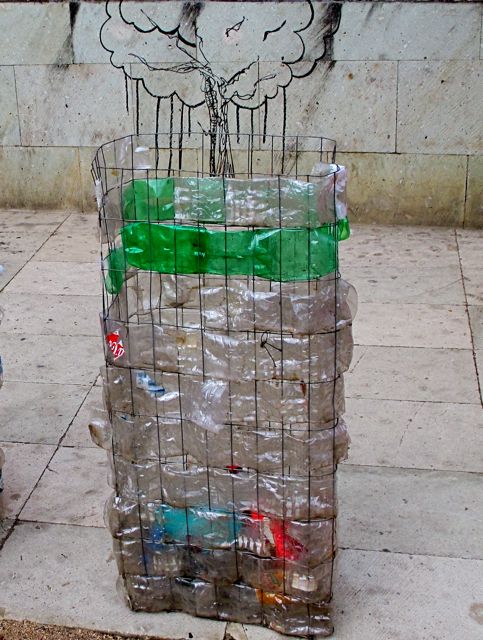
The day before I went up to Mexico City last month, crossing Llano Park, I came across a newly installed waste container encouraging plastic recycling; courtesy of Tierra Sana, a company promoting and selling environmentally friendly products.

Waste basket made from plastic bottles with a Tierra Sana sign on top

These baskets have cropped up in other parts of the city — this one in the plazuela next to Carmen Alto church.  Please know, the trees will cry if you don’t recycle.

Plastic bottle recycling bin with graffiti drawing of a tree crying in the background.

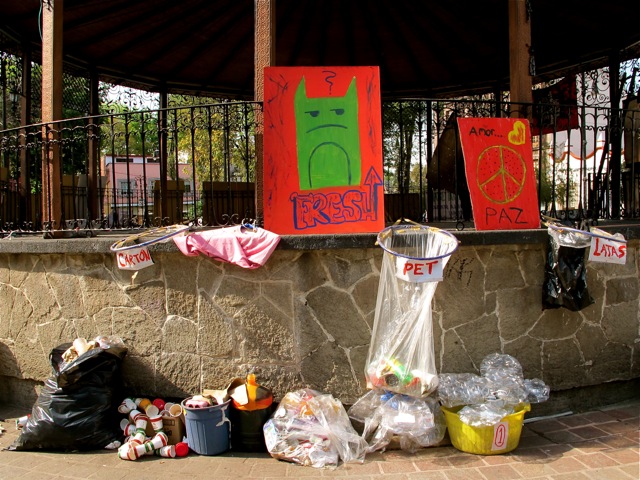
Once up in Mexico City, I noticed Occupy Coyoacán practiced recycling.

Overflowing recycling bags lined up along bandstand.

And then, we were all brought up short by this electric car…

Silver Nissan electric car getting charged at charging station in the street.

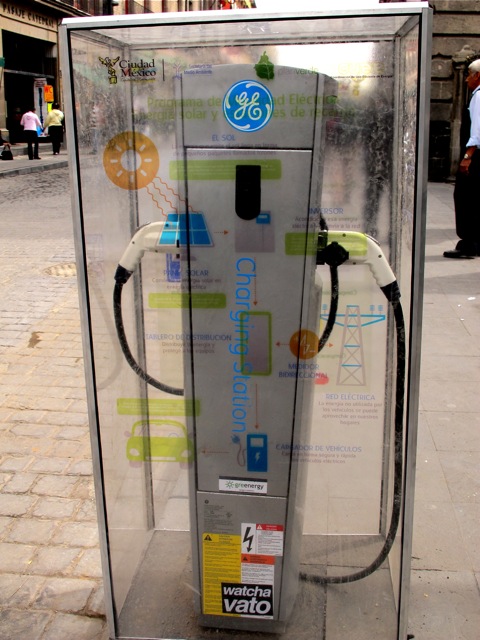
These charging stations are not far from the Templo Mayor; an appropriate juxtaposition, I think.  Automobile pollution can’t be good for the Great Temple.

GE charging station

Then there is bike-sharing — 1200 bikes at 90 Ecobici bike stations in Mexico’s capital city.

Red Ecobici bicycles lined up on bike rack.

For more on Mexico City’s Green Plan, check out 10 Highlights of Mexico City’s Climate Action Program.

Read Full Post »

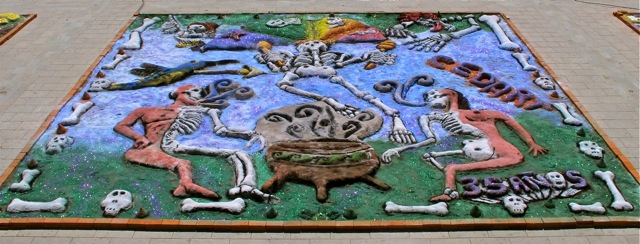
The tapetes de arena are finished and cover the stone flooring of the Plaza de la Danza.  Always difficult to photograph, the following are an experiment in cropping.

Centro de Educación Artística Miguel Cabrera

Casa de Cultura de Tlacolula de Matamoros

Escuela de Bellas Artes de la Universidad Autónoma Benito Juárez de Oaxaca

Several other organizations participated and among the unsigned are tapetes de arena from Casa de las Artesanías de Oaxaca, Sociedad Civil de Maestros Oaxaqueños del Arte Popular, and Grupo Colectivo Camaleón.

Walk with us…

And for those in el norte…

A happy and safe Halloween!


Read Full Post »

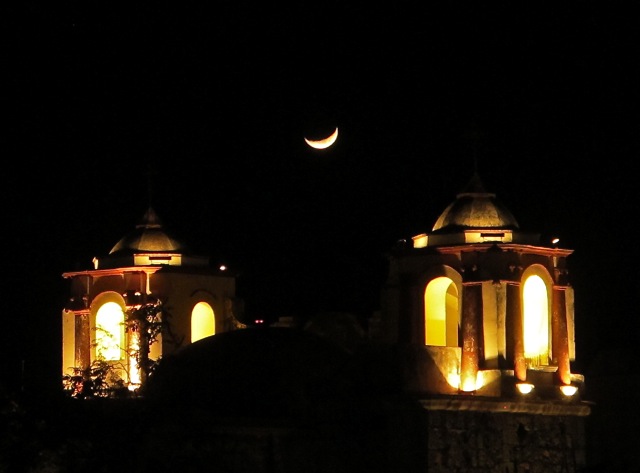
The crescent moon keeps a watchful eye over the sand paintings in the Plaza de la Danza, by day…

Painting handing on wall above the Plaza de la Danza

and by night…

Crescent moon between the bell towers of San Jose church, in Oaxaca


Read Full Post »

Work on the Días de Muerto tapetes de arena (sand paintings) began this morning…

This slideshow requires JavaScript.

By the way, this year they are in the Plaza de la Danza and, as I write, the music of the Orchestra Infantil Libertad (a children’s orchestra) is serenading the completed tapetes de arena, the audience gathered at the Plaza de la Danza, and yours truly, sitting comfortably at her desk.

Read Full Post »

In Mexico, from small pueblos (villages) to large ciudades (cities), most all have calles (streets) named Morelos and Hidalgo — some, like Oaxaca, have more than one, which can be very confusing when trying to find an address, to say the least!  The names Vicario and Ortiz de Domínguez aren’t nearly so commonplace.

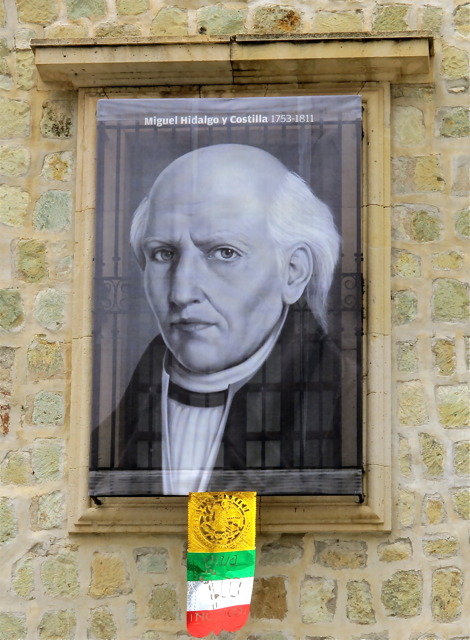
However, two of the women (among countless unsung heroines) who played a major role in the struggle for independence from Spain were Leona Vicario and Josefa Ortiz Domínguez.  In a fitting tribute to their importance to the Independence movement, their giant portraits currently hang on the outside wall of the Municipal Building overlooking the Plaza de la Danza, along with those of Miguel Hidalgo de Costilla and José María Morelos y Pavón.
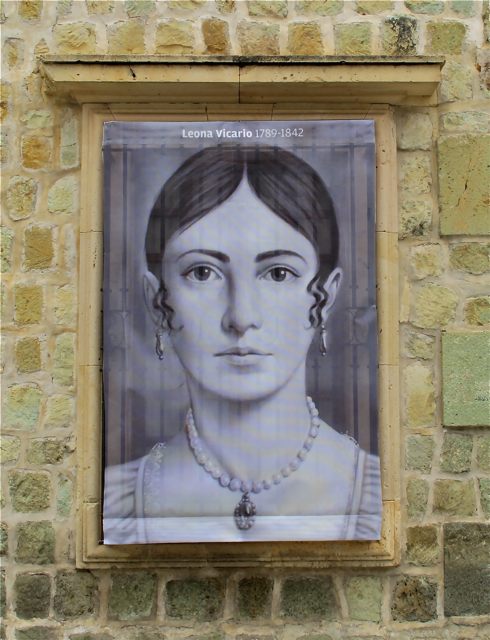
Portrait of Leona Vicario

Leona Vicario, 1789-1842

Leona Vicario provided money and medical support, helped fugitives, and served as a messenger.  After escaping from prison, she helped her husband, Andrés Quintana Roo, plan strategies on the battle field.
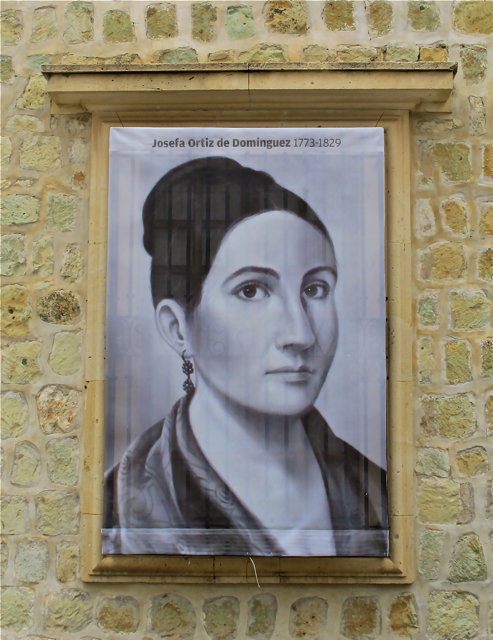
Portrait of Josefa Ortiz de Domínguez

Josefa Ortiz de Domínguez, 1773-1829

Confined to house arrest after a co-conspirator betrayed the upcoming plans for revolt by the Independence movement, Josefa Ortiz de Domínguez was able to smuggle a message out, warning of the betrayal.

Portrait of Miguel Hidalgo y Costilla

Miguel Hidalgo y Costilla, 1753-1811

As a result, in the early morning of September 16, Miguel Hidalgo y Costilla rang the church bells in Dolores, rallying the rebels, and issuing, what has come to be known as Grito de Dolores (Cry of Dolores), the signal to begin the War of Independence from Spain.  It is an event that is recreated all over Mexico at 11 PM on September 15.  (See the link re why it isn’t done in the early morning of September 16.)
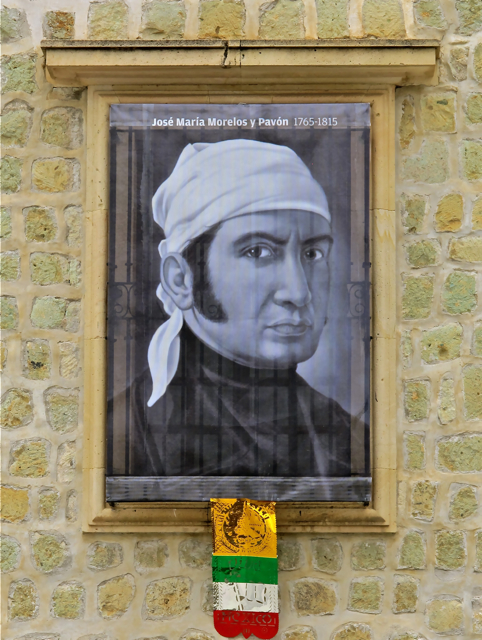
Portrait of José María Morelos y Pavón

José María Morelos y Pavón, 1765-1815

The last portrait on the wall is that of José María Morelos y Pavón, of Afro-mestizo heritage, and, like Hidalgo, also a priest.  He was a capable military commander who assumed leadership of the independence movement after Hidalgo was executed.  For a local connection, on November 25, 1812, in what is thought of as a brilliant victory, Morelos, along with the support of Mariano Matamoros and Miguel Bravo, took the city of Oaxaca.  Fittingly, the streets Morelos and Matamoros run parallel and M. Bravo intersects them just a few blocks from the Municipal Building and the Plaza de la Danza.

(ps)  These portraits are painted directly on fine mesh screen… thus, the window bars showing through.

Read Full Post »
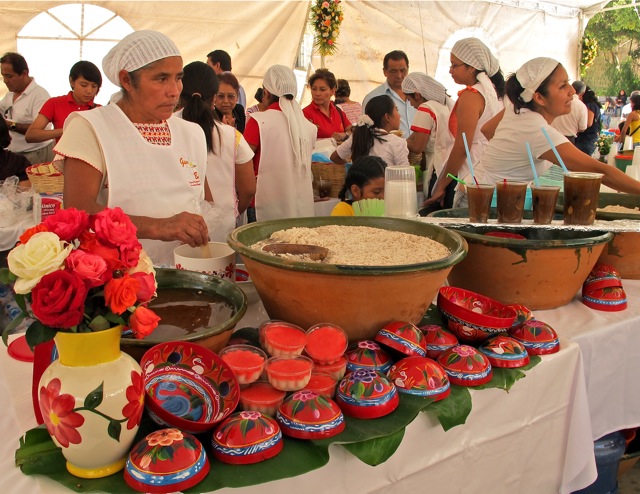
And now we have the sixth annual Festival del Tejate y el Tamal de San Andrés Huayapam!  A large tent covers half of the Plaza de la Danza and over 100 “tejateras” who belong to the Unión de Mujeres Productoras del Tejate set up shop early this morning to sell refreshing cups of this pre-Hispanic beverage made from corn and cacao.

The festival is part of an effort to preserve the food culture of the Zapotec.  San Andrés Huayapam (aka, San Andrés Huayapan) is about 7 miles north of the city and its main economic activity is the sale of tejate.

Packages of tejate lined up on a table

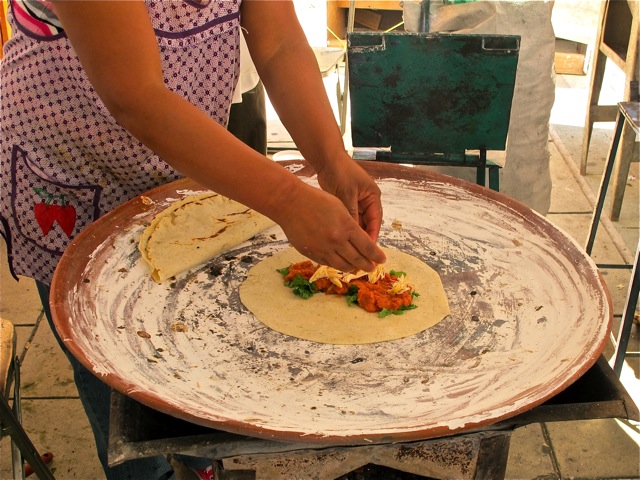
The festival also features empanadas, hot off the comal…

Empanada being cooked on a comal

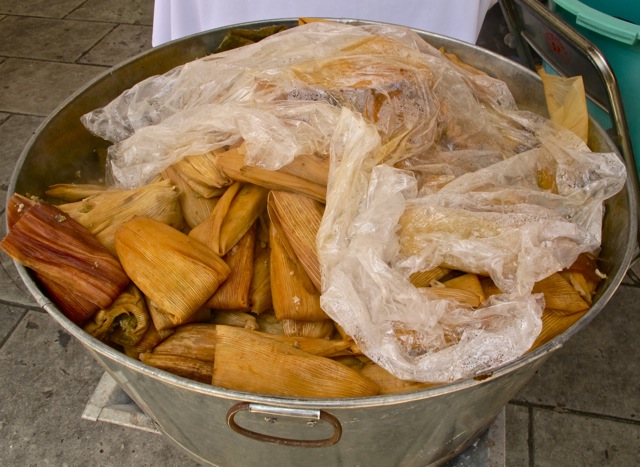
and six kinds of tamales:  Salsa verde, Amarillo, Rajas, Verde, Chichilo, and Tamal de mole.A variety of tamales in a metal bucket

I wanted them all!  However, for today’s comida, I opted for chichilo from this gal…

Woman serving tamales

Why chichilo?  The answer is, because I’ve never had that kind before!  Chichilo is one of the seven moles of Oaxaca and is only served on special occasions, such as weddings and christenings, or when the crops have been harvested.  Chilhuacle negro, mulatto, and pasilla chiles; blackened tortillas and seeds of the chiles; and avocado leaves, the latter imparting a subtle anise flavor, give it its distinctive flavor.

Woman reaching into steaming hot cauldron of tamales

She picked out a good one… it was delicious!

People sitting and eating at long tables.

¡Buen provecho!

Read Full Post »

… and for everything good, you also should.”  — old Oaxaca saying.

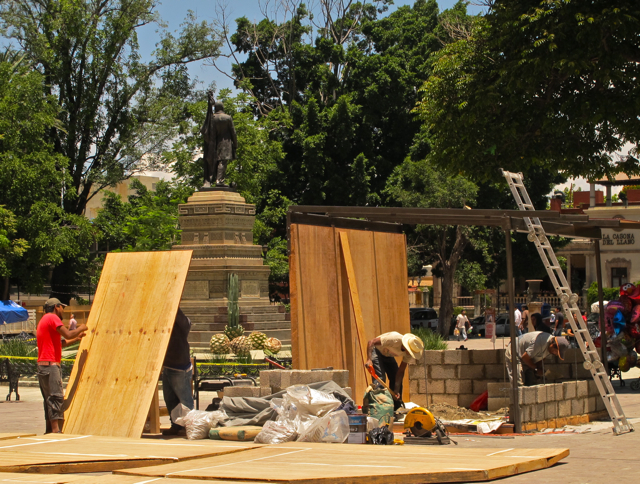
Today, the XIV Feria Nacional del Mezcal opens in el Paseo Juárez el Llano.  Preparations were in full swing yesterday afternoon, when I walked passed Llano Park (as it is more commonly known).

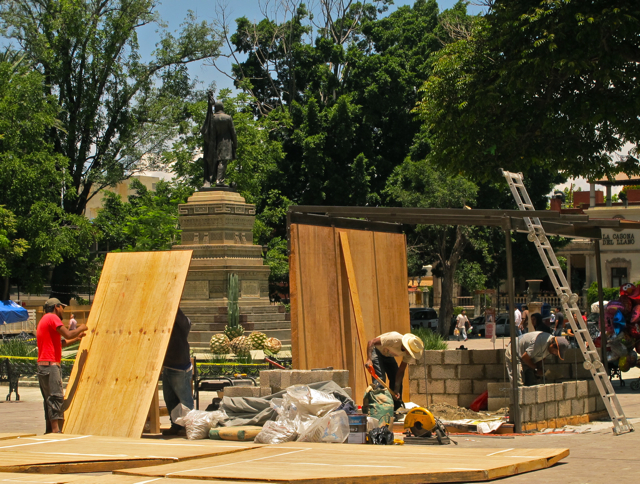
Behind the back of Benito Juárez, carpenters were busy.

Carpenters building a booth in Llano Park next to statue of Benito Juárez

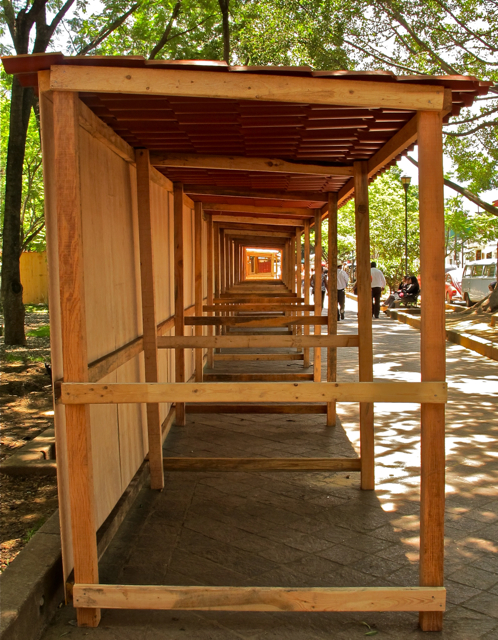
Newly constructed puestos lined the sidewalk on Pino Suarez, waiting to be filled with vendors and displays…

Empty booths along sidewalk
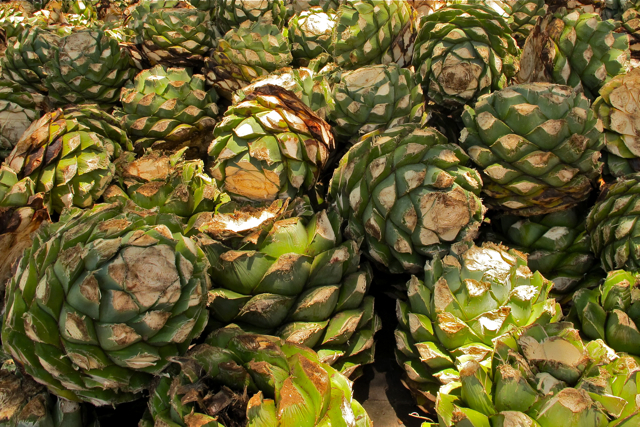
… and hearts of the maguey  (called piñas, because they look like pineapples) were piling up all around the park.

Pile of hearts of the maguey

For more information about mezcal, including how it differs from tequila, see:

In the meantime… “¡Arriba, abajo, al centro y pa’ dentro!”

Update:  Posters, website, and other publicity to the contrary, the feria did not begin today.   Mañana is the word!

Read Full Post »

Propping up fallen trees isn’t the only activity on the Alameda… 3 tents under the Indian Laurel trees on the Alameda

Today, Sección 22 del Sindicato Nacional de Trabajadores de la Educación (the teachers’ union) is beginning an occupation of Oaxaca’s zócalo, Alameda, and several side streets.2 tents under the portales of the Governor's Palace According to a report in the Latin American Herald Tribune, Teachers Call for Strike in Southern Mexican State, the teachers are not demanding wage increases, instead focusing on social issues, including “better uniform allowances for students, computers in all of the state’s elementary schools and electricity in all schools.”  Privatization is also an issue.Green banner with text reading:  ¡No a la privatización de la educación!

This annual activity by the teachers’ union is extremely contentious.  Adding bold-face to the lines above will be my only comment on the subject.

However, the teachers aren’t the only people converging on the zócalo today…Poster: Marcha del Color de la Sangre; 23 de Mayo; Zocalo de Oaxaca a la Ciudad de MexicoThe displaced Triqui, who were driven out of their village of San Juan Copala after several years of political violence, have decided to return home, leading a march/caravan from Oaxaca to Mexico City and finally back to San Juan Copala.Triqui women and baby await the arrival of the march/caravan For more information, see the blog posting by Angry White Kid, The displaced decide to return to our community: Caravan of the Color of Blood and for background on their struggle for autonomy, see Repression, Impunity and Resistance in Oaxaca: One Year After the Copala Caravan Ambush.

Read Full Post »

« Newer Posts - Older Posts »