Feeds:
Posts
Comments

Archive for the ‘Culture’ Category

During the aforementioned convites, you will find the boys of Teotitlán del Valle, Standing On the Corner watching all the girls go by.  Not much has changed since The Four Lads had a hit with that song!

From my friend Samuel Bautista Lazo, who grew up in Teotitlán del Valle, “It’s funny to see boys with their cameras taking pictures and videos of the girls they like, often they watch the procession at one corner once they have seen everything, they run (or bike) as fast as they can to the other good spot to see all the girls again.”  And, he knows from personal experience!

Like Sam, I wonder how many couples have gotten together???  Perhaps meeting at the fireworks a night later…

Read Full Post »

Defining the terms…

According to Harrap’s Spanish and English Pocket Dictionary, convite means reception.  However, if I drag my weighty Larousse Standard Diccionario down from the shelf, convite translates to “invitation” or “banquet.”  And, if one turns to Google or Bing translation programs, a convite is a “treat.”

All pretty much agree, the English translation for cochinilla is cochineal.  As Wikipedia explains, “Cochineal is probably from French cochenille, Spanish cochinilla, Latin coccinus, meaning ‘scarlet-colored,’ and Latin coccum, meaning ‘berry (actually an insect) yielding scarlet dye.'”  It has been called, A Perfect Red and was much sought after by Europeans.  Home to said insect is the nopal cactus and guess who and where it was probably first cultivated?  In the valley of Oaxaca by her indigenous people, long before the Spanish set foot on the continent.

Which brings us to last Saturday (September 6) in Teotitlán del Valle, under the watchful eye of el Picacho, the sacred brother/sister mountain, for the convite that precedes the Virgen de la Natividad (Nativity of Mary) festival day, held annually on September 8…

This slideshow requires JavaScript.

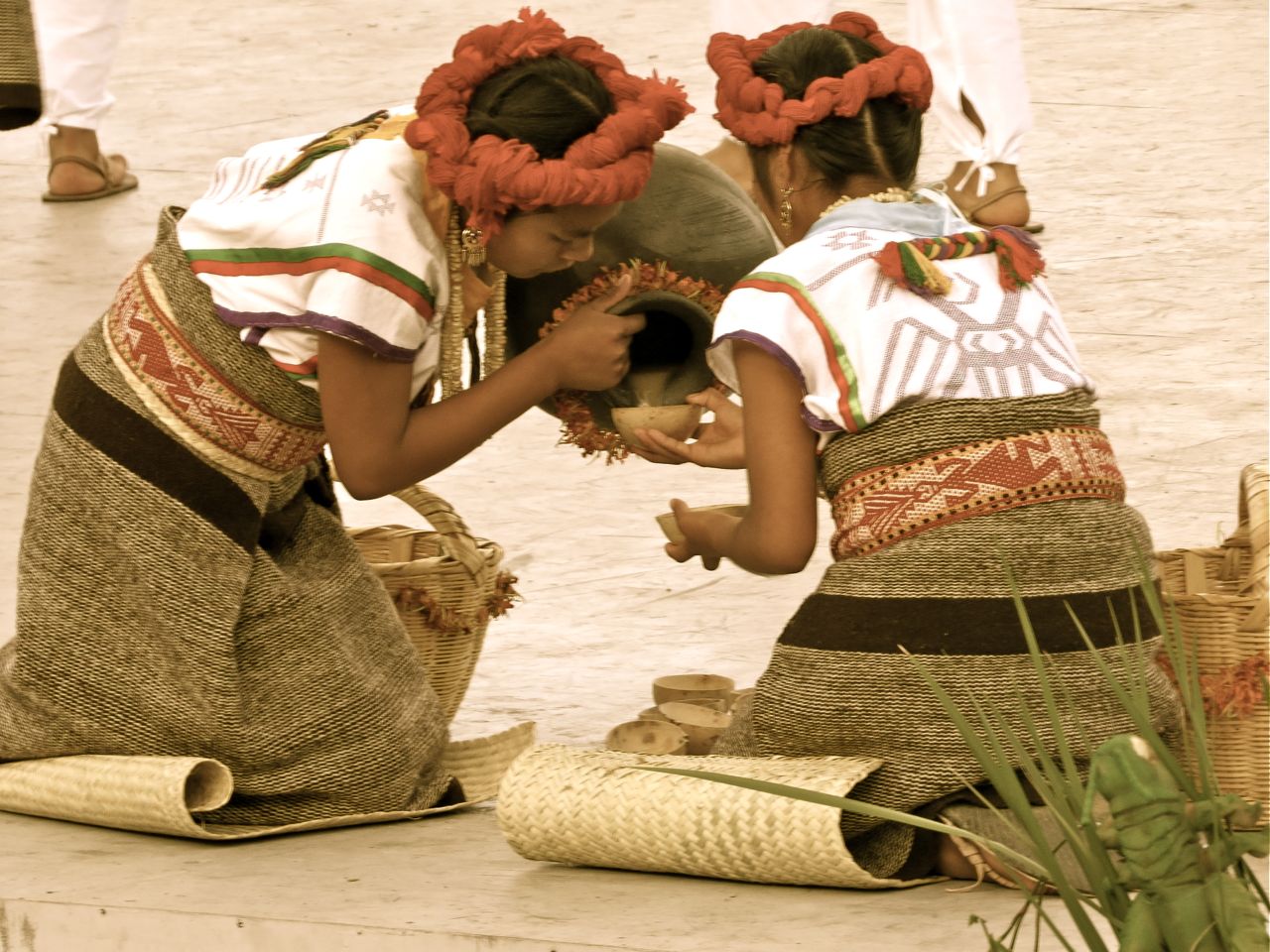
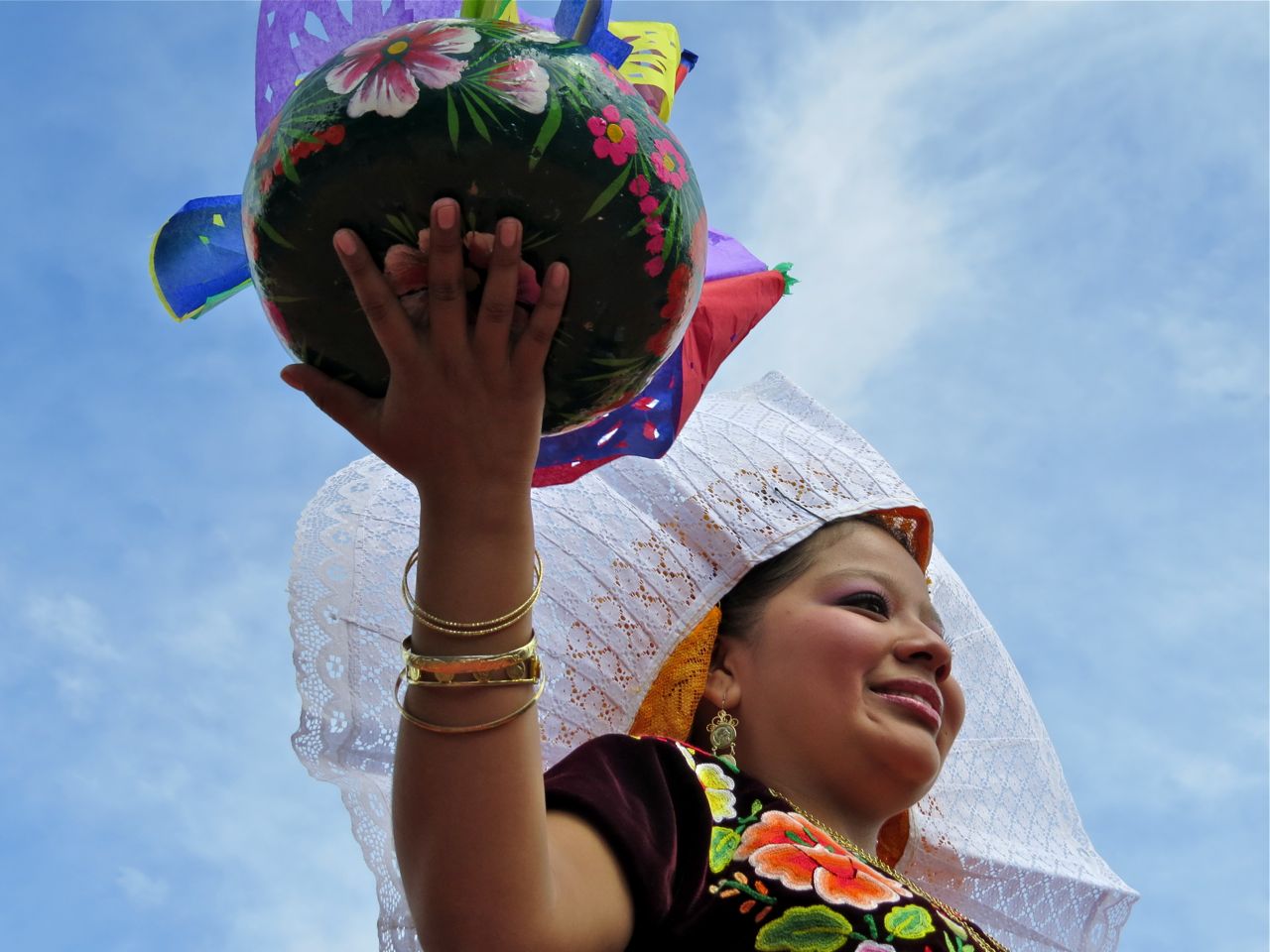
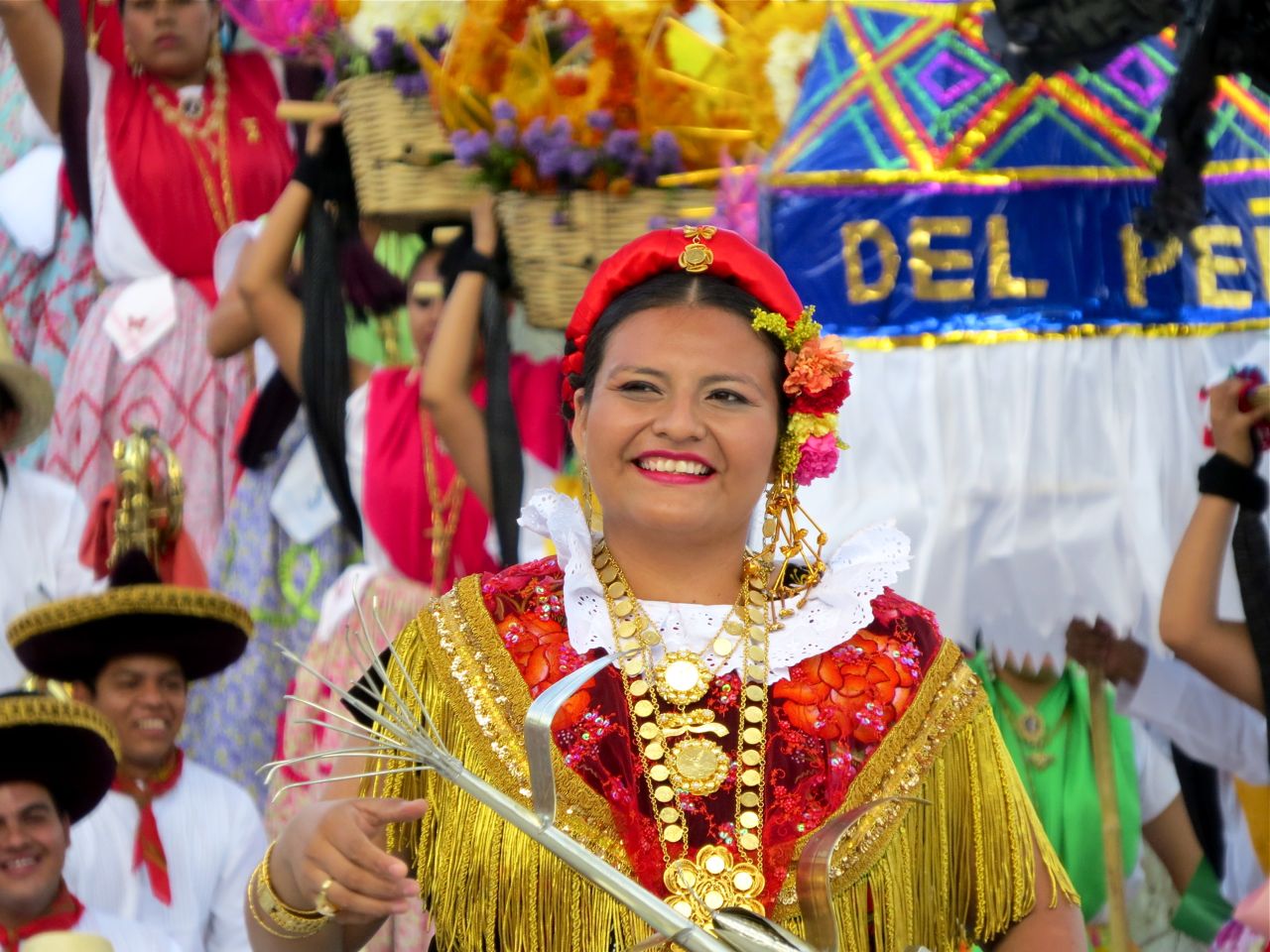
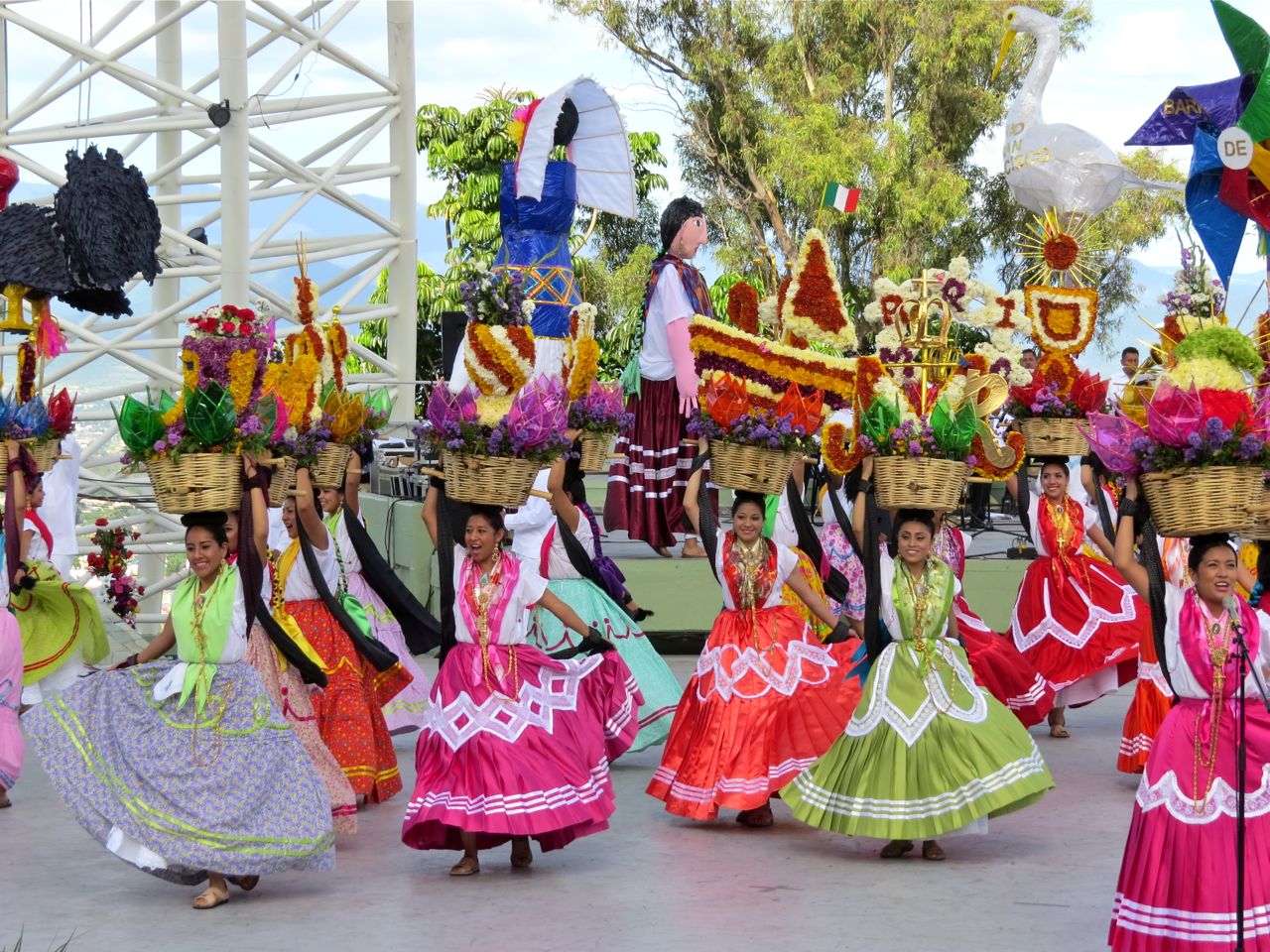
It is the custom in this Zapotec village for the unmarried women of the village to process through the streets two days before this (and a couple of other) important religious festivals, elegantly balancing handmade canastas (baskets), decorated with Catholic and Zapotec imagery, on their heads.  They wear brightly embroidered blusas (blouses) and, in this village known worldwide for its weaving, enredos, hand-woven red wool wrap skirts — the yarn dyed red with cochinilla.  They are accompanied by bands, men carrying enormous (and heavy!) marmotas (cloth globes), little boys carrying poles topped with miniature marmotas, sheep, and airplanes (the significance of the latter is a mystery to me), fearless pirotécnicas announcing the convite’s progress by shooting thunderous rockets into the air, and the dancers who will be performing the Danza de la Pluma in the church courtyard during the following two days’ of festivities.

Borrowing from the definitions above of convite, I would like to think of these processions as a lovely treat, an invitation to the impending fiestas/feast (banquet) days for the saints venerated by the village.  The beauty of the welcoming faces of the young, old, male, and female in the convite provide a warm reception to villagers, visitors, Catholic saints, and Zapotec ancestors, alike.

Read Full Post »

September is El Mes de la Patria in Mexico (the month of the homeland) and green, white, and red decorations have gone up all over the city.  The governor is scheduled to recreate “El Grito” (the Cry of Dolores) from the balcony of the Government Palace at 11 PM on September 15.  The following day, there will be an hour-plus long patriotic parade through the streets of the city celebrating Mexico’s independence from Spain.

Neveria decorated with green, white, and red

Neverías in Jardín Socrates

The teachers’ planton (encampment) on the zócalo expanded again to adjacent streets yesterday, though it is supposed to end by September 9.  Oaxaca is holding her collective breath.

Read Full Post »

Under a cloudy sky, the faithful and their mascotas (pets) gathered in the plaza in front of the Templo de Nuestra Señora de la Merced for the Bendición de los Animales (Blessing of the Animals).
Human and dog faces
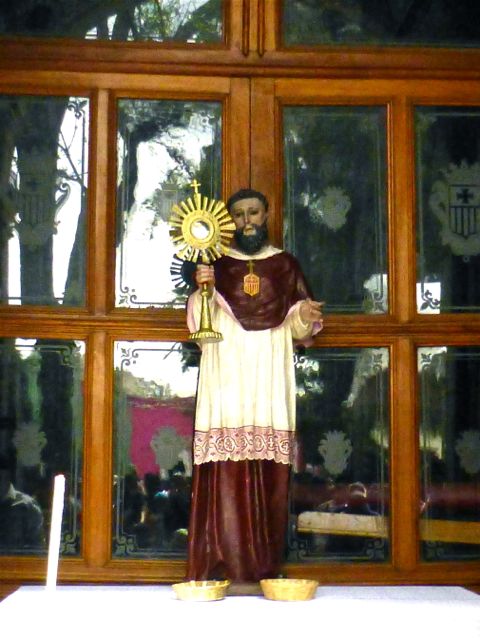
This annual event, held on August 31, celebrates the feast day of San Ramón de Nonato (aka, St. Raymond Nonnatus), patron saint of women in labor, persons falsely accused, and keeper of animals.  This last, though not often mentioned, seems to come from the story that he was raised on a farm and, according to this website, “chose for his occupation the care of the sheep, in order to gain more time for prayer and meditation.”  Today’s El Imparcial states that La Merced is the only church in the city with an image of the saint.
Figure of San Ramón Nonato
Here in Oaxaca, instead of sheep, San Ramón was surrounded by dogs of all sizes, shapes, and temperament.  By far, they outnumbered all other animal species put together — except humans.  Over the past few years, there has been a noticeable increase in pet (as opposed to roof and street) dogs in Oaxaca.  Perhaps a sign of a growing middle class?  And, many dressed for the occasion.  However this dalmatian must have also paid a visit to a makeup artist.  Lipstick on the collar (muzzle, forehead, and ear) of a new friend tells the tale (tail?).
2 dogs nuzzle to nuzzle
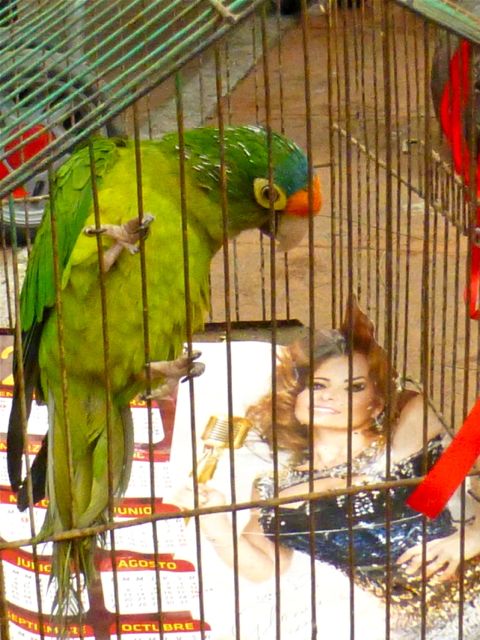
There were also the other usual pet suspects — cats and kittens, though most looked like they would like to be anywhere else but there, and canaries and cockatiels, the latter both in cages and perched on shoulders.  This guy seemed more interested in the pin-up girl lining his cage than getting blessed by a few drops of holy water from the temple’s priest, Víctor Hernández Antonio.
Parakeet in cageHowever, my vote for the most exotic pet of the day goes to the hurón, known in English as a ferret.  Oh those piercing eyes and those claws.  I’d hate to get on her wrong side!
Ferret with red bow on head
I wonder…  What do you think the abuelas and abuelos, who remembered the old days when it was donkeys, goats and farm animals who were led along Oaxaca’s dirt streets to be blessed, thought?

Read Full Post »

Yesterday, as I was walking home, the eyes of these guys caught my eye.

P1020046

More eyes beckoned me across the large driveway/parking area, that separated the mural filled walls from the sidewalk.

P1020048

A sign for Okupa Visual Oaxaca was pointing the way, so I figured I must not be trespassing and might even be welcome.

P1020052

More eyes drew me toward an open door…

P1020054

I peered inside the Taller de Grafica Experimental de Oaxaca and was greeted with the warm smile of artist, Guillermo Pacheco López.  He showed me around the light airy gallery and studio and explained the programs they offer.  We then proceeded through an open doorway into a another multipurpose space.

P1020059

Besides more gallery and workshop space, it is home to Café Panartesano and where his delightful wife, Kate, along with an assistant, bake brownies, blondies, chocolate chip cookies, oatmeal cookies, and other yummy looking sweets.  In addition, they make homemade pizza and tortas.

P1020055

As you may have guessed from the above menu, Kate is from the USA — San Francisco to be geographically precise.  We had much in common and I stayed for almost half an hour chatting with her.  Naturally, I couldn’t resist buying a chicken with zucchini and red bell pepper torta on focaccia, which was muy sabrosa!

P1020057

If you are in town, I highly recommend stopping by Taller de Grafica Experimental de Oaxaca and Café Panartesana.  They are located at La Noria 305 (at the corner of Melchor Ocampo).

Nourishing body and soul — that’s Oaxaca!

Read Full Post »

Today, south of the zócalo, the streets were well protected…

Don’t tread on the women of Oaxaca!

Read Full Post »

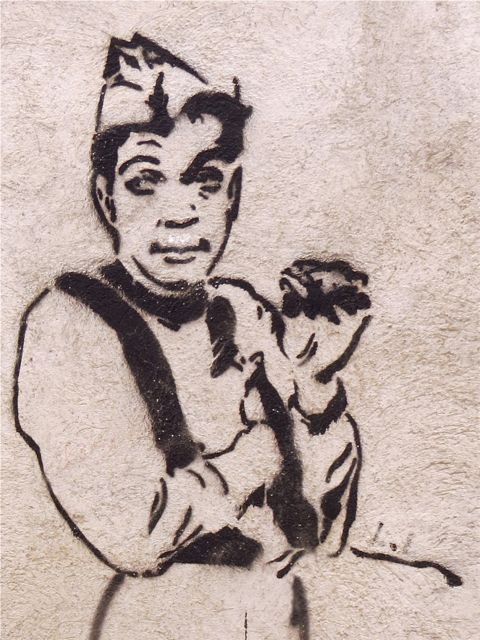
Feliz cumpleaños to Cantinflas.  Today, the beloved Mexican actor, comedian, writer, and producer, born Fortino Mario Alfonso Moreno Reyes, would have turned 103.  I’ll be waiting in line to the movie, Cantinflas, based on his life, when it opens in Mexico on September 19, 2014.  For those in the USA, you get first crack, as it is scheduled to open on August 29, 2014.

Cantinflas on a wall in Teotitlán del Valle

Image of Cantinflas on a wall in Teotitlán del Valle — painted by the lovely and multi-talented, Luvia Lazo.

I would also like to say RIP, Robin Williams, another actor with the gift of combining humor and pathos.  How blessed we are to have shared this planet with both and to continue to have the opportunity to experience their creative genius.

Read Full Post »

After five days of being confined to Casita Colibrí — eating, inhaling, and choking on concrete and brick-dust and enduring the throbbing sounds of drills, hammers, and chisels — due to demolition of the old and construction of a new kitchen counter (still not finished), market day in Tlacolula de Matamoros was just what the doctor ordered.   Blogger buddy Chris offered and off we went.

The enticing aroma of tacos and gorditas at our favorite street stall beckoned and we quickened our step, until we came to this unexpected and powerful mural…

The mural is the work of Tlacolulokos, a collective that originated in Tlacolula.  According to this article, these self-taught artists explore the subjects of violence, the transformation of traditions, tourism, poverty, and social decay by referencing southern Mexican folk elements.  They use a variety of media and techniques, ranging from graffiti, easel painting, graphics and object, to video and sound.

And, Tlacolula worked her magic…  We ate, soaked in her color, stopped to listen to a youth band from Santa María Guelac (with a girl tuba player, no less!) play “New York, New York” and “Can-can,” and shopped a little (for me, a 5-liter plastic “gas” canister for our next mezcal run and red bananas).  Tlacolula never dies and never gets old.

Read Full Post »

August 9th is International Day of the World’s Indigenous Peoples; so designated twenty years ago by the United Nations General Assembly in an attempt to guarantee the human rights of over five thousand indigenous groups that exist in 90 countries.

Zapotec woman at Oaxaca's Feria del Tejate y del Tamal - July 23, 2014

Zapotec woman at Oaxaca’s Feria del Tejate y del Tamal – July 23, 2014

However, to cruise around the online versions of CNN International and the New York Times, one would never know of the day’s significance.  At least Día Internacional de los Pueblos Indígenas isn’t being ignored by CNN Mexico.  In an article published today (in Spanish) they cite seven challenges faced by the indigenous of Mexico:

  • Justice – The CNDH reported on July 24 that there are 8,334 Indians in Mexican prisons. Of these, the majority “have not been assisted by a defender and interpreter or translator companion, and even often know why they are internal,” the commission said in a statement.
  • Health – 20% of the indigenous lack access to health services, a rate similar to the population as a whole, except, as the article notes, in recent months the issue has drawn public attention following cases of indigenous women who have had to give birth in hospital courtyards or bathrooms, as they were not given immediate attention by hospital authorities.
  • Education – 50% of Mexico’s indigenous are said to be educationally “backward.”  And the article noted, the three states with the highest failure rates in primary and secondary school are Guerrero, Michoacan and Oaxaca, three of the states of the country with the largest indigenous populations.
  • Housing – 40% of the indigenous have inadequate housing.
  • Food – 42% of Mexico’s indigenous population receives insufficient nutrition.
  • Poverty – 72% of the indigenous in Mexico are living in poverty.
  • Discrimination – In August 2012, the National Council to Prevent Discrimination (Conapred) released a survey showing that 44.1% of Mexicans believe that the rights of indigenous people are not respected.

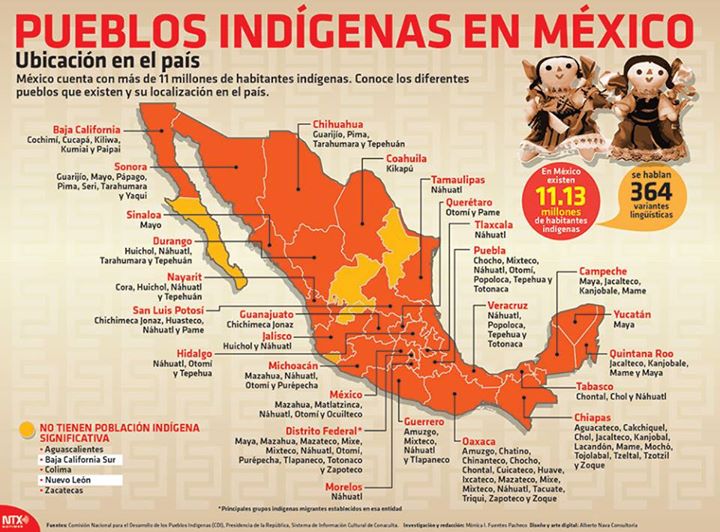
    http://noticiasmvsfotos.blob.core.windows.net/media/infografias/8a206f5d5c58f9e85b3774ff6fd05a2b.jpg

    Pueblos Indígenas en México (Indigenous peoples in Mexico) — Infographic from NoticiasMVS

And, regarding discrimination, yesterday ADNPolítico.com published an article, 5 ‘retratos’ de la discriminación hacia indígenas mexicanos (in Spanish).  Despite the fact that the first article of the Mexican Constitution declares, any discrimination on grounds of ethnic origin is prohibited, the story highlights five recent cases that have made national headlines:

  • The death of a 20-year-old pregnant Mixtec woman and the baby she was carrying, after she had spent 5 hours in the waiting room of a community hospital in Copala, Guerrero.
  • The case of a 13-year-old girl, with a gunshot wound to the abdomen, who was denied medical care in the Civil Hospital of Oaxaca.
  • A Tarahumara laborer from Guachochi, Chihuahua, died after spending five days outside a hospital in Guaymas, Sonora, without food and without shelter, having been denied admission to the hospital because he did not have enough money.
  • A 10-year Tzotzil boy originally from Chiapas who, while selling candy to buy his school supplies, was humiliated by an official of the municipality of Centro, Tabasco, who forced him to throw his merchandise on the ground.  A video of this travesty went viral and sparked outrage.
  • A gas station in Zapopan, Jalisco, was closed last June after its owner was shown on video assaulting an Indian couple who was eating outside the station.

We, in Oaxaca, just experienced the spectacle of the Guelaguetza celebrating the indigenous cultures of Oaxaca.  However, some say (in Spanish) it presents a static view of indigenous peoples, reinforces stereotypes, and sells exoticism — all to promote tourism.

Mixtec dancers from San Antonio Huitepec at La Guelaguetza, July 21, 2014.

Mixtec dancers from San Antonio Huitepec at La Guelaguetza — July 21, 2014.

The focus of this year’s International Day is “Bridging the gap: implementing the rights of indigenous peoples.”  Is it all talk, no action, and a lot of window dressing?  I don’t know, but it sure seems like that to me…  Sometimes, “poco a poco” isn’t good enough.

Read Full Post »

Last Monday, as I previously wrote, my bus ride home was rudely interrupted by a bloqueo (blockade).  Initially, this is how I felt…

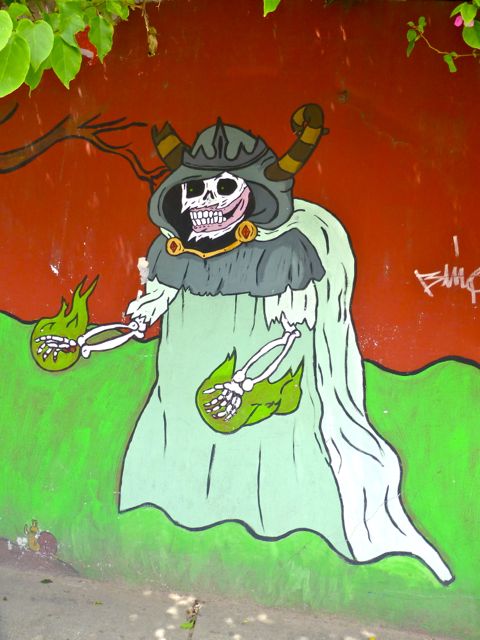
Skeleton in robes painted on wall

Without any other options, I found myself walking along Calzada Madero.

Spider painted on railroad car

and found murals painted on old railroad cars…

Cat face painted on railroad car

in the yard of the old railroad station, now the Museo del Ferrocarril Mexicano del Sur.

3 creature faces big teeth painted on railroad car

By the time another bus finally came by, I felt much more like this…

Tranquil female face painted on side of building

Sighhh…  good ol’ Oaxaca, you just never know what you will stumble upon.

Read Full Post »

Who were those masked men?

From the Guelaguetza desfile, July 19, 2014

Read Full Post »

Last Monday, L and I had a leisurely hike up the hill from my apartment to the Guelaguetza Auditorium, sat in stadium seats almost 20 rows up, looking down on the enormous circular concrete stage with the city and mountains providing a picturesque backdrop.

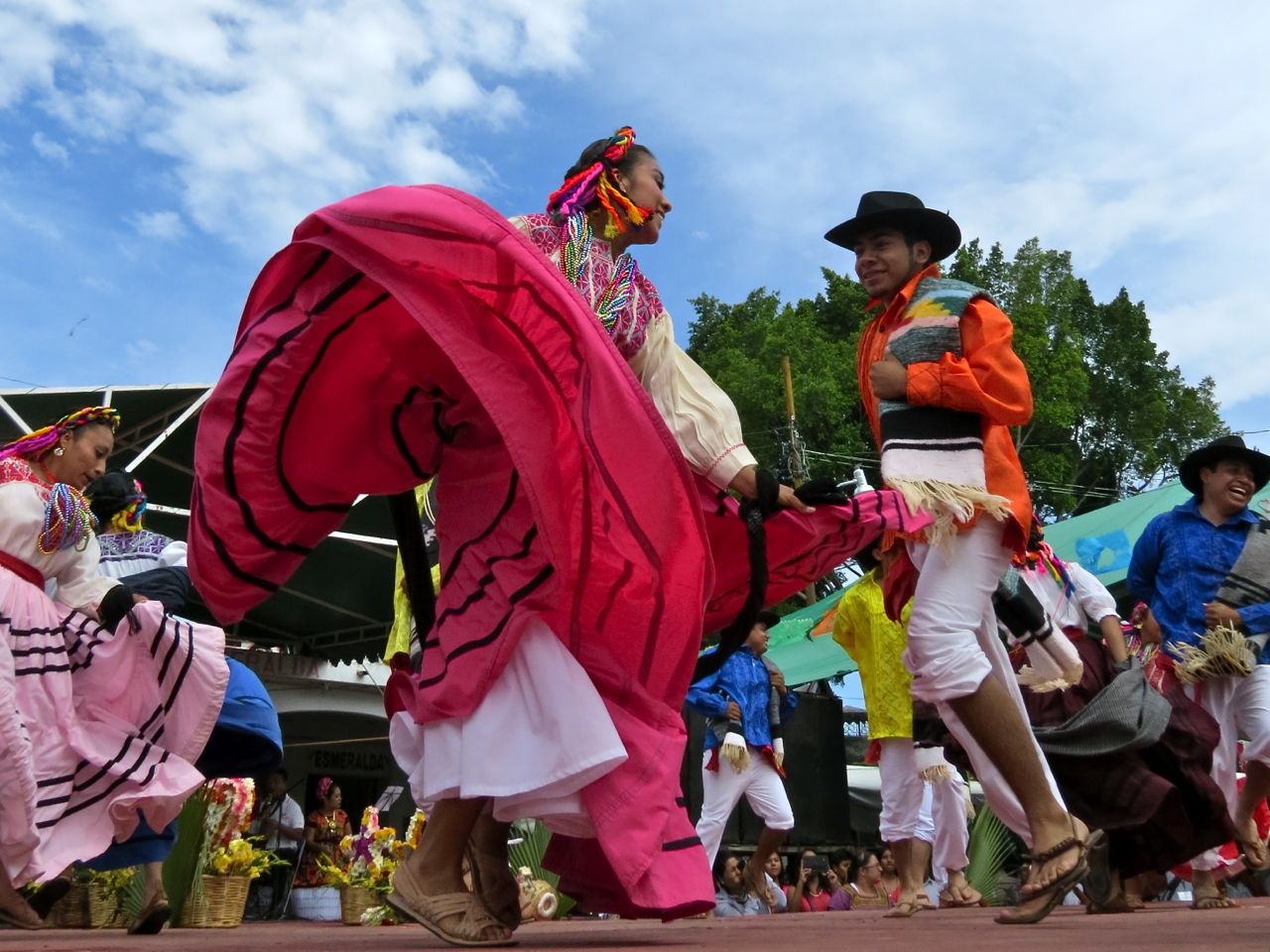
Yesterday, I hopped on a bus, heading for another Guelaguetza performance, this time in Villa de Etla.  However, a bloqueo (blockade) by Sección 22 of the teachers’ union had the bus turning around, doubling back, and taking a circuitous route that eventually wound its way through the narrow streets of Santa Rosa.  Once we got back on the main road, I transferred to a colectivo and arrived in Etla just as the dancing was about to begin — this time on a small temporary wood-plank stage, that seemed to shake with every dance step.  The setting wasn’t quite as spectacular, but, there I was, within an arm’s reach of the dancers!

IMG_5387

IMG_5566

IMG_5497

Danza de la Pluma

Danza de la Pluma


IMG_5640

IMG_5515

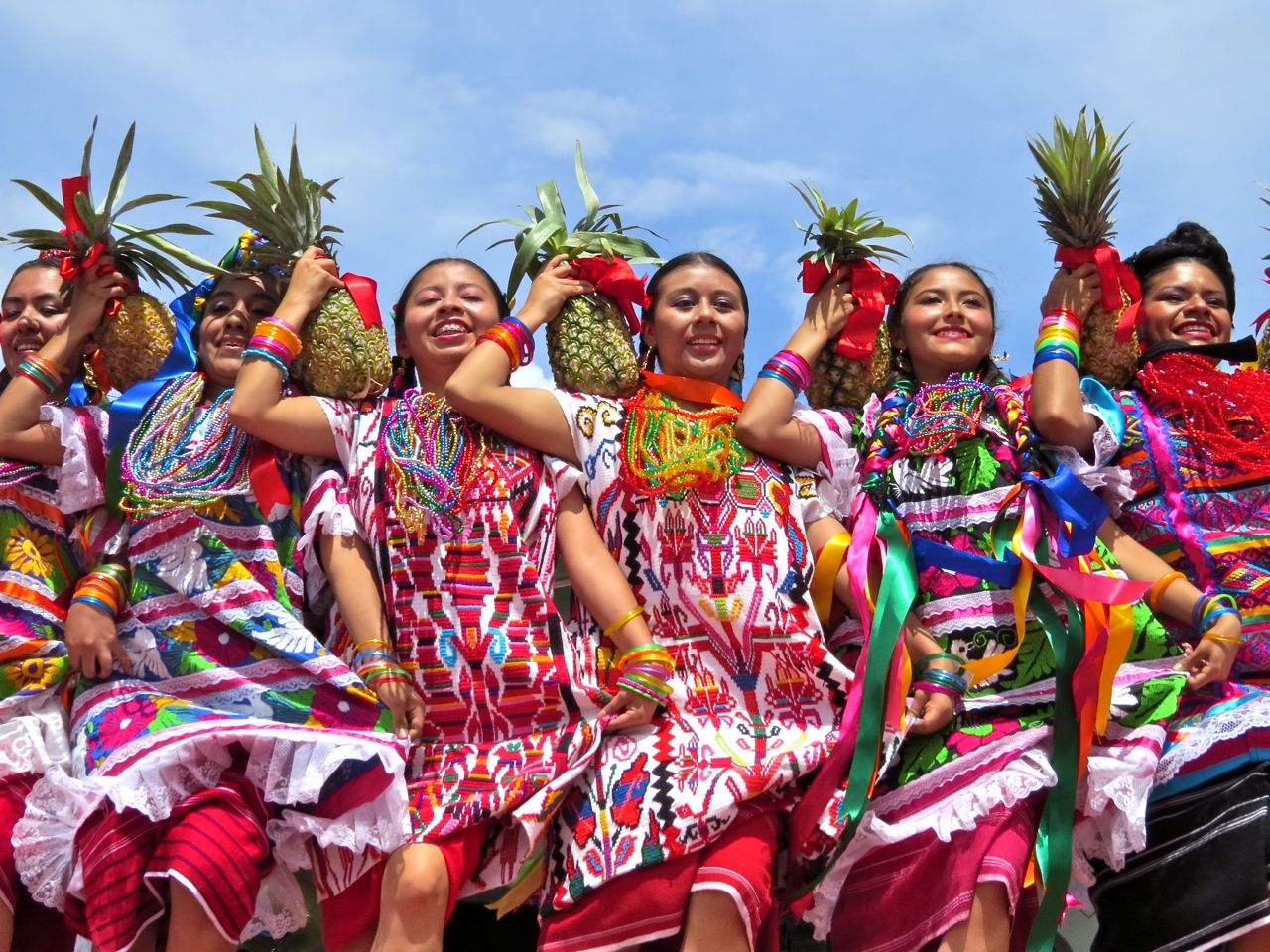
Flor de Piña

With the exception of the Danza de la Pluma, these dancers are from a folkloric group that performs each of the traditional regional dances.   As you can see from their faces, they dance with as much joy and pride as the delegations from the villages at the big Guelaguetza.

IMG_5432

IMG_5584

IMG_5426

IMG_5582

IMG_5357

IMG_5320

Returning home was its own adventure.  Last week, L and I only had to navigate sidewalks, pathways, and stairs along with the other 11,000 attendees.  Yesterday, Chris (see his Guelaguetza in Etla – 2014 post) gave me a ride to a bus stop where, after about 10 minutes, I caught the bus that would deposit me a half block from Casita Colibrí.  Alas, the best laid plans…  Just before the intersection up to Cerro Fortín, masked maestros (teachers) surrounded the bus, our driver shrugged, opened the doors, and off we passengers got.  It was hot, I was tired, but what else was there to do?  I hoofed it to halfway between the Museo del Ferrocarril (Railroad Museum) and Morelos Park, when another bus materialized, I climbed aboard, giving my feet a much-needed rest, and let the driver navigate the clogged streets that took me back to home sweet home.

It was a fun and frustrating AND exhilarating and exhausting kind of day.

Read Full Post »

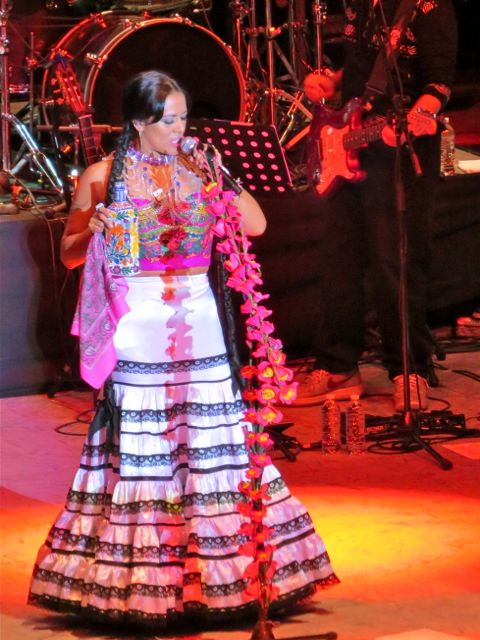
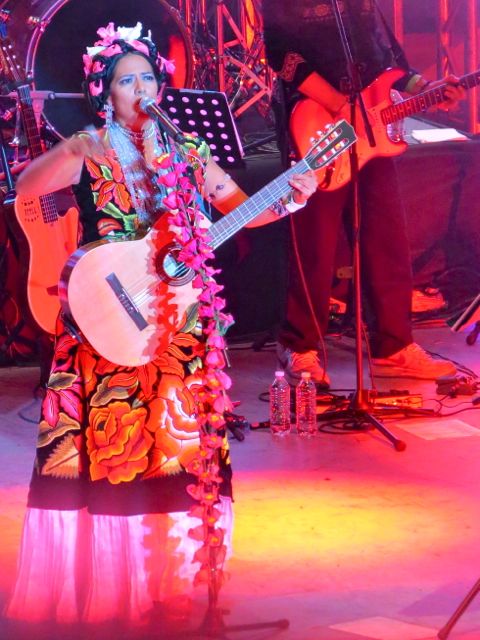
One of the qualities that amazes me about most Oaxaqueños is their patience with waiting in interminable lines.  On the one hand, I think those north of the border could take some much-needed lessons in civil and well-mannered behavior.  However, on the other hand, I think Oaxaqueños deserve much better than having to stand in endless lines, be it the bank, a government agency, or to get tickets to a concert by their favorite daughter, Lila Downs.

Lila Downs with bottle of mezcal

Last year, unable to figure out the hows and wheres of getting a ticket to her free concert during the ten days of the Guelaguetza festivities, I was on the verge of giving up getting tickets to see Lila Downs, when friends coming in from out-of-town(!), offered a couple to me.  Of course, I accepted!

Lila Downs fluttering skirt

This year, after several false leads, on Tuesday morning L and I climbed back up to the Guelaguetza Auditorium to try to score some tickets to this year’s free concert.  The box office was scheduled to open at 9 AM, we got up there at 8:30 AM and found ourselves at the end of a line that stretch halfway to the planetarium AND that continued to grow as the hours ticked by.  Abuelos, niños, moms, dads, and teens lined the pathway, talking on cell phones, eating, talking, and laughing — without a raised voice or harsh word spoken.
Lila Downs with guitar

At almost 10 AM, when the line hadn’t moved an inch, I walked down the hill to the box office to see what was happening.  Nothing, as it turned out!
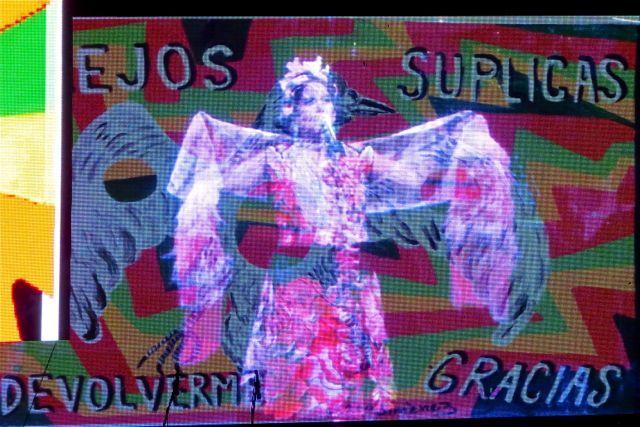
Projected image of Lila Downs

However, good-natured patience finally succumbed to whistles and shouts by those who were in the line of sight of the ticket booth — after all, according to the newspaper they had begun lining up at 4:30 AM!!!

Lila Downs arm raised

I wound my way back up the hill to report my findings to L.  Alas, after another 45 minutes of no movement, impatient gringas that we are, we gave up.  However, to borrow from the musical Sound of Music, “somewhere in [our] youth or childhood, [we] must have done something good,” because 48 hours later, my neighbor presented us with tickets!  And so last night, we climbed back up Cerro Fortín to see Lila Downs.  We were very happy campers.

IMG_5134

She put on another spectacular show — mixing new tunes with old, incorporating several of the Guelaguetza delegations into the production, and generally bringing cheers and sing-a-long voices from the hometown crowd.  By the end, everyone was on their feet.

Read Full Post »

So much to see and do, so little time to process photos and post — should all our problems be so enjoyable!  However, before tonight’s Lila Downs concert, tomorrow’s Desfile de Delagaciones (parade of delegations), and Monday’s Guelaguetza in Etla (and that’s only a few of the activities on the dance card), a glimpse from the beginning of Monday evening’s Guelaguetza performance.

Diosa Centéotl, Jacqueline Reyes Rosario Sarabia began the presentation of Lunes del Cerro (aka, la Guelaguetza).

Diosa Centéotl,  Jacqueline Reyes Rosario Sarabia

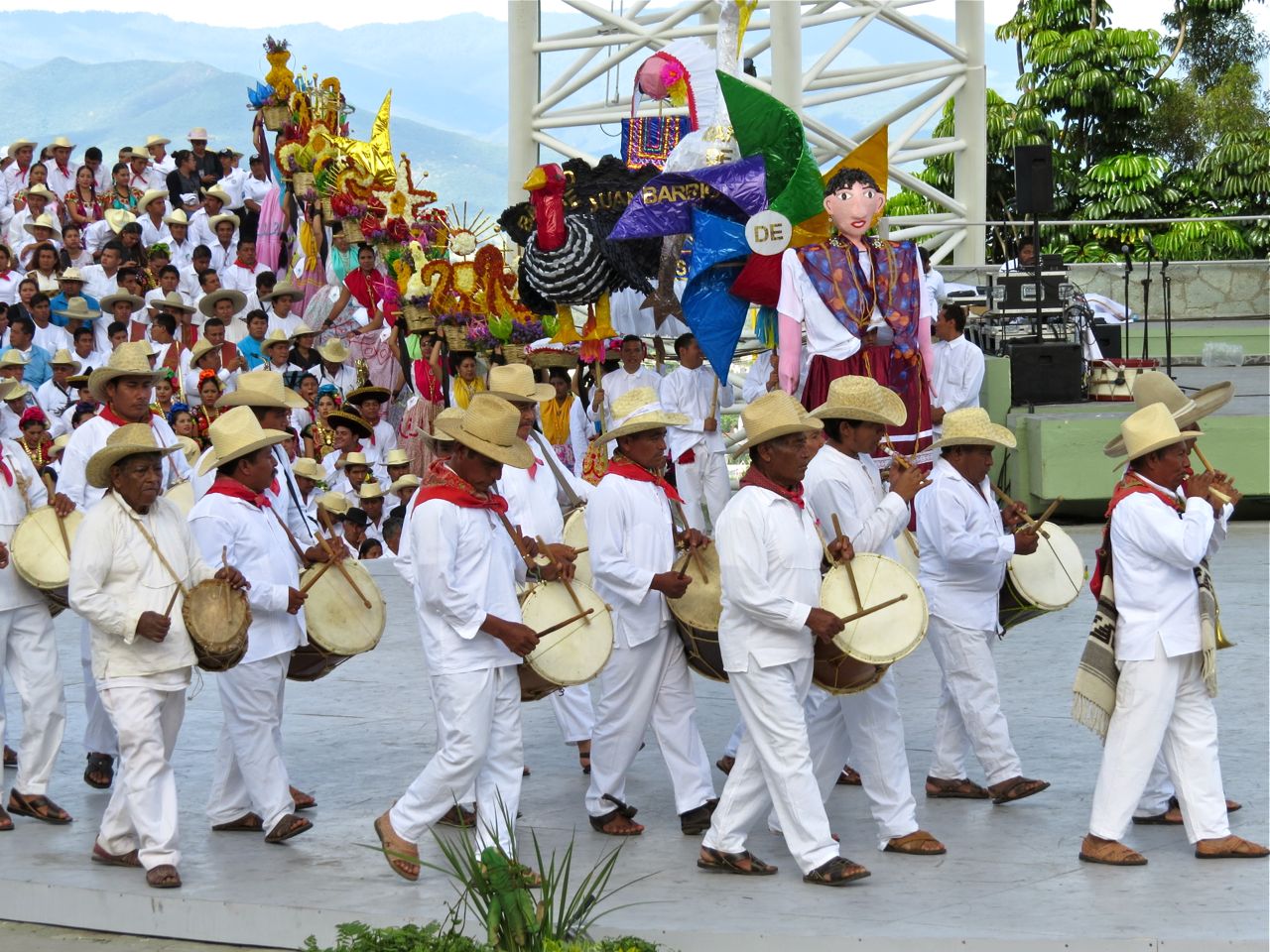
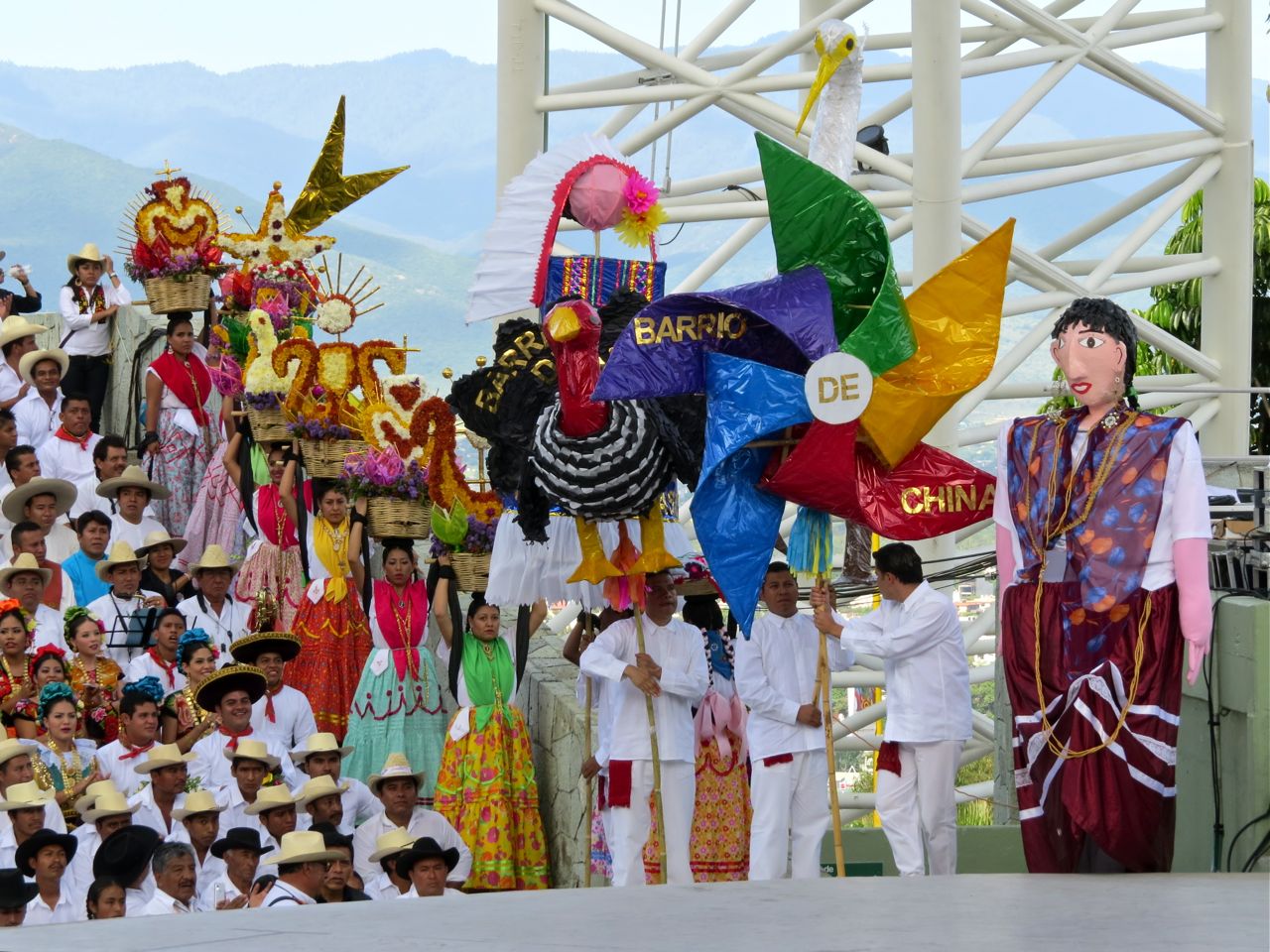
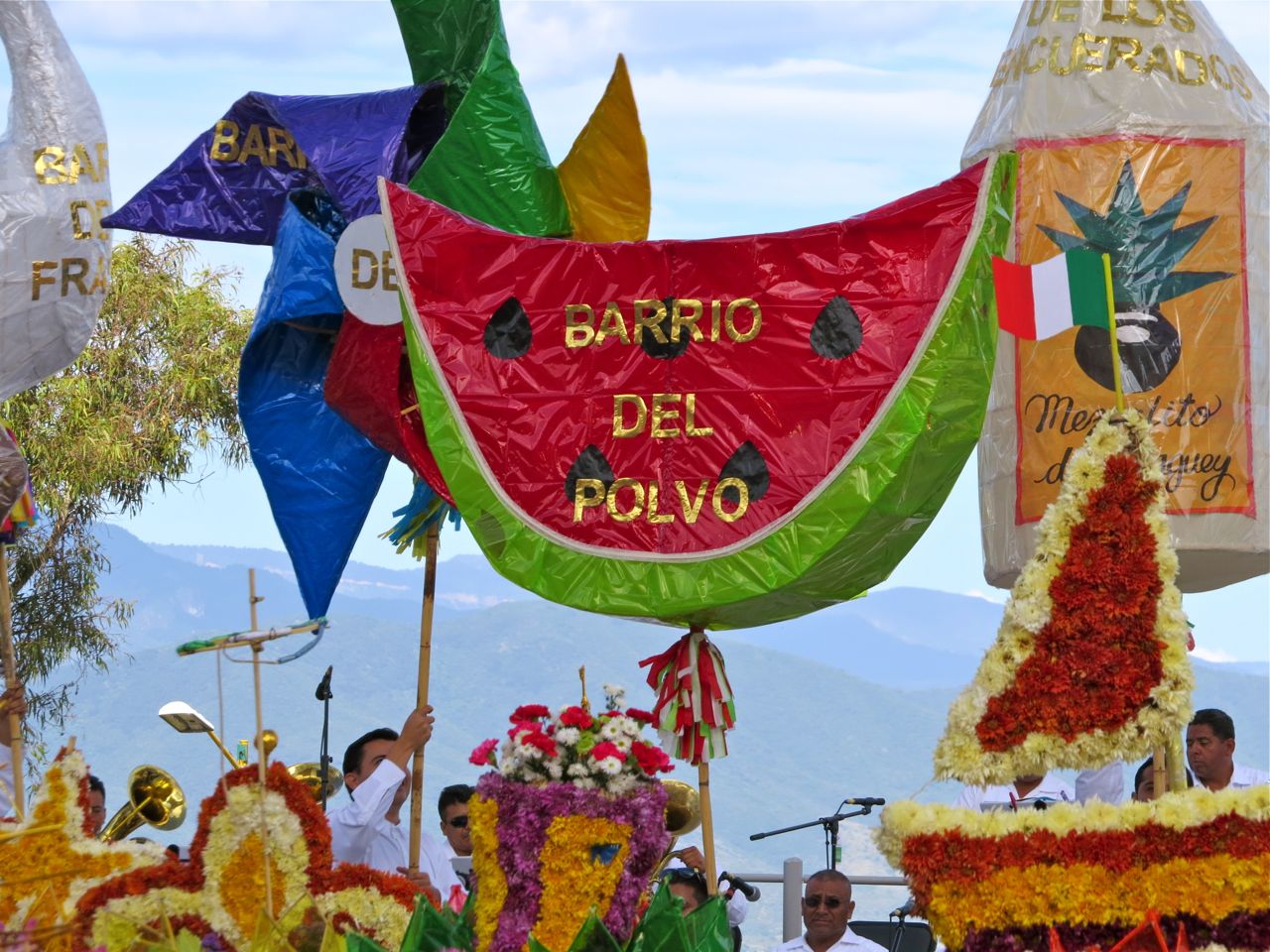
As tradition dictates, she was followed by the convite (procession) of Chinas Oaxaqueñas with their band, monos, and banners.

band

IMG_4673

IMG_4690

They filled the stage, dancing the Jarabe del Valle to the cheering crowd.

IMG_4689

It was a balmy evening, the view was spectacular, fourteen more delegations danced their way into the night, and a dazzling display of fireworks exploded above the open-air auditorium to conclude the show.

And, they do it all again this coming Monday — hopefully, the kinks will be worked out for the live streaming, so no matter where you are, you can watch and enjoy the morning and/or evening performances.

Read Full Post »

This post is really just an excuse to post photos of two young women who are presiding over this year’s Guelaguetza activities.  The first is the Reina (queen) of the 4th Expo Feria del Queso y Quesillo.  She is a writer, loves books, and her eyes lit up (even more!) when I told her I was a librarian.  She and her mother were so gracious and radiated joy and warmth.  Alas, I didn’t catch her name; if anyone knows, please post in comments.

Friday evening, the Diosa Centéotl (corn goddess) was chosen to reign over this year’s Guelaguetza.  Jacqueline Reyes Rosario Sarabia, a native of Santo Domingo Tehuantepec, Oaxaca, was selected from 33 participants who represented the 8 regions of the state of Oaxaca in a 2-part competition.  Each entrant was required to make a presentation, in both her native language and in Spanish, about the gastronomy, crafts, dances, legends, traditions, and customs of her village and on the clothing of her region.  Even though we were way in the back, Jacqueline caught our attention with her impassioned speech.  One of the first of her duties was to lead yesterday’s desfile (parade of the Guelaguetza delegations) through the streets of the city of Oaxaca.

I love Jacqueline’s reaction when her name was announced as Diosa Centéotl 2014.

Read Full Post »
« Newer Posts - Older Posts »