Feeds:
Posts
Comments

Archive for the ‘Culture’ Category

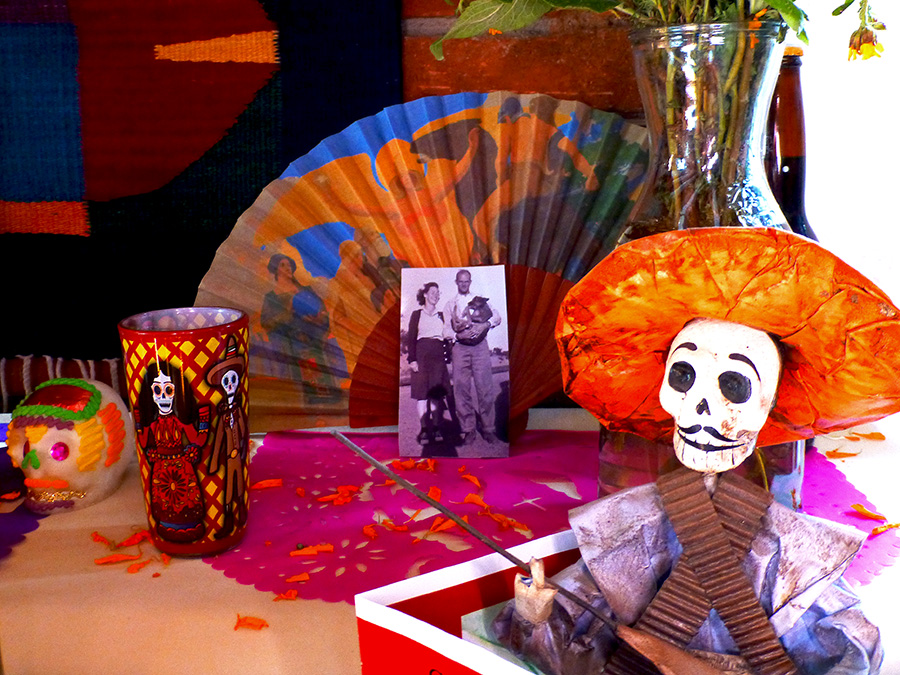
Poco a poco (little by little) my ofrenda has been constructed and composed.  A yellow (the color of death in prehispanic southern Mexico) cloth covers two chests and papel picado, signifying the union between life and death, has been added.

p1230011_crop

Photos of departed loved ones have been placed, along with apples, oranges, and nuts to nourish the difuntos, sal to make sure the souls stay pure, cempasúchitl and veruche (domesticated and wild marigolds) — their scent to guide the spirits, cockscomb to symbolize mourning, the previously mentioned flor de muerto from the mountains above Díaz Ordaz, and copal incense to draw the spirits home and ward off evil.
p1220899_crop

Sugar skulls, catrinas, and a few of the favorite things of my parents, grandparents, and in-laws have also been added.  Lest the spirits become thirsty, there is water, mezcal, cervesa, and a bottle of port (for my mom) to drink.
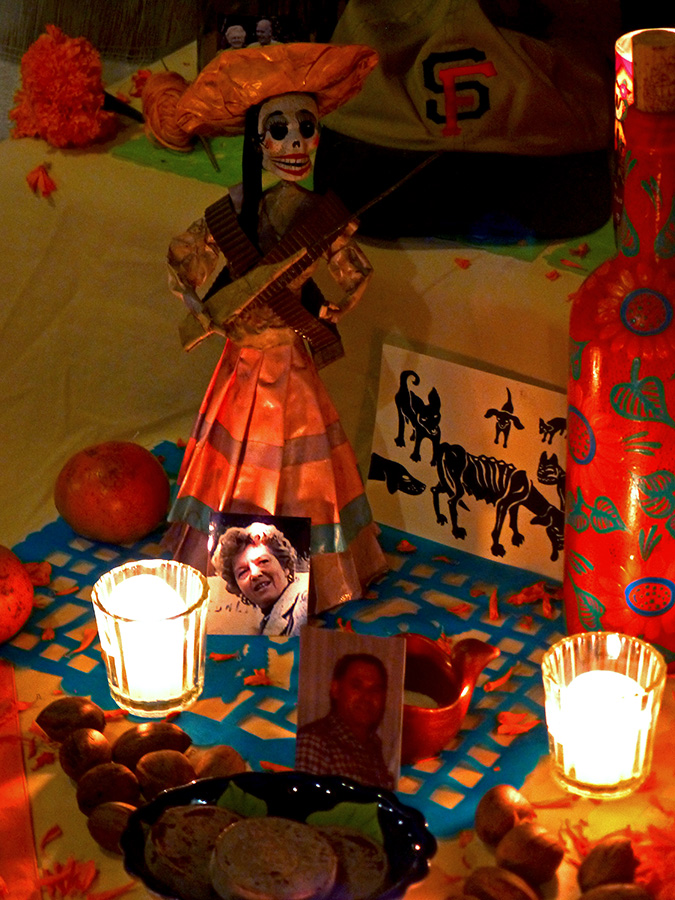
p1230015_crop

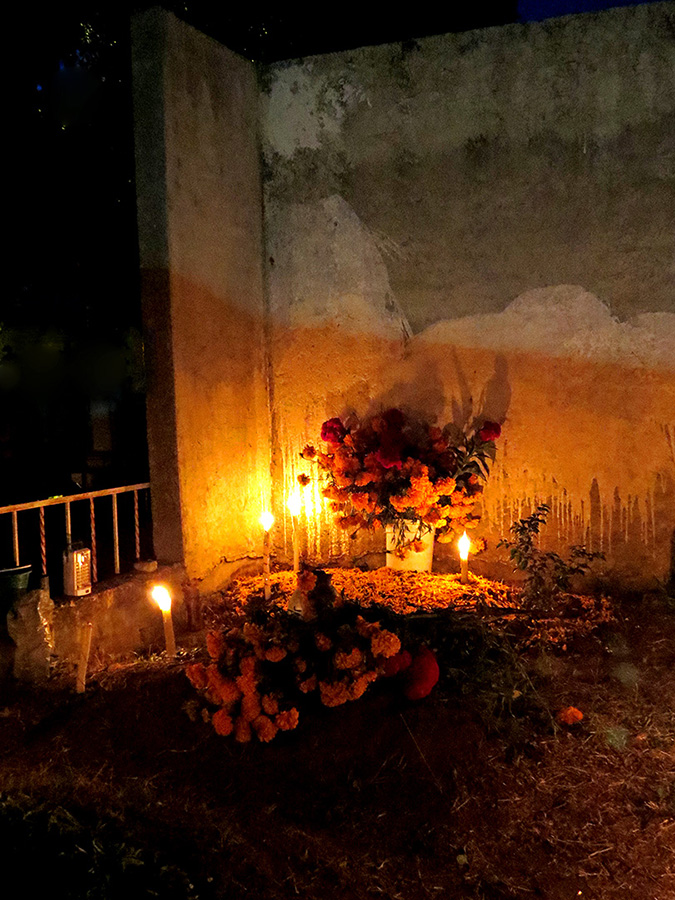
Last night, the candles and copal incense were lit to guide my loved ones to my Oaxaca home and, just to make sure, I sprinkled some cempasúchitl petals outside to help them find their way.

img_2246_crop

It may not be the house where they lived, but I’m hoping they too believe, When you live in your heart, you are always home.
Read Full Post »

October 30, 2016, around and about the valley of Oaxaca, preparations were underway for Día de Muertos.  Bread, fruit, chocolate, nuts, and flowers for sale spilled from mercados into the streets; the difuntos must be fed… and only the best!

Our first stop was Villa Díaz Ordaz for their first Expo Festival del Pan de Muerto.  It was day two of the 3-day festival and, of course, we were there early (around noon), but everyone was so warm and welcoming.  Hopefully, it will continue to grow in future years, as this is a sweet village in a picturesque setting at the base of the mountains.

p1220852

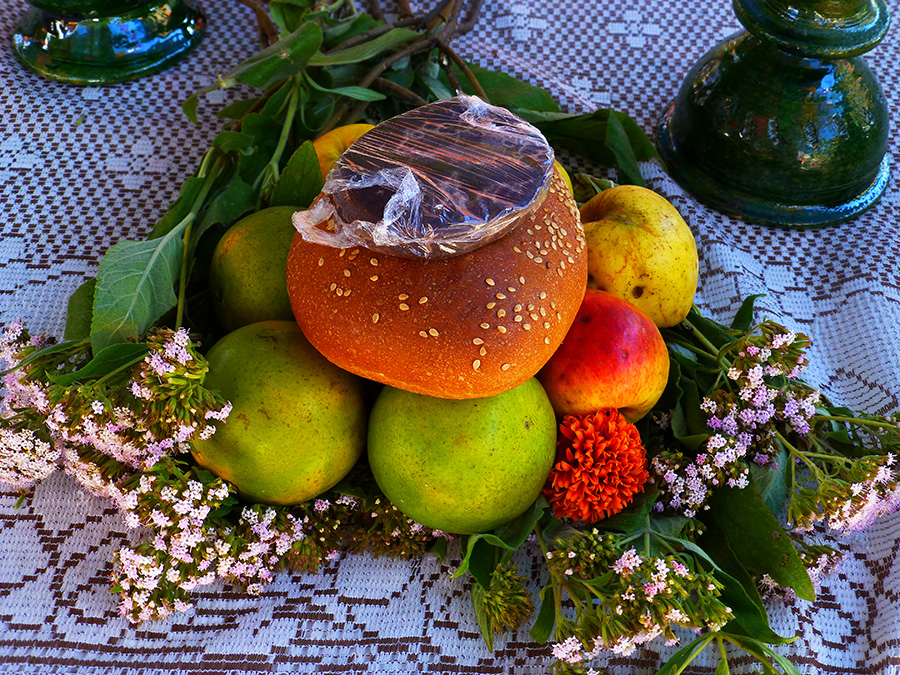
In Díaz Ordaz, they call these tiny, spicy-scented, lavender flowers “flor de muerto” and we were informed that they are even more important than cempasuchil (marigolds).

p1220847

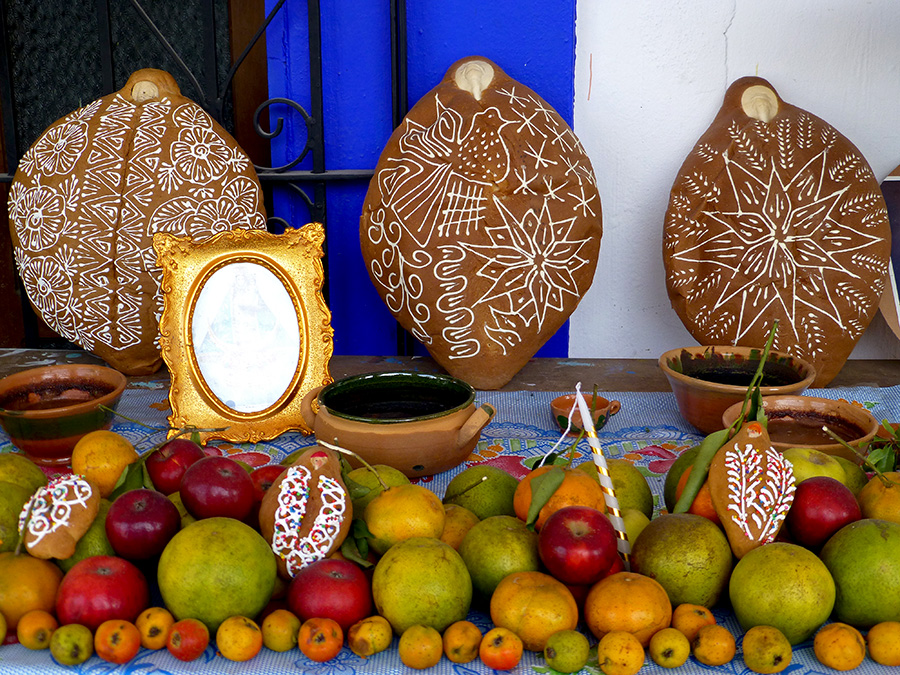
After buying some surprisingly flavorful (whole grain!) pan de muerto for my ofrenda, we headed off to San Pablo Villa de Mitla.  Mitla has the most beautiful pan de muerto and two years ago we stumbled on their Pan de Muertos festival and competition.  A dazzling display of intricately decorated breads lined the sidewalks under the portales.  Alas, the festival was not continued, as their bread is in such demand, the bakers were too busy to take time out for an expo and competition.  So, like last year, we just enjoyed the sights and aromas of their bustling mercado.

p1220868

Have you ever seen so many varieties of bananas???  And, now for the famous  pan de muertos…

p1220861

Returning home, I added the bread and flor de muerto to my ofrenda.  Following a siesta, I ventured out into the streets of the city in search of a comparsa.  I never found it, but, as you could see from my previous post, the city was teeming with people and activity.  However, amid the merriment and mayhem, there were scenes of tranquility.

img_2135

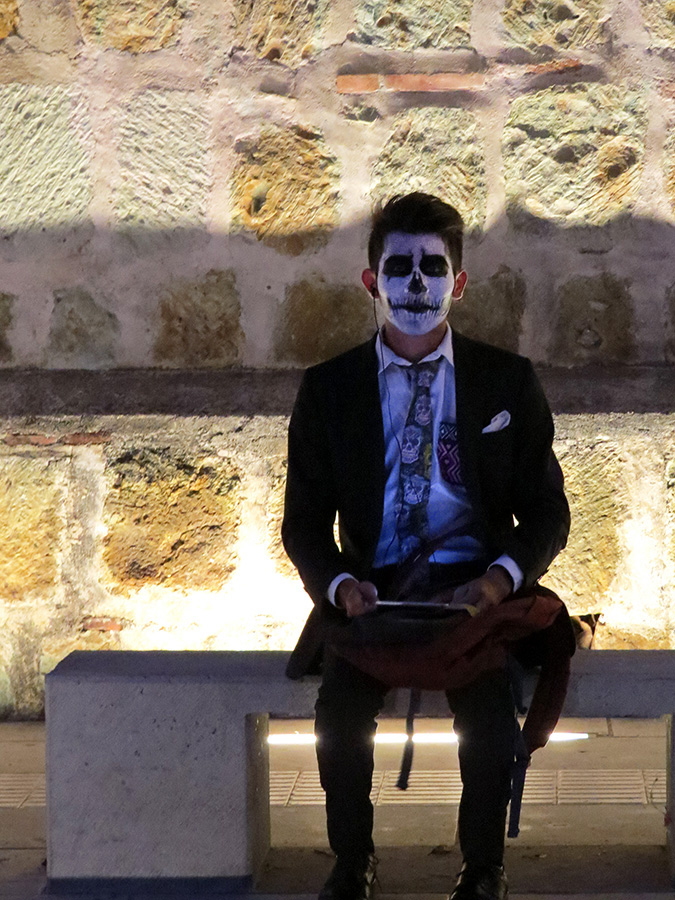
A catrin ejecutivo?

img_2172

The copal incense beckoned the difuntos…  They began arriving this morning, seconds after midnight.

Save

Save

Save

Read Full Post »

Beautiful Oaxaca tonight on Macedonio Alcalá…

img_2145

In the words of the song, “Oaxaca vives en mí” (Oaxaca, you live in me).

Read Full Post »

Celebrations in Oaxaca surrounding Día de Muertos are beginning.  This past week, we, members of the Mexico Travel Photography Facebook group, were issued a 5-day “Day of the Dead” photo challenge by moderator, Norma Schafer.  There are always so many favorite images from so many events that I never get around to posting, so this was my opportunity.  My five…

img_0085

Panteón, Santa María Atzompa, Oaxaca on Oct. 31, 2015

img_0125

Offering on tomb in Panteón Municipal de Tlacolula de Matamoros, Oaxaca on Nov. 1, 2015

p1030655

Muerteada, morning after the night before, Nov. 2, 2014, San Agustín Etla, Oaxaca

img_6545

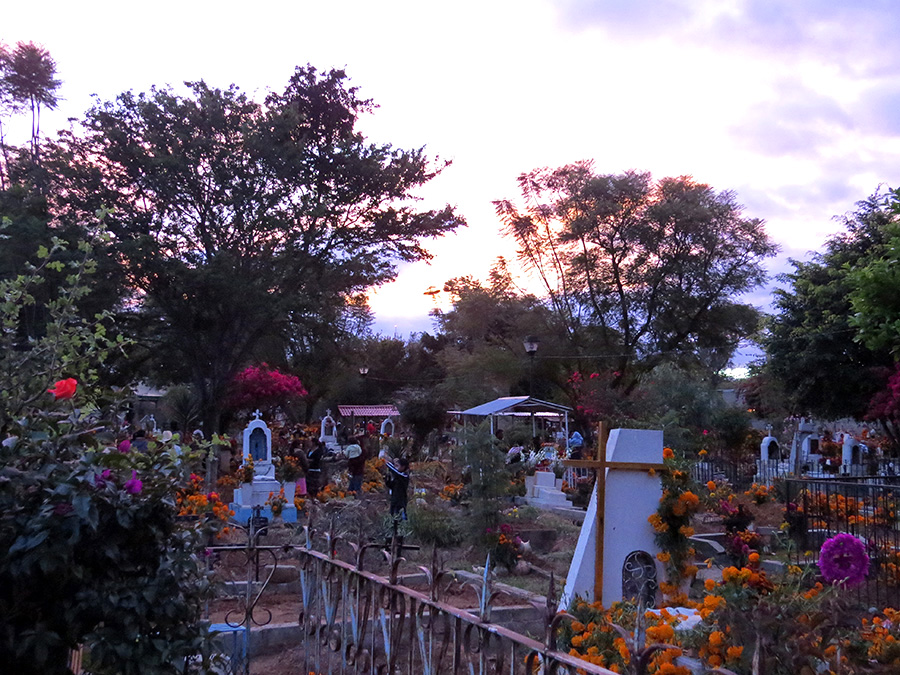
Sun sets on Santa María Atzompa panteón, Oct. 31, 2014

p1030223_bw

On the Alcalá in Oaxaca City, Oct. 31, 2014

And, five more, just because…

img_0079

Santa María Atzompa, Oct. 31, 2015

p1030402

San Pablo Villa de Mitla, ofrenda with pan de muertos, Nov. 1, 2014

p1030148

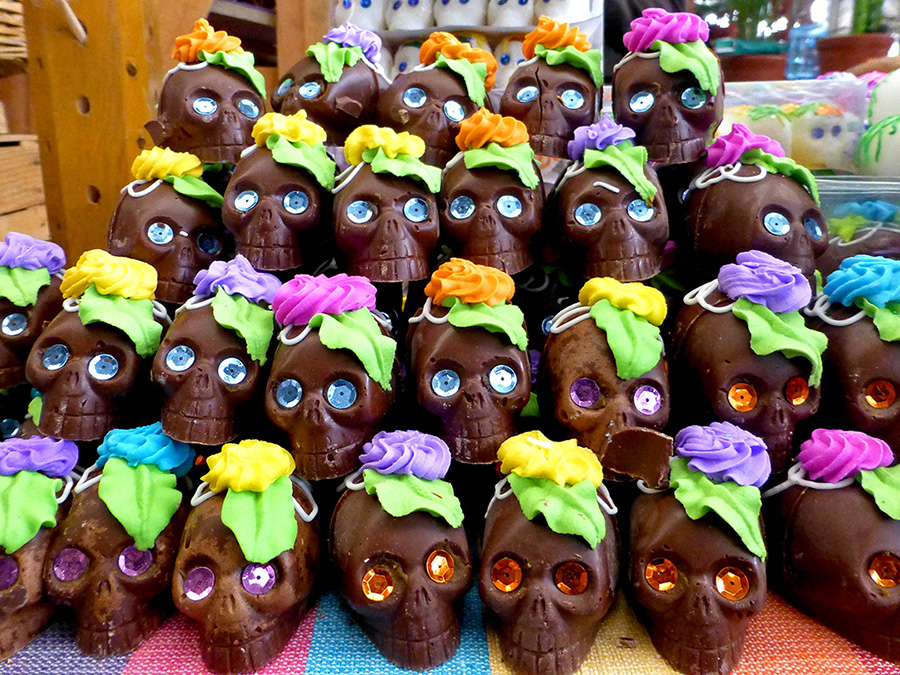
Chocolate calaveras at Villa de Etla, Oct. 31, 2014

p1030157

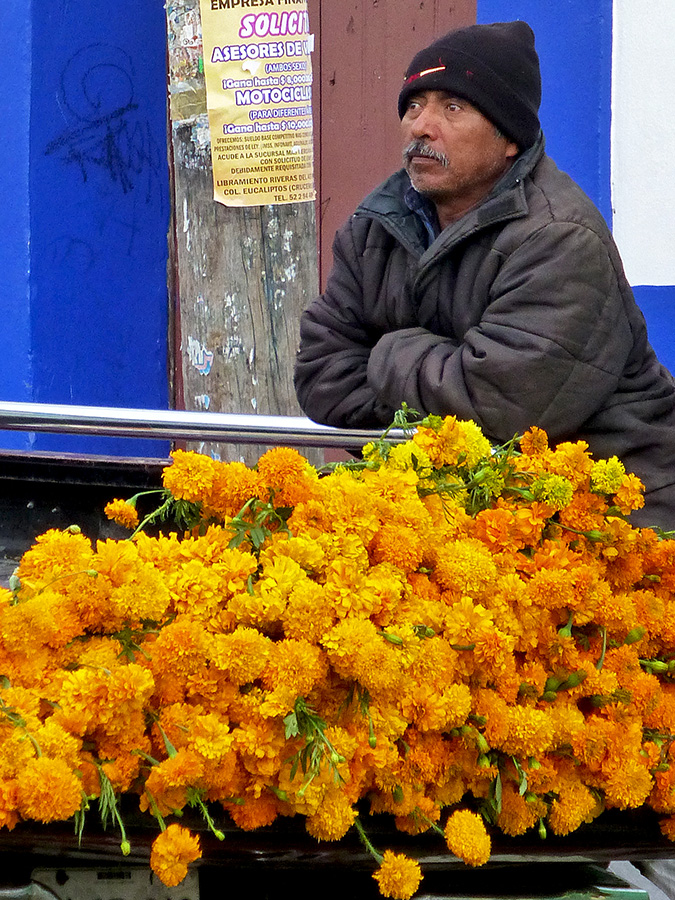
Cempasuchil (marigold) vendor at Villa de Etla, Oct. 31, 2014

p1150252

Casa de las Artesanías de Oaxaca, Oct. 31, 2015

That’s all folks, for now.  Stay tuned for more to come from this year.

Read Full Post »

Before I become completely immersed in the myriad of activities related to and surrounding Day of the Dead, I want to write a post about Porfirio Gutiérrez Contreras, another of the talented and creative weavers from Teotitlán del Valle I have come to know.

I first met Porfirio via my blog and we soon became Facebook friends.  However, we didn’t actually meet in person until last November’s, Feria Exposición Maestros del Arte in Chapala, Jalisco.  I made a beeline for his booth and introduced myself to him and his sister, Juana Gutiérrez Contreras.  Porfirio’s recognition and warmth made me feel truly welcome — like we were long-lost friends.

While, as you can see from the video, The Weaver From The Place of Gods, Porfirio is soft-spoken, he is exceedingly passionate about his Zapotec heritage and the preservation of the textile traditions of his village.  His knowledge, talent, and dedication led him to be one of four native artists to be chosen to participate in last year’s, Artist Leadership Program sponsored by the Smithsonian Institution’s National Museum of the American Indian.

A key component of the Smithsonian program was, following their residency, each artist was charged with returning to their community to share their knowledge, with the goal of preserving the wisdom and techniques refined and handed down from their ancestors.  I had the privilege of attending the awarding of certificates and exposition that concluded the 9-day workshop, given in Teotitlán by Porfirio and Juana.  The exposition was entitled El Ritual de los Sueños and took as its inspiration the traditional fiber mat, known as the petate.  It is on the petate where babies are delivered, dreams occur, and in which bodies are wrapped before being placed their grave.

The family’s studio is located at Calle Simon Bolivar #6, Teotitlán del Valle and I can assure you, visitors will be warmly welcomed.  And, who knows, you may come away with beautiful new, naturally dyed, hand-loomed treasure.

I already have a place on the wall reserved for one of Porfirio’s distinctly designed tapetes and am now saving my pesos.

Read Full Post »

Yesterday, a sidewalk still life seen walking home from the market…

p1220724

We are travelers on a cosmic journey, stardust, swirling and dancing in the eddies and whirlpools of infinity.  Life is eternal.  We have stopped for a moment to encounter each other, to meet, to love, to share.  This is a precious moment.  It is a little parenthesis in eternity.   — Paulo Coelho

Save

Save

Read Full Post »

Dressed in their best festival finery…

p1220715

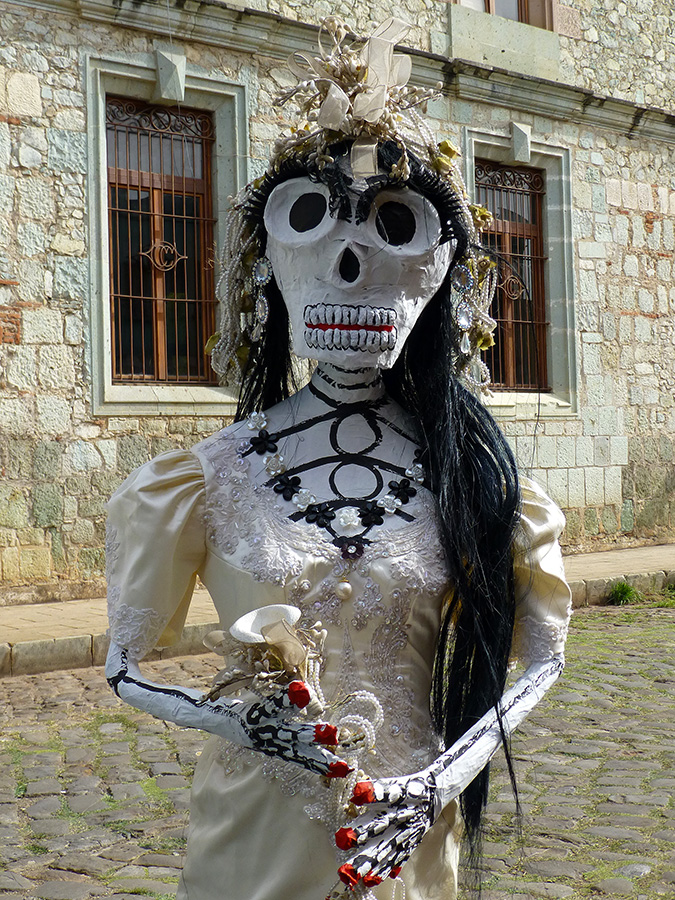
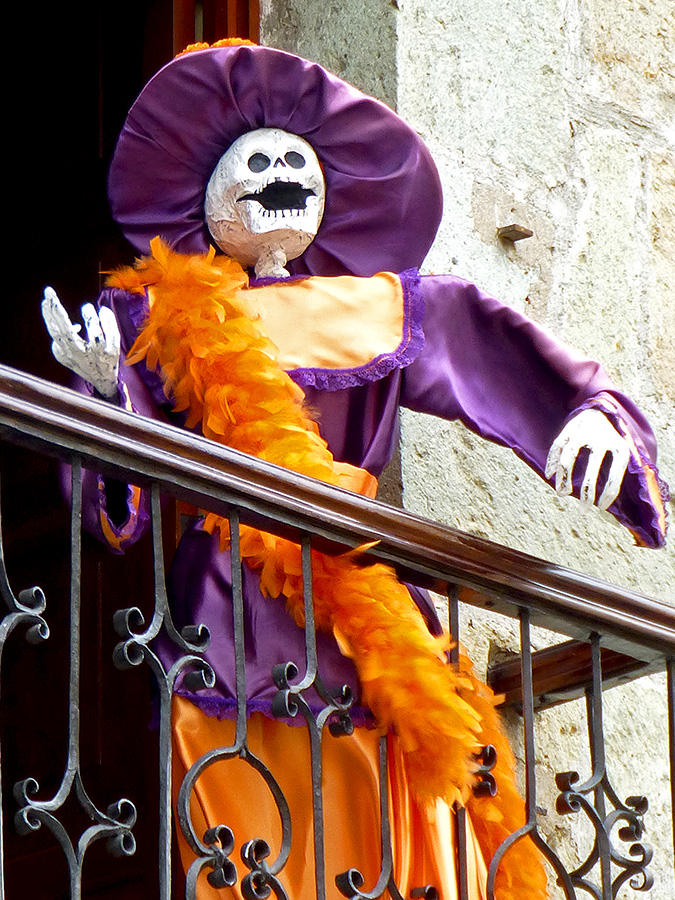
The Catrinas have begun arriving in town…

p1220720

You see them loitering on street corners…

p1220714

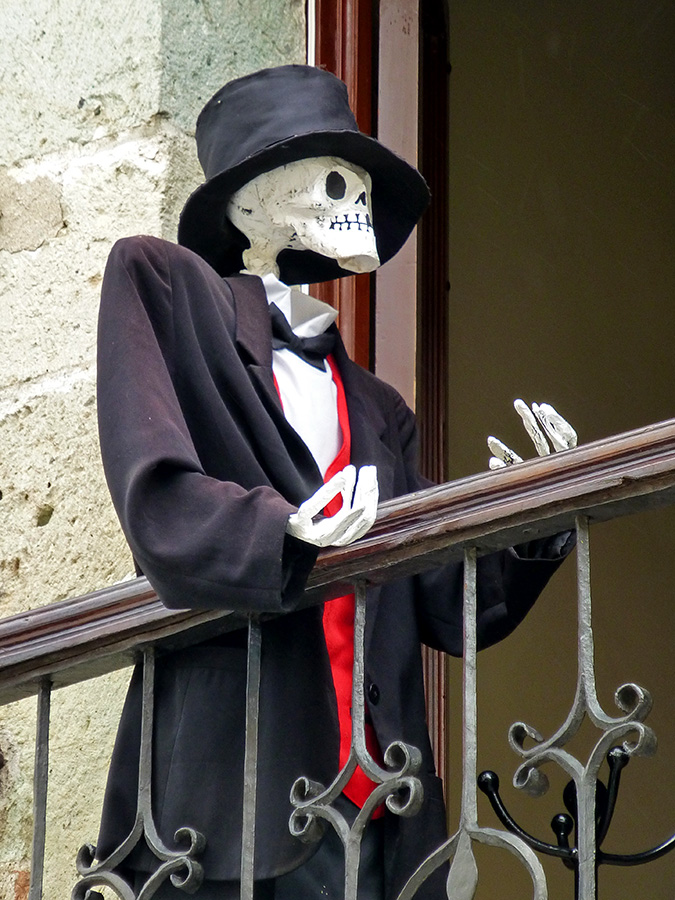
Hanging out on balconies (I think she’s in drag)…

p1220722

All the better to see and be seen.

p1220693

However, in the end, no matter how fancy their finery and glittery their jewels, as José Guadalupe Posada wrote,

La muerte es democrática, ya que a fin de cuentas, güera, morena, rica o pobre, toda la gente acaba siendo calavera 

(Death is democratic, because after all, light-skin, brown, rich or poor, everyone ends up being a skull)

Read Full Post »

Marigolds have begun appearing in the city.  The yellow of this flor de muertos (flower of the dead) will help guide the difuntos (deceased) home to feast with their families during the upcoming Día de Muertos (Day of the Dead) celebrations. Known as cempazuchil (also spelled cempasúchitl), flower pots and/or vases of marigolds may find their way onto ofrendas (the offerings on home altars for the difuntos).  Some scatter the petals on their muertos altar, others in a trail leading from the street into the house and up to the ofrenda.

p1220698

Next week, seasonal Day of the Dead markets will spring up and shopping will go into high gear.  Needless to say, I will join in buying the traditional fruits, nuts, flowers, and sugar skulls to place on my ofrenda.  And, along with friends, I will pay my respects to the difuntos of friends in Teotitlán del Valle.  It’s a special time of year in Oaxaca.

Once a librarian, always a librarian, thus a few resources about Day of the Dead:

A brief note:  Celebrations vary throughout Mexico and, even in the valley of Oaxaca, traditions differ from village to village, but the above articles will give you a general idea.  You can also click HERE for my Día de Muertos blog posts from previous years.

Read Full Post »

Returning to Casita Colibrí last Sunday afternoon, I unlocked the door, set down my way-too-heavy backback, and, having been away for a month, I savored the scene my Oaxaca home presented.  There was my new Tree of Life tapete hanging on the wall of my dining area looking like it had always been there; on the floor, separating living spaces, the beautiful mohair rug woven for me by Antonio Ruiz Gonzalez presided.

AND (drum roll, please), in front of the sofa, my most recent purchase — a stunning rug from Casa Cruz in Teotitlán del Valle.

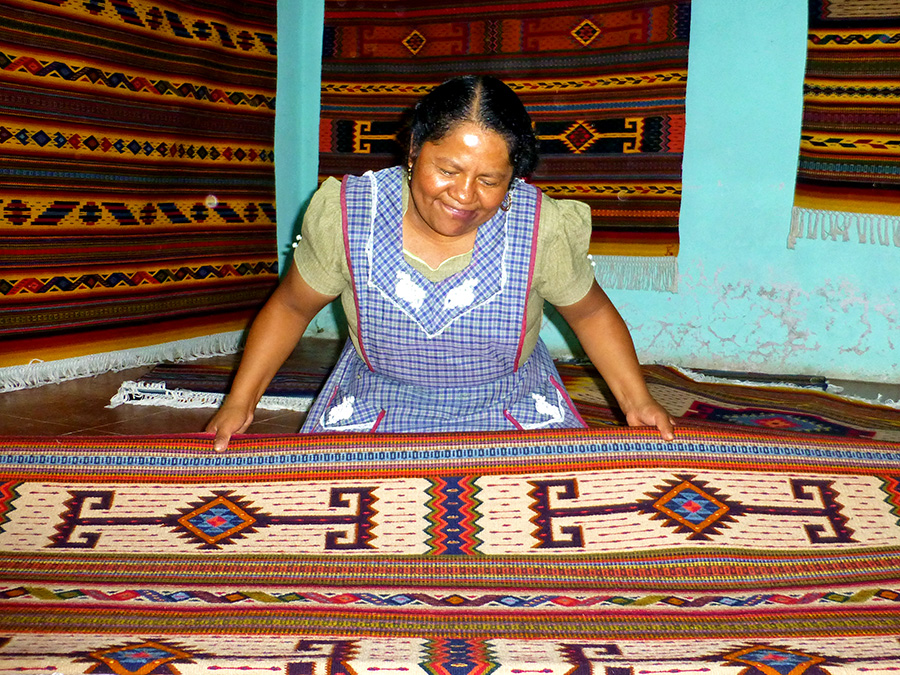
Maria Luisa Mendoza, wife of weaver Fidel Cruz Lazo, displaying their wares in their taller in Teotitlán del Valle.

Maria Luisa Mendoza, wife and partner of weaver Fidel Cruz Lazo, displaying their wares in their taller in Teotitlán del Valle.

Metates at Casa Cruz used to hand grind cochineal and indigo dyes.

Metates leaning against the wall, waiting to to be used to hand grind the natural dyes.

Array of some of their brilliantly colored naturally dyed yarns.

An array of some of their brilliantly colored naturally dyed yarns.

After much indecision (they were all so beautiful!), Fidel Cruz Lazo displays my final choice.

After much indecision on my part (they were all SO beautiful), Fidel displays my final choice.

My rug in its new home here at Casita Colibrí.

My rug in its new home in the living room area of Casita Colibrí.

The book,

It wasn’t until I took this photo, that I realized the design on the cover of  the book, The Colors of Casa Cruz, is the same as my new rug.

The yarns of my new rug were dyed using indigo, cochinilla, nuez (walnuts), musgo (moss), achiote (annatto), and cempazuchil (marigolds) and the primary design element is the diamond, representing the four cardinal points, and symbolizing the continuity of life.

Read Full Post »

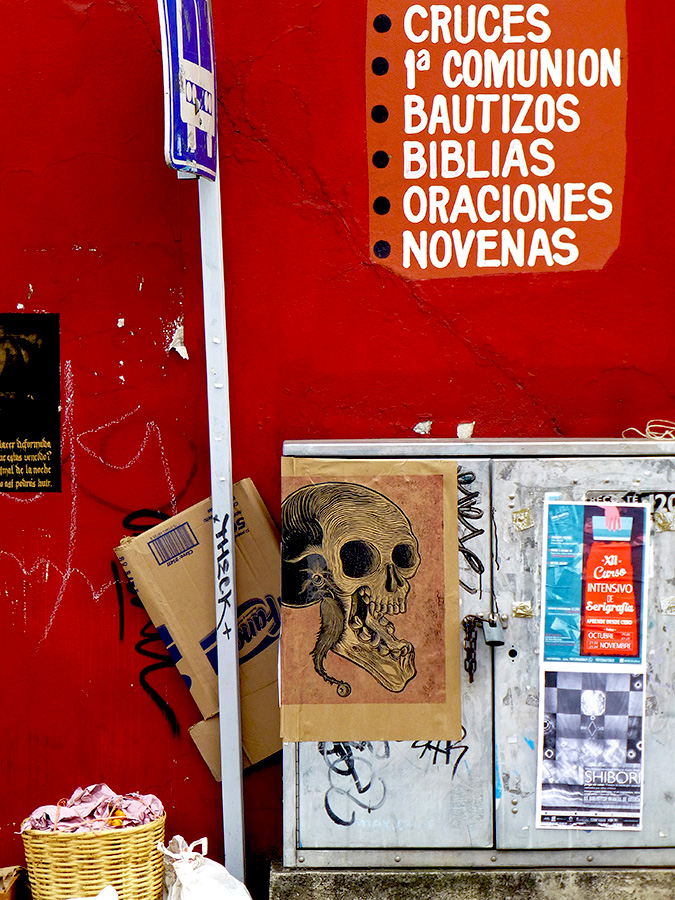
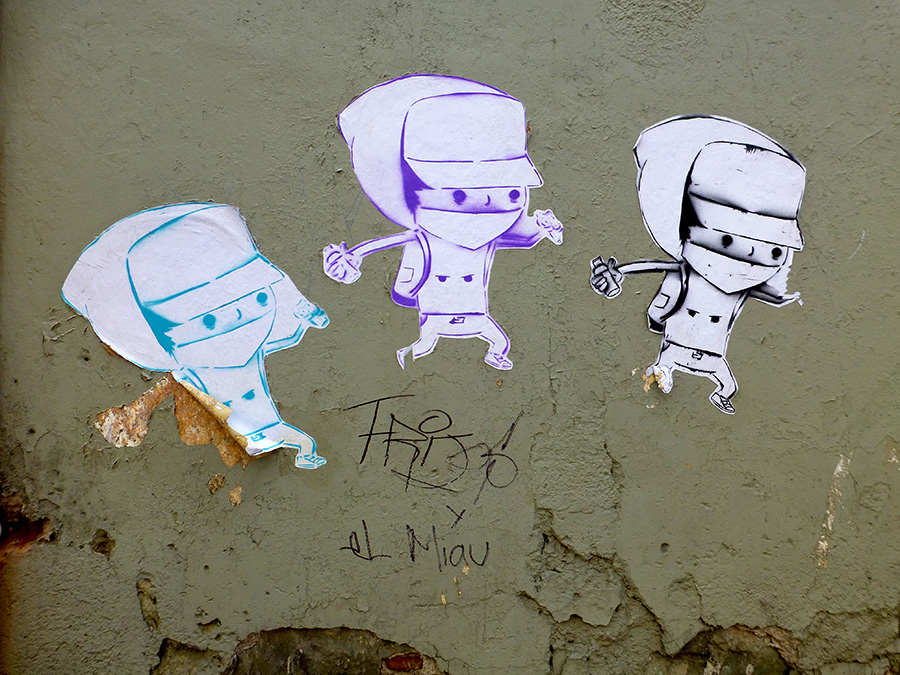
Street art in Oaxaca comes, goes, and appears anew…

p1220634After being away for a month…

p1220635

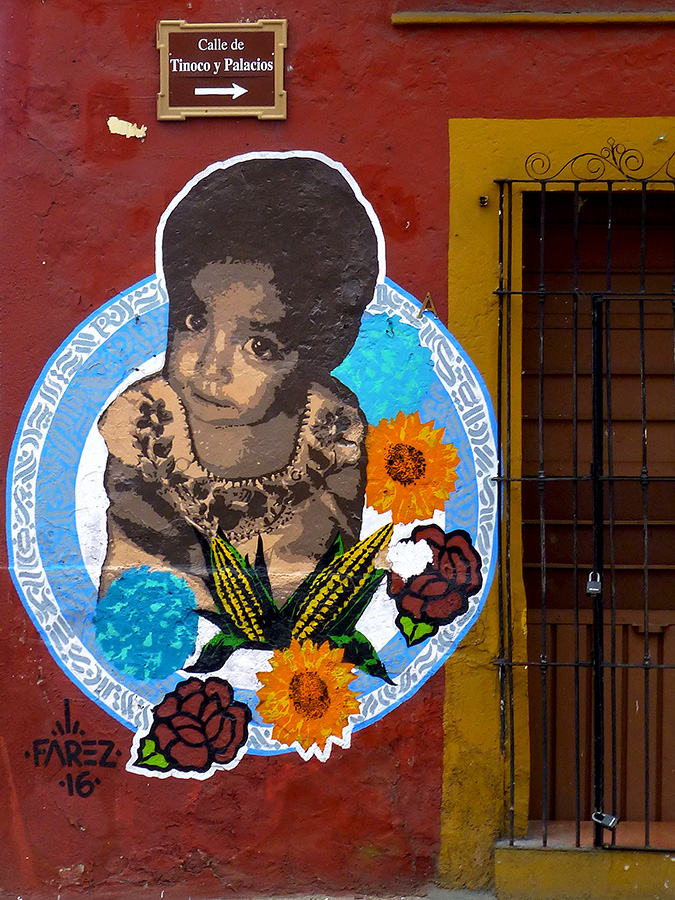
New art greeted me on the walls and poles of Calle de Tinoco y Palacios…

p1220633_crop

As I made my way up the hill on Monday’s grocery shopping trip to the Mercado Sánchez Pascuas…

p1220631

One of the delights Oaxaca brings to the mundane…

p1220637

And, being car-less, one of the joys of errand walking!

Read Full Post »

It’s been a wonderful Bay Area visit, but Saturday at Hardly Strictly Bluegrass the performance by Los Cenzontles with Max and Josh Baca of Los Texmaniacs brought a wave of homesickness for Mexico.

Guess it’s time for me to go…  Next stop, Mexico City!

Read Full Post »

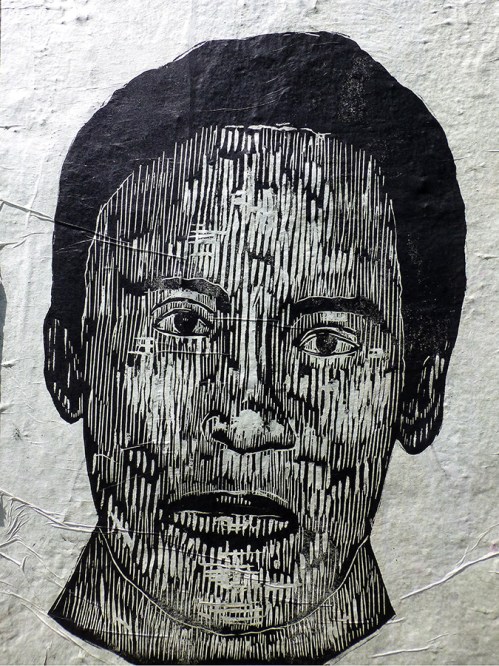
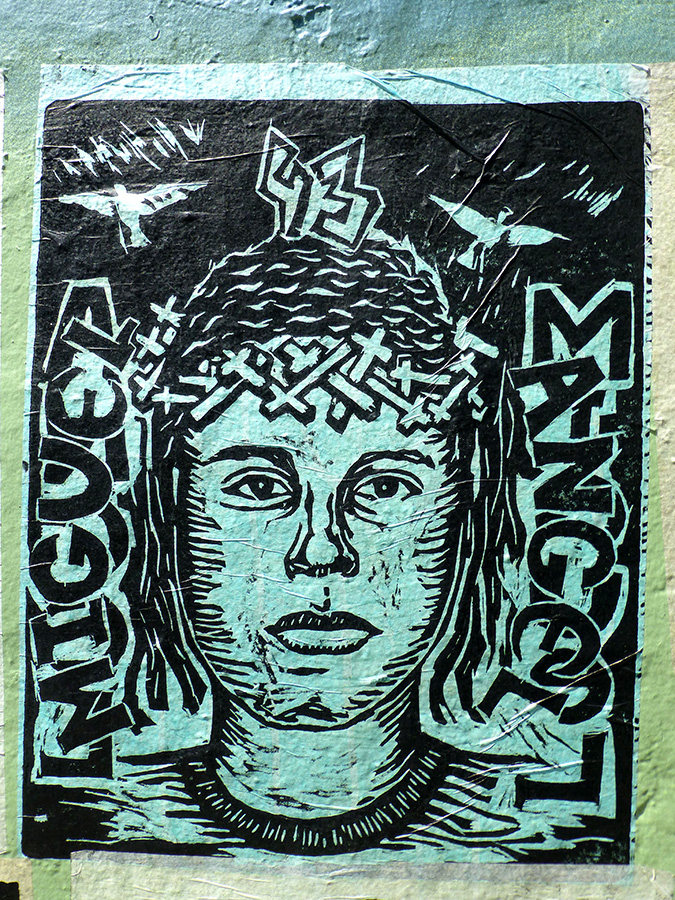
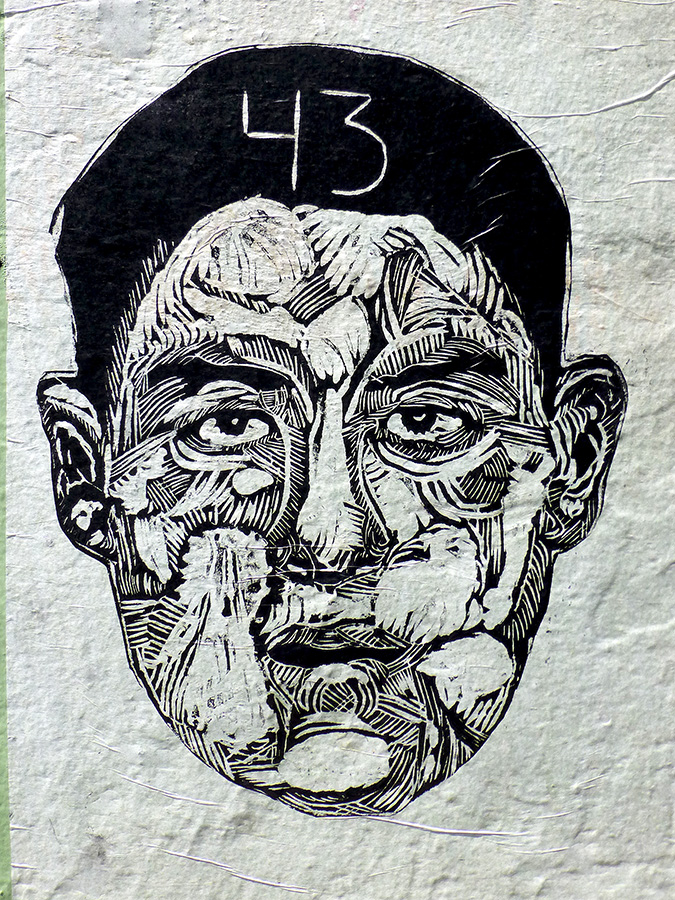
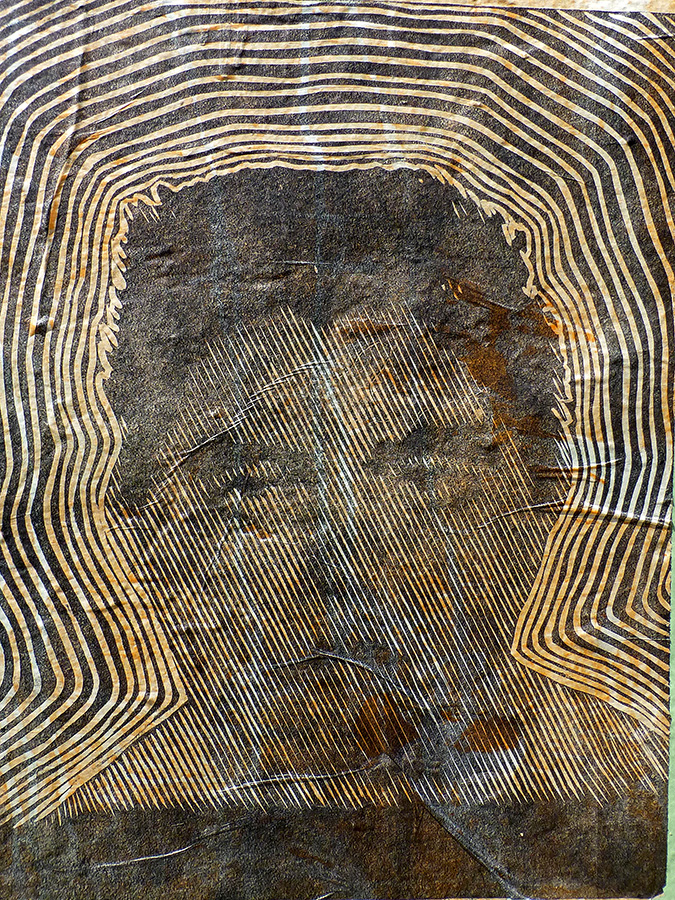
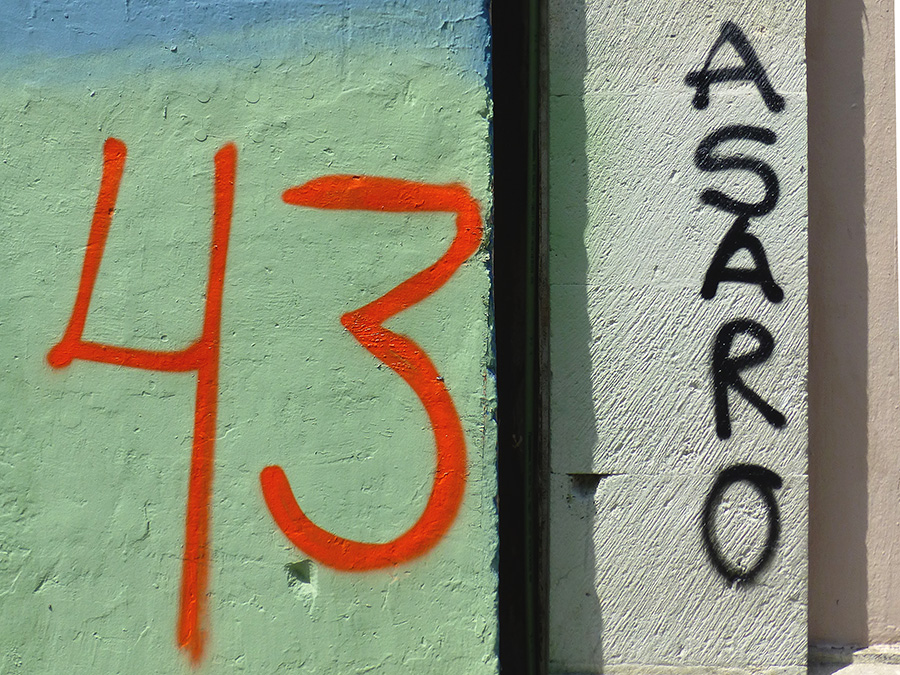
It’s been two years since that tragic night in Iguala, Guerrero when busloads of students (normalistas) from the Ayotzinapa Rural Teachers College were violently attacked.  Six students were killed, 25 were injured, and 43 disappeared.  It’s been two years of agony for families and friends.  It’s been two years of questions and discredited answers for the people of Mexico.  And, it’s been two years of artists around the world doing their part to not let us forget.

p1190763

p1190767

p1190768

p1190769

p1190766

p1190765

p1190772

p1190773

p1190778

p1190777

p1190776

p1190775

p1190781

Images of some of the missing by Asamblea de Artistas Revolucionarios de Oaxaca (ASARO) seen June 18, 2016 on Av. Morelos in Oaxaca, including 18-year old Cristian Tomás Colón Garnica from Tlacolula de Matamoros, Oaxaca.

Read Full Post »

Despite 2000 miles between here and there, similarities abound between the two places I call home.
Art on walls.  (Left) A massive new mural in Mill Valley, above the side wall of the Sequoia Theater, by Zio Ziegler.  (Right)  One of the many murals by Sanez (Fabián Calderón Sánchez) in Oaxaca.  By the way, I’ve previously posted murals by both artists:  click Sanez and/or Zio Ziegler.

Agave.  (Left) Of course in Mill Valley (California), it’s solely ornamental for those meticulously landscaped gardens.   (R) Whereas in Oaxaca, it’s vital crop — land without agave means life without mezcal!

Fluttering swags of flags.  (Left) Cloth Tibetan prayer flags flying outside the 142 Throckmorton Theatre in Mill Valley welcome patrons to the Mountainfilm festival.  (Right) Ubiquitous papel picado found inside and out in Oaxaca, in paper or plastic, for events special or just because.

Sacred mountains.  (Left) Mt. Tamalpais, the Sleeping Lady and mountain of my childhood dreams, teen driving lessons, and adult peace, joy, and renewal.  (Right) Cerro Picacho (in Zapoteco, Quie Guia Betz), brother/sister mountain — the sacred mountain in Teotitlán del Valle, where, among other times, villagers make a pilgrimage to the top on Día de la Santa Cruz (Day of the Holy Cross).

And, last but not least, colorfully costumed couples.  (Left) Soon after arriving at the Mill Valley Fall Arts Festival, I ran into this twosome.  Turns out, in the “it’s a small world” universe, they are actually friends of a couple I know in San Miguel de Allende.  (Right) During July’s Guelaguetza in Oaxaca, the delegation from Putla de Guerrero representing their celebration of Carnaval, is garish and gaudy and wild and wacky — in other words, fantastic!
Creativity is a challenge. It requires us to be fully human — autonomous yet engaged, independent yet interdependent. Creativity bridges the conflict between our individualistic and our sociality. It celebrates the commonality of our species while simultaneously setting us apart as unique individuals.  —Greg Graffin

Save

Save

Save

Save

Save

Save

Save

Save

Save

Read Full Post »

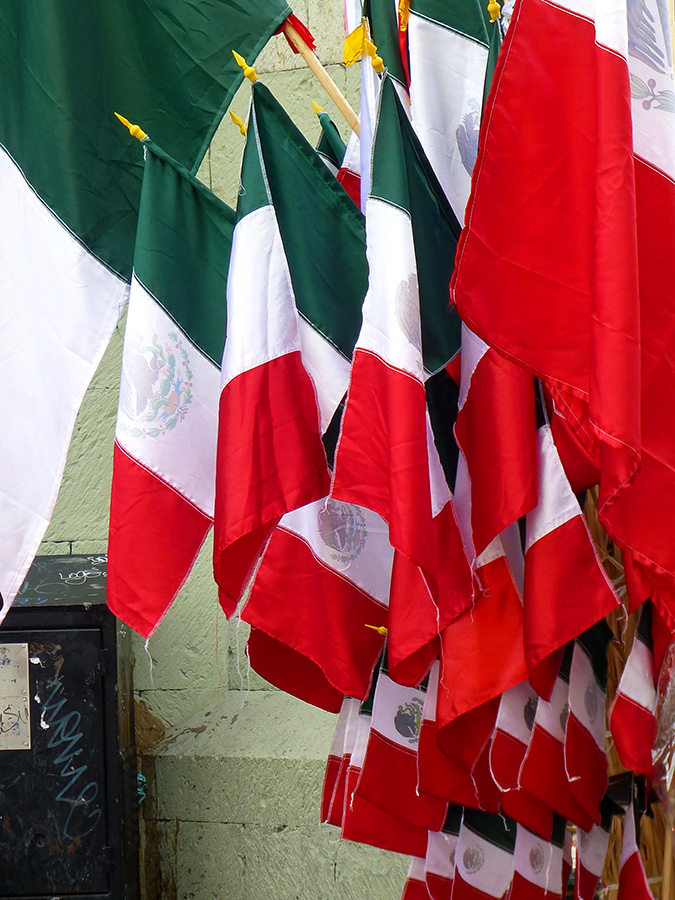
Mexico’s El Mes de la Patria (the month of the homeland) is upon us and overnight, as August turned to September, the streets erupted in green, white, and red.

p1210919

Mexico celebrates September 16, 1810 as the beginning of its fight for independence from Spain.

p1220023

Flags are flying everywhere and are for sale on every other street corner, along with all manner of patriotic tchotkes.

p1220025

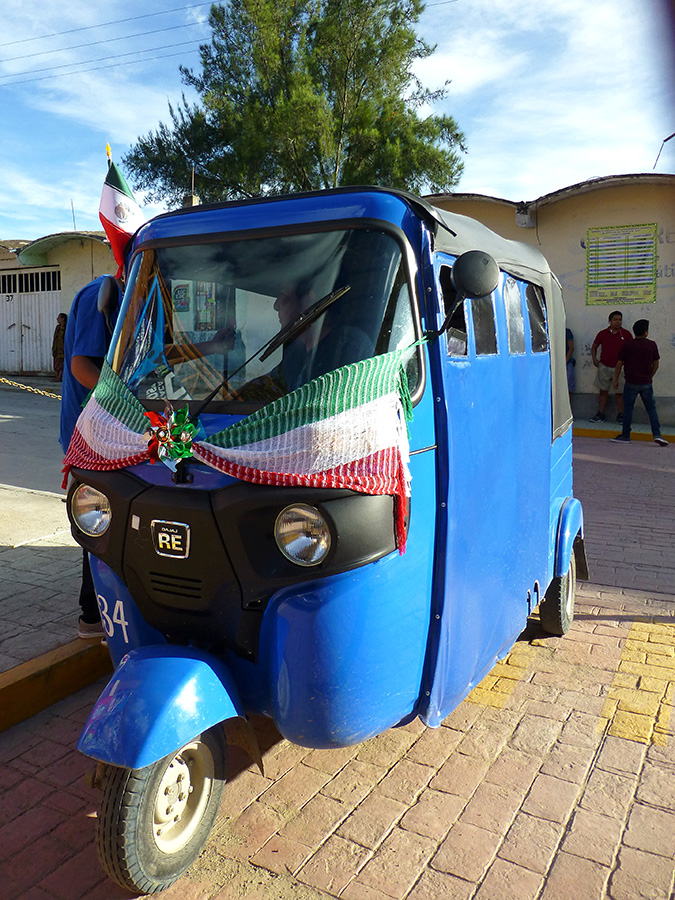
From buses in the city to moto-taxis in the villages, everything is decked out in the green, white, and red of the Mexican flag.

p1220066

As for Oaxaca?  The five-month renovation project at Mercado Benito Juárez has been completed and vendors have moved from their temporary stalls on the surrounding streets back into the market; Sección 22 teachers have returned to their classrooms and 80% of the encampment in the zócalo has been disassembled; the governor will give his final Grito de DoloresGrito de Dolores at 11:00 PM on September 15th; and the annual patriotic parade will fill the streets of the Historic District with participants and observers on the 16th.

Save

Read Full Post »

While waiting for yesterday’s convite to begin, the Danza de la Pluma subalternos, Florentino Martínez Ruiz and Juan Bautista Ruiz, knew how to keep young, old, all those in between, and the photographers entertained.

p1220053

A little “splendor in the grass” for Juan?

p1220055

And, the fun didn’t stop there, once the convite began, Florentino snatched a marmota from one of the little boys to give it a try.

img_2036

And, everyone laughed, especially the boy!  That’s entertainment, Teotitlán del Valle style!

Read Full Post »

« Newer Posts - Older Posts »