Feeds:
Posts
Comments

Archive for the ‘Creativity’ Category

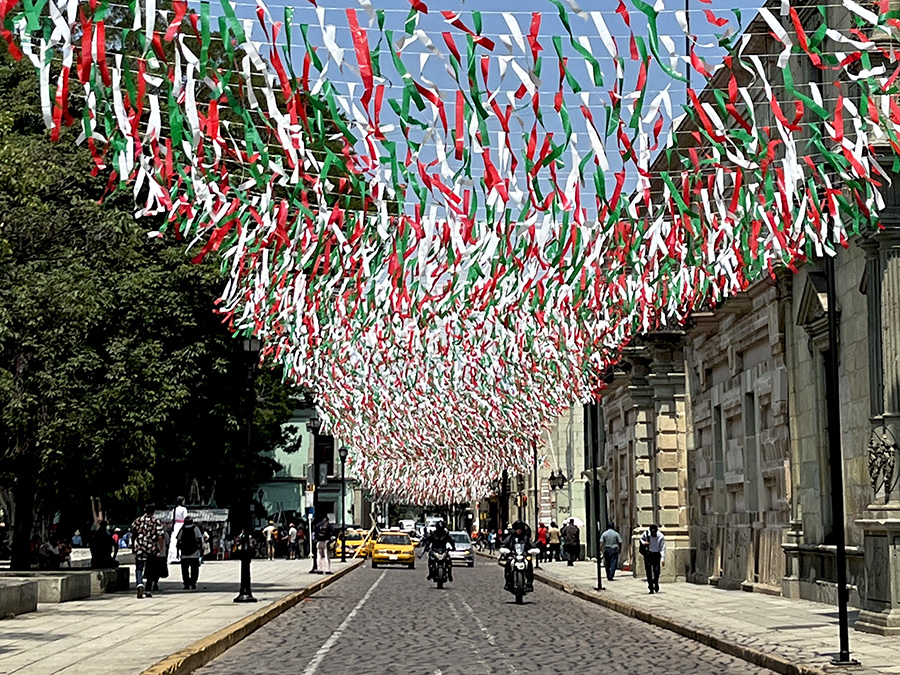
Here in Mexico, ’tis the season for displaying the green, white, and red colors of the Mexican flag. The entire month of September, Mes de la Patria (the month of the homeland), Mexico celebrates her successful war of independence from Spain — a war which began on September 16, 1810 and finally ended on September 27, 1821. Late at night on September 15, throughout Mexico bells will sound as the Grito de Dolores will echo from government balconies — mayors, governors, and the president recreating Father Hidalgo’s call to arms for independence.

In the meantime, beginning at the end of August, everything is coming up green, white, and red…

August 30, 2023 – Chiles en Nogada, La Casa del Tío Güero, Oaxaca de Juárez.
August 31, 2023 – State of Oaxaca’s government palace.
August 31, 2023 – Avenida de la Independencia, Oaxaca de Juárez.

There will also be a patriotic parade through the main streets of Oaxaca on September 16. However, for the foodies among us, the best part is the fleeting presence of Chiles en Nogada on restaurant menus. As Cristina Potters of the Mexico Cooks! blog explains, this is the season when its iconic ingredients are harvested and we are presented with the green of a poblano chile stuffed with a picadillo of seasonal ingredients (not to mention, green of the parsley garnish), covered with a white walnut sauce, and topped with bright red pomegranate seeds.

PS: Cristina also provides a recipe in the link above. ¡Buen provecho!
Read Full Post »

I got out of Dodge (aka, San Diego) last Friday morning, August 18, 2023 — just in time. Happiness was missing the historic arrival in California of Tropical Storm Hilary. Whew!!!
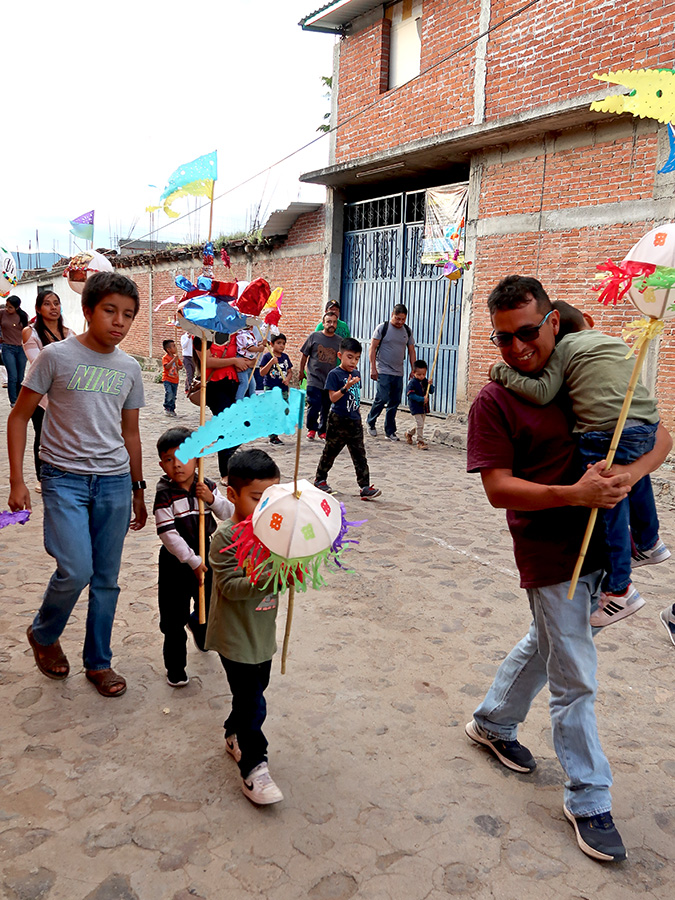
August 19, 2023 – walking down 5 de mayo in Barrio de Jalatlaco on my way to buy produce at Xiguela.
August 19, 2023 – Evening wedding calenda in Barrio de Jalatlaco.
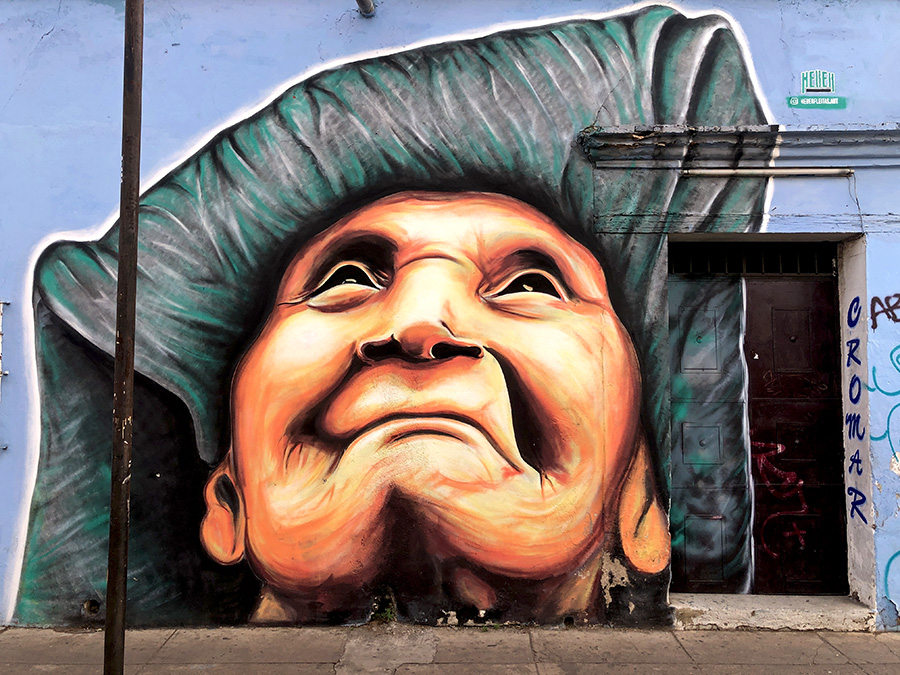
August 20, 2023 – mural seen on the way to Mercado de la Merced.
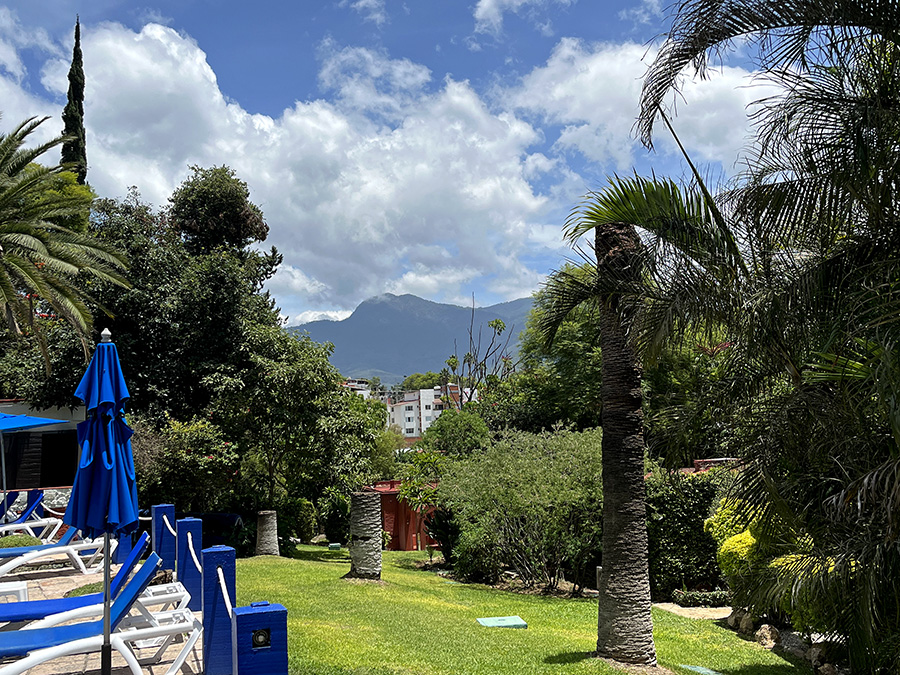
August 23. 2023 – View from the swimming pool of Hotel Victoria.

It’s good to be back.

Read Full Post »

Tomorrow, I return to the land where the handwriting is on the wall.

Expressing pride in the traditional floral embroidery (toninera) of San Antonino Castillo Velasco and their recycling efforts.
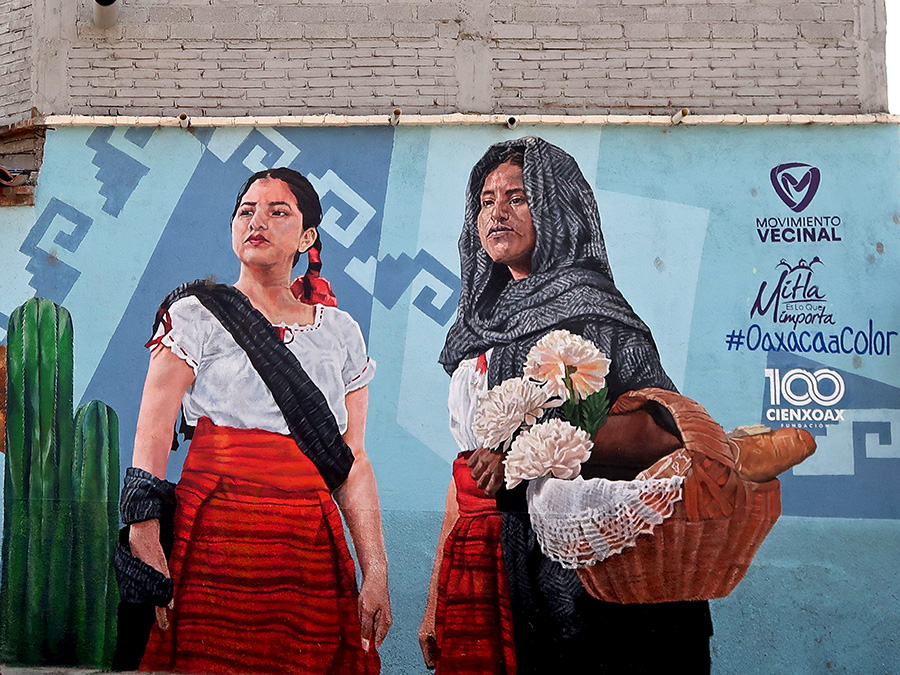
In San Pablo Villa de Mitla, “together we achieve a better town.”
In Oaxaca de Juárez, the handwriting doesn’t need translation.

Read Full Post »

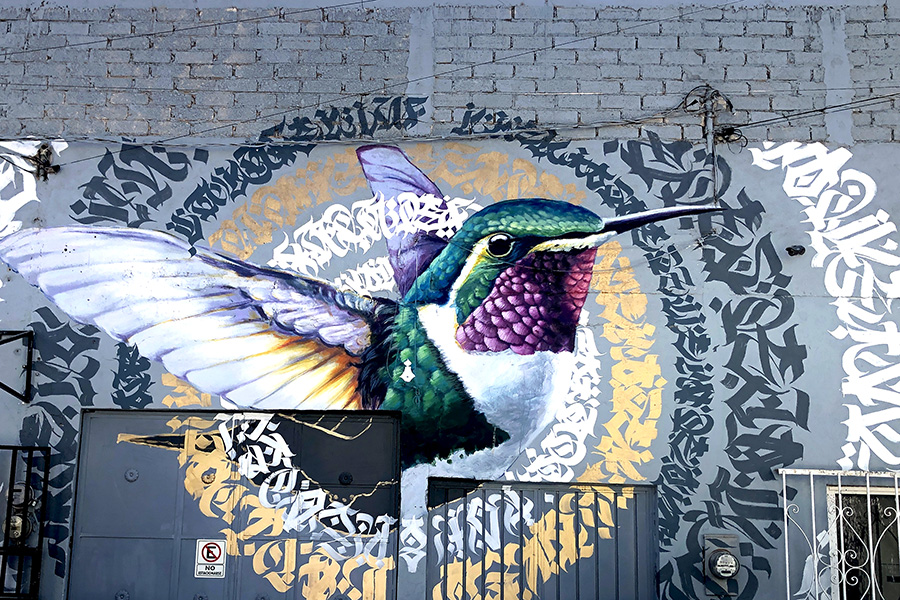
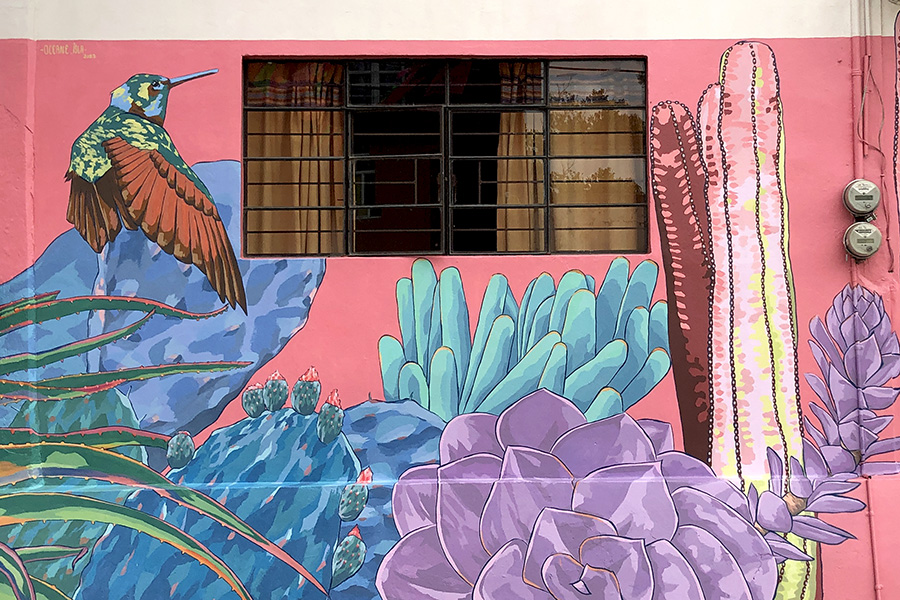
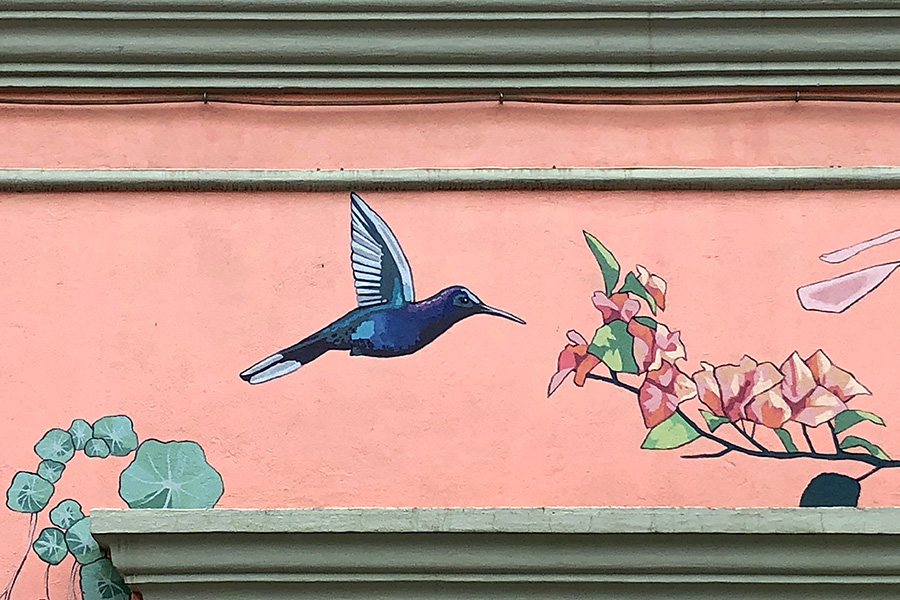
Life has been pretty good up here in el norte. The joy of having my whole family together has been immeasurable and the weather has been unusually, for this time of year in the San Francisco Bay Area, spectacular. (For those unaware of Northern California coastal weather, I give you the line attributed, albeit falsely, to Mark Twain, “The coldest winter I ever spent was a summer in San Francisco.”) Given the sun, blue sky, and warm temperatures, I’ve spent a lot of time outdoors — gardening, eating, and sitting watching the hummingbirds — just like Oaxaca! But I miss the colibries that also can be found on the walls of my neighborhood.

Artists: Seth Ruiz and Berza Remes
Artist: Dulce Tamayo
Artist: unknown

Read Full Post »

In Teotitlán del Valle, as part of their three year commitment, each member of the Danza de la Pluma group and, especially their family, is responsible for taking a turn hosting one of the four yearly festivals. It includes several days of serving traditional foods at sit-down breakfasts, lunches, and dinners to the danzantes, band, families, godparents, village officials, and church leaders. For Danza de la Pluma Promesa 2022-2024 danzante, Capitán 2, Hugo Santiago Jimenez’s family, this entailed months of preparation, three pigs and one bull meeting their maker, and days of cooking for over 300 people.

Grupo Danza de la Pluma Promesa 2022-2024 entering Casa Santiago.
Hot chocolate with traditional breads.
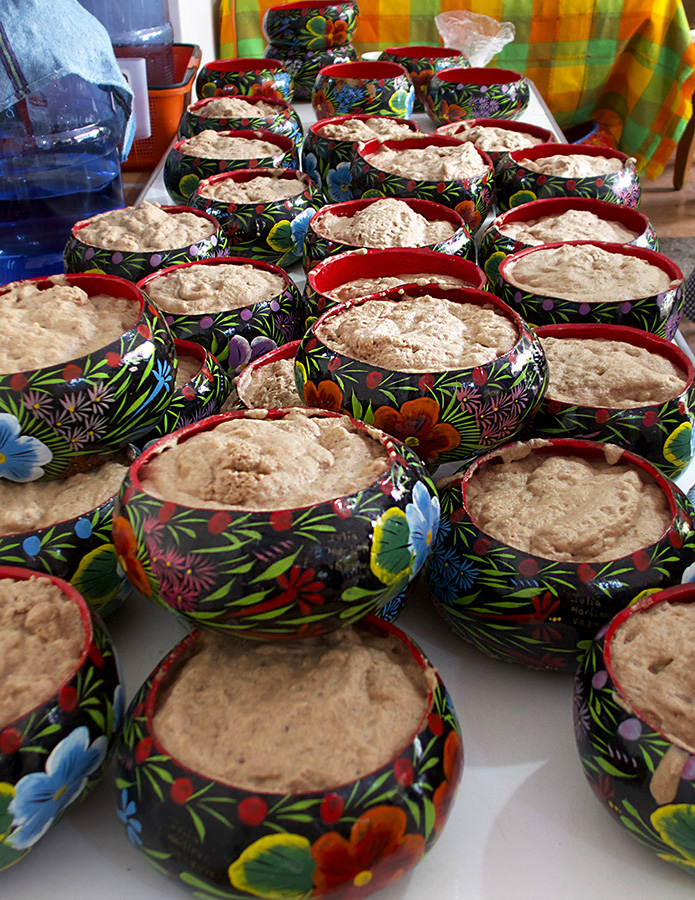
Grinding chocolate on metates for atole de espuma.
Atole de espuma waiting to be served.
Hugo Santiago Jimenez and Félix Contreras Ruiz eating higadito.
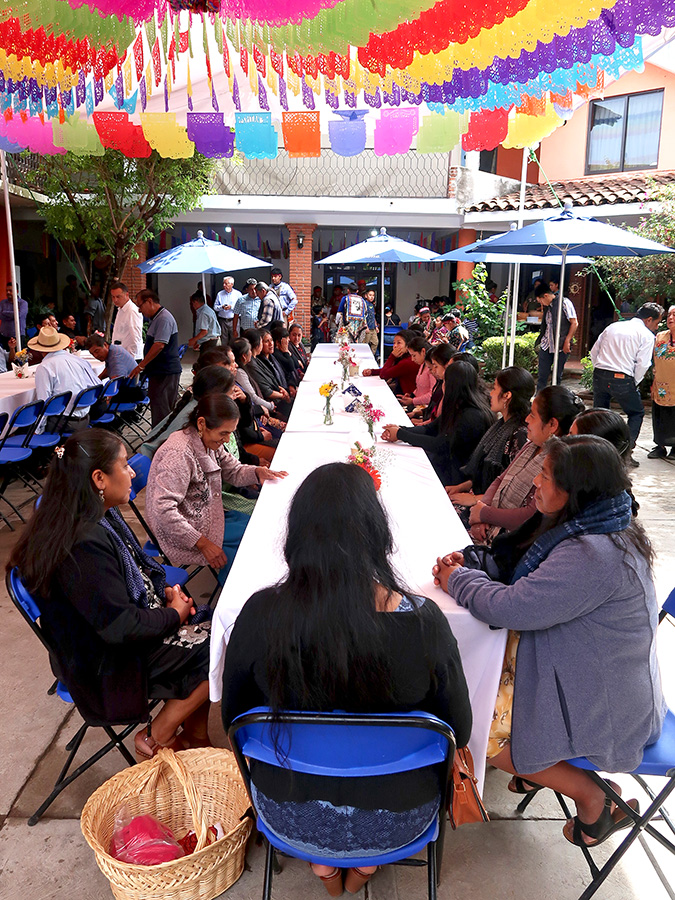
The women’s table waiting for breakfast at Casa Santiago. Yes, there is a men’s table — separate tables is traditional.

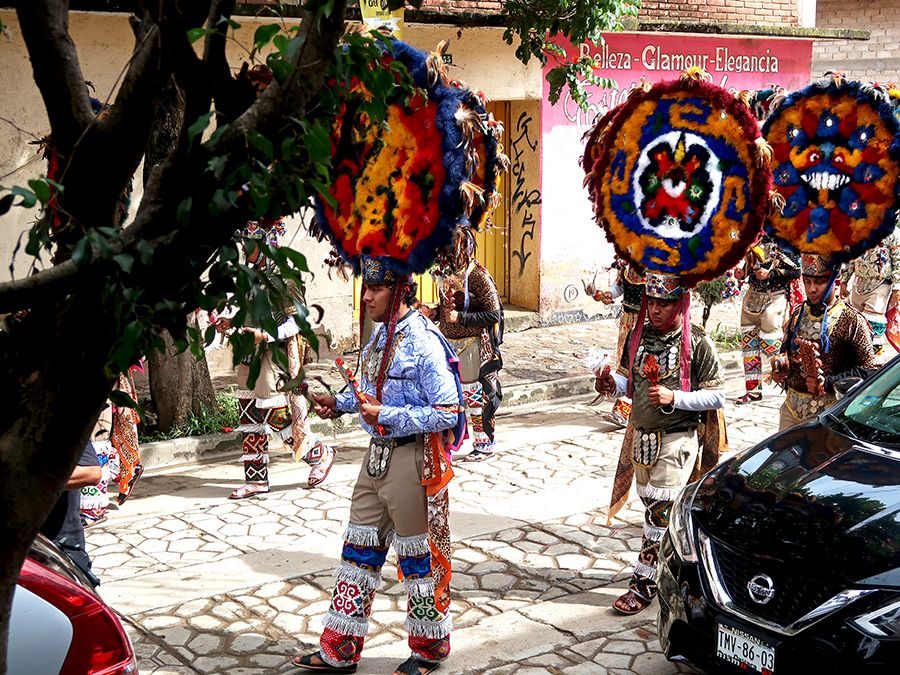
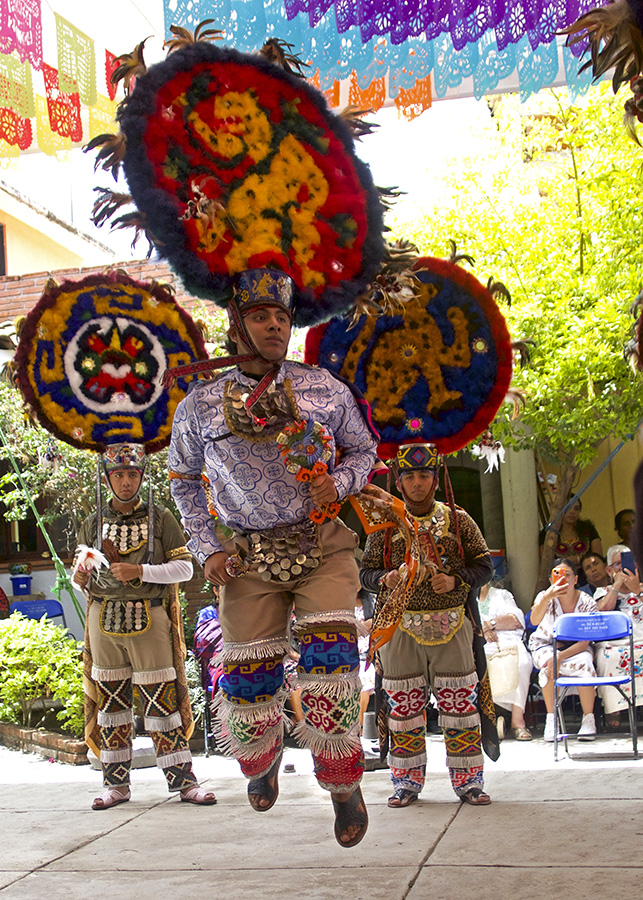
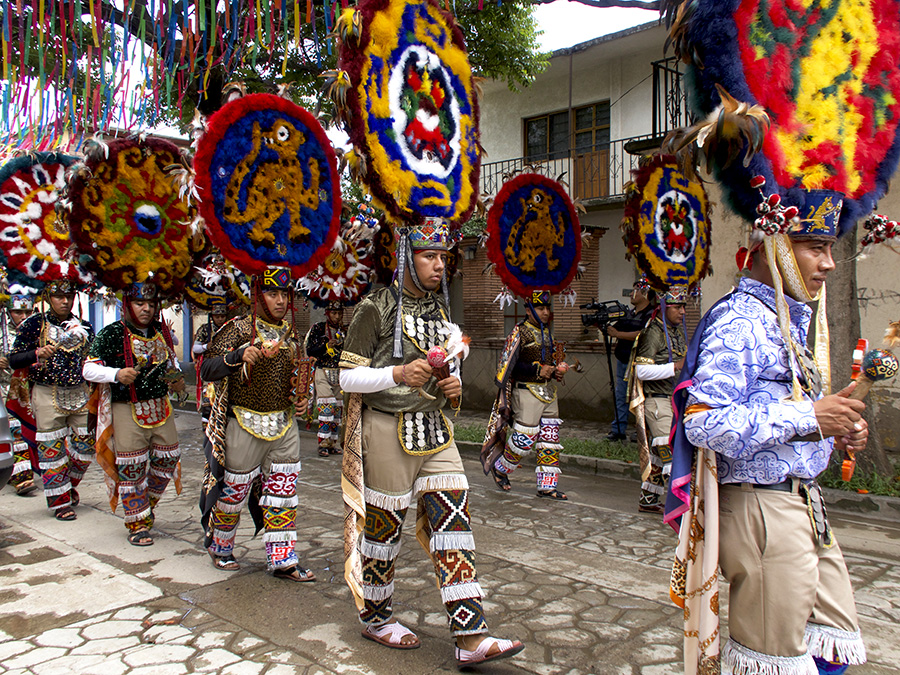
Two days before winging my way to California, I had the privilege of attending the breakfast given by Hugo’s family at the family compound, Casa Santiago. After the meal, tables were folded, chairs were moved to surround the courtyard, danzantes took their places, the band began to play, and Hugo and his fellow Capitán, Félix Contreras Ruiz commenced to dance. Following their dance, the entire group performed and then, led by the band, they took to Teotitlán’s main street to process up to the atrium of the church where they would perform the Danza de la Pluma for almost eight hours.

Papel picado at the fiesta hosted by the family of Capitán 2, Hugo Santiago Jimenez, at Casa Santiago.
Some of the women behind the days of feasting.
Hugo Santiago Jimenez dances in the courtyard of Casa Santiago.
Family watching as Hugo Santiago Jimenez dances in the courtyard of Casa Santiago.
Band leads the way back to the Templo de la Preciosa Sangre de Cristo.
Grupo Danza de la Pluma Promesa 2022-2024 processing back to the Templo de la Preciosa Sangre de Cristo.

Muchisimas gracias to the people of Teotitlán del Valle and, especially, Hugo and his family for inviting me and for being so welcoming and gracious. And, to my readers, CORTV will be streaming tomorrow (July 24, 2023) evening’s Danza de la Pluma performance by Teotitlán’s danzantes at La Guelaguetza (5 PM Mexico; 4 PM PDT; 7 PM EDT).

Read Full Post »

It’s Guelaguetza time in Oaxaca. And, I know, I should have written this blog post several days ago, but I have the best of excuses for my tardiness — I’m in el norte for a family reunion, thus a little distracted! However, better late than never, Guelaguetza 2023!

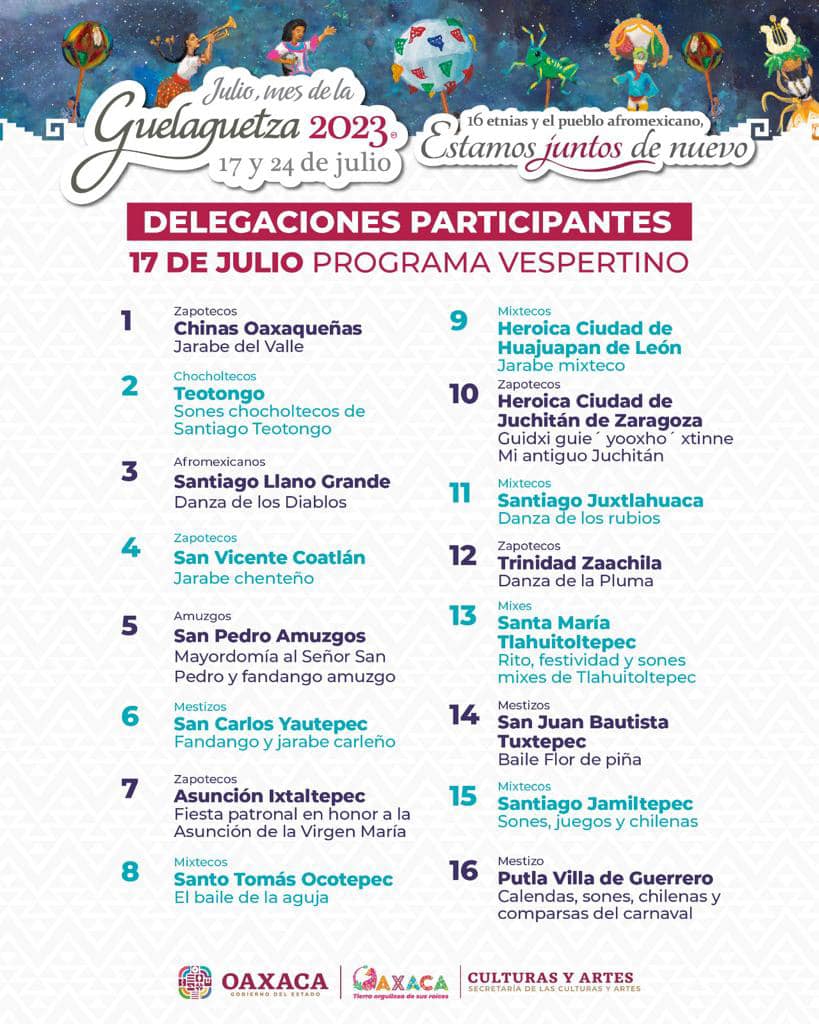
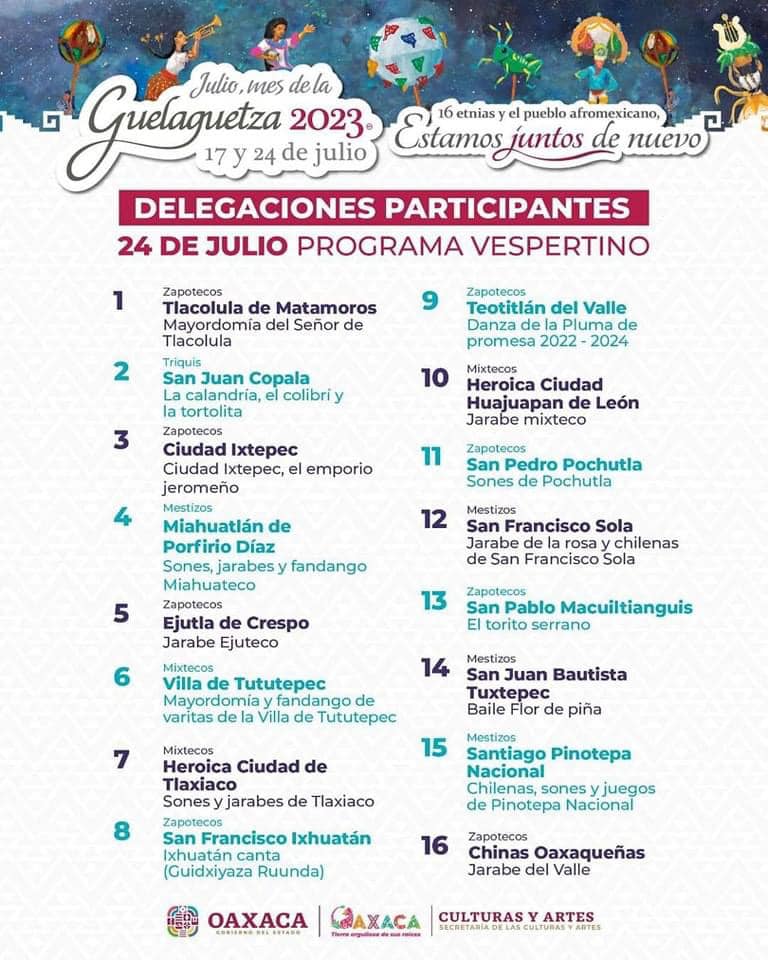
See below for the list of delegations by date, time, and the dance they will be performing. Performances will be streamed on CORTV’s YouTube channel.

July 17, 2023 – 10:00 AM
July 17, 2023 – 5:00 PM
July 24, 2023 – 10:00 AM
July 24, 2023 – 5:00 PM

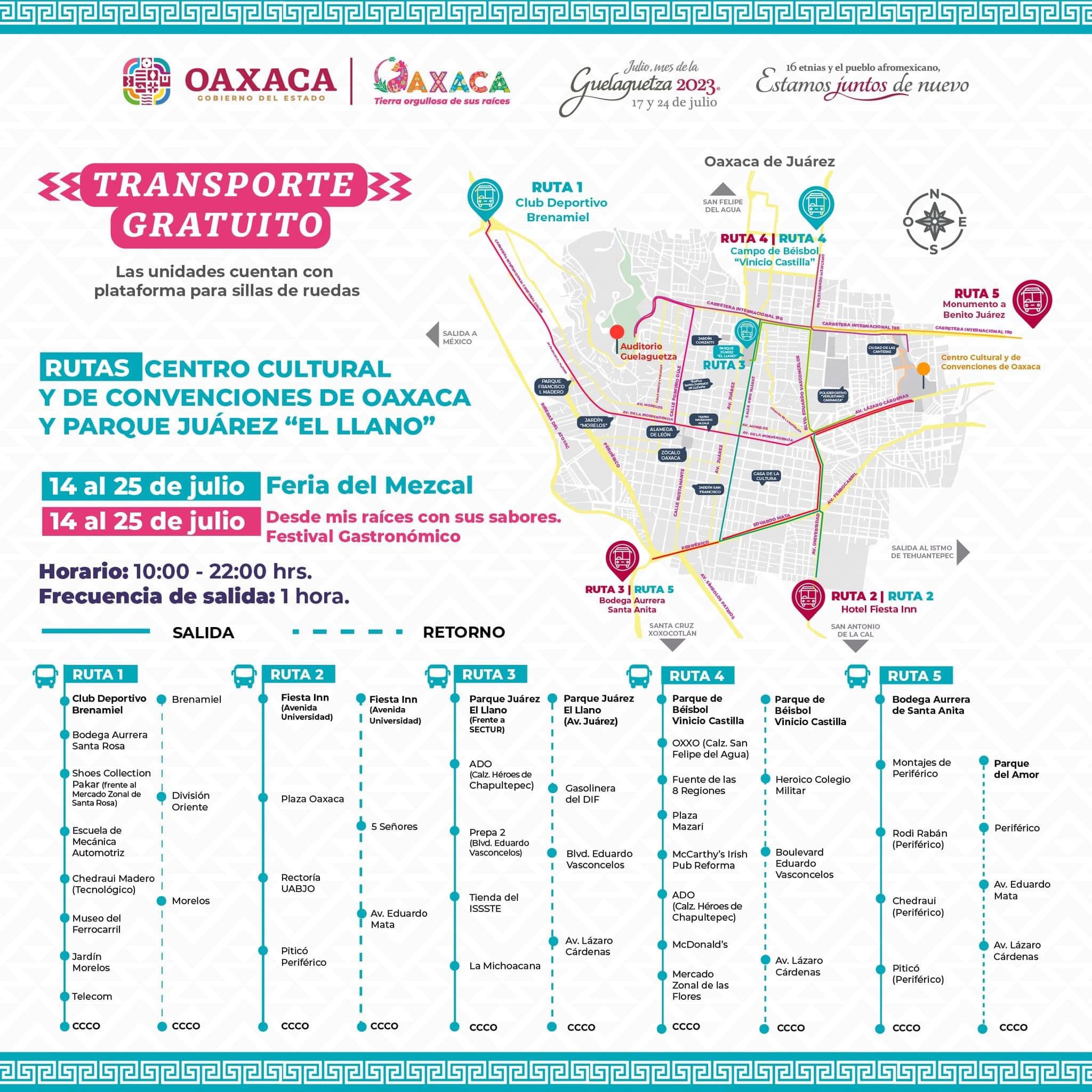
Activities are spread throughout the city with free transportation available between event sites.

For other daily activities and more information, check out the official Guelaguetza 2023 website and Facebook page. Enjoy!

Read Full Post »

From the streets of Oaxaca, maguey to mezcal in murals.

And then comes the music, “Dos Botellas de Mezcal” (Two Bottles of Mezcal).

Cheers! ¡Salud! ¡Dixeebe!

Read Full Post »

To all the fathers and father figures, I wish you ¡Feliz Día del Padre!

May you find joy in your role and continue to share your wisdom, traditions, and love.

Read Full Post »

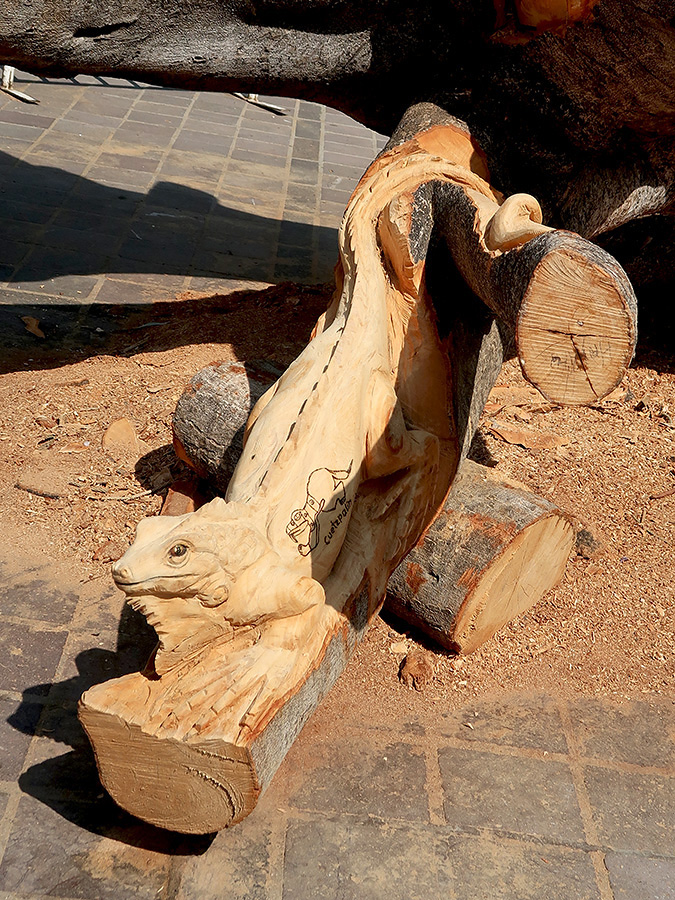
The violent storms Oaxaca experienced in mid April brought down 30+ trees in the city, including one of her beloved old Indian laurels in Llano Park. And, when a tree falls in Oaxaca…

Left to right: Cuetzpalin/iguana; Coatl/serpiente/snake; Ocelotl/jaguar; Ozomatli/mono/monkey

Talented artist, Heriberto Castro López, grabbed his chainsaw and chisel and, with the blessings of the powers that be, turned the fallen tree into a public work of art, a language lesson, and a plea for help.

Cuauhtli/águila/eagle

A monkey, a jaguar, an eagle, a rabbit, an iguana, and there’s a snake in there somewhere — all animals iconic to Oaxaca — emerged.

Tochtli/conejo/rabbit

The animals seem appropriate, as Parque el Llano (aka, Paseo Juárez, El Llano de Guadalupe, and Alameda de Nezahualcoyotl) housed a zoo from 1945 to 1971 (dates not verified) — hence the gold painted lions at the four main entrances to the park.

Cuetzpalin/iguana

However, this time the animals aren’t confined to cages — they are free and calling on us to save this planet we all call home before it’s too late.

Many thanks to Heriberto Castro López for his “Llamado de Auxilio” gift to Oaxaca.

Read Full Post »

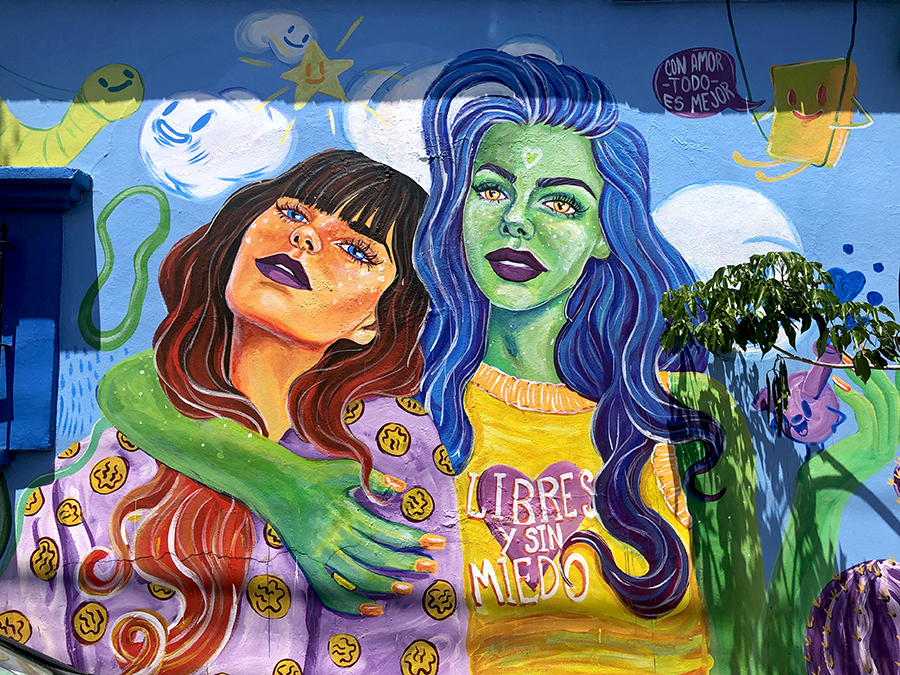
May 10 is Día de la Madre in Mexico and to honor the mothers, grandmothers, mother figures, and the daughters, whose future is in their hands, some recent murals seen in the city and countryside.

The celebration of Mother’s Day migrated south from the USA in the early 20th century and was embraced and promoted by the Catholic Church AND the anticlerical Revolutionaries. Their reasons being:

around the 1850s the Liberals… were nervous about women’s growing participation in the public sphere.  Establishing motherhood as venerable and the home as sanctified… would give women a sphere of their own where they could be boss.  Also, it would keep them off the streets and out of the workplace where they had begun to compete with men for jobs. Under their watch, everyday motherhood became an exalted madre-hood…. The twentieth-century Revolutionaries who succeeded them took the idea and ran with it, adding in 1922 a ritual, Mother’s Day. [Madre: Perilous Journeys with a Spanish Noun by Liza Bakewell, p. 84]

As for keeping them out of the workforce, according to a report citing the 2010 census, 33.3% of women work and this doesn’t even include those working in family operated enterprises. However distasteful the reasons behind the establishment of Mother’s Day in Mexico, it does nothing to diminish the need to honor these beautiful, hardworking, formidable, and loving women.

And to the girls and young women, may you be empowered by the strength and love of the maternal figures in your life to reach for the stars, live without fear, and be whatever you choose to be.

Read Full Post »

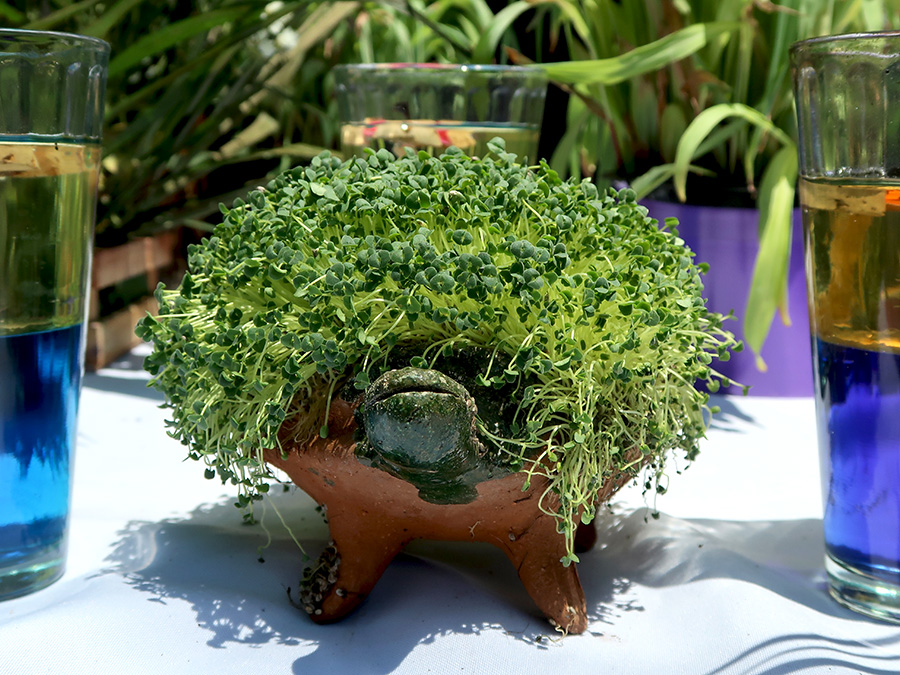
As Semana Santa approached, Oaxaca’s annual invasion of the Chia Pets began. On altars in churches, homes, and businesses, terracotta animals sprouting Chia appeared.

Good Friday 2023 – 5th Station of the Cross in Barrio de Jalatlaco.

Before you lament commercialized products from the USA intruding on the sanctity of Holy Week, I can happily report Salvia Hispanica (aka, chia) filled clay animals were symbols of the season long before Joe Pedott ever set foot in Oaxaca in the late 1970s and “discovered” them.

According to an article in MexConnect, “Growing greens remind the viewer of the resurrection and renewal of life.”

Native to Mexico, Salvia hispanica was the third most important food (after corn and beans) of the Aztecs as chia seeds are high in protein and omega-3 fatty acids. By the way, the name of the Mexican state of Chiapas comes from Chiapan, an ancient city whose name in Náhuatl means, “the place where the chia sage grows.”

(ps) Sorry about the Chia Pet advertisement ear worm!

Read Full Post »

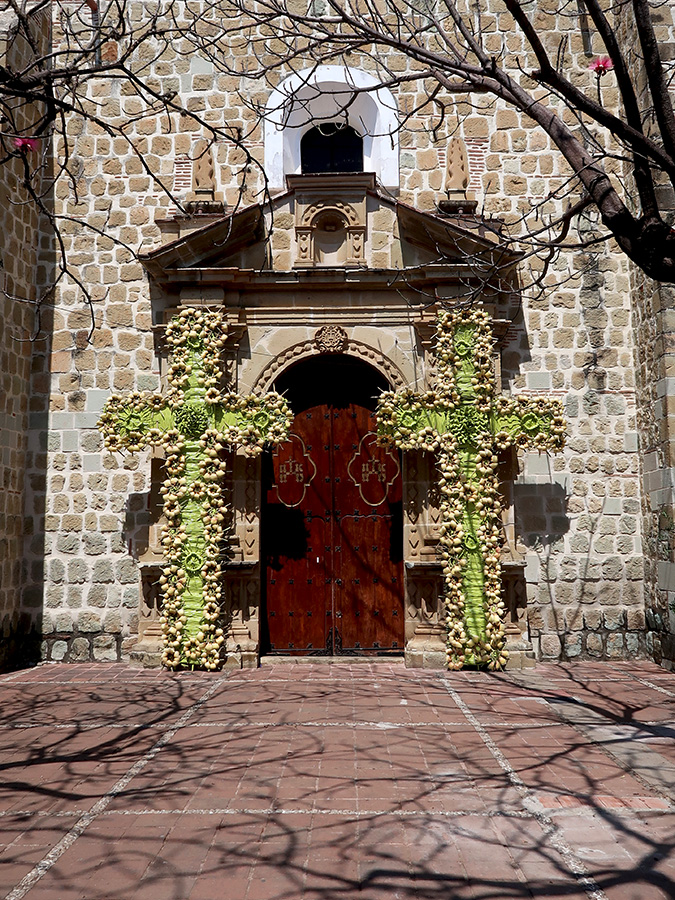
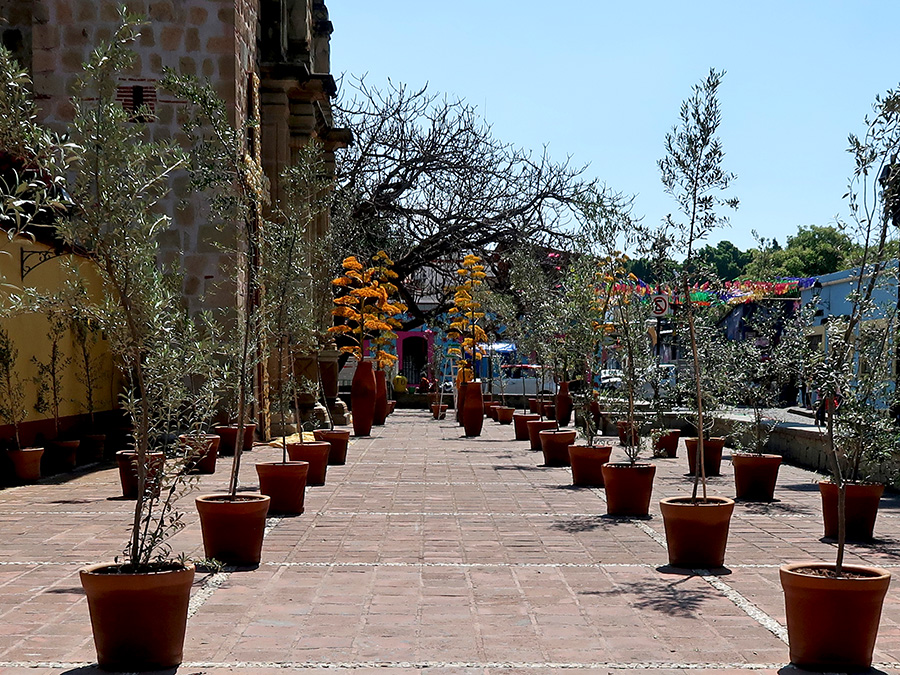
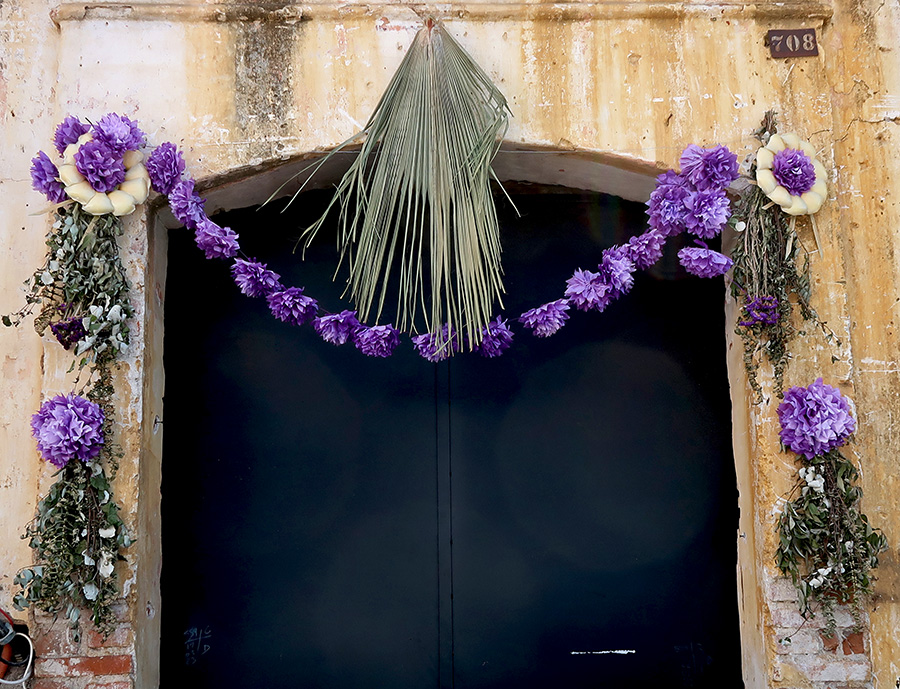
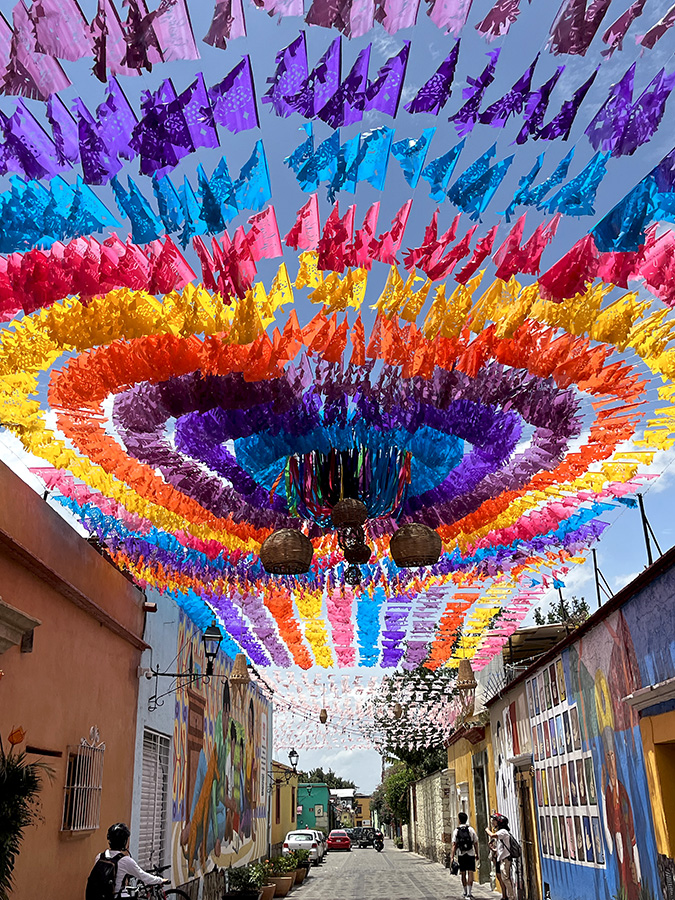
Purple papel picado (actually, plastic) began appearing above streets a month ago. And, in the past few days, the atrium of Templo San Matías Jalatlaco has been decorated with olive trees, sheaves of wheat, and crosses embellished with flowers woven from the base of Sotol leaves.

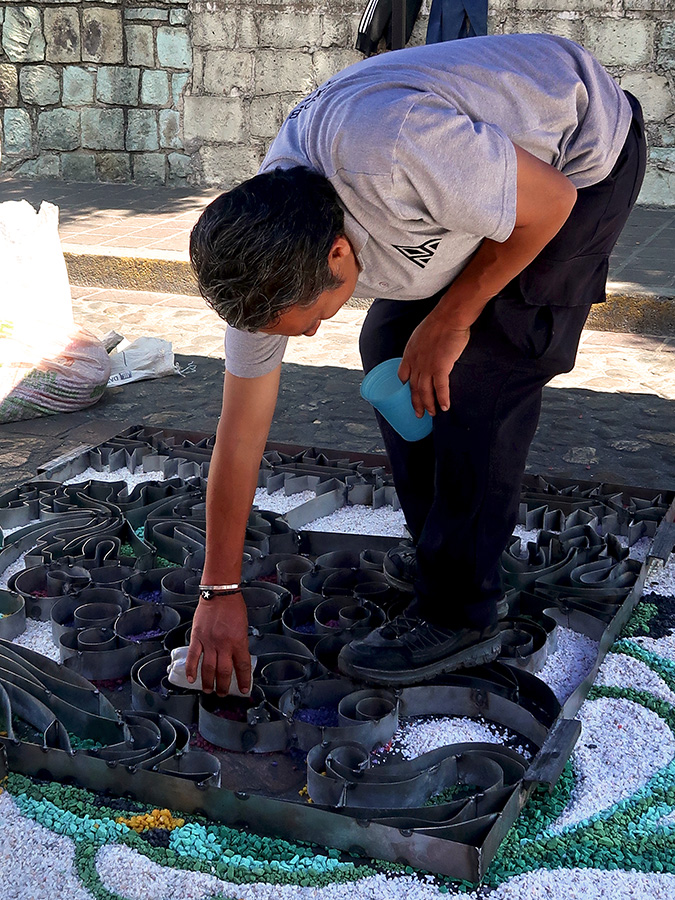
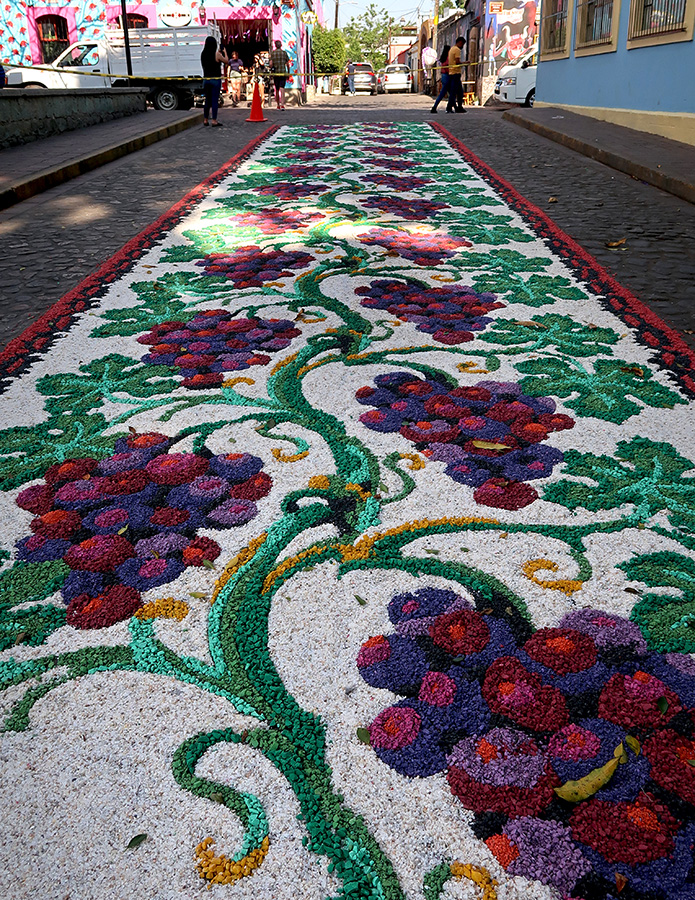
Yesterday, Calle de Miguel Hidalgo in front of the church was closed to traffic and the Alfombristas Mexicanos colective from Huamantla, Tlaxcala began creating a beautiful tapete (rug) made of colored stones along the length the block.

Purple decorations can also be seen festooning the fronts of homes and businesses in the neighborhood.

You might ask, why all the purple? According to the Ecclesiastical Sewing website, purple symbolizes “the royalty of Christ, His passion and death for our sins, and the coming of spring.” For more of an explanation, click on the link to their website.

Read Full Post »

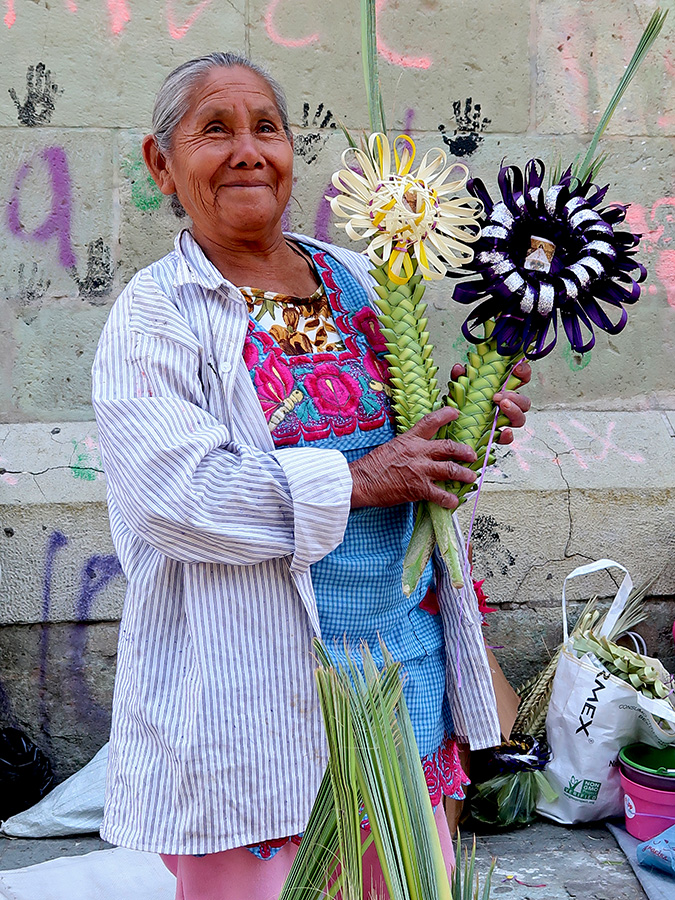
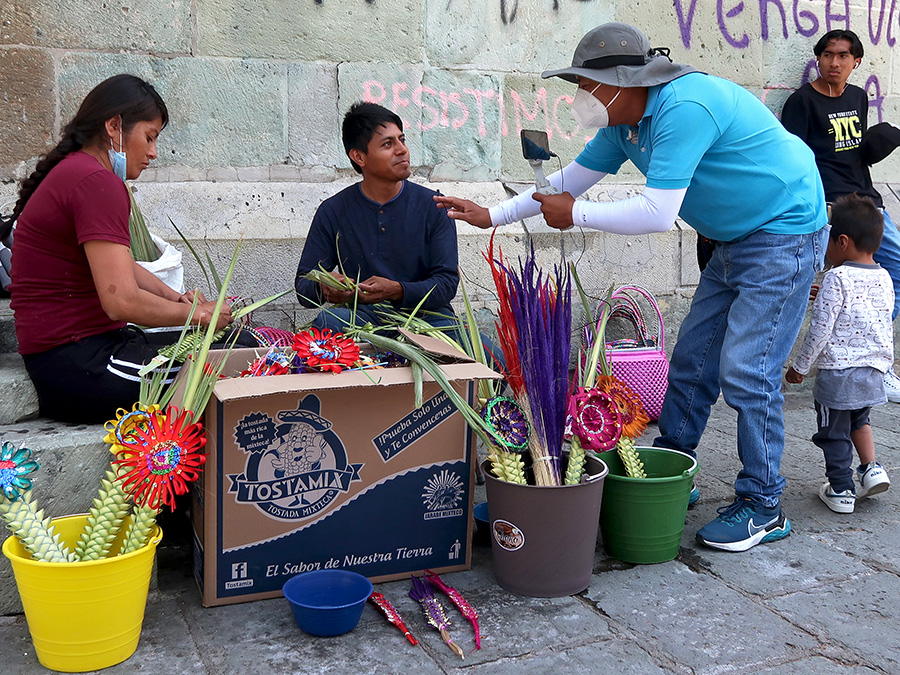
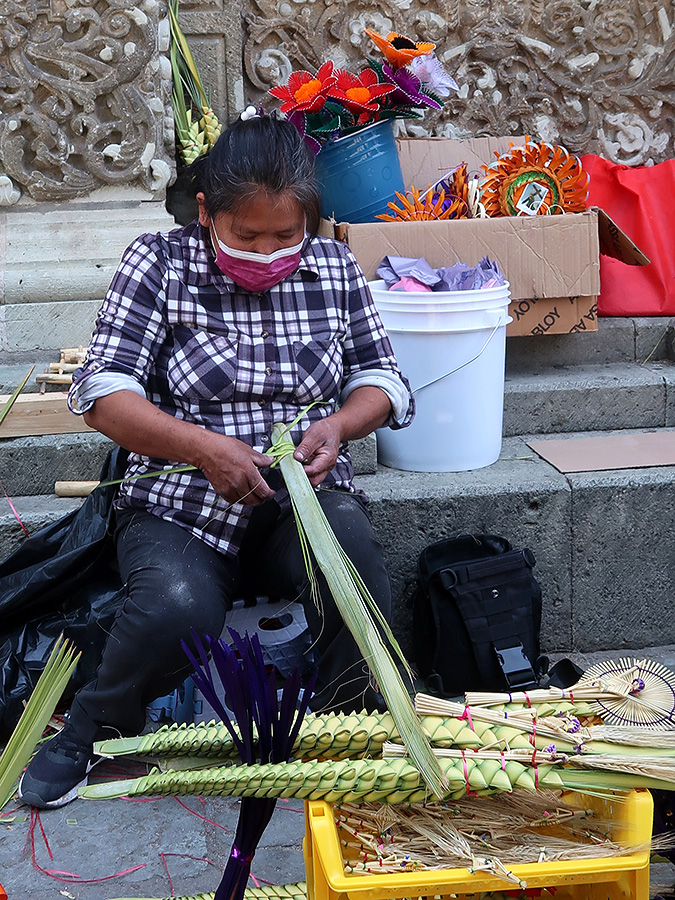
Despite the construction on the Alameda across from the Cathedral, the palm weavers from the Mixteca region of Oaxaca are back to sell intricately woven palm fronds to be blessed and carried on Palm Sunday.

And, like most artisan traditions, it’s a family affair.

Read Full Post »

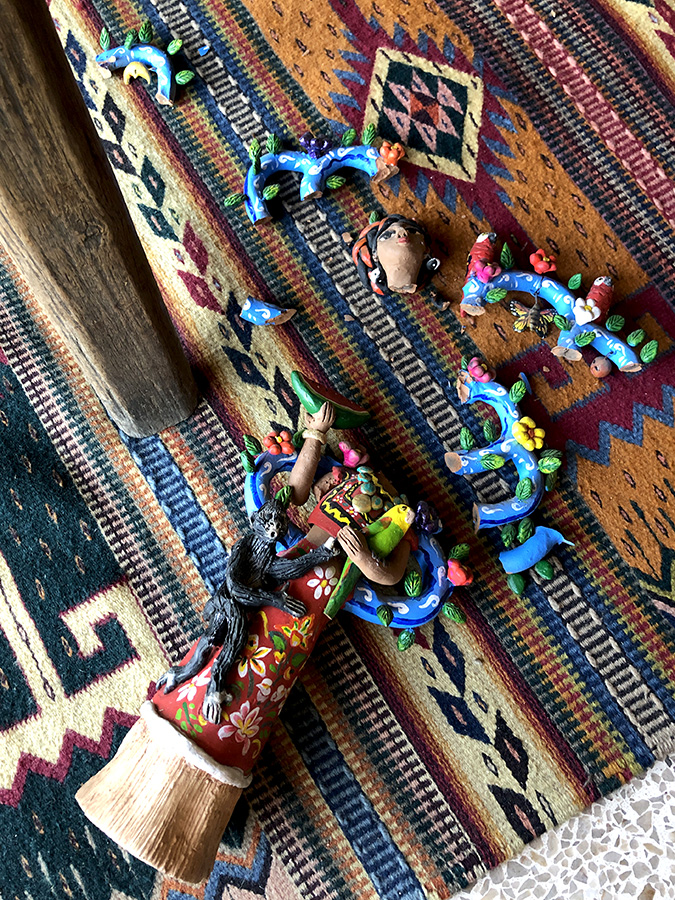
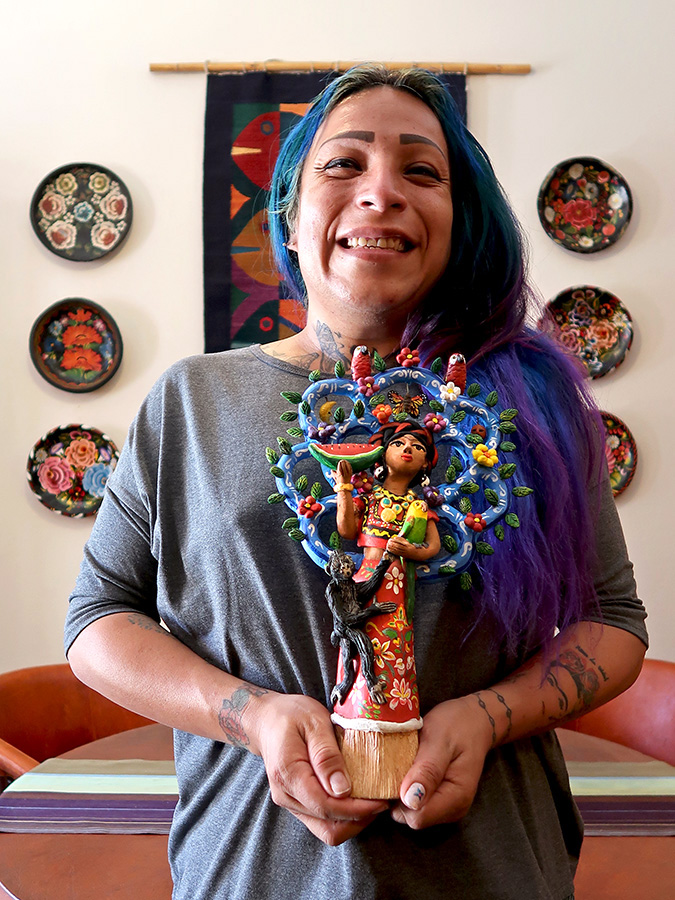
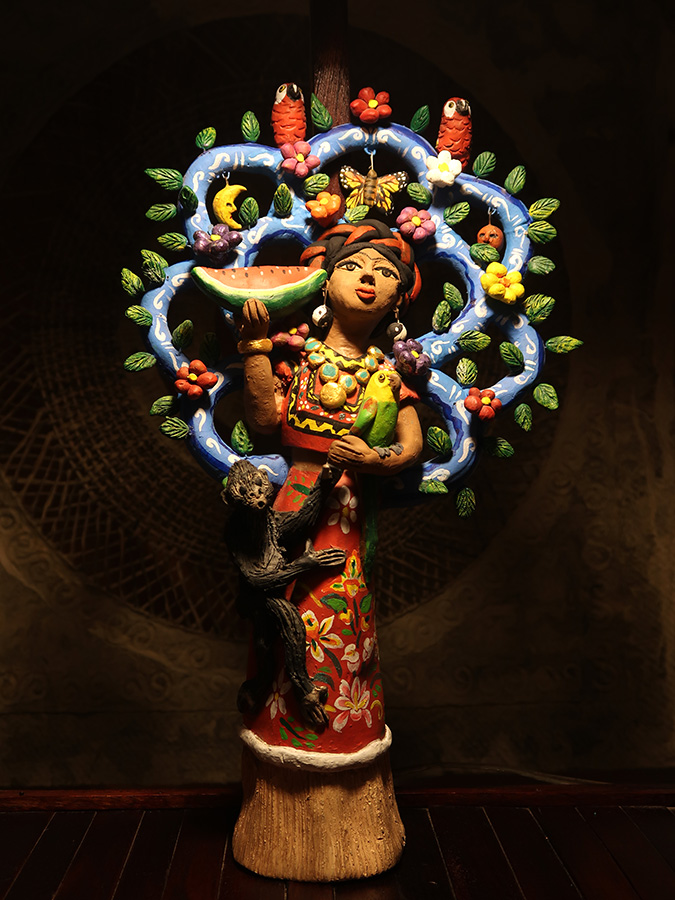
Many years ago, I attended a benefit sale at Galería La Mano Mágica to raise money to enable famed ceramicist Josefina Aguilar to have cataract surgery. My eyes were immediately drawn to a sculpture by her granddaughter, Fran Garcia Vásquez. I bought it and the Tehuana sculpture remains one of my most treasured pieces — though she has had her ups and downs.

The 8.2 earthquake in September 2017 resulted in a broken arm. It was a clean break and I was able to make the repair.

Alas, in June 2020 (due to my carelessness), she suffered more serious injuries — the extent of which were well beyond my abilities to mend. She and all her pieces were carefully cushioned in a box and there she lay through the worst of the pandemic and my move to Barrio de Jalatlaco.

It was only a month or so ago that it dawned on me to contact her creator, Fran Garcia Vásquez to ask if she could repair my sculpture — after all, she had the clay, paint, and expertise! She readily agreed and on March 13, I took my treasured Tehuana to the workshop she shares with family members in Ocotlán de Morelos (Av. Morelos #428). Five days later, the repair had been completed and she brought the sculpture to my home.

Fran Garcia Vásquez

When Fran unwrapped and placed the Tehuana in my hands, I must admit I became a little teary eyed. The sculpture is as good as new and looks proud and serene in her new home.

March 19 was Día de las Artesanas y los Artesanos in Mexico and the entire month of March is designated “Month of the Artisan.” I want to thank all of them deeply for carrying on, often renewing, and always enriching traditions with their own creative spirit.

Read Full Post »

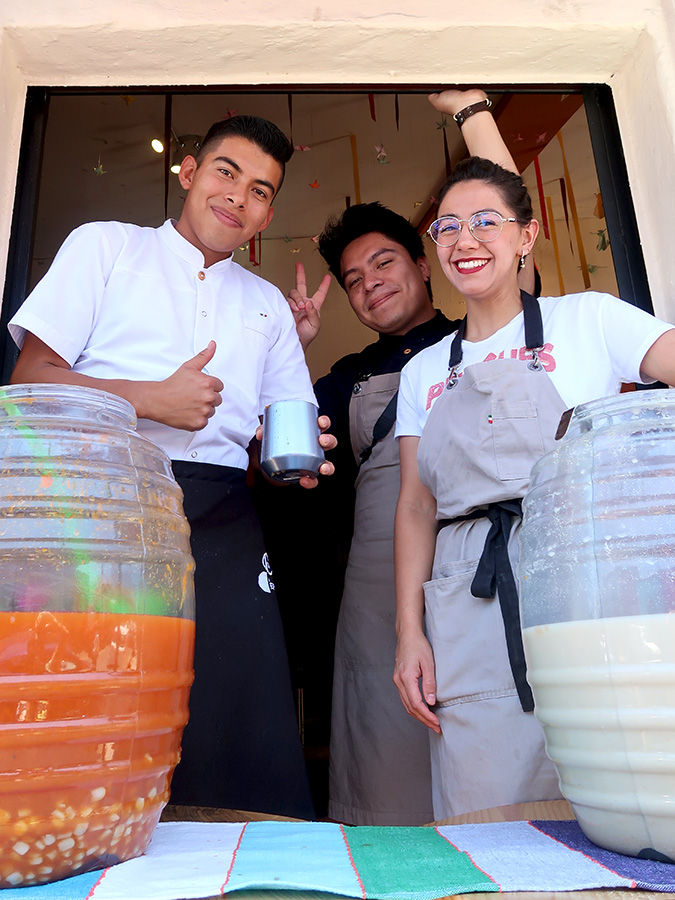
The day before yesterday, there was water, water everywhere and lots of drops to drink! It was the fourth Friday of Lent, Día de la Samaritana, an “only in Oaxaca” celebration.

Xocote restaurant on Calle Antequera, Barrio de Jalatlaco.

The Day of the Good Samaritan was inspired by the Gospel of John story in the New Testament when a tired and thirsty Jesus, on his way to Galilee, asks a Samaritan woman at Jacob’s Well in Sychar for some water. The request was highly unusual because, according to the Old Testament, “Jews regarded the Samaritans as foreigners and their attitude was often hostile.”  The woman complied with his request and the rest is history.

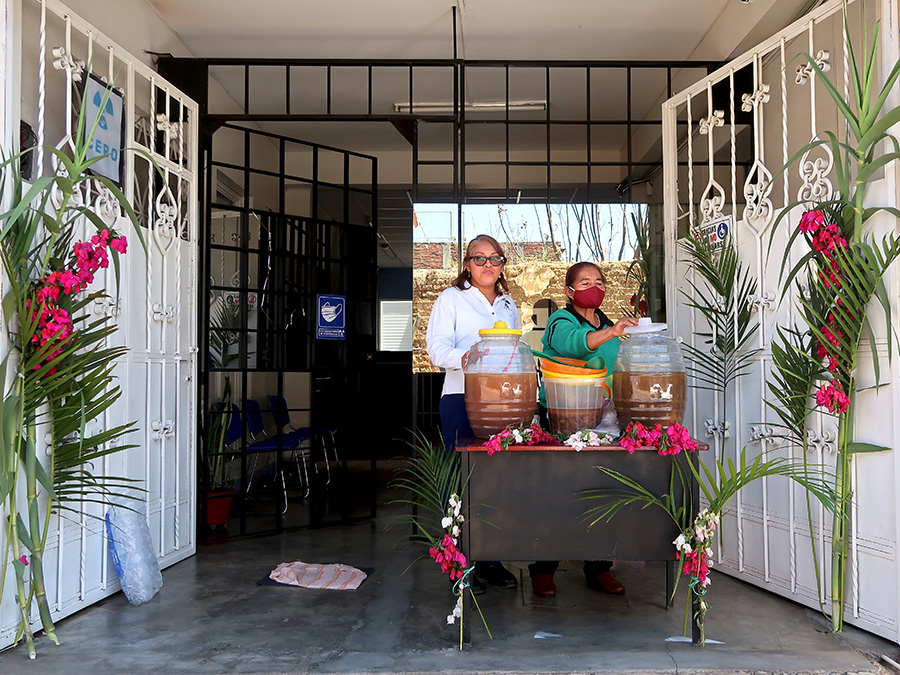
Laboratorio de Análisis Clínicos Qualis on 5 de mayo, Barrio de Jalatlaco.

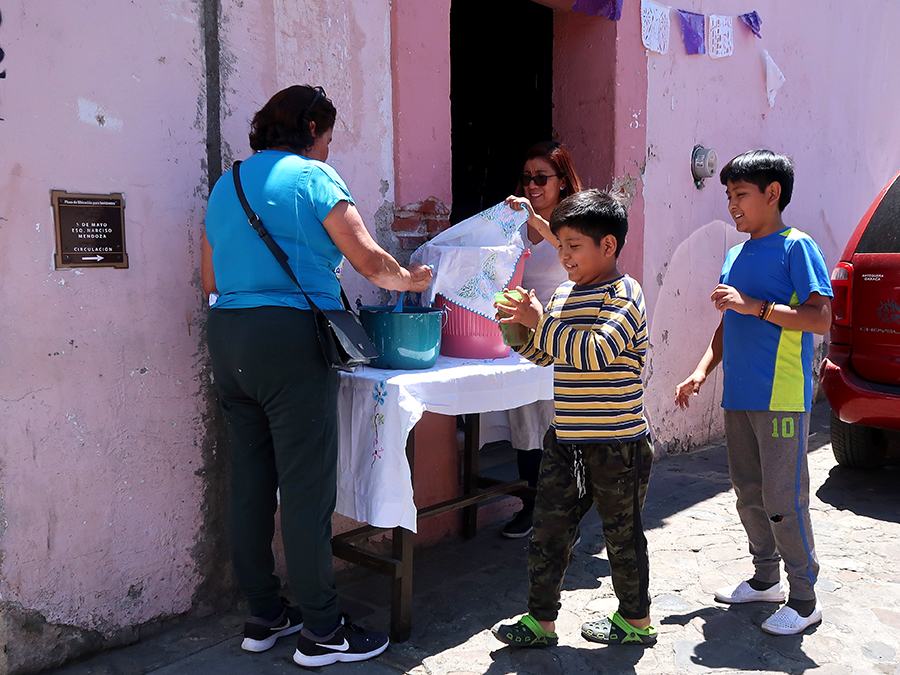
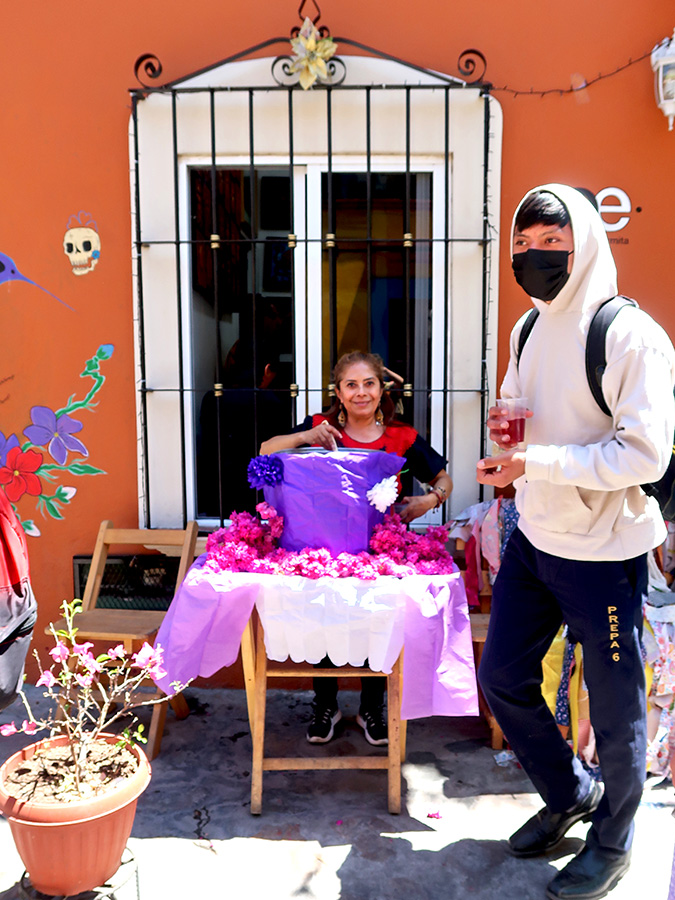
Celebrating the Good Samaritan in Oaxaca began in the atria of churches at the end of the 19th century and is a popular and much-loved tradition. People of all ages, from small children to grandparents, line up at bougainvillea and palm decorated booths in front of churches, restaurants, businesses, and schools for the traditional Día de la Samaritana free flavored waters.

Santa Hierba restaurant, 5 de mayo, Barrio de Jalatlaco.

By noon, masses of people had gathered in the atrium of the local church, Templo de San Matías Jalatlaco, where two long rows of tables, under the shade of the tented atrium, were lined with massive bowls filled with colorful aguas on offer. However, I preferred to avoid the crowds and wander through the streets of my Jalatlaco neighborhood.

Miscelánea Tepeaca, 5 de mayo, Barrio de Jalatlaco.

By the way, we are not talking plain water, these are divinely flavored aguas frescas made with fresh fruits, herbs, flowers, and more — jamaica (hibiscus), horchata, chilacayote (squash), tamarindo, sandia (watermelon), and tejate.

Espacio Ermita Arte y Diseño, Calle Hidalgo, Barrio de Jalatlaco.

In the name of the environment, an appeal was made for people to bring their own cups. And, I think a majority complied!

Asador Bacanora, 5 de mayo, Barrio de Jalatlaco.

After almost two hours, three aguas, and being surrounded by smiling people enjoying this celebration of generosity, I returned home with my heart full of gratitude for this Oaxacan tradition. I love this day and the message it imparts and the way it brings neighbors together.

Read Full Post »

« Newer Posts - Older Posts »