Feeds:
Posts
Comments

Archive for the ‘Creativity’ Category

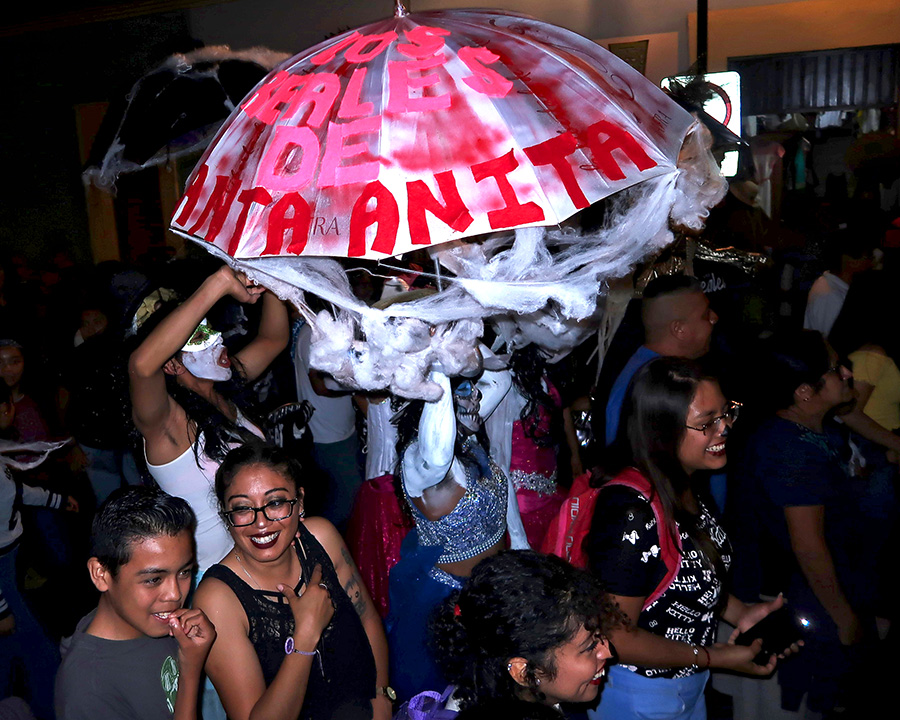
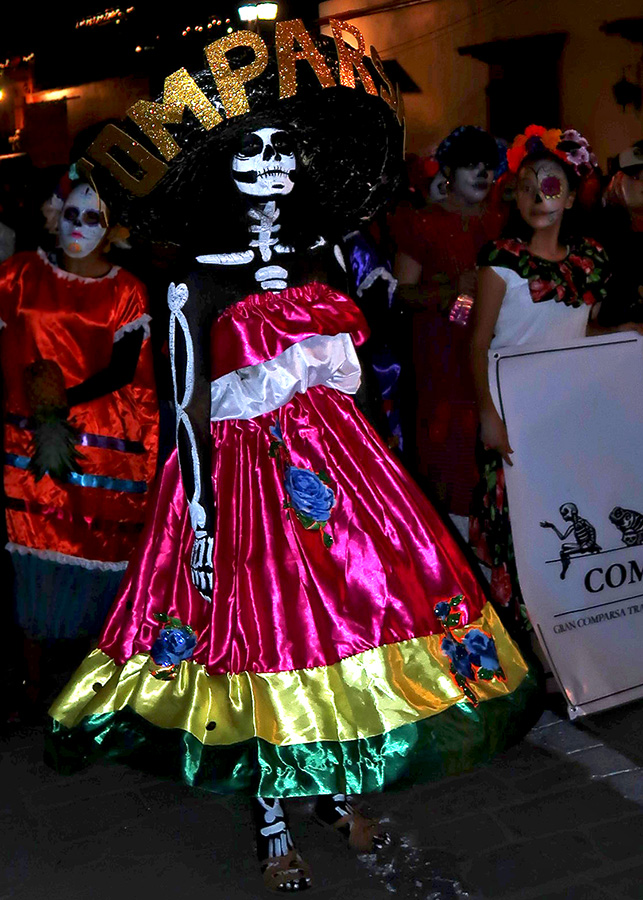
Tonight, the living began welcoming the dead with a Gran Comparsa through the streets of Oaxaca, beginning at Parque Juárez El Llano and ending at the Plaza de la Danza — the latter, almost on my doorstep! Visitors and Oaxaqueños, young and old, lined the parade route in anticipation.
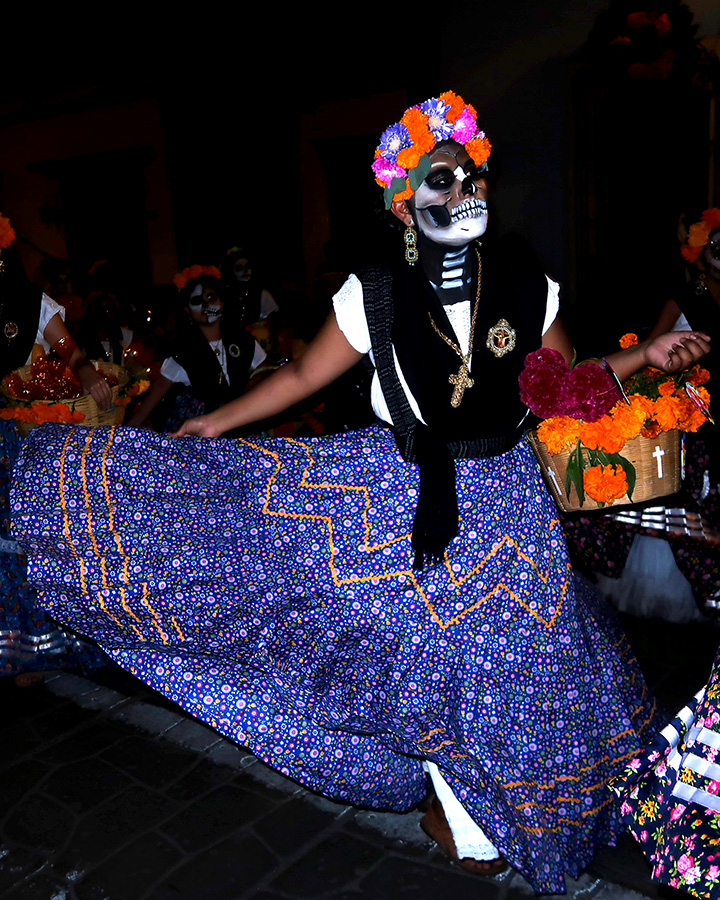
With bands leading the way, catrinas in regional dress and dancers in traditional muerteada attire whirled and twirled, high-stepped and jumped, and moved and grooved their way through the streets.
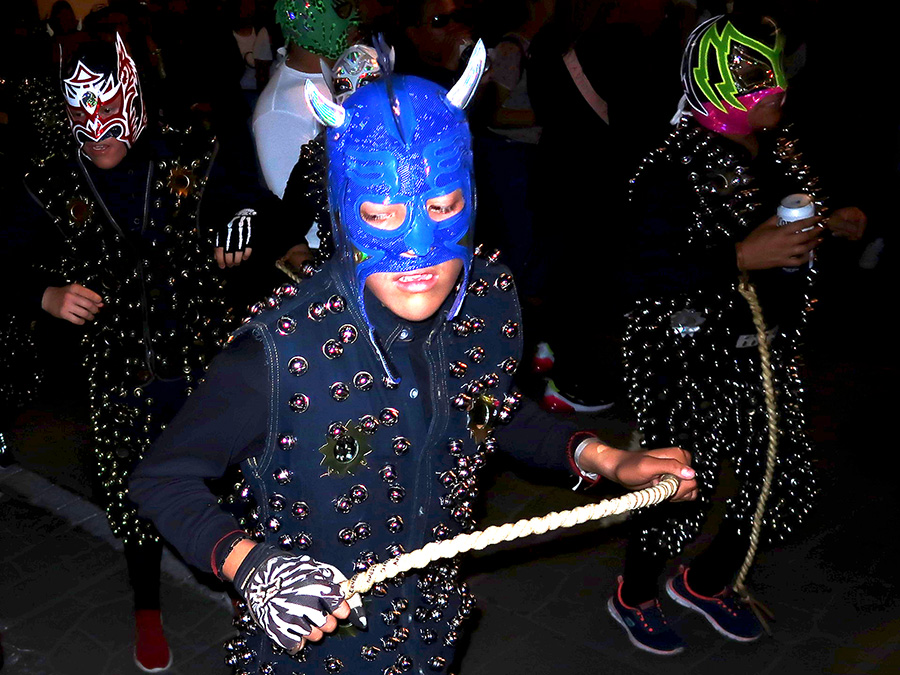
Día de Muertos observances are different in the indigenous villages — the mood is more formal and each village has customs and rituals that tradition dictates must be followed. Even the dates and times the difuntos arrive to join their living families can differ. However, in both ciudad and pueblo, the goal is to bring together the living and their dead to eat, drink, and reminisce.

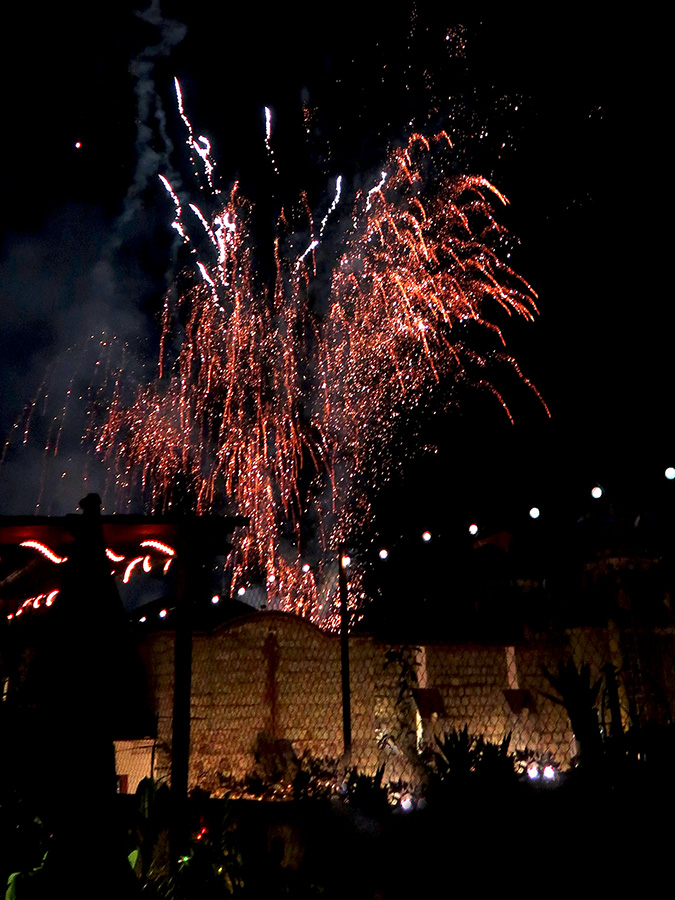
After the comparsa passed, I walked around the corner to Casita Colibrí. However, no sooner had I downloaded my photos, the unmistakable sound of fireworks being launched from the Plaza de la Danza called me out onto my terrace. The music and partying continued until 10:30 PM.

The celebrations have only just begun! Click HERE for the very long list of Día de Muertos cultural events in the City of Oaxaca. And, below are some of the activities happening in many of the villages outside the city. (Click on image to enlarge.)

Read Full Post »

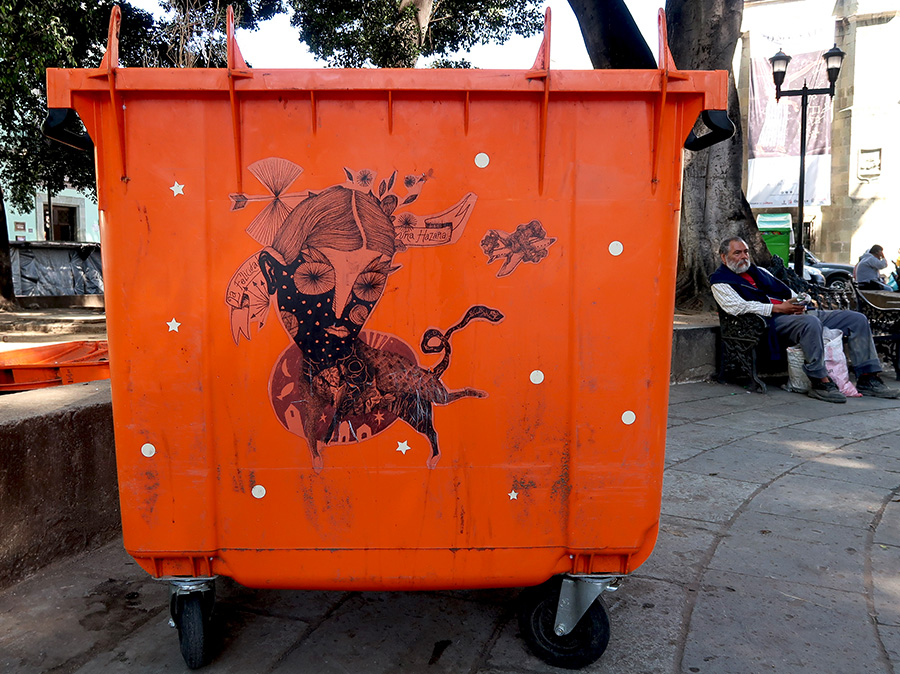
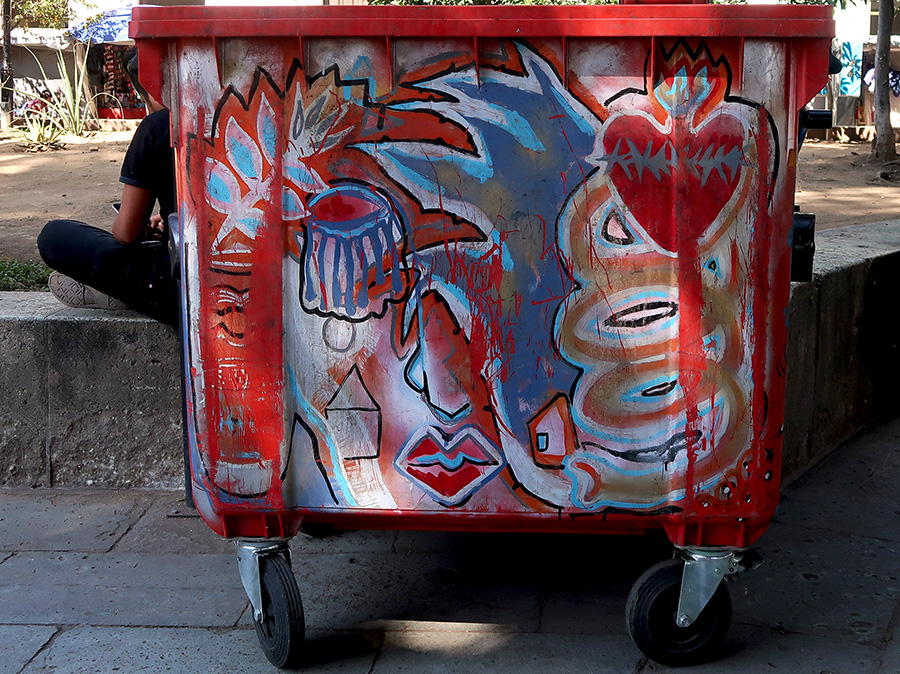
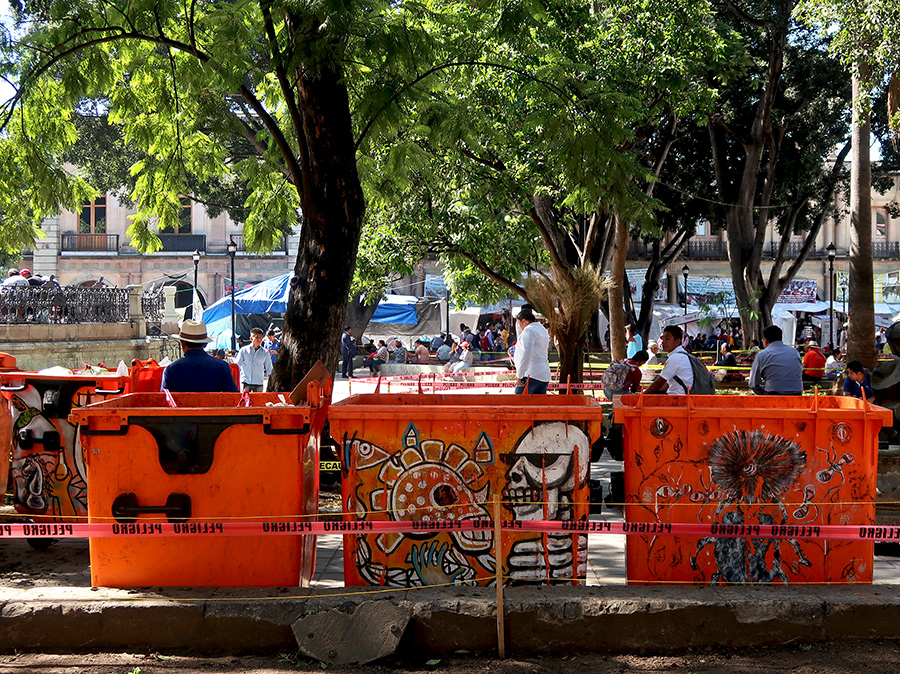
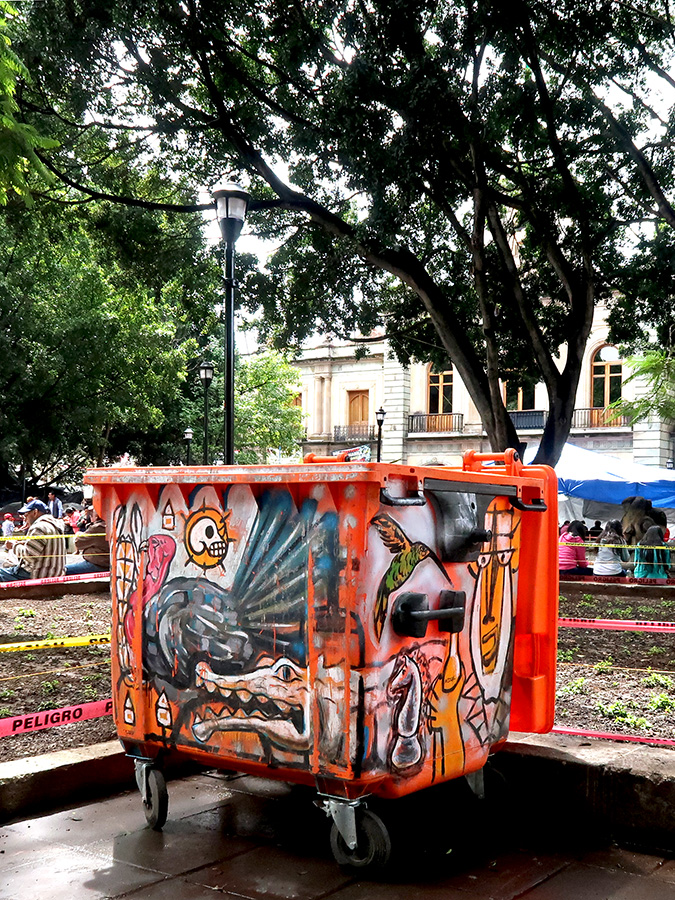
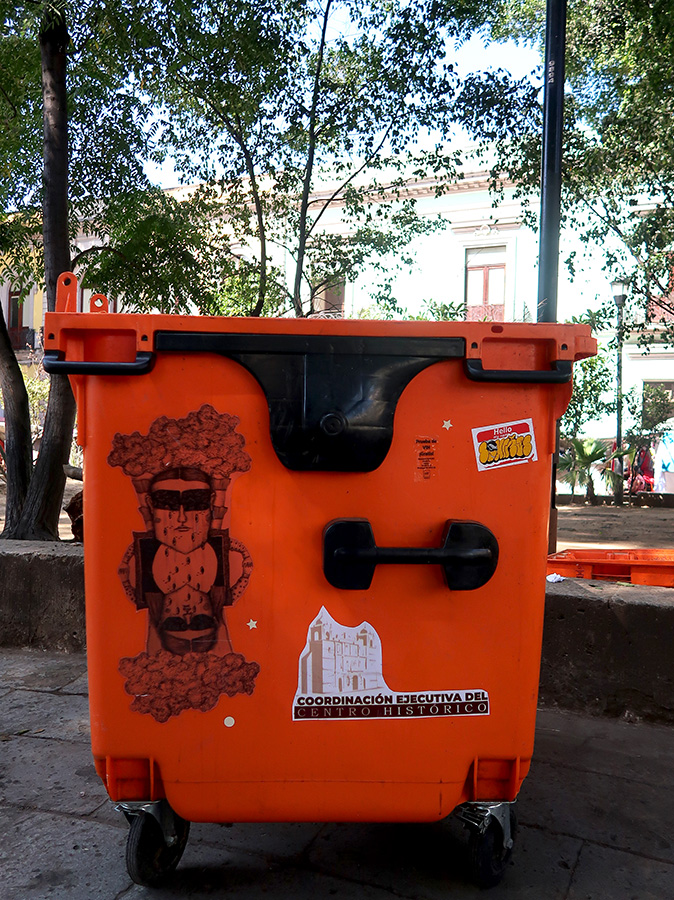
The art of the trash bin in black and orange…

Full color…

Fronts, sides, and backs…

Whimsical, symbolic, and abstract…

Garbage art on the zócalo has gone forth and multiplied.

Read Full Post »

Located in the main entrance to the 20 de noviembre market, the mural by César Villegas González raises THE issue we should keep in the forefront of our minds when we set out to go grocery shopping.

Alimentación mortal — Food that can be deadly?

Or, Comida de los Dioses — Food of the Gods?

I choose to take a ride on the magical metate!

The mural was inaugurated in March 2019 as part of the “Vive tu Mercado 2019” program which seeks to promote the cultural and gastronomic riches found in the city’s mercados.

Read Full Post »

Now that the Zócalo has been cleared of street vendors

A not so wretched refuse bin stands out.

Read Full Post »

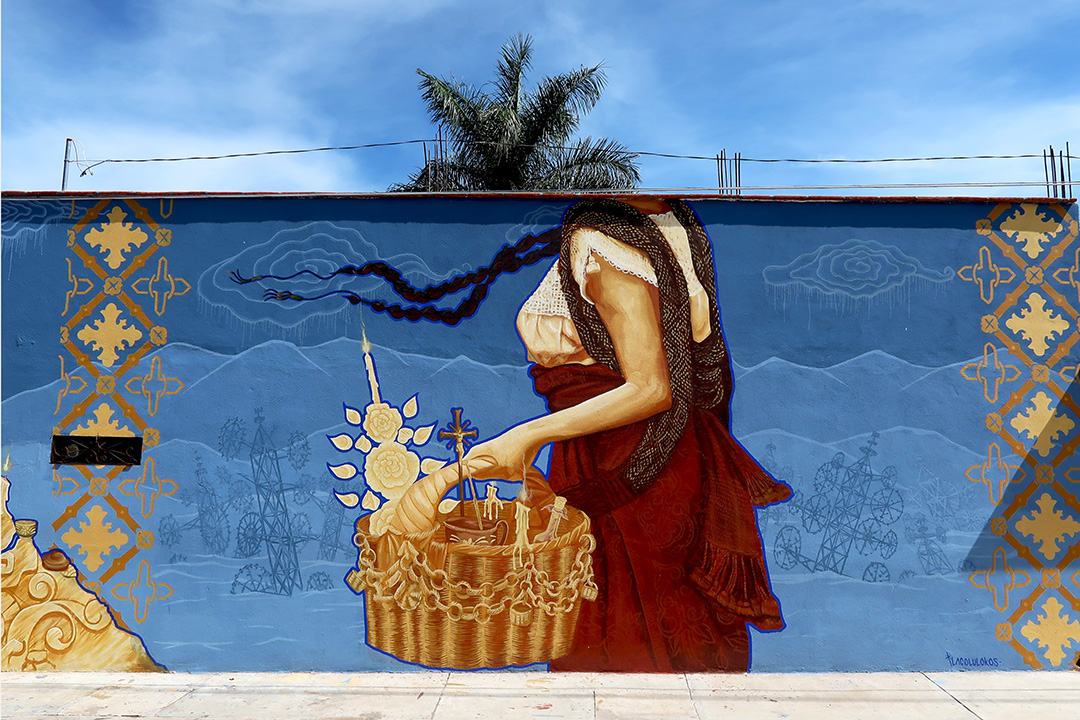
The artistry and message of my favorite mural painting collective, the Tlacolulokos, continues to be revealed on the walls of Tlacolula de Matamoros. Today, on a brief visit, blogger buddy Chris and I stumbled on three of their masterpieces. The first one I’d previously seen and blogged about in 2017 under the title, Who tells your story. However, the second mural was new to both of us.

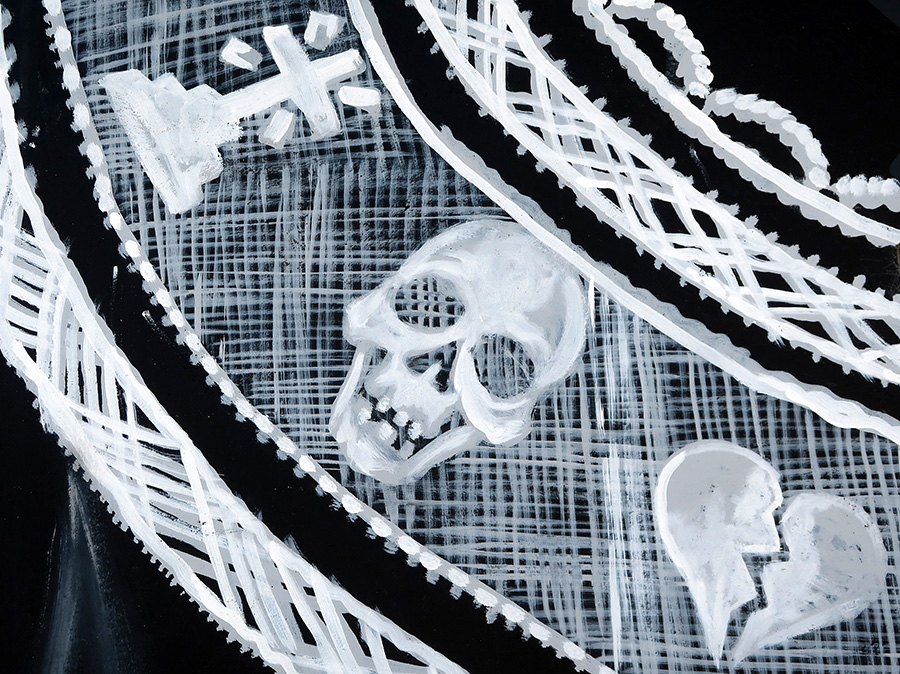
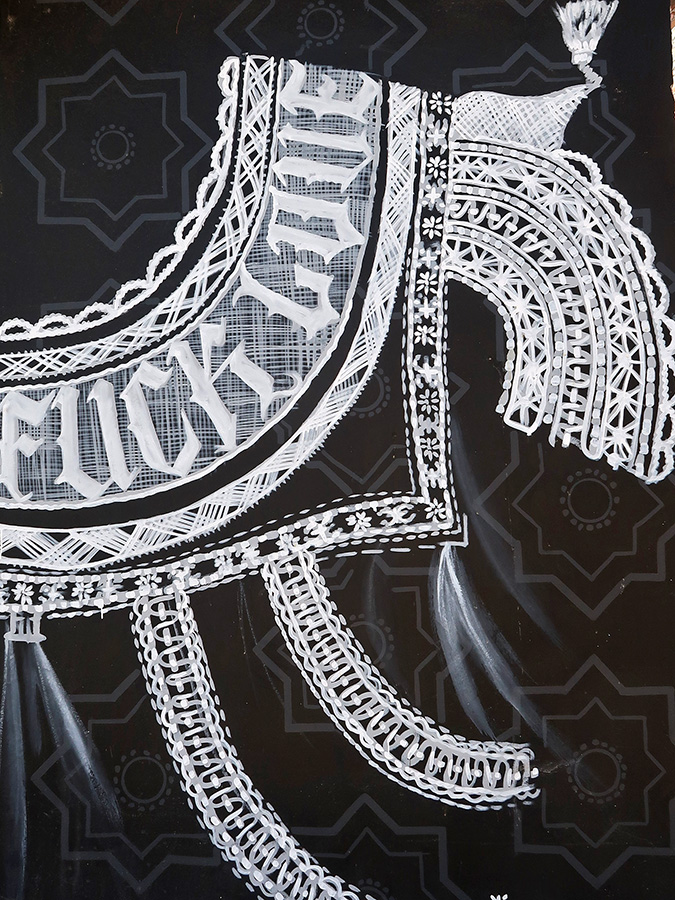
A blouse divided.

A broken heart — not your usual randa de aguja (needlework technique) blouse detail.

Their message, not mine.

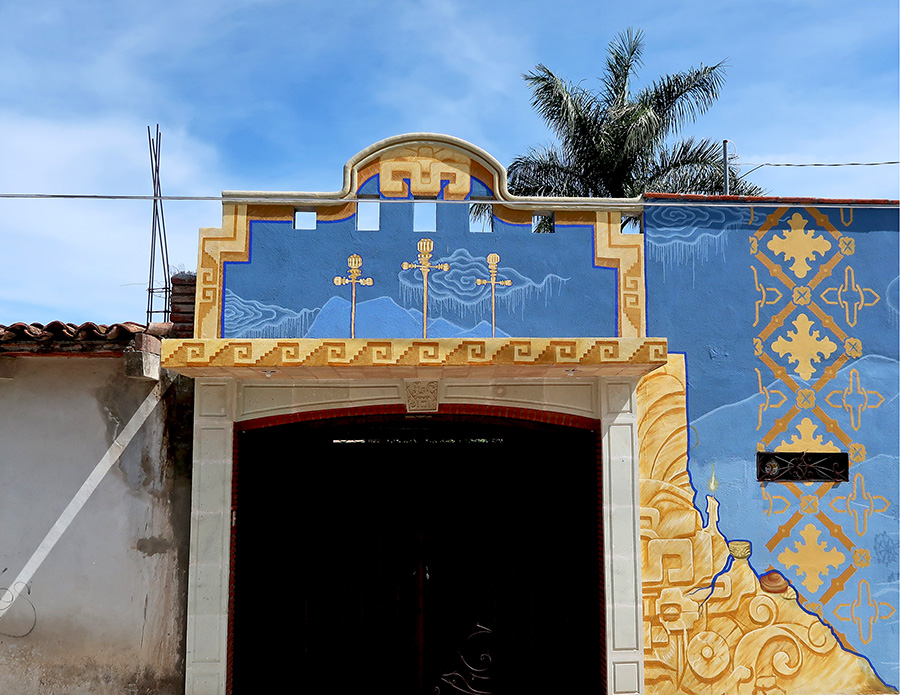
The third mural was a couple of houses down and presents a more historic and celebratory entrance.

Spanish swords and Mitla grecas provide driveway decoration.

A headless woman woman in traditional Tlacolula costume walks toward the entrance.

Thoughts of an upcoming festival castillo, agains the backdrop of the valley’s mountains, dance in her missing head.

Her carrizo shopping basket is filled with purchases for the festival.

From the first Tlacolulokos mural I saw in 2014 to their Tokiolula mural through today, their art continues to speak to me, teach me, and inspire me to really see the people and culture around me.

Read Full Post »

Art imitating life?

Wall in Oaxaca on Plazuela del Carmen Alto. (Art by Tupac Emiliano)

Or, life imitating art?

On Avenida Benito Juárez, Teotitlán del Valle

You decide!

Read Full Post »

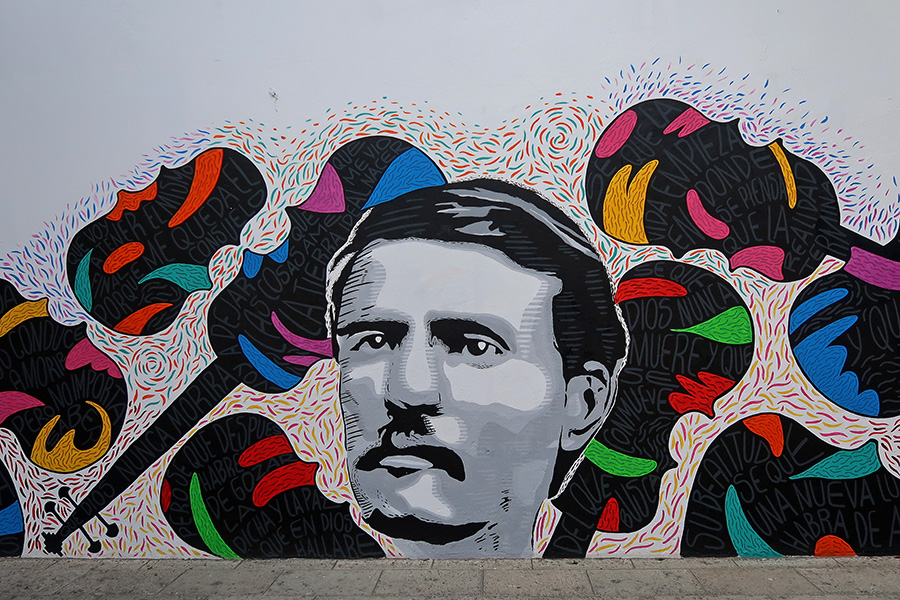
A mural celebrating the life and music of composer and violinist Macedonio Alcalá has joined a bust of fellow Oaxaqueño composer Álvaro Carillo in the Jardín Carbajal (Macedonio Alcalá at Cosijopi).  The mural by Uriel Barragán (Bouler) was unveiled August 22, 2019 in commemoration of the 150th anniversary of the death Macedonio Alcalá. The composer is best known for his piece, “Dios nunca muere” (God Never Dies) — a song that has become Oaxaca’s unofficial anthem and provided the artist with the theme of the mural.

Mural of composer Macedonio Alcalá

According to one legend: While Macedonio Alcalá was convalescing from a serious illness, he was visited by a group of indigenous people from Tlacolula de Matamoros, who asked him to compose a waltz for their festival of the Virgen de la Asunción. Subsequently, the flutist José Maqueo went to see him, and noticing the poverty stricken situation of Macedonio Alcalá, without him noticing Maqueo left twelve pesos under the pillow. The next day the composer found the money and told his wife: “Look, God never dies, always comforts the afflicted,” and he immediately began writing “Dios nunca muere.”

Whether it’s true or not, it’s a lovely story to accompany a lovely waltz.

Read Full Post »

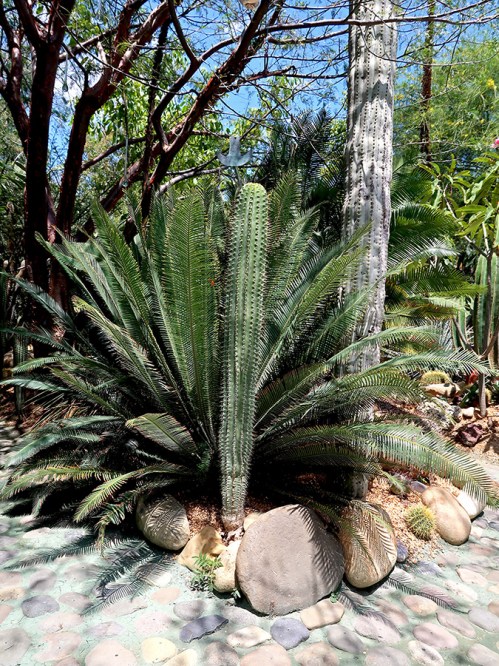
Who knew that there was an amazing garden, built on a former garbage dump, and open to the public in Xoxocotlán? Not me, until a friend mentioned it and invited me on a field trip to visit.

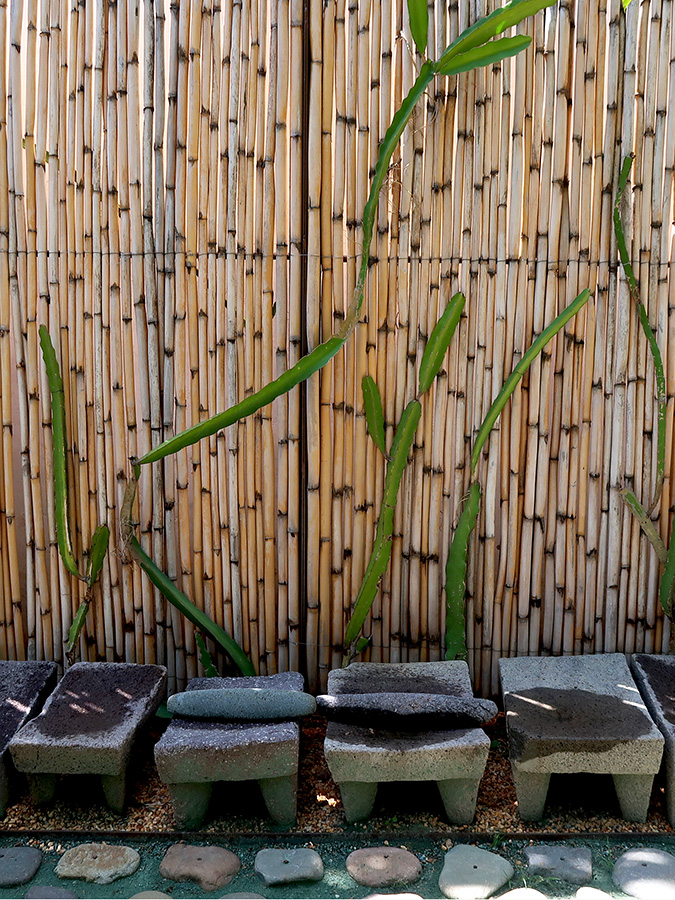
Thus, a few days ago, I found myself at Vives Verdes — a delightful labor of love — a marriage of plants, recycling, art, education, and the environment.

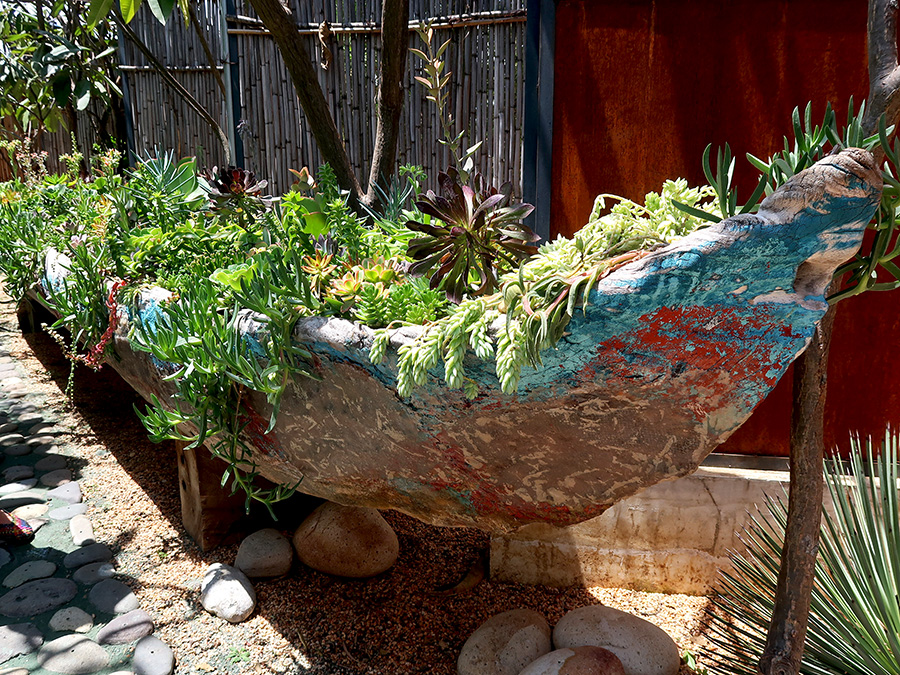
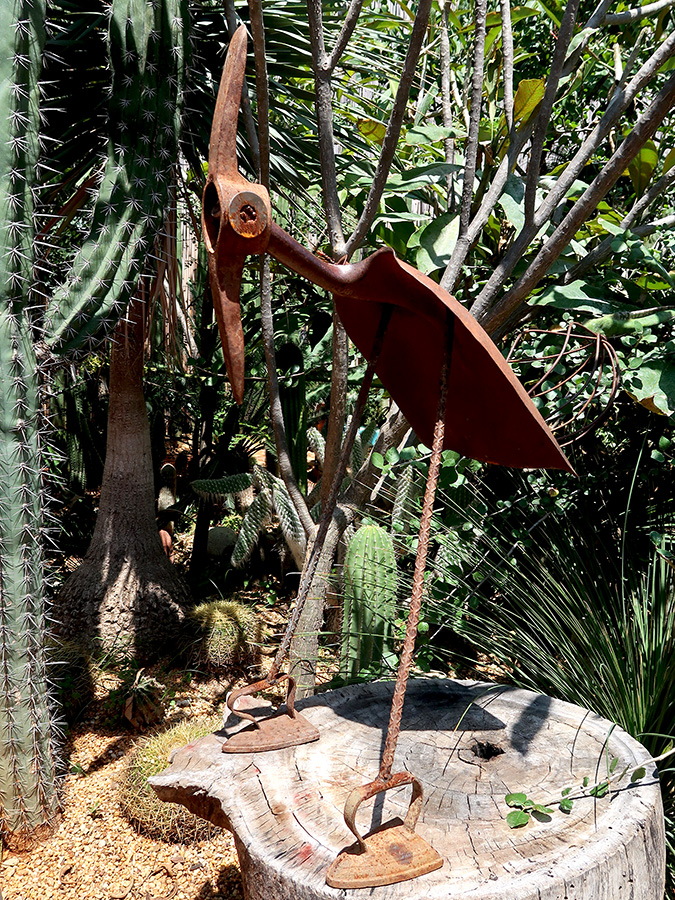
Nine years ago architect, Francisco Martínez began a project of landscaping a healing, artistic, and environmental garden — not only utilizing plants, but also converting found objects into planters and whimsical art.

Vives Verdes incorporates more than 200 species and 2000 plants — mostly from Oaxaca, but also from other arid climates throughout the world.

A water catchment system utilizing paths, beds, and ponds irrigate the garden and no chemicals are used.

Vives Verde is open to the public and school groups. It is located in the Las Culturas neighborhood of Santa Cruz Xoxocotlán, Oaxaca.

Read Full Post »

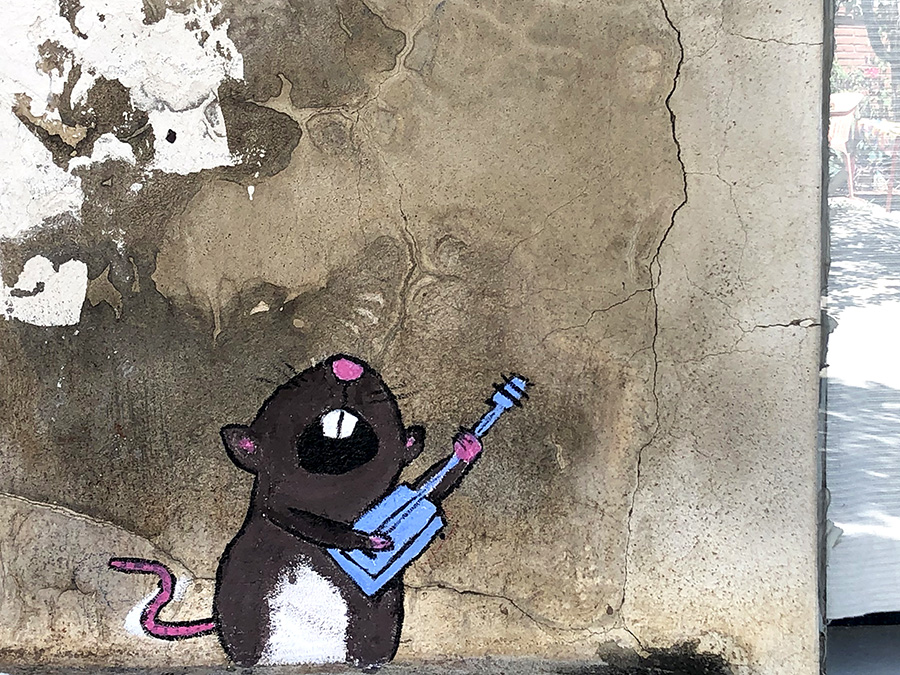
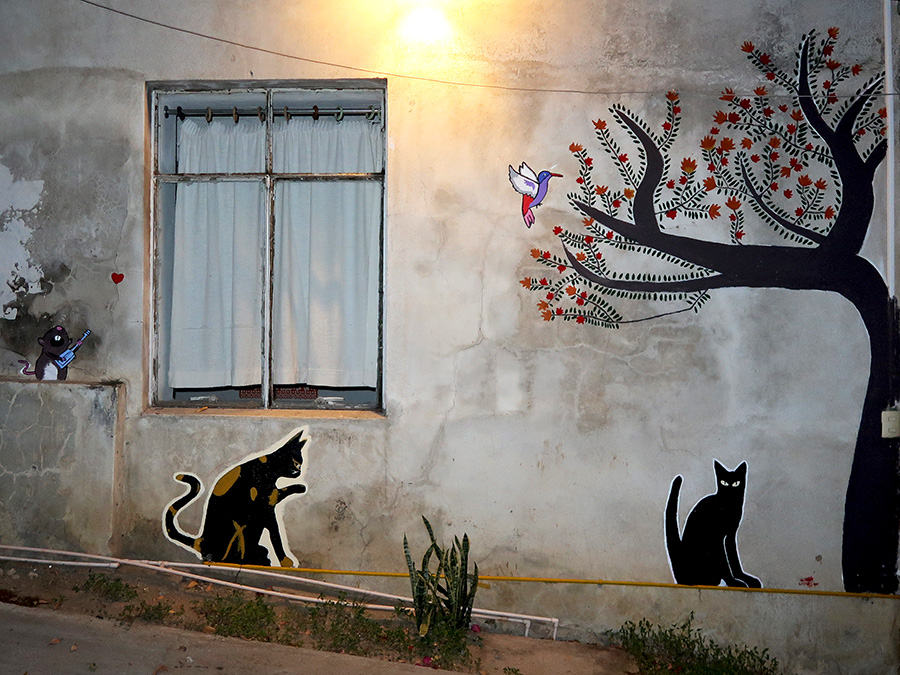
I can’t think of a better way to honor the memory of Maestro Toledo, than to acknowledge, encourage, and celebrate young artistic talent. “Disguise the new water pipes,” she (the dueña) said.

And, so, Ulises, the 18 year old handyman/mozo in our apartment complex complied — and we were all impressed.

From what we gathered, Ulises had no formal artistic training. Yet, next thing we knew, courtesy of Uli, a rat had invaded our compound!

Soon thereafter, Uli had added Mara and Notte (our resident gatitos/cats), a tree, and a colibri/hummingbird to the scene.

Uli continued to explore his talent.

And, we now have a fierce, but lovely, jaguar on the scene! If only, every young person had the opportunity to explore their inner talent.

Read Full Post »

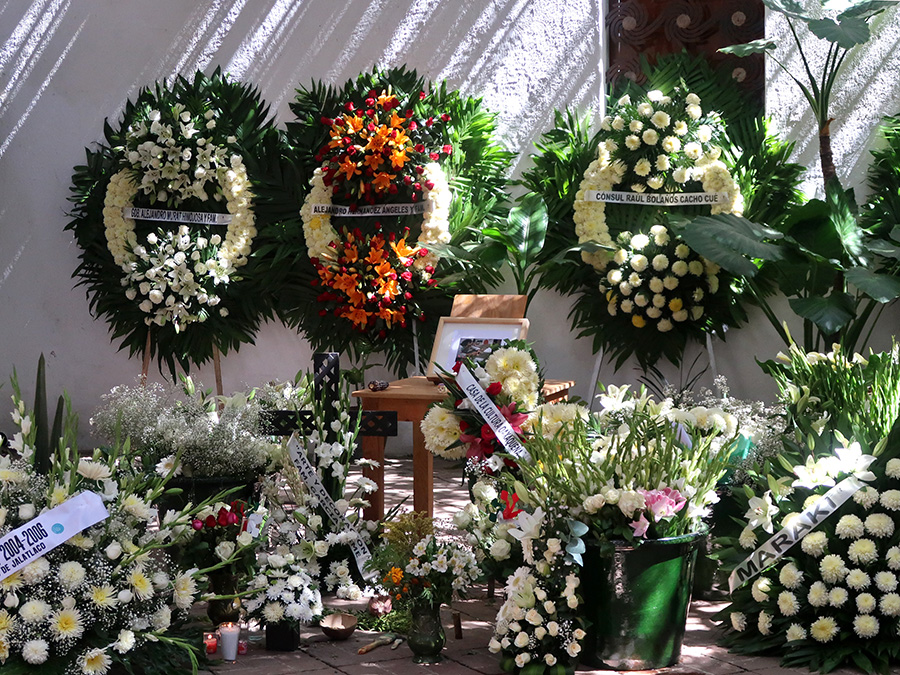
Oaxaca is in mourning. Last night, word of the passing of one of her greatest champions, Maestro Francisco Toledo was announced by Mexico’s president — an indication of the importance and esteem the Maestro is held. Born in Juchitán, Oaxaca on July 17, 1940, Toledo died in Oaxaca city on September 5, 2019, at age 79.

This morning outside the Instituto de Artes Gráficas de Oaxaca (IAGO), which he founded and funded.

Besides being a world renown artist, he was a fighter for social justice and the environment, a very generous philanthropist, and crusader for the respect of indigenous peoples and character of Oaxaca. People are still chuckling over the unique form of protest he led when a McDonald’s threatened to open in the zocaló.

This morning, inside the Instituto de Artes Gráficas de Oaxaca (IAGO).

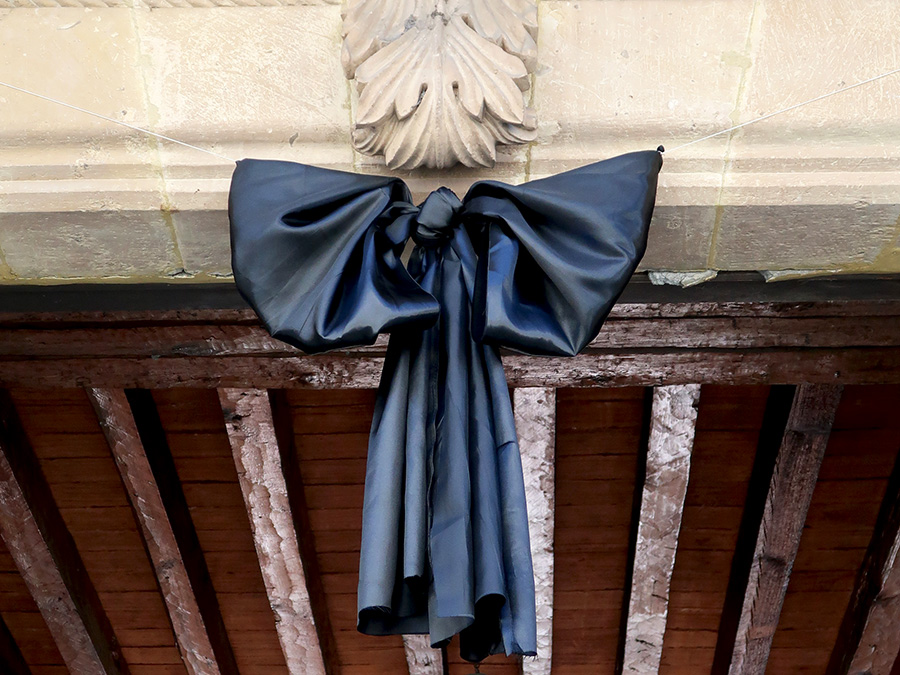
We awoke this morning to see the gigantic Mexican flag that flutters above the city of Oaxaca flying at half staff and large black bows, indicating a family in mourning, had been fastened above many of the institutions that benefited from Toledo’s philanthropy.

Biblioteca Pública Central Margarita Maza de Juárez – Oaxaca’s main public library.

The streets of Oaxaca are little more subdued today — less laughter, music muted, and even the traffic doesn’t seem as chaotic.

On the sidewalk outside the Instituto de Artes Gráficas de Oaxaca (IAGO).

A public tribute to the Maestro is scheduled for 2:00 PM today at the Teatro Macedonio Alcalá.

Read Full Post »

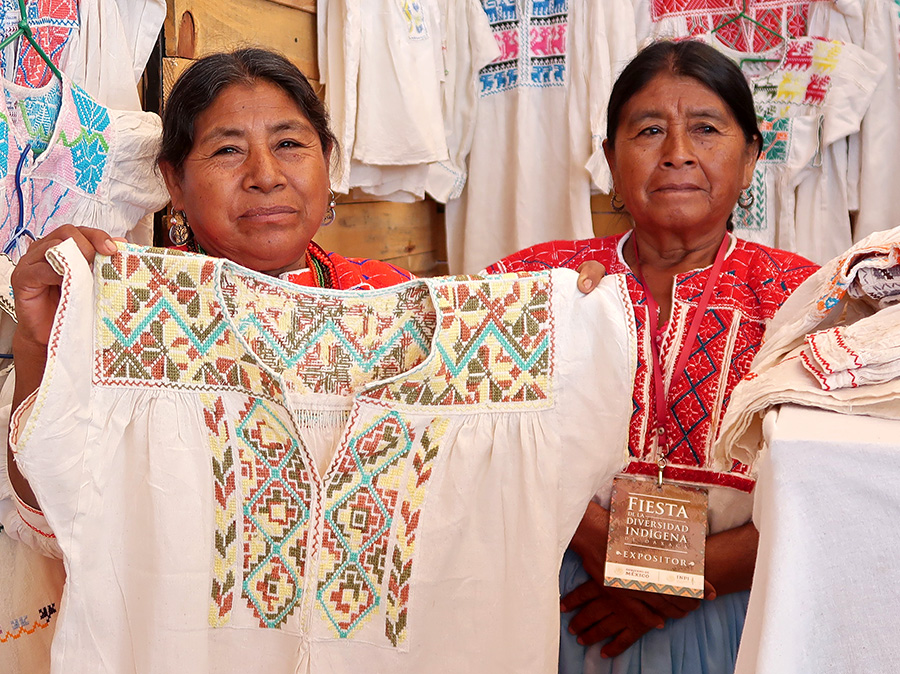
In commemoration of International Day of the World’s Indigenous Peoples, Mexico’s Instituto Nacional de los Pueblos Indígenas (INPI) is hosting a Fiesta de la Diversidad Indígena de Oaxaca.

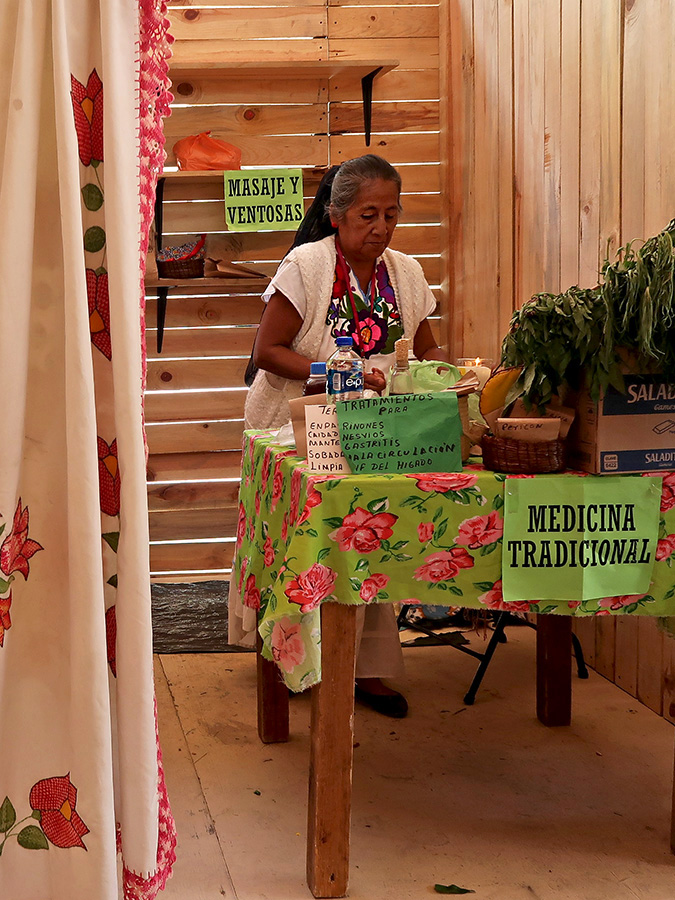
It is a four-day festival honoring and promoting the state of Oaxaca’s indigenous peoples and their communities with artesania, textiles and other products for sale, cultural performances and workshops, food booths, and even healing treatments — and it’s happening a block from Casita Colibrí in the Plaza de la Danza!

Yawi Naka – Triqui – La Laguna Guadalupe, Putla Villa de Guerrero

INPI has an excellent online atlas of the indigenous peoples of Mexico and it, along with the statistics I previously posted regarding poverty, discrimination, and the results thereof affecting Mexico’s indigenous and Afro-Mexican peoples are abysmal.

Na Jacinta Charis – Zapoteco – Juchitán de Zaragoza

According to this article (in Spanish), the charge of the INPI is to advocate for indigenous and Afro-Mexican rights and to recognize that in order for these peoples and their communities to survive, institutional efforts must be taken to guarantee their full exercise of social, political, cultural, and economic rights.

Productores de Maguey y Mezcal Lucas 2010 SPR de Ri – Zapoteco – San Isidro Guishe, San Luis Amatlán

The INPI is also attempting to advance an understanding that the family/community economy of these communities has a different production logic than the commercial market economy and that their economic model must be respected.

Organización de Medicos Indigenas Tradicionales de laCañada – Cuicateco – San Juan Bautista Cuicatlán

This festival provides a space to promote the various community projects and to showcase the artistic and cultural expressions in the city.

IMG_6911

Chenteñas Hazme Si Puedes – Zapoteco – San Vicente Coatlán

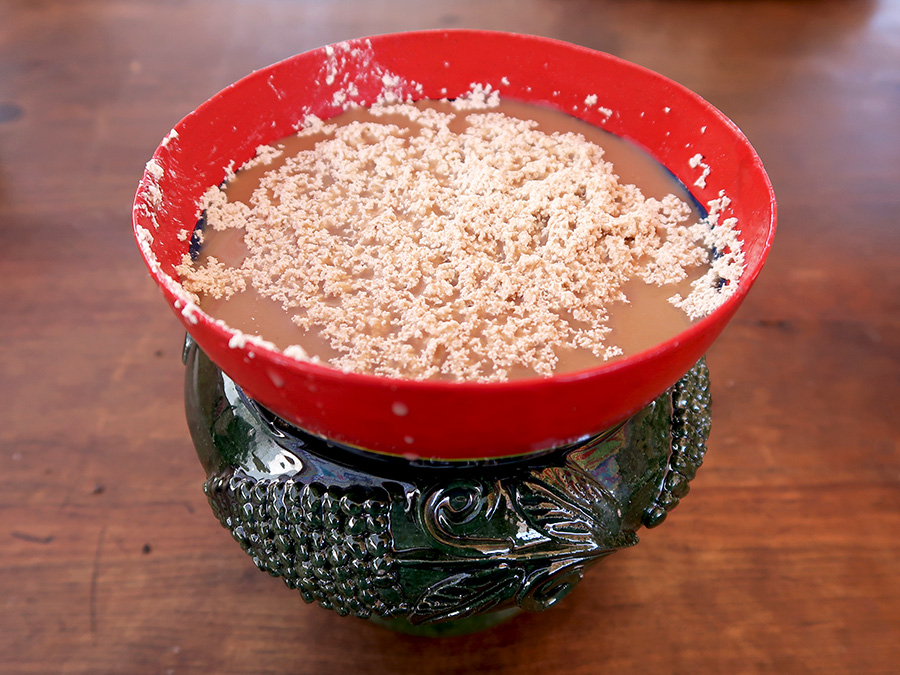
I’ve aready been twice to the event — talking with various vendors, buying the blouse above (along with cheese, sal de chicatanas, and olive oil with fresh organic herbs), and sitting at one of the long tables enjoying a tamal, empanada, and a jícara of tejate

The Fiesta de la Diversidad Indígena runs through late afternoon tomorrow (Sept. 1, 2019). If you are in Oaxaca city, be sure to check it out (schedule below).

Read Full Post »

Construction is going on all over the city. A blessing or a curse?

The cross was probably put up on May 3, Día de la Santa Cruz (Day of the Holy Cross) — which also happens to be Día del Abañil (Day of the mason/stonemason/bricklayer). It is tradition for workers to erect crosses festooned with flowers at the highest point on construction sites.

Read Full Post »

Sunday, August 18, 2019, Teotitlán del Valle celebrated the first anniversary of their Centro Cultural Comunitario de Teotitlán del Valle (CCCTV). During the day-long event, not only was there food and music, the village also celebrated passing on of their cultural riches and traditions to upcoming generations.

The Cultural Center’s, Danza de la Pluma Infantil (youth Danza de la Pluma group) donned their costumes, gathered on the Municipal Plaza, and performed dances from this ritual retelling of the Conquest. (Check out the up close and personal photos by blogger buddy Chris.)

In the CCCTV, there was an exhibition of penachos/coronas (headdresses) used in the Danza de la Pluma that were crafted in a workshop by young people from the village.

“BaáGuiish” by Laura Ruiz Mendoza. Representing the four cardinal points to give thanks for each new day.


Detail of “Shia guibaa” by Jesús Brayan Jiménez Lazo.


“La cruz de Quetzalcóatl” by Juan Mendoza Bautista.

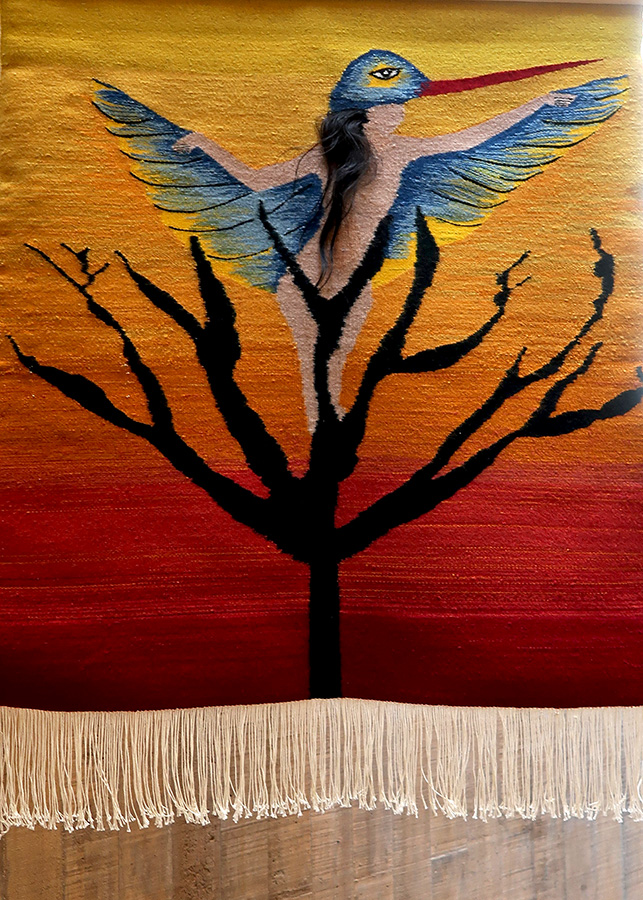
In addition, there was also an exhibition of tapetes (rugs) designed and woven by the young people of Teotitlán del Valle.

“El alma en manos de mi arte” by Omar Mendoza Martínez.


“Futuro Hermoso” by Constantino Lazo Martínez.


“Huitzilopochtli” by Anais Adelina Ruiz Martínez.


“Bineéty xunuax Xigie’ (Mujer Zapoteca) woven image of his grandmother by Mario González Pérez.

Celebrating and preserving the cultural riches of the Zapotec community of Teotitlán del Valle. Can’t think of a better way to spend a Sunday. Dixeebe! Zapotec for ¡salud! cheers!

Read Full Post »

Walking to the market, it was the light and color and composition that caught my eye — a sidewalk still life.

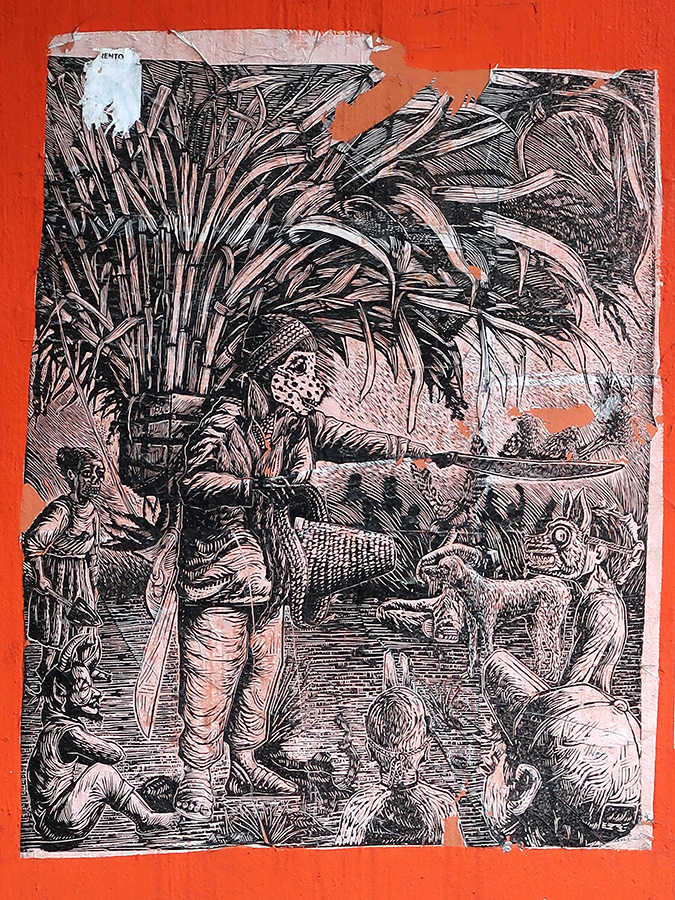
I zeroed in on the skill of the artist(s) and the imagery.

In one, a man in the baseball cap looking back to his ancestors and the bounty of the land. In the other, what is that in the mouth of “he who shall not be named?” And, what of the quote?

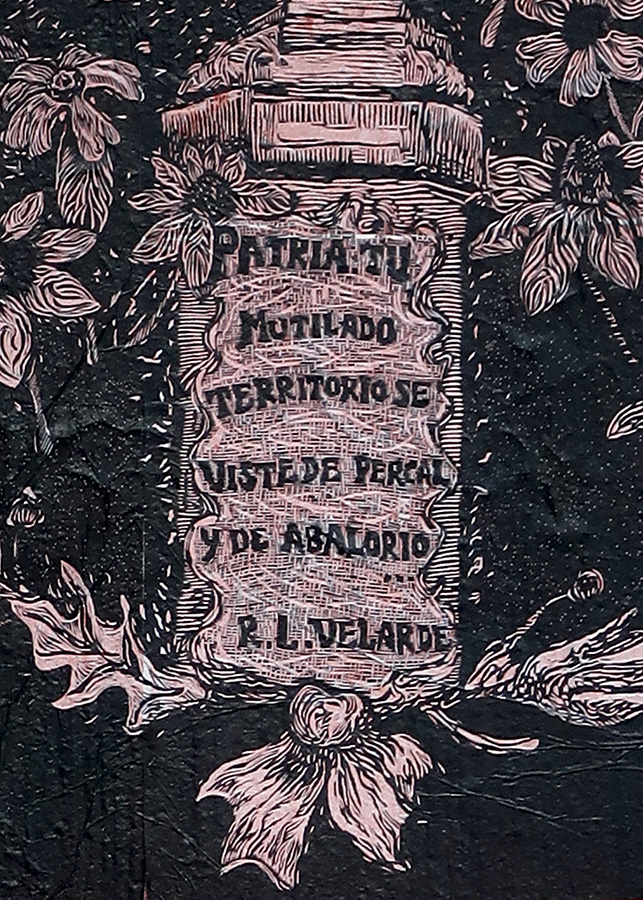
“Homeland: your mutilated territory dresses in calico and glass beads.” What does it mean? What is it from? Who is R. L. Velarde?

I found the answers in the article, The Dissonant Legacy of Modernismo. Ramón López Velarde by Gwen Kirkpatrick. The quote is from the poem, “Suave Patria” (Gentle Homeland) by Ramón López Velarde, a poet of the Mexican Revolution — a poem that “celebrates the grandeur of Mexico’s simple, rustic life, as well as its glorious indigenous past.”

The daily education of the streets — more than meets the eye!

Read Full Post »

For someone who grew up in California and now lives in Mexico, the new exhibition at the Museo de los Pintores Oaxaqueños (MUPO), “Construyendo Puentes en Épocas de Muros Arte chicano/mexicano de Los Ángeles a México” (Building Bridges in the Epoch of Walls Chicano/Mexican art from Los Angeles to Mexico), was a must see.

America is for Dreamers by Patrick Martínez

The 53 works, by a multigenerational group of twenty-nine artists of Mexican ancestry from Southern California, explore the themes, “Rebel Diamonds from the Sun,” “Imagining Paradise,” “Outsiders in their Own Home,” “Mapping Identity,” and “Cruising the Hyphenate.”

Cartonlandia by Ana Serrano

According to the introductory essay by the exhibition’s curator, Julian Bermudez, “In over 50 years of existence, the ever-evolving Chicano art has shaped itself into one of the main currents of the American creative canon.”

A Lunchtime Conversation by Ramiro Gómez

“Sitting among four cultures – the Pre-Columbian, the invasive Hispanic, Mexico itself, and the United States of America – Chicano art draws on all four and evolves out of both its roots and the decades of oppression its practitioners and their families have sustained.”

Paleta Cart by Gary Garay

“These artists have expanded their creative expression, demonstrating an agility to develop and refine their own mythologies, methodologies and philosophies. They have introduced a remarkable, original school of art into the history of art itself.”

The Closing of Whittier Boulevard by Frank Romero

If you are in Oaxaca, I highly recommend checking out, “Construyendo Puentes en Épocas de Muros.” The exhibition will run until November 10, after which it will travel to the Museo de las Artes de la Universidad de Guadalajara (Musa) and conclude its tour at the Centro Cultural Tijuana (CECUT).

Read Full Post »

« Newer Posts - Older Posts »