Feeds:
Posts
Comments

Archive for the ‘Celebrations’ Category

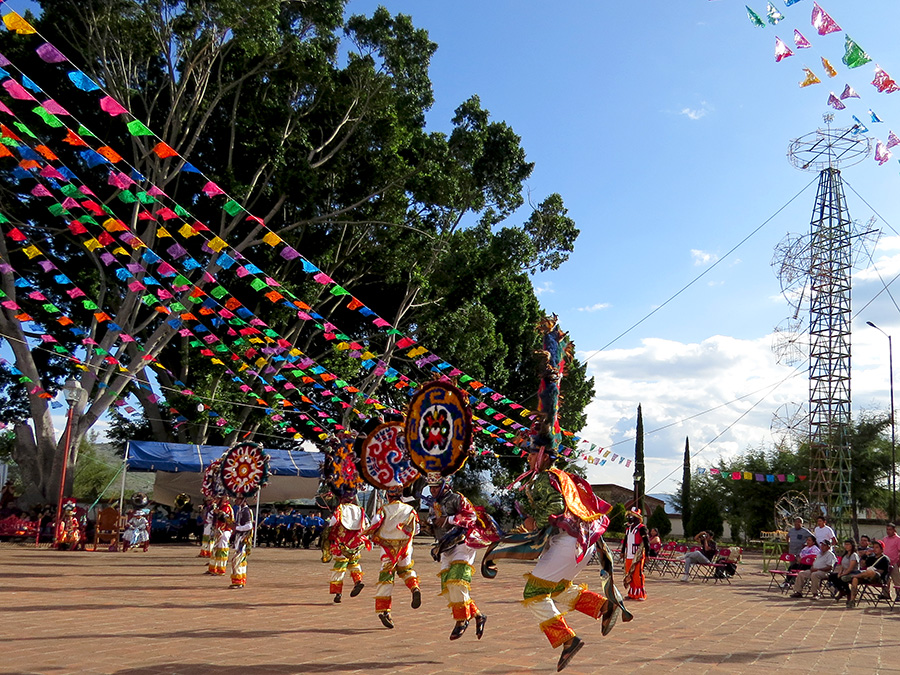
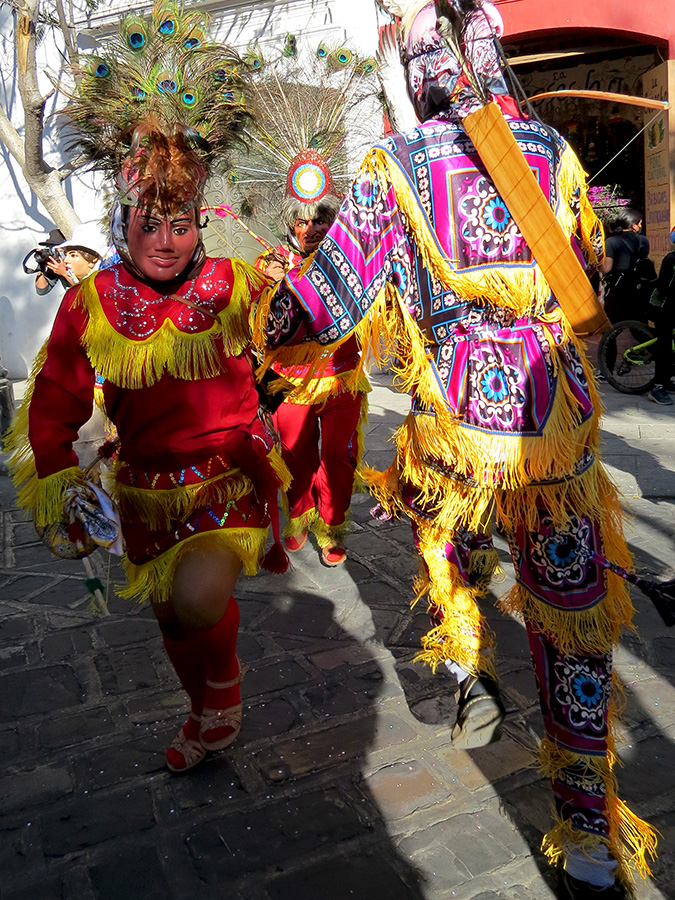
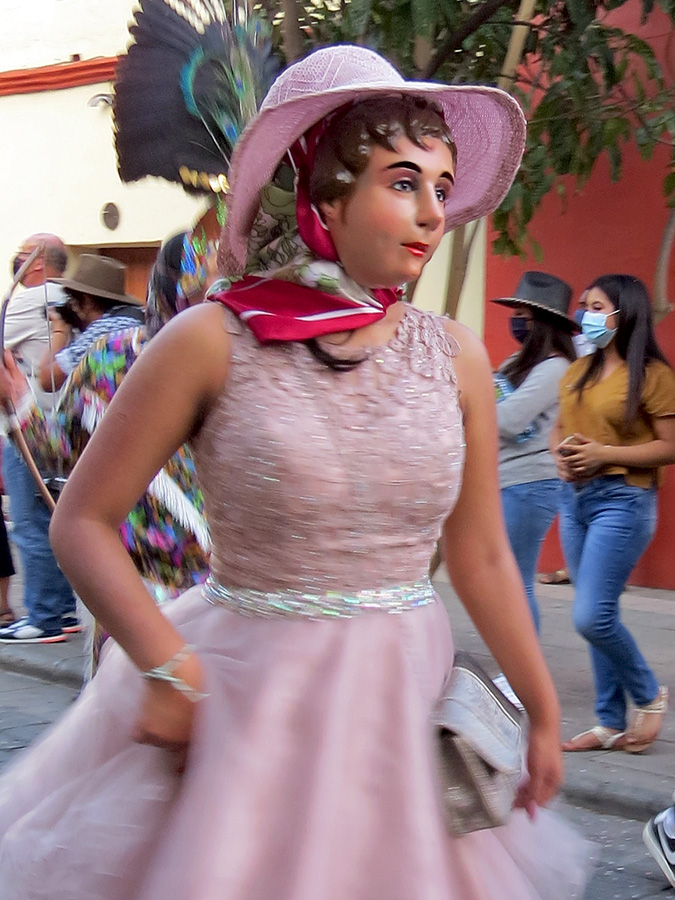
In Teotitlán del Valle, the dancers of the Danza de la Pluma (Feather dance), make a solemn commitment to their faith and to their community to dance for three years at each of the four major annual religious festivals in their village. 2022 brings a new group and the festival honoring Preciosa Sangre de Nuestro Señor Jesucristo the first of their public performances for the residents of their village and visitors. They dance four times during this festival — two half days and two full (7 hours) days.

July 5, 2022…

La Malinche (Silvia Melissa González Pérez), Moctezuma (Emmanuel Ruiz Ruiz), and Doña Marina (Youshita Yamilet Vasquez Jim.)
Teotitlán de Valle, Danza de la Pluma promesa 2022-2024.
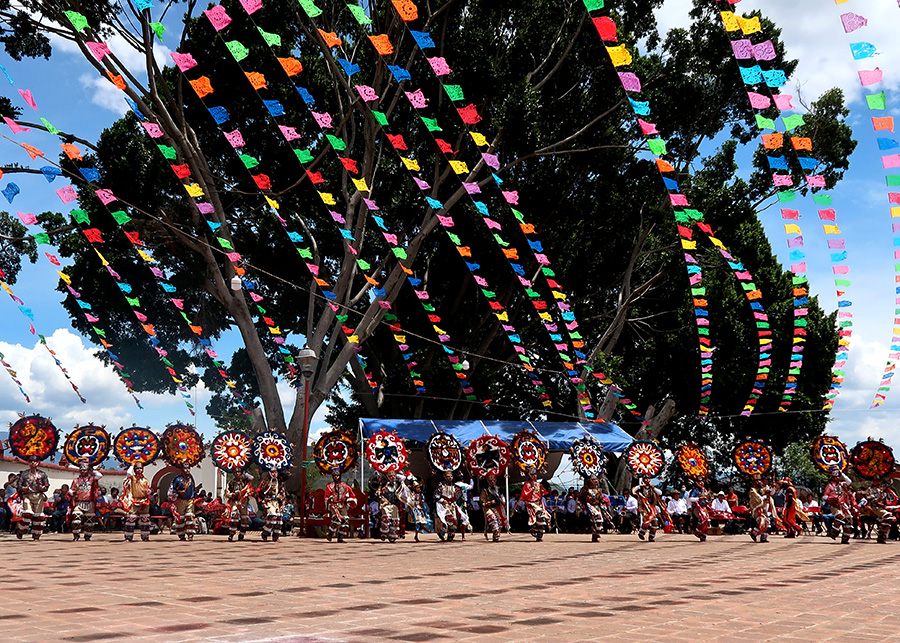
Danzantes dancing like puppets on a papel picado string.
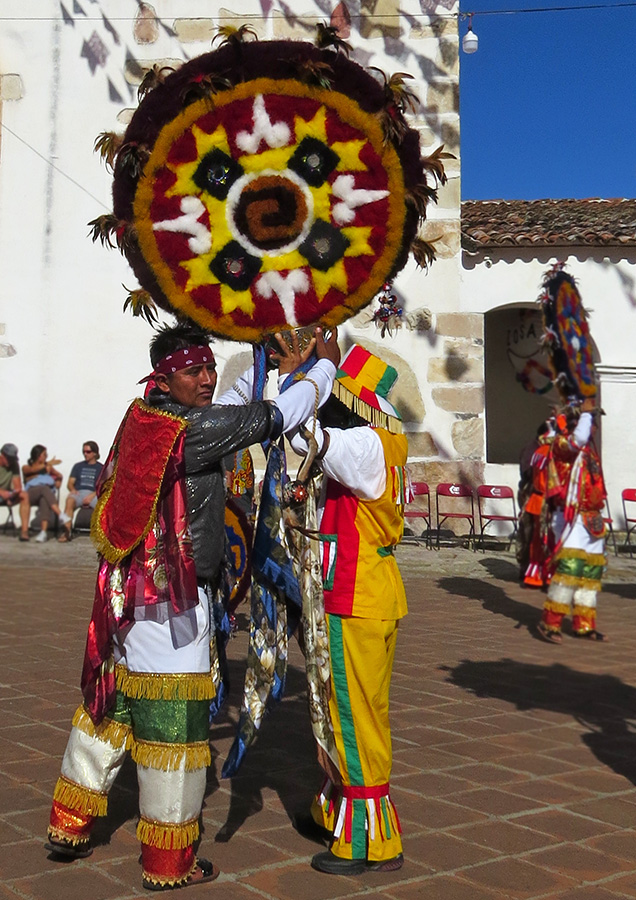
Subalterno helping Rey 4, Luis Ángel Bazán Ruiz, with his penacho (headdress).
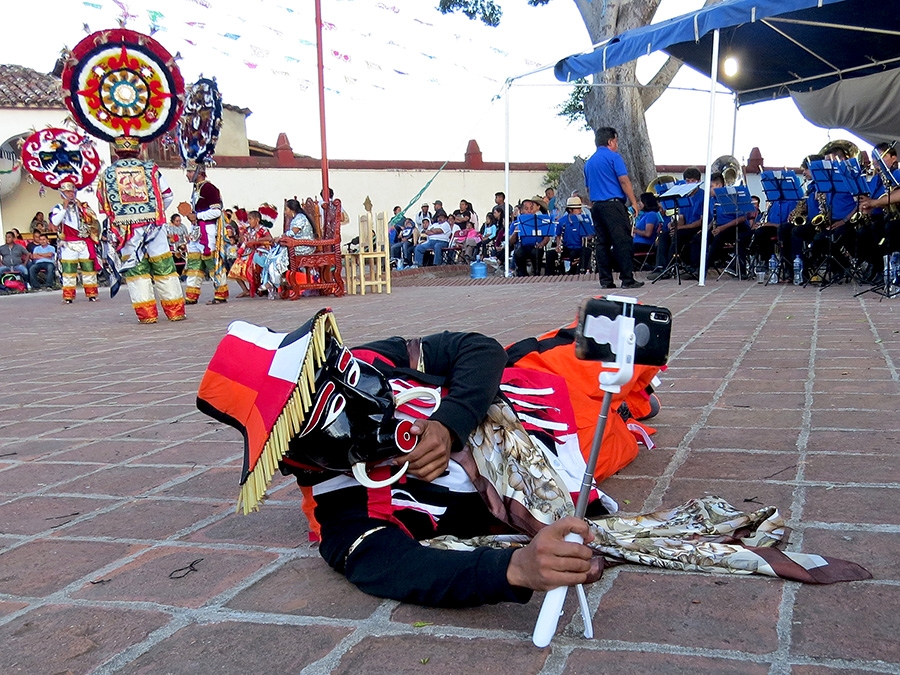
Subalterno taking a selfie with a “borrowed” phone.

July 6, 2022…

Capitán 2, Hugo Félix Santiago Jiménez.
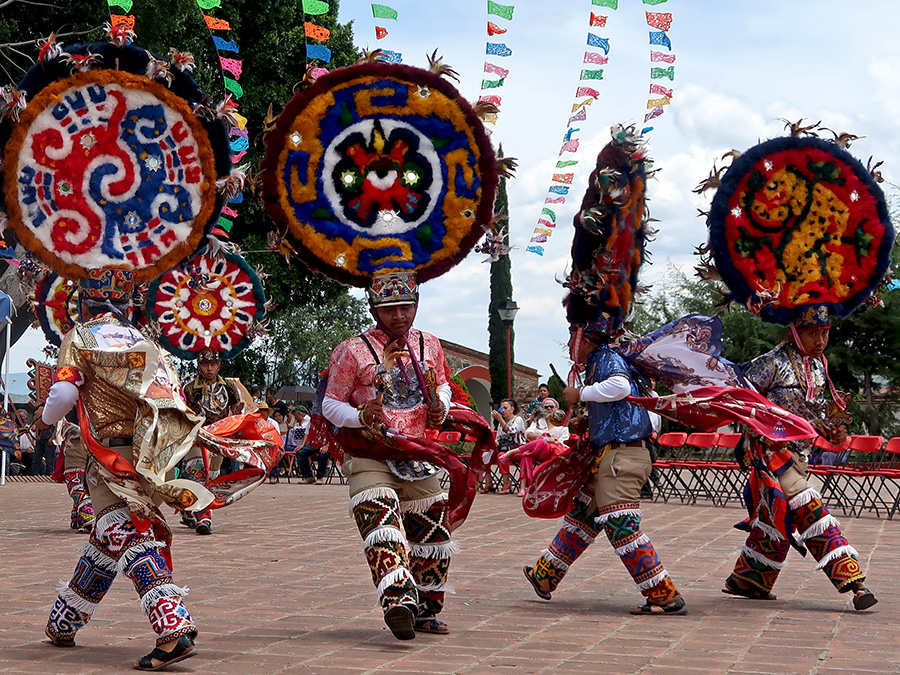
Dancers of the Danza de la pluma promesa 2022-2024.
Moctezuma, Emmanuel Ruiz Ruiz.
Doña Marina, Youshita Yamilet Vasquez Jim.
La Malinche, Silvia Melissa González Pérez.
Danza de la pluma promesa 2022-2024, Teotitlán del Valle.

On the superficial level, the Danza relates the story of the Conquest — the Spanish, Moctezuma, his allies, and Malinche/Doña Maria. But, as is the genius of art, it reaches into our hearts and souls and explores and communicates the truths we know and feel.

In 2022, they will dance again for Natividad de la Virgen María in September, Rosario de la Virgen María in October, and the Fiesta a la Virgen de Guadalupe on December 12.

Read Full Post »

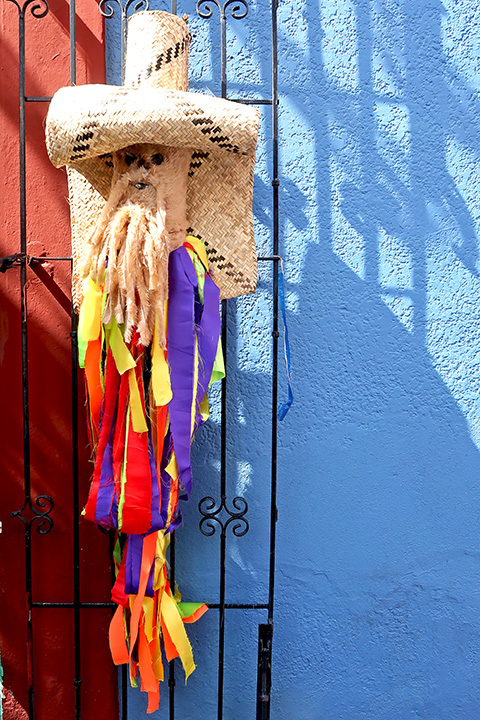
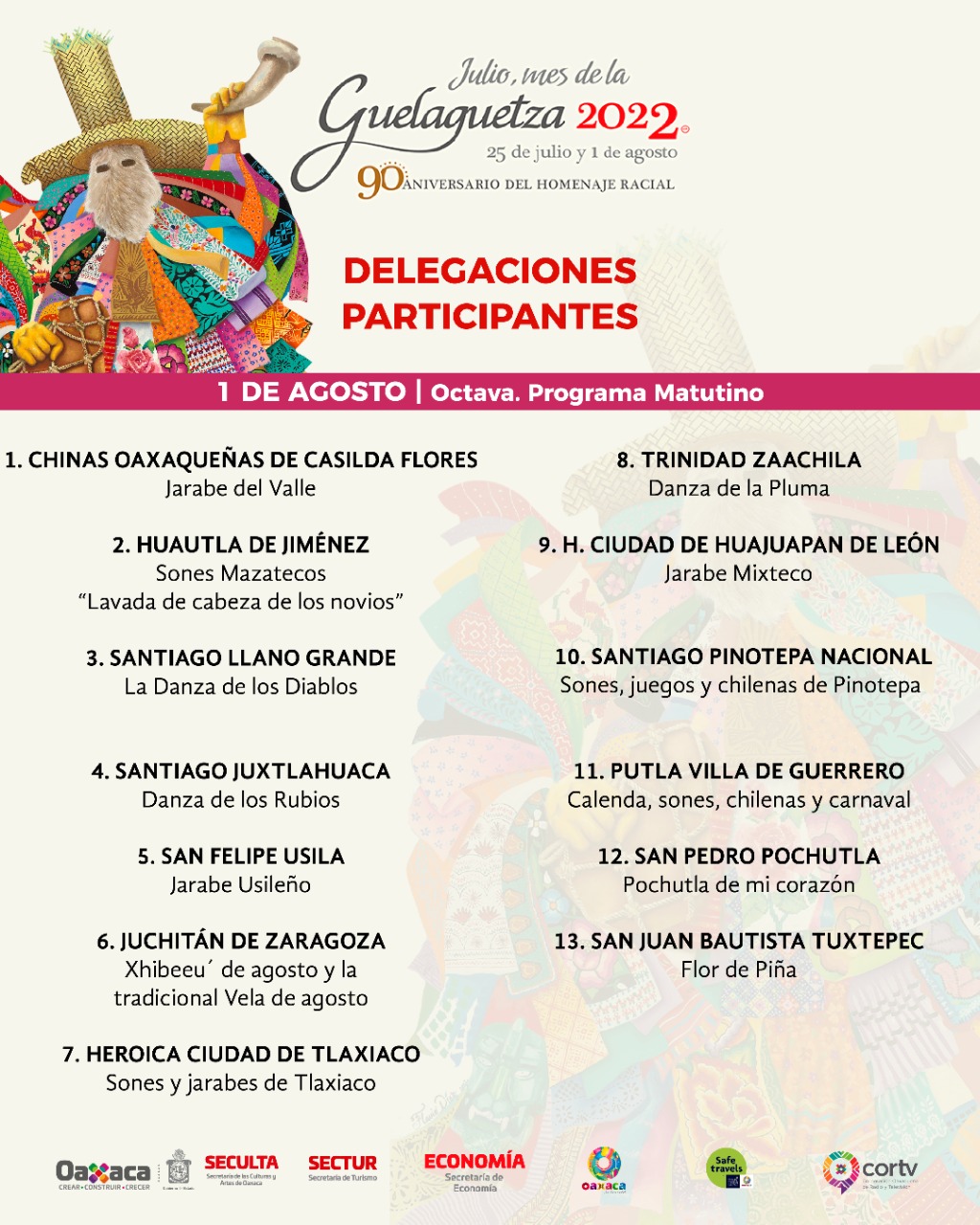
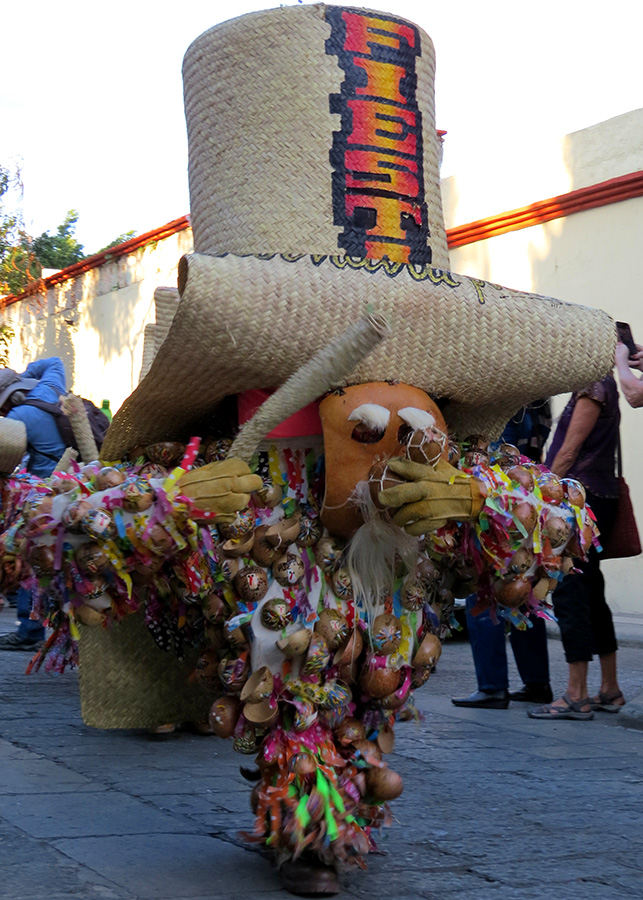
After a two-year hiatus, La Guelaguetza is back. Papel (actually, plastic) picado, in the colors of the rainbow, is draped over the streets, Tiliches (iconic participants at Carnaval in Putla de Guerrero and this year’s chosen image to represent Guelaguetza) are hanging around on sidewalks, walls, and rooftops, and the streets are filled with tourists, both foreign and domestic.

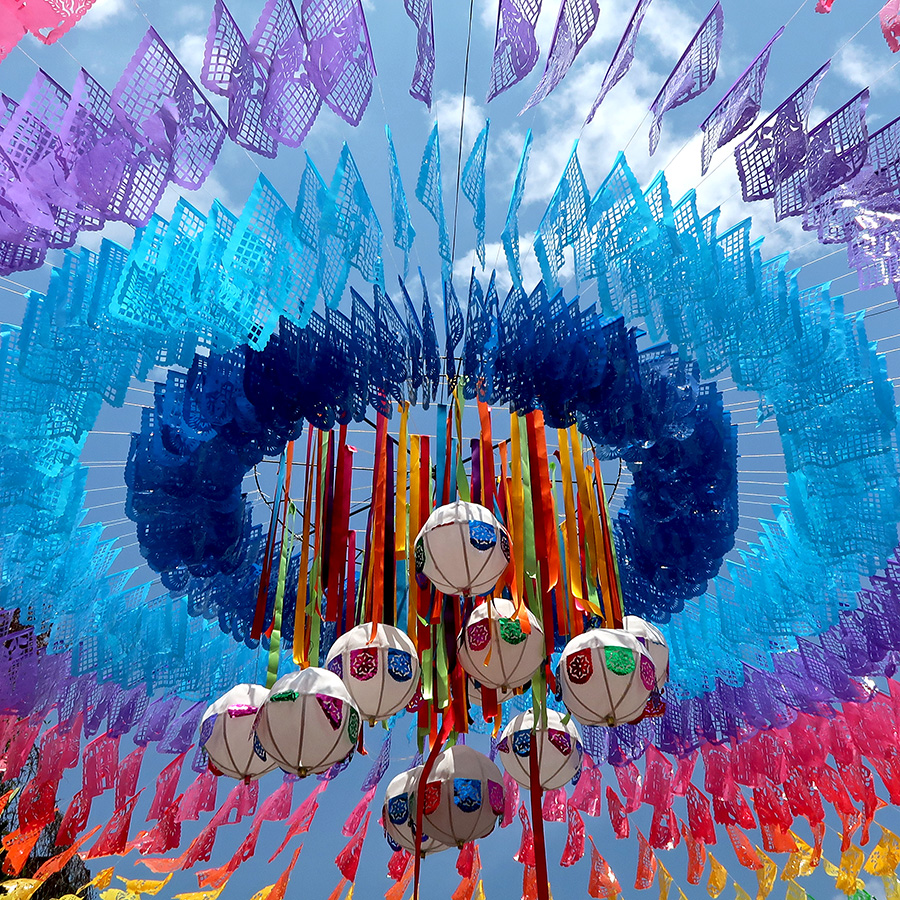
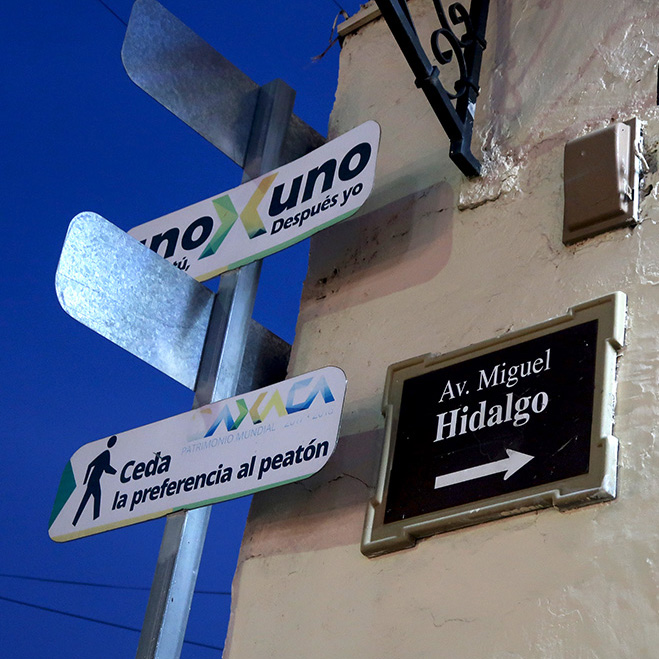
Decorations hanging above Calle de Miguel Hidalgo in Barrio de Jalatlaco.
Tiliche hanging around Barrio de Jalatlaco.
Principal Guelaguetza 2022 events.

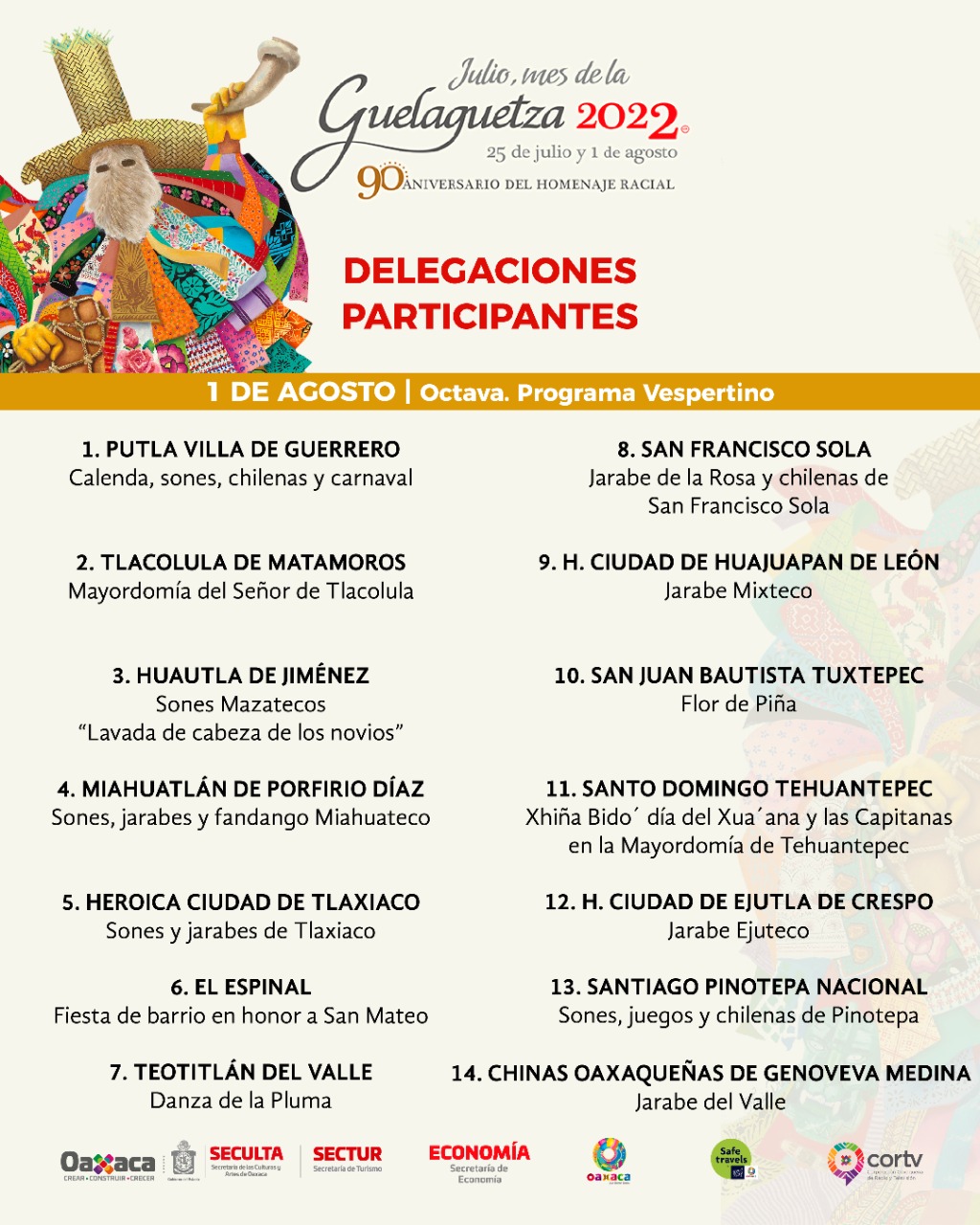
This morning, the dancing will begin at the Guelaguetza Auditorium on Cerro del Fortín. The list of delegations by date, time, and the dance they will be performing follows.

July 25, 2022, 9:00 AM delegations and dances.
July 25, 2022, 5:00 PM list of delegations and dances.
August 1, 2022, 9:00 AM list of delegations and dances.
August 1, 2022, 5:00 PM list of delegations and dances.

Please note, next Monday evening’s performance will include the previously mentioned Teotitlán del Valle, Danza de la Pluma Promesa 2022-2024. If you are not in Oaxaca or, like me, don’t have tickets, you can watch courtesy of CORTV via television, their website, and Facebook live.

Read Full Post »

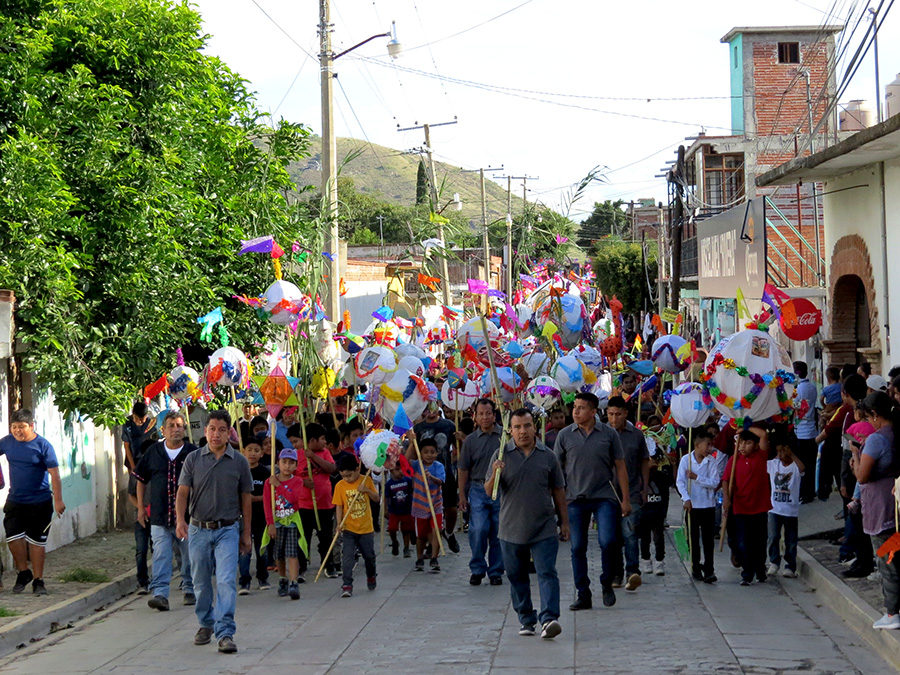
The annual convite at the beginning of July in Teotitlán del Valle has not only been an invitation to the village’s patronal festival honoring Preciosa Sangre de Cristo. For me, it has also served as an invitation to a month of non-stop celebrations and events — an excuse to set aside my daily routines and chores and, instead, revel in the color and culture on display in the streets of the city and the small towns dotting the valley of Oaxaca.

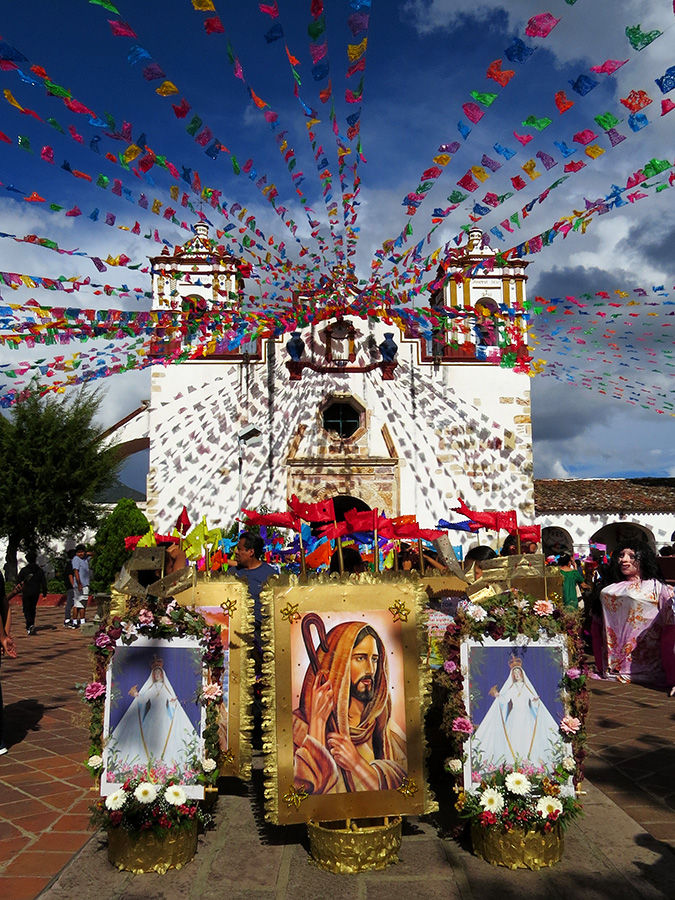
The church, Preciosa Sangre de Nuestro Señor Jesucristo, ready and waiting for the convite to begin.
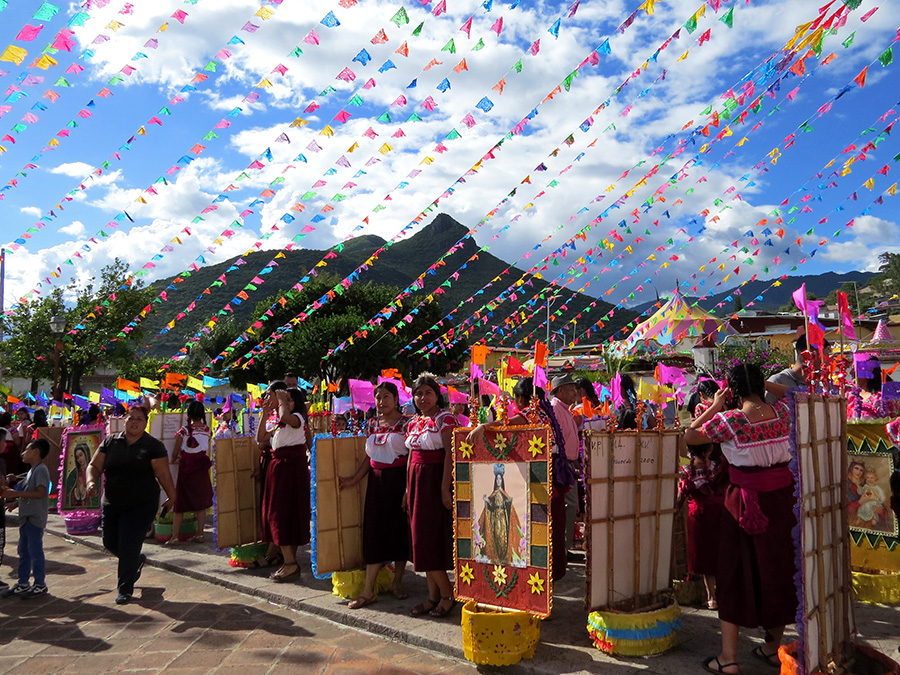
Picacho, the sacred mountain envelops the community in its protective arms, as the canastas and unmarried young women and girls of the village take their place in line for the convite.
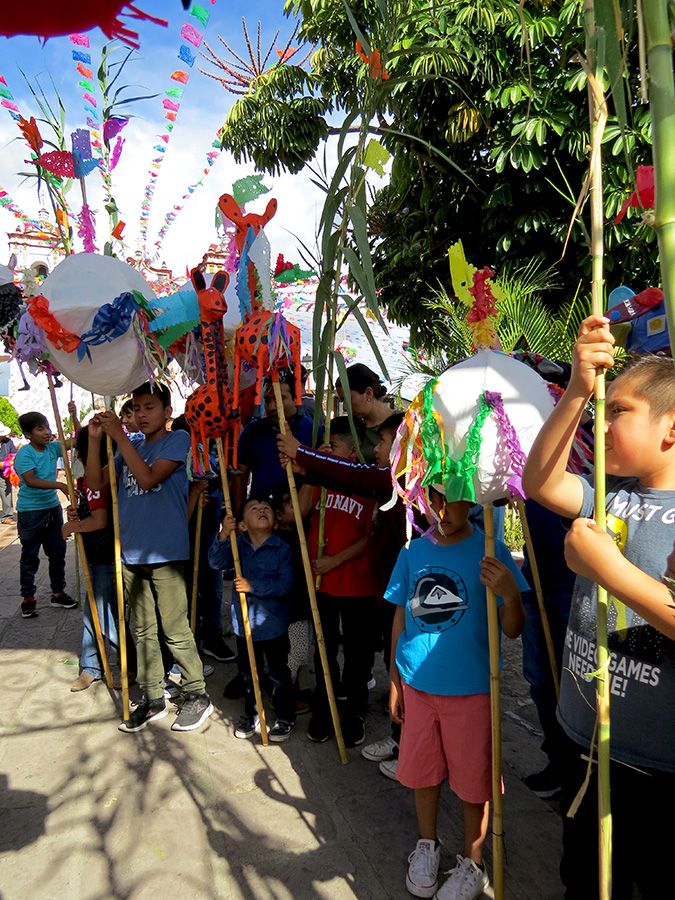
Boys clutching their mini marmotas patiently wait for the deafening sound of the cohetes (rockets) signaling the convite’s start.
Boys and their mini marmotas at the head of the convite — accompanied by a few dads, big brothers, uncles, and officials to keep them in line.
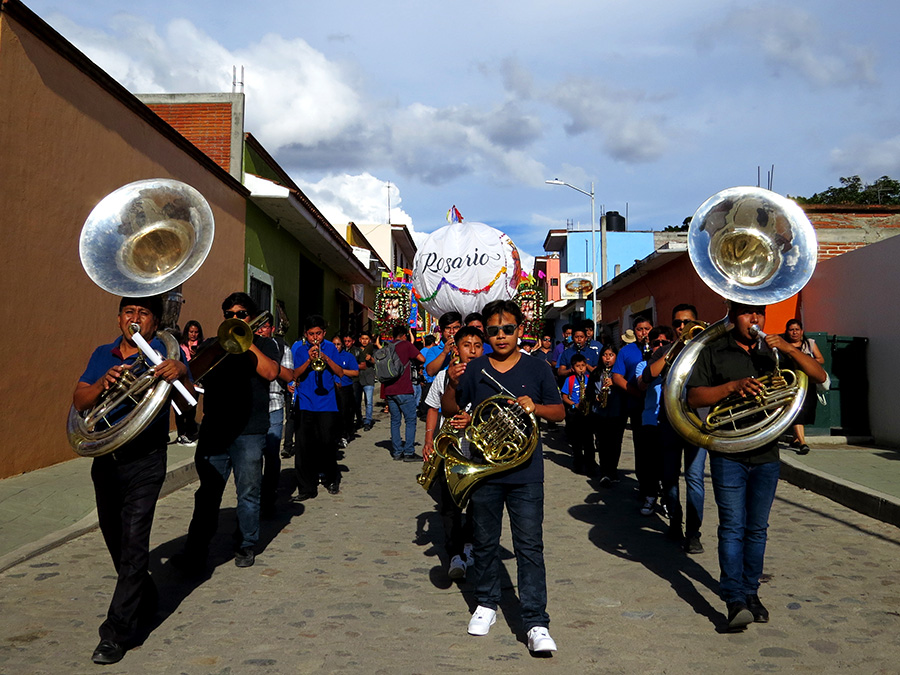
Two monos (new addition this year) and one of several gigantic marmotas follow close on the heels of the young boys.
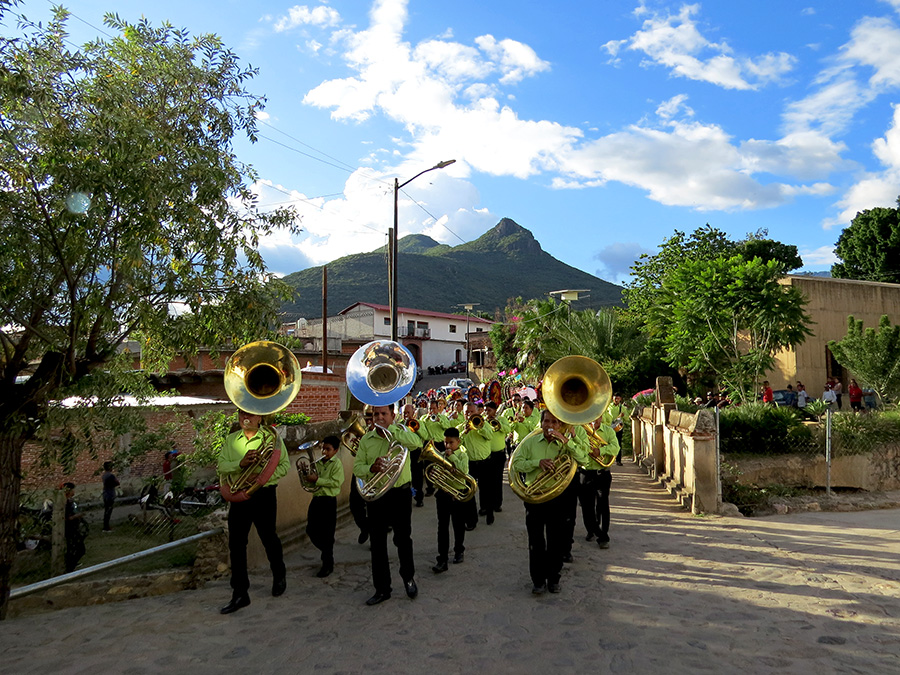
Of course there is a band to set the tempo.
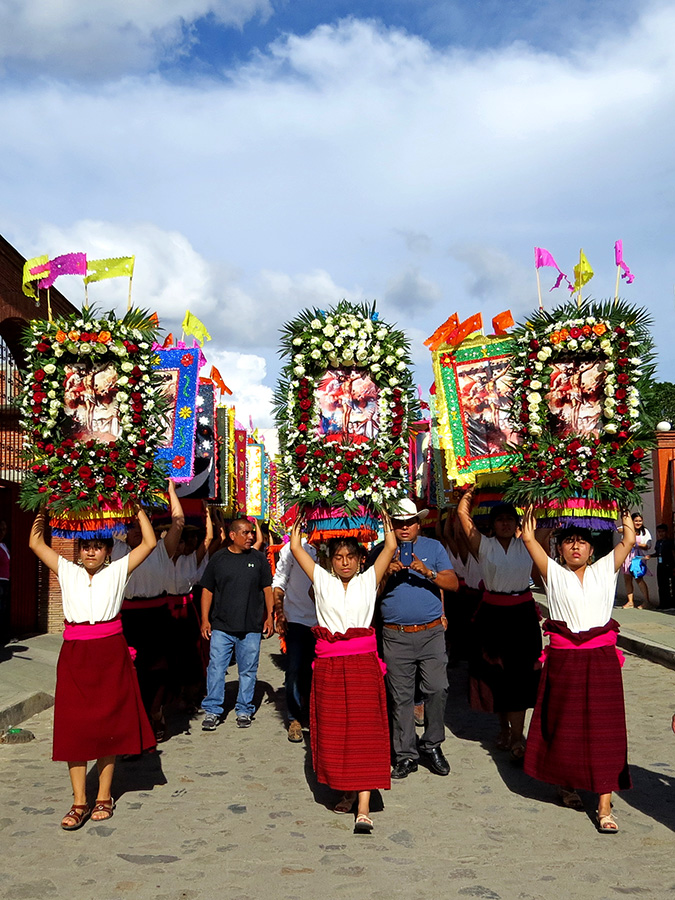
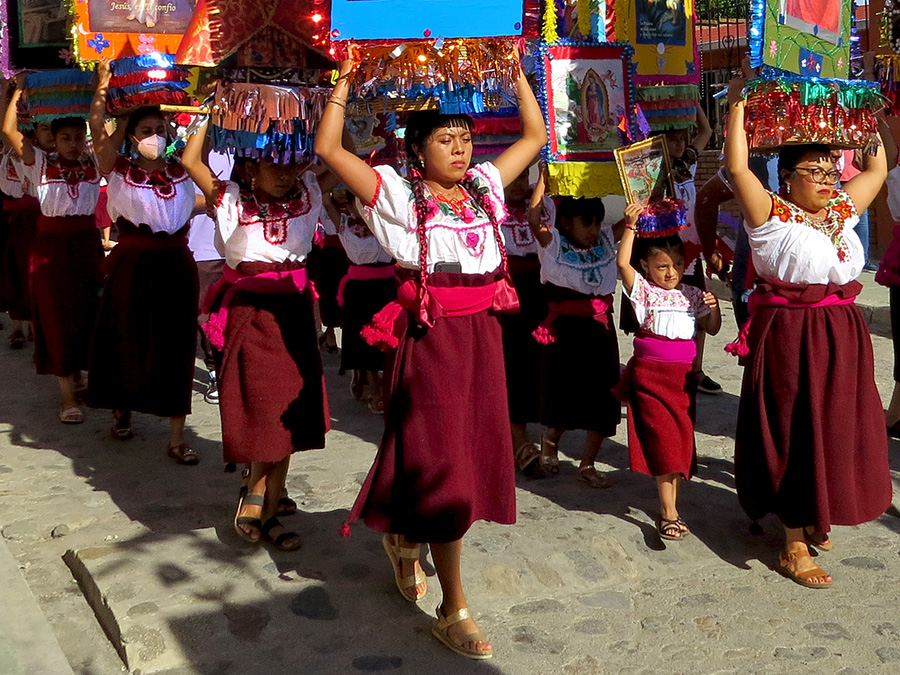
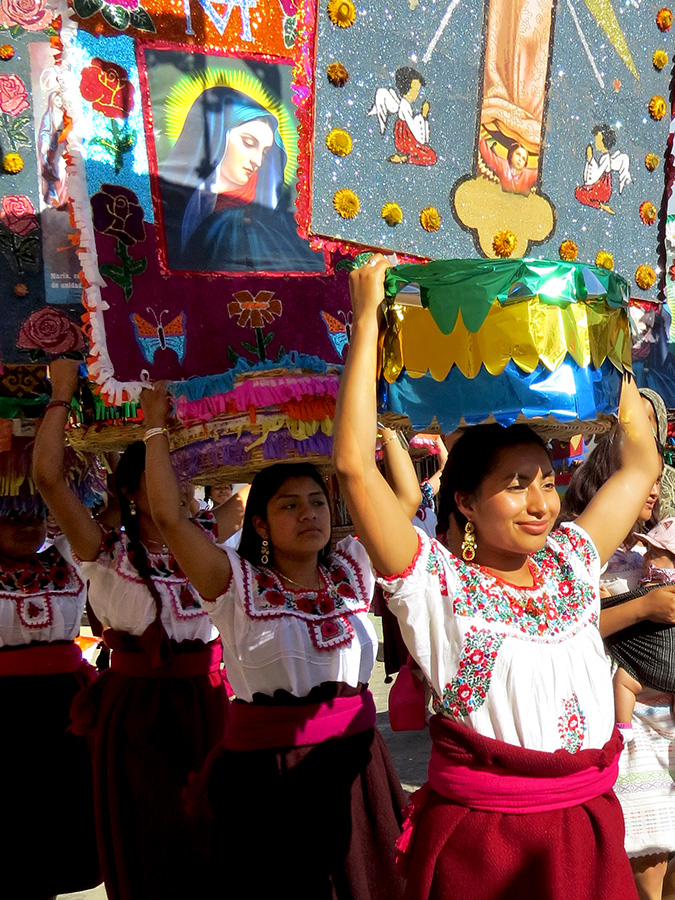
Arms raised, contingents of unmarried women and girls carry canastas decorated with religious imagery.
Most are dressed in the valley’s traditional enredos (wool wrap skirts) and colorfully embroidered white blusas from Oaxaca and Chiapas.
In this Zapotec villlage, the beauty of the faces and strength of their arms are a sight to behold — especially Beatriz (foreground), who is very dear to my heart.
A second band marks the approach of the danzantes.
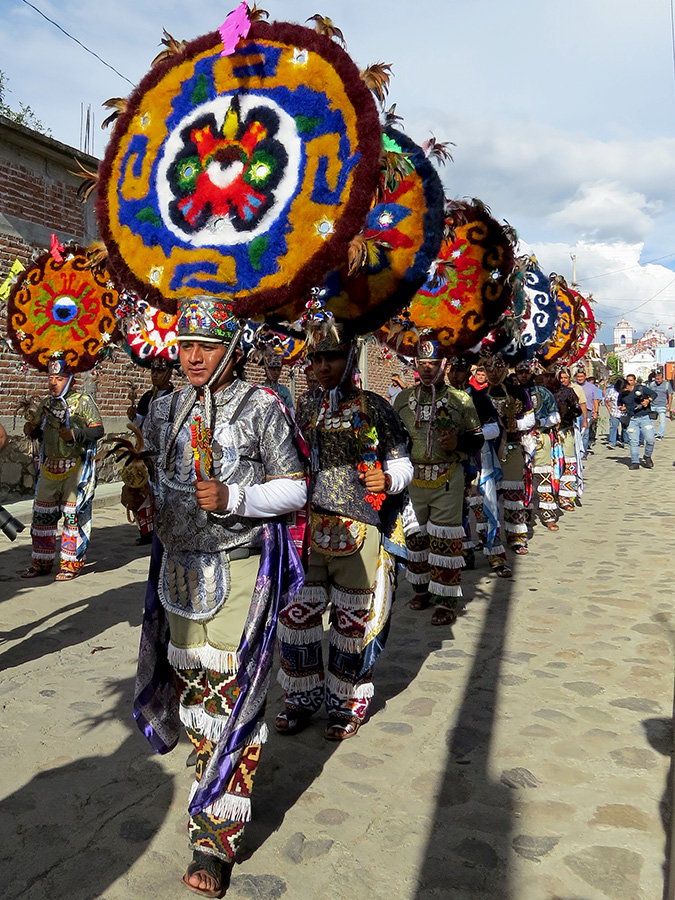
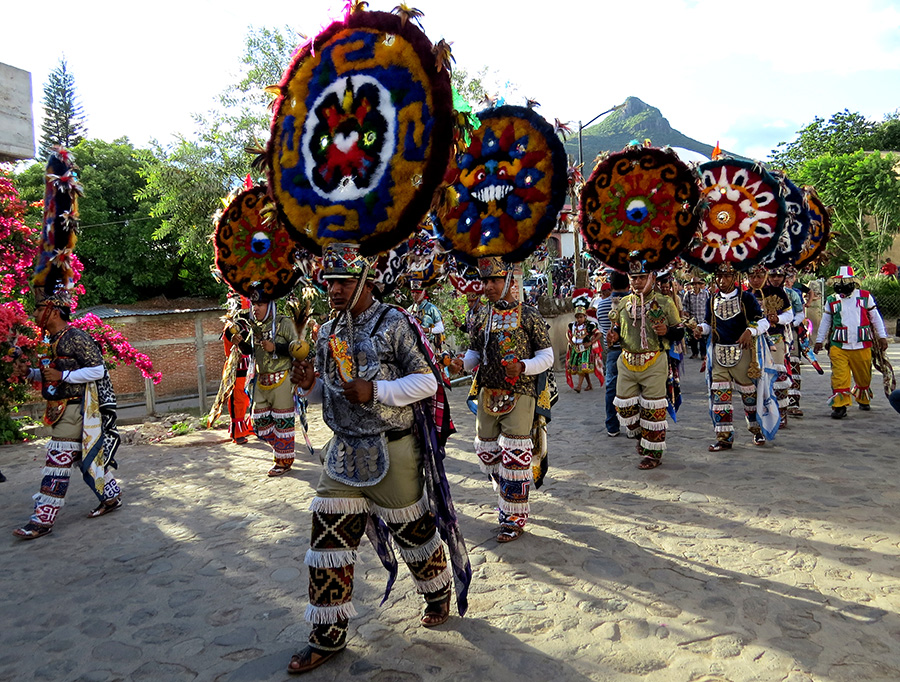
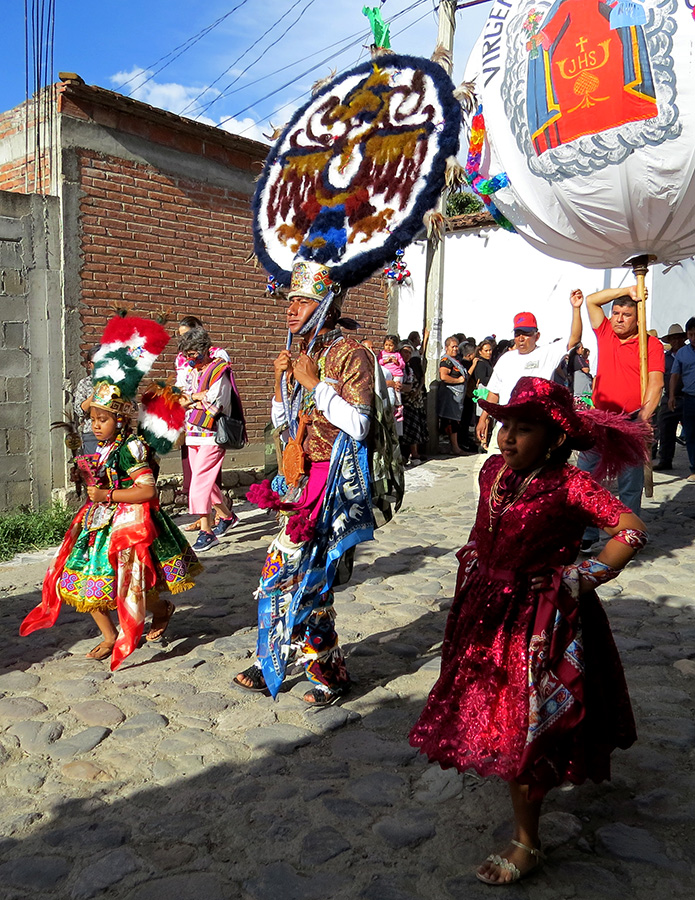
Danzantes of the Danza de la Pluma Promesa 2022-2024 alternately march and dance their way along the cobblestone streets.
Picacho watches as the danzantes wend their way along the meandering streets of Teotitlán del Valle.
Villagers watch as danzantes Moctezuma, Malinche and Doña Marina, followed by another marmota, and town officials mark the last of the convite’s participants.

After almost an hour, the convite and its contingents returned to the church atrium. Their work, of extending an invitation to the festival, is finished — until next time!

Read Full Post »

Yikes, I realized it’s been nine days since my last blog post. Time does, indeed, fly when you’re having fun. And, fun is what I’ve been having, especially during the last four days.

July 4, 2022 – Convite in Teotitlán del Valle for their patronal festival honoring Preciosa Sangre de Nuestro Señor Jesucristo.
July 5, 2022 – Morning hike in the hills of Teotitlán del Valle.
July 5, 2022 – Afternoon presentation of the Danza de la Pluma in honor of Preciosa Sangre de Nuestro Señor Jesucristo in Teotitlán del Valle.
July 6, 2022 – Full day of Danza de la Pluma honoring Preciosa Sangre de Nuestro Señor Jesucristo in Teotitlán del Valle.
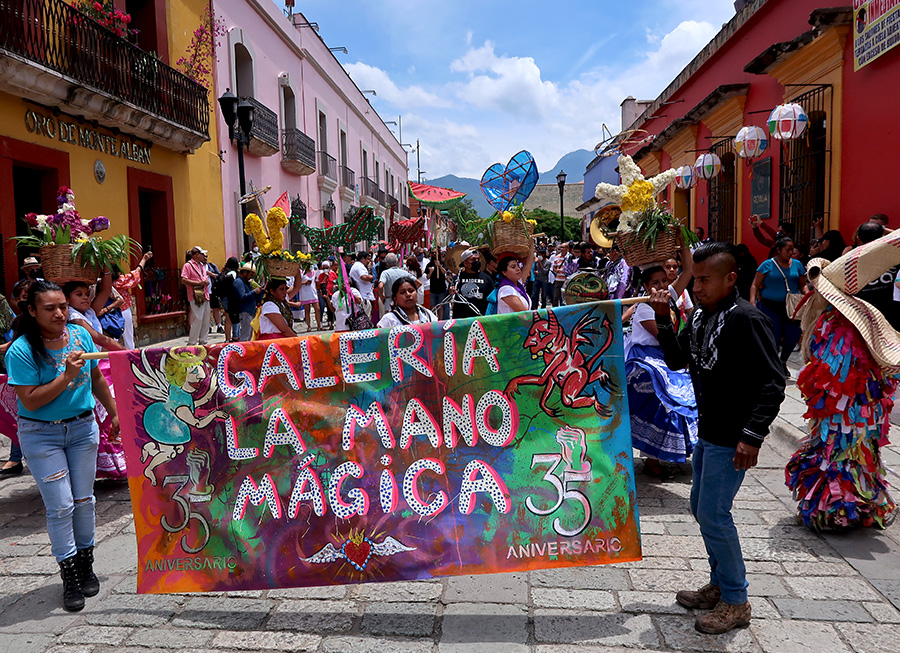
July 7, 2022 – Calenda celebrating the 35th anniversary of the Galería La Mano Mágica in Oaxaca city.

More on the convite, Danza de la Pluma, hike, and calenda to follow. But, first, a return to Teotitlán del Valle today for the final Danza de la Pluma presentation for this festival.

Read Full Post »

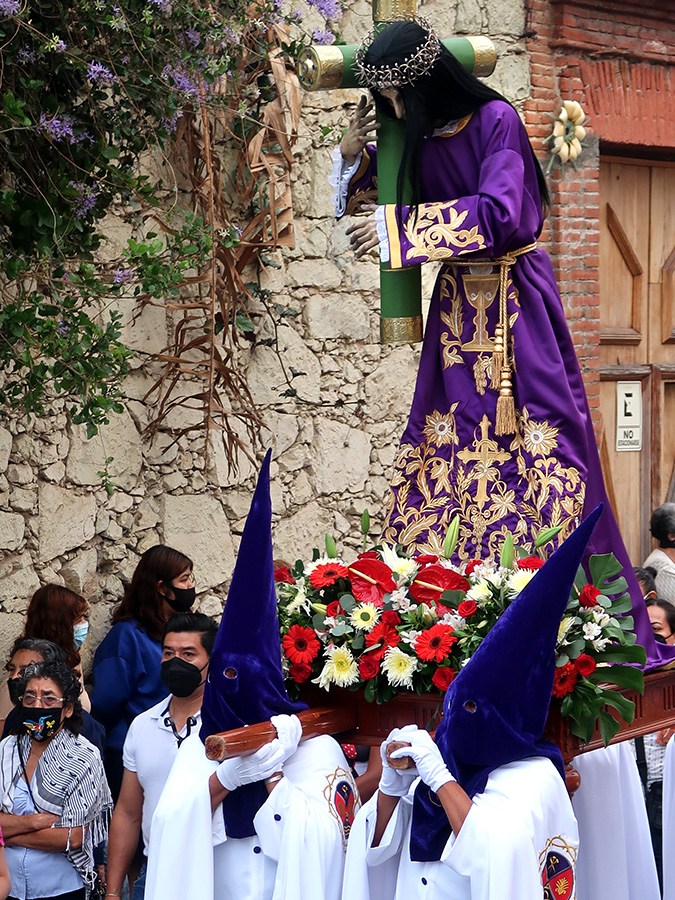
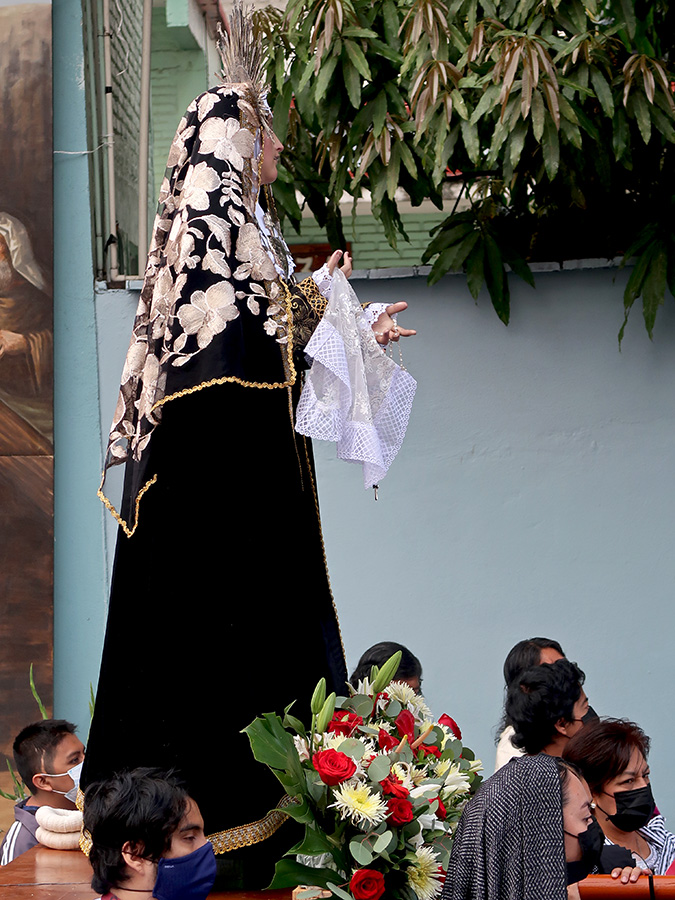
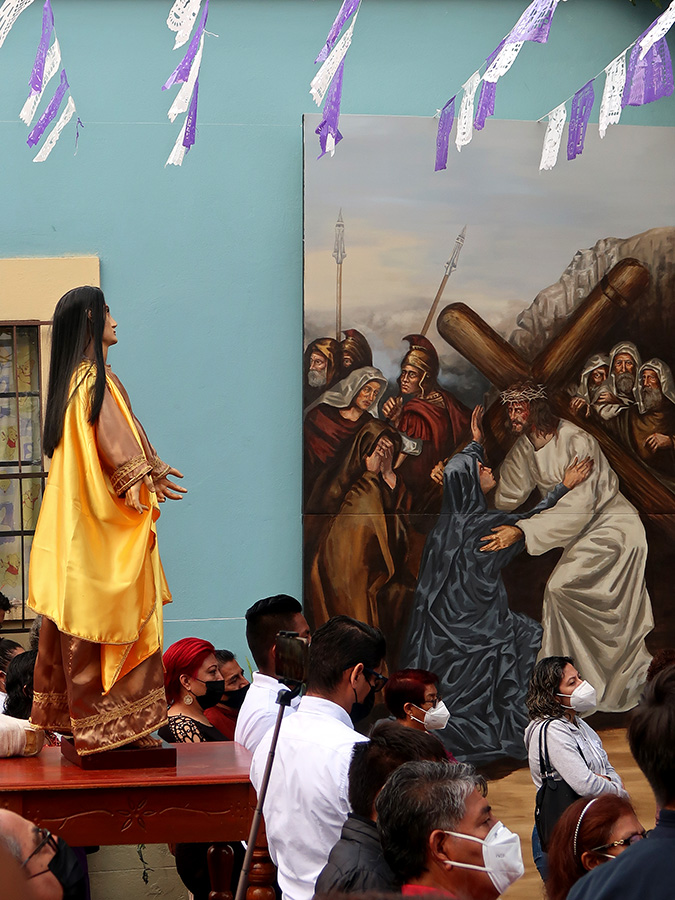
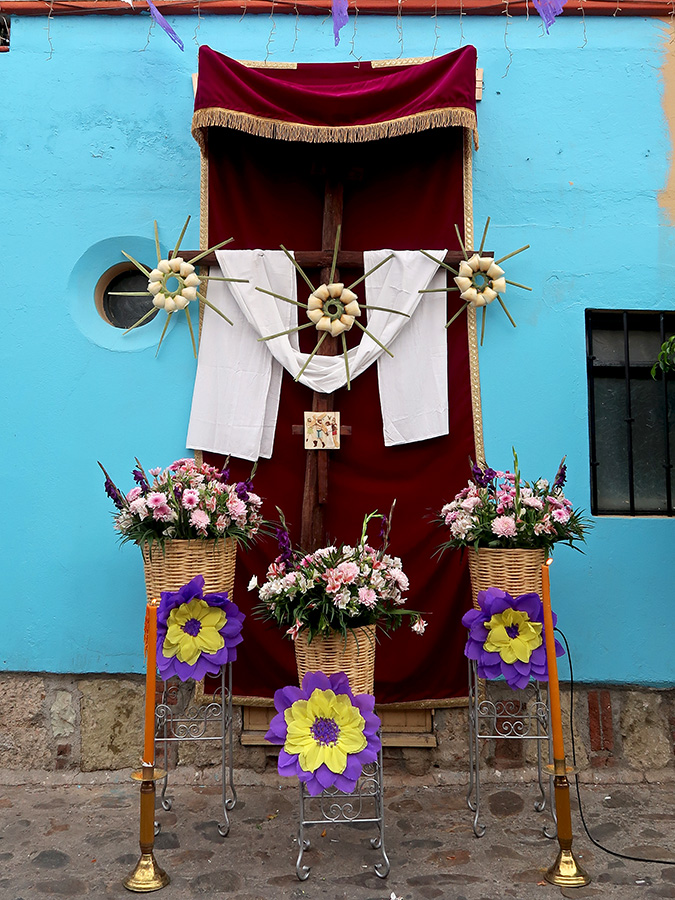
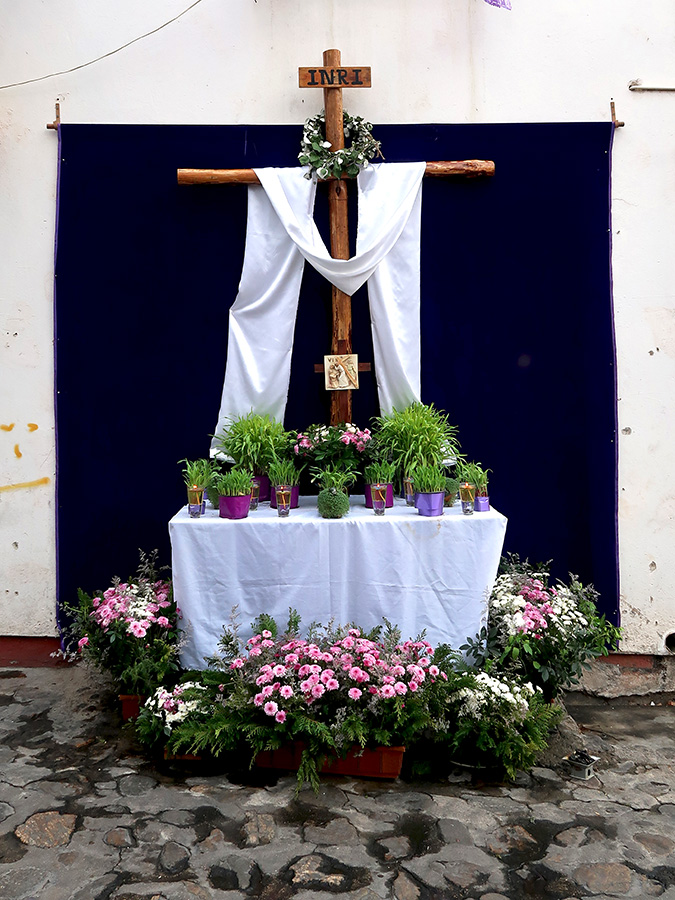
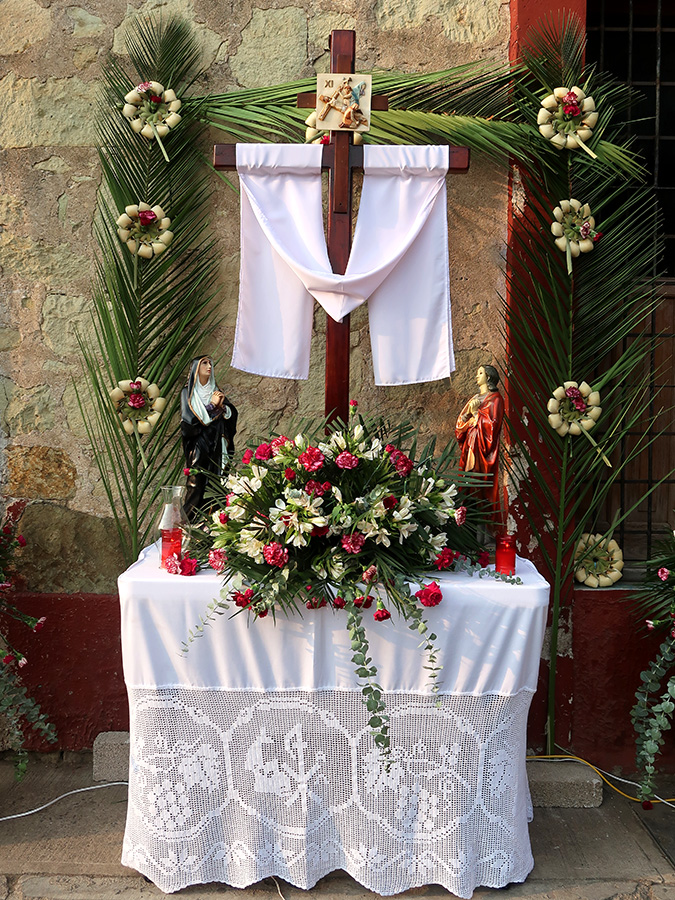
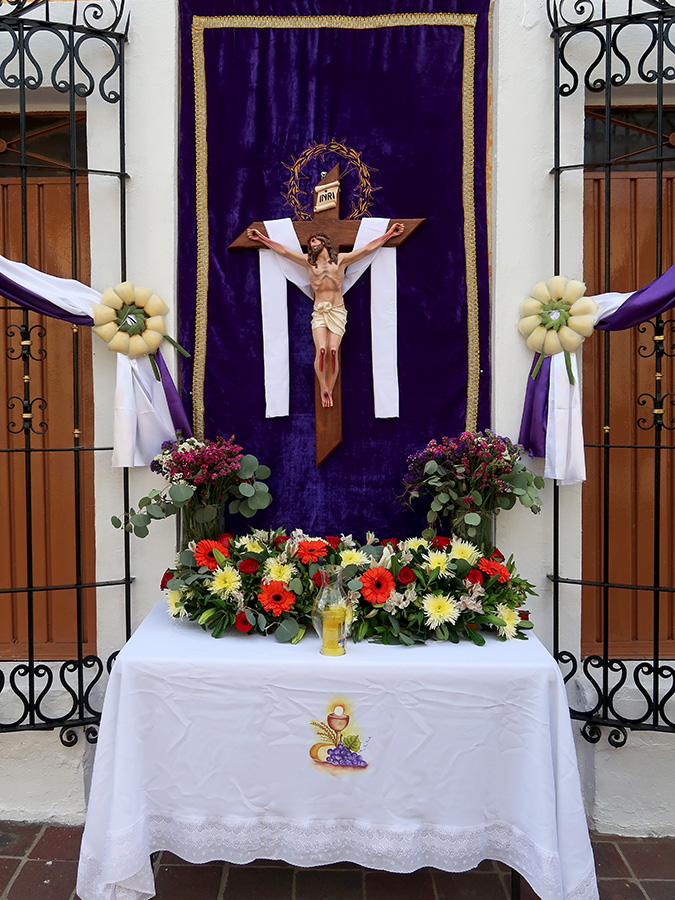
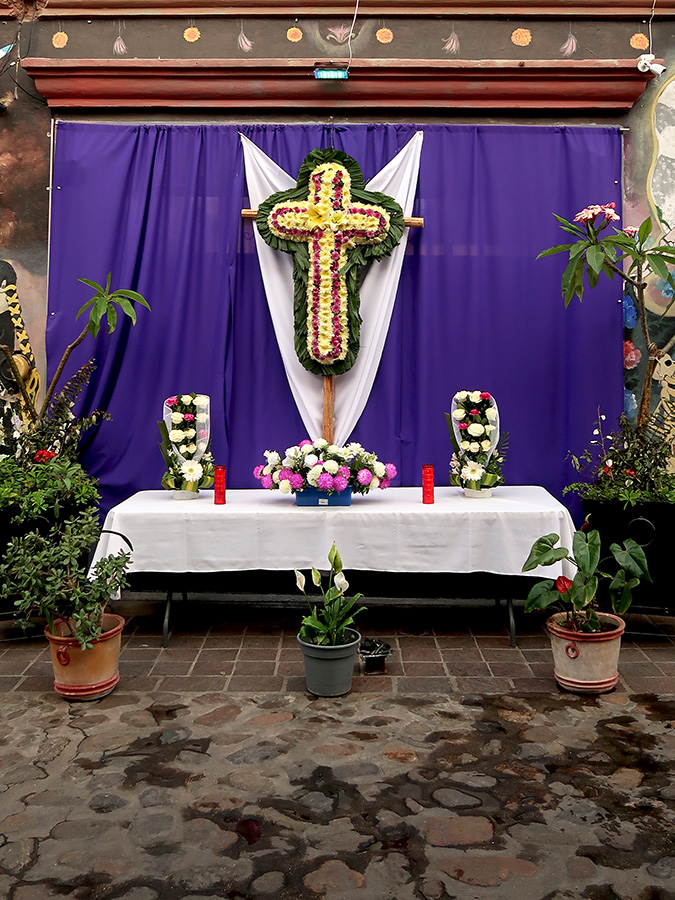
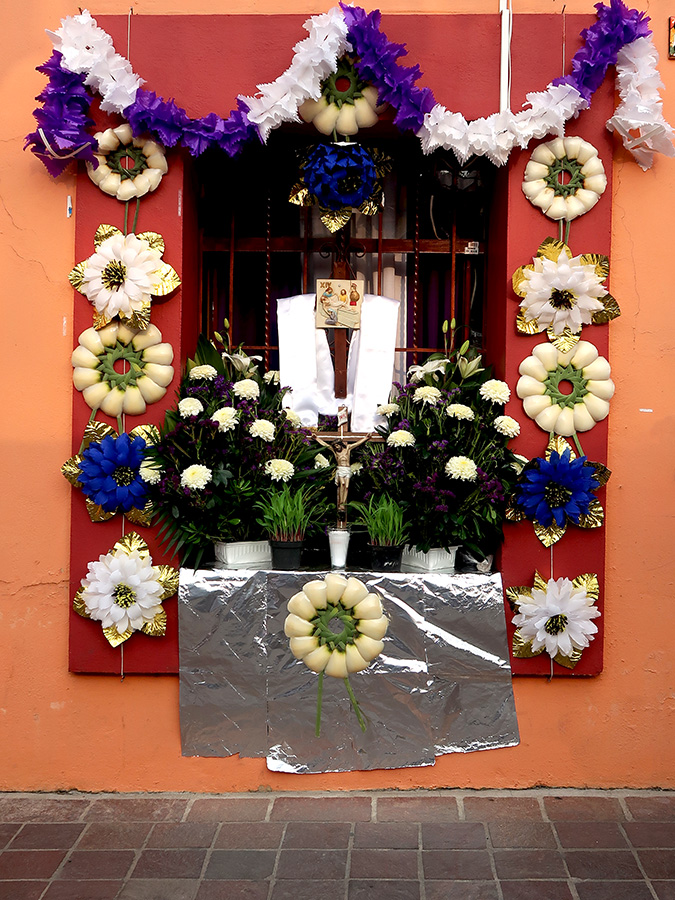
An albeit belated return to Semana Santa (Holy Week). Viernes Santo (Good Friday) in Barrio de Jalatlaco began early in the morning with a Santo Viacrusis along the cobblestone streets — a recreation of the path Jesus walked to his crucifixion. Its purpose is to allow the faithful to contemplate the Passion of Christ. The images of Jesus and Mary Magdalene, accompanied by a band and neighbors, stopped at each of the fourteen Stations of the Cross, that had been created throughout the neighborhood, where prayers were recited.

Image of Jesus being carried by Penitents.
Image of Mary Magdalene.
1. Jesus is condemned to death.
2. Jesus takes up his Cross.
3. Jesus falls for the first time.
4. Jesus meets his Mother.

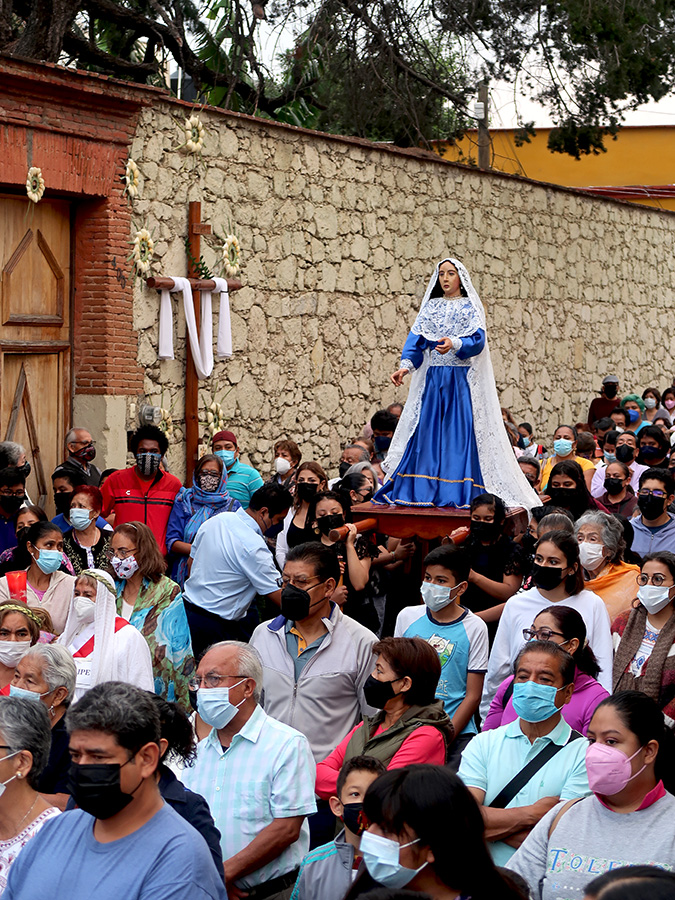
At the fourth station, set up across from the Templo de San Matías Jalatlaco, Mary and John the Baptist (referred to here as, Juan, el primo de Jesús/John, the cousin of Jesus) joined the procession for the farewell encounter between Jesus and his mother.

Mary, Mother of Jesus.
John, the Baptist.
5. Simon of Cyrene helps Jesus carry the Cross.
6. Veronica wipes the face of Jesus.
7. Jesus falls for the second time
8. Jesus meets the women of Jerusalem.
9. Jesus falls for the third time.
10. Jesus is stripped of his garments.
11. Jesus is nailed to the Cross.
12. Jesus dies on the Cross.
13. Jesus is taken down from the Cross.
14. Jesus is laid in the tomb.

Following the procession, neighbors gathered in front of Templo de San Matías Jalatlaco for food and beverages that were available for sale at stalls set up on Aldama and Hidalgo. I came home with yummy enchiladas.

Read Full Post »

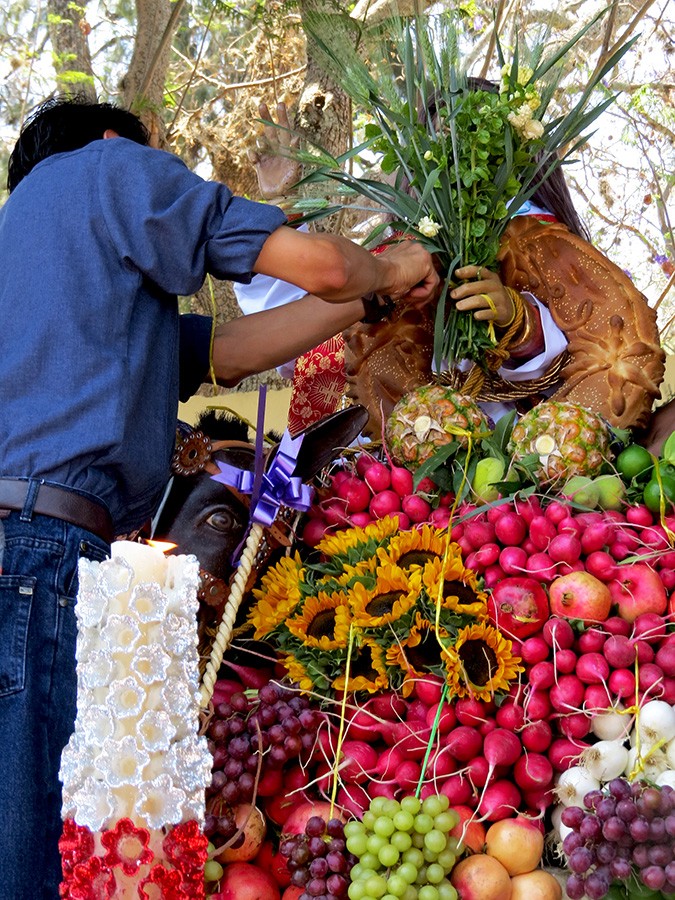
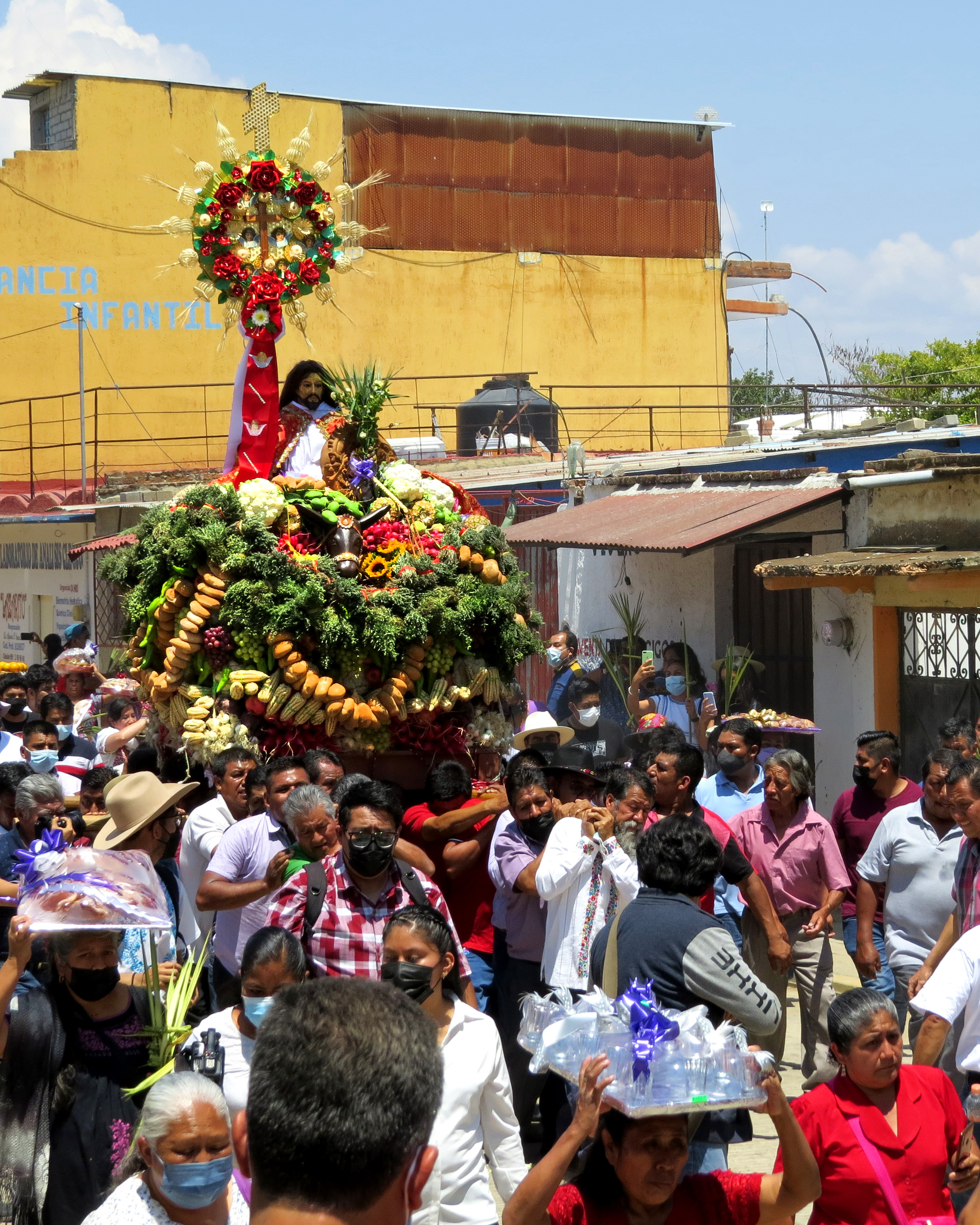
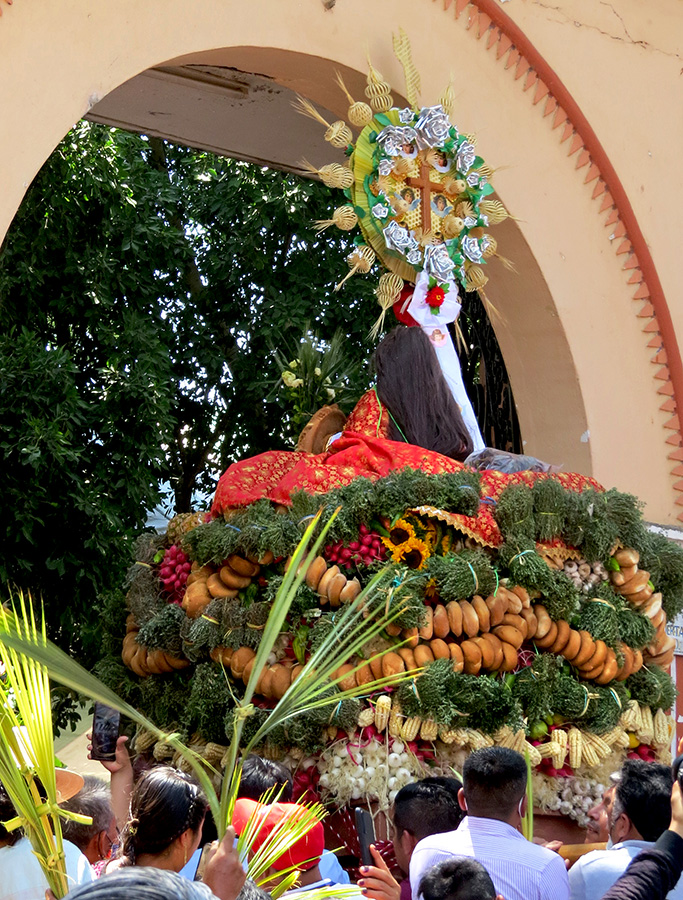
How wonderful it was to return to San Antonino Castillo Velasco on Domingo de Ramos and once again see and experience San Salvador atop his burro being piled high with the best and most beautiful bounty.

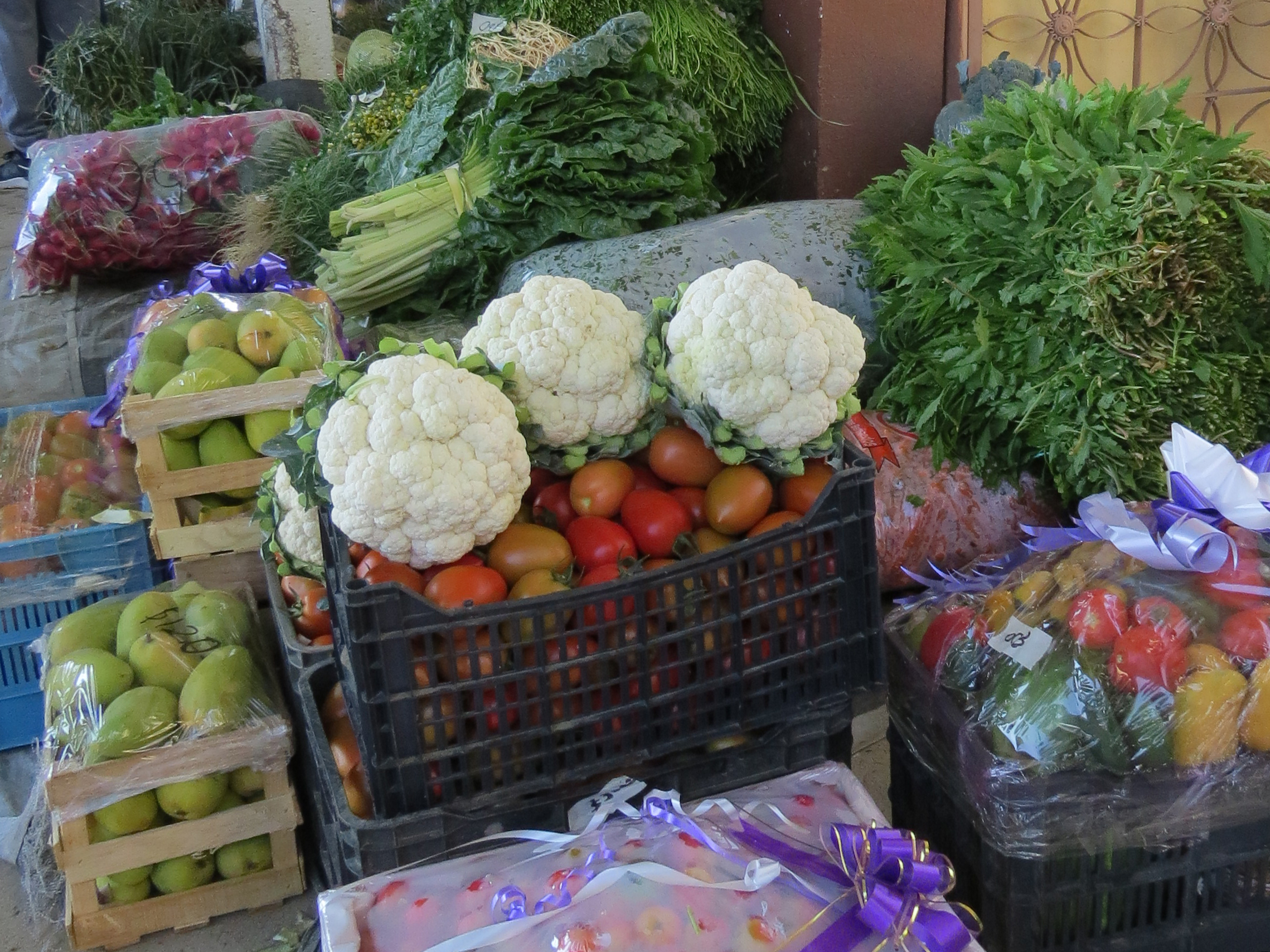
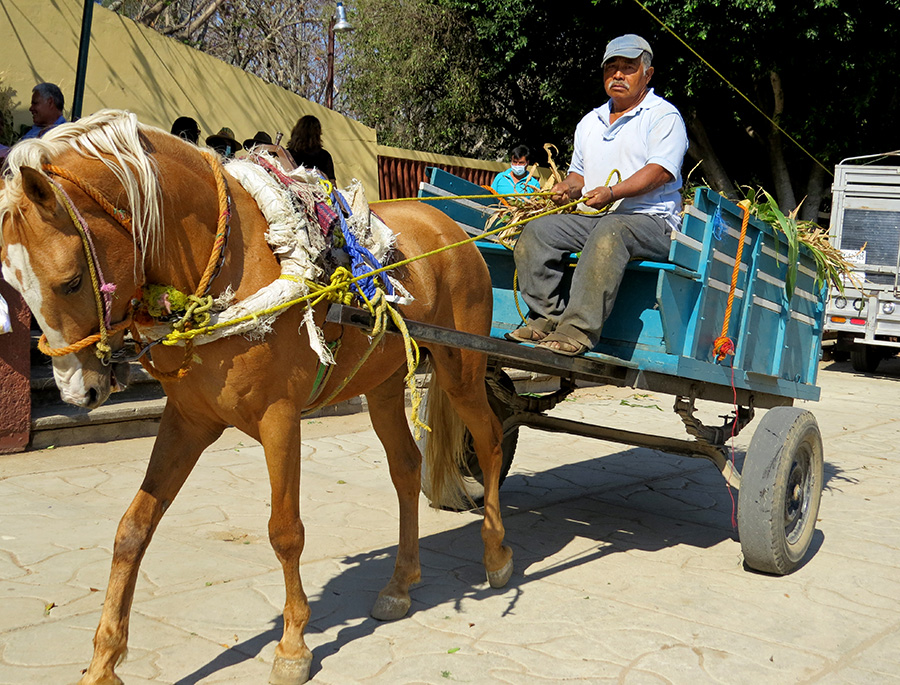
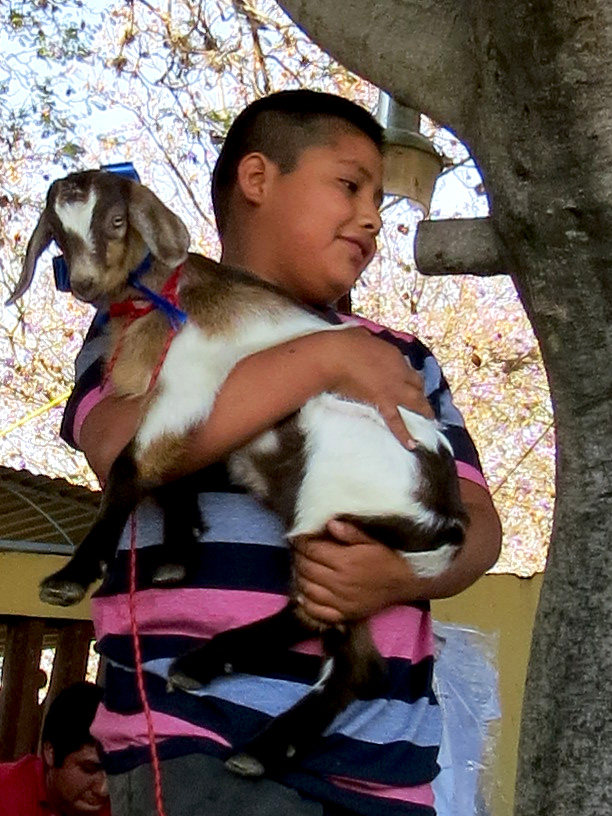
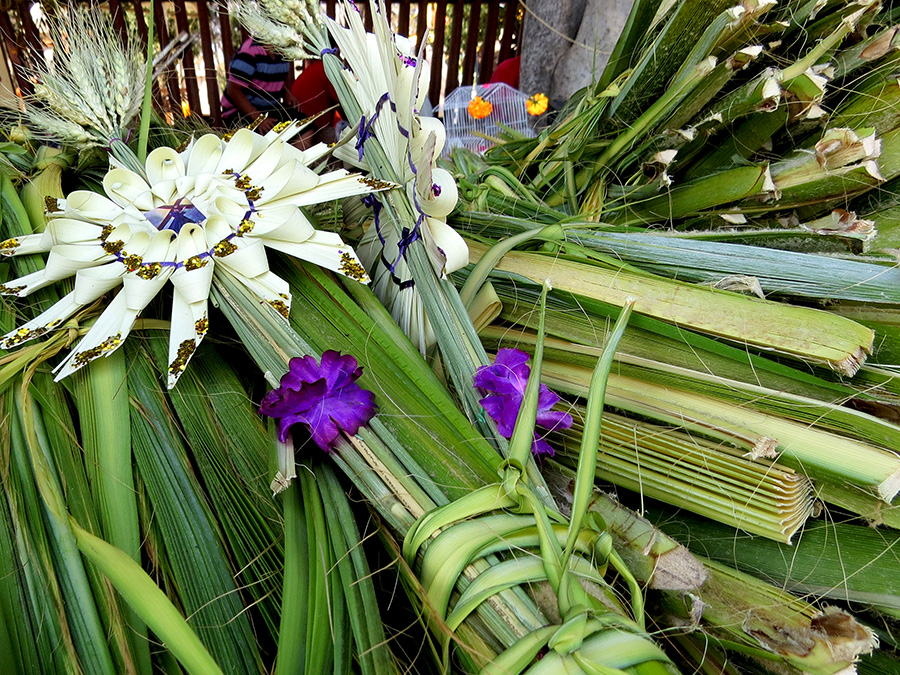
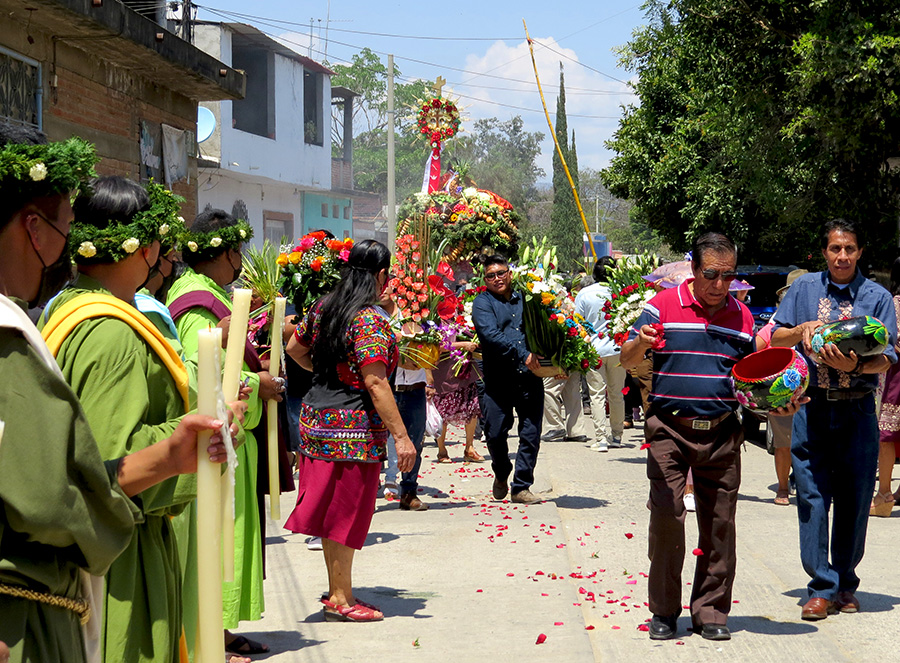
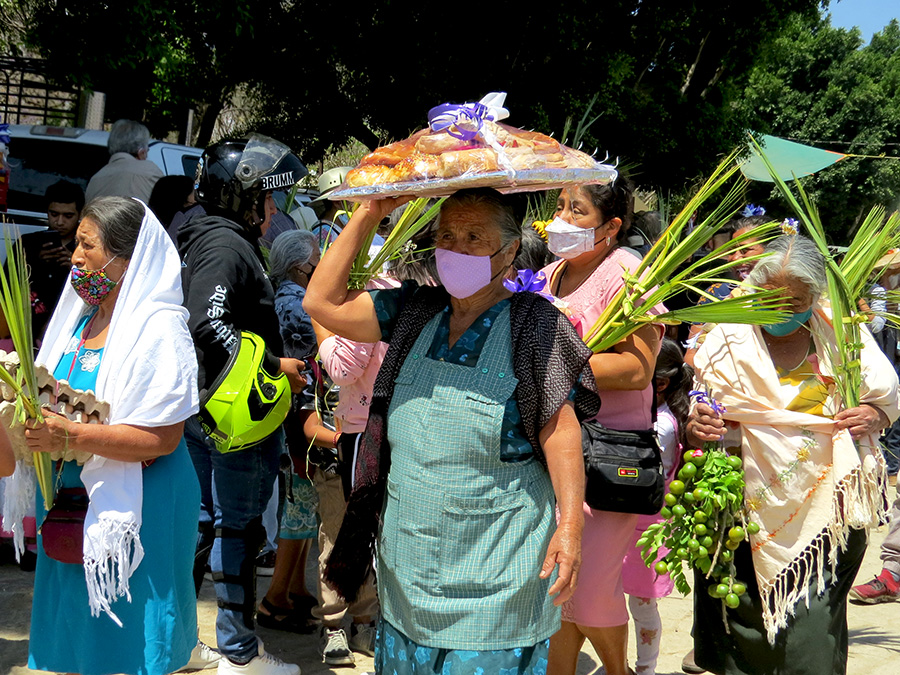
Covid precautions had caused the 2020 and 2021 Palm Sunday celebrations to be canceled. But, at long last, this year villagers, young and old, on bikes and on foot, in carts and in trucks, once again were allowed to return to the street outside the panteón (cemetery) bearing fruit, vegetables, herbs, breads, flowers…

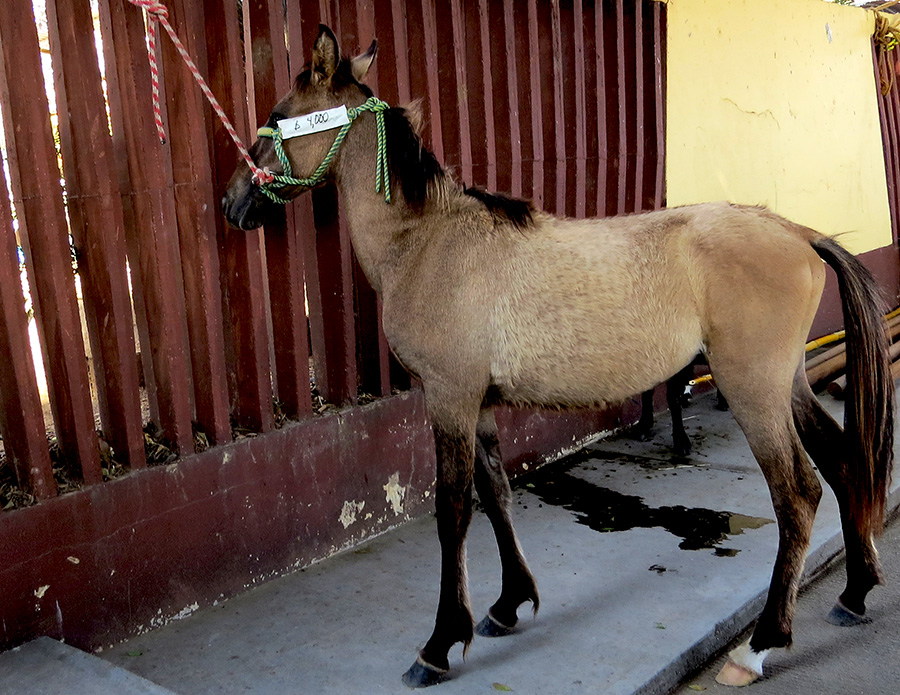
… and farm animals! Their offerings were received and priced by a committee — to be sold later in the day to benefit a local project. By the way, the price tag for the colt read $4000 pesos.

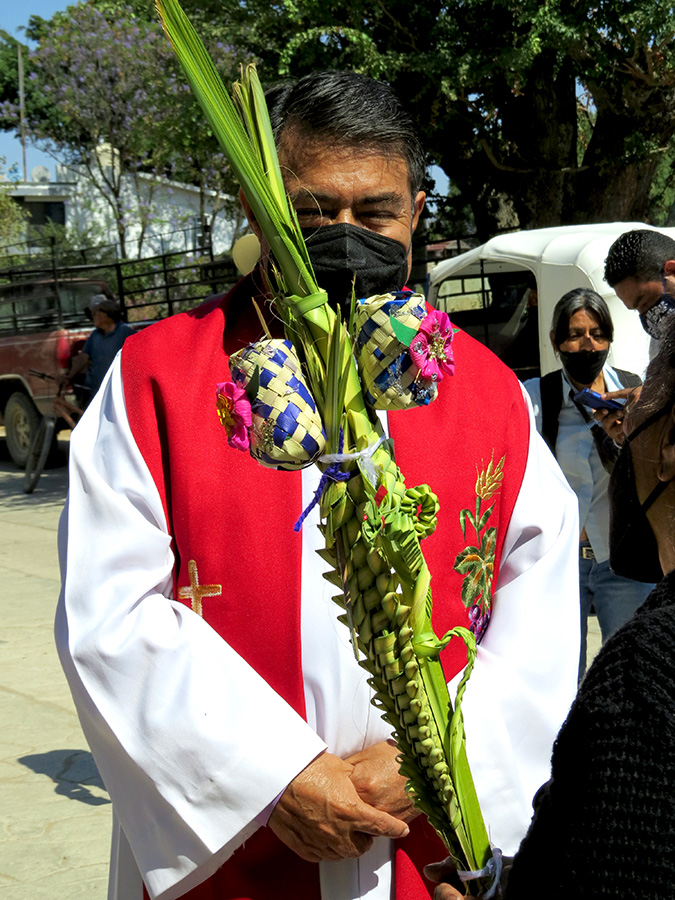
Once the burro was “filled to the brim,” with only his face peeking out, the priest arrived to bless the offerings and faithful with holy water. Dare I confess, it was hot under the noonday sun and the sprinkling of cold water felt good! The palm fronds, having been blessed, were distributed to all. Fireworks began exploding and the rhythmic sounds of the teponaxtles (drums) and chirimía (small oboe) began playing — announcing the start of the procession. Led by smoke from burning copal and a trail of bougainvillea bracts, the litter carrying San Salvador atop his burro set off on the kilometer long journey to the atrium of the church. They were accompanied by villagers and visitors clutching palm fronds and carrying the remainder of the goods collected.

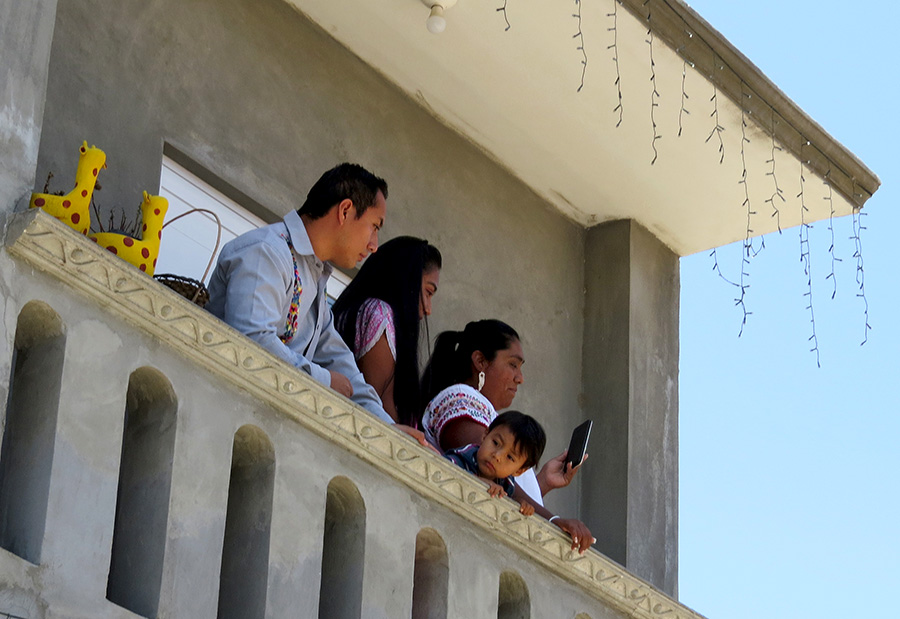
This is a reenactment of the Biblical story of Jesus entering Jerusalem to celebrate the Passover. A few spectators chose to watch from balconies, but mostly the route teemed with a growing mass of followers as 30+ hardy men bore the litter along the “hazardous” street — ducking wires above and navigating topes (speed bumps) below.

Once inside the church atrium, San Salvador and his burro were carefully maneuvered onto a stage where the priest joined them to say mass. At this point, blogger buddy Chris and I swam against the crowd and made our way to the food stalls set up just outside the atrium — San Antonino’s mouthwatering empanadas de amarillo beckoned.

(ps) Chris made a video of the procession which you can view HERE.

Read Full Post »

After two years of quiet contemplation, the streets of Barrio de Jalatlaco were once again alive on the sixth Friday of Lent in celebration of La Virgén de Dolores (Our Lady of Sorrows).

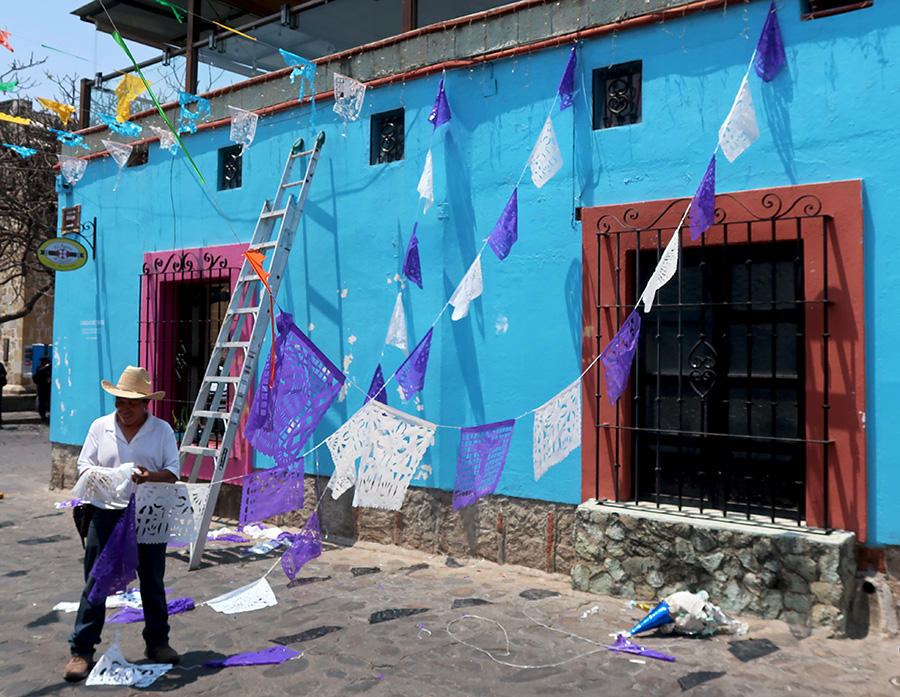
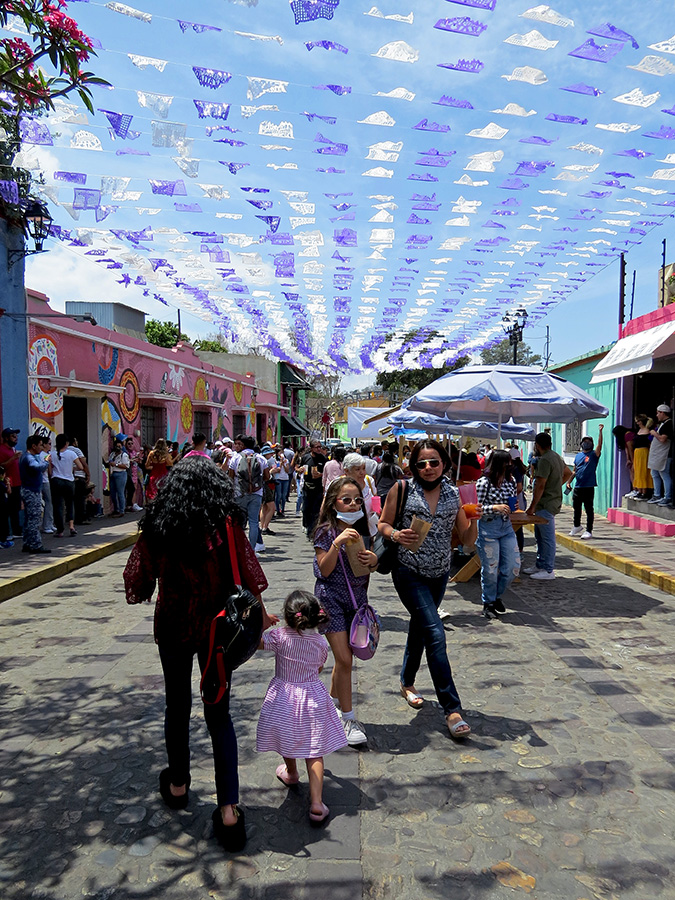
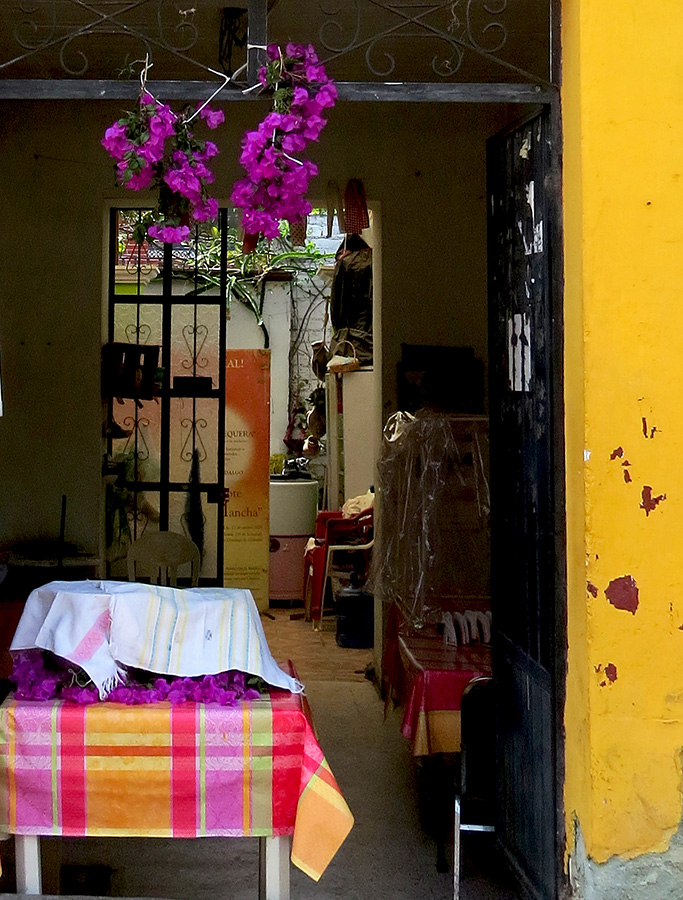
Here in my new neighborhood even more purple and white papel picado was strung from building to building.

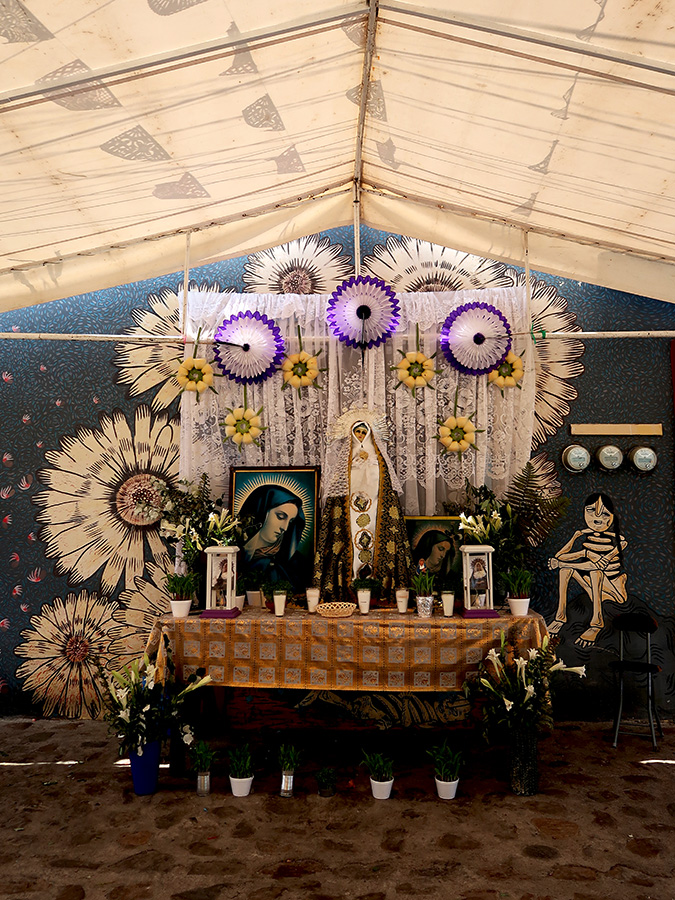
At the far end of Calle Hidalgo, an altar to La Virgén was lovingly assembled.

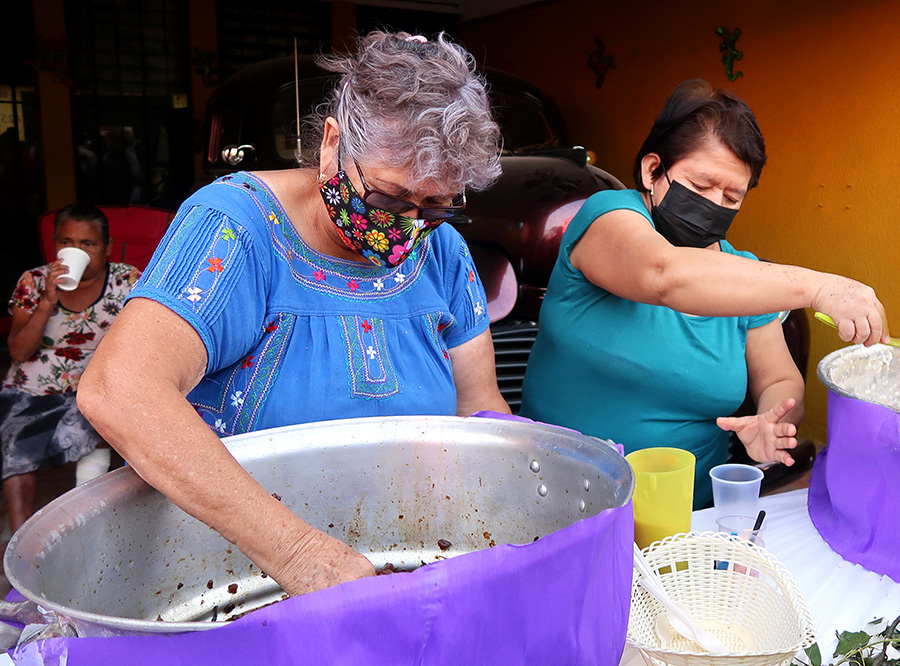
In the late afternoon, stalls were set up along Calle Hidalgo and lines of neighbors and visitors formed to sample the freely offered aguas (flavored waters), nieves (ices), and traditional arroz con leche y garbanzos (rice pudding with chickpeas).

Mass was celebrated in Templo de San Matías Jalatlaco and music filled the street.

A generous, albeit temporary, antidote to the sorrows of our current world. I feel incredibly fortunate to have landed in this amazing neighborhood!

Read Full Post »

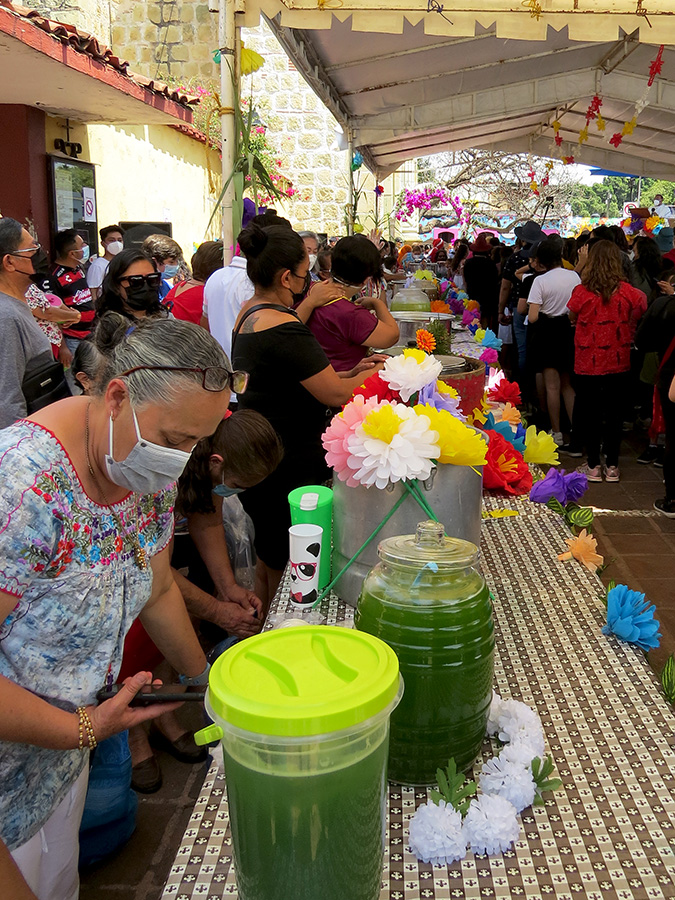
After a two-year absence, she’s back! The Good Samaritan returned to the sidewalks, streets, and church atriums of Oaxaca. The fourth Friday of Lent is Día de la Samaritana, an “only in Oaxaca” celebration. It was with great joy, I ventured onto the streets of Barrio de Jalatlaco clutching my cup, from which to drink the aguas being offered.

My neighborhood!
Jacob’s Well in front of Templo de San Matías Jalatlaco
Reenactment of the Good Samaritan offering water to Jesus

The Day of the Good Samaritan was inspired by the Gospel of John story in the New Testament of the Bible where a tired and thirsty Jesus, on his way to Galilee, asks a Samaritan woman at Jacob’s Well in Sychar for some water. His request was highly unusual because, according to the Old Testament, “Jews regarded the Samaritans as foreigners and their attitude was often hostile.”  The woman complied with his request and the rest is history.

Not just women are Good Samaritans
Agua stations in the middle of Calle Hidalgo
Horchata on offer at a language school

Celebrating the Good Samaritan in Oaxaca began in the atriums of churches at the end of the 19th century. It is a popular and much-loved tradition that has expanded beyond Oaxaca’s church Samaritans to businesses, government offices, schools, and even private homes.

Marimba players providing the musical accompaniment
Violet and white (colors of Lent) papel picado fluttering above Calle Hidalgo
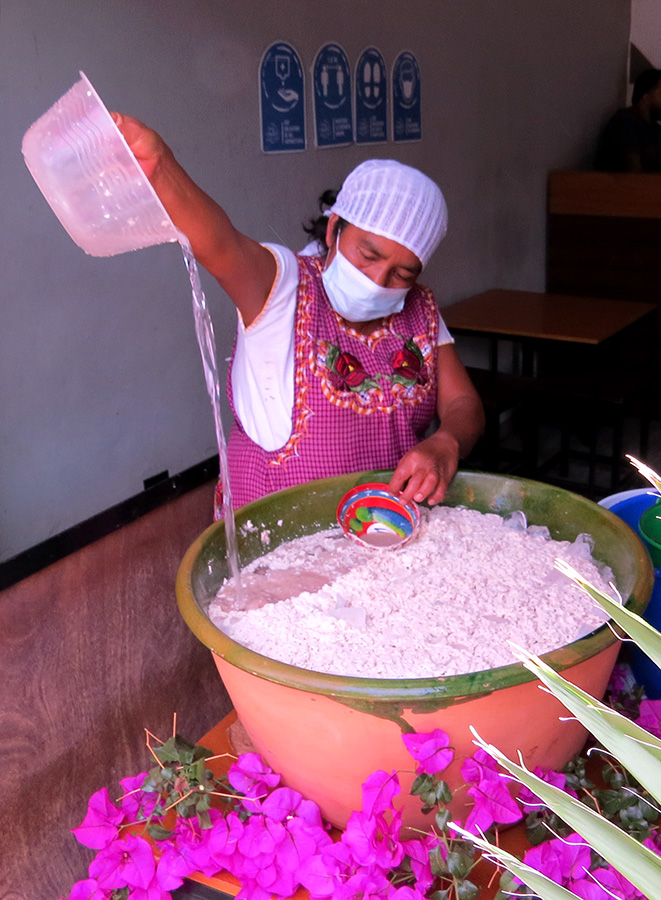
Tejate being poured

This year the first block of Calle Hidalgo was closed to traffic so agua stations could be set up in the middle of the street and naturally, as with most celebrations, there was music — this time a marimba provided the soundtrack.

Lines going to stations on the right and left at the corner of Calles Hidalgo and Aldama
Outside Templo de San Matías Jalatlaco, most, though not all, listened to the priest (upper right corner)
A refreshing cup of tejate on a hot day

As in pre-Covid years, people of all ages, from small children to grandparents, lined up at bougainvillea and palm decorated booths to sample agua de jamaica (hibiscus), horchata, chilacayote (squash), tamarindo, sandia (watermelon), tejate, and other creative and refreshing concoctions.

The guys, gals, and aguas
The friendly Samaritan at Coffee Deep serving horchata
The end!

After an hour of wandering the streets of my neighborhood and sampling several aguas and even a cookie or two, I happily returned home with my heart full of love and gratitude for the traditions and people of Oaxaca.

Read Full Post »

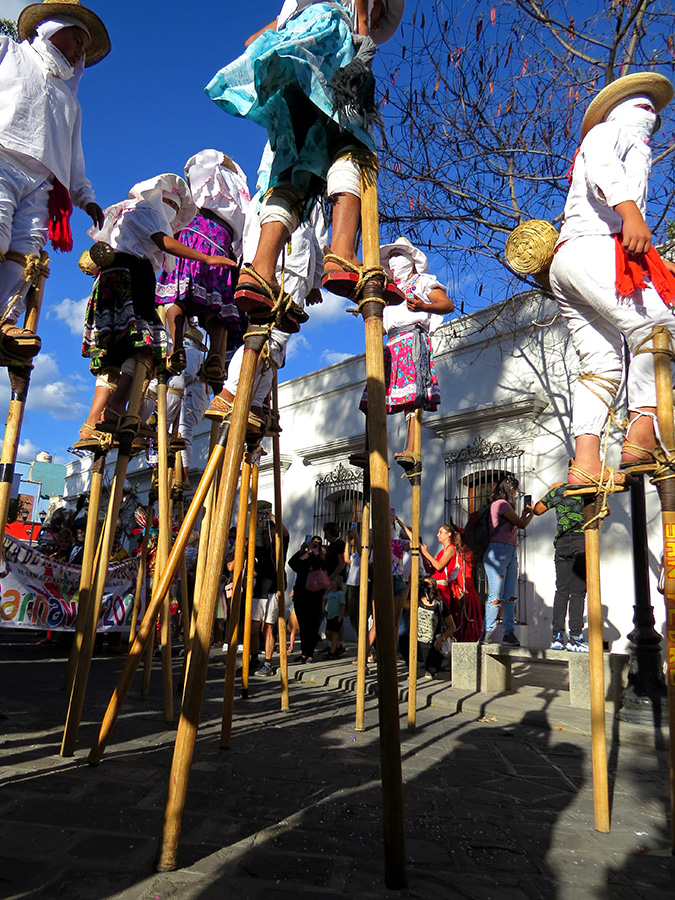
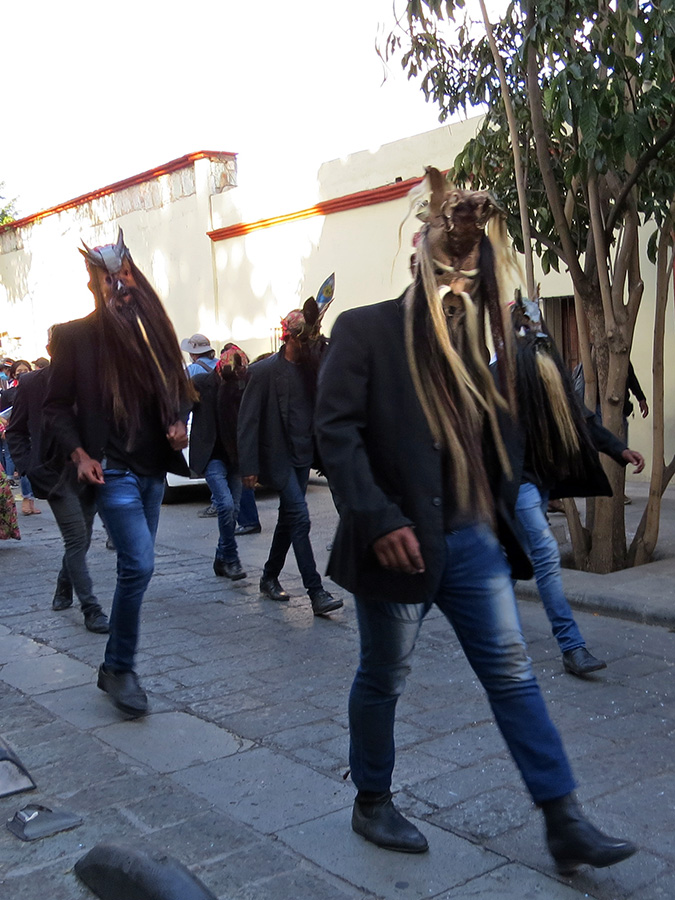
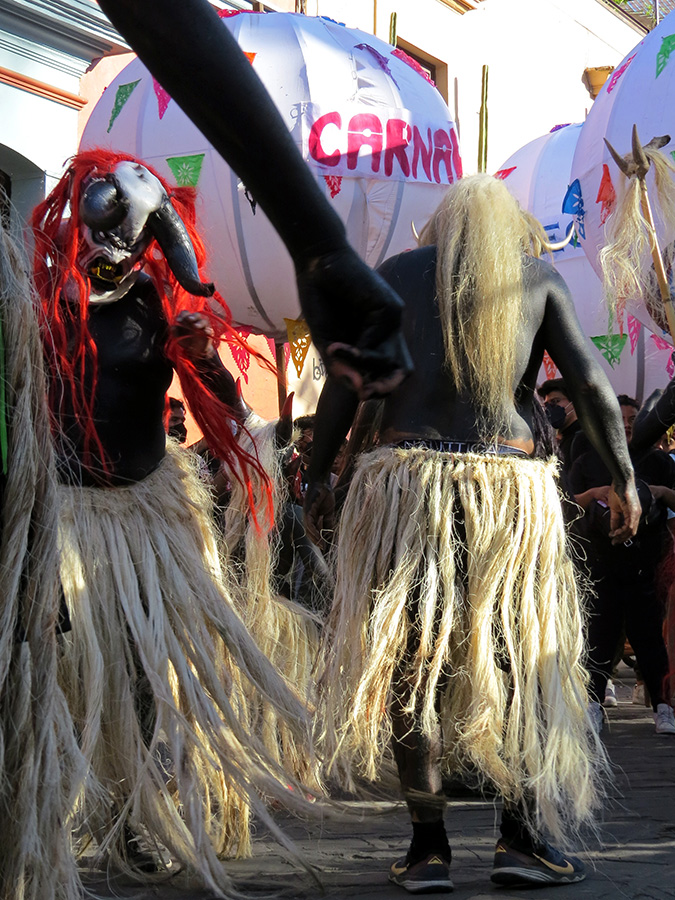
After the 2021 hiatus due to the pandemic, Oaxaca city resumed its annual Carnavales Oaxaqueños calenda. This parade, held on the Saturday before the start of Lent, was begun in 2019 to promote the traditional Carnaval celebrations in various villages in Oaxaca’s Central Valleys and the Mixteca on Shrove Tuesday (aka, Carnival, Mardi Gras, and Fat Tuesday). This riot of music, costumes, masks, and even stilts assembled at the Cruz de Piedra, processed down the Macedonio Alcalá, and concluded at the Alameda de León — to cheering, chanting, and picture/video taking by residents and visitors.

Villages participating were San Bartolo Coyotepec, San Juan Bautista La Raya, Villa de Zaachila, San Bartolome Quialana, Santiago Juxtlahuaca, Magdalena Teitipac, San Mateo Macuilxóchitl, Santa Catarina Minas, Santiago Llano Grande, San Sebastián Tecomaxtlahuaca, Santa María Coyotepec, Chalcatongo de Hidalgo, and Putla Villa de Guerrero.

Of course the pandemic isn’t over and a couple of weeks ago Oaxaca went back up to semáforo amarillo (yellow), so the impact of crowds gathering (albeit outside) remains to be seen. At least up near the parade’s starting point, most onlookers were wearing cubrebocas (protective masks). Unfortunately, the exceptions seemed to be young tourists. I am pleased to note that the poster for San Martín Tilcajete’s very popular Carnaval celebration states, “Uso obligatorio de cubrebocas” (Use of a protective mask is obligatory). Let us hope that the unmasked will respect the locals and put on a cubreboca!

Read Full Post »

In Mexico, Valentine’s Day is known as Día del Amor y la Amistad (Day of Love and Friendship) — a sentiment that honors and celebrates more than just romantic love.

Recyclying heart by Noel Gómez Lorenzo — in front of Oaxaca’s Cathedral during the summer of 2021.

From my heart and home to yours, I wish all my blog readers, ¡Feliz Día del Amor y la Amistad!

Read Full Post »

Today is Día de los Tres Reyes Magos — a day the children of Mexico receive gifts from the Three Kings (aka, Three Wise Men, Magi). Alas, I am in quarantine at home with a possible case of the Omicron variant of Covid-19. I say “possible” because, though the rapid antigen test result was negative, Emerging Data Raise Questions About Antigen Tests and Nasal Swabs. Plus, three days after attending an event where I took off my mask to eat and drink, I began experiencing all the symptoms — stuffy nose, sore throat, headache, dry cough, and no energy. Ugh! Fortunately, I am double vaxed and boosted, and after two days of feeling miserable, I am beginning to feel somewhat human again.

Instead of greeting the Three Kings on the street and watching them bring smiles and gifts to the children of Oaxaca, I will content myself with keeping company with my Melchor, Baltasar, and Gaspar — woven of palm fronds in the Mixteca region of Oaxaca. And, I will treasure the gift of wonderful friends and neighbors who have kept my larder stocked and generously offered their help while I’m confined to quarters. They are my reinas y reyes (queens and kings)!

Read Full Post »

I’m bidding a fond, but with a hint of “good-riddance to bad rubbish,” farewell to 2021. In truth, I’m trying not to view the recent piles of basura (garbage) in the streets and bloqueos (blockades) by the garbage collectors as a metaphor for this past year of pandemic, fires, floods, and general pandemonium in the world.

Long walks around the city sufficed to fill my need to “travel” until the spring when my world expanded — with untold gratitude to scientists for their work in developing vaccines to help protect us from worst case Covid-19 scenarios. After fourteen months, armed with the vaccine, cubrebocas (face masks), caution, and excitement, I began venturing out of the city (even up to el norte twice), spending time with family and friends, and actually attending activities and events in person, not just via Zoom. It was almost, but not quite, like normal — and it was good!

January 17, 2021 – Templo y Convento de San Francisco de Asís Oaxaca
February 7, 2021 – Tapete woven by Mario González Pérez; Sangre y Herencia exhibition at Hotel Casa Antigua.
March 8, 2021 – Busy street corner in the city.
April 2, 2021 – La Morada de Colibrí, one of my favorite stalls at Pochote Xochimilco Mercado Orgánico y Artesanal.
May 26, 2021 – Rooftop art in Barrio de Jalatlaco.
June 25, 2021 – Bike rally passing the ADO bus station — saying “No to violence against women” by students from Colegio Superior para la Educación Integral Intercultural de Oaxaca.
July 13, 2021 – Outside wall of La Mano Magica Gallery/Galería promoting the Shinzaburo Takeda exhibition.
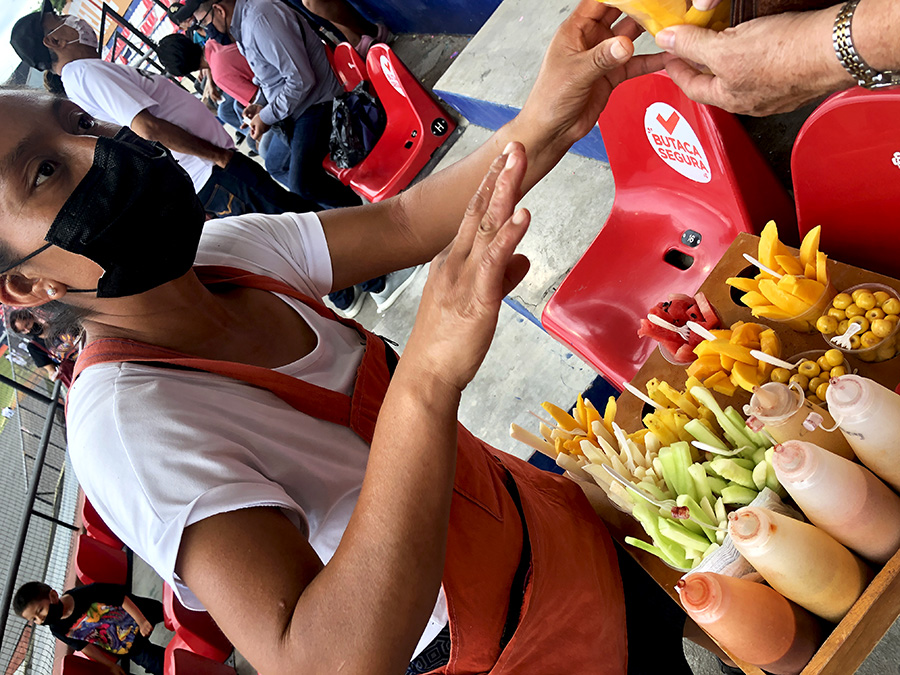
August 1, 2021 – Guerreros baseball game dining at Estadio de Béisbol Lic. Eduardo Vasconcelos.
September 4, 2021 – Tree down on Czda. de la República after strong winds and very wet rainy season.
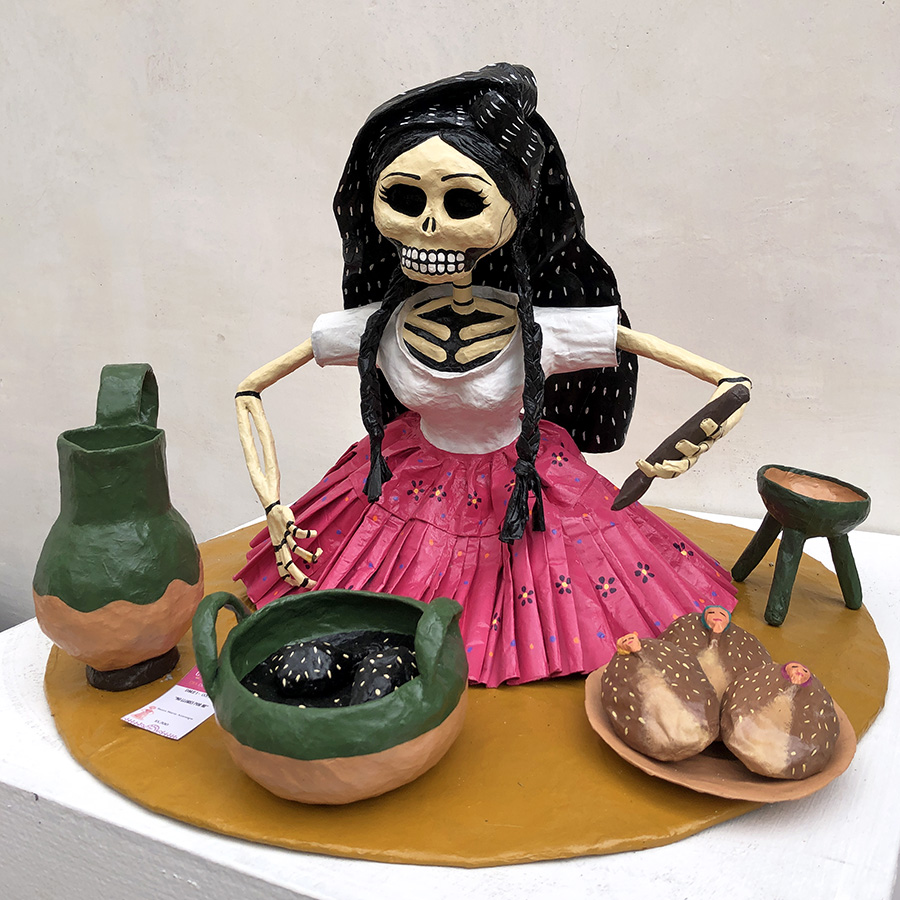
October 19, 2021 – “No Llores Por Mi” sculpture by a Santa María Atzompa artist — Día de Muertos exhibition at ARIPO.
November 1, 2021 – Neighbor weeding and cleaning the street in preparation for the evening’s Muerteada.
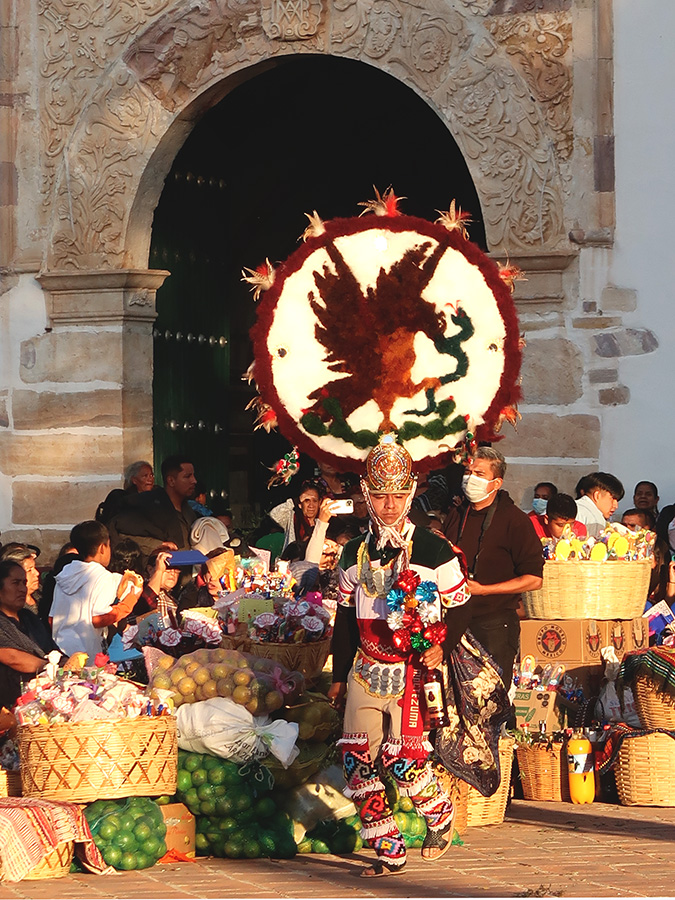
December 12, 2021 – In honor of the Virgen de Guadalupe, the last dance by Danza de la Pluma de Teotitlán del Valle, Promesa 2019 – 2021.

Feliz año nuevo y muchisimas gracias to all my wonderful blog readers for “hanging in” and for your encouraging comments during these challenging times — it means the world to me! May 2022 be kinder to all and bring you peace, joy, and health.

Read Full Post »

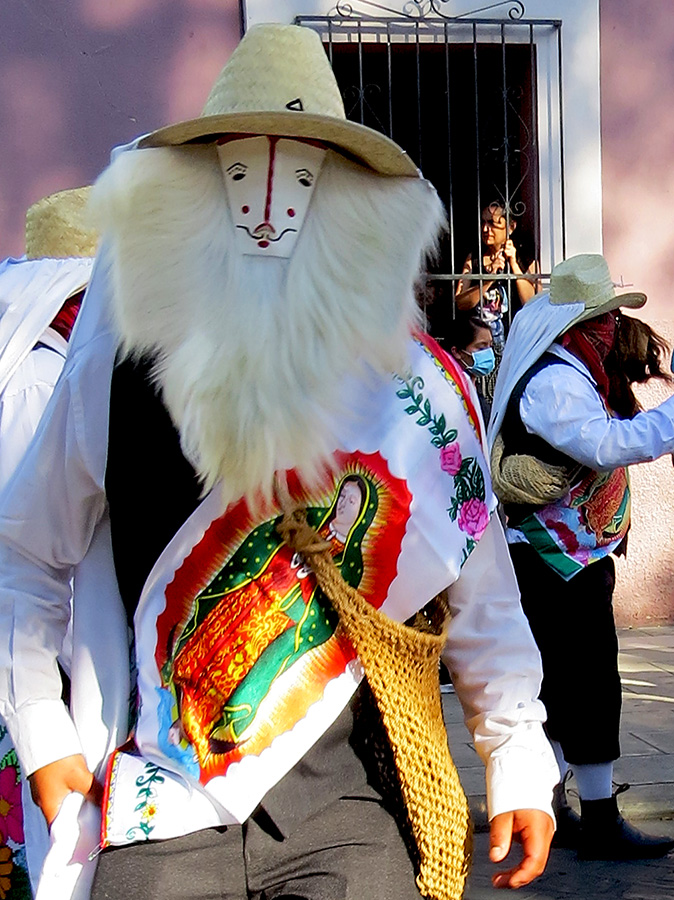
While Santa Claus is making inroads into Mexico, it is los Tres Reyes Magos (the Three Kings) who bring gifts to children on Epiphany, January 6.

Every year toy drives are held to assist Gaspar, Melchor, and Baltazar in acquiring enough toys so children from disadvantaged backgrounds are not left wanting.

I stumbled upon this toy drive, sponsored by the youth group Colectivo Yú Guelnaban and Fundación Comindi, at the north end of Llano Park.

Today’s drive is almost over, but I have no doubt there will be other opportunities to donate a new or gently used toy between now and January 6. “Recuerda que regalar un juguete es regalar una sonrisa” (Remember that giving a toy is giving a smile) — quote from a Colectivo Yú Guelnaban post on Facebook.

Read Full Post »

It’s the night before Christmas and the streets of Barrio de Jalatlaco are aglow with Christmas lights.

My little Christmas tree is decorated with earrings, necklaces, and tiny alebrije. Beneath the tree stands my miniature nacimiento (nativity scene) woven of palm fronds in the Mixteca region of Oaxaca.

In keeping with my blog’s Noche Buena tradition, a new interpretation of Pancho Claus — with the generous permission of the authors.

La Noche Before Christmas

’Twas the night before Christmas and all through the casa,
Not a creature was stirring, My goodness! ¿Qué pasa?
The children were all tucked away in their camas,
The girls in their sleepers, the boys in piyamas.

The stockings were hung, with mucho cuidado,
In hopes that old Santa would feel obligado,
To bring all the children, both buenos y malos,
Muchísimo candy, and other regalos.

When out in the yard there arose tanto grito,
That I jumped to my feet like a scaredy-gatito.
I ran to the window and looked out afuera,
And who in the world do you think that it era?

Saint Nick on his sleigh in a big red sombrero,
Came dashing toward me like a loco bombero.
And pulling his sleigh, instead of venados,
Were eight little burros venir-ing volados!

I watched as they came and this kindhearted hombre,
Was whistling and shouting and calling por nombre:
“¡Ay Pancho, ay Cisco, ay Chuy, ay Flaco!”
“¡Ay Bella, Estrella, Chiquita y Paco!”

Then he jumped off his sleigh with his hands on his pecho,
After landing on top of our very own techo.
And struggling to squeeze down our old chimenea,
He bounced off the hearth like a bowl of jalea.

Now huffing and puffing at last in our sala,
With soot smeared all over his vestido de gala,
He filled all the stockings with buenos regalos,
For none of the niños had been muy malos.

Then chuckling aloud feeling muy contento,
He turned in a flash and was gone like el viento.
And I heard him exclaim, y es la verdad,
“Merry Christmas to all, y ¡Feliz Navidad!”

***Inspired by the poem “A Visit From St. Nicholas” by Clement C. Moore, 1822, and by the original song and lyrics “Pancho Claus” by Lalo Guerrero, 1956 (with permission from the estate of Lalo Guerrero). Conceived of and written as “The Noche Before Christmas”, (date/author/copyright uncertain, c. 1956-2001?). This revision by Bill Stryker and Norma Verdugo Stryker, 2019 (Copyright Registration Number TXu002156234).

Wishing one and all peace, joy, and health. !Felices fiestas!

Read Full Post »

No sooner had I returned to Oaxaca than I left again. However, this time it was to spend only a few days in Teotitlán del Valle for Guadalupe’s feast day and the celebration ending the three year commitment by the dancers of the Danza de la Pluma Promesa 2019-2021. (More about that in a later post.) In addition, after almost a two year absence, I also managed to spend a few hours in Tlacolula de Matamoros and San Pablo Villa de Mitla.

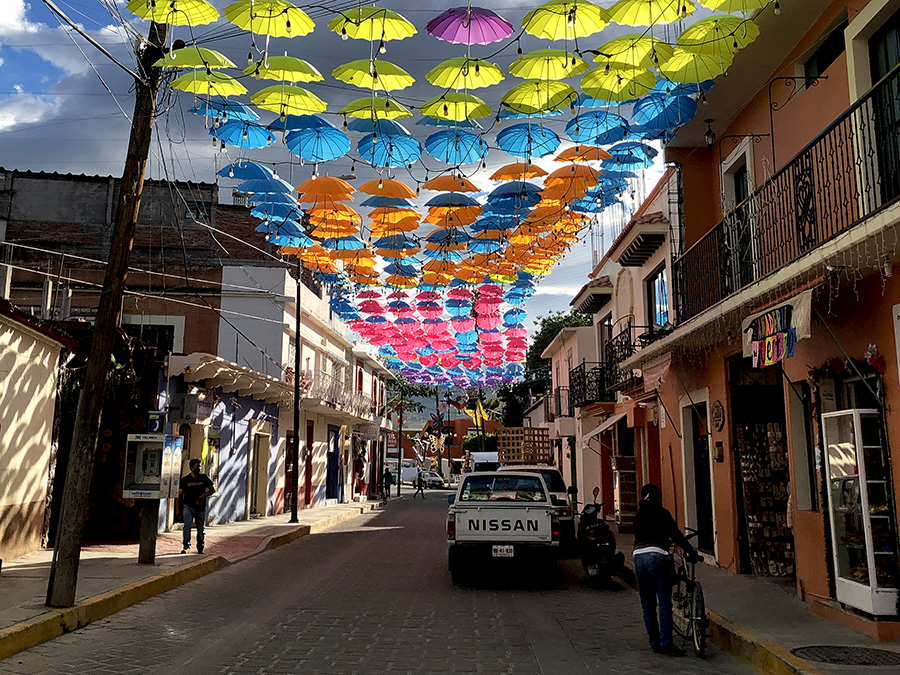
Umbrellas of Mitla – December 13, 2021
Nacimiento of Tlacolula – December 13, 2021
Papel picado of Teotitlán – December 12, 2021

My friend K and I took local buses and I am happy to report everyone on the buses was masked and we even had to disembark at a checkpoint before entering Mitla. Once we and the interior of the bus were disinfected, we reboarded and headed into the town.

Read Full Post »
« Newer Posts - Older Posts »