The Zapotec village of San Antonino Castillo Velasco is known for its flowers. Their difuntos (departed) await them on November 3, as they understand their living loved ones have been occupied in providing flowers to decorate the altars and graves of neighboring villages in the valley of Oaxaca. I returned yesterday and my senses were filled with the beauty and aroma. However, as I was carefully navigating a winding route among the tumbas to leave, the sound of a lone saxophone beckoned me.
And, I was overcome with gratitude for the privilege of being present to experience that time and that place.
This past weekend, the city held a three-day celebration of Mole de Caderas — a traditional seasonal Mixtec dish from Huajuapan de León, Oaxaca and nearby Tehuacán, Puebla. It is only served during the fall, when the goats are made to make the ultimate sacrifice — and it is absolutely delicious!
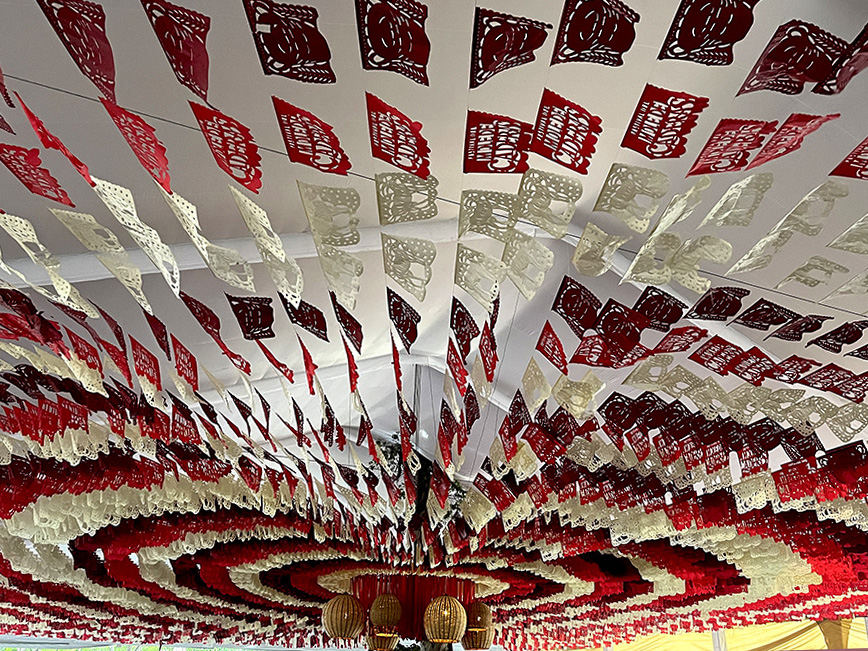
Papel picado cut into images of goats and ollas and the words “Festival del Mole de Caderas,” hung from the rafters of the tent.
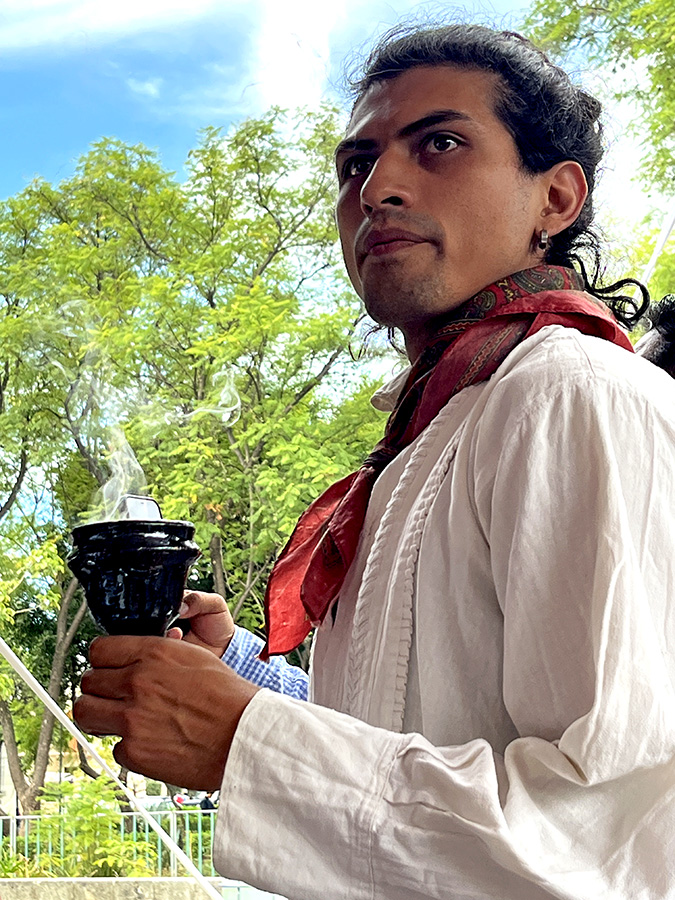
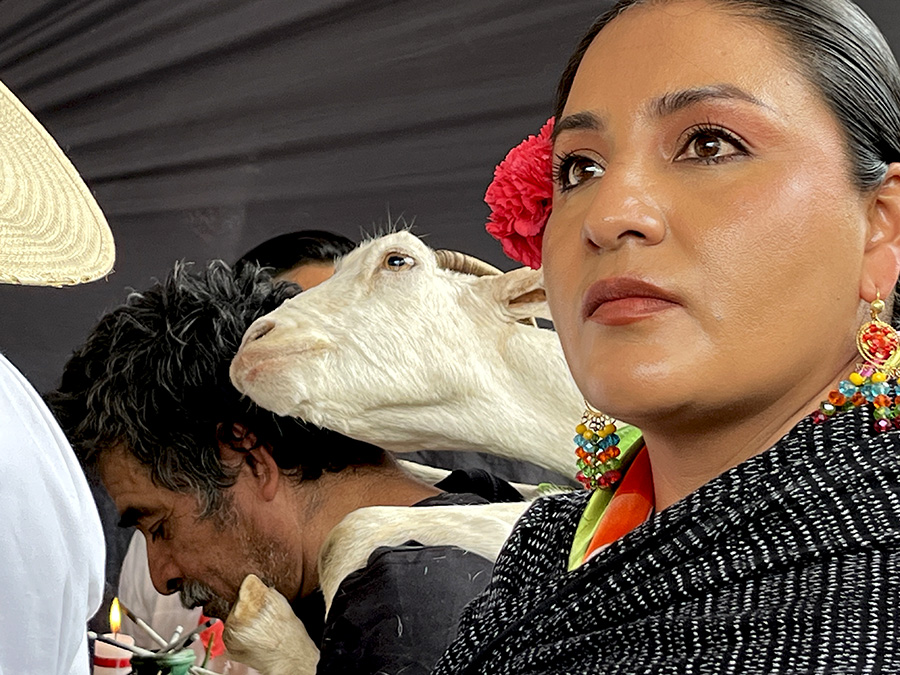
This special dish is made from the hip (caderas) and the spine of goats that have been raised for one and a half years. Starting in July they are fattened on the forage unique to the hills of the Mixteca, large amounts of salt, and a little water — this is what provides the meat with fat, softness, and juiciness and gives the broth its distinctive flavor. In early fall, when the shepherds have brought the goats back to the farms, there is a ritual filled celebration that includes offerings, incense, music, and dancing, including a dance with the goats — all in honor of the goats who were about to give their lives to feed the population.
Incense carried in the opening procession.
Matancero carrying el chivo (the goat) and a Mixtec dancer waiting for the procession to begin.
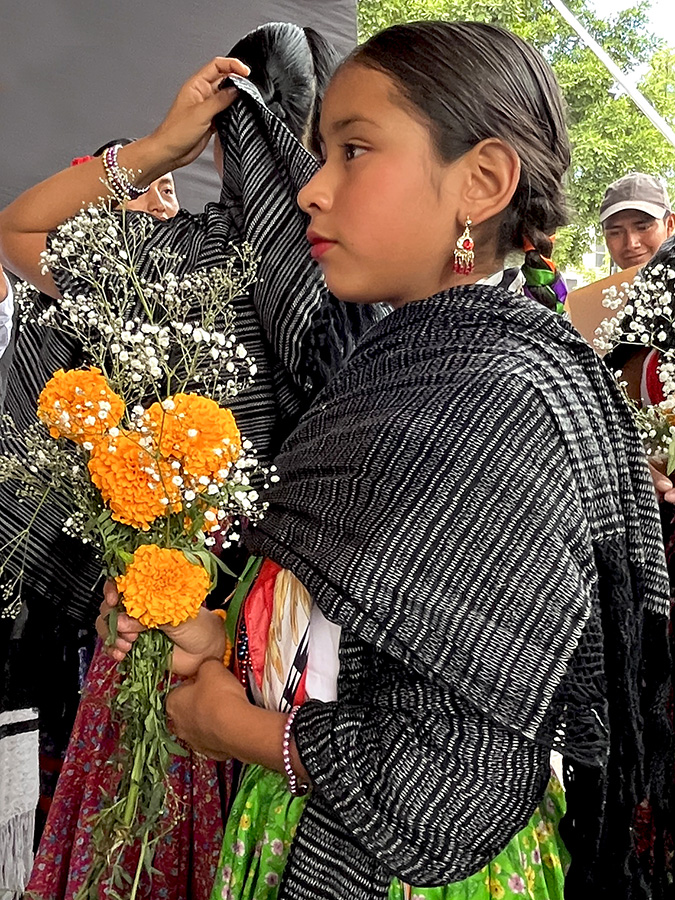
Young Mixtec dancer waiting for the procession to begin.
At last Friday’s opening of the festival, there were dignitaries galore (including the governor of Oaxaca), multiple speeches, and a moving procession with two goats to the tune of Canción Mixteca, a song which always brings tears to my eyes. It was followed by a dance with the goats and a stylized reenactment of the ritual killing of the goats (no actual blood was spilled).
We were then funneled through a palapa decorated tunnel to the tented dining area, where traditional cooks from Huajuapan de León and Oaxaca city waited proudly behind booths displaying ollas (clay pots) filled with steaming Mole de Caderas and Huaxmole de Caderas. Hmmmm… I wondered what the difference was between Huaxmole de Caderas and Mole de Caderas.
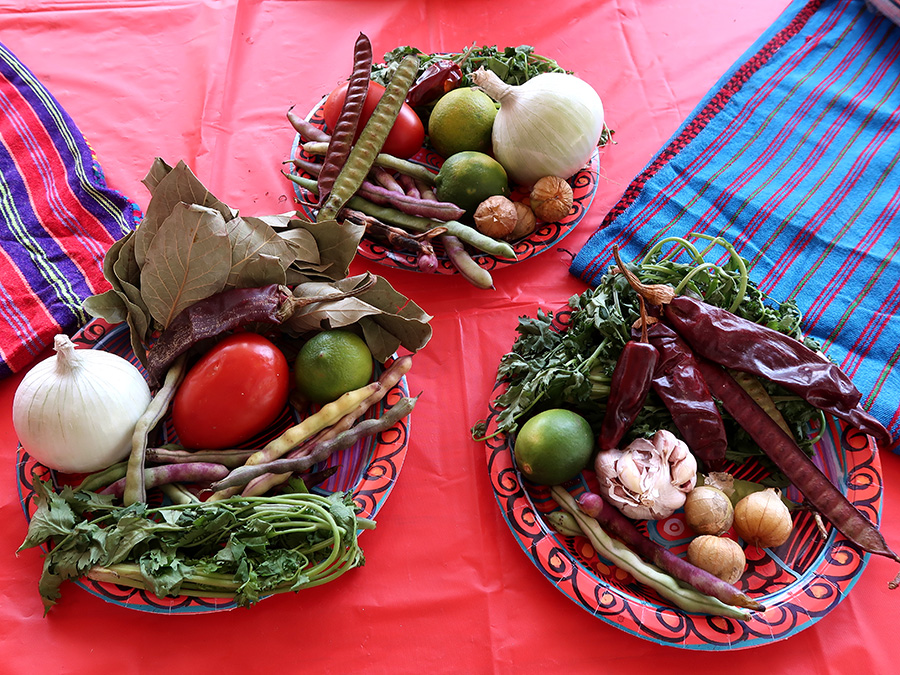
Ingredients used in making Mole de Caderas and Huaxmole de Caderas.
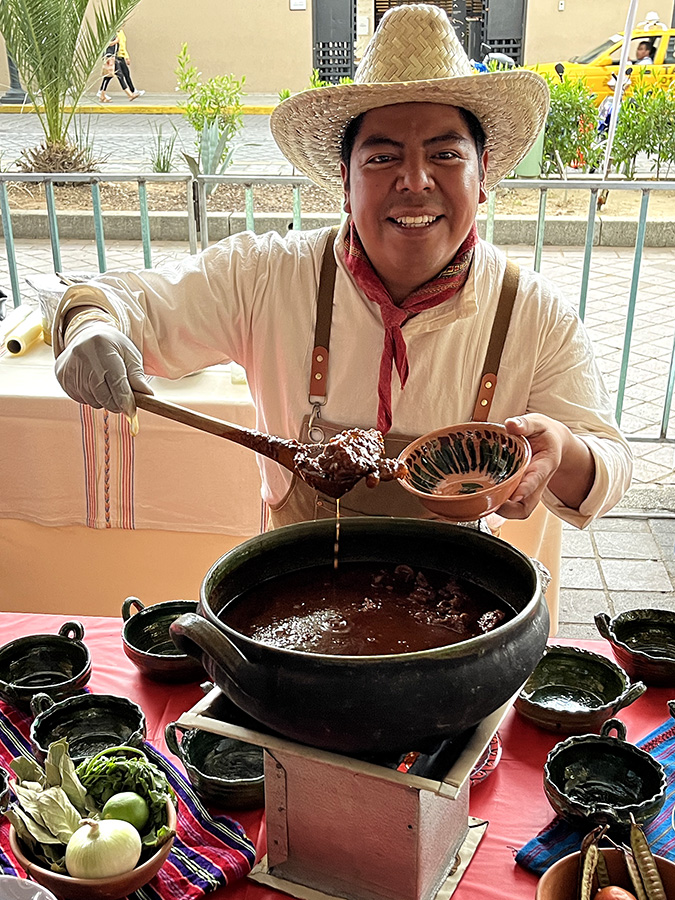
Wilver Vásquez López serving what his booth labeled, Mole de Chivo.
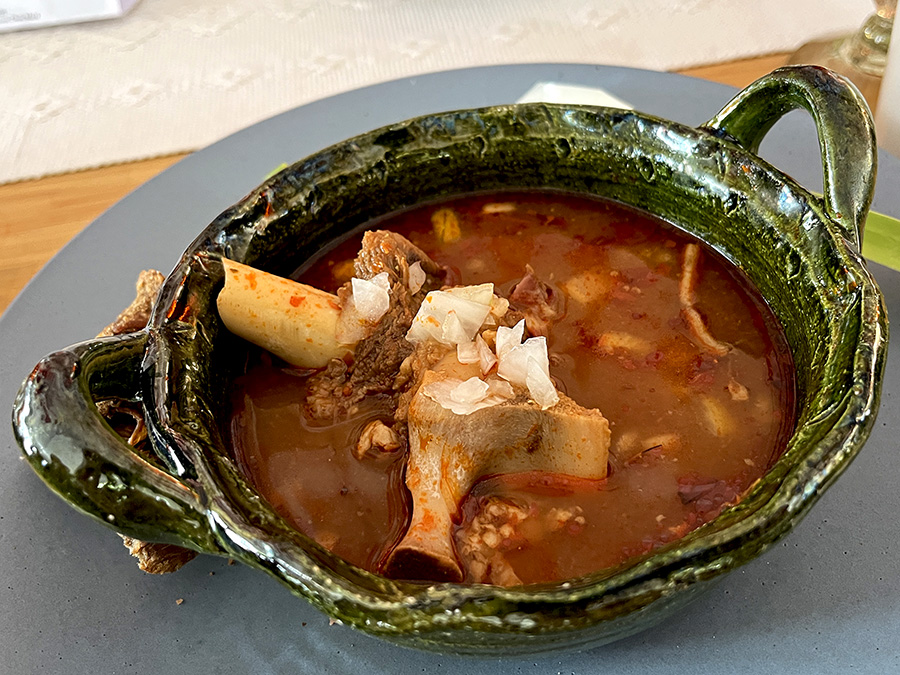
Huaxmole de Caderas.
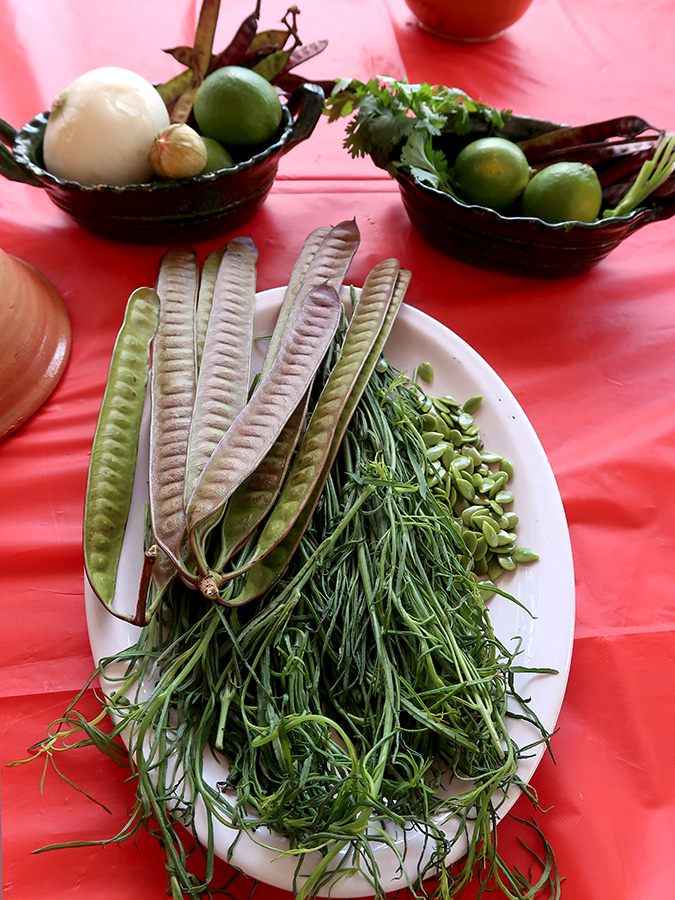
Once home, a little research ensued (I am a librarian, after all) and I found that both dishes share common preparation and major ingredients. However, Huaxmole de Caderas is distinguished with the addition of toasted seeds from the huaje (also spelled guaje) tree — the tree that gave Oaxaca its name. Whereas, Mole de Caderas is prepared with green beans. However, if huajes are added to the latter, it is considered Huaxmole de Caderas. The herb, chepiche (aka, pepicha) is also used and, at the festival, both chepiche and huaje were used to garnish the plates.
Huaje and chepiche.
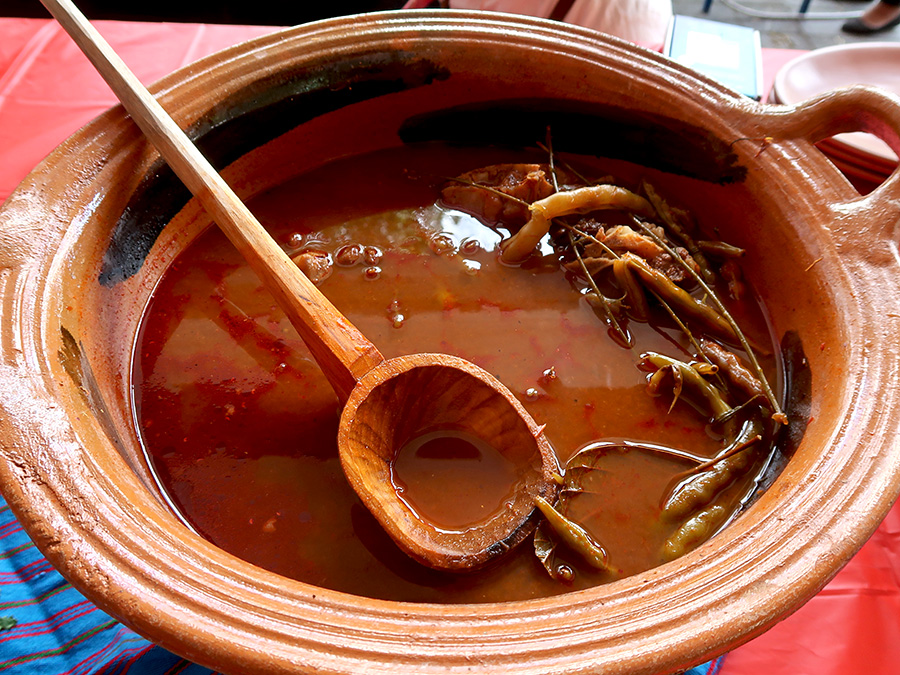
Mole de Caderas.
Interior of the palapa covered entrance to the Festival del Mole de Caderas.
By the way, there were also fresh tortillas, hot off the comal, and booths offering goat tacos, sweets, aguas, and mezcal from the Mixtec region.
This spring has brought some wild weather to Oaxaca. It began with the previously blogged about freak hailstorm in April and this past week, besides the usual late afternoon rain, the city experienced two more hailstorms — definitely not normal. They are very localized, with nearby towns remaining dry or receiving only a few showers.
Late yesterday afternoon, while the city continued to bask in sunshine, Teotitlán del Valle only 23 miles away was hit with its first violent hailstorm in many years. One minute all was calm as friends and I sat outside at Restaurante y Galería Tierra Antigua sipping mezcal. However, within minutes, the sky darkened, wind began to blow, and the heavens opened.
Almost without warning, hailstones, some the size of two peso coins, began pelting us. Needless to say, we grabbed our belongings and copitas of mezcal, as quickly as we could, and ran inside the restaurant. Once all the customers were safely inside, staff scrambled to close doors and windows. Then all watched as the force of Cocijo, the Zapotec god of rain and lightening, among other powerful forces, took center stage. It was an awesome 15+ minute performance! And, thankfully, save for some shredded foliage, there didn’t appear to be any damage.
With thunder, lightening, torrential rain, and a massive hail storm, April “showers” heralded the end of the dry season — in a most spectacular way!
The evening of April 14 the city of Oaxaca and surrounding villages were hit with a freak hailstorm. Needless to say, I closed my doors and windows, unplugged critical electronics, and hunkered down inside until the storm had passed — which seemed like at least two hours. When I eventually ventured out, I found the apartment complex patio five inches deep in water, hail piled outside my rooftop laundry room door, and a garden of plants with shredded leaves.
Then two nights ago another massive thunderstorm hovered over us for hours, turning streets into rivers and sending trees toppling all over the city.
Día de Carnaval (aka, Shrove Tuesday, Fat Tuesday, Mardi Gras, Carnival, day before the beginning of Lent) is coming in two days and, in order to promote the varying celebrations in the state of Oaxaca, the Secretaría de Fomento Turístico (Secretariat of the Promotion of Tourism) invited delegations from various villages in the state to showcase their unique traditions in a grand parade down the city’s walking street, Macedonio Alcalá. The costumes and body paint were outstanding, but it was the masks and faces that spoke to me.
My photos were from the gathering point at the Cruz de Piedra. The route proceeded down Macedonio Alcalá, turned right onto Morelos, and ended at the Plaza de la Danza. According to the poster promoting this wild, wacky, and surreal parade, participating delegations were from Chalcatongo de Hidalgo, Villa de Zaachila, San Blas Atempa, San Pedro Amuzgos, Santa Catarina Minas, Magdalena Teitipac, Santiago Juxtlahuaca, San Bartolo Coyotepec, San Juan Cacahuatepec, Santa Maria Zacatepec, San Pedro Totomachapam, San Andrés Huaxpaltepec, San Sebastián Tecomaxtlahuaca, Oaxaca de Juárez, and Santa María Coyotepec. I’m not sure if I saw them all, but I do know San Martín Tilcajete was also there — and that’s where I will be celebrating Día de Carnaval on Tuesday.
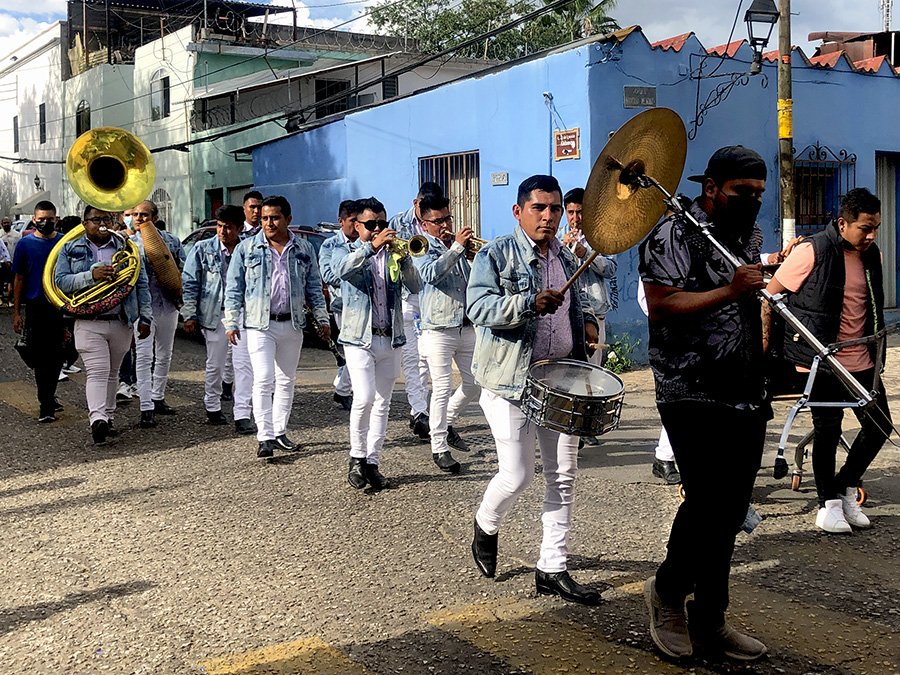
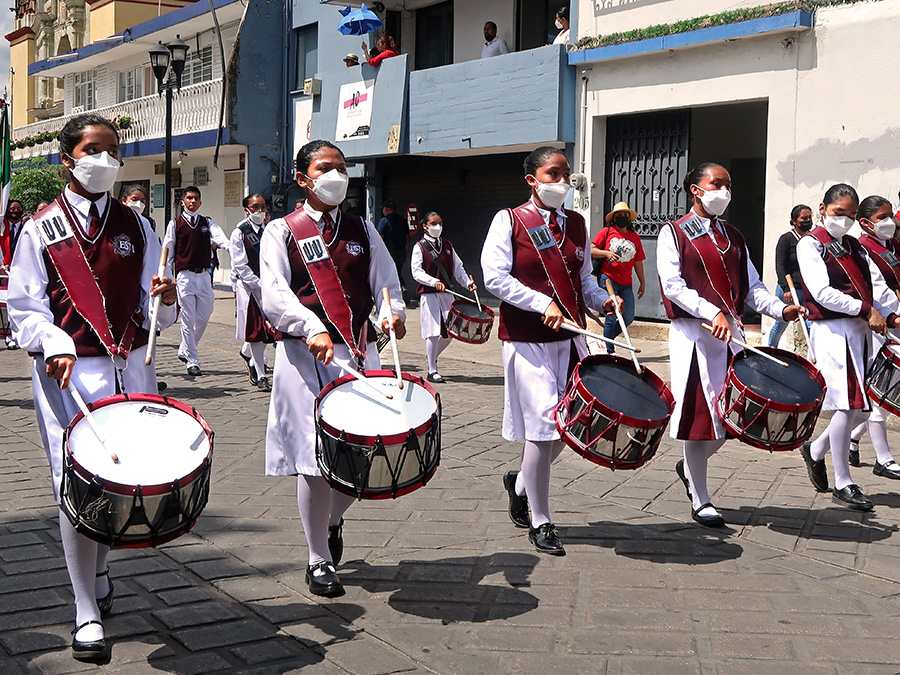
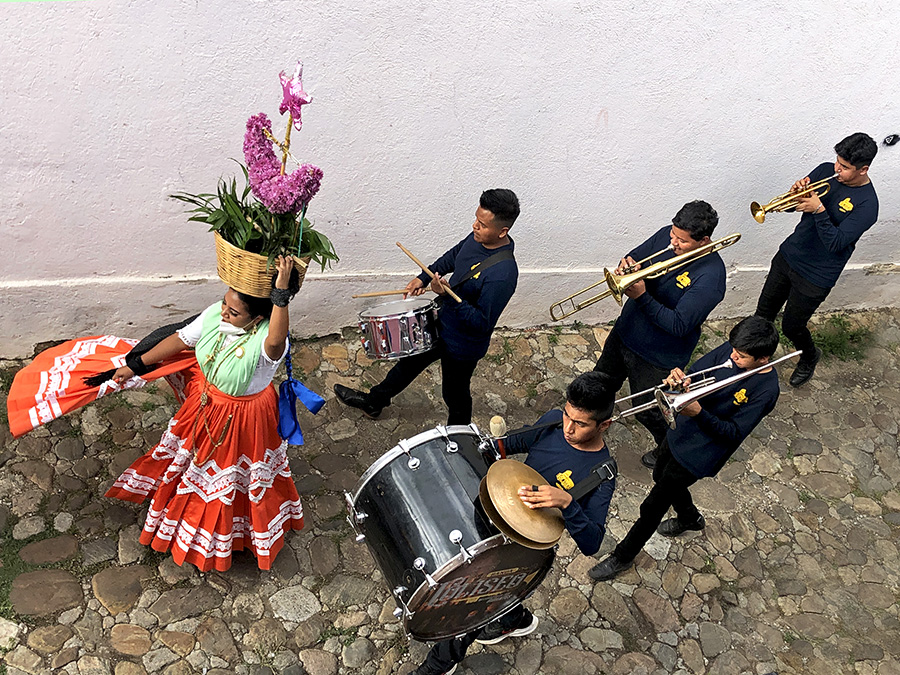
Why I love Oaxaca, reason number 2,022 — music is heard everywhere and seemingly all the time. November 22 is Día de Santa Cecilia who, among other things, is the patron saint of musicians.
July 4, 2022 – Convite for the Preciosa Sangre de Cristo patronal festival in Teotitlán del Valle
July 23, 2022 – Guelaguetza Desfile Magesterial in Barrio de Jalatlaco
July 9, 2022 – Calenda celebrating the anniversary of La Mano Magica Galería in Oaxaca de Juárez
September 16, 2022 – Independence Day parade in Oaxaca de Juárez
August 25, 2022 – 35th birthday celebration in Barrio de Jalatlaco
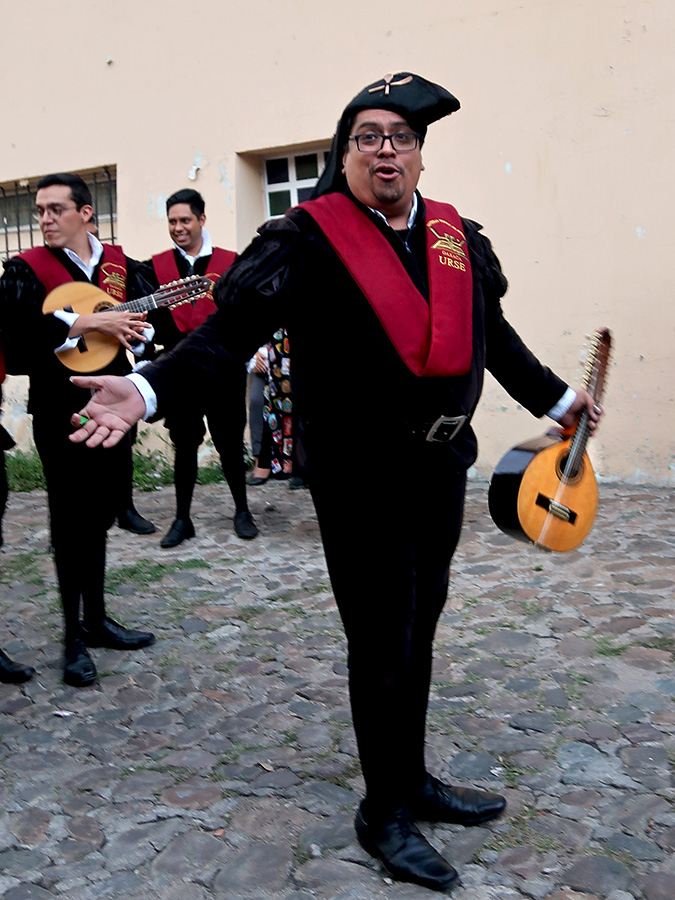
August 20, 2022 – Strolling Tuna Band from URSE in Barrio de Jalatlaco
And, since this post honors musicians, how about a little music…
Traditional teponaxtles and chirimía played outside the panteón of San Antonino Castillo Velasco on Palm Sunday 2022 and brass band in Barrio de Jalatlaco, Oaxaca de Juárez on the 6th Friday of Lent, Viernes de Dolores 2022.
A big muchisimas gracias to musicians all over the world who provide the soundtrack of our lives.
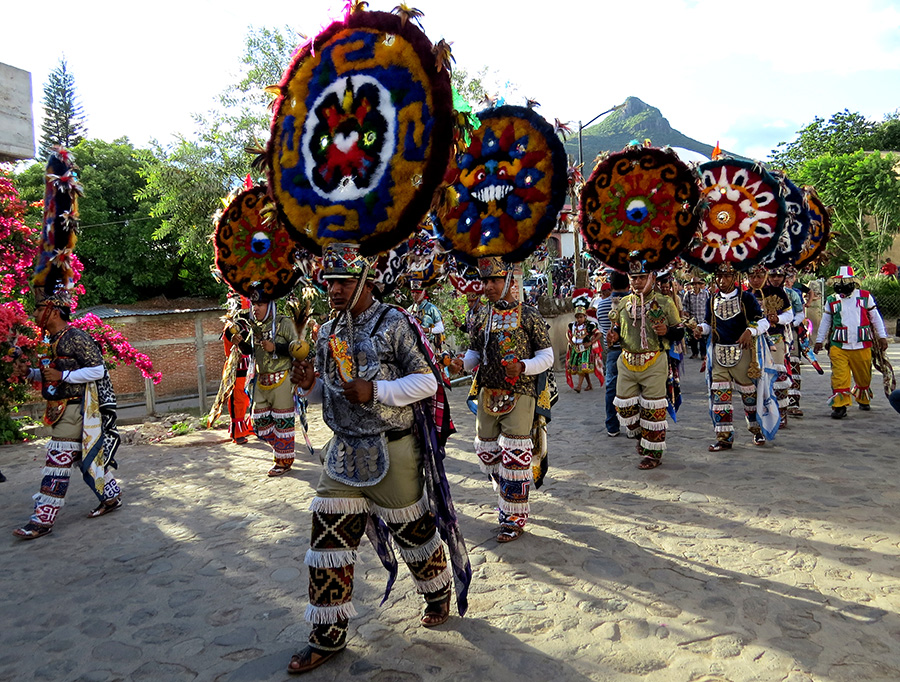
For two days following the previously mentioned convite inviting the villagers of Teotitlán del Valle and guests to the festival honoring the Virgen del Rosario (Virgin of the Rosary), the Danza de la Pluma was performed in the atrium of the church. The Danza de la Pluma is a ritual reenactment of the battles between the Aztec and the Spanish conquistadors. There are thirty nine dances that tell the story. This is the Chotis de 4 Reyes– a Schottische performed by the four kings allied with Moctezuma.
As you can see, the dance steps are complex and made all the more challenging by the wind, which comes up most late afternoons this time of year, catching the massive penachos (the headpieces) worn by the dancers. By the way, this day was the actual feast day so they danced for seven hours. I don’t know how they do it!
Barrio de Jalatlaco played host to an invasion of tunas a few weeks ago. No, not the smelly fish or succulent cactus fruit. These were of the 13th century strolling university musician variety. The tradition of Tuna bands originated in Spain and Portugal, spread to Latin American, and remains alive and well in Oaxaca. Thus, the Tunas from the Universidad Regional del Sureste (URSE), one of four groups participating in the Barrio’s first Callejoneada, gathered on my block.
They serenaded the neighborhood.
We followed these pied pipers.
How could we not, with exuberant ballads like this?
At long last, thunder is rumbling and rain is pouring down on the highways, byways, and rooftops of Oaxaca. If you look closely, you can see the buckets collecting the runoff from the new pergola.
View from the shelter of the new pergola.
Oaxaca, a largely agricultural state, desperately needs the rain. Let’s hope it lasts!
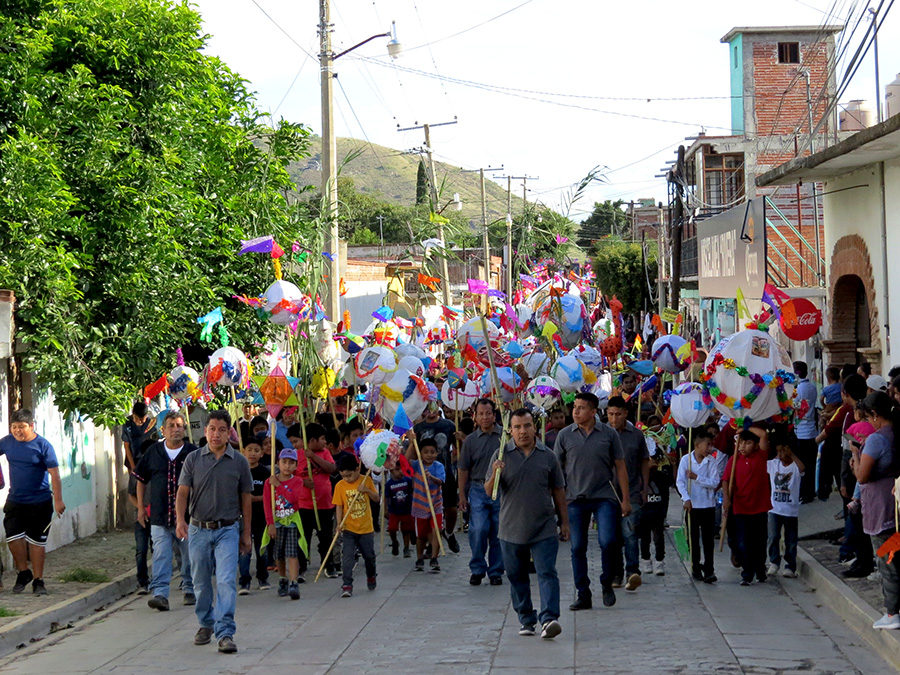
The annual convite at the beginning of July in Teotitlán del Valle has not only been an invitation to the village’s patronal festival honoring Preciosa Sangre de Cristo. For me, it has also served as an invitation to a month of non-stop celebrations and events — an excuse to set aside my daily routines and chores and, instead, revel in the color and culture on display in the streets of the city and the small towns dotting the valley of Oaxaca.
The church, Preciosa Sangre de Nuestro Señor Jesucristo, ready and waiting for the convite to begin.
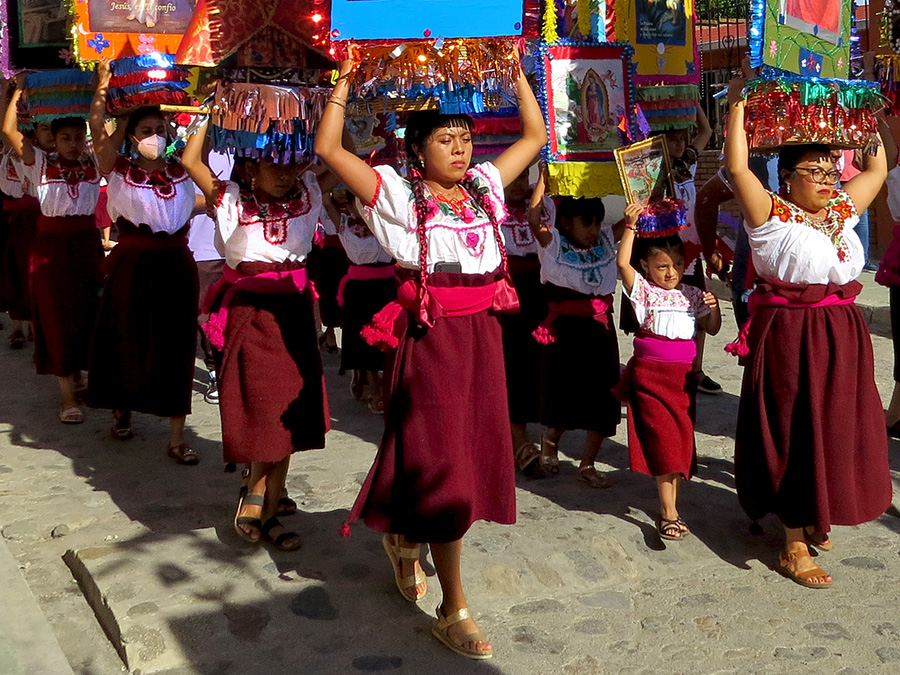
Picacho, the sacred mountain envelops the community in its protective arms, as the canastas and unmarried young women and girls of the village take their place in line for the convite.
Boys clutching their mini marmotas patiently wait for the deafening sound of the cohetes (rockets) signaling the convite’s start.
Boys and their mini marmotas at the head of the convite — accompanied by a few dads, big brothers, uncles, and officials to keep them in line.
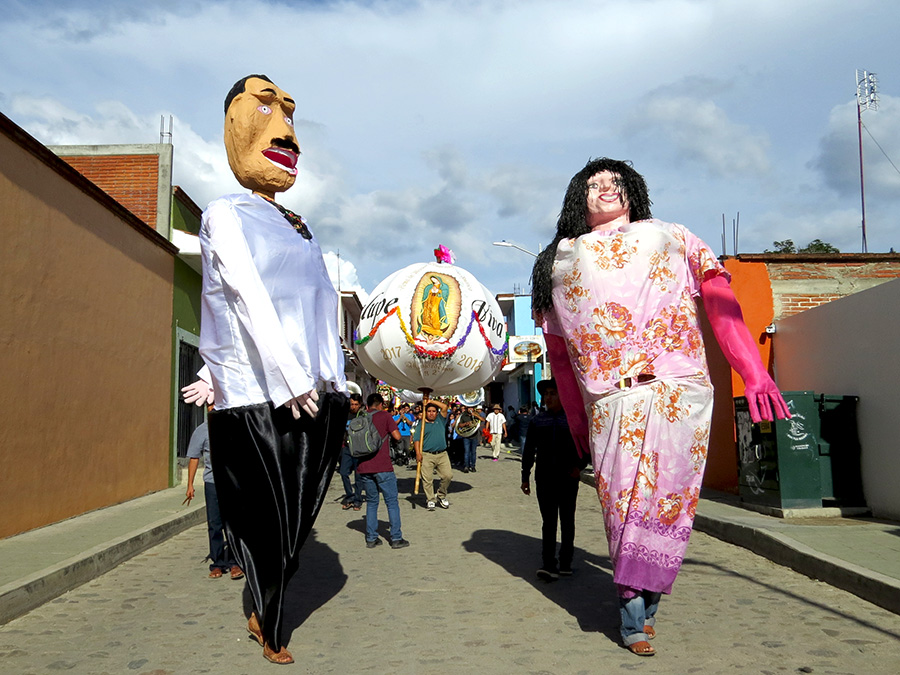
Two monos (new addition this year) and one of several gigantic marmotas follow close on the heels of the young boys.
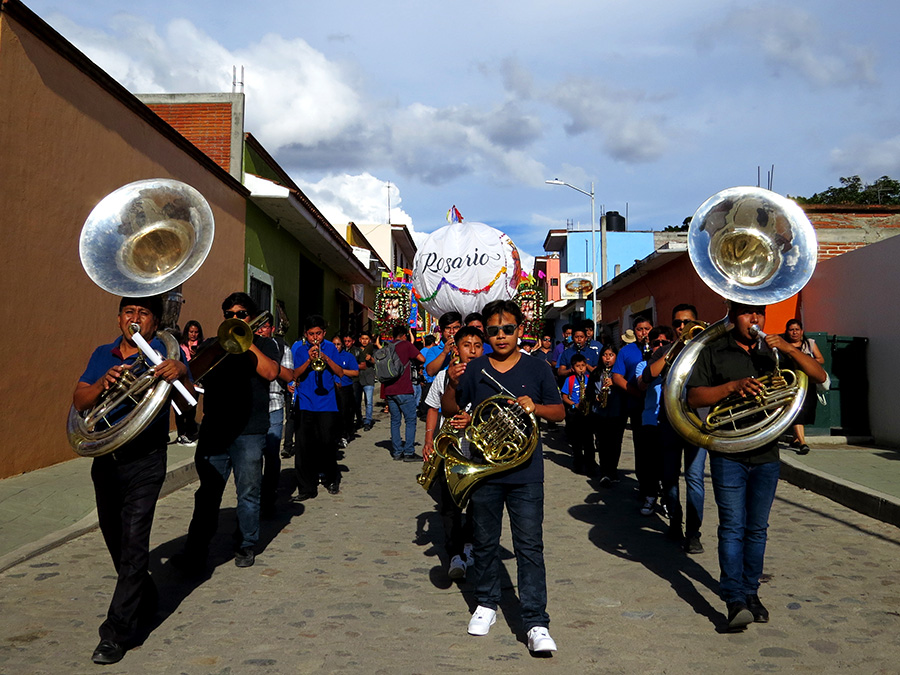
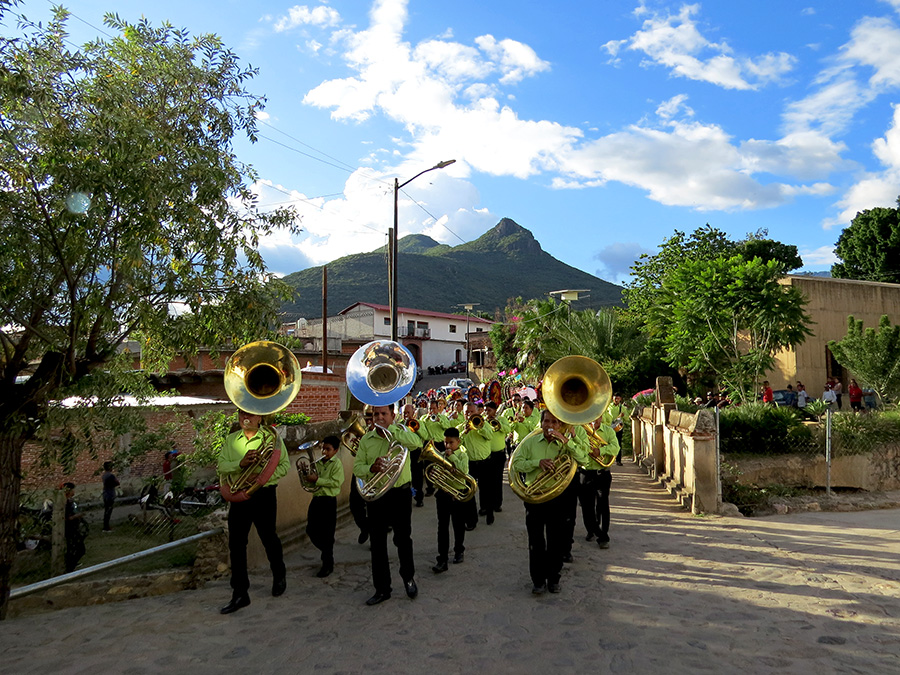
Of course there is a band to set the tempo.
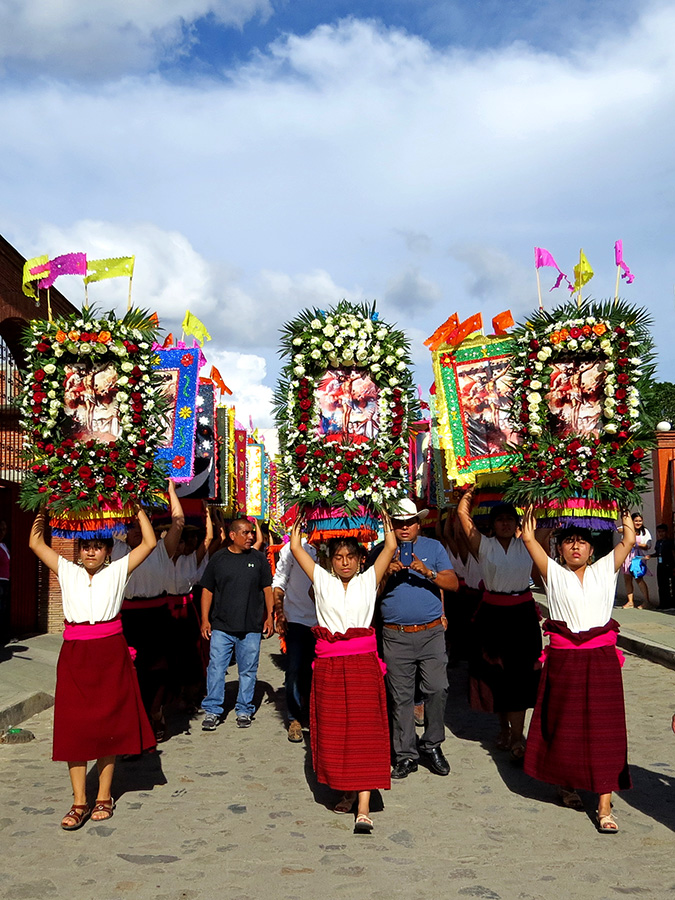
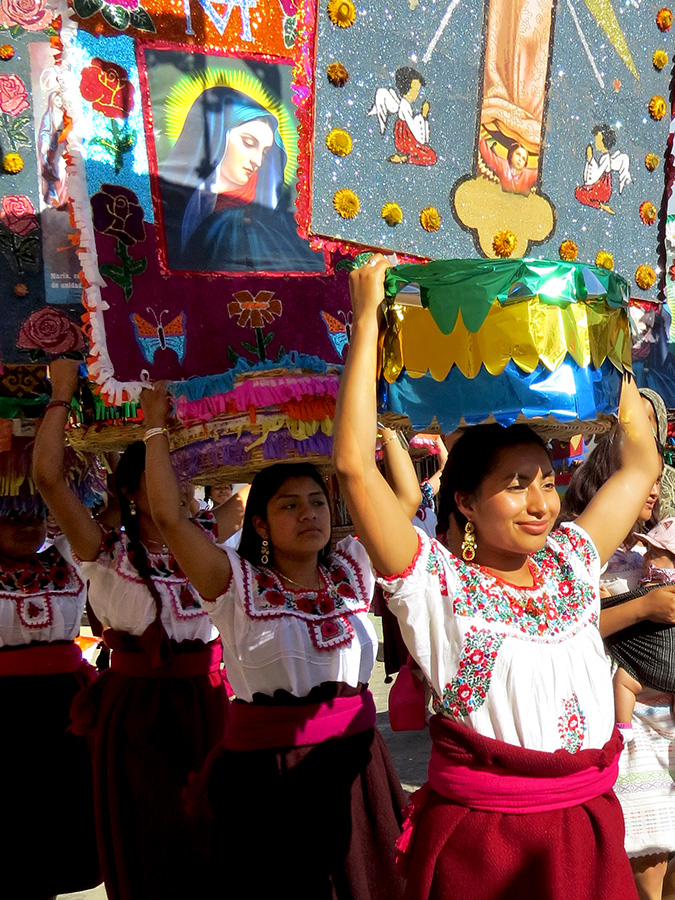
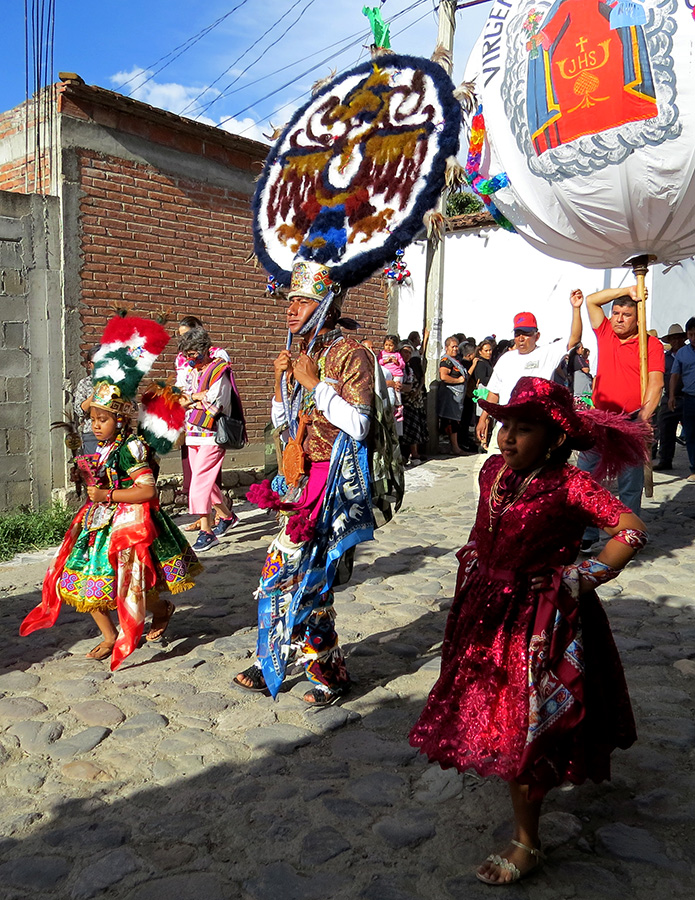
Arms raised, contingents of unmarried women and girls carry canastas decorated with religious imagery.
Most are dressed in the valley’s traditional enredos (wool wrap skirts) and colorfully embroidered white blusas from Oaxaca and Chiapas.
In this Zapotec villlage, the beauty of the faces and strength of their arms are a sight to behold — especially Beatriz (foreground), who is very dear to my heart.
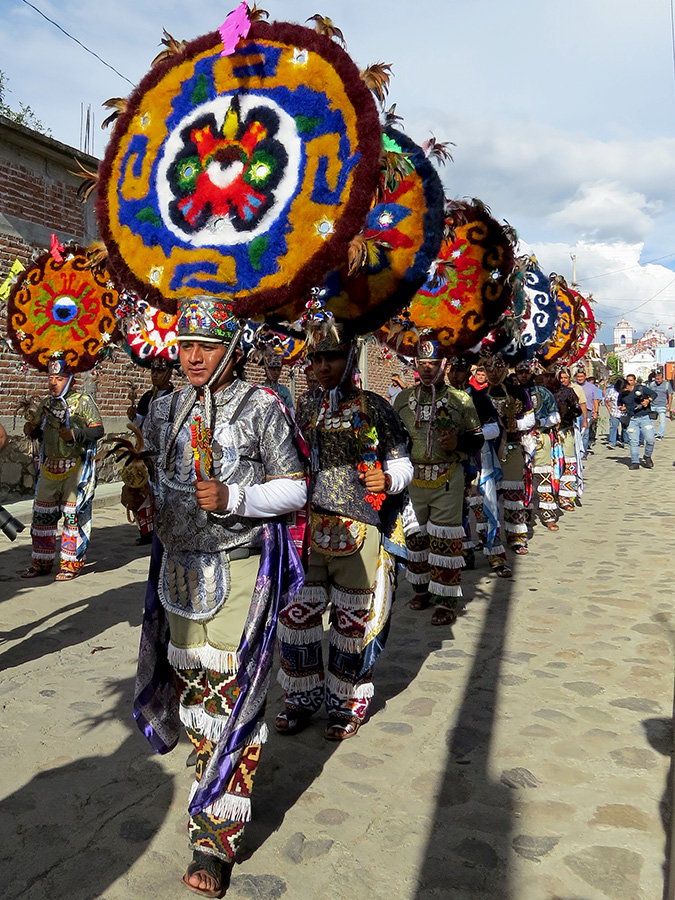
A second band marks the approach of the danzantes.
Danzantes of the Danza de la Pluma Promesa 2022-2024 alternately march and dance their way along the cobblestone streets.
Picacho watches as the danzantes wend their way along the meandering streets of Teotitlán del Valle.
Villagers watch as danzantes Moctezuma, Malinche and Doña Marina, followed by another marmota, and town officials mark the last of the convite’s participants.
After almost an hour, the convite and its contingents returned to the church atrium. Their work, of extending an invitation to the festival, is finished — until next time!
According to reports, Hurricane Agatha is the strongest to make landfall along Mexico’s Pacific coast in May since record keeping began in 1949. As of tonight, Oaxaca’s governor said there have been ten deaths and twenty are missing, mostly due to flooding on the coast and mudslides in the mountains. Fortunately, friends living on the coast have marked themselves safe on social media. However, given the images and video I’ve seen posted on Facebook, Twitter, and news websites, the devastation is great and much help will be needed to clean up and rebuild.
Here in the capital city of Oaxaca, up and over the mountains from where the hurricane made landfall, we had steady rain yesterday and today we had a couple of episodes of torrential downpours. In Barrio de Jalatlaco we haven’t been hit with gale force winds, our cobblestone streets haven’t become rushing rivers, and we’ve only experienced intermittent power outages. And, as I write, the Guerreros de Oaxaca baseball game is being played at Estadio Eduardo Vasconcelos — I can hear the chants and cheers from the above rooftop.
“Do we really want to travel in hermetically sealed popemobiles through the rural provinces of France, Mexico and the Far East, eating only in Hard Rock Cafes and McDonalds? Or do we want to eat without fear, tearing into the local stew, the humble taqueria’s mystery meat, the sincerely offered gift of a lightly grilled fish head? I know what I want. I want it all. I want to try everything once.” ― Anthony Bourdain, Kitchen Confidential: Adventures in the Culinary Underbelly
I will miss your intelligence, honesty, passion, and respect for cultures different from your own. Thank you. Rest in peace, Anthony Bourdain.









 Mexican Peso Converter

 View From Casita Colibrí