Feeds:
Posts
Comments

Posts Tagged ‘San Pablo Villa de Mitla’

A (somewhat) belated companion to my Mitla’s mysterious underground blog post from May.

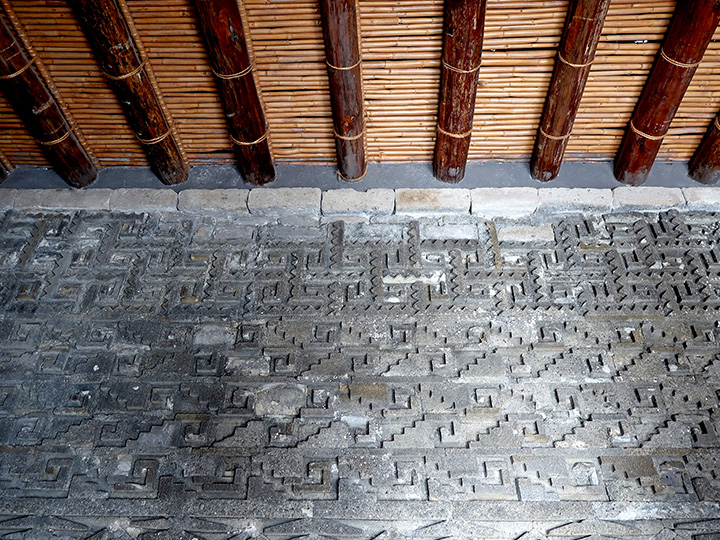
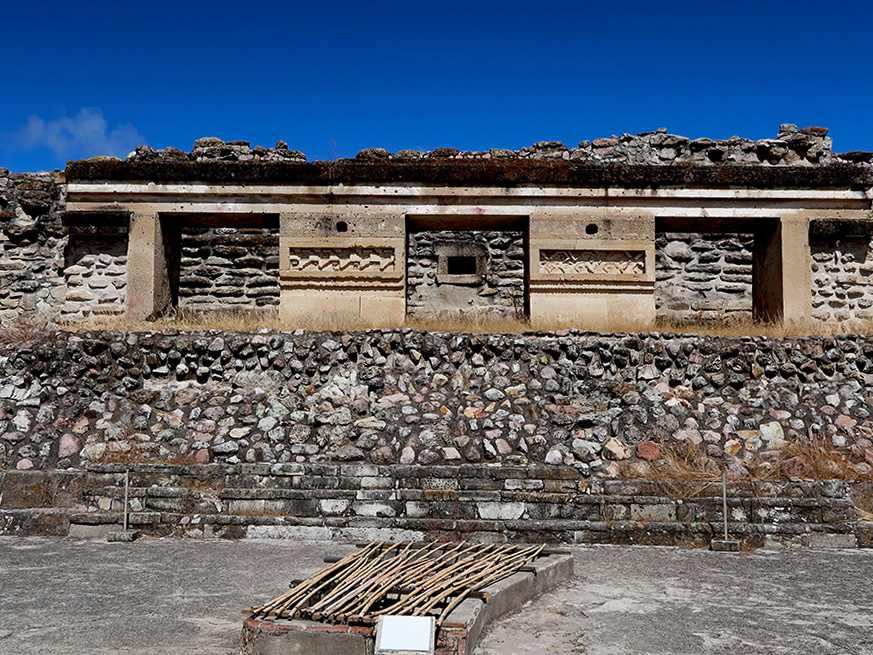
Mitla – Columns Group
Mitla – Columns Group, Patio of the Grecas
Mitla – Columns Group, Patio of Tombs
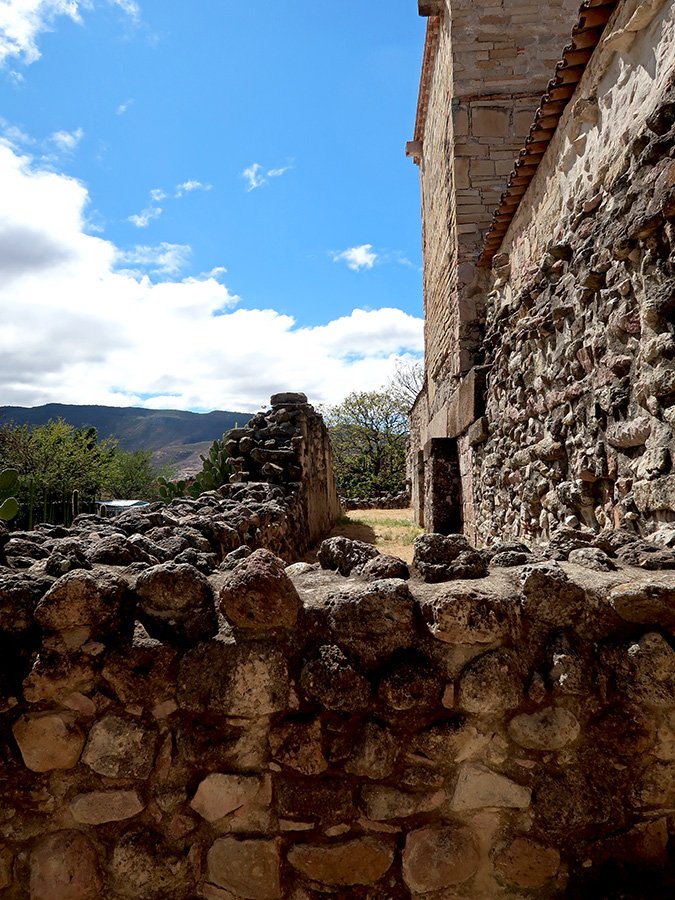
Mitla – Arroyo Group
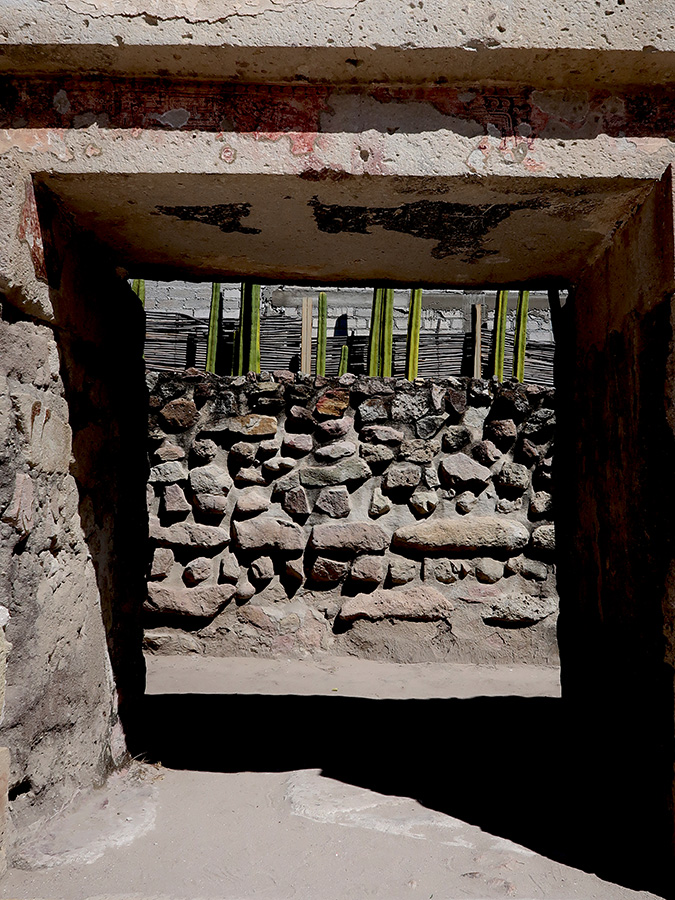
Mitla – Adobe Group
Mitla – Adobe Group

And, this latest video (in English) from the ARX Project, where they describe what they have found beneath the above Groups and their speculations.

h/t Margie Barclay

Read Full Post »

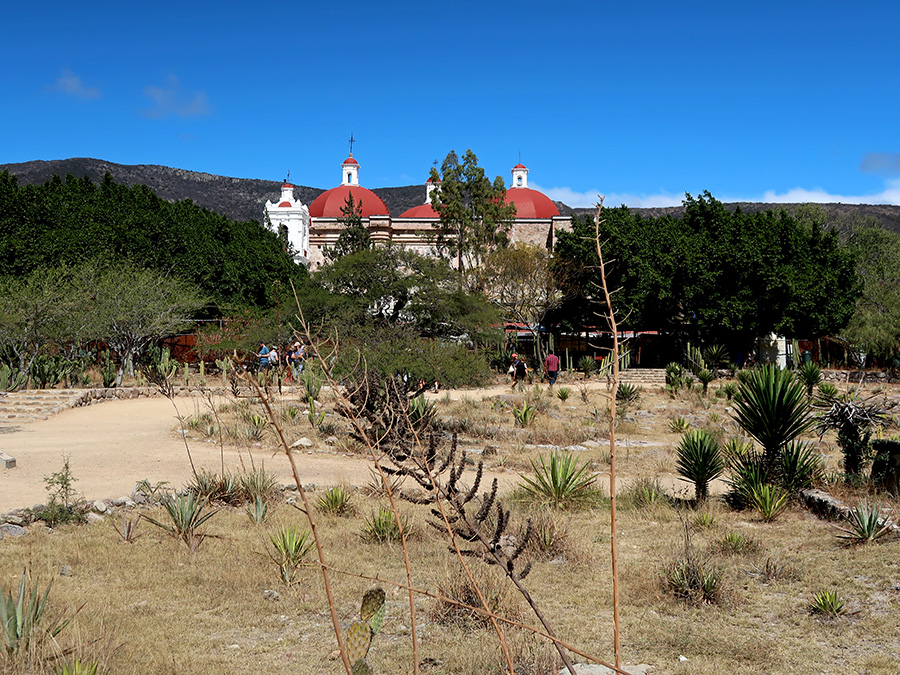
Noted for its intricate stone fretwork and megalithic architecture, the Mitla ruins are considered the second most important archaeological site in the state of Oaxaca. Prior to the arrival of the Spanish, it was a predominant religious and ceremonial center for the Zapotec people. Legend has it that the entrance to a vast underground labyrinth of passageways leading to Lyobaa, Zapotec for “place of rest,” lies sealed beneath the altar of Iglesia de San Pablo, the 16th century Catholic church that towers above the village of Mitla. As was the practice of the Spanish missionaries, the Zapotec site was destroyed and the church was built on top of the ruins in an attempt to exorcise “pagan” beliefs.

Last November, I had the privilege of touring the Mitla archaeological site with Ludovic Celle, one of the co-founders of the ARX Project — a multidisciplinary team using non-invasive imaging to detect and explore the mysteries of Mitla’s legendary underground caverns and tunnels thought to lead to the underworld. In the 17th century they were described by Spanish priest, Francisco de Burgoa but were well known by the people of Mitla long before the arrival of the Spanish.

Photos from the Church Group, where ARX Project imaging has detected the subterranean caverns and tunnels.

Read Full Post »

There is a duality surrounding the celebration of Día de Muertos (Days of the Dead) in Oaxaca. While most every home and many public buildings and businesses construct altars with ofrendas brimming with flowers, candles, bread, chocolate, fruit, nuts, beverages, copal incense, and often photos of the departed, there is a distinct difference between the traditions of the more mestizo communities (Oaxaca city and the Etlas, for example) and those of the indigenous communities. The former often includes raucous comparsas (parades) called muerteadas with costumes, masks, painted faces, music, and “adult beverages.” According to the book, Day of the Dead: When Two Worlds Meet in Oaxaca, the muerteada allows the dead “to ‘occupy’ a living body, either a muerteada participant or an audience member, for a time, and therefore enjoy the entertainment directly rather than vicariously.”

However, in the indigenous villages these days are more solemn, filled with ritual, and are family oriented. I lean toward this more spiritual observance, so I escaped the craziness of the daily comparsas and drunken crowds in the city and went to stay in the Zapotec village of Teotitlán del Valle with my compadres (including comadre K) and to shop in Tlacolula for pan de muertos (bread), candles, and flowers to take to the ofrendas of families K and I have a relationship with in Teotitlán and San Pablo Villa de Mitla.

Tlacolula de Matamoros – Vendors of caña (sugar cane) used to create an arch over ofrendas.
Tlacolula de Matamoros – Ofrenda in the Templo de Santa María de la Asunción.
Tlacolula de Matamoros – Tapete de arena (sand painting) in Templo de Santa María de la Asunción.
San Pablo Villa de Mitla – Store front.
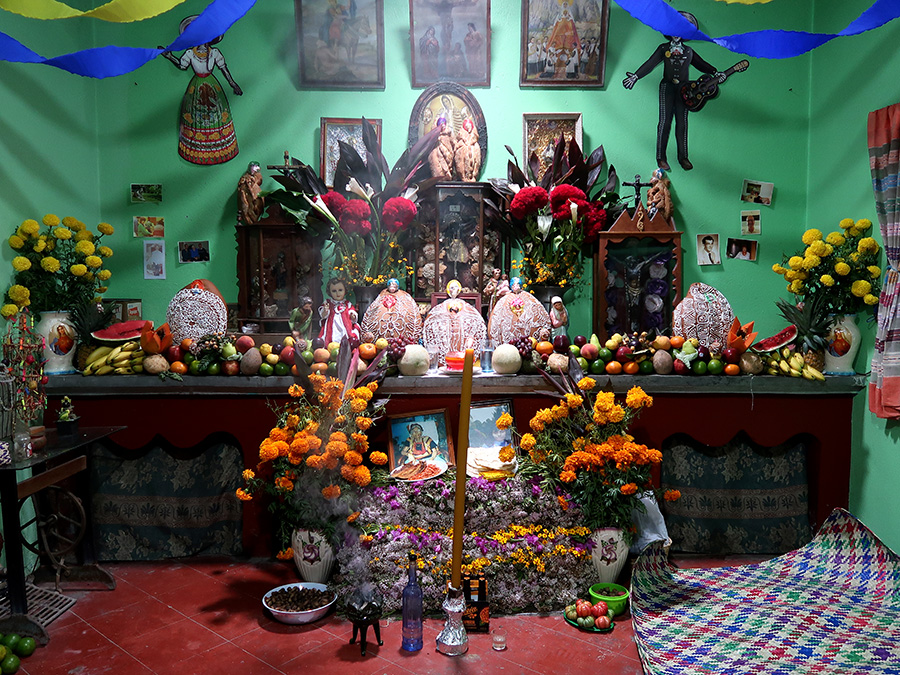
San Pablo Villa de Mitla – Ofrenda on home altar.
San Pablo Villa de Mitla – Detail from a public ofrenda.
Teotitlán del Valle – Ofrenda (offerings) on home altar.
Teotitlán del Valle – Tamales amarillo traditionally served on November 1.
Teotitlán del Valle – Panteón (cemetery) early evening on November 2.

While the Día de Muertos observances may differ, the bottom line in both city and pueblo is to provide a welcome worthy of both the living as hosts and the dead as honored guests.

Read Full Post »

Tomorrow, I return to the land where the handwriting is on the wall.

Expressing pride in the traditional floral embroidery (toninera) of San Antonino Castillo Velasco and their recycling efforts.
In San Pablo Villa de Mitla, “together we achieve a better town.”
In Oaxaca de Juárez, the handwriting doesn’t need translation.

Read Full Post »

No sooner had I returned to Oaxaca than I left again. However, this time it was to spend only a few days in Teotitlán del Valle for Guadalupe’s feast day and the celebration ending the three year commitment by the dancers of the Danza de la Pluma Promesa 2019-2021. (More about that in a later post.) In addition, after almost a two year absence, I also managed to spend a few hours in Tlacolula de Matamoros and San Pablo Villa de Mitla.

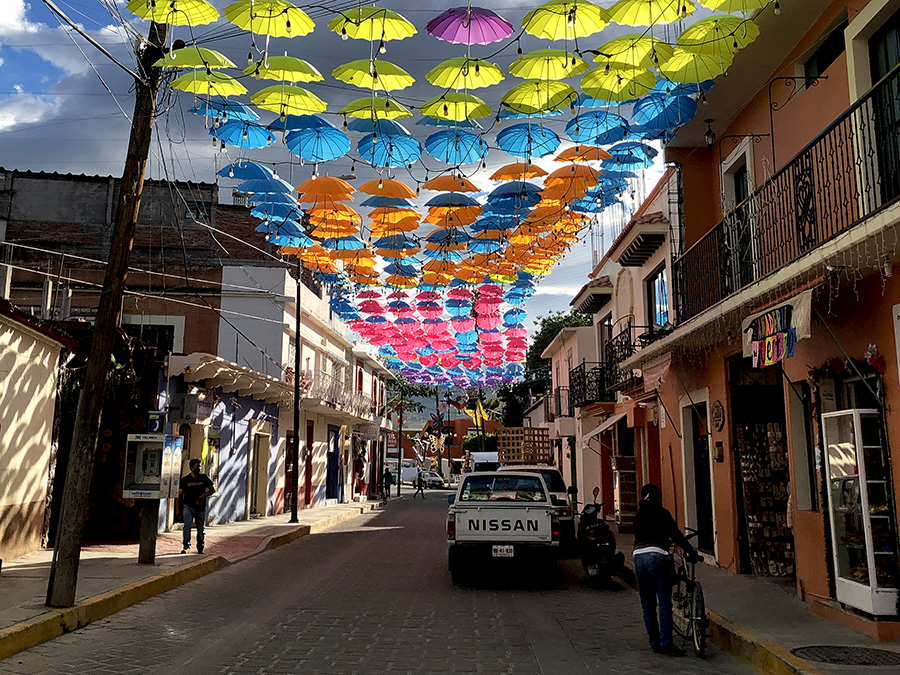
Umbrellas of Mitla – December 13, 2021
Nacimiento of Tlacolula – December 13, 2021
Papel picado of Teotitlán – December 12, 2021

My friend K and I took local buses and I am happy to report everyone on the buses was masked and we even had to disembark at a checkpoint before entering Mitla. Once we and the interior of the bus were disinfected, we reboarded and headed into the town.

Read Full Post »

Several pan de muerto festivals sprung up in the valley of Oaxaca during Día de los Muertos — including a Festival del Pan de Muerto in Villa Díaz Ordaz, a Feria del Pan de Muerto Adornado in Villa de Zaachila, and a Feria del Pan y Chocolate in the city of Oaxaca.  While the intention of these fairs is to attract tourists, both foreign and domestic, the primary market remains ofrendas (offerings) to the difuntos (departed) — who must be fed during their brief return to visit with their loved ones.

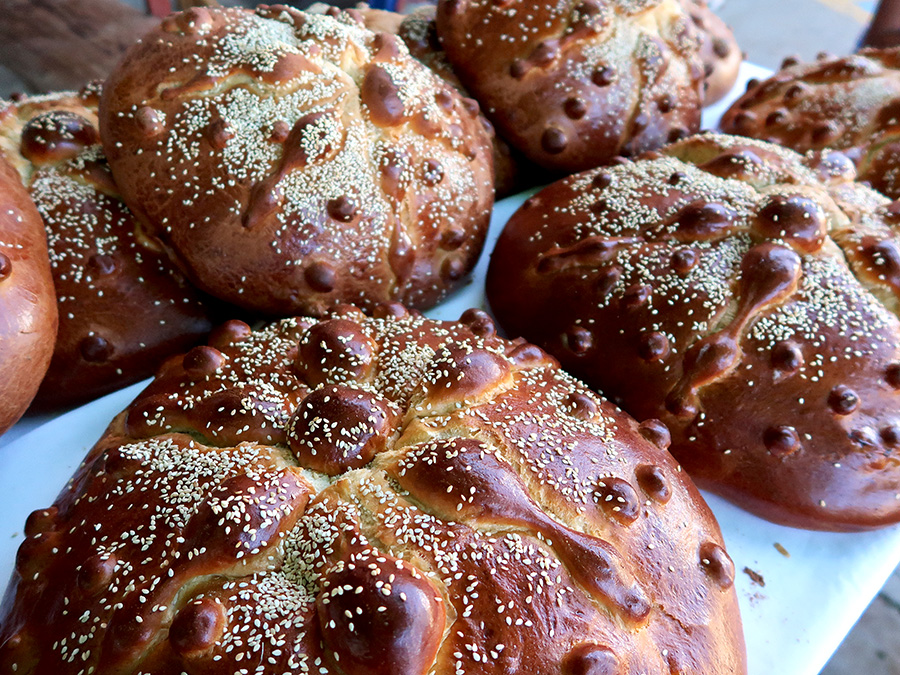
And, like apron styles, pan de muerto (bread of the dead) varies from village to village, be it sold at a feria, mercado, or neighborhood panadería.

Panadería Yalalag in Oaxaca city.

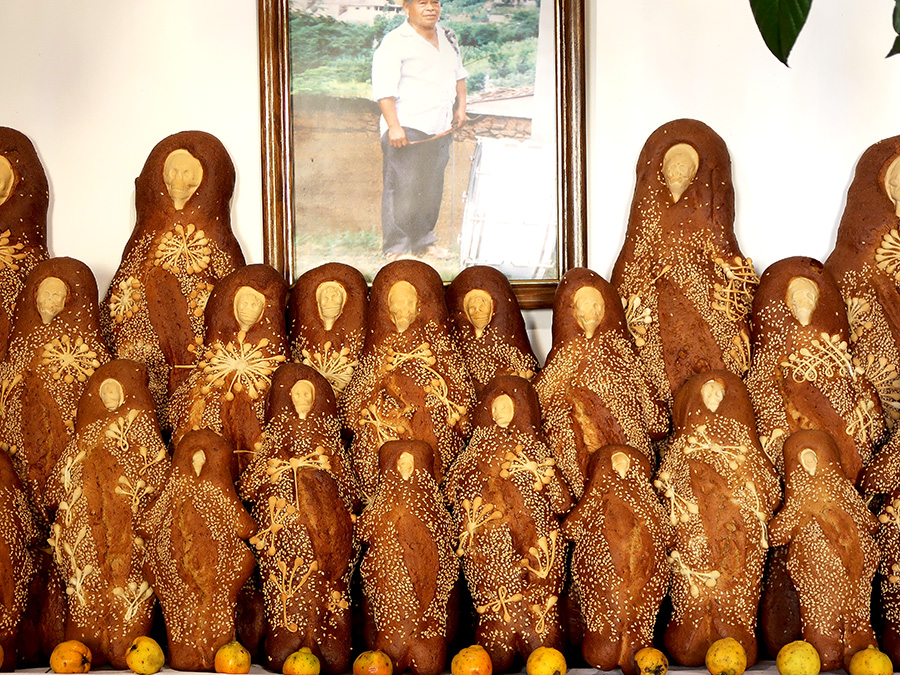
San Pablo Villa de Mitla.

San Pablo Villa de Mitla.

Mercado, 20 de noviembre, Oaxaca city.

Villa de Zaachila.

Villa de Zaachila.

Villa de Zaachila.

Villa de Zaachila

Villa de Zaachila.

Though my difuntos have departed and my altar has been disassembled, I couldn’t consign my beautiful (but stale) pan de muerto offerings to the garbage can.

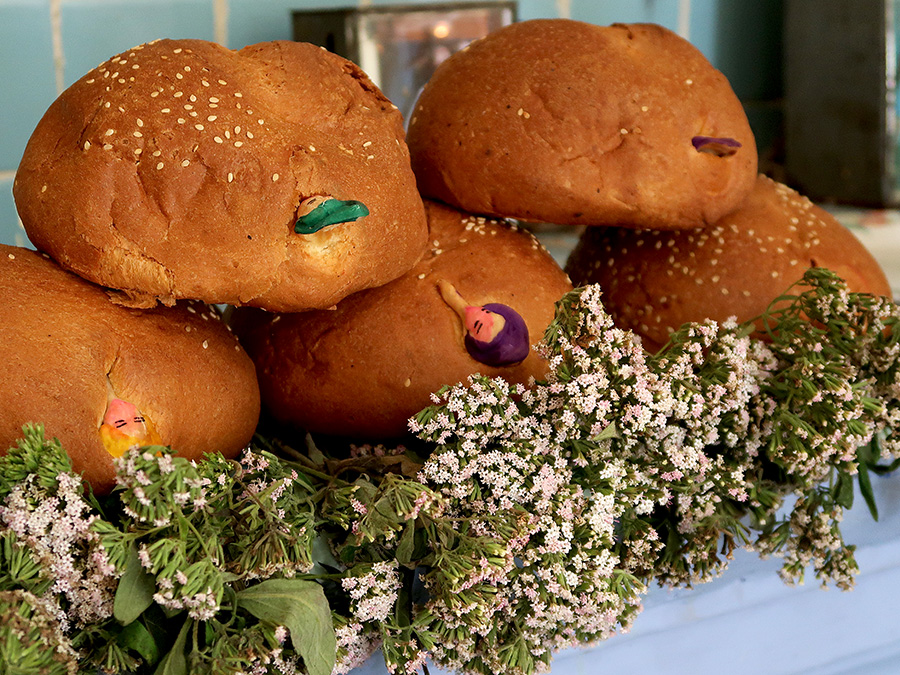
Pan de muerto from Yalalag, Mitla, and Zaachila.

So, here they remain in a basket on my counter — until they disintegrate or the hormigas (ants) enjoy a feast.

Read Full Post »

A day late, but not a dollar short, I finally made my way to the San Francisco Bay Area a week and a half ago.  The days have been filled with family, friends, and appointments. However, today there was nothing on the agenda, I was worn out from all the activities, and baby it was cold outside.  Thus, time to look back through photos earmarked for blog posts that had gone unwritten.

Leaving San Pablo Villa de Mitla after shopping for Pan de Muertos during Day of the Dead, we took a different route out of town and discovered a gymnasium with murals on the walls, both outside…

… and inside.  Traditional, political, and colorful imagery to inspire playing your best!

You just never know what you will find when you take the road less traveled.

Read Full Post »

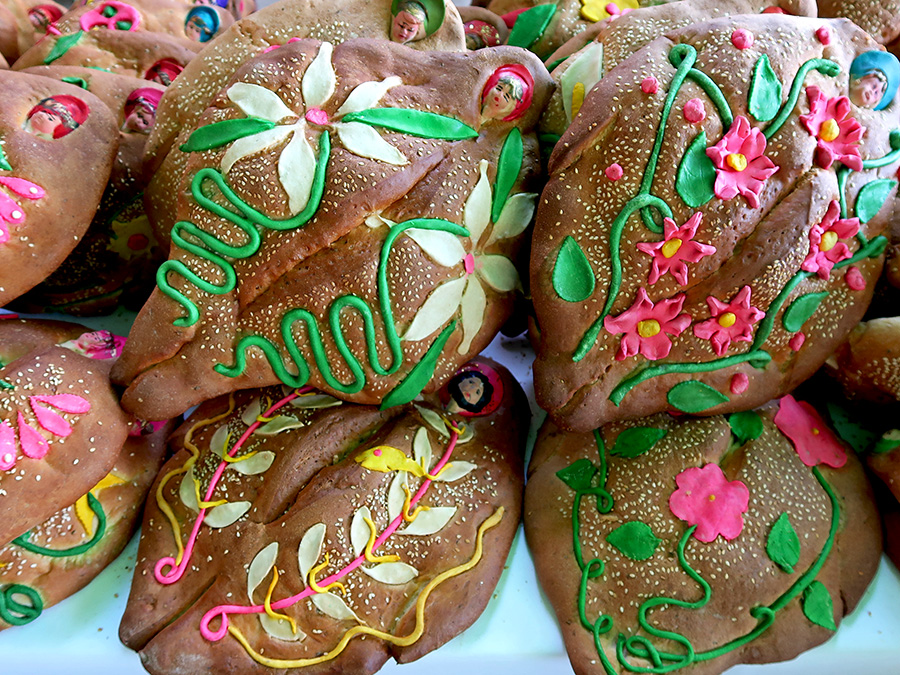
When Día de Muertos approaches, the panaderías (bakeries) work overtime to fill their shelves and counters with Pan de Muertos — an egg based bread, sometimes elaborately decorated, but always with a cabecita (also known as a muñeca), a little painted flour dough head, at the top.


The most intricately decorated bread comes from Mitla.  For a few years, Mitla held a Pan de Muertos fair and competition, with prizes for decoration.  Alas, because their bread is in such demand, the feria was halted two years ago as the bakers put a priority on attending to their customers needs — this is their livelihood, after all!


However, the small pueblo, Villa Díaz Ordaz picked up the slack and last year began holding a Festival del Pan de Muertos.  The village is off the beaten path and the festival hasn’t yet drawn much in the way of tourism, but it’s a wonderful event that blogger buddy Chris and I love attending (See his post, here).  Among other things, the event is encouraging and passing along to the younger generation knowledge and pride in the traditions and skills of their community.   And, in my book, that is a good thing!


Oaxaca city has also gotten into the Pan de Muertos promotion act.  A 6-day Feria del Pan y el Chocolate was held at the Jardín Carbajal.  One could talk to knowledgeable vendors eager to share their passion, buy bread and chocolate to take home, or just take break from the busyness of this time of year, to sit in the shade of the umbrellas dipping the pan into hot chocolate.  Yummm…


Why all this bread?  To place on one’s own ofrenda and to take to the ofrendas of relatives and extended family — its essence to nourish the difuntos (departed) when they come for their annual visit.

IMG_2063

Pan de Muertos on the altar of the chapel in the panteón in Teotitlán del Valle – November 1, 2017

It is a time of year when the difuntos also nourish the souls of the living.

Save

Read Full Post »

When you sit down to your turkey dinner tomorrow, you will be following in the footsteps of the original inhabitants of the valley of Oaxaca.

p1220875

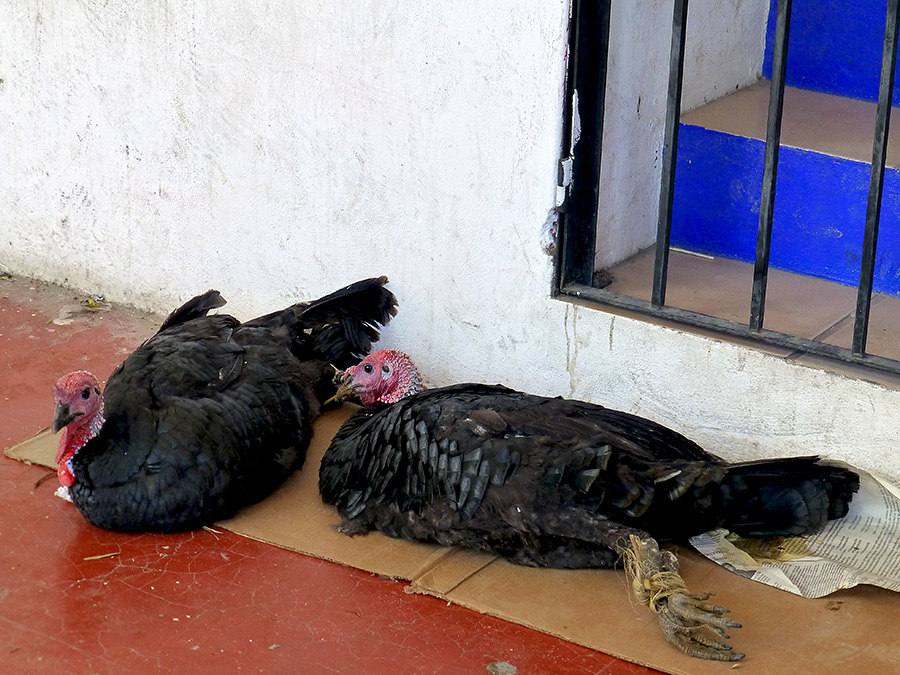
Guajolotes on the doorstep. San Pablo Villa de Mitla, Oaxaca

Archaeologists have discovered evidence of turkey domestication 1,500 years ago in the in the valley of Oaxaca’s Mitla Fortress.  And, according to Gary Feinman, Field Museum curator of Mesoamerican anthropology, “It’s a bird very, very similar to what a lot of people are going to eat on Thursday.”

p1190817-1

Guajolotes waiting for a ride, Teotitlán del Valle, Oaxaca.

Turkeys, or as they are commonly known in Oaxaca, guajolotes, continue to play a special role in many of Oaxaca’s indigenous communities.  Turkey mole is prepared and served during religious festivals and weddings, among other special occasions.  They are also given as gifts and the downy feathers under the wings are dyed and used to make penachos (headdresses) for the danzantes of the Danza de la Pluma.

So, to those in el norte, while you are enjoying your Thanksgiving turkey, give a little thanks to the Zapotecs of the valley of Oaxaca.  ¡Buen provecho!

Save

Read Full Post »

October 30, 2016, around and about the valley of Oaxaca, preparations were underway for Día de Muertos.  Bread, fruit, chocolate, nuts, and flowers for sale spilled from mercados into the streets; the difuntos must be fed… and only the best!

Our first stop was Villa Díaz Ordaz for their first Expo Festival del Pan de Muerto.  It was day two of the 3-day festival and, of course, we were there early (around noon), but everyone was so warm and welcoming.  Hopefully, it will continue to grow in future years, as this is a sweet village in a picturesque setting at the base of the mountains.
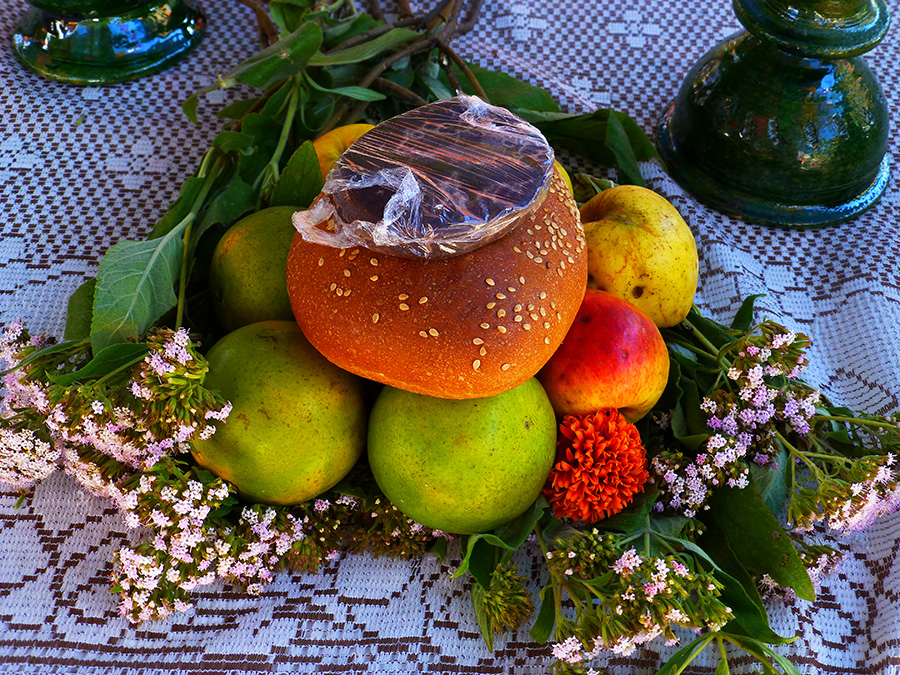
p1220852

In Díaz Ordaz, they call these tiny, spicy-scented, lavender flowers “flor de muerto” and we were informed that they are even more important than cempasuchil (marigolds).

p1220847

After buying some surprisingly flavorful (whole grain!) pan de muerto for my ofrenda, we headed off to San Pablo Villa de Mitla.  Mitla has the most beautiful pan de muerto and two years ago we stumbled on their Pan de Muertos festival and competition.  A dazzling display of intricately decorated breads lined the sidewalks under the portales.  Alas, the festival was not continued, as their bread is in such demand, the bakers were too busy to take time out for an expo and competition.  So, like last year, we just enjoyed the sights and aromas of their bustling mercado.

p1220868

Have you ever seen so many varieties of bananas???  And, now for the famous  pan de muertos…

p1220861

Returning home, I added the bread and flor de muerto to my ofrenda.  Following a siesta, I ventured out into the streets of the city in search of a comparsa.  I never found it, but, as you could see from my previous post, the city was teeming with people and activity.  However, amid the merriment and mayhem, there were scenes of tranquility.
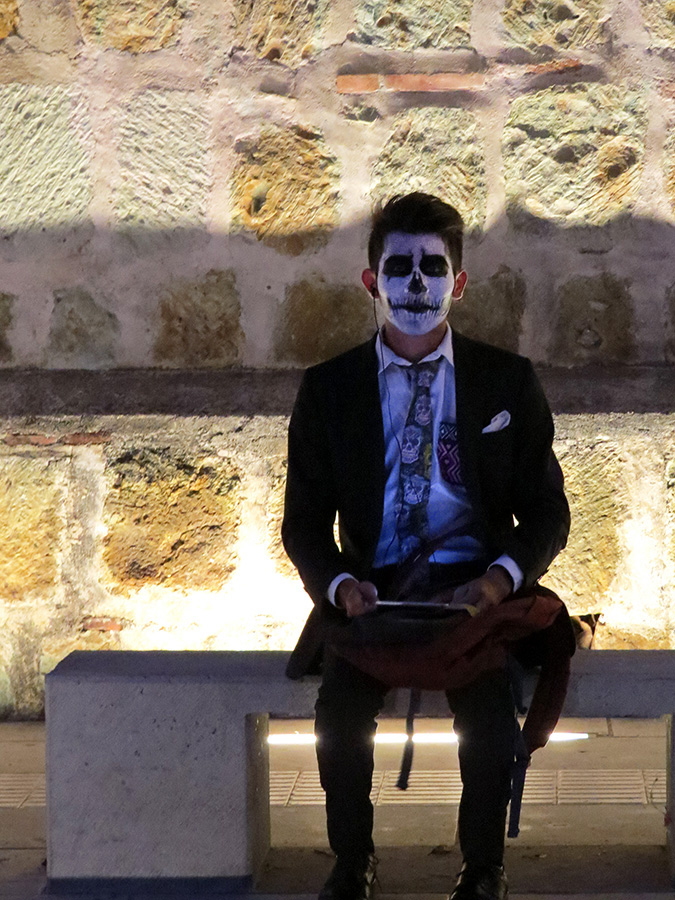
img_2135

A catrin ejecutivo?

img_2172

The copal incense beckoned the difuntos…  They began arriving this morning, seconds after midnight.

Save

Save

Save

Read Full Post »
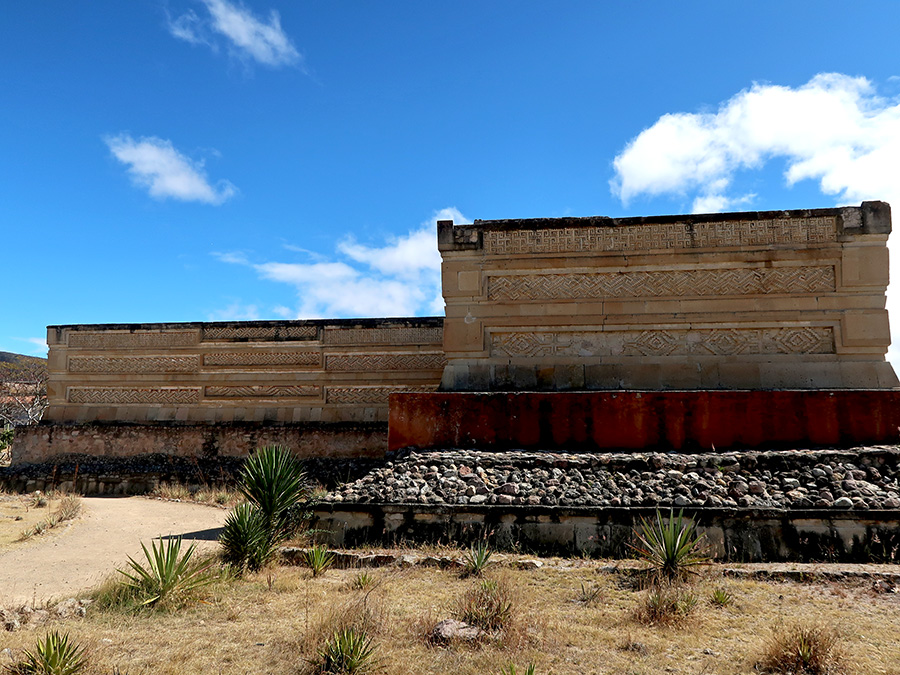
Adiós to 2014.  It was another year filled with the always amazing and often surprising sights and sounds of Oaxaca.

January – The new year began with a Quinceañera at Iglesia Sangre de Cristo on the Macedonio Alcalá.

P1010351

February – Most of the month was spent in California and New York, but returned to Oaxaca sun, blue sky, and buildings with character.

P1020141

March – Ahhh… the flowers, the boys, and the girls of the “only in Oaxaca” Paseo de los Viernes de Cuaresma.IMG_2401

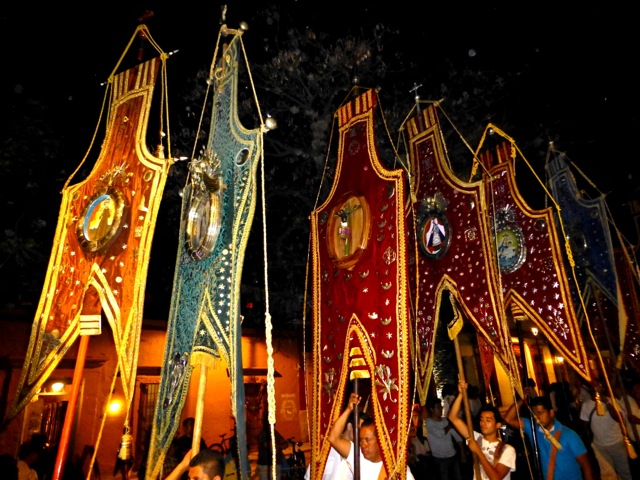
April – The banners of the Procesión del Silencio (Procession of Silence) on Good Friday during Semana Santa (Holy Week).

P1030659

May – Karen and Jasen Willenbrink exhibition at Gorilla Gallery.

P1040160

June – Pretty in pink, a protest by tuk-tuks (moto-taxis) on the zócalo.

P1000095

July – Up into the Sierra Norte for the Feria Regional de Hongos Silvestres (Wild mushrooms fair) in San Antonio Cuajimoloyas.

P1010605

August – Mini Guelaguetza sponsored by the Instituto Mexicano del Seguro Social (IMSS) on the Plaza de la Danza.

P1010911

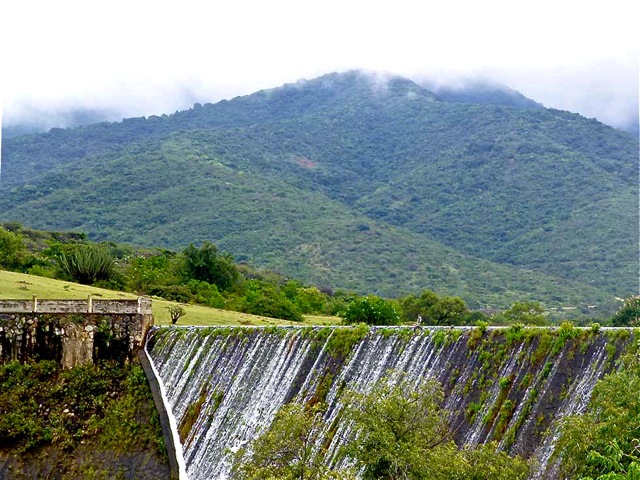
September – A rainy morning walk up to the presa (dam), Piedra Azul in Teotitlán del Valle.

P1020497_crop

October – Day of the Dead tapetes de arena in progress on the Plaza de la Danza.

IMG_6471

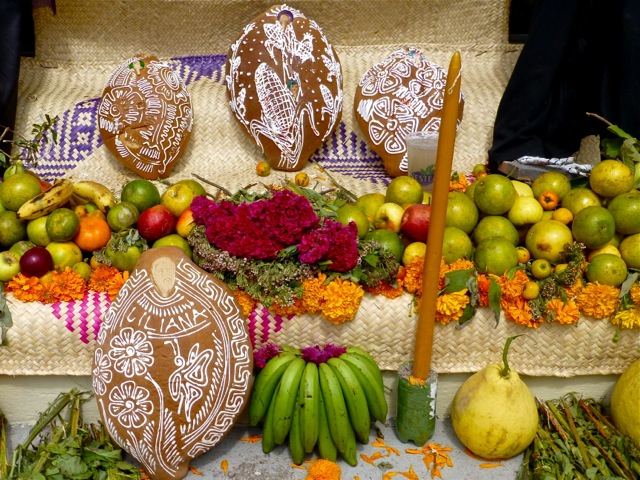
November – Ofrenda in San Pablo Villa de Mitla with the village’s traditional and intricately decorated pan de muerto.

P1030349

December – Nochebuenas (poinsettias) for sale at mercado Sánchez Pascuas.

P1050949

Muchisimas gracias to all my wonderful 2014 blog readers! I am blown away that people from 125 countries have stopped by View from Casita Colibrí this year.  Your presence, comments, and encouragement have been SO very much appreciated.

¡Feliz año nuevo a tod@s!  I can’t wait to see what 2015 will bring.

Read Full Post »

“Beauty is whatever gives joy.” — Edna St. Vincent Millay

This slideshow requires JavaScript.

Some of the beautiful women, young and old, of this year’s Guelaguetza desfiles.

Read Full Post »