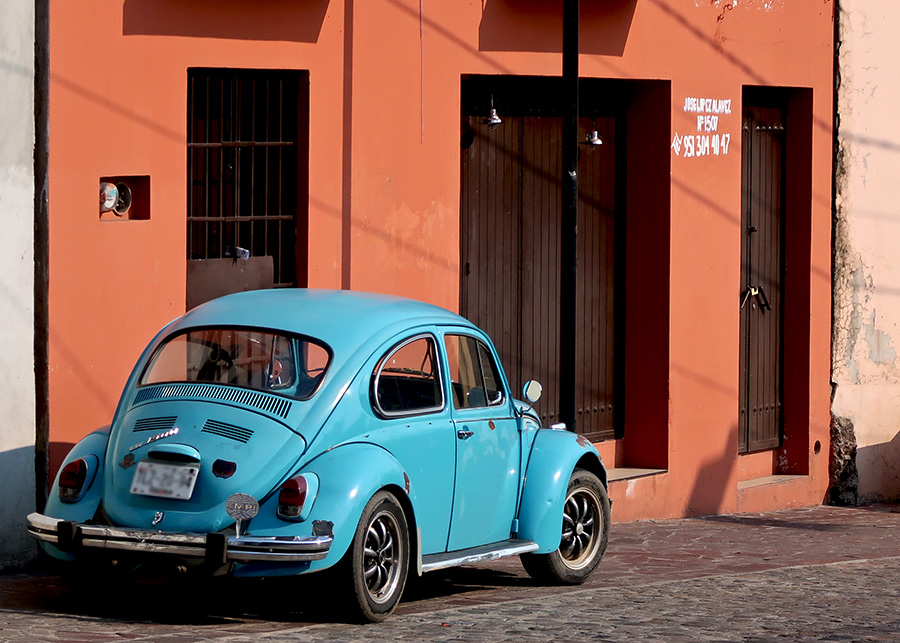
In varying states of repair and disrepair and in a rainbow of colors, old but indomitable VW Beetles (known as Vochos in Mexico) are still seen tooling and sputtering their way around Oaxaca — an ideal car for navigating the narrow streets and limited parking in the city.
As the old Timex watch commercial used to say, “It takes a licking and keeps on ticking!”
Today, March 19, we celebrate Día de las Artesanas y los Artesanos. Apparently anticipating this day, in less than one month I have purchased three beautiful hand woven blouse length huipiles — and they each have a story.
On a walk up Macedonio Alcalá, en route to somewhere else, my neighbor Kalisa and I stopped to say hi to her favorite textile street vendor, Vicente, at his stall just beyond Santo Domingo. My eye was immediately drawn to the subtle color combination and style of the huipil above. As it turns out, it, unlike most of the textiles he had in stock, was dyed with natural dyes (including the rare caracol) and woven by his mother who lives in the Santiago Juxtlahuaca, in the Mixtec region.
The indigo and coyuche brocade huipil above is from the Mixtec village of Pinotepa de Don Luis and was the first in my trio of purchases. It was woven by a woman named Sebastiána and I bought it in response to an appeal by Stephanie Schneiderman to help support the weavers of that area during these pandemic days. It spoke to me the minute I saw it among the selection of huipiles for sale. Stephanie helped facilitate shipping it from Pinotepa de Don Luis to Oaxaca city and within a couple of weeks, it was hanging in my closet.
The third of my huipil purchases was another impulse buy. For several months, on Friday mornings, Kalisa and I have been making the trek up to the Pochote Xochimilco Mercado Orgánico y Artesanal in Colonia Reforma to stock up on fabulous fresh produce from the Sierra Norte, the occasional duck and chicken, cheeses, and fun shaped clay garden pots. However, the vendor of the plants and pots also sells a selection of huipiles from the Papaloapan region of Oaxaca and I fell in love with this Chinanteco one.
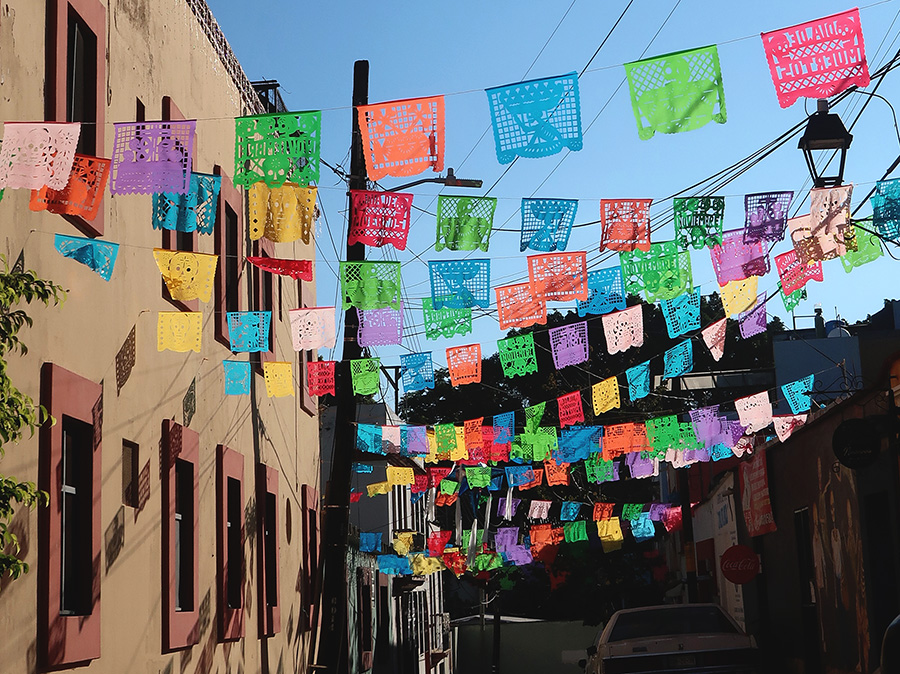
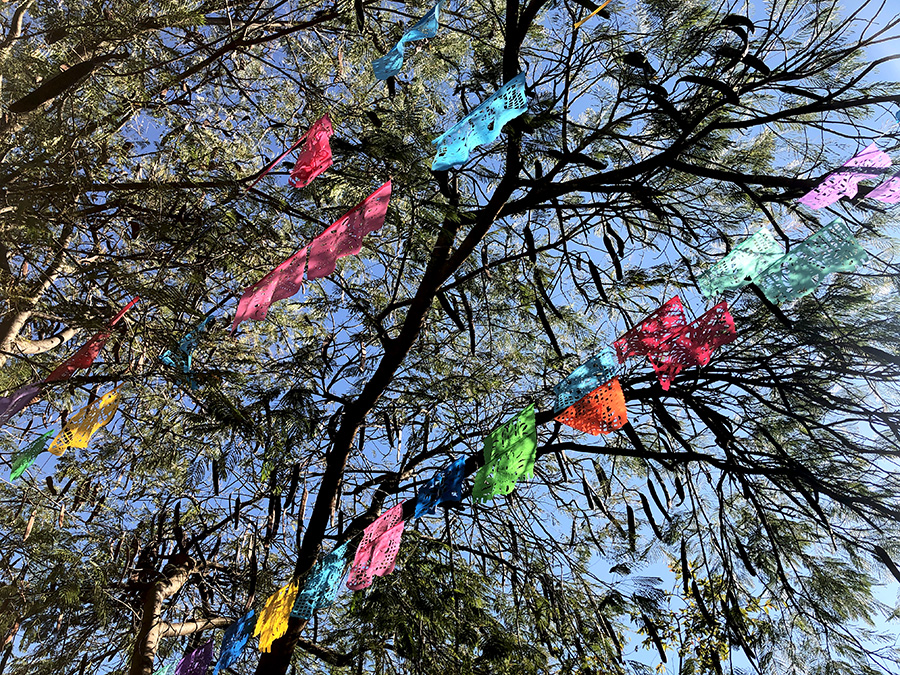
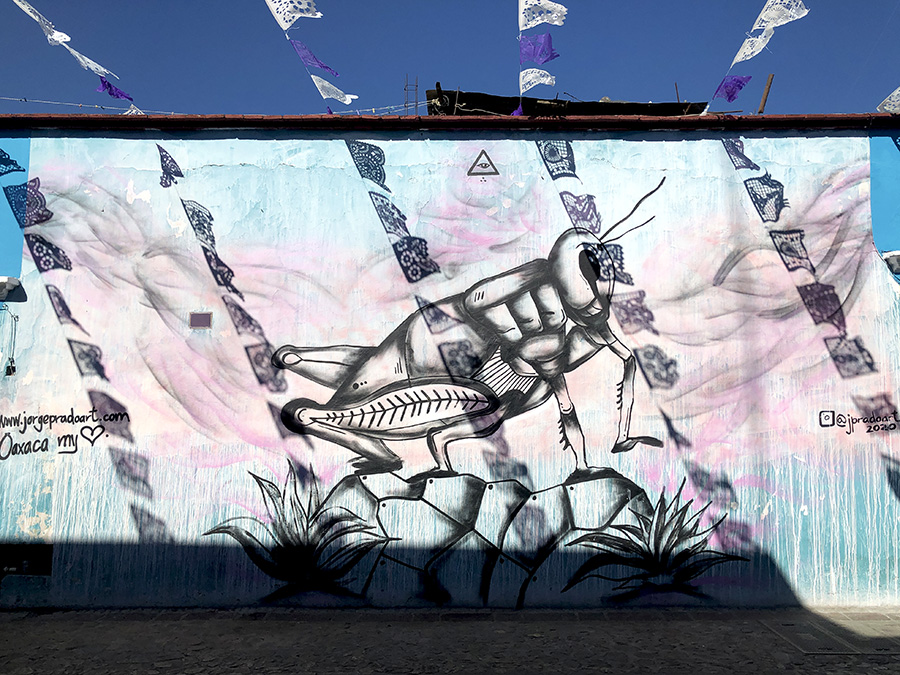
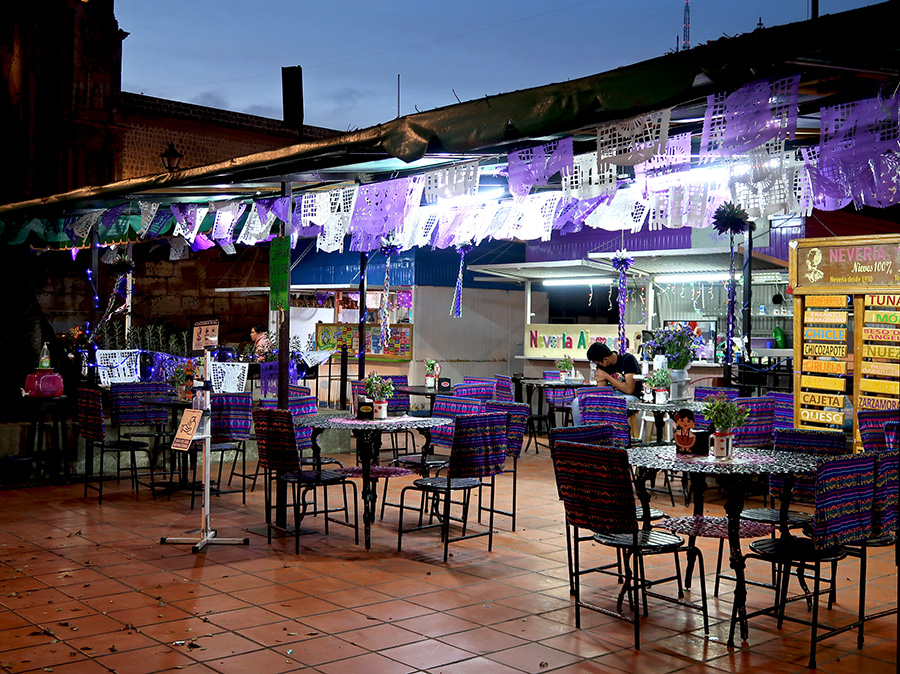
Looking up never ceases to make me smile, especially when papel picado (cut paper) garlands flutter in the breeze — images with holiday themes, celebrating rites of passage, and advertising local products.
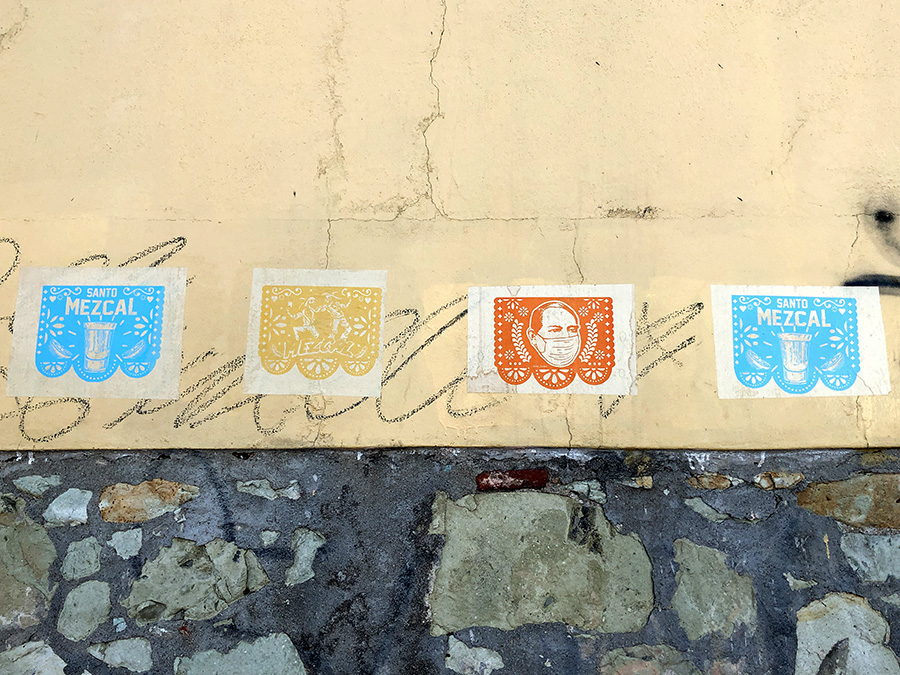
They are even imprinted on walls.
We are in the midst of Cuaresma (Lent), though pandemic restrictions have canceled most public celebrations, we have the Liturgical colors of violet and white papel picado to remind us.
Even the neverías of Jardín Sócrates have gotten into the act.
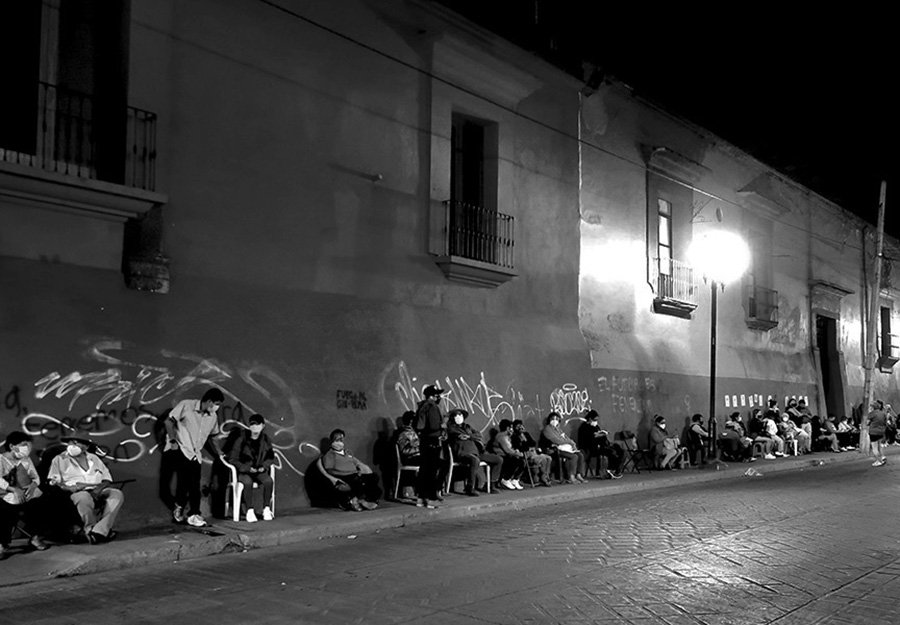
Tuesday night, Kalisa and I ventured out on another vaccine reconnaissance mission and found the number of people planning to spend the night in line wasn’t nearly as long as the night before. Ruling out sleeping on the sidewalk, we agreed to give it a try early Wednesday morning.
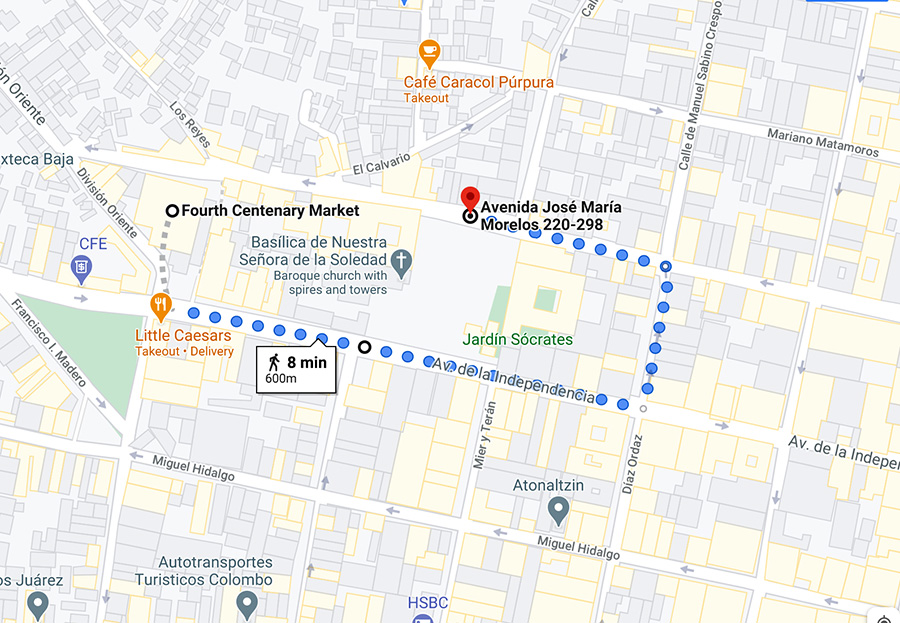
Route to the vaccine.
We rendezvoused at 6:15 AM, set off to find the end of the line, discovered it was already a block and a half longer, reassured each other that we can do this, and joined the line. Armed with reading material, we set our stools down and prepared to wait for our first jab of the Pfizer vaccine. Eating wasn’t a problem, as vendors regularly came by with food and drink and Mercado IV Centenario was only a few steps away. As for the “call of nature,” public bathrooms are available at the Mercado and Jardín Socrates nearby and a few businesses along our route had signs reading, “Baños 5 pesos.”
7:33 AM – After 1 hour of waiting on Independencia.
We froze for the first 3 hours in the morning. The temperature was in the low 50s (Fahrenheit) and we both were wearing sandals, short sleeve cotton blouses, and only had cotton rebozos (shawls) to keep us warm. The vaccinations were scheduled to start at 8 AM but our line didn’t start moving until 11:30 AM. It turns out, they gave the people in line on Morelos a number when they stopped vaccinations at 5 PM the day before, so they got first priority, along with anyone in a wheelchair.
2:07 PM – Entering the Plaza de la Danza.
One of the enjoyable aspects of our ordeal was getting to know our neighbors in the queue. Like most, they were sons, daughters, and grandchildren holding places in line for elderly relatives. This is the ethos of Oaxaca! Once the sun rose above the buildings and began beating down on young and old, we all sweltered in 80+ degree (F) heat. Despite bringing sun hats, Kalisa and I succumbed to purchasing umbrellas from one of the vendors going up and down the line. Another enterprising vendor was selling plastic stools, but since we had brought our own, he ignored us.
2:32 PM – Post vaccination arrival in observation area.
Once the line actually started moving, it only took 2 hours to get to the Plaza de la Danza, where our paperwork was processed, we got the vaccine, waited in an observation area for 15 minutes, and then left for home. 7-1/2 hours, door to door.
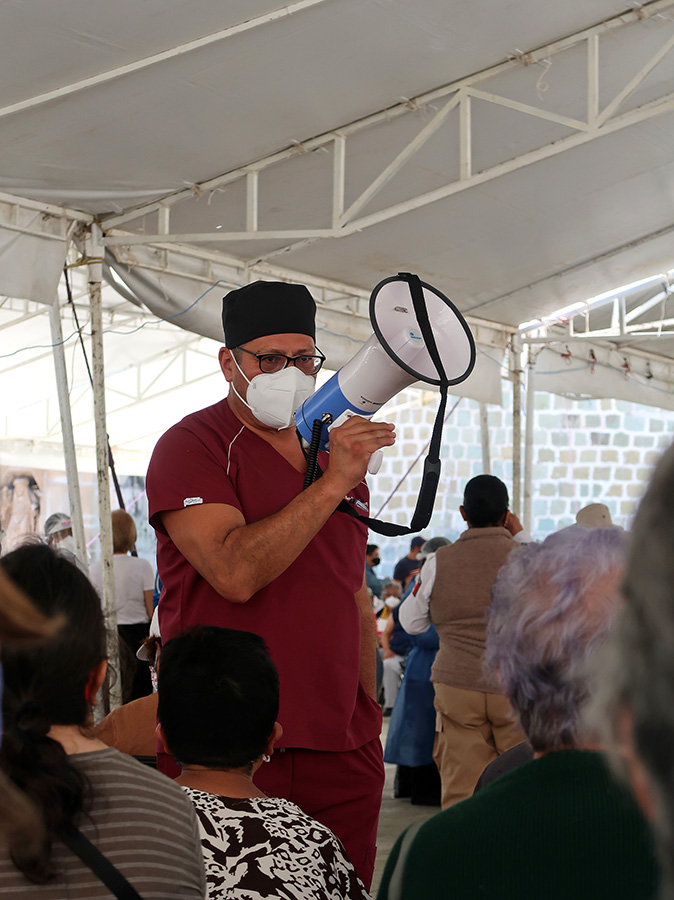
2:44 PM – Post vaccination debriefing.
We were lucky, as they ran out of vaccine by 3:30 PM and Thursday’s vaccinations at the Plaza de la Danza were canceled. More is supposed to arrive, but no one knows when. As for our second dose, we were told they will announce via media when it will be offered AND promised to be better organized. Keep your fingers crossed!
The headline in this morning’s newspaper read, “Without strategy to avoid crowds, vaccination against COVID-19 begins in Oaxaca.” Here in the greater Oaxaca de Juárez metropolitan area, there are 11 vaccination sites, distributing 23,090 doses of the Pfizer vaccine to people over 60 years old who have registered on a federal government vaccine eligibility site. Because I am a Residente Permanente (official permanent resident), I also was able to register last month. The vaccinations are scheduled to be given today, tomorrow, and Thursday, from 8:00 AM to 4:00 PM and my plan had been to walk over to the Plaza de la Danza, my designated site, at 7:30 this morning.
Given it’s only a block away, early last night my neighbor and I walked over to scope the set up out. Boy, were we in for a shock — masses of people already lined Avenida Morelos, the street leading to the Plaza de la Danza.
The young man above looking at his cell phone, sitting on a stool in front of the School of Fine Arts, was number one in line. He arrived at 8:00 AM yesterday — 24 hours early.
Looking at the photos, I’m sure you are thinking, those people in line are awfully young looking to be over 60 — and you would be correct.
The overwhelming majority of people who were camping out on the sidewalks of the city were holding places for their parents, grandparents, aunts, uncles, godparents, and maybe even neighbors who were too old to spend the night on the streets.
The two guys in the foreground below were the last in the line on Galeana near Trujano at about 8:00 PM last night, though a couple more people were approaching as I was taking the photo.
The line snaked along at least six blocks. And, no, I did not join last night’s vigil. I will be patient, check the progress of the line a couple of times a day, and wait comfortably at home. According to a representative from Oaxaca’s Secretaría de Bienestar (Ministry of Welfare), there are enough doses for those registered and, should there be a need, they will get more. ¡Ojala!
March 8 is International Women’s Day. In the words of a recent article by Nancy Rosenstock, a woman I knew back in the day, “In these challenging times, all women — from those of us who were involved in second-wave feminism to those just entering the struggle — need to come together as equal fighters and chart a course forward.”
We may have come a long way, but the struggle for equal rights, respect, freedom from violence, and control of our own bodies continues and the women of the walls of Oaxaca are not silent.
Many of the images also carry a written messages. Below, Nuestros sueños no caben en sus urnas / Our dreams do not fit in their ballot boxes carries an indictment against the capitalist political parties.
The next one lets the symbols of the ancestors speak.
From a women’s graphic campaign that seeks to express “what our bodies go through every day and what we are seeking when we scream: Vivas Nos Queremos / We Want Ourselves Alive.”
And, a promise that women will not be silenced and will march forward Sin miedo / Without fear.
Then there is the mural, La Patria / The Homeland, which adorns the wall of a school in Barrio de Jalatlaco. La Patria, originally a painting by Jorge González Camarena of an indigenous woman surrounded by patriotic imagery, graced the covers of textbooks from the 1960s into the 1970s.
To honor and celebrate International Women’s Day, on March 8, La Mano Magica Gallery/Galería inaugurates an exhibit of women artists, Exposición de Arte Colectiva Mujeres Artistas, curated by Mary Jane Gagnier, at their gallery in Oaxaca and online on their Facebook page.
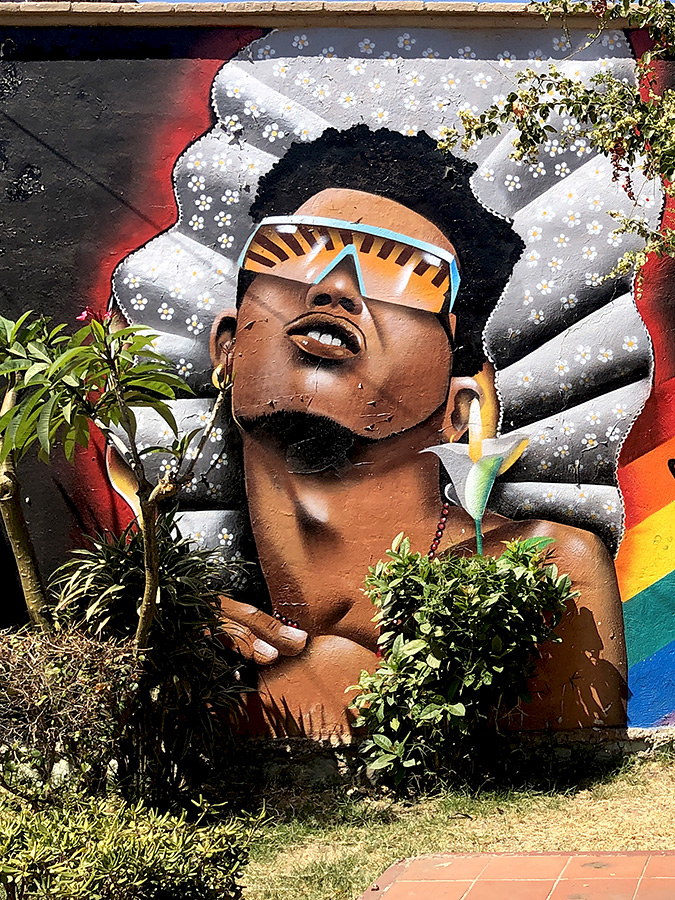
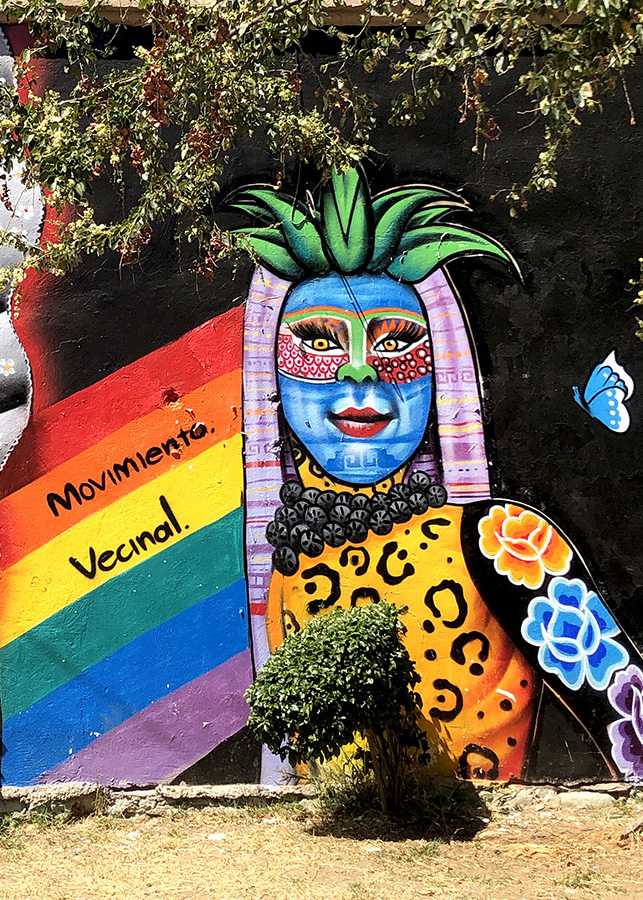
Returning from an errand in the Jalatlaco neighborhood, I was stopped in my tracks by this massive mural on Calzada de la República. It is titled, “No Discriminación e Inclusión” (No Discrimination and Inclusion), and was unveiled in October 2020 as part of the Movimiento Vecinal — a program created by the Sistema Estatal de Seguridad Pública de Oaxaca (State Public Security System of Oaxaca) to involve youth, through cultural, athletic, community, and educational activities, in the recovery, appropriation and rescue of public spaces. Importantly, a collaboration has also been established with the civil association Conquistando Corazones to eradicate violence towards the community of sexual diversity.
(Unfortunately, trees and other foliage prevented a clear photo of the entire mural and so I offer you the full mural in six parts — moving from left to right facing the mural.)
According to José Manuel Vera, Executive Secretary of Sistema Estatal de Seguridad Pública de Oaxaca, “We work to achieve equality and dignity for people based on their sexual orientation or gender identity and we continue to create spaces for youth that represent freedom of action and thought. In a just and egalitarian society, everyone has the right to their individuality, to be who they are, to do so in peace, without fear of rejection, hatred or violence, but rather enriched by diversity” (my translation).
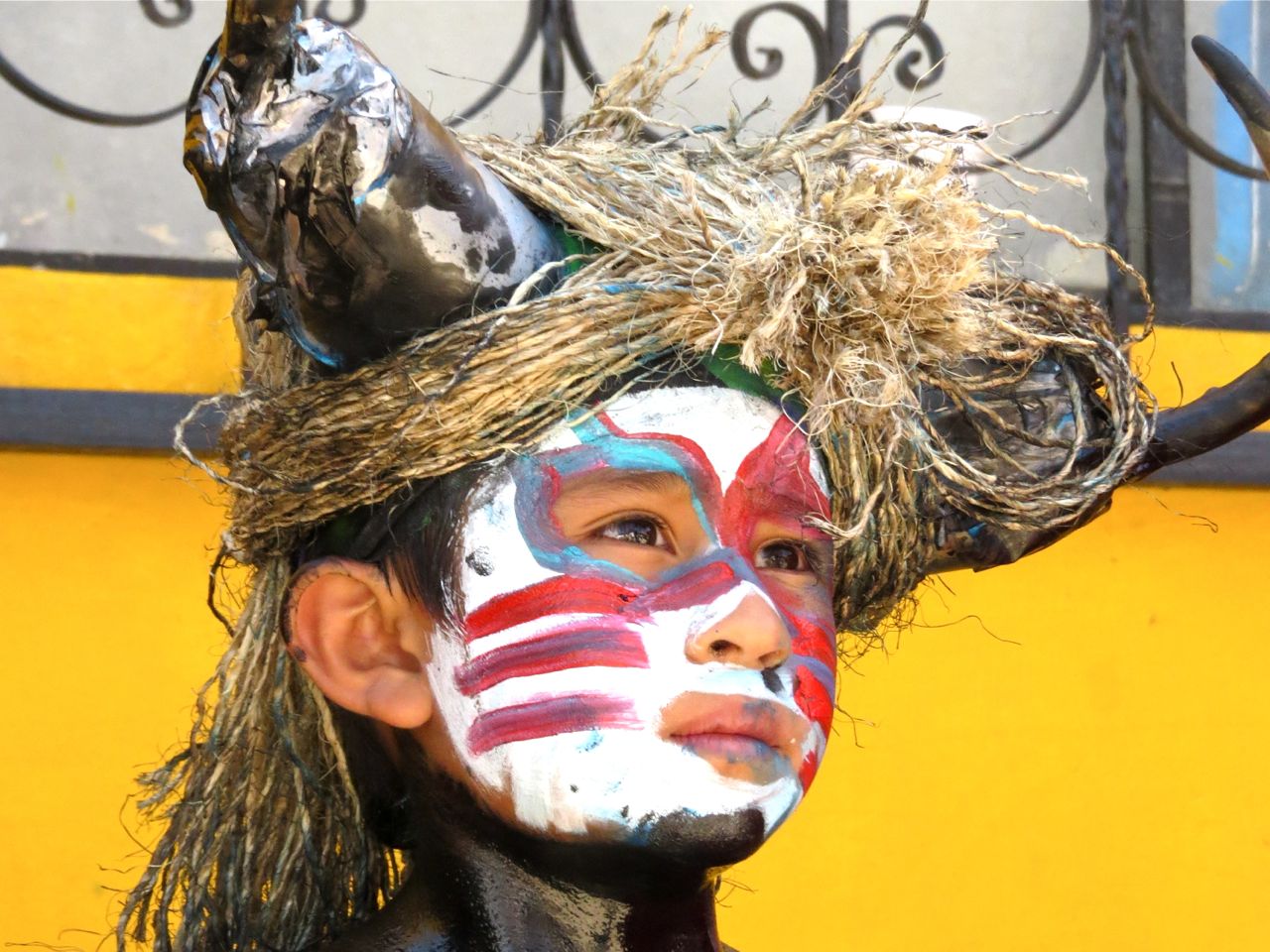
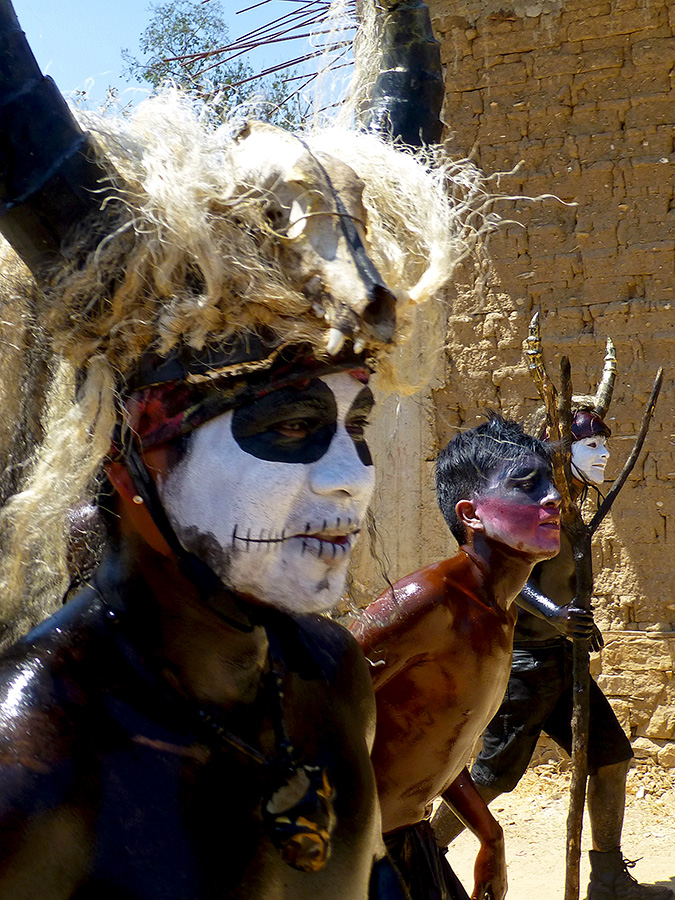
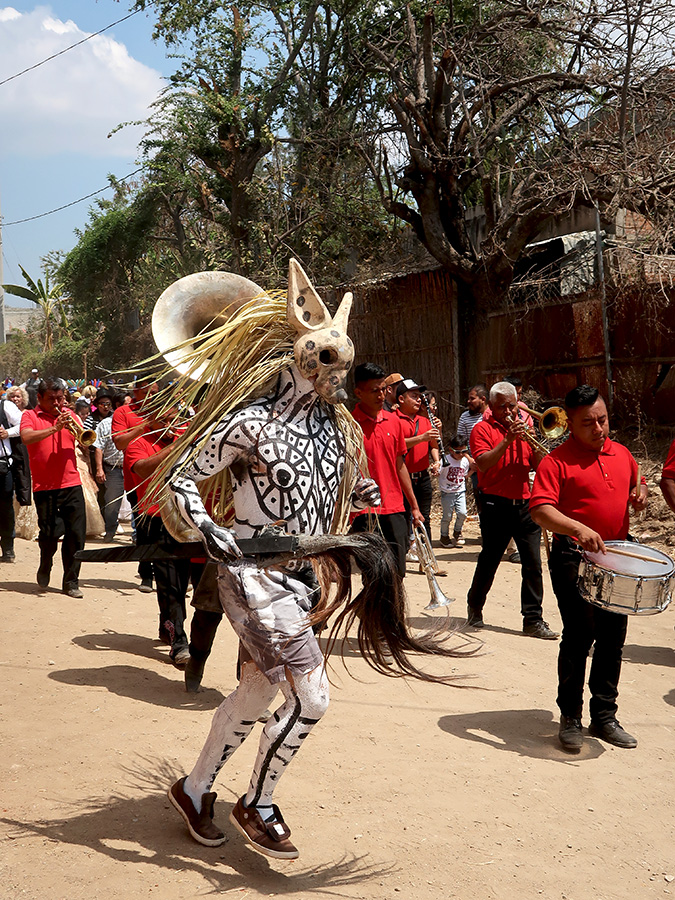
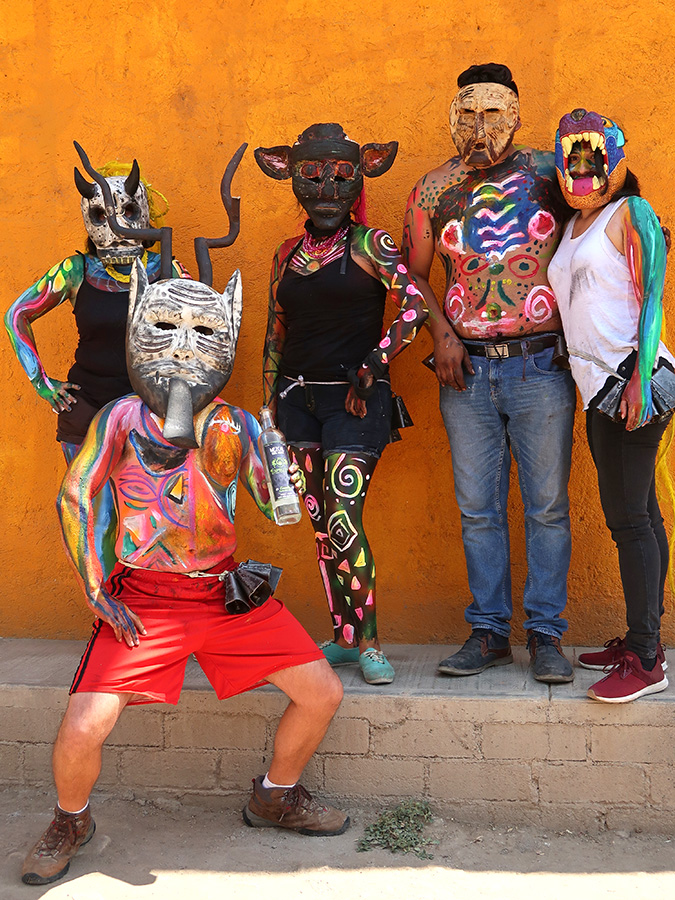
If all was right with the world, on this Día de Carnaval (aka, Carnival, Fat Tuesday, Mardi Gras, Shrove Tuesday), the day before Christians celebrate the beginning of Lent, I would be in San Martín Tilcajete — where the streets would be alive with the sound of bells, as los encabezados (guys covered in motor oil or paint and wearing cowbells tied around their waist) roam the streets startling the unaware, making mischief, and welcoming all to the festivities.
2014
2015
This predominately Zapotec village has seized on the holiday, brought to Mexico by Spanish Catholicism, to create elaborate masks to showcase its woodcarving skills. It is no coincidence that Carnival conveniently coincided with indigenous festivals celebrating the “lost days” of the Mesoamerican calendar, “when faces were covered to repel or confuse evil.” It is also no surprise that it caught on, “because it was one time when normal rules could be broken especially with the use of masks to hide identities from the authorities” — and make fun of them.
2016
2017
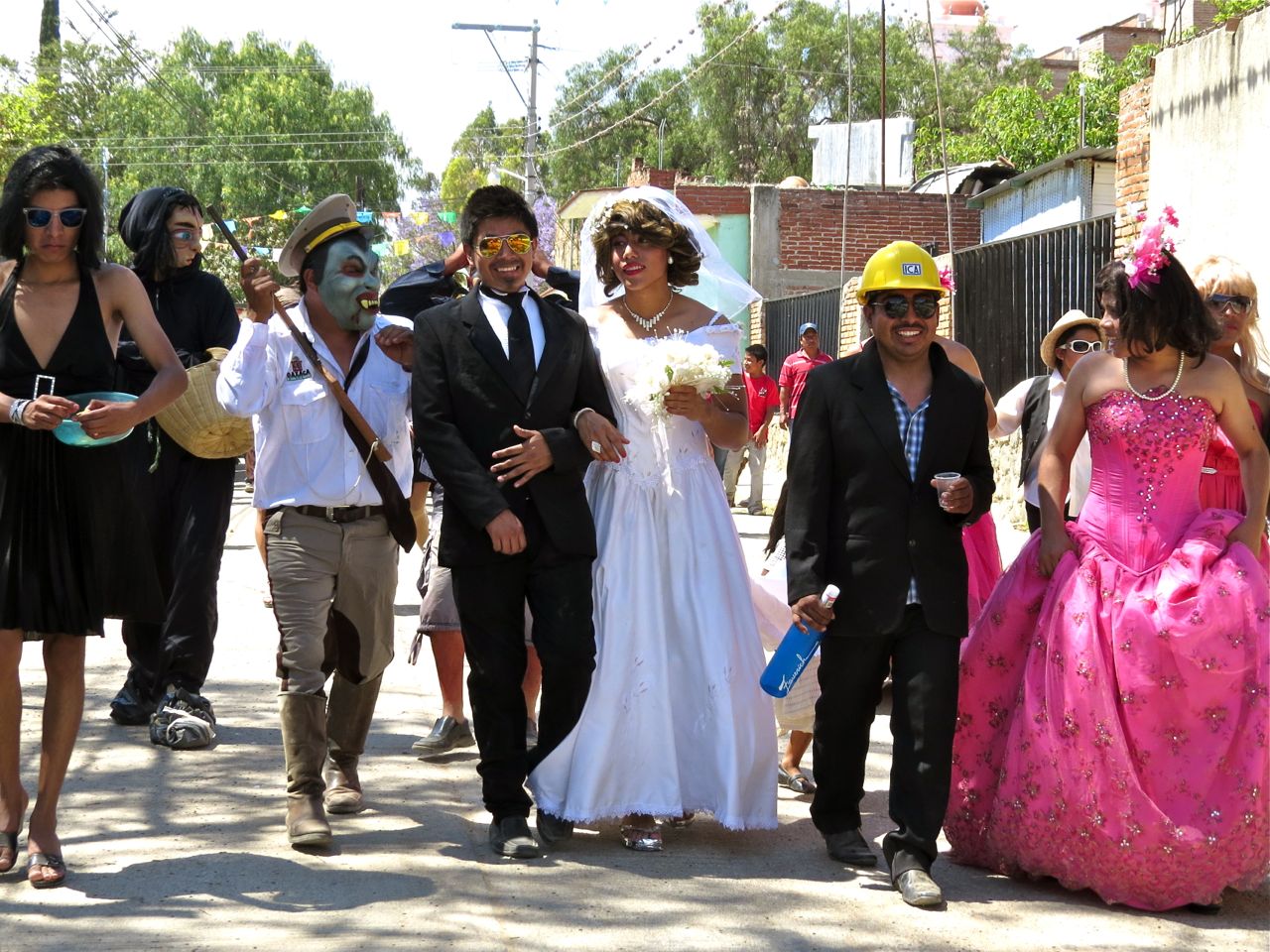
The festivities revolve around a mock wedding — a parody of a traditional village wedding. It includes much pomp and circumstance, hilarity, music, food, and fireworks. Young and old move from the houses of the principal players to City Hall for the “civil ceremony,” dancing in the plaza, followed by another procession through the streets to another house where the happy “couple” kneel before a “priest” for the religious ceremony. You might want to take a second look at those beautiful wedding guests with the smoldering eyes and modeling the gorgeous gowns. They are not what they seem — and neither is the bride.
2018
2019
2020
San Martín Tilcajete isn’t the only village in Oaxaca that celebrates Carnaval in its own wild and wacky way. Beginning in 2019, in an effort to promote tourism to other villages, residents and visitors in Oaxaca city have been treated to a boisterous parade down the Macedonio Alcalá on the Saturday preceding Fat Tuesday sampling the pre-Lenten traditions from various parts of the state. Though festivities were canceled due to Covid-19, the city’s tourism department put together a video of celebrations from past years by several villages.
February 14th isn’t just a day for lovers. In Mexico, Valentine’s Day is known as the Día del Amor y la Amistad — Day of Love and Friendship.
By the artist known as ARCH
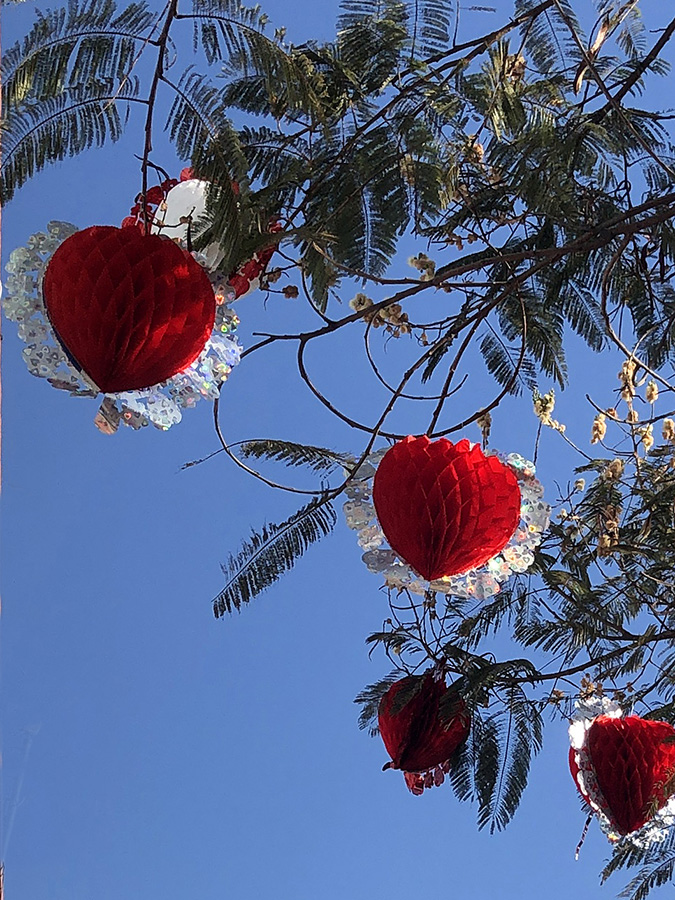
Decorations have gone up and I have no doubt kilos of chocolate, bouquets of flowers, and heart shaped balloons with confessions of amor will be purchased.
Unfortunately, with the virus continuing to rapidly spread and Oaxaca still under semáforo naranja/orange traffic light (though many think it should be rojo/red), I’m not sure restaurants will or should be filled to capacity with friends, sweethearts, and families.
By the artist known as Efedefroy
Given the trauma and uncertainty the world has experienced over the past year, I hope we have learned to cherish our friends and family and to let them know how much they mean to us every day. Let us celebrate days of love and friendship and not just limit it to one day a year.
And, if you would like to say I love you (te amo) in 7 of the 69 indigenous languages spoken in Mexico — including several spoken in the state of Oaxaca — click HERE.
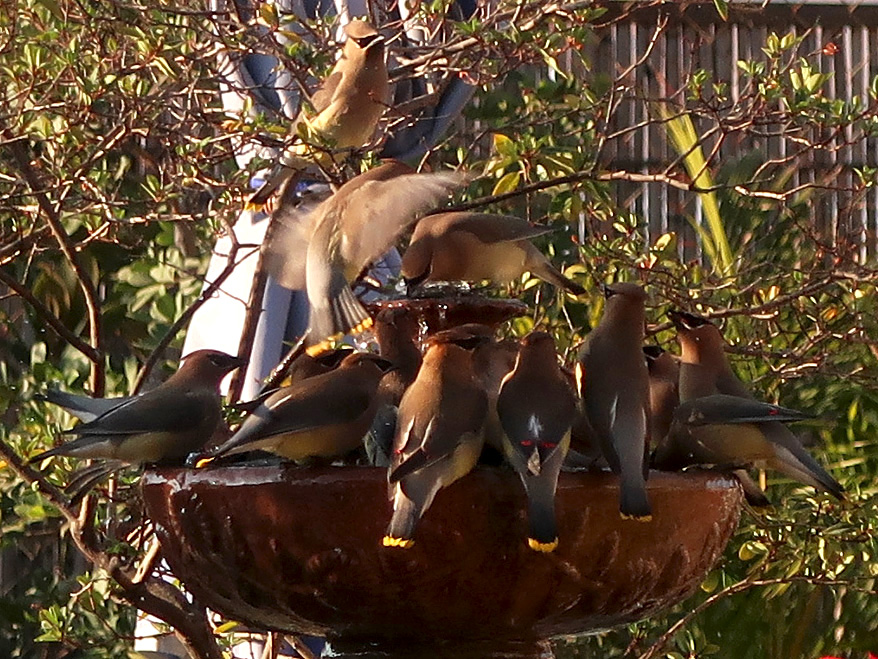
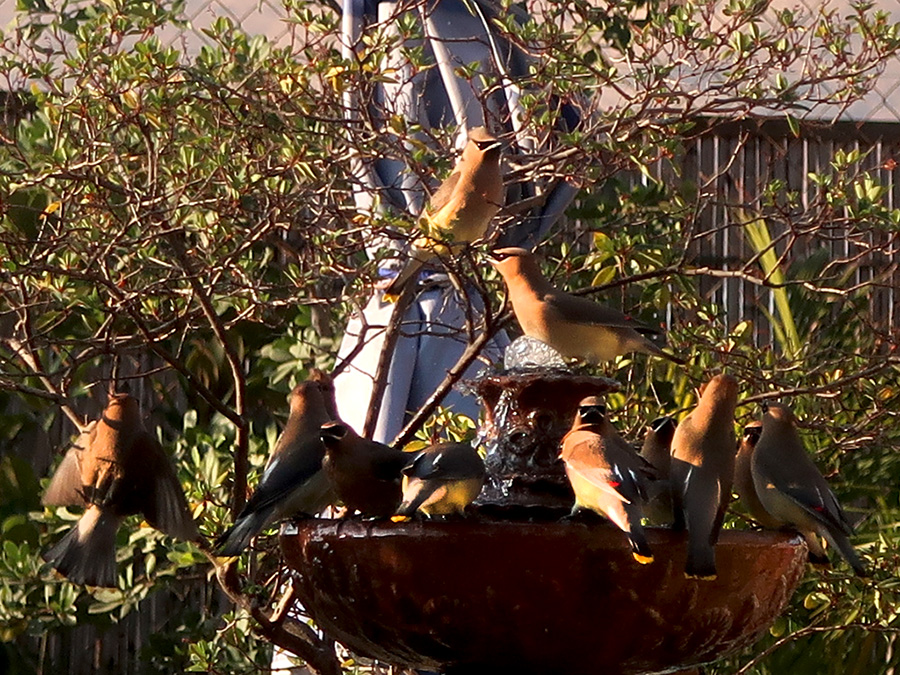
Snowbirds continue to arrive in Oaxaca. For the past several days, Cedar Waxwings have been flocking to my fountain — the first year they have come to Casita Colibrí. They are great fun to watch and seem to have distinct personalities.
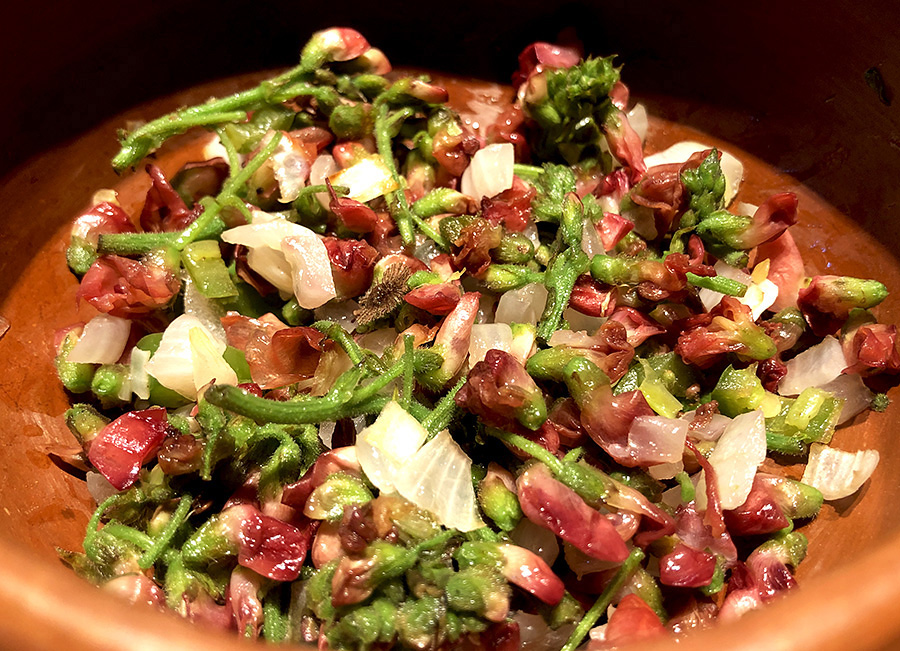
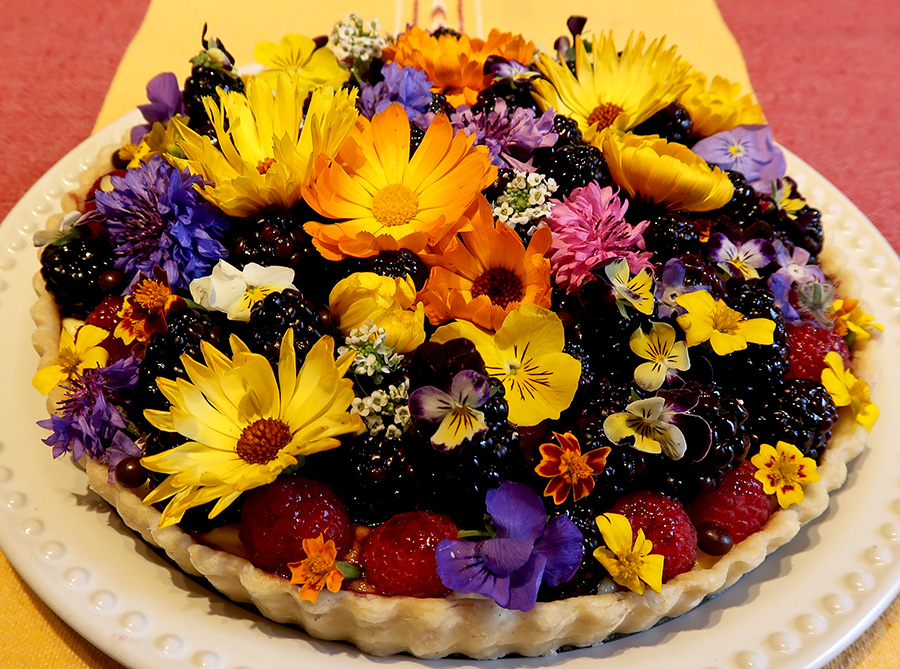
It’s been a whole month, so I figured it’s about time to again showcase the culinary creations by my friend, neighbor, and cocinera extraordinaire, Kalisa. If you can’t take the mouthwatering temptation, I advise you to step away from the blog post now.
January 4, 2021 – Flor de Frijolón salad.
January 4, 2021 – Pork pozole.
January 10, 2021 – Quiche Lorraine.
January 10, 2021 – Chicken wings.
January 17, 2021 – Cassoulet with duck, sausage, pork, and organic French Tarbais beans.
January 23, 2021 – Picadillo stuffed cabbage leaves.
February 3, 2021 – Pan seared Norwegian salmon in brown butter lemon sauce accompanied by baby new potatoes and carrots.
February 3, 2021 – Mixed berry tart.
Just so you know, the last two are not everyday fare — they were for my birthday. (Please, don’t ask.) I think Kalisa outdid herself!
Today, besides being Groundhog Day, it is the Christian holy day, Día de la Candelaria (aka, Candlemas, Presentation of Jesus at/in the Temple, and Feast of the Purification of the Virgin). In Mexico, tradition calls for families to bring their Niño Dios (baby Jesus), decked out in new clothes, to the church to be blessed. Alas, in the time of Covid-19, the Servicios de Salud de Oaxaca (health department) has called upon Oaxaqueños not to gather this year and, while the doors of the Cathedral will be open, the faithful are asked to stay home if their Niño Dios was blessed in previous years.
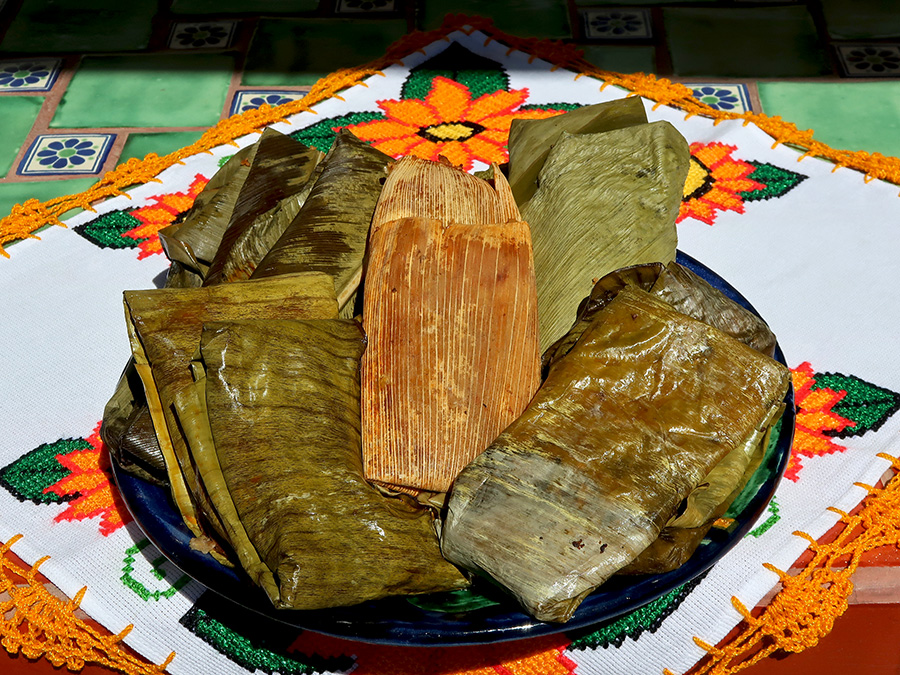
Tamales from Levadura de Olla Restaurante: Tamal Adobo, Tamal Chile Ajo, Tamal Mole Negro, Chancleta Guajolote, and Tamal de Fiesta(not in order)
Custom also calls for the person who bit into the baby Jesus figurine hidden in the Rosca de Reyes (3 Kings Cake) during Día de los Reyes Magos to host a tamalada on Candelaria. As I write, tamales are steaming all over the state. The virus will not stop the cocineras of Oaxaca from rising before the crack of dawn to make and serve tamales. As I previously mentioned, I munched down on a figurine. And I wasn’t the only one — my neighbor and friend Kalisa also had the “pleasure.” I must confess, we took the easy way out and pre-ordered our tamales from Levadura de Olla Restaurante. I can’t wait to eat them!
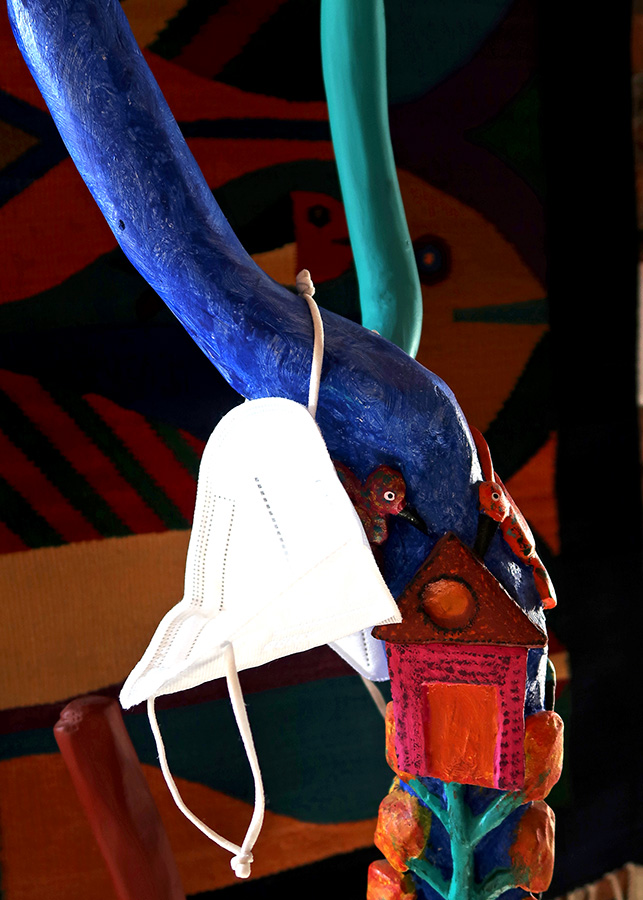
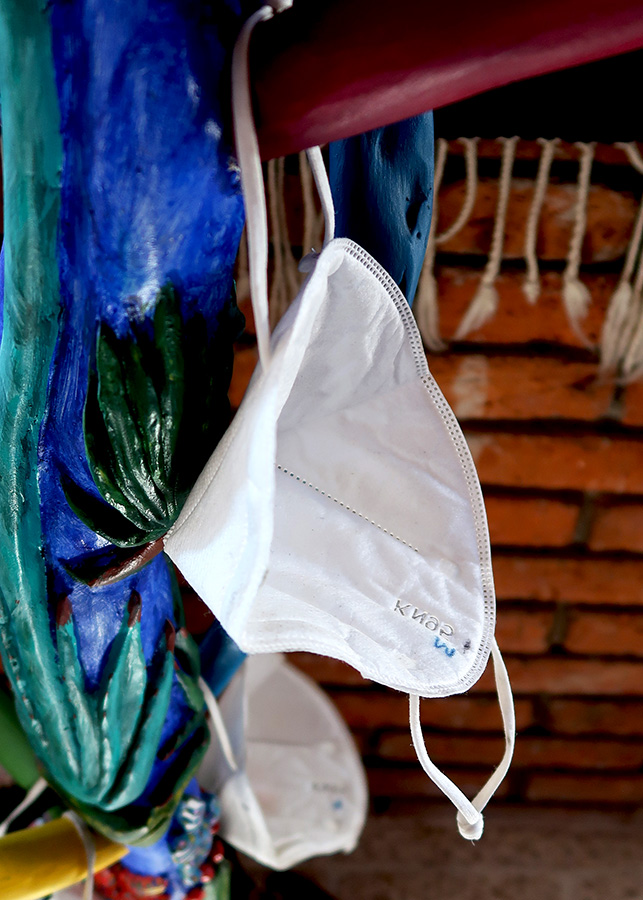
You may remember the beautiful hat tree I commissioned from the San Martín Tilcajete workshop of Jésus Sosa Calvo. In these mask-wearing times of Covid-19, it has taken on a new function.
No longer serving as a place to hang my hat or market baskets, it now holds my collection of cubrebocas (face masks).
In case you are wondering why there are seven of them hanging on the tree, each KN95 mask is labeled with a day of the week, so I can rotate them.































 Mexican Peso Converter

 View From Casita Colibrí
Mighty women of Oaxaca’s walls
Posted in Celebrations, Creativity, Culture, Politics, Travel & Tourism, tagged art, Día Internacional de la Mujer, International Women's Day, Mexico, Oaxaca, political commentary, stencil art, street art, urban art, wall art, women's faces, women's rights on March 7, 2021| Leave a Comment »
March 8 is International Women’s Day. In the words of a recent article by Nancy Rosenstock, a woman I knew back in the day, “In these challenging times, all women — from those of us who were involved in second-wave feminism to those just entering the struggle — need to come together as equal fighters and chart a course forward.”
We may have come a long way, but the struggle for equal rights, respect, freedom from violence, and control of our own bodies continues and the women of the walls of Oaxaca are not silent.
Many of the images also carry a written messages. Below, Nuestros sueños no caben en sus urnas / Our dreams do not fit in their ballot boxes carries an indictment against the capitalist political parties.
The next one lets the symbols of the ancestors speak.
From a women’s graphic campaign that seeks to express “what our bodies go through every day and what we are seeking when we scream: Vivas Nos Queremos / We Want Ourselves Alive.”
And, a promise that women will not be silenced and will march forward Sin miedo / Without fear.
Then there is the mural, La Patria / The Homeland, which adorns the wall of a school in Barrio de Jalatlaco. La Patria, originally a painting by Jorge González Camarena of an indigenous woman surrounded by patriotic imagery, graced the covers of textbooks from the 1960s into the 1970s.
To honor and celebrate International Women’s Day, on March 8, La Mano Magica Gallery/Galería inaugurates an exhibit of women artists, Exposición de Arte Colectiva Mujeres Artistas, curated by Mary Jane Gagnier, at their gallery in Oaxaca and online on their Facebook page.
Share this:
Read Full Post »