Feeds:
Posts
Comments

Posts Tagged ‘Mexico’

As the announcer used to say, “And now for something completely different…”

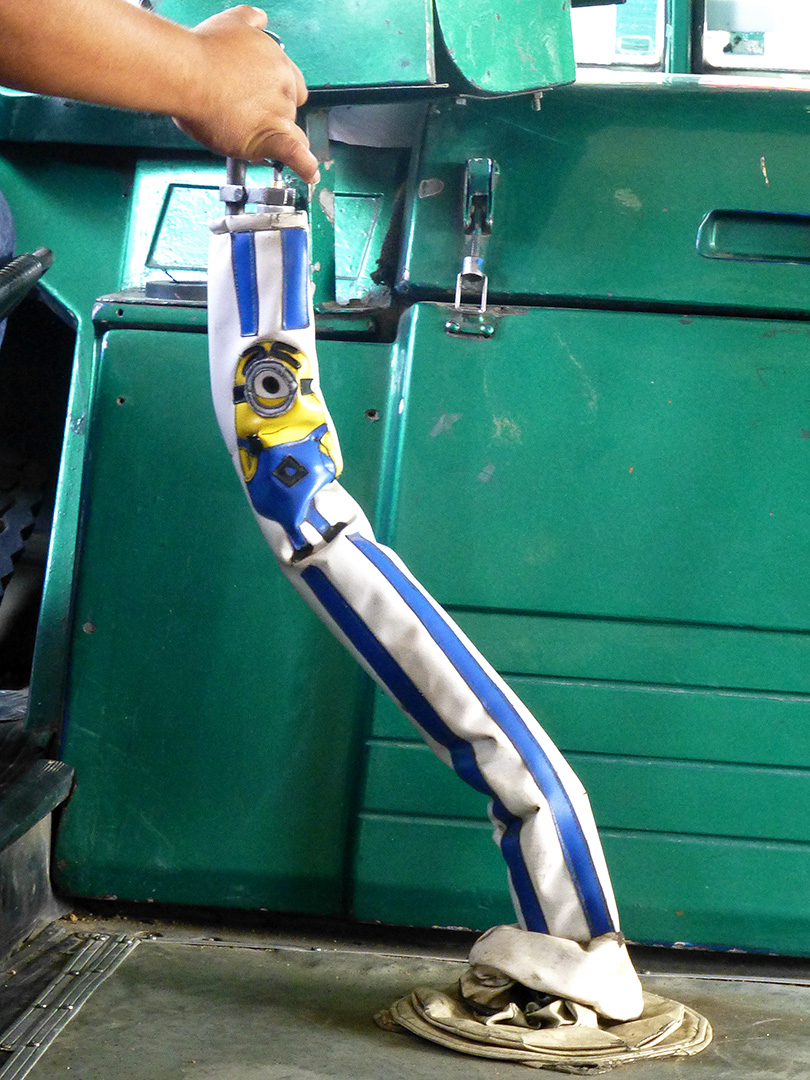
Apparently, when the Minions went in search of their next evil boss, they must have stopped off in Oaxaca.  My first sighting was on the bus back to the city from the Guelaguetza in Etla two weeks ago.

P1130164Then, there they were today, as taxis paraded through the streets of Oaxaca, celebrating Día del Taxista.

P1130381P1130383Hmmm…  Is there something about the movie that resonates with the transportation workers of Oaxaca?

P1130396copyScarlett Overkill (the Supervillainess):  DO you know who this is?
[points at a British Royal portrait]

Kevin (the Minion):  Uh… la cucaracha? 

Minions

Read Full Post »

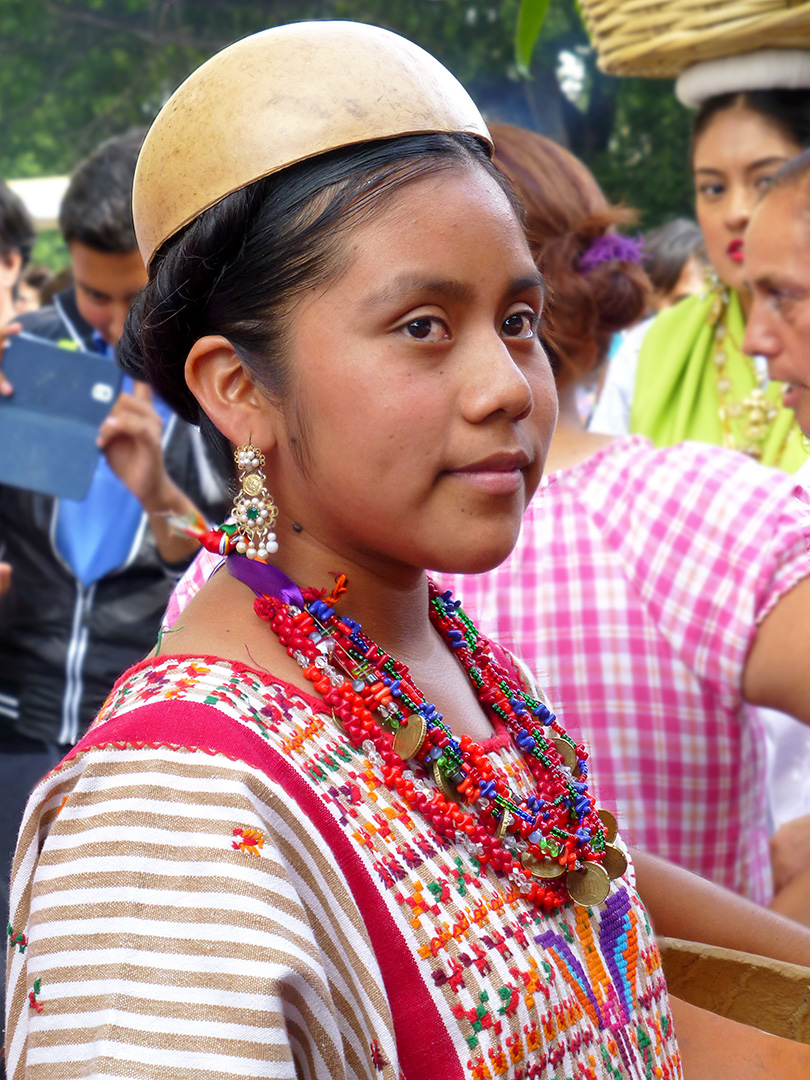
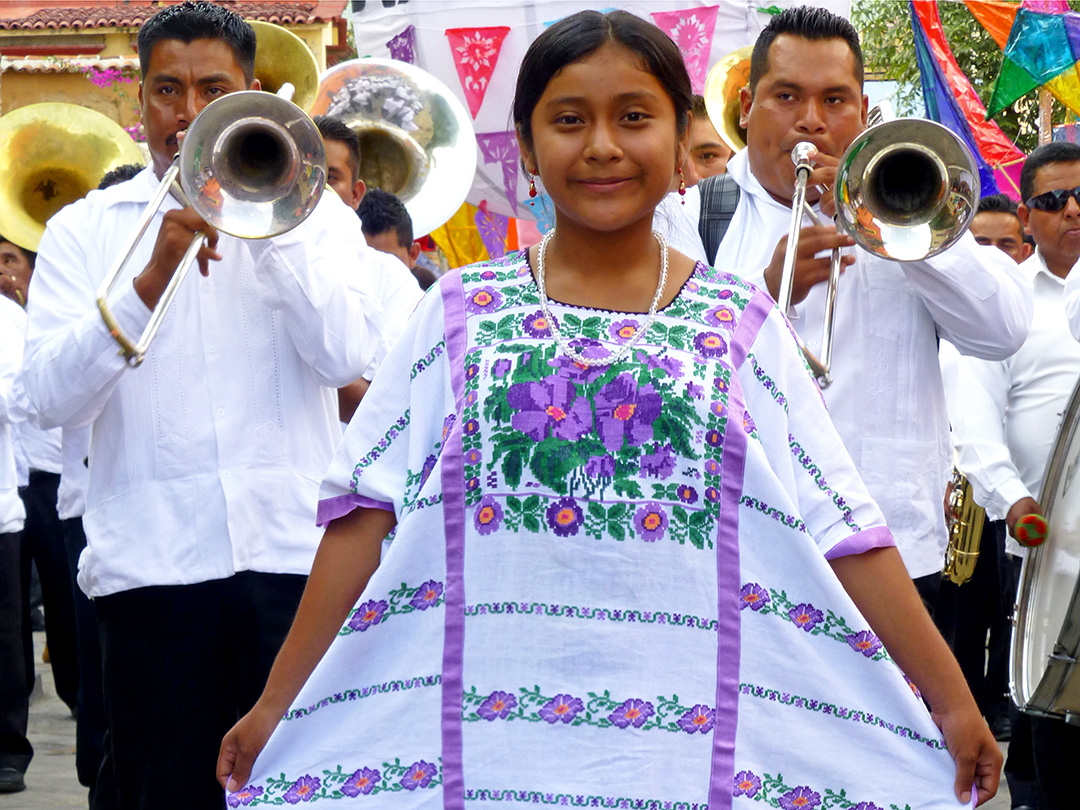
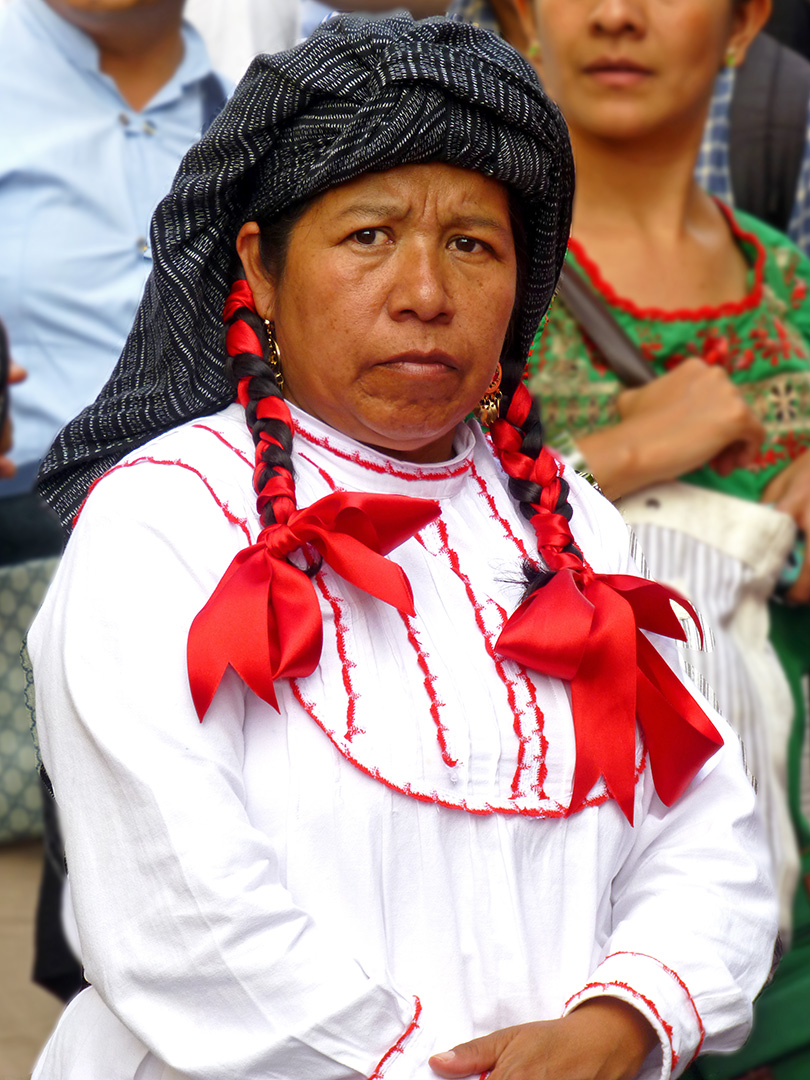
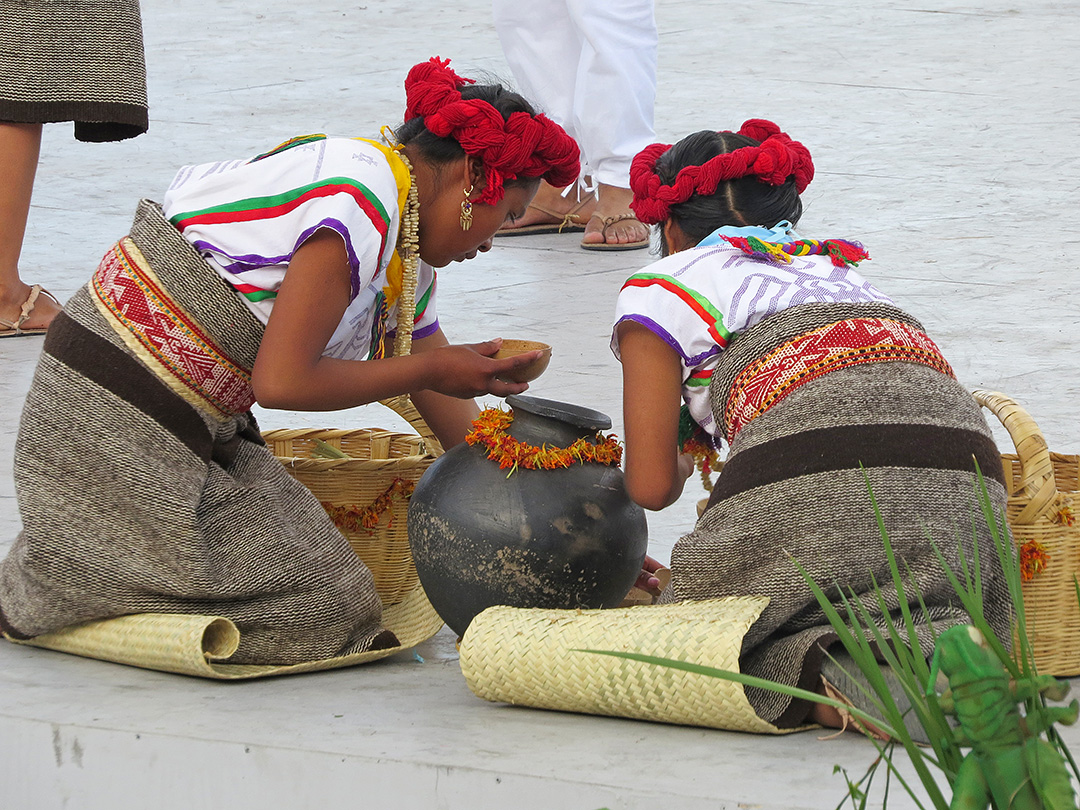
The National Institute of Statistics and Geography (INEGI) ranks the state of Oaxaca first in Mexico, in terms of indigenous population. [SIPAZ, Población Indígena]   Out of 3,405,990 inhabitants of Oaxaca, 34.2% are indigenous.Grupos Etnicos Oaxaca La Guelaguetza, Oaxaca’s July celebration of its indigenous cultures is in the rear view mirror.  The streets were filled with tourists and hotels and restaurants were happy.  However, the debate continues regarding the role of this annual event.
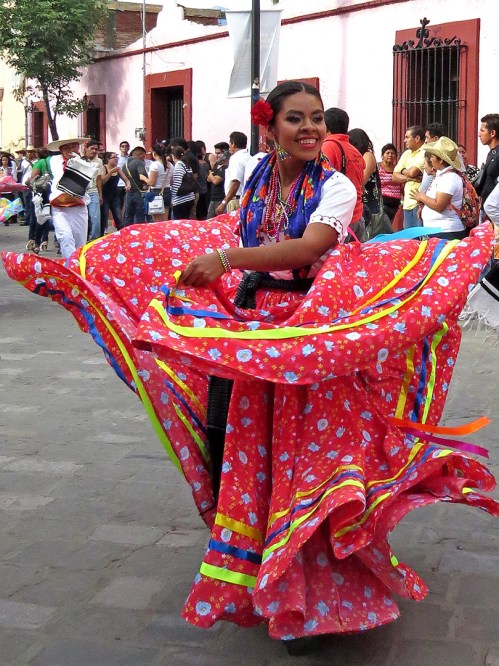
Santos Reyes Nopala, Chatino

Santos Reyes Nopala – Chatino

Does it benefit Oaxaca’s indigenous population or just the tourist industry?  Does it present reality or reinforce stereotypes?  However, all agree, poverty and inequality ARE problems that disproportionately affect the indigenous people of Oaxaca.  And, Oaxaca and Mexico are not alone…

Santa María Zacatepec, Tacuate

Santa María Zacatepec, Tacuate Mixteco

Tomorrow is August 9, designated as International Day of the World’s Indigenous Peoples by the United Nations General Assembly in 1994.  This year’s theme is, Post 2015 Agenda: Ensuring indigenous peoples health and well-being.  As the UN Women website explains:

Indigenous women experience disproportionate difficulties in access to health care, as well as higher rates of maternal and infant mortality, malnutrition and infectious diseases such as tuberculosis and malaria. Though indigenous women are counted upon to support the health and well-being of their families, they often face hurdles to access the resources to build the foundation of a better life, such as education and land.

San Pedro Amuzgos, Amuzgo

San Pedro Amuzgos, Amuzgo

 According to a recent article in Noticias, a woman born in Oaxaca has a four times greater risk of dying from maternal causes than in the rest of Mexico, and 56% of these deaths are of indigenous women.
San Pablo Macuiltianguis, Zapoteco

San Pablo Macuiltianguis – Zapoteco

The Chief of the National Commission for Development of Indigenous Peoples (CDI) Oaxaca delegation, reported that Oaxaca has the highest indigenous poverty rate in Mexico, with 1,719,000 indigenous in Oaxaca living in conditions of substandard infrastructure, health, and education, which, he acknowledged, affects women more.

San Pedro y San Pablo Ayutla, Mixe

San Pedro y San Pablo Ayutla – Mixe

In Oaxaca city, on August 9, a cultural event will be held at the Alameda de León, from 10:00 AM to 5:00 PM with bands, poets, and artists supporting the campaign “What happened to my rights?”
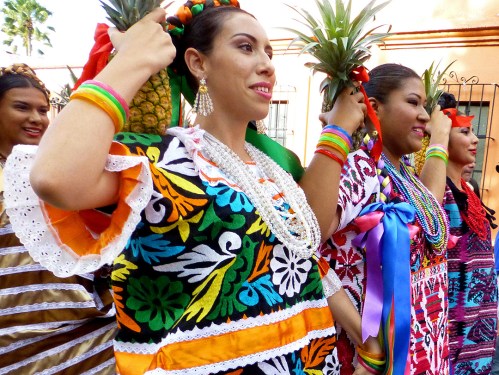
San Juan Bautista Tuxtepec, Mazateco and Chinanteco

San Juan Bautista Tuxtepec – Mazateco and Chinanteco

Let’s hope there will be answers and action.
(Photos are from Guelaguetza 2015 desfiles (parades) and Diosa Centéotl contest.)

Read Full Post »
Last week, walking down Crespo, I spotted a mural at the turnoff to Calle Panorámicas del Fortín and discovered it was the work of Jesus Kobe.

Hmmm… Recently, I’d seen another of his works on Allende near Crespo.

I was familiar with the artist because last year, friends and I were walking along Panorámicas and stopped at this mural.

We walked further along to find another mural, but without a signature.  It turned out the artist was walking by and when he saw us admiring the work, he graciously stopped to chat.  It was Kobe and he explained that he only signs his work once it is completed.

Serendipity, why this place never ceases to surprise and delight!

And, watch and hear Kobe explain the inspiration that underlies the mural he created for Santa Fe Taqueria in Portland, Oregon:

Read Full Post »

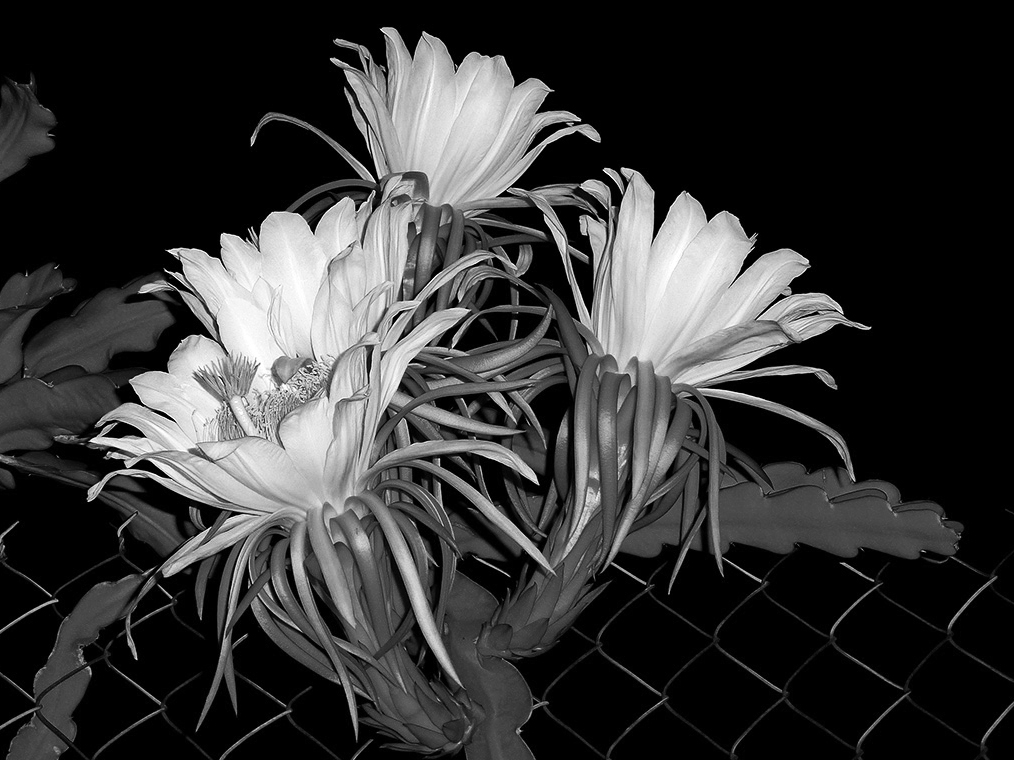
Late last night, twelve buds on my pitahaya burst open; my favorite the cluster of four at the top of the eight foot tall chain link fence.

P1130210cropB&WAlas, now, less than twenty hours after their night-blooming show began, they are no more.  Hopefully, the brilliant white flowers with their sweet scent attracted the desired pollinators, Dragon Fruit will begin forming at the base of the blossoms, the fruit will ripen to a blush red, and be ready to pick in 45 days (más o menos).

Read Full Post »

The Plaza de la Danza was filled with cheering crowds early Sunday evening as ten girls and eight boys from Los Ángeles de Luz took the stage for the 13th edition of this very special Guelaguetza.  Perhaps it is because I have a special needs nephew or that both my sister-in-law and daughter-in-law are special ed teachers that I am drawn to this event every year.  In any case, the joy and pride exhibited by these young people with Down’s Syndrome, as they make the requisite costume changes and perform traditional dances from the eight regions of Oaxaca, always lifts my heart.

I had to leave before it ended, but hopefully through this slideshow I can share a little of the professionalism and accomplishment of these performers and the emotion experienced by those of us who had the privilege of being in the audience.

This slideshow requires JavaScript.

President of Los Ángeles de Luz, Flor Verónica García Ávilan explained in El Imparcial, that the group was formed after “realizing that contact with music, dance, and the audience makes them happy, cheerful, communicative, committed and disciplined beings, facilitating their development holistically within society.” [translated from Spanish]

And, I would like to add, for those of us watching their performance, it facilitates our acceptance of those who many be a little different from us.  If you are in Oaxaca for next year’s Guelaguetza festivities, try to attend this heartwarming and uplifting event.  Also, there is always a calenda (parade) a couple of days before AND scrambling for gifts tossed into the crowd after each dance.

Read Full Post »

A pause in La Guelaguetza action to remember…

It’s been ten months since that unspeakable night 43 students from the Escuela Normal Rural Raúl Isidro Burgos teachers’ college in Ayotzinapa, Guerrero went missing in Iguala.  They are not forgotten.  On the lower block of the Alcalá, an exhibition of sculptures by two Oaxaqueño sculptures, Victor Robinson and Emmanuel Guzman Sanchez is on display.

P1120991

One of the pieces, Faltan 43 y Faltamos Más (43 missing and we are missing more) speaks to the 43 students and to the countless others who have disappeared.

Guzman explains, that he feels it is necessary to speak out on social issues.  “I’m also installing a piece by the 43 missing normalistas; in this piece we find human remains and missing persons who do not know where they are; others that have been found in mass graves, and a broken country.”

P1120993

Three other students and three bystanders were killed outright and two dozen people were taken to hospital that horrific night.  Today’s CNN Mexico profiles one of the hospitalized students, Aldo Gutiérrez Solano, who remains in a coma.  The family must travel seven to eight hours to go from their home in Tultepec, Guerrero to Mexico City to sit at Aldo’s bedside.  According to his brother, Ulises, the bullet damaged 65% of his brain and “The prognosis is very bad.  Still in that state, is not yet known what will happen, how it will be.”  His family hopes for a miracle and that he will awaken to end the nightmare of Iguala.

Read Full Post »

Last Saturday, in the end, it did not rain on the parade.  With only minutes to spare before the first desfile of the Guelaguetza delegations was to begin, the torrential downpour stopped, the rockets sounded, bands played, and the delegates danced their way down Independencia.  I can’t believe how UN-bedraggled and energetic they were!

This slideshow requires JavaScript.

Here’s hoping I managed to include one photo from each of the delegations in the slideshow above.

By the way, if you are in Oaxaca and planning to attend the second desfile tomorrow (July 25), see below for the parade route  — it has been changed!

Desfile2 ruta

Read Full Post »

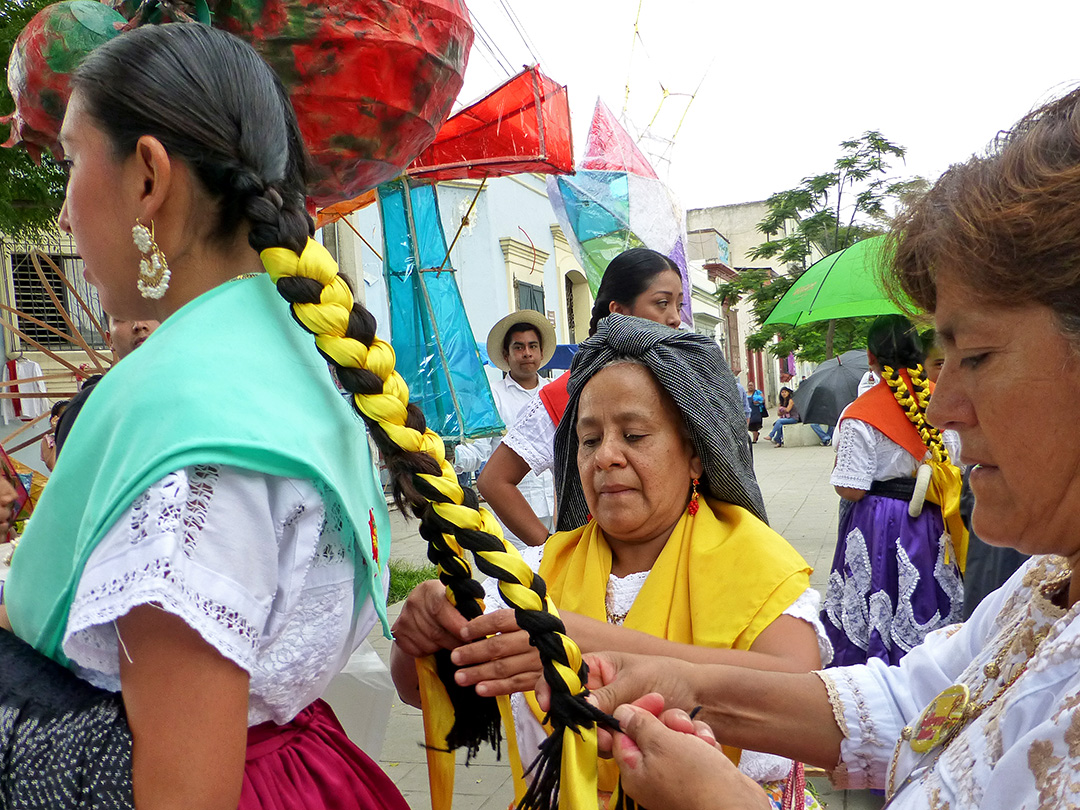
It was all about the braids as the delegations and storm clouds gathered along Independencia for the Guelaguetza desfile (parade).

P1110451P1110452P1110481P1110485P1110505The heavens opened, umbrellas unfolded, rain ponchos were donned, and cover was sought by spectators and delegations, alike. But, stay tuned, the show DID go on!

Read Full Post »

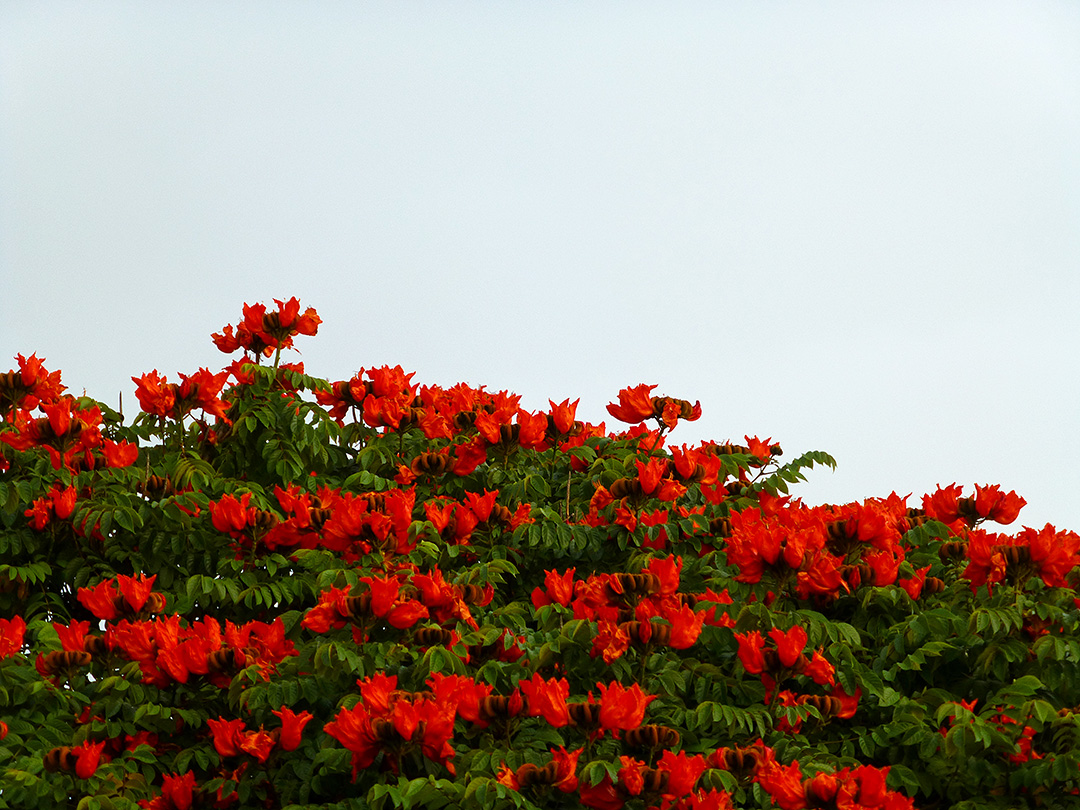
Late yesterday afternoon, before the rains came, the African tulip tree in full blush against a sky drained of color…

African tulip tree in full bloom

Half and Half on Mother Nature’s easel in Oaxaca.


Read Full Post »

I love the carved masks worn in many of the traditional dances in Mexico and, thus, made a bee-line to the current exhibition at the Palacio de Gobierno, Máscaras de Juxtlahuaca — part of the month-long celebration of Guelaguetza.

Most of the masks in the show are the work of  Alejandro Guzman Vera, a native of Santiago Juxtlahuaca in the Mixtec region of Oaxaca.  He was born in 1972 and, as a young child, made his first mask of cardboard and painted it with crayons.  At age 12, he carved his first wooden mask.  He went on to study at the Escuela Nacional de Artes Plasticas and has become one of the premier mask-makers in Mexico.  He has exhibited world-wide and is one of the honored Grandes Maestros del Arte Popular de Oaxaca, profiled in the book by the same name.  By the way, he is not only a mask-maker, but also an accomplished musician and is playing a role in the rescue of the traditional music of Juxtlahuaca.

(Click on an image to enlarge it and to enable a slideshow.)

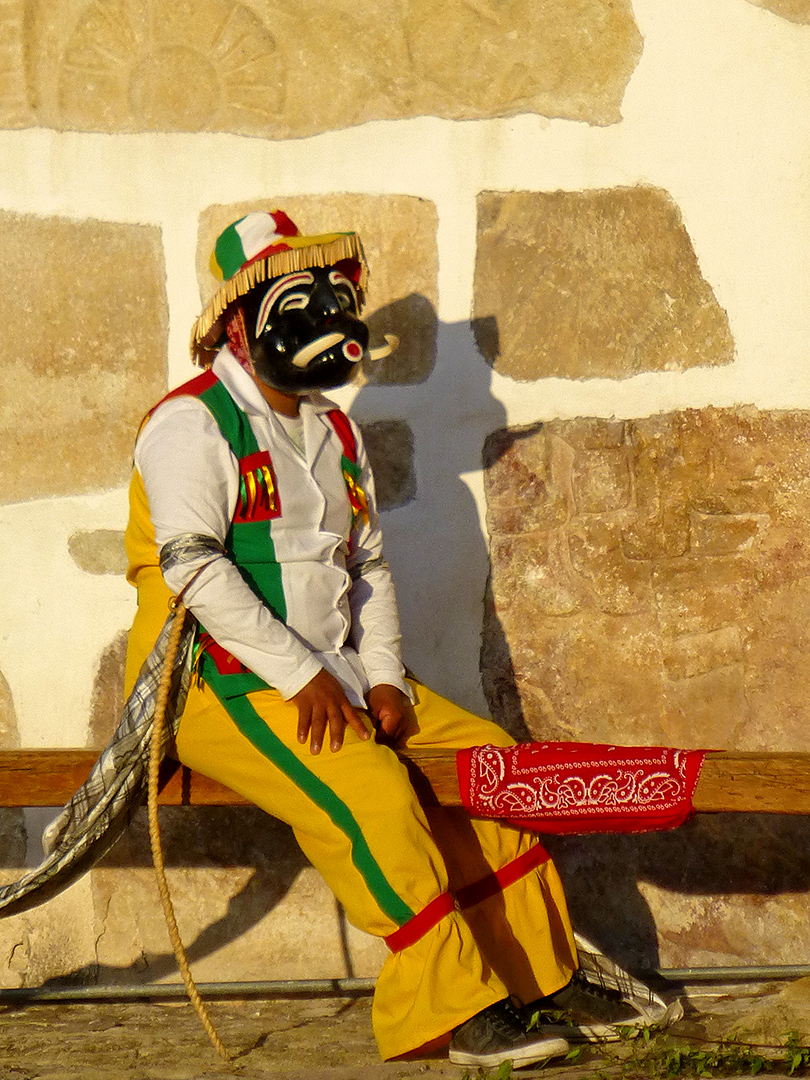
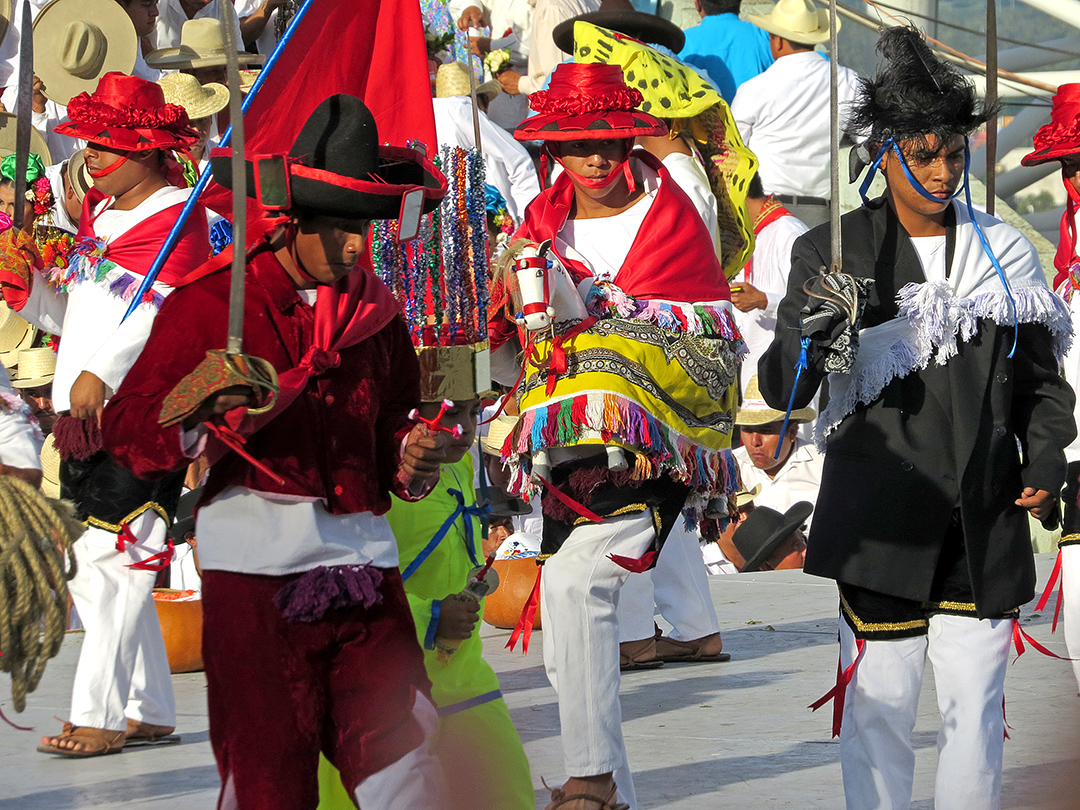
Dancers from Santiago Juxtlahuaca will be performing the Danza de los Rubios in the morning Guelaguetza presentation on July 27 and will, no doubt, be wearing masks, cracking their whips, and jingling their spurs during the Procession of Delegations on the preceding Saturday.  For a glimpse at the Danza de los Rubios and to get a feeling for some of the music Alejandro Guzman Vera is involved in saving, here is a snippet from last year’s Guelaguetza performance:

Masks are donned not only for the Danza de los Rubios, but also for the Danza de los Diablos and the Danza del Macho, which are performed at various annual festivals in the region.  Once carved and painted, the wooden masks can be embellished with glass eyes and real animal teeth and horns of bulls, goats, or deer.  They are an amazing sight to see!

The Máscaras de Juxtlahuaca exhibition at the Museo del Palacio in Oaxaca city closes August 28, 2015.

(This blog post is especially for you, Jane and Ken!)

Read Full Post »

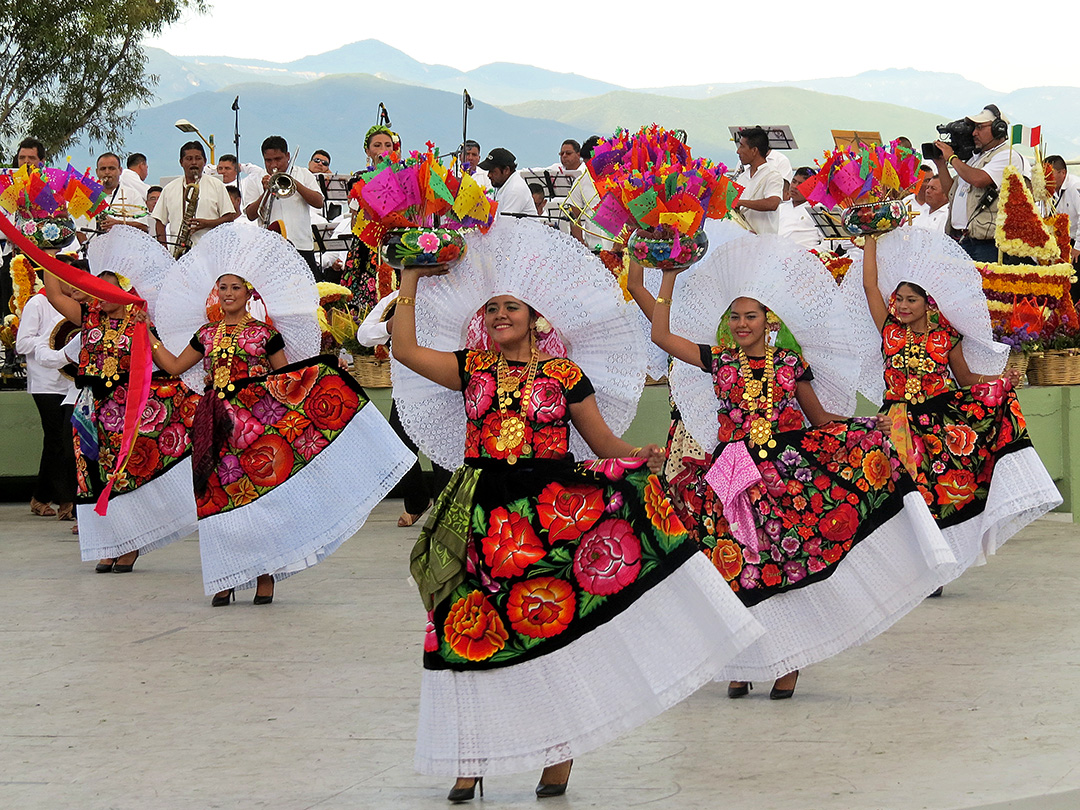
Next Monday, the the 83rd annual modern Guelaguetza will commence on Cerro Fortín.  And so, the last of my photos from last year’s evening performance…

I’ll resume my coverage with the San Paliluú of San Antonio Huitepec a village from the Valles Centrales region.

IMG_4882IMG_4884IMG_4895San Pedro Comitancillo performed the Danzas y Sones de Mi Tierra from the Istmo de Tehuantepec region.

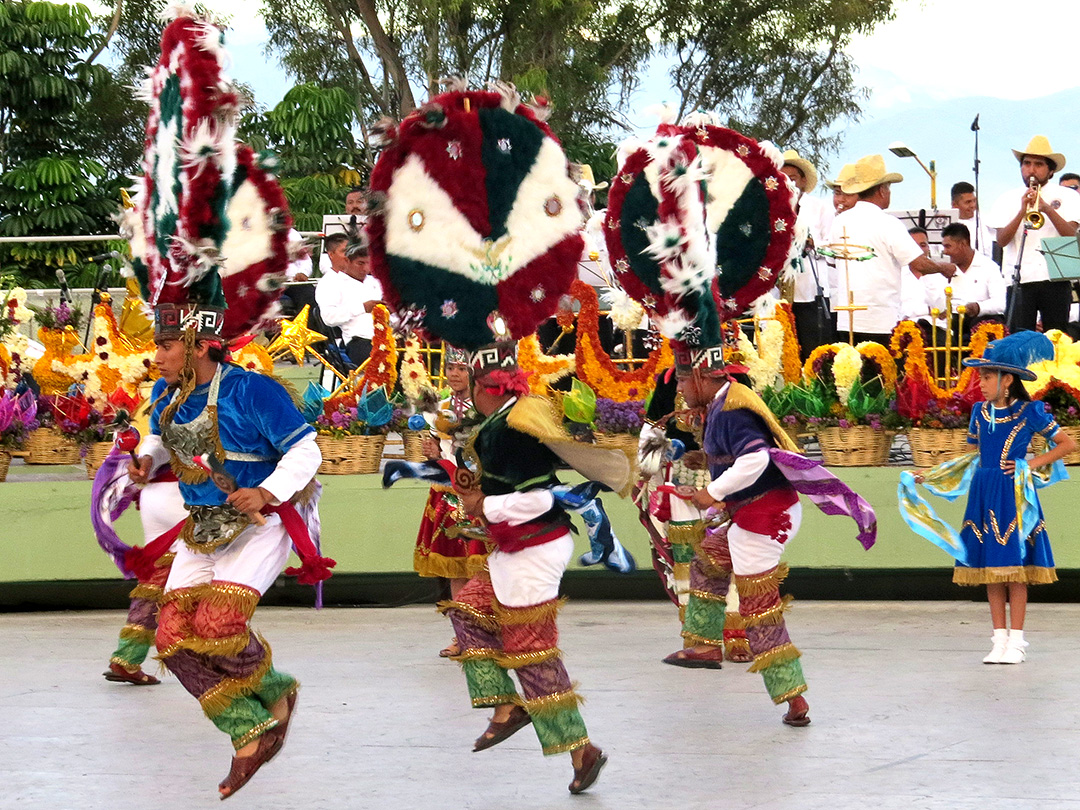
IMG_4908IMG_4918P1010316IMG_4920And then there was the Danza de la Pluma.  Moctezuma, Danzantes, Malinche, and Doña Marina from San Jerónimo Tlacochahuaya, in the Valles Centrales region, performed one of the dances that reenacts the story of the Conquest.

IMG_4943IMG_4966IMG_4961Loma Bonita in the Tuxtepec region, very near the the state of Veracruz, then took the stage with its rousing Rinconcito Oaxaqueño.

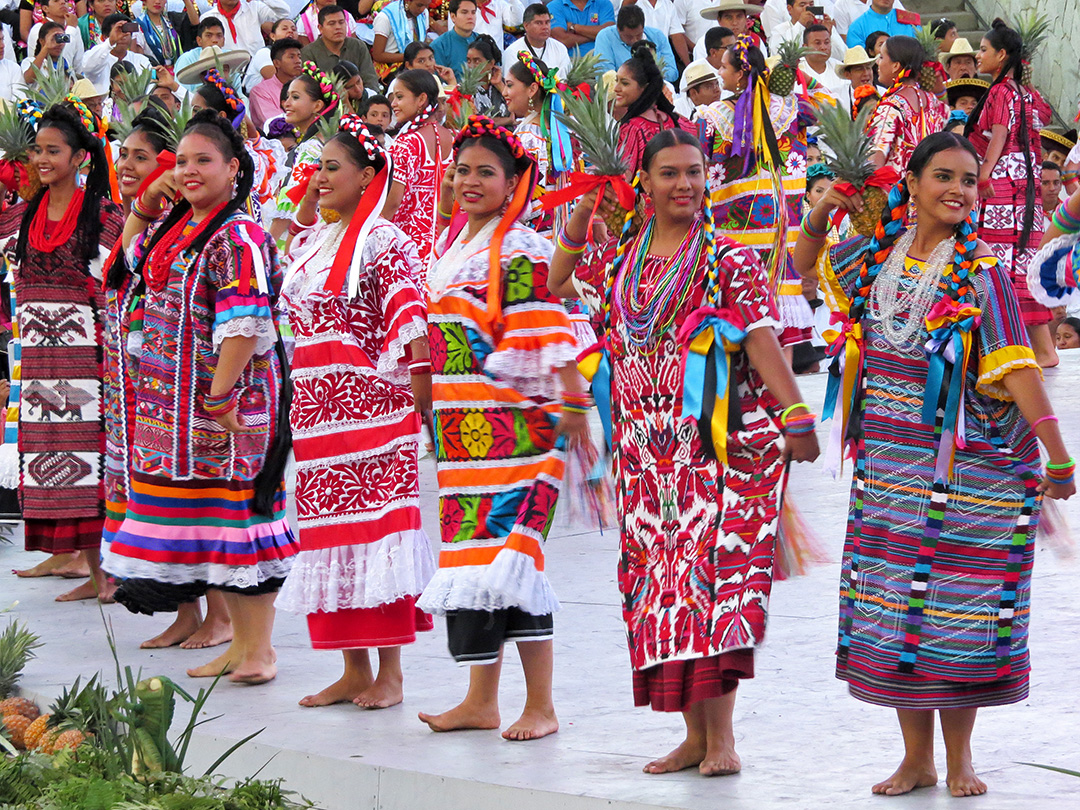
IMG_4983IMG_4997IMG_5018The sun began to set as 36 beautiful women from San Juan Bautista Tuxtepec in the Papaloapam region, wearing their with brightly colored huipiles, took to the stage for the crowd pleasing Flor de Piña.

IMG_5026IMG_5038

Darkness began to fall (making for challenging photography from 1/3rd of the way up from the Guelaguetza Auditorium stage), as the lively Sones and Chilenos danced by the delagation from the Costa region village of San Juan Cacahuatepec kept the energy flowing.

P1010363La Dote y el Tercel Día e Fandango from the dancers of San Antonino Castillo Velasco in the Valles Centrales region closed the evening’s performances.

P1010371As fireworks exploded over the Guelaguetza Auditorium, the band played, the audience took to its feet, and delegations reclaimed the stage to dance the evening’s Guelaguetza performance to a close.

Now on to La Guelaguetza 2015!

Read Full Post »

Storm clouds were gathering on Tuesday afternoon, as we drove out to Teotitlán del Valle for this year’s first performance of the Danza de la Pluma.  However, the clouds were chased away and the plaza in front of Templo de la Preciosa Sangre de Jesucristo was bathed and blessed with the light and shadows of the golden hour.

P1100717P1100713P1100725P1100756Ahhh…

(ps)  For a Moctezuma eye view of the dance, check out Chris’s Moctezuma Cam post.

Read Full Post »

If you want an up close and personal fireworks experience, come to Oaxaca.  Of course, there are no guarantees you won’t find yourself in the line of fire.  No barricades, no yellow caution tape, no police!  I’ve seen hair singed, had a friend get pinhole burns on the inside of his glasses, and last night a projectile came careening toward us and had me ducking for cover.  However, as the saying goes, “no harm, no foul” and the spectacle was espectacular!

P1100852 cropIt began with 45+ minutes of the quema de toritos and angelitos.

They were followed by a spectacular castillo, a “firefall,” and traditional fireworks exploding against a clear black sky.

P1100930Late Tuesday night during this week’s fiesta honoring la Preciosa Sangre de Nuestro Señor Jesucristo.  It was a fabulous — well worth spending the night in Teotitlán and staying up way past my bedtime!

Read Full Post »

Last night, all was in readiness in Teotitlán del Valle for most important fiesta of the year — honoring la Preciosa Sangre de Nuestro Señor Jesucristo (the Precious Blood of Our Lord Jesus Christ).

Specially cut papel picado fluttered from the church.

P1100456Marmotos waited in the wings.

P1100467And canastas, lovingly decorated by their owners stood ready to be carried through the streets of Teotitlán del Valle.

IMG_7677Next up, the most important ingredient…

Read Full Post »

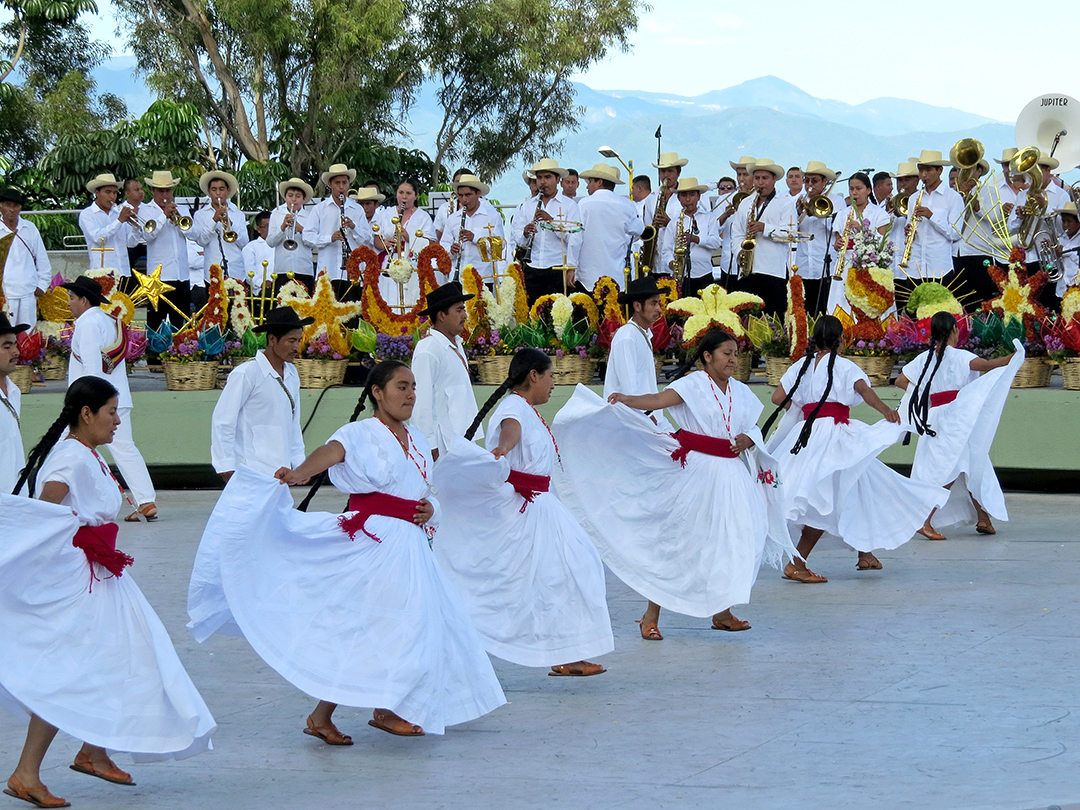
Last year, wearing the whitest of white huipiles, skirts, shirts, and pants, the delegation from San Melchor Betaza, in the Sierra Norte Region of Oaxaca, danced the sones and jarabes from their community.

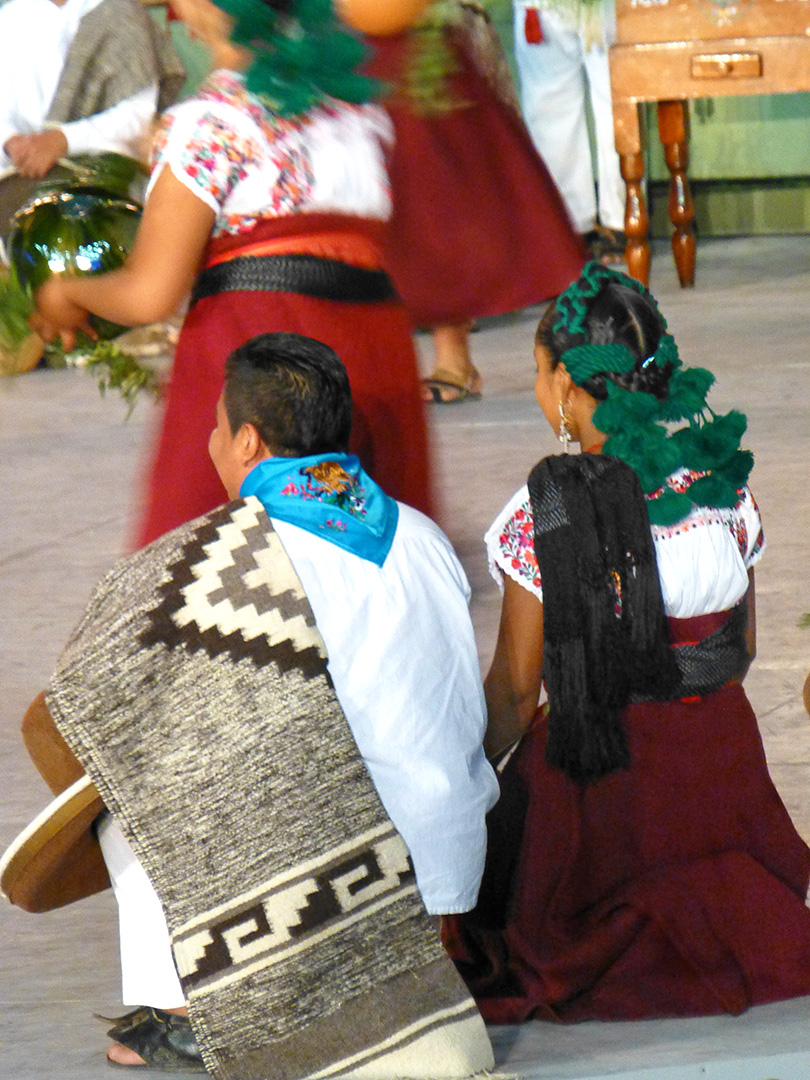
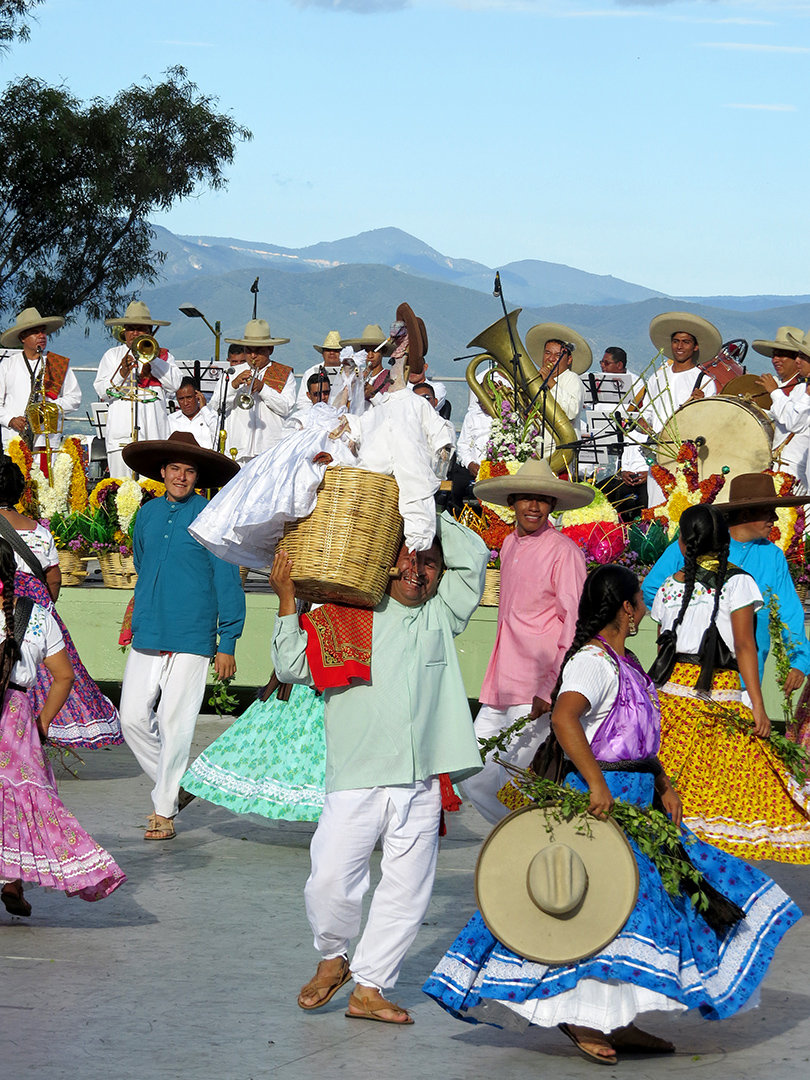
IMG_4694IMG_4695IMG_4696I don’t know how the turkey felt as he took center stage when Ocotlán de Morelos, from the Valles Centrales Region, performed La Llevada del Guajolote, a dance dating to the 19th century.

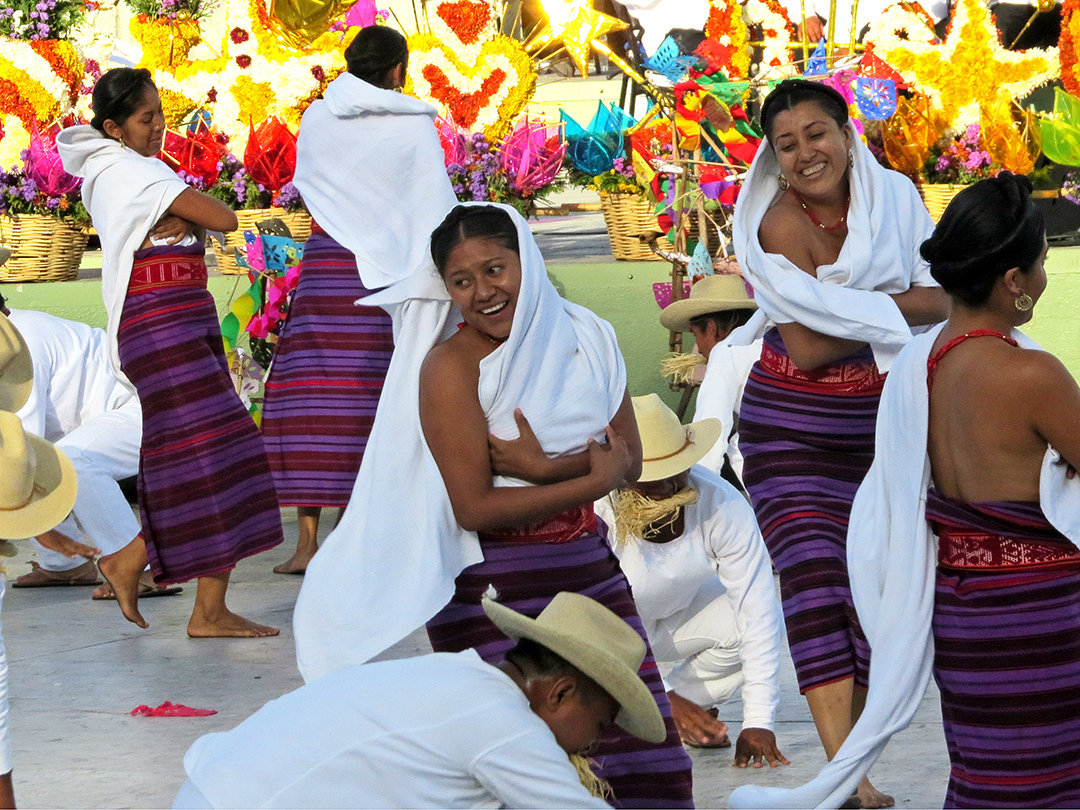
IMG_4802IMG_4805 IMG_4803The dances by the delegation from San Andrés Huaxpaltepec, from the Costa Region, offered the action of the Fandango de Cajón and the grace of the Mayordomía with women wearing stark white mandiles (shawls) and caracol dyed purple pozahuancos (wrap skirts).

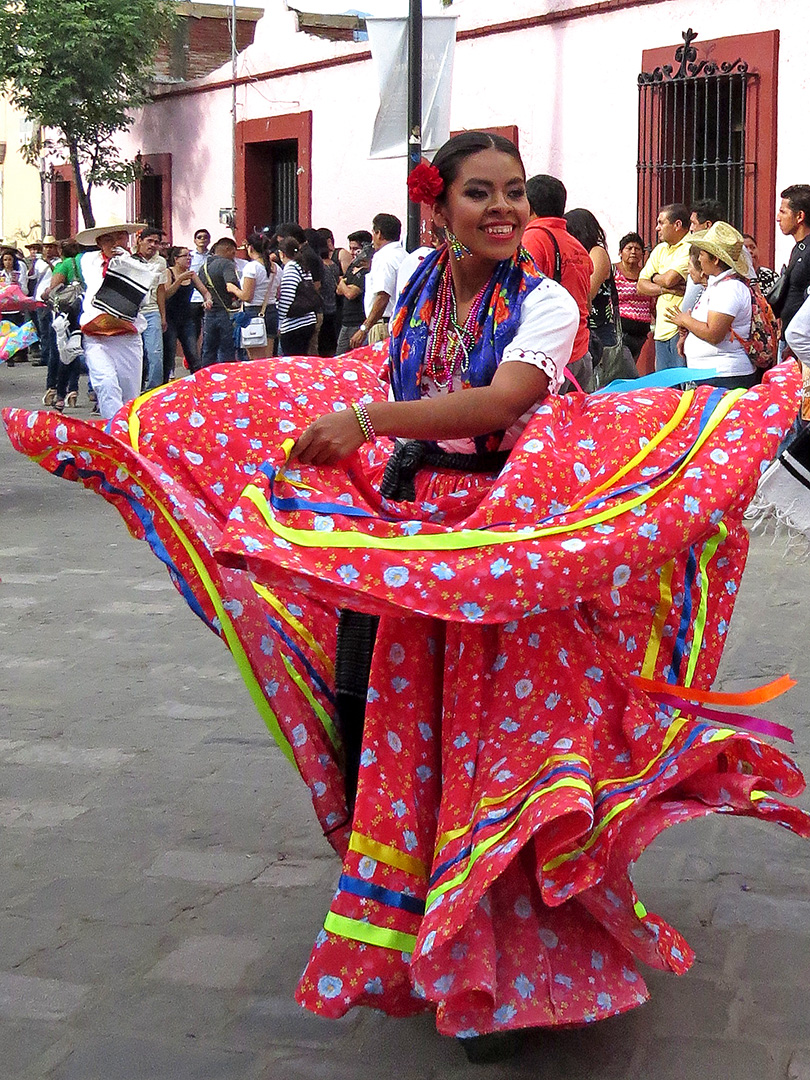
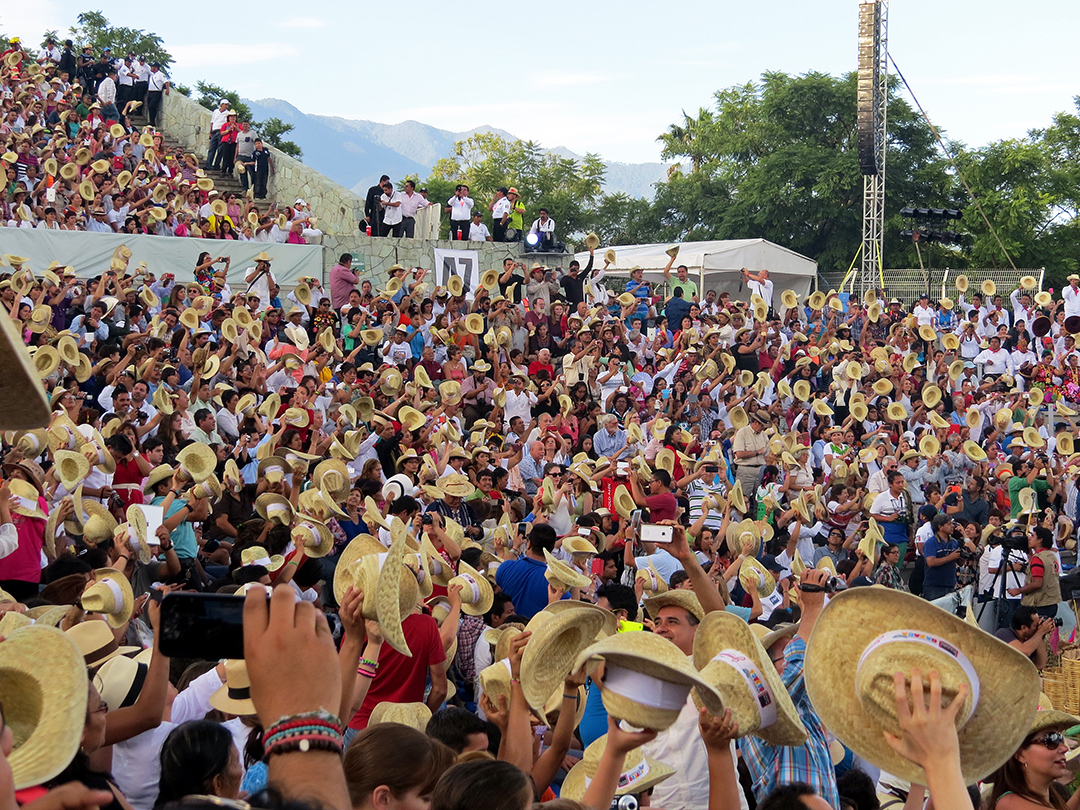
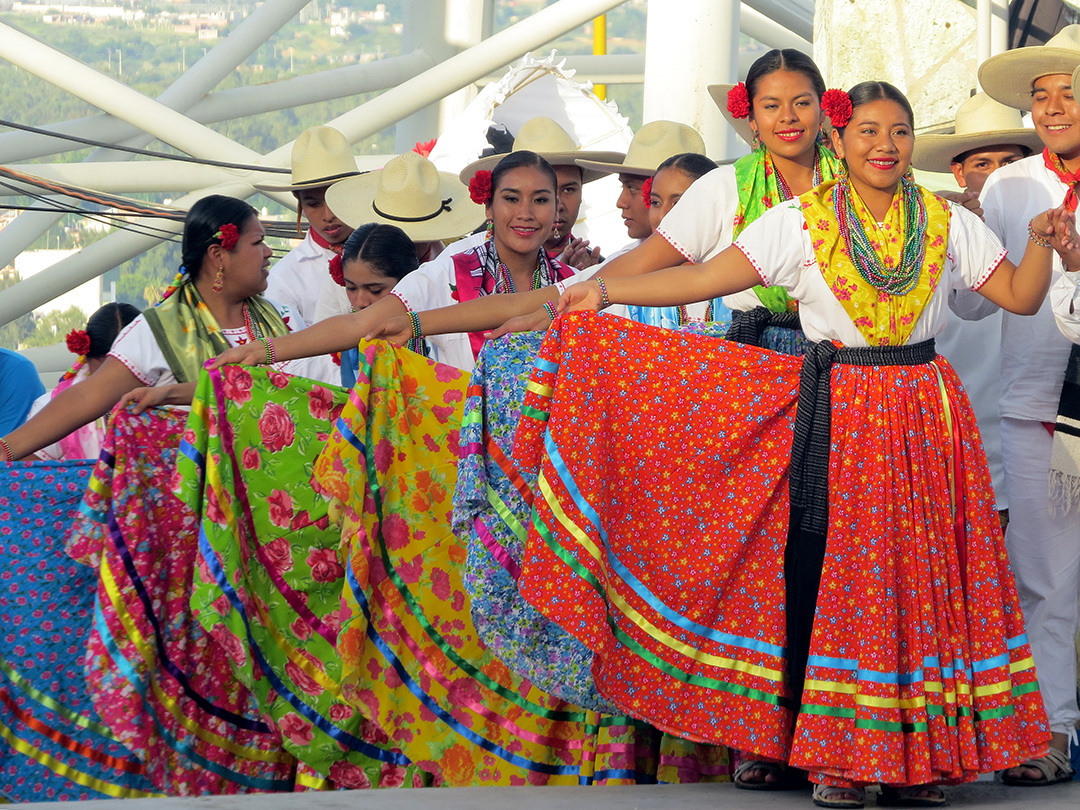
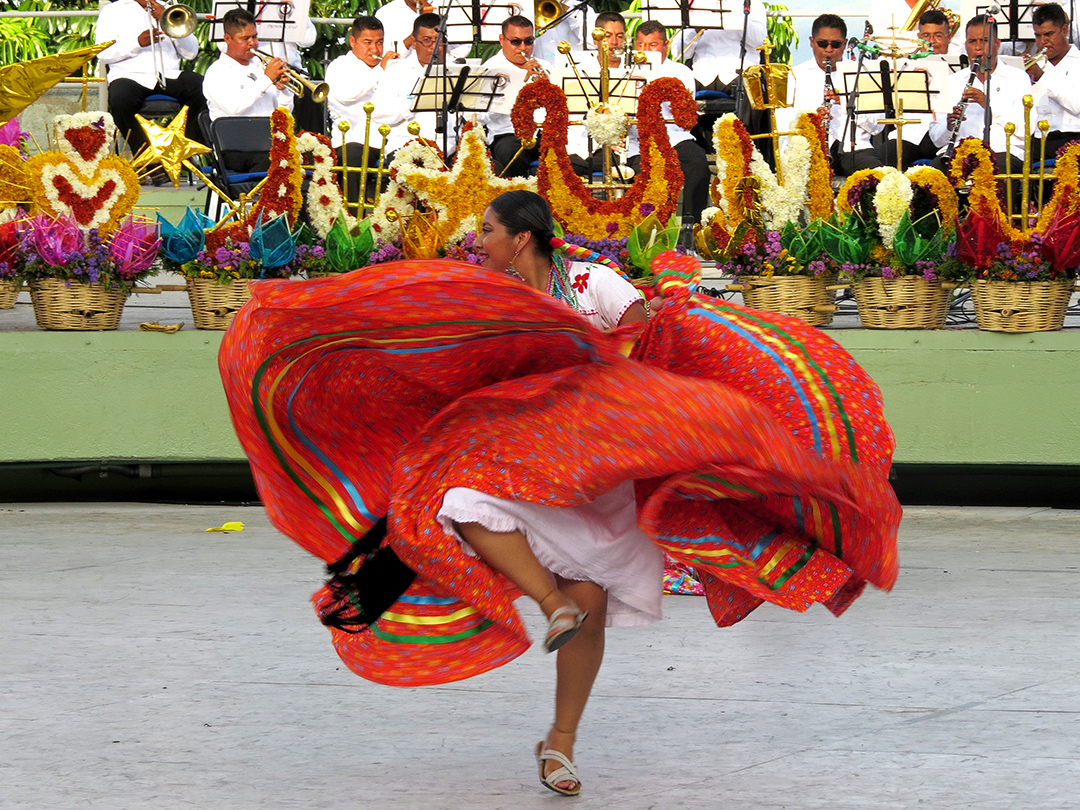
IMG_4817IMG_4828IMG_4845As the first few notes of the Canción Mixteca were played, the audience rose and, as one, began waving their hats and singing the beloved song of the Mixteca Region.  With the audience warmed up, the gals from Huajuapan de León began dancing the Jarabe Mixteco — twirling and tempting the guys with their flirty skirts.

IMG_4862IMG_4859

IMG_4869IMG_4877IMG_4880Click HERE for last Monday’s part 1.  Stay tuned for more next Monday, as the countdown to this year’s Guelaguetza festivities continues.

Read Full Post »

« Newer Posts - Older Posts »