Feeds:
Posts
Comments

Posts Tagged ‘Mexico’

Food with friend in Oaxaca during the last two weeks…

First we eat, then we do everything else. –M.F.K. Fisher

Tostadas de mariscos – Marco Polo, August 15, 2019

People who love to eat are always the best people. –Julia Child

Chiles Rellenos – Tierra del Sol, August 17, 2019

Food is our common ground, a universal experience. –James Beard

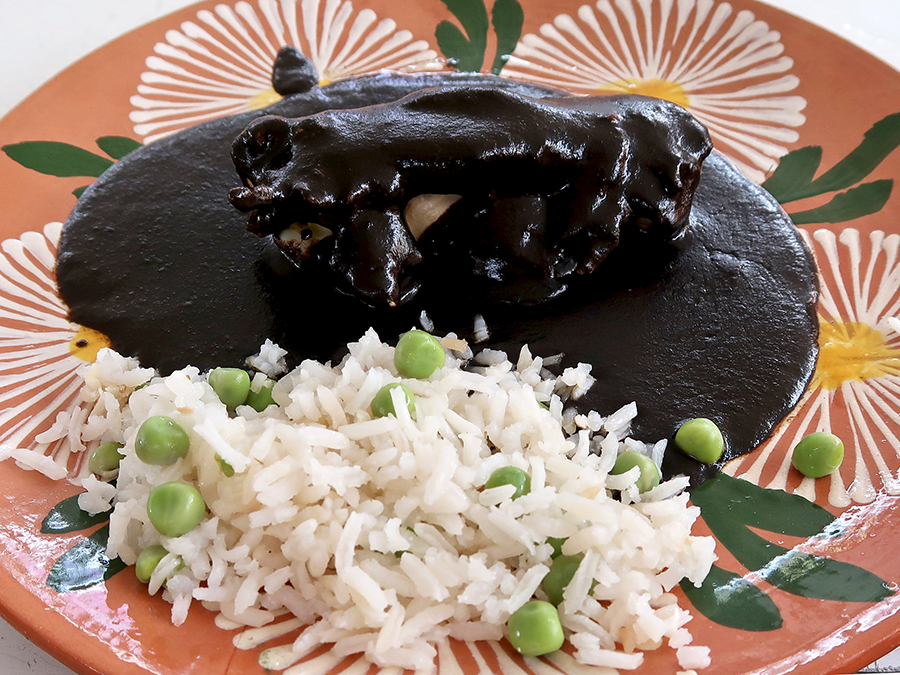
Mole Negro – Teotitlán del Valle, August 18 2019

Laughter is brightest in the place where the food is. –Irish Proverb

Ensalada de Papa y Pulpo — Ristorante Italiano Epicuro, August 30, 2019

The secret of success in life is to eat what you like and let the food fight it out inside. –Mark Twain

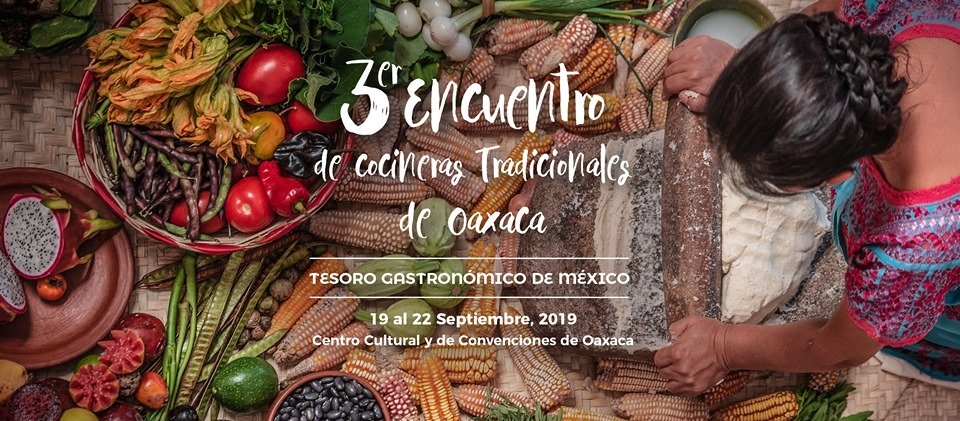
And, while we are on the topic of dining well in Oaxaca, we are all looking forward to the long delayed, but eagerly anticipated, Tercer Encuentro de Cocineras Tradicionales de Oaxaca (3rd Gathering of Traditional Oaxacan Cooks) to take place September 19-22, 2019 at the Centro Cultural y De Convenciones Oaxaca (note venue change). According to reports, there will be 60 traditional women cooks, 15 people making traditional beverages, 6 pastry chefs, and 6 makers of iced desserts.

Read Full Post »

In commemoration of International Day of the World’s Indigenous Peoples, Mexico’s Instituto Nacional de los Pueblos Indígenas (INPI) is hosting a Fiesta de la Diversidad Indígena de Oaxaca.

It is a four-day festival honoring and promoting the state of Oaxaca’s indigenous peoples and their communities with artesania, textiles and other products for sale, cultural performances and workshops, food booths, and even healing treatments — and it’s happening a block from Casita Colibrí in the Plaza de la Danza!

Yawi Naka – Triqui – La Laguna Guadalupe, Putla Villa de Guerrero

INPI has an excellent online atlas of the indigenous peoples of Mexico and it, along with the statistics I previously posted regarding poverty, discrimination, and the results thereof affecting Mexico’s indigenous and Afro-Mexican peoples are abysmal.

Na Jacinta Charis – Zapoteco – Juchitán de Zaragoza

According to this article (in Spanish), the charge of the INPI is to advocate for indigenous and Afro-Mexican rights and to recognize that in order for these peoples and their communities to survive, institutional efforts must be taken to guarantee their full exercise of social, political, cultural, and economic rights.

Productores de Maguey y Mezcal Lucas 2010 SPR de Ri – Zapoteco – San Isidro Guishe, San Luis Amatlán

The INPI is also attempting to advance an understanding that the family/community economy of these communities has a different production logic than the commercial market economy and that their economic model must be respected.

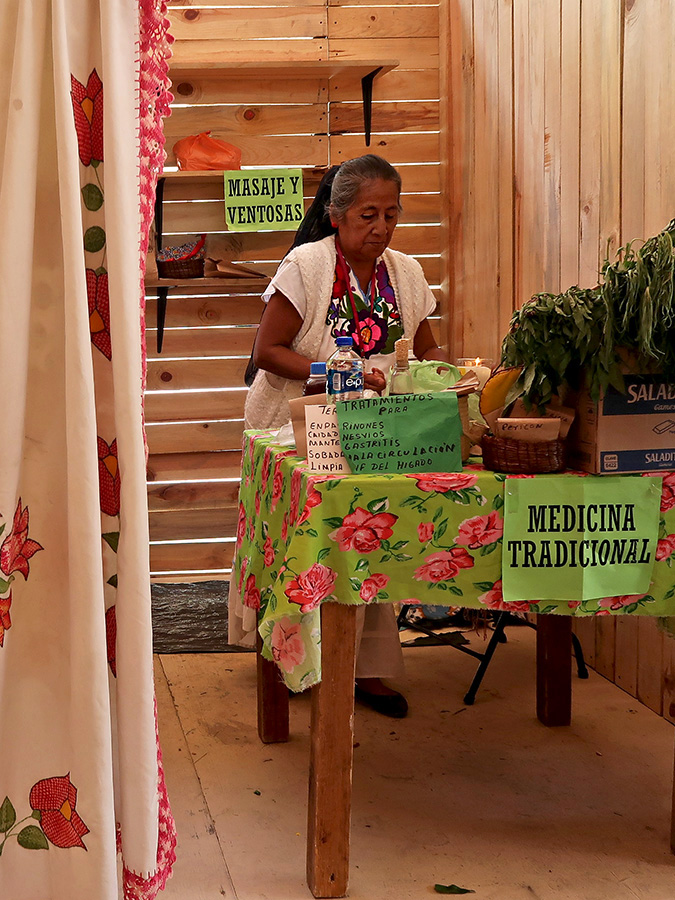
Organización de Medicos Indigenas Tradicionales de laCañada – Cuicateco – San Juan Bautista Cuicatlán

This festival provides a space to promote the various community projects and to showcase the artistic and cultural expressions in the city.

IMG_6911

Chenteñas Hazme Si Puedes – Zapoteco – San Vicente Coatlán

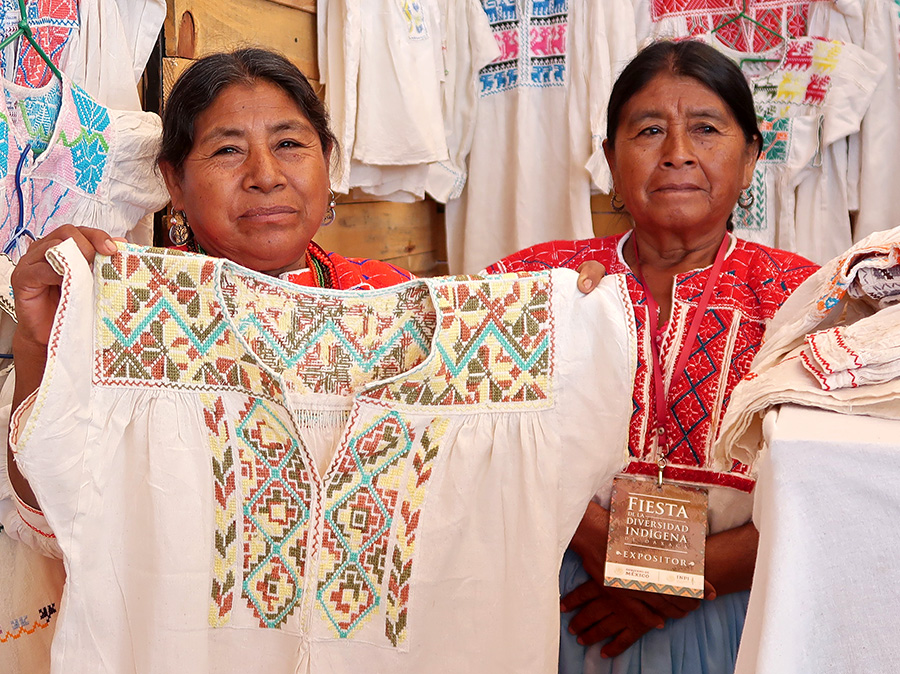
I’ve aready been twice to the event — talking with various vendors, buying the blouse above (along with cheese, sal de chicatanas, and olive oil with fresh organic herbs), and sitting at one of the long tables enjoying a tamal, empanada, and a jícara of tejate

The Fiesta de la Diversidad Indígena runs through late afternoon tomorrow (Sept. 1, 2019). If you are in Oaxaca city, be sure to check it out (schedule below).

Read Full Post »

Construction is going on all over the city. A blessing or a curse?

The cross was probably put up on May 3, Día de la Santa Cruz (Day of the Holy Cross) — which also happens to be Día del Abañil (Day of the mason/stonemason/bricklayer). It is tradition for workers to erect crosses festooned with flowers at the highest point on construction sites.

Read Full Post »

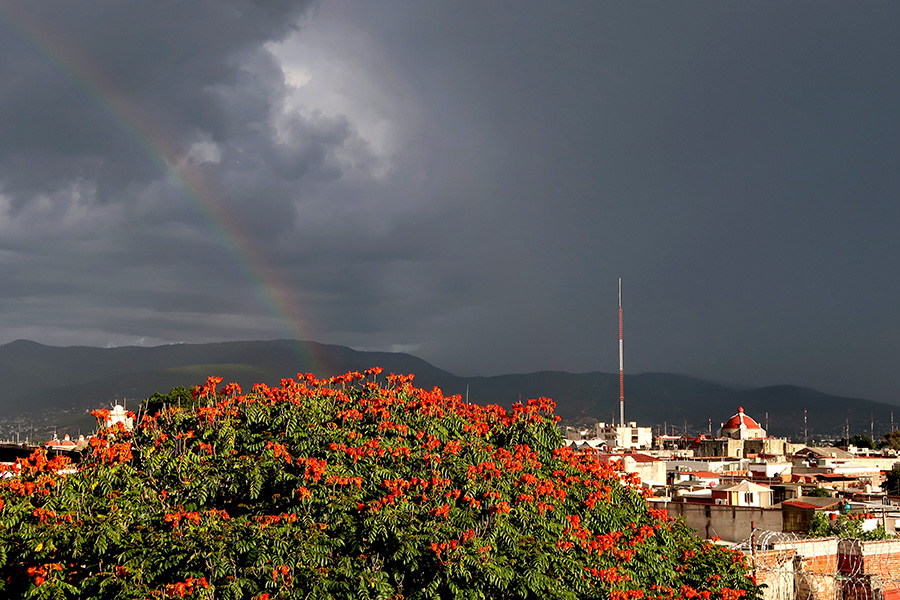
Late yesterday afternoon storm clouds gathered, thunder began rumbling in the distance, and rain began falling to the south.

The sky darkened to the east.

But all we got was this lovely rainbow.

80% chance of rain they said. But, alas this on again/off again rainy season continues to be mostly off.

Read Full Post »

Sunday, August 18, 2019, Teotitlán del Valle celebrated the first anniversary of their Centro Cultural Comunitario de Teotitlán del Valle (CCCTV). During the day-long event, not only was there food and music, the village also celebrated passing on of their cultural riches and traditions to upcoming generations.

The Cultural Center’s, Danza de la Pluma Infantil (youth Danza de la Pluma group) donned their costumes, gathered on the Municipal Plaza, and performed dances from this ritual retelling of the Conquest. (Check out the up close and personal photos by blogger buddy Chris.)

In the CCCTV, there was an exhibition of penachos/coronas (headdresses) used in the Danza de la Pluma that were crafted in a workshop by young people from the village.

“BaáGuiish” by Laura Ruiz Mendoza. Representing the four cardinal points to give thanks for each new day.


Detail of “Shia guibaa” by Jesús Brayan Jiménez Lazo.


“La cruz de Quetzalcóatl” by Juan Mendoza Bautista.

In addition, there was also an exhibition of tapetes (rugs) designed and woven by the young people of Teotitlán del Valle.

“El alma en manos de mi arte” by Omar Mendoza Martínez.


“Futuro Hermoso” by Constantino Lazo Martínez.


“Huitzilopochtli” by Anais Adelina Ruiz Martínez.


“Bineéty xunuax Xigie’ (Mujer Zapoteca) woven image of his grandmother by Mario González Pérez.

Celebrating and preserving the cultural riches of the Zapotec community of Teotitlán del Valle. Can’t think of a better way to spend a Sunday. Dixeebe! Zapotec for ¡salud! cheers!

Read Full Post »

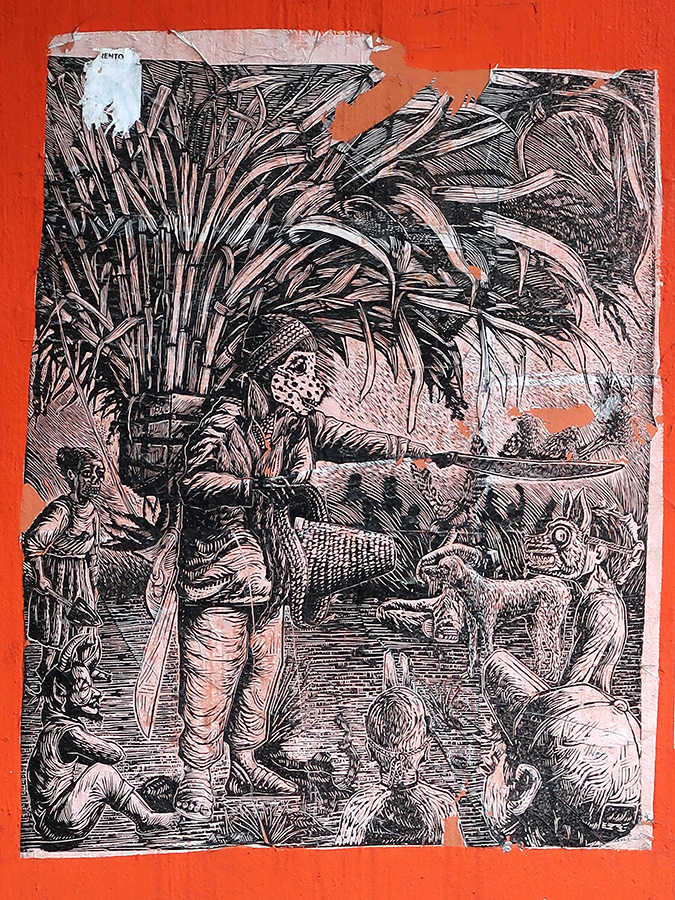
Walking to the market, it was the light and color and composition that caught my eye — a sidewalk still life.

I zeroed in on the skill of the artist(s) and the imagery.

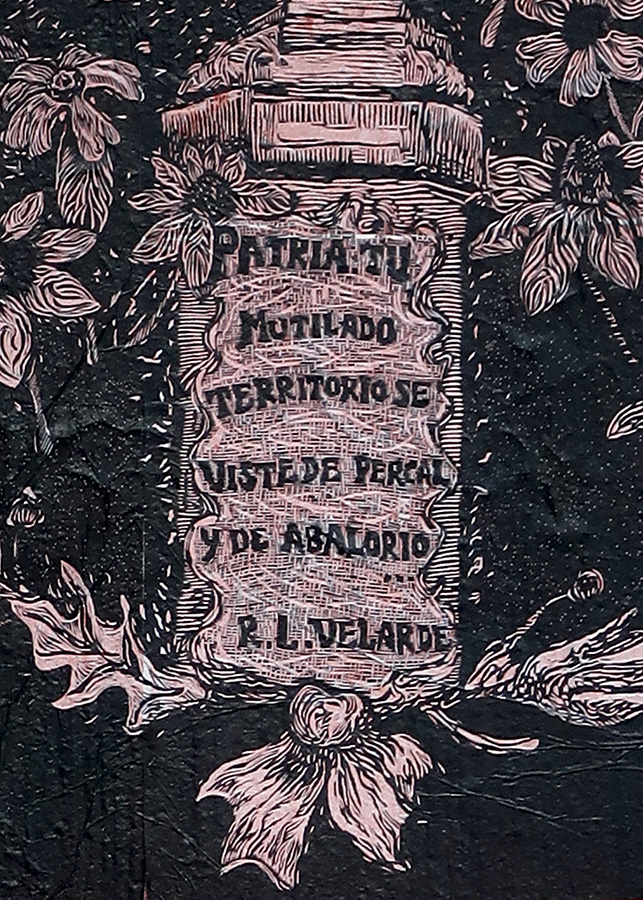
In one, a man in the baseball cap looking back to his ancestors and the bounty of the land. In the other, what is that in the mouth of “he who shall not be named?” And, what of the quote?

“Homeland: your mutilated territory dresses in calico and glass beads.” What does it mean? What is it from? Who is R. L. Velarde?

I found the answers in the article, The Dissonant Legacy of Modernismo. Ramón López Velarde by Gwen Kirkpatrick. The quote is from the poem, “Suave Patria” (Gentle Homeland) by Ramón López Velarde, a poet of the Mexican Revolution — a poem that “celebrates the grandeur of Mexico’s simple, rustic life, as well as its glorious indigenous past.”

The daily education of the streets — more than meets the eye!

Read Full Post »

For someone who grew up in California and now lives in Mexico, the new exhibition at the Museo de los Pintores Oaxaqueños (MUPO), “Construyendo Puentes en Épocas de Muros Arte chicano/mexicano de Los Ángeles a México” (Building Bridges in the Epoch of Walls Chicano/Mexican art from Los Angeles to Mexico), was a must see.

America is for Dreamers by Patrick Martínez

The 53 works, by a multigenerational group of twenty-nine artists of Mexican ancestry from Southern California, explore the themes, “Rebel Diamonds from the Sun,” “Imagining Paradise,” “Outsiders in their Own Home,” “Mapping Identity,” and “Cruising the Hyphenate.”

Cartonlandia by Ana Serrano

According to the introductory essay by the exhibition’s curator, Julian Bermudez, “In over 50 years of existence, the ever-evolving Chicano art has shaped itself into one of the main currents of the American creative canon.”

A Lunchtime Conversation by Ramiro Gómez

“Sitting among four cultures – the Pre-Columbian, the invasive Hispanic, Mexico itself, and the United States of America – Chicano art draws on all four and evolves out of both its roots and the decades of oppression its practitioners and their families have sustained.”

Paleta Cart by Gary Garay

“These artists have expanded their creative expression, demonstrating an agility to develop and refine their own mythologies, methodologies and philosophies. They have introduced a remarkable, original school of art into the history of art itself.”

The Closing of Whittier Boulevard by Frank Romero

If you are in Oaxaca, I highly recommend checking out, “Construyendo Puentes en Épocas de Muros.” The exhibition will run until November 10, after which it will travel to the Museo de las Artes de la Universidad de Guadalajara (Musa) and conclude its tour at the Centro Cultural Tijuana (CECUT).

Read Full Post »

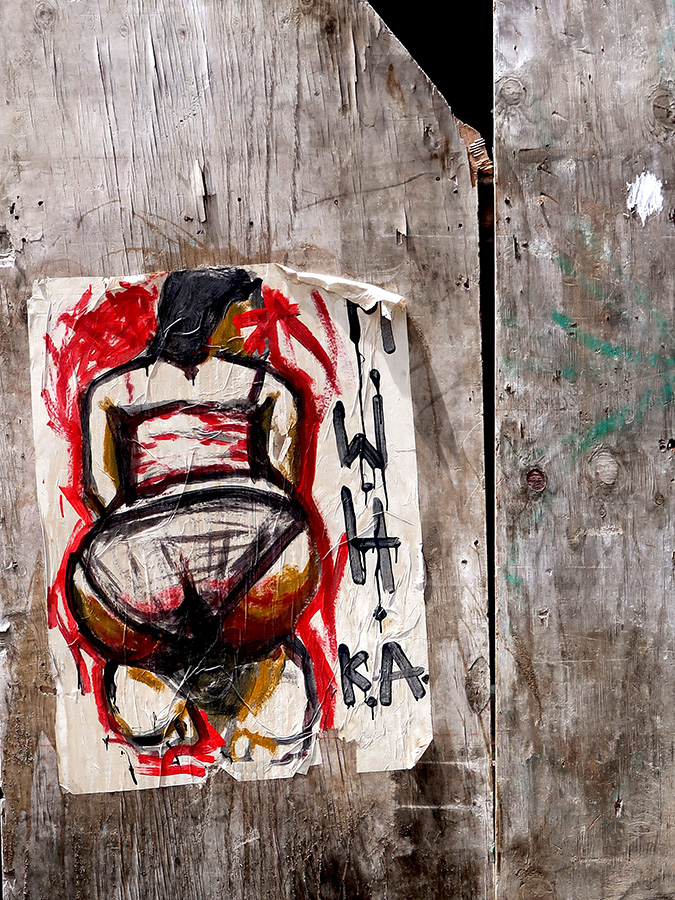
Face the facts…

she’s turned her back on you.

The walls of Oaxaca tell all.

Read Full Post »

The marathon that was La Guelaguetza 2019 has been run and not a day too soon for most residents. It was an exhausting and at times grueling two weeks — so much to do and so little time — streets choked with traffic and sidewalks clogged with people. According to state government figures, at its height, hotel occupancy reached 97%, which I’m guessing doesn’t include the growing Airbnb presence.
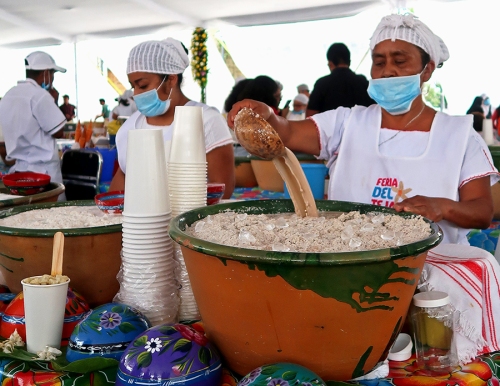
Woman pouring tejate

My participation ended as it began with food and drink — at the 13th annual Feria del Tejate y el Tamal. Fortunately (for me), it’s held at the Plaza de la Danza, only a block away from Casita Colibrí. On July 30 and 31, seventy five women of the Unión de Mujeres Productoras de Tejate de San Andrés Huayapam came to my neighborhood to prepare and pour this prehispanic drink for the thirsty and curious.
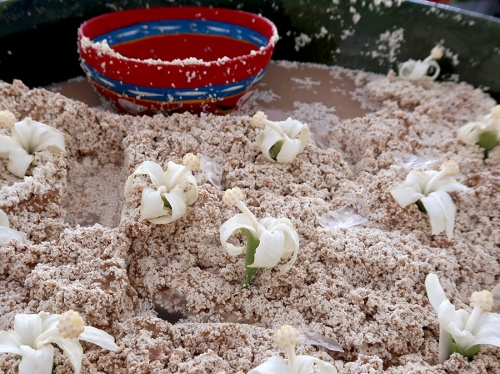
Tejate with rosita de cacao blossoms

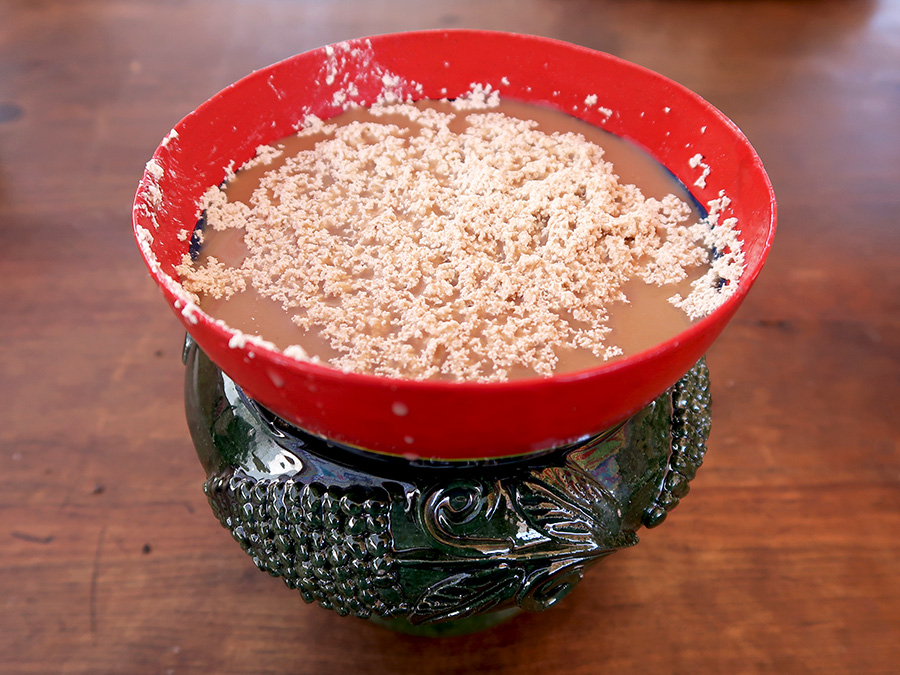
Tejate is a labor-intensive frothy, refreshing, nutritious, and (supposedly) aphrodisiacal non-alcoholic beverage made from corn mixed with tree ash, cacao beans, mamey seeds, rosita de cacao (Quararibea funebris) flowers, and peanuts or pecans (depending on the season).
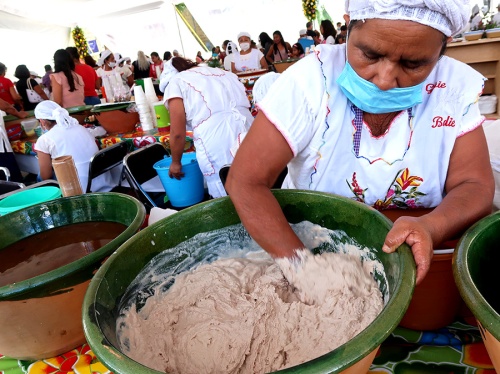
Preparation takes at least twelve hours, as the beans, seeds, flowers, and nuts must be toasted on a comal and corn must be nixtamalized.  Ingredients are taken to a molino to be milled, then kneaded together, left to cool, eventually being hand-ground on a metate to make a thick paste — which is then thinned with water and (literally) mixed by hand.

jícaras

Tejate is traditionally served in brightly painted gourds (jícaras) which fits right in with this year’s effort by the feria organizers to eliminate the use of plastic, in keeping with recent legislation in Oaxaca to prohibit the sale and use of most single use plastic and styrofoam containers. Known as the beverage of the gods, as it was once reserved solely for Zapotec royalty, today tejate is for everybody and is also being made into cookies, ice cream, and nicuatole (traditional Oaxacan corn-based molded dessert).
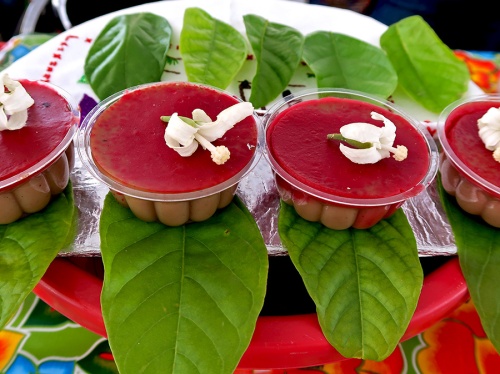
nicuatole de tejate

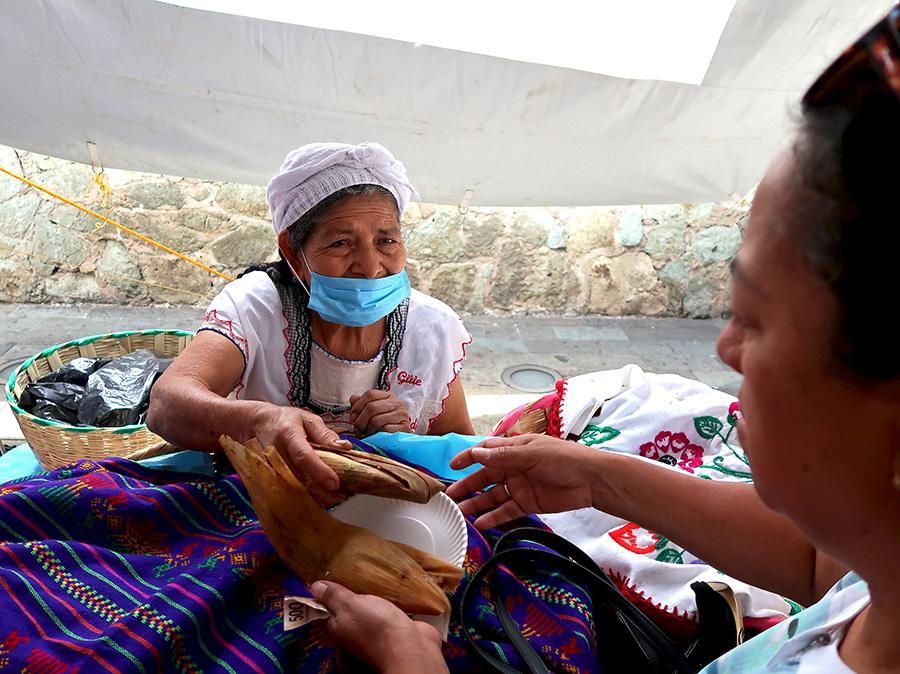
However, this food fest wasn’t just about tejate. The other headliner of this event was the versatile tamal. Numerous varieties in steaming pots sitting on anafres (portable cooktops) sat behind rows of banquet tables filled with giant serving baskets covered in colorfully embroidered tea towels. Proud cocineras (cooks) listed their offerings and provided free samples to taste-test.

embroidered tea towel

Where to begin? There was a mind-boggling selection of tamales — at least a dozen kinds to choose from. Many are readily available daily at local mercados (of course, each family puts their own unique spin on the basic recipes). However, here in the city, tichinda (fresh water mussel) tamales are rarely seen. I tasted and they were yummy.

list of tamales

My primary goal, when it came to tamales, was “para llevar” (to go) and I came prepared with my own containers. On day 1, I wanted to bring home tamales for the staff who works at my apartment complex and a couple of carpenters who were onsite building door and window screens for a friend’s apartment. I made several rounds of the numerous vendors, studying their offerings (along with their lovely tea towels) and then just dove in! Besides buying a tamal de camaron (shrimp) for myself, I bought a mole verde (chicken with green sauce) and a mole negro (black mole sauce with chicken) for each the crew back home, along with tejate cookies for their dessert!
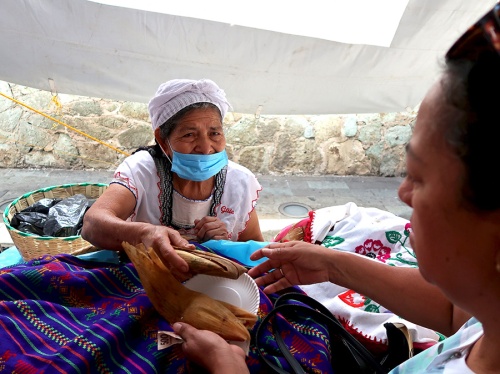
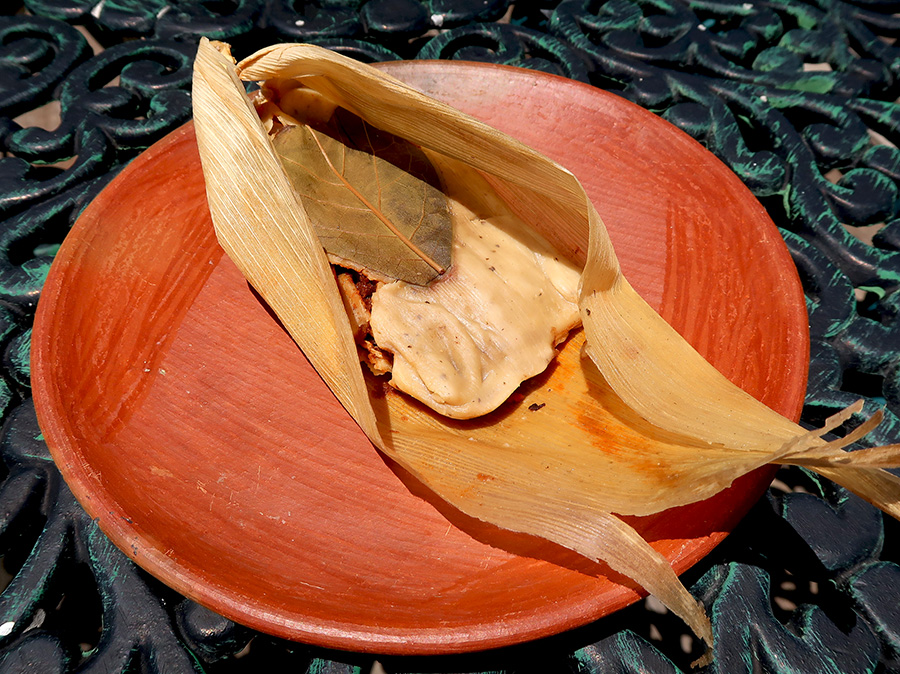
On day 2, I was in search of tamal de chichilo, made from chilhuacle negro, mulatto, and pasilla chiles; blackened tortillas and seeds of the chiles; and avocado leaves — the latter imparting a subtle anise flavor. It’s one of my favorites and isn’t usually seen in the mercados, as it is usually reserved for special occasions such as weddings and baptisms or when the crops have been harvested.

tamal de chichilo

Besides eating a tamal de chichilo as soon as I returned home and another for dinner last night, six more currently reside in the freezer compartment of my refrigerator. Ahhh, preserving and celebrating the prehispanic riches of tejate and tamales — a couple of reasons why Oaxaca is a food lovers’ paradise.

Read Full Post »

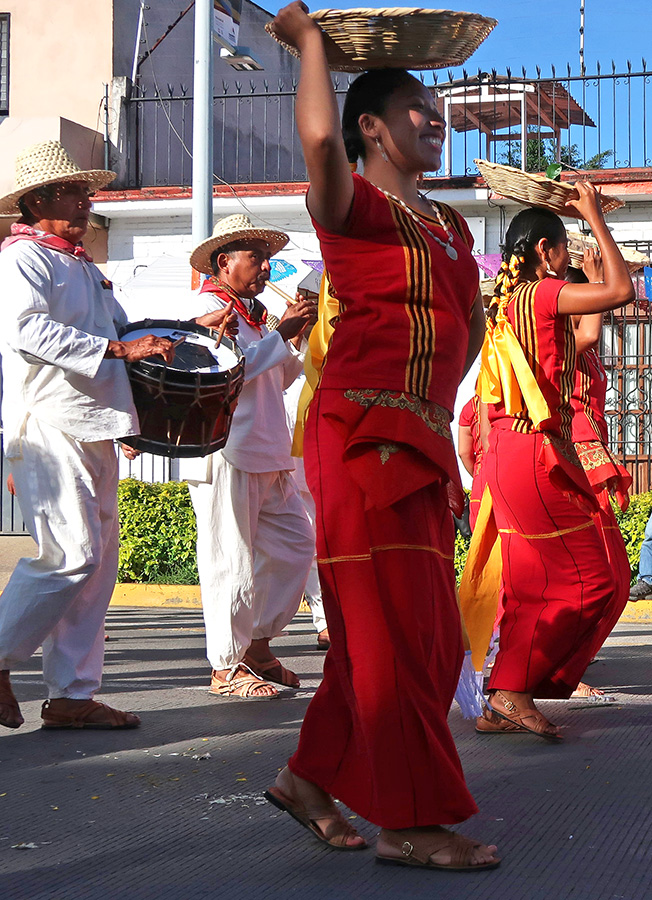
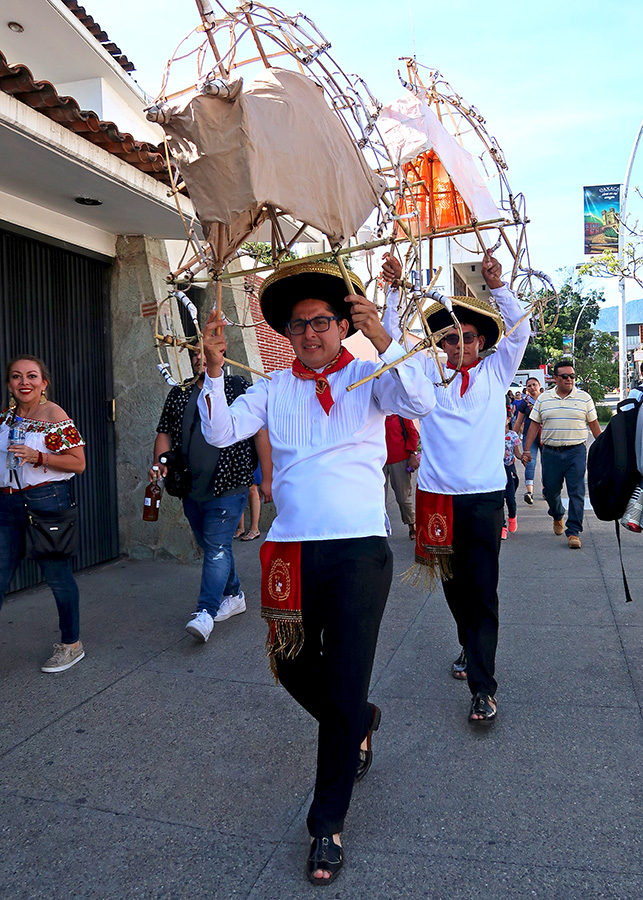
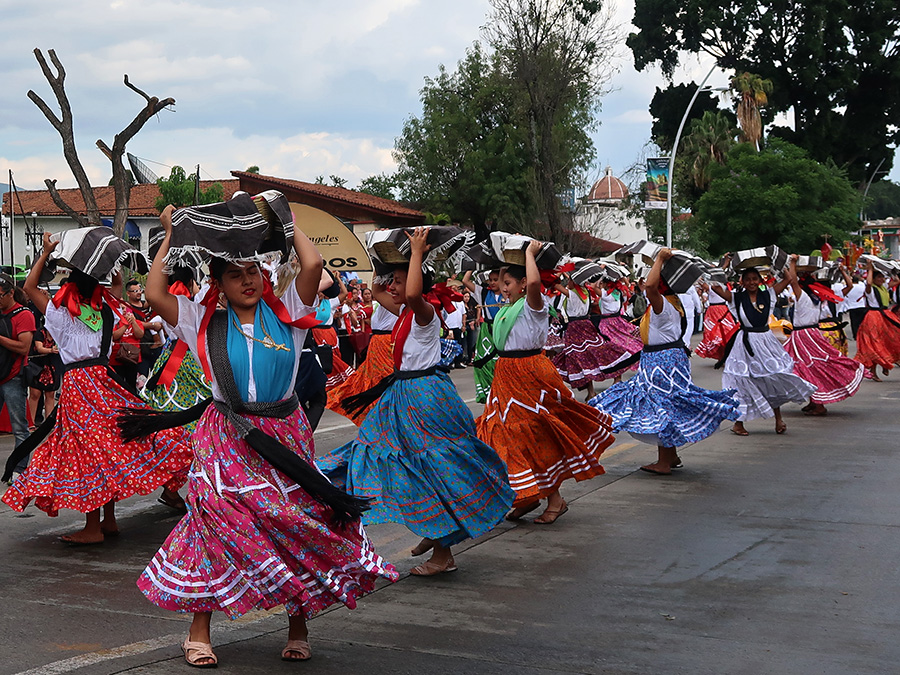
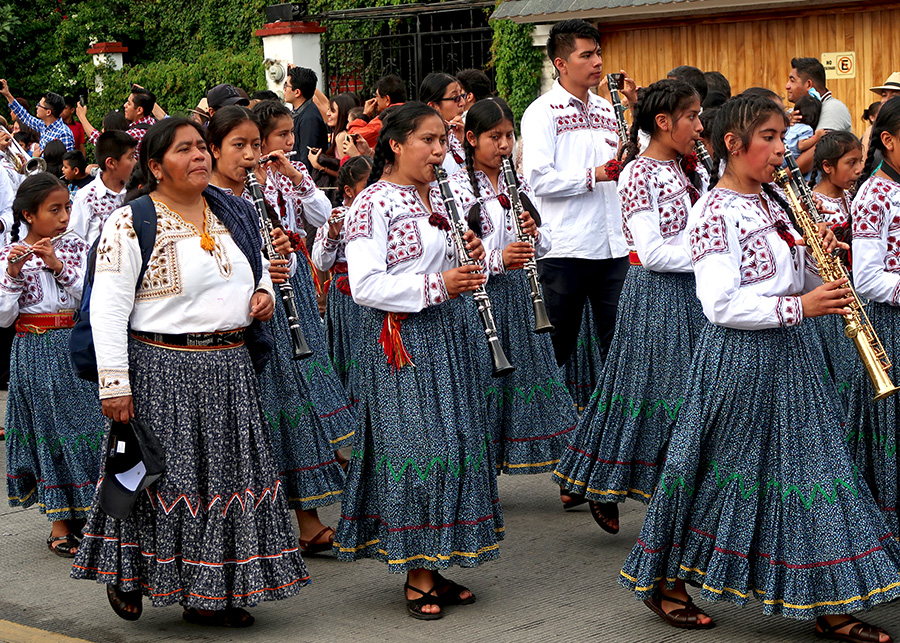
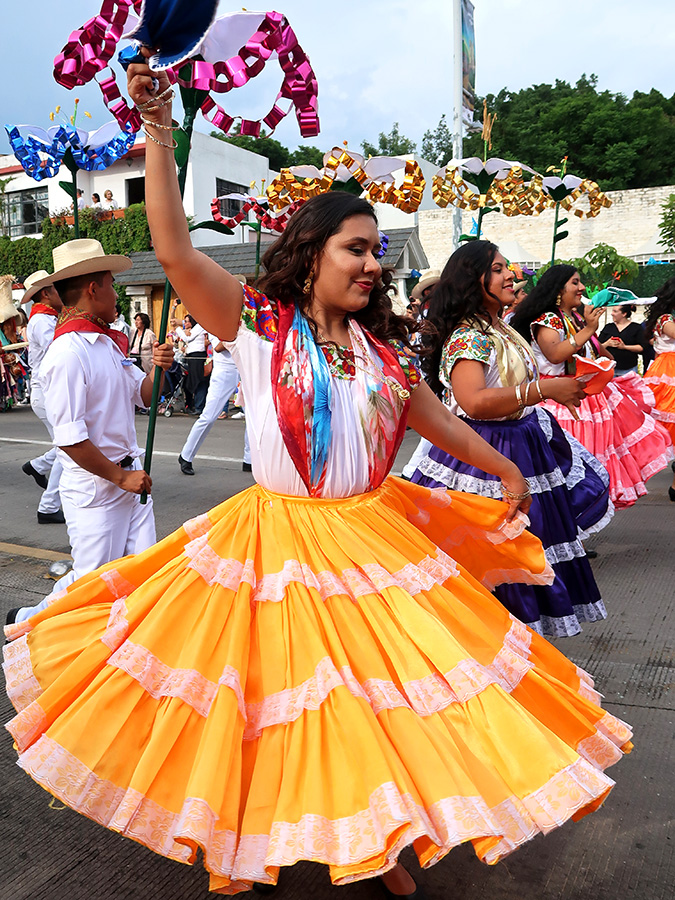
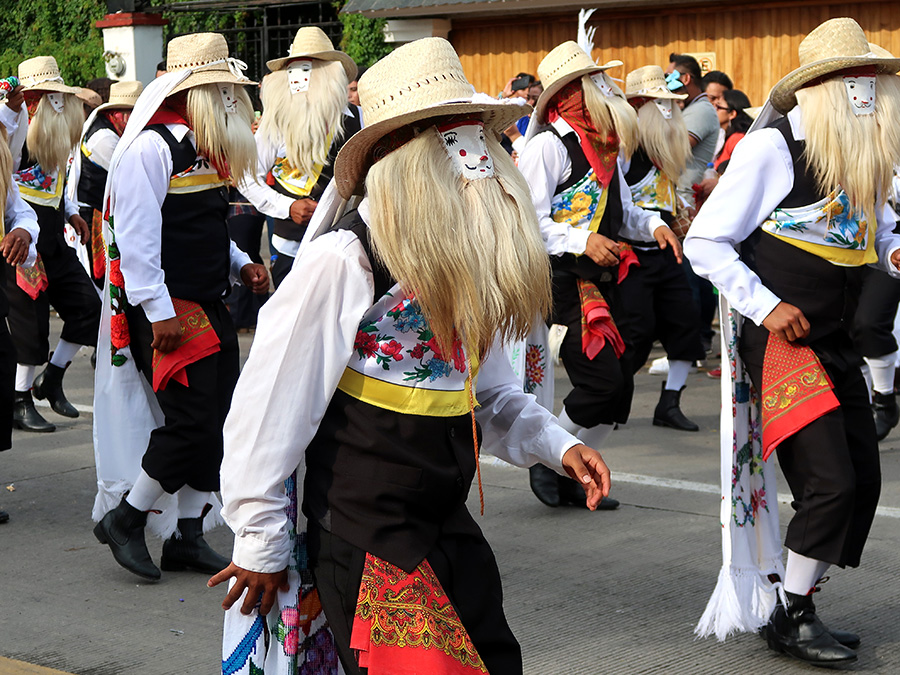
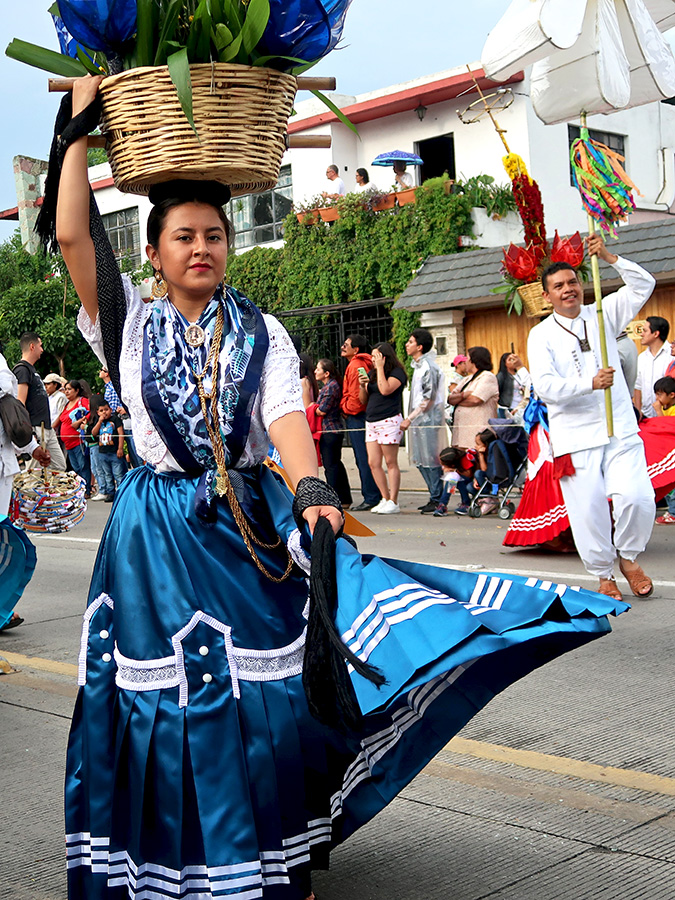
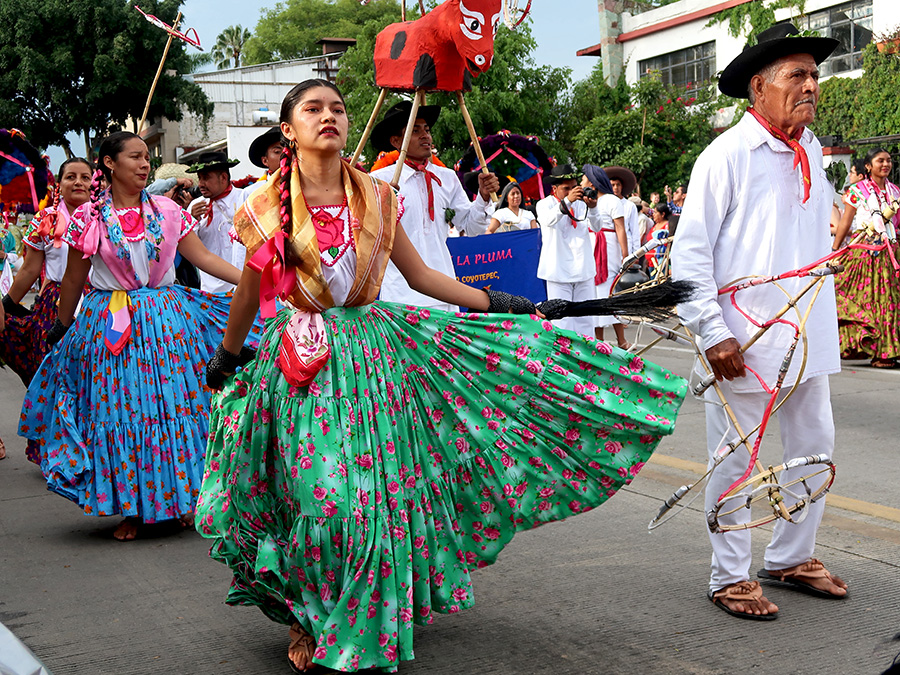
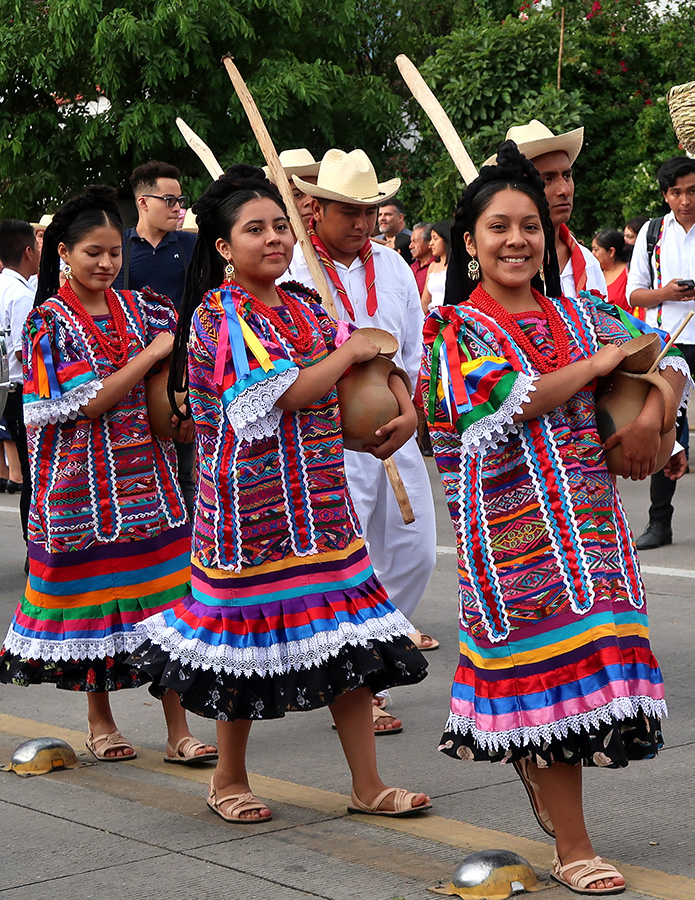
With dancers and props arrived and prepped and streets blocked to traffic, this past Saturday’s second Guelaguetza Desfile de Delegaciones (Parade of Delegations) set off from Calzada Porfirio Díaz to again wind its way through the city’s streets.

San Carlos Yautepec, Sierra Sur

Santa Catarina Ticuá, Mixteca

San Francisco del Mar, Istmo

Danza de los Rubios – Santiago Juxtlahuaca, Mixteca

Huautla de Jiménez, Cañada

Danza de los Jardineros – San Andrés Zautla, Valles Centrales

Danza de los Diablos – Llano Grande, Mixteca

Loma Bonita, Papaloapan

H. Cd. de Huajuapan de León, Mixteca

Santiago Pinotepa Nacional, Costa

Asunción Ixtaltepec, Istmo

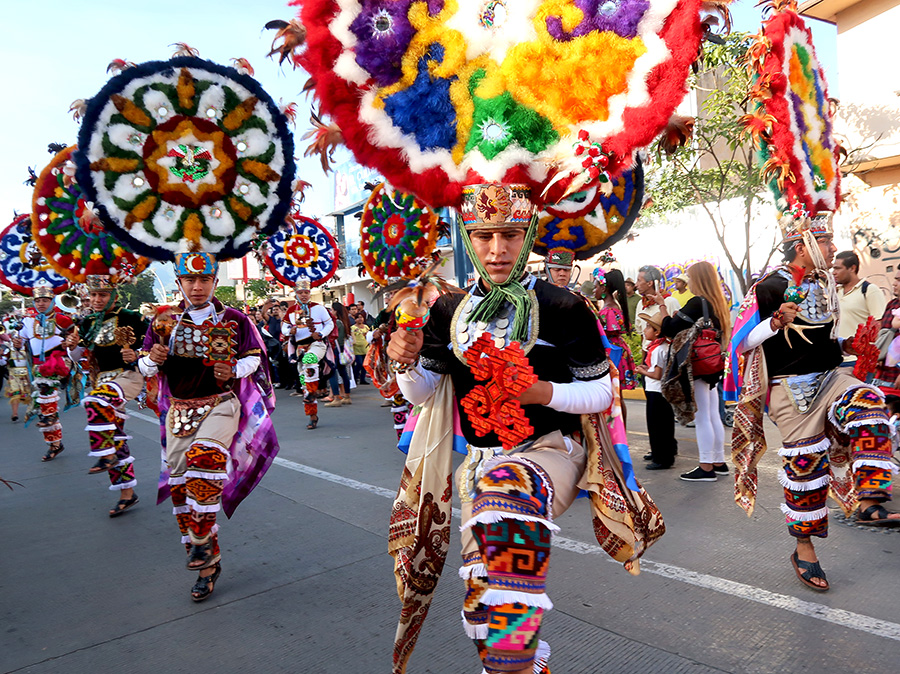
Danza de la Pluma – Teotitlán del Valle, Valles Centrales

Miahuatlán de Porfirio Díaz, Sierra Sur

Mezcal, pride, and joy were all in abundance!

Read Full Post »

Saturday was a beautiful day for this year’s second Guelaguetza Desfile de Delegaciones. Nothing but sun and blue sky greeted the dancers as they arrived in buses, their large props arrived in trucks, and spectators arrived on foot — as Calzada Porfirio Díaz, north of Niños Heroes was blocked to traffic, except for the aforementioned mentioned official vehicles.

Did I mention, mezcal flowed freely, as dancers fortified themselves and the gathered onlookers? It’s all part of the prep and, by the time the parade began at 6:00 PM sharp, everyone was feeling good and more than ready!

Read Full Post »

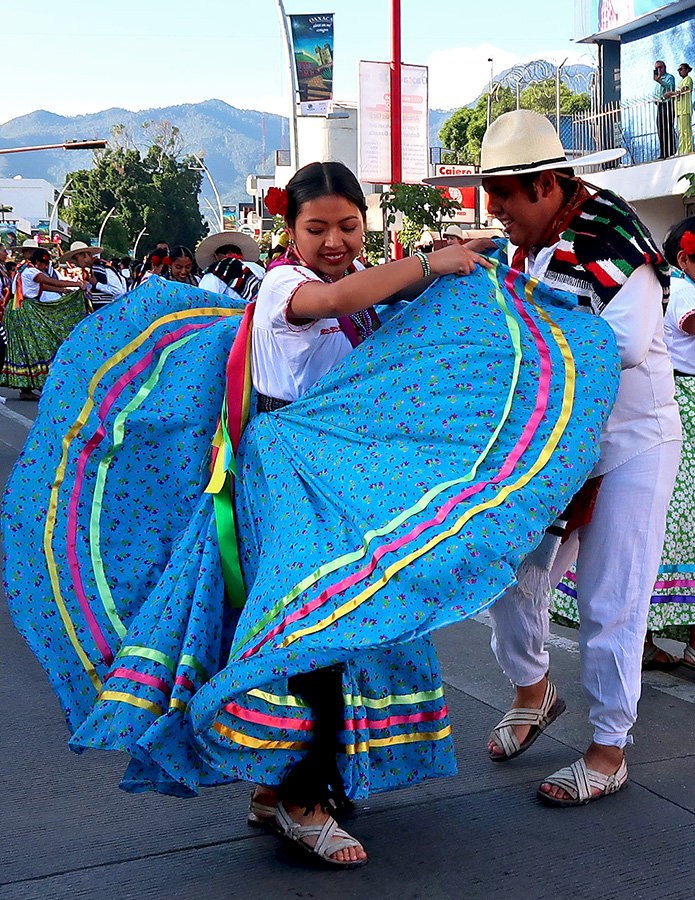
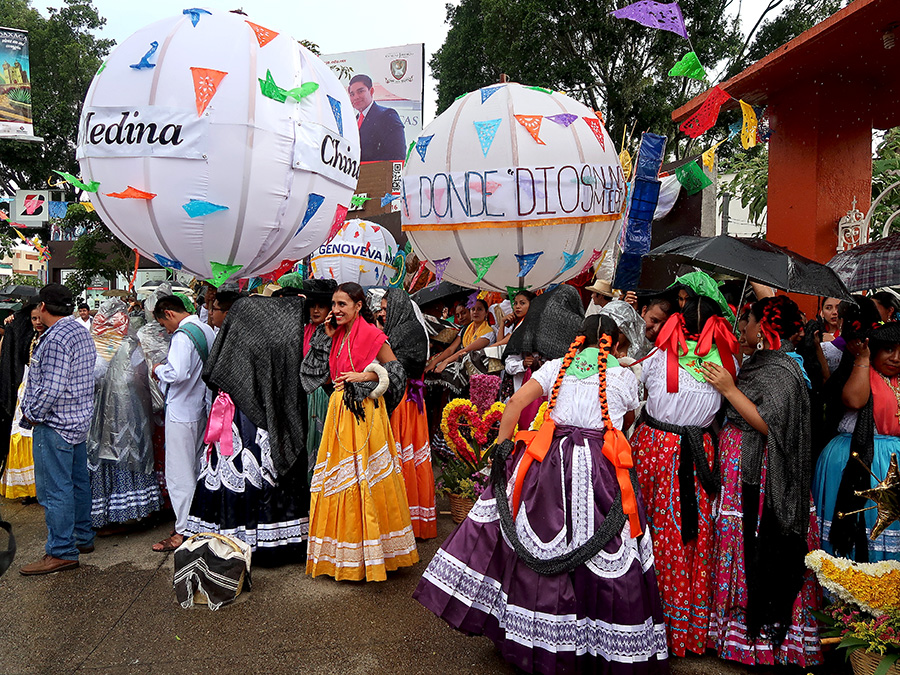
There has been so much happening in Oaxaca, this week seems to have gone by in a colorful blur. It’s already Saturday and the city is gearing up for the second Guelaguetza desfile (parade) of delegations from the eight regions of Oaxaca. And, I realized that I never did cover the first parade last Saturday — other than a single photo in the Snapshots from Oaxaca post of the China Oaxaqueña delegation huddled in the rain. I am happy to report that the storm passed and it didn’t rain on the parade.

Chinas Oaxaqueñas Genova Medina, Valles Centrales

Chinas Oaxaquenas Doña Genova,
Valles Centrales

Ejutla de Crespo, Valles Centrales

San Sebastián Tecomaxtlahuaca, Mixteca

Santa María Tlahuitoltepec, Sierra Norte

San Blas Atempa, Istmo

Putla de Guerrero, Sierra Sur

Tiliches of Putla de Guerrero, Sierra Sur

Chalcatongo de Hidalgo, Mixteca

San Juan Bautista Tuxtepec, Papaloapan

San Pedro Pochutla, Costa

Chinas Oaxaqueñas Casilda, Valles Centrales

San Francisco Sola, Sierra Sur

San Felipe Usila, Papaloapan

This wasn’t even all the delegations! Today, a few of the same, plus many more — including “our” Danza de la Pluma guys (and little gals) from Teotitlán del Valle. The sun is shining and I’m keeping my fingers crossed that it won’t rain on today’s parade. By the way, they changed the route this year, beginning in Colonia Reforma and ending at Mercado de La Merced — making it longer AND closing Calle Niños Heroes (Carretera Federal 190 — known in the USA as the Pan American Highway) for more than an hour. Glad I wasn’t stuck in that traffic jam!

Read Full Post »

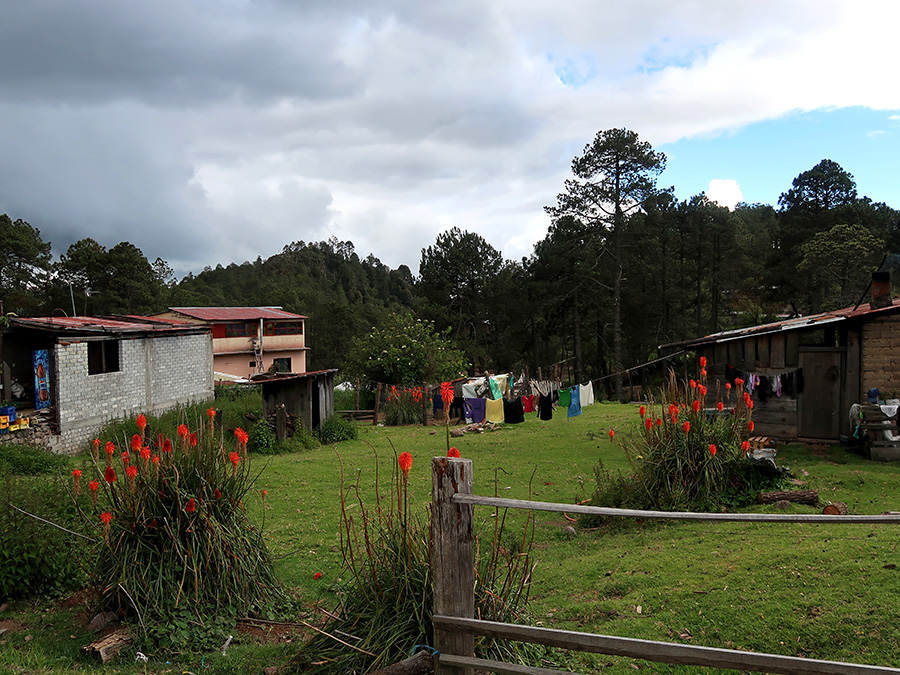
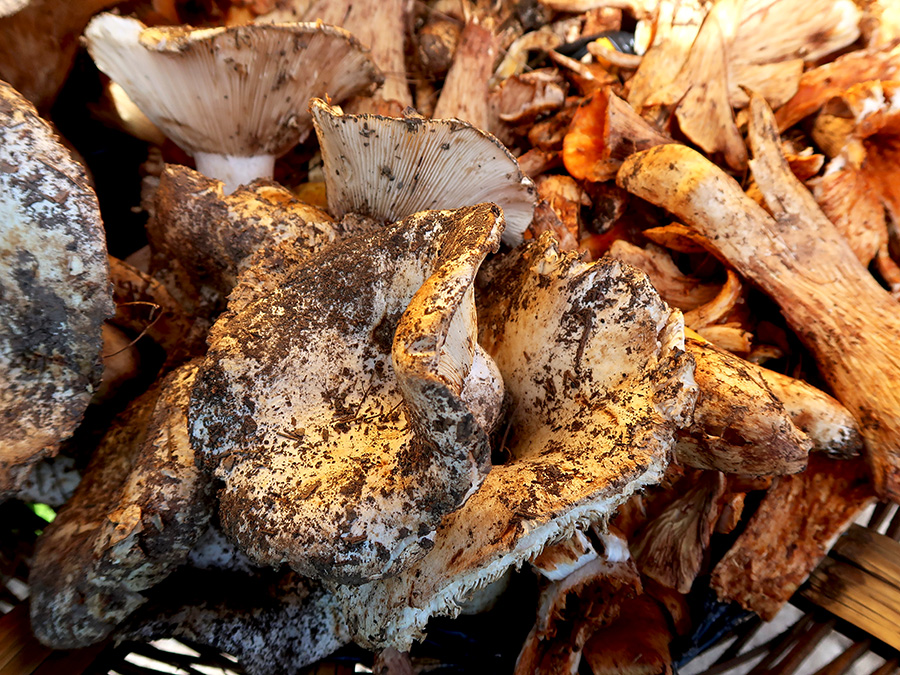
Sunday, I headed up into the clouds for the 19th Feria Regional de Hongos Silvestres (Regional Wild Mushroom Fair) in San Antonio Cuajimoloyas. Friends had hired a van and driver to take us on the steep winding climb into the Sierra Norte. An hour and a half after we left the city, we arrived at our destination, 10,433 feet above sea level. Cuajimoloyas has an ethereal feel and seems like a world apart from the valley below.
       
Baskets of fresh mushrooms with shiny orange caps and mushrooms resembling coral, trumpets, cauliflower, and flower petals beckoned. And the aroma of grilled mushrooms, mushroom tamales, mushroom empanadas, and chile relleno stuffed with mushrooms stimulated the appetite.
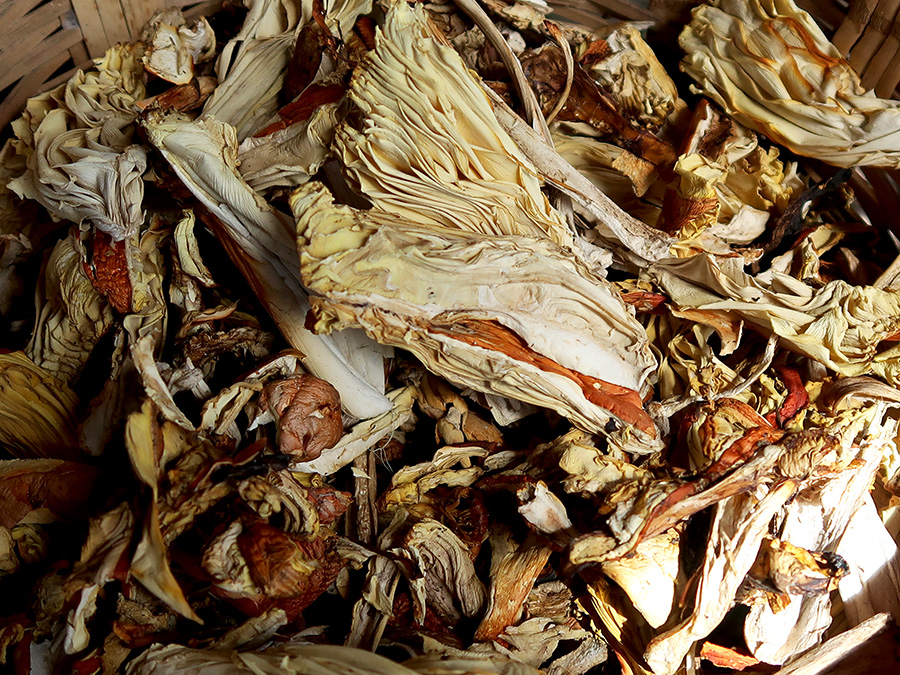
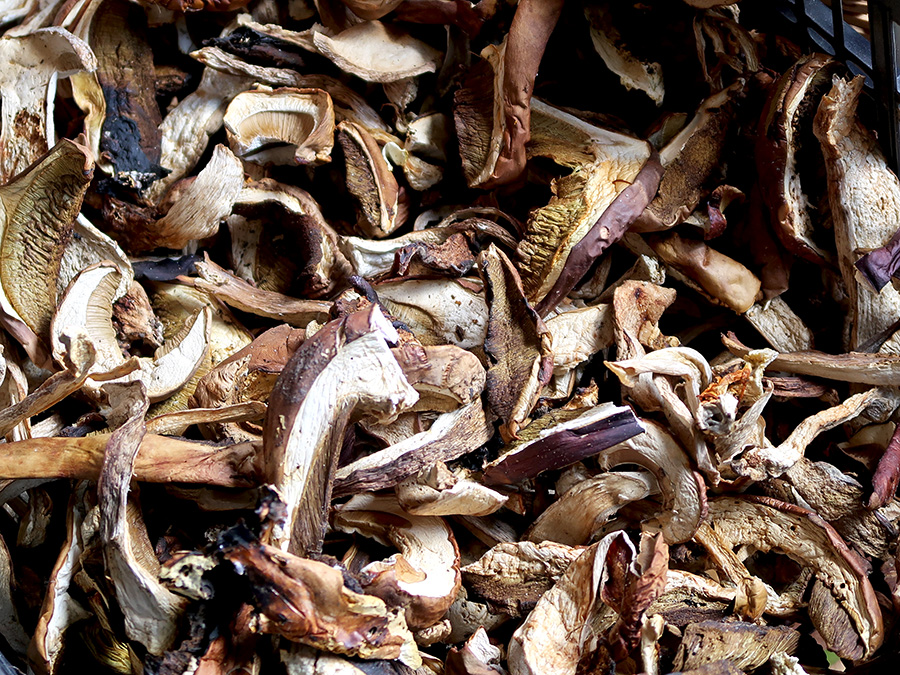
There were dried mushrooms in bulk and in little cellophane baggies for purchase.
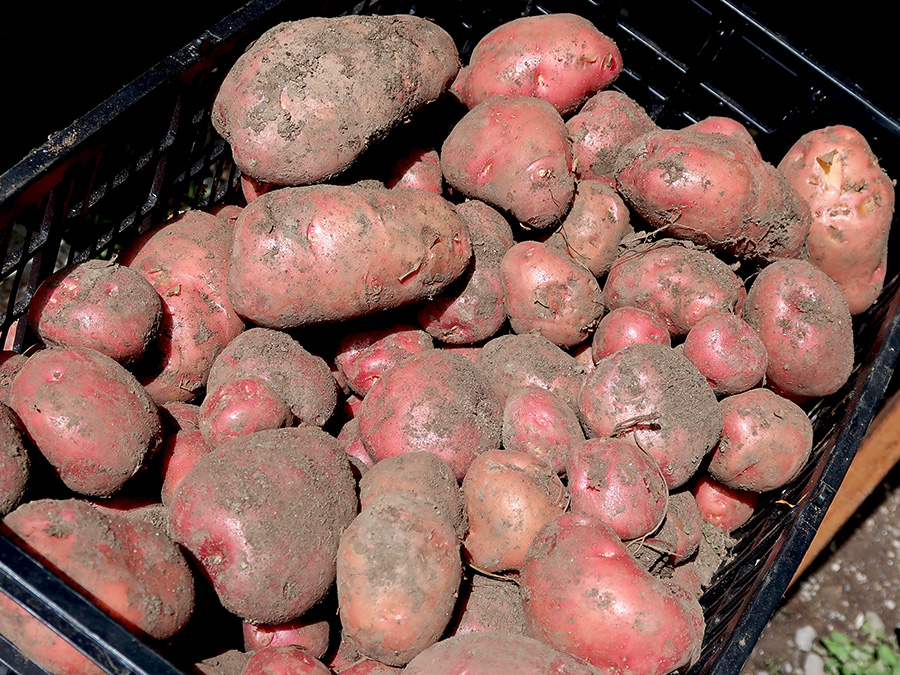
Mushrooms aren’t the only produce the region is known for — delicious apples and new potatoes are grown in these chilly mountains.
And, there there were local crafts for sale and a couple of kinds of mezcal to taste (and buy).
I came home with apples, potatoes, a bottle of the lovely A Medios Chiles mezcal made from the wild Jabalí agave, and 30 grams of dried mushrooms. While the mushrooms weren’t of the “magic” variety, the experience certainly was!
“Mushrooms were the roses in the garden of that unseen world, because the real mushroom plant was underground. The parts you could see – what most people called a mushroom – was just a brief apparition. A cloud flower.” ― Margaret Atwood, The Year of the Flood

Read Full Post »

It’s Guelaguetza time in Oaxaca… so many festivals, parades, and food festivals. However, not so much time to blog.

July 18, 2019 – Olga Cabrera (Tierra del Sol) and Carina Santiago (Tierra Antigua) following their mole demonstrations.

July 19, 2019 – Festival del los Moles at the Jardín Etnobotánico.

IMG_5750

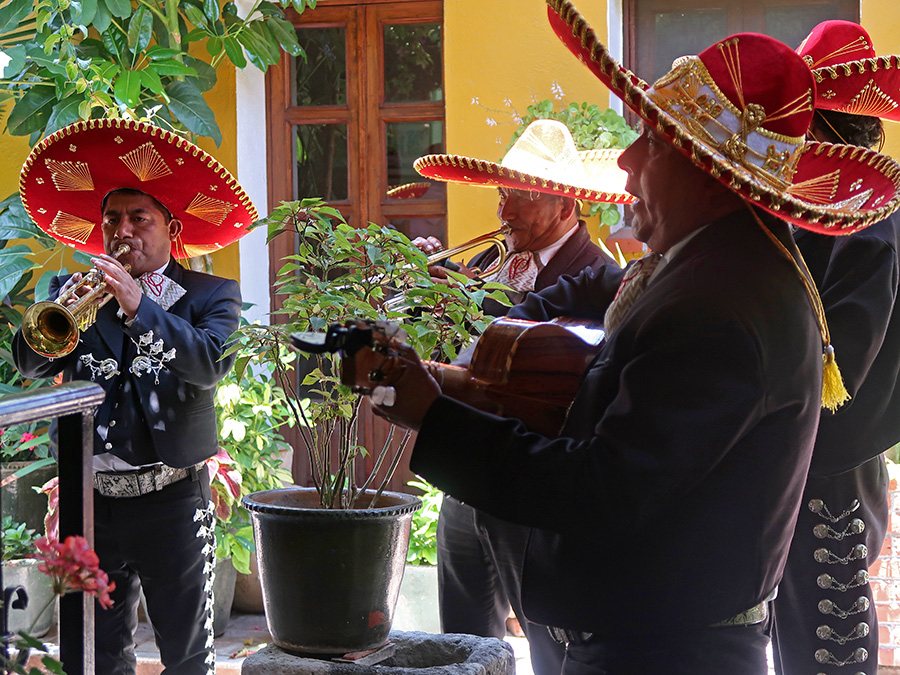
July 20, 2019 – Mariachi concert at Hotel Las Golandrinas, in honor of founders, Señor and Señora Velasco.

July 20, 2019 – Gathering, in the rain, of one of the China Oaxaca delegations at the Guelaguetza desfile.

July 21, 2019 – Feria Regional de Hongos Silvestres (wild mushroom festival) in Cuajimoloyas, in the Sierra Norte.

So much fun and so much more to do! Stay tuned…

Read Full Post »

Yesterday, friends from California invited me to accompany them on one of their favorite pastimes — going to the source for artisanal mezcal. At our first stop, the palenque of Félix Ángeles Arellanes, Mezcal El Minerito, we were just in time to watch the beginning of the process of cooking the agave piñas.

The art of making mezcal at the palenque, Mezcal El Minerito.

Piling river rocks onto the red and white hot coals in the earthen pit that functions as the horno (oven).

Covering the rocks with bagaso (recycled crushed agave fibers).

Putting the long tobasiche agave piñas into the oven.

Adding the more rounded jabalí and tobalá piñas.

Topping it off with more tobasiche piñas.

Covering the piñas with more bagaso.

Félix’s sons worked nonstop — an hour and fifteen minutes from the time of the first photo, they covered the mound with tarps to enclose the oven. Though we didn’t see it, I suspect this was then sealed with soil.

Félix pours the “Nectar of the Gods” — a multilayered and complex artisanal mezcal.

Nothing like being at the right place at the right time. And, yes, we not only watched, we tasted and we bought!

Read Full Post »

« Newer Posts - Older Posts »