Winging my way south!

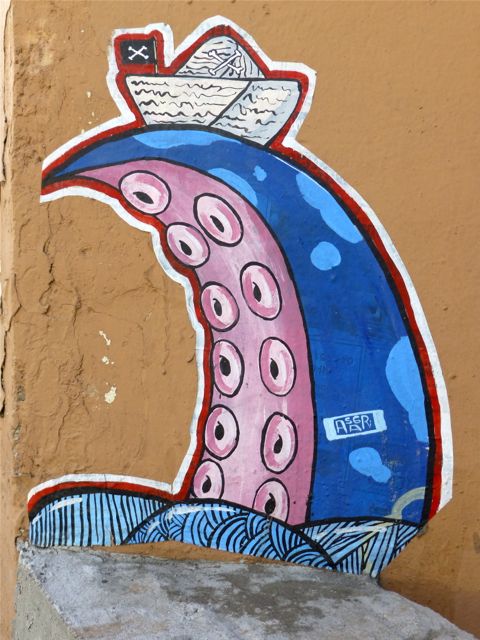
A wall on Antonio de León in Xoxocotlán, Oaxaca. Ahhh…
Posted in Creativity, Travel & Tourism | Tagged Mexico, Oaxaca, photographs, photos, street art, urban art, Xoxocotlán | 1 Comment »
Basketball is big in Oaxaca and was big news to me!
In Teotitlán del Valle, located in the valley Oaxaca, there is a tradition of climbing El Picacho on Día de la Santa Cruz (May 3). I’d also heard celebrations also included an annual basketball tournament. Sure enough, the sound of a play-by-play announcer, ref’s whistle, and buzzer occasionally floated up to our perch on the top of the mountain. When we descended El Picacho via a different route, we came to a basketball court a few blocks from the village center, and an intense game in progress, with other teams waiting in the wings — in this case, the road!
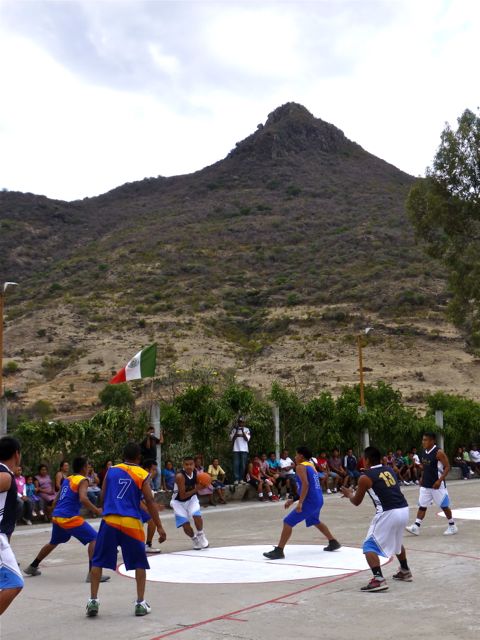
Eight days later, we drove up into the Mixe in Oaxaca’s Sierre Norte for the Fiesta de Mayo in Santa María Tlahuitoltepec. Once there, we were directed to a basketball court (did we hear correctly?) at the center of town — the mercado off to one side; church on another side; municipal buildings off to another. We had expected folkloric dancers or ceremonial presentations, but were surprised to find a basketball tournament in progress. It eventually ended and the expected dancing began.

According to Hoop Dreams in Oaxaca:
Any proper town in Latin America has a church facing a plaza — except the towns of the Sierra Norte region of Mexico, where Jorge Santiago is from.
“In my part of the Sierra, the basketball courts are like the zócalo in the colonial city,” Mr. Santiago said, using a Mexican word for “plaza.” “It’s really the most important part of the town. A respectable town has a church, and a basketball court in front of the church.”
Read full article HERE.
Posted in Celebrations, Culture, Holidays, Sports & Recreation, Travel & Tourism | Tagged basketball, basketball court, Día de la Santa Cruz, El Picacho, Fiesta de Mayo, Hoop Dreams in Oaxaca, Mexico, Mixe, Oaxaca, photographs, photos, Santa María Tlahuitoltepec, sierra norte, sports, Teotitlán del Valle | Leave a Comment »
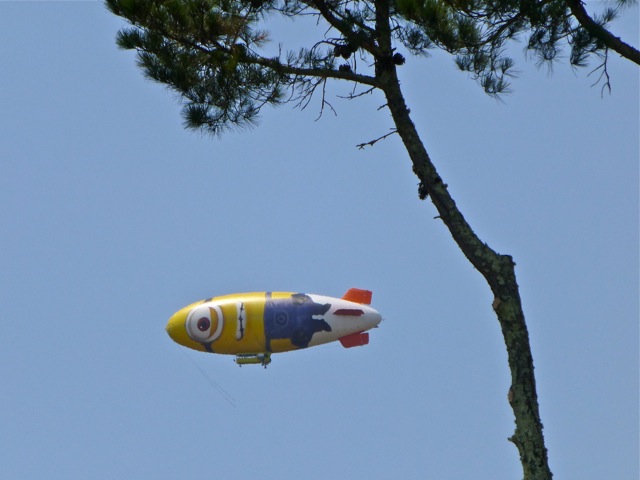
On another glorious day in Mill Valley…

There’s a high flyin’ [blimp], flying way up in the sky,
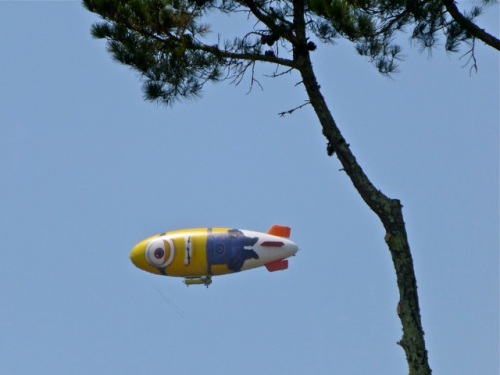
I wonder if she looks down as she goes on by?

Apparently, her name is Despicable Me 2. It’s all about the advertising and, grrr, I’ve fallen into their trap.
Only four more days, and I’ll be leaving on a jet plane, on my way back to Oaxaca!
(Apologies to Billy Edd Wheeler for borrowing a few lines from “High Flyin’ Bird” and to Richie Havens and his sublime version of it.)
Posted in Places, Transportation, Travel & Tourism | Tagged Billy Edd Wheeler, blimp, California, Despicable Me 2, High Flyin' Bird, Mill Valley, photographs, photos, Richie Havens | 2 Comments »
I adored my maternal grandmother. She was short and plump with a crown of white hair framing a broad round face. Her life wasn’t easy and years of hard work lined her face, but it was a face dominated by wise and remarkably kind eyes. I see the same strength and wisdom and loving presence in the abuelas of Oaxaca. Across years and miles, they bring a little of my grandma back and it makes me smile.
This slideshow requires JavaScript.
And, speaking of Oaxaca’s awesome abuelas…
Mexican grandmother graduates from primary school at age 100
By Luc Cohen
MEXICO CITY | Wed Jun 26, 2013 11:30pm IST
(Reuters) – You’re never too old to learn: Mexican grandmother Manuela Hernandez has finally graduated from primary school – at the age of 100.
Born in the southern Mexican state of Oaxaca in June 1913, the year before World War One began, she left primary school after just a year to help her poor family with household chores.
Hernandez only resumed her studies in October at age 99 at the recommendation of a grandchild, and she was handed her diploma at a celebration on Saturday.
“I liked school very much, but I could not continue studying,” she told Uno TV. “By the next year I could already wash and iron.”
Hernandez will continue her studies in secondary school.
More than half of Oaxaca state residents older than 15 have not completed primary education, the second-highest rate in the country behind neighboring Chiapas, a state education official said. (Reporting by Luc Cohen; Editing by Simon Gardner and Cynthia Osterman)
You might want to also take a look at this brief video of Manuela Hernandez explaining why she had to leave school as a child.
Posted in Education, People, Travel & Tourism | Tagged abuelas, education, grandmothers, Manuela Hernandez, Mexico, Oaxaca, photographs, photos, popular travel destinations | Leave a Comment »
Oaxaca’s annual Guelaguetza festival honoring the traditions of costume, dance, and sharing of the eight regions of the state of Oaxaca is less than a month away. There will be competitions leading up to the choosing of Goddess Centeotl to preside over the festival and parades by the delegations through the city on the two Saturdays that precede the July 22 and 29 programs at the Guelaguetza Auditorium on Cerro Fortín.
There will official and alternative celebrations in the city and surrounding villages. According to yesterday’s press conference, more than 70 events are scheduled and Lila Downs will be the official Guelaguetza 2013 ambassador. Hmmm… I wonder what that means? Surprise Lila Downs performances? It’s Oaxaca, so you just never know!
To get everyone in the spirit, here’s a few photos from another of Oaxaca’s wonderful urban art covered walls. It celebrates the heritage of Oaxaca and can be found at José López Alavez 1406, in the Xochimilco neighborhood of the city.
By the way, this past Sunday, San Francisco’s North Bay residents got an early and small flavor of Guelaguetza. Oaxacan dances, dishes and costumes in Santa Rosa entertained over 1,000 spectators and, no doubt, the hearts of the Oaxaqueños participating and in the audience swelled with pride. If I’d only known about it in advance, I would have gladly extricated myself from the complexities and minutiae of getting my grandparents’ house ready to sell and driven up there for a taste of Oaxaca. They were even serving tlayudas!
Oh well, this time next month I will be happily back in Oaxaca and, no doubt, be exhausted, exhilarated, and pouring through hundreds of photos from the first week of Guelaguetza activities.
Posted in Celebrations, Creativity, Culture, Travel & Tourism | Tagged California, celebrations, graffiti, Guelaguetza, Mexico, Oaxaca, photographs, photos, Santa Rosa, urban art, wall art | 8 Comments »
In Oaxaca, a molino is an indispensable business in every village. Dried corn, cacao beans, chiles, herbs, spices, nuts, and seeds are brought to the molino to be ground so they can be turned into the staples found on Oaxaca’s tables — tamales, tortillas, tlayudas, tejate, mole, Oaxacan chocolate, and much mouth-watering more! Below is a miller of corn in Tamazulápam del Espíritu Santo, in the Mixe region of Oaxaca.

In Mill Valley, Molino is a colorful place-name, a street and a park, that recalls California’s Spanish and Mexican past.

“Suburbia is where the developer bulldozes out the trees, then names the streets after them. ” —Bill Vaughan
Posted in Buildings, Food, Language, Parks & Plazas, Signs, Travel & Tourism | Tagged Bill Vaughan quote, California, language, Mexico, Mill Valley, Mixe, molino, Oaxaca, photographs, photos, Tamazulápam del Espíritu Santo | Leave a Comment »
One of the things I always notice when in El Norte this time of year is the longer length of the day — and today it’s at its longest. Light came through the curtains to wake me at 5:45 AM and the sun won’t dip behind Mt. Tamalpais and into the Pacific until 8:30 PM. The further north one goes, the longer this day lasts. Of course, the reverse is true in the winter. No wonder the Summer Solstice is such a big deal in the northern latitudes!
As much as I miss Oaxaca, this really has been a spectacular spring in the Bay Area — perfect for strolling along the San Francisco Embarcadero with a Oaxaca buddy.
The City By the Bay at her best!
Posted in Celebrations, Science & Nature, Travel & Tourism | Tagged California, city by the bay, photographs, photos, San Francisco, San Francisco Bay, San Francisco Embarcadero, Summer Solstice | 1 Comment »
This wall in Oaxaca says it all. Have I mentioned, I’m counting the days until my return?!!

Here’s hoping Cameron Conaway is right and this is, “The storm before the calm.” (Caged: Memoirs of a Cage-Fighting Poet)
Posted in Creativity, Culture | Tagged art, graffiti, Mexico, Oaxaca, photographs, photos, quotations, urban art, wall art | 1 Comment »
It’s the annual fathers (and a couple of grandfathers) of Oaxaca slideshow… I never tire of seeing these guys with their hijas and hijos.
This slideshow requires JavaScript.
To loving and responsible fathers everywhere, may you continue to do what you do. And a special shout-out to my son!
Posted in Celebrations, Culture, Travel & Tourism | Tagged Día del Padre, Father's Day, fathers and children, Mexico, Oaxaca, photographs, photos | 6 Comments »
A recent article from California’s Merced Sun-Star addresses an issue many in Oaxaca’s ex-pat community have been discussing.
MERCED — In the small town of Mitla Oaxaca in Mexico, a little girl drew inspiration from her grandmother’s colorful garden more than 10 years ago.
Though the family wasn’t very wealthy, the dinner table was always filled with fresh and nutritious foods.
“When I was young, my grandma always had a garden,” said Xochitl Juarez, now 26. “She was really poor, but she always had fresh fruits and vegetables.”

(photo by BEA AHBECK – bahbeck@mercedsunstar.com) Xochitl Juarez of Mexico planted a 10,000-square-foot garden in the shape of a circle because ‘everything in life is a cycle,’ she said.
After falling in love with agriculture at a young age, Juarez sought to help her community learn new farming techniques to become more sustainable.
“A lot of people that come here are from small towns and they have to grow their own food,” she said. “If they have the opportunity to be sustainable, we’ll have a better life with more healthy foods and better nutrition.”
Juarez left her hometown of about 10,000 people and traveled to the United States for the first time as part of the Multinational Exchange for Sustainable Agriculture program.
[Click HERE for full article]
Posted in Agriculture, Environment, Food, Gardens, People, Science & Nature | Tagged agriculture, articles, California, Exchange student learns sustainable gardening, farming practices, farming techniques, indigenous farmers, Merced, Mexico, Oaxaca, sustainability, sustainable agriculture program, Xochitl Juarez | 1 Comment »
One can see his art all over the city. I’d first been wowed by the scale, symbolism, and style of his work early last year, when walking up Matamoros to meet a friend who was staying at Hotel Azucenas. At Calle Prof. M. Aranda, I was stopped dead in my tracks — the entire front of the building next to the hotel had been transformed. Using a roller, not brush or spray can, the artist known as Sanez turned it into a work of art.
In September 2012, Sanez again worked his magic on this tired old building — this time creating “El Canto del Agua” (The Song of Water). According to the article, Mesoamerican Peoples Express their Solidarity by Jonathan Treat, using “symbols of the Aztec god of rain, fertility and water—Tláloc, and corn, forests, animals, campesinos and campesinos and traditional Oaxaca fiestas… Sánez honors indigenous peoples struggling to defend their territories: [The mural is] ‘Dedicated to the peoples who organize to defend their commons and the common good—Mexico and Canada.’”
Another close encounter with the work of Sanez occurred last month when I ventured across Republica into Barrio de Jalatlaco. Besides its un-city-like tranquility and quaint tree-lined, but treacherous, cobblestone streets, this bucolic neighborhood always has great street art. However, I didn’t expect to find the restaurant, Fuego y Sazón, playing host to the unmistakeable style of Sanez. Wow!
And then… Just a few days before this current trip to California, I was at Gorilla Gallery (Crespo 213) talking to Jason Pfohl (glass artist and guiding spirit behind Gorilla Glass) when Sanez came in. He came to discuss plans for his live painting on glass event at the gallery. Alas, I was already in the US on May 31, when it occurred. However, if you are currently in Oaxaca, you can see the finished piece at the gallery on Thursdays between 2 and 8 PM. Besides the immense glass canvas, the gallery is featuring prints by Sanez — and I’m sure Jason would be happy to discuss the distinctive tattoo work of Sanez.
In addition, you might want to slow down when driving along Constituyentes behind Mercado de Abastos — that giant billboard mural towering above the weeds and refuse is another of Sanez’s masterpieces.
Posted in Creativity, Culture, People, Travel & Tourism | Tagged art, artists, Gorilla Gallery, graffiti artists, Mexico, murals, Oaxaca, photographs, photos, Sanez, street art, urban art | 4 Comments »
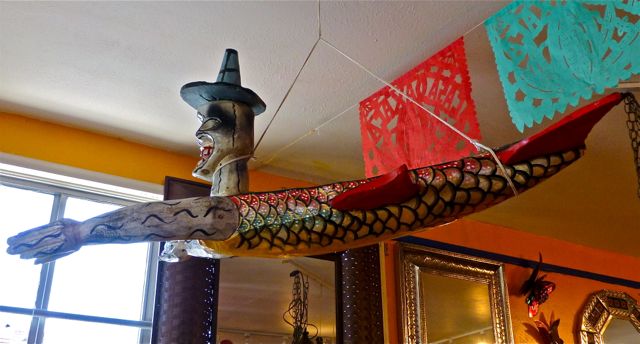
I’m in the San Francisco Bay Area for a lengthy stay — a necessary trip to el norte to sell my grandparents house. I’ve only been here for three weeks but I’m missing Oaxaca, already! However, driving up Solano Ave. on my way to Berkeley, a storefront caught my eye. Skeletons, tapetes, a riot of color…
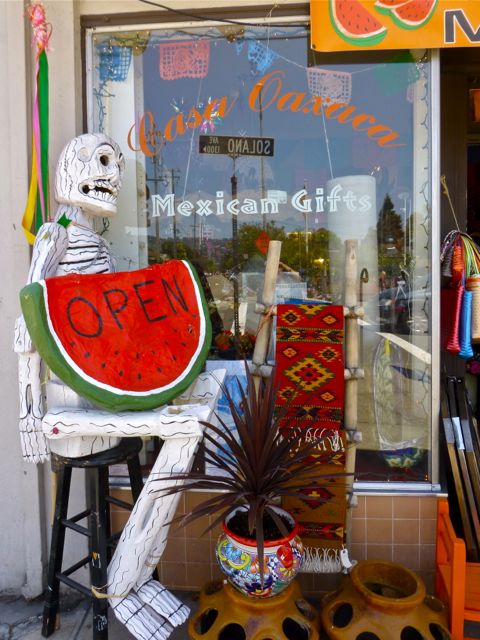
Where am I???
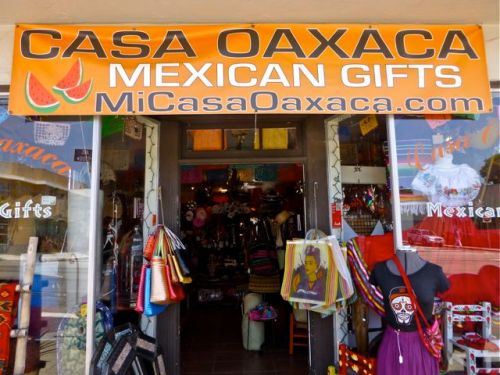
Casa Oaxaca is a gift shop featuring arts and crafts from Southern Mexico. Artesanía from Chiapas, Guerrero, Puebla, and (of course) Oaxaca cram every nook and cranny of the store.
Casa Oaxaca’s delightful owner, Guillermo (“Memo”) Robles, was born and raised in the city of Oaxaca and he returns frequently on buying trips. All items are carefully (and lovingly, I think) bought directly from crafts people and artisan collectives.
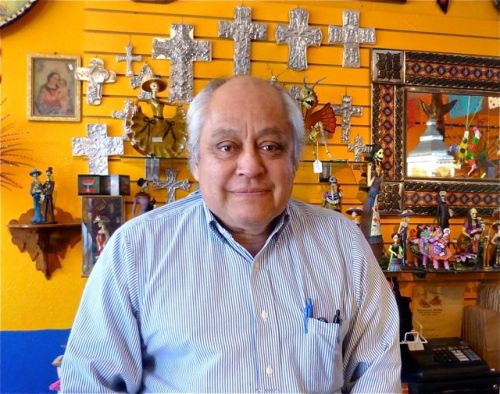
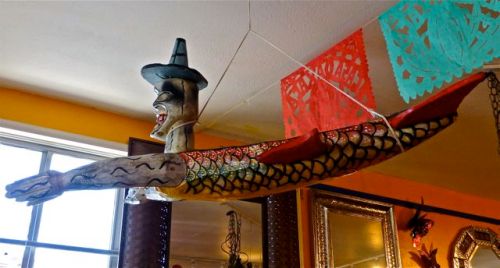
I stood talking with Memo for almost 30 minutes and, surrounded by the artesanía I have come to know and love, it was almost like being back in my adopted city. Ahhh… If you go, don’t forget to look up!
I’ve also discovered Mi Pueblo Food Center in San Rafael, one of a small, privately owned, chain of supermarkets in Northern California. I came home with Tajin seasoning, a bag of still warm tortillas, a whole roast chicken, quesillo, along with fruit, fresh herbs, vegetables, and a case of Modelo Especial (the latter especially for my son, in whose home I’m staying) — all for a better price than the unnamed, but well-known, big chains. On my next visit, I’ve got to try their tamales.
Posted in Creativity, Culture, Food, Markets, People | Tagged artesania, California, Casa Oaxaca, Guillermo Robles, Mi Pueblo Food Center, Oaxaca, photographs, photos, store displays | 12 Comments »
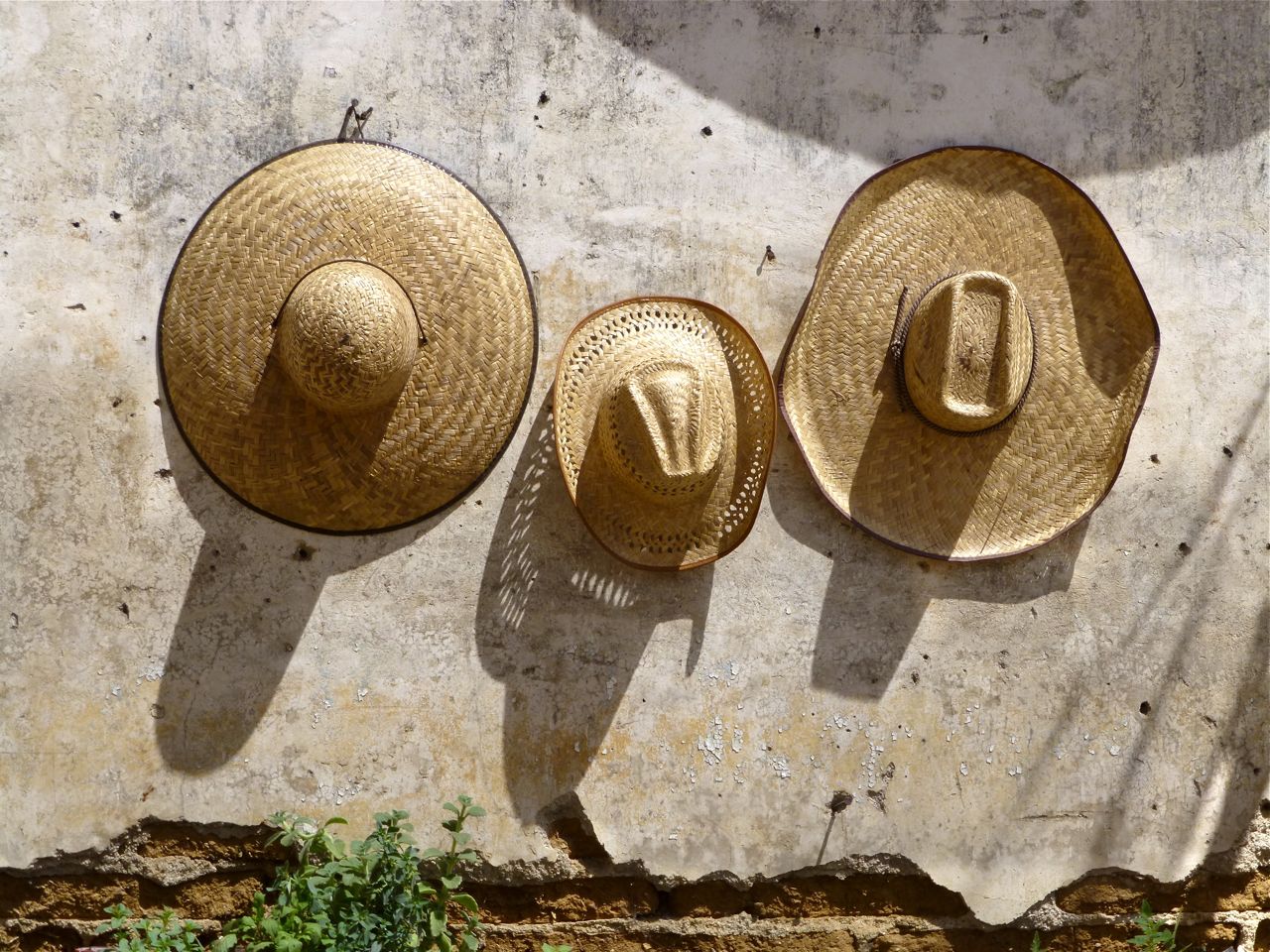
Posted in Buildings, Creativity, Culture, Exhibitions, Gardens, Travel & Tourism | Tagged abandoned buildings, art, art installation, exhibition, hats, Matria Jardín Arterapéutico, Mexico, Oaxaca, photographs, photos, still life, straw hats | Leave a Comment »
Cars in Oaxaca? They range from decrepit VW Beetles held together with duct tape to the latest shiny black tinted windowed SUVs. Most lean toward the former — the cobblestones, potholes, and dirt roads can rapidly speed-up the aging process.
However, like young men worldwide are wont to do, no matter the make and model, Oaxaqueños love to customize their rides. This one caught my eye in San Pedro y San Pablo Teposcolula:
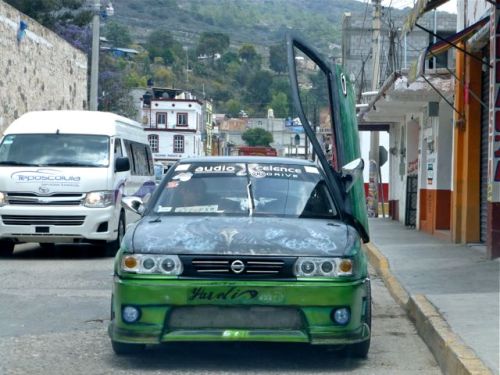
The doors are known as Lambo (after Lamborghini), scissor, butterfly, switchblade, jack-knife and beetle-wing doors. Take your pick! R Kelly song lyrics came to mind:
I believe I can fly
I believe I can touch the sky
I think about it every night and day
Spread my wings and fly away
I believe I can soar
I see me running through that open door
I believe I can fly
By the way, should you too want to install Lambo doors on your car, you can find instructions here. Who knew???
Posted in Creativity, Culture, Travel & Tourism | Tagged automobiles, cars, I Believe I Can Fly, Lambo doors, Mexico, Oaxaca, photographs, photos, San Pedro y San Pablo Teposcolula | 1 Comment »
It’s been two years since he fell asleep at the wheel, slammed into a tree, and was killed instantly. A memorial plaque and flowers soon appeared. There were rumors of intoxication, but that doesn’t lessen a mother’s pain or love. And she continues to come weekly to place fresh flowers at the site where he died.
Though I didn’t know Víctor Damián Díaz González, I too continue to remember him every time I walk down the street.
Posted in People, Tragedy | Tagged memorials, Mexico, Oaxaca, photographs, photos, sidewalk memorial | 4 Comments »
« Newer Posts - Older Posts »










 Mexican Peso Converter


