Feeds:
Posts
Comments

New gals in town

Meet the new gals in town…

Virgin of Guadalupe painted on yellow wall

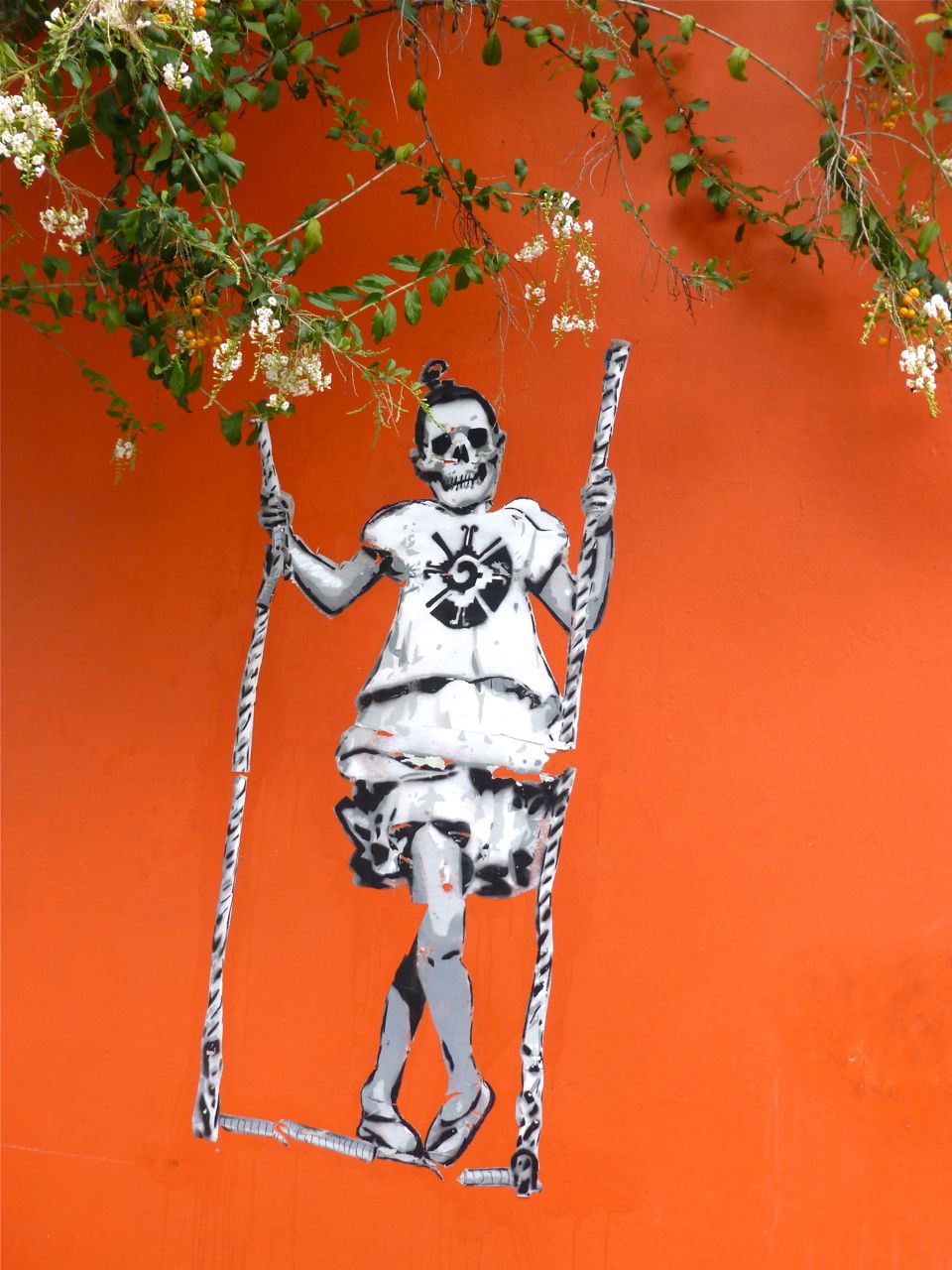
Skeleton on swing painted on orange wall

Life and death in Oaxaca.

Arnulfo Mendoza Ruiz, RIP

Blog post as catharsis…

Saturday was a sad day in Oaxaca.  It brought the completely unexpected death of one of Oaxaca’s most talented artists, Arnulfo Mendoza Ruiz.  He was only 59.  I knew him a little, peripherally through my blogger buddy, Chris, who has known him and his large Zapotec family in Teotitlán del Valle (his sisters are well-known chefs) for many years and with whom he had been collaborating on a project.  Arnulfo had a well-known store and workshop called La Mano Mágica on the walking street here in Oaxaca, which showcased, not only his artistry (paintings, exquisite weavings, metal work, and more), but also the cream of Oaxaca’s artesanía and artist community.  We would occasionally stop by or he would hail us from the doorway — always with twinkling eyes, mischievous smile, and well-worn fedora atop his head.

Black bow above closed doors of La Mano Mágica

Today, the doors are closed.

As I’ve mentioned several times before, ritual and tradition play central roles in all aspects of Zapotec culture and it was amazing to watch it being expressed on Saturday.  Arnulfo died in the morning and by the early afternoon, friends, family, and many of the major artists in Oaxaca, were gathered in La Mano Mágica.  At one point, there was mournful chanting by several men in the gallery where his casket lay, later a band played, people came and went in the main workshop room, and in the room behind, his sisters prepared and served chicken covered in black mole, rice, tortillas, and atole.  The women busied themselves with the ritual of preparing and offering food, but allowed the tears to well up when condolences were given.  However, the men in the family sat or stood in clusters in the other two rooms, and remained stoic.

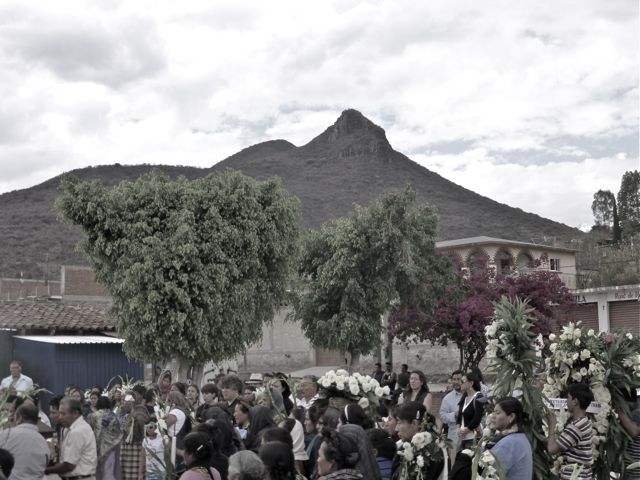
Mourners in church plaza, El Picacho in background

Under the embrace of El Picacho

According to belief, the funeral was held the next day.  As we drove out to Teotitlán del Valle on Sunday, the winter sky’s usual puffy white clouds had turned dark and gray and a few tear drops fell from the heavens.  There is a tradition of dimming the lights on Broadway to honor the death of a prominent member of the theatrical community.  And, yesterday, it felt like Mother Nature desaturated the color of Oaxaca a little in honor of Arnulfo Mendoza Ruiz.
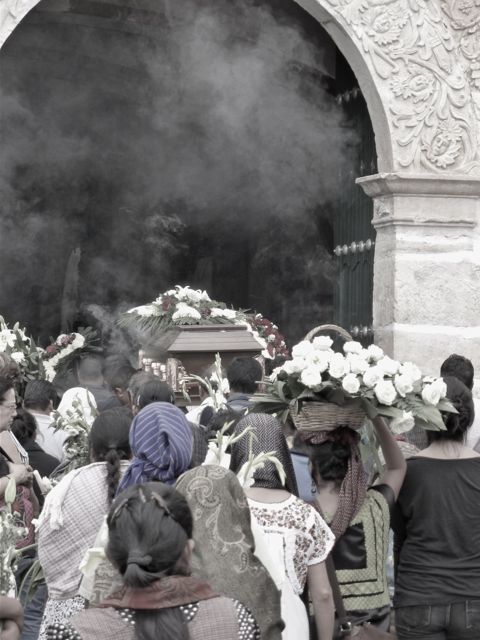
Casket being carried into church

Led by the solemn sounds of a band, pallbearers carried the casket from his home high atop a hill in Teotitlán del Valle, down the steep and winding cobblestone streets, to Templo de la Preciosa Sangre de Cristo where a mass was celebrated.  And then, all processed to the cemetery.  The anguished sobs, as his body was lowered into the earth, were heart-wrenching.  Like laughter, I think grief is contagious, as it reaches into our heart, takes hold, and shakes the continuum of feeling in each of us.  And so, tears welled-up in my eyes.

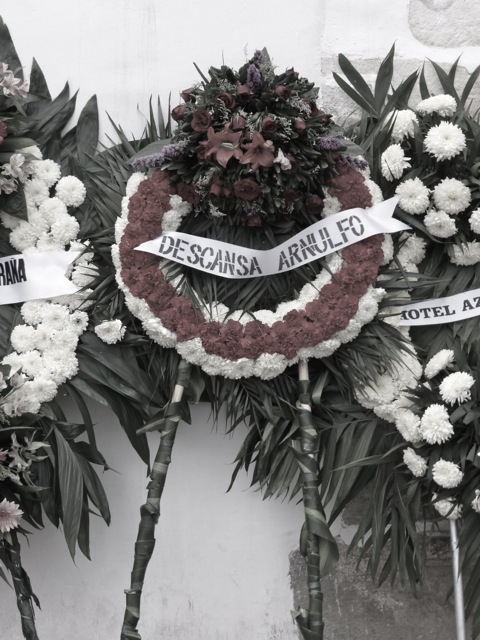
Floral wreath with ribbon reading, "Descansa Arnulfo"

Rest in peace, Arnulfo

Today, I continue to feel drained and very sad.  I didn’t know Arnulfo well, but feel humbled by the fragility of physical life.  I keep reflecting on how each of us tries to bring meaning to this temporal physical existence.  Arnulfo was a flawed man and was chased by demons, but in his creativity and nurturing of the arts, he left the world a little better than he found it.

Chris’s farewell blog posts to his friend are especially touching:   A sad day – Arnulfo Mendoza (1954-2014) and Another sad day – Arnulfo Mendoza (1954-2014).

And, here are two online obituaries (in Spanish):  Adiós a Arnulfo Mendoza and Oaxaca de luto por la muerte de Arnulfo Mendoza.

Tuesday, not only brought the previously mentioned Carnaval, San Martín Tilcajete style, it also provided comida, muy sabrosa.  No, not one of the 4 restaurants in Oaxaca recently listed in the 101 Best Restaurants in Latin America and the Caribbean.  I’m talking about al fresco dining in a roadside restaurant.  Sitting under the branches of a large shade tree on plastic chairs, around a plastic table, with cars and trucks speeding by, it was surprisingly tranquil.

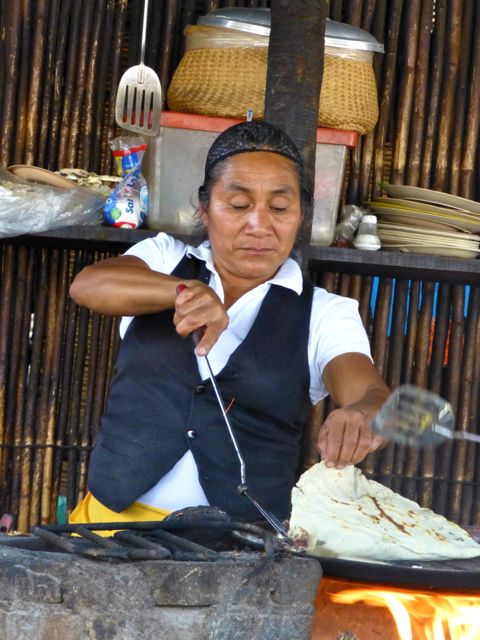
Woman cooking on comal

We had ringside seats as our lunch was prepared on a well seasoned comal.  I couldn’t help thinking as we sat at this unpretentious restaurant, in the middle of the fields that yielded the ingredients for our lunch, prepared according to culinary traditions passed down through generations of Zapotecos, this is quintessential “slow food.”

Woman lifting tlayuda off comal

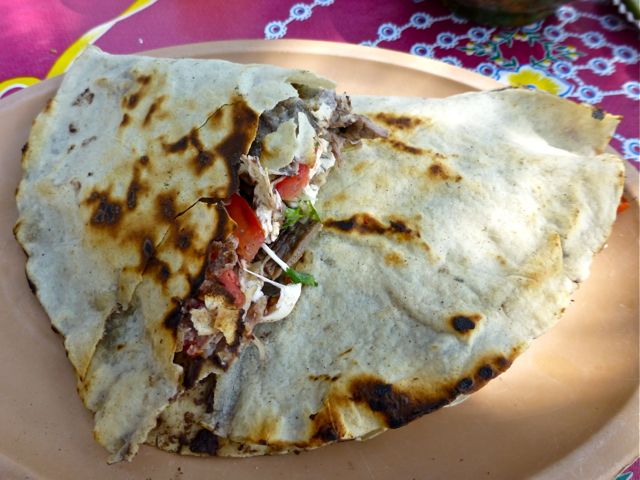
That’s my tlayuda (sometimes spelled, clayuda) being lifted off the comal — and it was one of the best I’ve eaten!  Fyi, tlayudas are one of the 10 Essential Things To Eat And Drink In Oaxaca.

P1020181

For more on our yummy lunch, see Chris’s blog post, Fat Tuesday done right.  Alas, neither one of us took note of the name of the restaurant — all I know is it’s on the east side of Hwy 175, between San Martín Tilcajete and San Tomás Jalieza.
Another day… another celebration… another adventure!  Yesterday was Día de Carnaval (aka, Fat Tuesday, Mardi Gras, Carnival), a day to let the good times roll before the sacrifices of the Lenten season.

As you have probably surmised, the Spanish brought the tradition to Mexico.  Like many other seasonal celebrations, it conveniently coincided with indigenous festivals celebrating the “lost days” of the Mesoamerican calendar, “when faces were covered to repel or confuse evil.”  Apparently, it caught on “because it was one time when normal rules could be broken especially with the use of masks to hide identities from the authorities.”

And so, off we went for Día de Carnaval in San Martín Tilcajete (28 km south of the city), a village known for its fancifully painted wood-carved alebrije and masks.  We are still doing May weather in March and, thus, it was hot and shade was in short supply.

In the morning, a bride and groom were chosen, villagers gathered for a boisterous and hilarious ceremony in the courtyard, they danced, and then all processed through the streets of San Martín Tilcajete to a designated location where the happy “couple” knelt before a jolly looking “priest.”  By the way, those beautiful “women” in gorgeous gowns aren’t what they seem!

Young and old, the “guests” were a colorful crowd.  Many of the diablos and diablillos covered their faces with colored pigments and their bodies with red or black oil — rumor has it, motor oil is sometimes used.  Yuck!

I’d been to San Martín Tilcajete many times — to go from one workshop to another in search of the perfect alebrije for a gift or to add to my collection — but never before for Carnaval.  It was great fun and the photo ops were endless.

As they say in New Orleans, “Laissez les bons temps rouler!”

Maybe it’s the recent trip to the US — staying in my childhood home, rearranging boxes of old LPs in the garage, looking at framed Fillmore and Winterland concert tickets from shows I attended “back in the day.”  Another sixties-era song came to mind when I ran across this photo I’d taken in January of some street art on Rio Papaloapam in Santa Rosa, Oaxaca (not California).  Ahhh…  the beautiful harmonies of Buffalo Springfield singing Bluebird by Stephen Stills.

On top of an meter box, a painted bluebird

Listen to my bluebird laugh
She can’t tell you why
Deep within her heart, you see
She knows only crying, just crying

There she sits, aloft a perch
Strangest color blue
Flying is forgotten now
Thinks only of you, just you, oh yeah

So get all those blues
Must be a thousand hues
And be just differently used
You just know

You sit there mesmerized
By the depth of her eyes
That you can’t categorize
She got soul, she got soul

Do you think she loves you?
Do you think at all?

Soon she’s going to fly away
Sadness is her own
Give herself a bath of tears
And go home and go home

Excuse me while I kiss the sky

I’m still in recovery and catching-up mode and a nagging cold (caught in el norte) hasn’t helped.  While I’ve only ventured out of Casita Colibrí a few times, I’m loving being back in the land of color.

Colorful street art on wall

And, after my recent sojourn to points north, where Mother Nature is a drama queen when it comes to seasons, I’m savoring one of the subtle signs of spring in Oaxaca.
Lavender blossoms on jacaranda against blue sky

The jacarandas are beginning to bloom.

Lavender jacaranda blossoms against blue ski

Purple haze all in my eyes…

Street art:  lips painted on a wall

Excuse me while I kiss the sky!

A matter of degrees

Last week near Saratoga Springs, NY it was 15º F, doors and windows were sealed shut, and the furnace was blasting.

Snow02172014

Today, back in Oaxaca, it’s 90º F, doors and windows are wide open, and I’ve got the fan on.

IMG_2040

What a difference one week and 2000+ miles makes.  I’m definitely a warm weather person!

Expressing the outrage

Monday’s headline from the Huffington Post read, “Enrique Peña Nieto’s TIME Cover Sparks Outrage In Mexico.”  The Time Magazine cover (to be published February 24, 2014) shows an imperious looking Peña Nieto, with the bold-face headline, “Saving Mexico.”  Judging from personal conversations, numerous articles, and marches throughout the country, that is definitely not the way most Mexicans see their president.

Mural on wall of giant man holding small Peña Nieto head by his hair

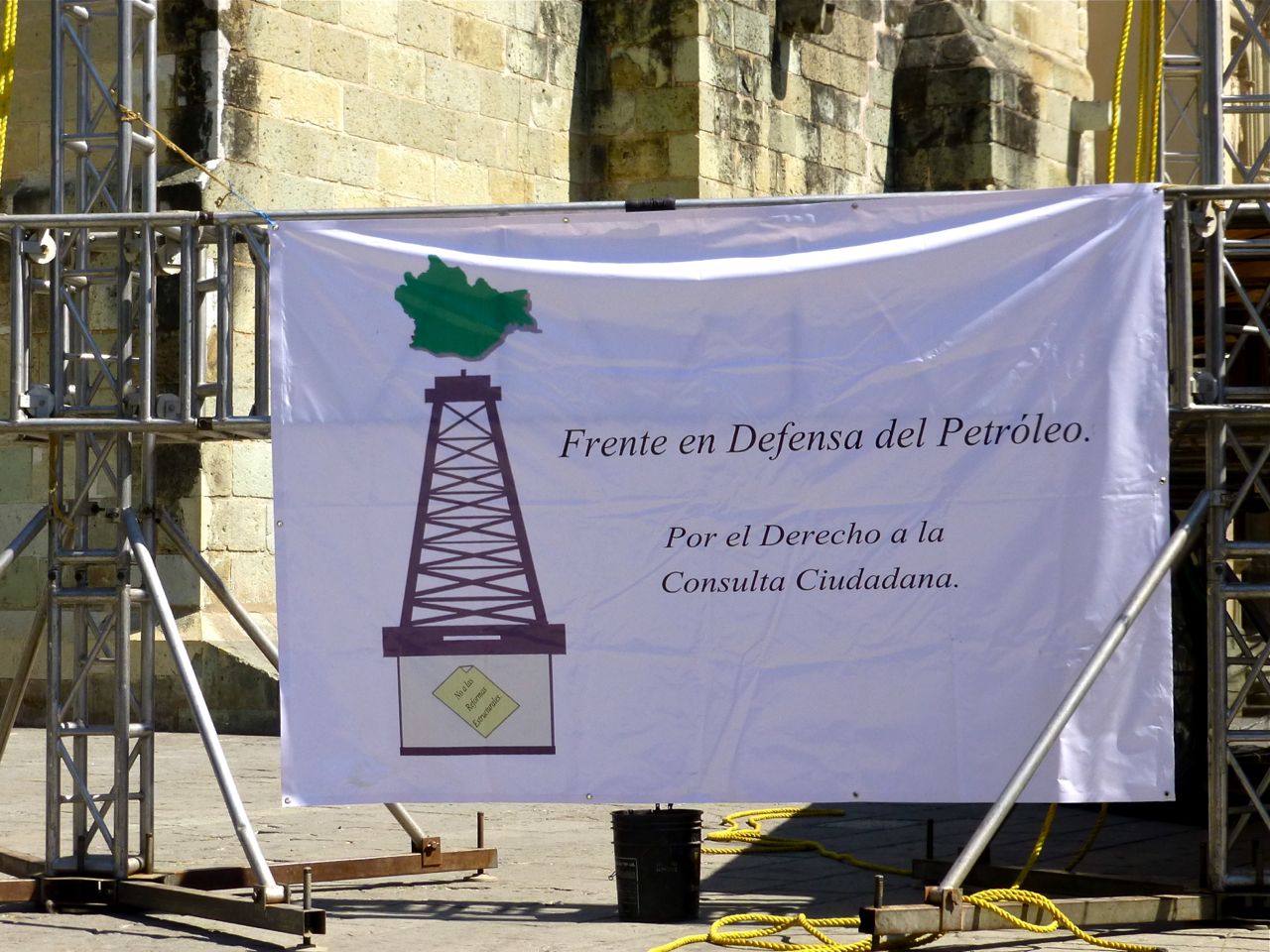
Elected in 2012, Peña Nieto has proposed sweeping reforms, including a previously mentioned education package modeled after the disastrous US, “No Child Left Behind Act.”  These unpopular reforms have citizens marching in the streets and calling for Peña Nieto’s head.  One of the reforms that Mexicans find most egregious is the proposal to open Mexico’s state-run oil industry, PEMEX, to foreign investment.  This is one that strikes at the heart of Mexican pride.

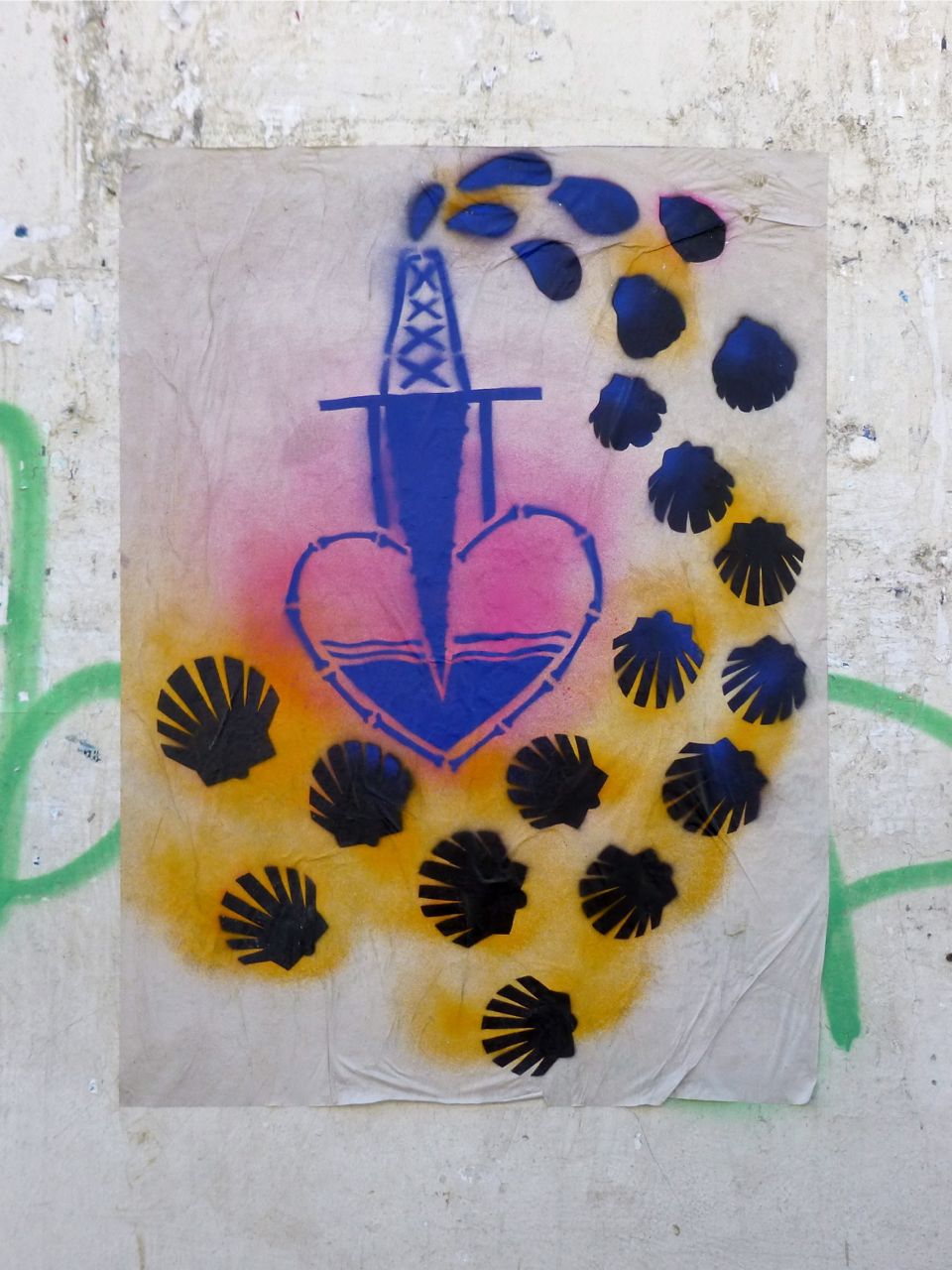
Poster of oil rig spewing oil from on top of a heart

A little background:  In 1938, in support of oil workers striking against foreign-owned oil companies, Mexico’s president, Lázaro Cárdenas, citing the 27th article of the 1917 constitution, expropriated the Mexican facilities of the United States and Anglo–Dutch oil companies, nationalized the oil reserves, and created the state-owned Petróleos Mexicanos (aka, PEMEX).  Mexico now owned and controlled this valuable resource.

Banner, "Frente en defensa del petroleo.  Por el derecho a la consulta ciudadana."

Back to the present:  According to the Huffington Post article, “The energy bill, however, faced massive protests when it passed through Congress in December. Demonstrators shouted ‘The homeland is not for sale!‘ as officials voted to allow private companies to exploit oil and gas reserves in the country, according to the Associated Press.”

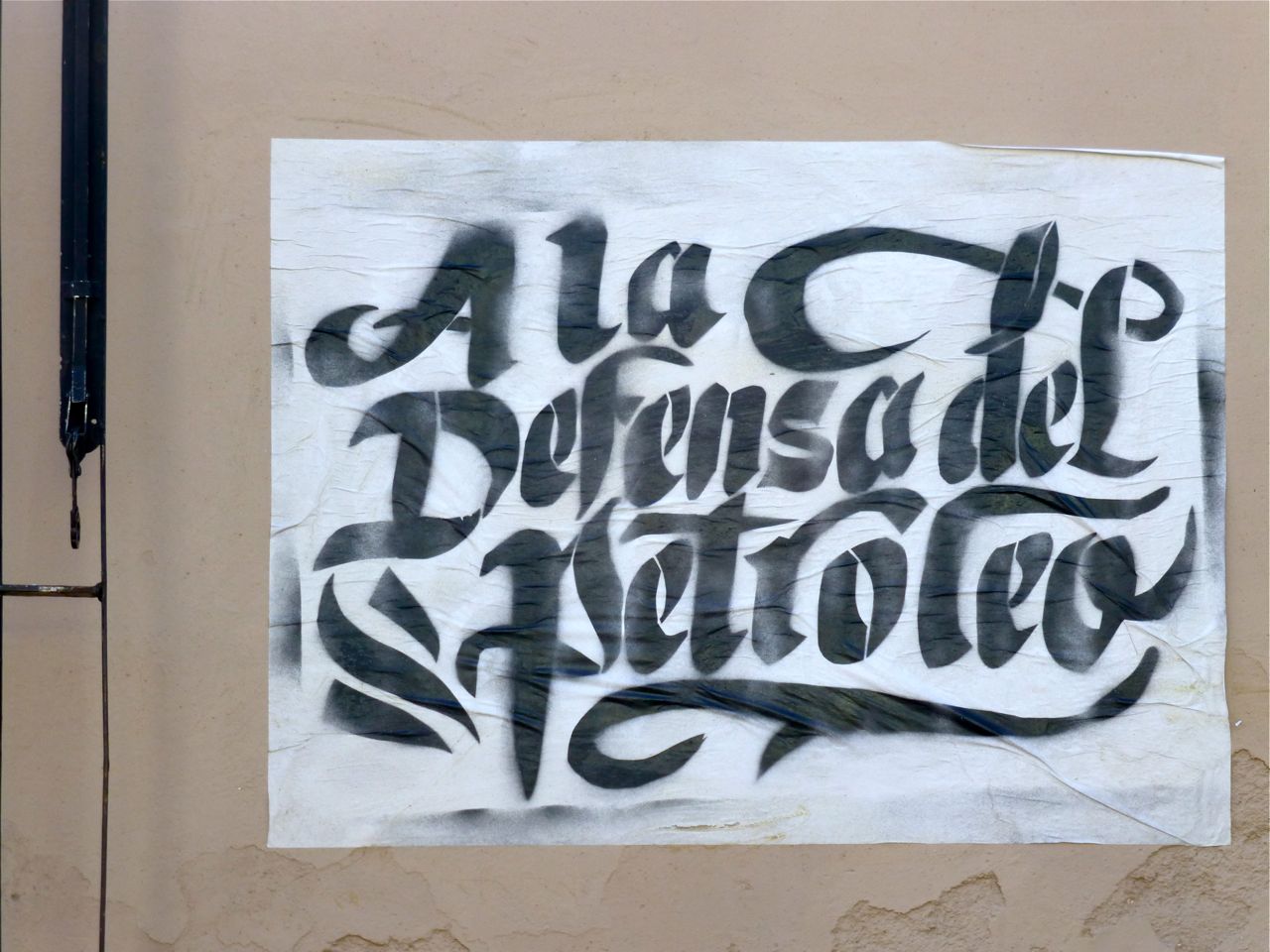
Poster, "A la defensa del petroleo"

In true Oaxacan fashion, marches have been held and banners, posters, and murals have gone up throughout the city to express the outrage and indignation felt by a majority of Mexicans at what they see as an attempt by the Peña Nieto government to sell-off their patrimony.

Of course, as the Time Magazine article illustrates, the US is applauding Peña Nieto and the actions of his ruling party.

Size doesn’t matter

What are you driving these days?  Size doesn’t matter when it comes to cool rides in Oaxaca…

The question is, do you dance with wolves while driving?

It’s all Greek to me

I’m SO done with this so-called, Polar Vortex!  I was supposed to fly into Albany, NY on Thursday night.  It’s now Saturday morning, I’ve gotten as far as Chicago, and killing time until tonight’s flight by sorting through sun-drenched, color-filled, warm-weather Oaxaca photos.  Even if the weather gods and goddesses are not cooperating, at least their cyber siblings are on the job providing WiFi — thus a new blog post.

Store front: Makedonia

This watch-repair, jewelry, and gifts (large or small) shop on Calle 20 del Noviembre is owned by Alekos Gatonas, originally from Macedonia.  He studied at the University of Chicago, met his Oaxaqueña wife, and eventually they moved to Oaxaca.  He and his family also own the event venue, “Zorba El Griego” and a Greek restaurant on the way to El Tule, “El Griego.”

By the way, “EΛΛΔΣ” translates into the Spanish word, “ellas,” which can be translated into English as “including.”

Day of love & friendship

After a day’s delay (thanks to the big snow storm), I’ll be spending Valentine’s Day enroute to the US East Coast to visit family.  However, I wanted to wish all my readers much love and friendship.

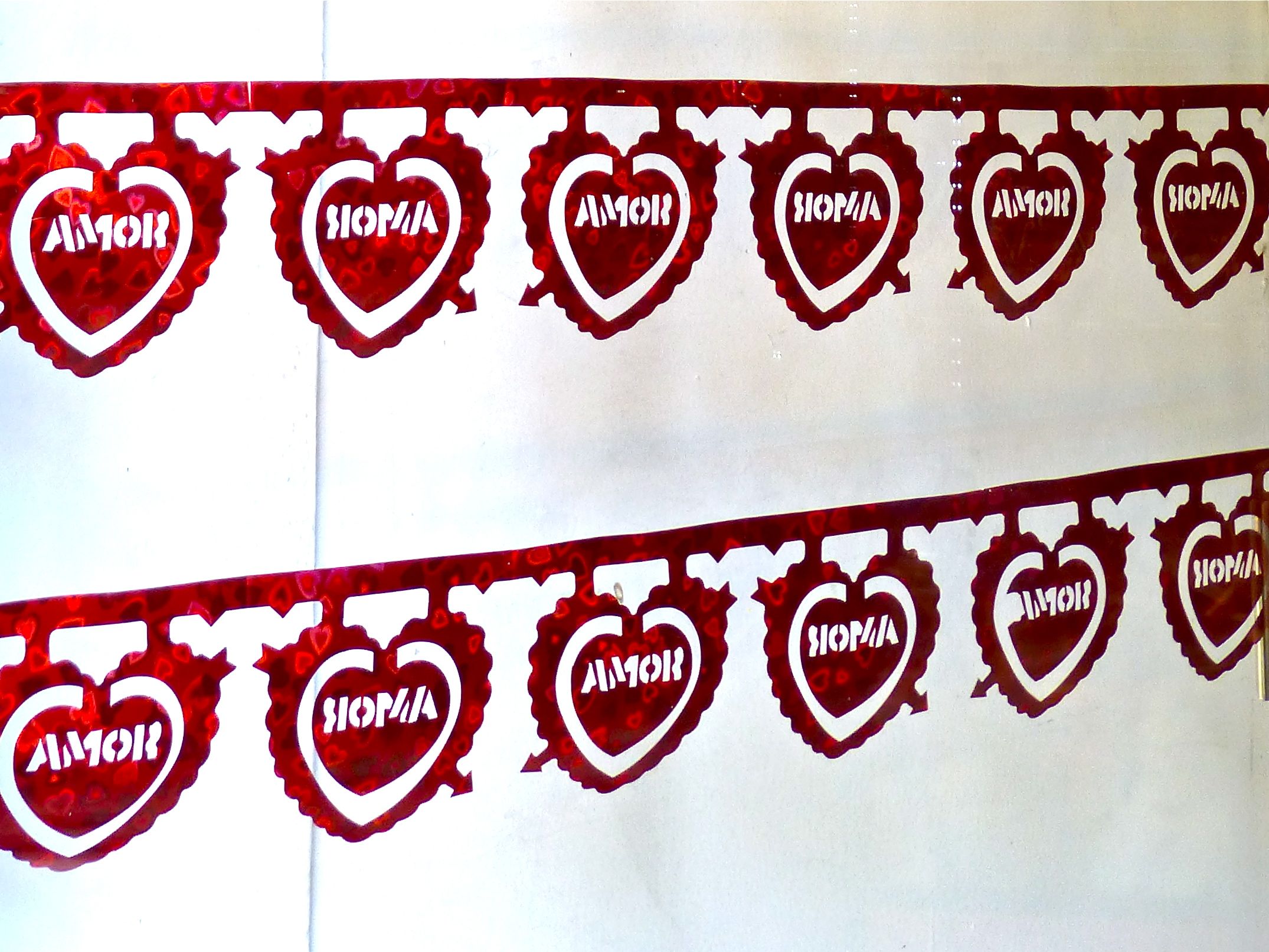
String of hearts with word, amor¡Feliz día del amor y la amistad!

It’s a jungle out there

A mono in camo, seriously???

P1010140

I guess it really is a jungle out there.  But, it isn’t easy to stay hidden when your buddy is laughing at you.

Just another day crossing the Plaza de la Danza on my way to the market.  As I keep saying, you just never know what you will uncover walking the streets of Oaxaca.

Sitting on top of the world

It’s amazing how sometimes light, shade, and a pristine backdrop can come together to highlight something you have looked at hundreds of times, but have never really seen.

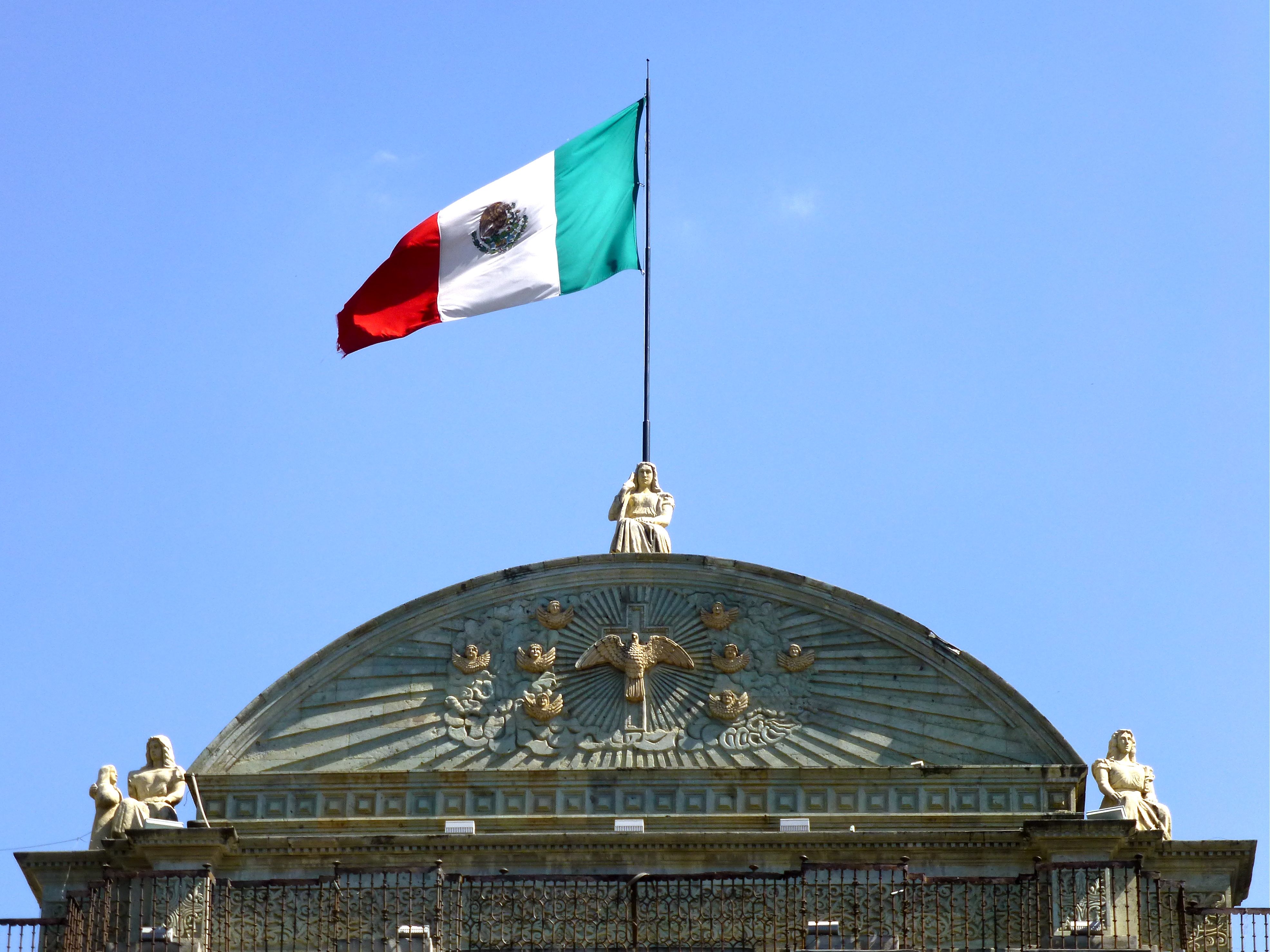
Early last week, on a stunningly clear blue sky day, I passed the La Catedral de Nuestra Señora de la Asunción (the Cathedral of Our Lady of the Assumption) and stopped dead in my tracks.

Mexican flag atop Cathedral

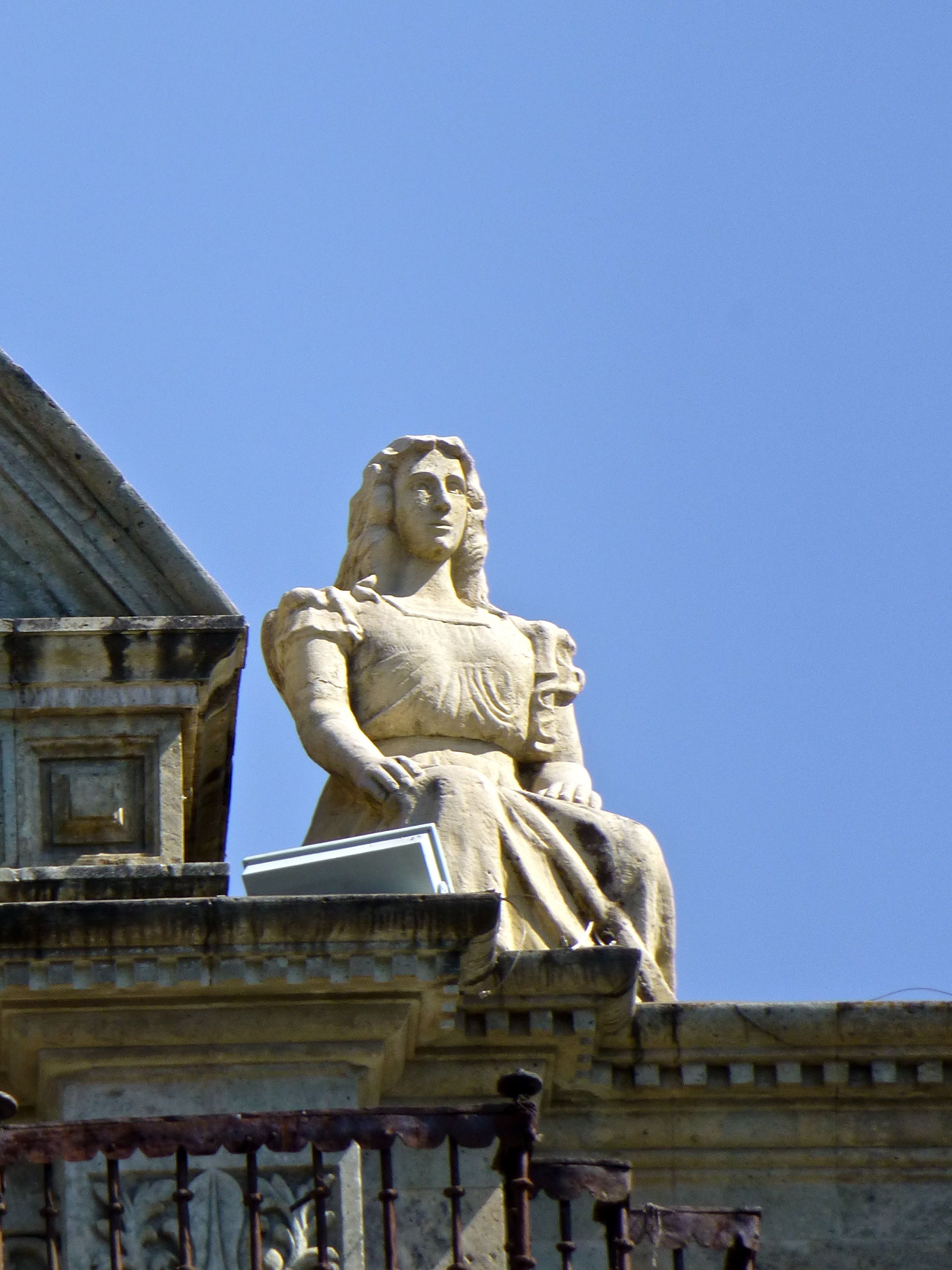
The flag must have been what initially caught my attention — it’s not an everyday occurrence — but what held my gaze were the three gals atop the Cathedral.

Seated female statue on top of Cathedral

I wondered, are they new?

Standing female statue on top of Cathedral

Once home, I scrolled through old photos I’d taken and sure enough there they were in every photo of the Cathedral’s facade.

Seated female statue with arm around child on top of Cathedral

Hmmm…  How could I have missed their imposing presence?

Now to find out who they represent.  (You can take the librarian away from the reference desk, but you can’t take the reference questions away from the librarian!)  Anybody out there have any answers???

Today, Día de la Candelaria (aka, Candlemas, Presentation of Jesus at the Temple, and Feast of the Purification of the Virgin), marking the end of the Christmas season, is being celebrated.  Families dress their Niño Dios (baby Jesus) figurines in new clothes and bring them to church to be blessed.

2 Niño Dios in window of store

Niño Dios dolls come in a variety of sizes and are sold throughout the year at the ubiquitous shops that sell religious articles.  I spotted these across Independencia while dining on my previously mentioned nieves.

After more than two weeks of frente fríos (cold fronts) sweeping down from el norte, the weather has turned downright hot, with temperatures in the mid 80s (F).  What’s a person to do?  Today, this person headed to her favorite ice cream parlor, Nevería Malena at Jardín Socrates.

I previously mentioned this nevería when the Jardín underwent an image enhancement a year and a half ago.  And, as before I ordered leche quemada (burnt milk) and tuna (nopal cactus fruit).  It may not have been the most nutritious lunch, but it hit the spot!

Parfait glass with leche quemada and tuna

As you can see from the photo, Nevería Malena now sports spiffy new seat covers for the backs of their wrought iron chairs.  And, on the back of the laminated menu of flavors, the story of Malena and the “tradition that flatters your palate” is told.  (My translation follows.)

Placard with an image of Señora Malena and a granddaughter

Señora Malena is the 5th child of Ángel Armengol and Anacieta Hernández.  They taught her the craft and soon she became one of the most prestigious and famous for the seasoning and flavors of her frozen dessert.  

Initially, Malena walked around the Zócalo, offering her frozen dessert in glasses.  Later she relocated next to the Cathedral where she continued to offer her delicious frozen dessert.  (Note:  At that time natural ice was brought from the community of “La Nevería” in the Sierra Juárez.)  She then moved to the Alameda de León to a space which already had a laminated roof.  It was here she affectionately began to be called, “Malenita” and the stall was named Malena.

Malena became famous for traditional flavors like burnt milk, sorbet, walnut, pear, and lemon.  Fame grew with an invitation by the Secretariat of Tourism to participate in the “Week of Oaxaca in Mexico,” at which Malena participated for 15 years.  The stall subsequently was transferred to “Socrates Garden” where it is currently run by her children and grandchildren, with love and affection — to continue the tradition and increase the variety of flavors.

Hanging plaques listing flavors

And, increase the flavors they have!  So many to choose from.  Hmmm… next time, Beso de Ángel or Diablo???