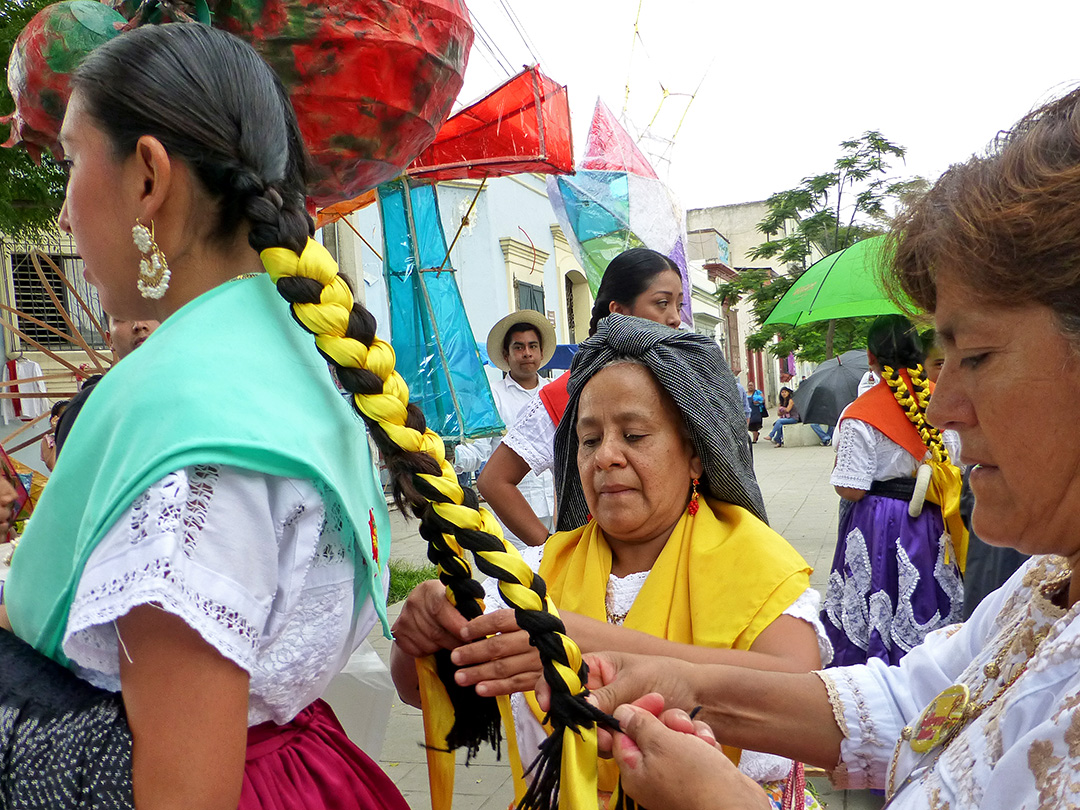
Before the rains came to put a damper on Saturday’s Guelaguetza pre-parade photo-ops, there were these moments with with moms and dads readying their impossibly cute kids for the desfile.
This last was my favorite moment. I think dad was hoping for a lovely portrait of his beautiful daughter in all her finery, but as he began to take her digital device away, she gave him a look that said, “If you think your going to get a smile out of me, you’ve got another think coming.” So, I said, let her keep it — still no smile, but there was another hour before the scheduled start time and parental experience told me, better to keep her occupied!
It was all about the braids as the delegations and storm clouds gathered along Independencia for the Guelaguetza desfile (parade).
The heavens opened, umbrellas unfolded, rain ponchos were donned, and cover was sought by spectators and delegations, alike. But, stay tuned, the show DID go on!
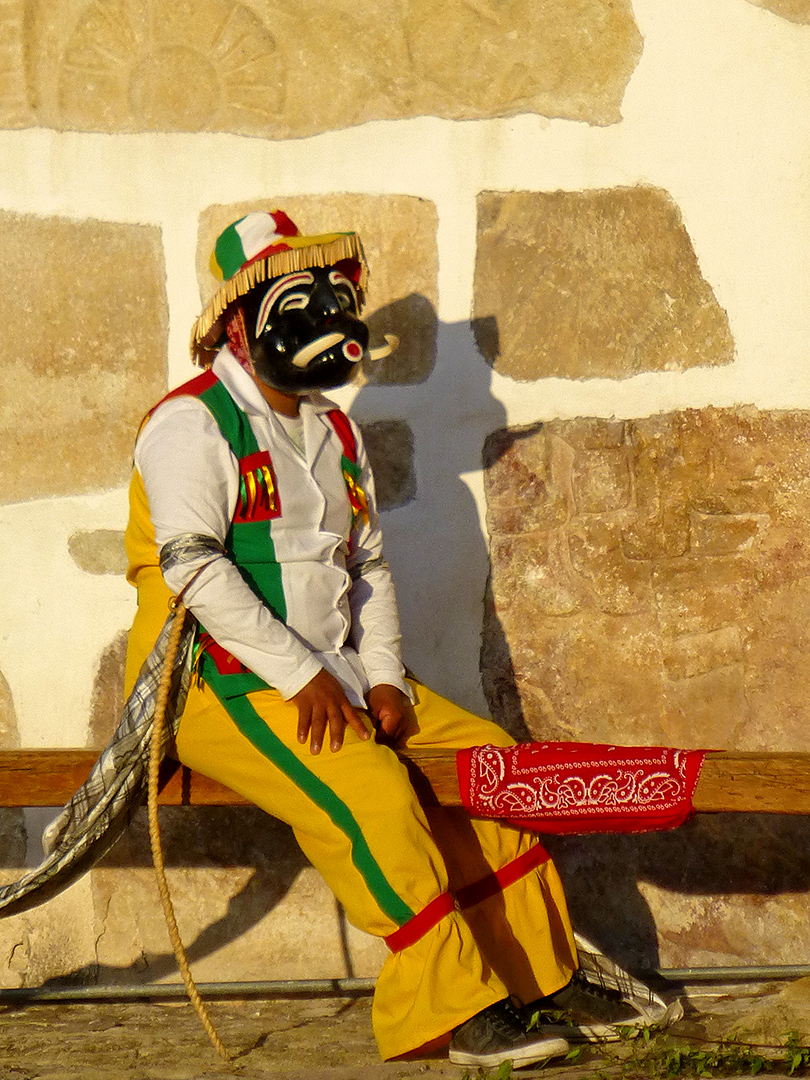
I love the carved masks worn in many of the traditional dances in Mexico and, thus, made a bee-line to the current exhibition at the Palacio de Gobierno, Máscaras de Juxtlahuaca — part of the month-long celebration of Guelaguetza.
Most of the masks in the show are the work of Alejandro Guzman Vera, a native of Santiago Juxtlahuaca in the Mixtec region of Oaxaca. He was born in 1972 and, as a young child, made his first mask of cardboard and painted it with crayons. At age 12, he carved his first wooden mask. He went on to study at the Escuela Nacional de Artes Plasticas and has become one of the premier mask-makers in Mexico. He has exhibited world-wide and is one of the honored Grandes Maestros del Arte Popular de Oaxaca, profiled in the book by the same name. By the way, he is not only a mask-maker, but also an accomplished musician and is playing a role in the rescue of the traditional music of Juxtlahuaca.
(Click on an image to enlarge it and to enable a slideshow.)
Dancers from Santiago Juxtlahuaca will be performing the Danza de los Rubios in the morning Guelaguetza presentation on July 27 and will, no doubt, be wearing masks, cracking their whips, and jingling their spurs during the Procession of Delegations on the preceding Saturday. For a glimpse at the Danza de los Rubios and to get a feeling for some of the music Alejandro Guzman Vera is involved in saving, here is a snippet from last year’s Guelaguetza performance:
Masks are donned not only for the Danza de los Rubios, but also for the Danza de los Diablos and the Danza del Macho, which are performed at various annual festivals in the region. Once carved and painted, the wooden masks can be embellished with glass eyes and real animal teeth and horns of bulls, goats, or deer. They are an amazing sight to see!
The Máscaras de Juxtlahuaca exhibition at the Museo del Palacio in Oaxaca city closes August 28, 2015.
(This blog post is especially for you, Jane and Ken!)
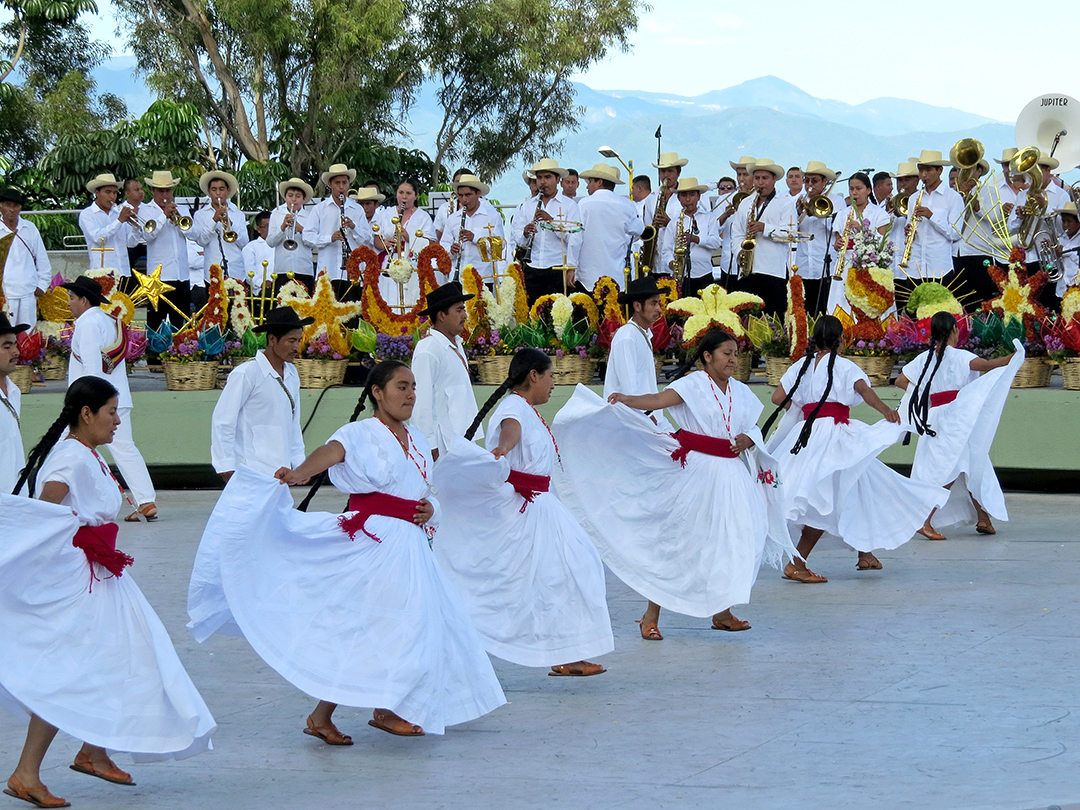
Next Monday, the the 83rd annual modern Guelaguetza will commence on Cerro Fortín. And so, the last of my photos from last year’s evening performance…
I’ll resume my coverage with the San Paliluú of San Antonio Huitepec a village from the Valles Centrales region.
San Pedro Comitancillo performed the Danzas y Sones de Mi Tierra from the Istmo de Tehuantepec region.
And then there was the Danza de la Pluma. Moctezuma, Danzantes, Malinche, and Doña Marina from San Jerónimo Tlacochahuaya, in the Valles Centrales region, performed one of the dances that reenacts the story of the Conquest.
Loma Bonita in the Tuxtepec region, very near the the state of Veracruz, then took the stage with its rousing Rinconcito Oaxaqueño.
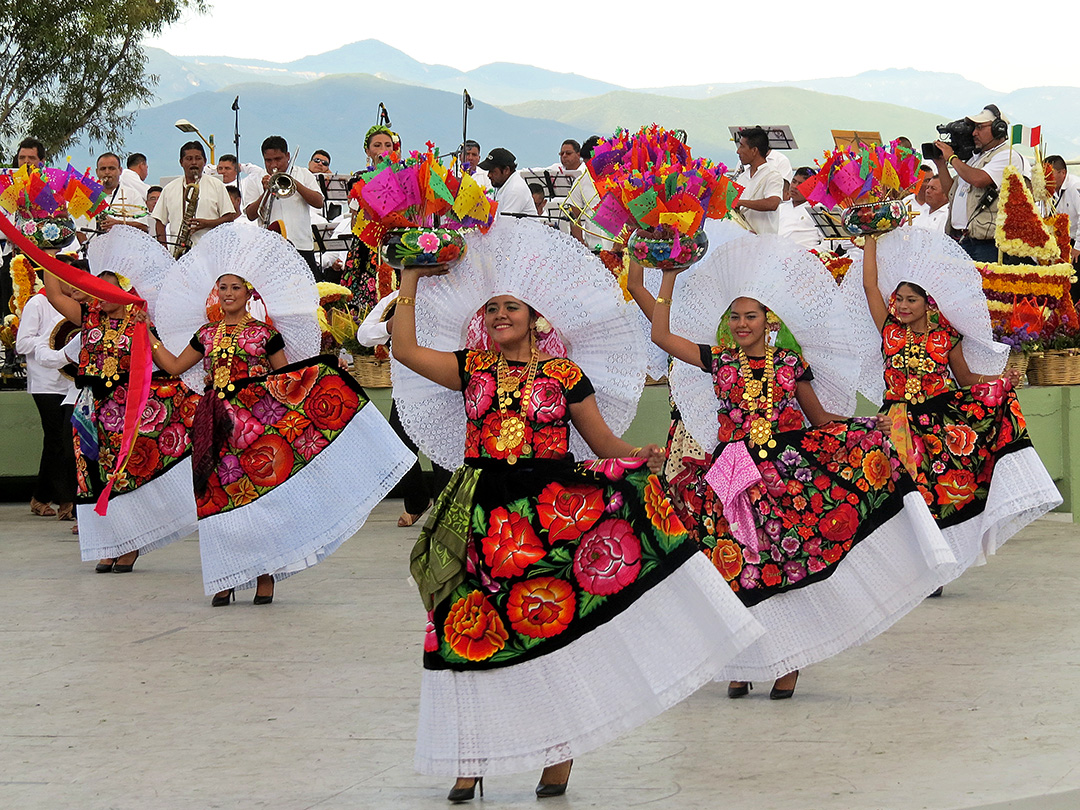
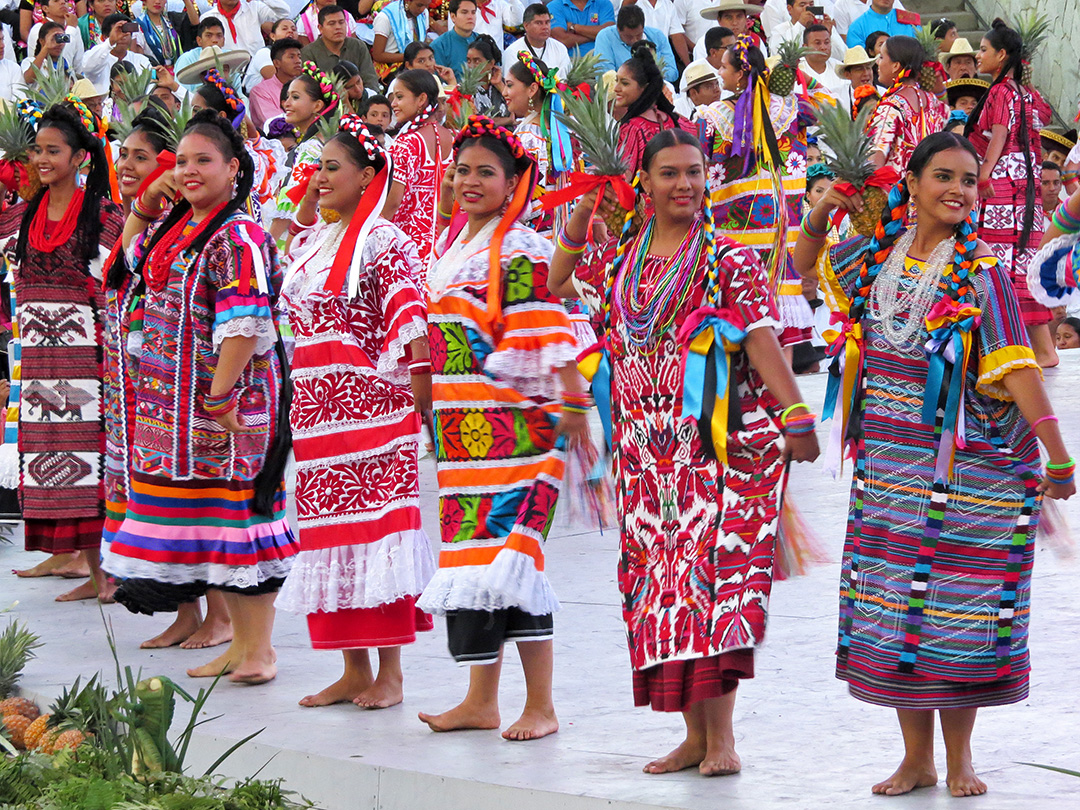
The sun began to set as 36 beautiful women from San Juan Bautista Tuxtepec in the Papaloapam region, wearing their with brightly colored huipiles, took to the stage for the crowd pleasing Flor de Piña.
Darkness began to fall (making for challenging photography from 1/3rd of the way up from the Guelaguetza Auditorium stage), as the lively Sones and Chilenos danced by the delagation from the Costa region village of San Juan Cacahuatepec kept the energy flowing.
La Dote y el Tercel Día e Fandango from the dancers of San Antonino Castillo Velasco in the Valles Centrales region closed the evening’s performances.
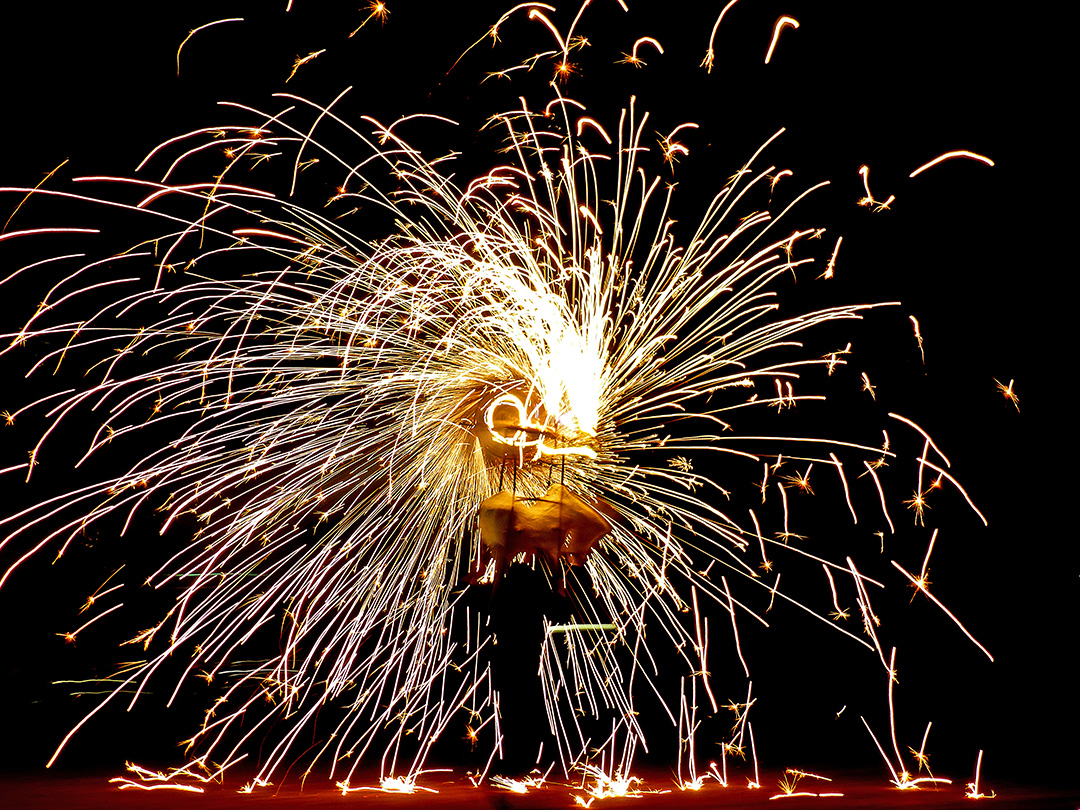
As fireworks exploded over the Guelaguetza Auditorium, the band played, the audience took to its feet, and delegations reclaimed the stage to dance the evening’s Guelaguetza performance to a close.
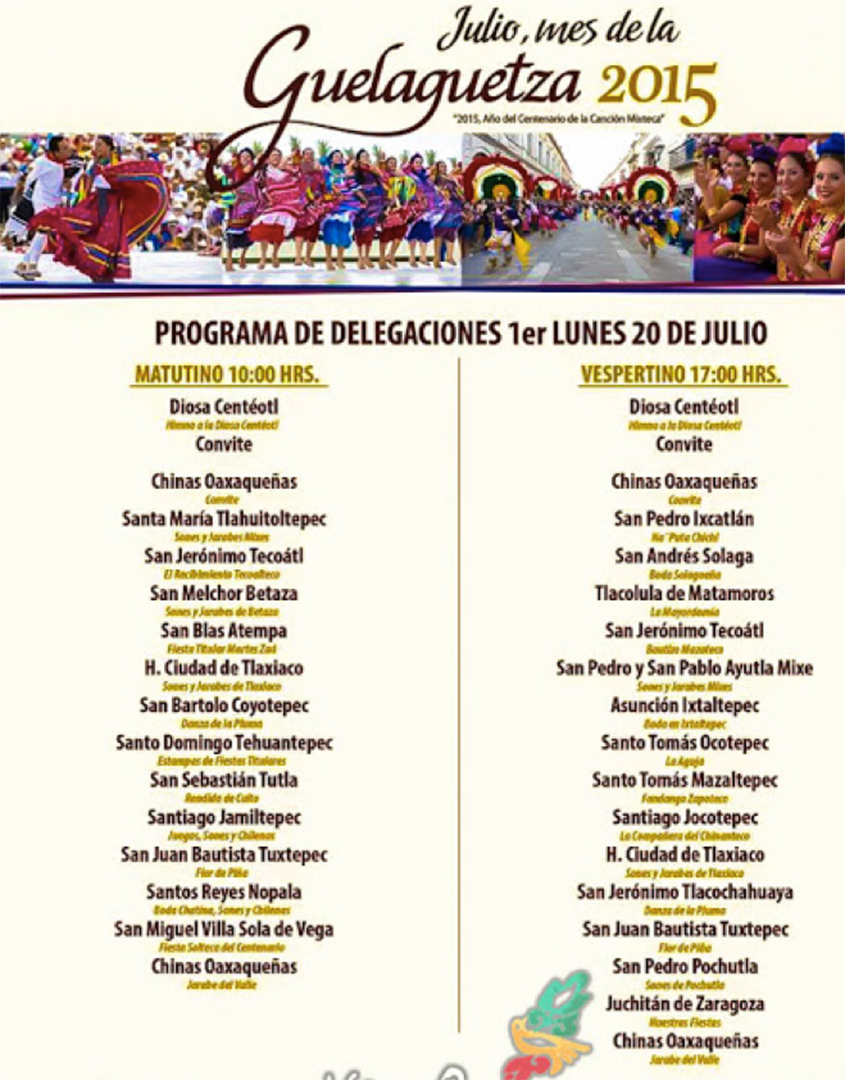
Calendas (parades) are already occurring on the city’s streets and banners advertising Guelaguetza events are hanging from street lights on the major calles. Below are just a handful (or two) of the activities coming up. (Click each poster for a larger and more readable image.)
For a more complete list, check out this schedule of events from the Secretaría de Turismo y Desarrollo Económico (Ministry of Tourism and Economic Development):
Storm clouds were gathering on Tuesday afternoon, as we drove out to Teotitlán del Valle for this year’s first performance of the Danza de la Pluma. However, the clouds were chased away and the plaza in front of Templo de la Preciosa Sangre de Jesucristo was bathed and blessed with the light and shadows of the golden hour.
Ahhh…
(ps) For a Moctezuma eye view of the dance, check out Chris’s Moctezuma Cam post.
If you want an up close and personal fireworks experience, come to Oaxaca. Of course, there are no guarantees you won’t find yourself in the line of fire. No barricades, no yellow caution tape, no police! I’ve seen hair singed, had a friend get pinhole burns on the inside of his glasses, and last night a projectile came careening toward us and had me ducking for cover. However, as the saying goes, “no harm, no foul” and the spectacle was espectacular!
It began with 45+ minutes of the quema de toritos and angelitos.
They were followed by a spectacular castillo, a “firefall,” and traditional fireworks exploding against a clear black sky.
Late Tuesday night during this week’s fiesta honoring la Preciosa Sangre de Nuestro Señor Jesucristo. It was a fabulous — well worth spending the night in Teotitlán and staying up way past my bedtime!
Last night, all was in readiness in Teotitlán del Valle for most important fiesta of the year — honoring la Preciosa Sangre de Nuestro Señor Jesucristo (the Precious Bloodof Our LordJesus Christ).
Specially cut papel picado fluttered from the church.
Marmotos waited in the wings.
And canastas, lovingly decorated by their owners stood ready to be carried through the streets of Teotitlán del Valle.
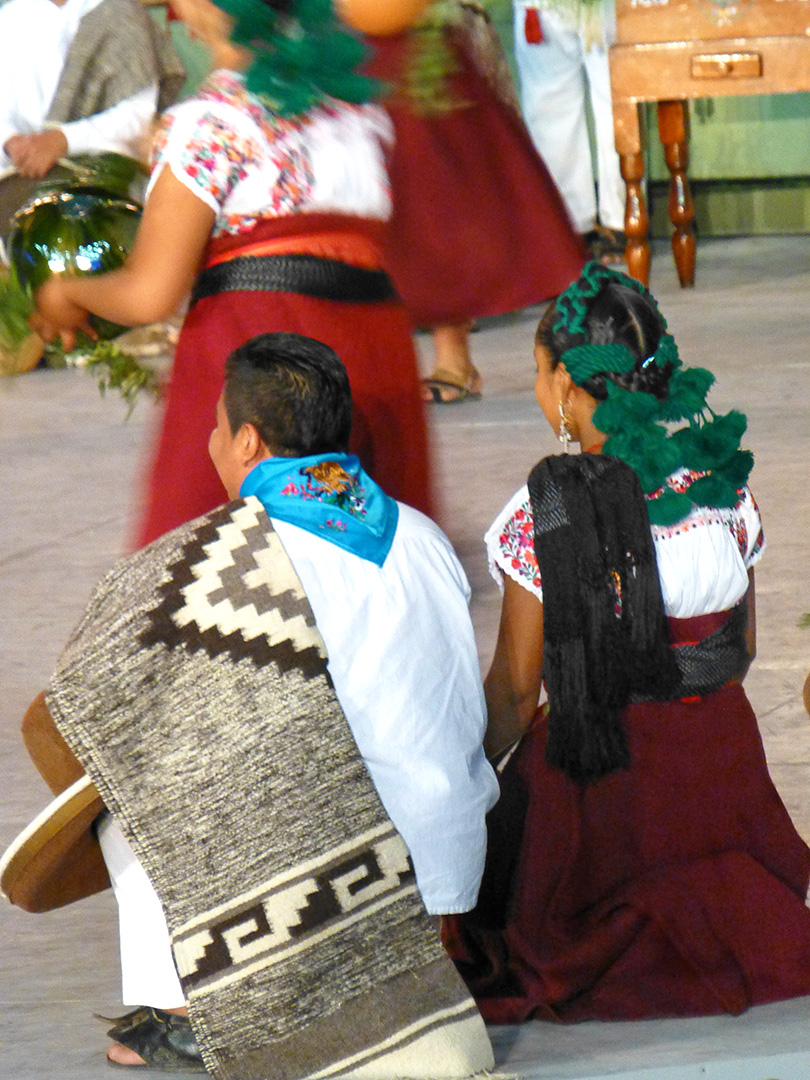
Last year, wearing the whitest of white huipiles, skirts, shirts, and pants, the delegation from San Melchor Betaza, in the Sierra Norte Region of Oaxaca, danced the sones and jarabes from their community.
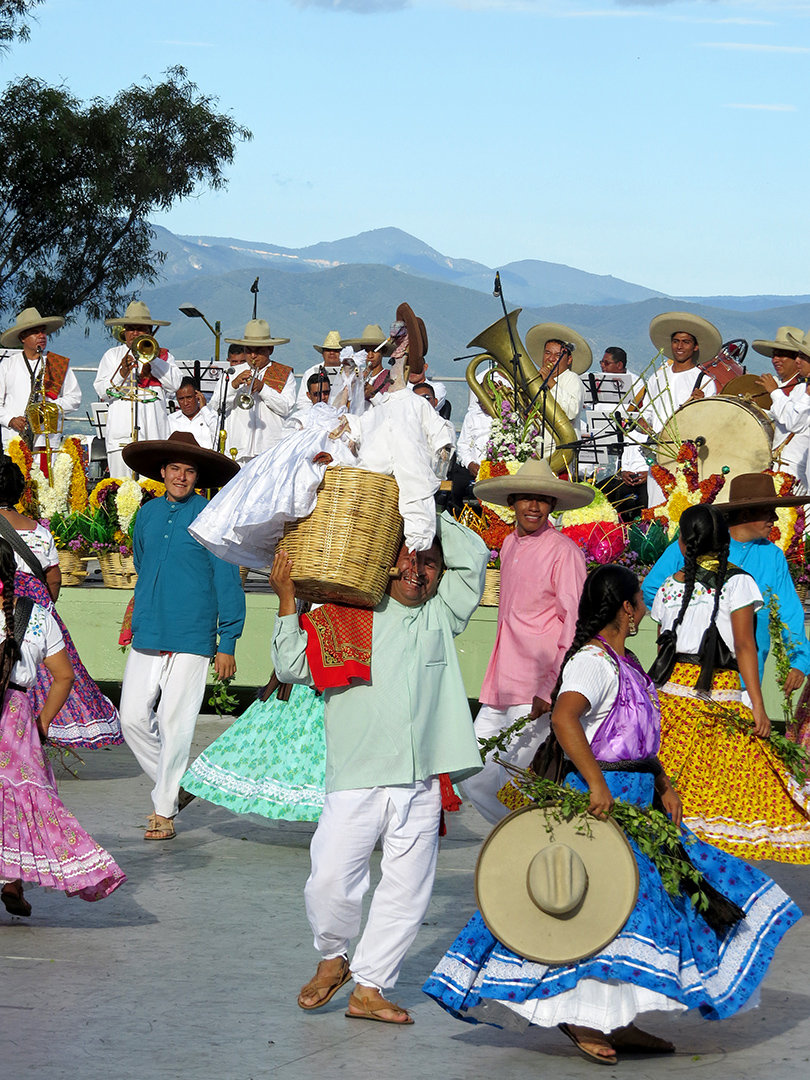
I don’t know how the turkey felt as he took center stage when Ocotlán de Morelos, from the Valles Centrales Region, performed La Llevada del Guajolote, a dance dating to the 19th century.
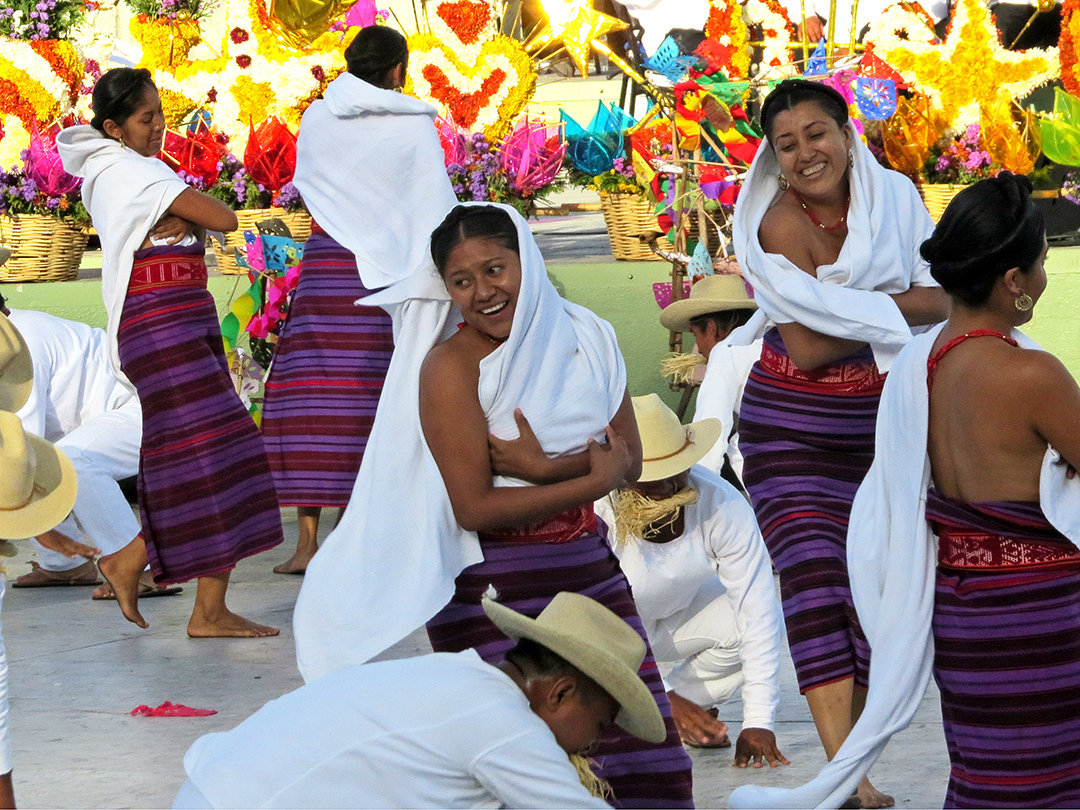
The dances by the delegation from San Andrés Huaxpaltepec, from the Costa Region, offered the action of the Fandango de Cajón and the grace of the Mayordomía with women wearing stark white mandiles (shawls) and caracol dyed purple pozahuancos (wrap skirts).
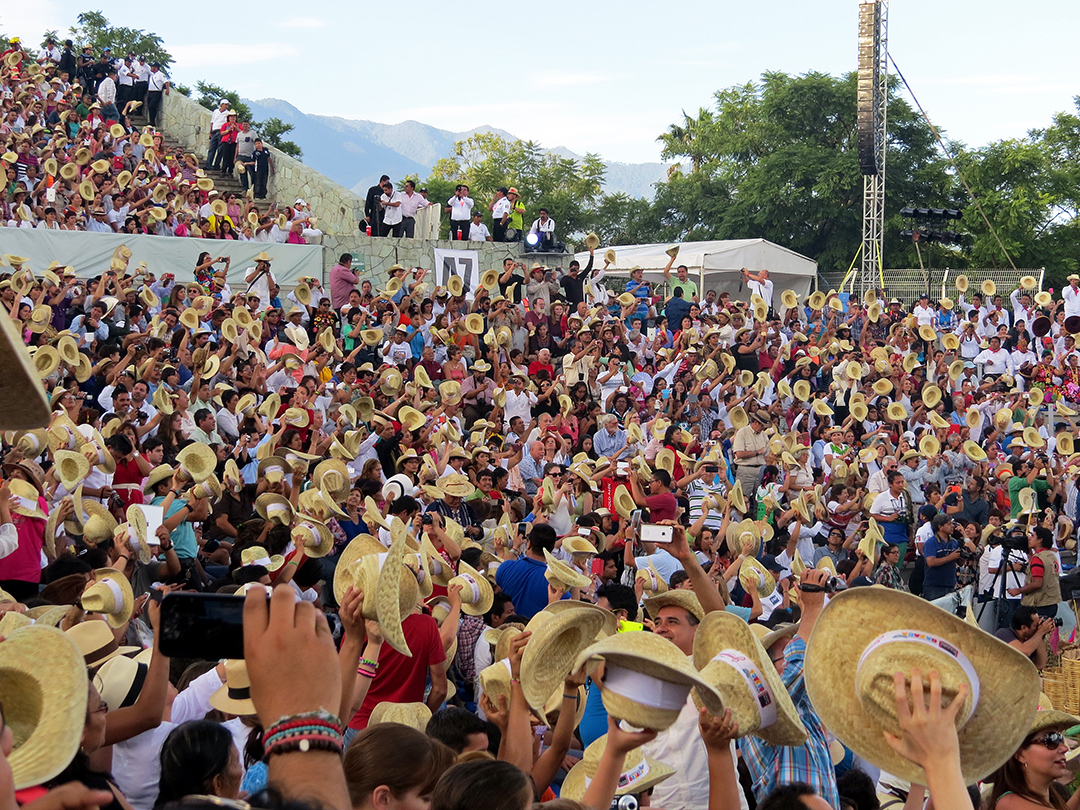
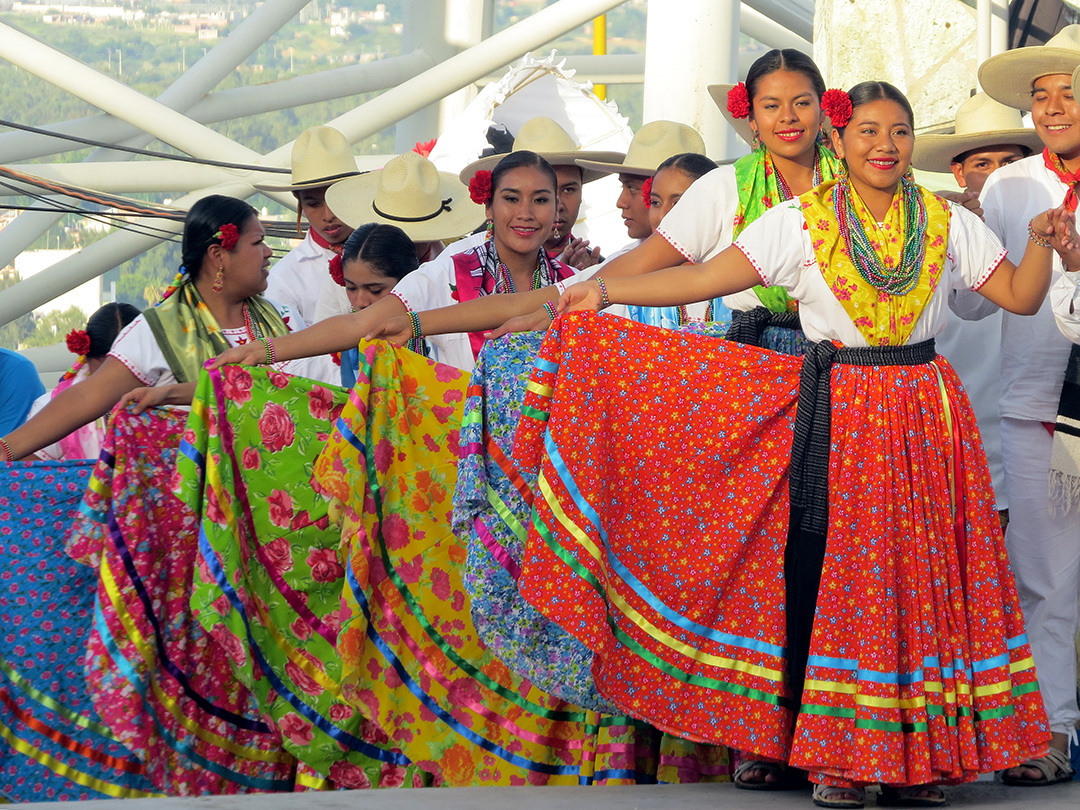
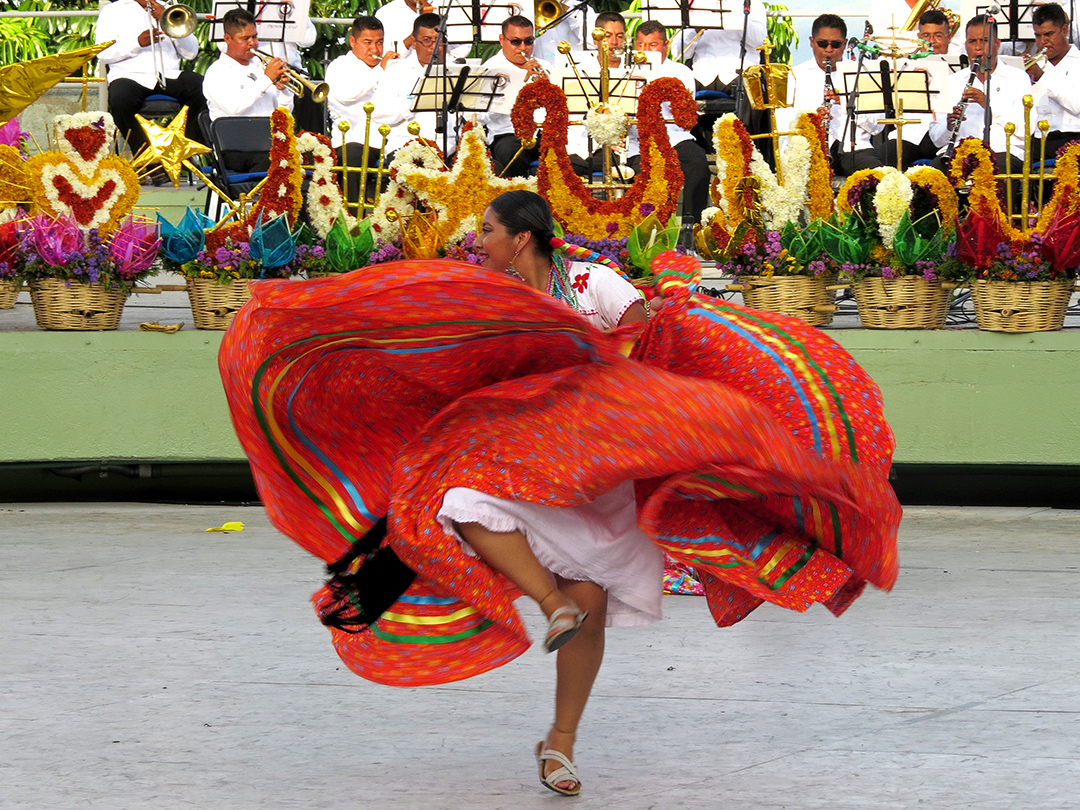
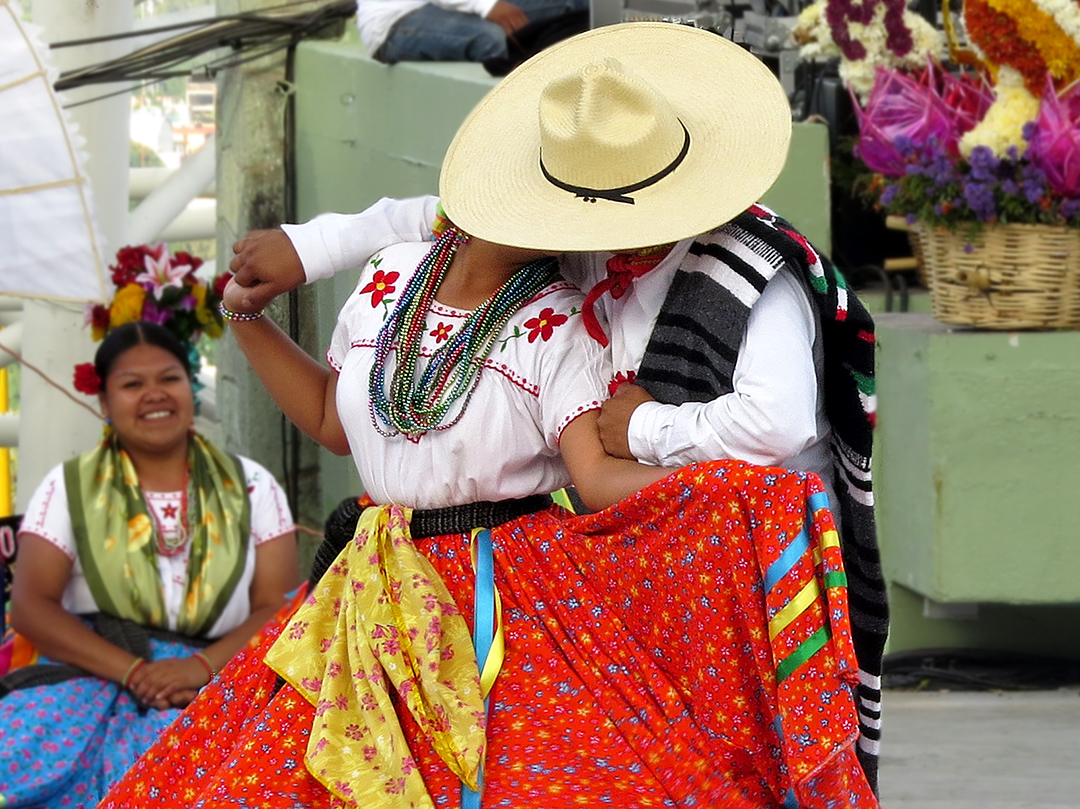
As the first few notes of the Canción Mixteca were played, the audience rose and, as one, began waving their hats and singing the beloved song of the Mixteca Region. With the audience warmed up, the gals from Huajuapan de León began dancing the Jarabe Mixteco — twirling and tempting the guys with their flirty skirts.
Click HERE for last Monday’s part 1. Stay tuned for more next Monday, as the countdown to this year’s Guelaguetza festivities continues.
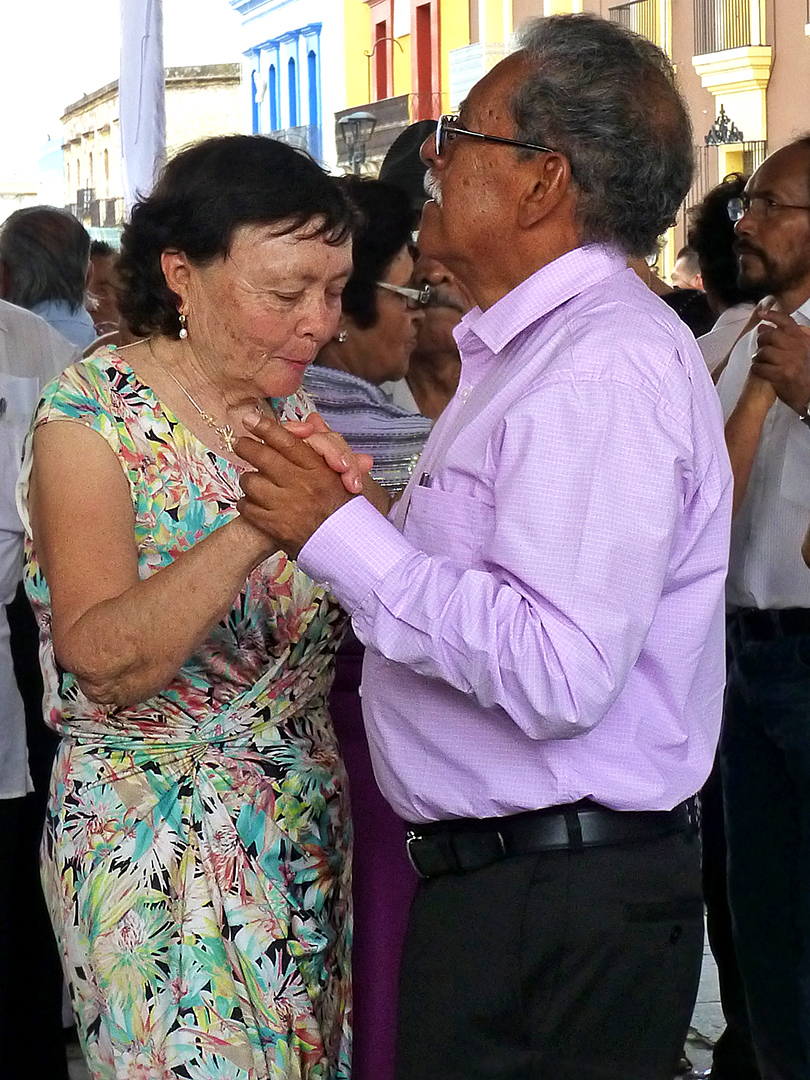
Last Sunday, Oaxaca bid adiós to the 10º Nacional Festival de Danzón, the stately dance from Cuba that has captivated Oaxaca. Alas, I only managed to catch the very end. But, as always, I was charmed by the formality and style and intensity and joy — a tradition kept alive by those in their latter years…
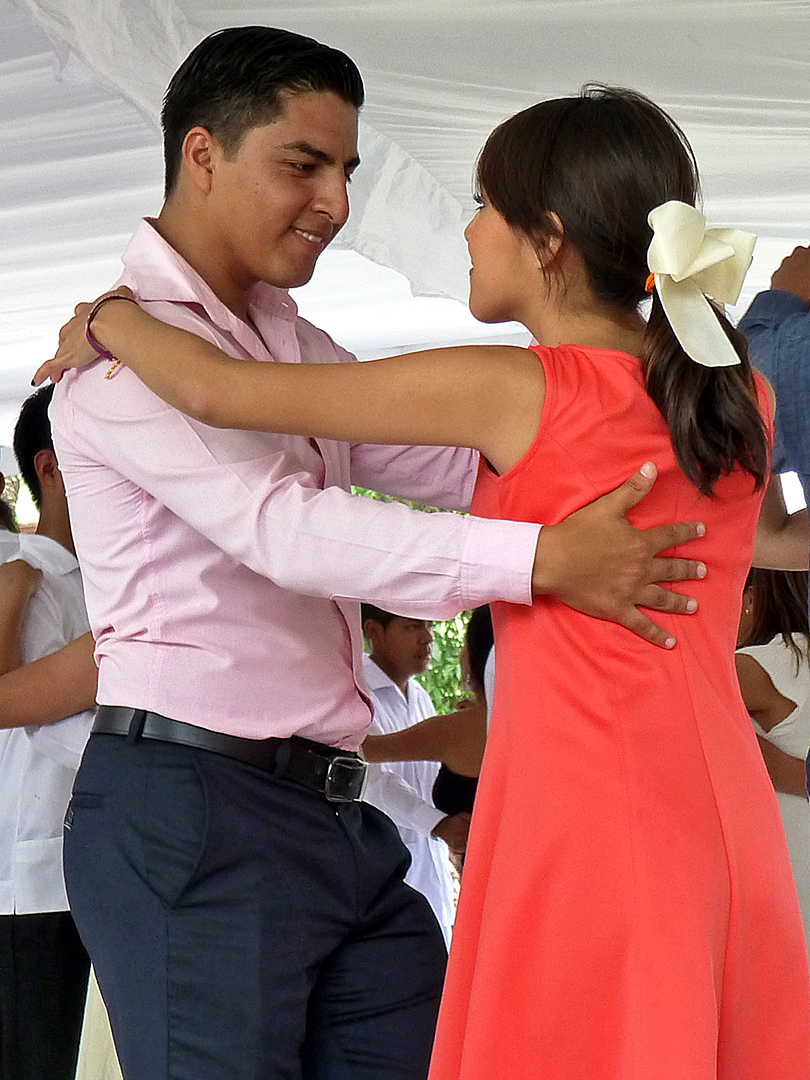
… and by the young.
Several well-known danzones were composed Amador Pérez Dimas from Villa de Zaachila, ten miles southwest of Oaxaca city.
For a taste of danzón, here is brief snippet from the close of the festival. By the way, the band is Banda Santa Cecilia from Teotitlán del Valle, a band we will be hearing several times next week during the the multi-day fiesta honoring Preciosa Sangre de Nuestro Señor Jesucristo.
If you are in Oaxaca, you can experience Danzón for yourself on Wednesdays at 6:30 PM, either under the laurels on the Zócalo or on the Alcalá near Santo Domingo, depending on the state of the Zócalo — occupied or not occupied.
Three weeks from today, despite the Never-ending tale of the velaria, the 83rd annual Guelaguetza performances on Cerro Fortín commence. Yikes, was it really almost a year ago that one of my childhood BFFs and I walked up the hill to the auditorium to revel in the music, costumes, dances, view, fireworks, and all-around conviviality of festivities? There is always so much going on during the last two weeks of July, that I only got around to posting a few photos from that evening. Today, and for the following two Mondays, I’m going to attempt to remedy that. Better late than never!
The delegation from the Cañada region of the state, Huautla de Jimenez, danced to Sones Mazatecos…
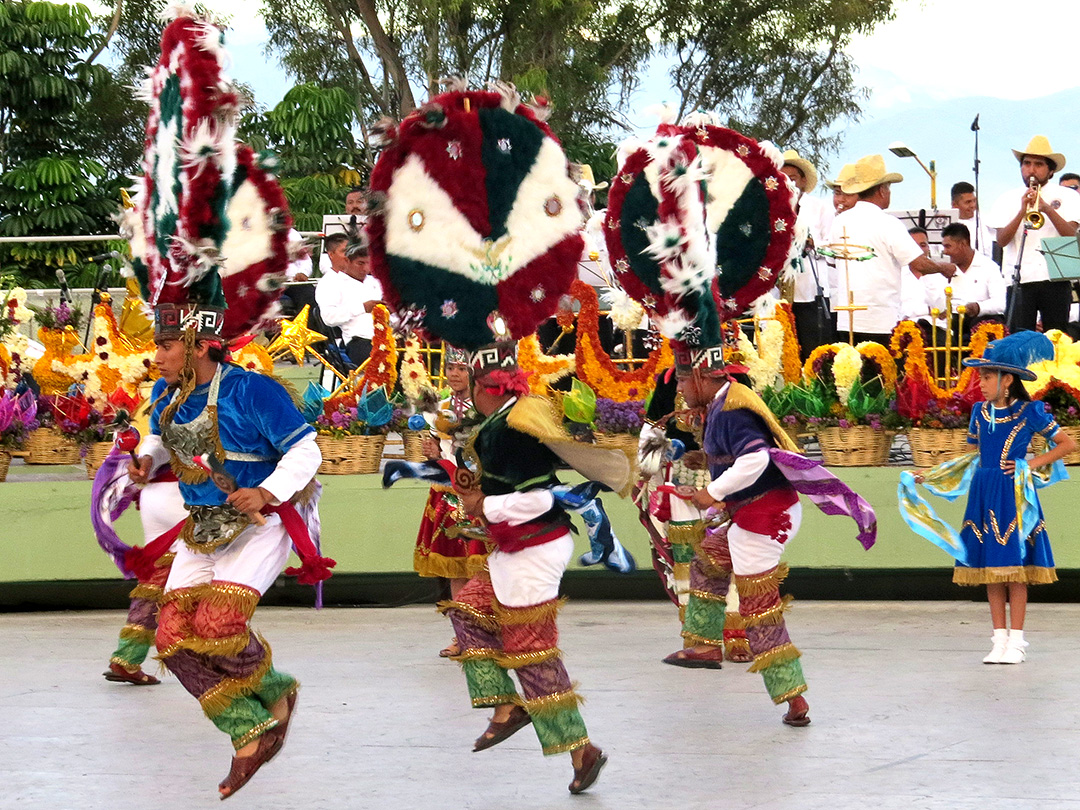
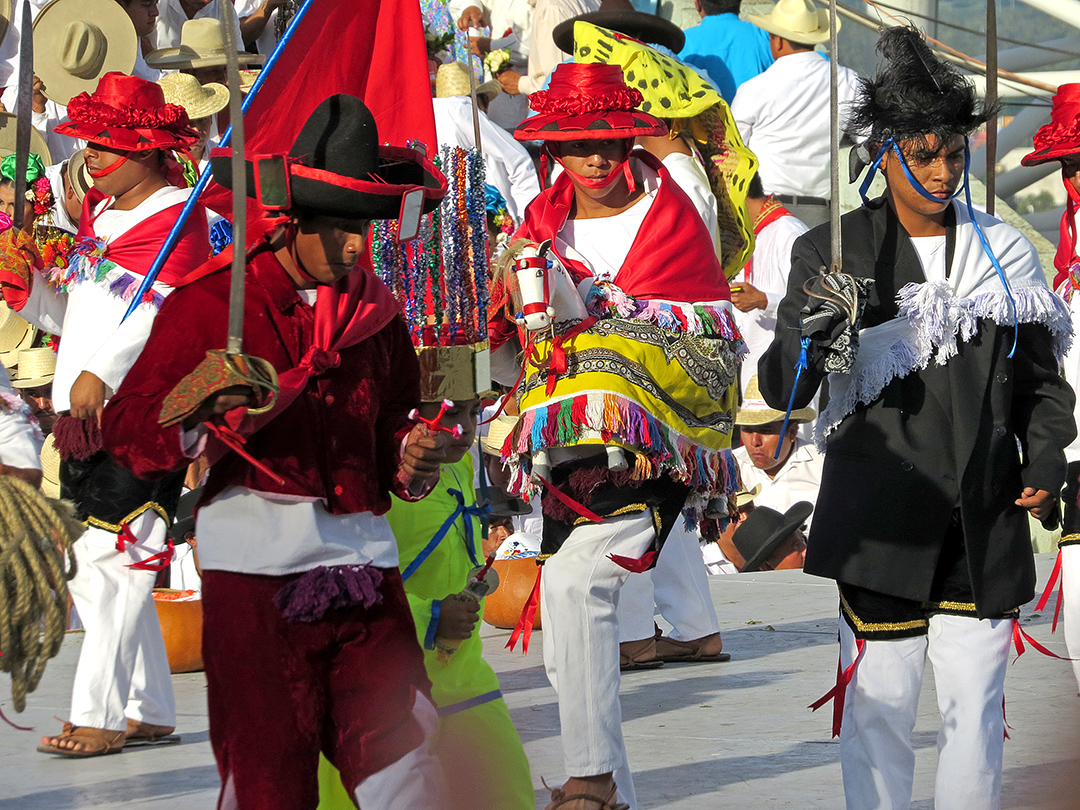
The dancers from Santiago Juxtlahuaca, in the Mixteca, performed the rip-roaring Danza de los Rubios…
And, from the Istmo de Tehuantepec region, the beautiful women and dashing men from Ixtepec presented Vela “Esmeralda”…
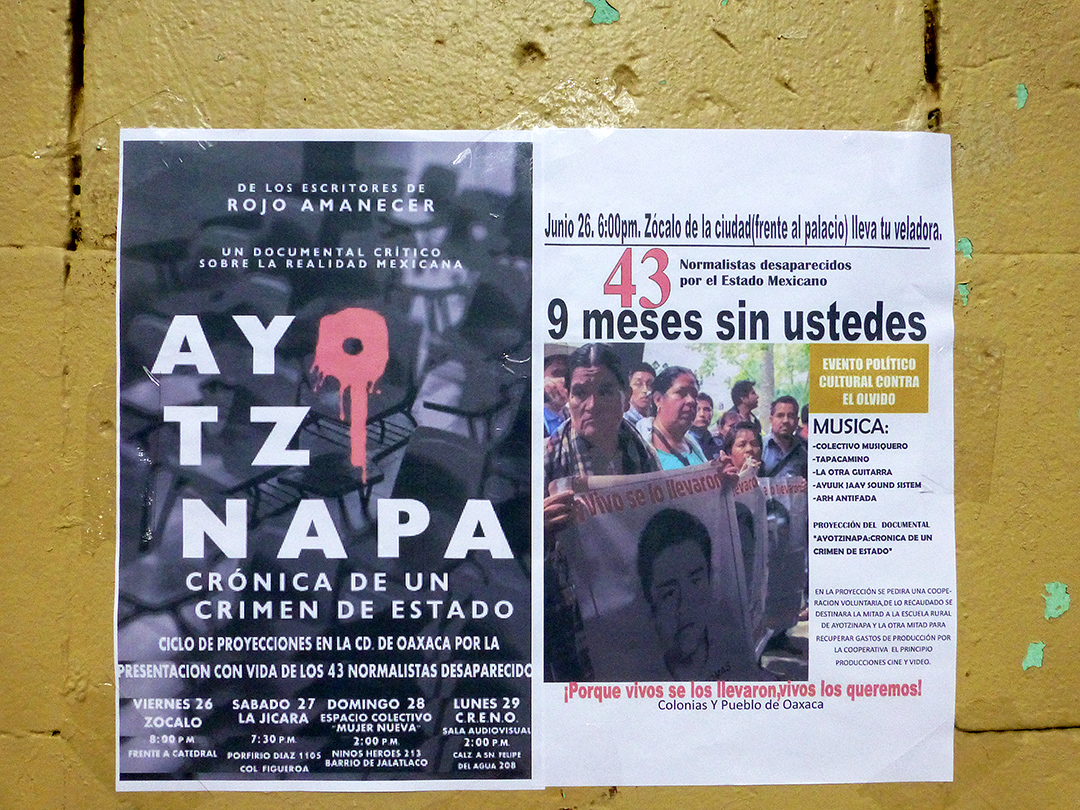
It’s been nine months since 43 students from the Escuela Normal Rural Raúl Isidro Burgos teachers’ college in Ayotzinapa, Guerrero went missing — a traumatic, heartbreaking, and disgraceful anniversary that isn’t going unnoticed. The Missing Mexican Students Case Is Not Closed For 43 Families, nor for the people of Mexico.
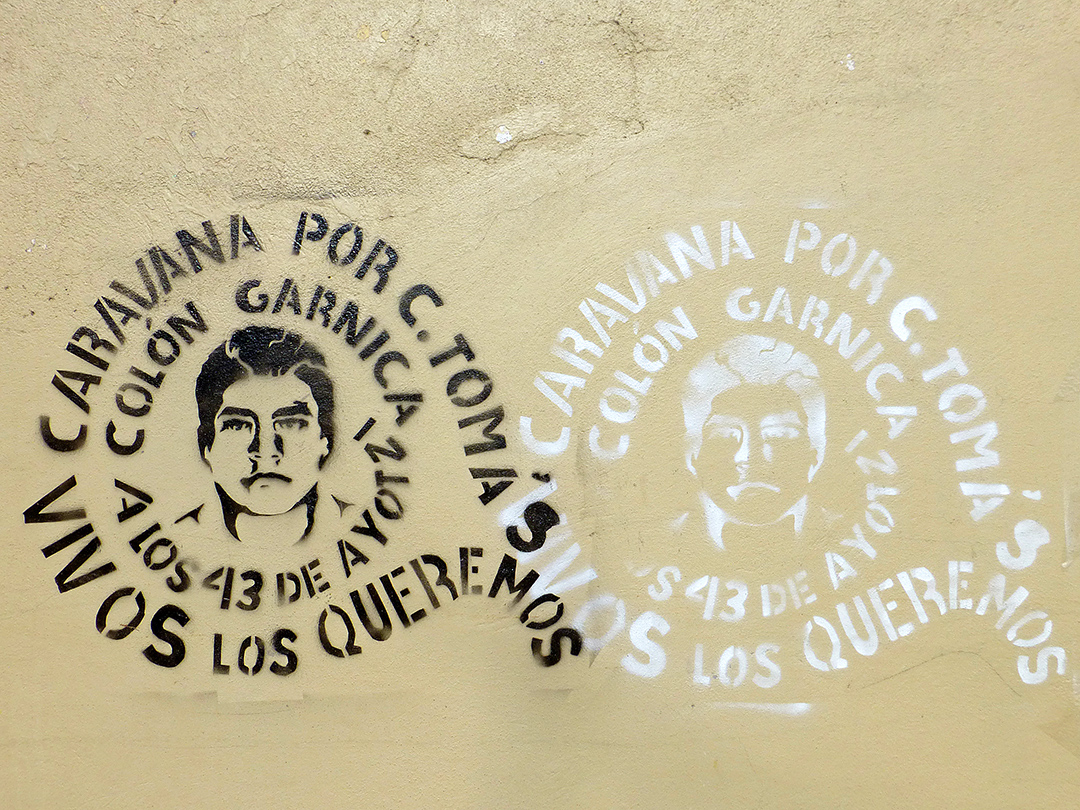
Yesterday, in Tlacolula de Matamoros, the signs were impossible to miss, as we walked down the main street. The community continues to remember her son, Cristian Tomás Colón Garnica, one of the Ayotzinapa 43.
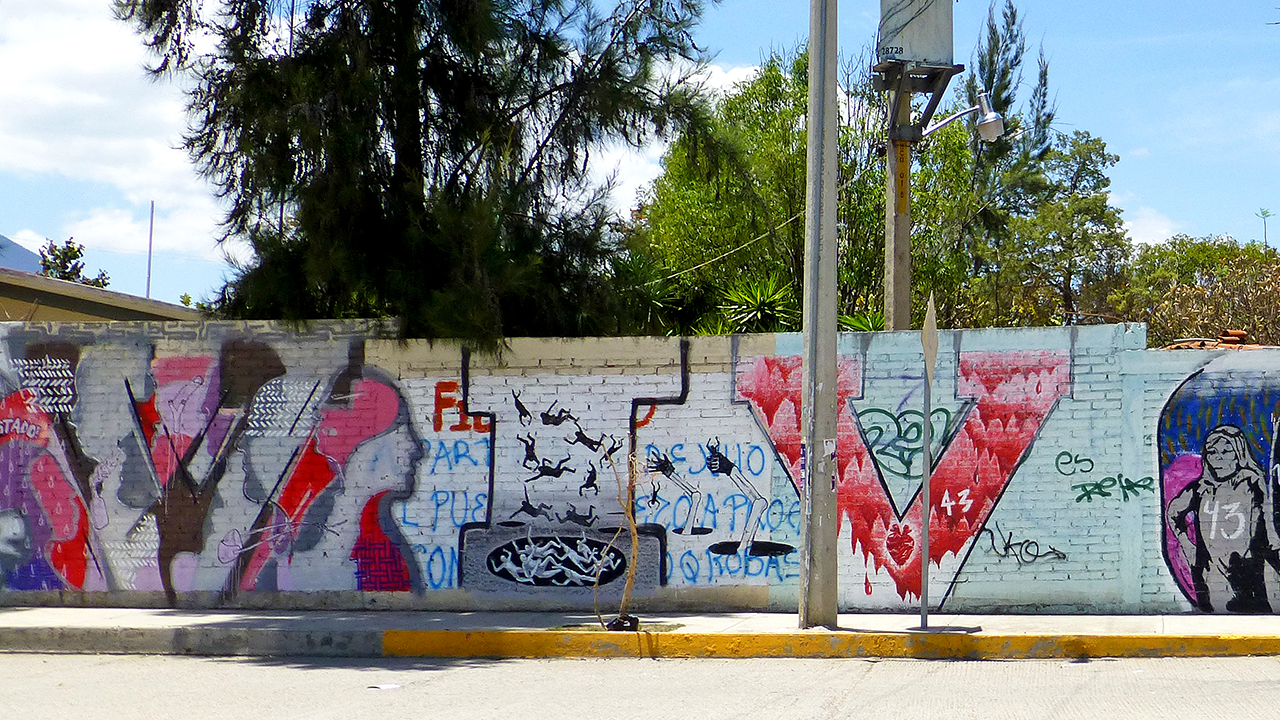
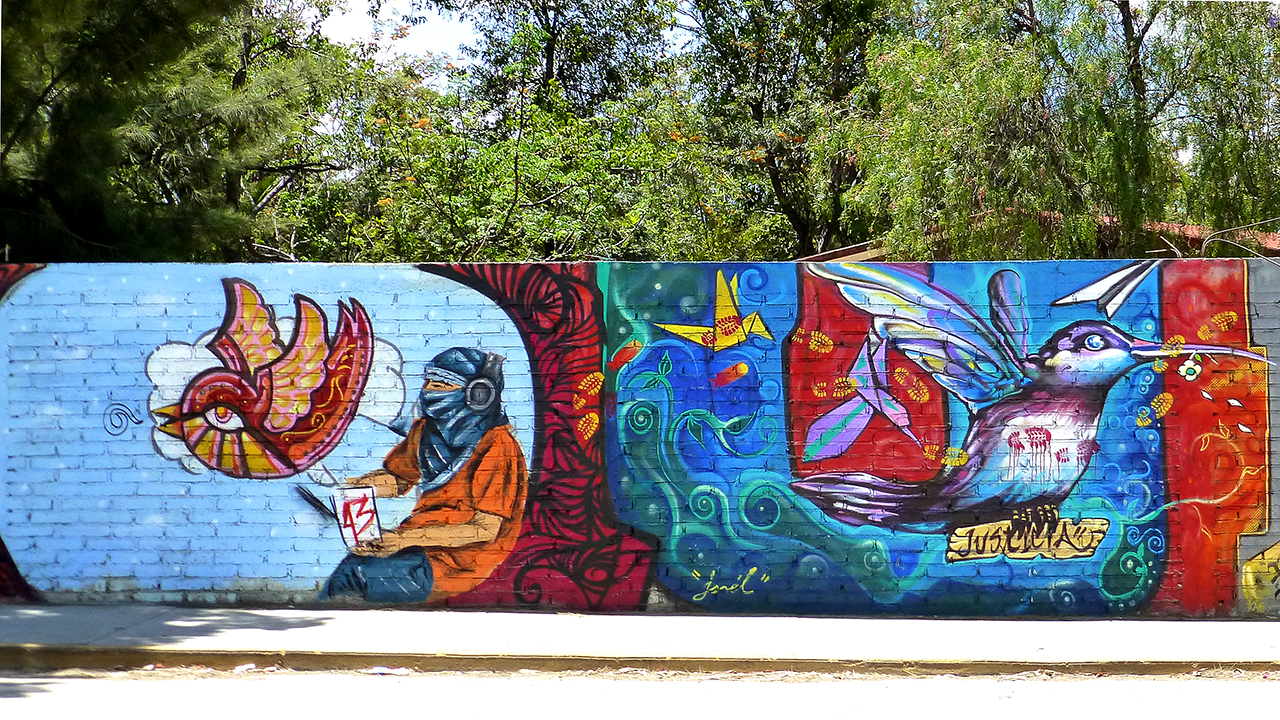
“His father traveled from their land when the abduction of the 43 young normal school students was first reported. ‘I am a day laborer. I make 600 pesos [USD$44.50] weekly, maximum, and that’s when there’s work, because sometimes there is no work. My boy wants to be a teacher. That is the job he wants, but they stopped him, they arrested him … What are we going to do?!'” — from Mexico Voices. On the wall, near the stencils above, posters announced events in Oaxaca city in remembrance of the students. As the murals at the north entrance to Tlacolula de Matamoros proclaim…
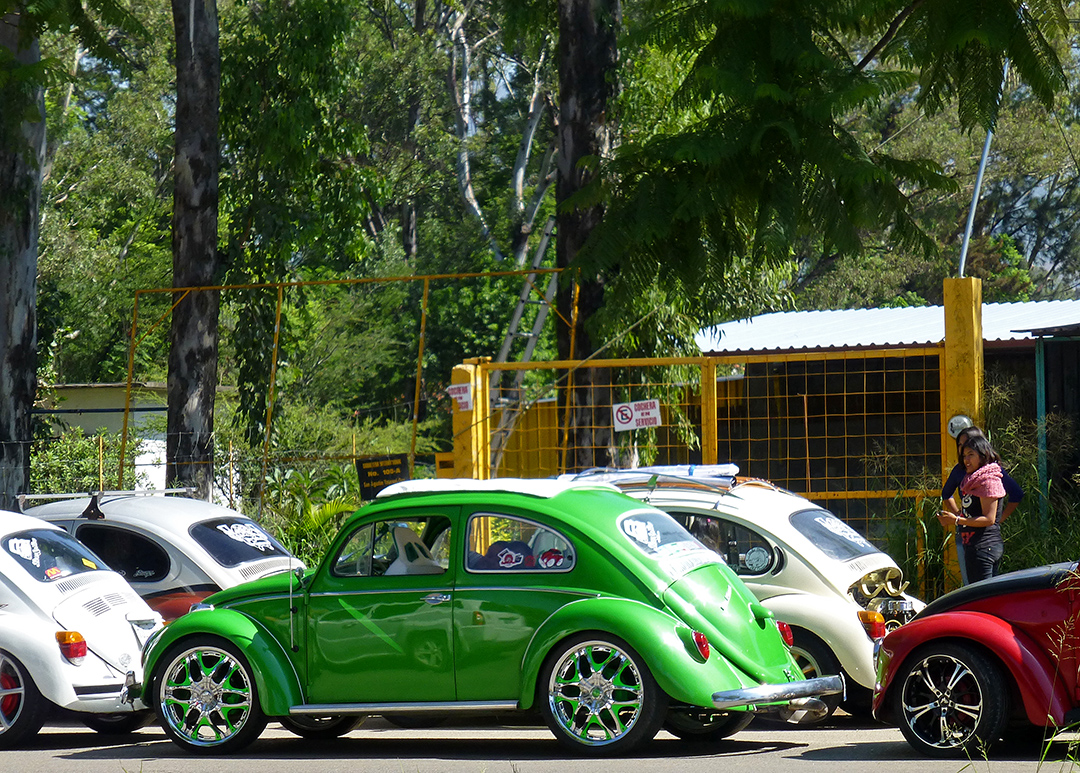
As our journey on Sunday to Santa María Tlahuitoltepec had just gotten underway, Chris and I were engrossed in conversation when I had a whoa-grab-the-camera moment. Across highway 190, just outside the city, a double row of VW Beetles appeared.
Perhaps, figuring it was safer to pull over rather than having me coming between him and the the steering in an attempt to take photos out the driver side window, Chris offered to pull over.
Some had been repainted and tricked out, but others had just been lovingly (no doubt) washed and detailed.
By the time we stopped, we had already passed at least fifty Bugs and the lines continued as we drove off.
A Classic Car Rally? There was a scattering of other makes of cars, but the Beetles were the overwhelming majority and they ruled!































 Mexican Peso Converter

 View From Casita Colibrí