Feeds:
Posts
Comments

Posts Tagged ‘Teotitlán del Valle’

Last night, just about this time, a posada through the calles of Teotitlán del Valle was arriving at the home where Mary and Joseph would find shelter for the night.  Each night, images of Mary and Joseph wander the streets looking for refuge.  The posadas began on December 15 and will last through December 24, la última posada, and the arrival of Jesus.
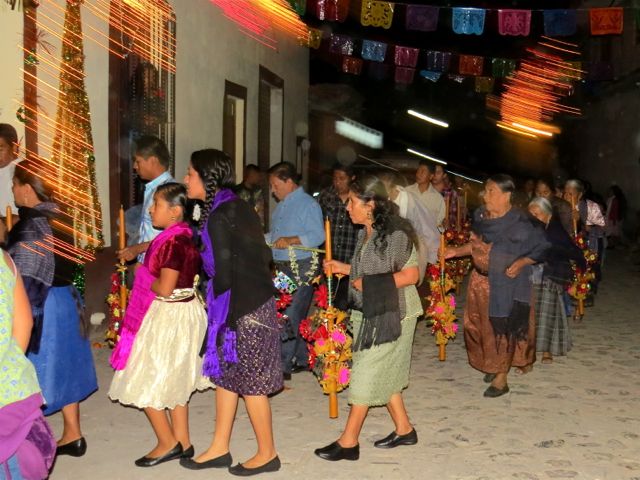
Women arriving at the home where Mary & Joseph spent the previous night.

Women and men arrive at the home where Mary and Joseph had spent the previous night.

IMG_1098

Prayers are said in front of the images of Mary and Joseph and then women line up on one side and men on the other, as the procession begins.
IMG_1089

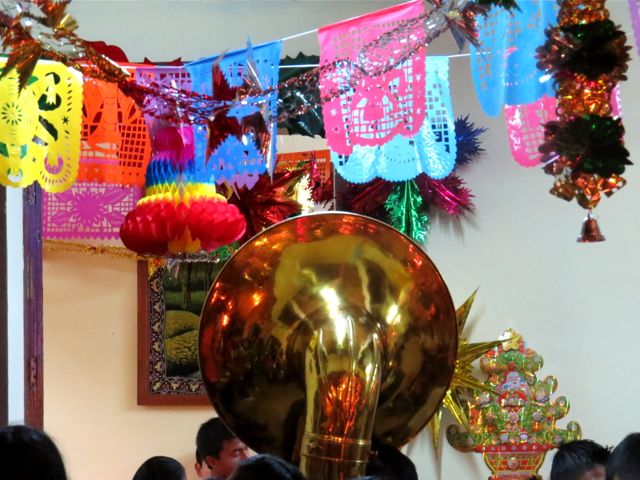
There is a band.  Actually, there are two bands.  The first, at the front of the procession, plays a dirge-like tune and the second, back near the statues of Mary and Joseph, plays marching music (think, John Philip Sousa).
IMG_1072

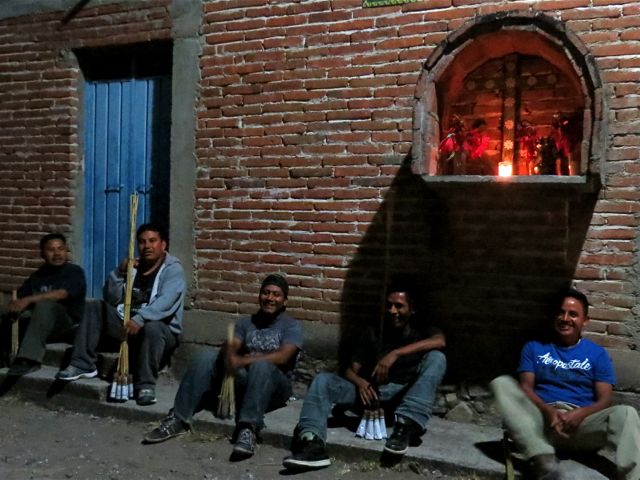
Naturally, there are fireworks.  These are the pyrotechnic guys, waiting to lead the parade.

IMG_1113

Mary and Joseph en route.  Please note, they are carried by young, and from what I was told, unmarried women.

IMG_1122

Primarily lit by elaborate beeswax velas labradas (carved candles), the procession wound its way through Teotitlán del Valle.

IMG_1138

Through the uneven cobblestone streets, young and old walked for over two hours.  It was massive and it seemed as if the entire village was either in the parade or watching.

IMG_1164

Eventually, we arrived at the home where Mary and Joseph would be given refuge for this night.  There was no mistaking this was the destination — it was lit up like a Christmas tree.
IMG_1167

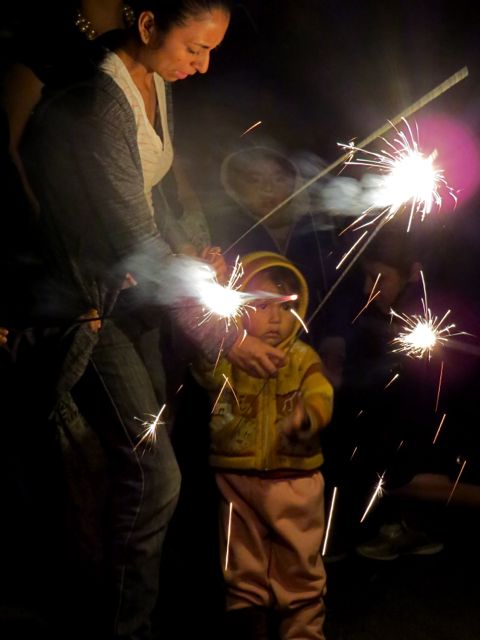
Inside, there was more religious ritual, but outside, there were sparklers!

(ps)  If anyone has any tips for taking photos of nighttime processions of people under challenging lighting conditions, please feel free to offer your suggestions.  Muchisimas gracias.
Read Full Post »

I went to Teotitlán del Valle yesterday for the annual Virgen de Guadalupe performance of the Danza de la Pluma.  As many of you know, I’ve seen it many times, BUT I’ve never stayed until the end, as the dance lasts for eight hours.  Yes, 8 hours!  It would mean returning to the city late at night — and driving at night is something most try to avoid.  Thus, I decided to spend the night at Las Granadas, one of the few B&Bs in town.  However, the thought of waking to the sounds of roosters crowing, burros braying, sheep bleating, AND going for a morning walk in the country sealed the deal.

And so, a little before 9 AM today, I headed up (down?) Calle 2 de abril toward El Picacho.  The work day had long since begun…

IMG_0810

IMG_0806

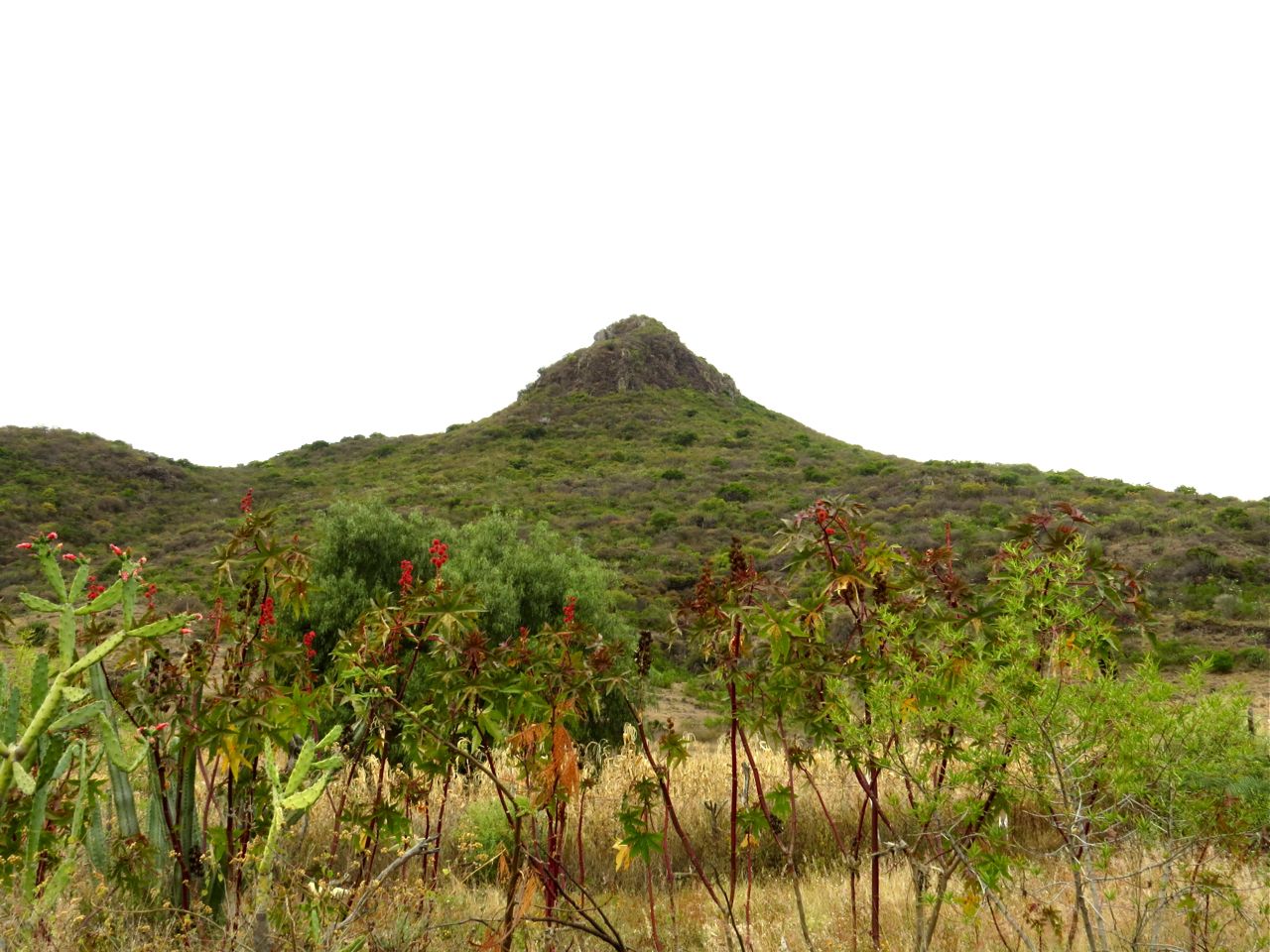
Crossing the Arroyo Grande, I turned right to begin the trek up Revolución.  El Picacho kept a watchful eye as I kept pausing to snap photos and just take in the sights and sounds of being out in the country.

El Picacho

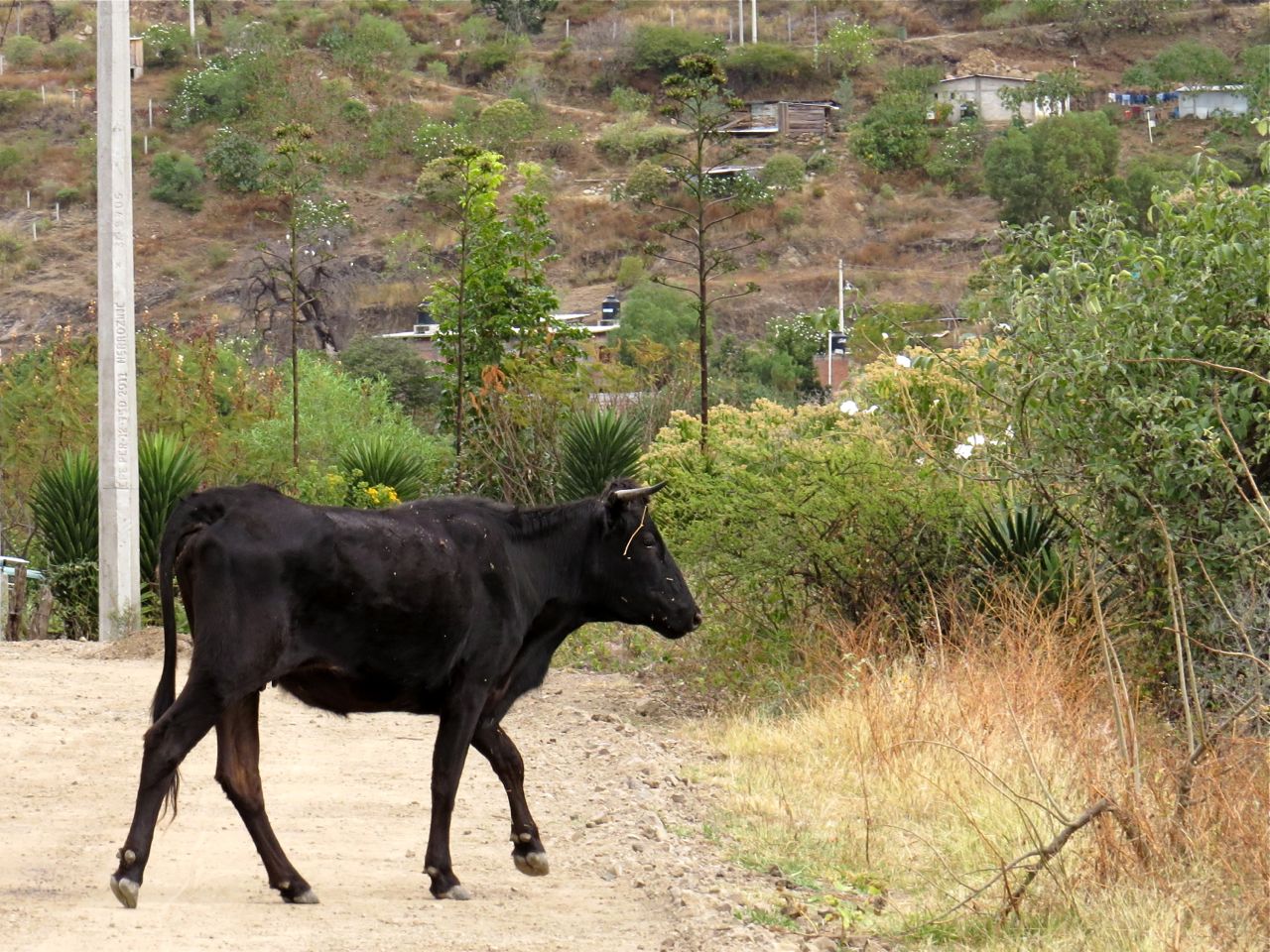
Black bull crossing dirt road

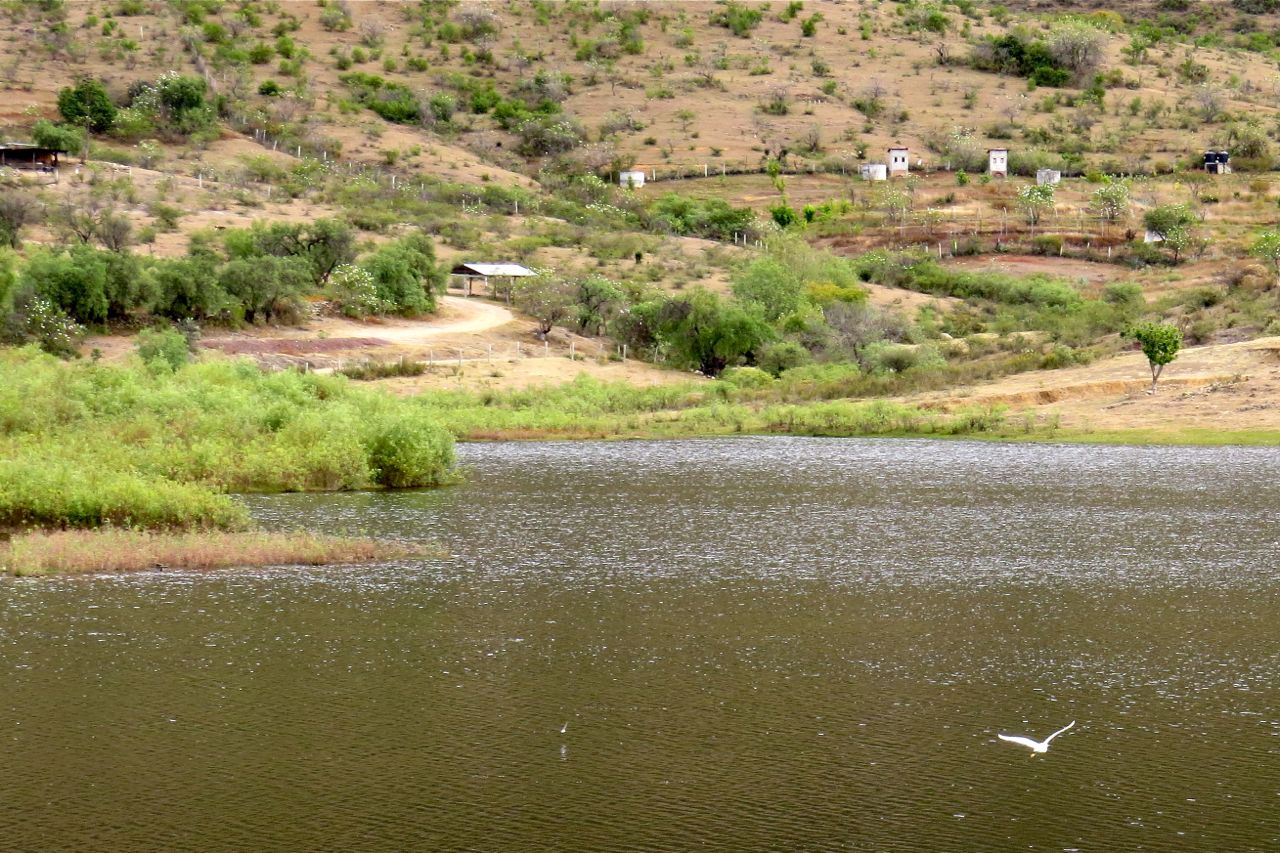
My destination was the presa (dam) and its precious reservoir.  Most of my life has been spent living five minutes from the San Francisco Bay and fifteen minutes from the Pacific Ocean — and now living in a landlocked city, I do miss bodies of water.

Dam, reservoir, and mountains

Reservoir

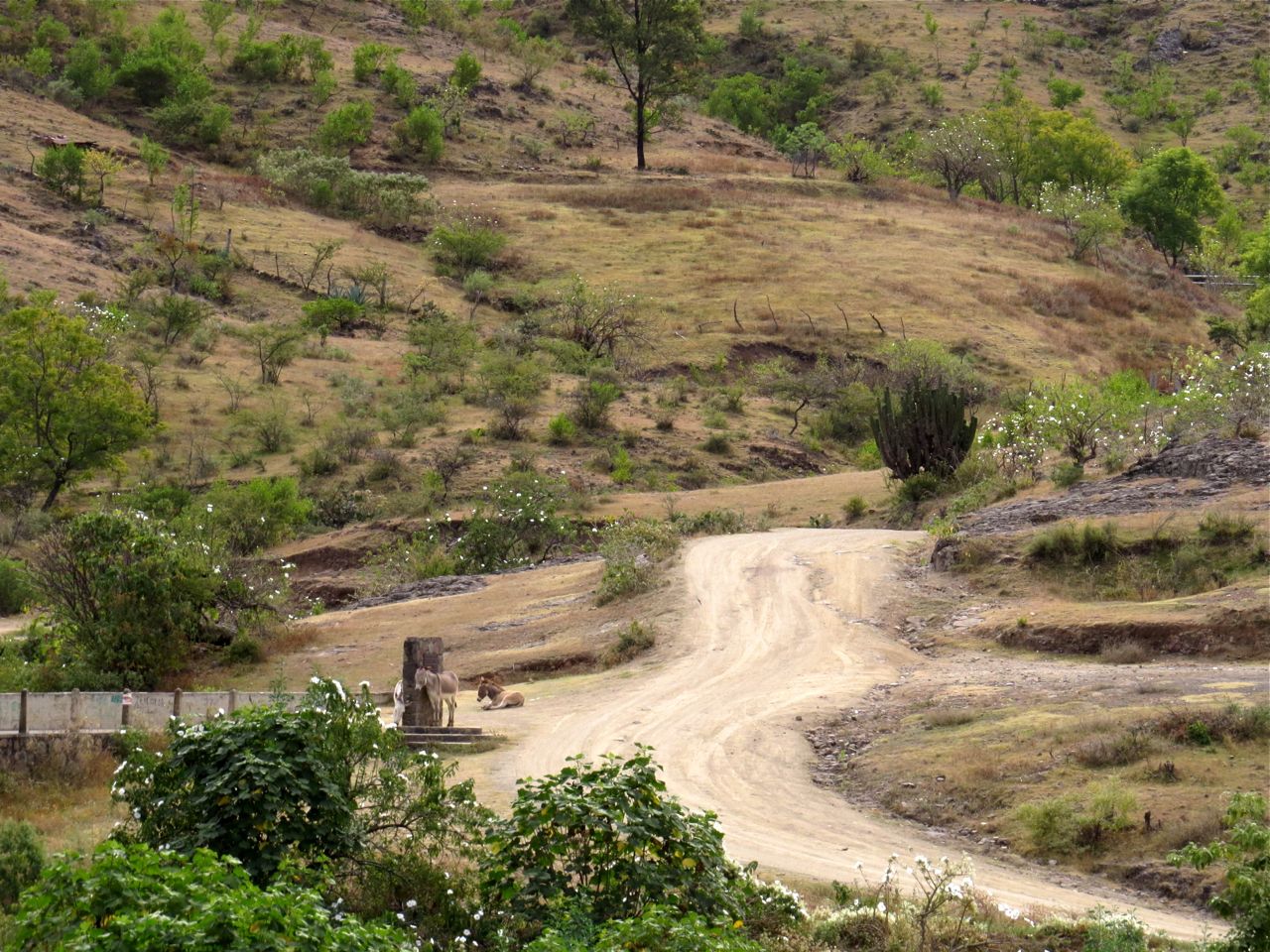
Crossing to the other side of the arroyo, I turned right on Avenida Benito Juárez for the return trip to the B&B.

Dirt crossroads

Houses on hillside

As I walked, the lyrics to Al Kooper’s, House in the Country kept playing in my mind.

No need to worry
Folks in a hurry
Leave them behind you
No one can find you
House in the country

All the relaxin`
Will soon fill the cracks in
Good for your head too
If you are led to
House in the country
Green surrounding
Love abounding
You won`t find a manhole there

A sublime morning in Teotitlán del Valle.  Ahhh…

Read Full Post »

I’ve always liked Thanksgiving — and not just because, after I turned 12, my aunt would pour a little red wine in a shot glass for my cousin and me.  It’s one of the least commercial US holidays, if one discounts the whole “black Friday” and, now, “brown Thursday” (eww!) phenomenon.  And, it isn’t wrapped in flag waving.

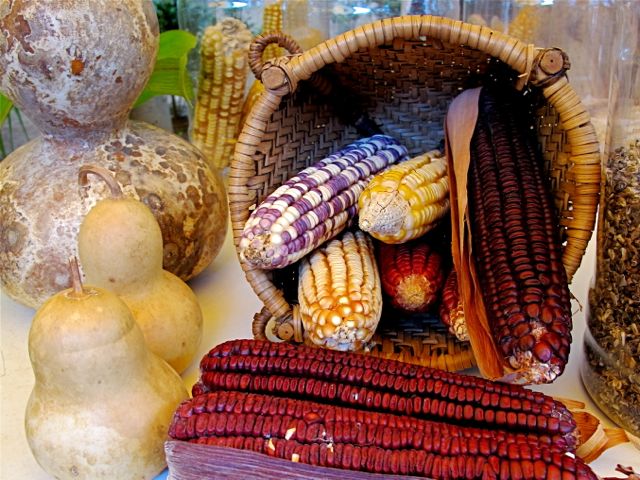
Multicolored corn in basket

It’s a day set aside for a communal sharing of Mother Nature’s bounty, counting our blessings, and acknowledging and giving thanks for the assistance of the dark-skinned original human inhabitants of the Americas.  What a novel idea!

Corn stalks in foreground, El Picacho mountain in background

Besides being thankful for my loving and supportive family, wonderful friends (both old and new), dedicated and encouraging blog readers (Yes, you!), I’m extremely grateful for having the privilege of living among people whose ancestors first cultivated corn in this beautiful valley.

2 turkeys

“love
iz
a
big
fat
turkey
and
every
day
iz
thanksgiving”
Charles Bukowski, What Matters Most is How Well You Walk Through the Fire

Now off to the kitchen to make the stuffing.  ¡Feliz Día de Acción de Gracias!

Read Full Post »

It’s been a magnificent Muertos filled with memorable moments and special people, along with a feast for ALL the senses.  An initial pass through the photos has weeded them down to 450.  Yikes!  Lots more weeding and processing to do.  In the meantime, here is a snapshot from the past 5 days.

And the magic continues today, when we return to San Antonino Castillo Velasco.

Read Full Post »

Sometime around 8,000 years ago, corn was first domesticated in the valley where I have the privilege of living.  Botanists have determined that the valley of Oaxaca was the “cradle” of maize evolution.  Maíz became the lifeblood of the Mesoamerican diet and culture and it continues today.

On September 29, Oaxaca celebrated el Día Nacional del Maíz Nativo (National Native Corn Day).  On the zócalo, across from the Government Palace, there were displays showcasing the multiple hues of native corn…

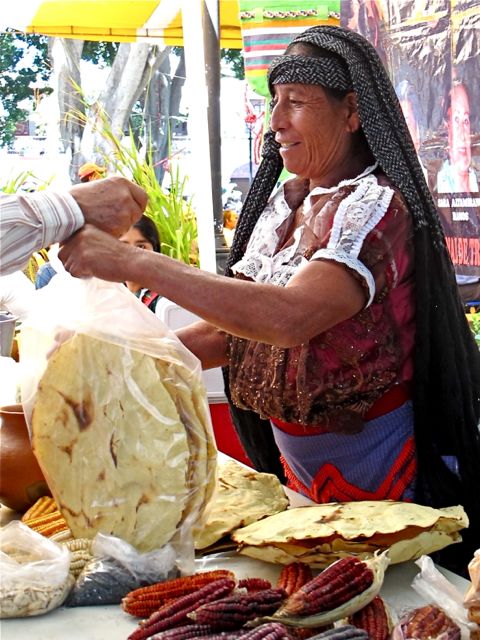
There were tlayudas for sale…

IMG_5627

However, there were also warnings about the dangers of genetically modified corn and the products containing them…

Genetically modified corn is a major issue in Oaxaca.  There is a concern that native plants could become infected with GMOs, which would then contaminate and compromise the genetic diversity of native varieties.  Speakers, at the event, discussed the importance of the community seed banks that have been established to safeguard native varieties and be used in the wake of economic and ecological crisis.  Two weeks after the aforementioned event, there was good news, a Mexico judge has placed an indefinite ban on genetically engineered corn.

And so to celebrate, I am re-posting the Lila Downs video of her song “Palomo del Comalito,” paying homage to maíz, and its “granitos de cristal” (grains of crystal).

And to bring this post full circle, the video was filmed in Teotitlán del Valle, located here in the valley where corn was first cultivated.

Read Full Post »

The Danza de la Pluma penachos (headdresses), capes, and leggings are spectacular and unique to Teotitlán del Valle.  The feathered designs on the penachos are more intricate and varied than in other pueblos; and the capes and leggings are hand-woven in this village that is internationally known for its weaving.  However, while the Danza de la Pluma is a crowd-pleaser during the annual July Guelaguetza on Cerro del Fortín in Oaxaca, folkloric groups from other villages are usually chosen to perform it, as Teotitlán’s costumes are not considered “authentic.”

IMG_4828

However, performing for tourists is not why Teotitlán del Valle tells this story through music and dance several times a year.  It is performed on the church plaza, not the municipal plaza, because it is an integral part of the annual major religious celebrations of the village:  Fiesta titular a la Preciosa Sangre de Nuestro Señor Jesucristo in July, Fiesta a la Natividad de la Virgen María in September, Fiesta a el Rosario de la Virgen María in October, and Fiesta a la Virgen de Guadalupe in December.

Penachos from the Fiesta a la Natividad de la Virgen María on Sunday…

Capes from Sunday’s Fiesta a la Natividad de la Virgen María and July’s Preciosa Sangre de Nuestro Señor Jesucristo festival.

Leggings from both festivals…

The various elements of the costumes do not come cheap and dancers must appeal to their extended families to assist in commissioning each of the pieces.  Thus, as annual festivals come and go during a dancer’s 3-year commitment, the costumes may evolve.

With their performances, the dancers honor the rituals of their church and community.  And, with their magnificent costumes, they pay homage to the creativity, talent, and tradition of Teotitlán del Valle’s weavers and feather artists.

Read Full Post »

Yippee, I’m back in Oaxaca!  Last night’s flight was smooth, on-time, and mostly empty.  I have to admit to always getting a goofy grin as the little Embraer comes in over the lights of the city and the smile continues through immigration and baggage claim.  It usually falters and turns to a grimace when I have to hoist my 50 pound suitcase up onto the x-ray conveyor belt.  However, last night the grin returned when I pressed the “to search or not to search” button, got the green light, and was able to proceed directly to the booth to buy my colectivo ticket —  60 pesos for door-to-door service to the historic district ‘hood.  An easy return to home.

Unpacking done, late this morning I walked down to my local mercado to restock the larder with some basics:  2 perfect avocados, 1 pristine white onion, a bunch of unblemished small and sweet bananas, half kilo of quesillo (Oaxacan string cheese), and 6 freshly made tamales (mole, rajas, and verde).  I’d actually asked for 4, but my regular tamale gal threw in 2 extras.  How often does that happen in el norte?   A welcoming return to home.

This afternoon, blogger buddy Chris and I drove out to Teotitlán del Valle for the performance of the Danza de la Pluma.  We stepped up onto the plaza of Templo de la Preciosa Sangre de Cristo and it was like emerging into the middle of a technicolor movie.  We’ve been there countless times, but today we were blown away by the scene.  Mother Nature had conspired to use her enhance wand on the sky, clouds, sun, and costumes.   A spectacular return to home!

The recent trip to California was to sign papers finalizing the sale of the house my grandparent’s built in 1957.  Prior to relocating to Oaxaca, it had been my home for 30 years, where I’d raised my kids and made many wonderful memories.  Needless to say, selling it was an emotionally challenging ordeal and it has engendered a lot of thinking about the notion of “home.”

However, these past 24 hours have reinforced my belief in bumper-sticker wisdom seen many years ago, “When you live in your heart, you are always home.”  It’s good to be home!

Read Full Post »

Friday, I went Teotitlán del Valle to visit a friend.  N is living out in the campo and it was an adventure just getting there — necessitating a colectivo, bus, moto-taxi, and a fair amount of walking.  However, it was well worth it!  The conversation was non-stop, comida was delicious, and the setting is spectacular.

El Picacho from rooftop terrace.

El Picacho from my friend’s rooftop terrace.

However, a major topic of conversation in the village is the lack of rain.  Granted, I was grateful the creek the 3-wheel moto-taxi and I had to ford only had about six inches of water in it, but looking out from N’s terrace, it was evident the fields are suffering.

Maguey fields in Teotitlán del Valle.

Maguey fields in Teotitlán del Valle.

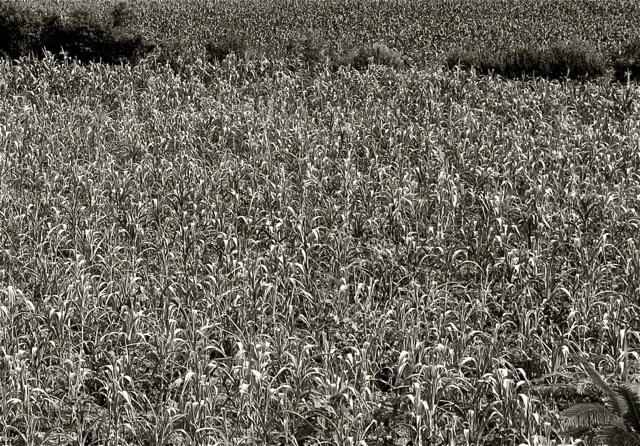
Acres upon acres of parched earth, with rows upon rows of drooping and stunted corn — the lifeblood of this country.  When the campo suffers, so too the people.

Rows of corn stalks.

Rows of corn stalks.

Word has it that this is the driest rainy season anyone can remember.  In a normal year, afternoon showers irrigate the fields and clean the city’s streets at least four to five times a week from June through September.  This year, nada!  I can probably count on two hands the number of times it’s rained.  Your offerings and prayers to Cocijo would be much appreciated!

Update:  Wow, I have some powerful blog readers — it rained last night!!!  Mil gracias.  

Read Full Post »

We returned to Teotitlán del Valle on Tuesday and Wednesday for performances of the Danza de la Pluma, a ritual re-enactment of the battles between the Aztec and Spanish.  According to OaxacaWiki:

The origin of this dance goes back to the spiritual and physical conquest of Mexico by the Spanish – La Guerra de Conquista. The dance originated in the town of Cuilpam de Guerrero where Martin Cortes (son of Cortes) celebrated the first baptism of his child. Martin played the role of his father and the locals played the roles of the conquered indigenous peoples.

The story is told in 41 bailes (dances) and lasts from early afternoon into the night.  Selected years in advance, it is an honor to be a dancer and they perform their roles for 3 years.  This week, during the multi-day fiesta honoring Preciosa Sangre de Nuestro Señor Jesucristo, we saw the first performances by the new cast and they looked great!

Presenting the Cast of Characters

Montezuma

Doña Marina (hat) and Malinche (headdress)

2 Subalternos

16 Danzantes:  Teotiles (2), Capitánes (2), Reyes (4), and Vasallos (8)

They are going to be fun to watch during the next 3 years.   (By the way, the costumes may change from day-to-day, but the cast remains the same.)

Read Full Post »

Monday, we returned to Teotitlán del Valle for the Fiesta titular a la Preciosa Sangre de Nuestro Señor Jesucristo — the pueblo’s most important festival of the year.  While special masses have been celebrated at the Templo de la Preciosa Sangre de Cristo (the village church) since June 30, Monday’s convite (procession) by the unmarried women in the village, kicked off the more public events.

Lovingly decorated canastas (baskets) waited in the church to be reclaimed by their owners, placed on their heads, and carried through the streets.

Crowds gathered in the plaza in front of the church and sidewalks and streets along the route.

And then it began — with solemn drum beats, fireworks, church bells, marmotas (cloth balloons on a pole), and a band.

Little boys (and a few girls) carrying model airplanes (don’t ask me why), paper mache lambs, and turkeys followed.

And then came the neatly organized rows of girls and young women.

For over an hour they wound their way up and down and around the streets of Teotitlán del Valle.  The weather was perfect, no late afternoon thunder showers this year, and it was glorious.

Stay tuned, the festivities continue all week.  And, check out Oaxaca-The Year After this week for blogger buddy Chris’s photos and commentary.

Read Full Post »

Basketball is big in Oaxaca and  was big news to me!

In Teotitlán del Valle, located in the valley Oaxaca, there is a tradition of climbing El Picacho on Día de la Santa Cruz (May 3).  I’d also heard celebrations also included an annual basketball tournament.  Sure enough, the sound of a play-by-play announcer, ref’s whistle, and buzzer occasionally floated up to our perch on the top of the mountain.  When we descended El Picacho via a different route, we came to a basketball court a few blocks from the village center, and an intense game in progress, with other teams waiting in the wings — in this case, the road!

Basketball game with mountain in background

Eight days later, we drove up into the Mixe in Oaxaca’s Sierre Norte for the Fiesta de Mayo in Santa María Tlahuitoltepec.  Once there, we were directed to a basketball court (did we hear correctly?) at the center of town — the mercado off to one side; church on another side; municipal buildings off to another.  We had expected folkloric dancers or ceremonial presentations, but were surprised to find a basketball tournament in progress.  It eventually ended and the expected dancing began.

Partially covered basket ball court.

According to Hoop Dreams in Oaxaca:

Any proper town in Latin America has a church facing a plaza — except the towns of the Sierra Norte region of Mexico, where Jorge Santiago is from.

“In my part of the Sierra, the basketball courts are like the zócalo in the colonial city,” Mr. Santiago said, using a Mexican word for “plaza.” “It’s really the most important part of the town. A respectable town has a church, and a basketball court in front of the church.”

Read full article HERE.

Read Full Post »

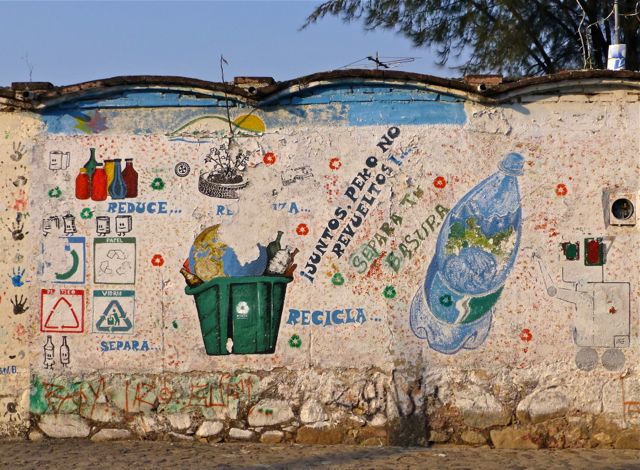
Wall art demonstrating "reduce, separa, recicla"

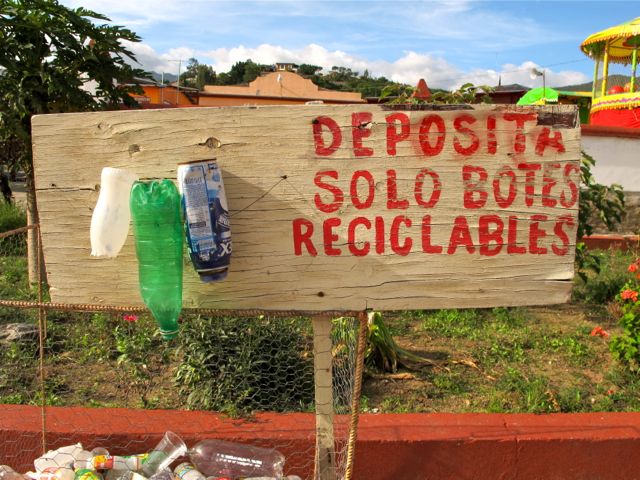
Sign "deposita solo botes reciclables with 3 plastic bottles nailed to it

Sign "deposita solo botes reciclables" and basket 1/3 filled with plastic bottles underneath

Chicken wire bin 1/3 full of plastic bottles

Educating the public in Teotitlán del Valle.


Read Full Post »

Saturday afternoon, I returned to Teotitlán del Valle with my neighbor Marga for that evening’s world premiere of “La Festividad de los Muertos,” a film documenting Day of the Dead in Teotitlán (more about that in an upcoming post).  Transportation back to the city late at night would have been challenging, so it was an ideal excuse to finally spend the night in one of my favorite villages.  Marga booked the last room at Casa Elena and I stayed across the street at Las Granadas (both recommended).

Sunday morning, I was awakened by roosters crowing, burros braying, cohetes (all bang, no bling fireworks) exploding, and the sound of a band playing.  Breakfast wasn’t to be served until 8:30 am, so I went for an early morning walk.

An enchanting way to begin the day.

Read Full Post »

Yesterday (May 3) was Día de la Santa Cruz and in Mexico it is the feast day of construction workers.  Crosses are erected on building sites and decorated.  The tradition has its origins with the guilds during the colonial era.

However, in Teotitlán del Valle, tradition calls for hiking up to the top of El Picacho.  A tall aqua colored wooden cross stands at the top of the peak.

P1080358

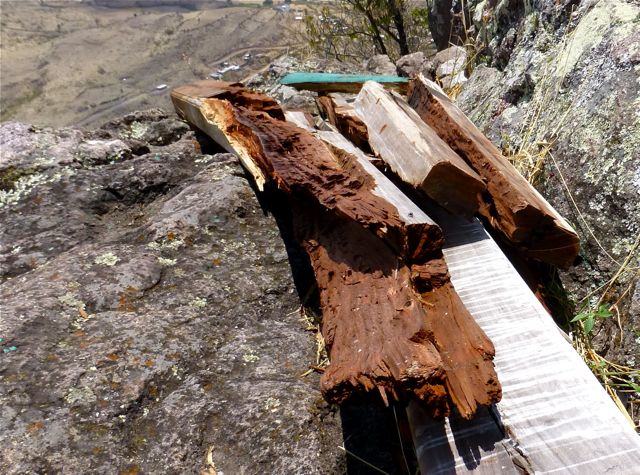
There were two crosses, but apparently one was hit by lightning a week or two ago.  It lies in splintered pieces below where it stood.

P1080369_crop

Mountain and custom beckoned, and so we headed out to Teotitlán yesterday morning to climb the mountain.  The trek began and our eyes were on the prize as we passed by irrigated fields…

P1080325

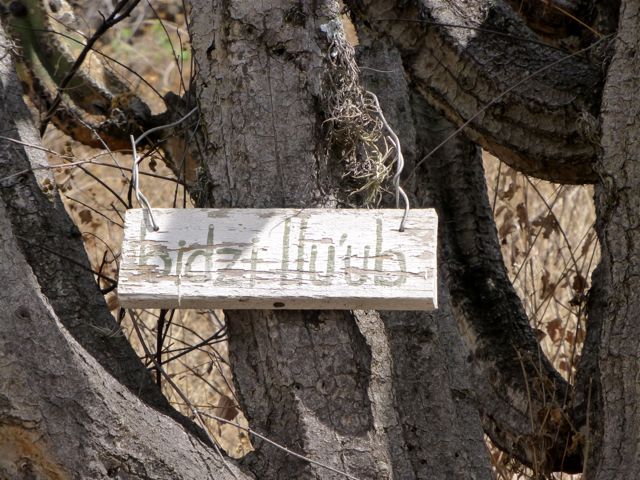
Along the steep and winding trail, there were signs…

P1080338

in Zapoteco.

P1080332

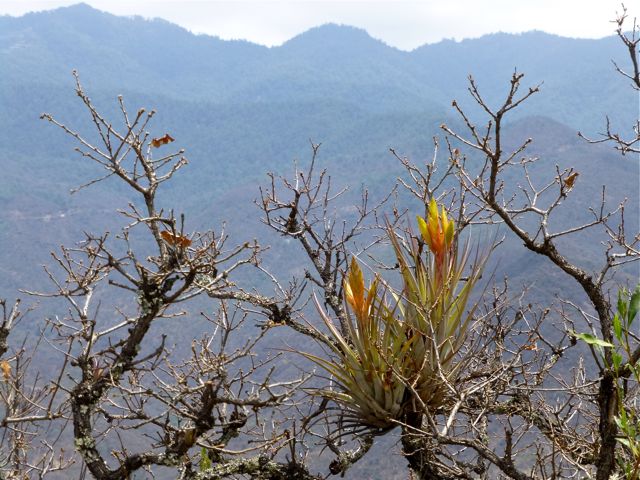
Bromeliads and other epiphytes clung to branches.

P1080352

All along the way, the views were spectacular.

P1080351

As we climbed, grew smaller and smaller.

P1080334

And, our destination grew closer and closer.

P1080350

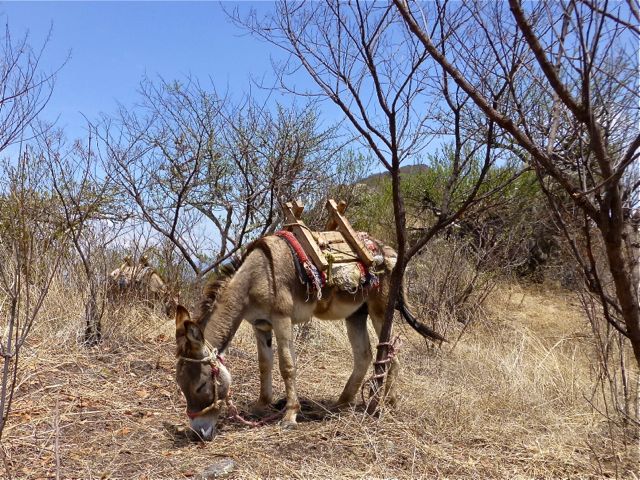
Almost two hours later (we stopped a lot!), we encountered the tethered burros that brought the tamales, aguas, and cervesas that awaited us at the top.

P1080354

Besides sustenance, there were fireworks…

P1080377

and expansive and even more spectacular views.

P1080356

There were parents, teens, toddlers, abuelos…

P1080385

and abuelas.

P1080390

Muchisimas gracias to the people of Teotitlán del Valle, who never fail to warmly welcome us and, again, generously offered us food and drink.

P1080384

They are very special people who live in a very special place.

FYI:  The trip down took less than an hour, I returned home exhausted, sore, sunburned (even though I’d slathered on sunscreen), and thoroughly exhilarated.

Read Full Post »

Sometimes color seems like a distraction, so an experiment in de-saturation from the last day of Carnaval in Teotitlán del Valle.

For some outstanding up-close and full color photos, head over to Oaxaca-The Year After.

Read Full Post »

« Newer Posts - Older Posts »