What a game; three goals in 10 minutes in the second half!!! Another thrilling win by El Tri advances Mexico to the next stage in World Cup 2014. They struggled and needed a little help from their “friends” in el norte to even play in Brazil. However, against all odds, this team exhibits a gutsy and tenacious heart and soul that can’t help but have people rooting for them — much like the country of Mexico, itself.

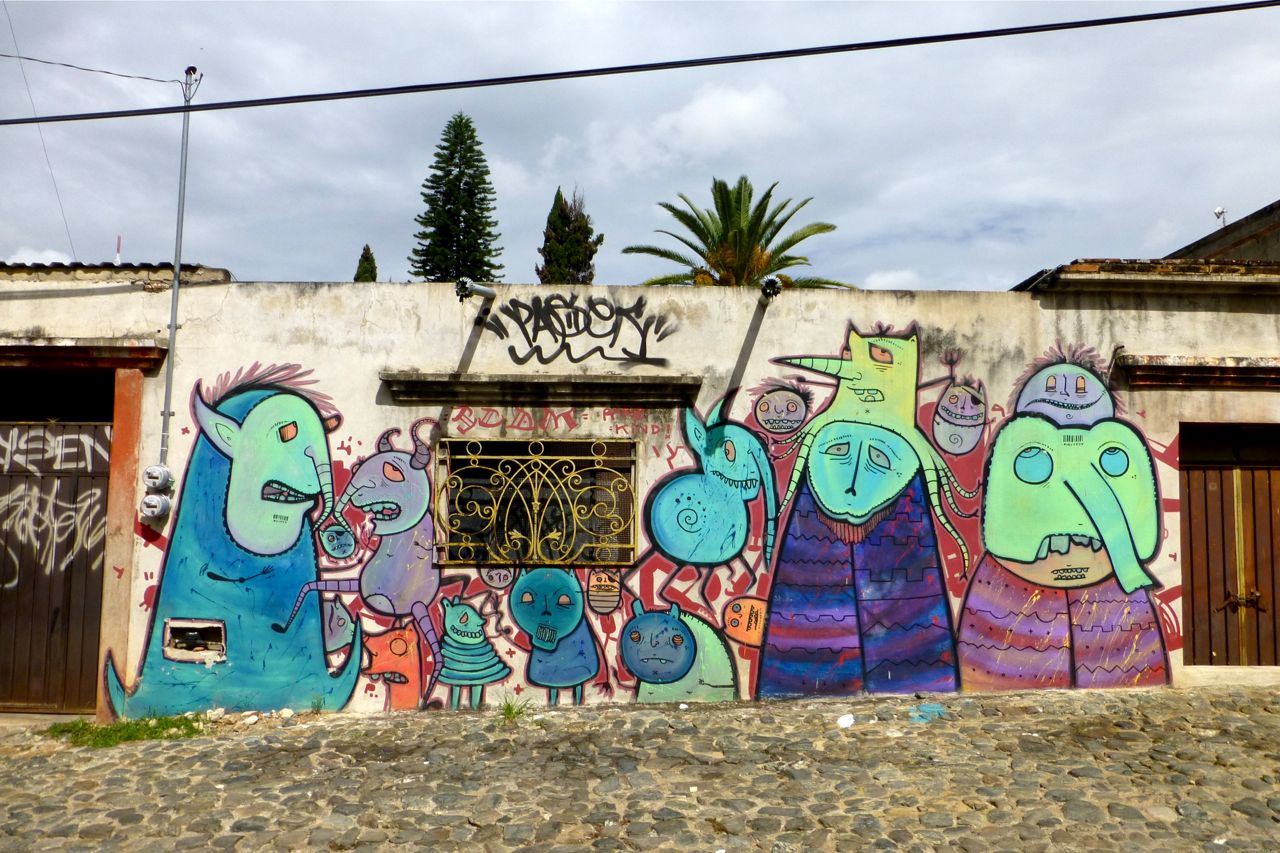
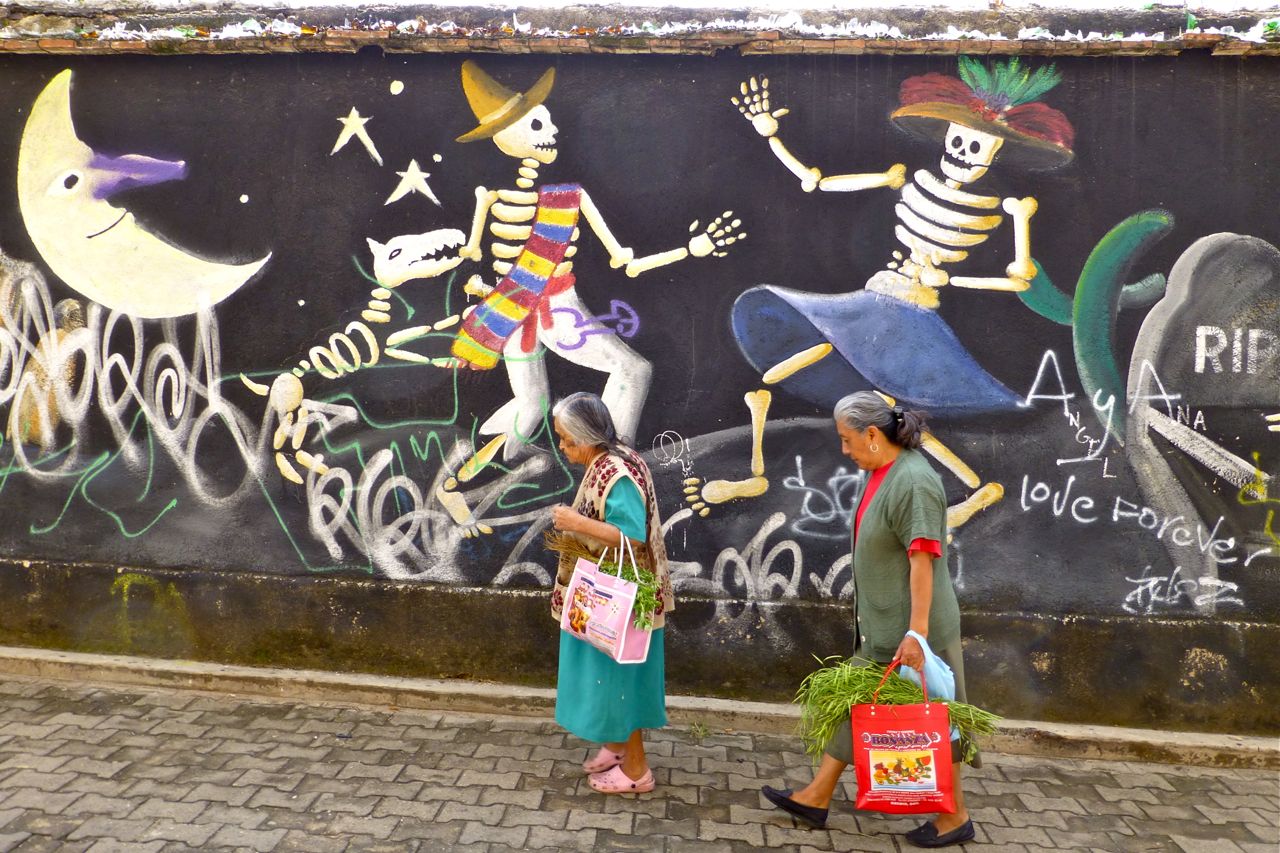
Mural under fútbol stadium in Oaxaca – Dec. 2012
Francisco Goldman wrote an op-ed in yesterday’s New York Times. His article, “Fooling Mexican Fans,” relates the current politics of Mexico, the “bread and circuses” diversion of the World Cup, and the notion that El Tri might exemplify all that is inspiring and hopeful in the Mexican national character.
Goldman’s op-ed begins…
The day before the Mexican soccer team’s thrilling underdog tie with the World Cup favorite, Brazil, last week, the lead editorial of the news site SinEmbargo was titled, “Ready for your Clamato and Gatorade?” — common hangover remedies. “In about three weeks, when you wake from your World Cup dreams,” the editors wrote, “remember that when the soccer fest began, the country was on the verge of monumental decisions. If upon waking, you realize that the country’s energy reserves have been cheaply sold off or whatever else, don’t bother protesting because this is a chronicle foretold.”
To debate and pass laws that could open Pemex, the nationalized oil company, to foreign investment, the Mexican Congress scheduled legislative sessions from June 10 to 23, dates precisely coinciding with you know what. Final passage might be pushed back, but it originally looked like it was supposed to happen on Monday, when Mexico plays Croatia to decide which country advances to the elimination rounds.
As I wrote previously, Mexicans have been Expressing the outrage since last year, when Mexico’s newly elected president Enrique Peña Nieto (initials EPN), from the PRI party, first made the Pemex energy “reform” proposal.
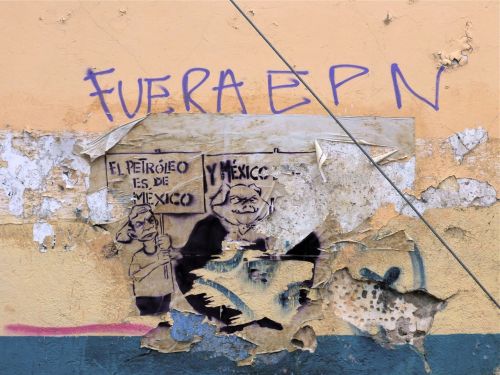
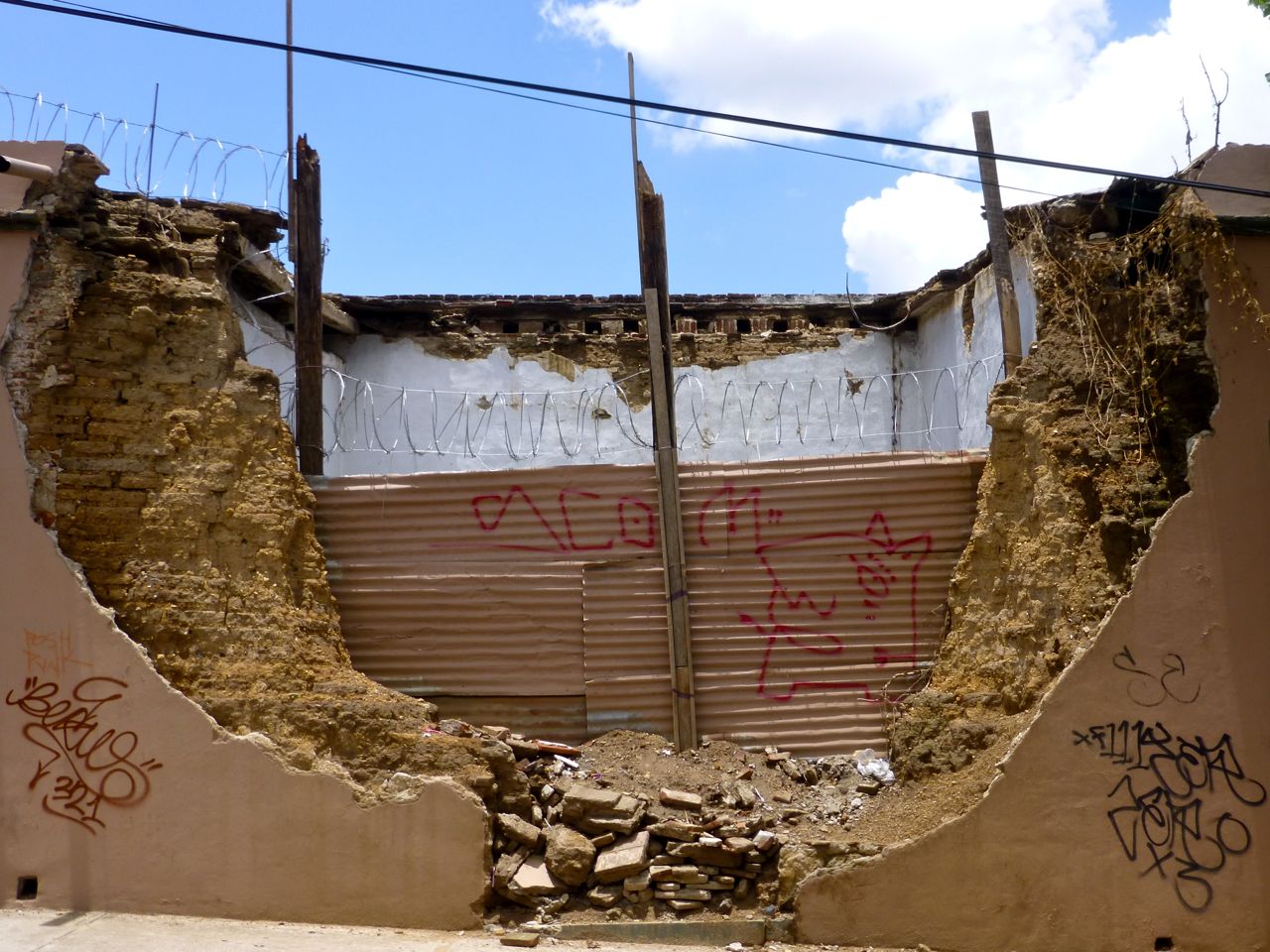
Graffiti seen on a wall south of Oaxaca’s zócalo, May 23, 2014.
Goldman goes on to discuss this and other “reforms,” the role of the PRI, and the current overall political climate in Mexico. However, as dismal as it all sounds, he ends on a hopeful note…
There has been much talk lately about the way the style of soccer teams manifests national characters. I don’t know if that’s true. But when I look at the Mexican team which, after barely even qualifying for the World Cup, has been playing so well, I see a team without stars — a gritty, hard-working, pretty humble, resourceful, creative, disciplined, joyous, friendly-seeming group of players who seem to be learning to play the game as it is meant to be played.
These are values that we see enacted and re-enacted all over Mexico, and in Mexican communities elsewhere, every day. Someday Mexico will get another chance to vote the PRI away and to restart the long process of building the country from the ground up. It could do worse than take some inspiration from its national team.
Absolutely, those are the values I, too, see exhibited in Mexican communities both in Mexico and the US. There is hope for the future — and not just on the pitch! I encourage you to read Goldman’s op-ed in full. In the meantime, Mexico vs. Netherlands on Sunday at Estadio Castelao Forteleza. ¡¡¡ VAMOS EL TRI !!!
h/t K Hackbarth for the article
Read Full Post »






















 Mexican Peso Converter

 View From Casita Colibrí
Heart and soul
Posted in Creativity, Culture, Economics, Politics, Protests, Sports & Recreation, tagged Copa Mundial 2014, El Tri, fútbol, Francisco Goldman, graffiti, Mexico, Oaxaca, photographs, photos, political commentary, soccer, street art, urban art, World Cup 2014 on June 23, 2014| 4 Comments »
What a game; three goals in 10 minutes in the second half!!! Another thrilling win by El Tri advances Mexico to the next stage in World Cup 2014. They struggled and needed a little help from their “friends” in el norte to even play in Brazil. However, against all odds, this team exhibits a gutsy and tenacious heart and soul that can’t help but have people rooting for them — much like the country of Mexico, itself.
Mural under fútbol stadium in Oaxaca – Dec. 2012
Francisco Goldman wrote an op-ed in yesterday’s New York Times. His article, “Fooling Mexican Fans,” relates the current politics of Mexico, the “bread and circuses” diversion of the World Cup, and the notion that El Tri might exemplify all that is inspiring and hopeful in the Mexican national character.
Goldman’s op-ed begins…
The day before the Mexican soccer team’s thrilling underdog tie with the World Cup favorite, Brazil, last week, the lead editorial of the news site SinEmbargo was titled, “Ready for your Clamato and Gatorade?” — common hangover remedies. “In about three weeks, when you wake from your World Cup dreams,” the editors wrote, “remember that when the soccer fest began, the country was on the verge of monumental decisions. If upon waking, you realize that the country’s energy reserves have been cheaply sold off or whatever else, don’t bother protesting because this is a chronicle foretold.”
To debate and pass laws that could open Pemex, the nationalized oil company, to foreign investment, the Mexican Congress scheduled legislative sessions from June 10 to 23, dates precisely coinciding with you know what. Final passage might be pushed back, but it originally looked like it was supposed to happen on Monday, when Mexico plays Croatia to decide which country advances to the elimination rounds.
As I wrote previously, Mexicans have been Expressing the outrage since last year, when Mexico’s newly elected president Enrique Peña Nieto (initials EPN), from the PRI party, first made the Pemex energy “reform” proposal.
Graffiti seen on a wall south of Oaxaca’s zócalo, May 23, 2014.
Goldman goes on to discuss this and other “reforms,” the role of the PRI, and the current overall political climate in Mexico. However, as dismal as it all sounds, he ends on a hopeful note…
There has been much talk lately about the way the style of soccer teams manifests national characters. I don’t know if that’s true. But when I look at the Mexican team which, after barely even qualifying for the World Cup, has been playing so well, I see a team without stars — a gritty, hard-working, pretty humble, resourceful, creative, disciplined, joyous, friendly-seeming group of players who seem to be learning to play the game as it is meant to be played.
These are values that we see enacted and re-enacted all over Mexico, and in Mexican communities elsewhere, every day. Someday Mexico will get another chance to vote the PRI away and to restart the long process of building the country from the ground up. It could do worse than take some inspiration from its national team.
Absolutely, those are the values I, too, see exhibited in Mexican communities both in Mexico and the US. There is hope for the future — and not just on the pitch! I encourage you to read Goldman’s op-ed in full. In the meantime, Mexico vs. Netherlands on Sunday at Estadio Castelao Forteleza. ¡¡¡ VAMOS EL TRI !!!
h/t K Hackbarth for the article
Share this:
Read Full Post »