Feeds:
Posts
Comments

Posts Tagged ‘Mexico’

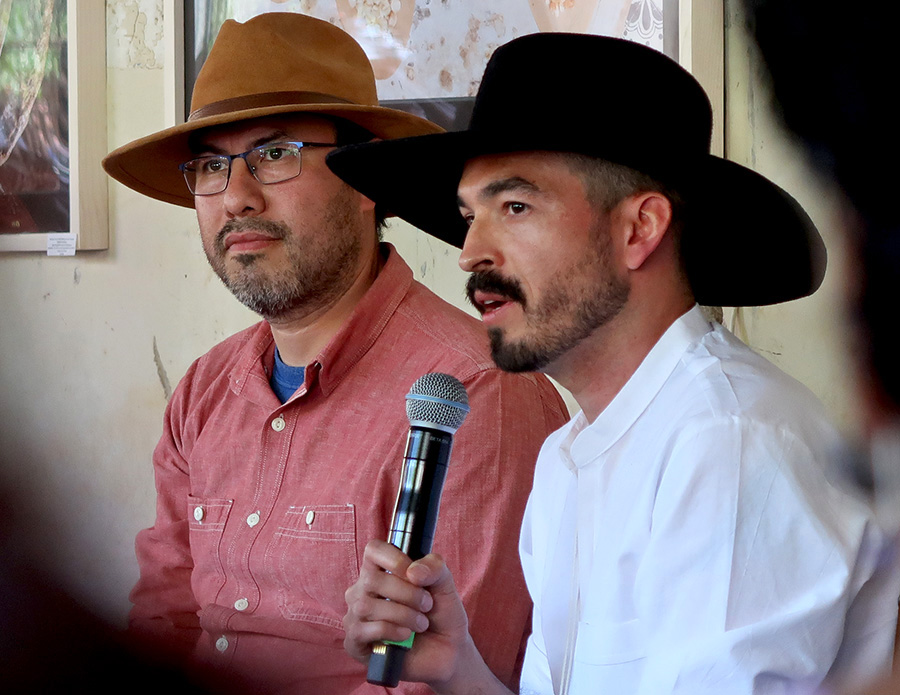
Aguas, atole, aguardiente, cafe, chocolate, compuestos, destilados, pulque, tejate, tepache, and té, oh my! Those are only fraction of the 72 beverages (alcoholic and non) found in the eight regions of the state of Oaxaca and featured in the “hot off the press” book, Bebidas de Oaxaca. Authors, Salvador Cueva and Ricardo Bonilla spent a year traveling up and down and over and through the mountains, valleys, and coastal regions of this most diverse, both geographic and cultural, state.
IMG_8999

Ricardo Bonilla and Salvador Cueva.

They met the indigenous men and women whose families have handed down through countless generations the recipes for everyday and ceremonial beverages. Most of all they got to know, learn from, and appreciate the people and their traditions. A poem, composed and recited by Emma Méndez García from Huatla de Jiménez, expressed the pride and strength of the rich cultures of those who contributed their time, histories, and knowledge to the project.

IMG_9023

Emma Méndez García (Huautla de Jiménez) reciting the poem she wrote in honor of the occasion.

The relationship the authors developed with their subjects was obvious at Saturday afternoon’s book presentation at the gloriously dilapidated and magical Proyecto Murguia (site of the 2012 El Sueño de Elpis). They presented each of the cocineras and cocineros featured in the book with the book, a book bag, a mug, and much gratitude and appreciation.

IMG_9061

Ricardo Bonilla, Jovita López Cruz (Unión Nacional Zafra), and Salvador Cueva.

IMG_9097

Ricardo Bonilla, Carina Santiago (Teotitlán del Valle), and Salvador Cueva.

IMG_9107

Ricardo Bonilla, Catalina Chávez Lucas (Tlacolula de Matamoros), and Salvador Cueva.

IMG_9123

Ricardo Bonilla, Reyna Mendoza (Teotitlán del Valle), and Salvador Cueva.

IMG_9131

Ricardo Bonilla, Celia Florian (La Ciénega, Zimatlán), and Salvador Cueva.

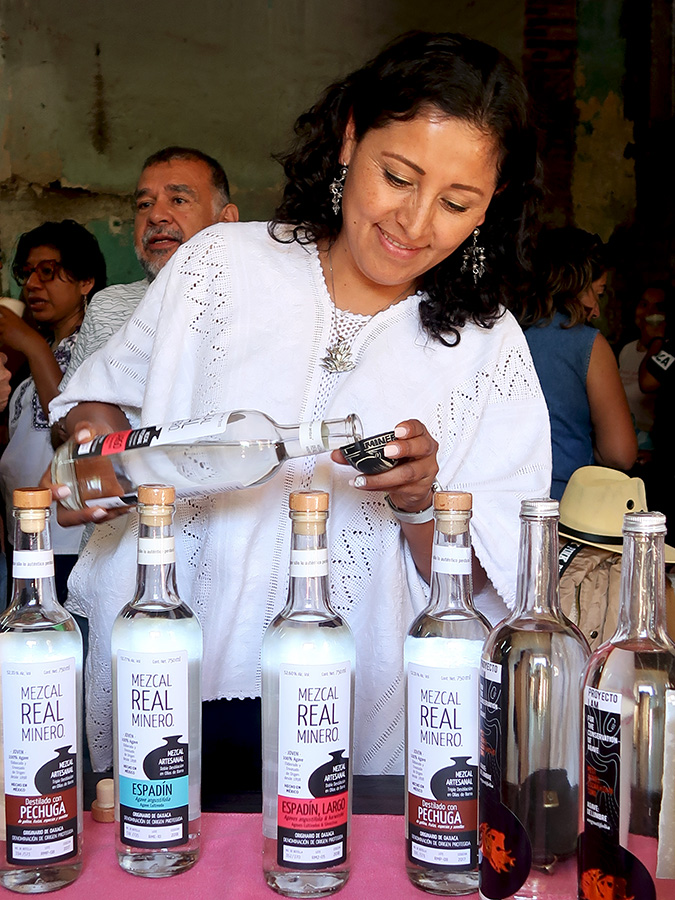
Following the formal presentations, 20 of the beverages were free to sample and purchase directly from their makers.
IMG_9293

Mezcal from Graciela Ángeles Carreño (Santa Catarina Minas).

IMG_9185

Pinole prepared by Elisa León Pérez (Santa Catarina Ixtepeji).

IMG_9182_port

Estela serving Chocolateatole con cacao blanco by Carina Santiago (Teotitlán del Valle).

IMG_9285

Tepache con rojo by María Díaz Cortés and Juana Gallardo Jiménez (Santa María Tlahuitoltepec).

Bebidas de Oaxaca is available in Spanish and English and in hard and softbound editions. For information regarding purchasing the book, go to their website. Or, if you are in Oaxaca city, attend the book talk at La Jícara (Porfirio Díaz 1105) on Thursday evening, March 5, 2020 at 7:00 PM. A percentage of the sales of the book will go to the Bebidas de Oaxaca foundation to support the people and families who participated in the book.

Read Full Post »

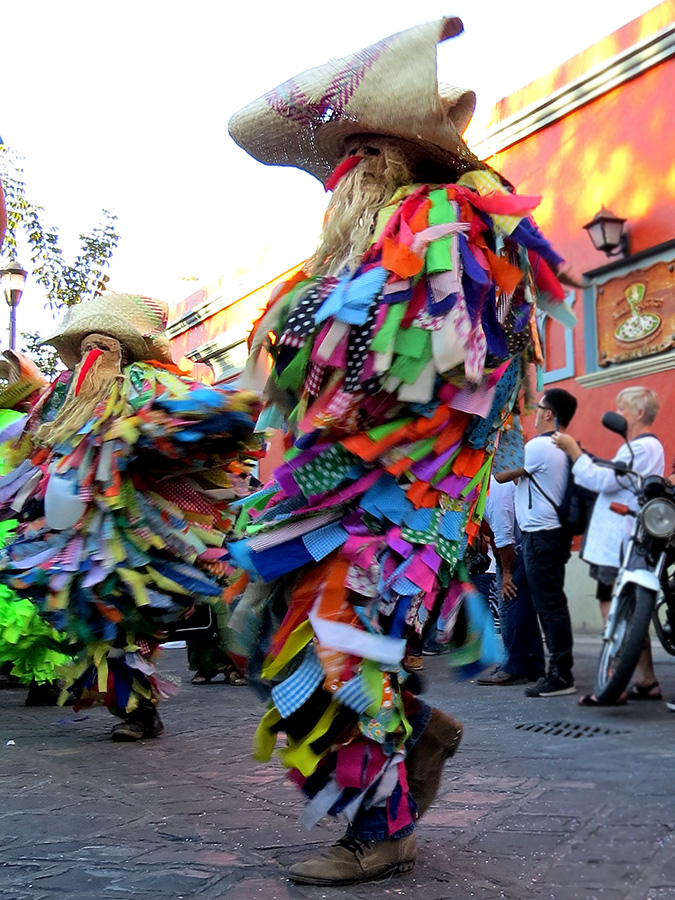
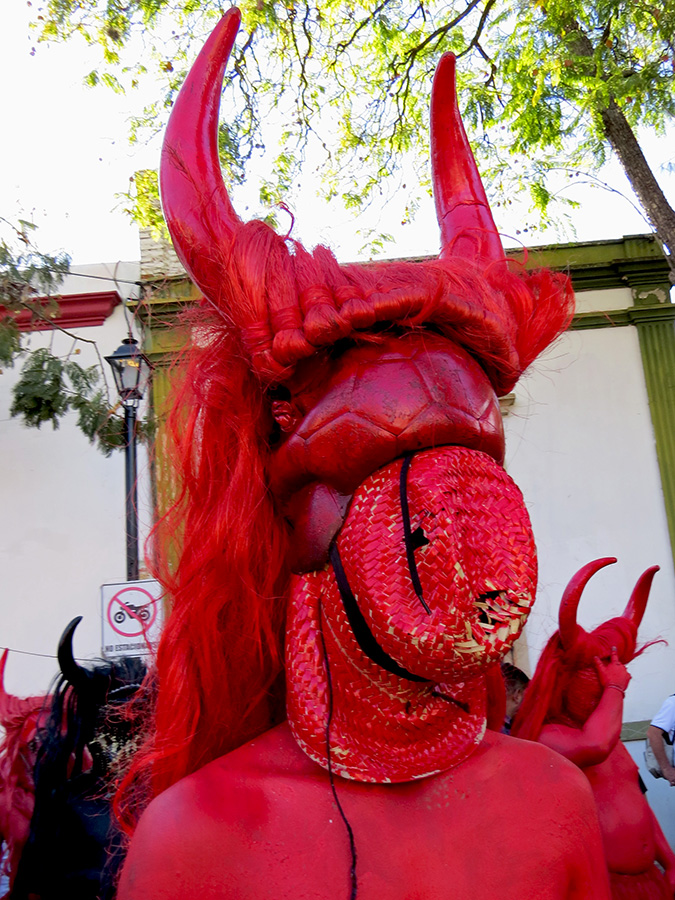
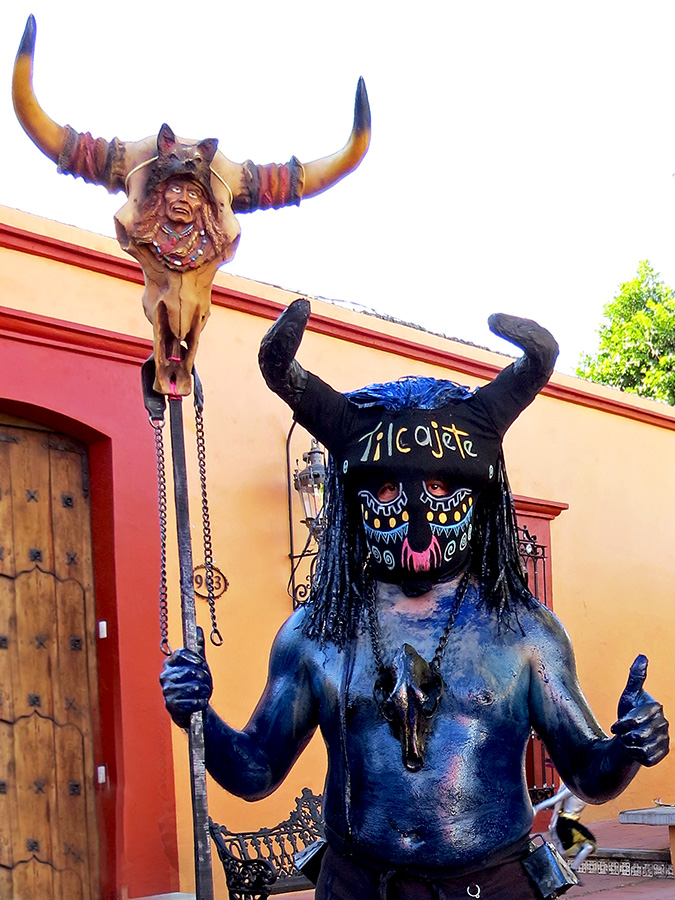
Día de Carnaval (aka, Shrove Tuesday, Fat Tuesday, Mardi Gras, Carnival) in Oaxaca is muy especial — especially in the village of San Martín Tilcajete. The Spanish brought the tradition to Mexico and, like may other seasonal celebrations, it conveniently coincided with indigenous festivals celebrating the “lost days” of the Mesoamerican calendar, “when faces were covered to repel or confuse evil.” Apparently, it caught on “because it was one time when normal rules could be broken especially with the use of masks to hide identities from the authorities.”

Masks waiting to be worn at the workshop of Victor Fabián Ortega (click on image to enlarge)…

Not only were there masks at the workshop, there were bodies to be painted and it was a family affair — brothers, sisters, cousins, children, wives, and Victor himself who painted, was painted, and donned a mask.

Other family members (including women, new in the past couple of years) came painted and masked to gather to begin roaming through the village with other families, inviting one and all to the festivities!

And, it’s not just the adults. As with all celebrations and rituals in Oaxaca, children are encouraged to appreciate and participate — hopefully, ensuring these traditions continue.

The devils of San Martín Tilcajete laughed at everything: baptisms, weddings, solemn acts. Surrounded by devils with masks, old shoes, clothing of sacks, paintings that come from the earth and ancestral plants, they roam the streets chattering and everywhere they walk the streets laughing and appear either as devils or animal spirits.

That is why in SMT in carnival, it becomes a poetic dimension of shapes, colors and sounds; a fun and educational community that teaches us how imperfect we are, and to ask the good not to be so solemn and boring. Chamucos: Carnaval de San Martín Tilcajete Oaxaca, by Adolfo Pérez Butrón. (My translation.)

Read Full Post »

If you live in Oaxaca, the characters of Carnaval are coming to a village near you. And to get you in the mood and entice you to one of the wild and whacky celebrations, the citizens of the city were treated to a parade sampling the various traditions — no two villages are the same.

Villa de Zaachila, “Grupo Natividad”

Putla Villa de Guerrero

Ánimas Trujano

Macuilxóchitl de Artigas Carranza

Santa Catarina Minas

Santa María Coyotepec

San Juan Bautista La Raya

Cuilápam de Guerrero

And, last but not least, San Martín Tilcajete…

That’s where I will be tomorrow!


Read Full Post »

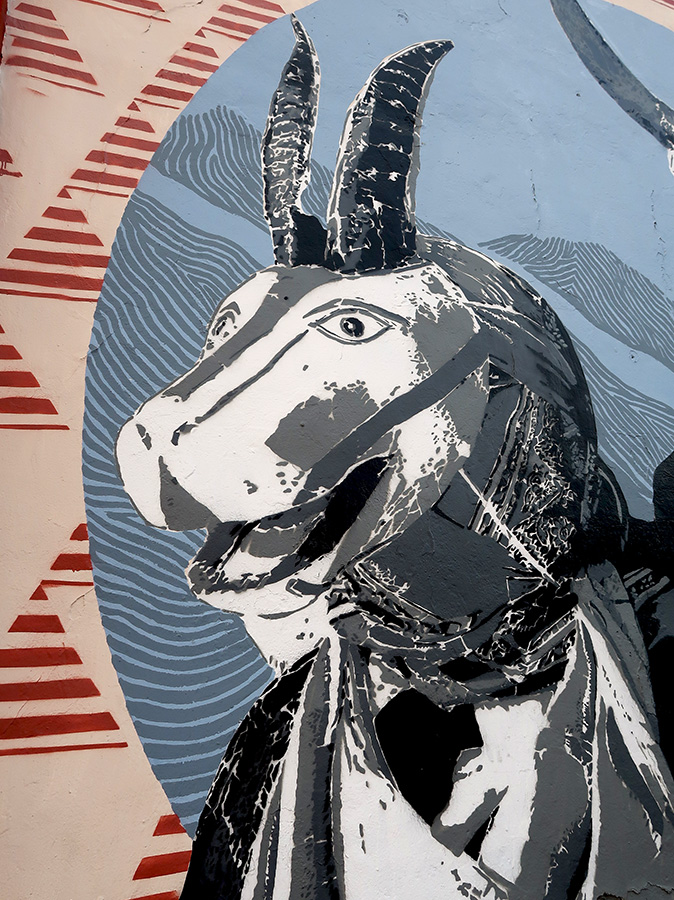
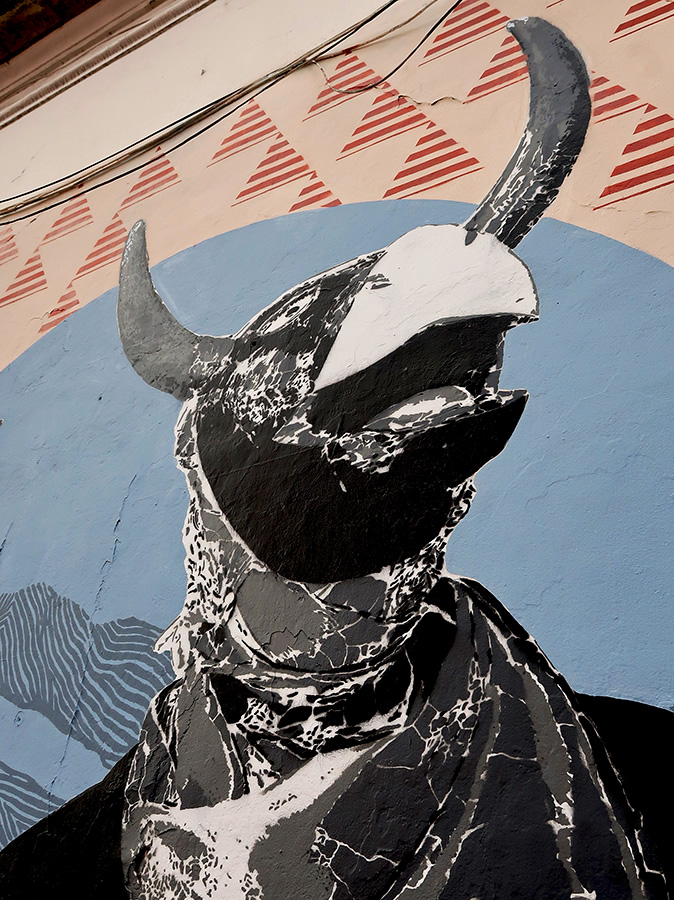
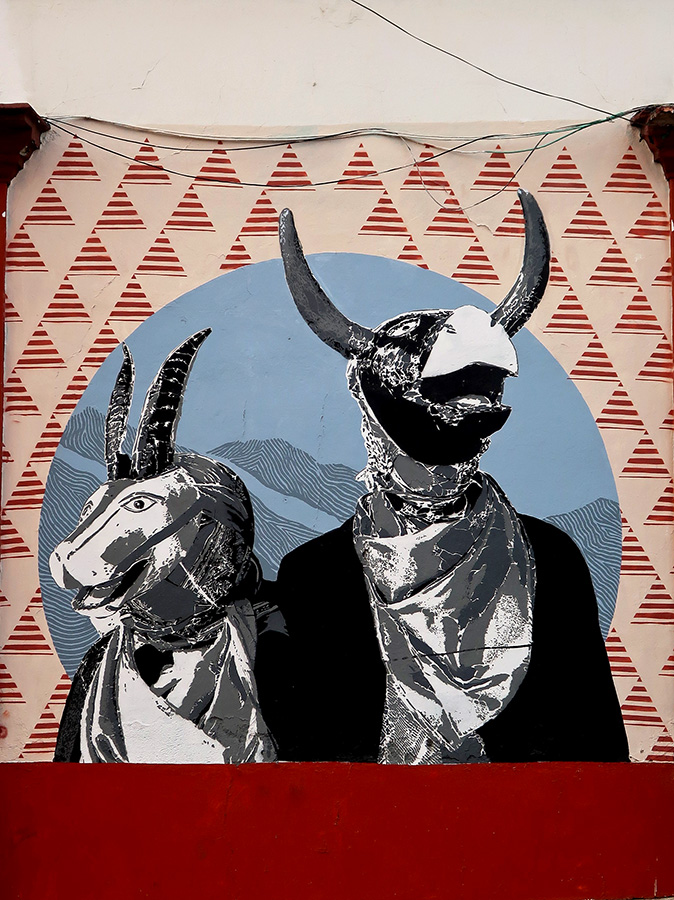
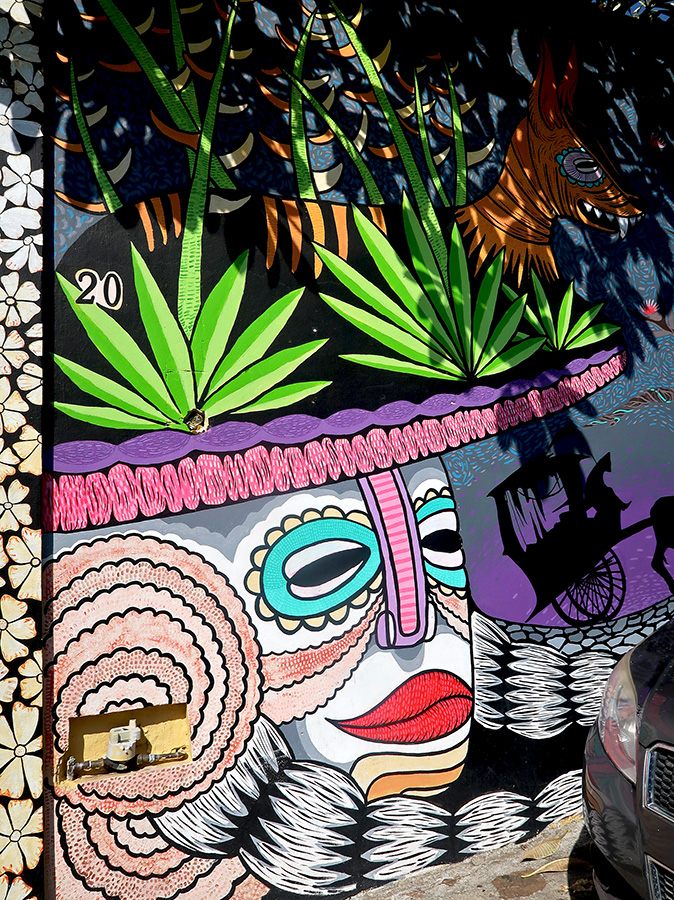
There is a new mural in town. After five years, The gods are watching mural (my name for it) has been replaced by the watchful eyes of a goat and a sheep.

Together they stand outside La Madriguera taller on Tinoco y Palacios (between Morelos and Matamoros).

Read Full Post »

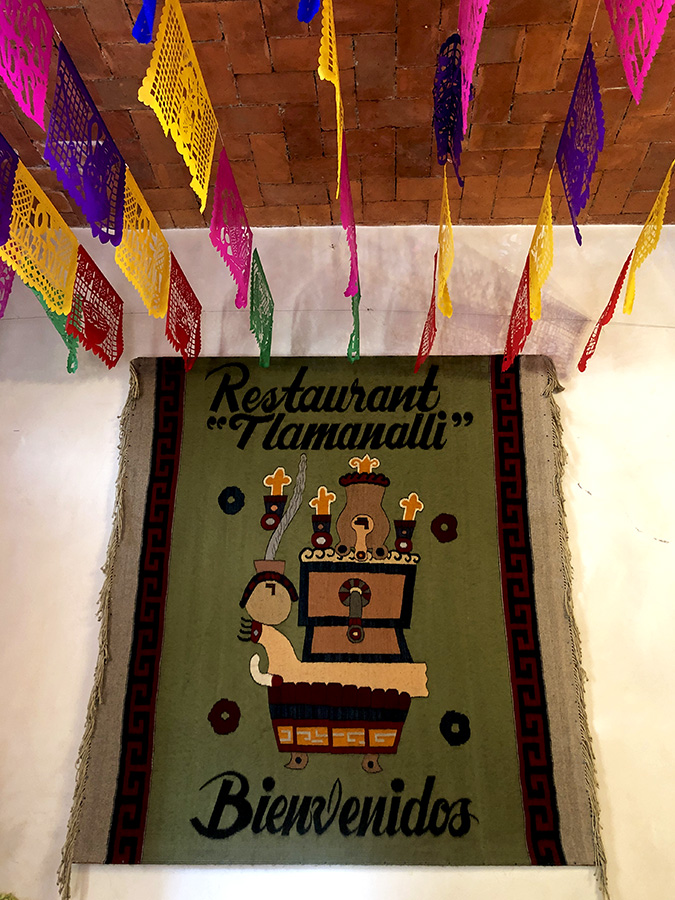
Valentine’s Day in Mexico is known as Día del amor y la amistad (Day of love and friendship) and I had the extremely good fortune to spend it in Teotitlán del Valle (one of my favorite places in the world) among friends at the thirtieth anniversary celebration of the restaurant, Tlamanalli.

Iconic Restaurant Tlamanalli tapete.

Special garlands of papel picado fluttered above the heads of the 150-200 invited guests, centerpieces of jicalpextles filled with handmade sugar flowers, papel picado flags, and marshmallows wrapped in colored tissue paper graced the tables, and each place setting included a commemorative menu.

Papel picado celebrating 30 years of Tlamanalli.

One of Teotitlán’s several bands was positioned just inside the door and played throughout the afternoon.

Musical entertainment to accompany the dining.

The open kitchen was a beehive of activity and, no doubt, had been for at least two weeks — in preparation for this auspicious anniversary.

Family working together in the kitchen.

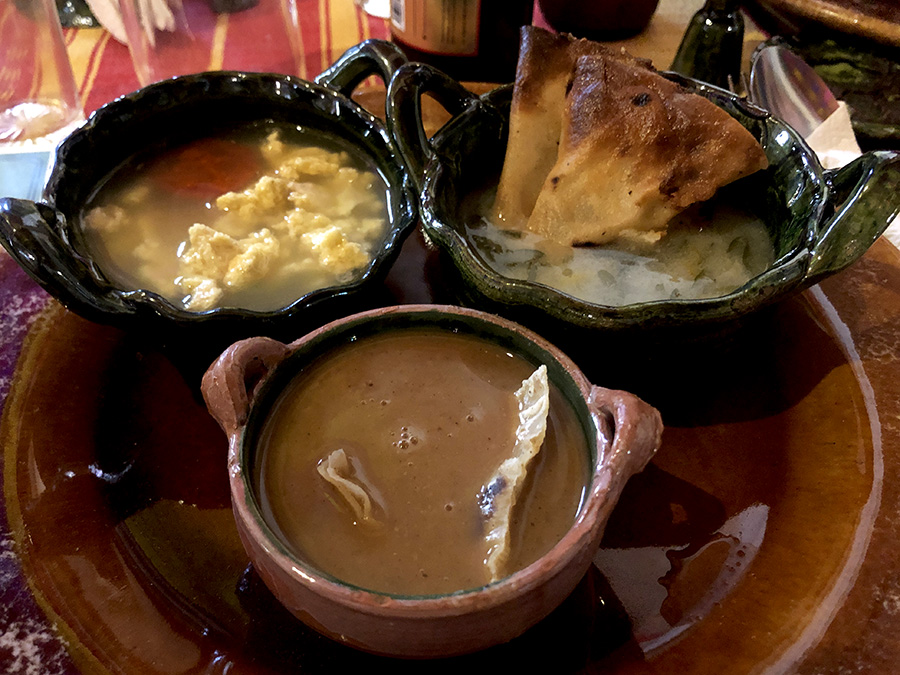
Four courses honoring their Zapotec heritage were prepared with love and respect by world famous cocinera Abigail Mendoza Ruiz, her sisters Adelina, Marcelina, Maria Luisa, Rosario, Rufina, and her niece Diana.

Soups: Higadito de fandango, Flor de calabaza con quesadilla, and Garbanzo molido con tortillita.

Tamales: Chepil en totomoxtle, Mole amarillo con carne de conejo en hoja de milpa, and Frijol en totomoxtle.

Moles: Rojo con carne de gallina, Seguesa con lomo de puerco, and Negro con carne de guajolota.

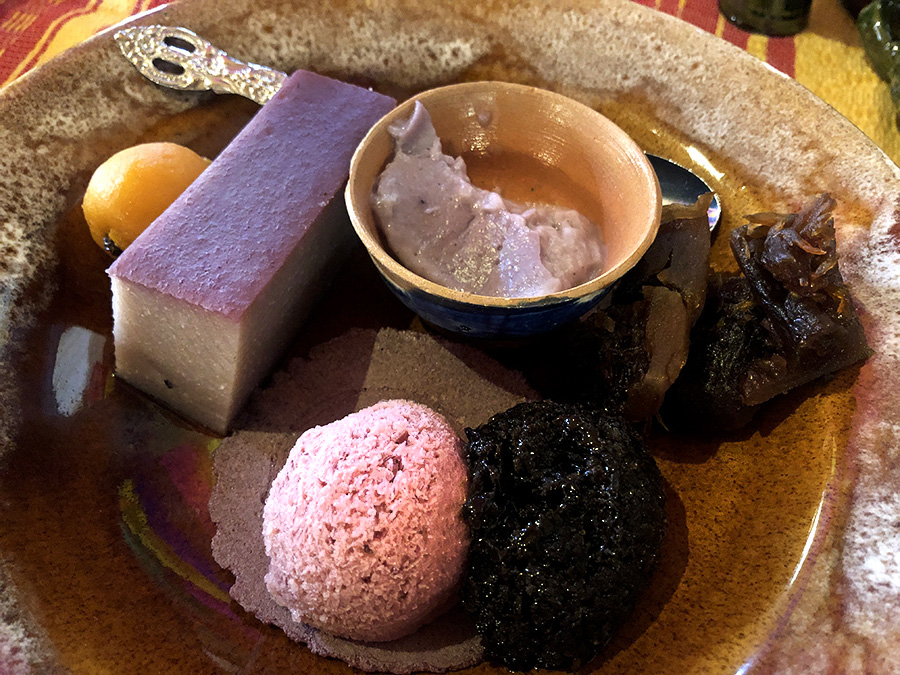
Desserts: Nicuatolli de maiz azul con tinte de cochinilla, Flan Tlamanalli, Dulce de calabaza, Nieve de zapote negro, and Nieve de pétalos de rosa.

And, I got a bit of a chuckle when it was pointed out to me that it was the men in the family who were on washing and drying duty.

The men continued washing and drying throughout the day.

We were surprised we recognized so few of the attendees — only later discovering, thanks to this article, that many were dignitaries (not our usual crowd). However, we were more than delighted to have been seated at one of the tables in the section reserved for family members, several of whom we knew, and where conversations were in equal parts Spanish and Zapoteco, with only bits of English thrown into the mix — keeping us on our toes!

Commemorative jicalpextle centerpiece.

What an honor it was for us to be invited to share this special day with the Mendoza family — a day filled with love and friendship and very good food!

(For more photos and commentary, check out Chris’s blog post.)

Read Full Post »

What a difference two months make.

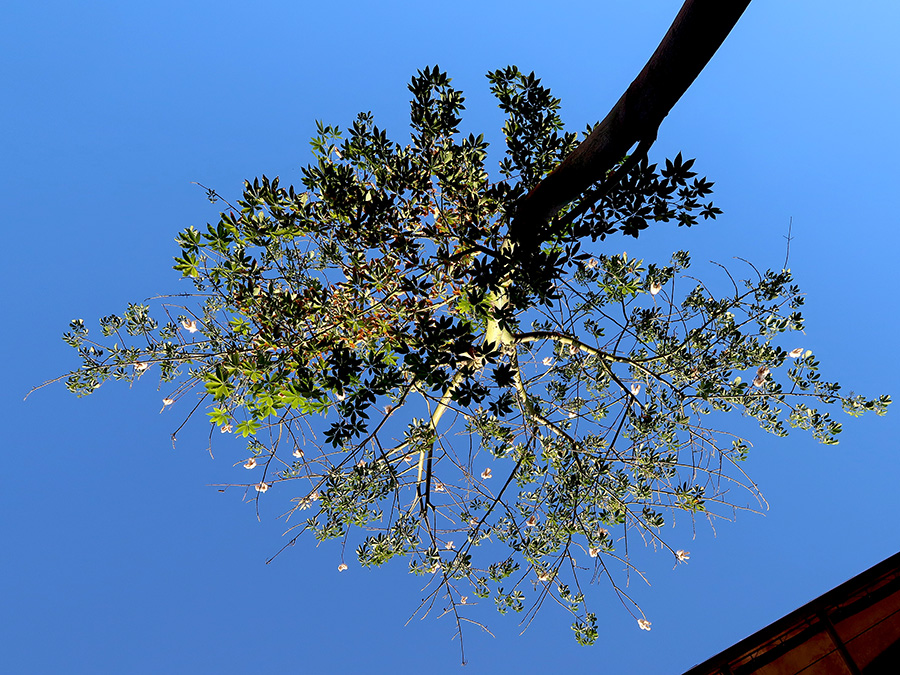
The Pochote pods on the previously blogged Kapok (aka, Ceiba) tree have opened.

And, cottony fluff occasionally floats in the air…

… even from the Ceiba that soars above the courtyard of La Biznaga.

Read Full Post »

I fell in love with Oaxaca the first time I saw her when visiting a friend in 2007.  The city was teeming with energy and color and I felt embraced by its welcoming warmth. The day after my arrival, the sounds of Trío Santo Domingo drew us down to the zócalo on a balmy August evening. I was captivated by the melodies, guitars, and harmonies of the boleros they played. I bought their CD  and discovered many of my favorites were written by beloved Mexican composer and Oaxaqueño, Álvaro Carrillo AlarcónSabor a Mí, El Andariego, Luz de Luna, Un Poco Más, Amor Mío, and so many more. His music captured my heart and continues to nourish my soul.

Bust of Álvaro Carrillo Alarcón in Oaxaca’s Jardín Carbajal includes lyrics from “Sabor a Mí”

Thus, two months ago, I jumped at the opportunity to attend a concert honoring the musical legacy and celebrating the 100th birthday of Álvaro Carrillo Alarcón. The performers paying tribute to him were among Mexico’s most loved and were accompanied by a full orchestra and the guitars and harmonies of Trío Los Panchos. They did not disappoint!

In addition to the above singers, Jean Venegas and Álvaro Carrillo’s sons, Mario Carrillo and Álvaro Carrillo Jr., also performed. Young and old, the audience sang along the entire night and more than a few tears were shed — for lost loves, fond memories, and pride in their native son. Álvaro Carrillo died tragically in a car accident at the age of 47 but new generations continue to rediscover and cover his songs and, thanks to the internet, we can hear from the man, himself.

Oaxaca, you had me at Sabor a Mí.

Read Full Post »

In Mexico, the hummingbird (colibrí) is known as the protector of warriors and messenger of the gods — two of the most revered roles in indigenous cosmology. How lucky I am that several of the varieties seen on the poster below continue to capture my attention and fill my heart with joy as they flit from tree to fence to fountain for a bath and zigzag across my terrace playing their version of tag and king of the hill.

Hummingbirds of Mexico and North America poster

Muchisimas gracias to my friend K for the link to this poster from CONABIO (National Commission for Biodiversity). In addition, if these tiny creatures also captivate you, a PDF of the CONABIO book, Colibríes de México y Norte América / Hummingbirds of México and North America is available online with text in both Spanish and English (click title link).

Read Full Post »

I subscribe to the bumper-sticker wisdom seen many years ago, “When you live in your heart, you are always home.” However…

I’m still in el norte — but dreaming of the view from Casita Colibrí.

Read Full Post »

Flying into any airport in Mexico, you see them dotting the landscape below — Mexico’s ubiquitous rooftop tinacos.

View through a Casita Colibrí window of the tinaco across the street.

For those of you who are dying to know how the water system here at Casita Colibrí works: An underground pipe regularly (or, not so regularly, as the case may be) delivers municipal water into an aljibe (cistern) — a storage tank under our courtyard and driveway.  A bomba (pump) is run daily for an hour (más o menos) to bring water from the aljibe up into the tinacos sitting on the various rooftops of the apartment complex.  When we turn on our tap, water flows (or dribbles) from our faucets courtesy of gravity.

By the way, this is non potable water.  Drinking water is a different story involving garrafones (5-gallon water jugs).

Read Full Post »

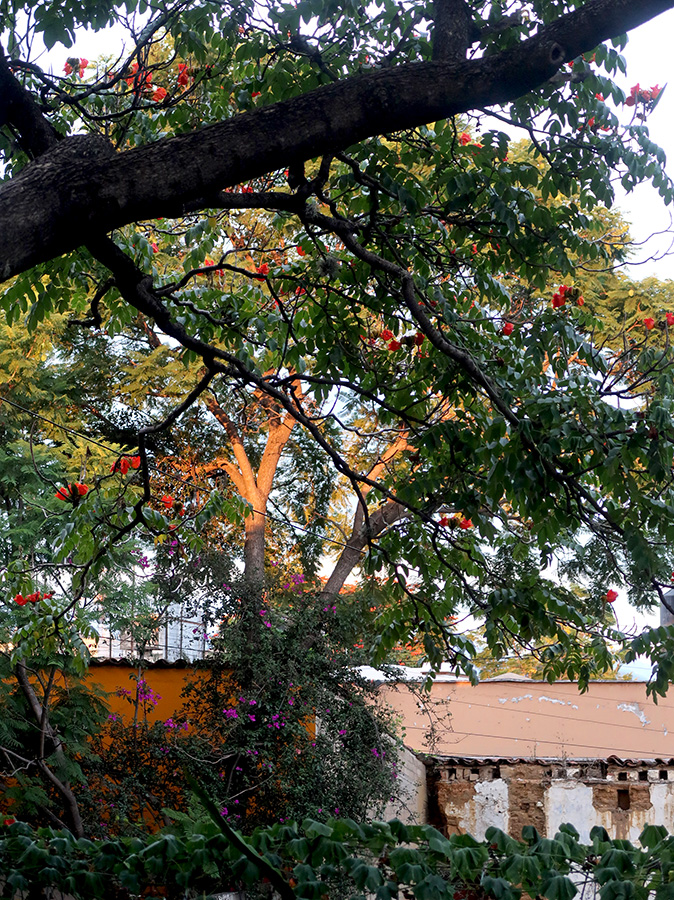
It was only recently that I learned that Oaxaca’s ubiquitous and beloved Ceiba tree was also known as the Kapok tree. Yikes, kapok was the stuff that stuffed the overstuffed furniture in my grandparents’ living room.

Those avocado-like pods (also known as pochote) contain a fluffy cotton-like fiber that is difficult to spin but is light and-water resistant — thus its use in mattresses, pillows, upholstery, stuffed animals, and life jackets. All hail and much respect to the “the mother tree of humankind.

Read Full Post »

The Jalatlaco neighborhood always yields artistic surprises…

November 13, 2019

November 13, 2019

November 13, 2019

October 22, 2019

October 22, 2019

Happiness is wandering the streets of Oaxaca.

Read Full Post »

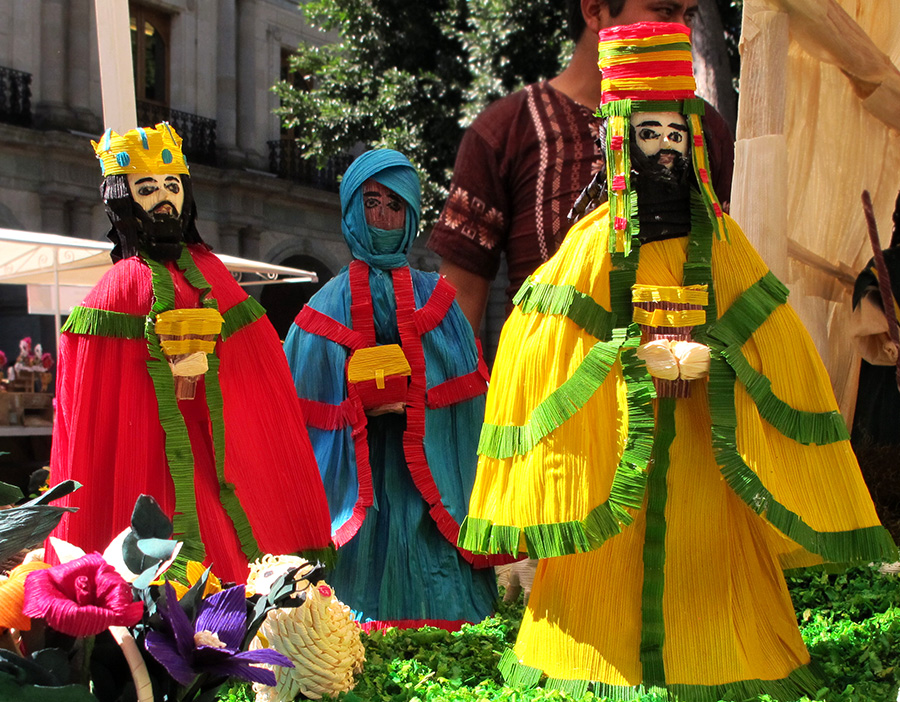
Today Mexico is celebrating el Día de los Reyes Magos. Traditionally, it is the Three Kings — Gaspar, Melchor, and Baltazar — who bring gifts to children on Epiphany (aka, Twelfth Night — yes, that Twelfth Night).

Tres Reyes in totomoxtle (corn husks) – Noche de Rabanos 2012

According to Oaxaca Día a Día, over 5,000 toys have been donated by individuals, companies, public servants, the media, and the governmental DIF Oaxaca. 1.2 kilometers of dolls, balls, games, stuffed animals, and other toys line the Plaza de la Danza to be distributed today to disadvantaged school children.

By the way, here in the San Francisco Bay Area, events celebrating el Día de los Reyes Magos are also happening.

Read Full Post »

Not seeing sights like this up here in el norte…

Ahhh… finding one’s niche in Oaxaca!

Read Full Post »

Looking in the rear view mirror at images from 2019. They bring fond memories of life in Oaxaca — ferias, festivals, food, and friends, not to mention exhibitions, random street scenes, and the unexpected at Casita Colibrí. They were also a reminder of many days and nights spent in Teotitlán del Valle this year.

January – San Juan Guelavía town hall.

February – Wall on Niños Heroes, remembering the Ayotzinapa 43.

March – Cactus flower on the Casita Colibrí terrace.

April – View from a gas station along Carretera Federal 175.

May – Construction assistance from the balcony of Casita Colibrí.

June – The tamales brigade at a 50th birthday fiesta in Teotitlán del Valle.

July – Newly made candles in Teotitlán del Valle.

August – Necklace from Monte Albán Tomb 7 exhibition at the Museo de las Culturas de Oaxaca.

September – Convite during the Fiesta a la Natividad de la Virgen María in Teotitlán del Valle.

October – Danza de la Pluma at Fiesta de La Virgen del Rosario in Teotitlán del Valle.

November – Día de Muertos tamales in Teotitlán del Valle.

December – Nacimiento (nativity scene) in the Plaza de la Danza.

Many thanks to all my wonderful blog readers — for reading, for commenting, for sharing, for the opportunity to meet some of you, and for inspiring me to continue blogging from my rooftop terrace in Oaxaca. Wishing you all the very best in 2020!!!

Read Full Post »

« Newer Posts - Older Posts »