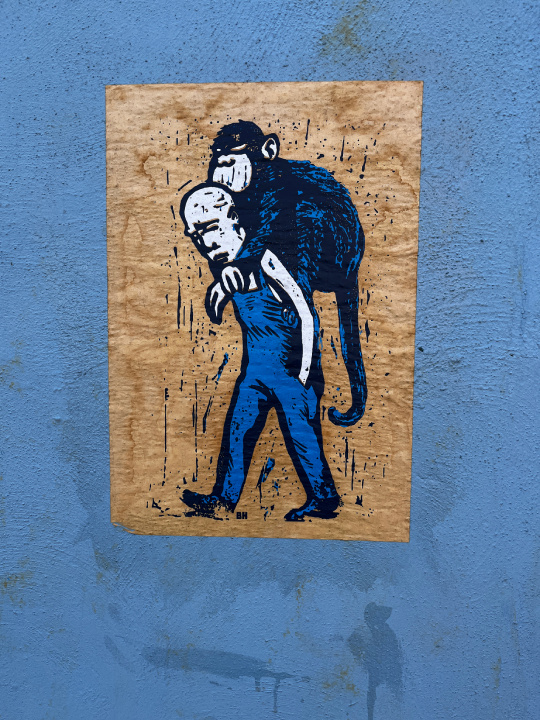
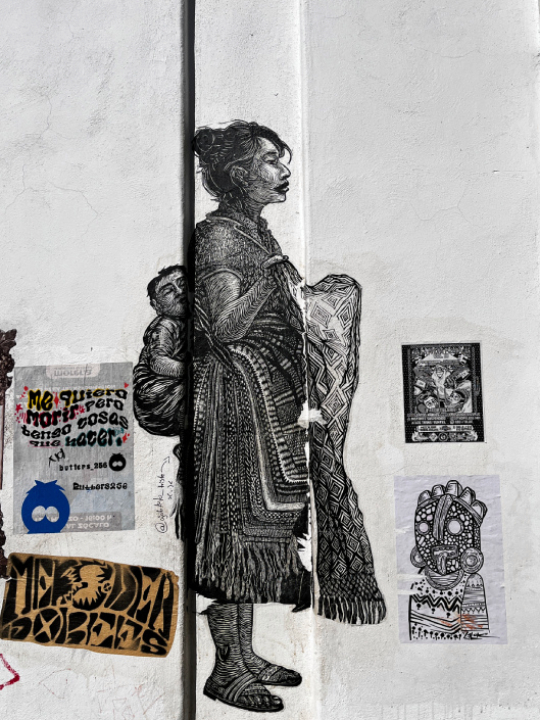
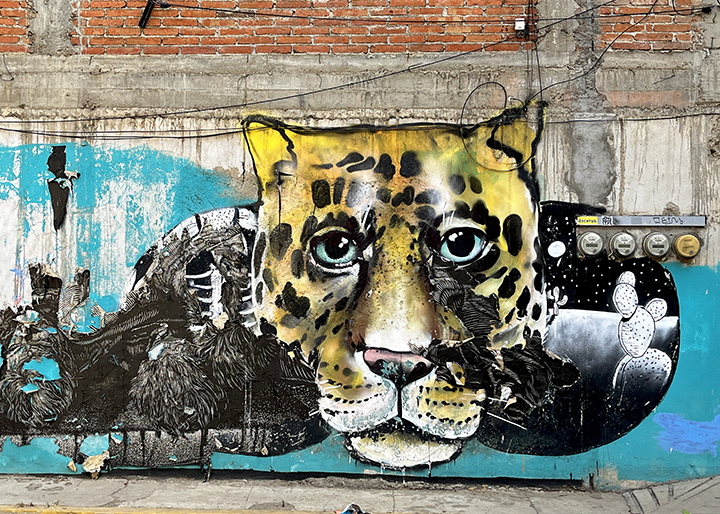
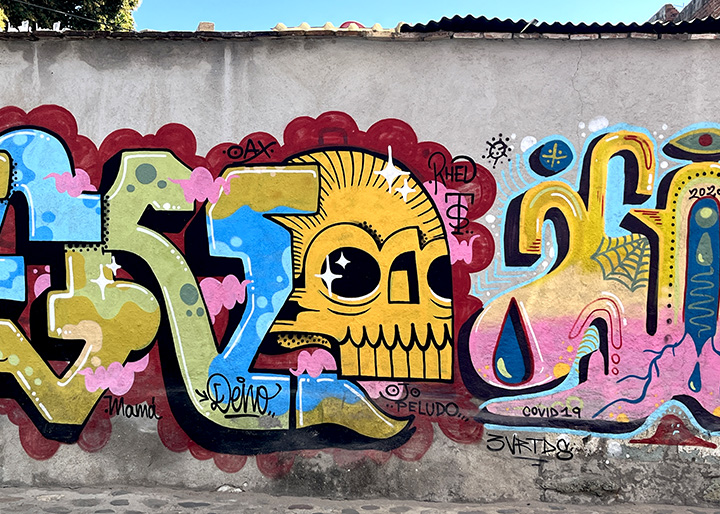
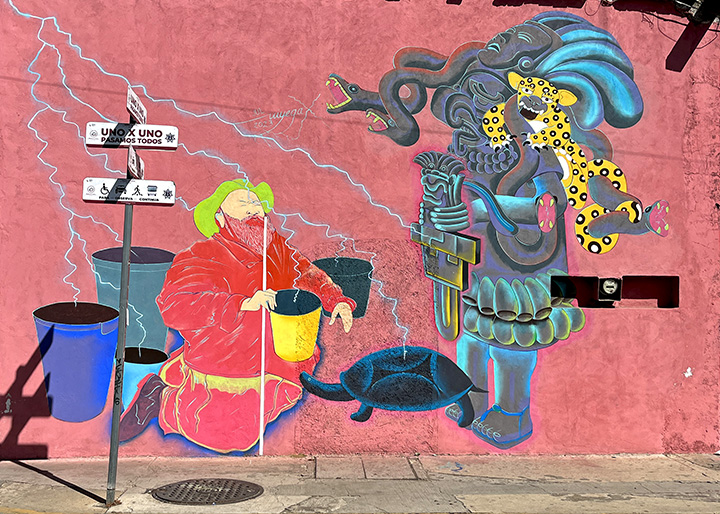
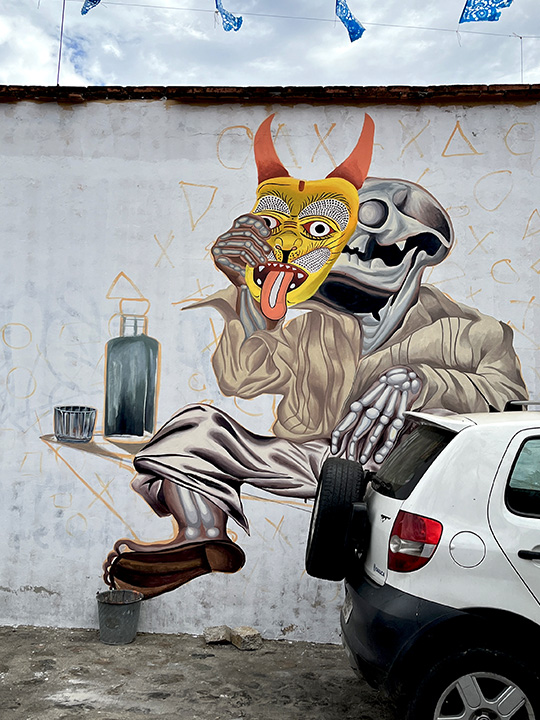
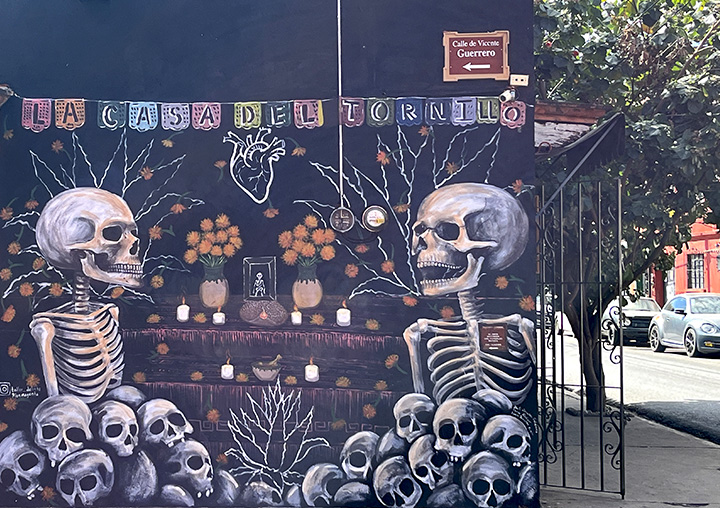
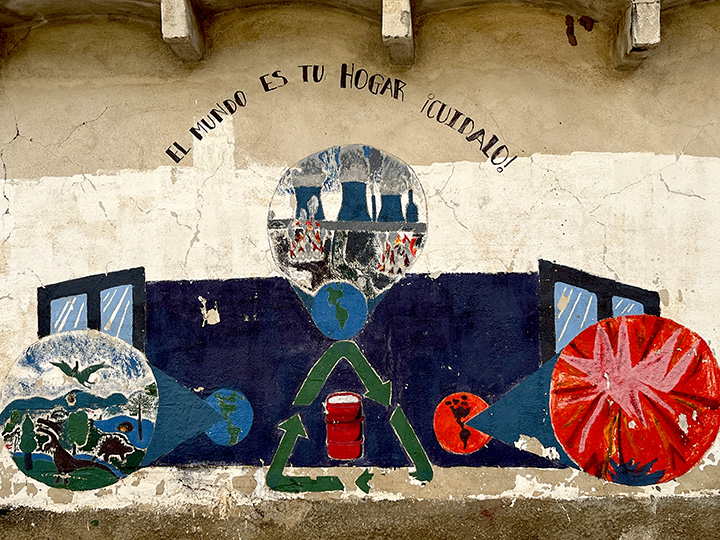
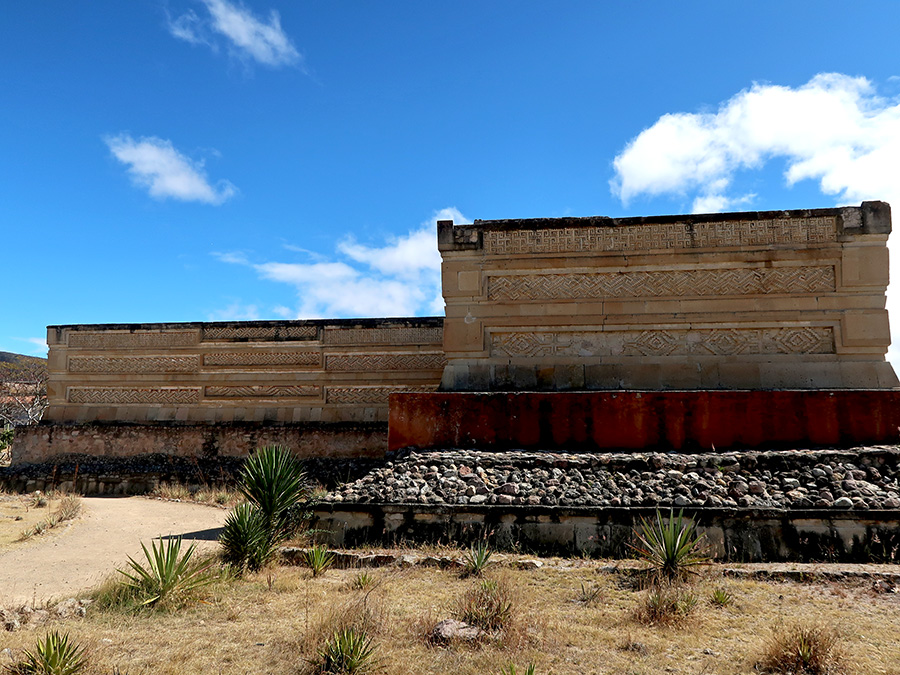
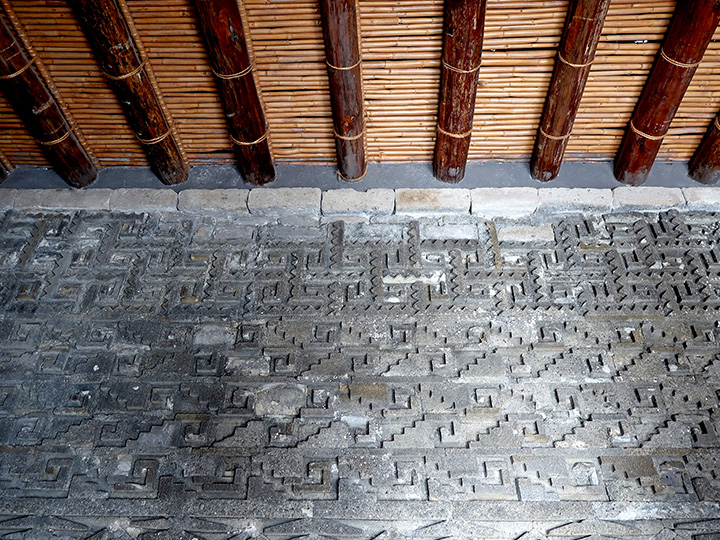
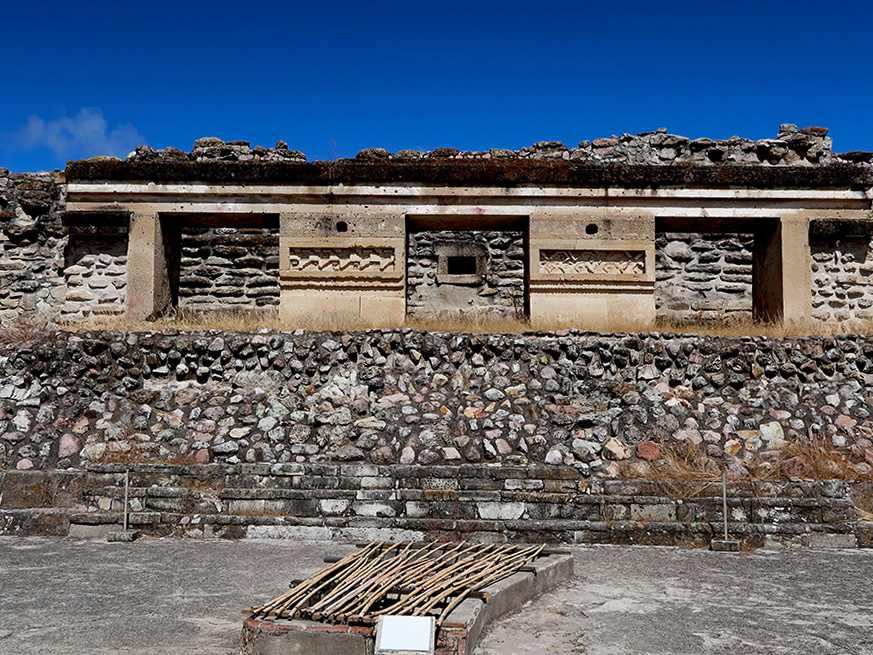
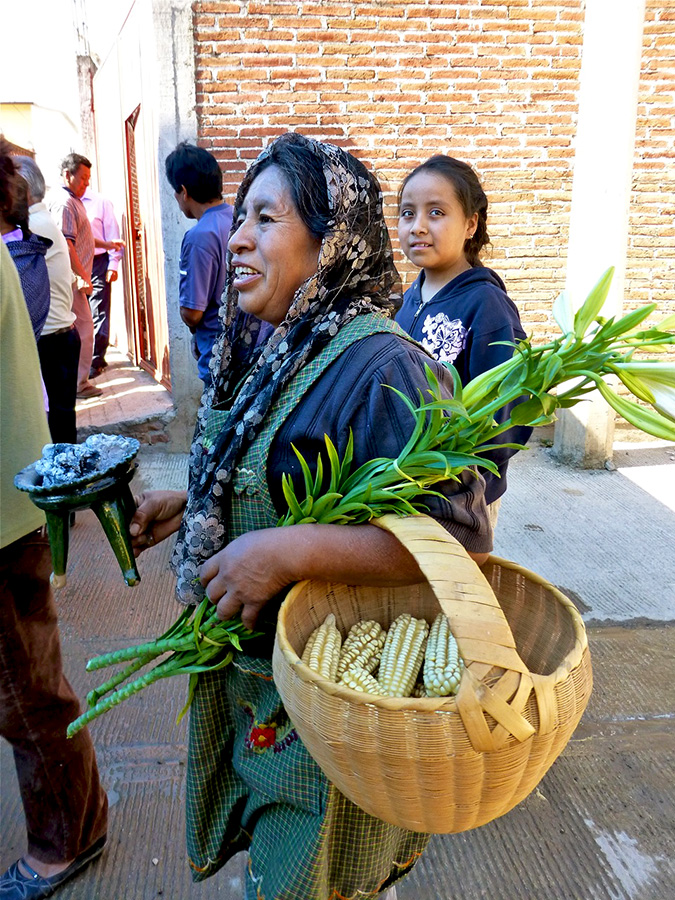
Four weeks in my home sweet Oaxaca home provided a much needed escape from the chaos that now reigns supreme here in the USA. The warm smiles and greetings of ¡Qué milagro! (What a miracle!) from vendors I hadn’t seen in over a year warmed my heart. However, try as I might, I can’t seem to write an upbeat blog post about the wonderful time I had in Oaxaca. The menacing clouds of el norte are casting their dark shadows over my words. For now, I’ll let the walls of Oaxaca speak for me.
However, to end on a positive note and in honor of International Women’s Day on March 8th…
Despite suffering setbacks and facing countless attempts to block, divide and undermine us throughout history, feminist, LGBTI+ and grassroots movements keep marching forward. — Amnesty International’s Secretary General, Agnés Callamard
And, that includes Oaxaca, where NVI Noticias lists some of the actions taking place in celebration of Día Internacional de la Mujer.
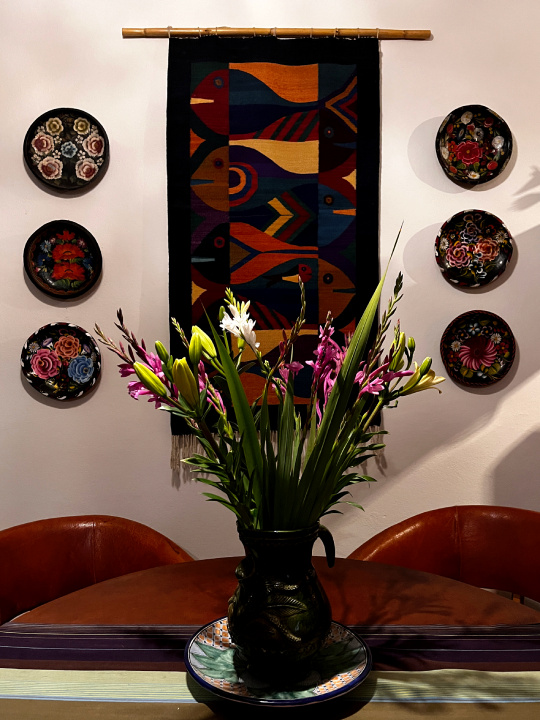
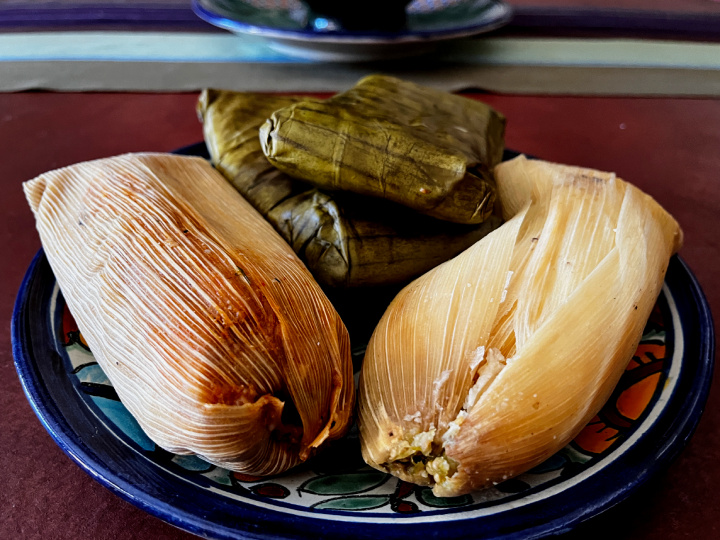
After being in el norte for an entire year (by far the longest I’ve been away from Oaxaca since I relocated 15+ years ago), I’m back! It’s been mostly a smooth return — well, except for my refrigerator’s failed fuse, causing a freezer full of tamales, mole, and soup stocks to spoil. Thankfully, my neighbors discovered it the day before my return and emptied and cleaned the refrigerator and an electrician replaced the fuse a mere ten hours before my arrival. Since then, this past week has been spent restocking the larder, cleaning, attending to the garden, catching up with friends, and enjoying my home, my neighborhood, and the flavors of Oaxaca — including…
The murals…
The streets…
The door-to-door flower vendor…
The comida…
And, let’s not forget, the view from Casita Colibrí!
It’s SO good to be back — alas, if only for a month. However, I intend to relish every moment!
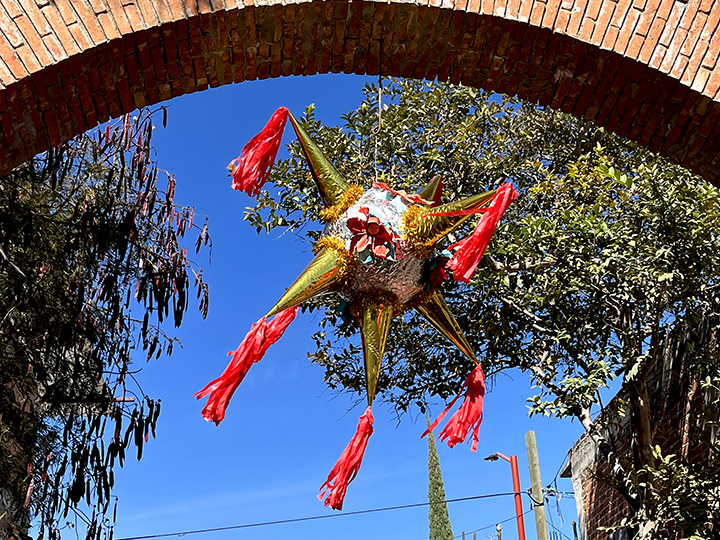
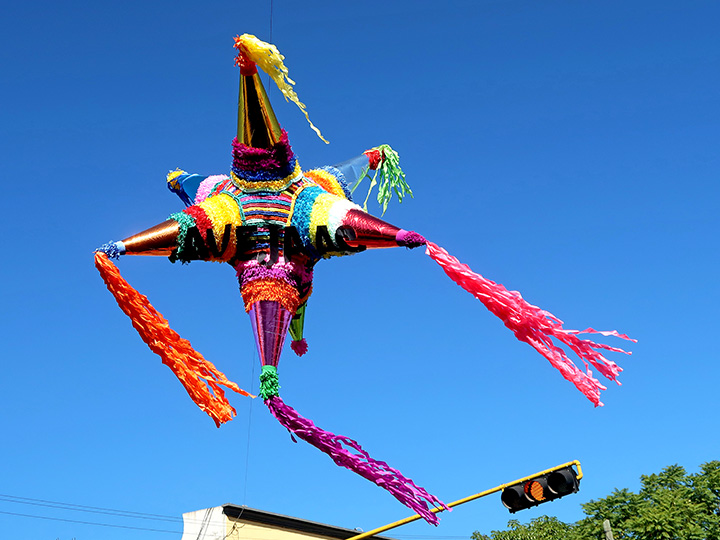
Although I’m spending Christmas in the San Francisco Bay Area with family, I’m dreaming Oaxaca holiday dreams of piñatas, often seemingly floating in air. [click on images to enlarge]
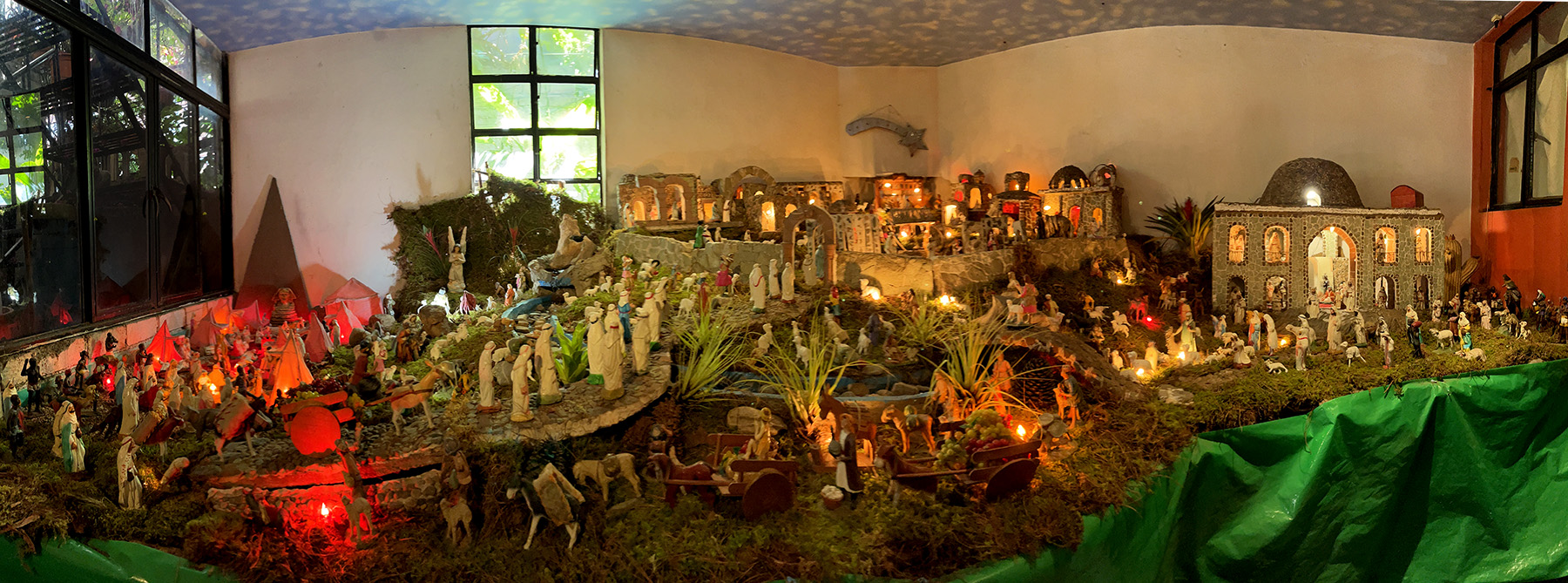
Nacimientos (Nativity scenes) and neighborhood posadas, at once solemn and joyful.
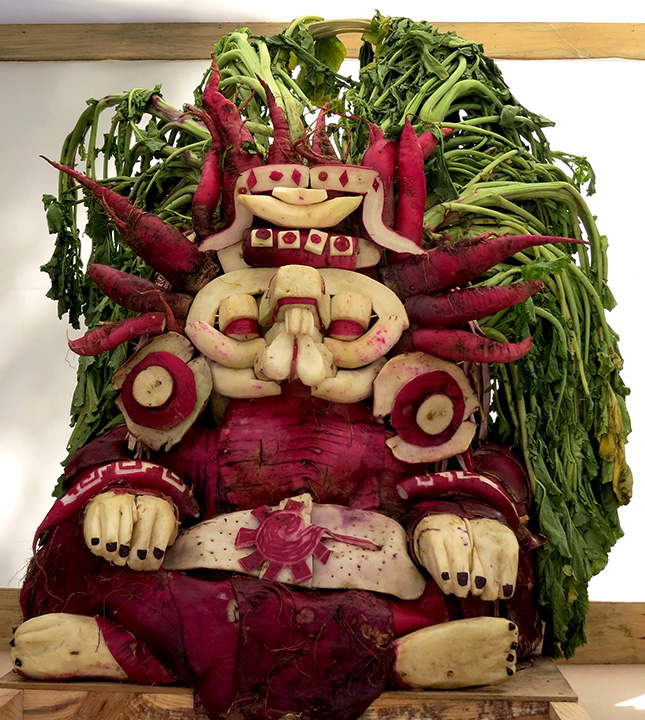
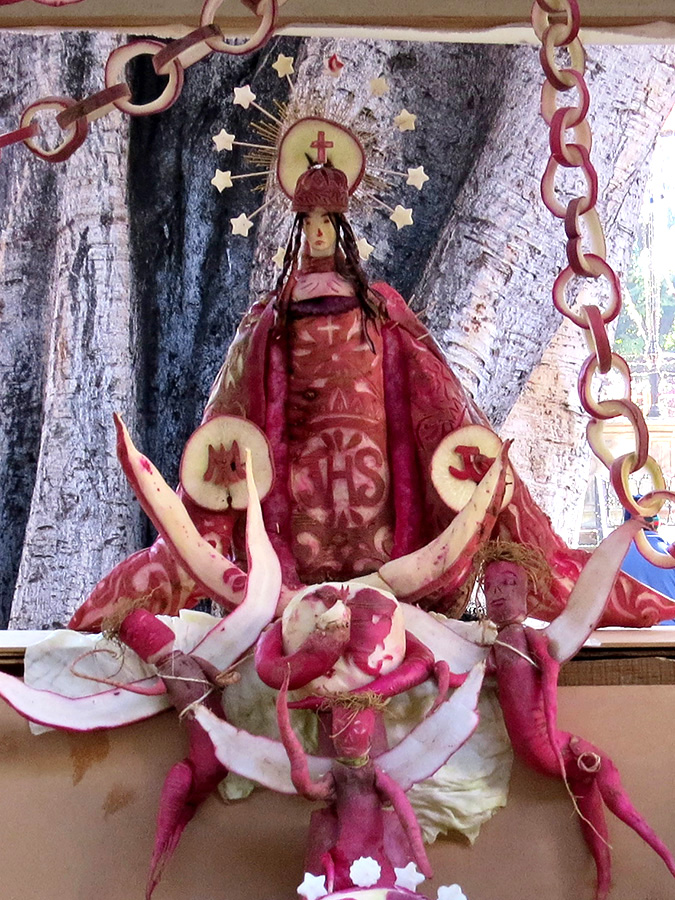
And, the wild and whacky rabanos (radishes), totomoxtle (corn husk), and flor inmortal (dried flower) creations on December 23, Noche de Rábanos (Night of the Radishes).
Thus, after a year’s hiatus, I’m reviving my Nochebuena tradition and presenting to you, “Pancho Claus” by Chicano musical legend Eduardo “Lalo” Guerrero and sung by Irma Garza. The song is a delightful parody of the Clement C. Moore classic, “‘Twas the Night Before Christmas” — and it has inspired real life Tex-Mex Santas. I hope it brings a chuckle or two on this Christmas Eve.
‘Twas the night before Christmas and all through the casa
Mama she was busy preparing the masa
To make the tamales for the tamalada
And all the ingredients for the enchiladas

Papa in the front room with all the muchachas
Was dancing the mambo and doing the cha cha
My brothers and sisters were out in the hall
Listening to Elvis singing rock ‘n roll

When all of a sudden there came such a racket
I jumped out of bed and I put on my jacket
I looked out the window and in front of the house
Was my old uncle Pedro as drunk as a louse
He ran in the casa he grabbed the guitarra
He let out a yell and played “Guadalajara”

I was starting to wonder as I lay there alone
How old Santa Claus was to visit my home
With all of this noise they would scare him away
When all of a sudden I hear someone say
Hey Pablo, Chuchito Hey! Arriba! Gordito, Jose
Get up there you bums or you don’t get no hay

And then to my wondering eyes did appear
Eight cute little donkeys instead of reindeer
They pulled a carreta that was full of toys
For all of us good little girls and boys

The fat little driver waved his big sombrero
And said Merry Christmas! Feliz Año Nuevo!
That means “Happy New Year”
And then I hear him sing

I am Santa’s cousin from south of the border
My name’s Pancho Claus and I bring you your order
I hear him exclaim as he drove past the porches
“Merry Christmas to all and to all Buenas Noches”
From my home to yours, I wish you peace, good health, and Felices Fiestas (Happy Holidays)!
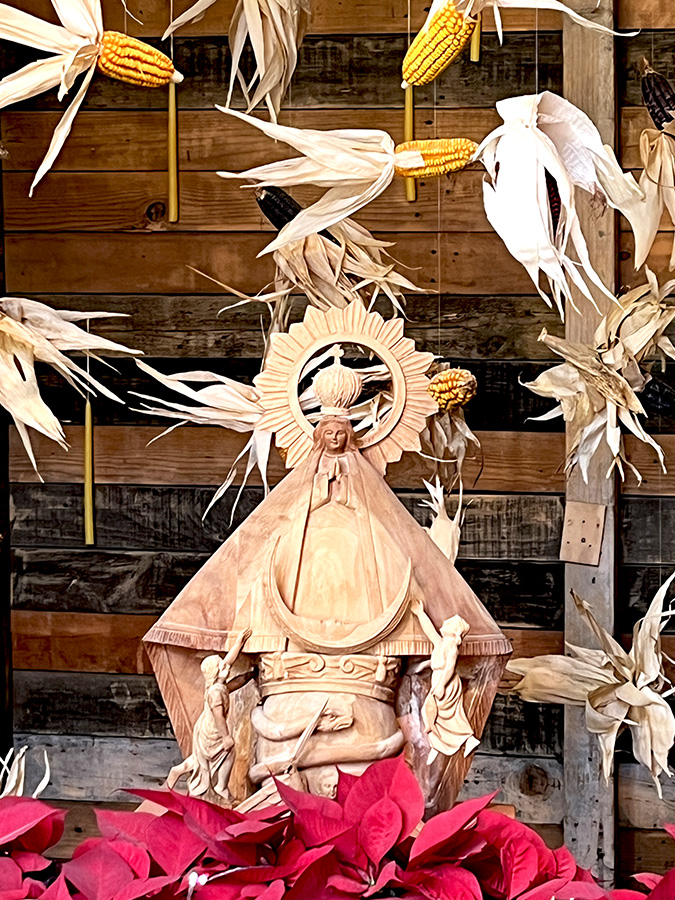
If you don’t like clanging bells, fireworks bursting in air, and navigating procession-blocked streets (at all hours of the day and night), you might want to avoid being in Oaxaca in December. The month heralds seemingly round-the-clock joyous, sometimes solemn, and mostly noisy celebrations. This month, honoring the feast days of the Virgins of Juquila, Guadalupe, and Soledad elicits some of the most enthusiastic, lengthy, and loud festivities of the year.
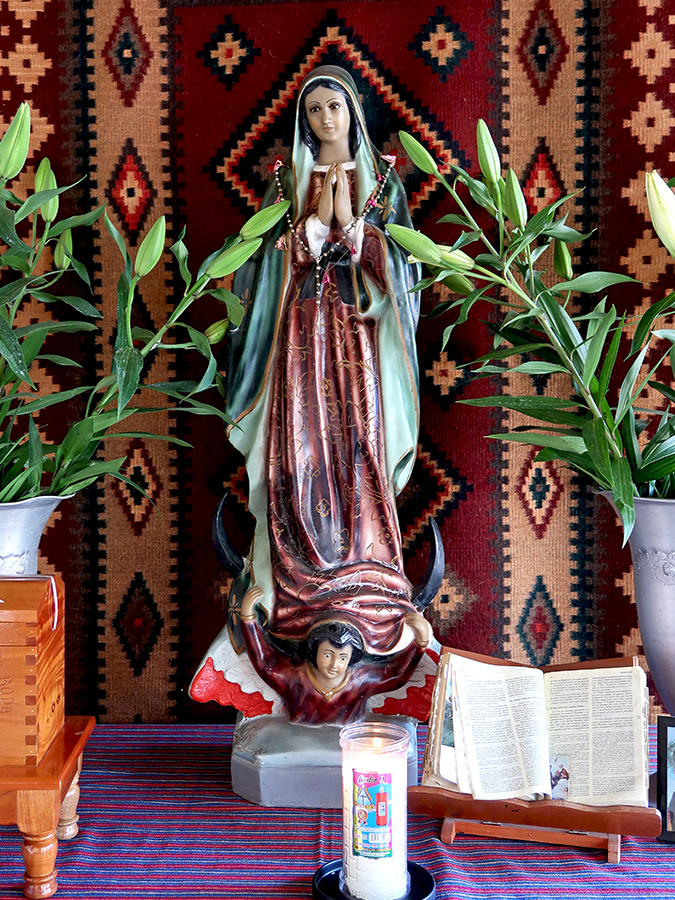
December 26, 2023 – Juquila, Guadalupe, and Soledad on altar at the workshop of Jacobo and María Ángeles in San Martín Tilcajete.
December 8 marks Día de la Virgen de Juquila — the first of the three virgins being celebrated this month. Observances began weeks ago as pilgrims began their peregrinations to her tiny Chatino village of Santa Catarina Juquila. And, in Oaxaca city, processions began filling the streets, cohetes (rockets) began exploding, and church bells sounded announcing special misas (masses).
December 26, 2023 – Close-up of Juquila on the altar at the workshop of Jacobo and María Ángeles in San Martín Tilcajete.
December 23, 2023 – Juquila carved from radishes. Noche de Rabanos, Oaxaca de Juárez.
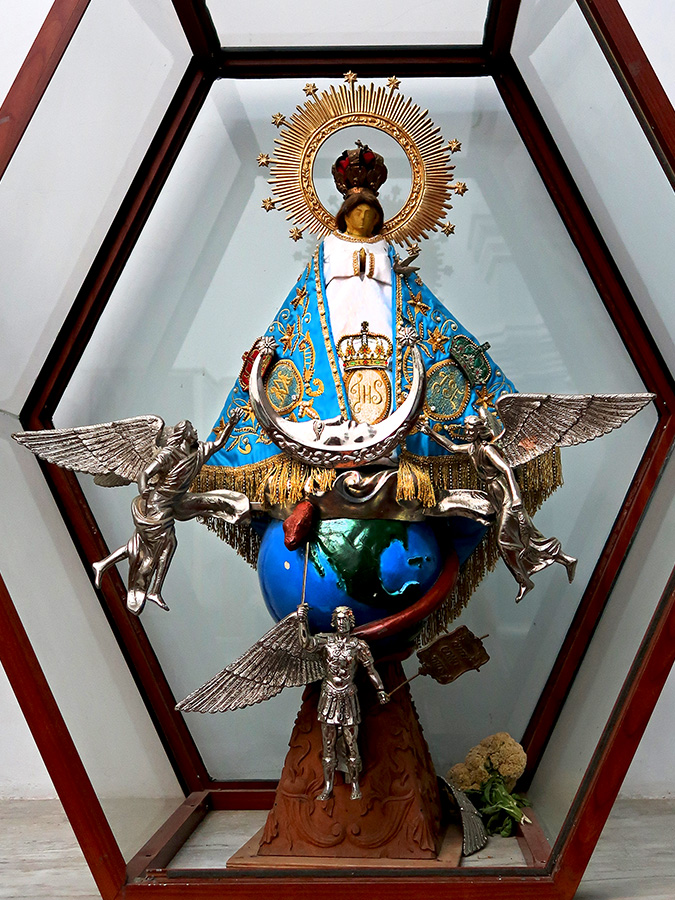
November 4, 2023 – Juquila enclosed in glass, Ocotlán de Morelos.
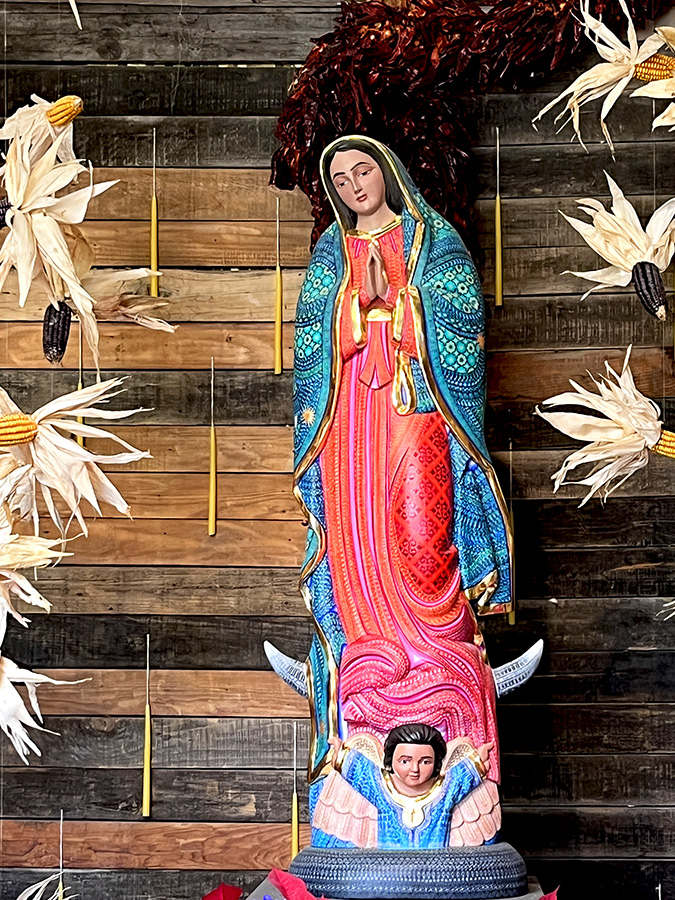
Next on the on the calendar is the more widely known date of December 12, honoring la Virgen de Guadalupe, aka, Queen of Mexico, Empress of America, and patron saint of México. However, the celebrating has already begun and besides fireworks, processions, and church bells chiming, professional photographers set up “Guadalupe grottos” outside Oaxaca’s Templo de Nuestra Señora de Guadalupe so, after being blessed inside the church, parents can have their little boys and girls, dressed in traditional traje (costume), photographed. Once finished, all can partake in the rows upon rows of food stalls, carnival rides, and puestos selling toys, Santa hats, Christmas lights.
December 26, 2023 – Close-up of Guadalupe on the altar at the workshop of Jacobo and María Ángeles in San Martín Tilcajete.
January 19, 2024 – Guadalupe on an altar set up in a private home prior to a wedding in Teotitlán del Valle.
November 4, 2023 – Guadalupe watching over a grave in the cemetery of San Antonino Castillo Velasco.
January 8, 2024 – Stylized Guadalupe on Calle Mártires de Tacubaya in Oaxaca de Juárez.
Last, but not least for Oaxaqueños, is December 18, the feast day of the much loved and revered, Queen of Oaxaca, La Santísima Virgen de La Soledad (Virgin of Solitude). Festivities with special religious rites, processions, and fireworks usually begin in early December, overlapping with Juquila and Guadalupe. Soledad’s celebration culminates with hundreds of her devotees camping out in the atrium of her church, the Basílica de Nuestra Señora de la Soledad, on the night of December 17 — with musical entertainment throughout the night, afternoon cultural performances the next day, and several outdoor masses from before dawn to nightfall on the 18th. Food stalls take over the stairs leading to the Basílica and the street below (Independencia) is closed for several blocks with carnival rides and stalls selling more sweets and savories, religious tchotchkes, clothing, and much more. It’s lively, crowded, and loud!
December 26, 2023 – Close-up of Soledad on the altar at the workshop of Jacobo and María Ángeles in San Martín Tilcajete.
December 23, 2023 – Soledad carved from radishes. Noche de Rabanos, Oaxaca de Juárez.
December 19, 2023 – Soledad in her home at the Basílica de Nuestra Señora de la Soledad, Oaxaca de Juárez.
I’m still in el norte and all is quiet. While it makes for a better night’s sleep, I’m missing the raucous and joy-filled cacophony that fills Oaxaca’s days and nights in December.
Last January, I needed to go to the Aragal shipping facility to pick up a Christmas present — two jars of Salsa Macha made for me by K, best gal pal and former neighbor who was my personal cocinera (cook) during those dark days of Covid. The salsa made a circuitous journey from K’s kitchen in Teotitlán del Valle to my kitchen in Barrio de Jalatlaco. The route included being tucked in the back of our friend’s van while we all enjoyed a day trip to Ocotlán and San Antonino Castillo Velasco, once back in the city, being forgotten as I scrambled out of the van amidst bumper-to-bumper traffic, venturing up over the mountains to Puerto Escondido in said van, belatedly being remembered, and thus shipped by my van-owning friend back to me in Oaxaca.
And so, two weeks after it began its journey, I found myself walking south to Aragal to retrieve my errant gift. This is not a route I normally traverse and it’s definitely not in a touristy part of the city. However, being Oaxaca, there was no end of sights to surprise and delight — from the sacred of the Templo de los Siete Príncipes to the profane of the street art along the way.
Calle Mártires de Tacubaya
Calle Mártires de Tacubaya
Templo de los Siete Príncipes, Calle de González Ortega
Calle Santos Degollado
Calle Miguel Hidalgo
The two glass jars of Salsa Macha made it intact with only a tiny bit of leakage. Whew! And, no surprise, the salsa was super delicious.
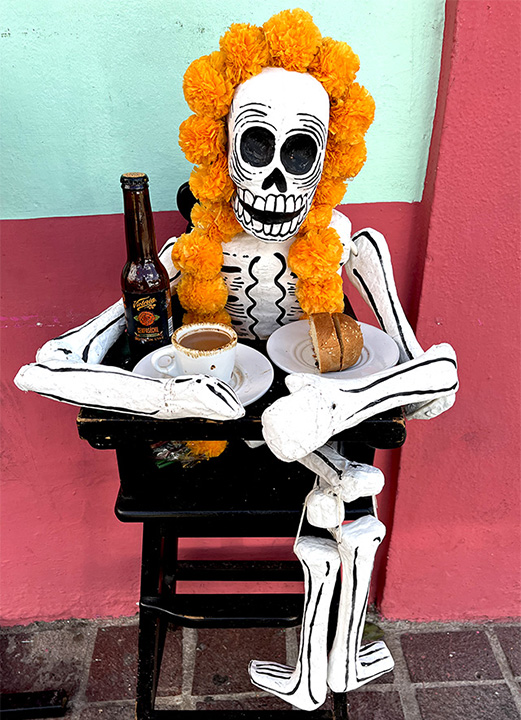
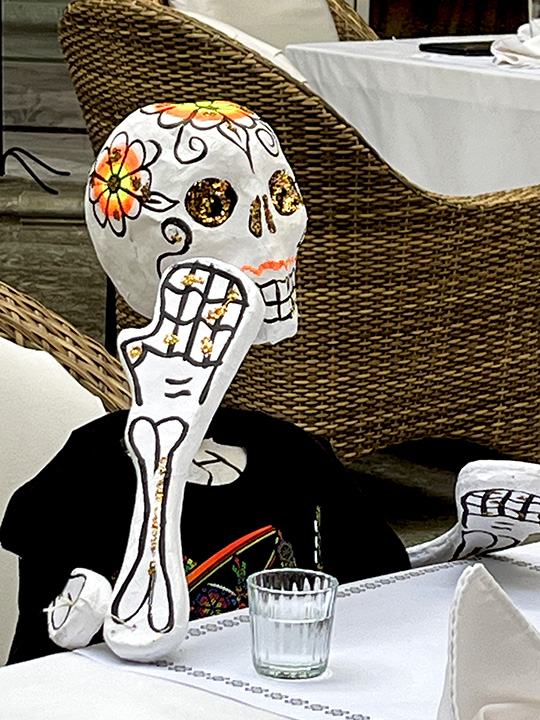
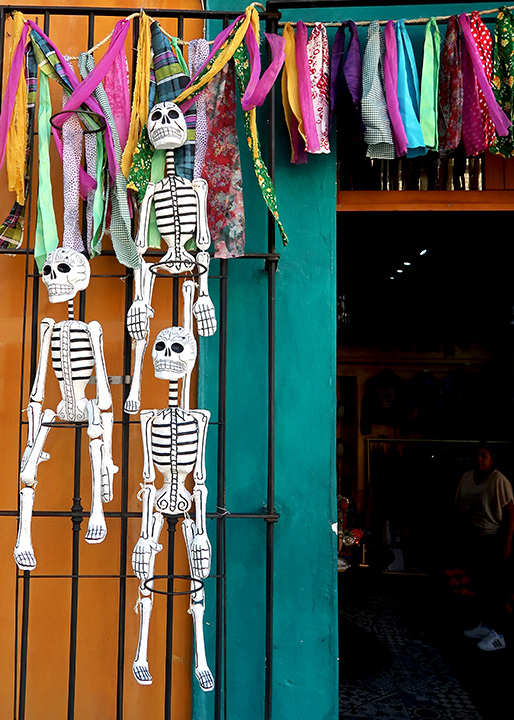
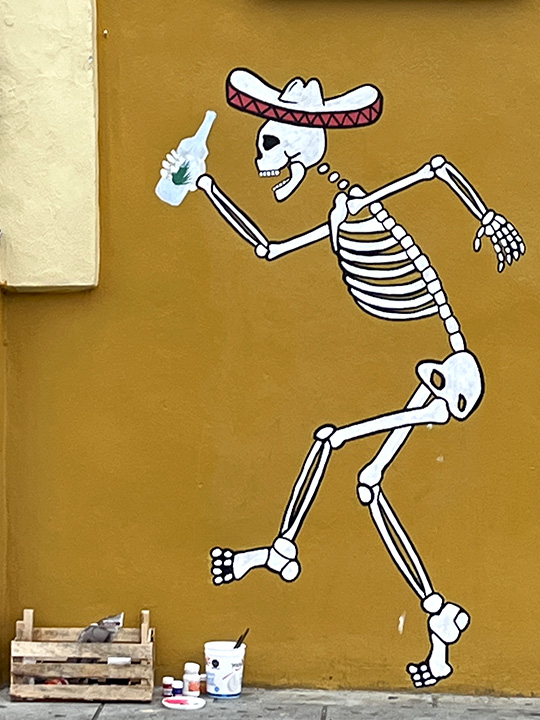
It’s Halloween time up here in el norte and the occasional house features spiders poised to pounce in webs strung across bushes, witches with broomsticks guard front gates, and pumpkins decorate entries signaling trick or treaters are welcome. A few skeletons have moved into the neighborhood but none are as well dressed and accessorized as those seen last year loitering on sidewalks, hanging out on walls, and dining in the restaurants of Oaxaca during Día de Muertos (Day of the Dead).
What can I say? I’m missing these guys and gals inhabiting Oaxaca this time of year.
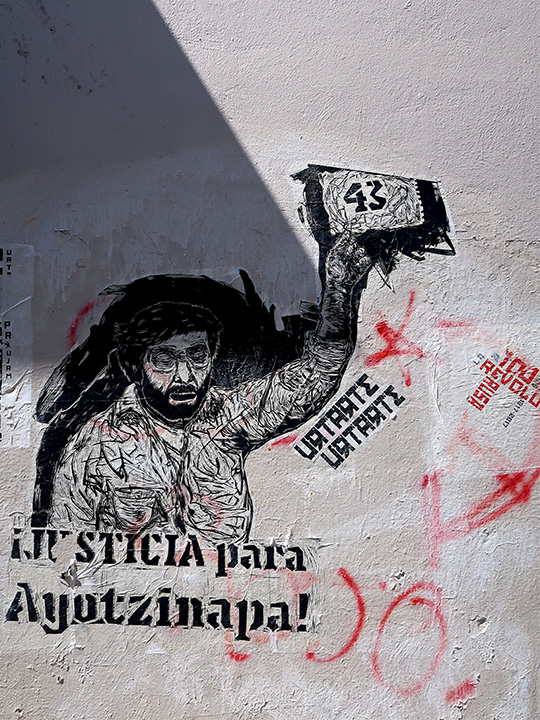
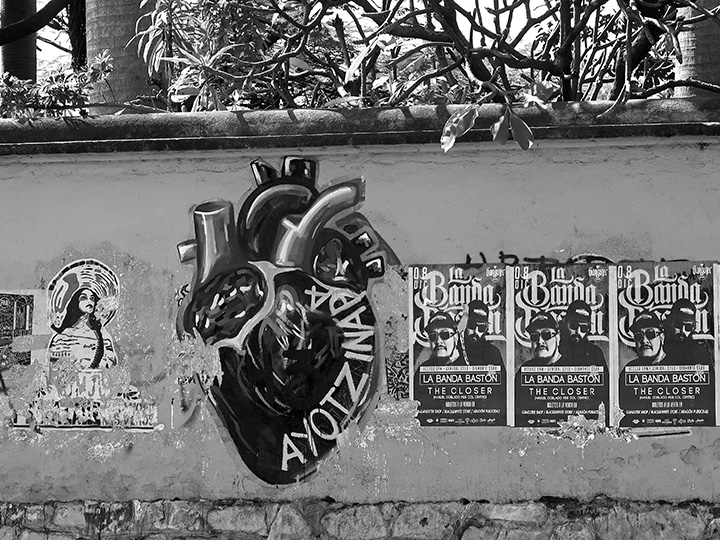
It’s been ten excruciating and heartbreaking years since the horrific events during the night of September 26 to 27 unfolded on the streets of Guerrero in the town of Iguala. The murder that night of three students, wounding of several more, and disappearance of 43 students all from Escuela Normal Rural Raúl Isidro Burgos, a teachers’ college in Ayotzinapa, Guerrero, has continued to haunt Mexico’s national conscience, much like the 1968 Tlatelolco massacre in Mexico City — a commemoration the students were enroute to attend.
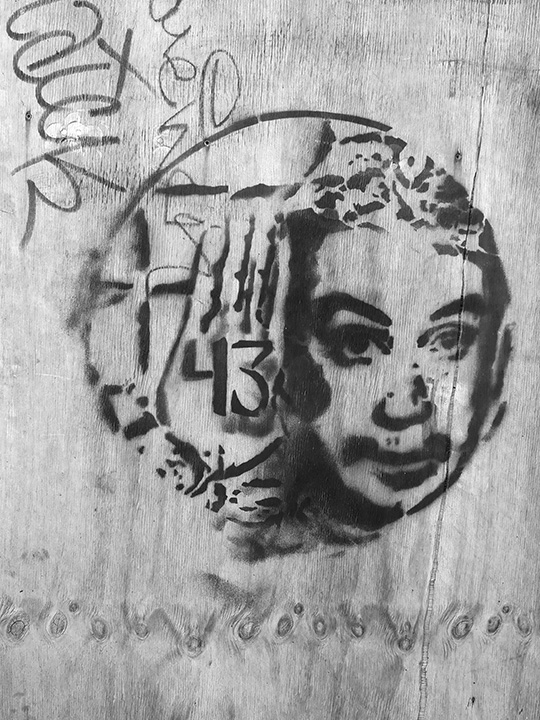
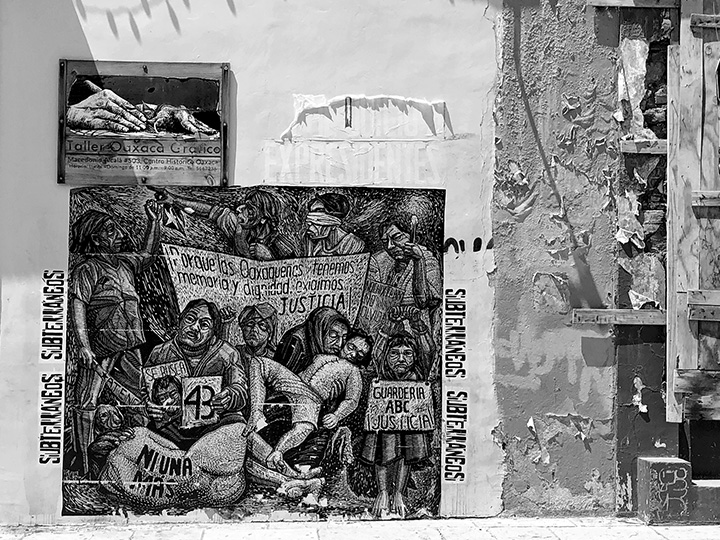
As news of that unspeakable night ten years ago spread, demonstrations were organized throughout Mexico — and soon the world — calling for justice and the return of the missing 43 student teachers (normalistas). Artists, as they have done throughout history, used their talent to give visual voice to the grief, outrage, and resolve to uncover the truth. And, I began documenting what I saw on the streets of Oaxaca.
October 8, 2014 — massive march through the streets of Oaxaca. “Wretched are the people who remain silent when their children are killed WAKE UP.”
October 21, 2015 – Images of the missing 43 normalistas hang above Oaxaca’s Zócalo.
June 18, 2016 – Face of one of the 43 missing students stares out from a wall in the city.
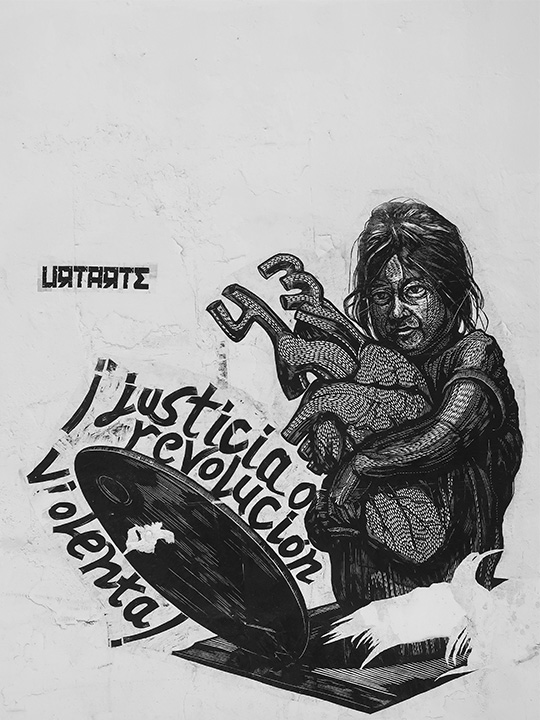
October 26, 2017 – One of the many stencils by the revolutionary artist collective URTARTE.
February 7, 2018 – Stencil by URTARTE calling for justice for the Ayotzinapa 43 missing students.
February 12, 2019 – On a wall near the corner of highway 190 and Av. Benito Juárez.
February 13, 2020 – On a wooden barricade blocking the sidewalk at a construction site.
October 6, 2021 – Stencil by the Colectivo Subterráneos stating, “Because we Oaxacans have memory and dignity, we demand justice.”
Here we are ten years later and the missing 43 are still missing, the heartbreak continues, the truth remains hidden, and justice has yet to be served. However, no one has forgotten. On this tenth anniversary, protest marches are being held, conferences have been organized, articles continue to be written, artists continue to create, families continue to mourn, and the people vow they will not be silent and the Ayotzinapa 43 will never be forgotten.
July is “mes de la Guelaguetza” in Oaxaca. Alas, I am still in el norte and missing the festivities — though not the crowds! However, you can join me, from the comfort of your home, in viewing both last Saturday’s and today’s Desfile de Delegaciones (Parade of Delegations) and the July 22 and July 29 matutina (morning) and vespertina (evening) Lunes del Cerro dance performances on CORTV’s YouTube channel. I will be sure to be watching today’s desfile and the Monday (July 29) morning transmission live, as the Grupo Danza de la Pluma Promesa 2022-2024 from Teotitlán del Valle is one of the delegations.
Danza de la Pluma Promesa 2022-2024 — from their first public performance at the festival honoring Preciosa Sangre de Nuestro Señor Jesucristo in Teotitlán de Valle.
As many of you know, blogger buddy Chris and I have helped sponsor dancers for nine years and it has been a great honor and privilege to get to know several of the dancers and their families in Teotitlán del Valle.
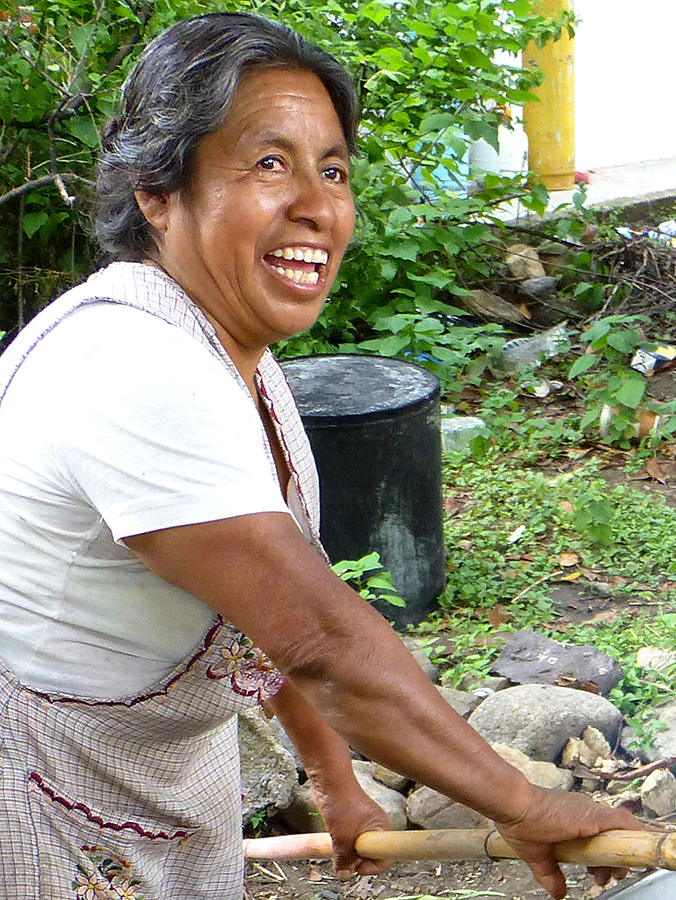
No one exemplified the old adage, “Good things come in small packages” more than Leonor Lazo González. I met Leonor in February 2008 during my second trip to the Zapotec village of Teotitlán del Valle. I’d met her son, Samuel Bautista Lazo, during my first visit to Oaxaca the previous year and he was anxious and very proud to introduce me to his family.
February 2008 – Leonor with Mario Bautista (husband) and sons Celestino and Samuel Bautista Lazo.
From that very first meeting I could tell that, while diminutive in stature, Leonor had an enormous presence that radiated strength, inner peace, and joy. And, she had a smile that could light up the universe!
March 2023 – Leonor in the Holy Monday procession.
March 2013 – Leonor with family during Holy Week.
Once I moved to Oaxaca and began spending a lot of time in Teotitlán, I always looked forward to seeing her at her stall in the mercado, running into her during a village celebration, or stopping by the family home.
August 2016 – Leonor with Samuel dying yarn.
August 2016 – Leonor stirring dye bath.
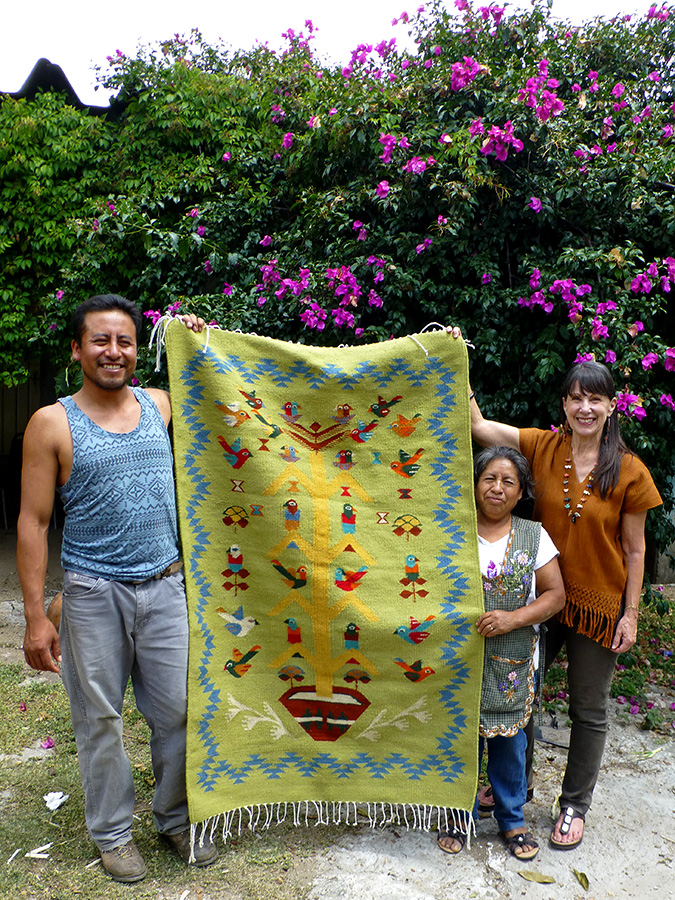
August 2016 – Samuel, Leonor, and yours truly with my new rug created by the family.
In the words of her son, she was, “a loving warrior, a great mother, teacher, artist, healer, weaver and business savvy, daughter of the abuelas of the Pleiades.”
December 2017 – Leonor feeding one of her baby goats.
With great sadness, I must speak of Leonor in the past tense. After a long and valiant battle, she has moved on in her journey. As Sam wrote announcing her passing, “she will be at peace wherever consciousness goes after life and that her legacy will continue and that she will live in our memories and will continue to come back to be celebrated with life every year for Na’ tugul, day of the dead.” Rest in peace and power, dear Leonor.
One of the joys of life in Oaxaca is being surrounded by artists, meeting them, and watching their creations take shape. As 2023 was about to come to a close, friends and I spent the day visiting some of our favorite villages to the south of the city. First stop was breakfast in the Ocotlán de Morelos mercado at the stall of Beatriz Vázquez Gómez. Beatriz is famous not only for looking and dressing like Frida Kahlo, but also for serving delicious traditional Oaxacan food. Our next stop was San Antonino Castillo Velasco for their holiday food and artesanía feria where we strolled the aisles of embroidered blouses and dresses, artesanía, and (of course) mezcal. Working up an appetite (What, eating again?) we shared San Antonino’s famous and filling, empanadas de amarillo.
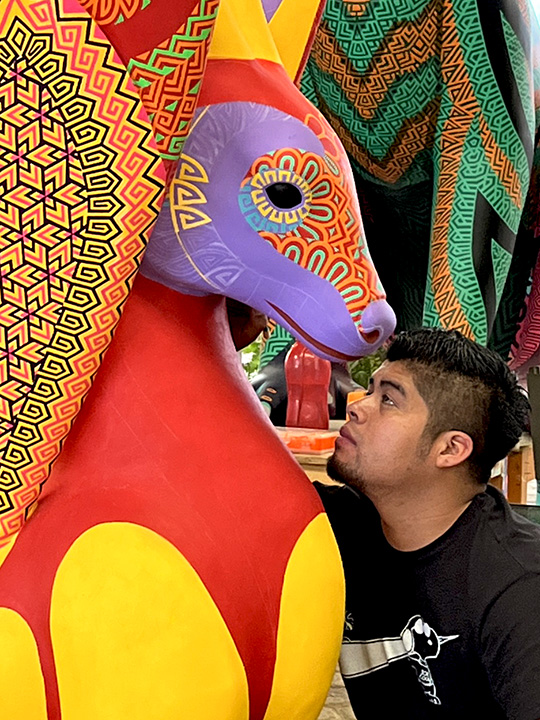
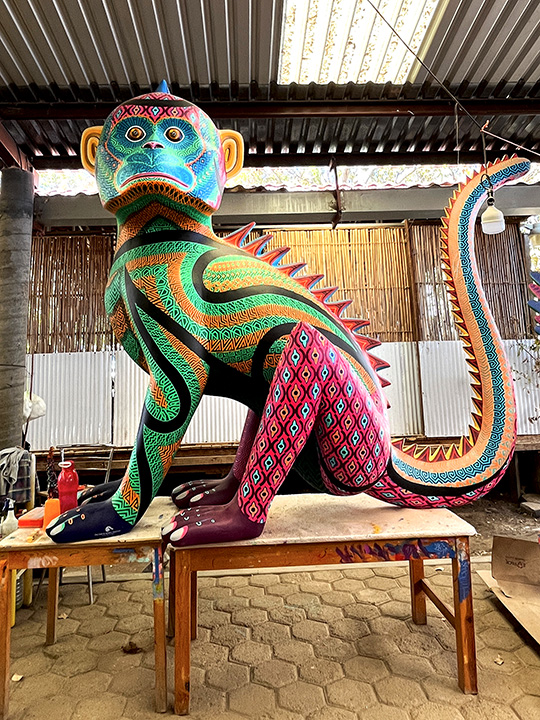
Our last stop of the day was in San Martín Tilcajete. It was at the workshop of Jacobo and María Ángeles where we stumbled on giant fantastical creatures that were being intricately painted in preparation for their journey to Denver, Colorado to be featured in an exhibition at the Denver Botanic Garden entitled, Spirit Guides: Fantastical Creatures.
In the words of Jacobo and María, “These monumental pieces are distinguished by a meticulous carving process and a painting technique that highlights a vibrant palette of colors. This technique not only stands out for its visual beauty, but is also linked to the research and preservation of Zapotec symbology, granting a profound meaning to this artistic and artisanal production.”
“Spirit Guides is an unforgettable outdoor experience reminding us of the profound connections that bind us to the inhabitants of the natural (and cosmological) world.”
So, should you find yourself in the Denver area before the exhibition’s last day on September 8, 2024, let your spirit guide you to the Denver Botanic Gardens.
To all the fathers (biological and adoptive), stepfathers, grandfathers, godfathers, and father figures everywhere, I wish you Happy Father’s Day as you continue sharing traditions…
teaching skills…
and, most of all, caring.
May you fulfill your most valuable role with great love, kindness, and respect.



























 Mexican Peso Converter

 View From Casita Colibrí