Feeds:
Posts
Comments

Archive for the ‘Travel & Tourism’ Category

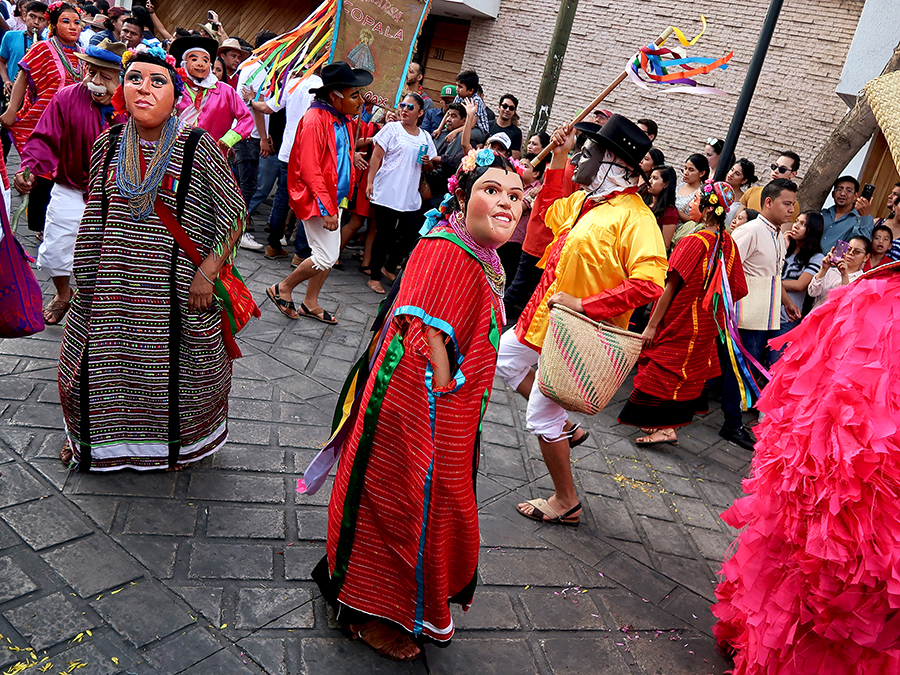
Yesterday, Teotitlán del Valle’s new Grupo de Promesa de la Danza de la Pluma 2019-2021 did battle, not only with Cortes, but also with the wind — which grabbed their penachos/coronas/headdresses like sails, challenging their balance, intricate footwork, and Busby Berkeley-like choreography.

Moctezuma holding on to his penacho/corona/headdress

Danzantes holding on to their penachos/coronas/headdress

Danzante appealing to the gods to stop the wind?

Throughout the day, wind continued to challenge the danzantes

Grasping their penachos/coronas/headdresses, Moctezuma, his warriors, and allied kings kept to their feet

The danzantes of Teotitlán del Valle didn’t miss a step at this most important festival day honoring the patron saint of their village, La Preciosa Sangre de Nuestro Señor Jesucristo.  Alas, the wind didn’t bring much needed rain to this agricultural community.

Stay tuned, the festivities continue for another three days.

Read Full Post »

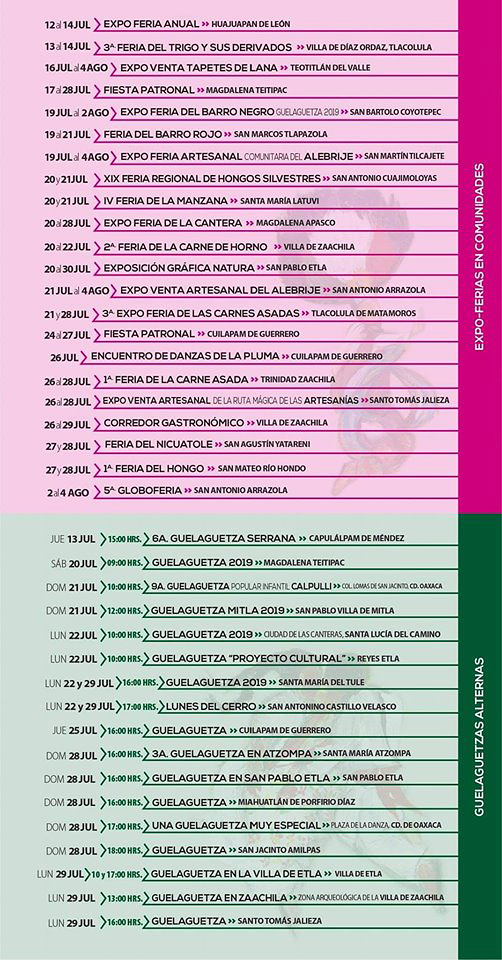
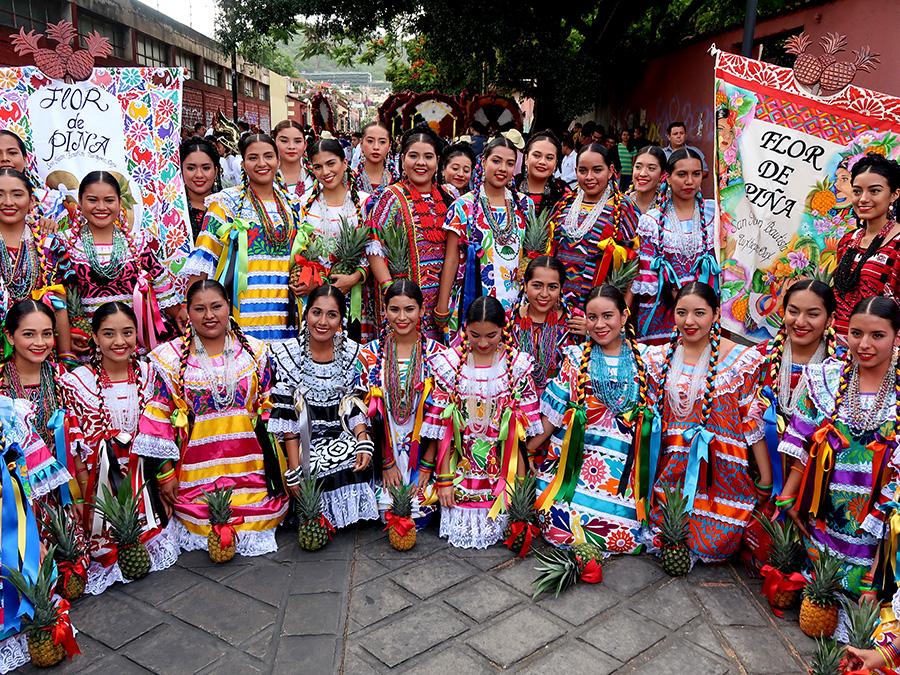
Oaxaca is filling with tourists as “Julio, Mes de la Guelaguetza” (July, month of the Guelaguetza) is upon us — a time when Oaxaca recognizes and celebrates the sixteen indigenous groups whose languages, traditions, and rich cultures long predate the arrival of the Spanish conquistadors (both military and religious) and permeate the character of the state.

San Francisco Sola delegation – Guelaguetza July 28, 2018 desfile

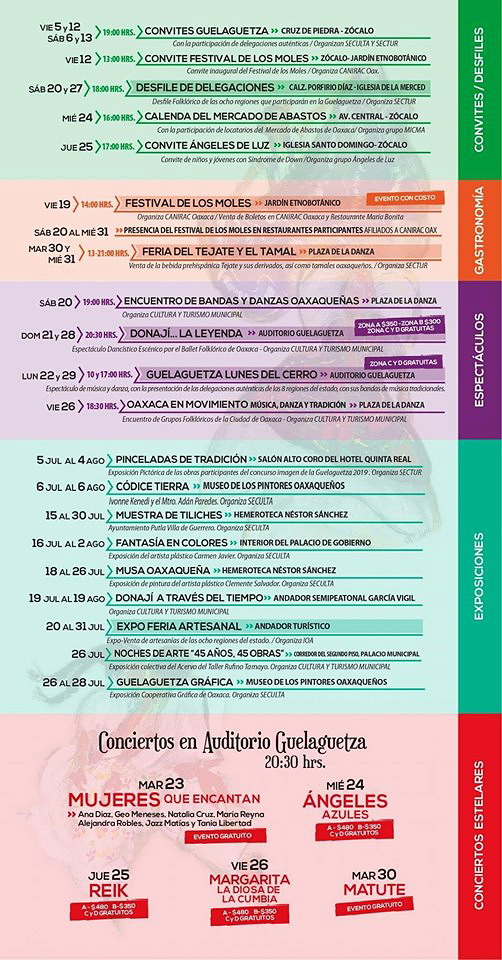
Every year more parades, food and artisan fairs, concerts, and regional Guelaguetzas are added.  Drawing both foreigners and nationals, it has become THE major tourist attraction for Oaxaca. [Click on images to enlarge]

While the streets are filled with a party atmosphere and those who can afford the high-priced tickets are treated to a true spectacle — fabulous views, colorful costumes, music and dance — people question how the indigenous communities (over 50% of the state’s population and some of its poorest) actually benefit.

San Juan Bautista Tuxtepec delegation – Guelaguetza July 21, 2018 desfile

The dancers are not professional dancers, are not paid to perform, and most must travel from villages hours and hours away.
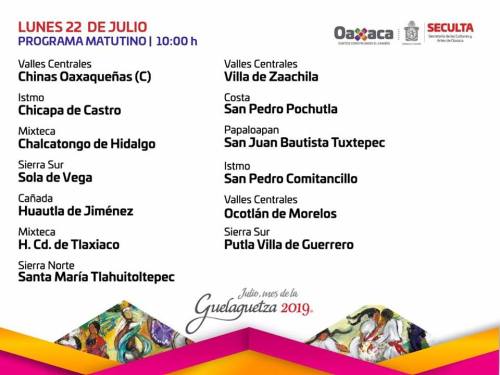
Guelaguetza1AM

July 22, 2018 morning

Guelaguetza1PM

July 22, 2018 evening

They do it for the love of their villages, pride in their heritage, and to share a little of their traditions with the world outside their communities — and I can’t help but be swept along in the joy and moved by their dedication.

Chinas Oaxaqueñas Genoveva Medina delegation – Guelaguetza July 28, 2018 desfile

To support their communities, I strongly recommend you do your shopping at the craft fairs in the city and visit the indigenous villages — buy directly from the artisans or shops that can show provenance.

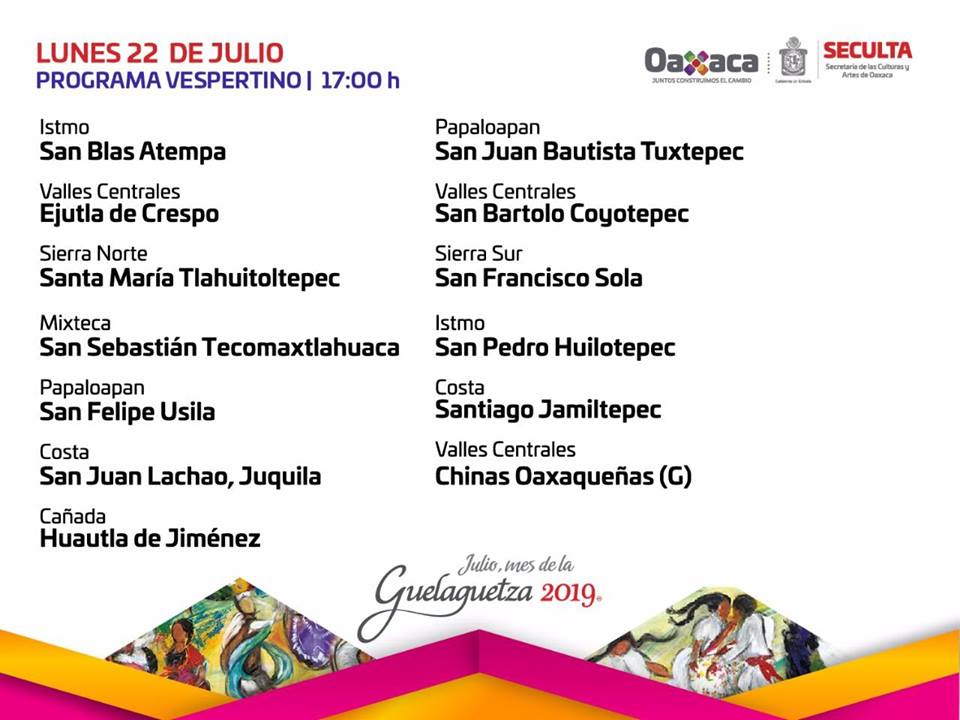
Guelaguetza2AM

July 29, 2019 morning

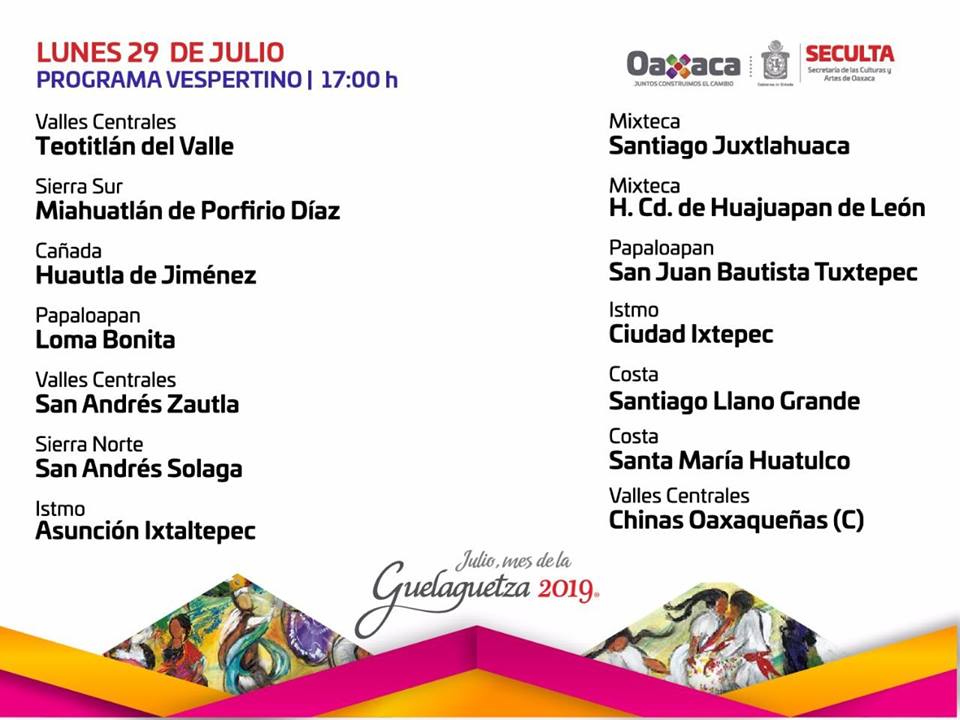
Guelaguetza2PM

July 29, 2019 evening

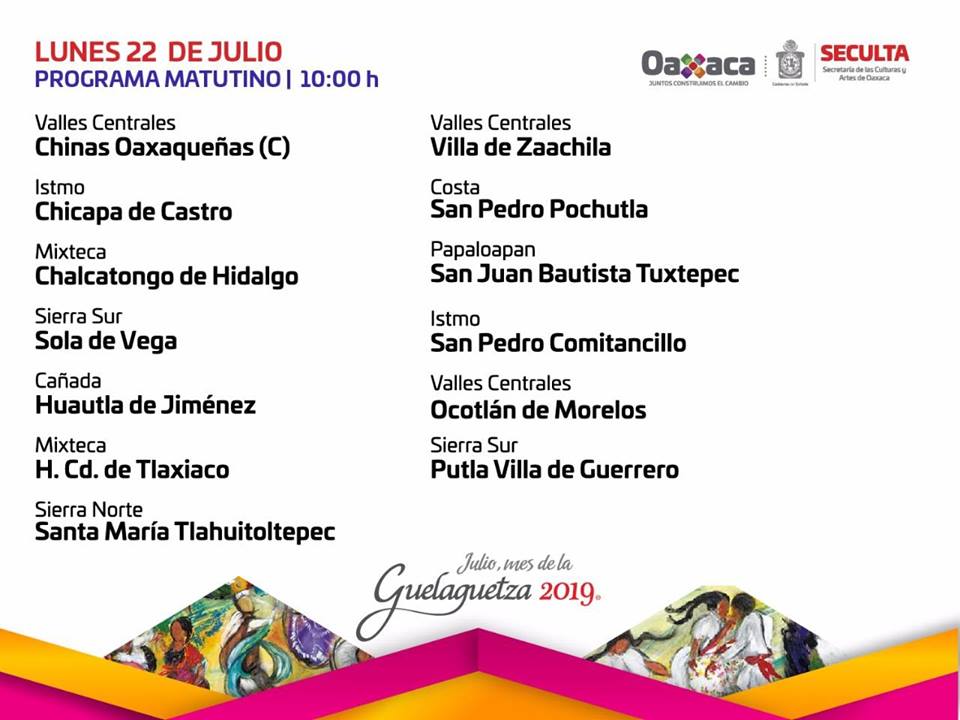
The above four Guelaguetza performances, along with Donají, La Leyenda (tragic legend of the love between a Zapotec princess and a Mixtec prince — it doesn’t end well, but her face graces the official shield of the city of Oaxaca de Juárez) are usually shown live on CORTV — both on their television station and their YouTube channel.
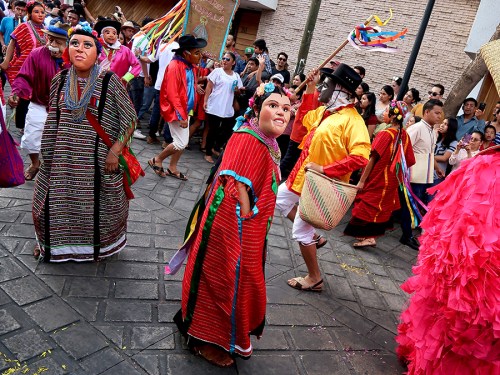
Putla Villa de Guerrero delegation – Guelaguetza July 28, 2018 desfile

Friends are arriving and my calendar is rapidly filling. Perhaps I’ll run into you at a regional Guelaguetza, at one of the desfiles in the city, the Festival de los Moles, the Feria de Hongos Silvestres in Cuajimoloyas, the Expo Feria Artesanal, the Feria del Tejate y Tamal, or at any one of the scores of other events happening here in July!

Read Full Post »

While Juana was wrapping the branches and trunk of my newly acquired hat stand (my aforementioned decade-in-Oaxaca anniversary present to myself), I wandered around Matlacihua Arte.  My eyes and feet kept drawing me to a back corner of the showroom where a lamp, assembled from three intricately carved and painted jícara gourds, beckoned.

It is the work of Gabriel Sosa Ortega, the son of Jesus and Juana.  Working in a variety of mediums, Gabriel is one of the up and coming talented young artists being recognized in the state.  He was part of the Friends of Oaxacan Folk Art (FOFA) exhibition of young artists at the Museo Estatal de Arte Popular Oaxaca (MEAPO) and he collaborated with Jesus Sosa Calvo (his father) and US-based artist Joe Lewis in a piece for the Bajo la bóveda azul cobalto/Under the Cobalt Blue Sky — an exhibition of international collaboration at the Museo de Arte Contemporáneo de Oaxaca (MACO).

Gabriel’s lamp made me an offer I couldn’t refuse!

Read Full Post »

As of today, it has been ten years since I, accompanied by two suitcases and a backpack, arrived to begin making lemonade out of lemons by moving to Oaxaca.  And, in case you haven’t guessed, I haven’t regretted it for a minute.  Oaxaca, how do I love thee?  There are too many ways to count!  However, being embraced by the warm and welcoming arms of Oaxaqueños and being surrounded by art, culture, and history are at the top of my list.  So, what better way to celebrate the past ten years than to commission a piece of functional art — a hat stand — from the San Martín Tilcaje workshop of Jesus Sosa Calvo.

Juana Vicente Ortega Fuentes and Jesus Sosa Calvo with my new hat stand.

Sunday, blogger buddy Chris and I pointed his little Jetta towards San Martín Tilcajete to pick it up.

When I discussed the piece with Jesus, my only instructions to him were that he incorporate hummingbirds (colibries, en español) in the design — and he certainly did! (Click on images to enlarge.)

The initial plan had been for the hat rack to reside in my bedroom.  However, it was way too beautiful not live near the entrance to Casita Colibrí, for all visitors to see.

My new piece of functional art already looks at home in Casita Colibrí.

Muchisimas gracias to Oaxaca and her people for enriching my life for the past ten years.  Here is to many more!!!

Read Full Post »

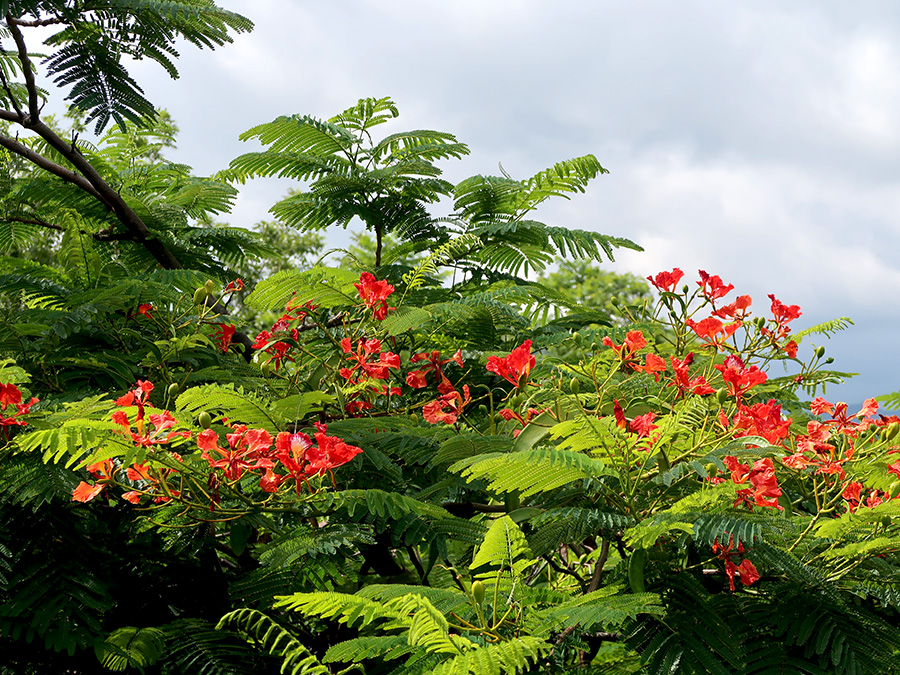
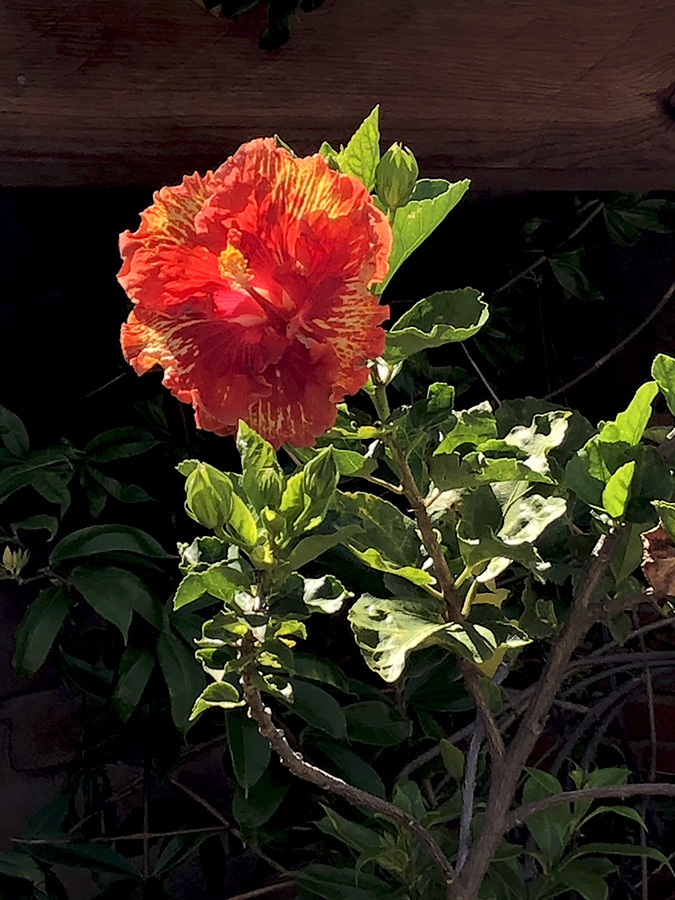
Summer showers bring more flowers.

Night blooming cereus on the terrace of Casita Colibrí

Flamboyán at Tierra Antigua, Teotitlán del Valle

Hibiscus at the home of Edmundo Montaño and Alicia Lorenzo, Teotitlán del Valle

Beauty and blessings brought to the land and people of Oaxaca by Cocijo.


Read Full Post »

As previously mentioned, I am currently in el norte.  Visiting my family and friends has taken me from Oaxaca to New York, across the country to California, followed by Colorado, and then back to California.  I have been on multiple airplanes, traversed through multiple airports, and been complimented multiple times on my earrings.  We are not talking gold or silver filigree, we are talking about earrings made from jícara — the fruit of the Crescentia cujete (aka, Calabash tree).  [Click on images to enlarge.]


Earrings are not the only things made from the dried fruit of these humble trees that grow in less-than-ideal environments.  The Tacuate women of Santa María Zacatepec (Oaxaca) use them as hats.

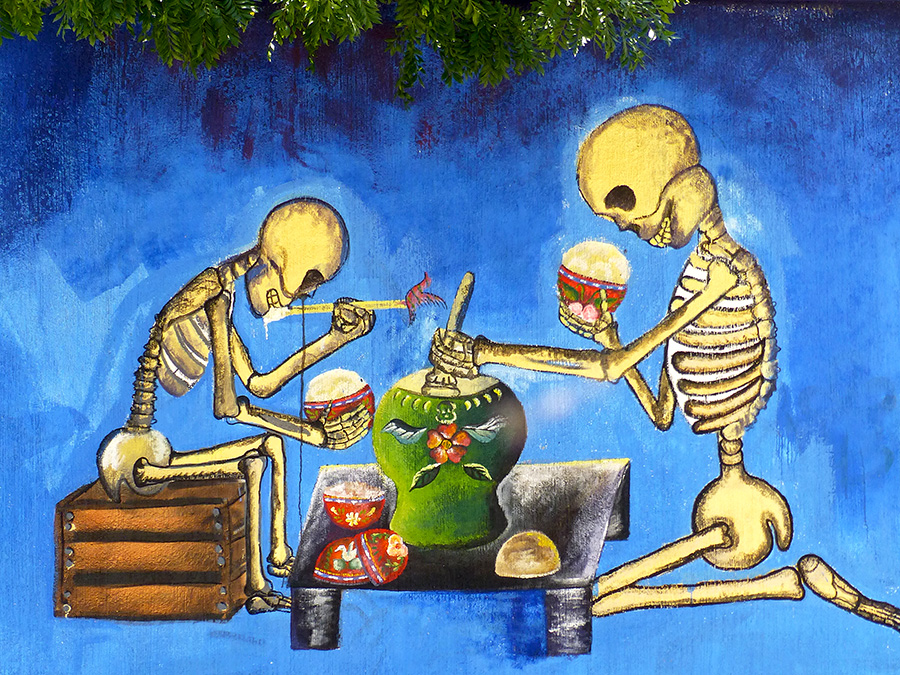
The gourds are cut in half, washed, and with seeds removed, set out in the sun.  Once dry, throughout southern Mexico, they frequently are lacquered, decoratively painted, and used as cups for tejate and other traditional beverages.


As youi can see, in Villa de Zaachila, in the valley of Oaxaca, this use is even celebrated in a Día de Muertos mural.

Larger jícaras, known as jicalpextles, are a specialty of Chiapa de Corzo (Chiapas).  However, they have assumed a special role in the Zapotec village of Teotitlán del Valle (Oaxaca), where they are filled with handmade sugar flowers and carried during weddings, religious celebrations, and other important fiestas.


And, recently there was an exhibition of carved jícaras by Salomón Huerta and José Cruz Sánchez from Pinotepa de Don Luis (Oaxaca) at the Museo Estatal de Arte Popular Oaxaca (MEAPO).  At last, the talent of the artisans who create these pieces is being given the recognition it deserves and their creations are being appreciated as works of art.

IMG_2275


IMG_2278

IMG_2285So, hurray for the not-so-humble jícara and the ingenuity and creativity of the indigenous peoples of the world whose traditions teach them to honor and not waste the gifts of planet earth.

Read Full Post »
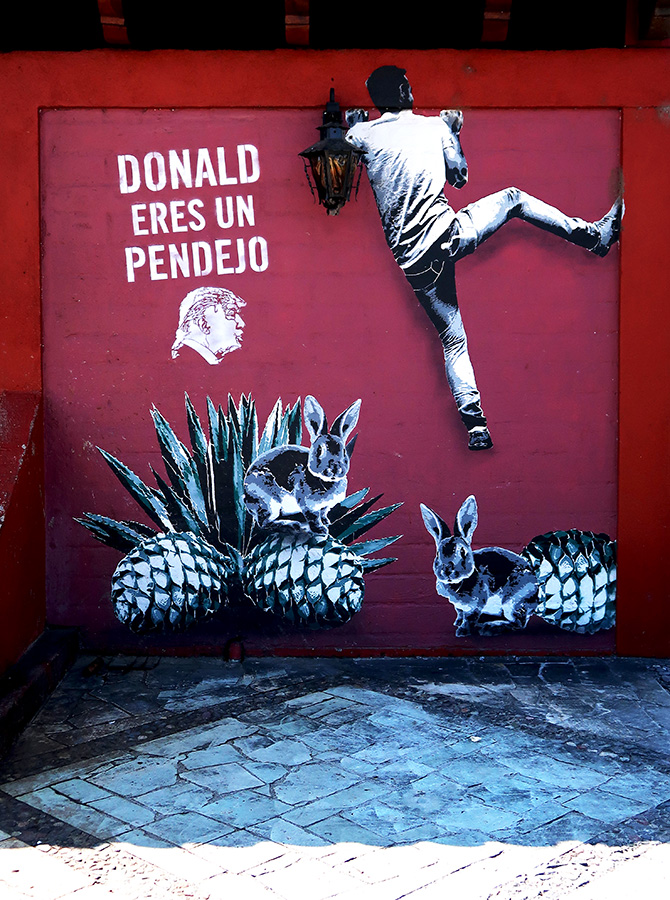
I’m visiting family and friends in el norte and trying not to get caught up in the constant barrage of ignorant, disgraceful, and infuriating news coming out of Washington D.C.  However, sometimes it can’t be ignored.

This is all I have to say…

(If you don’t know and can’t figure out what “pendejo” translates to in English, click HERE.)

Another mural by Lapiztola on the side of the Palenque Mal de Amor outside Santiago Matatlán.


Read Full Post »
From the land of Zaachila yoo (house of Zaachila)…

IMG_1322

IMG_1321

IMG_1320

IMG_1319

IMG_1317_b&w

Villa de Zaachila pride in black and white by YNKL/Sanez.


Read Full Post »

Within a few blocks from home…

IMG_3118

IMG_3626

IMG_3625

Miscellaneous messaging brought to you by the streets of Oaxaca.

Read Full Post »

May 18 is Día Internacional de los Museos (International Museum Day).  Instituted in 1977 by the International Council of Museums (ICOM), the goal is to raise awareness of the role museums play in “cultural exchange, enrichment of cultures and development of mutual understanding, cooperation and peace among peoples.”  Traditionally, the primary mission of museums has been collecting, conservation, communication, research, and exhibition.  However, according to the ICOM:

Museums have transformed their practices to remain closer to the communities they serve. Today they look for innovative ways to tackle contemporary social issues and conflict. By acting locally, museums can also advocate and mitigate global problems, striving to meet the challenges of today’s society proactively. As institutions at the heart of society, museums have the power to establish dialogue between cultures, to build bridges for a peaceful world and to define a sustainable future.

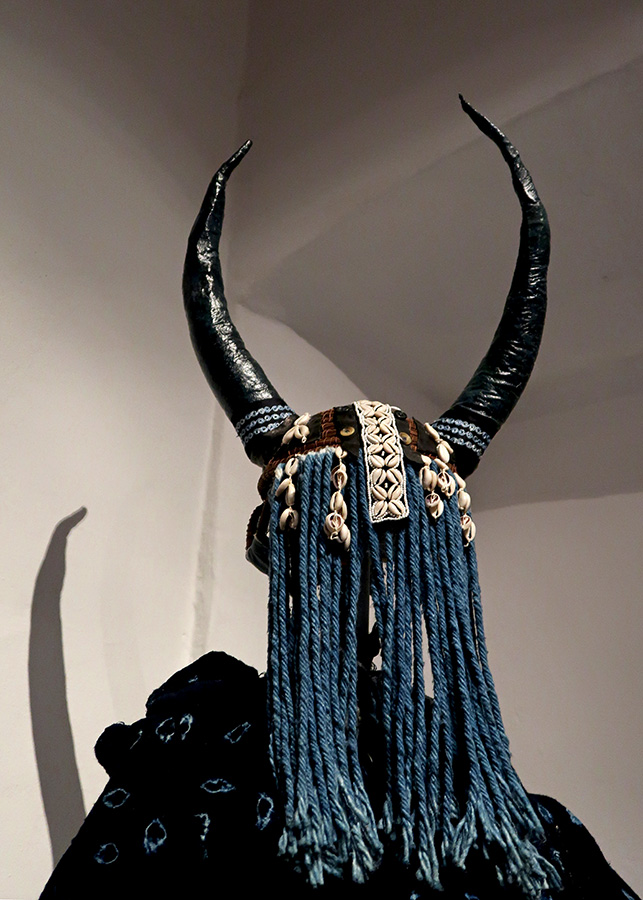
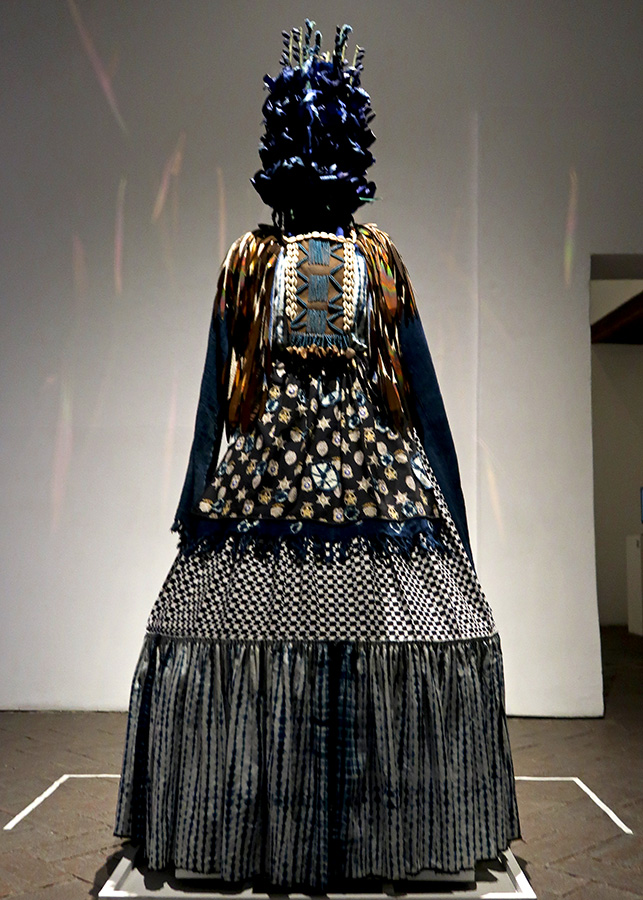
The museums of Oaxaca seem to have embraced this expanding and dynamic role — exemplified by this past winter’s exhibition at the Museo Textil de Oaxaca, Intervención Índigo, created by Laura Anderson Barbata, in collaboration with The Brooklyn Jumbies, Chris Walker, and Jarana Beat.

Performance and textiles meld the Zancudos (stilt walkers) of Zaachila, Oaxaca with the Afromexicano devil dance of Guerrero, the color indigo (a natural dye important to indigenous cultures in both Mexico and Africa), batik and beading techniques of Africa, with political commentary about the realpolitik of the African diaspora in North America.

Indigo is one of the oldest natural plant based dyes, used all over the world and ritually embedded with symbolism and spirituality; power and nobility…. Barbata employs textiles hand woven and dyed in Burkina Faso,Guatemala and the United States. The color historically represents absolute truth, wisdom, justice, and responsibility.

So, get thee to a museum near you — you will, no doubt, be enriched, enlightened, and maybe even empowered.


Read Full Post »

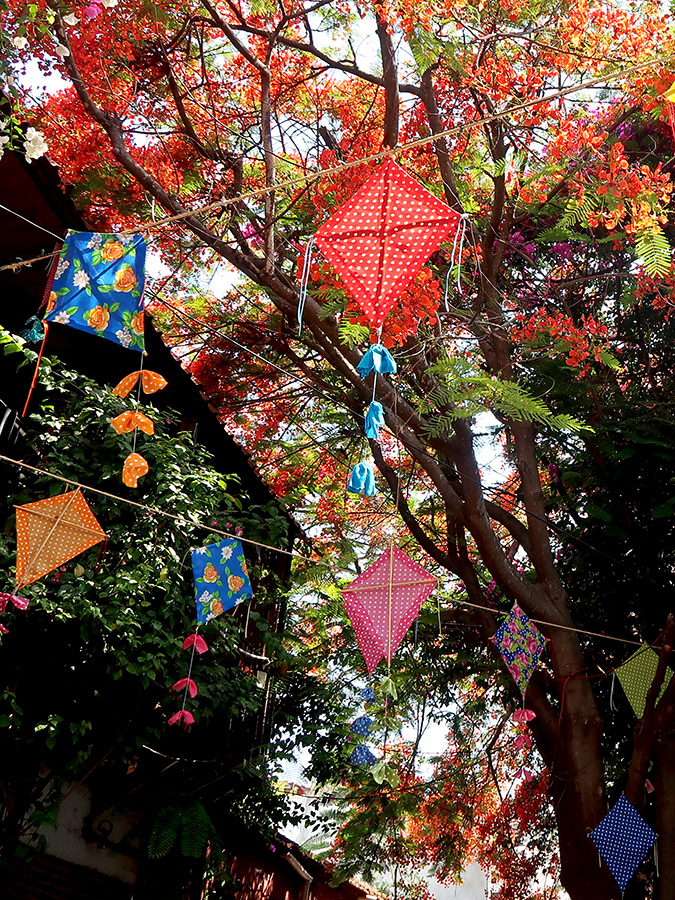
On the way Mercado Sanchez Pascuas to restock the larder, for the past several months, this colorful scene has greeted me at the entrance to Callejon Hidalgo.

IMG_4388_port

IMG_4391

IMG_4389

“Throw your dreams into space like a kite, and you do not know what it will bring back, a new life, a new friend, a new love, a new country.” — Anais Nin

Read Full Post »

Need a bike?

IMG_2986

Need parts for your bike?

IMG_2987

Need to have your bike repaired?

IMG_2988

San Juan Guelavía has just the shop for you!

Read Full Post »

The thermometer hovers in the low 90’s (F), a very occasional late afternoon thunderstorm clears the air and cleans the sidewalks, and the high-pitched song of the cicadas (aka, cigarras and chicharras) add to Oaxaca’s soundtrack.

IMG_4057

In addition, “shaving brushes” are seen springing from the branches of the Pseudobombax ellipticum trees — commonly known here as Cabellos de Ángel (angel hair).

IMG_4417

In my garden, the night blooming cereus (Epiphyllum hookeri) have been greeting me early in the morning.

IMG_4055

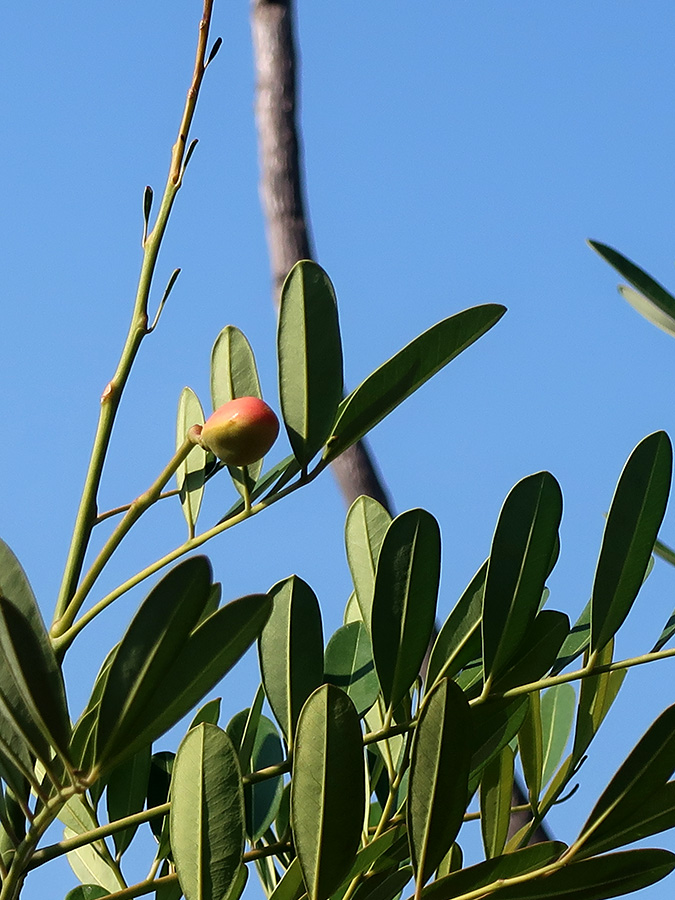
And, my pistachio tree, which the leaf cutter ants stripped of all its leaves eight months ago, has rebounded and produced its first nut.  Such is spring in Oaxaca!

Read Full Post »

Happy International Workers Day!

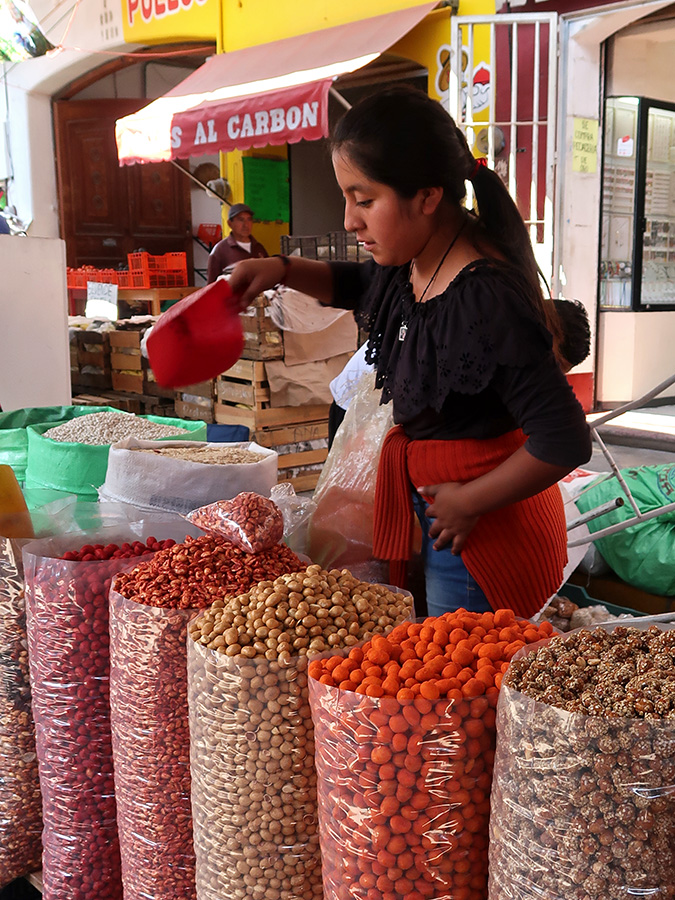
Food vendors at the mercado in Teotitlán del Valle

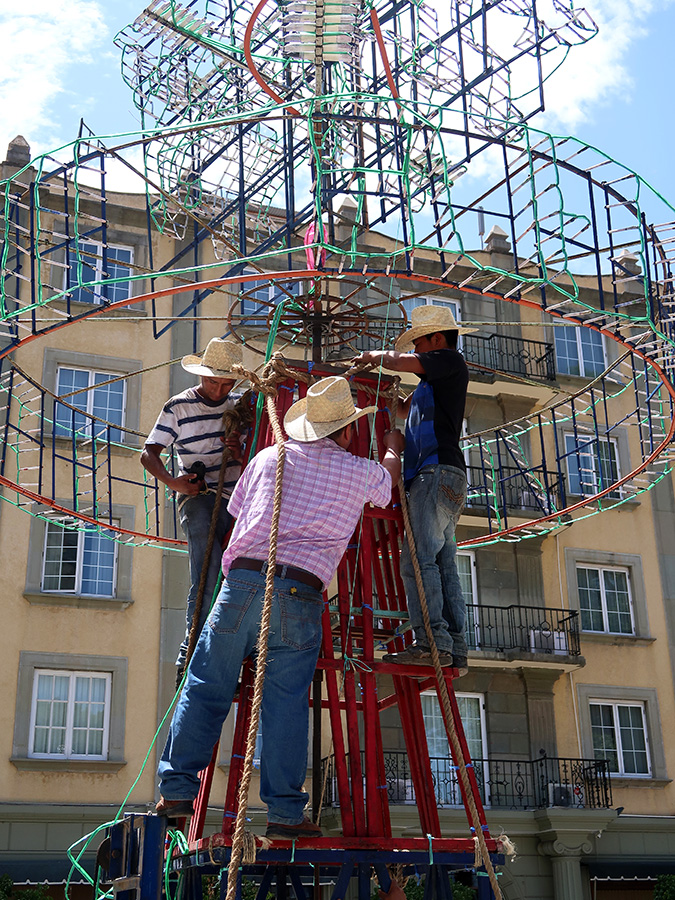
Fireworks castillo builders in Oaxaca de Juárez

Flower vendor in the Villa de Zaachila market

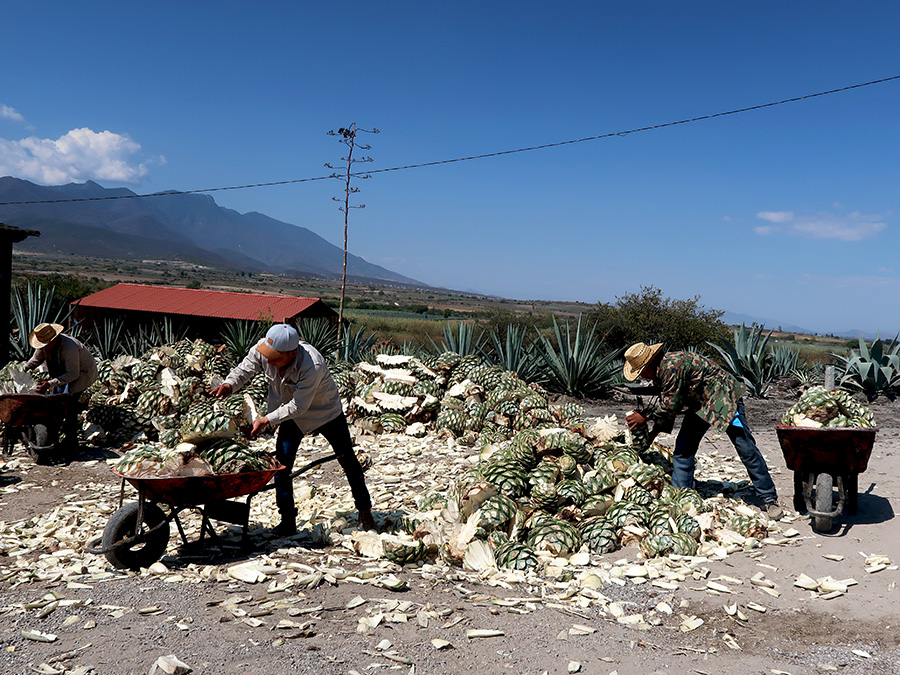
Teamsters unloading maguey piñas near Santiago Matatlán

Snack vendor on market day in Tlacolula de Matamoros

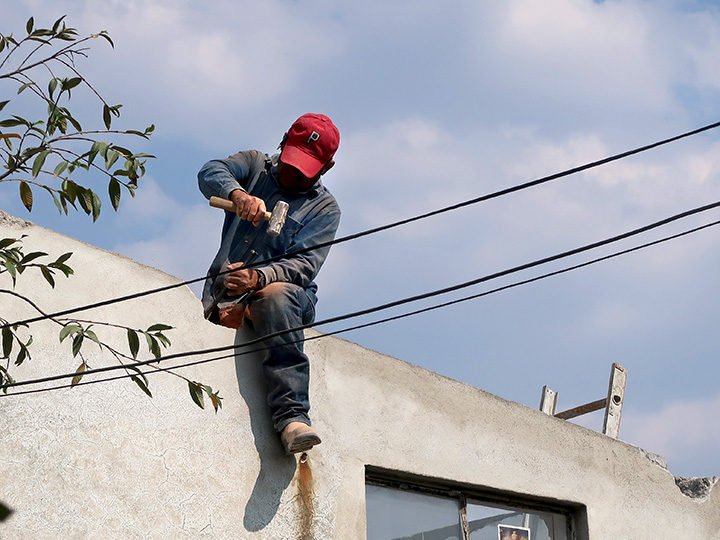
Construction worker preparing a new roof, Oaxaca de Juárez

Life… brought to you by the workers of the world.


Read Full Post »

Since I went to the market today and we are on the topic of murals in Oaxaca…    

IMG_4379

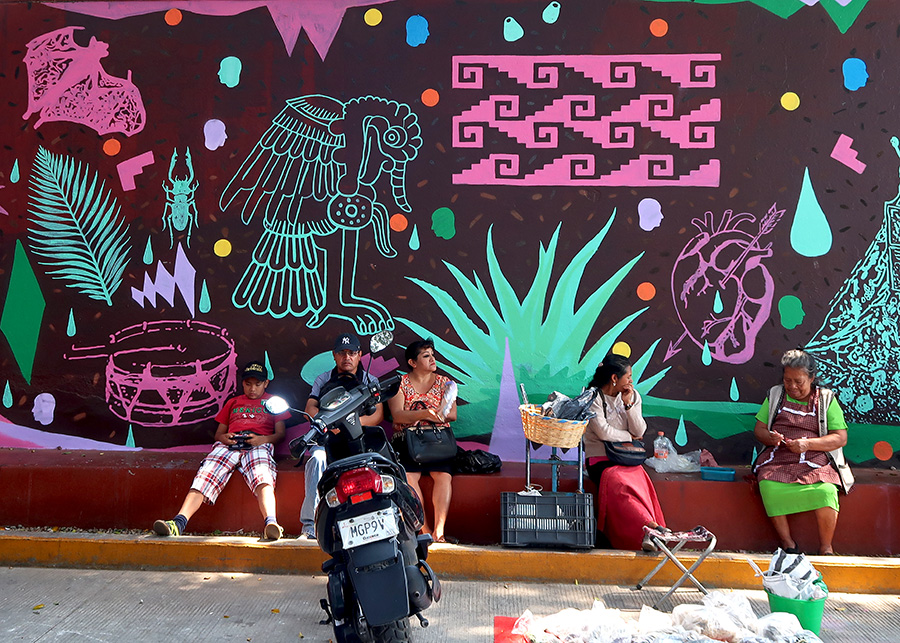
The Calle Porfirio Díaz entrance to my “go to” Mercado Sánchez Pascuas has undergone a make-over to commemorate the 487th anniversary of the elevation of Oaxaca de Juárez to the status of city.

IMG_4382

On April 25 (Oaxaca’s official birthday) city officials, market Board of Directors, and the artists gathered for the mural’s inauguration and ceremonial ribbon cutting.

IMG_4383

Javier Santos, professor of sculpture at the Taller de Artes Plásticas Rufino Tamayo, explained that the mural represents a collection of symbolic images, contextualizing life in the city and market.  How many of these symbols (many Prehispanic) do you recognize?

IMG_4384

Javier Santos continued, “It is important that there is availability and openness on the part of the Municipal Government to bring people the great talent of Oaxacan artists through the exhibition of works in public spaces, because in them people have the opportunity to visualize the graphic quality of our state.” (Google translation)

IMG_4385

Here is to the artists!  May the magic of their creativity continue to illuminate the past, find truth in the present, and inspire the future. 

IMG_4380

And, let us hope the city of Oaxaca will see more mural construction and less mural destruction.

Read Full Post »
« Newer Posts - Older Posts »