Feeds:
Posts
Comments

Archive for the ‘People’ Category

As I’ve mentioned before, Oaxaca is one of the most indigenous and (no surprise) one of the poorest states in Mexico.  And, the Triqui of the Mixteca region of Oaxaca are some of the state’s poorest residents.  They have recently come to the attention of sports lovers, as a result of the heartwarming story of their youth basketball team, dubbed the Barefoot champions of the mountains.

However, while their success story makes us feel good, it is rare.  Political violence and poverty continue to chase the Triqui out of their beautiful and ancient mountain communities in search of a better future for their families.   And, discrimination continues to follow them into el norte.  To add to the strikes against them wherever they go, Spanish is not their native language — the state of Oaxaca is home to 16 distinct ethnolinguistic groups, with Triqui being one.  And so, the story of Bernadina Hernandez and her grassroots efforts in Hollister, California should be known, appreciated, and celebrated.

A little background information…

Muchisimas gracias a Jody for turning me on to Bernadina’s story.

Read Full Post »

Blog post as catharsis…

Saturday was a sad day in Oaxaca.  It brought the completely unexpected death of one of Oaxaca’s most talented artists, Arnulfo Mendoza Ruiz.  He was only 59.  I knew him a little, peripherally through my blogger buddy, Chris, who has known him and his large Zapotec family in Teotitlán del Valle (his sisters are well-known chefs) for many years and with whom he had been collaborating on a project.  Arnulfo had a well-known store and workshop called La Mano Mágica on the walking street here in Oaxaca, which showcased, not only his artistry (paintings, exquisite weavings, metal work, and more), but also the cream of Oaxaca’s artesanía and artist community.  We would occasionally stop by or he would hail us from the doorway — always with twinkling eyes, mischievous smile, and well-worn fedora atop his head.

Black bow above closed doors of La Mano Mágica

Today, the doors are closed.

As I’ve mentioned several times before, ritual and tradition play central roles in all aspects of Zapotec culture and it was amazing to watch it being expressed on Saturday.  Arnulfo died in the morning and by the early afternoon, friends, family, and many of the major artists in Oaxaca, were gathered in La Mano Mágica.  At one point, there was mournful chanting by several men in the gallery where his casket lay, later a band played, people came and went in the main workshop room, and in the room behind, his sisters prepared and served chicken covered in black mole, rice, tortillas, and atole.  The women busied themselves with the ritual of preparing and offering food, but allowed the tears to well up when condolences were given.  However, the men in the family sat or stood in clusters in the other two rooms, and remained stoic.

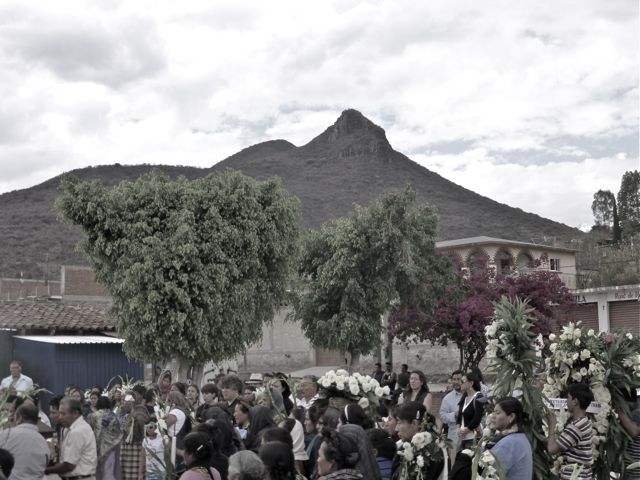
Mourners in church plaza, El Picacho in background

Under the embrace of El Picacho

According to belief, the funeral was held the next day.  As we drove out to Teotitlán del Valle on Sunday, the winter sky’s usual puffy white clouds had turned dark and gray and a few tear drops fell from the heavens.  There is a tradition of dimming the lights on Broadway to honor the death of a prominent member of the theatrical community.  And, yesterday, it felt like Mother Nature desaturated the color of Oaxaca a little in honor of Arnulfo Mendoza Ruiz.

Casket being carried into church

Led by the solemn sounds of a band, pallbearers carried the casket from his home high atop a hill in Teotitlán del Valle, down the steep and winding cobblestone streets, to Templo de la Preciosa Sangre de Cristo where a mass was celebrated.  And then, all processed to the cemetery.  The anguished sobs, as his body was lowered into the earth, were heart-wrenching.  Like laughter, I think grief is contagious, as it reaches into our heart, takes hold, and shakes the continuum of feeling in each of us.  And so, tears welled-up in my eyes.

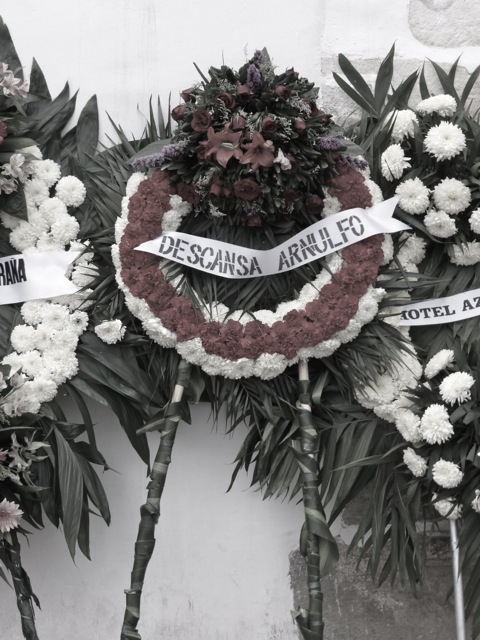
Floral wreath with ribbon reading, "Descansa Arnulfo"

Rest in peace, Arnulfo

Today, I continue to feel drained and very sad.  I didn’t know Arnulfo well, but feel humbled by the fragility of physical life.  I keep reflecting on how each of us tries to bring meaning to this temporal physical existence.  Arnulfo was a flawed man and was chased by demons, but in his creativity and nurturing of the arts, he left the world a little better than he found it.

Chris’s farewell blog posts to his friend are especially touching:   A sad day – Arnulfo Mendoza (1954-2014) and Another sad day – Arnulfo Mendoza (1954-2014).

And, here are two online obituaries (in Spanish):  Adiós a Arnulfo Mendoza and Oaxaca de luto por la muerte de Arnulfo Mendoza.

Read Full Post »

I’m SO done with this so-called, Polar Vortex!  I was supposed to fly into Albany, NY on Thursday night.  It’s now Saturday morning, I’ve gotten as far as Chicago, and killing time until tonight’s flight by sorting through sun-drenched, color-filled, warm-weather Oaxaca photos.  Even if the weather gods and goddesses are not cooperating, at least their cyber siblings are on the job providing WiFi — thus a new blog post.

Store front: Makedonia

This watch-repair, jewelry, and gifts (large or small) shop on Calle 20 del Noviembre is owned by Alekos Gatonas, originally from Macedonia.  He studied at the University of Chicago, met his Oaxaqueña wife, and eventually they moved to Oaxaca.  He and his family also own the event venue, “Zorba El Griego” and a Greek restaurant on the way to El Tule, “El Griego.”

By the way, “EΛΛΔΣ” translates into the Spanish word, “ellas,” which can be translated into English as “including.”

Read Full Post »

After more than two weeks of frente fríos (cold fronts) sweeping down from el norte, the weather has turned downright hot, with temperatures in the mid 80s (F).  What’s a person to do?  Today, this person headed to her favorite ice cream parlor, Nevería Malena at Jardín Socrates.

I previously mentioned this nevería when the Jardín underwent an image enhancement a year and a half ago.  And, as before I ordered leche quemada (burnt milk) and tuna (nopal cactus fruit).  It may not have been the most nutritious lunch, but it hit the spot!

Parfait glass with leche quemada and tuna

As you can see from the photo, Nevería Malena now sports spiffy new seat covers for the backs of their wrought iron chairs.  And, on the back of the laminated menu of flavors, the story of Malena and the “tradition that flatters your palate” is told.  (My translation follows.)

Placard with an image of Señora Malena and a granddaughter

Señora Malena is the 5th child of Ángel Armengol and Anacieta Hernández.  They taught her the craft and soon she became one of the most prestigious and famous for the seasoning and flavors of her frozen dessert.  

Initially, Malena walked around the Zócalo, offering her frozen dessert in glasses.  Later she relocated next to the Cathedral where she continued to offer her delicious frozen dessert.  (Note:  At that time natural ice was brought from the community of “La Nevería” in the Sierra Juárez.)  She then moved to the Alameda de León to a space which already had a laminated roof.  It was here she affectionately began to be called, “Malenita” and the stall was named Malena.

Malena became famous for traditional flavors like burnt milk, sorbet, walnut, pear, and lemon.  Fame grew with an invitation by the Secretariat of Tourism to participate in the “Week of Oaxaca in Mexico,” at which Malena participated for 15 years.  The stall subsequently was transferred to “Socrates Garden” where it is currently run by her children and grandchildren, with love and affection — to continue the tradition and increase the variety of flavors.

Hanging plaques listing flavors

And, increase the flavors they have!  So many to choose from.  Hmmm… next time, Beso de Ángel or Diablo???

Read Full Post »

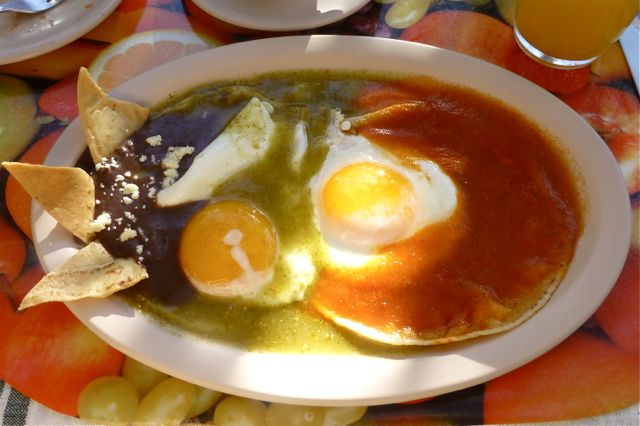
Sí, huevos divorciados!  A little food porn to begin the day…

Plate of huevos divorciados

Early morning walk up to Hotel las Golondrinas yesterday morning for breakfast.  Surrounded by the distinctive pottery of Dolores Porras, it was the perfect setting to meet Michael Peed, filmmaker of the documentary, Dolores Porras: Artista Artesana de Barro.

Read Full Post »

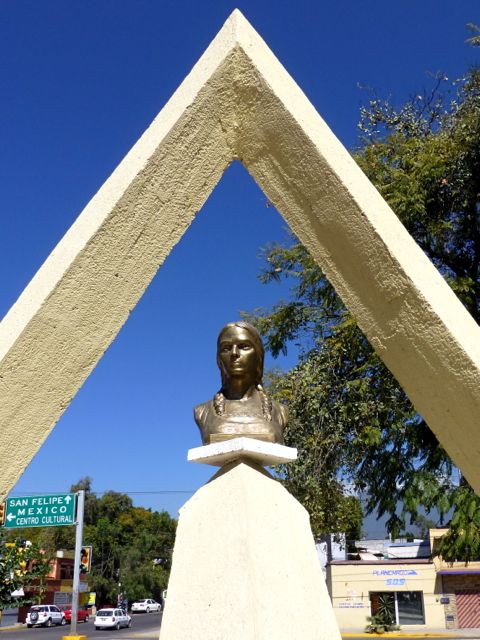
At a busy intersection, on a small concrete island, sits the bust of a woman.  Who is she?

P1010333

This is where Pino Suarez and República both meet Niños Heroes, traffic comes in at “unnatural” angles, and my attention is usually laser focused on attempting to look in the right direction, deciphering which traffic lights do what, and keeping my adrenalin in check as I determine the safest moment to dash across each street.

However, a few days ago, on my return to El Centro, after having walked far up into Colonia Reforma, I decided to take a break and investigate.  Just who is this indigenous woman who presides from her triangular perch.

P1010334Meet Brigida Garcia de Juárez, from the mountain village of Guelatao, Oaxaca — mother of Oaxaca’s beloved favorite son and Mexico’s revered former president, Benito Pablo Juárez García.  She died when he was only three years old.

The plaque that rests at the base of the monument reads, “Madre de Benemérito de America – H. Ayuntamiento – 1984.  Mother of the distinguished national hero of modern Mexico.

Read Full Post »

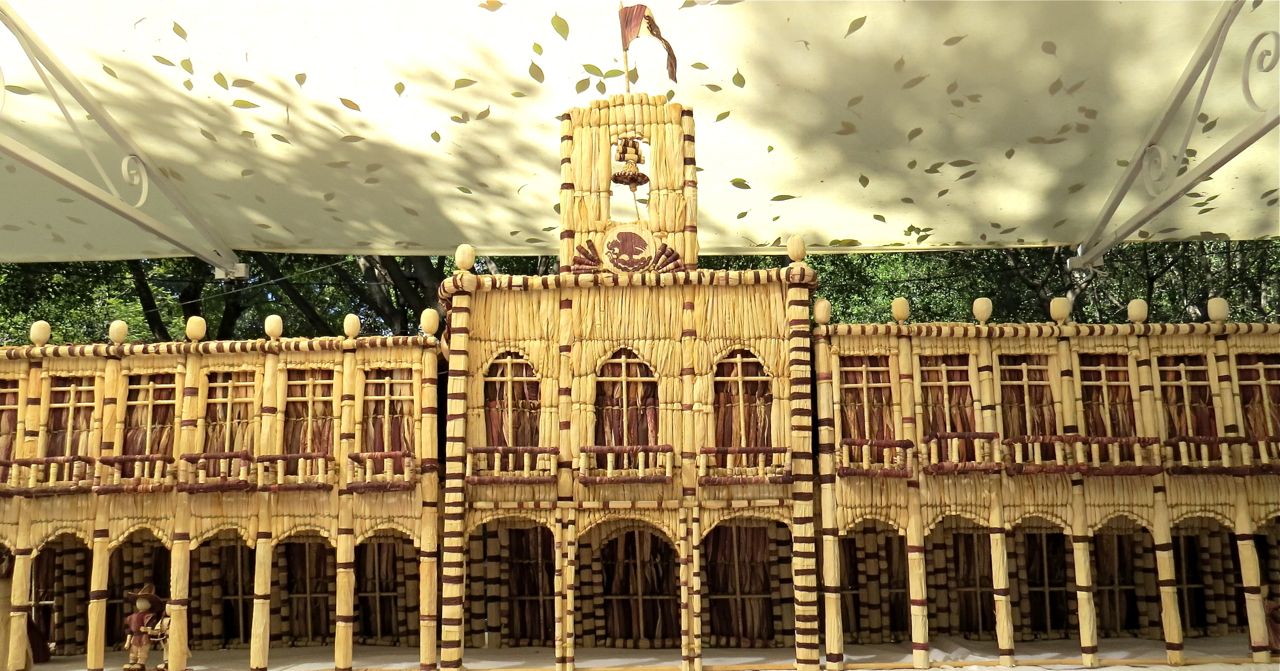
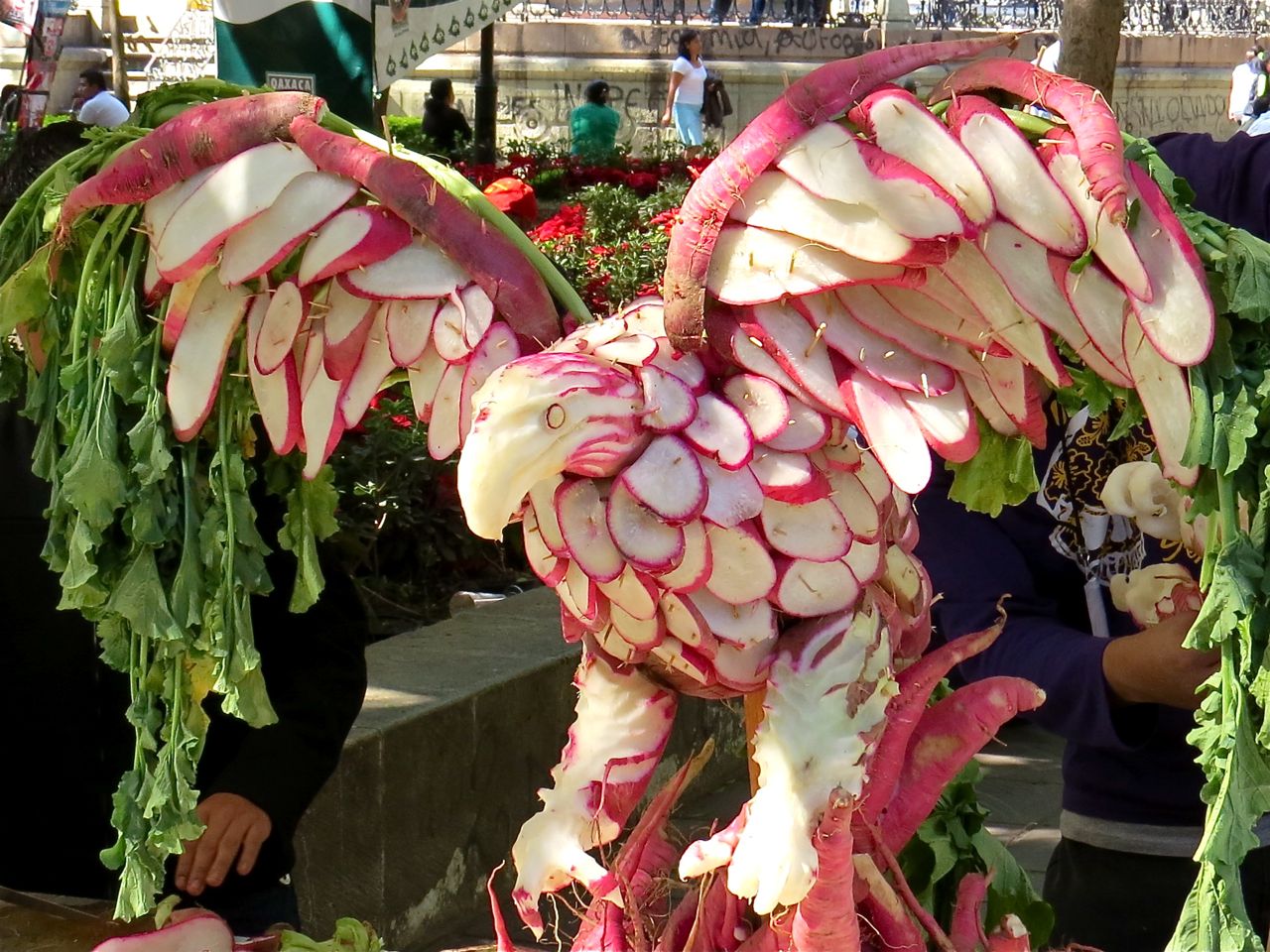
Despite of the name, Noche de Rábanos isn’t just about carving radishes.  The creativity and ingenuity of the gardeners and artisans of Oaxaca in several other categories are also on display — Flor Inmortal (dried flowers), Totomoxtle (dried corn husks) Natural, and Totomoxtle Decorated, as well as two Children’s categories.

IMG_1536

First place in the Totomoxtle Natural category went to Elpidio Adrián González López and his amazing creation, Mercado Antiguo en la Plaza de las Armas 1885.

If you missed it December 23 on the zócalo, or want to see it up close and personal, head over to CaféCafé, on the corner of Porfirio Díaz and M. Bravo.

It will be on display until January 6, 2014.

h/t Jane & Ken

Read Full Post »

Noche Buena (Christmas Eve) in Oaxaca means posadas from churches around the city converge on the zócalo.  Flatbed trucks carrying Jesus, Mary, and Josephs; fireworks, pinwheels, and sparklers; brass bands; China Oaxaqueña folkloric dancers; and the faithful carrying candles arrive to circle the zócalo again and again and again.  Spectators, young and old wave sparklers, take photos, and crack powder or confetti filled eggs on each others heads — and it’s quite a scene!

This slideshow requires JavaScript.

And, in what has become a Christmas Eve tradition (it was still Christmas Eve when I began this post) on my blog, Ernie Villarreal’s version of the song, Pancho Claus, by Chicano music legend, Eduardo “Lalo” Guerrero.

Pancho Claus

‘Twas the night before Christmas and all through la casa
Not a creature was stirring, Caramba! ¿Que pasa?

Los ninos were all tucked away in their camas,
Some in vestidos and some in pajamas.
While Mama worked late in her little cocina,
El viejo was down at the corner cantina.

The stockings were hanging con mucho cuidado,
In hopes that St. Nicholas would feel obligado
To bring all the children, both buenos y malos,
A Nice batch of dulces and other regalos.

Outside in the yard, there arouse such a grito,
That I jumped to my feet, like a frightened cabrito.

I went to the window and looked out afuera,
And who in the world, do you think que era?

Saint Nick in a sleigh and a big red sombrero
Came dashing along like a crazy bombero!

And pulling his sleigh instead of venados,
Were eight little burros approaching volados.

I watched as they came, and this little hombre
Was shouting and whistling and calling by nombre.

¡Ay, Pancho! ¡Ay, Pepe! ¡Ay, Cuca! ¡Ay, Beto!
¡Ay, Chato! ¡¡Ay, Chopo! ¡Maruca and ¡Nieto!

Then standing erect with his hand on his pecho
He flew to the top of our very own techo.
With his round little belly like a bowl of jalea,
He struggled to squeeze down our old chimenea.

Then huffing and puffing, at last in our sala,
With soot smeared all over his red suit de gala.

He filled the stockings with lovely regalos,
For none of the children had been very malos.

Then chuckling aloud and seeming contento,
He turned like a flash and was gone like the viento.

And I heard him exclaim and this is VERDAD,
Merry Christmas to all, And to All ¡Feliz Navidad!

Read Full Post »

This morning I walked down to the zócalo to watch artists at work — it’s Noche de Rábanos (Night of the Radishes).   This December 23 “only in Oaxaca” tradition has been a mainstay of the holiday season since 1897.  I know, who would have thought radishes could elicit such creativity?  But, they definitely do!  Here is Adrián Antonio Flores Peña working on his piece, Quebrantahueso (bearded vulture).

IMG_1581

More to come… I just have to weed through the 300+ other photos I took!

UPDATE:  Adrián Antonio Flores Peña won first place in the “Free” (as opposed to “Traditional”) category.

Read Full Post »

For to be free is not merely to cast off one’s chains, but to live in a way that respects and enhances the freedom of others.  – Nelson Mandela

Nelson Mandela, 1918 – 2013

h/t World Music

Read Full Post »

Today the Oaxaca Lending Library played host to Oaxaca FilmFest4 founder and artistic director, Ramiz Adeeb Azar.  He and 4 members of the festival staff came to the library to “pitch” the festival, which opens September 21 and runs through the 28th.  (Note:  it has moved from November to September).  It wasn’t a hard sell, as many of us have been following it since it began in 2010.  And, I’ve got to say, it’s come a long way in a short amount of time.  According to Ramiz, it has…

  • Grown to be one of the Largest International Film Festivals in Latin America
  • Discovered over a dozen films that have gone onto commercial success
  • Created a highly competitive Script Writing Competition.
  • Created “Pitch It”; a unique platform that allows screenwriters to sell their scripts to industry executives around the globe
  • Conducted the longest University Rally ever (10 days throughout the entire state!)
  • Rolled out Academia; a five-day training program designed to enhance Festival Attendees’ self-distribution skills
  •  Developed Academia Exchange; a unique exchange between filmmakers and students

  • Gained membership of the Mexican Film Festival Association (La Red Mexicana de Festivales Cinematográficos) and in 2013 was the host of their national conference
  • Gained recognition as an official IMDB Film Festival

The festival has already set up shop in Plaza San Jerónimo (on Macedonio Alcalá) where staff and volunteers are hard at work and, like last year, the site will serve as the festival’s Hospitality and Information Center.

If you love film, but have never been to a film festival, I highly encourage you to give it a try.  Prior to relocating to Oaxaca, for 7 years, one of the highlights of my calendar year was volunteering at the Mill Valley Film Festival.  Besides being a lot of fun (never forget, on my hands and knees mopping up spilled red wine at the feet of Katherine Ross and Sam Elliot), I had the opportunity to see some truly wonderful films — especially shorts and documentaries that are rarely shown in the big chain multiplexes.  The MVFF was one of the things I missed most (along with crusty sourdough bread and being able to flush toilet paper down the toilet) when I moved down here.

However, along came the Oaxaca FilmFest and, though it didn’t satisfy my craving for sourdough bread or cause new plumbing to be installed in Oaxaca, it does come with a well-considered, eclectic, and always creative selection of films (feature-length and shorts) from all over the world.

Last year, El último hielero (The Last Ice Merchant) a touching documentary from Equador was a favorite of mine, as was The Cart, a humorous short from Russia.  And, if the two short films Ramiz showed today —  the animated, Sleight of Hand and the very moving, Part of the Change — were any indication, the selectors did a terrific job again this year.  So, if you are in Oaxaca, get thee to the Oaxaca FilmFest4 information center at Plaza San Jerónimo and pick up your festival schedule or download it from the festival website.

FYI:  All screenings are public and free (except Cinemex and Foundation Nights) and every film is projected in its original language, with Spanish, English, or dual subtitles.

Read Full Post »

I think I’ve mentioned several times before, Oaxaca is filled with art — in the streets, museums, and galleries.  New venues crop up regularly and exhibit openings, replete with mezcal, cervesa, and botanas, seem to occur a couple of times a week.  I can’t keep track!

A few days ago, on our way to La Popular for tortas, my friend (and artist) Laurie Fisher and I stopped by the Galería Noel Cayetano Arte Contemporaneo to see the current exhibit, Los Apóstoles (The Apostles).  Male and female, they are all self portraits by Nayarit born sculpture and painter, Vladimir Cora.

Cora dedicated the exhibition to all all those who do their job well have not been corrupted.  “Todos tenemos un apostolado y si lo haces honestamente, esta exposición es para ti.” — Vladimir Cora (Noticias, 10 agosto 2013)

The Cayetano gallery is upstairs at the Plaza Santo Domingo, M. Alcalá 405-30 in Oaxaca city.

Read Full Post »

Congratulations to one of my favorite weavers, Amalia Martínez Casas from the mountain village of Tamazulápam del Espíritu Santo, winner of the 13th Popular State Art Prize “Benito Juarez” 2013.  The award, presented several days ago by Oaxaca governor Gabino Cue, recognized and honored her work using the backstrap loom, using cotton thread and wool dyed with indigo and banana peel, to weave the traditional costume of Tamazulápam in the Mixe.

Three or four times a year, an artisan fair is held in Llano Park.  Puestos upon puestos of pottery, wood carved alebrije, jewelry, and textiles are on display.  It was here, two years ago, where I first discovered the exquisite work of the tiny and talented weaver, Amalia Martínez Casas.

IMG_4175

I couldn’t resist buying this huipil; a subtle black on charcoal grey that looks both traditional here in Oaxaca and very hip with black leggings and boots in el norte.

And, then the next time, even though the dye was a little uneven, I couldn’t resist buying this short huipil — the color had me at, hola!

Her well-crafted technique and finely drawn designs are sophisticated, be they executed in subdued huipiles or brilliant red serapes.

Every time I wear one of her works of art, people ask, “Where is it from?”  “Who made it?”  “Where can I get one?”  I’ve pointed several friends to her stall in Llano Park during artisan fairs and last week, at the request from a friend in California, I bought this one.  The slight green tint will be perfect with her red hair.  (Yes, this one’s for you, Louise!)

Photos of the award ceremony can be found HERE and video is available HERE.  (Amalia Martínez Casas can be seen beginning at 6:00 minutes.)  And, for more of her creations, check out a blog post Chris did last January.

Read Full Post »

Some of my closest friends have been (and continue to be) musicians.  And, one of the things I find so appealing about Oaxaca is that music is everywhere and all the time.  Marimbas are set up on sidewalks, accordions are almost ubiquitous, and free concerts occur weekly in the zócalo.  Music is honored and valued as an integral part of the culture — a birthright.

Each of the 8 regions of the state has its own distinctive “sones” and “jarabes” and they are tremendous source of pride.  Within a bar or two of Pinotepa,  Canción Mixteca, or any one of Oaxaca’s regional anthems, the clapping begins, tears may well up, and audiences of all ages begin singing the lyrics.  Thus, a major feature of the modern “Mondays on the Hill” that is Guelaguetza, is the performance of the music and dance of each of the regions.

And, so I give you, some of the musicians who played almost non-stop for 3 hours, while their delegations danced their way through the streets of Oaxaca city during the last two Saturday evening Guelaguetza desfiles (parades).

This slideshow requires JavaScript.

Here’s to the musicians, long may they play!


Read Full Post »

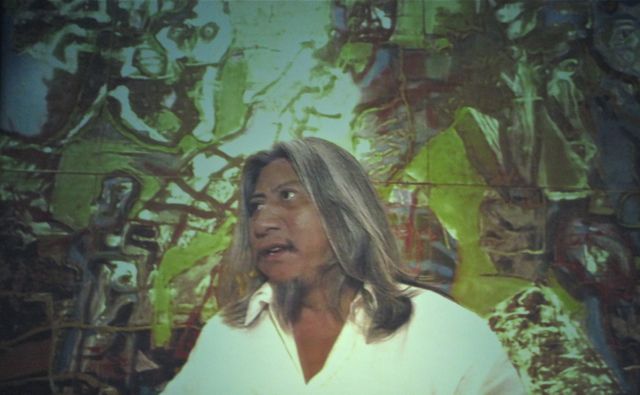
Yesterday, in the midst of Guelaguetza festivities, Oaxaca learned of the death of one of her beloved artists.   A sculpture and painter, Alejandro Santiago was only 49 years old when he succumbed to a massive hear attack.

Image of Alejandro Santiago projected on screen at Homage

Image of Alejandro Santiago projected on the screen at today’s Homage

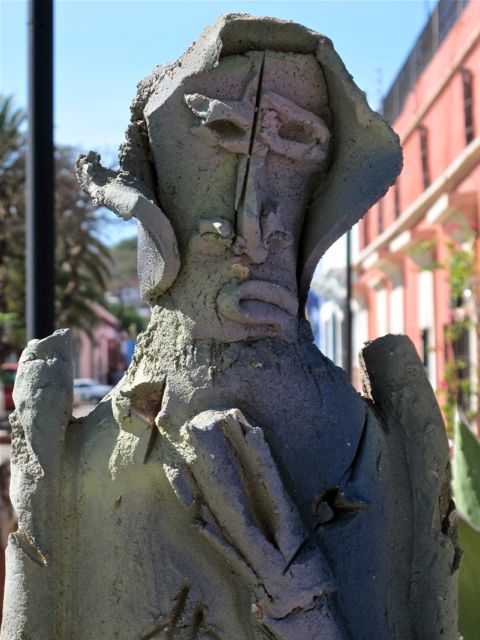
Perhaps his most important work resulted from a return to the Zapotec village of his birth, San Pedro Teococuilco, after many years away.  He was moved by the large numbers of men and women who had left, leaving it almost deserted.  Inspired and feeling the need to make a statement about what had happened to his pueblo, and countless others in Mexico, he created a massive exhibition of 2501 sculptures, an homage to those who had left, plus one — those who are yet to make the journey northward.

One of his 2501 Migrants from a 2012 exhibit along Macedonio Alcalá,

One of his 2501 Migrants from a 2012 exhibit along Macedonio Alcalá,

There was an Homage to Maestro Alejandro Santiago this morning at the Teatro Macedonio Alcalá.

Casket of Alejandro Santiago on the stage of Teatro Macedonio Alcalá

Casket of Alejandro Santiago on the stage of Teatro Macedonio Alcalá

And, according to Think Mexican, there will be a memorial “in the coming days at La Calera.”

For more photos from the 2501 Migrants exhibit, see my blog post The path of the migrant.

Update:  Valerie J. Nelson has written a lengthy tribute to Alejandro Santiago for the Los Angeles Times.

RIP, Maestro.


Read Full Post »

« Newer Posts - Older Posts »