Feeds:
Posts
Comments

Archive for the ‘Holidays’ Category

The 120th edition of the “only in Oaxaca” Noche de Rábanos is coming.  Tomorrow (December 23) the zócalo will be filled with radishes carved into religious, cultural, and fantastical creations.

Scenes from last year…

And, it’s not just a night of radishes, there will also be flor inmortal (a type of dried flower) and totomoxtle (corn husk) artisan creations on display and competing for prizes.  Not to be missed!

Read Full Post »

All is quiet now, but for the last few days (and nights!) there has been no solitude for Soledad, or her neighbors (of which I am one).  For several days leading up to December 18, the feast day of the Queen of Oaxaca, La Santísima Virgen de La Soledad (Virgin of Solitude), Oaxaca has been celebrating.  For those unaware of this virgencita, Soledad is adored and venerated in a manner similar to the Virgin of Guadalupe and is carried through the streets of Oaxaca (both city and state) during many religious celebrations.
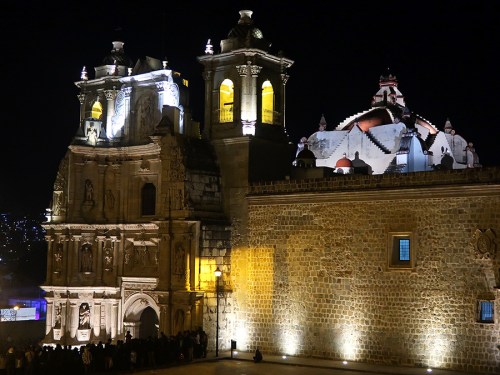
Basílica de Nuestra Señora de la Soledad

She resides in the church dedicated to her, the Basílica de Nuestra Señora de la Soledad.  Designed by Father Fernando Méndez, construction began in 1682, it was sanctioned by the Viceroy Tomas Aquino Manrique de la Cerda, and consecrated in 1690 by Bishop Isidro Siraña y Cuenca.
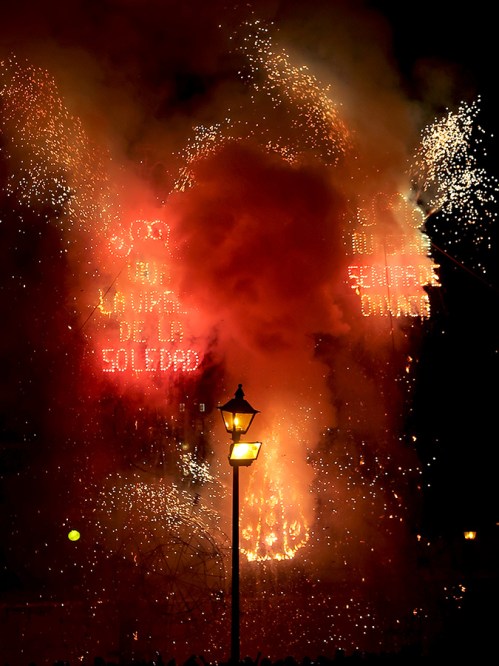
Castillo spelling out, “Viva La Virgen de la Soledad” (Long live the Virgin of Solitude) and “Nuestra Senora de Oaxaca” (Our Lady of Oaxaca).

Being that this is Mexico and Catholicism is tempered (enriched) with indigenous practice, the night of December 17, after religious rites and rituals were performed at said Basilica, there were fireworks in the church atrium, including toritos and a castillo, in honor of La Reina de Oaxaca.  Despite the late hour, I managed to leave the comfort of my rooftop and head over to the Plaza de la Danza to watch — and they were spectacular, as always.
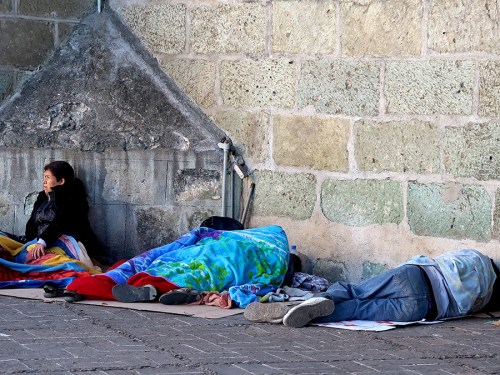
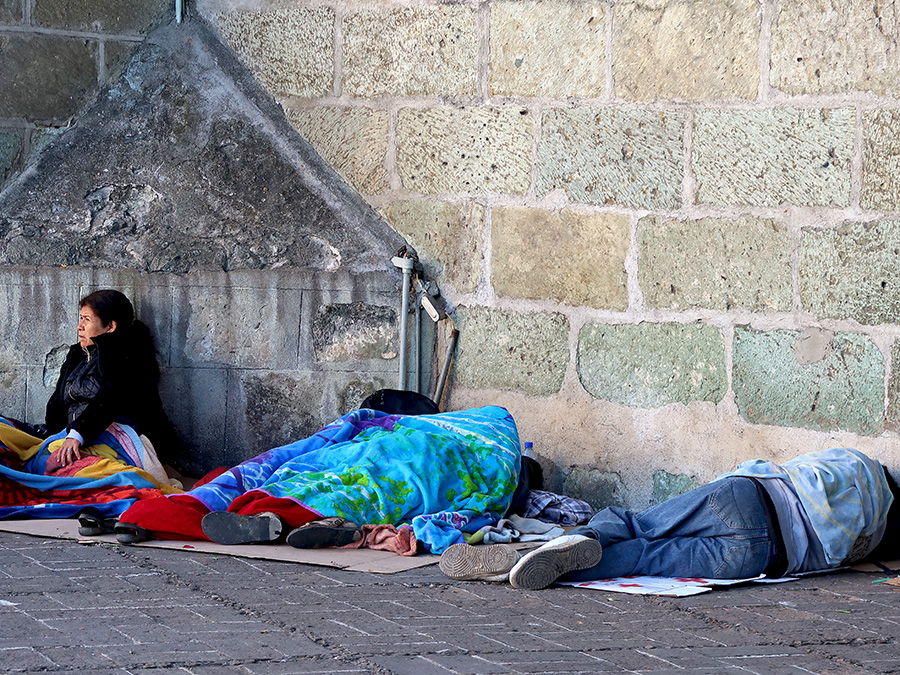
Many of the faithful spent the night in the Basilica’s atrium.

Alas, I didn’t have any energy left to stay and hear the Universidad Autónoma Benito Juárez de Oaxaca (Benito Juárez Autonomous University of Oaxaca) Tuna band serenade Soledad with a concert inside the Basilica at midnight.  Silly me!  I was dozing off to sleep at midnight when the Basilica’s bells began chiming furiously and cohetes (rockets) sounded and I woke with a start.  Next year, I’m staying up!

Prayers before the La Virgen de la Soledad.

Sleep finally returned, only to be interrupted about 4:15 AM with more cohetes and a band and then again around 6:30 AM.  Needless to say, I gave up on sleep and got up.  All during the night La Virgen was not alone.  The faithful, coming from near and far, spent the night in the atrium of the church, food stalls set up on the stairs leading down to the church fed one and all, and live music entertained her all night long.

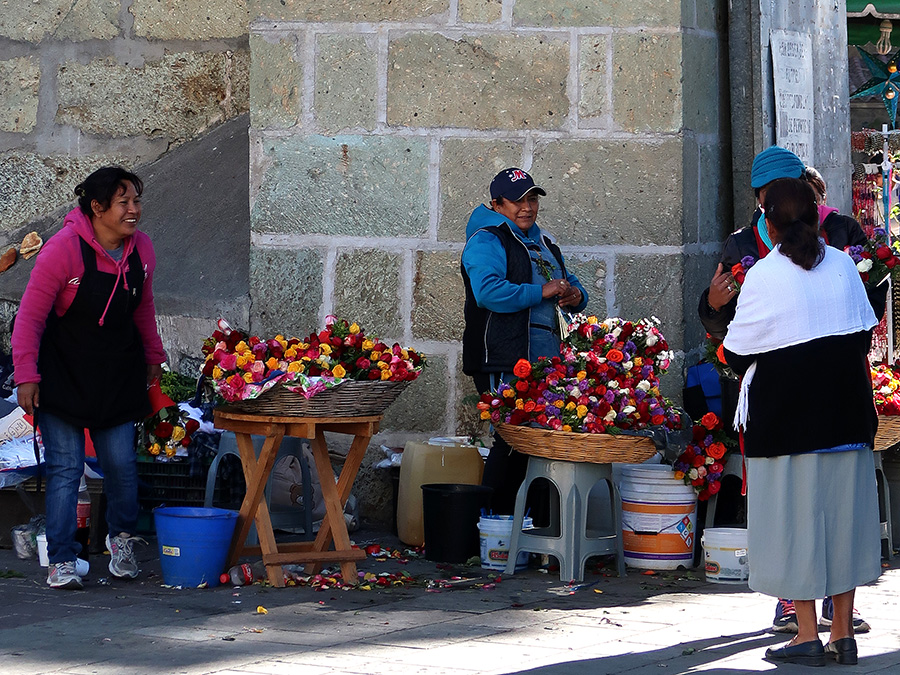
The ever-present vendors selling flowers to the faithful.

Like most, her story has several versions.  According to one legend, in 1620 a mule train bound for Guatemala camped outside the city of Oaxaca, discovered an extra mule which did not belong to anyone in the group.  The mule refused to move and when prodded rolled over and died.  When the pack it carried was opened, it was found to contain the statue of La Virgen de la Soledad. Taking this as a sign from heaven, the inhabitants built a shrine, later a church, and finally the imposing Basilica.

Food vendors lined the stairs down to the Basilica’s atrium.

In another story, a muleteer from Veracruz, en route to Guatemala, noticed he had one too many mules in his pack upon his arrival in Oaxaca.  Outside the San Sebastian hermitage, the mule collapsed under the burden it was carrying.  All attempts by the muleteer to get it back on its feet were futile; to avoid punishment, he notified the authorities.  When he lifted the load off the mule, it got up but then immediate died.  The burden was inspected and an image of the Virgin, accompanied by Christ, along with a sign that said, “The Virgin by the Cross.”  Faced with this momentous event, Bishop Bartolome Bohorquez ordered a sanctuary to be built in honor of the divinity.

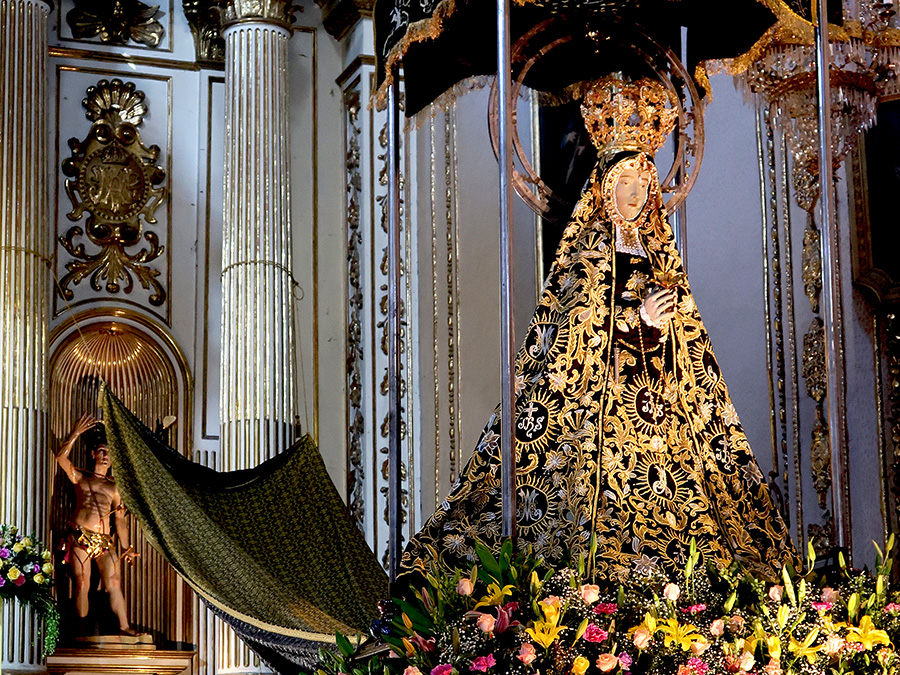
La Santísima Virgen de La Soledad inside the Basilica wearing her gold, diamond, and pearl encrusted vestments.

Still another legend:  a heavily laden burro of mysterious origin appeared outside of town in 1534, fell to the ground, spilling its load next to a rock (still on-site) containing the beautifully carved Virgin (thought to be carved in Guatemala or the Philippines) and a chapel was built on the spot.  However, apparently there was an adobe shrine to the Virgin of Solitude atop Cerro Fortín as early as 1532 — and the rock may have even been moved from the mountain in 1617 to the current site (immediately to the right as you enter the Basilica).

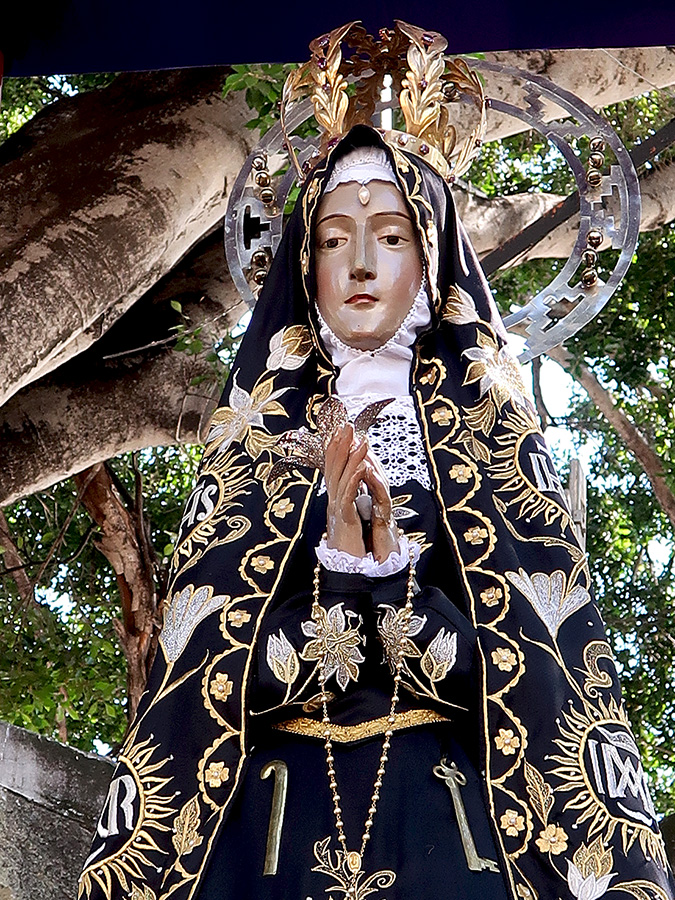
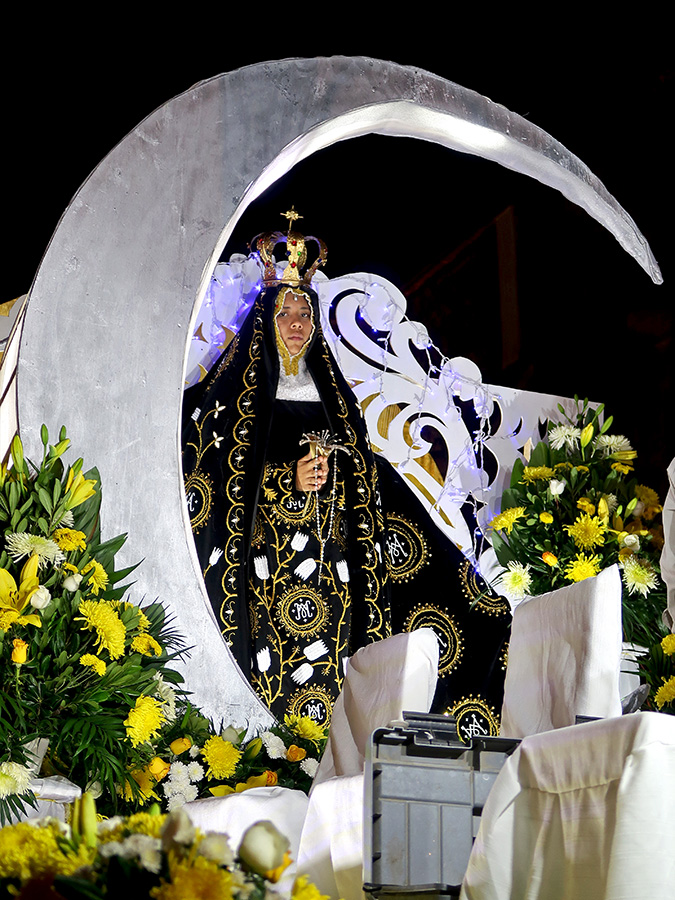
La Santísima Virgen de La Soledad (body double) under the tree in the atrium of the Basilica — wearing the traveling attire.

Her vestments are encrusted with pearls and 600 diamonds — and she wears a 4-lb gold crown.  As all that bling is quite heavy and valuable, she has a body double who wears a velvet mantle and crown that aren’t quite so ostentatious.  It is she who is carried through the streets during processions and has been residing in the church atrium during the festivities in her honor.

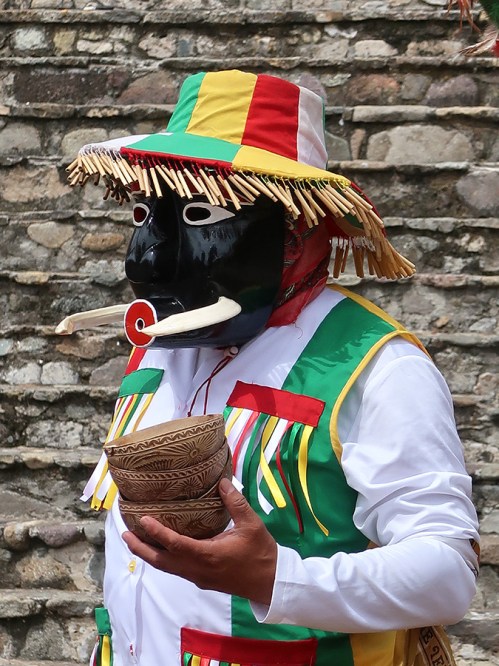
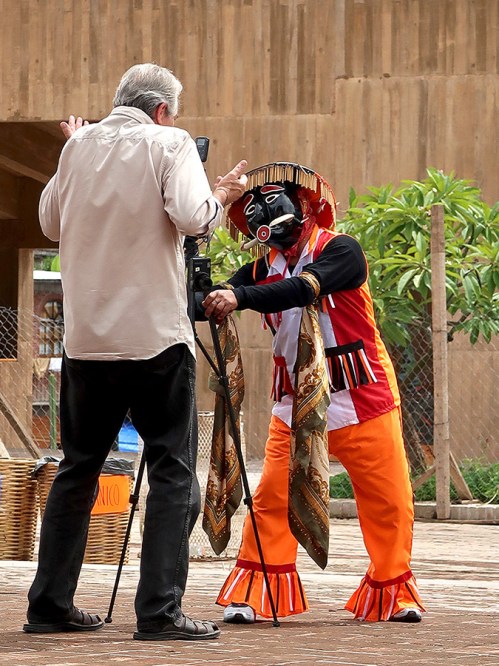
All was not completely serious yesterday at the Basilica — there was also entertainment.  In the late afternoon, Soledad was treated to a command performance by the Cuadrilla de Mascaritas from Asunción Nochixtlán, in the Mixteca.  I had never seen nor heard of this dance before.  According to this article (in Spanish), in 1865, a year after the defeat of the Franco-Austrian army at Las Tres Cruces (between Santo Domingo Yanhuitlán and Asunción Nochixtlán) by the joint forces of the Mixtecs and General Porfirio Diáz, Mixtecos commemorated the victory with the mascaritas dance, which ridiculed the supposedly invincible enemy.  I learn something new every day!

Read Full Post »

Tonight, the streets of Oaxaca are alive with the sound of music and cohetes (rockets) as a calenda (parade) in honor of Nuestra Señora de la Soledad (Our Lady of Solitude) celebrates the approach of the feast day of the mother, queen, and patroness of Oaxaca.

IMG_3724

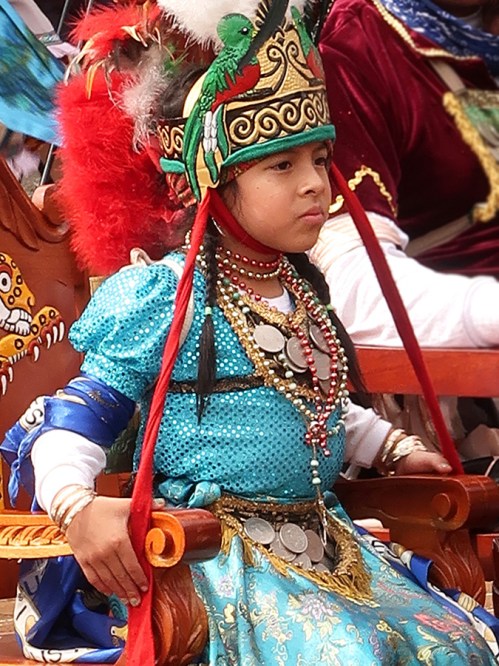
A young Soledad making the rounds on a float.

IMG_3729

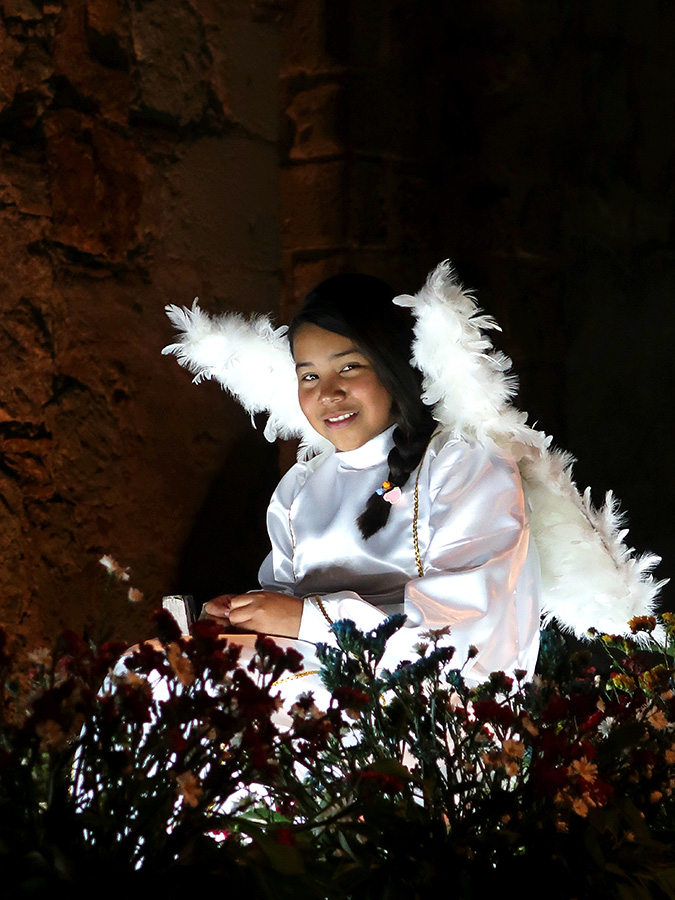
Accompanied by an angel.

IMG_3717

Monos taking a break in front of the Basilica de la Soledad.

There will be no solitude for Soledad during the next couple of days and nights.  If you don’t believe me, check out her festival schedule.

virgen de la soledad programa 2017

Read Full Post »

In Teotitlán del Valle, waiting for last Sunday’s convite, honoring the Virgen de Guadalupe, to begin.

IMG_3042

Watching and waiting from the best seat in the house!

IMG_2988

Waiting to process in the traditional red wool skirt and embroidered blouse.

IMG_3051

Little boys waiting to lead off the procession.

IMG_3054

Even a couple of little Juan Diego’s were ready and waiting.

The patience of the people of Oaxaca, even the kids, never ceases to amaze me.

Read Full Post »

IMG_2589

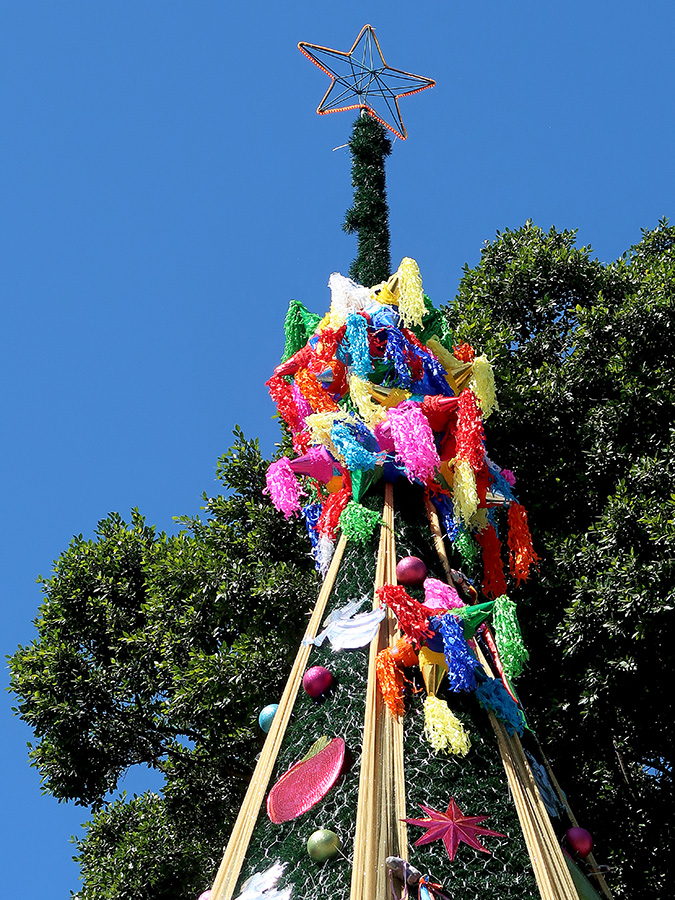
Artificial Christmas tree vying for top honors with an Indian laurel on the Alameda.

IMG_2529

Baby Jesús wearing his flor inmortal diapers in the courtyard between Del Maguey and Los Baúles de Juana Cata.

IMG_2583

“Star of wonder, star of light” above Amate Books on the Alcalá.

And, yes, the sky really was that blue today.

Read Full Post »

For anyone who still wonders why in the world I have chosen to live in and thrive in Oaxaca, go see the latest Pixar movie, Coco.

Entrance to the Panteón de Xochimilco, Oaxaca – Oct. 31, 2017

The filmmakers “based the Rivera family — a multigenerational matriarchy headed by Miguel’s formidable abuelita, or grandmother — on real-world families with whom they embedded while visiting the Mexican states of Oaxaca and Guanajuato between 2011 and 2013.”  (How Pixar Made Sure ‘Coco’ Was Culturally Conscious)

Panteón in San Antonino Castillo Velasco, Oaxaca – Nov. 4, 2017

From the elaborately embroidered blouses and animated fantastical alebrije to the cemeteries and “life” of Día de los Muertos, Oaxaca provided an inspiration for the film.  (Coco, la nueva película de Disney-Pixar inspirada en Oaxaca)

Panteón San Antonino Castillo Velasco, Oaxaca – Nov. 4, 2017

It is the music and messiness, color and cacophony, and finding joy in just being.

Panteón San Antonino Castillo Velasco, Oaxaca – Nov. 4, 2017

“We absorbed details in every place that we visited, but the most valuable thing was the time we spent with Mexican families.”  (How Coco’s Directors Celebrated the Film’s Mexican Heritage)

Ofrenda display in the Biblioteca Pública Central de Oaxaca Margarita Maza de Juárez – Oct. 31, 2017

It is the Oaxaca of fiestas, street dogs, and papel picado.

Papel picado projected on the Basilica de Nuestra Señora de la Soledad, Oaxaca – Oct. 30, 2017

Above all, it is about the importance of family, living and dead…

Public ofrenda in the atrium of the Catedral de Nuestra Señora de la Asunción, Oaxaca – Oct. 31, 2017

“With all of its music and folklore and artwork, and the story itself, audiences so far feel Coco respects their families, living and remembered.”   (Mexico, Music And Family Take Center Stage In ‘Coco’)

Panteón Municipal de Tlacolula de Matamoros, Oaxaca – Nov. 1, 2017

And, respect for one’s heritage and traditions.

Panteón San Antonino Castillo Velasco, Oaxaca – Nov. 4, 2017

This is the Oaxaca I fell in love with and treasure.

Panteón San Antonino Castillo Velasco, Oaxaca – Nov. 4, 2017

This is the Oaxaca that captured by heart, daily enriches my life, and I call home.

Read Full Post »

Looking back, in black and white…

IMG_1600_b&w

IMG_1448_b&w

IMG_1468_b&w

IMG_1472_b&w

IMG_1501_b&w

IMG_1473_b&w

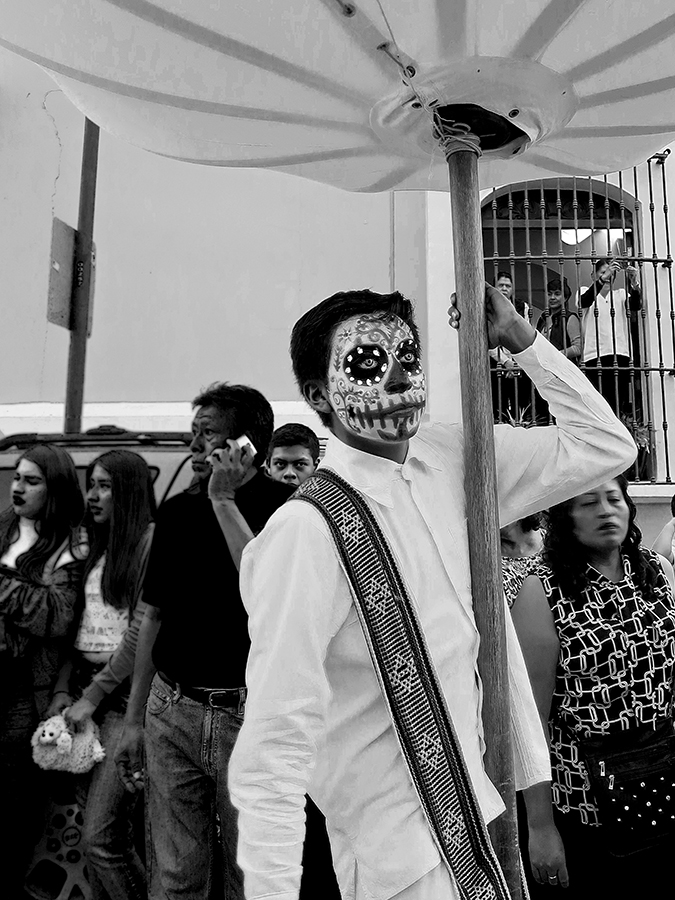
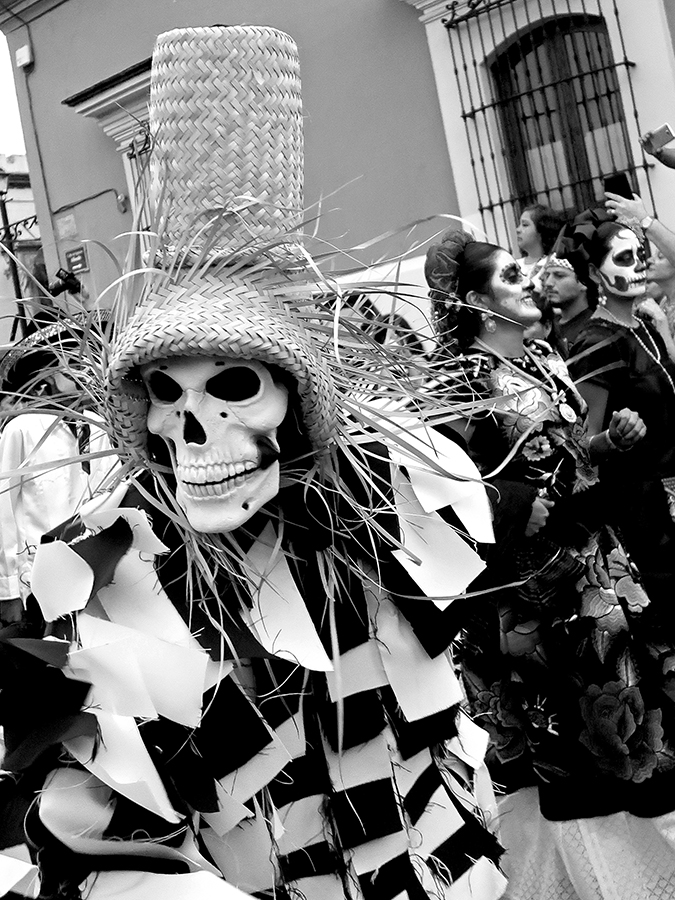
Magna Comparsa Oaxaca through the streets of the city on October 28, 2017.

Read Full Post »

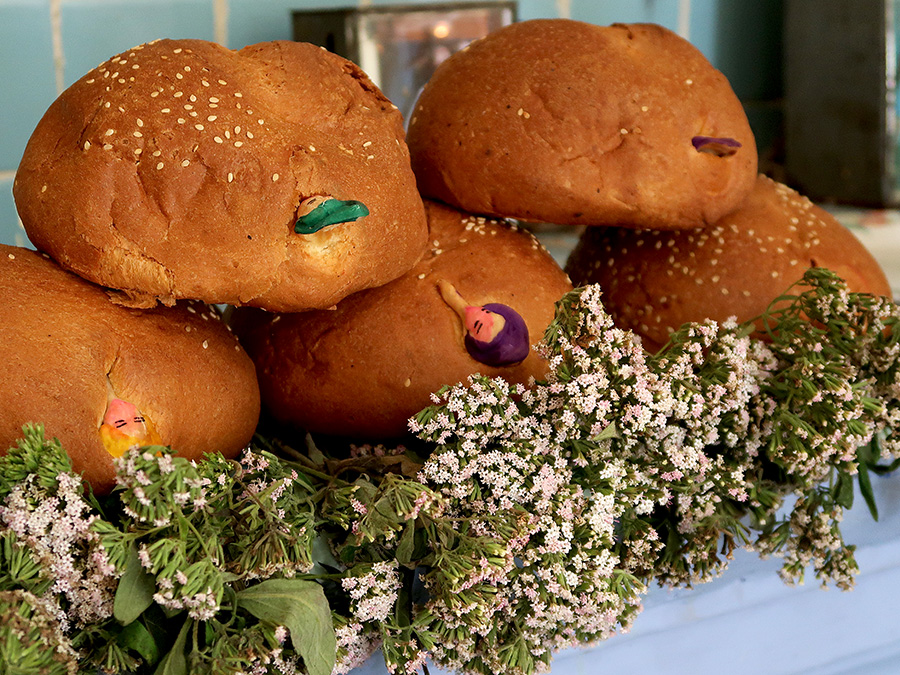
When Día de Muertos approaches, the panaderías (bakeries) work overtime to fill their shelves and counters with Pan de Muertos — an egg based bread, sometimes elaborately decorated, but always with a cabecita (also known as a muñeca), a little painted flour dough head, at the top.


The most intricately decorated bread comes from Mitla.  For a few years, Mitla held a Pan de Muertos fair and competition, with prizes for decoration.  Alas, because their bread is in such demand, the feria was halted two years ago as the bakers put a priority on attending to their customers needs — this is their livelihood, after all!


However, the small pueblo, Villa Díaz Ordaz picked up the slack and last year began holding a Festival del Pan de Muertos.  The village is off the beaten path and the festival hasn’t yet drawn much in the way of tourism, but it’s a wonderful event that blogger buddy Chris and I love attending (See his post, here).  Among other things, the event is encouraging and passing along to the younger generation knowledge and pride in the traditions and skills of their community.   And, in my book, that is a good thing!


Oaxaca city has also gotten into the Pan de Muertos promotion act.  A 6-day Feria del Pan y el Chocolate was held at the Jardín Carbajal.  One could talk to knowledgeable vendors eager to share their passion, buy bread and chocolate to take home, or just take break from the busyness of this time of year, to sit in the shade of the umbrellas dipping the pan into hot chocolate.  Yummm…


Why all this bread?  To place on one’s own ofrenda and to take to the ofrendas of relatives and extended family — its essence to nourish the difuntos (departed) when they come for their annual visit.

IMG_2063

Pan de Muertos on the altar of the chapel in the panteón in Teotitlán del Valle – November 1, 2017

It is a time of year when the difuntos also nourish the souls of the living.

Save

Read Full Post »

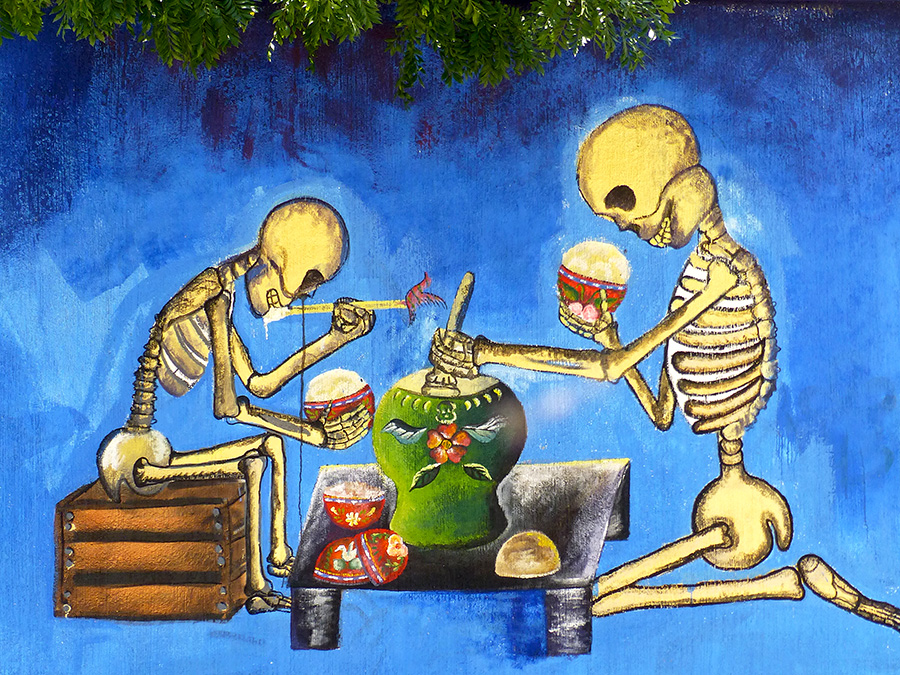
Calacas dressed for work and catrinas dressed to the nines, for my skeleton-loving grandson.

From the sidewalks, courtyards, and balconies of Oaxaca, October 2017 — ready for the Day of the Dead.

Read Full Post »

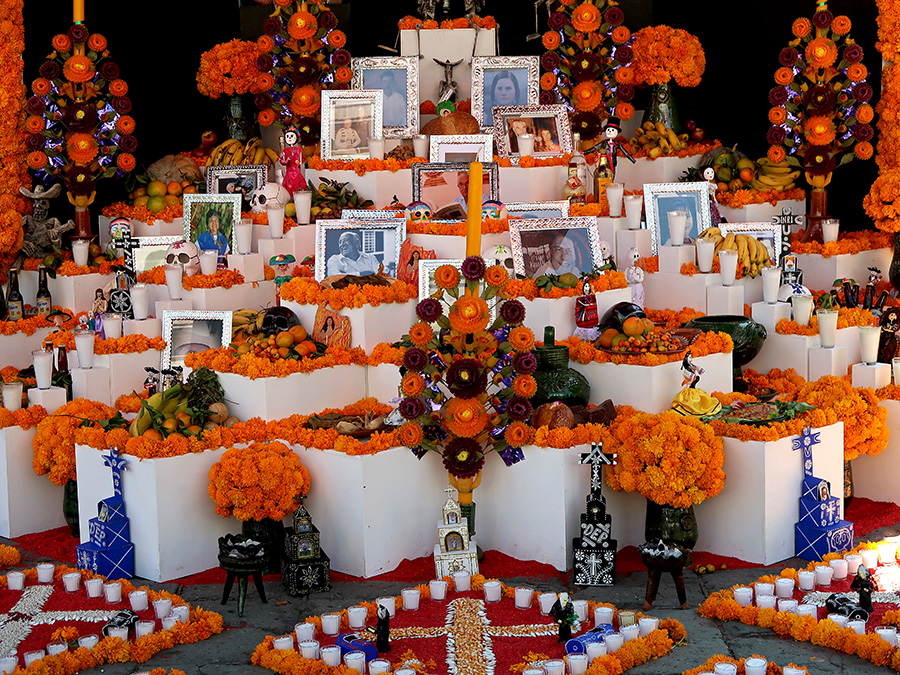
Día de Muertos is coming…

That means the departed will soon return to eat, drink, and be merry with their living loved ones.

Due to earthquake damage the Panteón General in the city is closed, but the traditional evening of the dead will take place at the Panteón Xochimilco.

As the schedule of over 100 cultural activities (between October 28 and November 4) states, despite earthquakes and hurricanes, “Oaxaca is more alive than ever!”

Read Full Post »

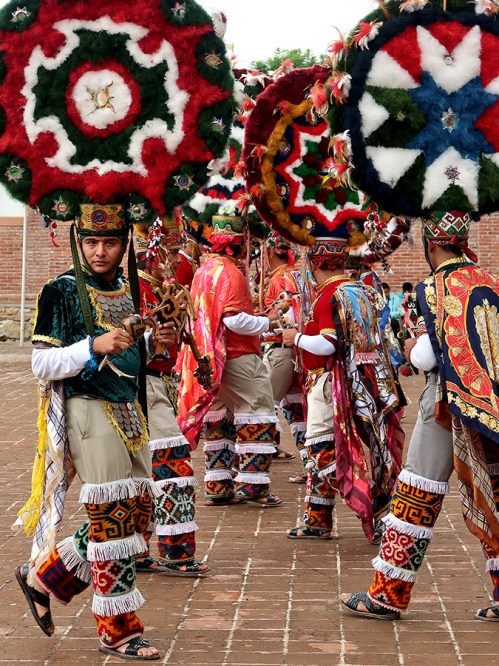
Yesterday, after missing the Fiesta de la Natividad because I was in the middle of my 6-week cross-country sojourn in el norte, I managed (courtesy of blogger buddy Chris and his trusty VW Jetta) to make it out to Teotitlán del Valle for the last day of the Fiesta de La Virgen del Rosario and performance of the Danza de la Pluma.

IMG_0915

Sergio Gutiérrez Bautista (Moctezuma)

The dance is day-long and recreates the Spanish Conquest from the Zapotec point of view.

IMG_0968_copy

Quetzali del Rayo Santiago Ruiz (Malinche)

IMG_0804

Elizabeth Hernández Gutiérrez (Doña Marina)

Miracle of miracles, the rain held off, the clouds parted, and the sun made a much welcome appearance.

IMG_0905

IMG_0776

Foreground:  Marcos Vicente Gutiérrez (Capitán 1 ro.)

IMG_0876

Foreground:  Edgar Daniel Ruiz Ruiz (Vasallo 8vo.)

IMG_0906

As we approached the atrium of the Templo Preciosa Sangre de Cristo, the father of one of the Danzantes explained a venue change — due to some (hopefully) minimal earthquake damage to one of the bell towers of the church, the Danza de la Pluma was moved next door to the plaza in front of the municipal building.

IMG_0856

Juan Bautista Ruiz (Subalterno)

IMG_0811

Florentino Martínez Ruiz (Subalterno) and Señor Inocencio

A heartfelt muchisimas gracias to the people of Teotitlán del Valle, many of whom I am so lucky and grateful to call friends.  The warm welcome I received was such an incredible tonic to the grey days we have been experiencing in Oaxaca.

Save

Read Full Post »

One of the great things about having friends come to visit, is going places and doing things not on the usual agenda.  Thus, last week, while accompanying my friend B on a private tour of sights outside Oaxaca city, the guide asked if we knew about the Muertos murals in Villa de Zaachila and would we like to see them.  Absolutely, we said!

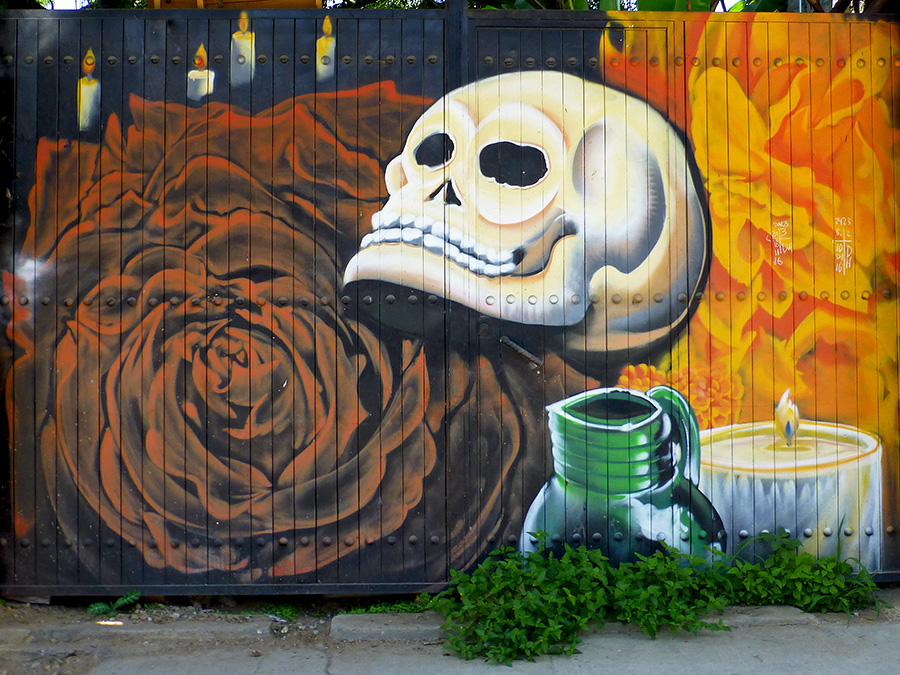
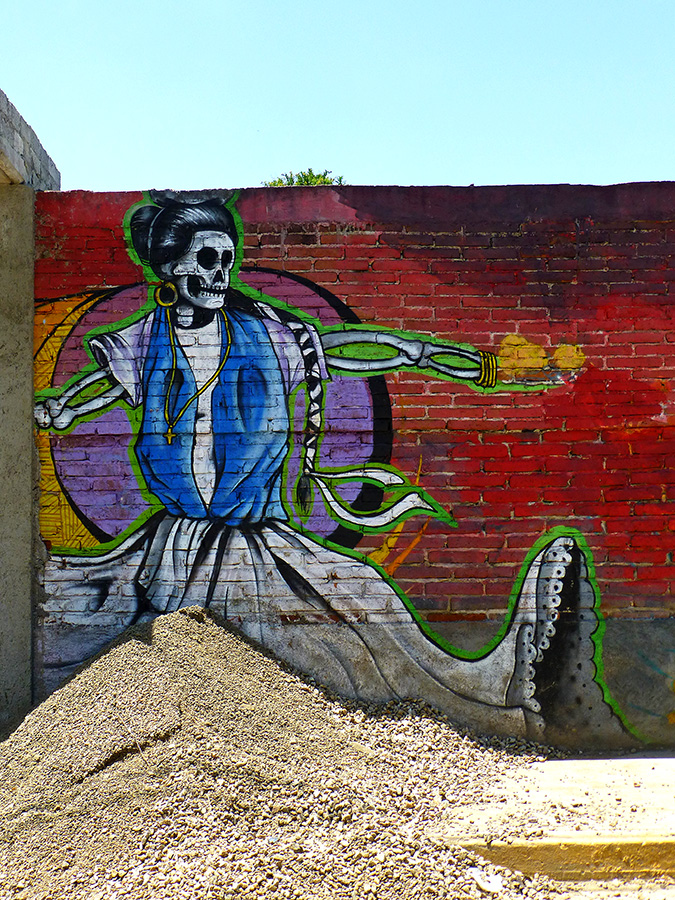
In late October, prior to Día de Muertos, young artists are invited to paint Day of the Dead related murals on the walls of Calle Coquiza, the street that connects the church, Santa María Natividad, to the municipal cemetery.  Customs, beliefs, and legends provide the inspiration, as well as day-to-day activities.

P1260838

Flor de Piña dancers welcome residents and visitors to step through the doorway to the land beyond.

P1260849

Where electric meters serve as faces.

P1260844

And, telephone poles add a third dimension to the design.

P1260850

Painted pitchers and candles nestle in vegetation escaping from under a portón.

P1260874

And, a dancer frolics in sand waiting to be mixed into concrete for construction next door.

P1260853

Skeletons use an electric meter to get a leg up in climbing the conduit.

P1260857

Trees provide shade, as Pan de Muertos is baked in an outdoor oven.

P1260878

Leaves flutter above, as Bu’pu del Valle (chocolate atole) is frothed with a molinillo before being served in traditional hand-painted jicaras.

P1260862

Flowers tumble over the wall to adorn a catrina portrait’s hat.

The murals along the walls of Calle Coquiza remain throughout the year — until replaced by the next Día de Muertos artists’ offerings.  In addition, during Day of the Dead, this Calzada de los Muertos (Road of the Dead) is paved with sand paintings.  It is definitely going on my Muertos “must see” itinerary.

Read Full Post »

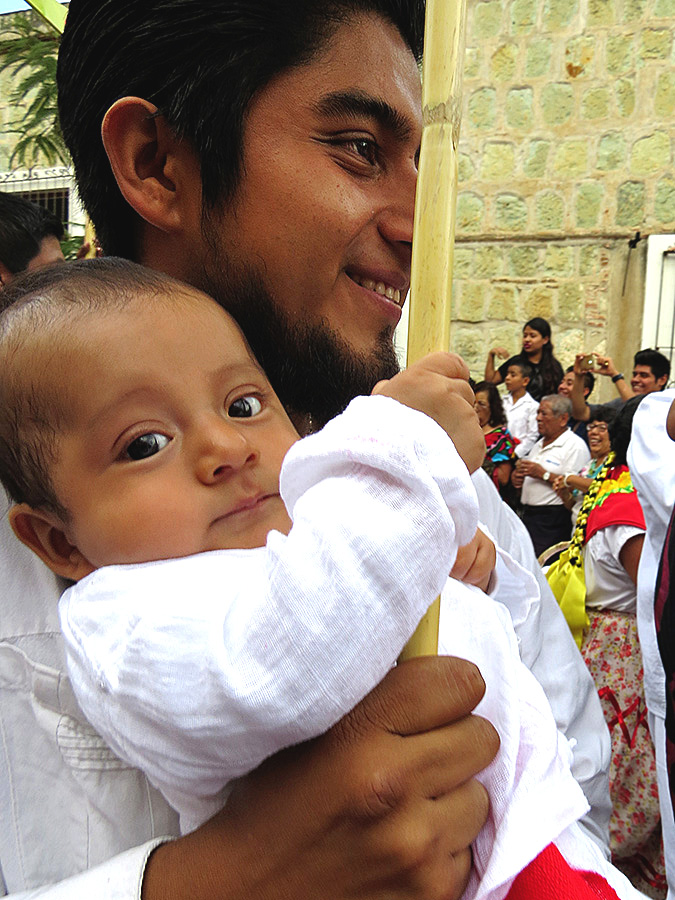
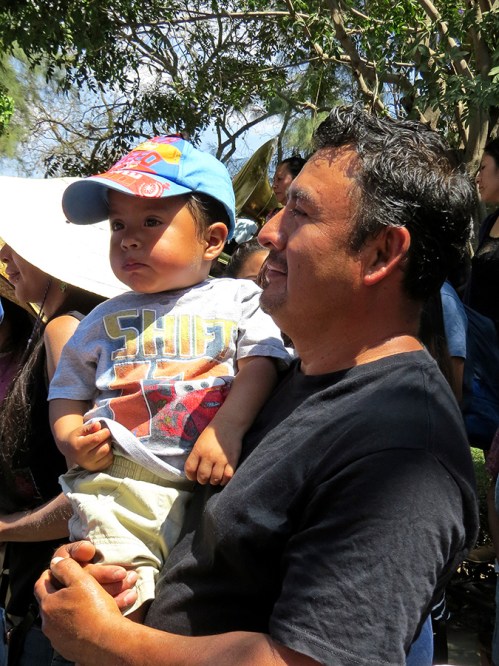
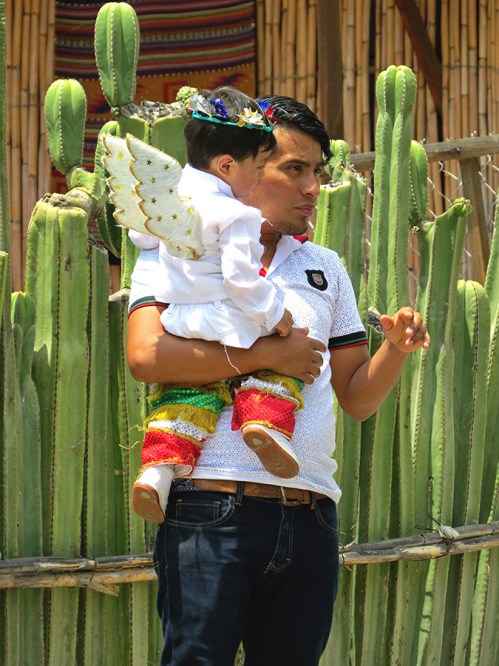
Fathers of Oaxaca playing a leading role in introducing the next generation to the music, dance, and respect for the traditions of Oaxaca…

IMG_1929 (1)

Learning to carry a marmota in La Guelaguetza parade of delegations in Oaxaca city – July 2016

IMG_1950

Following La Guelaguetza parade of delegations in Oaxaca city – July 2016

IMG_2912

Watching masked dancers at the mock wedding during Carnaval in San Martín Tilcajete – February 2017

IMG_3197

Giving angels a lift during the Lunes Santo procession in Teotitlán del Valle – April 2017

Happy Father’s Day to all the loving fathers (biological and adoptive), stepfathers, grandfathers, godfathers, and father figures everywhere, may you continue to do what you do.

¡Feliz Día del Padre!

Read Full Post »

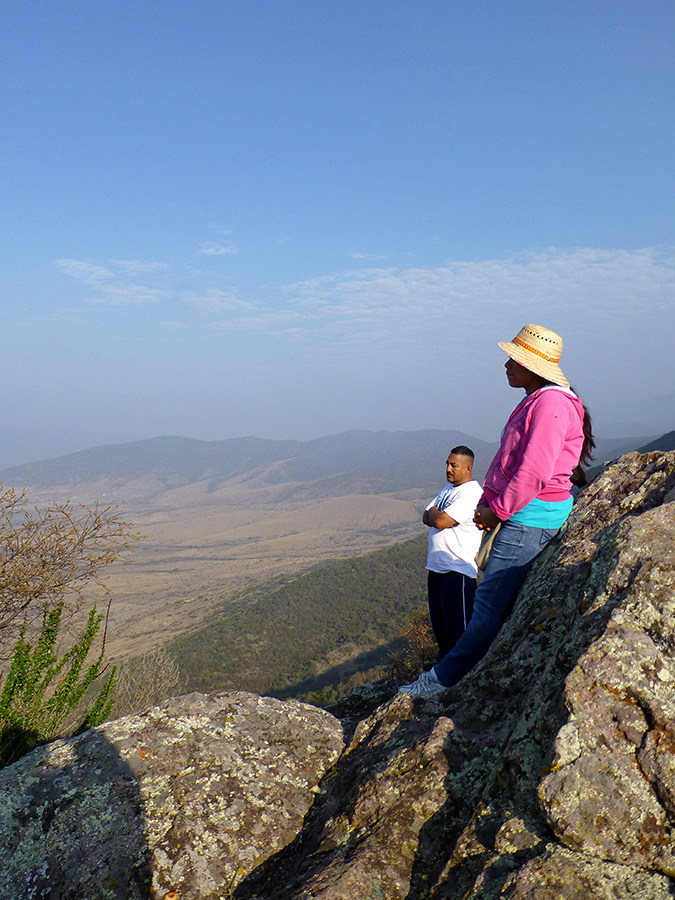
Yesterday, I did it again!  After a year’s hiatus, on Día de la Santa Cruz I returned for the ritual pilgrimage to the top of El Picacho, the sacred mountain that watches over Teotitlán del Valle.  To avoid hiking in the worst of May’s high temperatures, our ascent began at 5:30 in the morning.  Yes, it was dark, with not even moonlight to guide our way.  Thank goodness for the flashlight app on my smart phone.  However, by 6:30 AM dawn was breaking and our artificial lights were extinguished.  Our hardy band arrived at the summit about 7:30 AM to the ritual round of handshaking that accompanies greetings and farewells in the village.

P1250981_crop

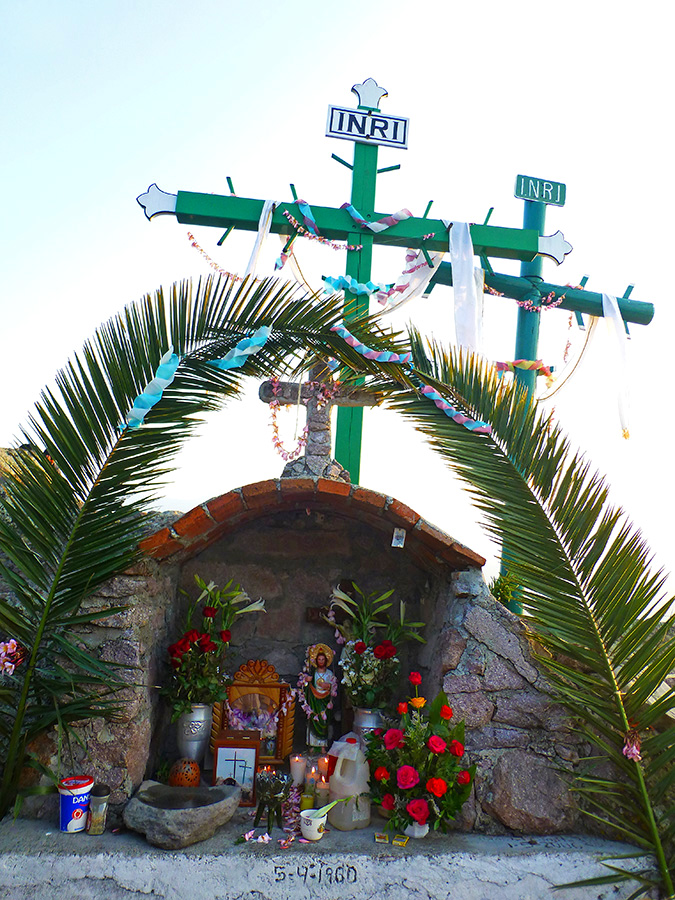
The three crosses mark the summit

P1250980

Pilgrims perched on the rocky outcroppings that make up the peak.

P1250984

The views were spectacular no matter which way one chose to look.

P1250977_copy

An altar greeted pilgrims at the peak.

P1250998

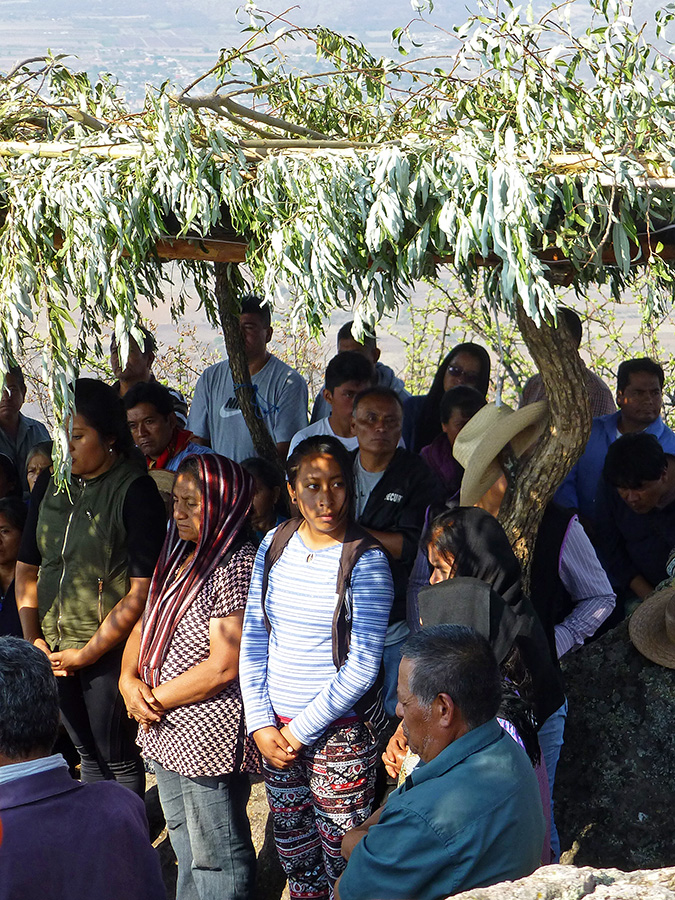
At 8:30 AM, an hour-long mass was celebrated and, perhaps a first, some of it was in Zapoteco.

P1250997

As the mass began, the cicadas (cigarras or chicharras, en español) began their song — one even perched on the fabric swag festooning the crosses.

P1260004

Mass over, Procopio Contreras, the young priest (first from Teotitlán) took off his vestments and posed for photos.

P1260006

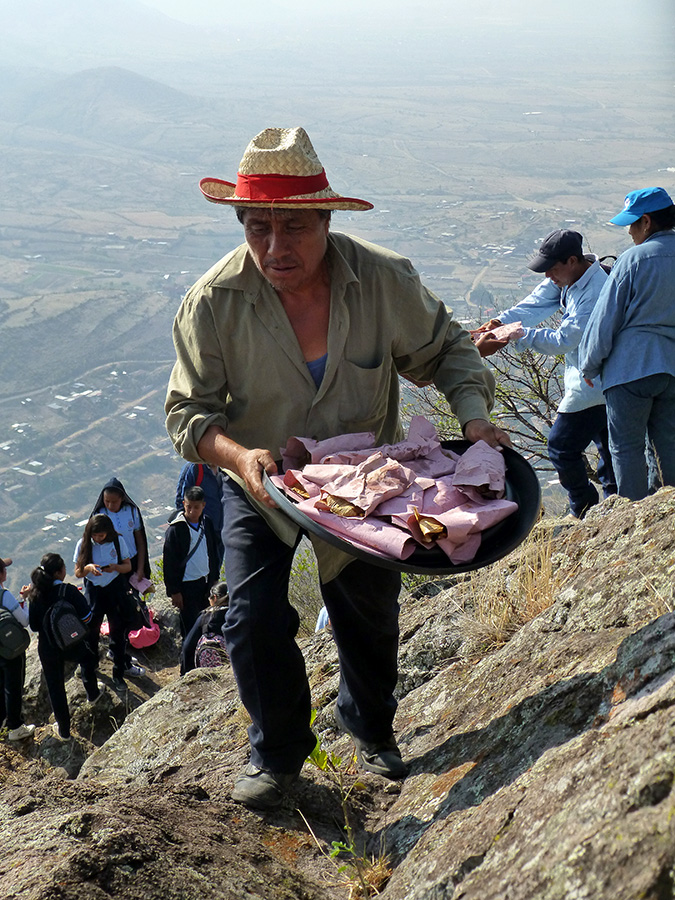
Mountain top delivery of tamales de mole amarillo followed the mass.

P1260012

Along with a cup of agua de jamaica, we took our tamales into the shade, where bromeliads clung to tree branches.

After a lazy comida filled with conversation between new friends and with our strength renewed, we (3 Teotitecos, 1 Belgian, and me) descended the mountain.

While the day may be designated Día de la Santa Cruz and a mass said on top of Picacho, this day has pre-Hispanic roots in ceremonies related to the sowing season.  In the early days of May (by our calendar), prayers and rituals were dedicated to Cosijo, the Zapotec god of lightening, thunder, and rain — later to Tláloc, the Aztec god of rain — thus fertility and water for the growing of crops.  Hmmm…  On May 2, lightening flashed and thunder roared, but Mother Nature only delivered a few drops in the village.  However, on May 3, once the daylong festivities atop the mountain concluded, three hours of a good hard rain fell in Teotitlán del Valle.  The gods must have heard the prayers.

h/t  Zeferino Mendoza

Save

Save

Read Full Post »
When I left off, it was early evening on Jueves Santo (Holy Thursday) in Teotitlán del Valle and the church doors were to be left open all night.  Sometime after dark, the statue of Jesus was removed from the church and incarcerated behind a petate (woven palm) mat.

P1250662

All during the night, the faithful waited their turn to visit the incarcerated Jesus.

P1250673

On Viernes Santo (Good Friday) morning, as the last of the villagers had paid their respects, the petate mat was removed.

P1250685

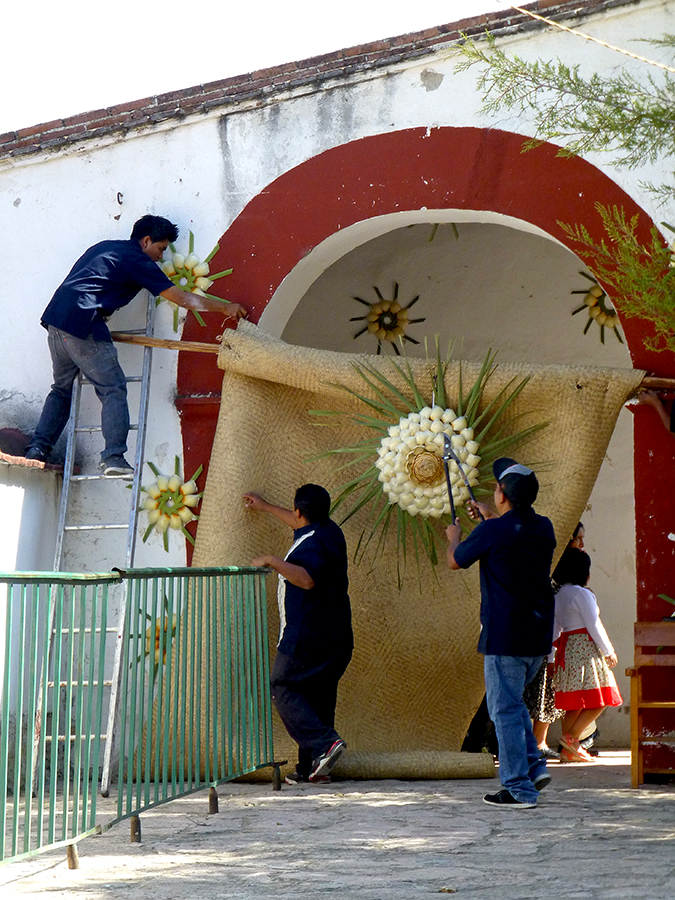
At the same time, in the esplanade in front of the rug market, a pulpit was constructed and decorated with tapetes — on loan from the nearby vendors.

IMG_3273

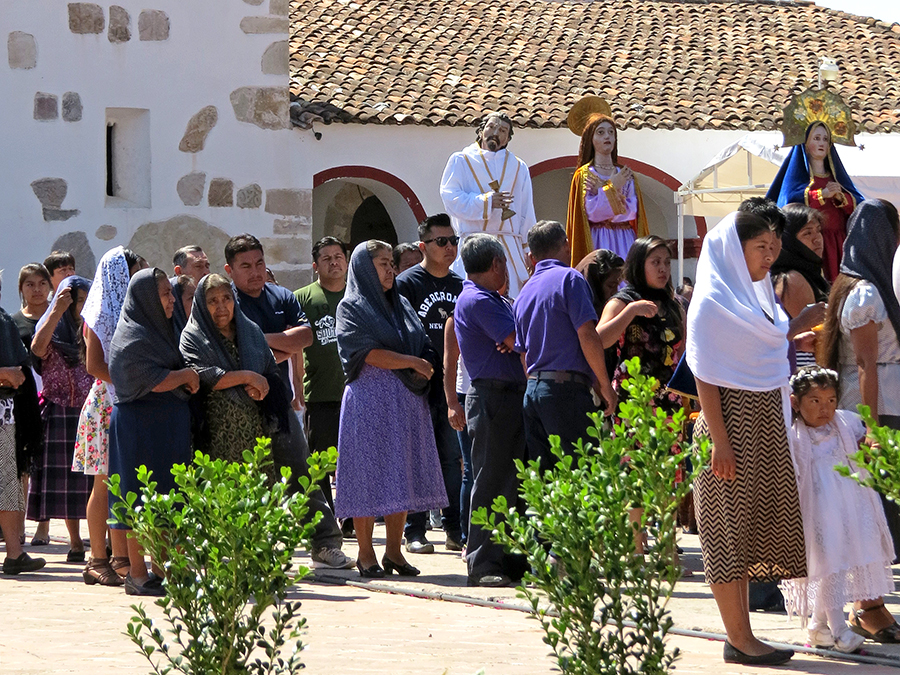
At 10:30 AM, a procession of Mary, Mary Magdalene, and St. John left the church, enroute to the esplanade.

IMG_3289

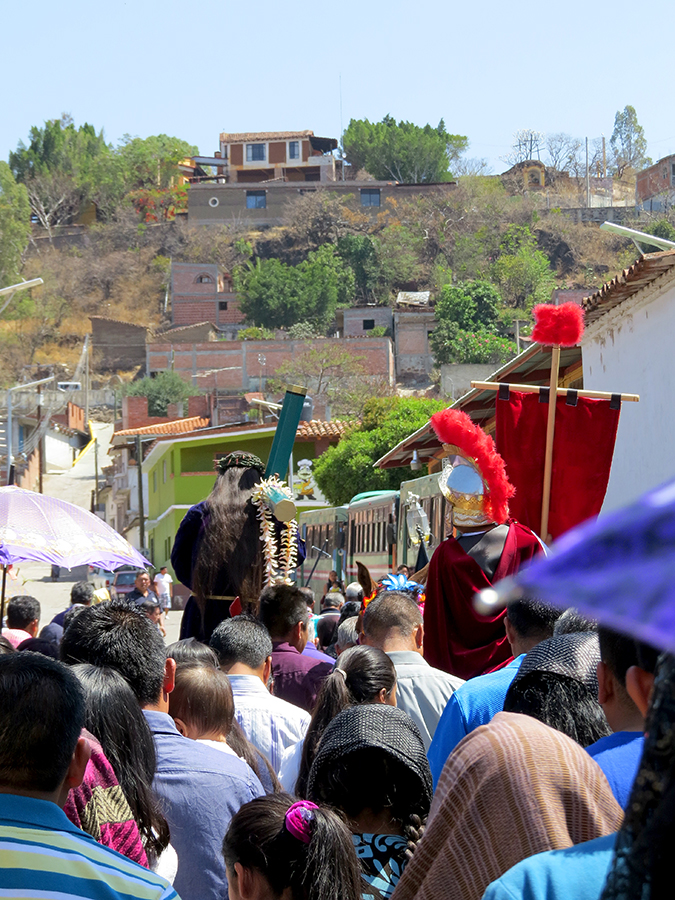
Then Jesus, bearing the cross, began his journey to the esplanade.

IMG_3292

Accompanied by throngs of faithful and the Roman Centurion, he wound his way through the streets along a different route from Mary.

IMG_3299

Jesus entered the plaza between the Municipal Building and the new Cultural Center.

IMG_3303

While Mary entered the plaza from the opposite direction — between the museum and the rug vendor stalls.

IMG_3319

Mary and Jesus stood facing one another.  They inched closer, as the priest continued his recitation, and at a designated moment, the statues were tilted so they could touch in farewell — this was the encuentro (encounter).

IMG_3333

Everyone joined together in a single procession back to the church.

IMG_3344Centurion

The Centurion returned to the church, as well, and couldn’t stop smiling.

IMG_3352

Jesus, Mary, Mary Magdalene, and St. John made their way back to the village church, Templo de la Preciosa Sangre de Cristo.

P1250699

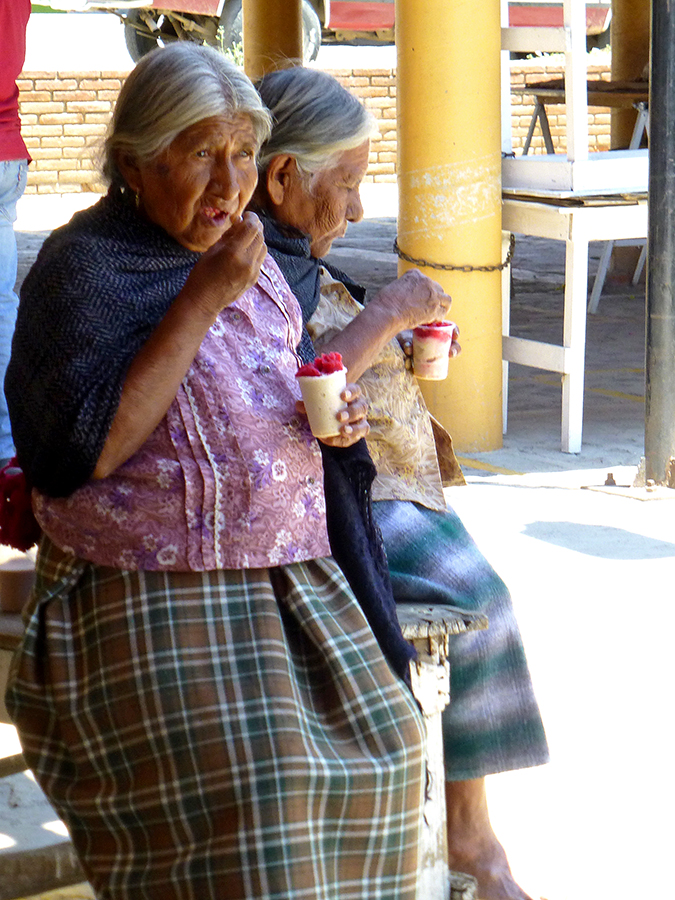
Following several hours spent under the unrelenting brilliant sun, most villagers made their way across the street to the mercado for a refreshing nieve (water or milk based ice cream).  Maybe that was why the Centurion was smiling.

Townspeople returned home for a traditional meal of salted fish and white beans — sustenance for what was to come — an evening Mass of the Crucifixion, followed by a second parallel procession to the cemetery, where another encuentro took place, and culminated in another joint procession back to the church.  Alas, I was exhausted, and chose bed over the evening’s events.

Read Full Post »

« Newer Posts - Older Posts »