I got out of Dodge (aka, San Diego) last Friday morning, August 18, 2023 — just in time. Happiness was missing the historic arrival in California of Tropical Storm Hilary. Whew!!!
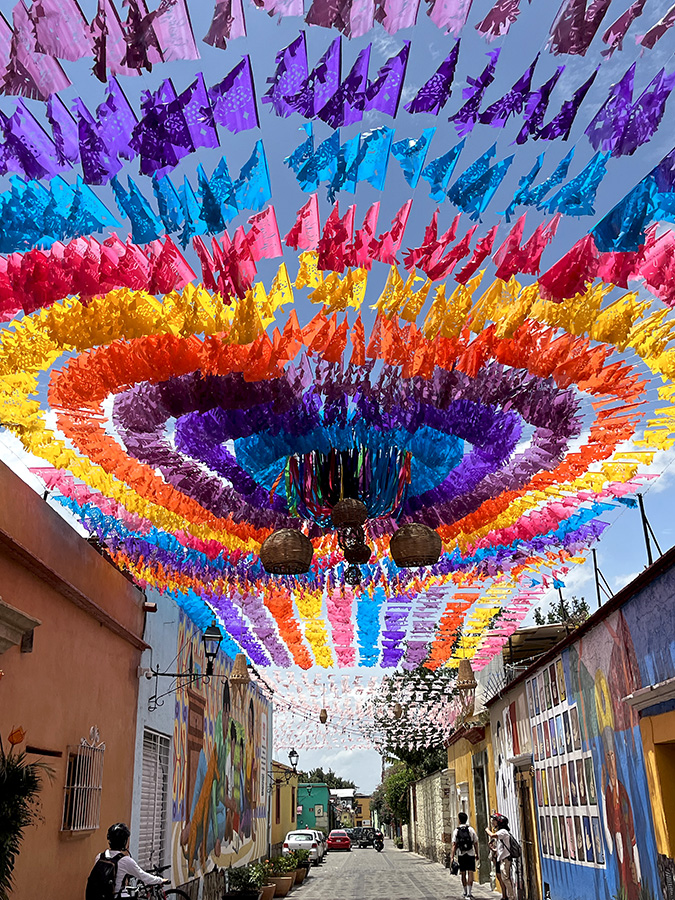


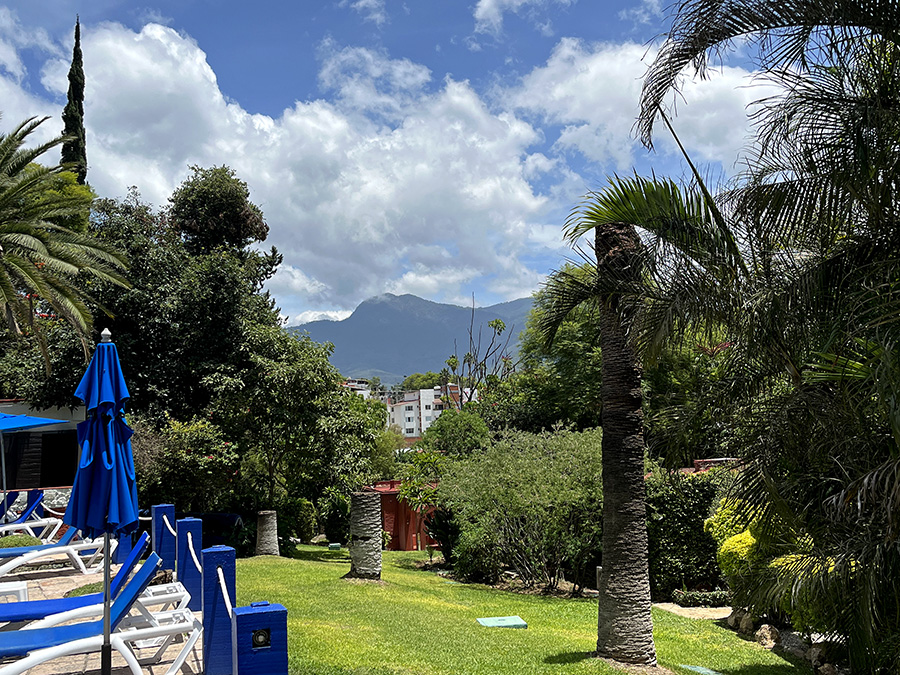
It’s good to be back.
Posted in Celebrations, Creativity, Culture, Neighborhoods, Travel & Tourism, tagged Barrio de Jalatlaco, Mexico, murals, Oaxaca, papel picado, photos, popular travel destinations, street art, urban art, wall art, wedding calenda on August 24, 2023| Leave a Comment »
I got out of Dodge (aka, San Diego) last Friday morning, August 18, 2023 — just in time. Happiness was missing the historic arrival in California of Tropical Storm Hilary. Whew!!!
It’s good to be back.
Posted in Creativity, Culture, Travel & Tourism, tagged Mexico, murals, Oaxaca, photos, popular travel destinations, San Antonino Castillo Velasco, San Pablo Villa de Mitla, street art, urban art, wall art on August 17, 2023| Leave a Comment »
Tomorrow, I return to the land where the handwriting is on the wall.


Posted in Creativity, Culture, Travel & Tourism, tagged Barrio de Jalatlaco, Berza Remes, Dulce Tamayo, Mexico, murals, Oaxaca, Oceane Isla Arte, photos, popular travel destinations, Seth Ruiz, street art, urban art, wall art on August 8, 2023| Leave a Comment »
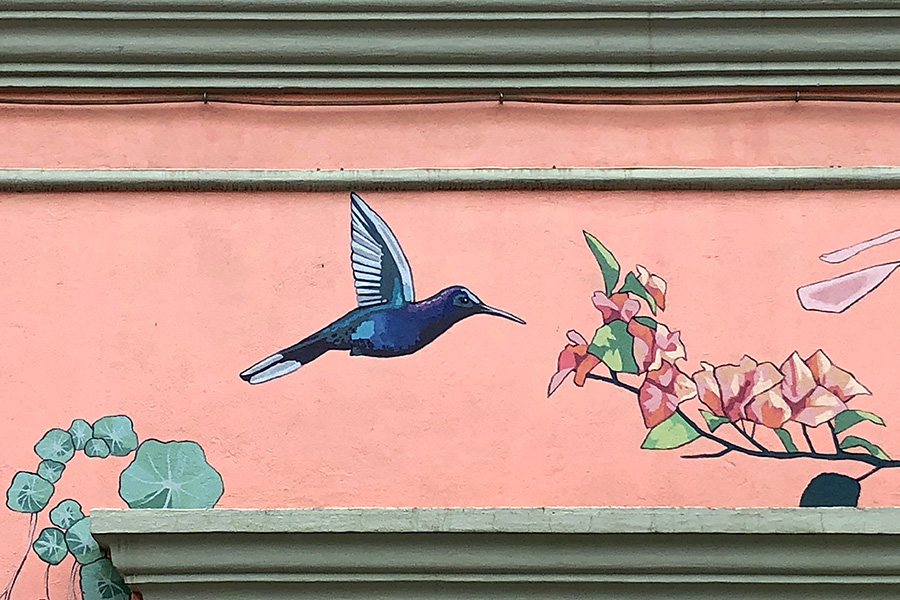
Life has been pretty good up here in el norte. The joy of having my whole family together has been immeasurable and the weather has been unusually, for this time of year in the San Francisco Bay Area, spectacular. (For those unaware of Northern California coastal weather, I give you the line attributed, albeit falsely, to Mark Twain, “The coldest winter I ever spent was a summer in San Francisco.”) Given the sun, blue sky, and warm temperatures, I’ve spent a lot of time outdoors — gardening, eating, and sitting watching the hummingbirds — just like Oaxaca! But I miss the colibries that also can be found on the walls of my neighborhood.
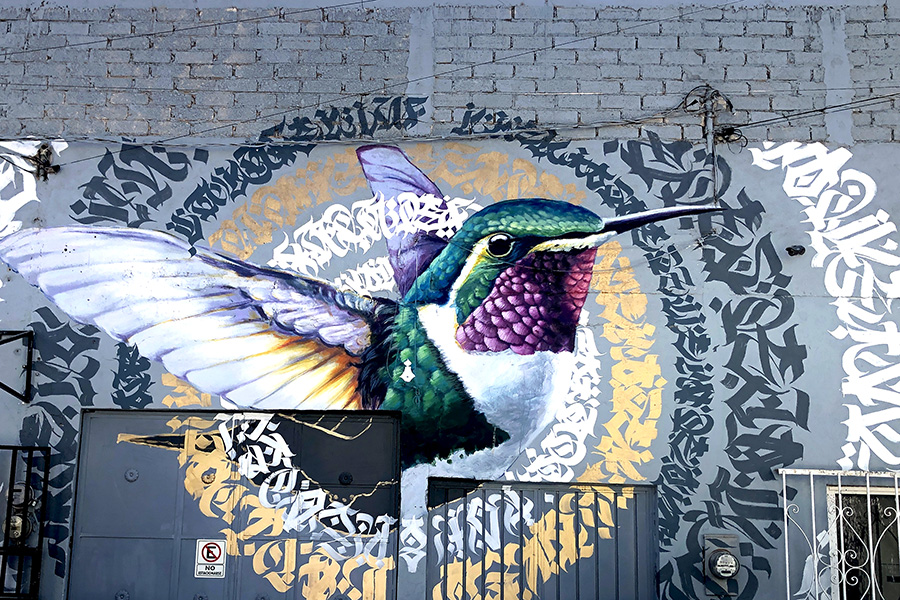
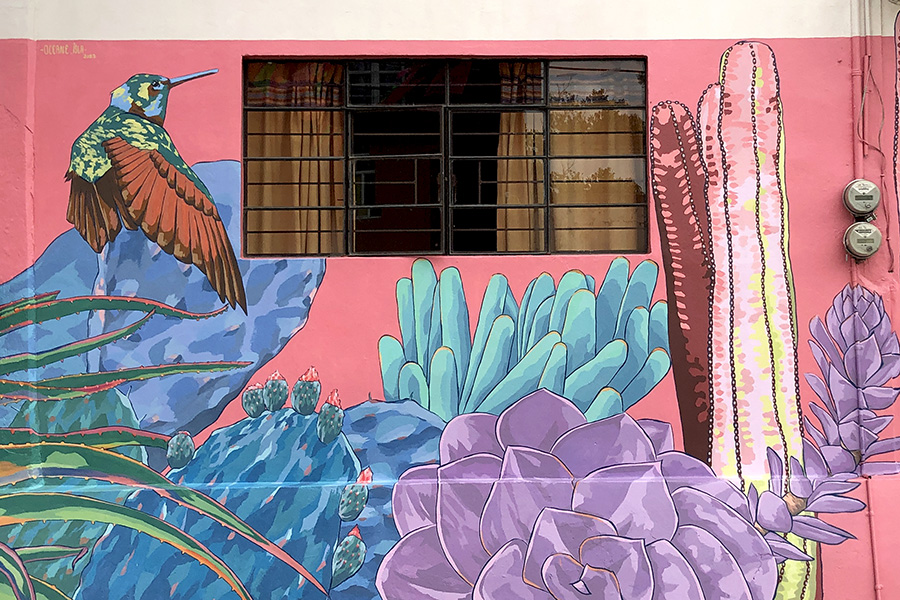


Posted in Culture, Food, Travel & Tourism, tagged Cena de Honor Beny Galguau, cocineras, food festival, food porn, Mexico, Oaxaca, photos, popular travel destinations on August 1, 2023| 6 Comments »
Three-plus weeks in el norte has me eating well but missing the flavors of Oaxaca. Thus, my blogging fingers and thoughts have turned back to the Cena de Honor Beny Galguau, a dinner honoring traditional ceremonial dishes, that I attended on May 25, 2023 at the Centro Gastronómico de Oaxaca.
First the Entradas (Appetizers)…


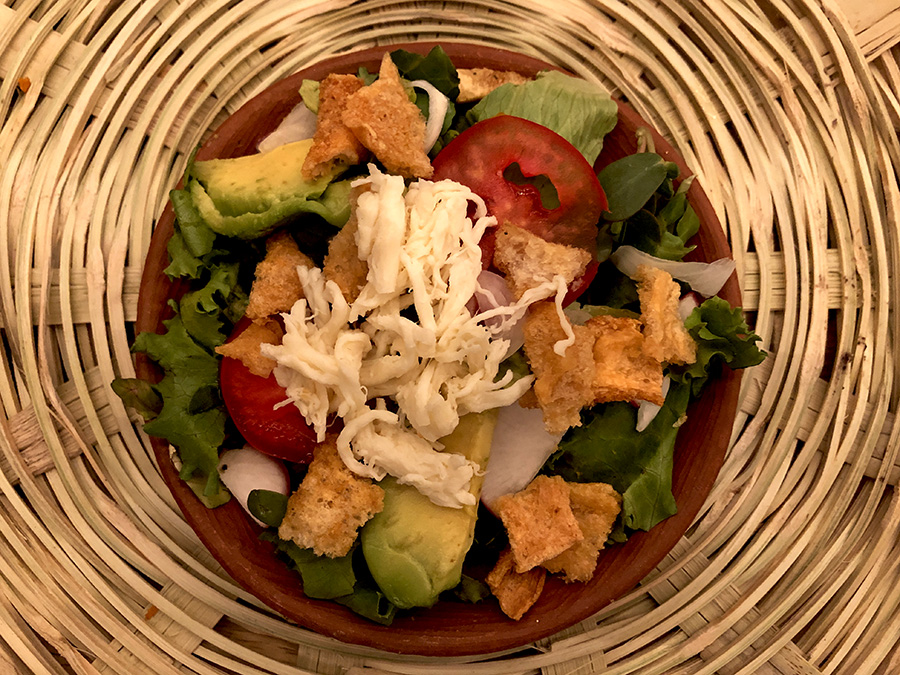

Followed by the Platos Fuertes (Main Dishes)…
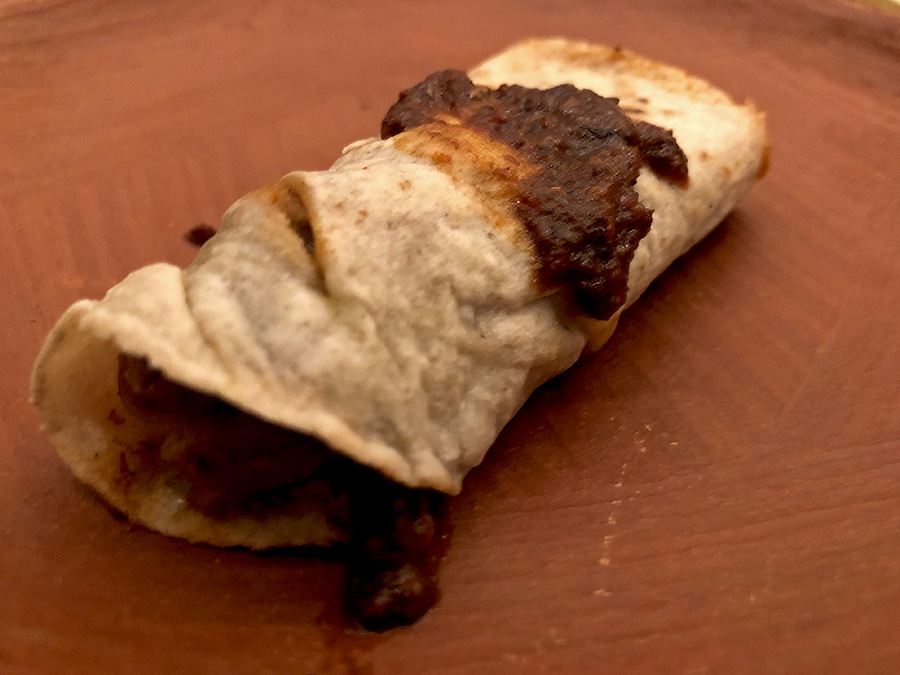

Finally, as if we all weren’t already stuffed, the Postres (Desserts)…

And, there were traditional bebidas (beverages), both alcoholic and non: Mezcall Diamante Zapoteco, Mezcal El Joven Viejo, Cerveza de Piña, Agua de Limón Rayado en su Punto, Café de Olla con Perfume de Canela, Té de Poleo (which was a perfect palate cleanser), Tejate de Cacao, and Chocolate Atole con su Espuma de Cacao.

Needless to say, the traditional cooks were the shining lights of the evening.
Posted in Celebrations, Creativity, Culture, Travel & Tourism, tagged Casa Santiago, dancers, Danza de la Pluma, danzantes, desayuno, Hugo Santiago Jímenez, Mexico, Oaxaca, photos, popular travel destinations, Teotitlán del Valle, traditional breakfast on July 23, 2023| 4 Comments »
In Teotitlán del Valle, as part of their three year commitment, each member of the Danza de la Pluma group and, especially their family, is responsible for taking a turn hosting one of the four yearly festivals. It includes several days of serving traditional foods at sit-down breakfasts, lunches, and dinners to the danzantes, band, families, godparents, village officials, and church leaders. For Danza de la Pluma Promesa 2022-2024 danzante, Capitán 2, Hugo Santiago Jimenez’s family, this entailed months of preparation, three pigs and one bull meeting their maker, and days of cooking for over 300 people.
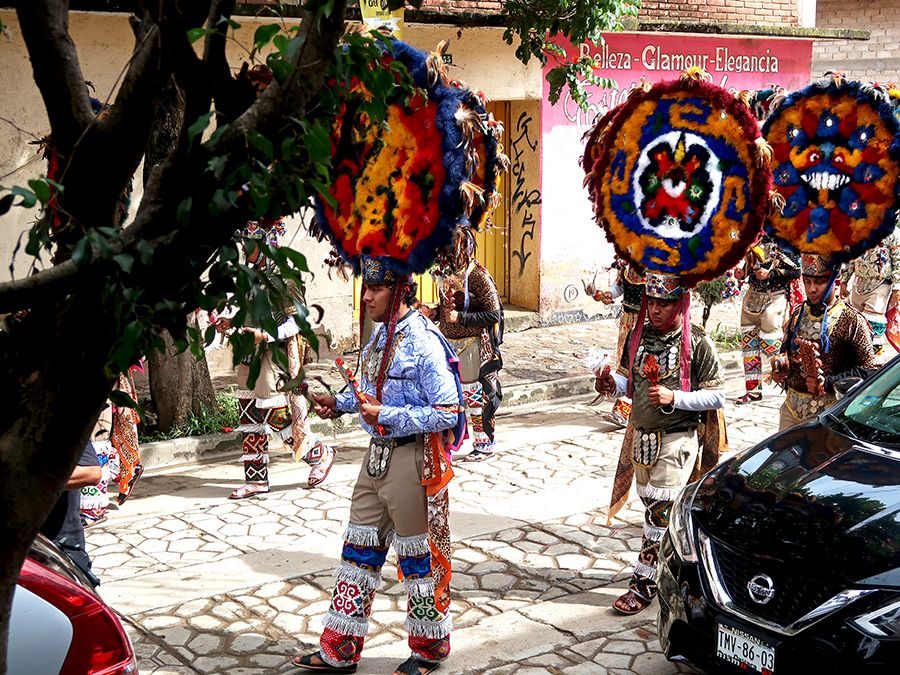


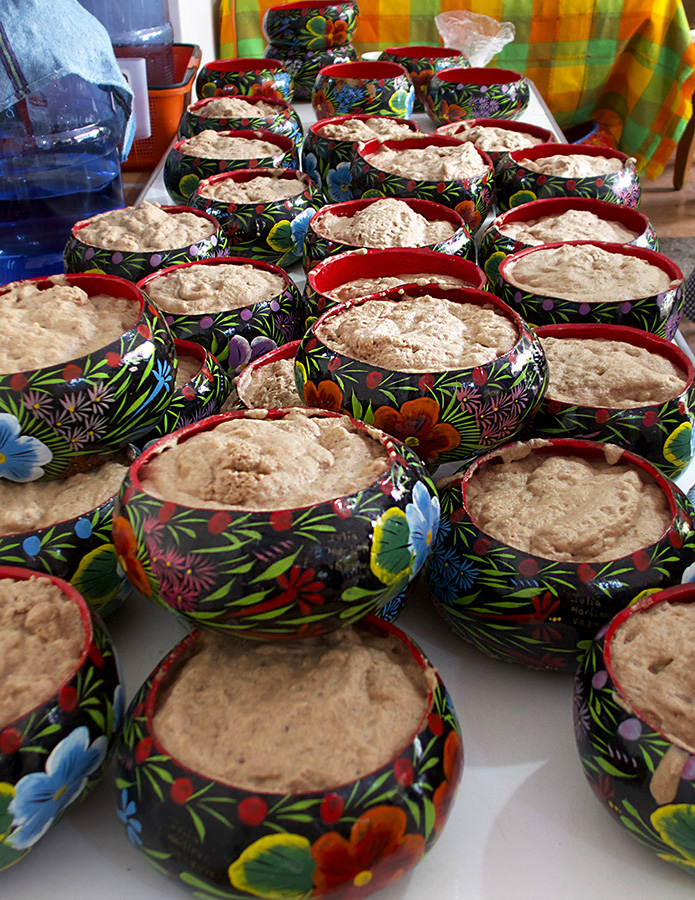

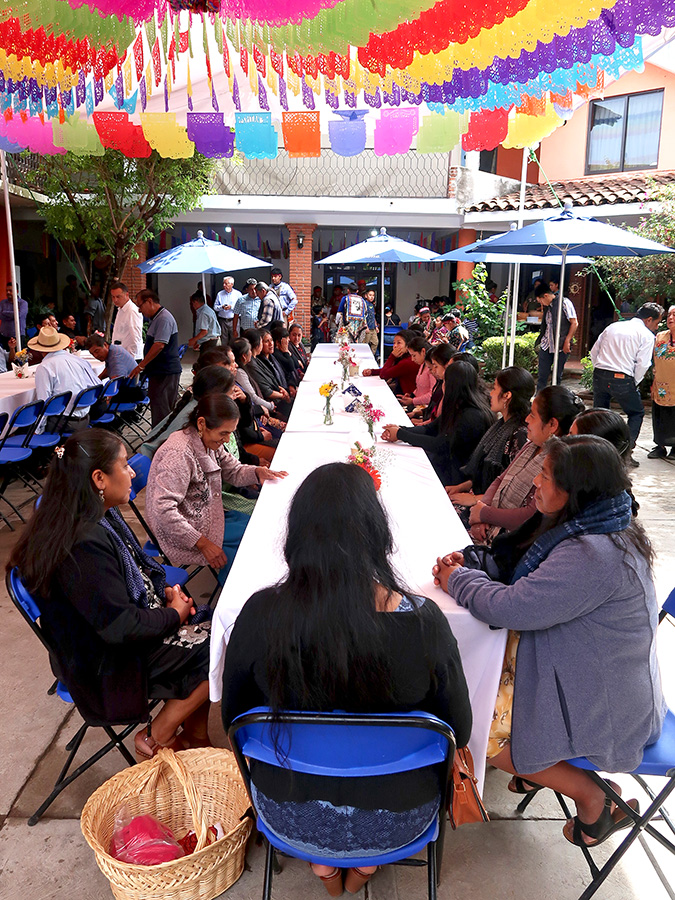
Two days before winging my way to California, I had the privilege of attending the breakfast given by Hugo’s family at the family compound, Casa Santiago. After the meal, tables were folded, chairs were moved to surround the courtyard, danzantes took their places, the band began to play, and Hugo and his fellow Capitán, Félix Contreras Ruiz commenced to dance. Following their dance, the entire group performed and then, led by the band, they took to Teotitlán’s main street to process up to the atrium of the church where they would perform the Danza de la Pluma for almost eight hours.


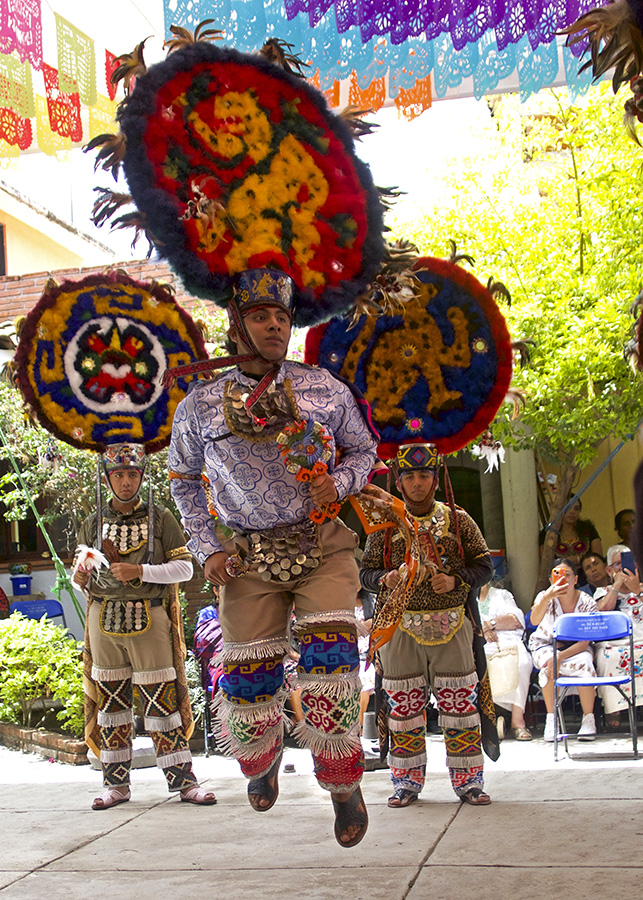


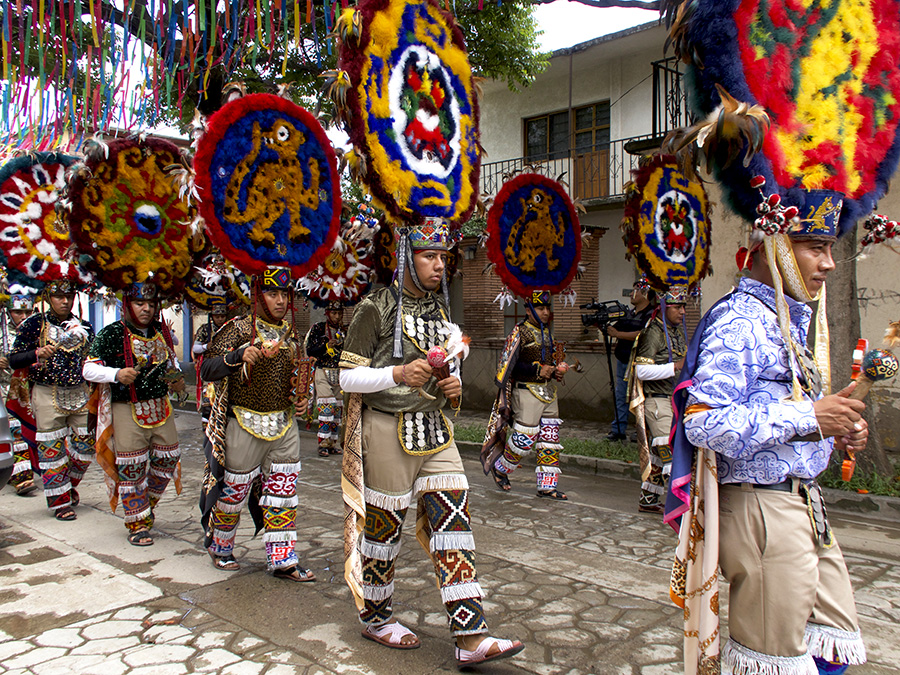
Muchisimas gracias to the people of Teotitlán del Valle and, especially, Hugo and his family for inviting me and for being so welcoming and gracious. And, to my readers, CORTV will be streaming tomorrow (July 24, 2023) evening’s Danza de la Pluma performance by Teotitlán’s danzantes at La Guelaguetza (5 PM Mexico; 4 PM PDT; 7 PM EDT).
Posted in Celebrations, Creativity, Culture, Travel & Tourism, tagged calendar of events, folkloric dance, Guelaguetza, List of delegations, Live streaming, Mexico, Oaxaca, popular travel destinations on July 16, 2023| 4 Comments »
It’s Guelaguetza time in Oaxaca. And, I know, I should have written this blog post several days ago, but I have the best of excuses for my tardiness — I’m in el norte for a family reunion, thus a little distracted! However, better late than never, Guelaguetza 2023!

See below for the list of delegations by date, time, and the dance they will be performing. Performances will be streamed on CORTV’s YouTube channel.

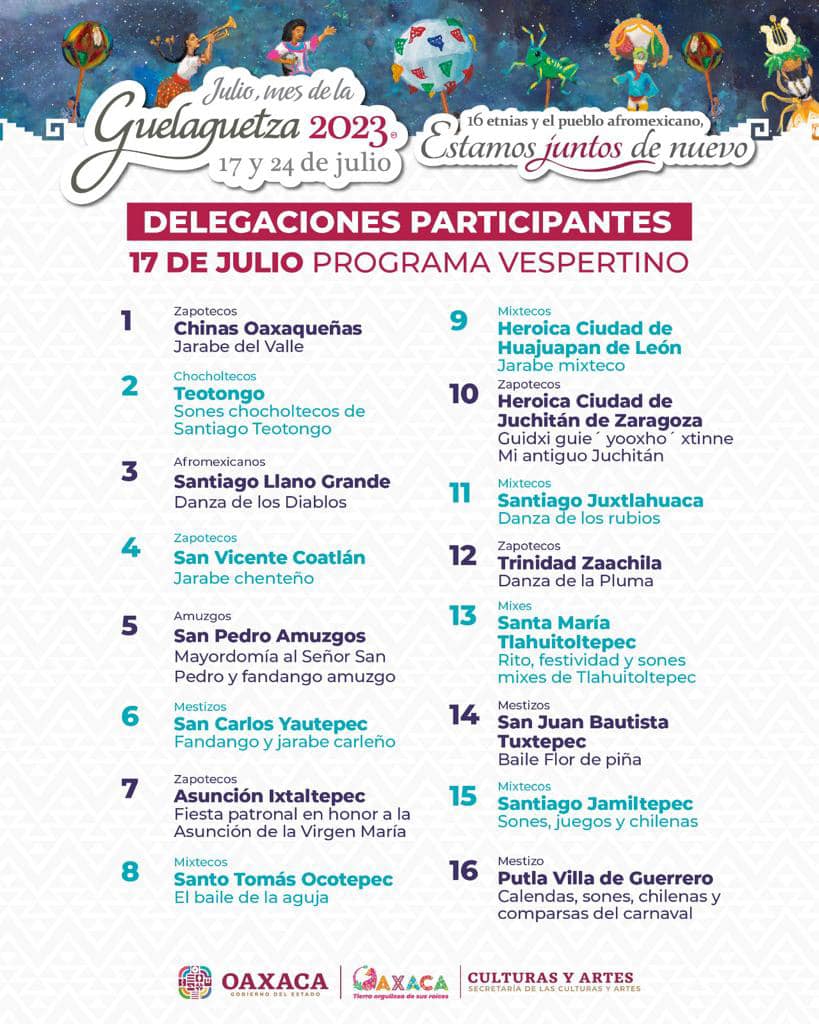

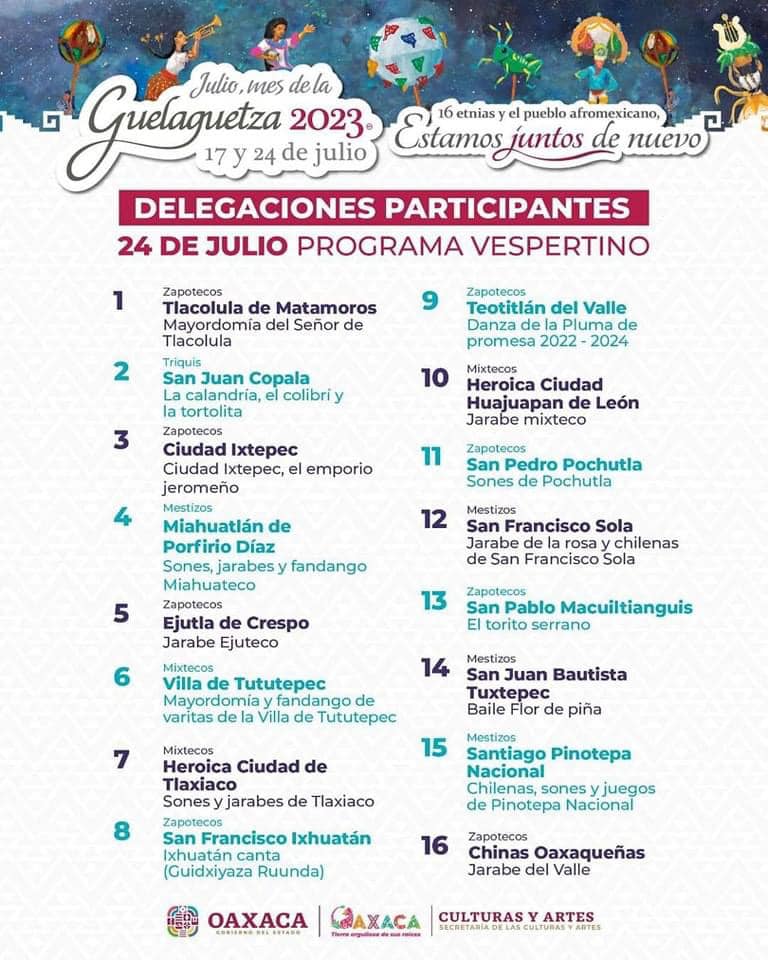
Activities are spread throughout the city with free transportation available between event sites.
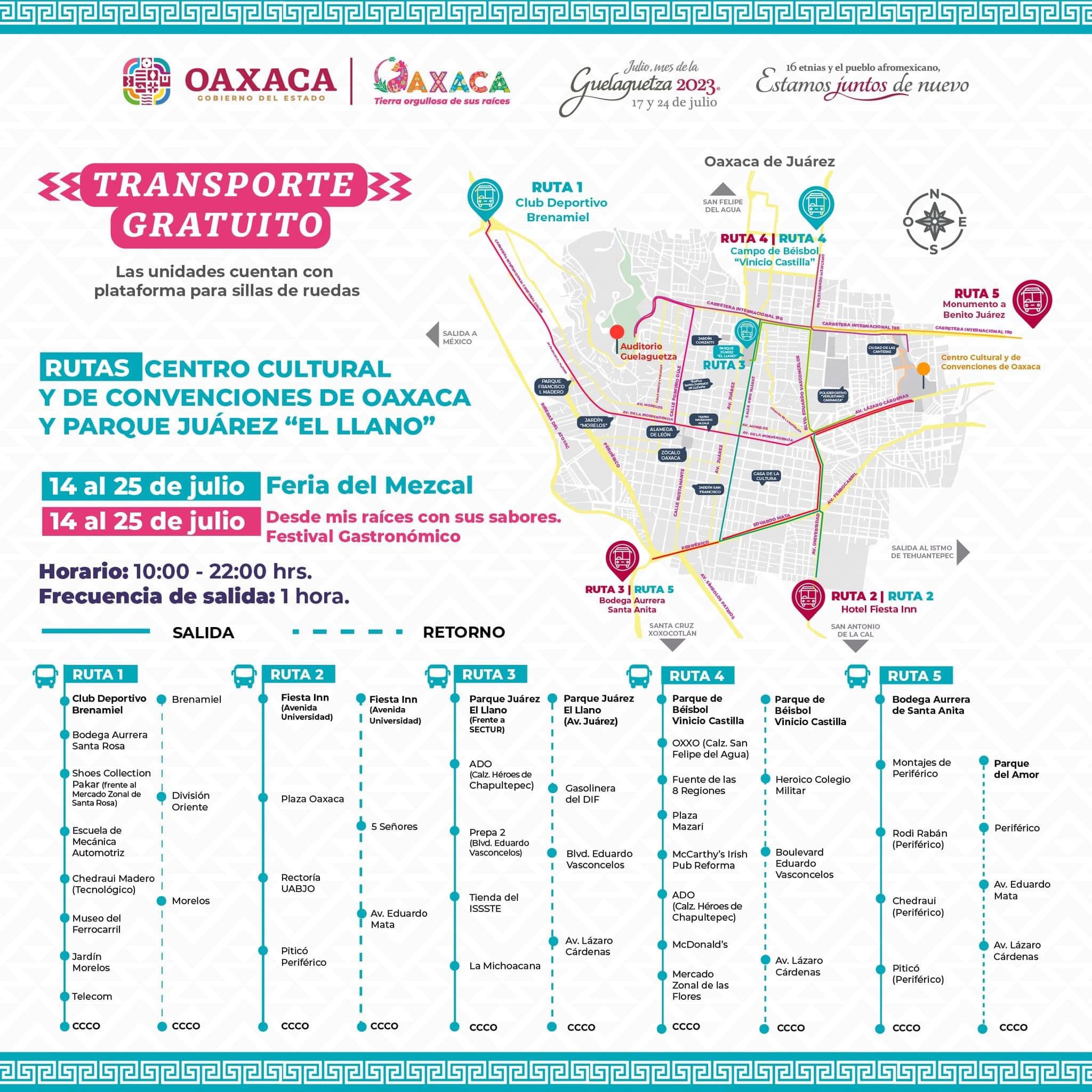
For other daily activities and more information, check out the official Guelaguetza 2023 website and Facebook page. Enjoy!
Posted in Culture, Sports, Travel & Tourism, tagged Lucha Libre, luchadores, Mexico, Oaxaca, photos, popular travel destinations, Rasputín (luchador), wrestling on July 10, 2023| 6 Comments »
After fourteen years in Oaxaca, along with several of my neighbors, I finally attended my first Lucha Libre spectacle. And a true spectacle it was — a three hour extravaganza of colorful costumes, menacing masks, aerial acrobatics, ostentatious overacting, and an abundance of hilarity.

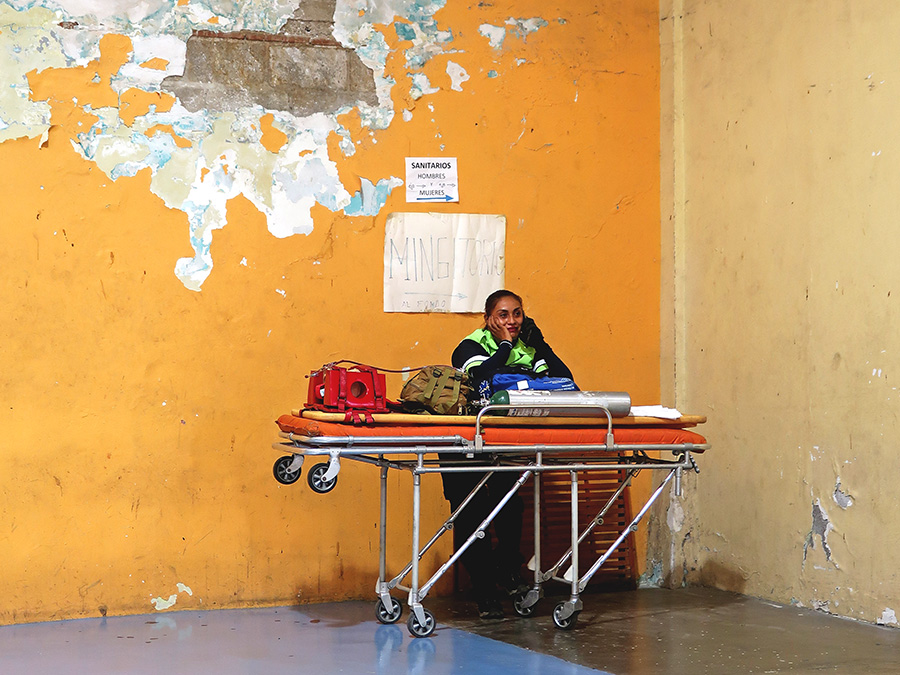
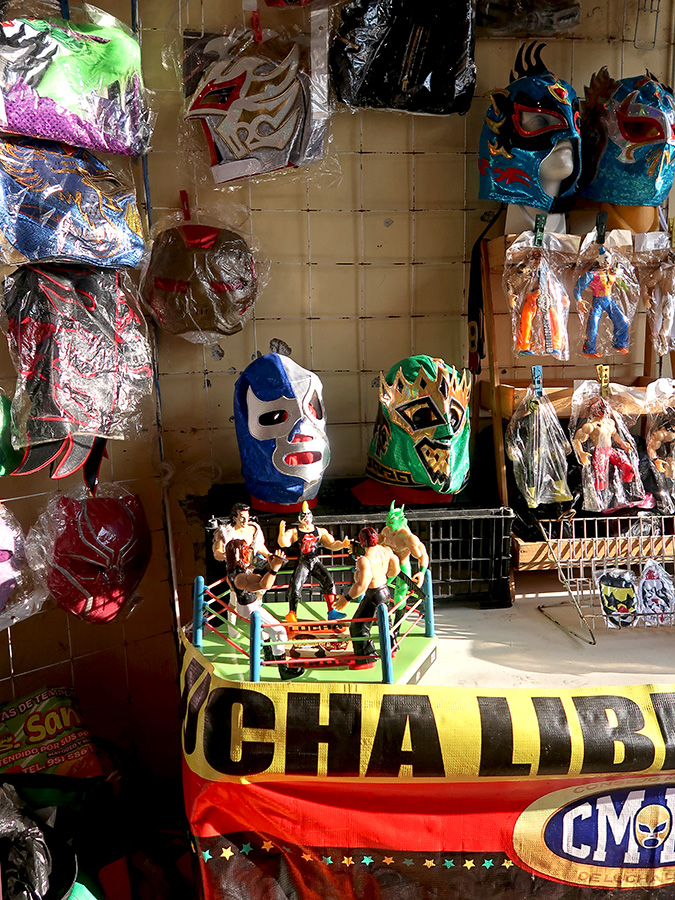
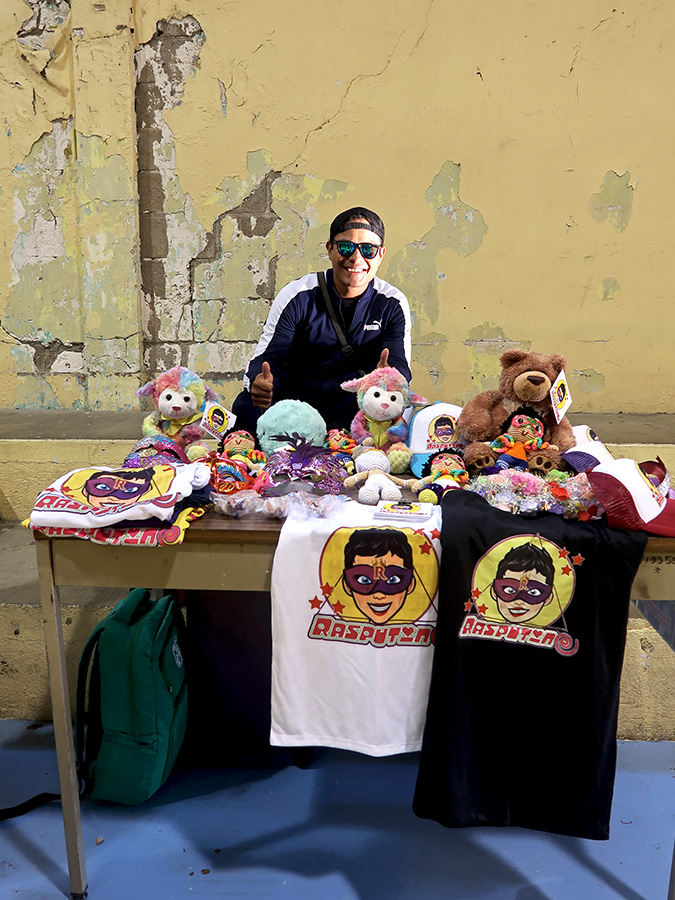


The evening’s entertainment consisted of five matches of three rounds each. Each team of two won a round with the third round deciding the winner. I’m not sure why the winners won and I’m not entirely certain the whole thing, including round three, wasn’t scripted. And, did I mention, the referees play favorites and occasionally get in on the action?
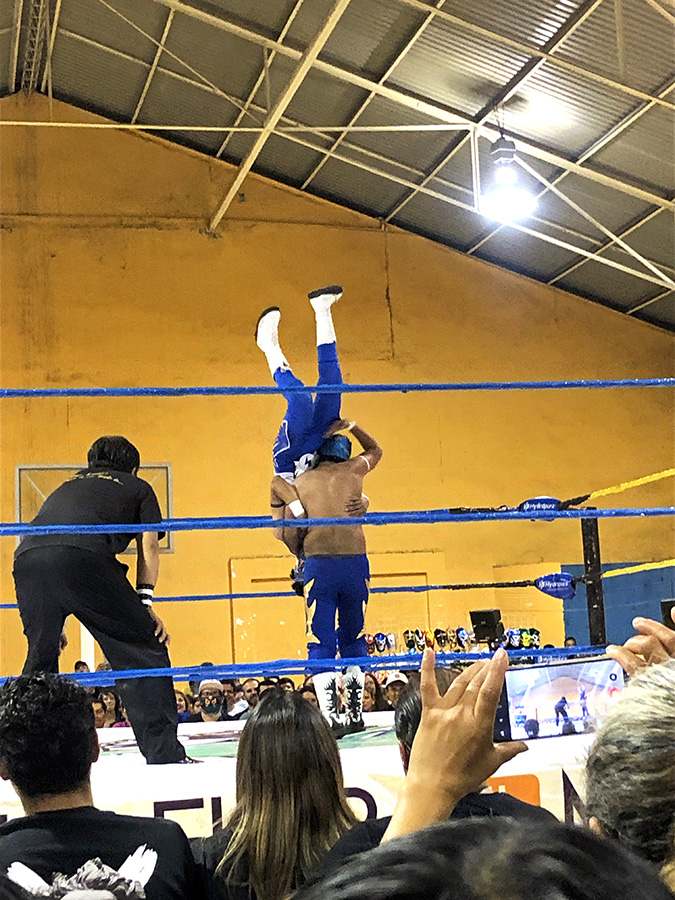
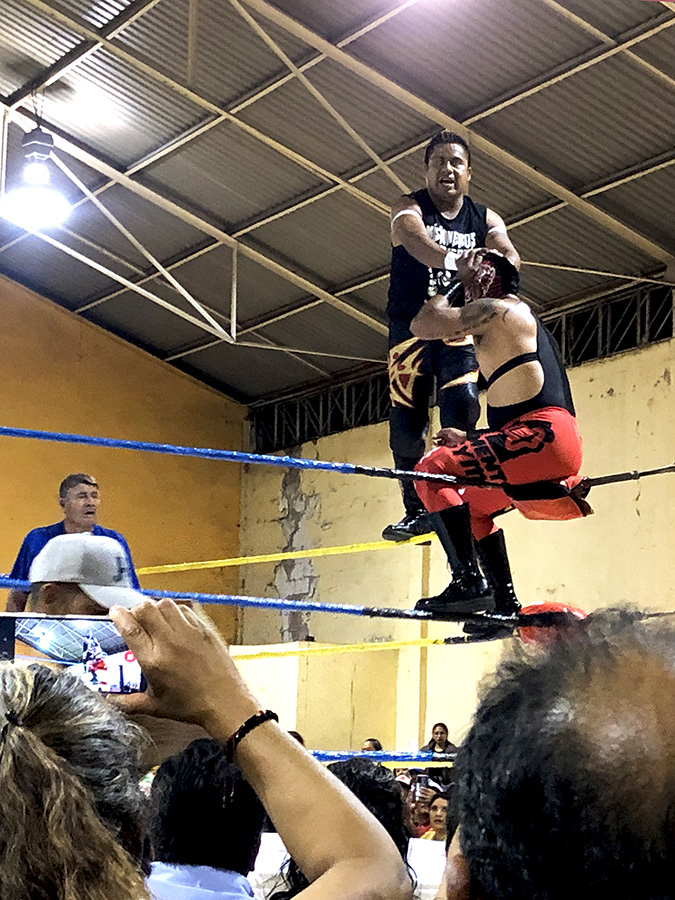
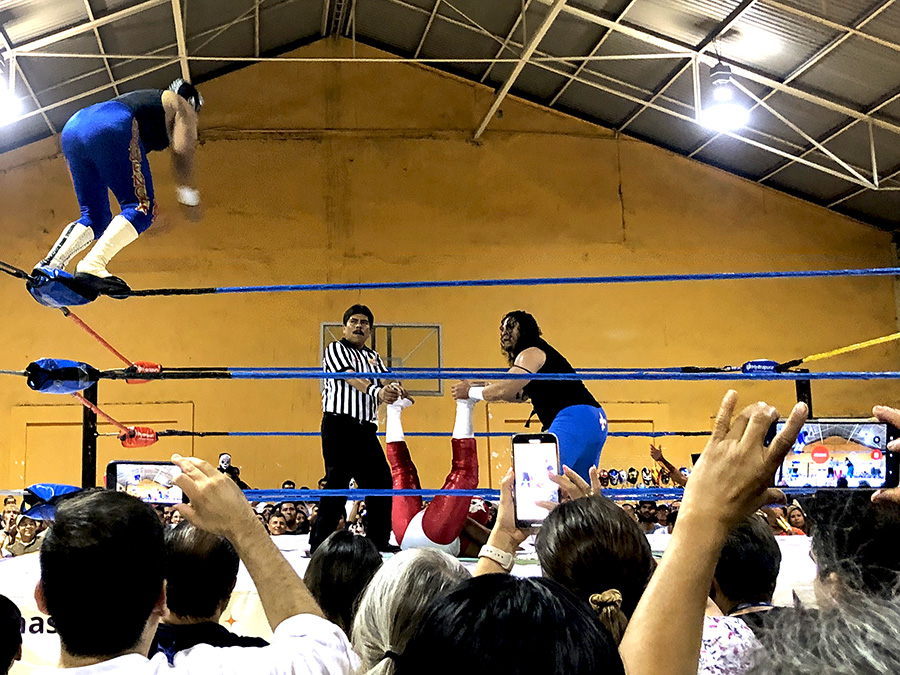

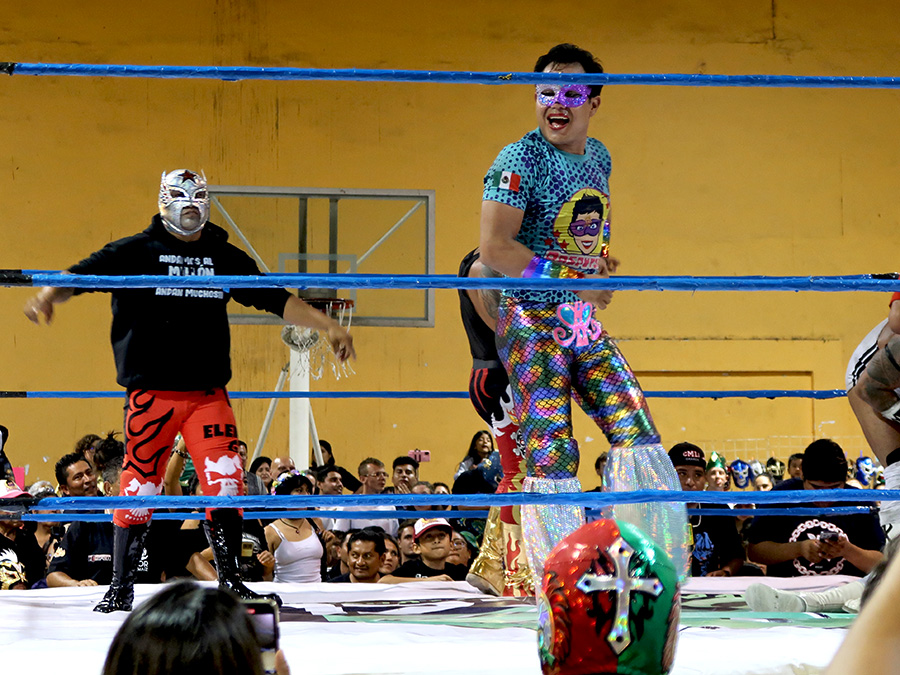
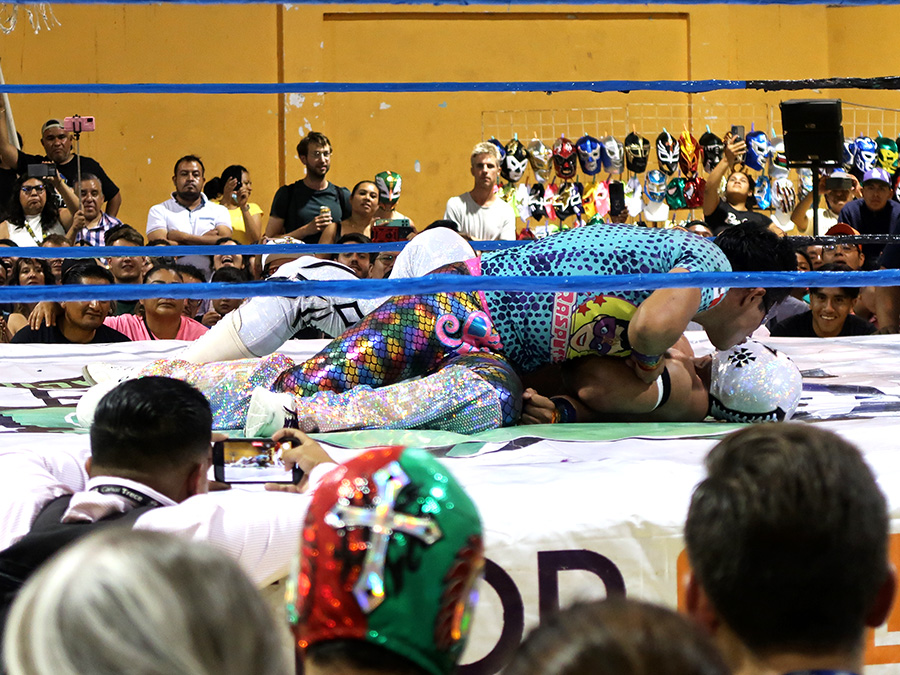
I haven’t laughed so much in ages — and we all agreed we would definitely return. A cultural experience of a different kind!
Posted in Beverages, Creativity, Culture, Music, Travel & Tourism, tagged agave, Dos Botellaas De Mezcal (song), Dueto Dos Rosas, La Santa Cecilia, maguey, Mexico, mezcal, murals, Oaxaca, photos, popular travel destinations, street art, urban art, wall art on June 29, 2023| 10 Comments »
From the streets of Oaxaca, maguey to mezcal in murals.


And then comes the music, “Dos Botellas de Mezcal” (Two Bottles of Mezcal).
Cheers! ¡Salud! ¡Dixeebe!
Posted in Celebrations, Children, Creativity, Culture, Holidays, Travel & Tourism, tagged Día del Padre, Father's Day, fathers and children, Mexico, Oaxaca, parades, photos, popular travel destinations on June 18, 2023| 5 Comments »
To all the fathers and father figures, I wish you ¡Feliz Día del Padre!
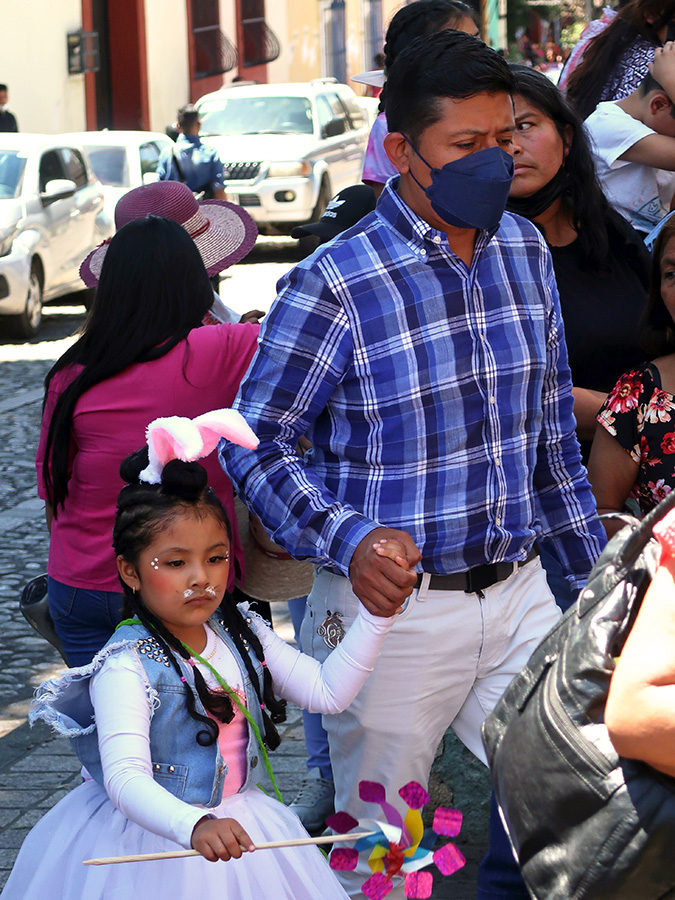

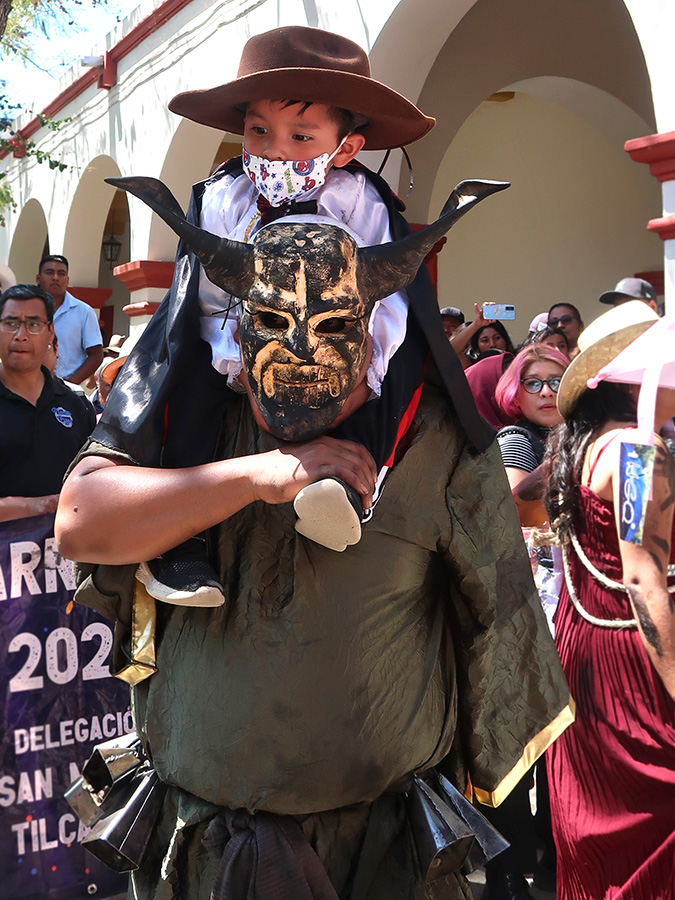
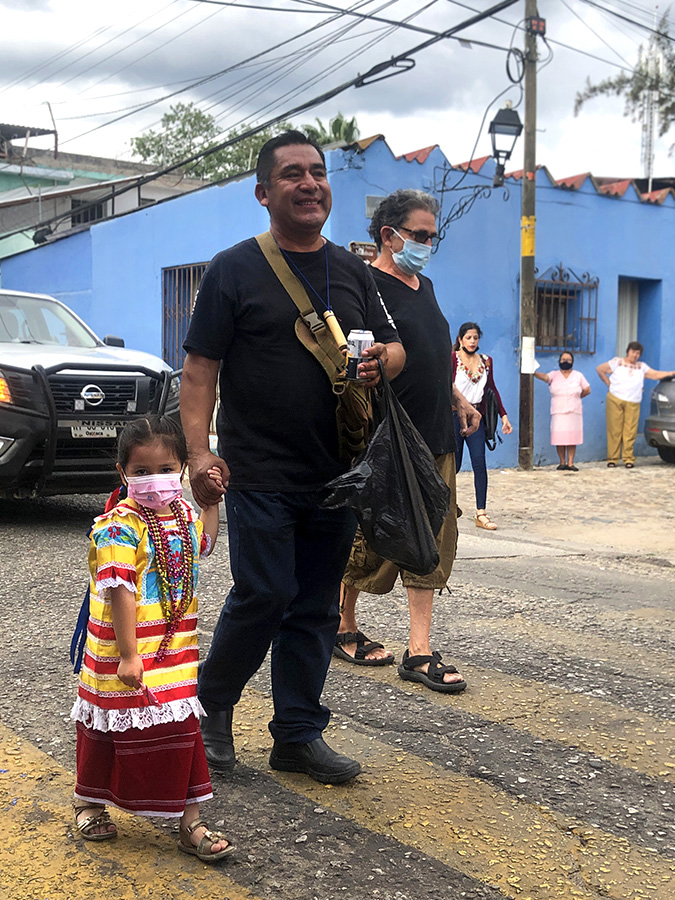
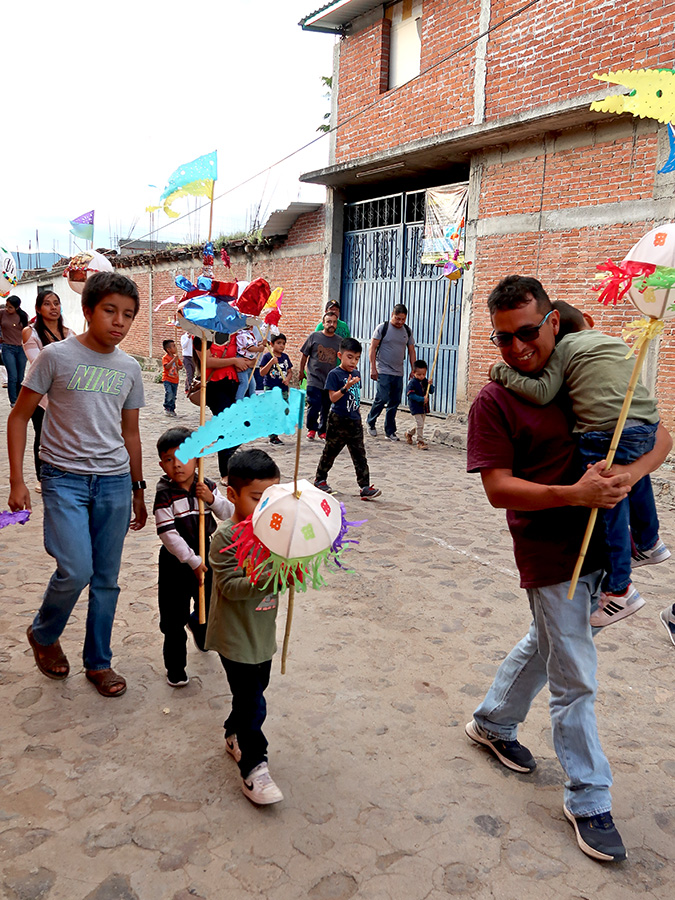


May you find joy in your role and continue to share your wisdom, traditions, and love.
Posted in Animals, Creativity, Culture, Environment, Flora, Travel & Tourism, tagged carved animals, Heriberto Castro López, Indian Laurel tree, Llano Park, Mexico, Nahuatl language, Oaxaca, Parque Juarez El Llano, photos, popular travel destinations, street art, tree sculptures, tree trunk art, urban art, wood carving on May 23, 2023| 9 Comments »
The violent storms Oaxaca experienced in mid April brought down 30+ trees in the city, including one of her beloved old Indian laurels in Llano Park. And, when a tree falls in Oaxaca…

Talented artist, Heriberto Castro López, grabbed his chainsaw and chisel and, with the blessings of the powers that be, turned the fallen tree into a public work of art, a language lesson, and a plea for help.

A monkey, a jaguar, an eagle, a rabbit, an iguana, and there’s a snake in there somewhere — all animals iconic to Oaxaca — emerged.

The animals seem appropriate, as Parque el Llano (aka, Paseo Juárez, El Llano de Guadalupe, and Alameda de Nezahualcoyotl) housed a zoo from 1945 to 1971 (dates not verified) — hence the gold painted lions at the four main entrances to the park.
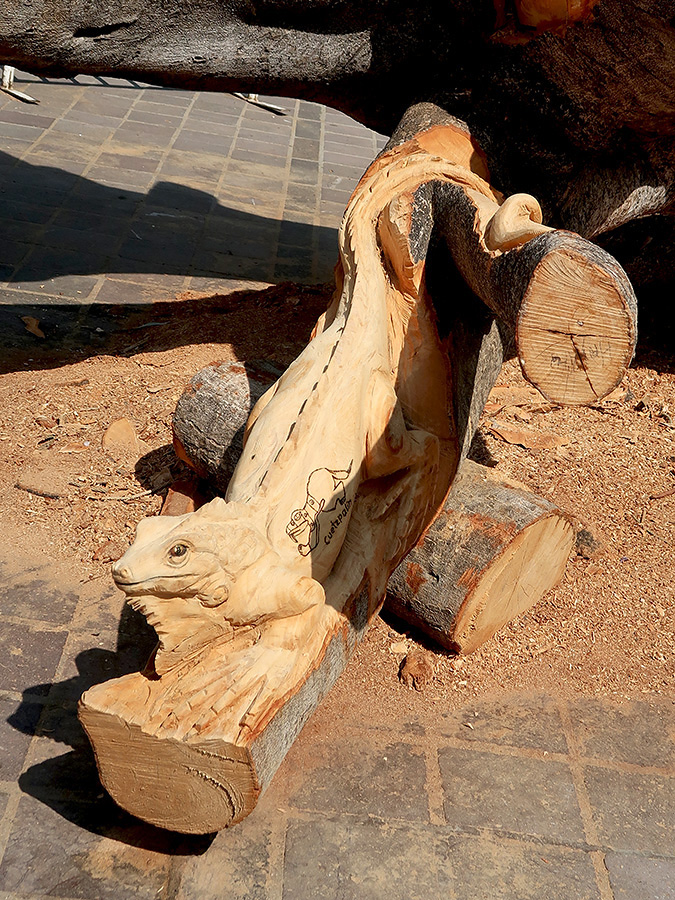
However, this time the animals aren’t confined to cages — they are free and calling on us to save this planet we all call home before it’s too late.

Many thanks to Heriberto Castro López for his “Llamado de Auxilio” gift to Oaxaca.
Posted in Celebrations, Creativity, Culture, Holidays, Travel & Tourism, tagged Día de la Madre, Mexico, Mother's Day, murals, Oaxaca, photos, popular travel destinations, street art, urban art, wall art on May 9, 2023| 7 Comments »
May 10 is Día de la Madre in Mexico and to honor the mothers, grandmothers, mother figures, and the daughters, whose future is in their hands, some recent murals seen in the city and countryside.
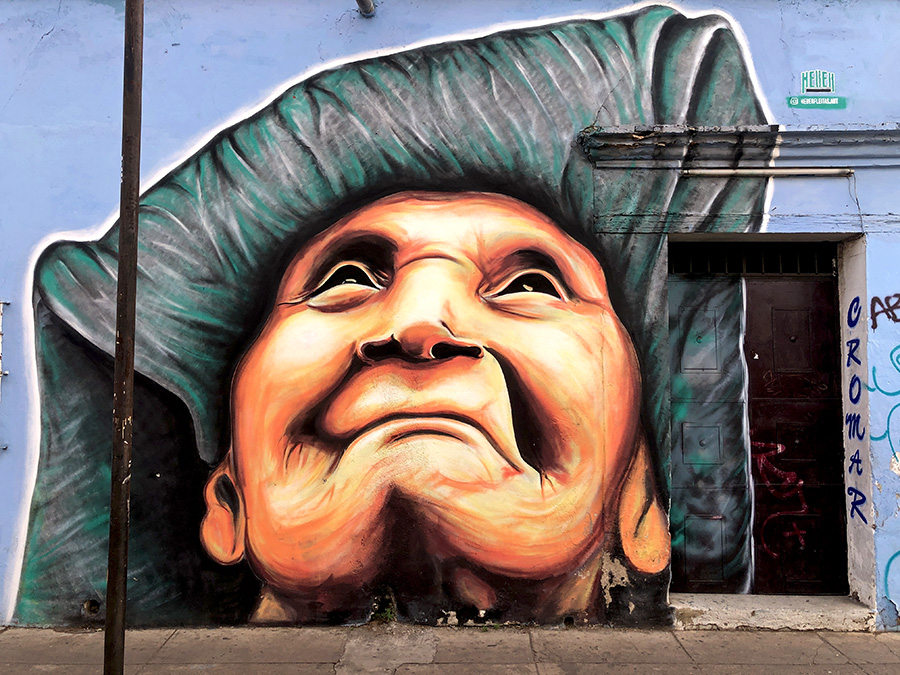

The celebration of Mother’s Day migrated south from the USA in the early 20th century and was embraced and promoted by the Catholic Church AND the anticlerical Revolutionaries. Their reasons being:
around the 1850s the Liberals… were nervous about women’s growing participation in the public sphere. Establishing motherhood as venerable and the home as sanctified… would give women a sphere of their own where they could be boss. Also, it would keep them off the streets and out of the workplace where they had begun to compete with men for jobs. Under their watch, everyday motherhood became an exalted madre-hood…. The twentieth-century Revolutionaries who succeeded them took the idea and ran with it, adding in 1922 a ritual, Mother’s Day. [Madre: Perilous Journeys with a Spanish Noun by Liza Bakewell, p. 84]
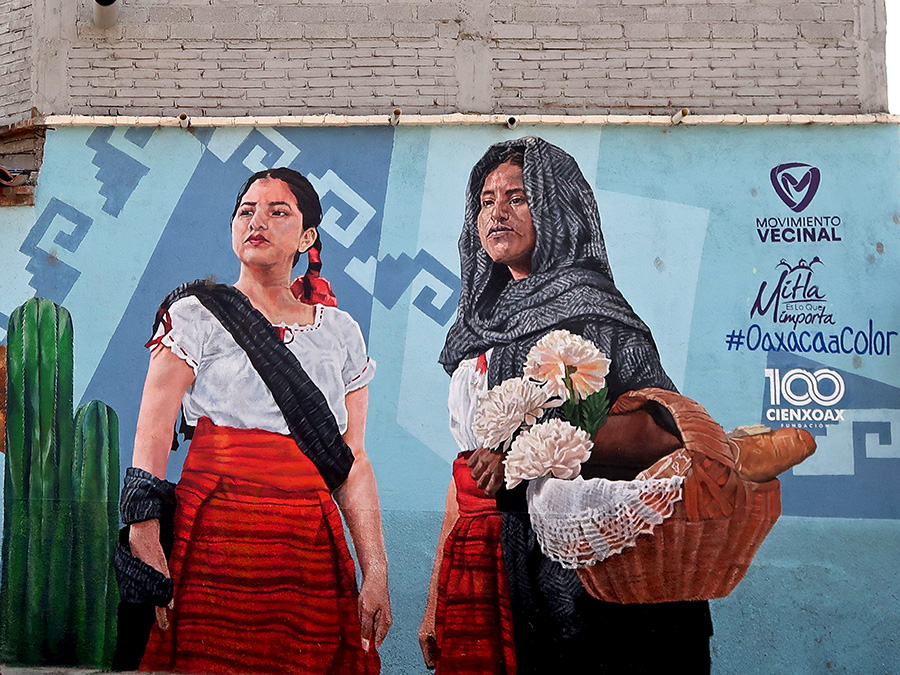
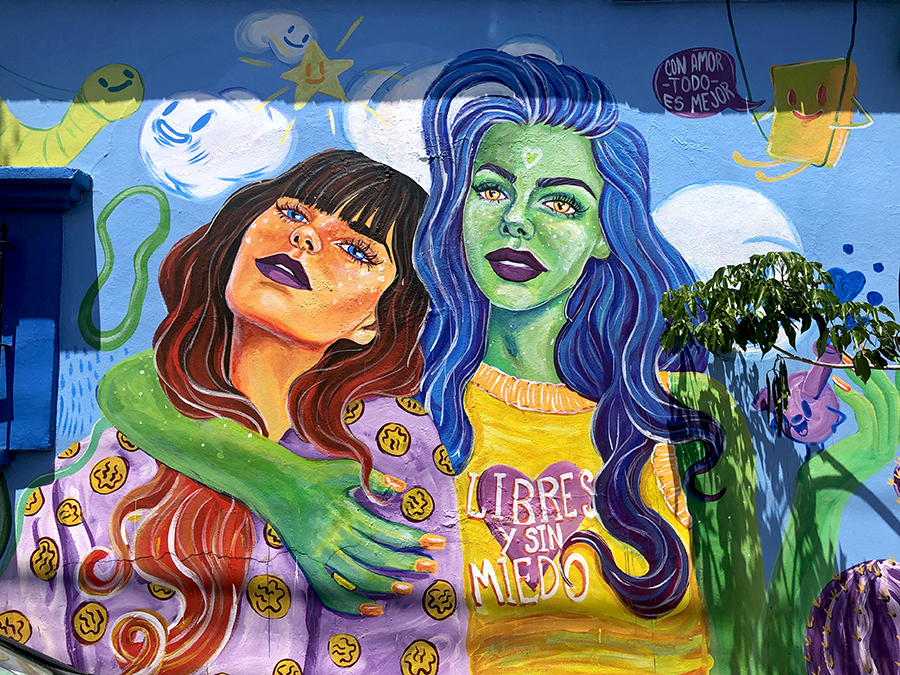
As for keeping them out of the workforce, according to a report citing the 2010 census, 33.3% of women work and this doesn’t even include those working in family operated enterprises. However distasteful the reasons behind the establishment of Mother’s Day in Mexico, it does nothing to diminish the need to honor these beautiful, hardworking, formidable, and loving women.


And to the girls and young women, may you be empowered by the strength and love of the maternal figures in your life to reach for the stars, live without fear, and be whatever you choose to be.
Posted in Celebrations, Children, Culture, Holidays, Travel & Tourism, tagged celebrations, Children's Day, Día del Nino, festivals, Mexico, Oaxaca, photos, popular travel destinations on April 30, 2023| 2 Comments »
The United Nations declared November 20 as World Children’s Day. However, that is Día de la Revolución in Mexico, thus in 1924, President Álvaro Obregó and Minister of Public Education José Vasconcelos designated April 30 as Día del Niño — the day Mexico celebrates and honors her children. Schools organize parties with games and treats, communities organize special activities, and parents may give their hijas and hijos gifts. However, one of the features of life in Oaxaca that I most appreciate is the way children are included all year round in celebrations.


“… the objective of this [Día del Niño] celebration is to dedicate a moment to understanding the child population, promoting their social inclusion and carrying out activities to promote their well-being and the rights to which they have access as human beings.” (Google translation from this article)
Posted in Celebrations, Creativity, Culture, Flora, Religion, Travel & Tourism, tagged altars, Chia Pet advertisement, Chia Pets, Good Friday, Holy Week, Mexico, Oaxaca, photos, popular travel destinations, religious traditions, Salvia hispanica, Semana Santa, Viernes Santo on April 13, 2023| 4 Comments »
As Semana Santa approached, Oaxaca’s annual invasion of the Chia Pets began. On altars in churches, homes, and businesses, terracotta animals sprouting Chia appeared.

Before you lament commercialized products from the USA intruding on the sanctity of Holy Week, I can happily report Salvia Hispanica (aka, chia) filled clay animals were symbols of the season long before Joe Pedott ever set foot in Oaxaca in the late 1970s and “discovered” them.

According to an article in MexConnect, “Growing greens remind the viewer of the resurrection and renewal of life.”
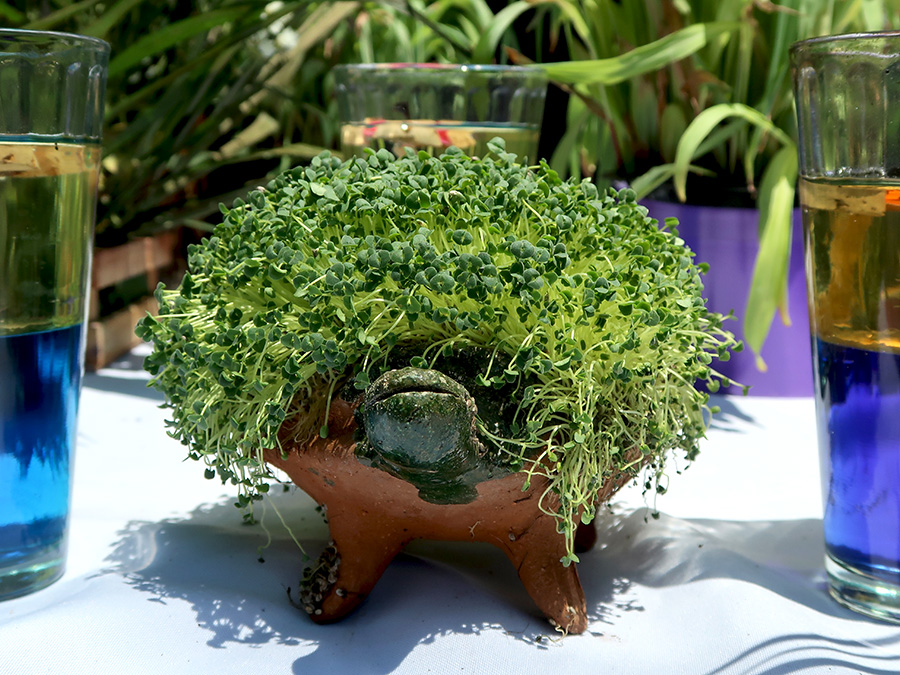
Native to Mexico, Salvia hispanica was the third most important food (after corn and beans) of the Aztecs as chia seeds are high in protein and omega-3 fatty acids. By the way, the name of the Mexican state of Chiapas comes from Chiapan, an ancient city whose name in Náhuatl means, “the place where the chia sage grows.”
(ps) Sorry about the Chia Pet advertisement ear worm!
Posted in Celebrations, Churches, Creativity, Culture, Holidays, Neighborhoods, Travel & Tourism, tagged Alfombristas Mexicanos, cross, Easter decorations, Lent, Mexico, Oaxaca, olive trees, papel picado, photos, popular travel destinations, purple, sotol flower art, street art, tapetes de arena, Templo San Matías Jalatlaco, urban art on April 6, 2023| 11 Comments »
Purple papel picado (actually, plastic) began appearing above streets a month ago. And, in the past few days, the atrium of Templo San Matías Jalatlaco has been decorated with olive trees, sheaves of wheat, and crosses embellished with flowers woven from the base of Sotol leaves.
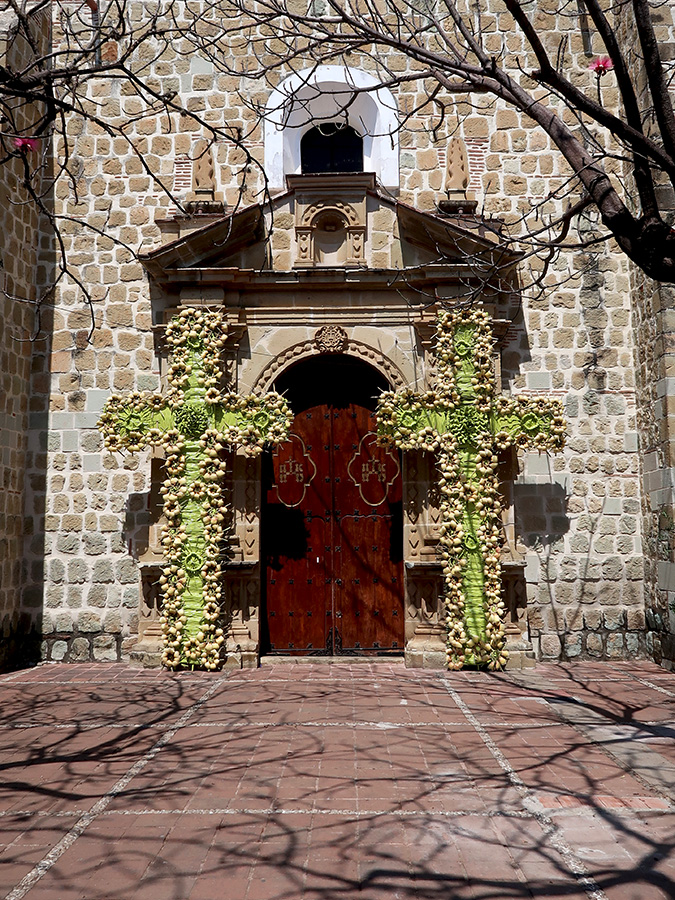
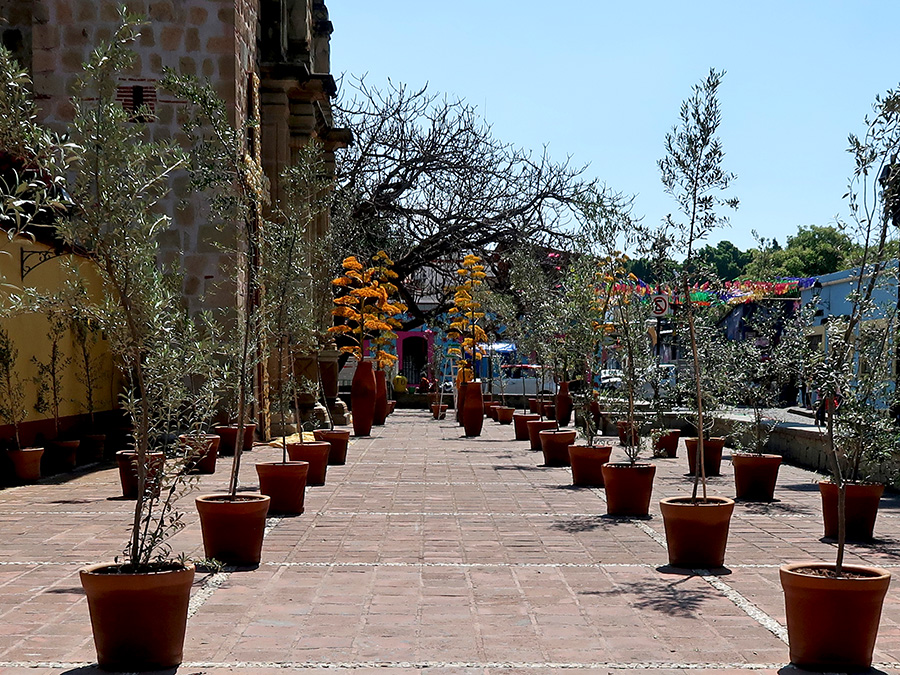

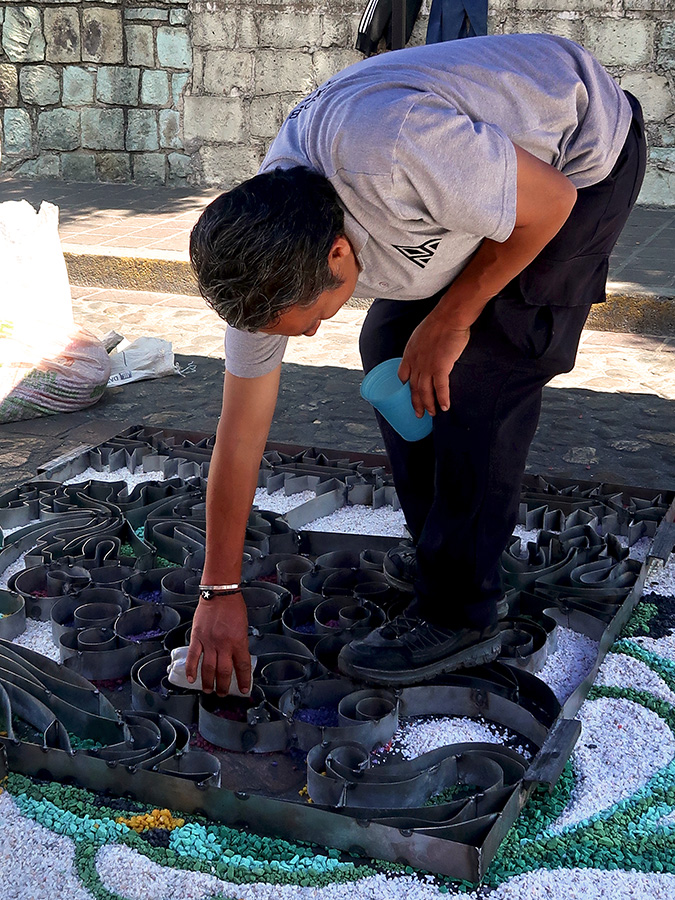
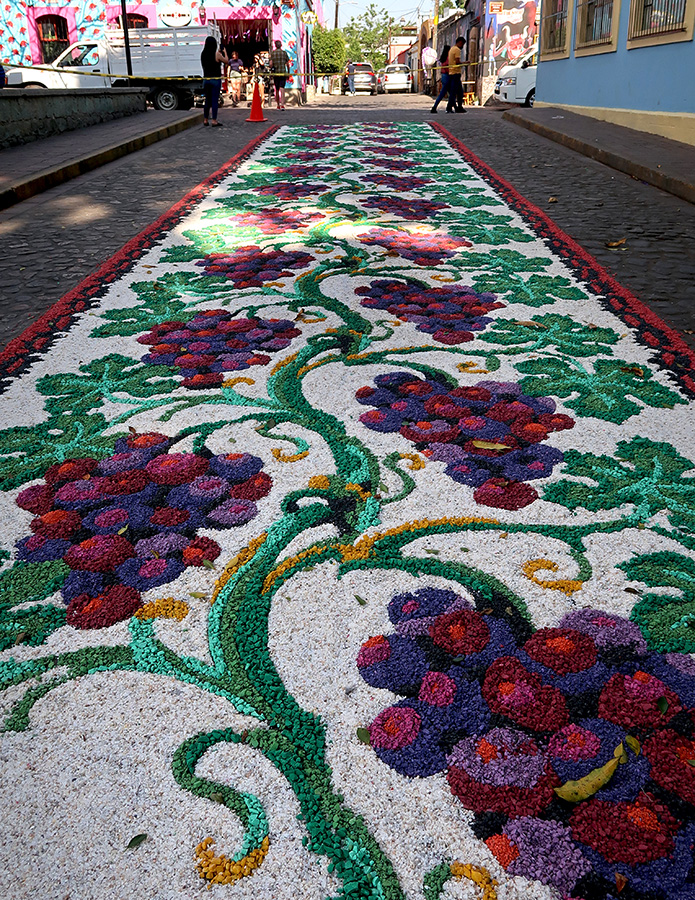
Yesterday, Calle de Miguel Hidalgo in front of the church was closed to traffic and the Alfombristas Mexicanos colective from Huamantla, Tlaxcala began creating a beautiful tapete (rug) made of colored stones along the length the block.

Purple decorations can also be seen festooning the fronts of homes and businesses in the neighborhood.


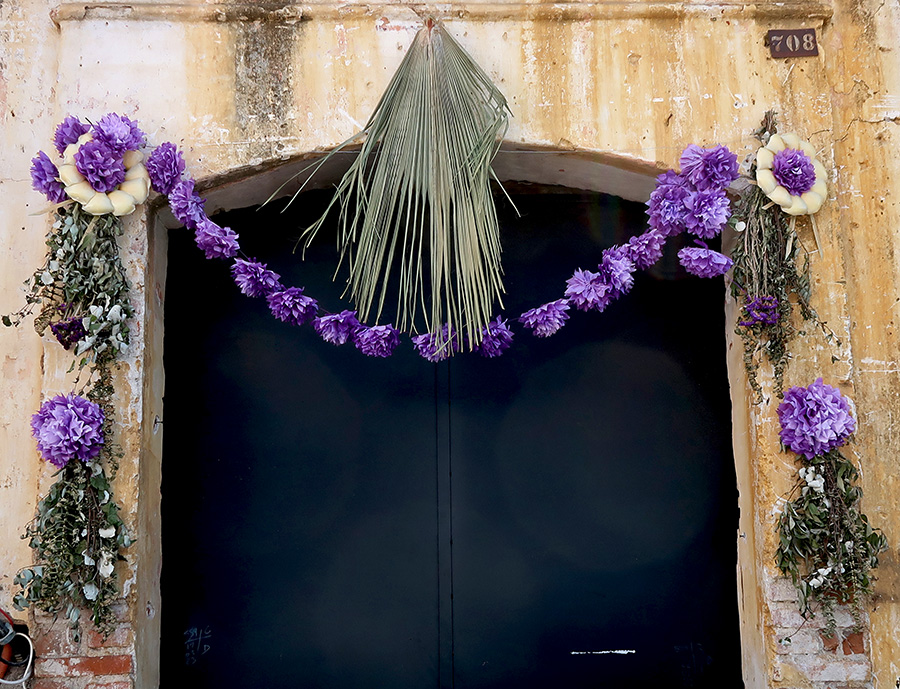
You might ask, why all the purple? According to the Ecclesiastical Sewing website, purple symbolizes “the royalty of Christ, His passion and death for our sins, and the coming of spring.” For more of an explanation, click on the link to their website.
Posted in Celebrations, Churches, Creativity, Culture, Holidays, Travel & Tourism, tagged Domingo de Ramos, Lent, Mexico, Mixteca palm weavers, Oaxaca, palm fronds, Palm Sunday, photos, popular travel destinations, woven palm fronds on April 1, 2023| 3 Comments »
Despite the construction on the Alameda across from the Cathedral, the palm weavers from the Mixteca region of Oaxaca are back to sell intricately woven palm fronds to be blessed and carried on Palm Sunday.
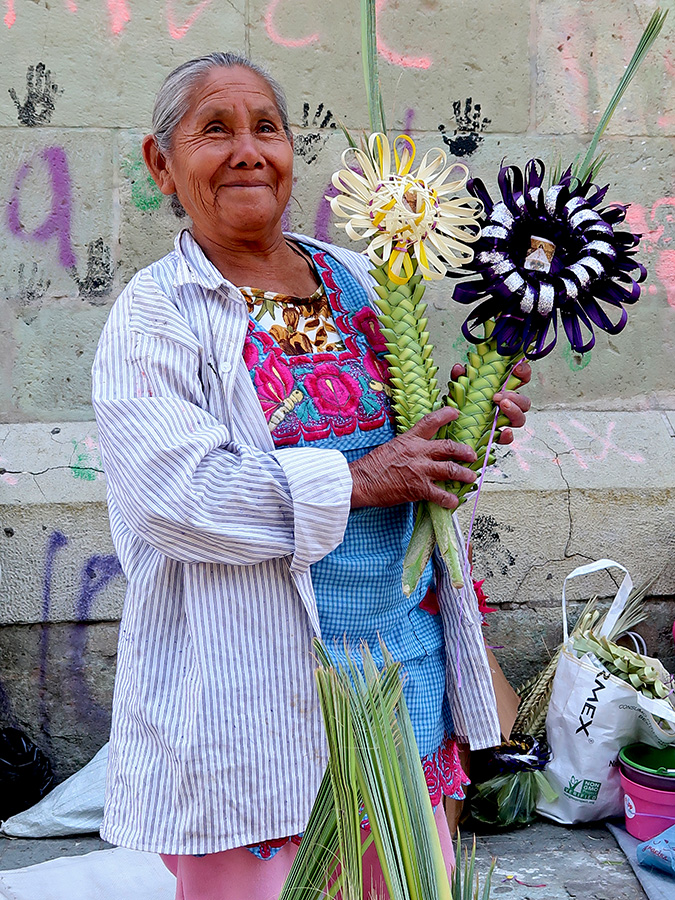


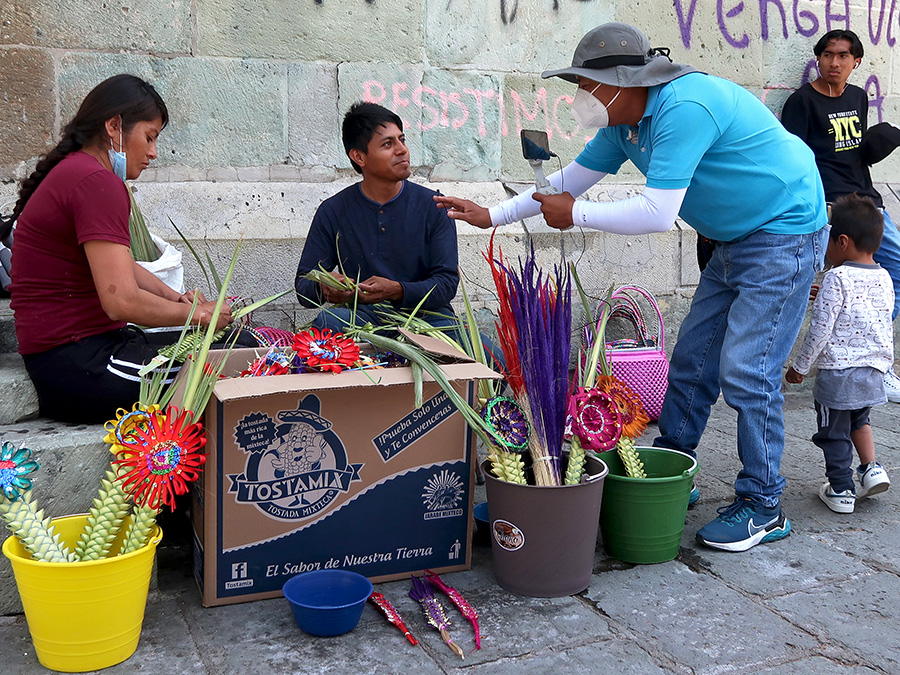
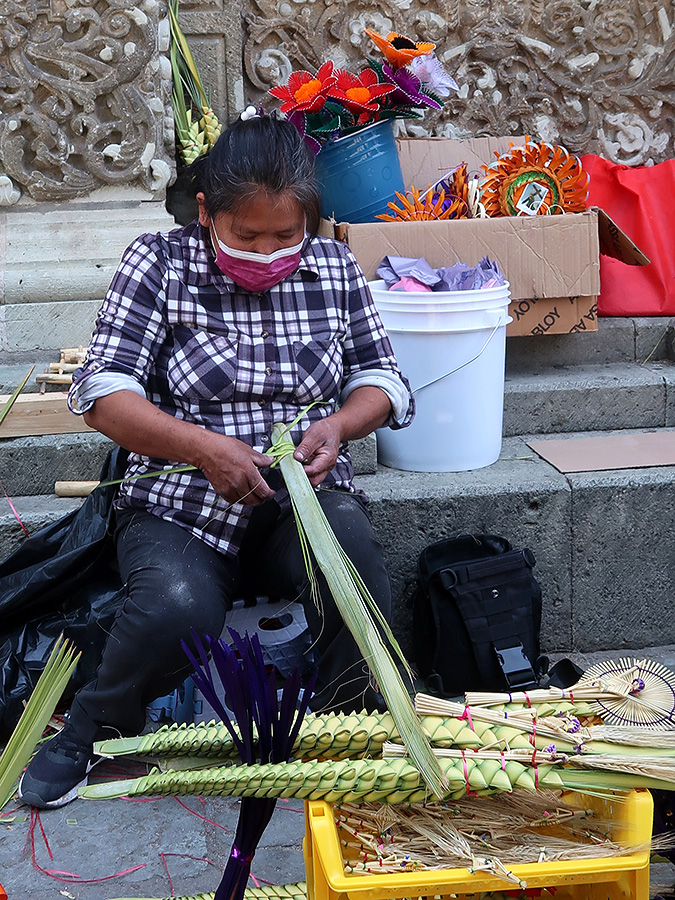
And, like most artisan traditions, it’s a family affair.


 Mexican Peso Converter
 View From Casita Colibrí