Feeds:
Posts
Comments

Archive for the ‘Culture’ Category

The transportation workers of the CTM (Confederación de Trabajadores de México) pretty much shut down main roads into and out of the city on Tuesday (just ask blogger buddy Chris) and Sección XXII of the teachers’ union yesterday blocked streets, today picketed government offices, and are now moving full force into the zócalo and surrounding streets.

IMG_2396

IMG_2398

IMG_2395

IMG_2400

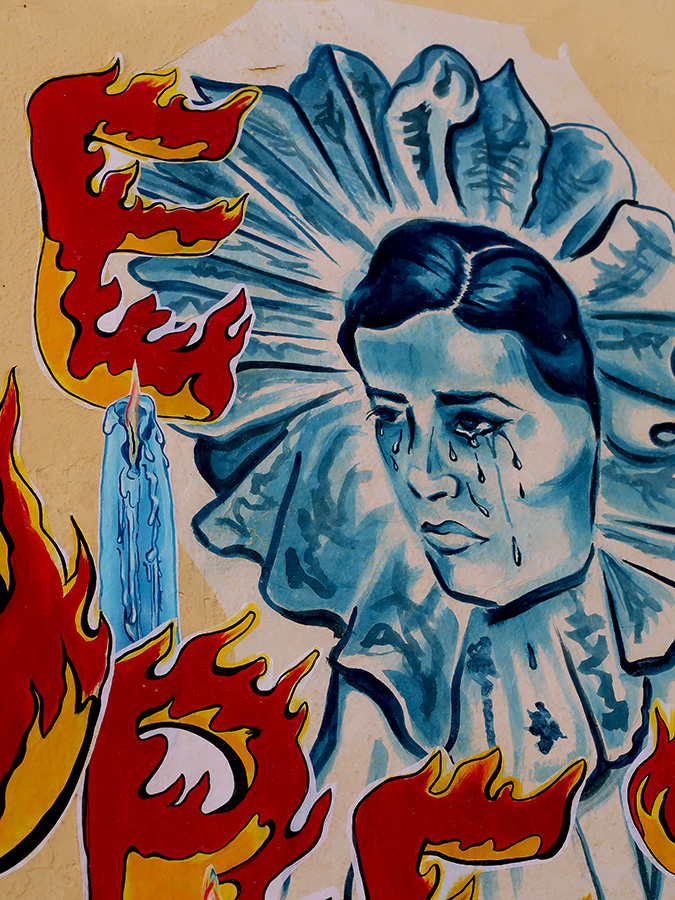
Sigh, but don’t cry for Oaxaca.  Ten thousand years of history, this valley and her people will survive.  Listen and watch Lila Downs sing La Martiniana and remember its words

Porque si lloras yo peno,
en cambio si tú me cantas, mi vida,
yo siempre vivo, yo nunca muero.
~~~
Because if you cry, I’ll be filled with sorrow
Instead, if you sing to me
I will live forever, I’ll never die.

Save

Save

Read Full Post »

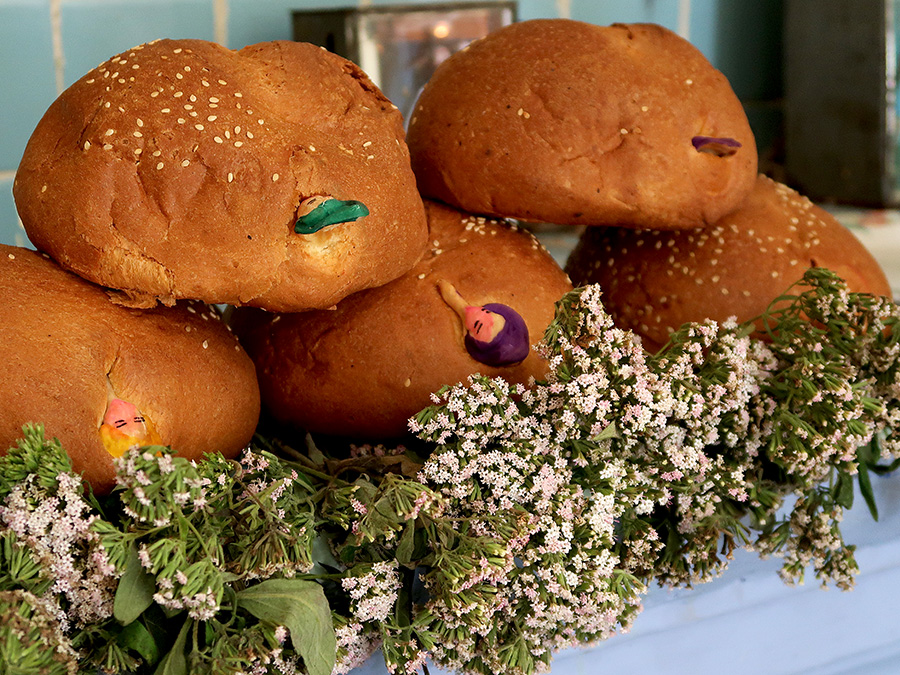
When Día de Muertos approaches, the panaderías (bakeries) work overtime to fill their shelves and counters with Pan de Muertos — an egg based bread, sometimes elaborately decorated, but always with a cabecita (also known as a muñeca), a little painted flour dough head, at the top.


The most intricately decorated bread comes from Mitla.  For a few years, Mitla held a Pan de Muertos fair and competition, with prizes for decoration.  Alas, because their bread is in such demand, the feria was halted two years ago as the bakers put a priority on attending to their customers needs — this is their livelihood, after all!


However, the small pueblo, Villa Díaz Ordaz picked up the slack and last year began holding a Festival del Pan de Muertos.  The village is off the beaten path and the festival hasn’t yet drawn much in the way of tourism, but it’s a wonderful event that blogger buddy Chris and I love attending (See his post, here).  Among other things, the event is encouraging and passing along to the younger generation knowledge and pride in the traditions and skills of their community.   And, in my book, that is a good thing!


Oaxaca city has also gotten into the Pan de Muertos promotion act.  A 6-day Feria del Pan y el Chocolate was held at the Jardín Carbajal.  One could talk to knowledgeable vendors eager to share their passion, buy bread and chocolate to take home, or just take break from the busyness of this time of year, to sit in the shade of the umbrellas dipping the pan into hot chocolate.  Yummm…


Why all this bread?  To place on one’s own ofrenda and to take to the ofrendas of relatives and extended family — its essence to nourish the difuntos (departed) when they come for their annual visit.
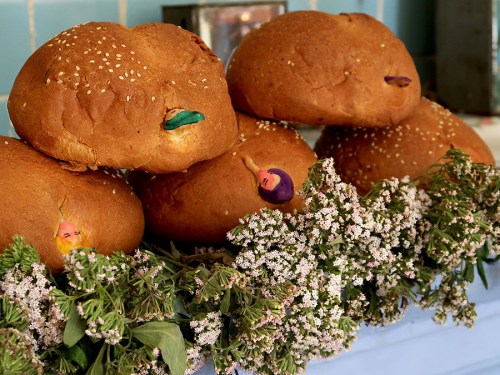
IMG_2063

Pan de Muertos on the altar of the chapel in the panteón in Teotitlán del Valle – November 1, 2017

It is a time of year when the difuntos also nourish the souls of the living.

Save

Read Full Post »

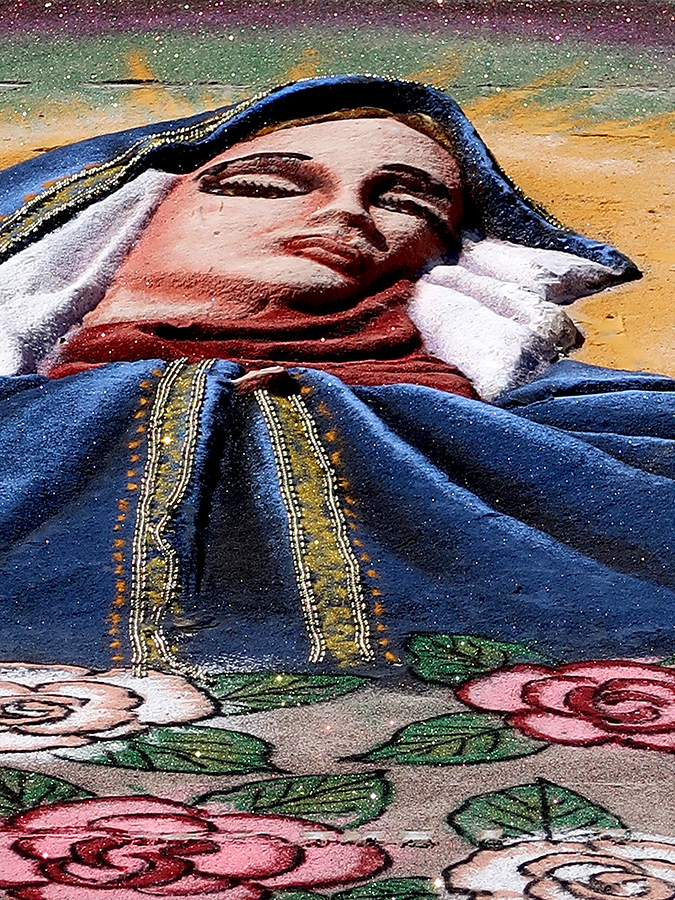
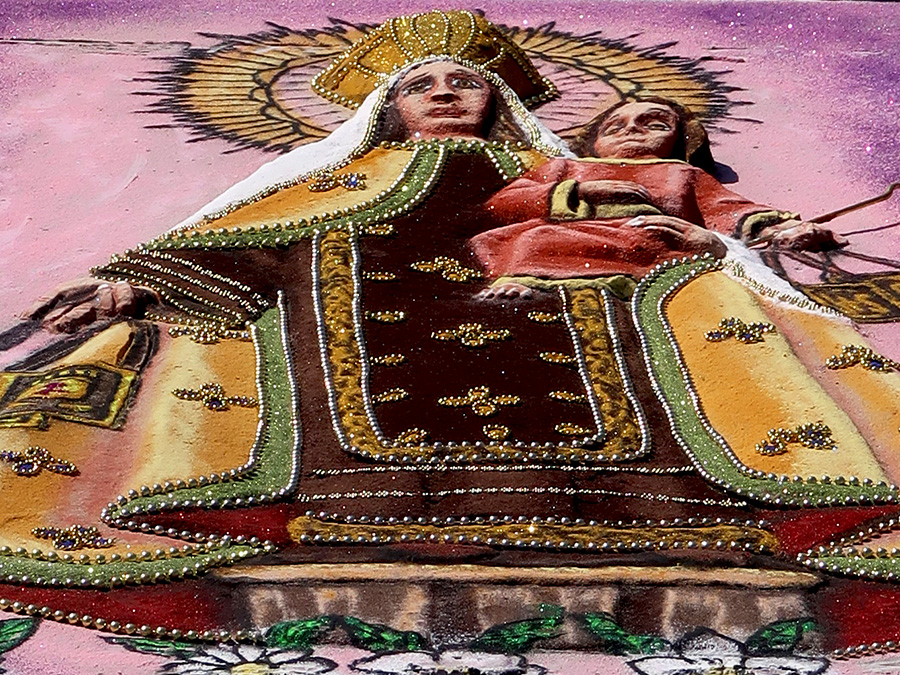
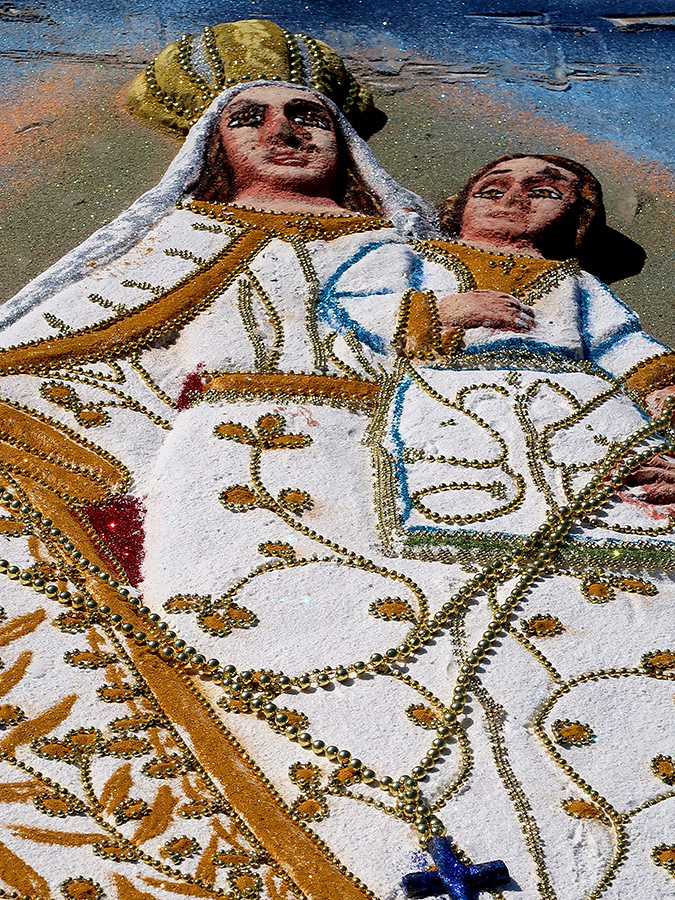
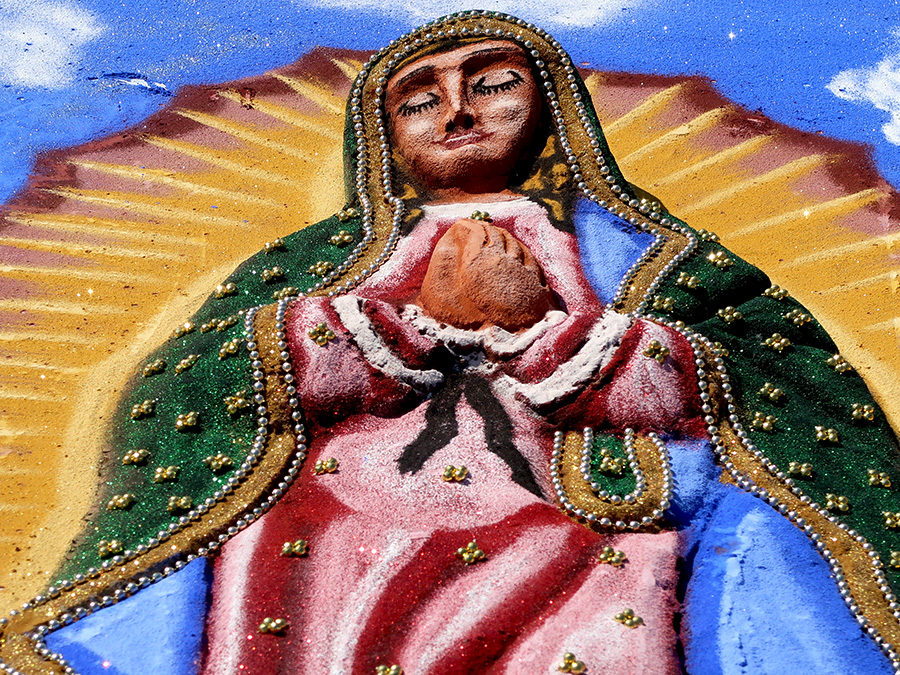
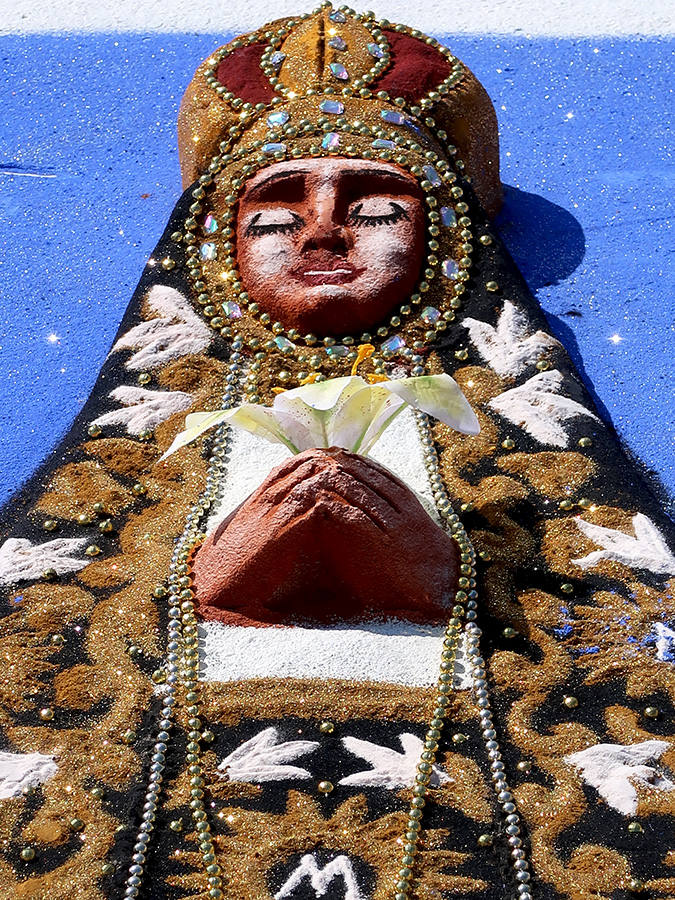
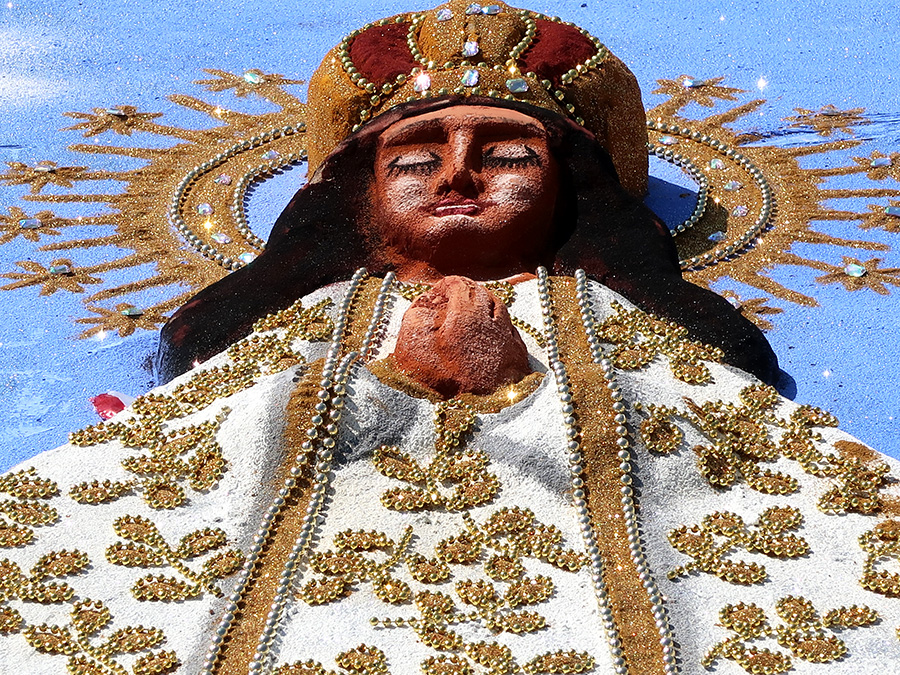
Tapetes de arena (rugs of sand) are a traditional feature of the celebration in Oaxaca of Día de Muertos.  When I first arrived to live here, they were drawn in front of the Cathedral.  Next, they moved for a year or two to the Government Palace and for the last several years they have graced the Plaza de la Danza.  This year’s offerings were the work of twelve artisans and feature the most beloved and revered of the Jesús and María señores y señoras in Oaxaca.  This post will highlight the ladies…

IMG_1720

Virgen Dolorosa — Our Lady of Sorrows

IMG_1702

Virgen del Carmen — Our Lady of Mount Carmel

IMG_1704

Sra. Virgen del Rosario — Our Lady of the Rosary

Interestingly, in previous years the themes of the sand paintings in these public spaces have been Día de Muertos related.  I’m not sure of why the change this year to religious imagery.  Indigenous Day of the Dead celebrations pre-date the arrival of the Spanish and the All Saints Day of the Catholic church.  And in Oaxaca, one of the most indigenous states in Mexico, as Shawn D. Haley points out in his book, Day of the Dead: When Two Worlds Meet in Oaxaca, “there is little of the Spanish influence to be found in the Oaxacan Day of the Dead.  The Spanish version… is bleak and dismal…. For the Oaxaqueñans, these days are… joyous and exuberant.  It is not a mourning of lost loved ones, but a celebration, a reunion with the dead.”

IMG_1707

Santa María de Guadalupe — Our Lady of Guadalupe

IMG_1711

Nuestra Señora de la Solidad — Our Lady of Solitude

IMG_1724

Inmaculada Concepción de Juquila — Virgin of Juquila

For more of these sand paintings, check out the recent post by blogger buddy Chris.  By the way, the feast days for these last three señoras are coming up in December.  First on the calendar is Juquila on December 8, then comes Guadalupe on December 12,  and, finally, Oaxaca’s patron saint, Soledad on December 18.  There will be special masses, processions, and rockets. December is a noisy month!

But first, we must welcome the difuntos (departed) who begin arriving tonight.

Save

Read Full Post »
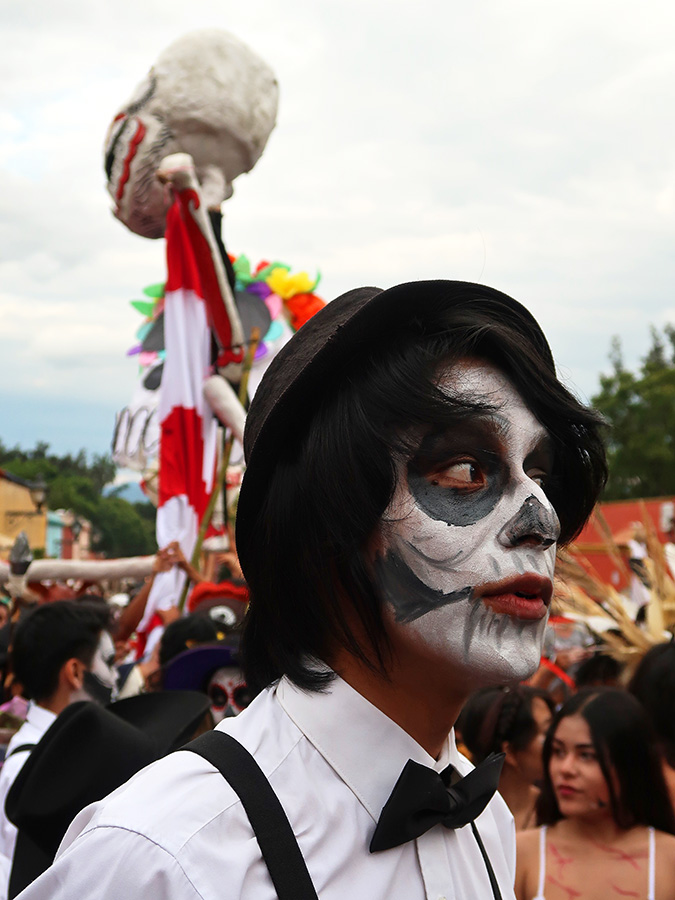
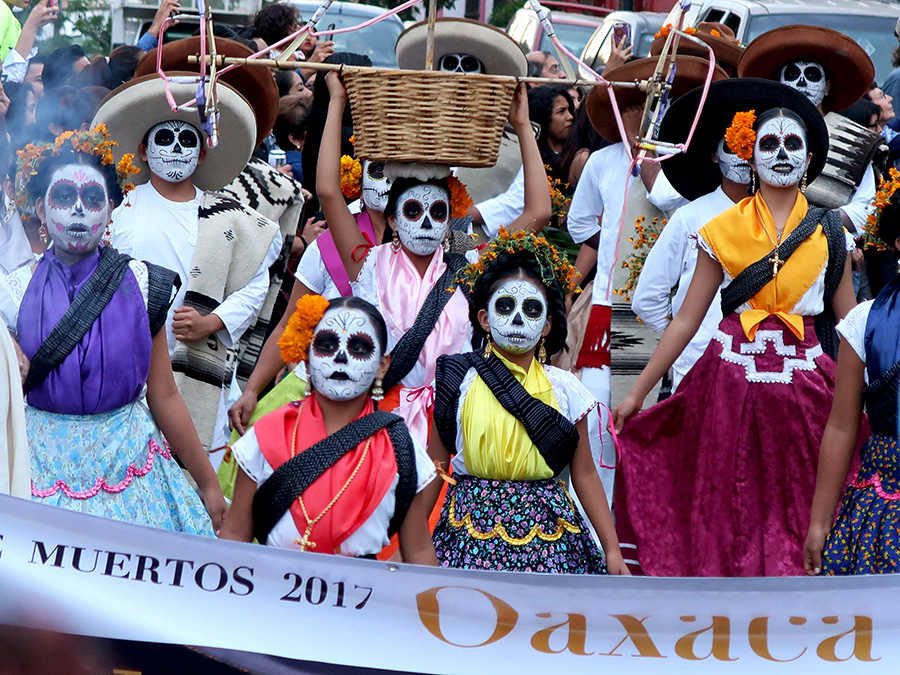
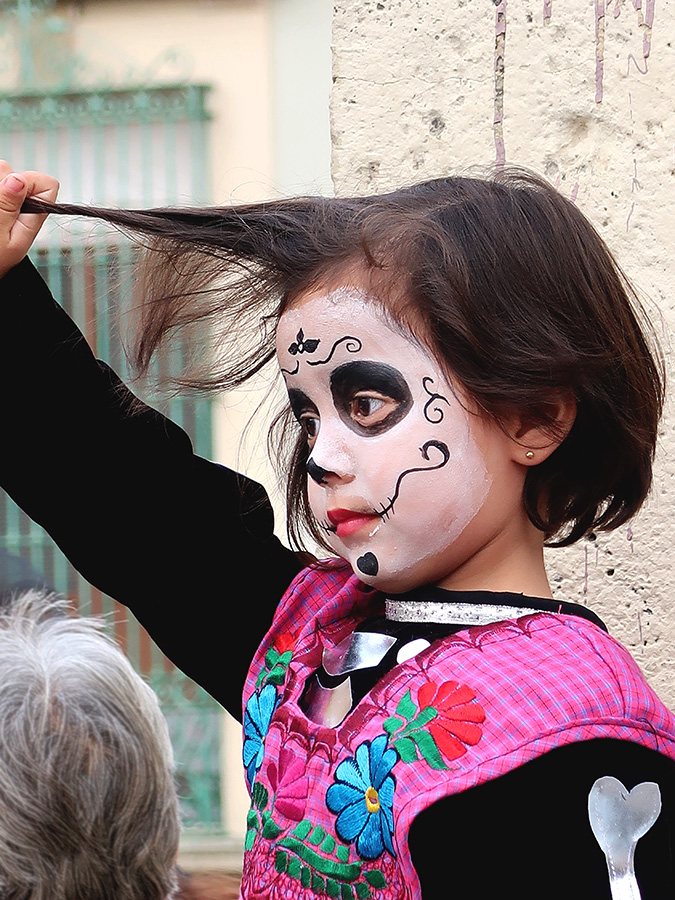
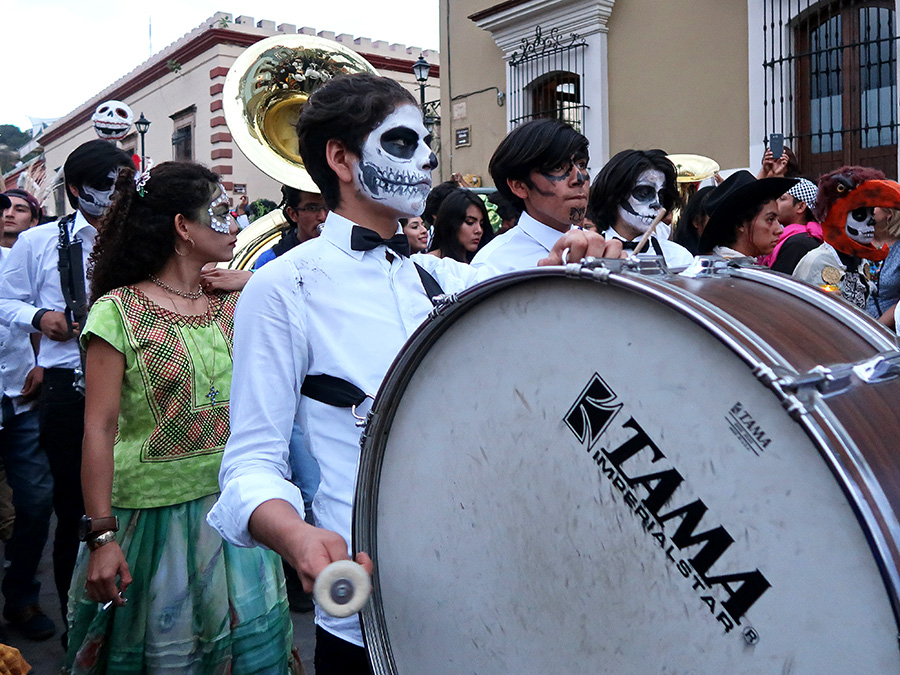
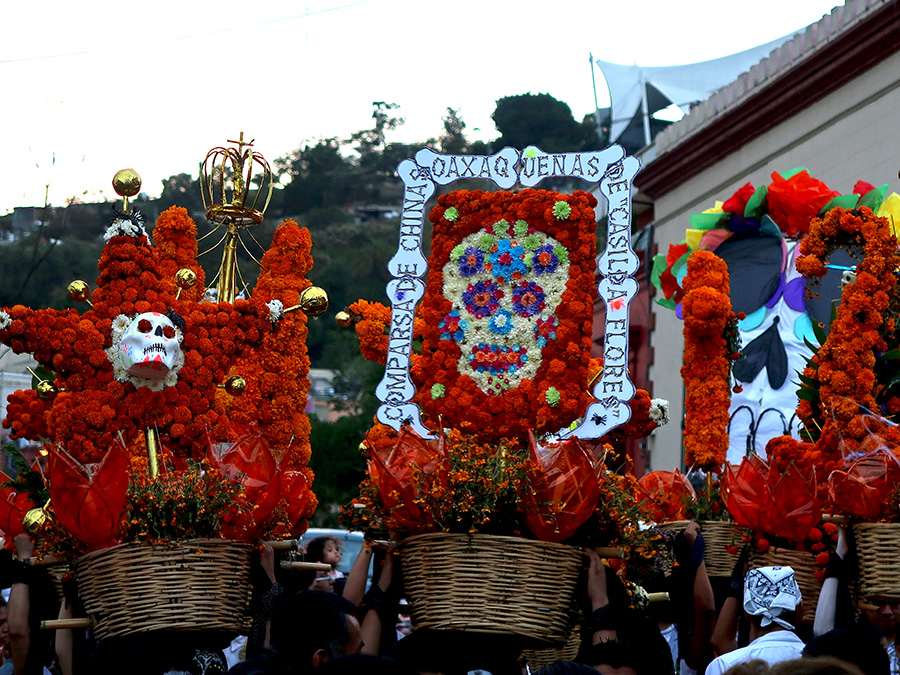
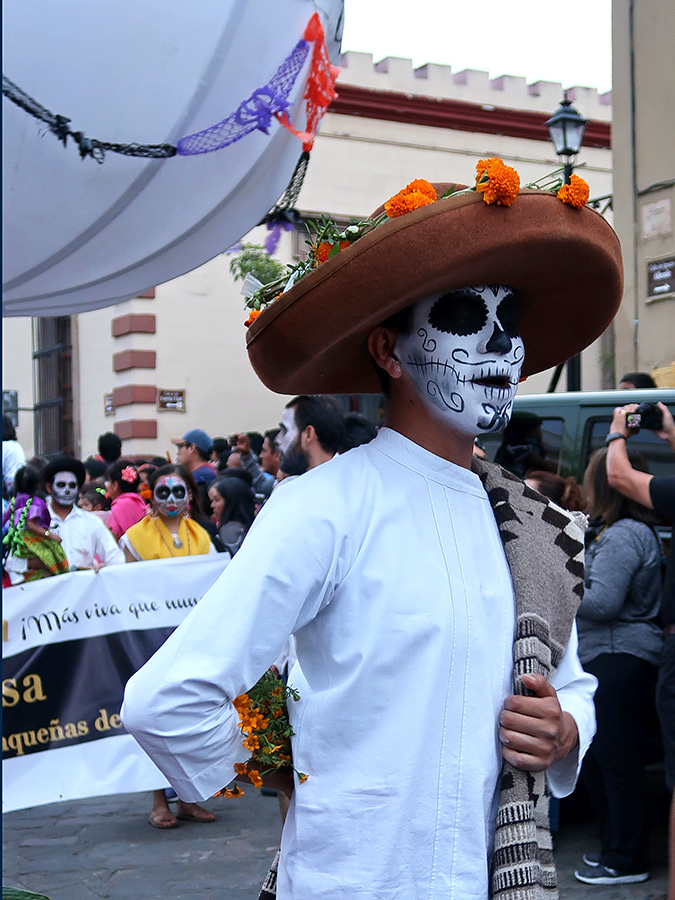
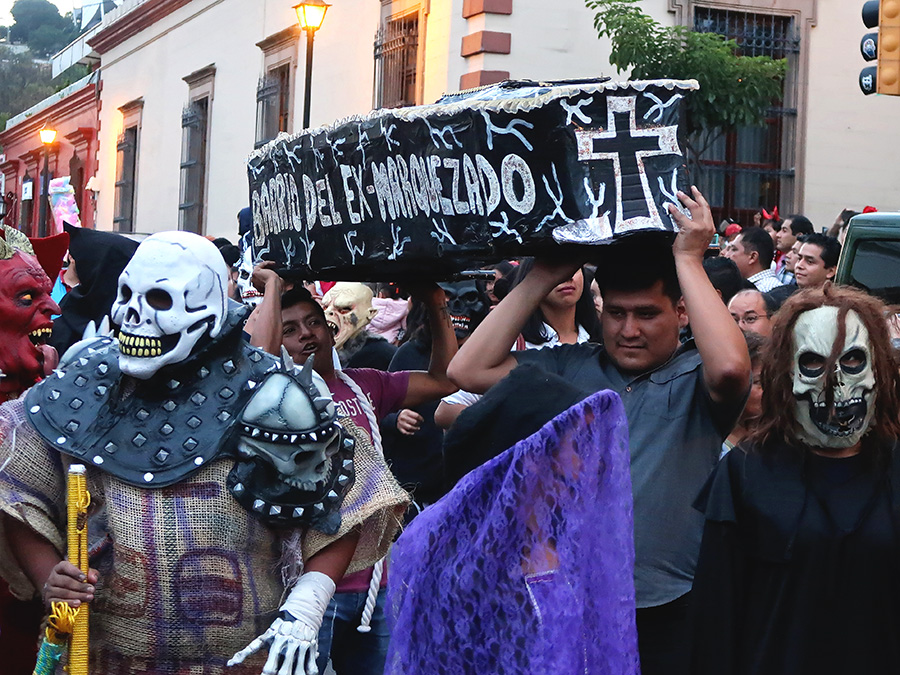
Last night, throughout the streets of the city, the living began welcoming the dead.

IMG_1491

IMG_1467

IMG_1446

Like the Guelaguetza desfile of delegations, Oaxaqueños and tourists (foreign and domestic) crowded the sidewalks along the Magna Comparsa Oaxaca 2017 route — from the Cruz de Piedra, down García Vigil, left on Allende, right on Macedonio Alcalá, right on Independencia, and into the Alameda.

IMG_1453

IMG_1531

IMG_1454

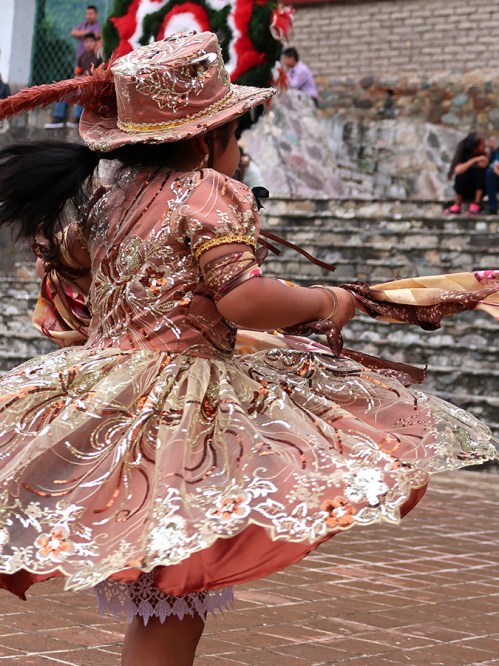
With bands leading the way, catrinas in regional dress and dancers in traditional muerteada attire whirled and twirled, high-stepped and jumped, and moved and grooved their way through the streets.

IMG_1514

IMG_1449

IMG_1508

With earthquakes and hurricanes and now the resumption of the zócalo plantón (occupation) and bloqueos (blocades) of roads into and out of the city by Sección XXII of the teachers’ union and their allies, Oaxaca and Oaxaqueños needed to party-down in joyous abandon — and they did!

IMG_1499

IMG_1561

IMG_1615

Día de Muertos observances are different in the indigenous villages — the mood is more formal and each village has customs and rituals that tradition dictates must be followed.  But the bottom line in ciudad and pueblo is to provide a welcome worthy of both the living and the dead.  The celebrations have only just begun…

Read Full Post »

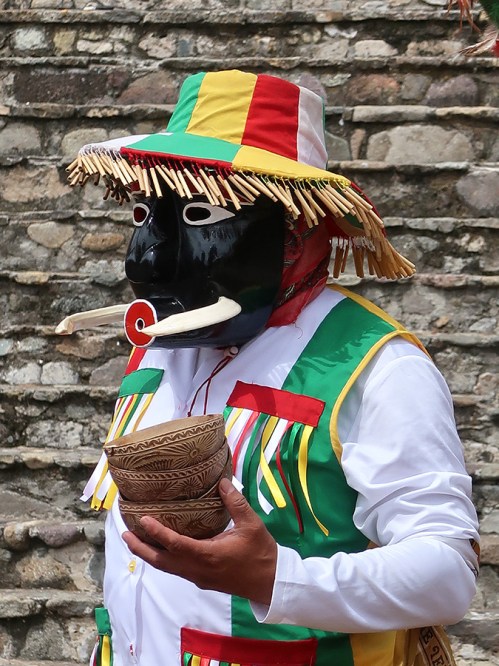
Calacas dressed for work and catrinas dressed to the nines, for my skeleton-loving grandson.

From the sidewalks, courtyards, and balconies of Oaxaca, October 2017 — ready for the Day of the Dead.

Read Full Post »

Today is the culmination of the ten days of festivities celebrating El Señor del Rayo — an only-in-Oaxaca observance.  Early Saturday evening, on my way to an event at the Museo Textil, I ran into a calenda (parade) of his.  I was going in the opposite direction and felt like I was swimming upstream.  What to do?  Stop, take a few photos, and enjoy the music and dancing until it passed by, of course!

El Señor del Rayo is a wood-carved Christ on the Cross figure that was brought from Spain in the 16th century, a gift to Oaxaca from Charles V.  The image was placed in the temple of San Juan de Dios, a church with adobe walls and a straw (or possibly wood) roof.  According to religious lore, lightning struck the church and everything was destroyed, save for this figurine.  A miracle!  The statue became known as El Señor del Rayo (the Lord of Lightning), was given his own chapel (the furthest capilla from the main entrance on the left) in the newly built Catedral de Nuestra Señora de la Asunción, and has been much venerated ever since.

El Señor has a body double as the original, given it’s importance and value, remains behind glass in his chapel (first photo above).  Today, the line of faithful waiting to worship him stretched into the aisle leading to his chapel.  Restoration work was done on his replica earlier this year, but it is back on the main altar and available to travel through the streets during this afternoon’s procession, along with the estandartes (religious banners) currently leaning up against the inner walls of the Cathedral.

Tonight, like all good Oaxaca celebrations, be they religious or secular, there will be pirotécnicos — fireworks and all things pyrotechnic, including a castillo.  For the uninitiated, a castillo is a multi-story erector set like structure with moving parts that is wired with colorful explosive charges.  Another noisy night in Oaxaca!

By the way, in previous years, the inside of the Cathedral was festooned from bottom to top with lilies — greeting all who enter with Divine beauty and fragrance.  However, this year there are many fewer floral decorations and no lilies.  I’m wondering if the lily-growing region was affected by the hurricanes and/or earthquakes….

Read Full Post »

Residents and visitors, alike, have been in mourning for a couple of years — ever since Margie Barclay retired from publishing her extremely popular and informative Oaxaca Calendar.  While others, like Que Pasa Oaxaca, have tried to pick up the slack, nothing else has quite measured up until now.  There is a new calendar in town — OaxacaEvents!!!

OaxEventsCalendar

As you can see, it’s visually easy on the eyes and I can assure you it’s also easy to use.  For example, clicking the “View” arrow links to event details.  Though the default is “All,” by clicking on a menu bar selection, you can specify a type of event for which you want to see listings (Music, Art, Dance/Theater, Food/Drink, Sports/Fitness, Learning, Groups/Mtgs, or Festivals).  You can also elect to see event listings for a particular date, use the search feature, and (drum roll, please), if you know of an event that isn’t shown, you can “submit an event” — harnessing the power of crowd-sourcing!  Pretty cool, yes?

The OaxacaEvents calendar is a volunteer effort by Dottie Bellinger and Teri Gunderson in partnership with the Oaxaca Lending Library.  If you’re in the neighborhood, please be sure to thank them, including Margie Barclay who briefly came out of “calendar retirement” to lend her expertise in the initial setup.

Save

Read Full Post »

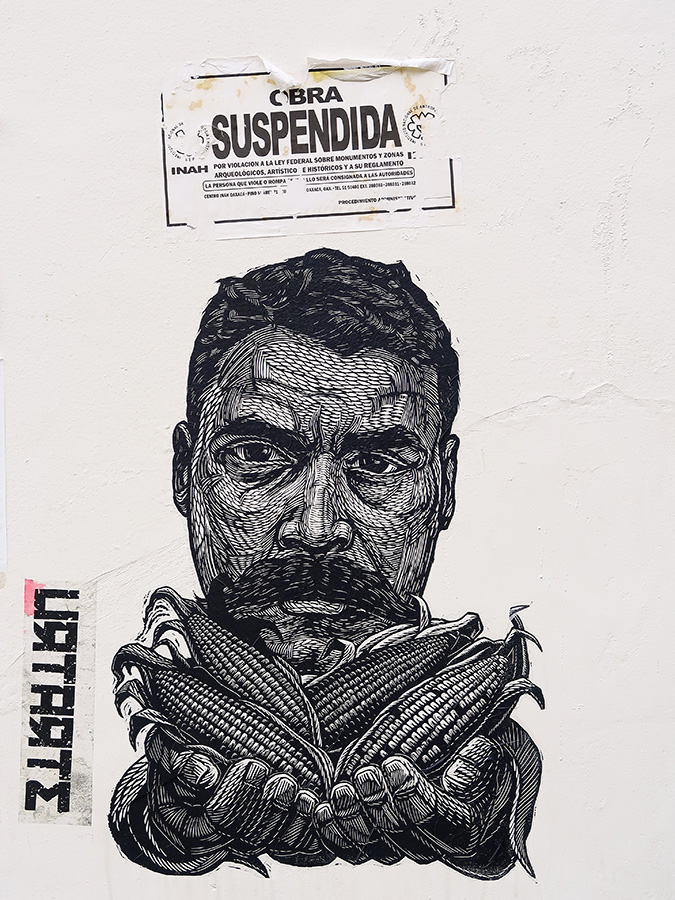
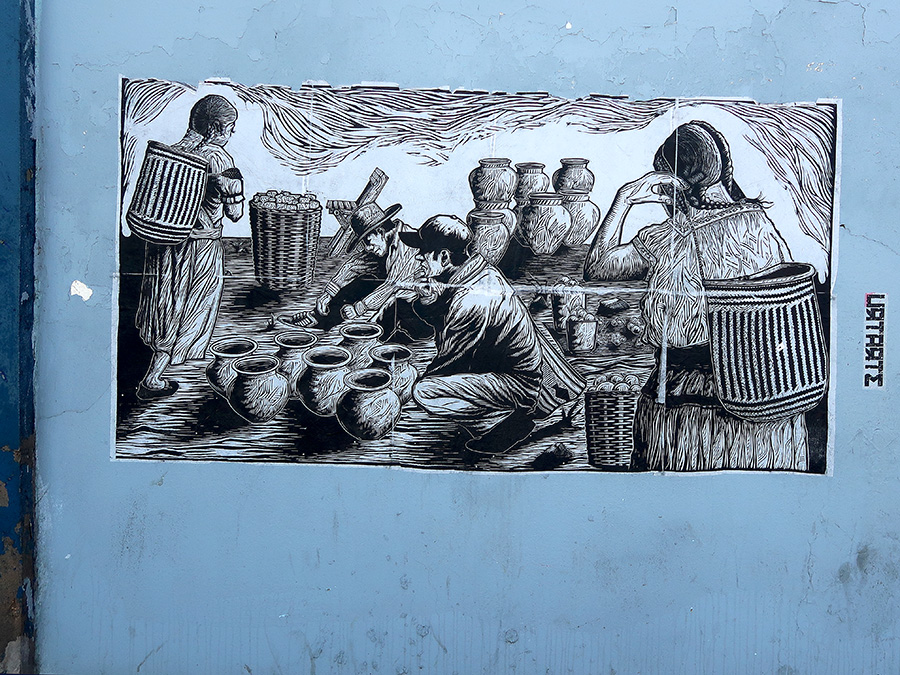
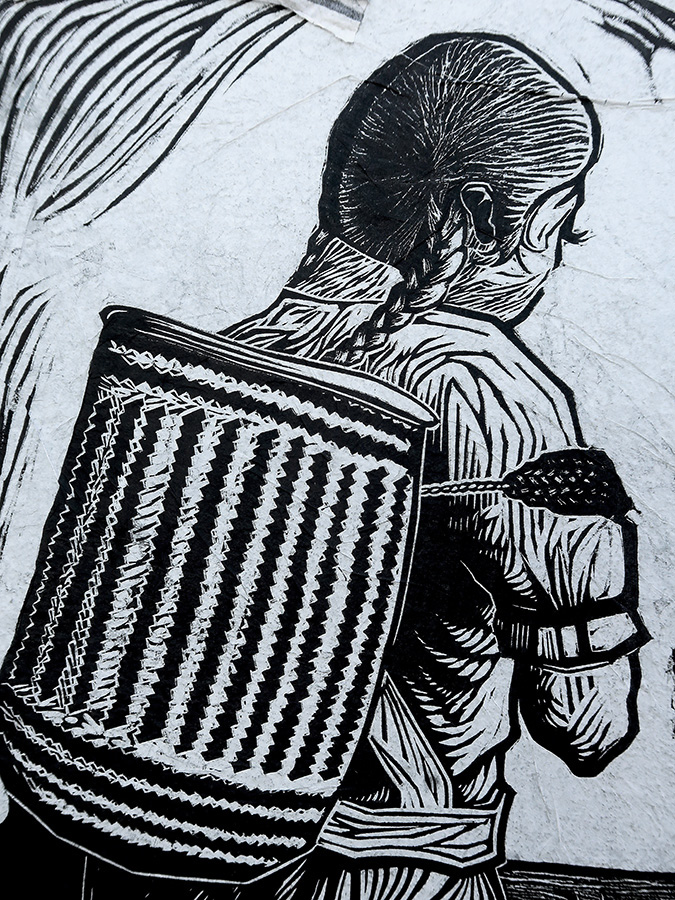
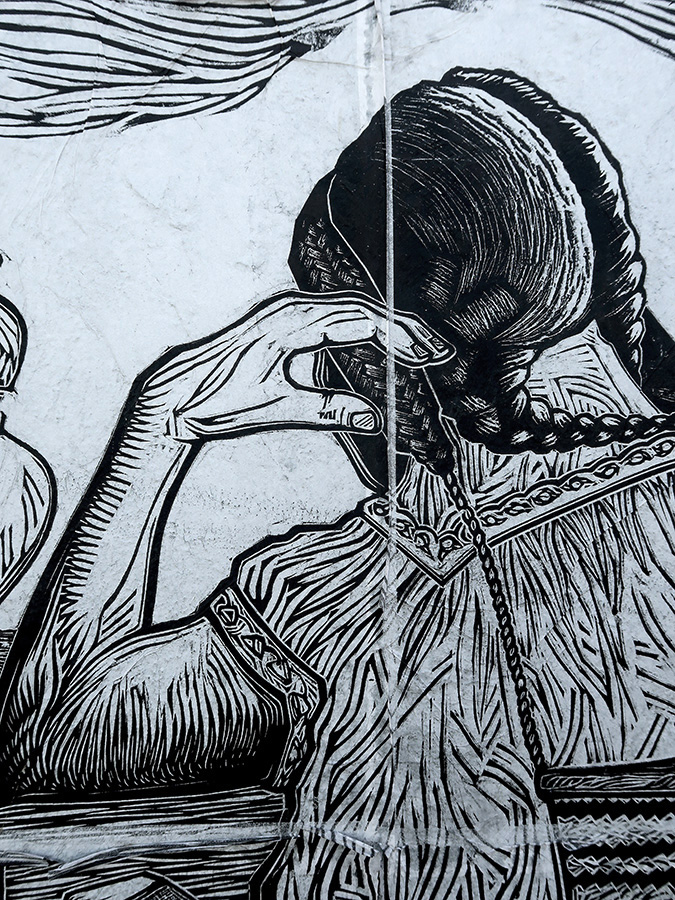
URTARTE — La Unión Revolucionaria de Trabajadores del Arte (the Revolutionary Union of Art Workers).  You have no doubt seen their work around the city of Oaxaca.

The black and white lines of resistance defending heritage corn from an invasion by the moneyed interests of el norte.

IMG_0760

Demanding justice for the 43 student teachers from Escuela Normal Rural Raúl Isidro Burgos in Ayotzinapa, Guerrero — still disappeared after three years.

IMG_0758

And yesterday I discovered this masterpiece…

IMG_1180

Celebrating the creativity, hard work, and dignity of the women and men living in the villages of Oaxaca.

IMG_1184_copy

IMG_1182_copy

IMG_1183_copy

A reminder of the people whose roots run deep into the soil and who make Oaxaca such an exceptional place.

Save

Read Full Post »

Día de Muertos is coming…

That means the departed will soon return to eat, drink, and be merry with their living loved ones.

Due to earthquake damage the Panteón General in the city is closed, but the traditional evening of the dead will take place at the Panteón Xochimilco.

As the schedule of over 100 cultural activities (between October 28 and November 4) states, despite earthquakes and hurricanes, “Oaxaca is more alive than ever!”

Read Full Post »

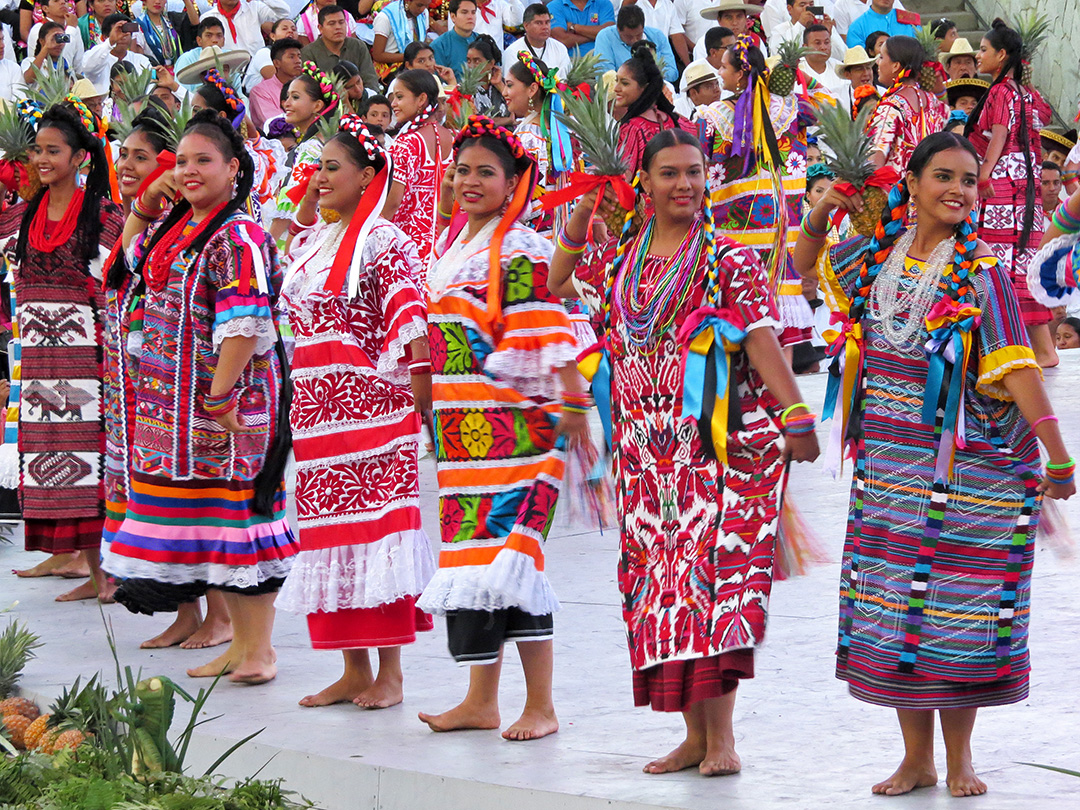
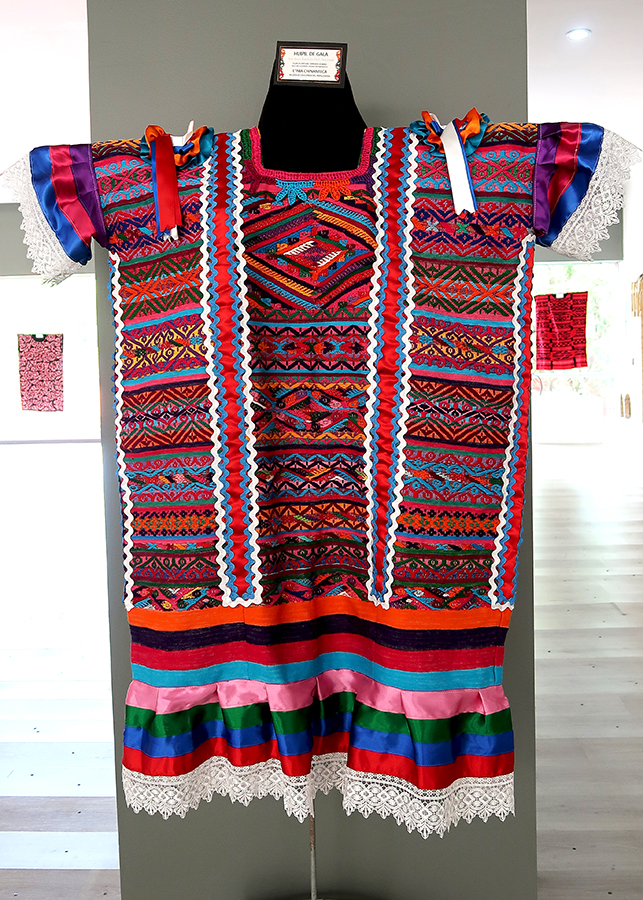
Since its creation in 1958, the Baile Flor de Piña (aka, the Pineapple Dance) has been bringing audiences to their feet at the Guelaguetza every July.  The energy and choreography is a cross between the Rockettes and Busby Berkeley, but the costumes are pure Oaxaca — the Mazateca and Chinanteca huipiles are a showcase of color, design, weaving, and embroidery from the Papaloapan region.

IMG_5038

Flor de Piña, La Guelaguetza – July 2015

The Mazatec and Chinantec peoples are 2 of the 16 indigenous groups living in the state of Oaxaca.  For those who are as captivated by their textiles as I am, the Museo Estatal de Arte Popular Oaxaca (MEAPO) in San Bartolo Coyotepec currently has a fabulous exhibition, La Piel de Mi Raza, which features more than 55 Chinanteco and Mazateco textiles from the Papaloapan — some over 200 years old.

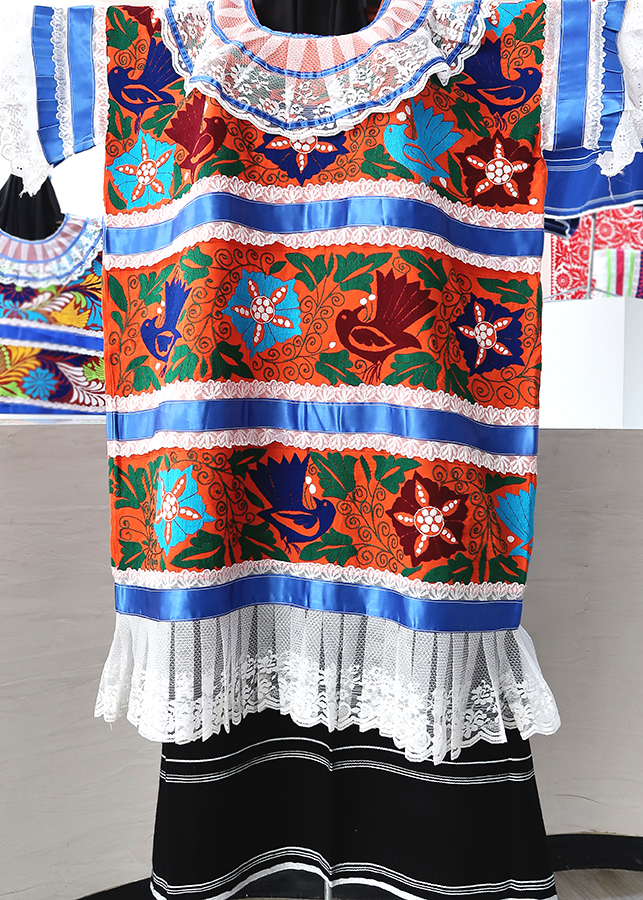
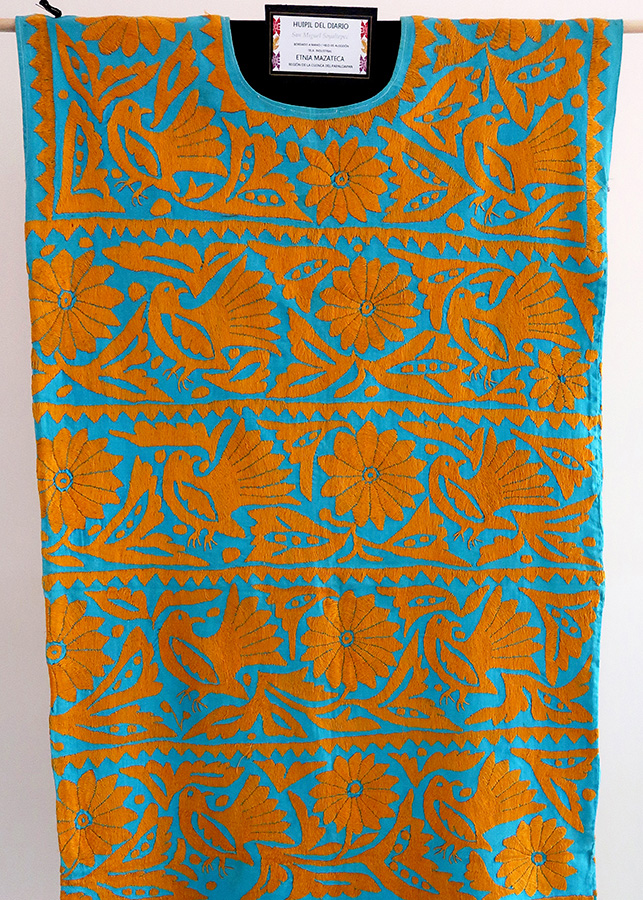
Mazateca huipiles are recognized by their hand-embroidered bird and flower motifs.

IMG_1063

Mazateca huipiles

IMG_1074

“Everyday” Mazateca huipil from San Miguel Soyaltepec

IMG_1064

“Dressy” Mazateca huipil from San Felipe Jalapa de Díaz

IMG_1080_copy

“Everyday” Mazateca huipil from San Miguel Soyaltepec

IMG_1067

Antique Mazateca huipil from San Pedro Ixcatlán

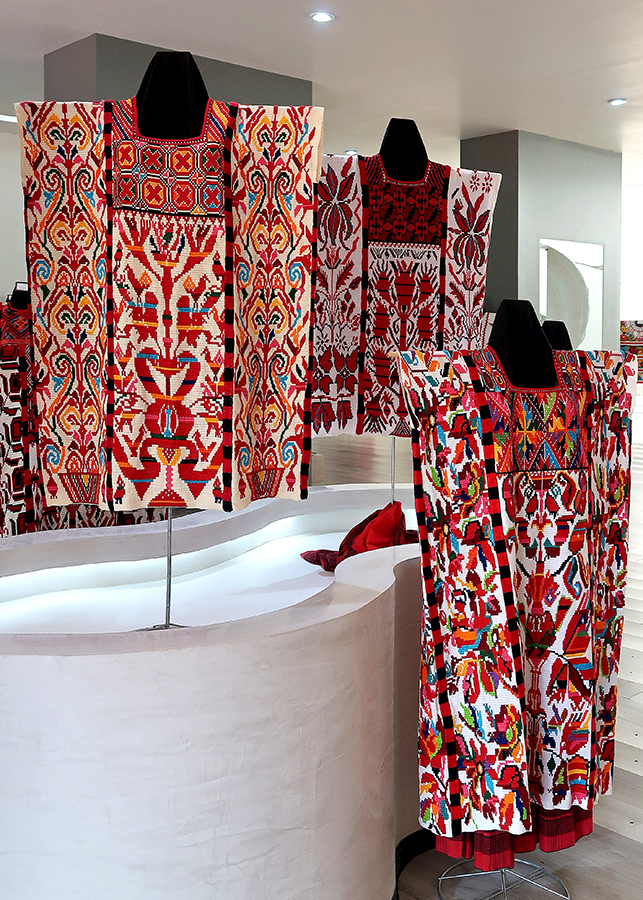
The Chinanteca huipiles are woven on backstrap looms with the bird, tree, Quetzalcoatl, and geometric designs embroidered or brocade woven into the piece.

IMG_1076

Chinanteca huipiles

IMG_1101

“Dressy” Chinanteca huipil from San Juan Bautista Valle Nacional

IMG_1091

Antique Chinanteca huipil from San Felipe Usila

IMG_1086

“Dressy” Chinanteca huipil from San Felipe Usila

IMG_1094

Antique Chinanteca huipil from San Felipe Usila

The exhibition is located in the upstairs gallery of MEAPO and runs until November 10, 2017.  By the way, if you haven’t been to the Museo recently, you are in for a surprise — the first floor has been divided into several galleries, allowing for multiple exhibits and providing for a more intimate experience.

And, for the fascinating and controversial background of the Flor de Piña, read Stephanie Schneiderman’s article, Baile Flor de Piña & Guelaguetza: Cultural Preservation.

Read Full Post »

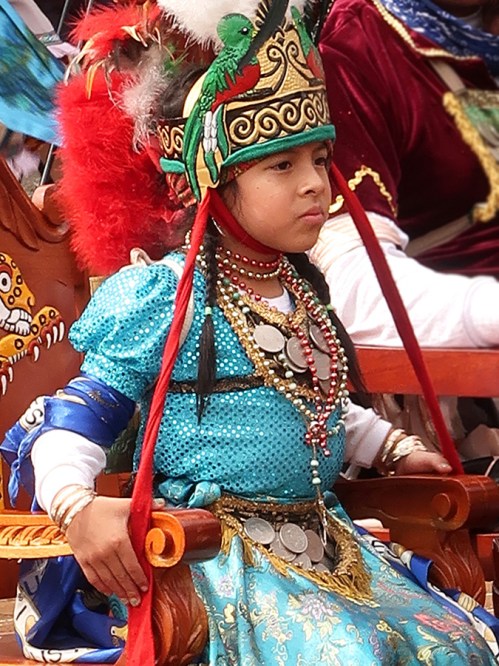
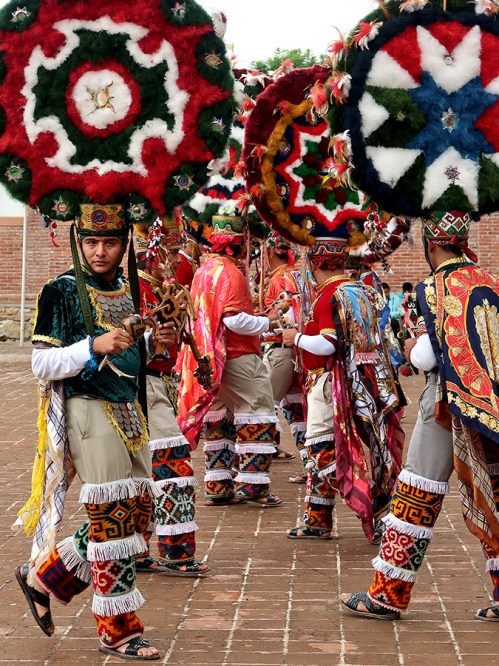
Yesterday, after missing the Fiesta de la Natividad because I was in the middle of my 6-week cross-country sojourn in el norte, I managed (courtesy of blogger buddy Chris and his trusty VW Jetta) to make it out to Teotitlán del Valle for the last day of the Fiesta de La Virgen del Rosario and performance of the Danza de la Pluma.

IMG_0915

Sergio Gutiérrez Bautista (Moctezuma)

The dance is day-long and recreates the Spanish Conquest from the Zapotec point of view.

IMG_0968_copy

Quetzali del Rayo Santiago Ruiz (Malinche)

IMG_0804

Elizabeth Hernández Gutiérrez (Doña Marina)

Miracle of miracles, the rain held off, the clouds parted, and the sun made a much welcome appearance.

IMG_0905

IMG_0776

Foreground:  Marcos Vicente Gutiérrez (Capitán 1 ro.)

IMG_0876

Foreground:  Edgar Daniel Ruiz Ruiz (Vasallo 8vo.)

IMG_0906

As we approached the atrium of the Templo Preciosa Sangre de Cristo, the father of one of the Danzantes explained a venue change — due to some (hopefully) minimal earthquake damage to one of the bell towers of the church, the Danza de la Pluma was moved next door to the plaza in front of the municipal building.

IMG_0856

Juan Bautista Ruiz (Subalterno)

IMG_0811

Florentino Martínez Ruiz (Subalterno) and Señor Inocencio

A heartfelt muchisimas gracias to the people of Teotitlán del Valle, many of whom I am so lucky and grateful to call friends.  The warm welcome I received was such an incredible tonic to the grey days we have been experiencing in Oaxaca.

Save

Read Full Post »
I can’t believe it has been three years since 43 student teachers went missing one night in Iguala, Guerrero.  And, I can’t believe the key questions remain.

P1160509_b&w

Who is responsible?  What happened that night?  Where are they?  Why are there still no answers?  How can 43 human beings be disappeared so completely?  When will the truth be revealed?

P1160500

In the midst of our current tragedies, let us not forget the 43 normalistas from Escuela Normal Rural Raúl Isidro Burgos, Ayotzinapa, Guerrero.

P1160508_b&w

Three years without answers must seem like an eternity to their families….

Read Full Post »

Here in Oaxaca we continue surfing the temblors and tormentas…

IMG_0708

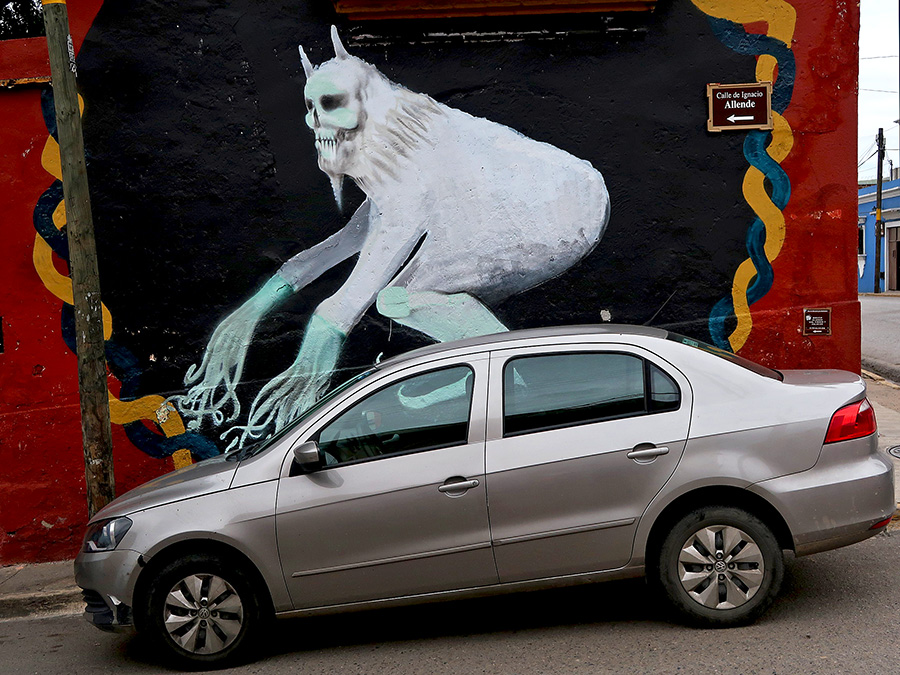
Calle de Ignacio Allende at the corner of Tinoco y Palacios

Torrential downpours and flooding have returned.  Aftershocks from the September 7 earthquake continue.  But, aside from difficulty navigating the flooding and potholes, suffering from frayed nerves, and being worried sick about friends and family in the critically affected areas of central and southern Mexico, we are okay in the city and surrounding villages.

Re geography:  Oaxaca is the name of both a state and its capital city.  The epicenter of the September 7th earthquake in Oaxaca was in the southeast part of the state — as the crow flies, it is almost 150 miles and through the Sierra Madre del Sur mountain range from Oaxaca city.   To see where Oaxaca’s earthquakes are happening, check out Earthquake Track.

Save

Read Full Post »
A skein of yarn waiting to be woven…

IMG_0695

Agave blossoms reaching for the sky…

IMG_0691

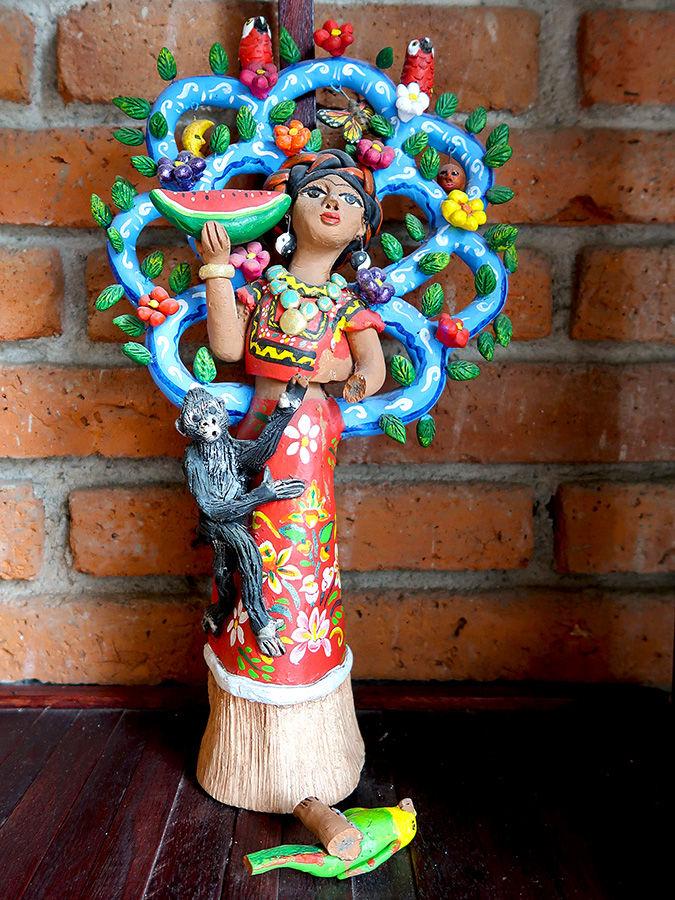
Ceramic sculpture of a Tehuana by Fran Garcia Vásquez.

IMG_0699

Ooops, a broken arm!  It seems appropriate that my only casualty from the 8.2 earthquake depicts a woman from the Isthmus of Tehuantepec — the region where some of the most severe damage in the state of Oaxaca occurred.  However, like the people she represents, she is strong, proud, and healing will happen.

If you want to help the victims of the September 7 earthquake, please see my previous post.  If you do, reward yourself by watching last night’s benefit at the Guelaguetza Auditorium, Oaxaca Corazón.  And, if you don’t, perhaps this spectacular concert will encourage you to donate to earthquake relief.

This all-star event, organized in less than a week by Lila Downs and Susana Harp, will have tears falling — I guarantee it!

Save

Read Full Post »
Oaxaca continues to be inundated with rain.  I’m in Colorado now (inhaling smoke from fires throughout the west), but friends in Oaxaca are describing flooding, leaking roofs, water coming through windows and doors, and rain without end. Today’s news is reporting more than 13 communities are incommunicado and that urban development is a major cause of flooding by the Atoyac River that runs through the valley of Oaxaca.

Perhaps there are lessons to be learned from the builders of Monte Albán, where the Pre-Hispanic drainage works better than current systems.

Read Full Post »
« Newer Posts - Older Posts »