Feeds:
Posts
Comments

Archive for the ‘Creativity’ Category

After five days of being confined to Casita Colibrí — eating, inhaling, and choking on concrete and brick-dust and enduring the throbbing sounds of drills, hammers, and chisels — due to demolition of the old and construction of a new kitchen counter (still not finished), market day in Tlacolula de Matamoros was just what the doctor ordered.   Blogger buddy Chris offered and off we went.

The enticing aroma of tacos and gorditas at our favorite street stall beckoned and we quickened our step, until we came to this unexpected and powerful mural…

The mural is the work of Tlacolulokos, a collective that originated in Tlacolula.  According to this article, these self-taught artists explore the subjects of violence, the transformation of traditions, tourism, poverty, and social decay by referencing southern Mexican folk elements.  They use a variety of media and techniques, ranging from graffiti, easel painting, graphics and object, to video and sound.

And, Tlacolula worked her magic…  We ate, soaked in her color, stopped to listen to a youth band from Santa María Guelac (with a girl tuba player, no less!) play “New York, New York” and “Can-can,” and shopped a little (for me, a 5-liter plastic “gas” canister for our next mezcal run and red bananas).  Tlacolula never dies and never gets old.

Read Full Post »

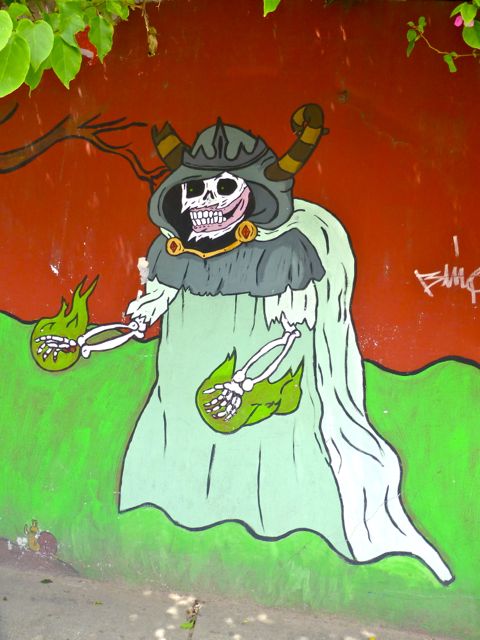
Last Monday, as I previously wrote, my bus ride home was rudely interrupted by a bloqueo (blockade).  Initially, this is how I felt…

Skeleton in robes painted on wall

Without any other options, I found myself walking along Calzada Madero.

Spider painted on railroad car

and found murals painted on old railroad cars…

Cat face painted on railroad car

in the yard of the old railroad station, now the Museo del Ferrocarril Mexicano del Sur.

3 creature faces big teeth painted on railroad car

By the time another bus finally came by, I felt much more like this…

Tranquil female face painted on side of building

Sighhh…  good ol’ Oaxaca, you just never know what you will stumble upon.

Read Full Post »

Who were those masked men?

From the Guelaguetza desfile, July 19, 2014

Read Full Post »

Last Monday, L and I had a leisurely hike up the hill from my apartment to the Guelaguetza Auditorium, sat in stadium seats almost 20 rows up, looking down on the enormous circular concrete stage with the city and mountains providing a picturesque backdrop.

Yesterday, I hopped on a bus, heading for another Guelaguetza performance, this time in Villa de Etla.  However, a bloqueo (blockade) by Sección 22 of the teachers’ union had the bus turning around, doubling back, and taking a circuitous route that eventually wound its way through the narrow streets of Santa Rosa.  Once we got back on the main road, I transferred to a colectivo and arrived in Etla just as the dancing was about to begin — this time on a small temporary wood-plank stage, that seemed to shake with every dance step.  The setting wasn’t quite as spectacular, but, there I was, within an arm’s reach of the dancers!

IMG_5387

IMG_5566

IMG_5497

Danza de la Pluma

Danza de la Pluma


IMG_5640

IMG_5515

Flor de Piña

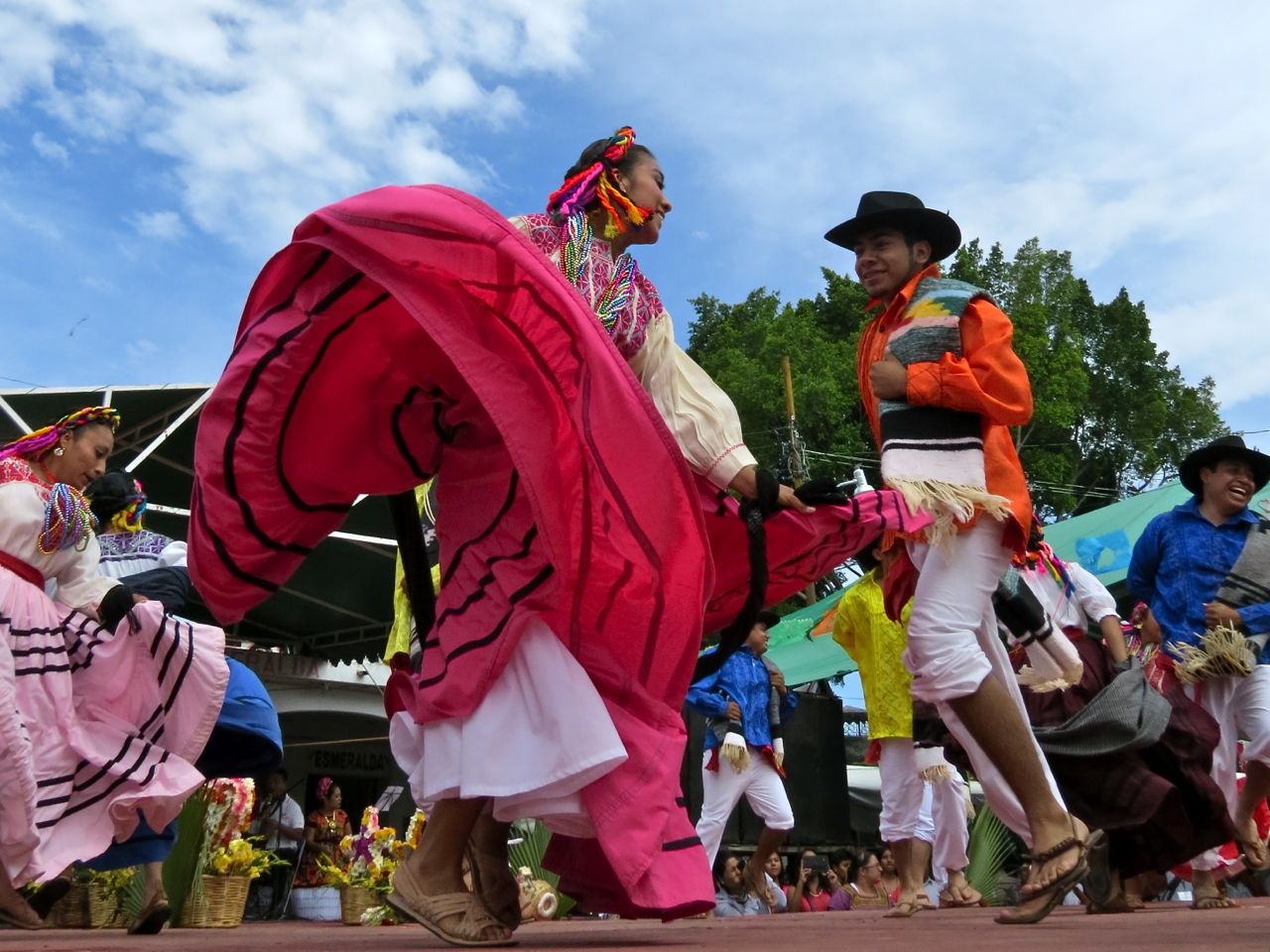
With the exception of the Danza de la Pluma, these dancers are from a folkloric group that performs each of the traditional regional dances.   As you can see from their faces, they dance with as much joy and pride as the delegations from the villages at the big Guelaguetza.

IMG_5432

IMG_5584

IMG_5426

IMG_5582

IMG_5357

IMG_5320

Returning home was its own adventure.  Last week, L and I only had to navigate sidewalks, pathways, and stairs along with the other 11,000 attendees.  Yesterday, Chris (see his Guelaguetza in Etla – 2014 post) gave me a ride to a bus stop where, after about 10 minutes, I caught the bus that would deposit me a half block from Casita Colibrí.  Alas, the best laid plans…  Just before the intersection up to Cerro Fortín, masked maestros (teachers) surrounded the bus, our driver shrugged, opened the doors, and off we passengers got.  It was hot, I was tired, but what else was there to do?  I hoofed it to halfway between the Museo del Ferrocarril (Railroad Museum) and Morelos Park, when another bus materialized, I climbed aboard, giving my feet a much-needed rest, and let the driver navigate the clogged streets that took me back to home sweet home.

It was a fun and frustrating AND exhilarating and exhausting kind of day.

Read Full Post »

One of the qualities that amazes me about most Oaxaqueños is their patience with waiting in interminable lines.  On the one hand, I think those north of the border could take some much-needed lessons in civil and well-mannered behavior.  However, on the other hand, I think Oaxaqueños deserve much better than having to stand in endless lines, be it the bank, a government agency, or to get tickets to a concert by their favorite daughter, Lila Downs.

Lila Downs with bottle of mezcal

Last year, unable to figure out the hows and wheres of getting a ticket to her free concert during the ten days of the Guelaguetza festivities, I was on the verge of giving up getting tickets to see Lila Downs, when friends coming in from out-of-town(!), offered a couple to me.  Of course, I accepted!

Lila Downs fluttering skirt

This year, after several false leads, on Tuesday morning L and I climbed back up to the Guelaguetza Auditorium to try to score some tickets to this year’s free concert.  The box office was scheduled to open at 9 AM, we got up there at 8:30 AM and found ourselves at the end of a line that stretch halfway to the planetarium AND that continued to grow as the hours ticked by.  Abuelos, niños, moms, dads, and teens lined the pathway, talking on cell phones, eating, talking, and laughing — without a raised voice or harsh word spoken.

Lila Downs with guitar

At almost 10 AM, when the line hadn’t moved an inch, I walked down the hill to the box office to see what was happening.  Nothing, as it turned out!

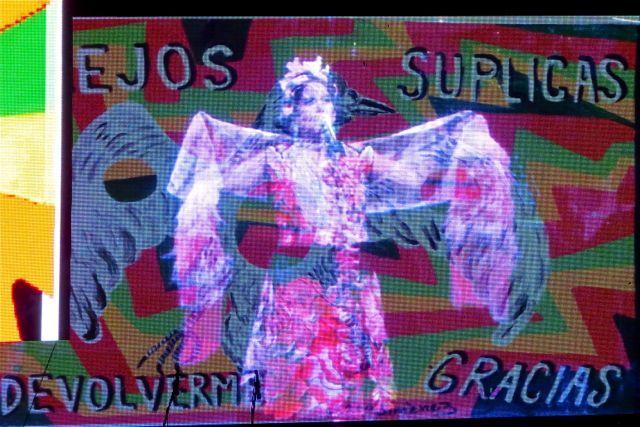
Projected image of Lila Downs

However, good-natured patience finally succumbed to whistles and shouts by those who were in the line of sight of the ticket booth — after all, according to the newspaper they had begun lining up at 4:30 AM!!!

Lila Downs arm raised

I wound my way back up the hill to report my findings to L.  Alas, after another 45 minutes of no movement, impatient gringas that we are, we gave up.  However, to borrow from the musical Sound of Music, “somewhere in [our] youth or childhood, [we] must have done something good,” because 48 hours later, my neighbor presented us with tickets!  And so last night, we climbed back up Cerro Fortín to see Lila Downs.  We were very happy campers.

IMG_5134

She put on another spectacular show — mixing new tunes with old, incorporating several of the Guelaguetza delegations into the production, and generally bringing cheers and sing-a-long voices from the hometown crowd.  By the end, everyone was on their feet.

Read Full Post »

We returned to Teotitlán del Valle on Tuesday and Wednesday the Danza de la Pluma — more of the multi-day fiesta honoring Preciosa Sangre de Nuestro Señor Jesucristo.

Moctezuma and Danzantes

An airborne Moctezuma and the Danzantes

The Danza de la Pluma is a ritual re-enactment of the Spanish conquest.  The story is told in 41 bailes (dances) and lasts from early afternoon into the night.  It is an honor to be a participant — the Danzantes, Moctezuma, the Subalternos, Malinche, and Doña Marina are selected years in advance and make a promise to the church and community to perform their roles for 3 years.

Dance of Malinche and Doña Marina

Dance of Malinche and Doña Marina

All is not completely serious — the Subalternos provide a little levity along the way.

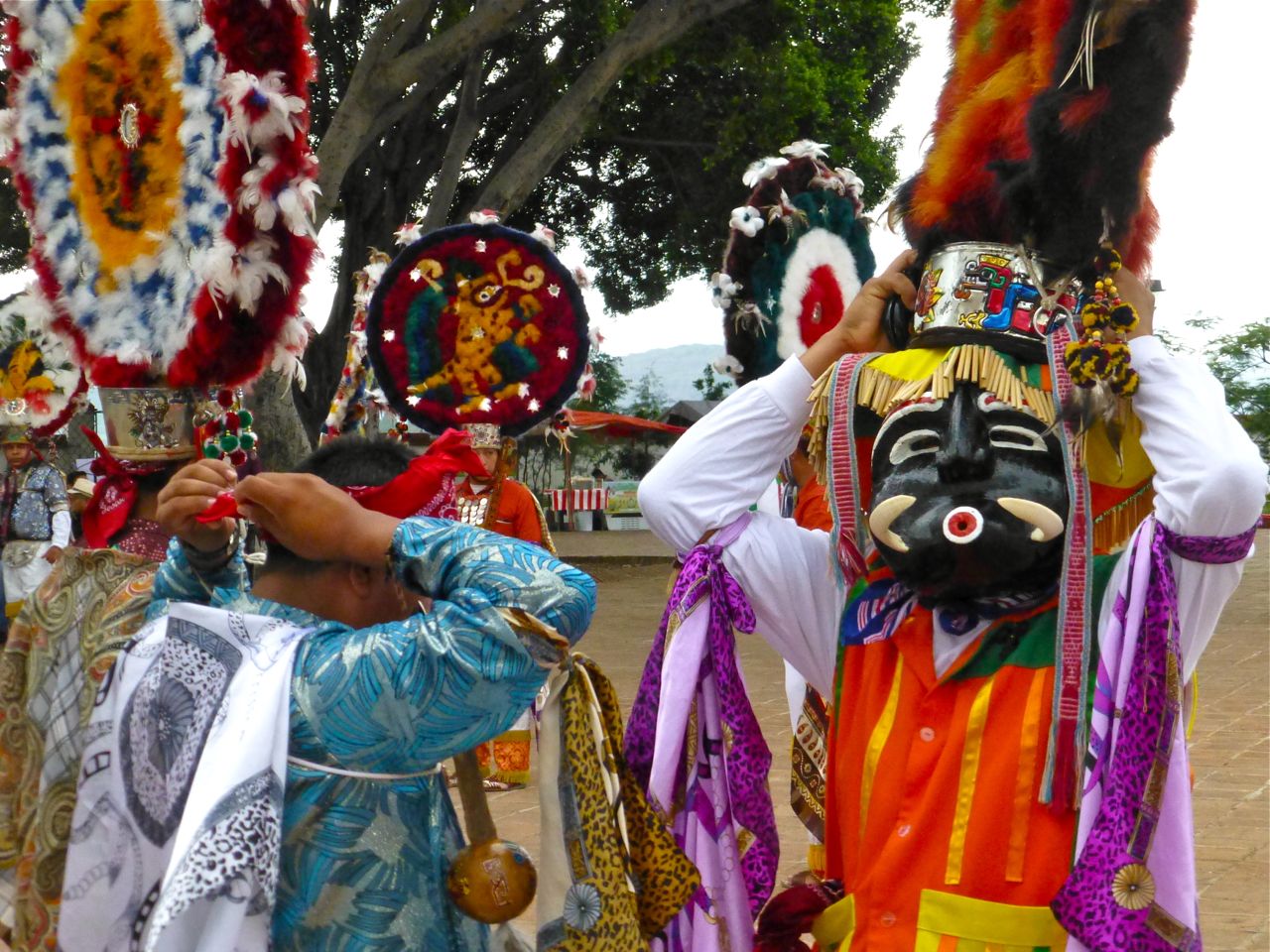
Subalterno trying on the Penacho of a Danzante

Subalterno trying on the Penacho of a Danzante

The subtext and “hidden” narratives of the danza are multiple and complex and after 5 years, I’m only in the infant stages of understanding.  I will leave it to the two scholarly articles listed below to attempt interpretation.

Danzantes with El Picacho in background

References:

Cohen, Jeffrey.  Danza de la Pluma:  Symbols of submission and separation in a Mexican Fiesta.  Anthropological Quarterly, Jul 93, Vol. 66 Issue 3, p. 149-158.

Harris, Max. The Return of Moctezuma.  The Drama Review, Sp 97, Vol. 41 Issue 1, p. 106, 29 p.

Read Full Post »

July in the valley of Oaxaca has begun!  There will be festivals of mole, mushrooms, cheeses, and tamales.  And, there will be the costumes, calendas, and music of Guelaguetza in the city and in several of the surrounding villages.  But first…

Subalterno with open arms

Under a dark and threatening sky, the people of Teotitlán del Valle began their week-long Fiesta titular a la Preciosa Sangre de Nuestro Señor Jesucristo (Festival to the Precious Blood of Our Lord Jesus Christ).  Wearing traditional embroidered blouses and wool skirts woven in this Zapotec village known for its weaving, the unmarried young women and girls gathered in front of the church (Templo de la Preciosa Sangre de Cristo) for the convite (procession) that kicks off Teotitlán’s most important fiesta of the year.

Young Zapotec women and girls in front of church

The rain held off and the procession left the confines of the church courtyard.

Marmotas and people leaving entry gate

Marmotas (giant cloth globes), music, and pyrotechnics led the way…

Banda marching down street

along with little boys holding canes of carrizo and poles topped with small marmotas, fluffy sheep, and airplanes (don’t ask me).

Little boy carrying small marmota

And then came the young women and girls, carrying canastas with images of the saints on their heads.  I have to note here, these baskets are REALLY heavy.  I know, because last year one of the gals asked if I’d like to try — I did for all of about five seconds.  They carry them for almost an hour!!!

Young women with carry canastas on their heads

Most of the residents came out to watch at prime viewing locations.  (Teenage boys were especially prominent, but they deserve another blog post.)

Men, women, and children standing on street

Under the watchful eye of El Picacho (the sacred mountain of Teotitlán), the procession wound its way up and down the cobblestone streets…

Procession in mid-ground and mountain in background

and eventually returned to the church courtyard, where it all began.

For more photos, including some of the pyrotechnic guys in action, check out Oaxaca-The Year After.

Read Full Post »

Here are some of the more colorful people in mine…

More from Friday’s walk up to Barrio Xochimilco.  Couldn’t help thinking of the Sesame Street song, Who Are the People In Your Neighborhood?

Read Full Post »

I felt like I was being watched, as I walked through Barrio Xochimilco this morning…

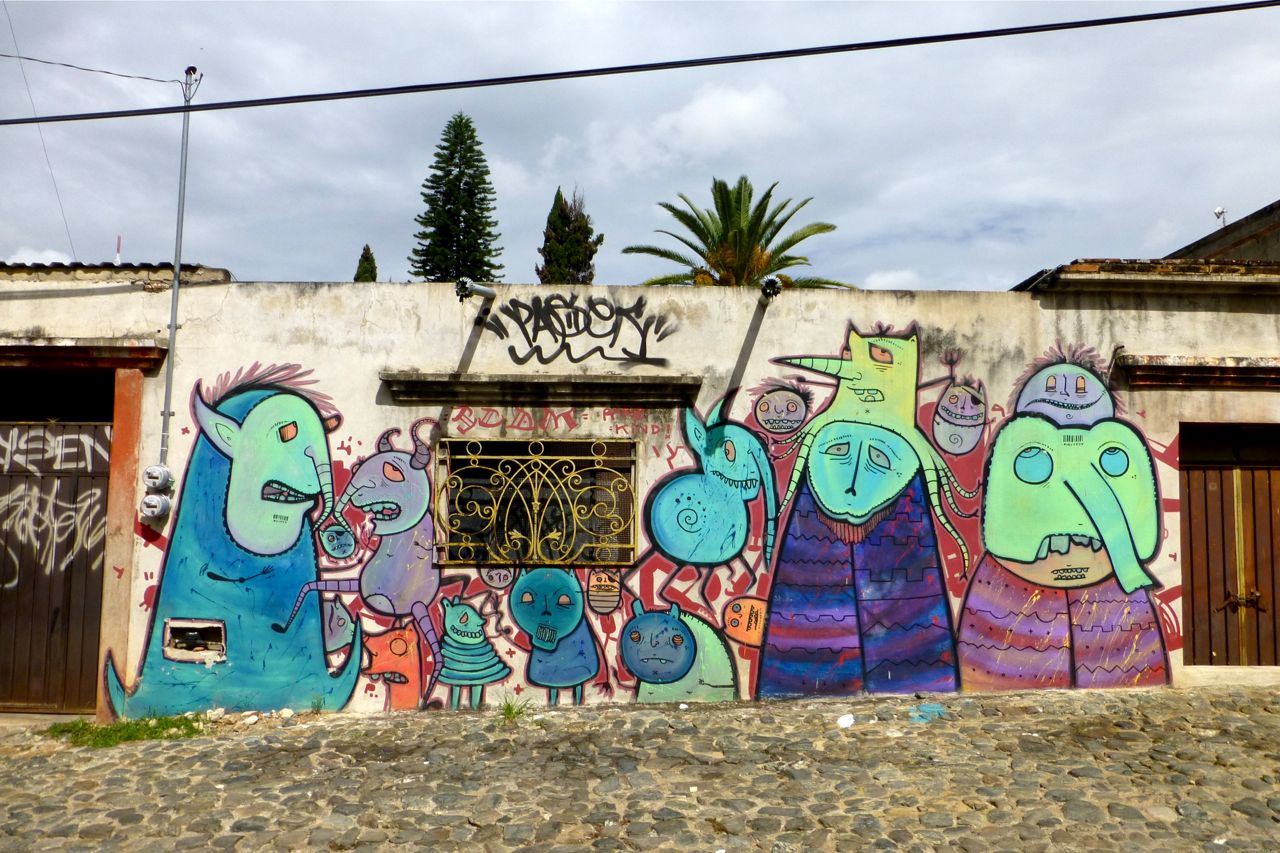
Mural of creatures painted by SCOM on wall

Stumbled upon, what could be, the stairway to heaven…

Outside stairs at Templo Santo Tomás Xochimilco

Just passing through…

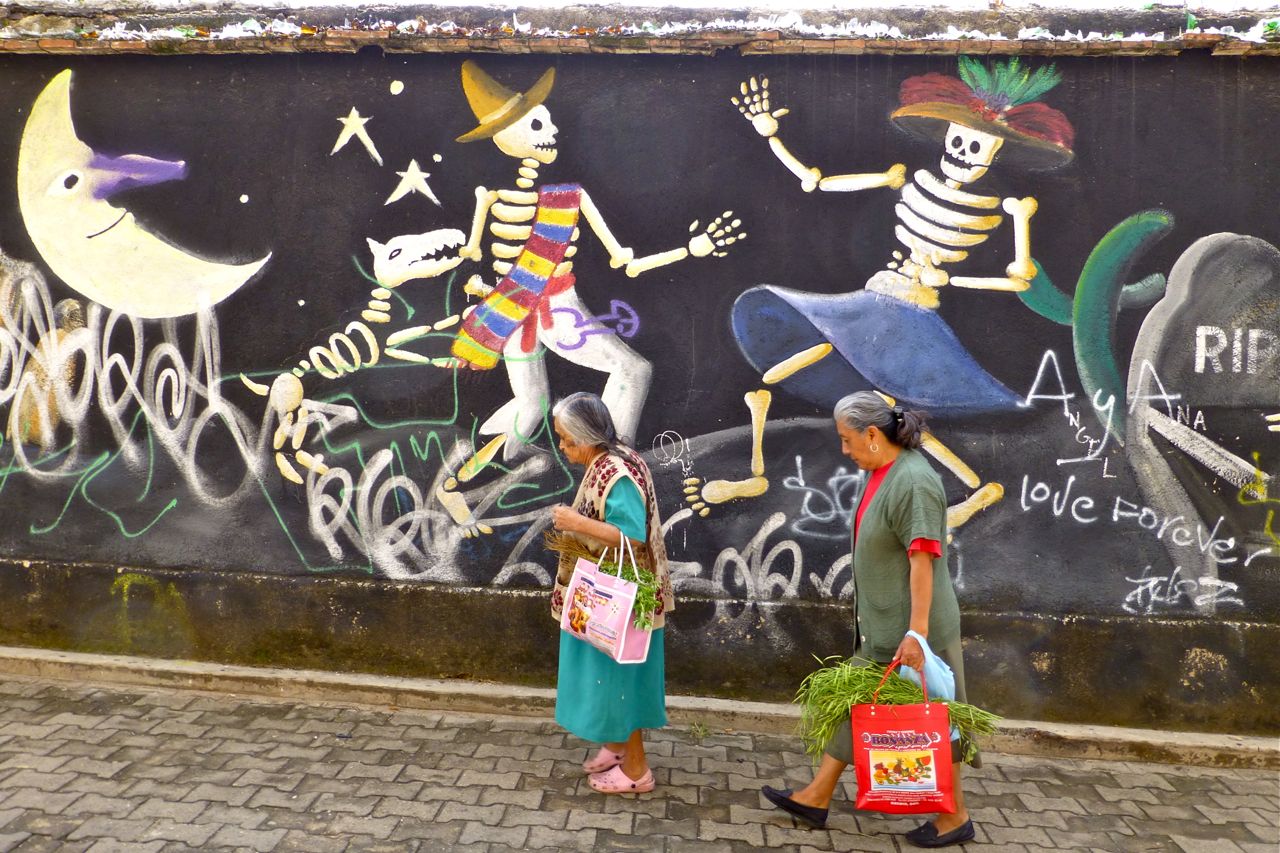
2 women in front of mural with2 dancing skeletons

Aren’t we all?

Read Full Post »

It’s been a great visit to Mill Valley, California, the town where I grew up and lived most of my life.   But, I’m ready to return to Oaxaca.  However, besides differences in latitude and attitude, there is much they have in common.

There are sculptures in public places (click on each to enlarge image)…

There are murals…

There are depictions of aquatic animals…

AND, there are signs reminding drivers to wait and take turns.  Remember my What’s easy??? post from last week?  Look what just went up in Mill Valley.  Discourteous drivers know no boundaries!

Rather than dwelling on the differences — which I did when I first began living this dual-country life — I now choose to appreciate the similarities.  Of course it doesn’t hurt that both places are situated in beautiful settings, fresh fruits and vegetables abound, have relatively mild climates, and an appreciation for the arts.

And so… I bid a fond “adiós” to Mill Valley and “hola” to Oaxaca.

Read Full Post »

What a game; three goals in 10 minutes in the second half!!!   Another thrilling win by El Tri advances Mexico to the next stage in World Cup 2014.  They struggled and needed a little help from their “friends” in el norte to even play in Brazil.  However, against all odds, this team exhibits a gutsy and tenacious heart and soul that can’t help but have people rooting for them — much like the country of Mexico, itself.

Mural under fútbol stadium in Oaxaca - Dec. 2012

Mural under fútbol stadium in Oaxaca – Dec. 2012

Francisco Goldman wrote an op-ed in yesterday’s New York Times.  His article, “Fooling Mexican Fans,” relates the current politics of Mexico, the “bread and circuses” diversion of the World Cup, and the notion that El Tri might exemplify all that is inspiring and hopeful in the Mexican national character.

Goldman’s op-ed begins…

The day before the Mexican soccer team’s thrilling underdog tie with the World Cup favorite, Brazil, last week, the lead editorial of the news site SinEmbargo was titled, “Ready for your Clamato and Gatorade?” — common hangover remedies. “In about three weeks, when you wake from your World Cup dreams,” the editors wrote, “remember that when the soccer fest began, the country was on the verge of monumental decisions. If upon waking, you realize that the country’s energy reserves have been cheaply sold off or whatever else, don’t bother protesting because this is a chronicle foretold.”

To debate and pass laws that could open Pemex, the nationalized oil company, to foreign investment, the Mexican Congress scheduled legislative sessions from June 10 to 23, dates precisely coinciding with you know what. Final passage might be pushed back, but it originally looked like it was supposed to happen on Monday, when Mexico plays Croatia to decide which country advances to the elimination rounds.

As I wrote previously, Mexicans have been Expressing the outrage since last year, when Mexico’s newly elected president Enrique Peña Nieto (initials EPN), from the PRI party, first made the Pemex energy “reform” proposal.
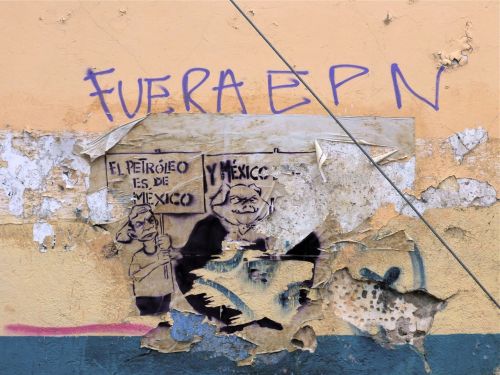
Graffiti seen on a wall south of Oaxaca's zócalo, May 23, 2014.

Graffiti seen on a wall south of Oaxaca’s zócalo, May 23, 2014. 

Goldman goes on to discuss this and other “reforms,” the role of the PRI, and the current overall political climate in Mexico.  However, as dismal as it all sounds, he ends on a hopeful note…

There has been much talk lately about the way the style of soccer teams manifests national characters. I don’t know if that’s true. But when I look at the Mexican team which, after barely even qualifying for the World Cup, has been playing so well, I see a team without stars — a gritty, hard-working, pretty humble, resourceful, creative, disciplined, joyous, friendly-seeming group of players who seem to be learning to play the game as it is meant to be played.

These are values that we see enacted and re-enacted all over Mexico, and in Mexican communities elsewhere, every day. Someday Mexico will get another chance to vote the PRI away and to restart the long process of building the country from the ground up. It could do worse than take some inspiration from its national team.

Absolutely, those are the values I, too, see exhibited in Mexican communities both in Mexico and the US.  There is hope for the future — and not just on the pitch!   I encourage you to read Goldman’s op-ed in full.  In the meantime, Mexico vs. Netherlands on Sunday at Estadio Castelao Forteleza.  ¡¡¡ VAMOS EL TRI !!!

h/t K Hackbarth for the article

Read Full Post »

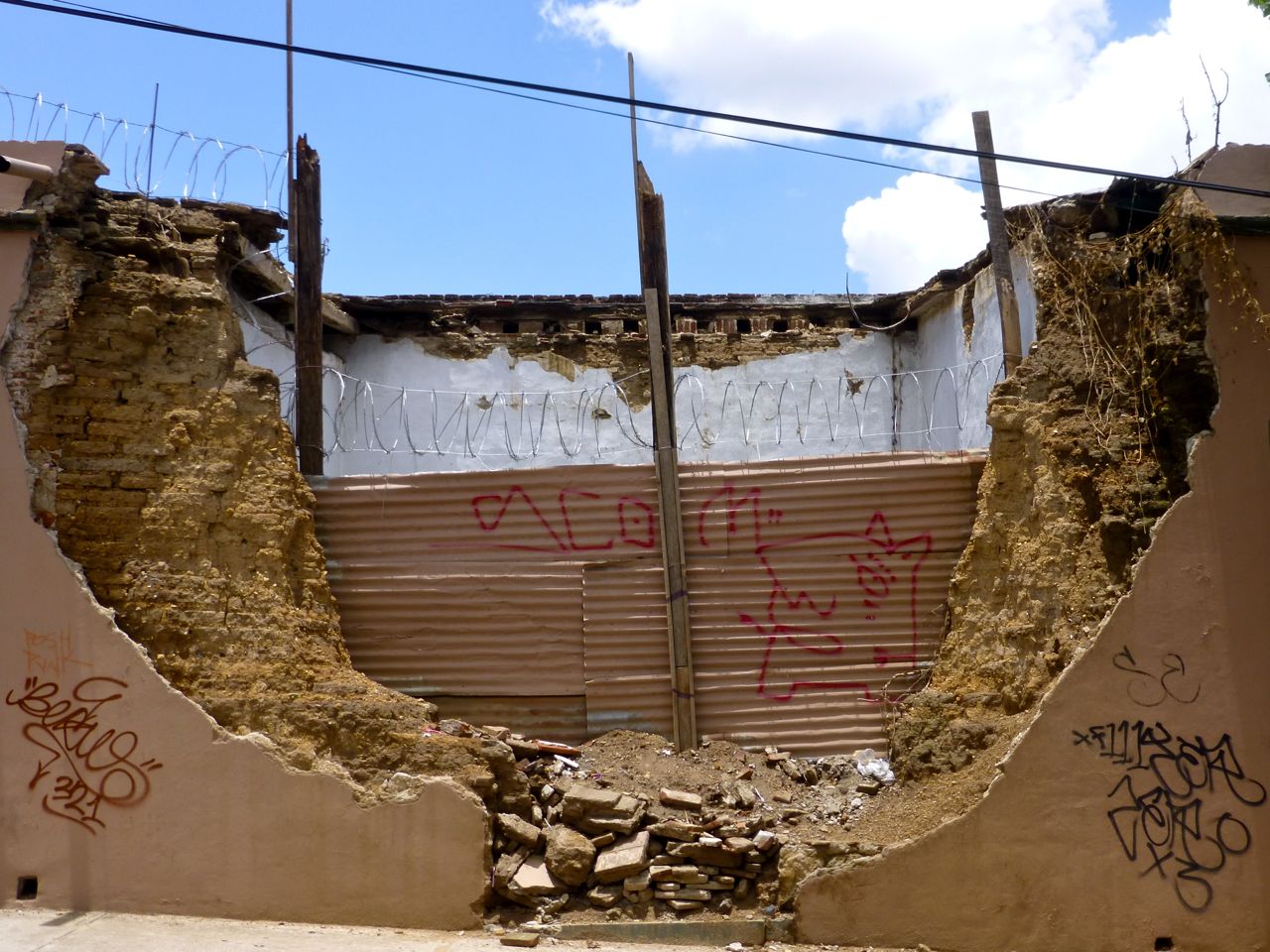
The “buildings in a bad state” in Oaxaca continue to multiply.

crumbling adobe wall with sign "precaución! inmueble en mal estado"

Where some see unsightly decay, others see opportunity…

Crumbling adoble & brick wall with graffiti, "This is a good spot"

including urban artist, SCOM.

Crumbling adobe wall with graffiti creature by SCOM

Read Full Post »
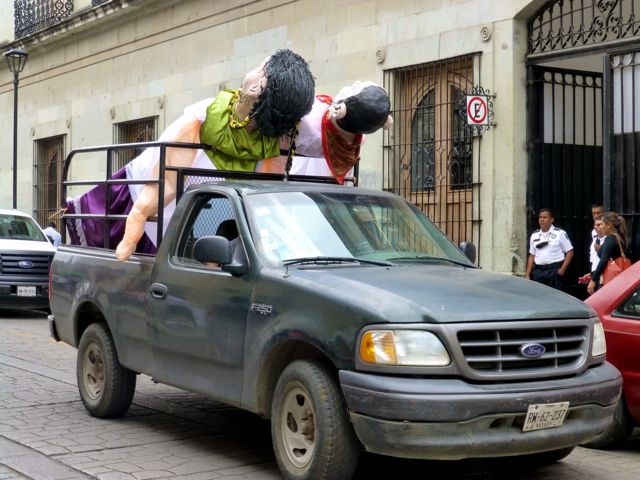
Yesterday, I was walking along calle de Flores Magón, and what to my wondering eyes did appear?

Pickup truck with 2 monos in back

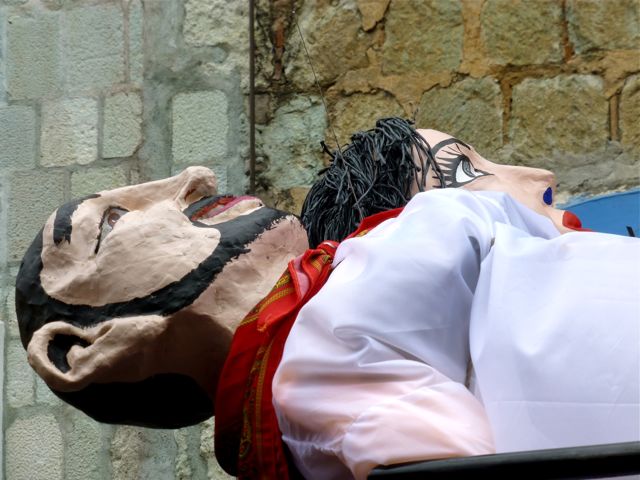
Husband and wife?  Novia y novio??  “Just” friends???

Female mono laying in back of pickup gtruck

I’ve got to say, they looked rather stiff and not very comfortable.  Hope their trip was a short one!

Heads of male and female monos in back of truck

By the way, if you want to read a little about my journey to Oaxaca and expat life, Expat Blog recently published an interview with me, American Expat Living in Mexico – Interview with Shannon.  There is even a photo of a couple of monos supervising a banda.  Perhaps friends of the above???

Read Full Post »

The only true voyage of discovery, the only fountain of Eternal Youth, would be not to visit strange lands but to possess other eyes…  —Marcel Proust 

He to whom this emotion is a stranger, who can no longer pause to wonder and stand rapt in awe, is as good as dead: his eyes are closed.  —Albert Einstein 

Open your eyes, look within: Are you satisfied with the life you’re living?  —Bob Marley 

Eyes looking out on the world from the mural on Tinoco y Palacios, between Vasconcelos and Niños Heroes.

Read Full Post »

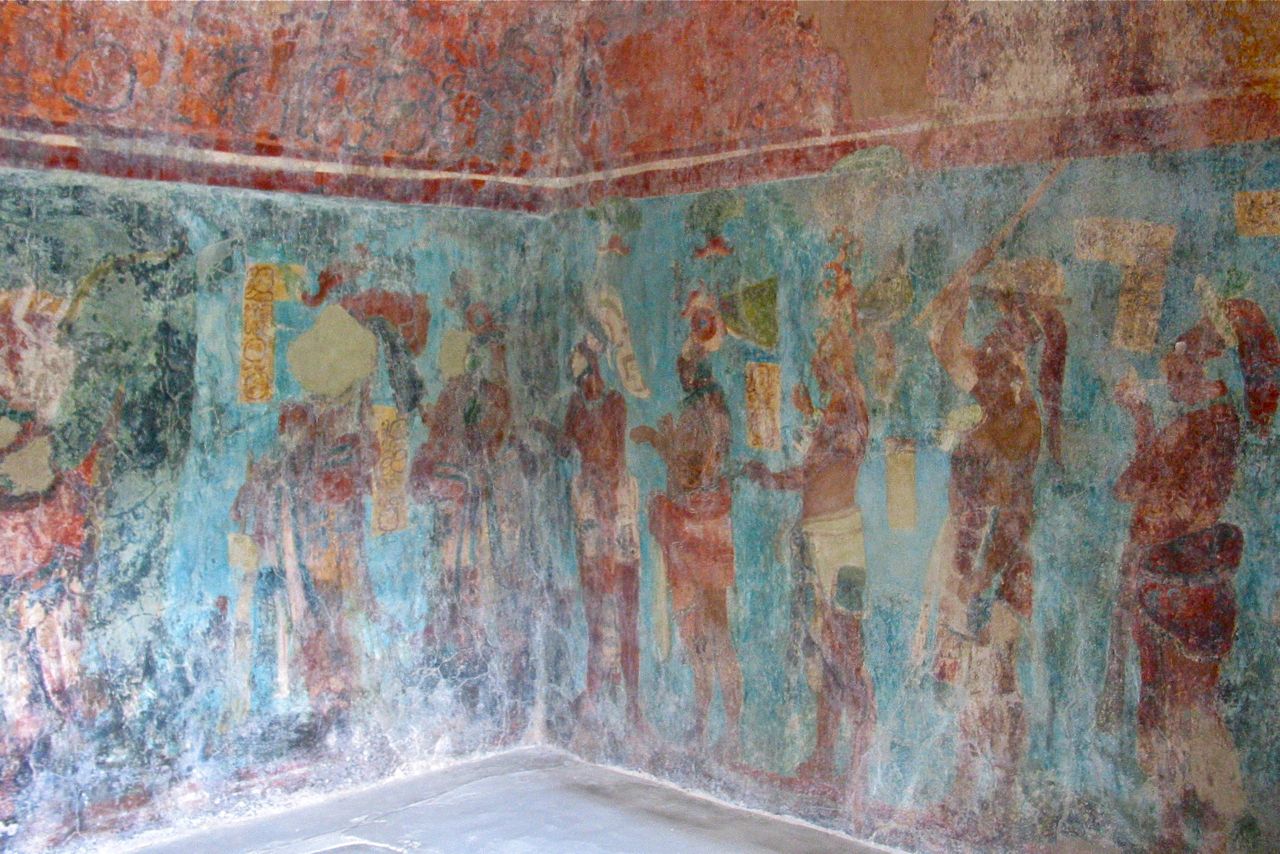
Mexico has a long and important place in the history of communication through murals — from stories related by pre-Hispanic civilizations…

Maya fresco circa 790 C.E. - Bonampak, Chiapas

Maya fresco circa 790 C.E. – Bonampak, Chiapas.

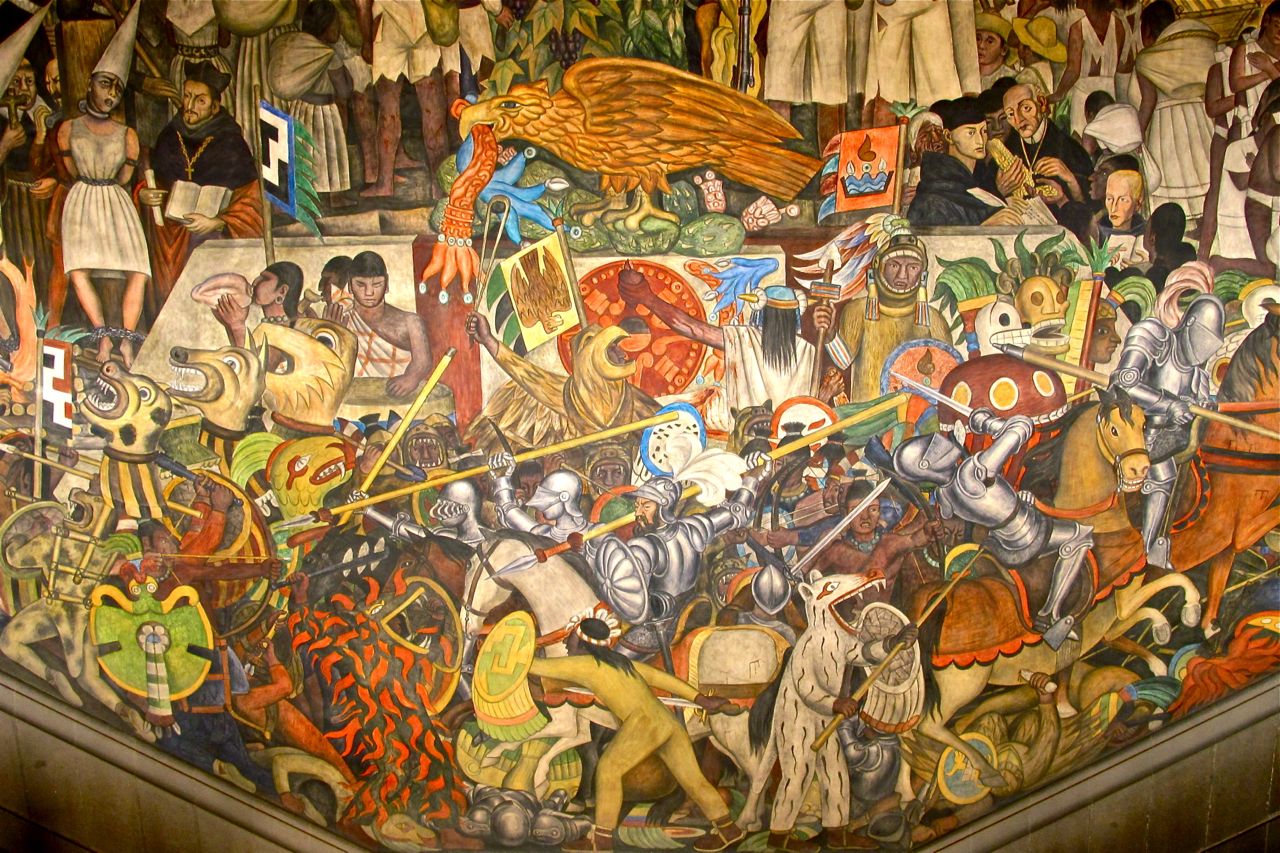
through the world-renowned and influential Mexican muralists of the twentieth century:  Orozco, Rivera, Siqueiros, and others.

History of Mexico by Diego Rivera, 1931 - National Palace, Mexico City.

History of Mexico by Diego Rivera, 1931 – National Palace, Mexico City.

And, as many of you know, murals on the walls of Oaxaca are part of the urban landscape, authorized or not, like them or not, they celebrate…

One of the murals in the pedestrian tunnel to the Guelaguetza auditorium.

One of several murals in the pedestrian tunnel to the Guelaguetza auditorium in Oaxaca city.

educate…

San Antonino Castillo Velasco, Oaxaca.

San Antonino Castillo Velasco, Oaxaca.

reveal past and present — and hopes and fears for the future.

Calle Tinoco y Palacios, between Vasconcelos and Niños Héroes.

Calle Tinoco y Palacios, between Vasconcelos and Niños Héroes, Oaxaca city.

Those found on the streets we expect to be ephemeral, but commissioned work, both inside and outside of buildings, we hope would have a longer and more permanent lifespan.  Of course, the Rockefeller family’s destruction of Diego Rivera’s Rockefeller Center mural showed differently.  And, more recently, my friend and artist, Mike Alewitz experienced the obliteration of his mural on the side of the Pathfinder Building, also in New York.  Both were instances of political differences and, while distressing, perhaps not too surprising.

However, today Mike is leading a battle in defense of his students’ murals.  According to NBC Connecticut:

Central Connecticut State University (CCSU) has built up one of the largest mural collections in the country since the program started in 2001. But Professor Mike Alewitz, who oversees CCSU’s mural painting program, said that collection is at risk.

The school has painted over six of the murals without notice and plans to do the same with another 12, Alewitz said Richard Bachoo, director of operations, confirmed. He said he hopes an appeal to the university and community support will protect the remaining murals.

“It made them feel part of the larger world, that they weren’t looking at blank walls inside an institution, but they were looking at the hopes and dreams of young people,” Alewitz said. “We found out that 18 murals were scheduled to be destroyed.”

<snip>

He says in the 14 years the mural program has existed, the policy has never been implemented in this way. Alewitz said in a statement that this is “the largest destruction of public art in recent history.” While administrators have removed murals in the past, they normally consult with the art department first, he said.

“The real policy has been that people love the murals, so when they’ve been painted, they’ve stayed up,” Alewitz said.

Oaxaca would lose much of her character and lessons would be lost, if we were to wake one morning and find all her murals disappeared.  The story is the same at CCSU.  For the full article, click HERETo send messages of protest and to see some of the amazing student murals that enliven the walls and stimulate thinking at CCSU but are slated for destruction, click HERE.  And, Why Bureaucrats Fear Art, is a letter to students and fellow artists, by Mike Alewitz.

Read Full Post »
« Newer Posts - Older Posts »