As 2025 moves from the front windshield to the rear view mirror, instead of focusing on the (metaphoric) traffic nightmares of speed demons, red light runners, and auto wrecks that can lead to what Reading the Pictures refers to as “carnage fatigue,” I’d like to follow their example and look back at those experiences and sights that brought me joy — my “rebuke to narcissism and the cult of personality [preferring] togetherness as the new order.”
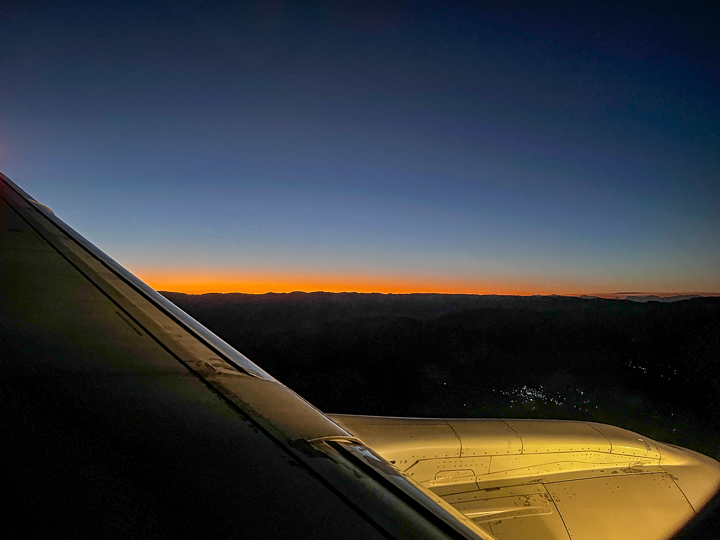
January 2025 – After a one year absence, returning to my Oaxaca community.
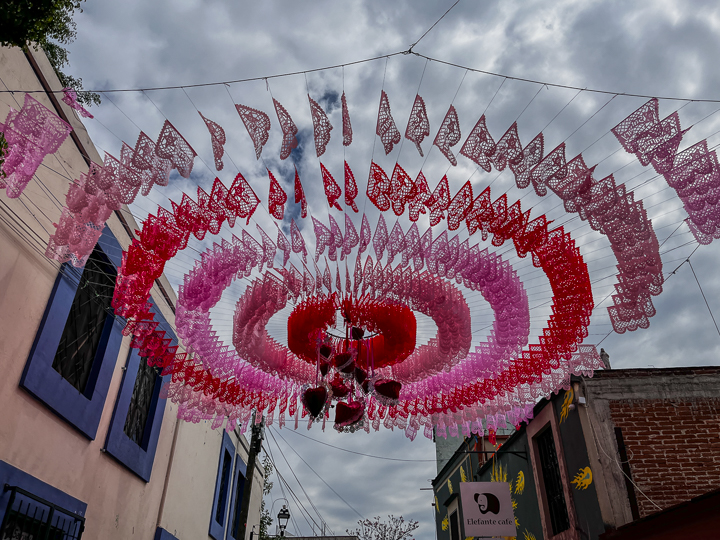
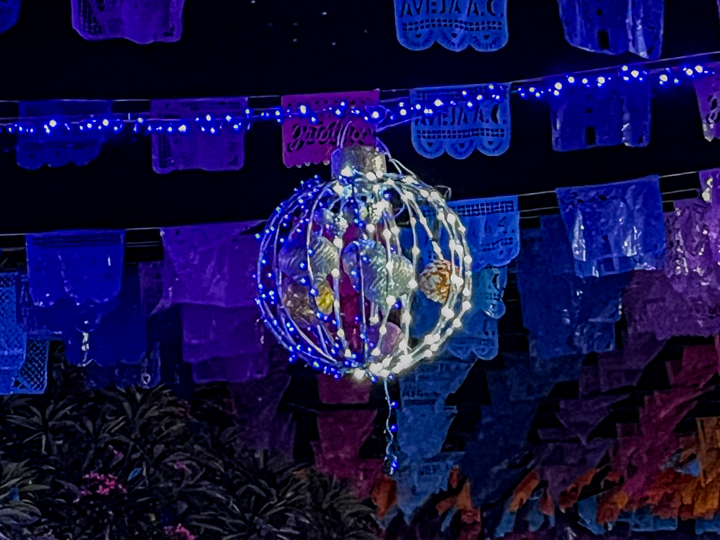
February 2025 – El Día del Amor y la Amistad (Valentine’s Day) decorations in my Jalatlaco neighborhood.
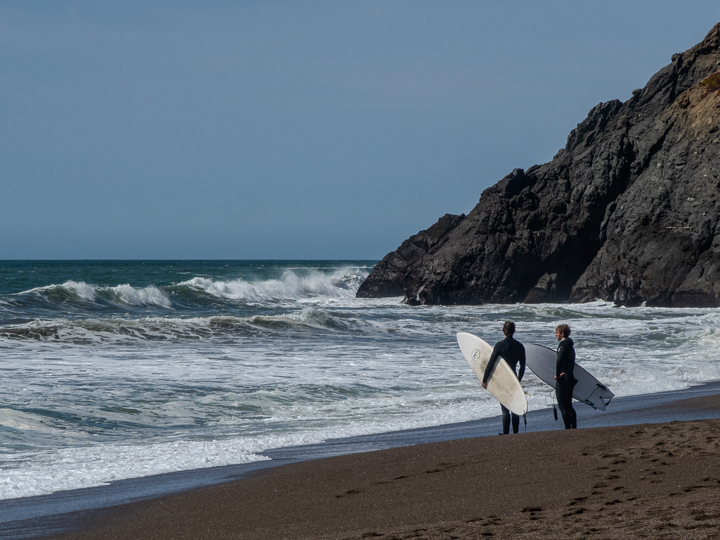
March 2025 – Back to the San Francisco Bay Area and a chilly, but stunning day on the Marin Headlands at Rodeo Beach with a best friend since age 12.
April 2025 – Taking part in the nationwide and massive “Hands Off” protests at the Marin Civic Center.
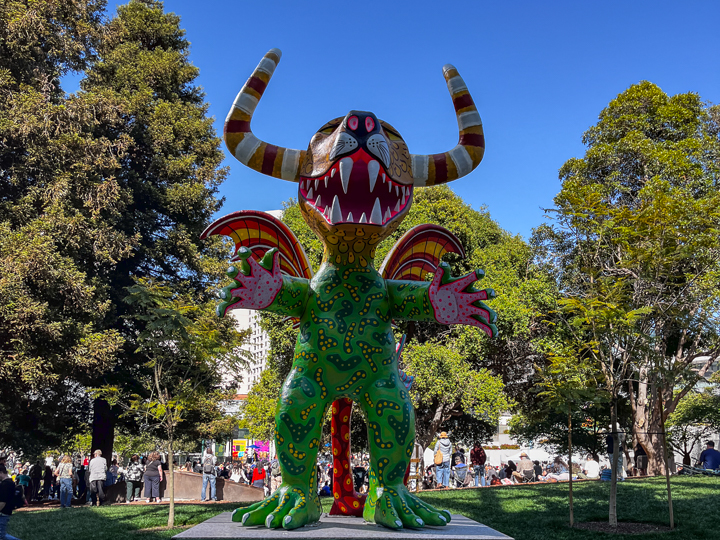
May 2025 – Attending La Santa Cecilia free concert in San Francisco’s Yerba Buena Gardens and being surrounded by enlarged replicas of alebrijes by Oaxacan artisans.
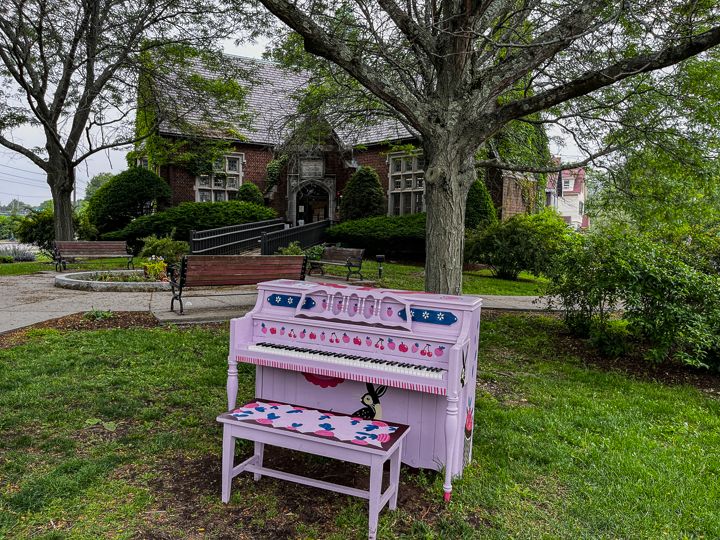
May 2025 – During my East Coast trip to visit family and friends, I stumbled on one of the Newton Artful Pianos in front of the Auburndale Public Library in Massachusetts.
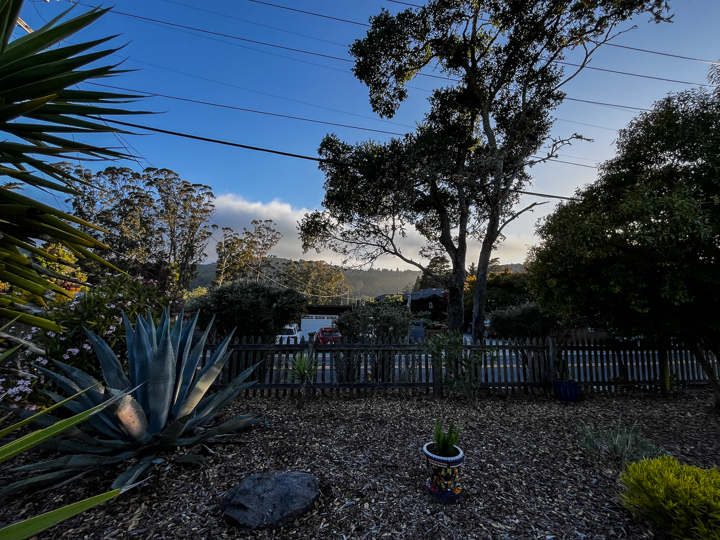
July 2025 – Back in my childhood home watching the fog roll in.
August 2025 – And, then there were the occasional dramatic sunsets — sometimes rivaling those of Oaxaca.
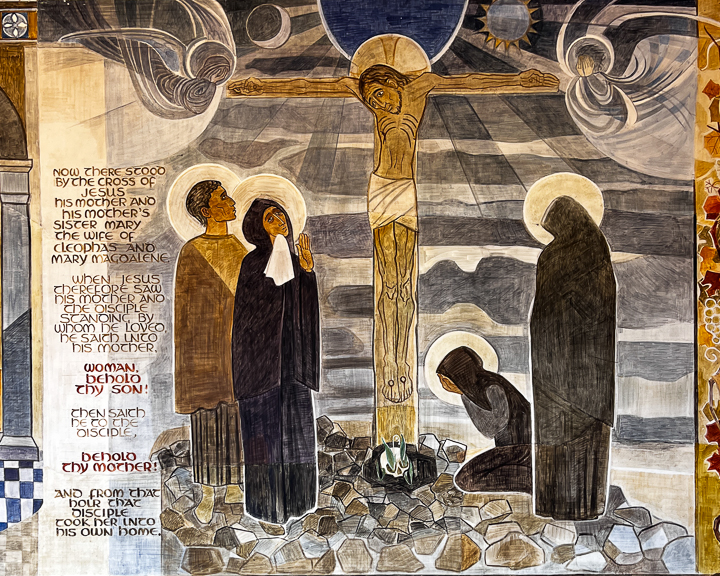
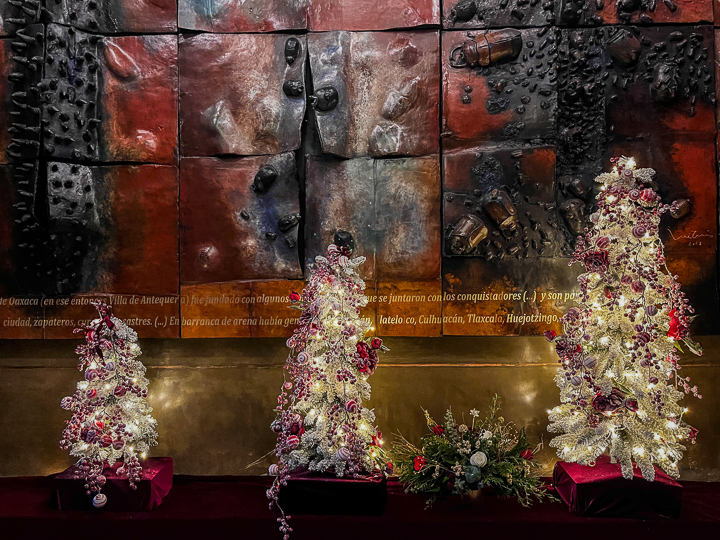
September 2025 – Walking around San Francisco with a Oaxaca/SF gal pal, we came upon a beautiful and massive mural by Lucienne Bloch in the atrium of Episcopal Church of St. Mary the Virgin.
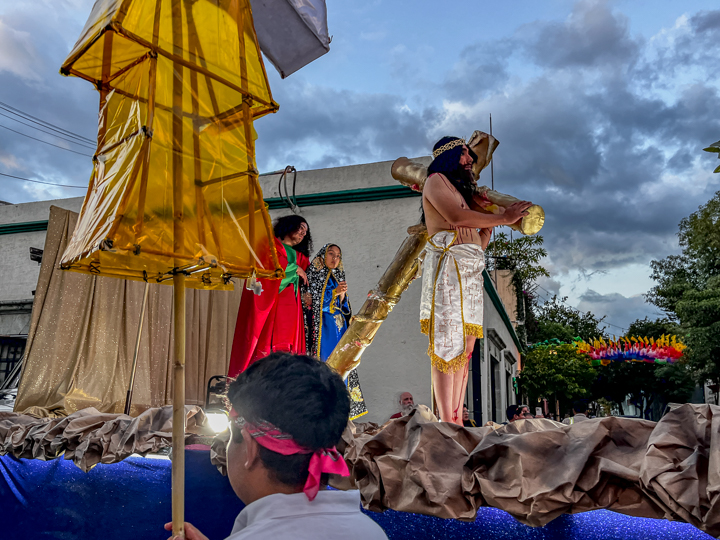
October 2025 – Back in Oaxaca, turning a corner and finding a calenda in honor of el Señor del Rayo filling the street.
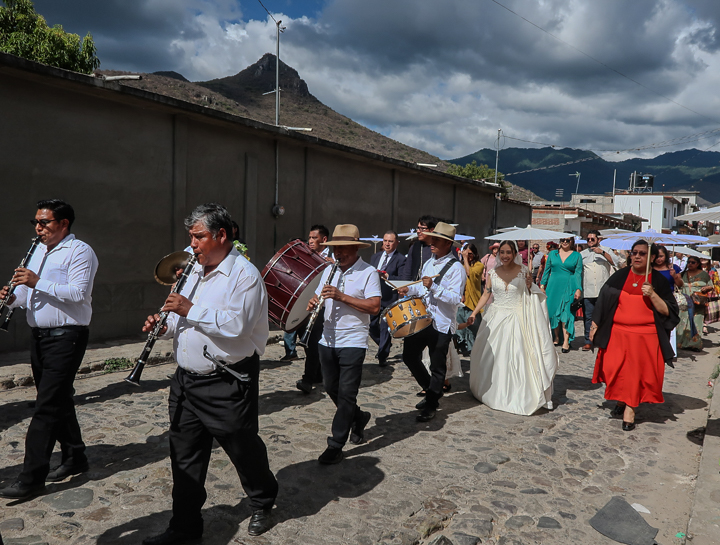
November 2025 – Being part of the wedding procession of dear friends in Teotitlán del Valle.
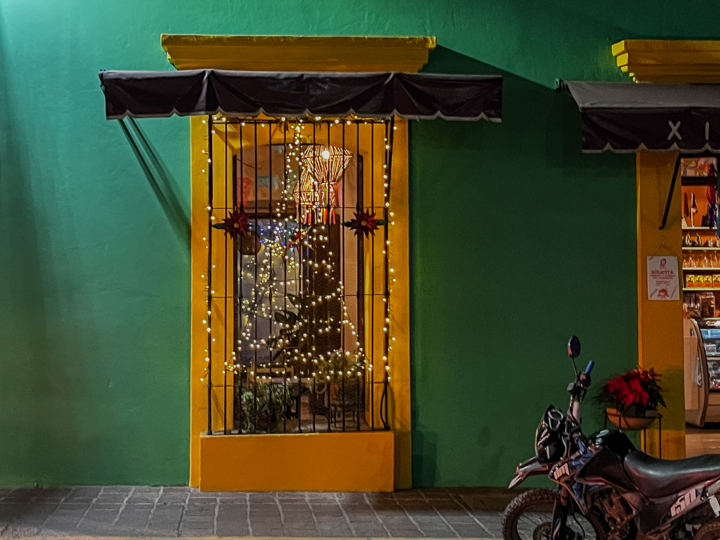
December 2025 – Christmas decorations in the window of Xiguela Café in Barrio de Jalatlaco.
¡Feliz Año Nuevo! My wish for 2026 is that you experience many moments of joy and they help sustain and embolden you through the greed-fueled chaos that tries to engulf and silence us. Muchisimas gracias for reading!
‘Twas the night before Christmas and I’m again spending it with family and old friends in my childhood home in California. However, Oaxaca is never far from my thoughts. And, Navidad decorations were already in evidence before I flew north to California earlier this month.
May “Pancho Claus” by Chicano music legend, Eduardo “Lalo” Guerrero, bring the gift of laughter and joy to those near and far on this Nochebuena.
Pancho Claus
‘Twas the night before Christmas and all through la casa Not a creature was stirring, Caramba! ¿Que pasa?
Los ninos were all tucked away in their camas, Some in vestidos and some in pajamas. While Mama worked late in her little cocina, El viejo was down at the corner cantina.
The stockings were hanging con mucho cuidado, In hopes that St. Nicholas would feel obligado To bring all the children, both buenos y malos, A Nice batch of dulces and other regalos.
Outside in the yard, there arouse such a grito, That I jumped to my feet, like a frightened cabrito.
I went to the window and looked out afuera, And who in the world, do you think que era?
Saint Nick in a sleigh and a big red sombrero Came dashing along like a crazy bombero!
And pulling his sleigh instead of venados, Were eight little burros approaching volados.
I watched as they came, and this little hombre Was shouting and whistling and calling by nombre.
Then standing erect with his hand on his pecho He flew to the top of our very own techo. With his round little belly like a bowl of jalea, He struggled to squeeze down our old chimenea.
Then huffing and puffing, at last in our sala, With soot smeared all over his red suit de gala.
He filled the stockings with lovely regalos, For none of the children had been very malos.
Then chuckling aloud and seeming contento, He turned like a flash and was gone like the viento.
And I heard him exclaim and this is VERDAD, Merry Christmas to all, And to all ¡Feliz Navidad!
Entry of Asador Bacanora Oaxaca restaurant.
Felices fiestas to all my wonderful readers and to Oaxaca — for being so warm and welcoming to me for sixteen (and counting) years!
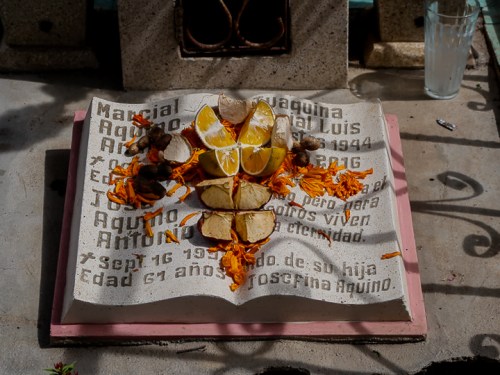
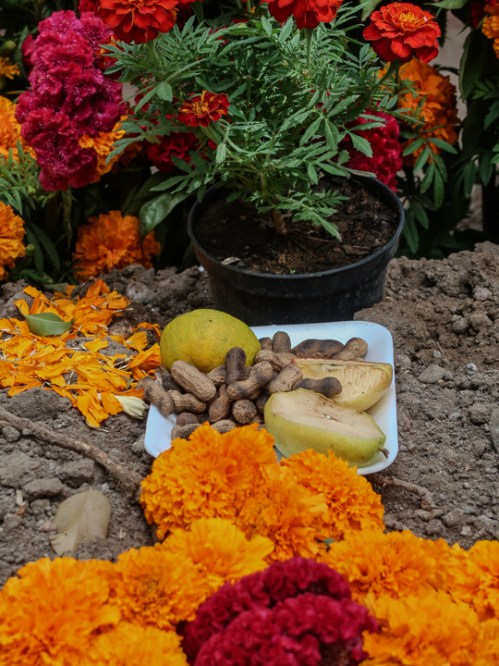
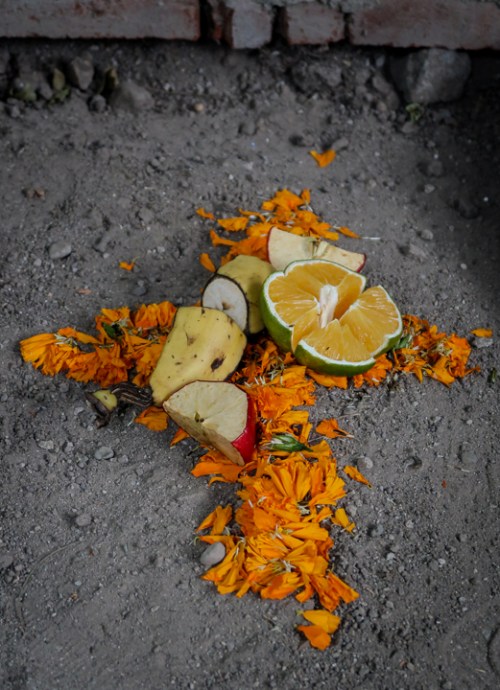
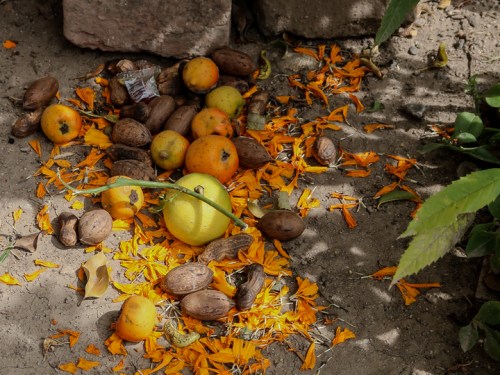
During Día de Muertos (Day of the Dead), under the sun dappled light filtering through graceful several centuries old ahuehuete trees in the panteón of Tlacolula de Matamoros, the living offer the scent of cempasúchil (marigolds) to guide their departed home. And, to nourish them during their journey between the worlds of the living and the dead, fruit (thoughtfully opened), along with nuts and beverages are provided.
The fruit and flowers during Día de Muertos also beckon me to this Zapotec village in the Valley of Oaxaca and they nourish my soul.
The Zapotec village of San Antonino Castillo Velasco is known for its flowers. Their difuntos (departed) await them on November 3, as they understand their living loved ones have been occupied in providing flowers to decorate the altars and graves of neighboring villages in the valley of Oaxaca. I returned yesterday and my senses were filled with the beauty and aroma. However, as I was carefully navigating a winding route among the tumbas to leave, the sound of a lone saxophone beckoned me.
And, I was overcome with gratitude for the privilege of being present to experience that time and that place.
A few days ago, I completed my Día de Muertos shopping — mandarinas (mandarin oranges), manzanas (apples), cempasuchil (marigolds), cresta de gallo (cockscomb), chocolate, and pan de muerto (Day of the Dead bread), thus allowing construction of my ofrenda to begin. I unwrapped photographs of my parents, grandparents, and extended family members; selected some of their favorite things to put on my ofrenda; placed fruit, nuts, bread, and chocolate among the photos; positioned candles, flowers, and incense; and poured my departed a copita (little cup) of water and another of mezcal.
Tonight, the candles and incense have been lit — all to beckon, entertain, and sustain my departed during their brief stay. However, this year, because Muertos falls on the weekend, I choose to believe, like the folks in Teotitlán del Valle, that my loved ones will being staying for 48 hours instead of only 24 hours.
An ofrenda is an offering and I’m hoping my very dearly departed, after their long journey to southern Mexico, will find it warm, welcoming, and nourishing.
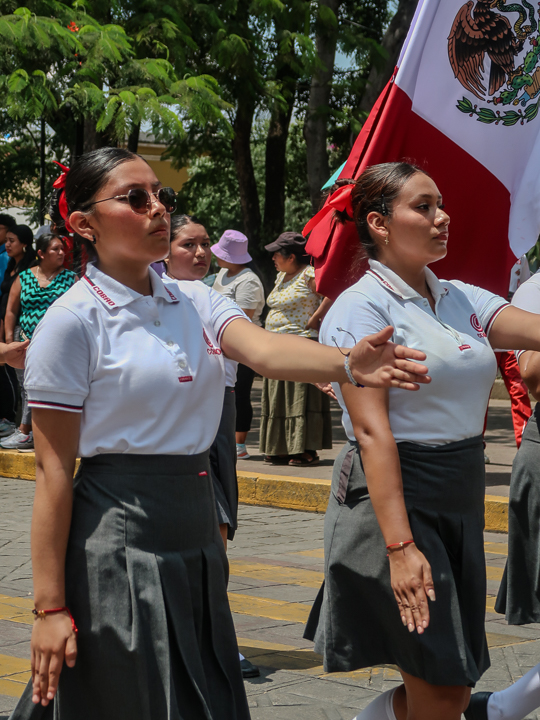
Tonight, El Grito de Dolores, also known as El Grito de la Independencia (the Shout of Independence), will echo from the balconies of government buildings throughout Mexico. Mayors, governors, and La Presidenta Claudia Sheinbaum Pardo, Mexico’s first female president, will re-enact Don Miguel Hidalgo y Costilla’s 1810 call to arms (with a lot of improvisation) that announced the start of a ten-year long war for independence from Spain. Bells will chime, the flag will be waved, the Himno Naciónal will play, fireworks will explode, and the gathered crowd will, no doubt, be bursting with pride. Tomorrow, September 16, Día de la Independencia, patriotic parades will take over the major streets of cities and towns of Mexico.
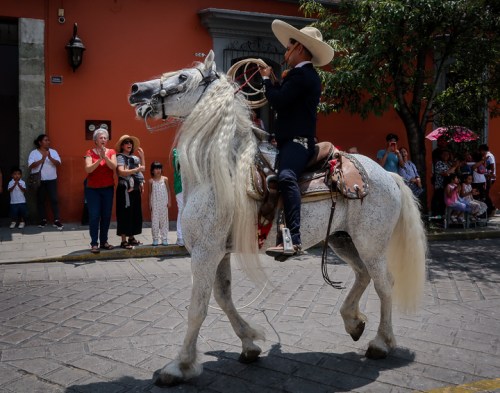
However, this year, l’m in el norte and won’t be standing on a sidewalk in Oaxaca watching the parade pass me by. These photos from Mexican Independence Day 2023 of marching bands, forestry students, search and rescue organizations, nurses, military, police, and more will have to suffice. (Click on images to enlarge.)
To close the parade, my favorites, escaramuzas and charros riding their magnificent horses.
Whether you are currently in Oaxaca or, like me, thousands of miles away, you can watch La Guelaguetza 2025. The 10:00 AM and 5:00 PM performances on July 21 and July 28, 2025 are being live streamed on the Guelaguetza Oficial Facebook page, CORTV, and Guelaguetza 2025 YouTube channel. (Note: Most of Mexico, including Oaxaca, does NOT observe daylight savings time.)
Ah, Oaxaca. Another year, another birthday. Today, marks the 493rd anniversary of the elevation Oaxaca de Juárez to the rank of a city by Charles V of Spain. It was a political move by villagers to keep Antequera, as it was then called, out the hands of the Marquis, Hernán Cortes, who controlled the surrounding territory and villages. And, in honor of her birthday, I’m posting some of my favorite recent Oaxaca sights.
Barbacoa Caprino outside Mercado de la Merced on a Sunday morning.
Outside wall of Galindo Laboratory on Constitución at the corner of Benito Juárez.
Street sweeper (barrendero), with his handmade twig brooms, navigating Calzada de la República.
Looking down on the Alameda de León from the Biblioteca Beatriz de la Fuente.
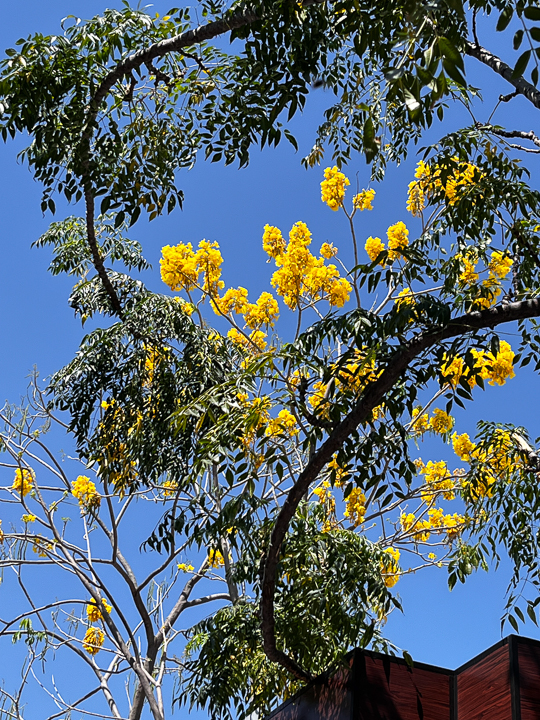
Looking up at the flowers of a Guayacán, also known as árbol de la primavera (tree of spring).
Courtyard of the Museo de las Culturas de Oaxaca in the ex Convento de Santo Domingo de Guzmán.
Of course, we know Oaxaca’s history goes back thousands of years before Spain even existed. Her past is still present and that’s one of the things I love most about Oaxaca.
From the west came Pontius Pilate, the Roman governor, riding a warhorse and flanked by armed soldiers bedecked in the full pageantry of an oppressive empire. Every year during Passover, a Jewish festival celebrating liberation from Egyptian oppression and slavery, Pilate entered Jerusalem to suppress any unrest set off by that memory.
His arrival wasn’t ceremonial; it was tactical — a calculated show of force, what the Pentagon might now call “shock and awe.” It displayed not only Rome’s power but also Rome’s theology. Caesar was not just the emperor; he was deified and called “Son of a God” on coins and inscriptions. His rule was absolute, and the peace it promised came through coercion, domination and the threat of violence.
From the opposite direction, both literally and figuratively, came Jesus’ procession.
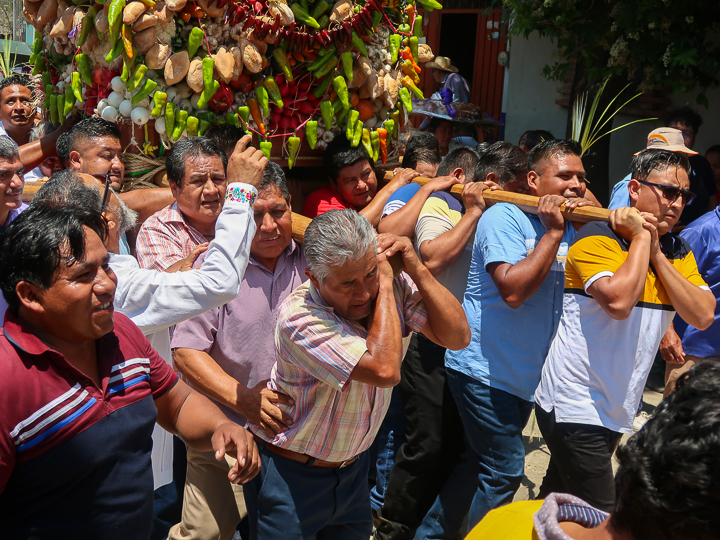
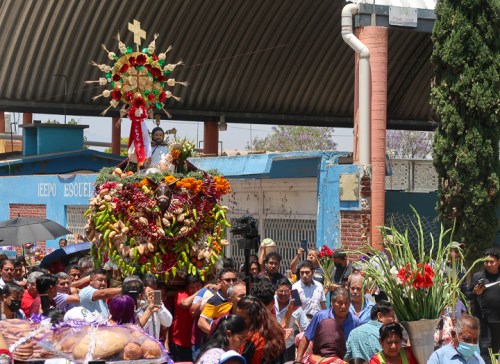
Jesús, known as San Salvador, atop a donkey festooned with the most succulent fruits, vegetables, and breads outside the panteón in San Antonino Castillo Velasco.
It takes thirty men to carry the laden San Salvador and his burro.
Jesus entered the city not on a warhorse but on a donkey, not with battalions but with beggars. His followers were peasants, fishermen, women and children — people without standing or status. They waved palm branches — symbols of Jewish resistance to occupation since the Maccabean revolt — and cried out “Hosanna!” which means “Save us.” Save us from a system of oppression disguised as order. Save us from those who tacitly endorse greed with pious language and prayers.
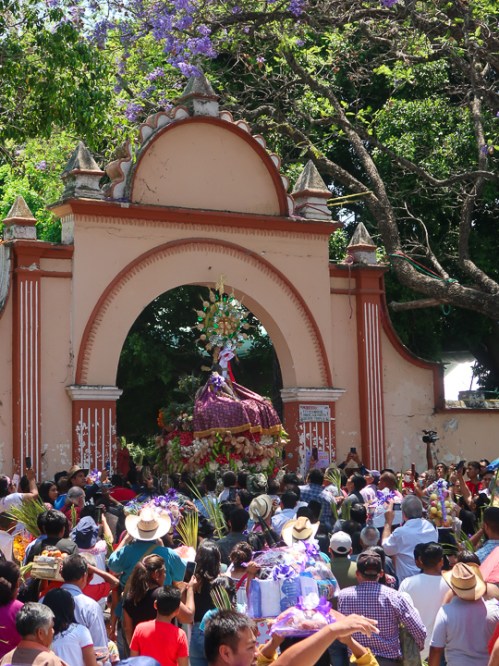
Villagers begin the procession to bring the best of their fruits, vegetables, herbs, livestock, clothing, flowers, and much more as offerings to be sold to raise money for a designated charitable project.
The procession continues along the kilometer route from the panteón to the church.
San Salvador entering the church atrium where he takes his place of honor on a stage set up for the outdoor Palm Sunday mass.
Year-after-year, despite the challenges of life, on Palm Sunday I have been uplifted by the warmth, generosity and devotion of the people of San Antonino Castillo Velasco. Alas, it’s been two years since I have had this privilege and must content myself with looking through my photos from 2023.
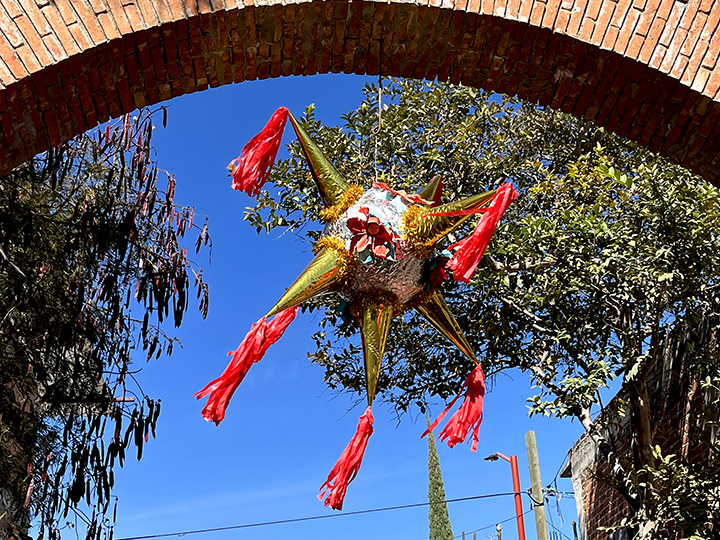
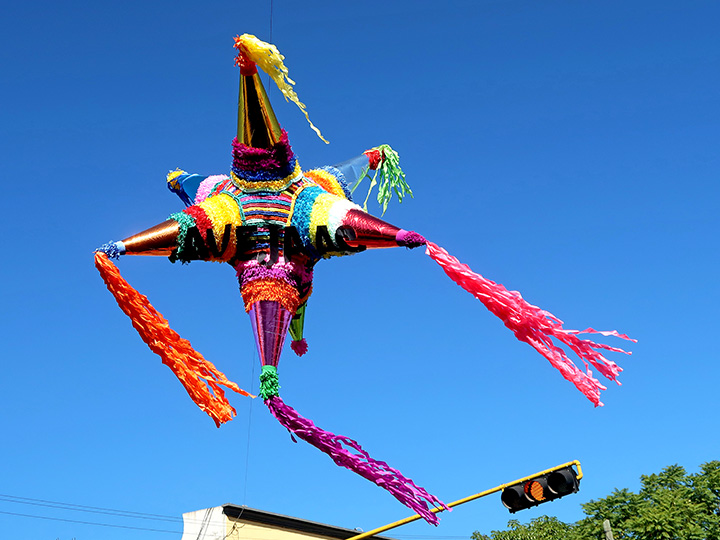
Although I’m spending Christmas in the San Francisco Bay Area with family, I’m dreaming Oaxaca holiday dreams of piñatas, often seemingly floating in air. [click on images to enlarge]
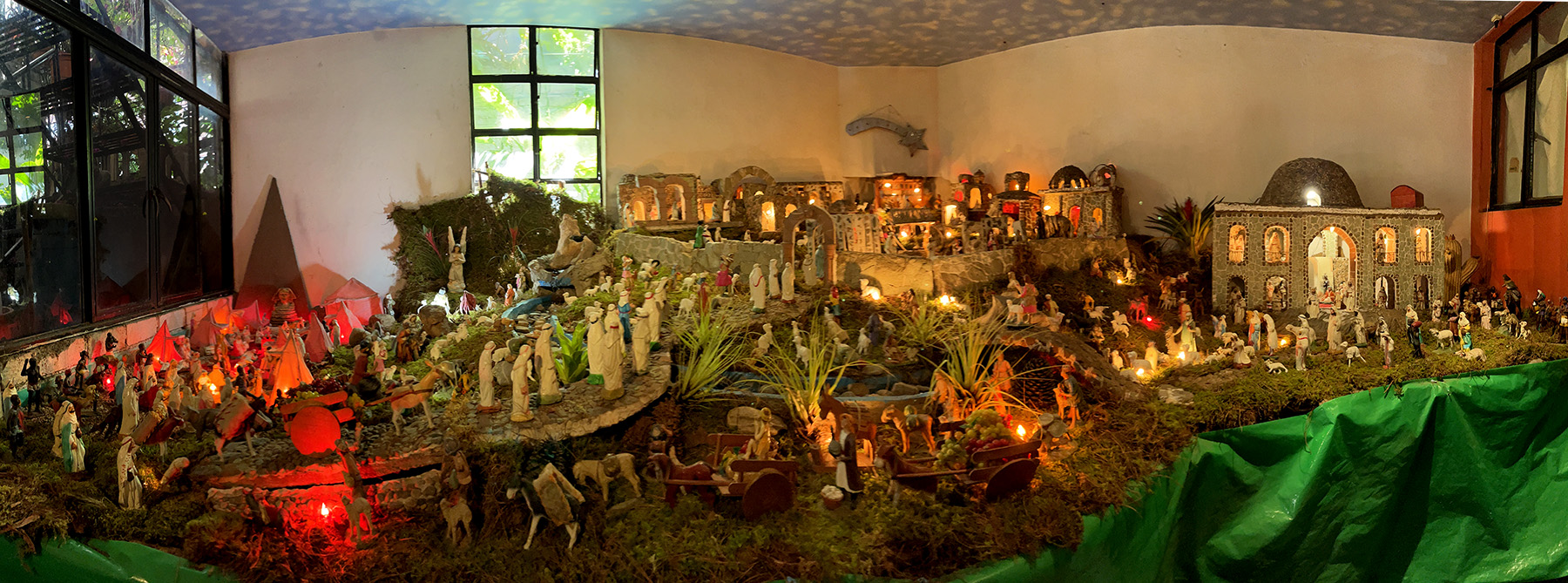
Nacimientos (Nativity scenes) and neighborhood posadas, at once solemn and joyful.
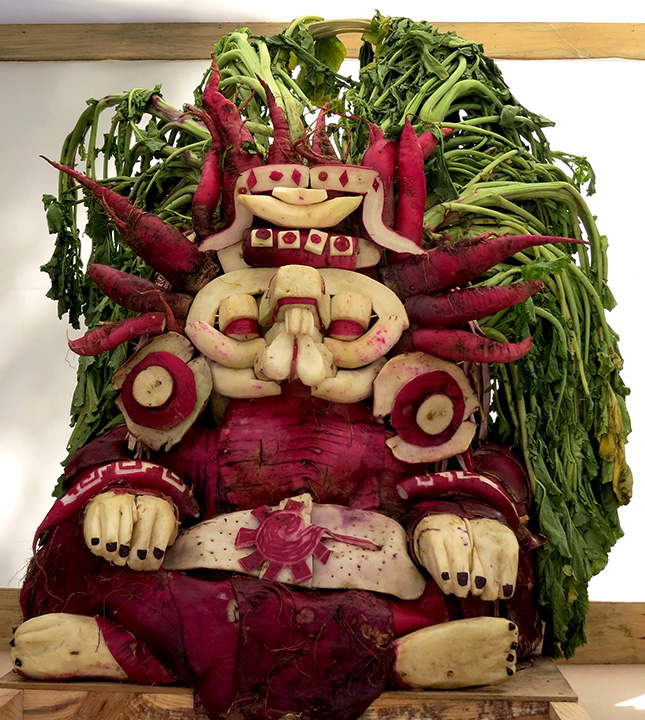
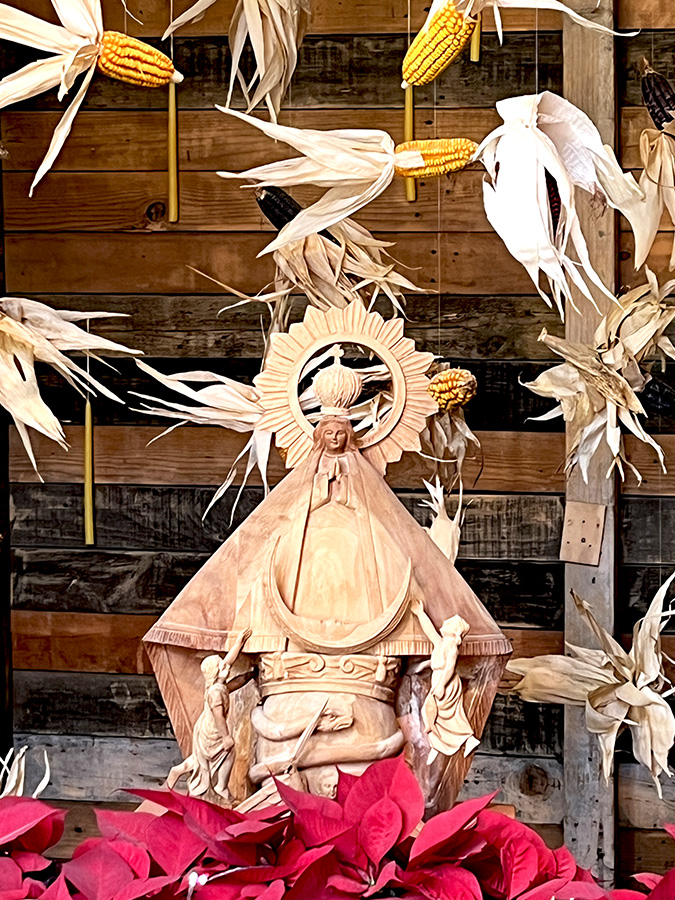
And, the wild and whacky rabanos (radishes), totomoxtle (corn husk), and flor inmortal (dried flower) creations on December 23, Noche de Rábanos (Night of the Radishes).
Thus, after a year’s hiatus, I’m reviving my Nochebuena tradition and presenting to you, “Pancho Claus” by Chicano musical legend Eduardo “Lalo” Guerrero and sung by Irma Garza. The song is a delightful parody of the Clement C. Moore classic, “‘Twas the Night Before Christmas” — and it has inspired real life Tex-Mex Santas. I hope it brings a chuckle or two on this Christmas Eve.
‘Twas the night before Christmas and all through the casa
Mama she was busy preparing the masa
To make the tamales for the tamalada
And all the ingredients for the enchiladas

Papa in the front room with all the muchachas
Was dancing the mambo and doing the cha cha
My brothers and sisters were out in the hall
Listening to Elvis singing rock ‘n roll

When all of a sudden there came such a racket
I jumped out of bed and I put on my jacket
I looked out the window and in front of the house
Was my old uncle Pedro as drunk as a louse
He ran in the casa he grabbed the guitarra
He let out a yell and played “Guadalajara”

I was starting to wonder as I lay there alone
How old Santa Claus was to visit my home
With all of this noise they would scare him away
When all of a sudden I hear someone say
Hey Pablo, Chuchito Hey! Arriba! Gordito, Jose
Get up there you bums or you don’t get no hay

And then to my wondering eyes did appear
Eight cute little donkeys instead of reindeer
They pulled a carreta that was full of toys
For all of us good little girls and boys

The fat little driver waved his big sombrero
And said Merry Christmas! Feliz Año Nuevo!
That means “Happy New Year”
And then I hear him sing

I am Santa’s cousin from south of the border
My name’s Pancho Claus and I bring you your order
I hear him exclaim as he drove past the porches
“Merry Christmas to all and to all Buenas Noches”
From my home to yours, I wish you peace, good health, and Felices Fiestas (Happy Holidays)!
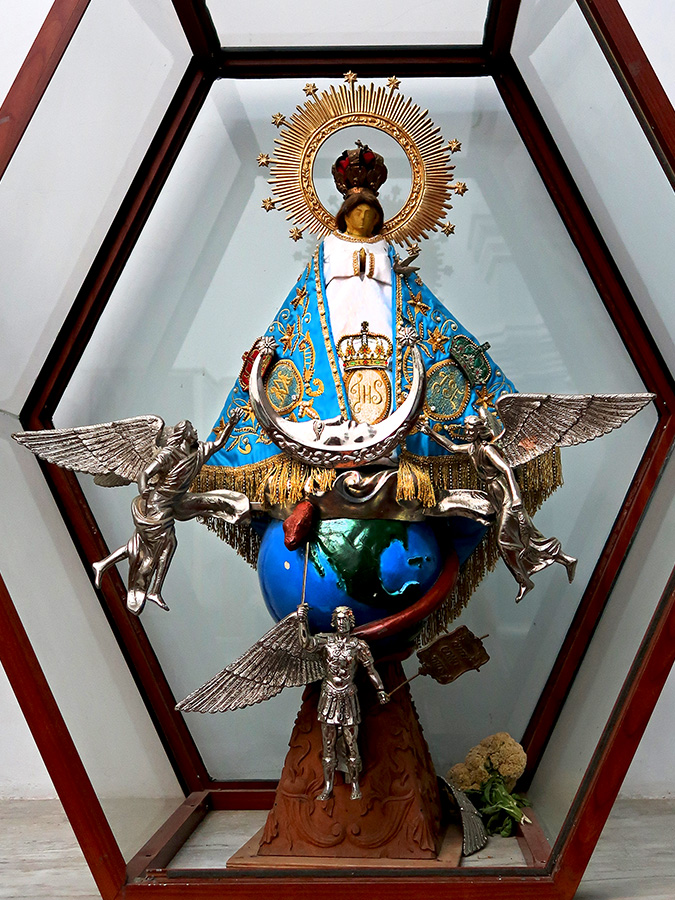
If you don’t like clanging bells, fireworks bursting in air, and navigating procession-blocked streets (at all hours of the day and night), you might want to avoid being in Oaxaca in December. The month heralds seemingly round-the-clock joyous, sometimes solemn, and mostly noisy celebrations. This month, honoring the feast days of the Virgins of Juquila, Guadalupe, and Soledad elicits some of the most enthusiastic, lengthy, and loud festivities of the year.
December 26, 2023 – Juquila, Guadalupe, and Soledad on altar at the workshop of Jacobo and María Ángeles in San Martín Tilcajete.
December 8 marks Día de la Virgen de Juquila — the first of the three virgins being celebrated this month. Observances began weeks ago as pilgrims began their peregrinations to her tiny Chatino village of Santa Catarina Juquila. And, in Oaxaca city, processions began filling the streets, cohetes (rockets) began exploding, and church bells sounded announcing special misas (masses).
December 26, 2023 – Close-up of Juquila on the altar at the workshop of Jacobo and María Ángeles in San Martín Tilcajete.
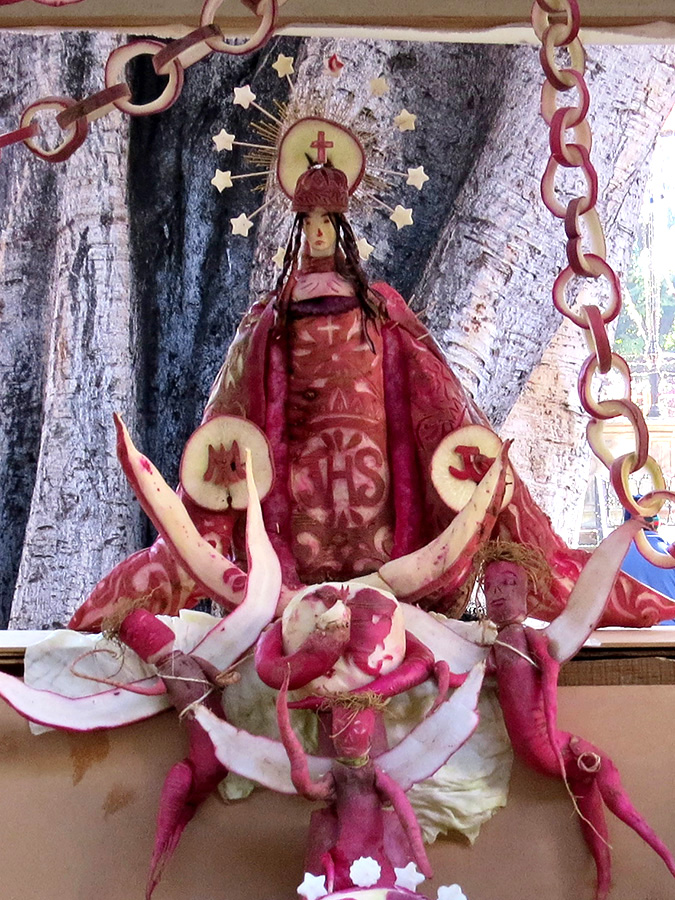
December 23, 2023 – Juquila carved from radishes. Noche de Rabanos, Oaxaca de Juárez.
November 4, 2023 – Juquila enclosed in glass, Ocotlán de Morelos.
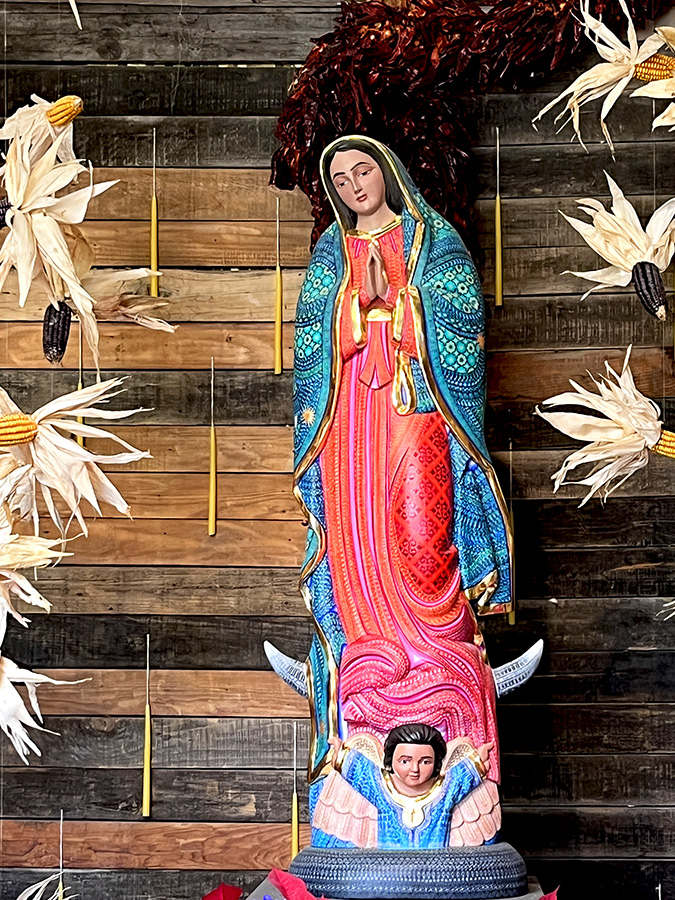
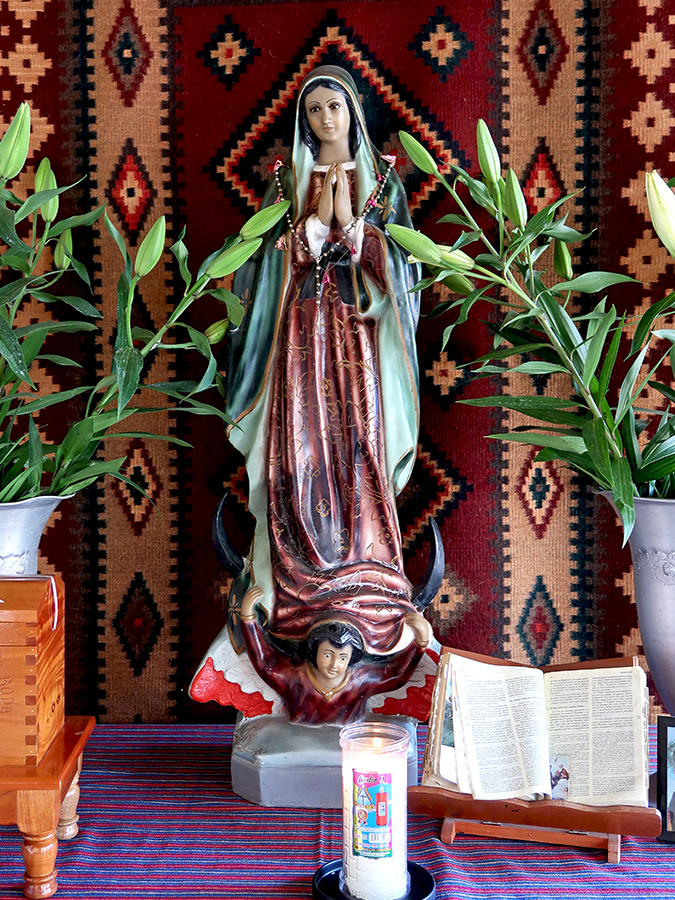
Next on the on the calendar is the more widely known date of December 12, honoring la Virgen de Guadalupe, aka, Queen of Mexico, Empress of America, and patron saint of México. However, the celebrating has already begun and besides fireworks, processions, and church bells chiming, professional photographers set up “Guadalupe grottos” outside Oaxaca’s Templo de Nuestra Señora de Guadalupe so, after being blessed inside the church, parents can have their little boys and girls, dressed in traditional traje (costume), photographed. Once finished, all can partake in the rows upon rows of food stalls, carnival rides, and puestos selling toys, Santa hats, Christmas lights.
December 26, 2023 – Close-up of Guadalupe on the altar at the workshop of Jacobo and María Ángeles in San Martín Tilcajete.
January 19, 2024 – Guadalupe on an altar set up in a private home prior to a wedding in Teotitlán del Valle.
November 4, 2023 – Guadalupe watching over a grave in the cemetery of San Antonino Castillo Velasco.
January 8, 2024 – Stylized Guadalupe on Calle Mártires de Tacubaya in Oaxaca de Juárez.
Last, but not least for Oaxaqueños, is December 18, the feast day of the much loved and revered, Queen of Oaxaca, La Santísima Virgen de La Soledad (Virgin of Solitude). Festivities with special religious rites, processions, and fireworks usually begin in early December, overlapping with Juquila and Guadalupe. Soledad’s celebration culminates with hundreds of her devotees camping out in the atrium of her church, the Basílica de Nuestra Señora de la Soledad, on the night of December 17 — with musical entertainment throughout the night, afternoon cultural performances the next day, and several outdoor masses from before dawn to nightfall on the 18th. Food stalls take over the stairs leading to the Basílica and the street below (Independencia) is closed for several blocks with carnival rides and stalls selling more sweets and savories, religious tchotchkes, clothing, and much more. It’s lively, crowded, and loud!
December 26, 2023 – Close-up of Soledad on the altar at the workshop of Jacobo and María Ángeles in San Martín Tilcajete.
December 23, 2023 – Soledad carved from radishes. Noche de Rabanos, Oaxaca de Juárez.
December 19, 2023 – Soledad in her home at the Basílica de Nuestra Señora de la Soledad, Oaxaca de Juárez.
I’m still in el norte and all is quiet. While it makes for a better night’s sleep, I’m missing the raucous and joy-filled cacophony that fills Oaxaca’s days and nights in December.
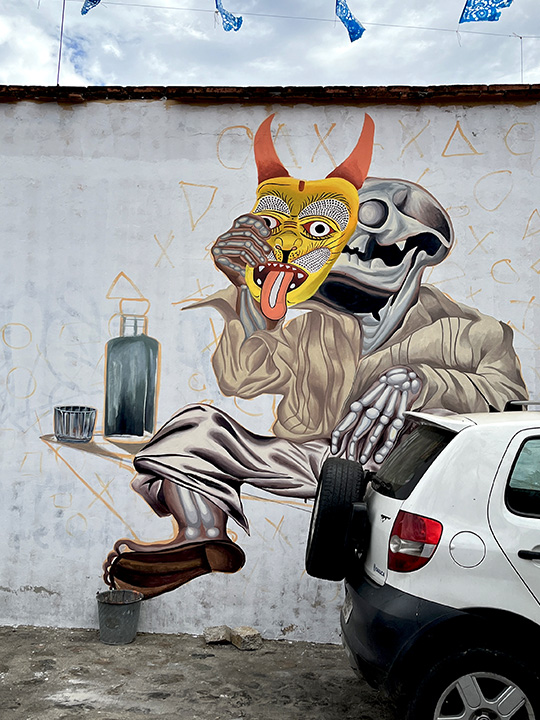
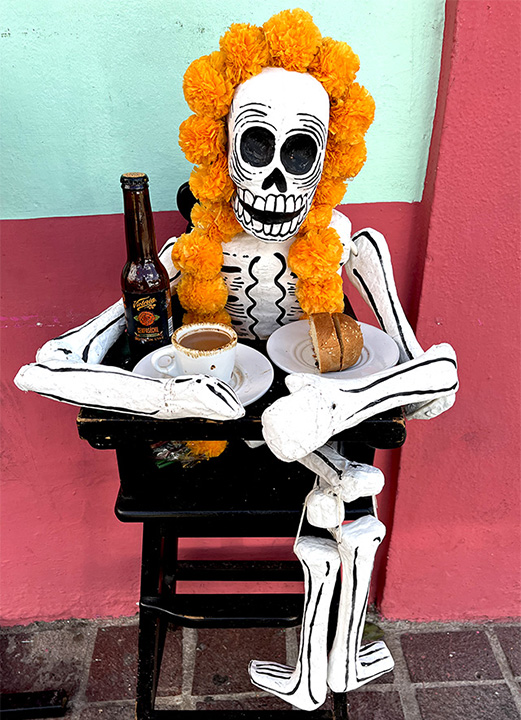
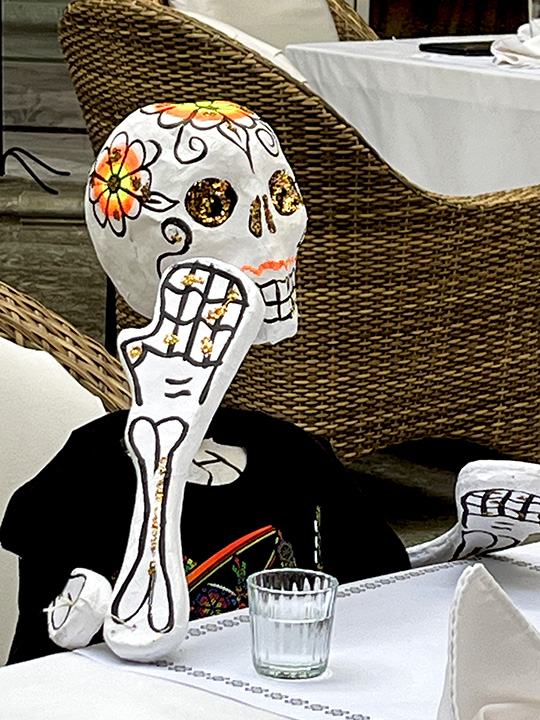
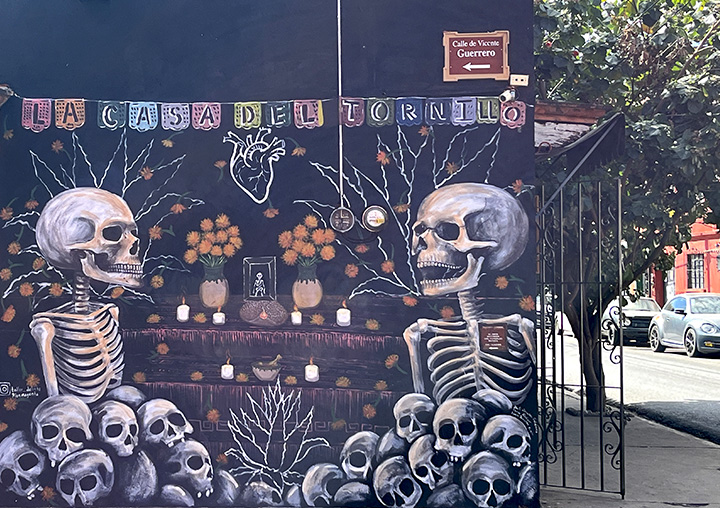
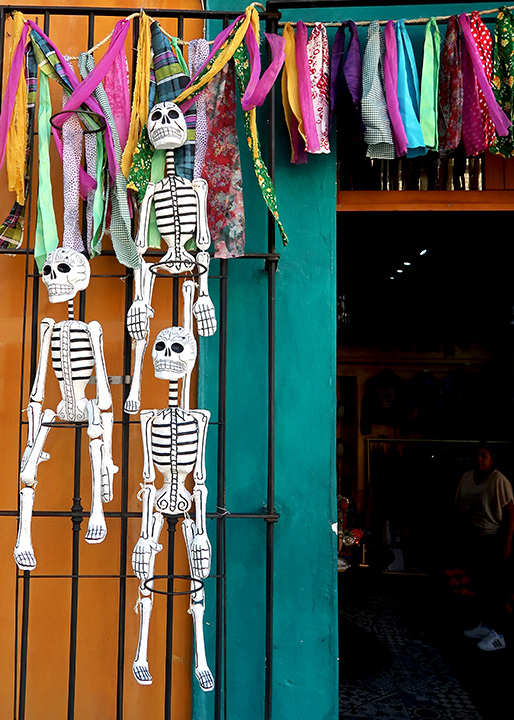
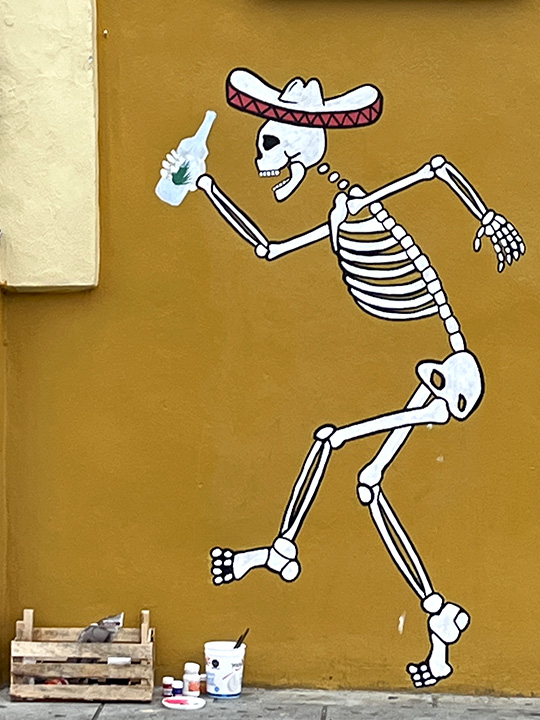
It’s Halloween time up here in el norte and the occasional house features spiders poised to pounce in webs strung across bushes, witches with broomsticks guard front gates, and pumpkins decorate entries signaling trick or treaters are welcome. A few skeletons have moved into the neighborhood but none are as well dressed and accessorized as those seen last year loitering on sidewalks, hanging out on walls, and dining in the restaurants of Oaxaca during Día de Muertos (Day of the Dead).
What can I say? I’m missing these guys and gals inhabiting Oaxaca this time of year.
July is “mes de la Guelaguetza” in Oaxaca. Alas, I am still in el norte and missing the festivities — though not the crowds! However, you can join me, from the comfort of your home, in viewing both last Saturday’s and today’s Desfile de Delegaciones (Parade of Delegations) and the July 22 and July 29 matutina (morning) and vespertina (evening) Lunes del Cerro dance performances on CORTV’s YouTube channel. I will be sure to be watching today’s desfile and the Monday (July 29) morning transmission live, as the Grupo Danza de la Pluma Promesa 2022-2024 from Teotitlán del Valle is one of the delegations.
Danza de la Pluma Promesa 2022-2024 — from their first public performance at the festival honoring Preciosa Sangre de Nuestro Señor Jesucristo in Teotitlán de Valle.
As many of you know, blogger buddy Chris and I have helped sponsor dancers for nine years and it has been a great honor and privilege to get to know several of the dancers and their families in Teotitlán del Valle.
To all the fathers (biological and adoptive), stepfathers, grandfathers, godfathers, and father figures everywhere, I wish you Happy Father’s Day as you continue sharing traditions…
teaching skills…
and, most of all, caring.
May you fulfill your most valuable role with great love, kindness, and respect.
Yesterday, May 3, Mexico celebrated Día de la Santa Cruz (Day of the Holy Cross). Tradition calls for workers to erect crosses festooned with flowers at the highest point on construction sites. According to Mexconnect, in 1960, Pope John XXIII removed Día de la Santa Cruz from the liturgical calendar, but Mexico being Mexico and construction workers being construction workers, they ignored the Pope. Eventually, understanding the relationship of forces, he gave Mexico a special dispensation to celebrate on this day.
In the Zapotec village of Teotitlán del Valle, the custom is to climb their sacred mountain, el Picacho (Quie Guia Betz in Zapotec). The trail winds along the face of the mountain with almost no shade. It’s a challenge, but the vistas and community spirit at the top makes it well worth it. As I sit here (still) in el norte at the foot of Mt. Tamalpais, my sacred mountain — mountain of my childhood dreams, teen driving lessons, and place of retreat — I’m remembering the last time I climbed el Picacho…




























 Mexican Peso Converter

 View From Casita Colibrí