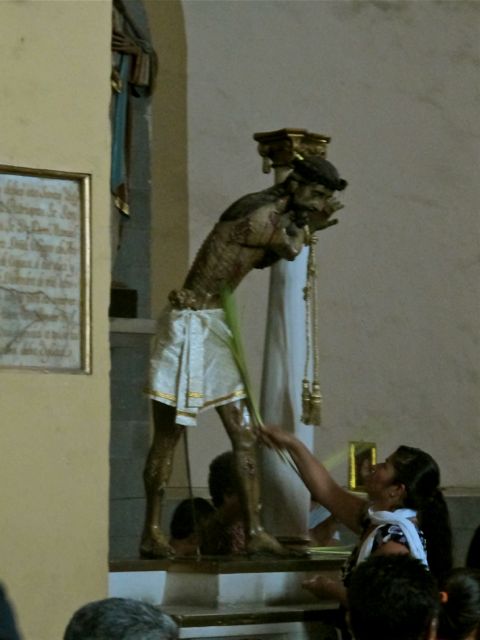
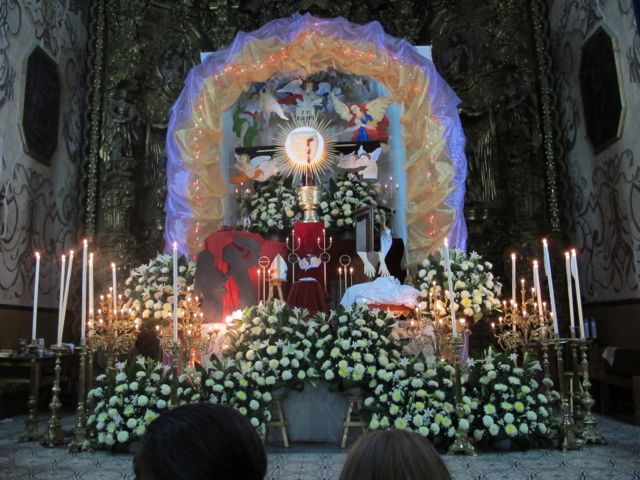
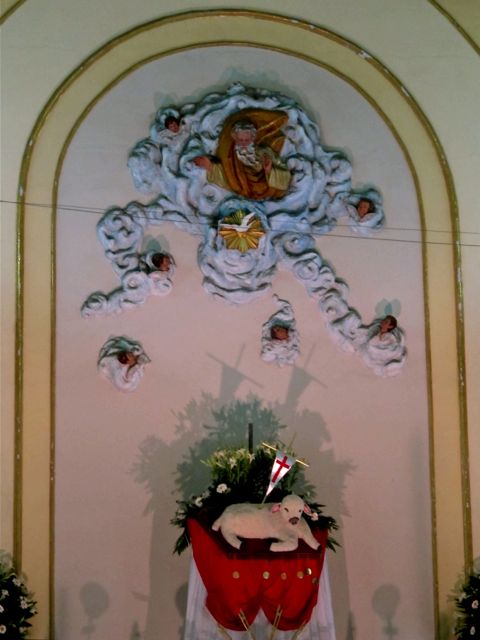
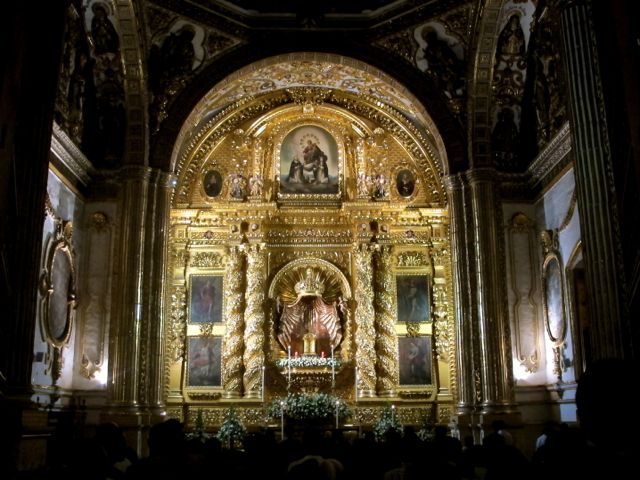
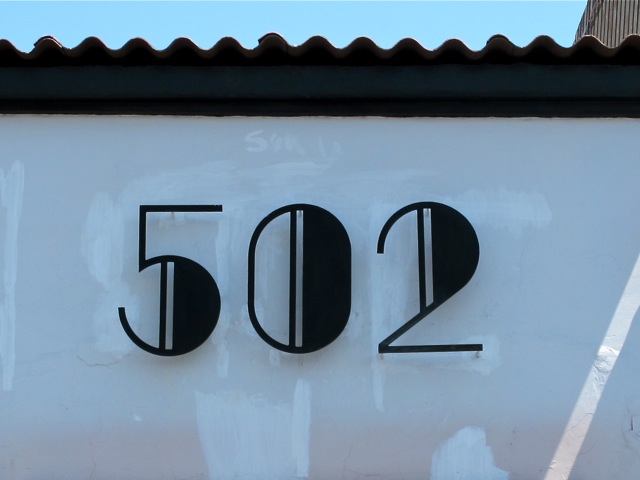
In Coyoacán, Federal District of Mexico City…
San Cristóbal de las Casas, Chiapas…
And Oaxaca…
The zeros have it!
Posted in Buildings, tagged buildings, Chiapas, Coyoacán, Federal District, Mexico, Mexico City, numbers, Oaxaca, San Cristóbal de las Casas on March 29, 2012| Leave a Comment »
In Coyoacán, Federal District of Mexico City…
San Cristóbal de las Casas, Chiapas…
And Oaxaca…
The zeros have it!
Posted in Buildings, tagged Guelaguetza Auditorium, Mexico, Oaxaca, velaria on March 21, 2012| Leave a Comment »
With all the excitement about yesterday’s earthquake, I didn’t even notice the south wing of the infamous Guelaguetza auditorium velaria (cover) had been removed.
According to an article in yesterday’s Noticias, the central cover will be reinforced and remain through July’s annual Guelaguetza performances. After that??? The fate of the velaria is up in the air. 😉
And, yes, the sky is that blue today!
Posted in Buildings, Nature & Science, Parks & Plazas, Weather, tagged earthquake, Mexico, Oaxaca, press conferences, terremoto on March 20, 2012| 4 Comments »
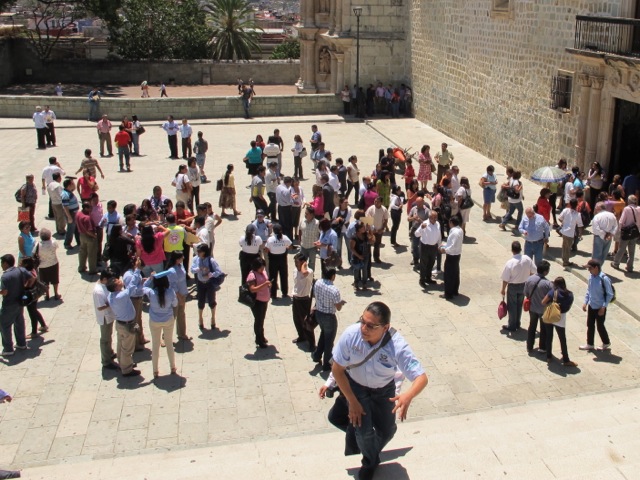
…under my feet. Well, actually I didn’t feel the 7.4 terremoto (earthquake) about noon today. I heard it! I was walking up the Álcala and the windows on one of the university buildings started rattling and people began pouring into the streets, murmuring “un terremoto, un terremoto!”
The above photo was taken from above the Plaza de la Danza, outside the Palacio Municipal, about a half an hour after the initial shake and shortly before sirens went off and a 5.0 aftershock struck — which I also didn’t feel!
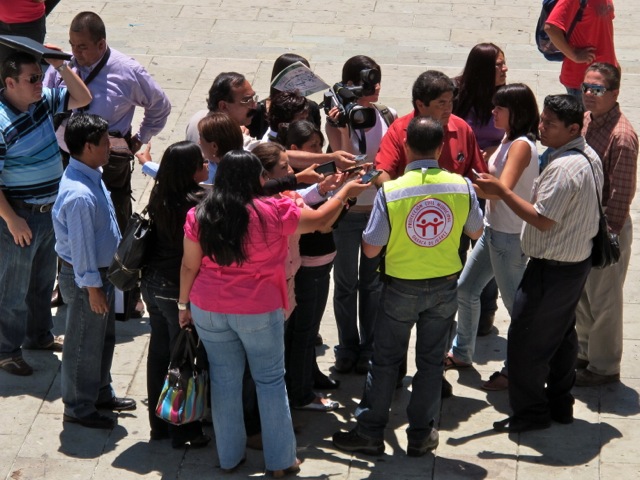
I continued on with my shopping and when I passed by the Palacio Municipal again, the media was all over the place, and more press conferences out on the sidewalk were being conducted. The fellow above is from the Proteccíon Civil Municipal of Oaxaca. The fellow below was speaking about the schools.
Though there is concern for the rural villages closer to the epicenter, currently all is well in the city. And one of the members of the municipal police force assured me the daughter of “my” president was fine.
Posted in Buildings, Weather, tagged Mexico, Oaxaca, rain, rain storms, Templo de San José, thunderstorm, weather on March 19, 2012| Leave a Comment »
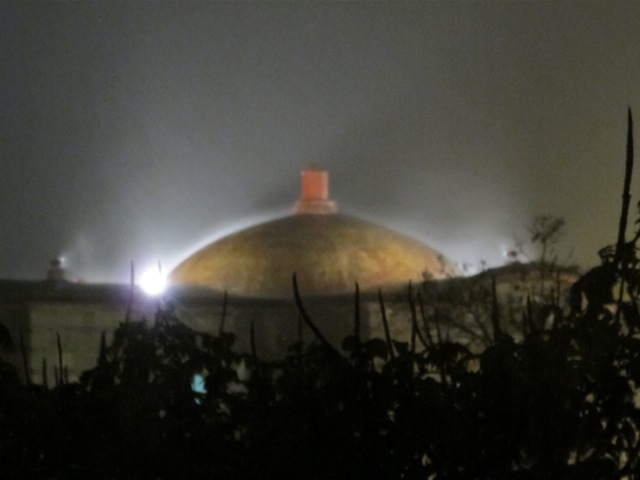
Last night, if she is still in town, Malia got to experience one of Oaxaca’s dramatic rain storms. The circulation of high pressure over the Southeast of the country, interacting with moisture from both the Gulf of Mexico and the Pacific Ocean, resulted in a 1-2 hour (I lost track of time) torrential downpour and Mother Nature’s own spectacular sound and light show.
This was a welcome relief, as we are in the middle of the dry season, and my rooftop garden is extremely happy. However, along with the usual flooding and sporadic power outages, newspapers are reporting 10 homes were damaged by the heavy winds and rain in Ocotlán and a Jacaranda tree fell on an unoccupied parked car in the city.
Posted in Buildings, tagged Guelaguetza Auditorium, Mexico, Oaxaca, velaria on March 13, 2012| Leave a Comment »
From today’s walk…
Just a sliver of canvas (or whatever the stingray is made of) left hanging from the missing wing of the Guelaguetza Auditorium.
Chris, over a Oaxaca-The Year After, also has photos. This is big news!
Posted in Buildings, tagged Guelaguetza Auditorium, Mexico, Oaxaca, velaria on March 12, 2012| 2 Comments »
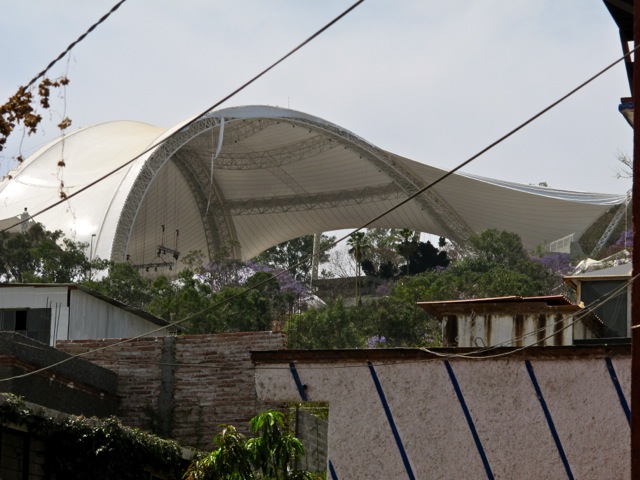
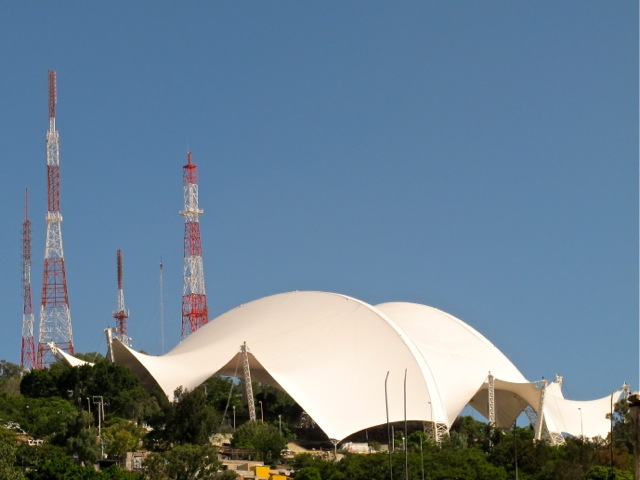
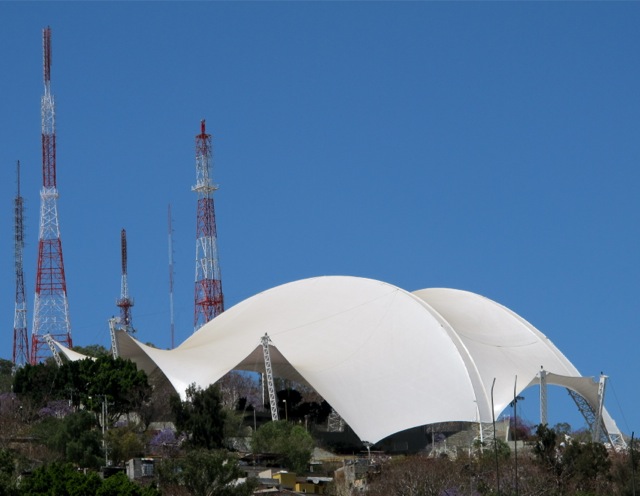
Remember the Guelaguetza Auditorium? July 25, 2011…
After moderate winds Friday night, Guelaguetza Auditorium, March 11, 2012…
Something missing here? “Stingray” missing a flap???
According to reports in Sunday’s Noticias, experts at the National Autonomous University of Mexico (UNAM) will conduct an analysis re what happened to cause a part of this controversial and (seemingly) cursed covering to collapse. The report further states, there is a possibility that the warranty will “cover” a replacement and, no matter what the result, the annual July Guelaguetza shows will go on!
A poll on the Vive Oaxaca Facebook page is currently running about 2:1 against replacing the velaria (cover).
Posted in Buildings, Libraries, People, Places, Signs, tagged Biblioteca Infantil, blind, Braille, Francisco Toledo, Jorge Luis Borges, Mexico, Oaxaca, photographs, photos, street names, street signs, visually impaired on March 11, 2012| 3 Comments »
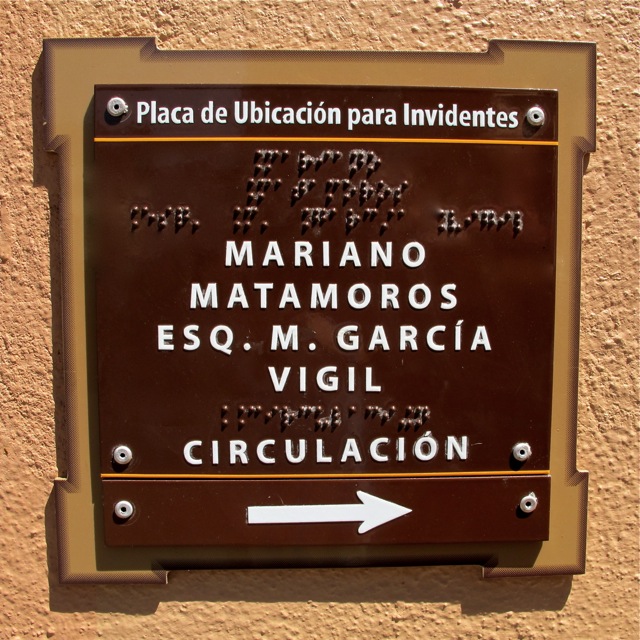
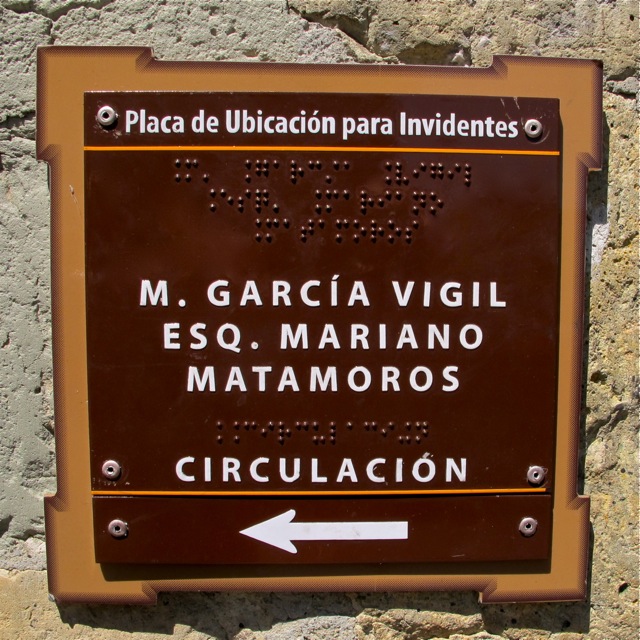
About two months ago, new street signs began appearing in Oaxaca on each side of each street corner. Eight signs per each 4-way intersection, in Spanish and Braille, are at hand touch and wheelchair eye level, and provide arrows to make it clear if the traffic flows this way…
… or that.
By the way, Oaxaca has a library for the blind and visually impaired — the Biblioteca Jorge Luis Borges, housed in the Biblioteca Infantil in the Barrio de Xochimilco. Named after the blind Argentine writer, the library was founded in 1996 by world-renowned Oaxacan artist, Francisco Toledo. It houses his collection of books in Braille, a permanent workshop teaching Braille, computers with special programs for the blind, and scholarships to outstanding visually impaired students.
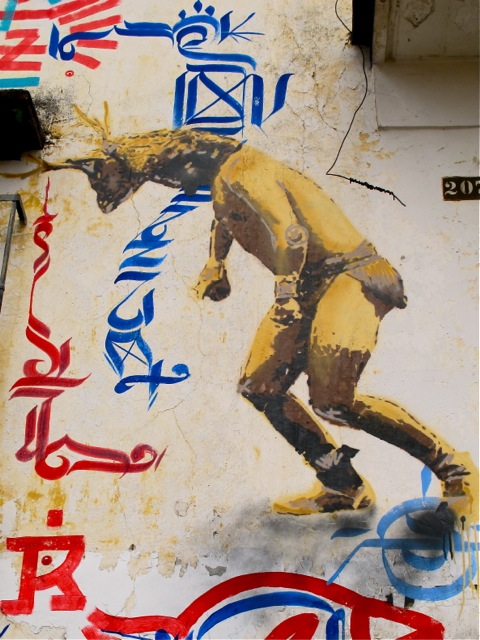
Posted in Buildings, Creativity, tagged Calle Prof. M. Aranda, graffiti, Mexico, Oaxaca, Sanez, street art, wall art on March 2, 2012| 4 Comments »
Posted in Buildings, Gardens, Museums, Nature & Science, People, Renovation, tagged Alejandro de Ávila B, Ethnobotanical, Francisco Toledo, garden, Jardín Etnobotánico de Oaxaca, jeff spurrier, Mexico, Oaxaca, Santo Domingo de Guzmán on February 12, 2012| Leave a Comment »
Be it looking down from the windows above, strolling through the gardens on a tour, or peeking through openings in the wall on Reforma or Berriozabal on the way to someplace else, Oaxaca’s Ethnobotanical Garden is always a soothing and uplifting sight.
Check out this informative and enlightening article by Jeff Spurrier discussing the origins and vision of Oaxaca’s Ethnobotanical Garden — from the Jan/Feb 2012 issue of Garden Design:
“I am not a gardener.” Francisco Toledo is sitting in the courtyard of the graphic art institute he founded in downtown Oaxaca City, Mexico, sipping on a glass of agua de jamaica. His fingers are paint-smudged, and he moves stiffly from a sore back. Toledo, 71, is one of Mexico’s best-known living artists; his paintings, sculptures, and textiles are in galleries and museums around the world. At home in Mexico, he is identified with a fierce and outspoken defense of the indigenous arts and culture of the southern state of Oaxaca. He also, as it turns out, helped to create one of the world’s most original public gardens.
“The professionals are the people who live in the country,” he says. “The campesinos and workers — I don’t have the patience.”
Nearly 20 years ago, the Mexican military moved out of a 16th-century Santo Domingo monastery complex it had used as a base for more than 120 years. Mexico’s president gave the exit order after being lobbied by Toledo and other leading artists and intellectuals belonging to Pro-Oax, an advocacy group urging the promotion and protection of art, culture, and the natural environment in Oaxaca. Soon, a great clamor began: The state government wanted the five-acre parcel in the heart of downtown Oaxaca City to create a hotel, convention center, and parking facility. A restoration team brought in by the National Institute of Anthropology and History wanted to establish a European garden in the 17th-century baroque style. Some of Toledo’s fellow artists wanted to use the grounds for workshops and exhibition space.
n 1993, when Toledo knew the army would be leaving, he asked Alejandro de Ávila B., who had family roots in Oaxaca and training in anthropology, biology, and linguistics, what he and other advocates would propose. De Ávila suggested making the space into a botanic garden — or, more precisely, an ethnobotanic garden, one that would “show the interaction of plants and people.”
I highly recommend reading the Full Article.
h/t Norma and Roberta
Posted in Buildings, Labor, Renovation, tagged buildings, Mexico, Oaxaca, painters, renovation, SINFRA, workers on January 20, 2012| 2 Comments »
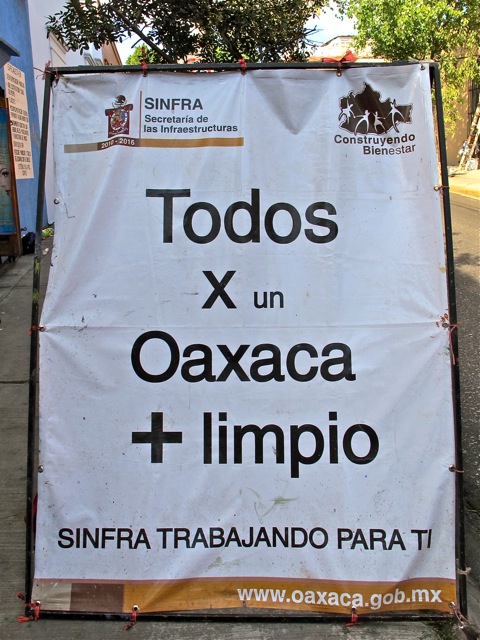
A clean-looking Oaxaca, brought to you by Oaxaca’s Secretary of Infrastructure.
According to the state government’s website, a 45 million peso project was launched to “visually rehabilitate” 94,000 buildings in 25 urban communities. Begun in July in San Bartolo Coyotepec (14 miles south of Oaxaca City), it has now reached my ‘hood.
Ladders, paint buckets, and painters up and down the block.
By the way, because this is the Centro Histórico, the colors are selected from a previously approved palette. Baby blue? I wonder if the owners of the buildings have any say…
Posted in Buildings, Creativity, Culture, tagged 142 Throckmorton, El Picacho, Mexico, Mill Valley, Mt. Tamalpais, Oaxaca, Teotitlán del Valle, wall art, Zio Ziegler on January 4, 2012| 1 Comment »
Wall art from here…
Wall of 142 Throckmorton theatre on Madrona, Mill Valley, CA by Zio Ziegler
to there.
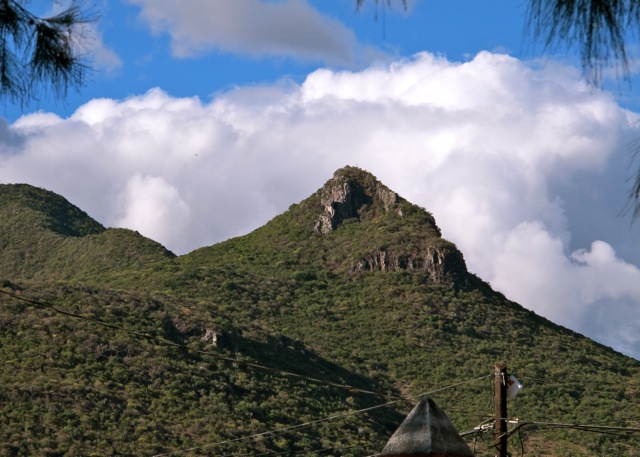
And, sacred mountains from here…
to there.
Transition time… Mill Valley back to Oaxaca.
Posted in Buildings, Celebrations, Churches, History, Holidays, tagged Basílica de Nuestra Señora de la Soledad, Basilica de la Soledad, Mexico, Oaxaca, Queen of Oaxaca, Virgen de La Soledad, Virgin of Solitude on December 19, 2011| 6 Comments »
On December 18, Oaxaqueños celebrated the feast day of the Queen of Oaxaca, La Santísima Virgen de La Soledad (Virgin of Solitude). There are several minor variations to her story, but there is no doubt that in the State of Oaxaca, she is venerated in a manner similar to the Virgin of Guadalupe and is carried through the streets of the city during many religious celebrations.
According to one legend: In 1620 a mule train bound for Guatemala camped outside the city of Oaxaca discovered an extra mule which did not belong to anyone in the group. The mule refused to move and when prodded rolled over and died. When the pack it carried was opened, it was found to contain the statue of the Virgin of Soledad. Taking this as a sign from heaven, the inhabitants built first a shrine, later a church and finally the imposing basilica which stands today on the spot where the statue first appeared.
Another story: a muleteer from Veracruz in route to Guatemala noticed he had one too many mules in his pack upon his arrival in Oaxaca. Outside the San Sebastian hermitage, the mule collapsed under the burden it was carrying. All attempts by the muleteer to get it back on its feet were futile; so to avoid punishment he notified the authorities. When he lifted the load off the mule, it got up and died instantly. The burden was inspected, and they found an image of the Virgin accompanied by Christ on it, along with a sign that said, “The Virgin by the Cross.” Faced with this momentous event, Bishop Bartolome Bohorquez ordered a sanctuary built in honour of the divinity.
Still another legend: a heavily laden burro of mysterious origin appeared outside of town in 1534, fell to the ground, spilling its load next to a rock (still onsite) containing the beautifully carved Virgin (thought to be carved in Guatemala or the Philippines) and a chapel was built on the spot. However, apparently there was an adobe shrine to the Virgin of Solitude atop Cerro Fortín as early as 1532 — and the rock may have even been moved from the mountain in 1617 to the current site (immediately to the right, along the wall as you enter).
She became the patron of not only the city but the entire state, as well as of the mariners who sailed to and from her ports. She wears a purple velvet cape, and her vestments are encrusted with pearls, 600 diamonds, and she wears a 4-lb gold crown.
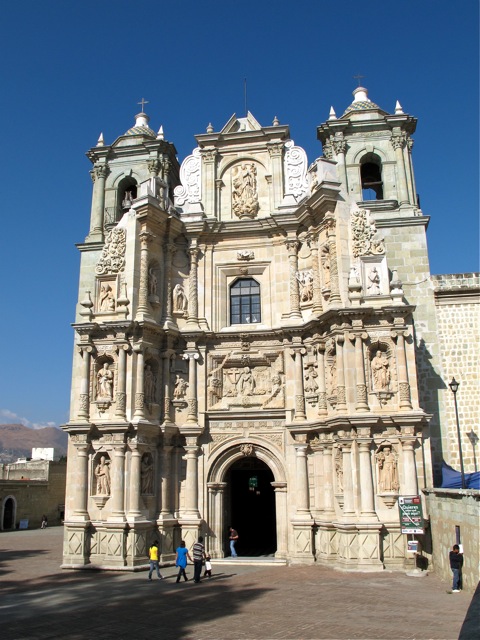
She resides in the church dedicated to her, the Basílica de Nuestra Señora de la Soledad. Construction began in 1682, it was designed by Father Fernando Méndez, sanctioned by the Viceroy Tomas Aquino Manrique de la Cerda, and consecrated in 1690 by Bishop Isidro Siraña y Cuenca. The current baroque style facade was built between 1717-1719 and is unusual because it faces east (Photos are best in the AM). It was built with the green cantera and a pinkish stone, used in the facade. If one looks carefully, several ways in which the indigenous masons and carpenters introduced their own “pagan” symbology and pantheon into the wood and stone are in evidence.
It was intentionally built with low spires and towers, to better withstand earthquakes. The atrial courtyard is enclosed and fitted with two simple access portals, one facing south, and the other east. The latter leads to the Socrates Garden (currently undergoing a major renovation) and the Plaza de la Danza.
References:
Posted in Buildings, Culture, Libraries, Renovation, tagged Centro Académico y Cultural San Pablo, cultural center, ex-convento, libraries, Mexico, Oaxaca, research center, San Pablo Academic and Cultural Center on December 5, 2011| 3 Comments »
… in all manner of ways; there’s a lot of that here. Successful meetings between old and new are a matter of debate. The newly renovated Centro Académico y Cultural San Pablo is no exception. It was acquired, designed by architect Mauricio Rocha, renovated, and repurposed by the Alfredo Harp Helú Foundation.
Located in the heart of the historic district, between the Museo Textil and the Teatro Macedonio Alcalá, this former Dominican convent, originally established in 1529, has been one of those ubiquitous crumbling and peligrosos buildings for a long time. In addition, to the features of the original cloister, archeological remains from 2,500 years ago were uncovered and have been preserved.
The buildings will house a research center (including a library), dedicated to the study of the languages and cultures of the indigenous of Oaxaca, serve as a venue for cultural presentations, and provide exhibit space for the philanthropic endeavors of the Alfredo Harp Helú Foundation, which (among several others) includes the Textile Museum, Museum of Philately (stamps), Institute of Oaxacan Historic , and Children’s Library.
The grand opening, with all the requisite fanfare and dignitaries, was November 26. Alas, I missed it! However, the courtyard provided the setting for several performances during the Instrumenta Oaxaca 2011, a 2-week long chamber music festival that ran from November 3rd to the 18th; two of which I attended. I was dazzled by the setting (and the acoustics weren’t bad, either) and was especially gratified that the library, which the seating faced, presented a prominent and dramatic architectural feature.
Written on the wall of the building housing a small collection from the BS: Biblioteca Infantil (Children’s Library), a quote from Dostoyevsky (of all people): Los libros son mi aliento, mi vida y mi futuro. In English: Books are my breath, my life and my future.
For more (in English) about the Centro Académico y Cultural San Pablo, see Norma Hawthorne’s article, Oaxaca Center Promotes Indigenous Language and Culture, Opens November 26, 2011.
Update: Read how this cultural and historical gem, lost in plain sight.
Posted in Buildings, History, Holidays, Parks & Plazas, People, tagged El Grito, Grito de Dolores, José María Morelos y Pavón, Josefa Ortiz Domínguez, Leona Vicario, Mexican Independence Day, Mexico, Miguel Hidalgo de Costilla, Municipal Building, Oaxaca, Plaza de la Danza on September 13, 2011| 3 Comments »
In Mexico, from small pueblos (villages) to large ciudades (cities), most all have calles (streets) named Morelos and Hidalgo — some, like Oaxaca, have more than one, which can be very confusing when trying to find an address, to say the least! The names Vicario and Ortiz de Domínguez aren’t nearly so commonplace.
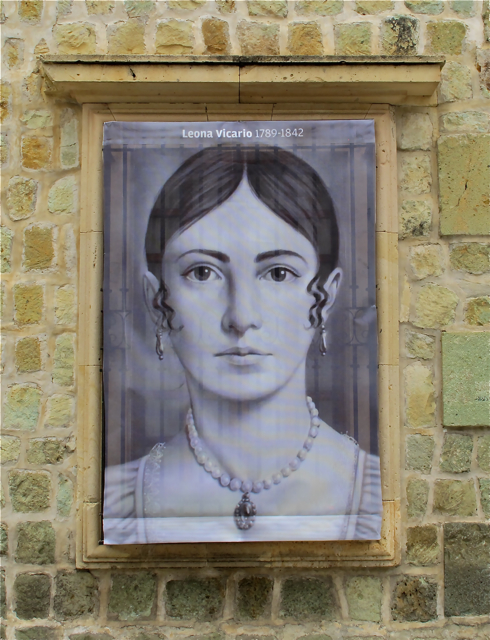
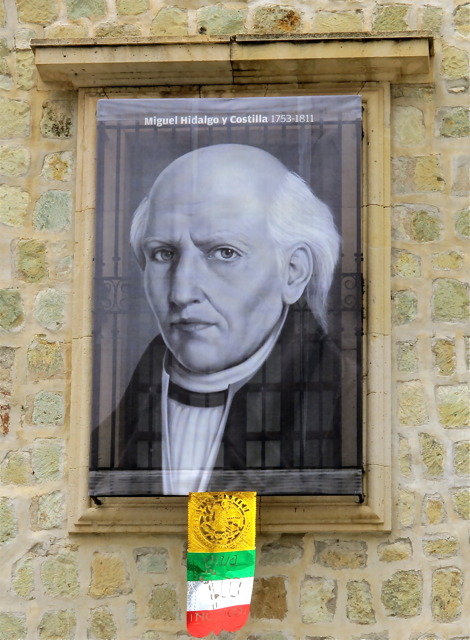
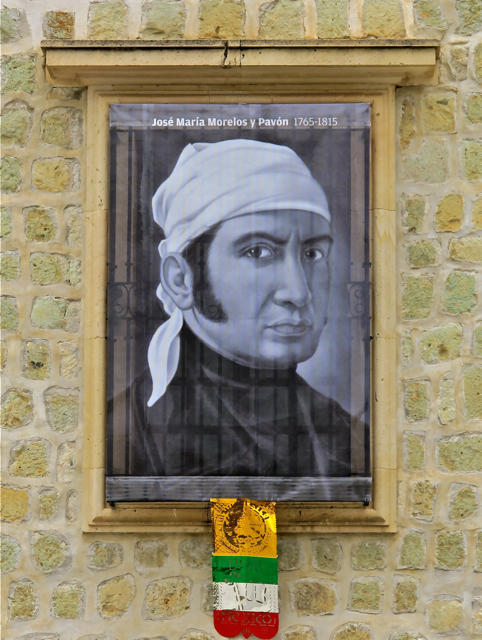
However, two of the women (among countless unsung heroines) who played a major role in the struggle for independence from Spain were Leona Vicario and Josefa Ortiz Domínguez. In a fitting tribute to their importance to the Independence movement, their giant portraits currently hang on the outside wall of the Municipal Building overlooking the Plaza de la Danza, along with those of Miguel Hidalgo de Costilla and José María Morelos y Pavón.
Leona Vicario provided money and medical support, helped fugitives, and served as a messenger. After escaping from prison, she helped her husband, Andrés Quintana Roo, plan strategies on the battle field.
Confined to house arrest after a co-conspirator betrayed the upcoming plans for revolt by the Independence movement, Josefa Ortiz de Domínguez was able to smuggle a message out, warning of the betrayal.
As a result, in the early morning of September 16, Miguel Hidalgo y Costilla rang the church bells in Dolores, rallying the rebels, and issuing, what has come to be known as Grito de Dolores (Cry of Dolores), the signal to begin the War of Independence from Spain. It is an event that is recreated all over Mexico at 11 PM on September 15. (See the link re why it isn’t done in the early morning of September 16.)
The last portrait on the wall is that of José María Morelos y Pavón, of Afro-mestizo heritage, and, like Hidalgo, also a priest. He was a capable military commander who assumed leadership of the independence movement after Hidalgo was executed. For a local connection, on November 25, 1812, in what is thought of as a brilliant victory, Morelos, along with the support of Mariano Matamoros and Miguel Bravo, took the city of Oaxaca. Fittingly, the streets Morelos and Matamoros run parallel and M. Bravo intersects them just a few blocks from the Municipal Building and the Plaza de la Danza.
(ps) These portraits are painted directly on fine mesh screen… thus, the window bars showing through.
Posted in Buildings, tagged abandoned buildings, buildings, dangerous, Mexico, Oaxaca, photographs, photos on July 2, 2011| 2 Comments »
Viejas peligrosas was the headline of an article in yesterday’s Noticias, chronicling the dangerous old buildings in the 484-block historic center of Oaxaca. According to the article, 23 properties are at high risk of falling, are magnets for trash disposal, and are sources of disease.
Although en español, I encourage even non Spanish speakers to take a look at the revealing slideshow of some of the more egregious, but highly photogenic, properties at the end of the article.
In addition, I’d like to nominate this building:
And, what do you think about the roof???