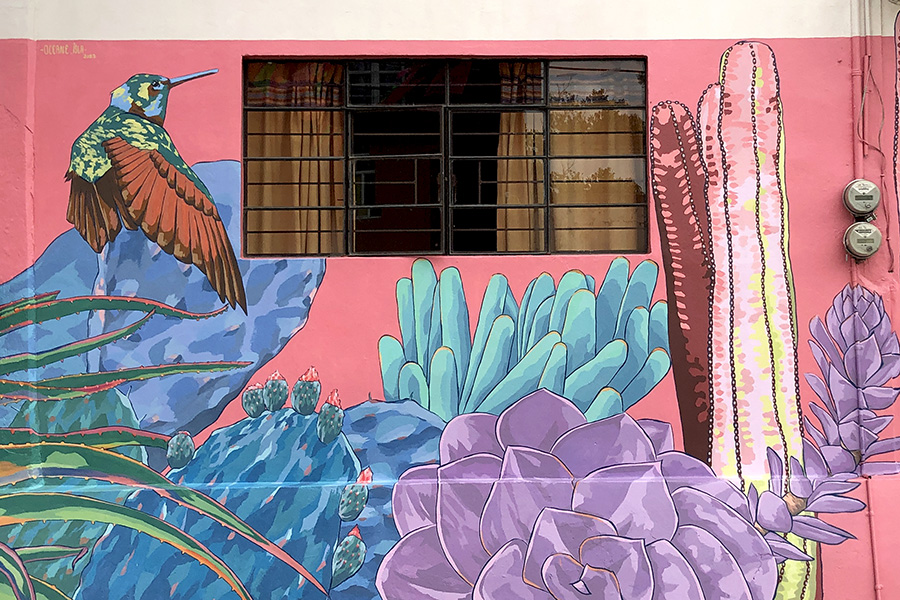
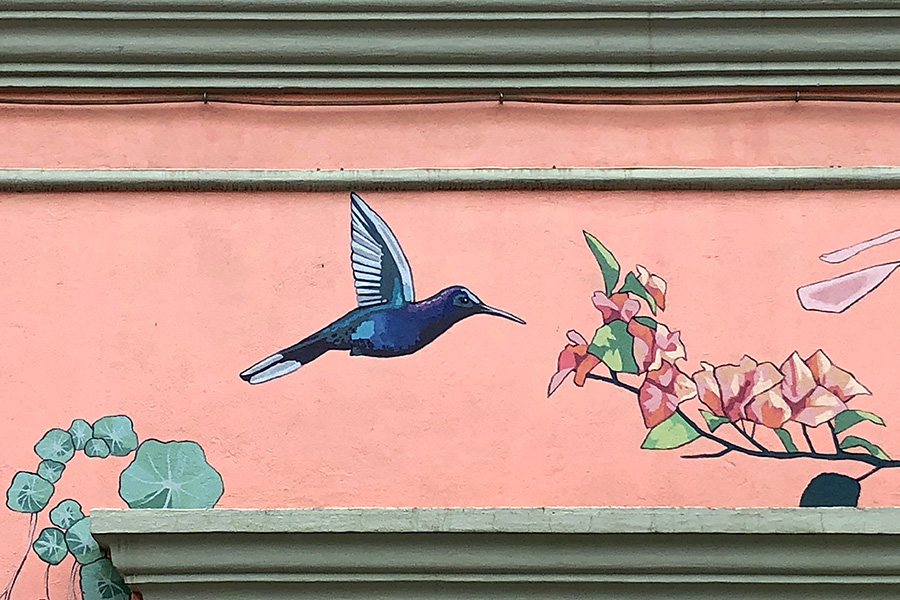
Life has been pretty good up here in el norte. The joy of having my whole family together has been immeasurable and the weather has been unusually, for this time of year in the San Francisco Bay Area, spectacular. (For those unaware of Northern California coastal weather, I give you the line attributed, albeit falsely, to Mark Twain, “The coldest winter I ever spent was a summer in San Francisco.”) Given the sun, blue sky, and warm temperatures, I’ve spent a lot of time outdoors — gardening, eating, and sitting watching the hummingbirds — just like Oaxaca! But I miss the colibries that also can be found on the walls of my neighborhood.
Three-plus weeks in el norte has me eating well but missing the flavors of Oaxaca. Thus, my blogging fingers and thoughts have turned back to the Cena de Honor Beny Galguau, a dinner honoring traditional ceremonial dishes, that I attended on May 25, 2023 at the Centro Gastronómico de Oaxaca.
First the Entradas (Appetizers)…
Tostadita Ejuteca.
Bocado crujiente de maíz nuevo con queso de puerco.
Empanadita de San Antonino Castillo Velasco con chilito de agua.
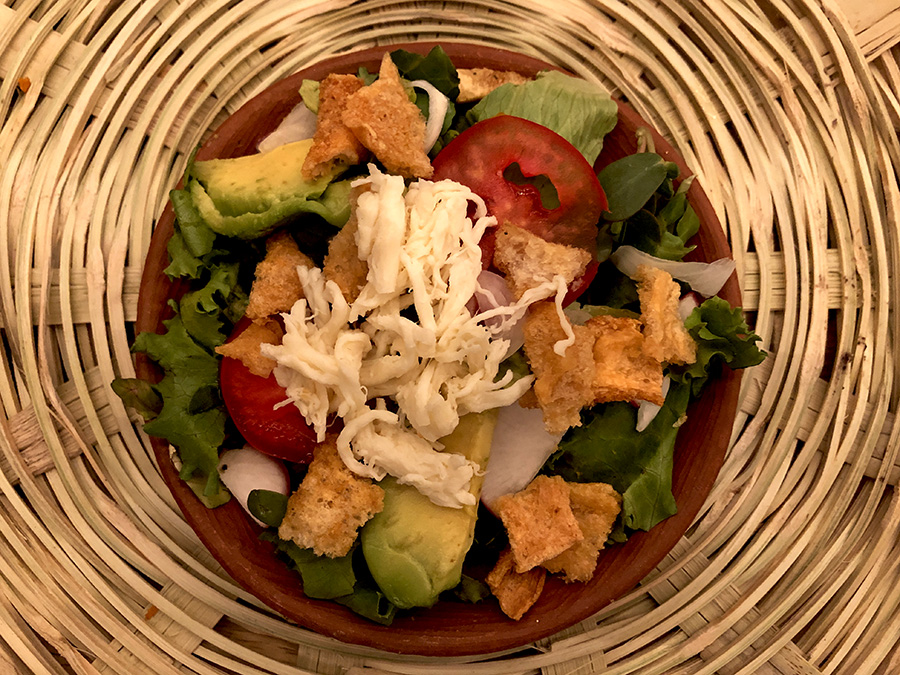
Ensalada fresca de lechuga, verdolagas, berro y aderezo de mermelada de chile.
Espesado de guías cono elotitos tiernos de milpa.
Followed by the Platos Fuertes (Main Dishes)…
Costilla de cerdo en su batea de salsa de chapulín.
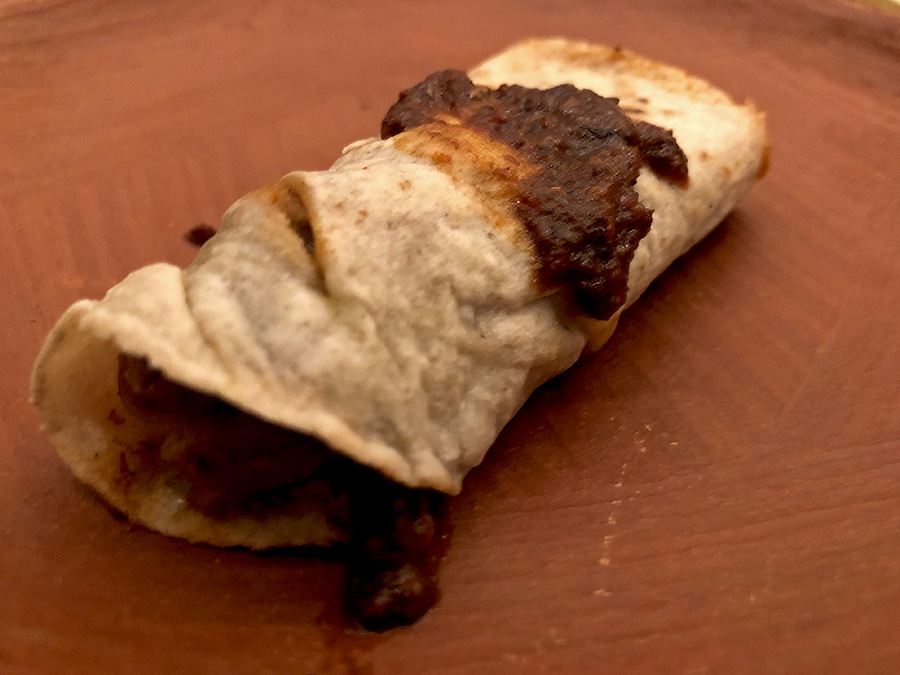
Festín de moles (coloradito y negro).
Finally, as if we all weren’t already stuffed, the Postres (Desserts)…
Nieve de limón con tuna y brisa de albahaca; Nicuatole en hoja de totomoxtle; Gaznate de Etla con turrón y miel.
And, there were traditional bebidas (beverages), both alcoholic and non: Mezcall Diamante Zapoteco, Mezcal El Joven Viejo, Cerveza de Piña, Agua de Limón Rayado en su Punto, Café de Olla con Perfume de Canela, Té de Poleo (which was a perfect palate cleanser), Tejate de Cacao, and Chocolate Atole con su Espuma de Cacao.
Cocineras tradicionales.
Needless to say, the traditional cooks were the shining lights of the evening.
In Teotitlán del Valle, as part of their three year commitment, each member of the Danza de la Pluma group and, especially their family, is responsible for taking a turn hosting one of the four yearly festivals. It includes several days of serving traditional foods at sit-down breakfasts, lunches, and dinners to the danzantes, band, families, godparents, village officials, and church leaders. For Danza de la Pluma Promesa 2022-2024 danzante, Capitán 2, Hugo Santiago Jimenez’s family, this entailed months of preparation, three pigs and one bull meeting their maker, and days of cooking for over 300 people.
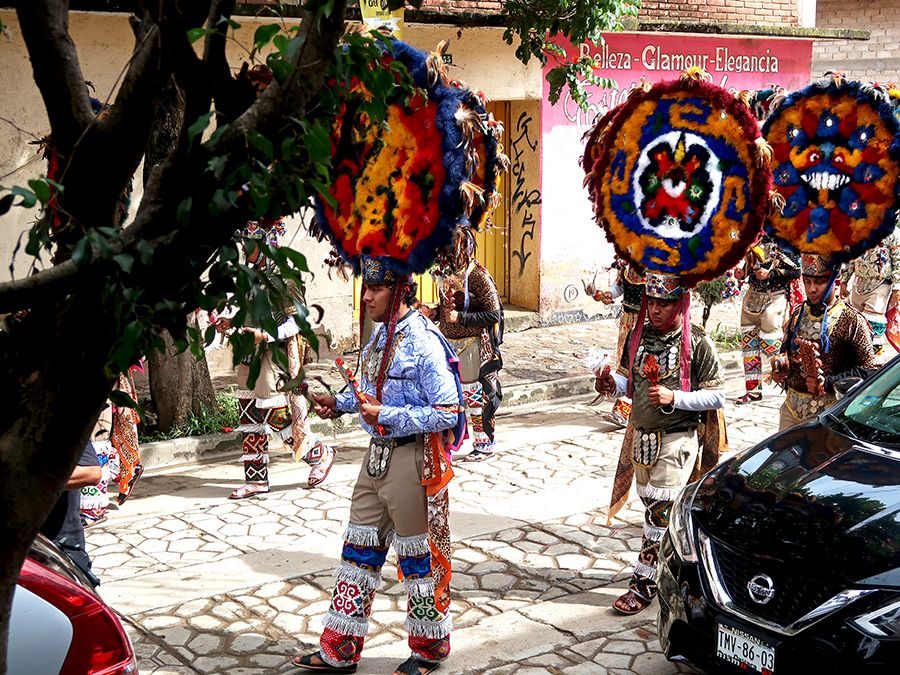
Grupo Danza de la Pluma Promesa 2022-2024 entering Casa Santiago.
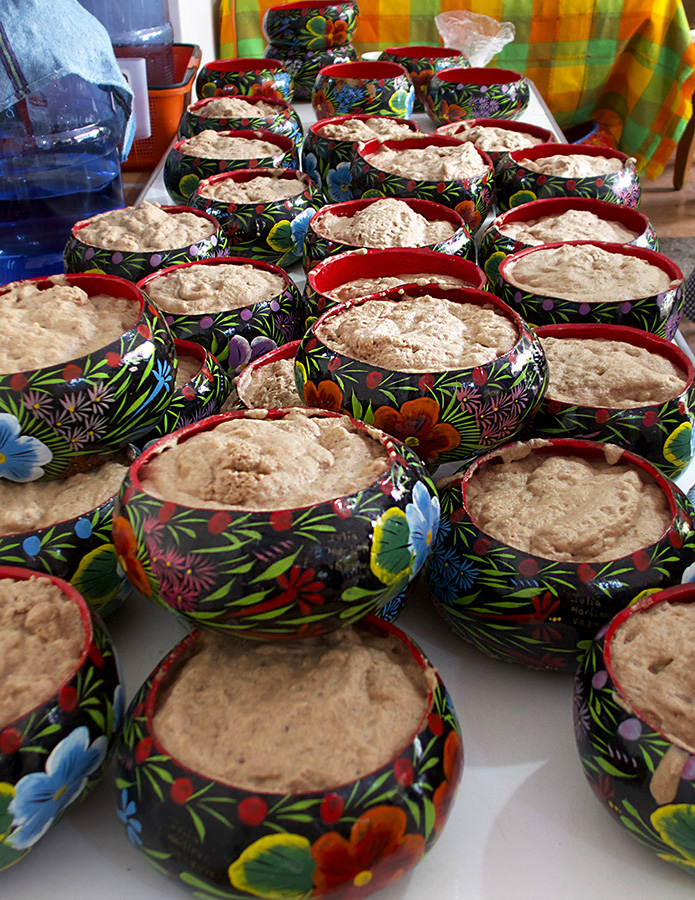
Hot chocolate with traditional breads.Grinding chocolate on metates for atole de espuma.Atole de espuma waiting to be served.Hugo Santiago Jimenez and Félix Contreras Ruiz eating higadito.
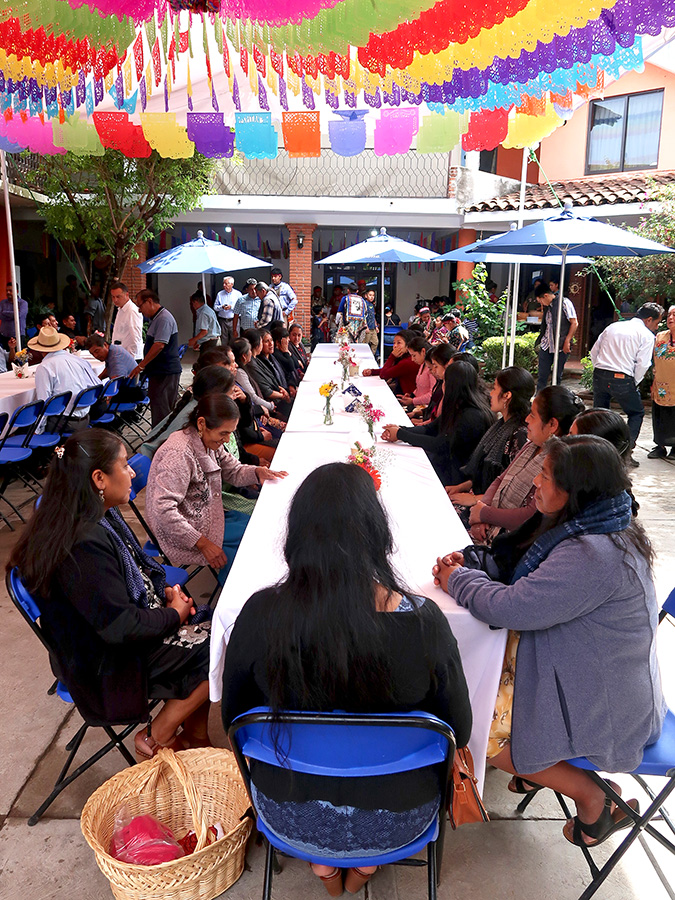
The women’s table waiting for breakfast at Casa Santiago. Yes, there is a men’s table — separate tables is traditional.
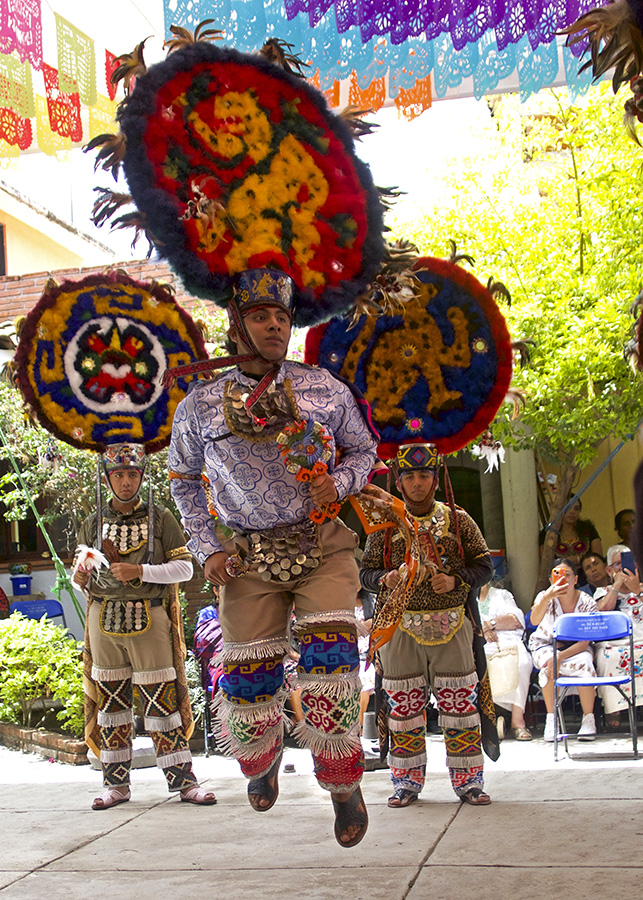
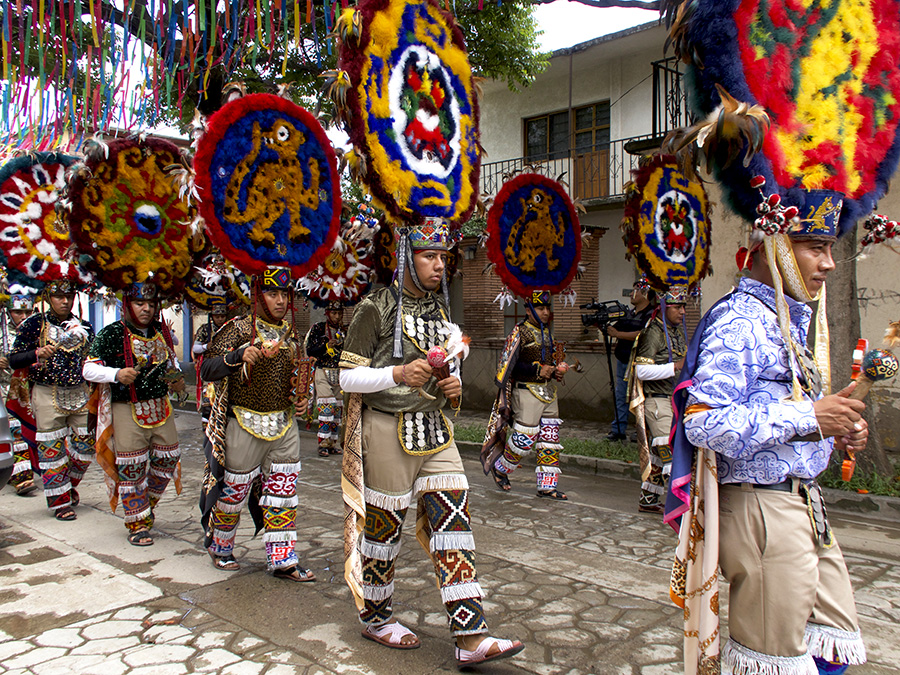
Two days before winging my way to California, I had the privilege of attending the breakfast given by Hugo’s family at the family compound, Casa Santiago. After the meal, tables were folded, chairs were moved to surround the courtyard, danzantes took their places, the band began to play, and Hugo and his fellow Capitán, Félix Contreras Ruiz commenced to dance. Following their dance, the entire group performed and then, led by the band, they took to Teotitlán’s main street to process up to the atrium of the church where they would perform the Danza de la Pluma for almost eight hours.
Papel picado at the fiesta hosted by the family of Capitán 2, Hugo Santiago Jimenez, at Casa Santiago.
Some of the women behind the days of feasting.
Hugo Santiago Jimenez dances in the courtyard of Casa Santiago.
Family watching as Hugo Santiago Jimenez dances in the courtyard of Casa Santiago.
Band leads the way back to the Templo de la Preciosa Sangre de Cristo.
Grupo Danza de la Pluma Promesa 2022-2024 processing back to the Templo de la Preciosa Sangre de Cristo.
Muchisimas gracias to the people of Teotitlán del Valle and, especially, Hugo and his family for inviting me and for being so welcoming and gracious. And, to my readers, CORTV will be streaming tomorrow (July 24, 2023) evening’s Danza de la Pluma performance by Teotitlán’s danzantes at La Guelaguetza (5 PM Mexico; 4 PM PDT; 7 PM EDT).
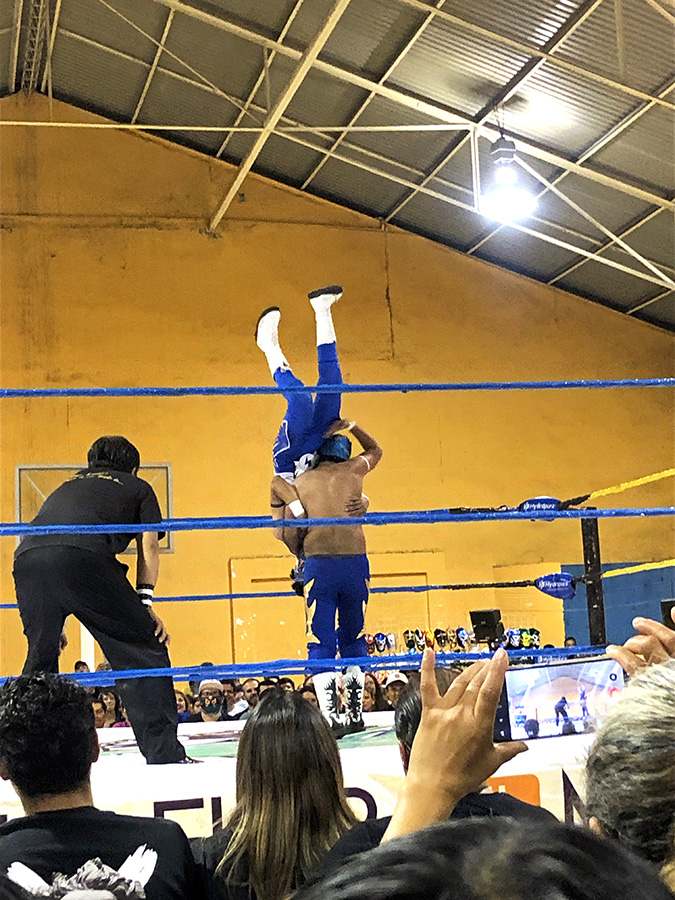
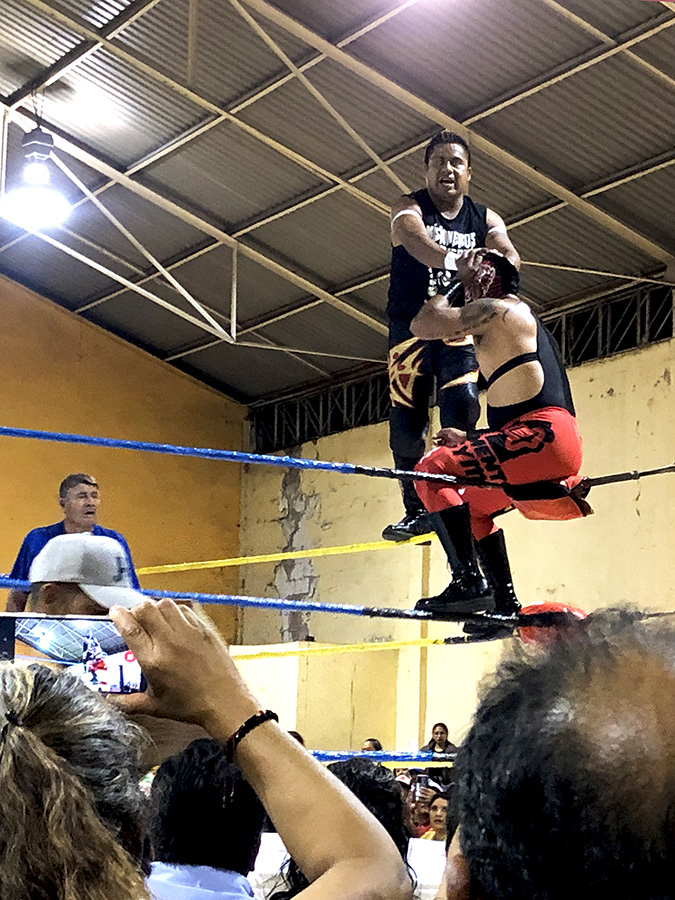
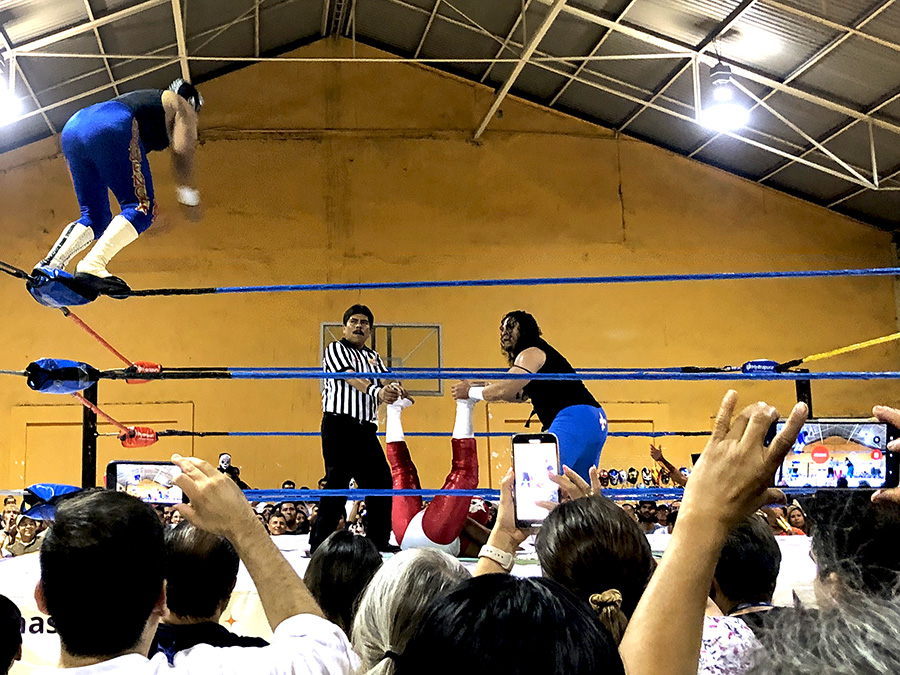
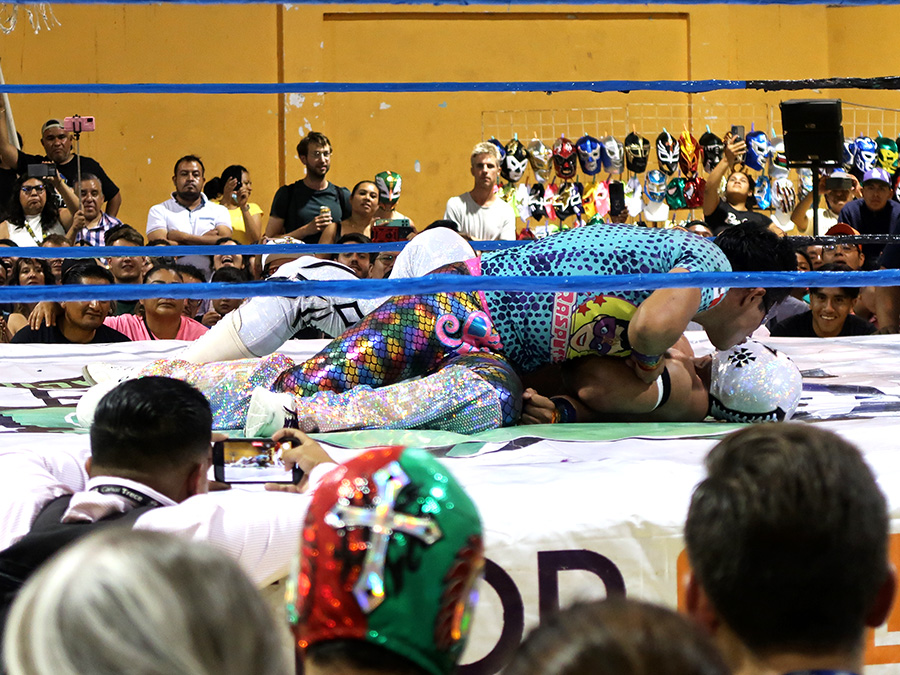
After fourteen years in Oaxaca, along with several of my neighbors, I finally attended my first Lucha Libre spectacle. And a true spectacle it was — a three hour extravaganza of colorful costumes, menacing masks, aerial acrobatics, ostentatious overacting, and an abundance of hilarity.
The ring — at Casa de los Deportes.
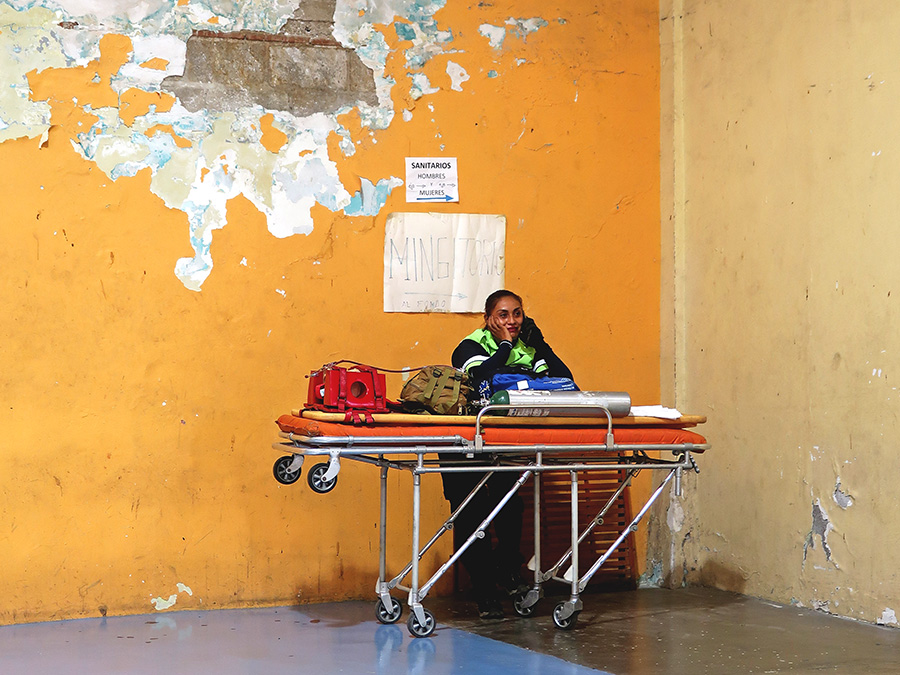
The Emergency Medical Technician.
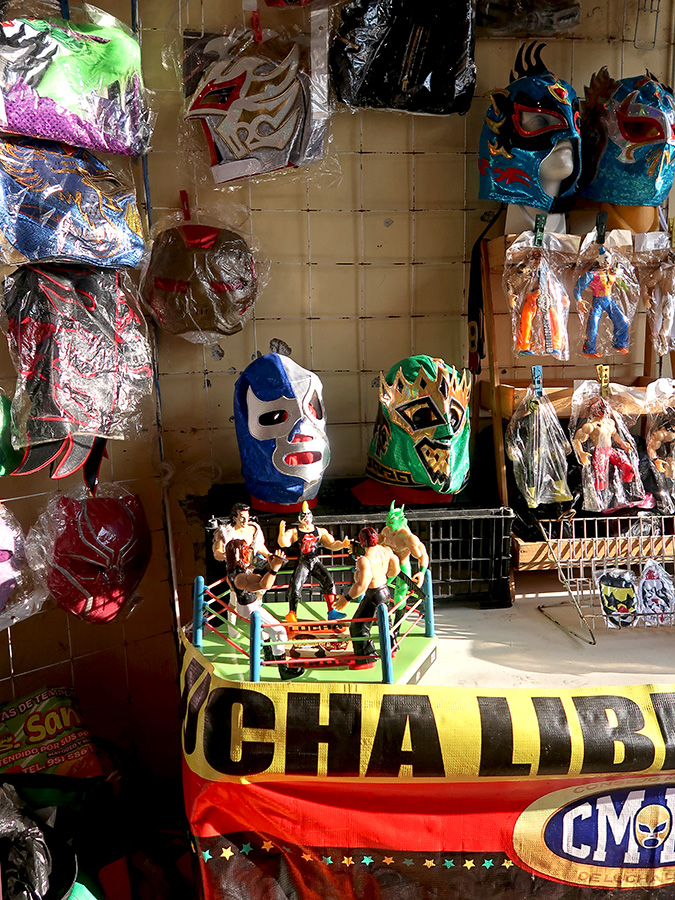
The masks and more.
The Rasputín merch.
The fans and their cell phones.
The kids in the ring between matches.
The evening’s entertainment consisted of five matches of three rounds each. Each team of two won a round with the third round deciding the winner. I’m not sure why the winners won and I’m not entirely certain the whole thing, including round three, wasn’t scripted. And, did I mention, the referees play favorites and occasionally get in on the action?
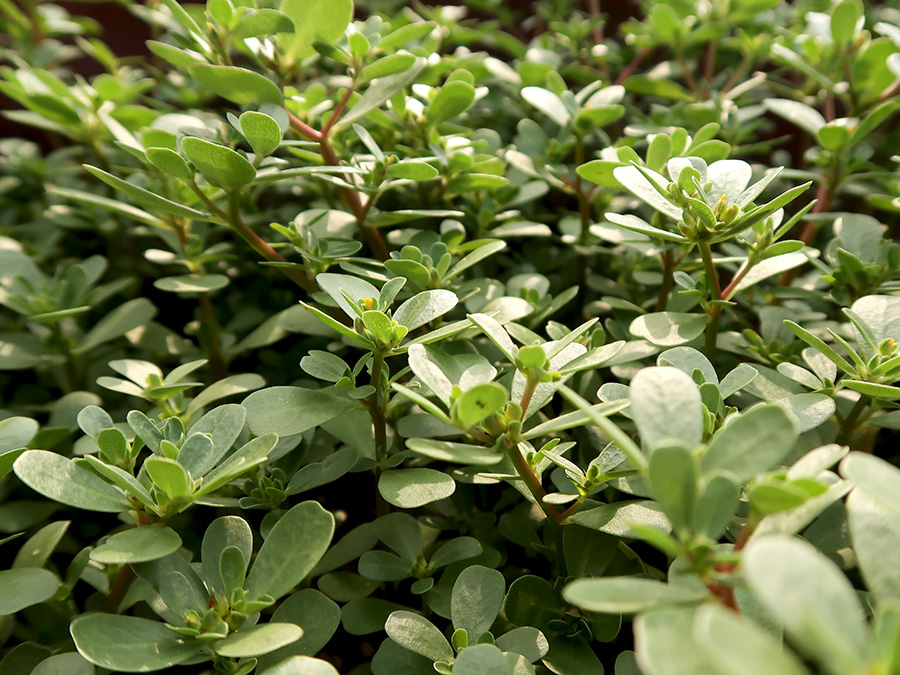
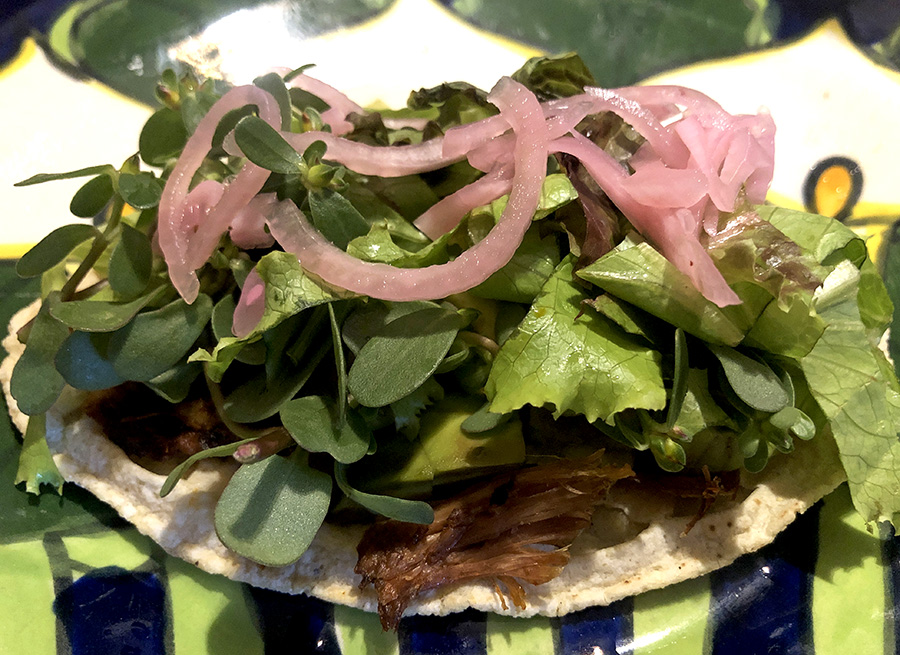
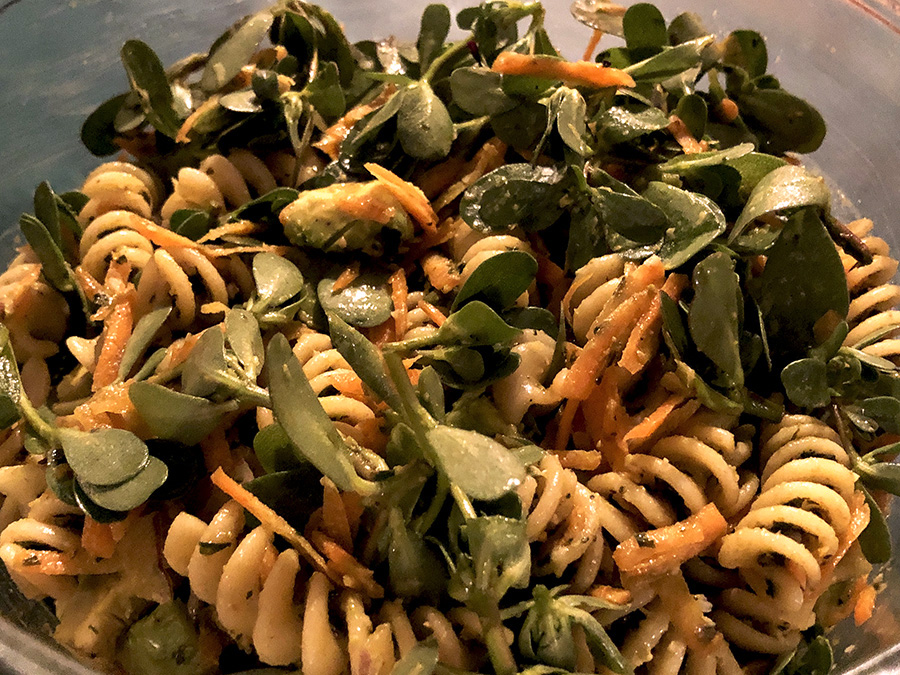
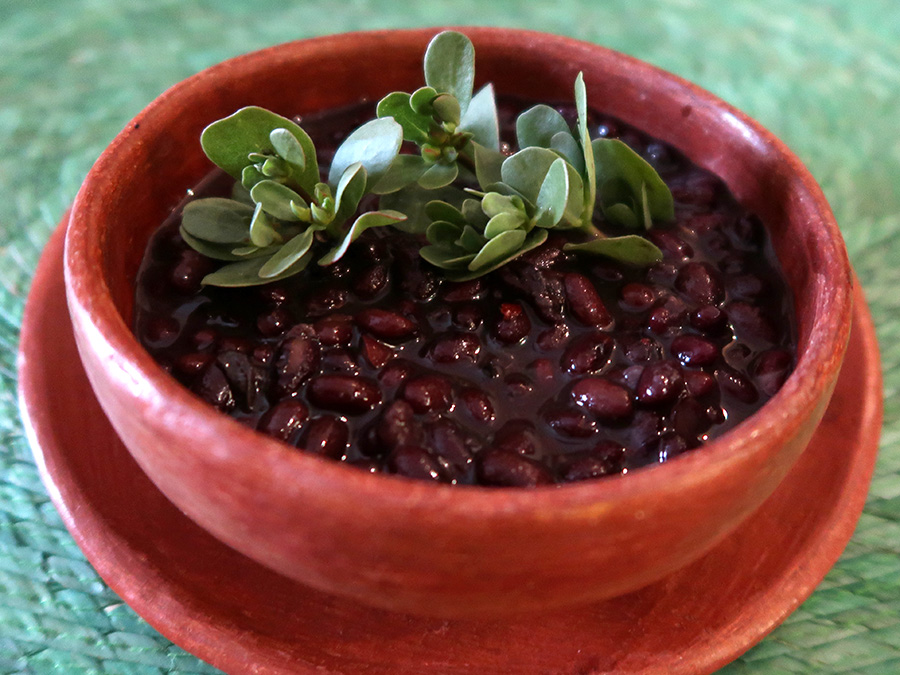
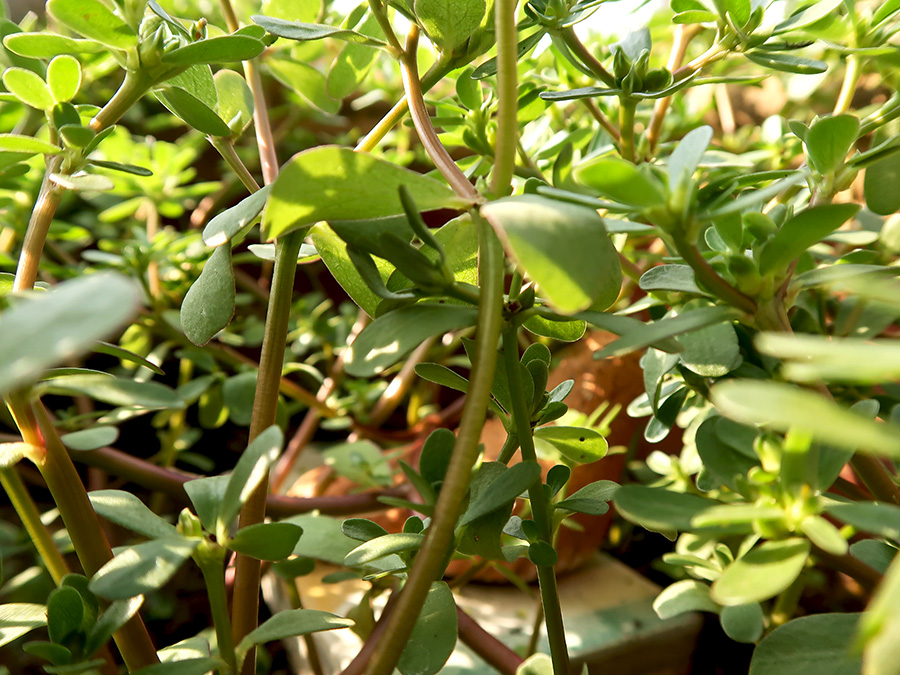
The rainy season, which came early this year and has disappeared for the past two weeks, has brought a plethora of purslane (verdolaga en español) to the rooftop garden. Most every planter and pot is filled with this uninvited, but much welcome, herb. And, it always inspires me to be a little more creative in the kitchen.
Volunteer purslane/verdolaga filling an unused garden pot on the rooftop terrace.
Taco filled with barbacoa, avocado, lettuce, purslane/verdolaga, and pickled red onions.
Fusilli with carrots, avocado, and purslane/verdolaga.
Purslane/verdolaga garnishing black beans.
Volunteer purslane/verdolaga in the giant pot that is home to my magnolia tree and terracotta bird.
Purslane is not only versatile and delicious, WebMD sings its praises when it comes to its health benefits.
I realized I haven’t tempted your taste buds with any food porn this year. From fine restaurants to street food, I’ve been eating out a lot and the following are just a small sampling. Actually, they are from the few times I remembered to take out my phone or camera and snap a photo before “digging in.”
February 1, 2023 – Pizza at Cafe Bistro Epicuro in Oaxaca city center.
February 8, 2023 – Guacamole at Con Vista al Mar in Barrio de Jalatlaco.
February 22, 2023 – Salad at Biznaga in Oaxaca city.
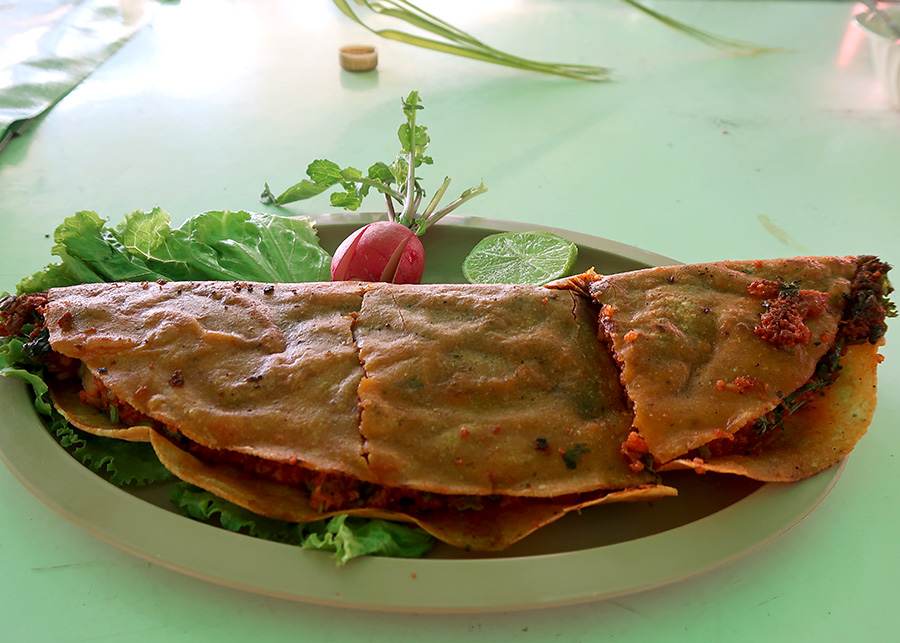
April 2, 2023 – Empanada at our favorite street stall in San Antonino Castillo. Velasco.
April 27, 2023 – Taco at Humar in Oaxaca city center.
May 3, 2023 – Tacos at Casa Oaxaca in Oaxaca city center.
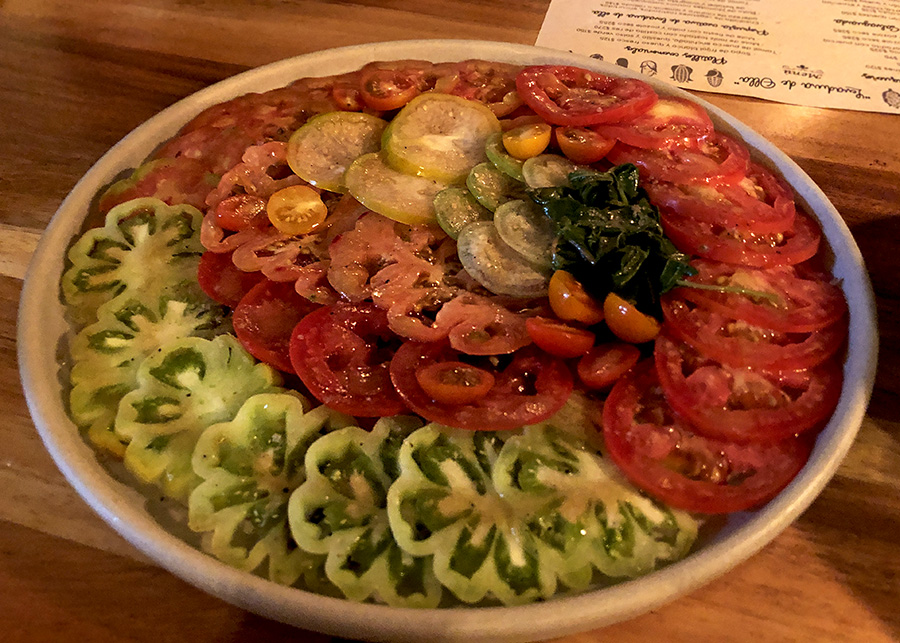
June 8, 2023 – Tomato salad at Levadura de Olla in Oaxaca city center.
June 10, 2023 – Hamburger at Carn&Voro in Oaxaca city.
While there are no photos from March, I can assure you, I did not starve!
The violent storms Oaxaca experienced in mid April brought down 30+ trees in the city, including one of her beloved old Indian laurels in Llano Park. And, when a tree falls in Oaxaca…
Left to right: Cuetzpalin/iguana; Coatl/serpiente/snake; Ocelotl/jaguar; Ozomatli/mono/monkey
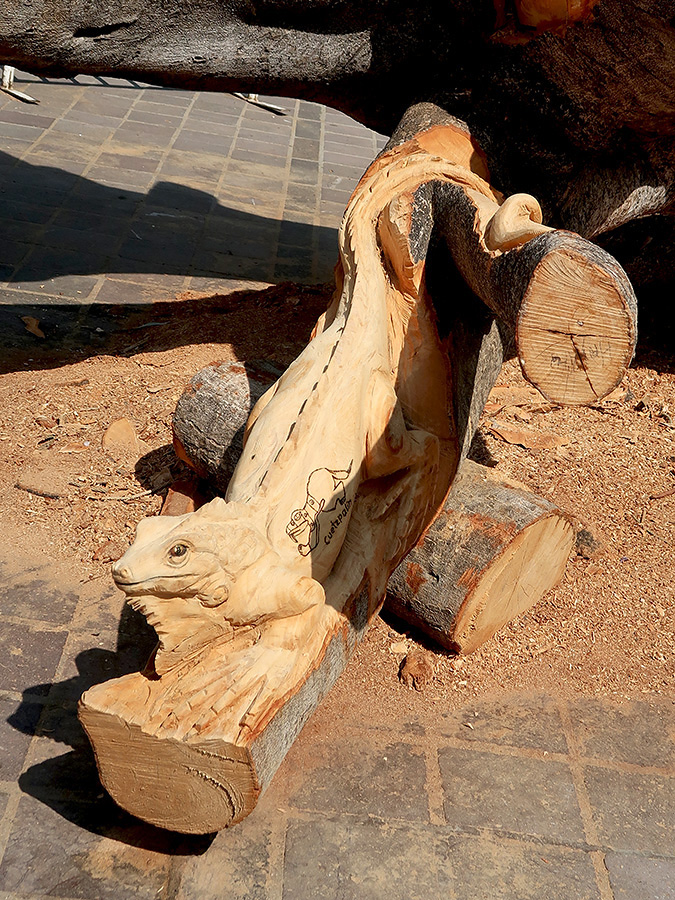
Talented artist, Heriberto Castro López, grabbed his chainsaw and chisel and, with the blessings of the powers that be, turned the fallen tree into a public work of art, a language lesson, and a plea for help.
Cuauhtli/águila/eagle
A monkey, a jaguar, an eagle, a rabbit, an iguana, and there’s a snake in there somewhere — all animals iconic to Oaxaca — emerged.
Tochtli/conejo/rabbit
The animals seem appropriate, as Parque el Llano (aka, Paseo Juárez, El Llano de Guadalupe, and Alameda de Nezahualcoyotl) housed a zoo from 1945 to 1971 (dates not verified) — hence the gold painted lions at the four main entrances to the park.
Cuetzpalin/iguana
However, this time the animals aren’t confined to cages — they are free and calling on us to save this planet we all call home before it’s too late.
Many thanks to Heriberto Castro López for his “Llamado de Auxilio” gift to Oaxaca.
What can I say? The last few mornings, as I checked on my rooftop garden, I started singing, The Telephone Hour song from 1960s musical, Bye Bye Birdie.
What’s the story, morning glory? What’s the word, hummingbird?
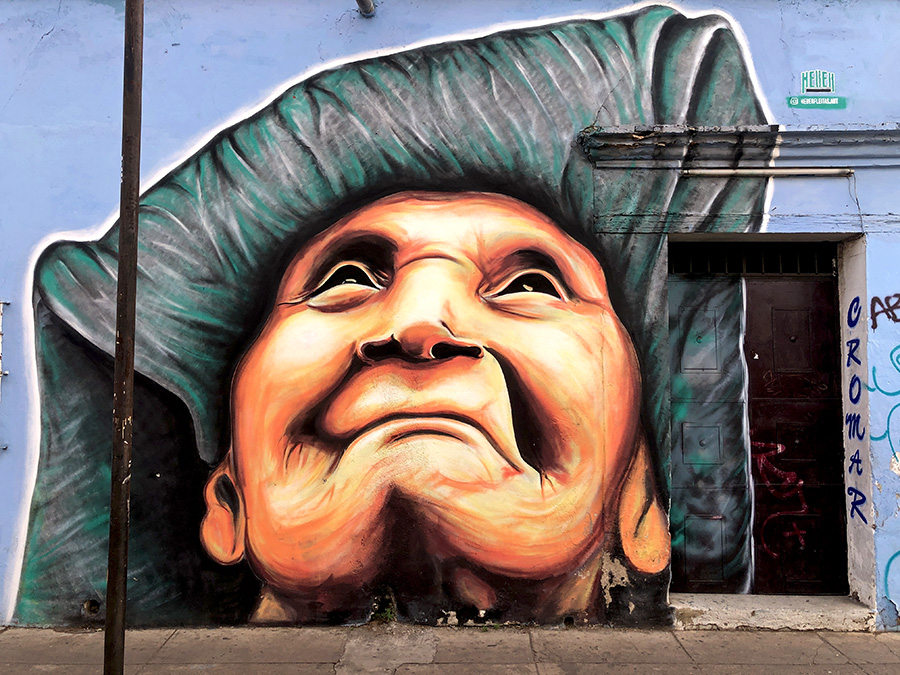
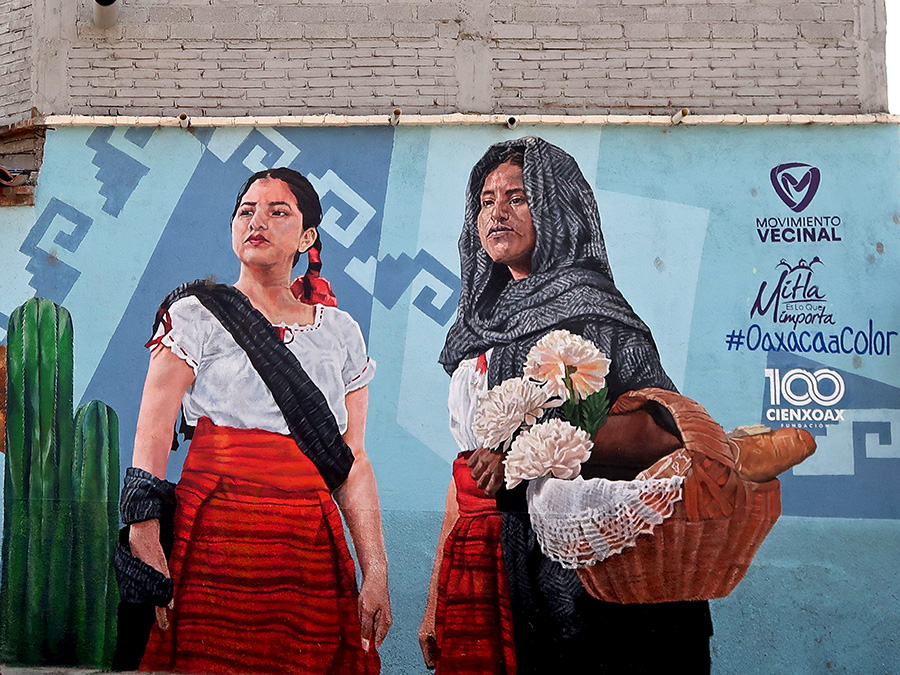
May 10 is Día de la Madre in Mexico and to honor the mothers, grandmothers, mother figures, and the daughters, whose future is in their hands, some recent murals seen in the city and countryside.
The celebration of Mother’s Day migrated south from the USA in the early 20th century and was embraced and promoted by the Catholic Church AND the anticlerical Revolutionaries. Their reasons being:
around the 1850s the Liberals… were nervous about women’s growing participation in the public sphere. Establishing motherhood as venerable and the home as sanctified… would give women a sphere of their own where they could be boss. Also, it would keep them off the streets and out of the workplace where they had begun to compete with men for jobs. Under their watch, everyday motherhood became an exalted madre-hood…. The twentieth-century Revolutionaries who succeeded them took the idea and ran with it, adding in 1922 a ritual, Mother’s Day. [Madre: Perilous Journeys with a Spanish Noun by Liza Bakewell, p. 84]
As for keeping them out of the workforce, according to a report citing the 2010 census, 33.3% of women work and this doesn’t even include those working in family operated enterprises. However distasteful the reasons behind the establishment of Mother’s Day in Mexico, it does nothing to diminish the need to honor these beautiful, hardworking, formidable, and loving women.
And to the girls and young women, may you be empowered by the strength and love of the maternal figures in your life to reach for the stars, live without fear, and be whatever you choose to be.
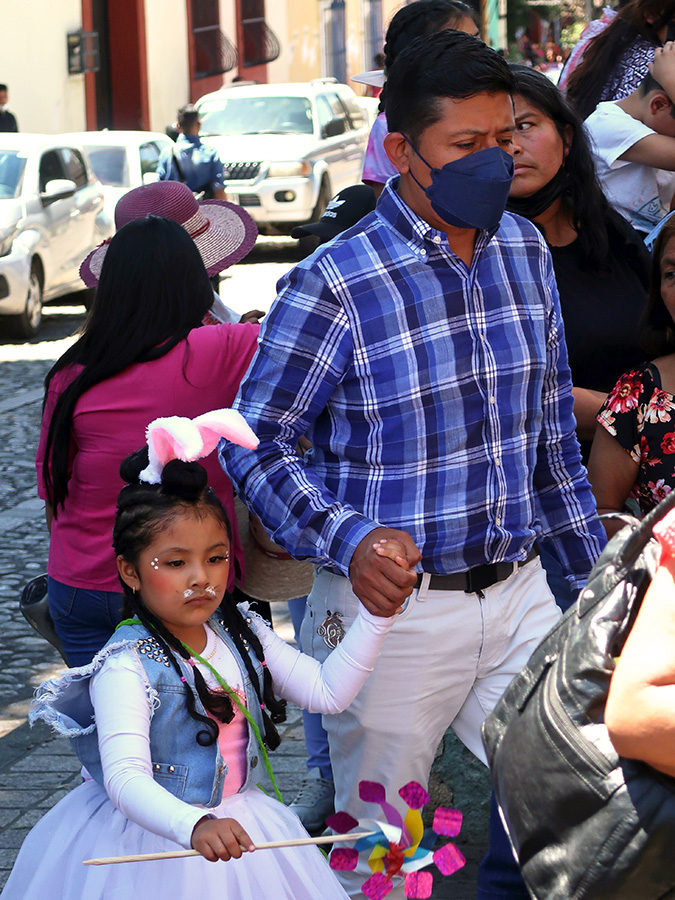
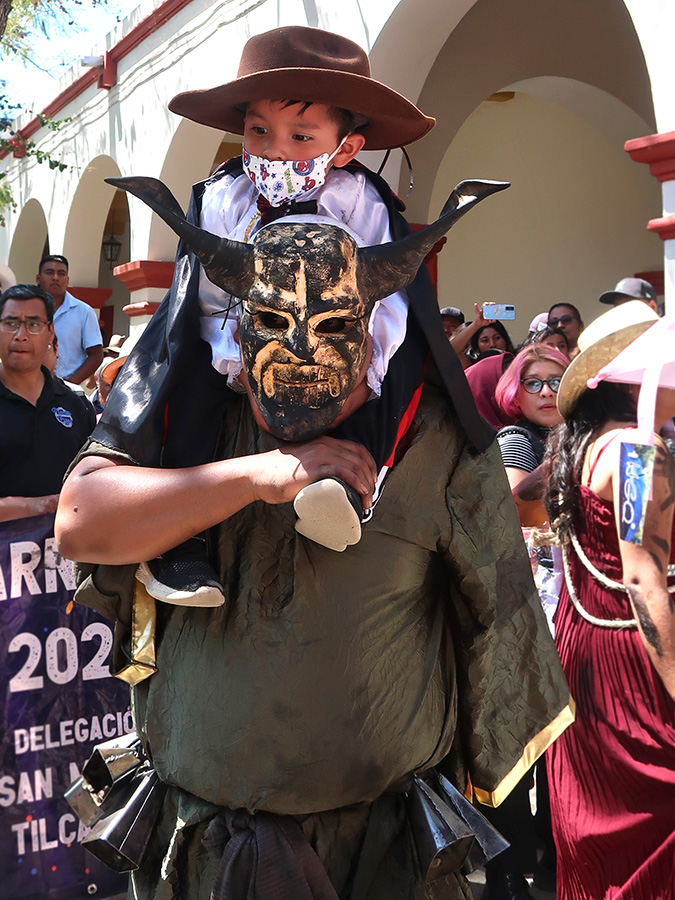
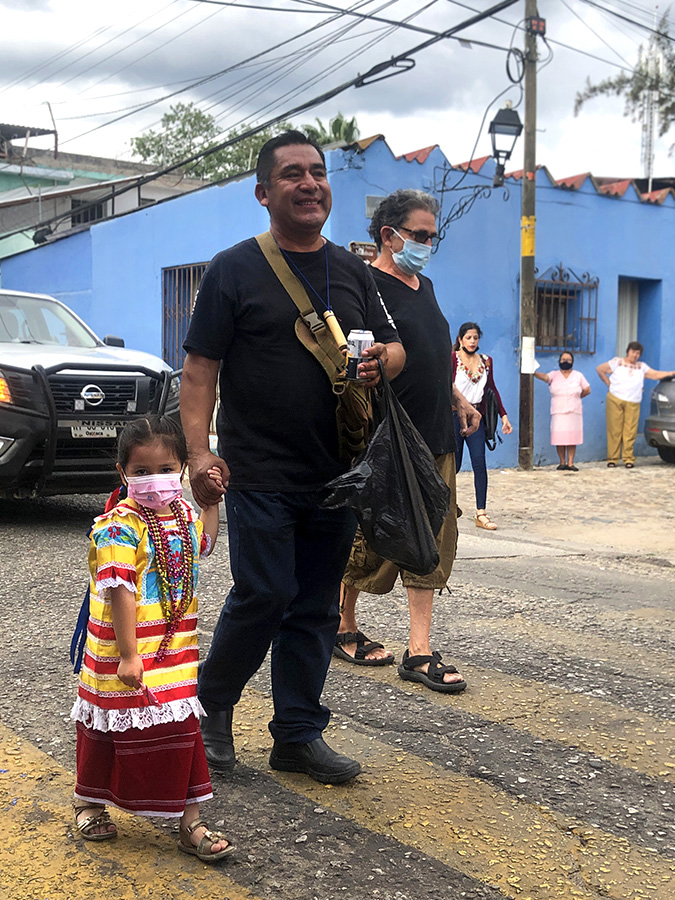
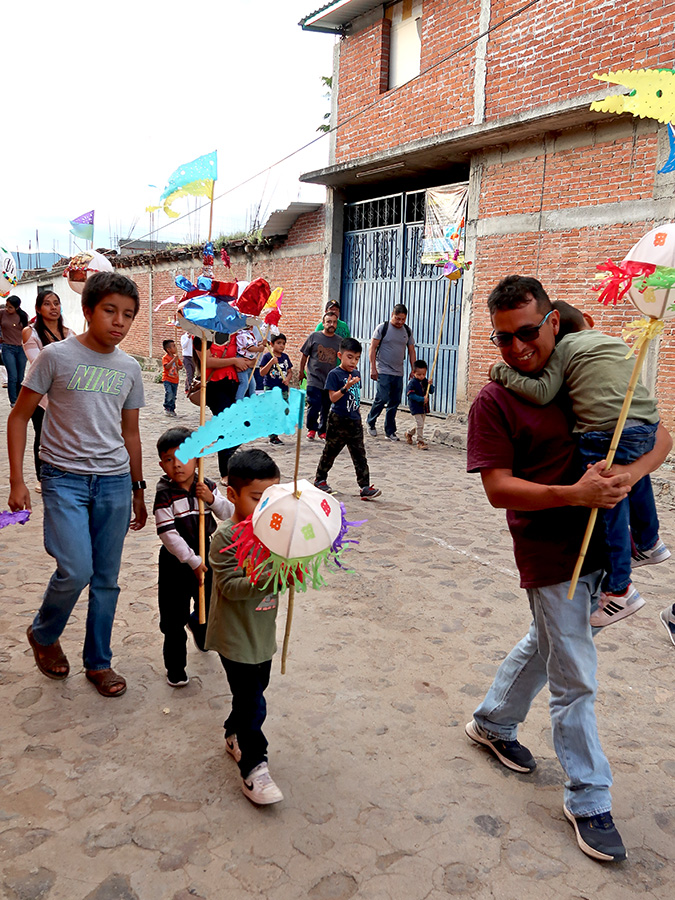
The United Nations declared November 20 as World Children’s Day. However, that is Día de la Revolución in Mexico, thus in 1924, President Álvaro Obregó and Minister of Public Education José Vasconcelos designated April 30 as Día del Niño — the day Mexico celebrates and honors her children. Schools organize parties with games and treats, communities organize special activities, and parents may give their hijas and hijos gifts. However, one of the features of life in Oaxaca that I most appreciate is the way children are included all year round in celebrations.
July 4, 2022 – Convite for the festival honoring Preciosa Sangre de Nuestro Señor Jesucristo, Teotitlán del Valle.
July 4, 2022 – Wearing traditional dress, with her canasta, watching and learning at the Preciosa Sangre de Nuestro Señor Jesucristo convite, Teotitlán del Valle.
July 4, 2023 – Practicing with a marmota at the convite honoring Preciosa Sangre de Nuestro Señor Jesucristo, Teotitlán del Valle.
July 5, 2022 – Playing the roles of La Malinche and Doña Marina in the Danza de la Pluma, Teotitlán del Valle.
September 16, 2022 – Young escaramuza participating in the Independence Day parade in Oaxaca City.
February 4, 2023 – Young boy twirling a marmota during wedding festivities in front of Templo de Santo Domingo de Guzmán, Oaxaca.
February 18, 2023 – Young cachudos from Santa María Coyotepec participating in the Carnaval parade, Oaxaca.
February 18, 2023 – Young participant in the Carnaval parade, Oaxaca.
February 21, 2023 – Carnaval in San Martín Tilcajete.
April 2, 2023 – Carrying an offering in the Good Friday procession, San Antonino Castillo Velasco.
“… the objective of this [Día del Niño] celebration is to dedicate a moment to understanding the child population, promoting their social inclusion and carrying out activities to promote their well-being and the rights to which they have access as human beings.” (Google translation from this article)
With thunder, lightening, torrential rain, and a massive hail storm, April “showers” heralded the end of the dry season — in a most spectacular way!
The evening of April 14 the city of Oaxaca and surrounding villages were hit with a freak hailstorm. Needless to say, I closed my doors and windows, unplugged critical electronics, and hunkered down inside until the storm had passed — which seemed like at least two hours. When I eventually ventured out, I found the apartment complex patio five inches deep in water, hail piled outside my rooftop laundry room door, and a garden of plants with shredded leaves.
Then two nights ago another massive thunderstorm hovered over us for hours, turning streets into rivers and sending trees toppling all over the city.









































 Mexican Peso Converter

 View From Casita Colibrí