Feeds:
Posts
Comments

Posts Tagged ‘murals’

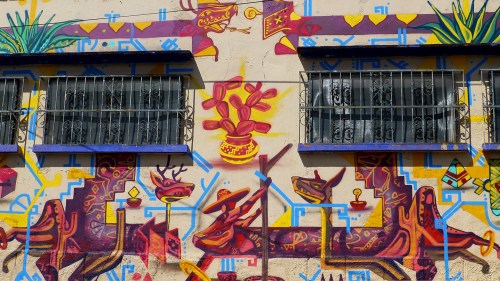
Back to Havana… and the colorful and captivating Callejón de Hamel, in Barrio Cayo Hueso.  (For a more in depth and fascinating history of this neighborhood, see Neighborhood as Refuge: Community Reconstruction, Place Remaking, and Environmental Justice in the City  by Isabelle Anguelovski.)

It was our first full day and serendipity and synchronicity brought us Dayan, an enthusiastic guide with boundless energy and pride.

Without hesitation, Dayan immediately made a beeline to this alley  — the creation of self-taught artist, Salvador González Escalona.  It is a living, breathing gallery and studio, where artists were welding and painting as we stopped to watch and wonder at their creations.

The cultural character of this community cannot be separated from its religious traditions and practices — a syncretism of African religions brought by slaves and Catholicism brought by the Spanish conquerors.  Salvador Gonzáles Escalona explains, “I am talking about the religion known as Santería, which comes from the Yorubas; Palo Monte, which comes from the Congo; Abakuá, which has to do with Calabar [the Cross River Delta in Nigeria]; and maybe some manifestations of spiritism, a cultural expression of working class people, the ordinary folks in our country.”

Callejón de Hamel is also home to a vibrant musical scene.  “In this alley many years ago, in the 40’s, a cuban musical movement was born, known as ‘filin,’ songs of feeling, with our friend Angelito Díaz and his now deceased father, Tirso Díaz. There were figures such as Elena Burque, the late Moraima Secada, aunt of Jon Secada, Omara Portuondo [featured in Buena Vista Social Club], César Portillo de la Luz, and many others.” — Salvador Gonzáles

On Sundays, around noon, the street comes alive with musicians, dancers, and the sights and sounds of Cuban rumba.  Alas, around that time, we were in the midst of changing hotels.  Next time, for sure!

Read Full Post »

Back in Oaxaca… I don’t know the story of this mural that recently appeared at the corner of Allende and Tinoco y Palacios.  However, on this Mother’s Day (in the US), it seems appropriate.

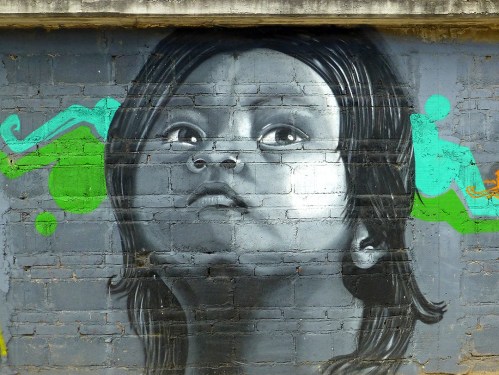
A mother’s eye is always watching…

Read Full Post »

A pause in the Cuba coverage to echo Dorothy, “There’s no place like home” — especially if that home is Oaxaca.  I needed (yes, needed!) chocolate and coffee and, thus, headed toward the Benito Juárez and 20 de noviembre mercados.  As always, even just a grocery shopping trip is a feast for the senses.

P1190316

First, a calenda on Calle Independencia of students, academics, and workers to launch the registration of candidates for rector of Universidad Autónoma Benito Juárez de Oaxaca (UAJBO).

P1190325

A peek into el pasillo de las carnes asadas (ahhh, the smells) in 20 de noviembre mercado, while waiting for my chocolate guy to finish with other customers.

P1190329

A look at the finished murals (and merchandise) in a newly opened shop at Calle Macedonia Alcalá 100.

P1190332

Stopping to gaze up at the “Aves Sin Paraíso” exhibition above the Alcalá.

P1190340

Almost back to Casita Colibrí, a new stencil at the corner of Morelos and Tinoco y Palacios.

By the way, I got the chocolate, but couldn’t find my coffee guy in the maze of temporary stalls set up on the streets surrounding the Benito Juárez mercado (it’s undergoing a much-needed renovation).  There’s always mañana — I’m not completely out, yet.

Save

Read Full Post »

In Oaxaca city…

P1140033

P1150610

P1160356_copy

In Tlacolula de Matamoros…

P1140990

P1100121

P1100113

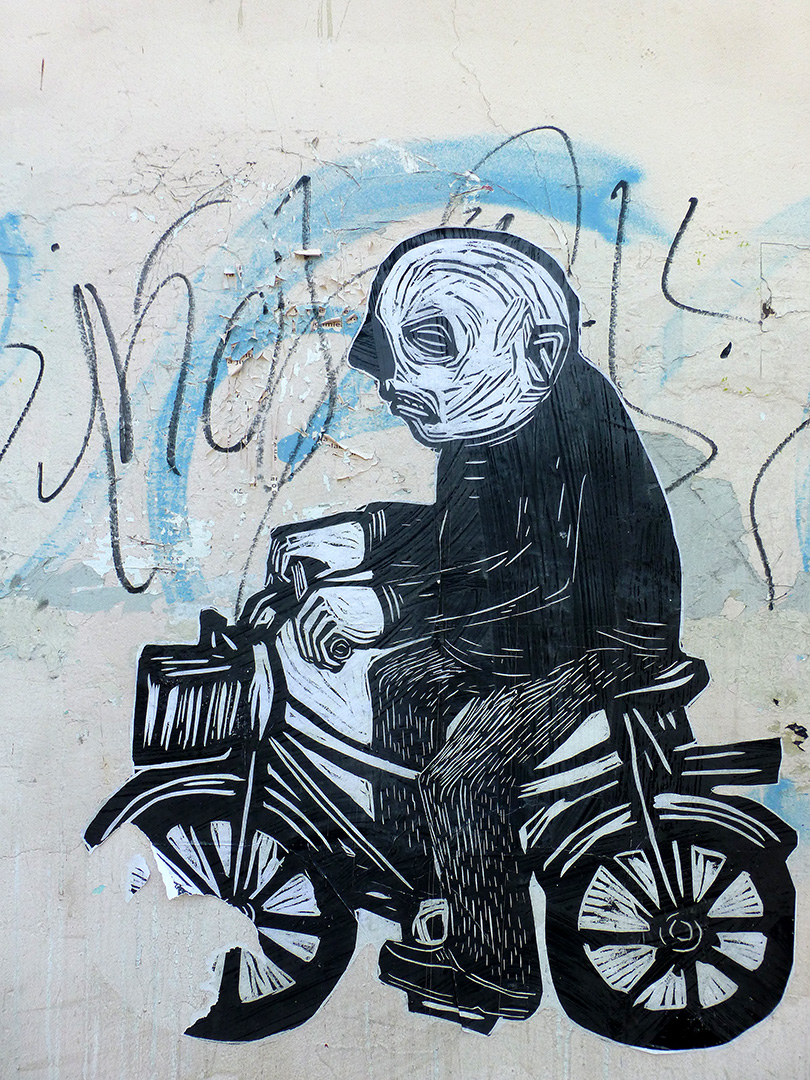
They are seen and they are watching.

Read Full Post »

In the category of “your just never know,” the two-block long Callejón Hidalgo is a treasure-trove of murals.

P1150617P1130455

P1130457

P1130459

P1150618

And, there are more!  Located between Tinoco y Palacios and Porfirio Diaz above Calle Jesus Carranza, it’s well worth the trek up the hill.

Read Full Post »

Artist Fabián Calderón Sánchez (aka, Sanez) has changed the face of the building next to Hotel Azucenas again!

P1150325

Located on calle Martiniano Aranda, in the 6-1/2 years I’ve lived in the ‘hood, the front of this building has played host to two previous murals by Sanez.

I’ve been a big fan of his distinctive work and was again captivated by his  creative and powerful use of indigenous imagery.

The mural is signed,  Macuilxochitl Losdelaefe — MTY (Monterrey) – OAX (Oaxaca) – GDL (Guadalajara) – www.sanez.mx – 2015.

Let us hope this doesn’t meet the same fate as other murals in my neighborhood recently have.


Read Full Post »

She’s gone…

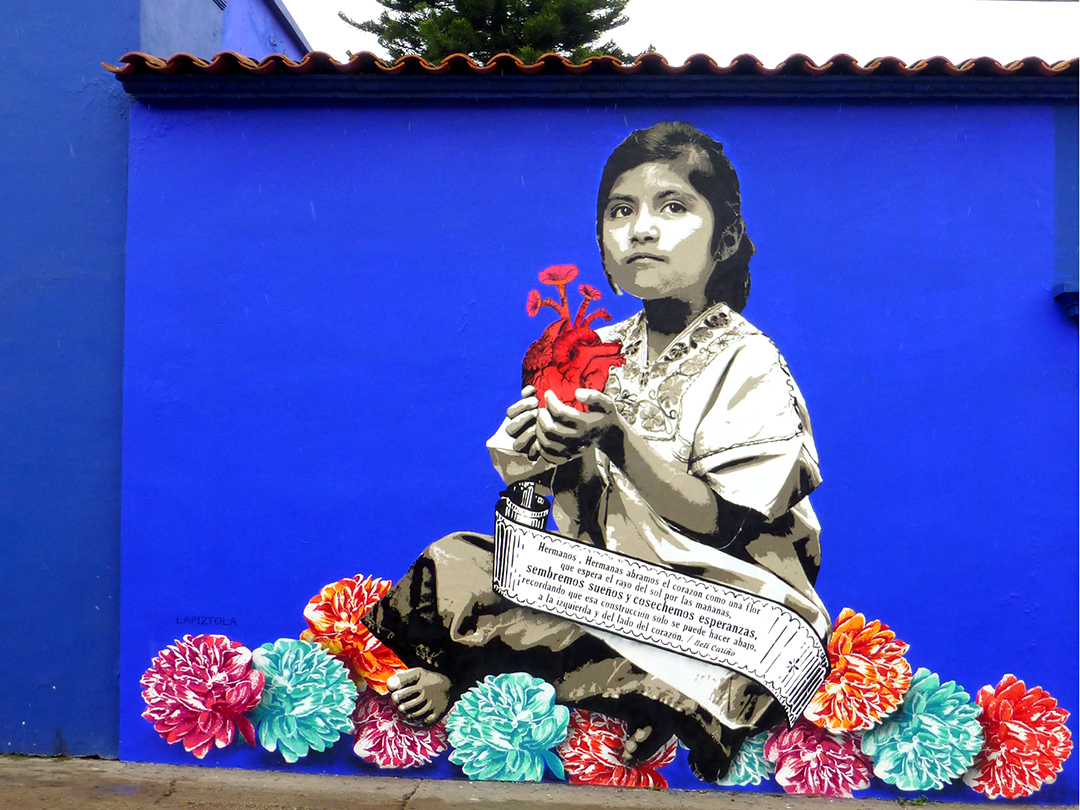
P1090814_copyAs feared, by order of the government, the beautiful and moving mural by Lapiztola, on the side of Museo Belber Jimenez, has been erased.

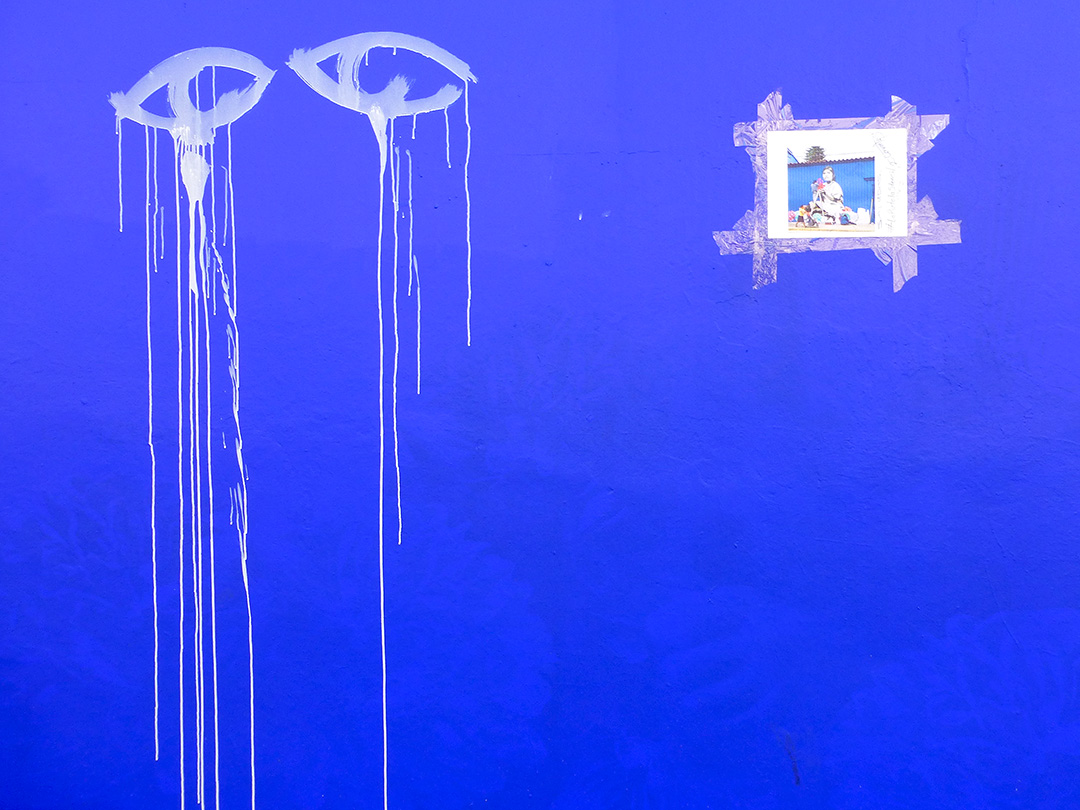
P1140922copyOnly her ghost remains.

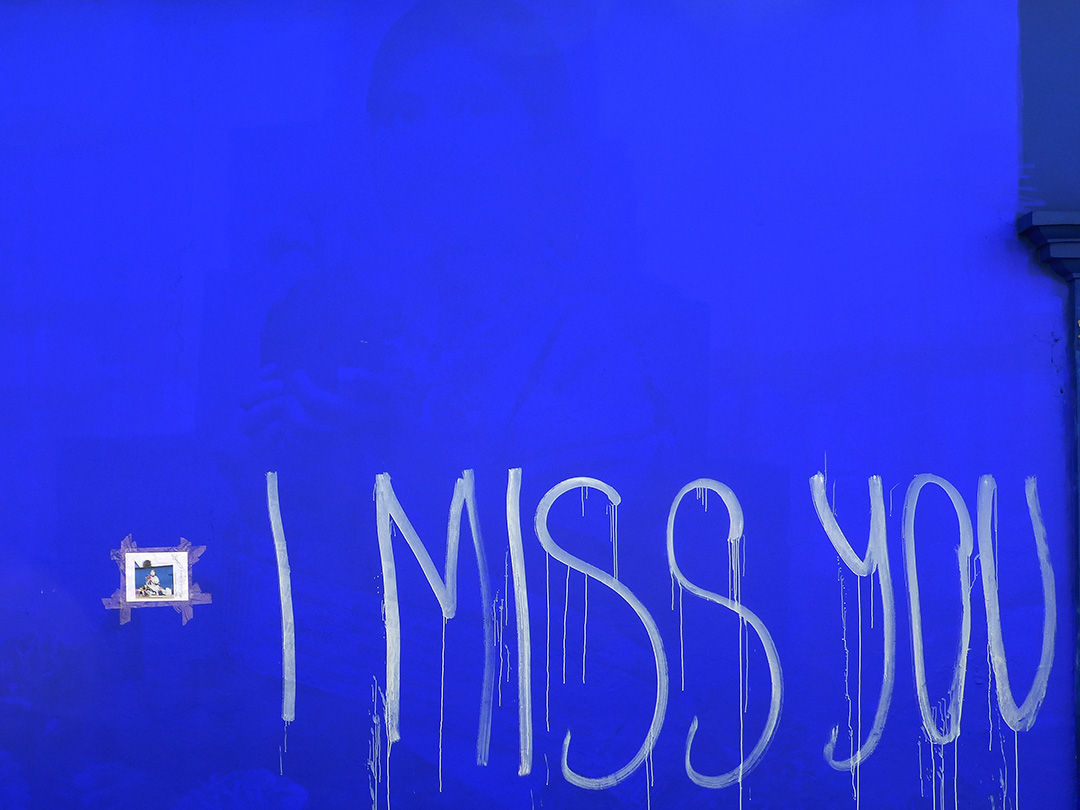
P1140920 copyI miss her, too.  Color and culture, indeed, seem to be unwelcome.

Read Full Post »

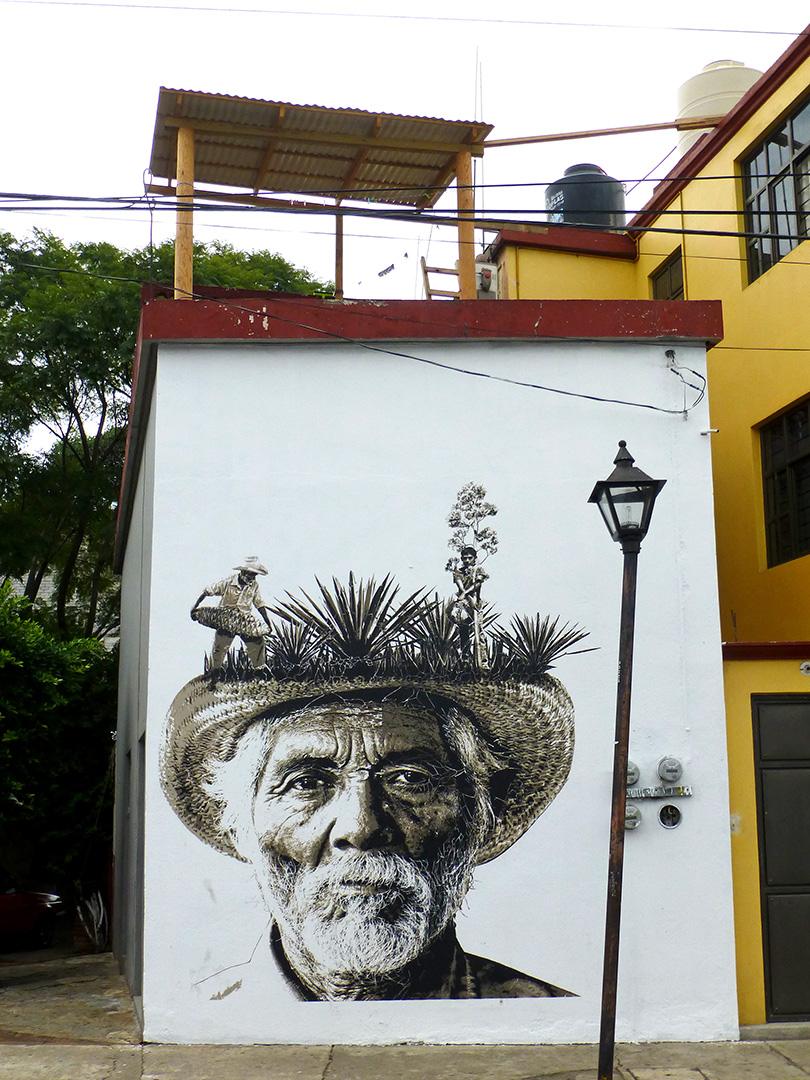
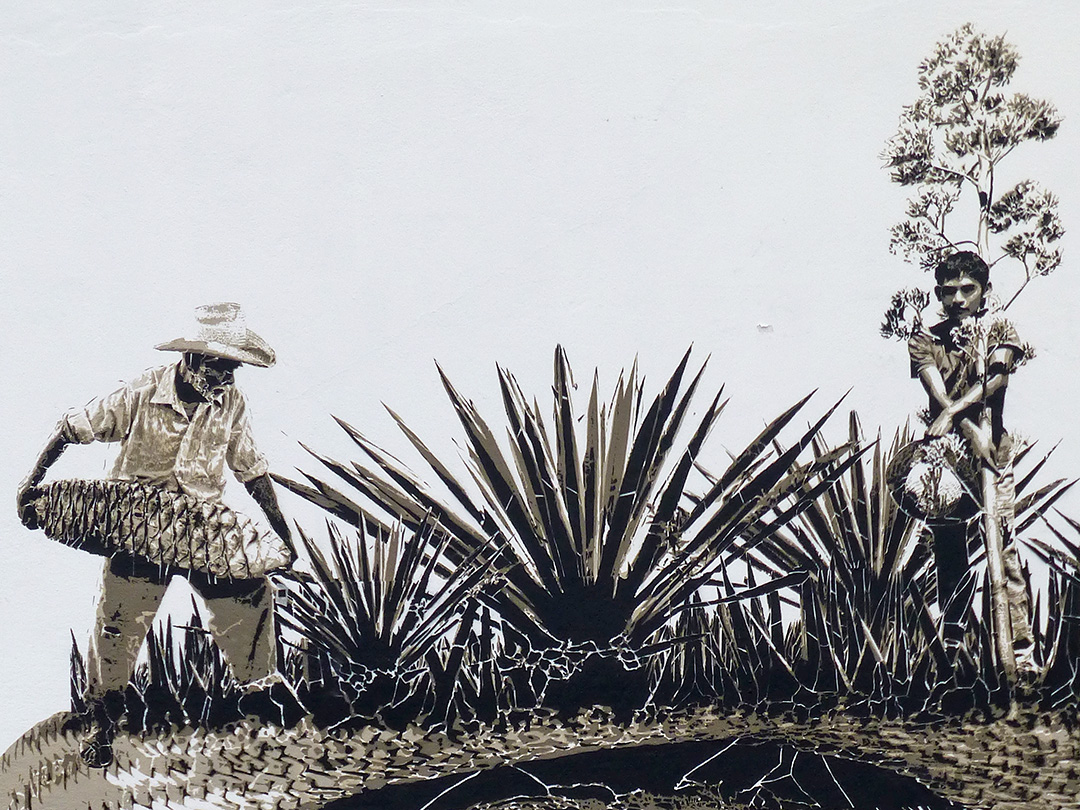
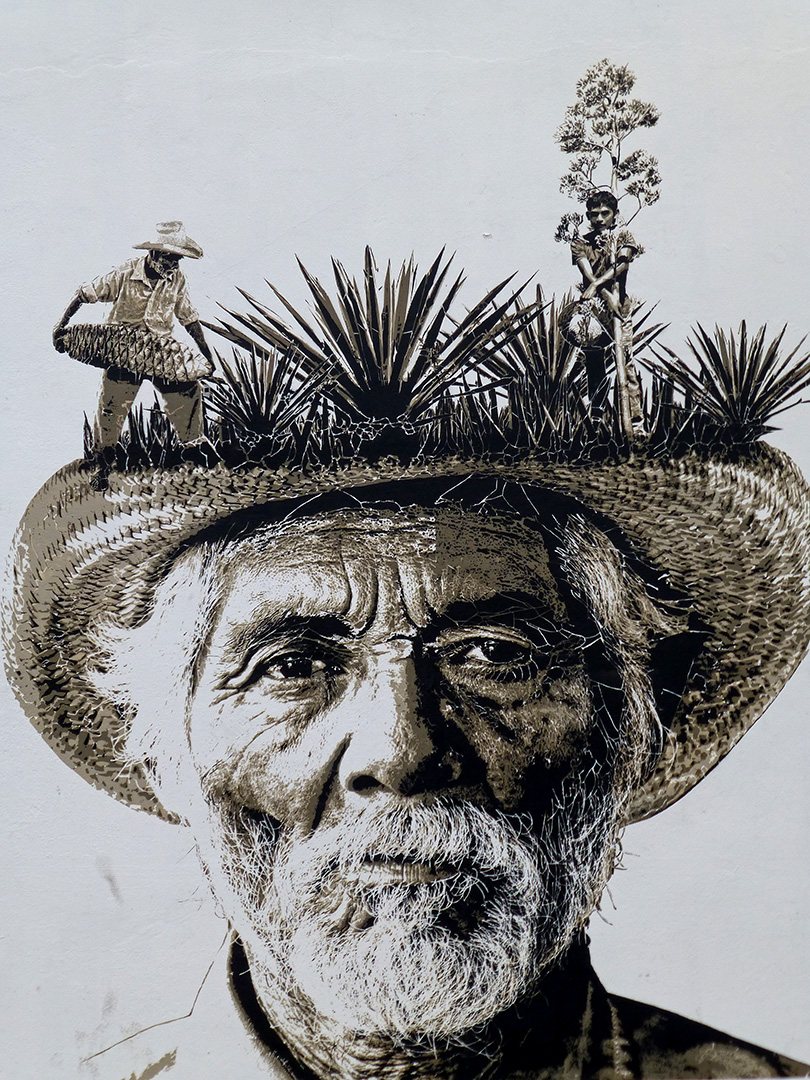
Before a “suspendida” order is slapped on this stunning piece by the Lapiztola collective celebrating the human face of agave cultivation, here is another moving work of art for the people, seen on Tinoco y Palacio on the wall of Piedra Lumbre, near the Sanchez Pascuas mercado.  It tells a story…

P1140381The wisdom of cultivation handed down from generation to generation.

P1140382From the agave comes mezcal.

P1140382lgThere are 199 “recognized” species of agave.  How many can be used to make mezcal?  The Mezcal PhD explores the answer.  And, for an illustrated guide to many of the more popular varietals, click The Many Varieties of Mezcal.

Read Full Post »

As many of you already know, one of my favorite things about living and being in Oaxaca is, you just never know what you will stumble across.  Rounding a corner, one might come upon a calenda (parade) with band, marmotas, monos, and dancers; a street artist or payaso (clown) entertaining a gathering of nin@s to abuel@s; street art; or a newly opened store.

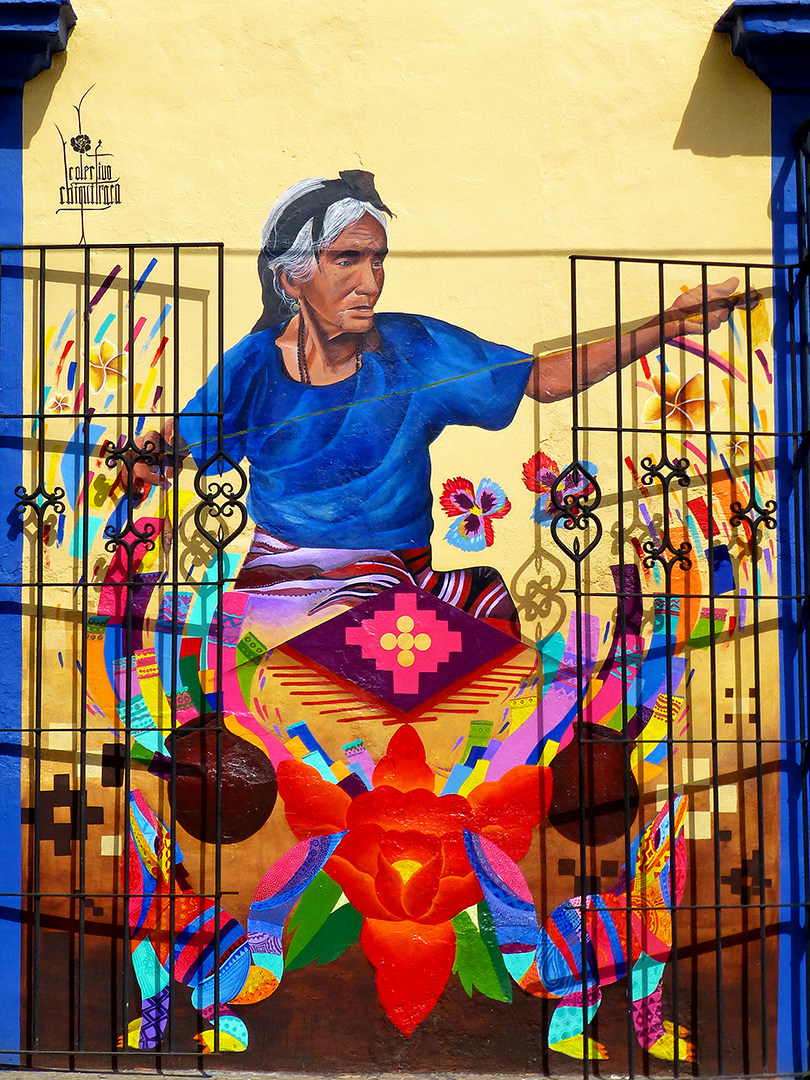
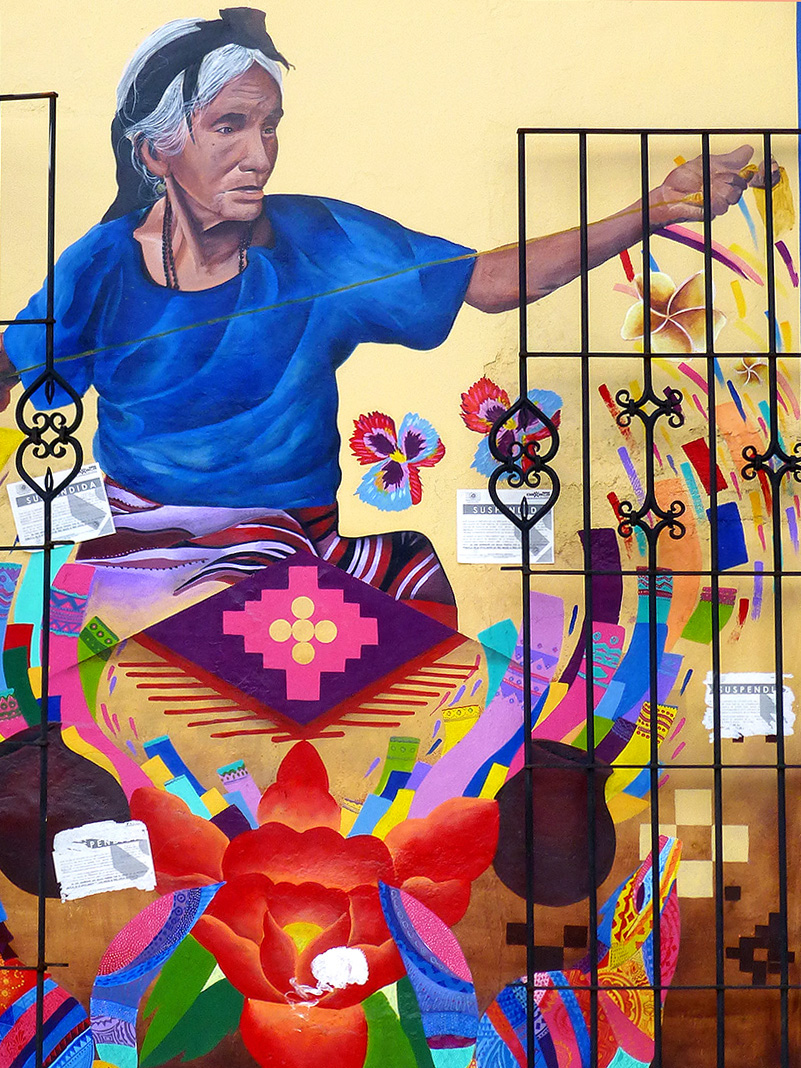
So (no surprise), a few months ago, walking up Tinoco y Palacios enroute to the Sanchez Pascuas mercado (in need of a few staples like quesillo, aguacates, and tamales), a stunning new mural caught my eye.P1120515Positioned to entice potential customers into Color y Cultura, a newly opened artisan community shop, the mural is the work of Chiquitraca Colectivo from Juchitán.  It worked, I was hooked, and later returned to browse and eventually buy a pair of earrings carved from a gourd.  However, during a return trip to the mercado, I was rather shocked to see unsightly papers defacing the mural.
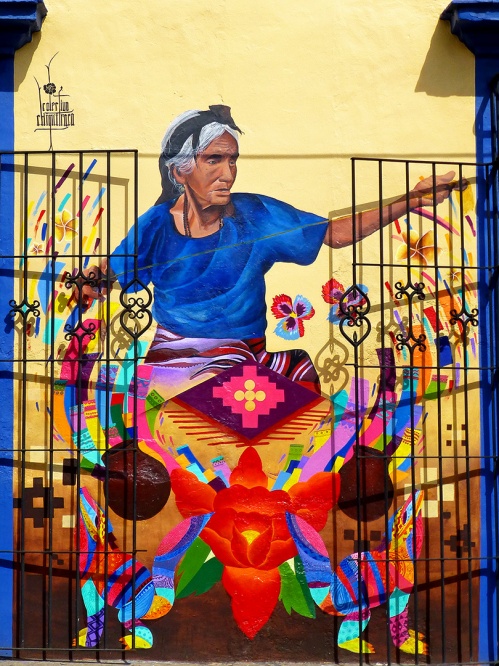
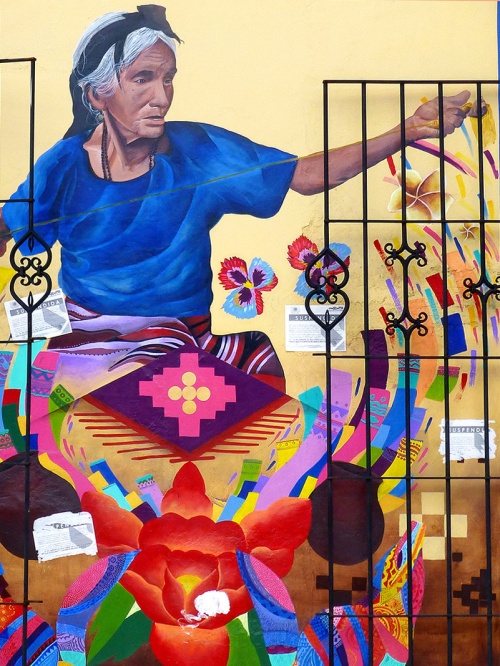
P1140828

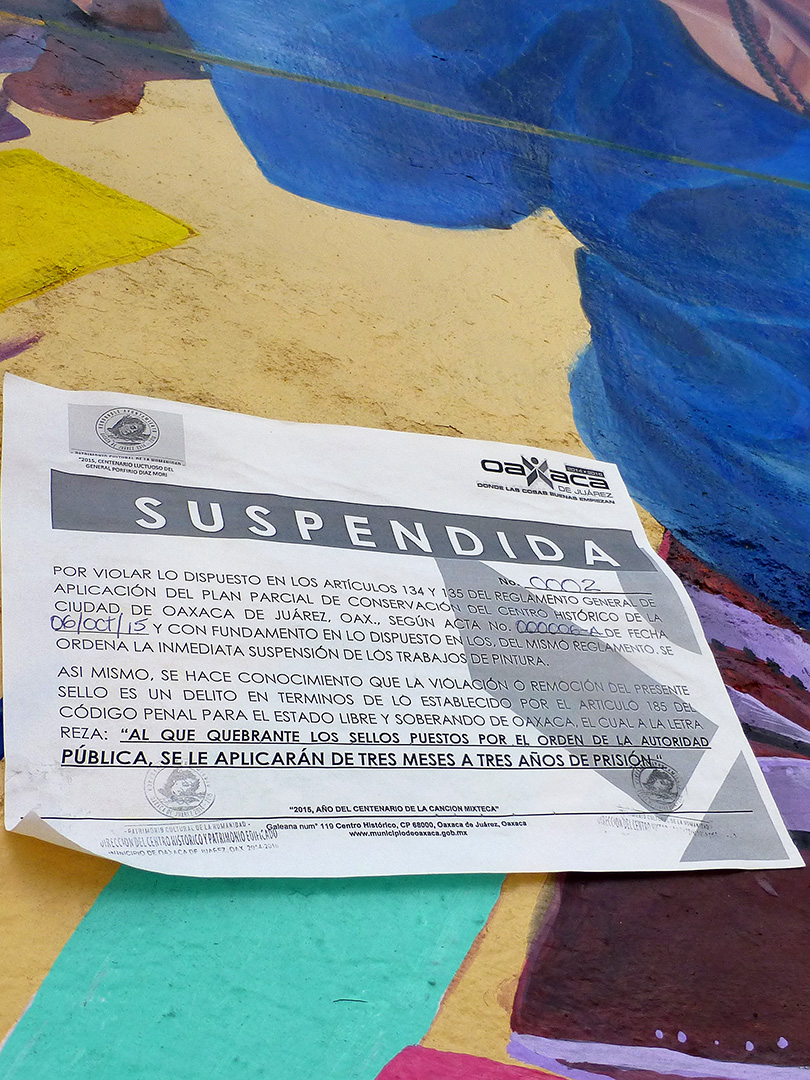
Usually, street murals are “hands off” zones for vandalism.  However, closer inspection revealed official notices declaring, “Suspendida” (suspended) and going on to say that the mural violates regulations on the conservation of the historic district.
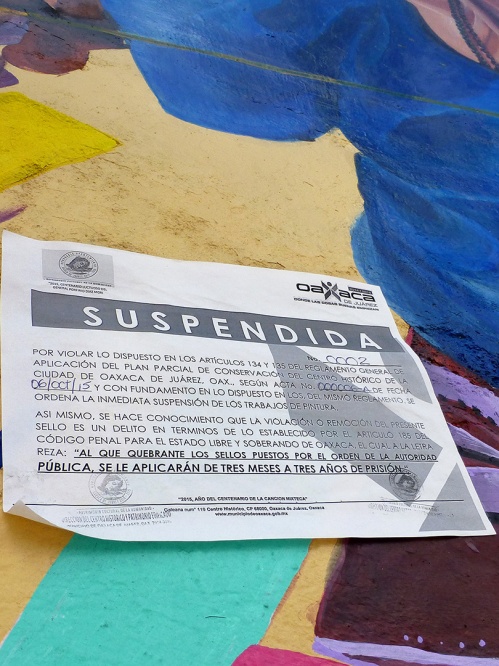
P1140829

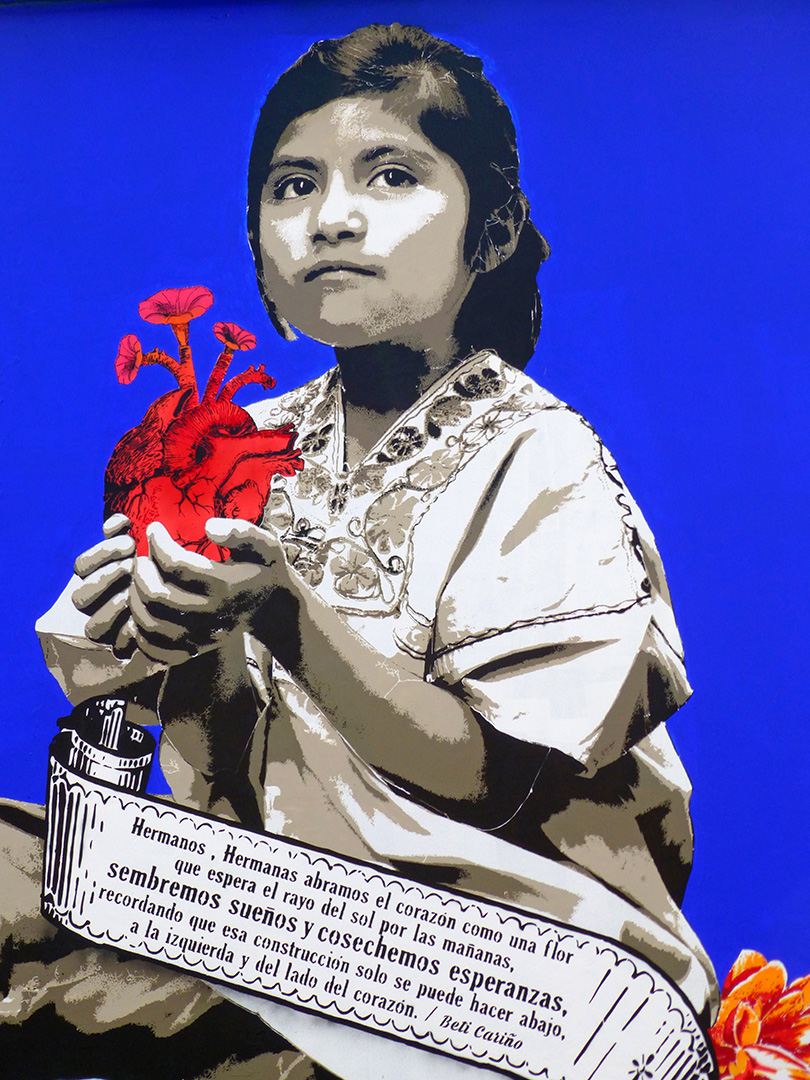
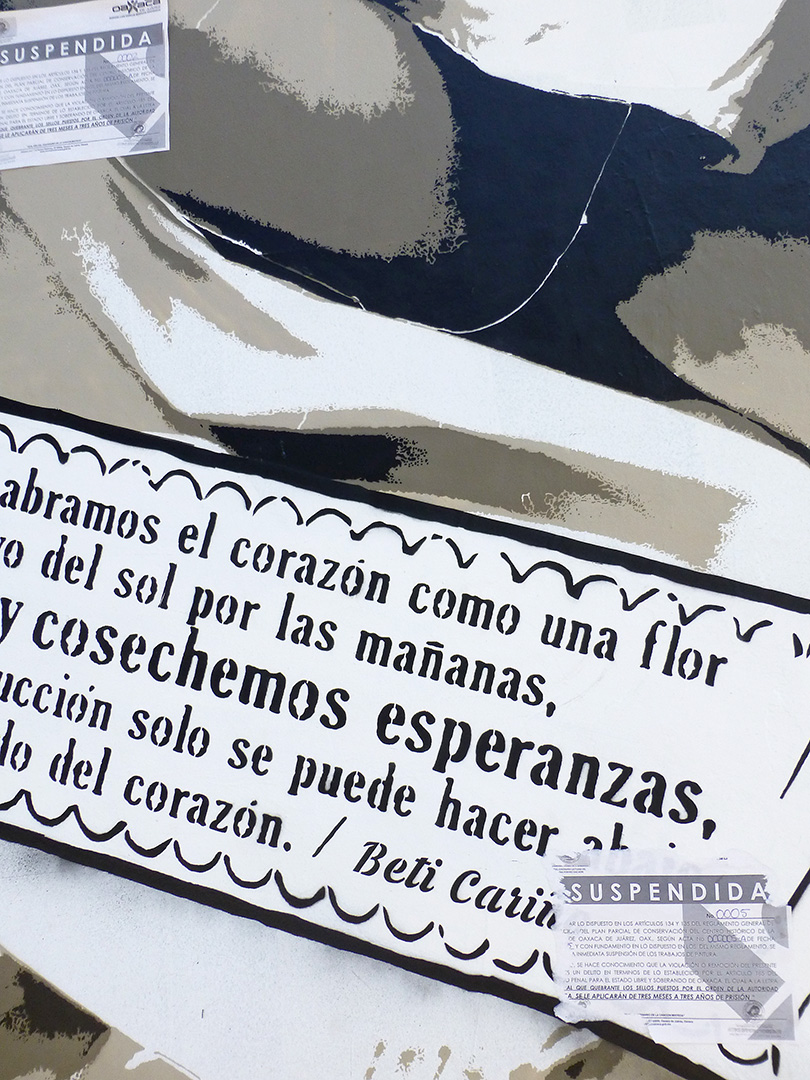
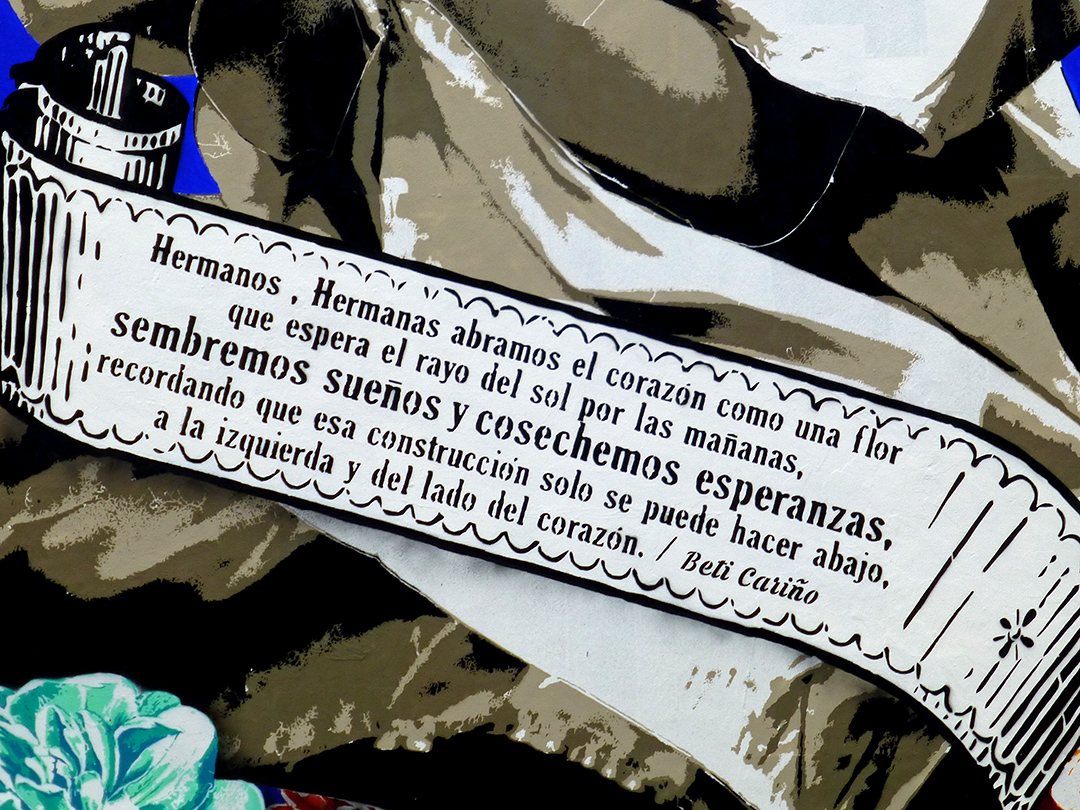
And, if this weren’t egregious enough, remember the stunning We sow dreams and harvest hope mural on the side of Museo Belber Jimenez?
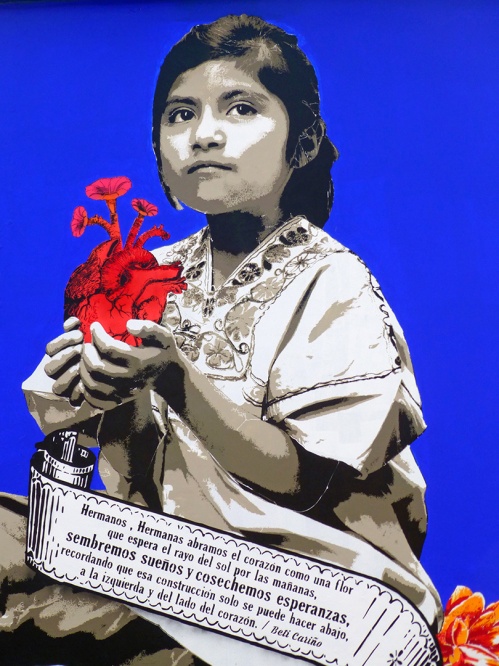
P1090820copy

It too now has appalling “Suspendida” notices plastered on it.  WTF is going on???  A little research revealed that a law was recently passed to “criminalize” wall art.  Yes, yes, yes… I understand that the “powers that be” and even ordinary residents are sick of graffiti on historic buildings.  BUT to lump the anarchist “A” spray-painted on the side of the Cathedral with magnificent murals painted on ugly decaying walls and beautiful works of art privately commissioned by businesses and museums to decorate their buildings, is the height of absurdity, never mind assigning a “criminal” aspect to it.  Believe me, Oaxaca has a laundry list of more important issues that it needs to address.
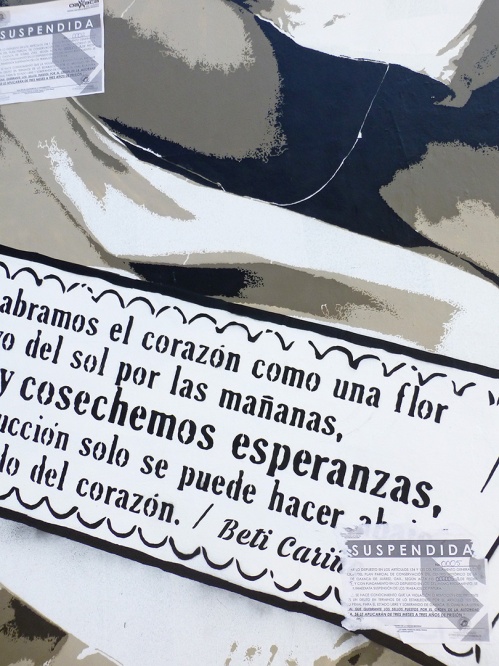
P1140752

If in their “infinite wisdom” they are attempting to “clean up” the city to better appeal to tourist dollars, euros, yen, etc., then I think they are barking up the wrong tree — we extranjeros (foreigners) love the street art!  To that end, below is a copy of a letter I sent to the president of Central Connecticut State University (CCSU) last year, when officially authorized murals painted by art students as part of their course work were ordered removed by the university administration.

Dear President Miller:

I am writing to you from the city of Oaxaca de Juárez in southern Mexico, nestled in the valley where corn was first cultivated.  I have the privilege of living in culture that has a deep respect for, and appreciation of, communication through all forms of art.

Oaxaca is filled with museums and public art.  In addition, her walls are covered with murals, both officially sanctioned and unauthorized.  An example of the latter:  My current neighbor, previously lived next to a concrete bench built into a wall along her street.  It’s primary function seemed to serve as a gathering place for garbage and graffiti.  Being an artist, she painted a living room scene around the bench, replete with, a lamp, bouquets of flowers, pillows on the sofa/bench, and a framed painting with the image of a smiling creature holding a sign that quotes Oaxaca’s favorite son and former Mexican president, Benito Juárez:  “El respecto al derecho ajeno es la paz.”  (Respect for the rights of others is peace.)  It is a quote that every Mexican school child learns and in the eighteen years since the bench and mural were first painted, it has become a beloved icon of the street and very little graffiti and garbage have reappeared.

Oaxaca would lose much of her character and lessons would be lost, if we were to wake one morning and find all her murals disappeared.  The story is the same at CCSU and it would be shameful if the beautiful and thought-provoking student murals at CCSU were to be needlessly destroyed.

Read Full Post »

Last week, walking down Crespo, I spotted a mural at the turnoff to Calle Panorámicas del Fortín and discovered it was the work of Jesus Kobe.

Hmmm… Recently, I’d seen another of his works on Allende near Crespo.

I was familiar with the artist because last year, friends and I were walking along Panorámicas and stopped at this mural.

We walked further along to find another mural, but without a signature.  It turned out the artist was walking by and when he saw us admiring the work, he graciously stopped to chat.  It was Kobe and he explained that he only signs his work once it is completed.

Serendipity, why this place never ceases to surprise and delight!

And, watch and hear Kobe explain the inspiration that underlies the mural he created for Santa Fe Taqueria in Portland, Oregon:

Read Full Post »

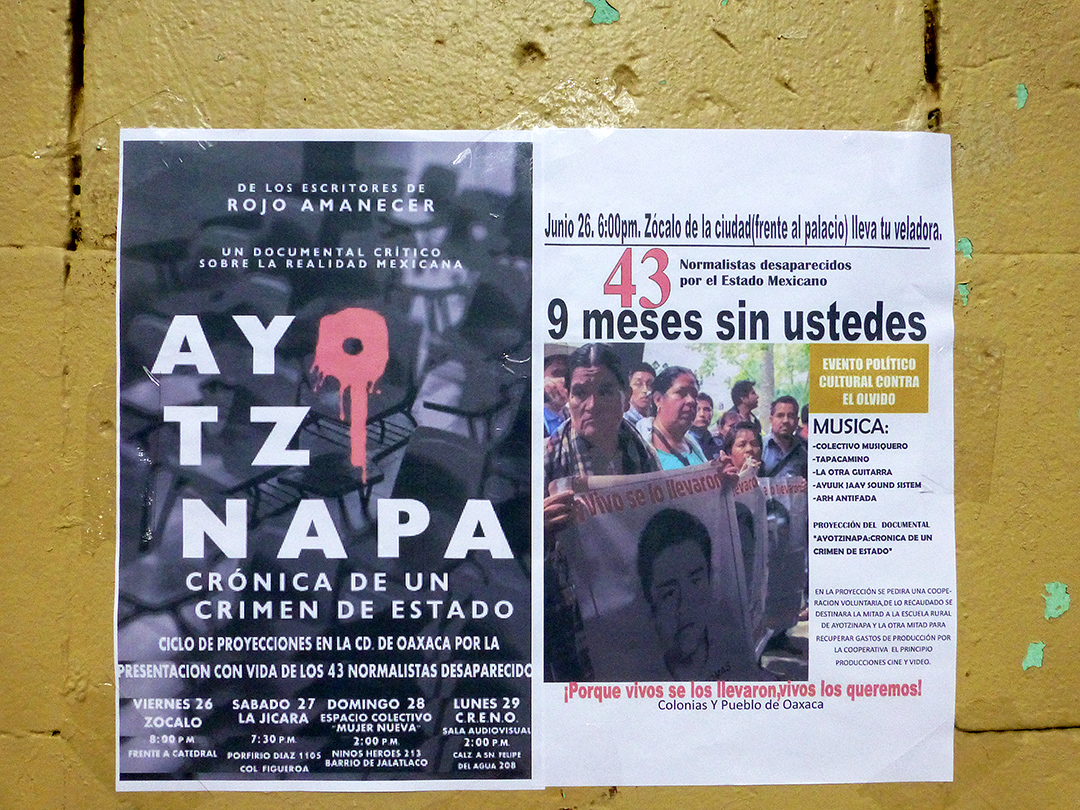
It’s been nine months since 43 students from the Escuela Normal Rural Raúl Isidro Burgos teachers’ college in Ayotzinapa, Guerrero went missing — a traumatic, heartbreaking, and disgraceful anniversary that isn’t going unnoticed.  The Missing Mexican Students Case Is Not Closed For 43 Families, nor for the people of Mexico.

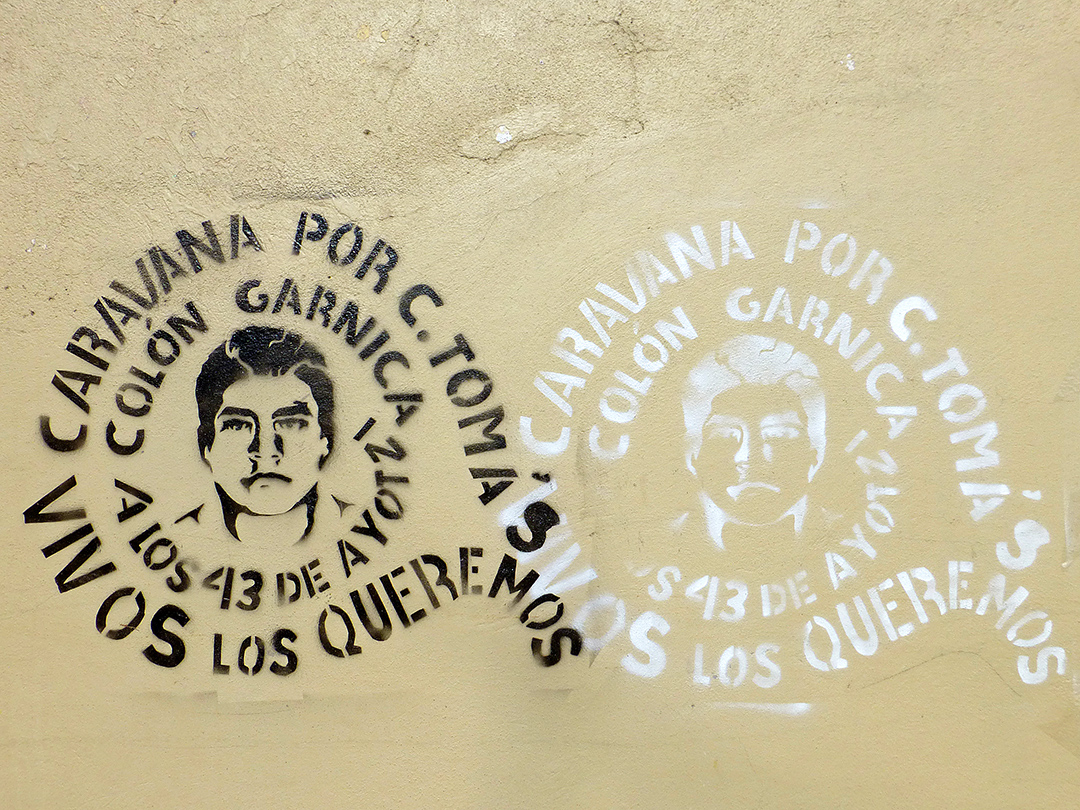
Yesterday, in Tlacolula de Matamoros, the signs were impossible to miss, as we walked down the main street.  The community continues to remember her son, Cristian Tomás Colón Garnica, one of the Ayotzinapa 43.

P1100112“His father traveled from their land when the abduction of the 43 young normal school students was first reported. ‘I am a day laborer. I make 600 pesos [USD$44.50] weekly, maximum, and that’s when there’s work, because sometimes there is no work. My boy wants to be a teacher. That is the job he wants, but they stopped him, they arrested him … What are we going to do?!'”  — from Mexico Voices.
P1100110On the wall, near the stencils above, posters announced events in Oaxaca city in remembrance of the students.  As the murals at the north entrance to Tlacolula de Matamoros proclaim…

P1080468 P1080469 P1080470P1080471P1080472

“VIVOS 43 LOS QUEREMOS”

Read Full Post »

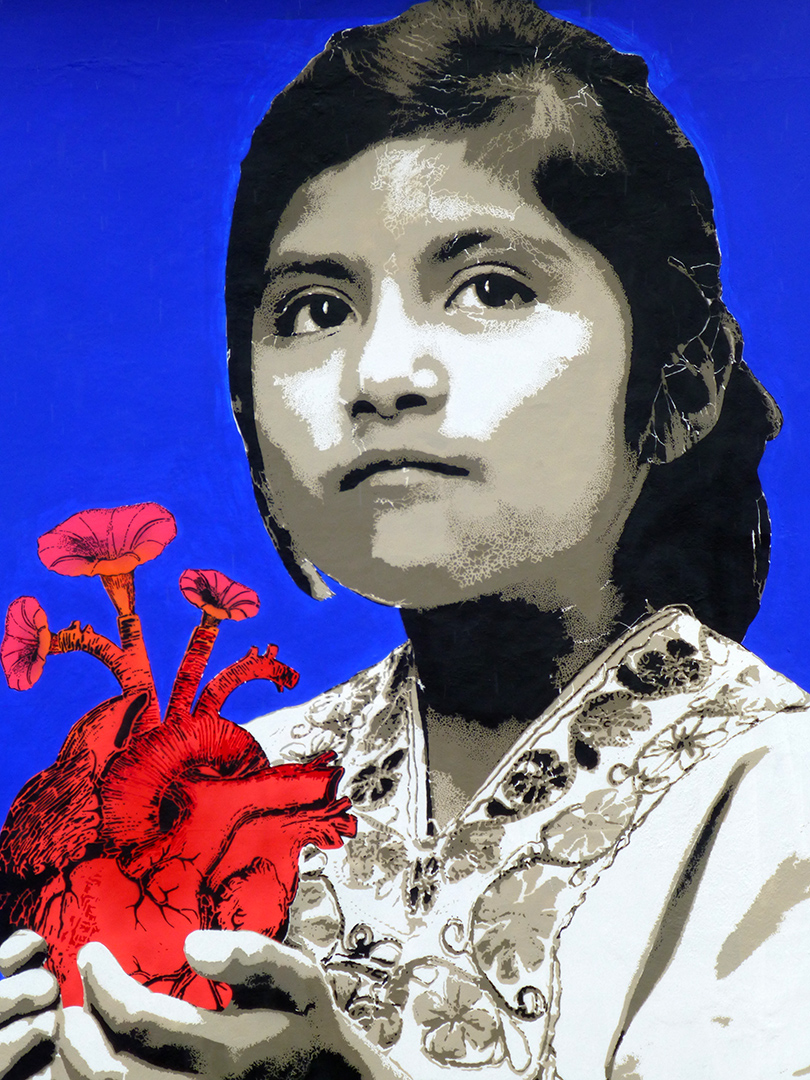
I walk past the Museo Belber Jimenez at least every other day and its brilliant blue walls always make me smile.  If you’re in the neighborhood, you can’t miss it!  In mid April, not long after undergoing a major renovation, a city bus lost control and crashed into the museum.  Fortunately no one was seriously injured, but the window, grating, and wall on the Tinoco y Palacio side of the museum were damaged.

By the time I left in mid May for the trip north, all had been repaired.  And then a few days before returning to Oaxaca, blog reader BJ wrote to tell me there was a “beautiful new mural” on the west wall of the museum.  She was right — it’s stunning and deeply moving.

P1090814_copy

P1090815

P1090808Muchisimas gracias to Museo Belber Jimenez for inviting Lapiztola to enhance the exterior of the museum and our lives with the beautiful mural and its message from Beti Cariño.

Read Full Post »

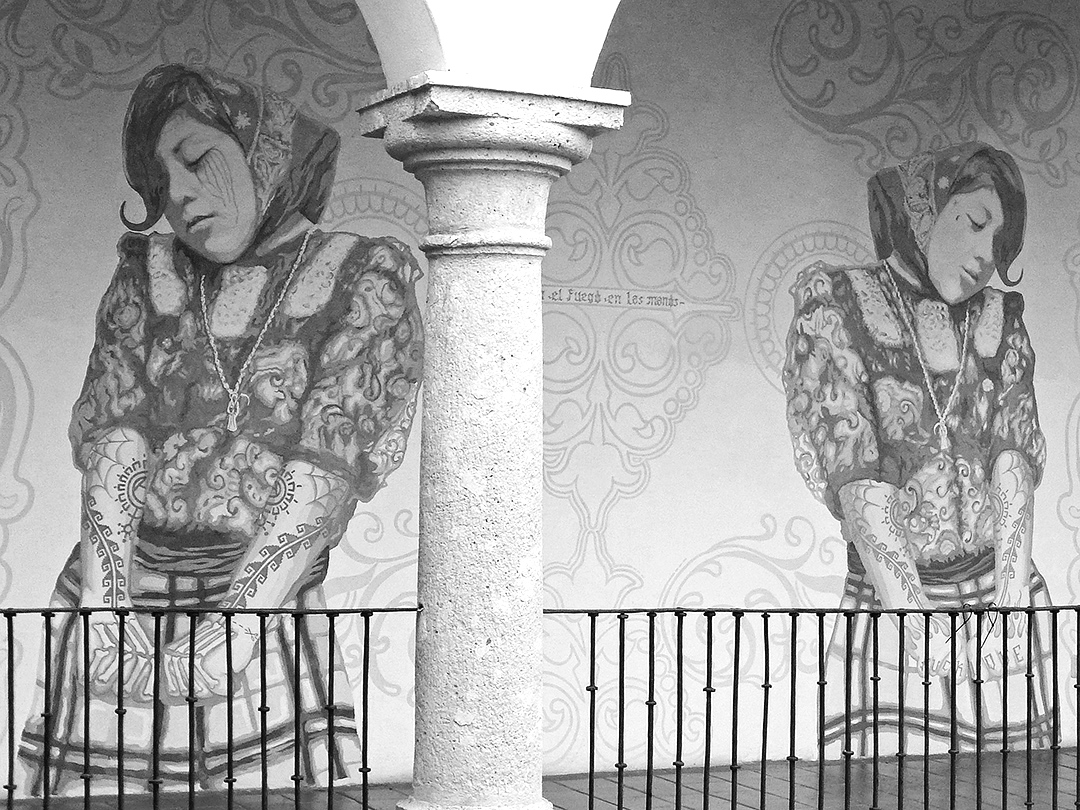
The previously mentioned Tlacolulokos collective has brought their artistry and social commentary to a wall on the upper floor of the Casa de la Ciudad.  The mural, “Con el fuego en las manos” shows two young women, almost mirror images of each other or, perhaps, two sides of the same woman.

P1090454

The young women/woman wear the traditional clothing of San Bartolome Quialana, a village near Tlacolula de Matamoros, home of the Tlacolulokos collective.  Like communities throughout Oaxaca, much of the male population has migrated to the United States, in search of work leaving the women to carry on alone.

As the introduction to the exhibit on the Casa de la Ciudad website explains, With a critical view towards the current cultural context, Tlacolulokos group, headed by Darío Canul and Cosijoesa Cernas, seeks to question the idealized images of the Oaxacan culture, tourism product discourse, and insights from the reality currently experienced by the people of Oaxaca.

There are elements in her clothing belonging to the Latina culture of the southern United States, as the cholo bandana that she wears on her head, or the tattoos on her arms that add a critical and provocative tinge to this cultural mix, a product of migration.  [ Google translation, with a little help from yours truly]

One of the trademarks of  the Tlacolulokos group is the power their images acquire and the emotion they elicit by limiting the palette to black, white, and grays.  For more background and a better understanding of the mural, a video (en español) of the artists discussing their work can be found here.

“Con el fuego en las manos”  is scheduled to run until December 2015 at the Casa de la Ciudad (Porfirio Diaz No. 115, at the corner of Morelos in Oaxaca’s Historic District).  Hours are 9:00 AM to 8:00 PM, Monday through Sunday.

Read Full Post »

Just so you know…  The gods are watching you on Tinoco y Palacios, between Morelos and Matamoros.

P1060576 copy P1090489 copy

Hmmm…. sometime between January, when I first photographed the mural and a few days ago, when I returned, an airplane landed on the tongue.

P1090486 copy P1090490 copy

Recently, BBCtrending posted the video, Aztec to urban — Mexico’s street art explosion, highlighting the use of Mexico’s pre-Columbian imagery in contemporary street art.  I don’t know the name of the artist who painted the mural above, but seeing the “Dioses Urbanos” of Diego Alvarez (aka, Ocote) in the video, brought it to mind.

Read Full Post »

Yesterday, the city of Oaxaca celebrated its 483rd birthday as a Spanish chartered city.  Early in the morning bells were rung, Las Mañanitas was sung, tamales and atole were served, an air force flyover buzzed the city several times, multiple musical events were held, a convite paraded through the streets, fireworks exploded from the Plaza de la Danza, and more, and it continues.  I was going to write about it, but…

Today a more urgent anniversary requires our attention:  Mexico Marks 7 Months Since 43 Ayotzinapa Students Disappeared.  Family, fellow classmates, friends, and supporters around the world keep their names alive and cry for justice.  And artists continue to reach into our minds and hearts through their music, artwork, and film making.

In the documentary, Ayotzinapa’s 43 Disappeared: Family & Friends Remember, we hear the voices of their classmates and relatives. They don’t trust the official story and are determined to find out what happened.

Near the end of the song, “La Patria Madrina,” from her new album, Balas y Chocolate (Bullets and Chocolat), Lila Downs chants the Ayotzinapa 43 mantra that can be seen and heard all over Mexico, ¡Vivos los llevaron, vivos los queremos!  (They were taken alive, and we want them back alive!)

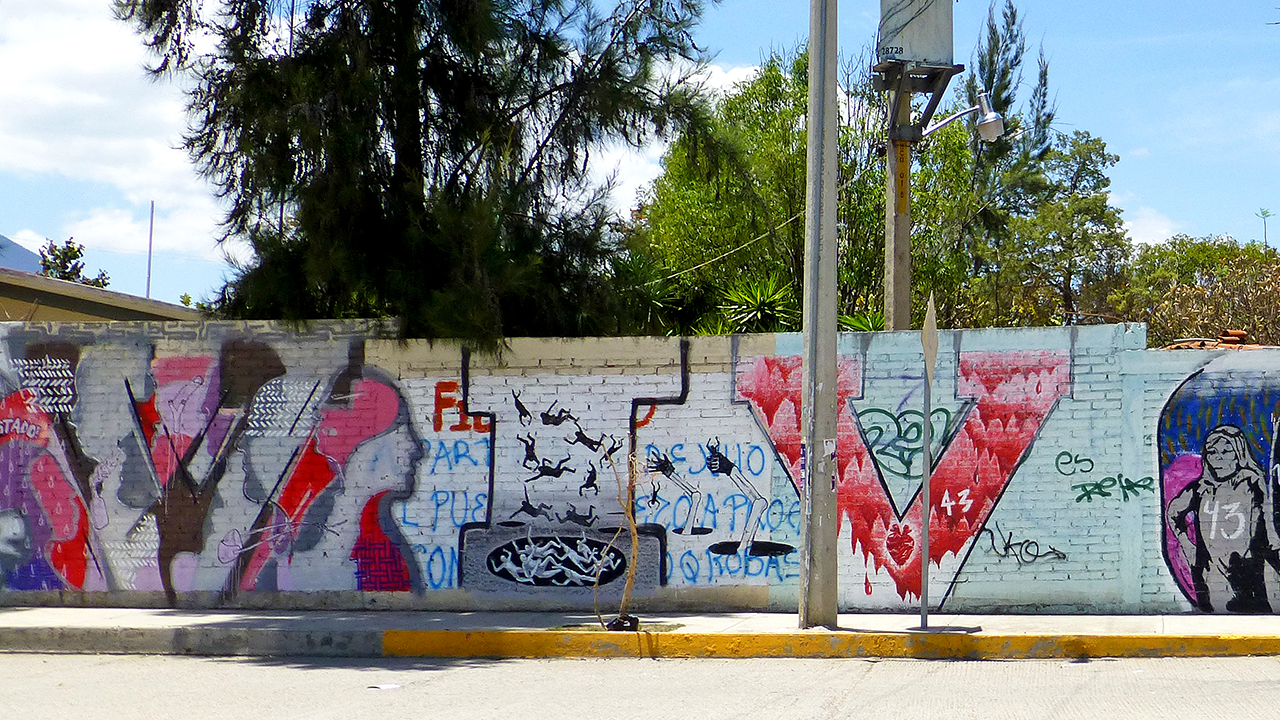
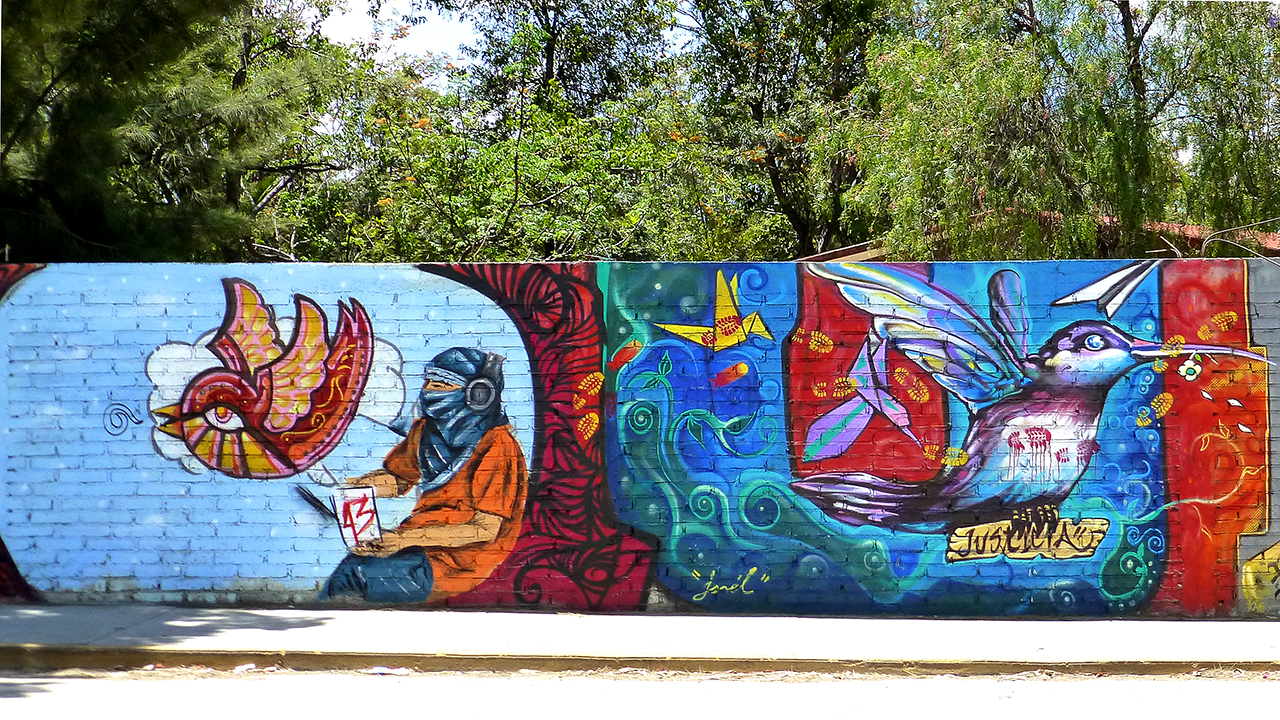
And, on walls throughout Mexico, our attention is called to the missing 43 students from the Escuela Normal Rural Raúl Isidro Burgos, teachers’ college in Ayotzinapa, Guerrero.

Oaxaca de Juárez

Oaxaca de Juárez

Mexico City

Mexico City

Mexico City

Mexico City

Oaxaca de Juárez

Oaxaca de Juárez

Read Full Post »

« Newer Posts - Older Posts »