This past weekend, the city held a three-day celebration of Mole de Caderas — a traditional seasonal Mixtec dish from Huajuapan de León, Oaxaca and nearby Tehuacán, Puebla. It is only served during the fall, when the goats are made to make the ultimate sacrifice — and it is absolutely delicious!
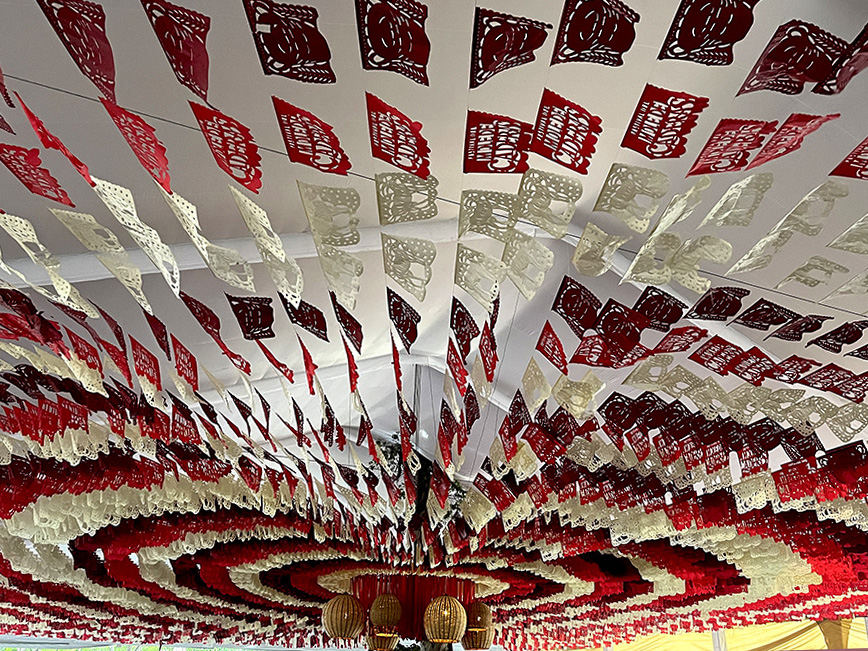
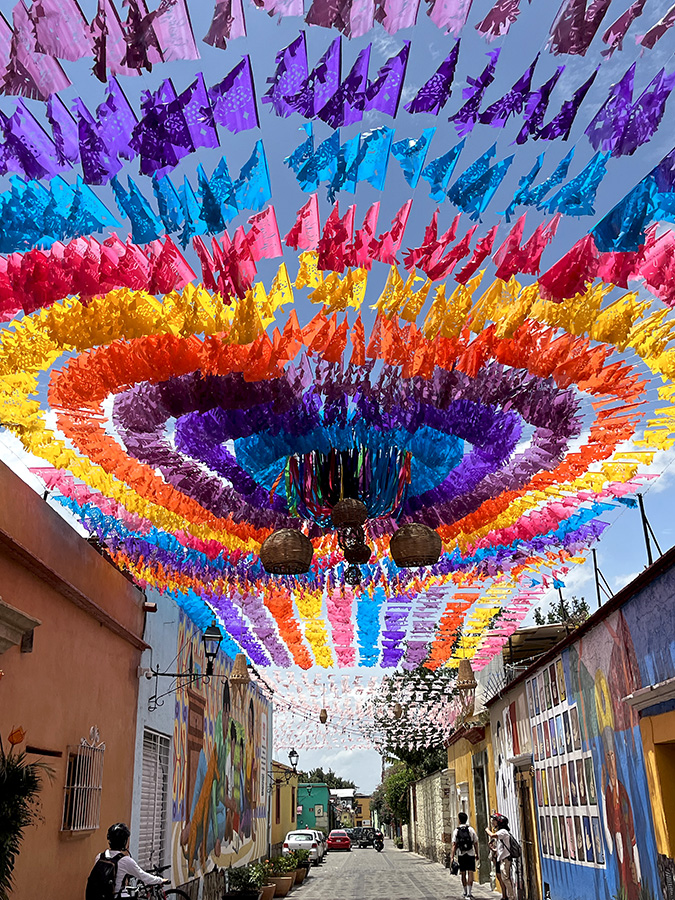
Papel picado cut into images of goats and ollas and the words “Festival del Mole de Caderas,” hung from the rafters of the tent.
This special dish is made from the hip (caderas) and the spine of goats that have been raised for one and a half years. Starting in July they are fattened on the forage unique to the hills of the Mixteca, large amounts of salt, and a little water — this is what provides the meat with fat, softness, and juiciness and gives the broth its distinctive flavor. In early fall, when the shepherds have brought the goats back to the farms, there is a ritual filled celebration that includes offerings, incense, music, and dancing, including a dance with the goats — all in honor of the goats who were about to give their lives to feed the population.
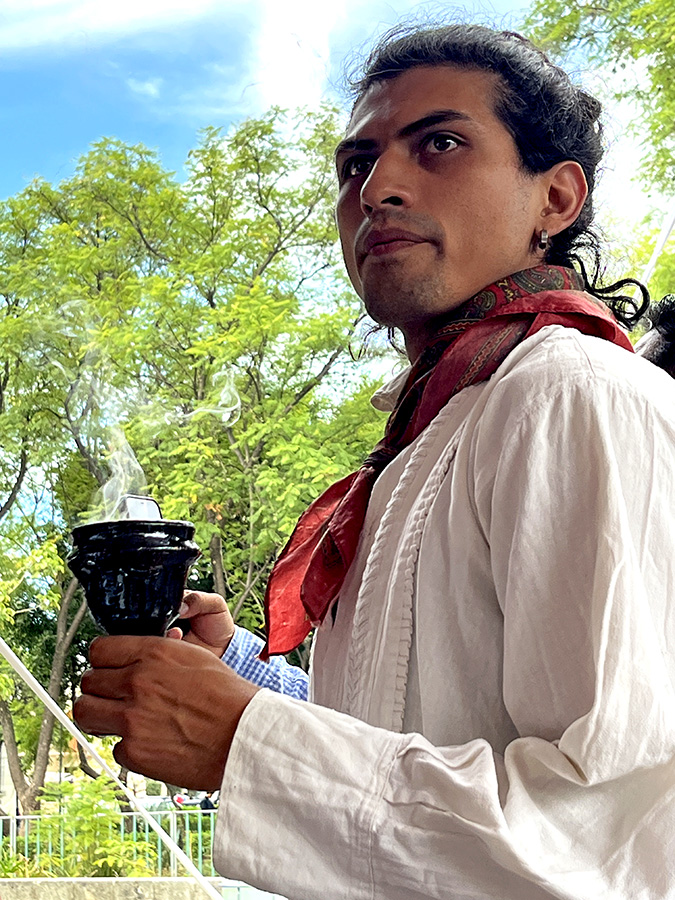
Incense carried in the opening procession.
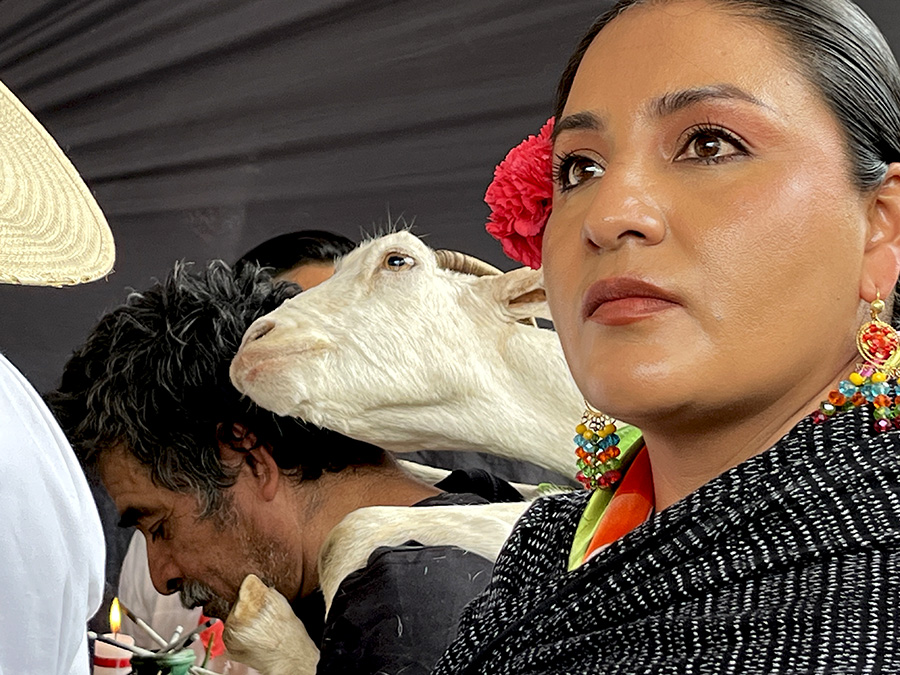
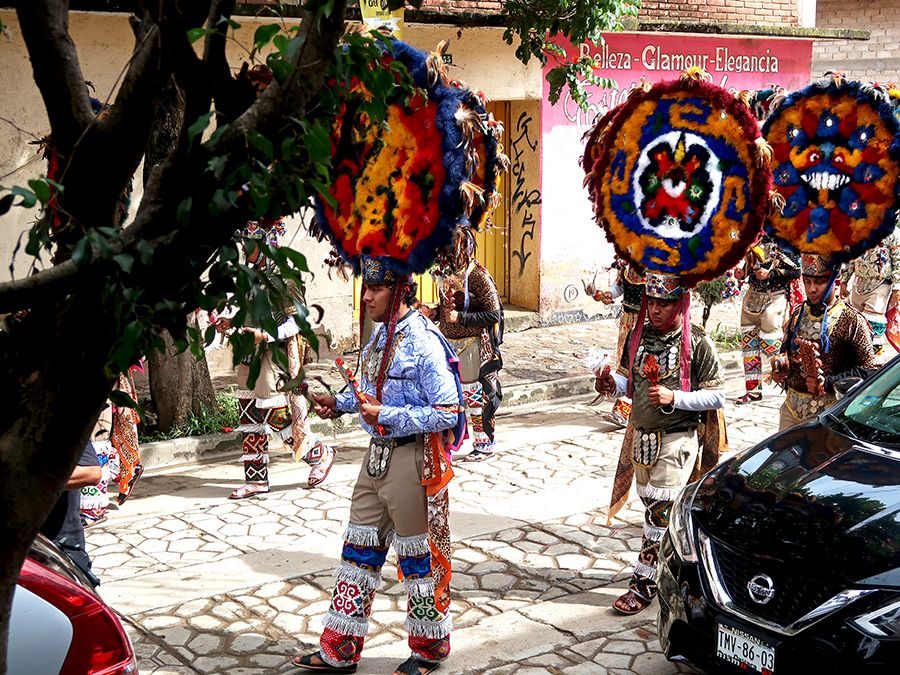
Matancero carrying el chivo (the goat) and a Mixtec dancer waiting for the procession to begin.
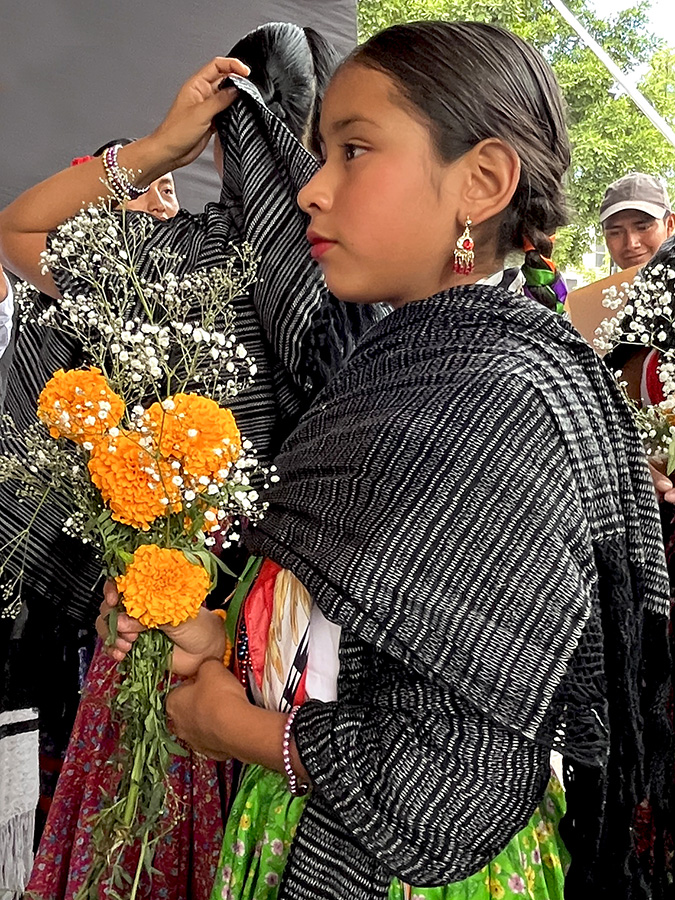
Young Mixtec dancer waiting for the procession to begin.
At last Friday’s opening of the festival, there were dignitaries galore (including the governor of Oaxaca), multiple speeches, and a moving procession with two goats to the tune of Canción Mixteca, a song which always brings tears to my eyes. It was followed by a dance with the goats and a stylized reenactment of the ritual killing of the goats (no actual blood was spilled).
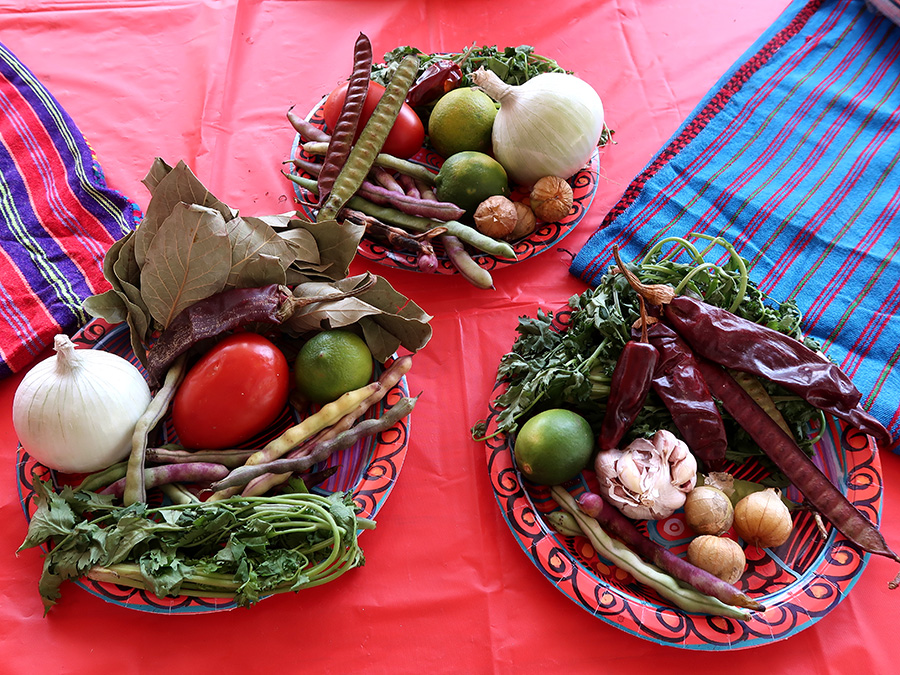
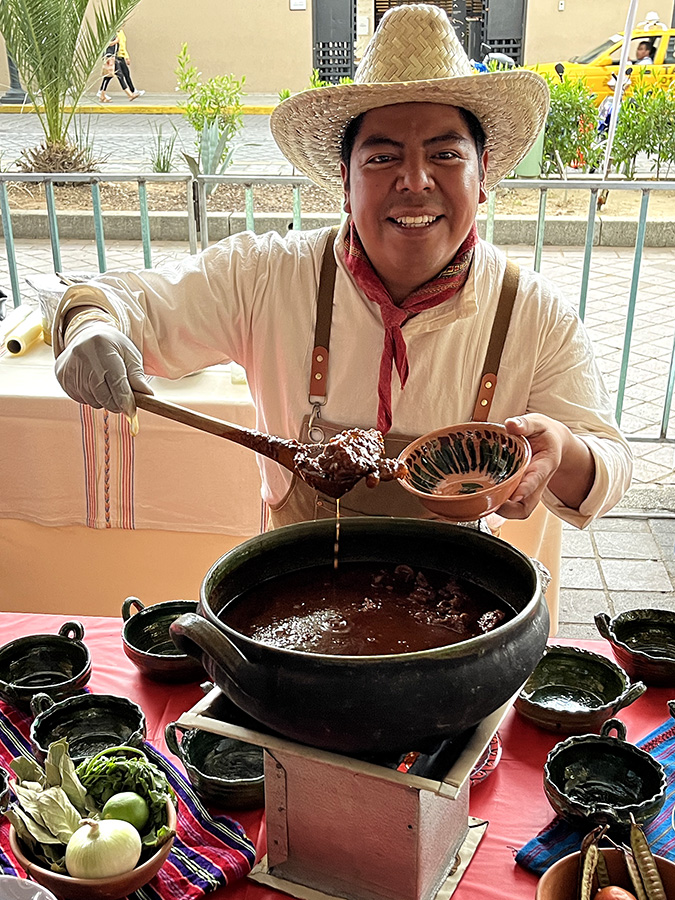
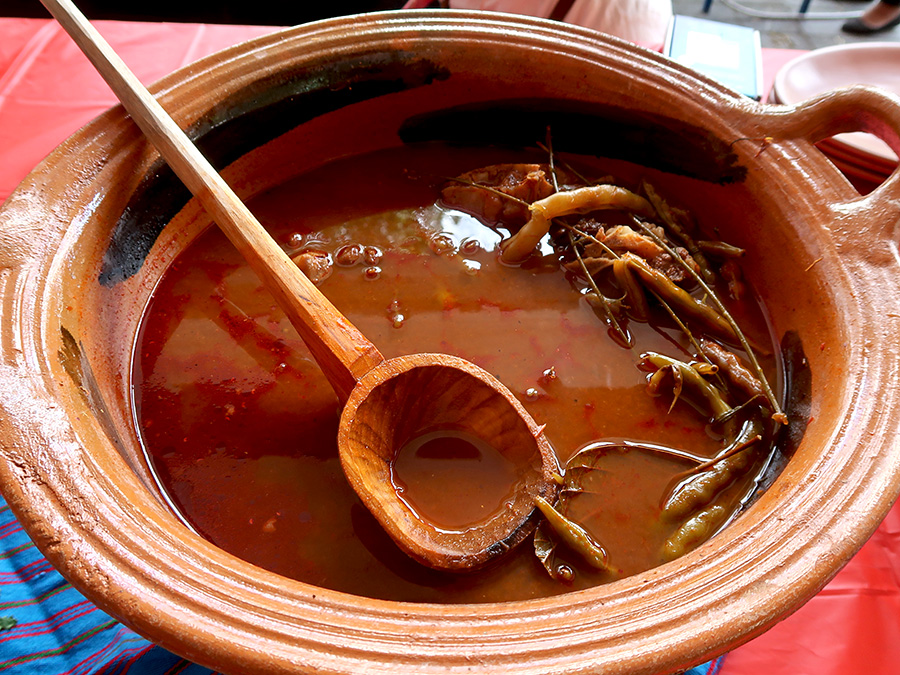
We were then funneled through a palapa decorated tunnel to the tented dining area, where traditional cooks from Huajuapan de León and Oaxaca city waited proudly behind booths displaying ollas (clay pots) filled with steaming Mole de Caderas and Huaxmole de Caderas. Hmmmm… I wondered what the difference was between Huaxmole de Caderas and Mole de Caderas.
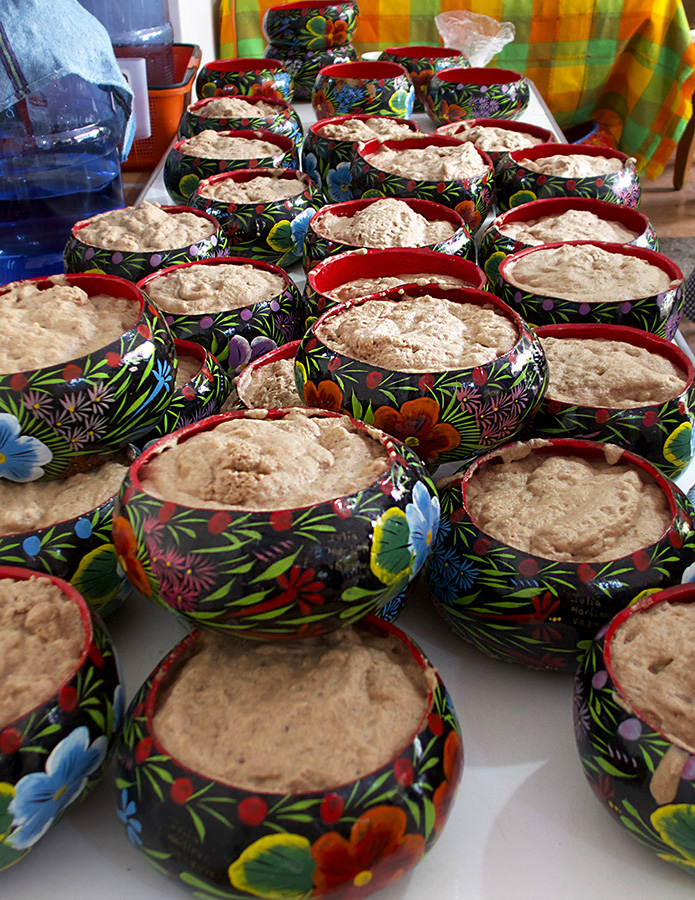
Ingredients used in making Mole de Caderas and Huaxmole de Caderas.
Wilver Vásquez López serving what his booth labeled, Mole de Chivo.
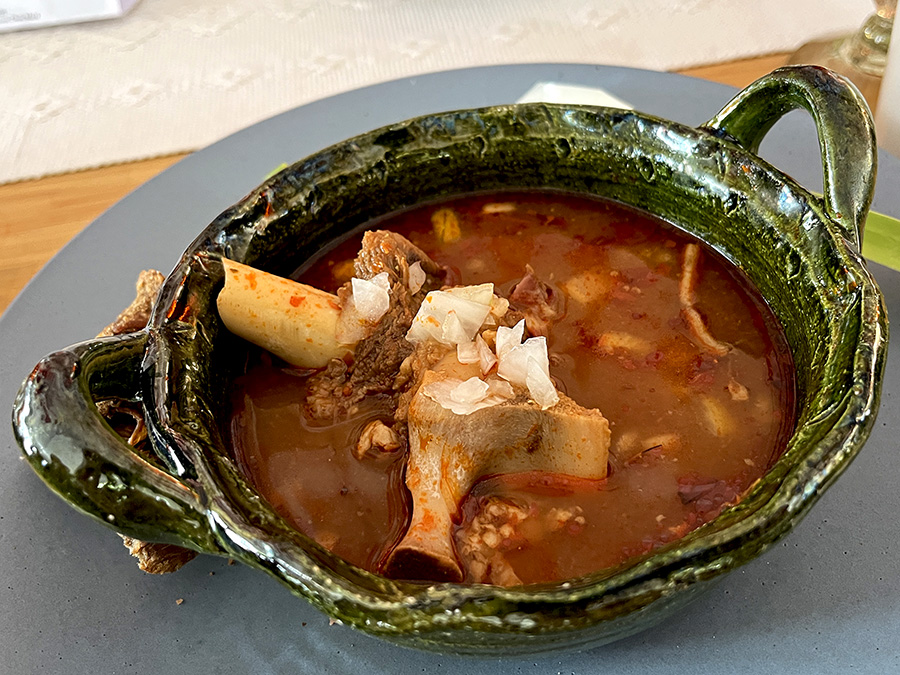
Huaxmole de Caderas.
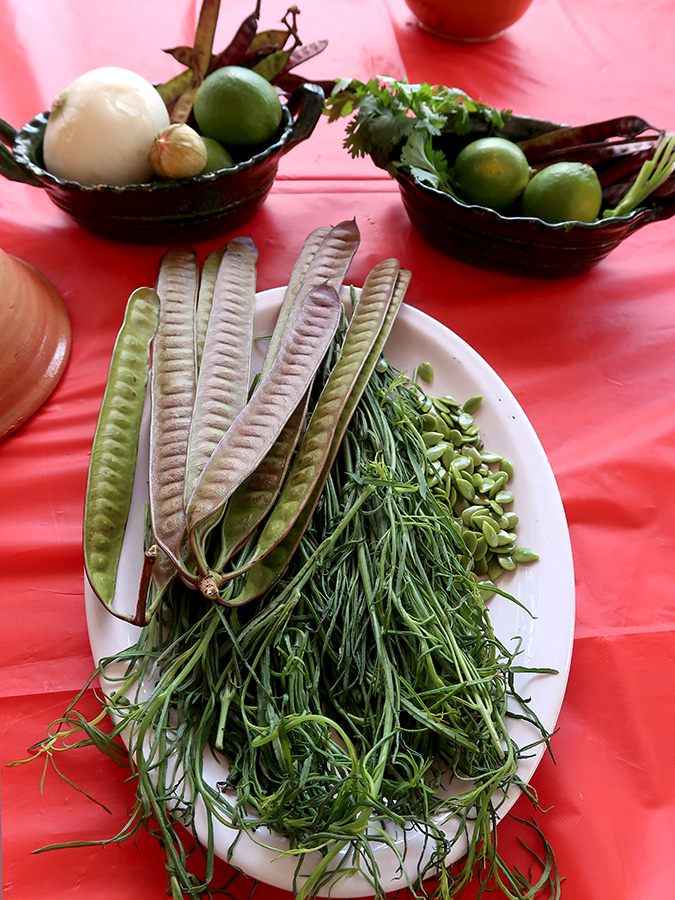
Once home, a little research ensued (I am a librarian, after all) and I found that both dishes share common preparation and major ingredients. However, Huaxmole de Caderas is distinguished with the addition of toasted seeds from the huaje (also spelled guaje) tree — the tree that gave Oaxaca its name. Whereas, Mole de Caderas is prepared with green beans. However, if huajes are added to the latter, it is considered Huaxmole de Caderas. The herb, chepiche (aka, pepicha) is also used and, at the festival, both chepiche and huaje were used to garnish the plates.
Huaje and chepiche.
Mole de Caderas.
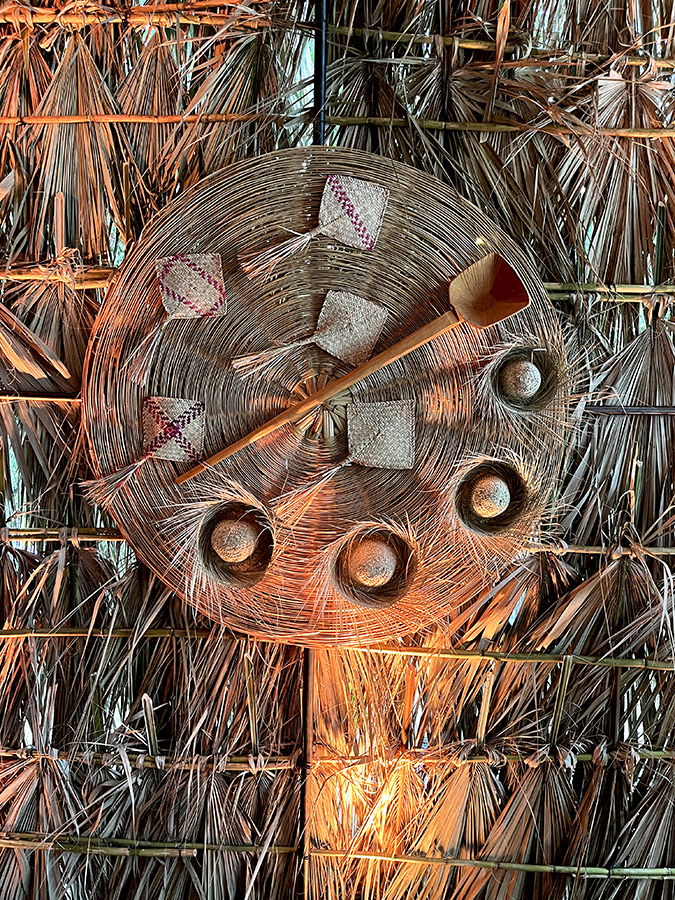
Interior of the palapa covered entrance to the Festival del Mole de Caderas.
By the way, there were also fresh tortillas, hot off the comal, and booths offering goat tacos, sweets, aguas, and mezcal from the Mixtec region.
Oaxaca is a walking city and, even when running mundane errands, there is always something to see, something to make me smile, and something to make me think.
“The journey of a thousand miles begins with a single step.” — Lao Tzu
“If you are in a bad mood go for a walk. If you are still in a bad mood go for another walk.” — Hippocrates
“Walking is the rhythm of life.” — Gary Snyder
“An early morning walk is a blessing for the whole day.” — Henry David Thoreau
“Walking takes longer…than any other known form of locomotion except crawling. Thus it stretches time and prolongs life. Life is already too short to waste on speed.” — Edward Abbey
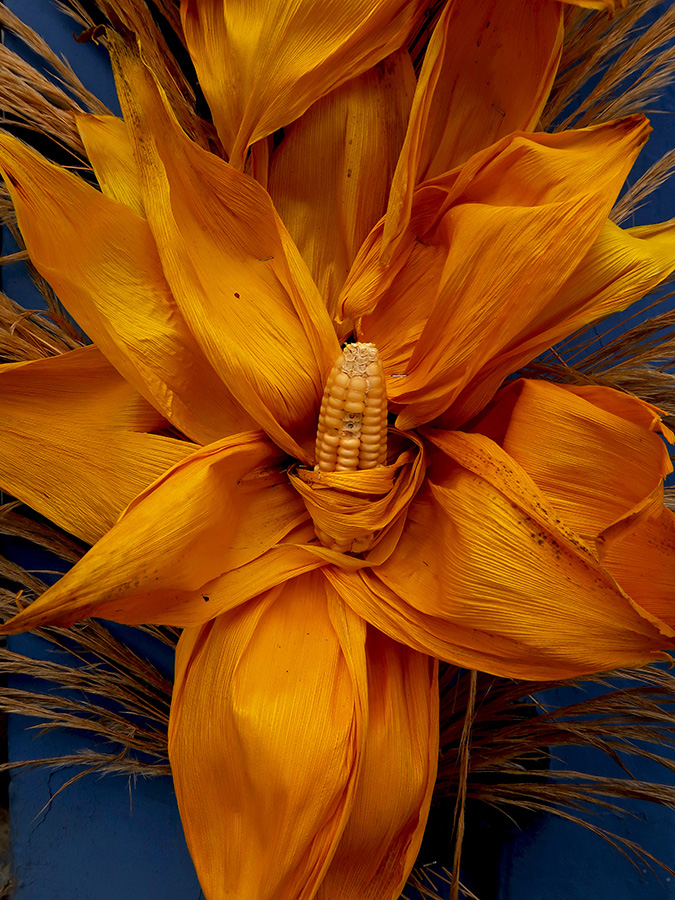
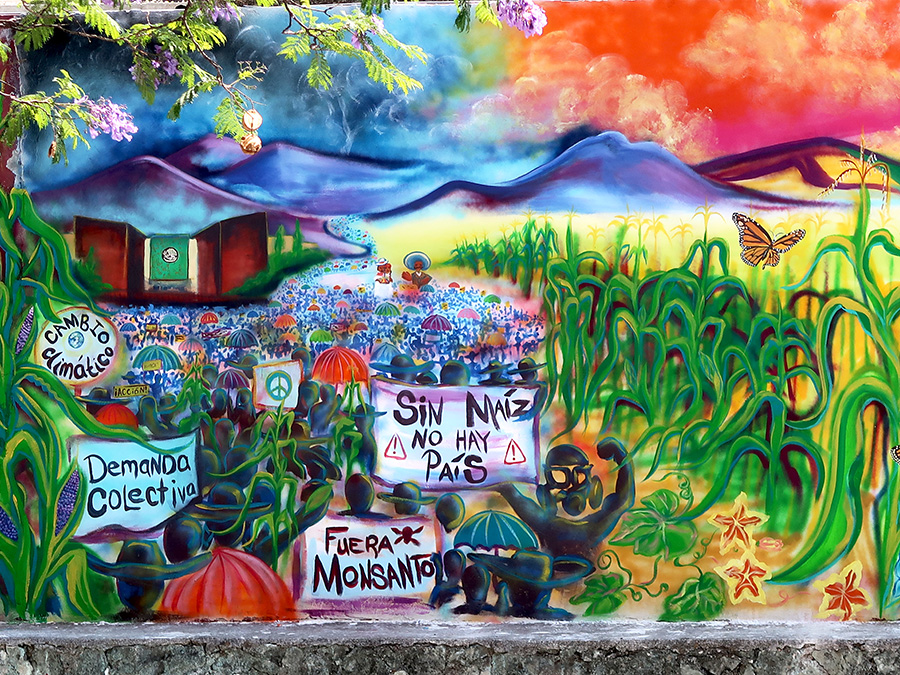
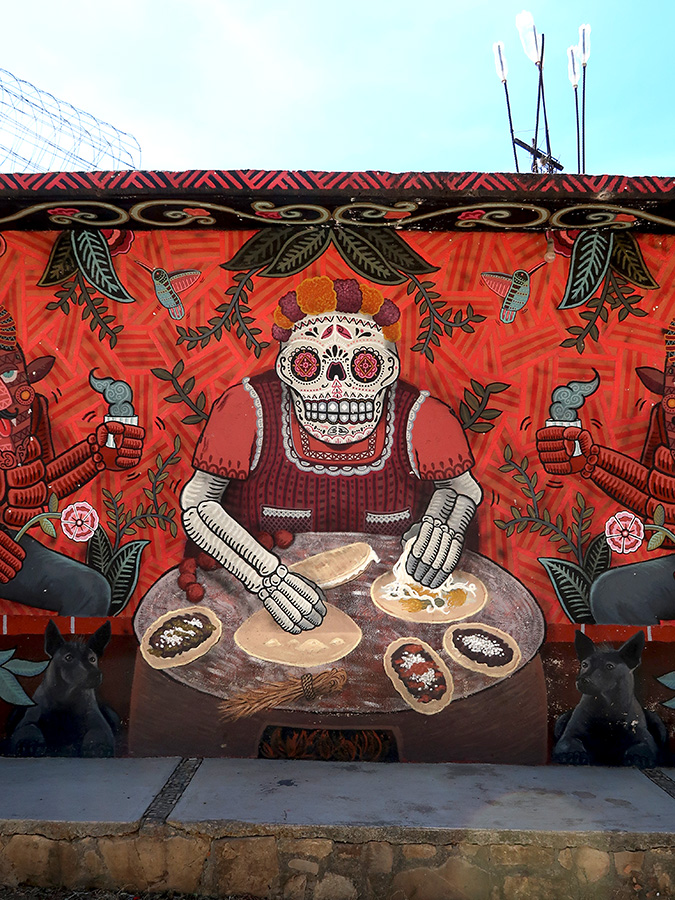
Today, September 29, Mexico celebrates Día Nacional del Maíz — a day honoring the sacred maíz, symbol of the country and base food crop for most of the nation. In Oaxaca, one never has to look far to see corn and not just in fields. Corn is depicted in murals, featured in decorations, and (of course) on most every dining table, most every day.
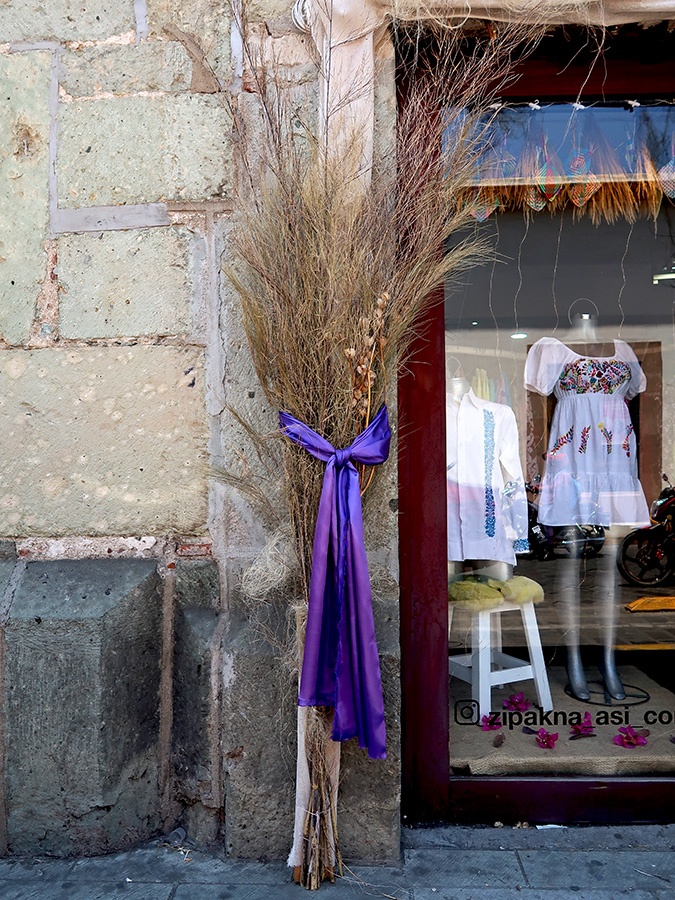
Decoration outside a shop in Oaxaca city.
Mural at Mercado Sánchez Pascuas in Oaxaca city – “Without corn, there is no country.”
Mural in San Martín Tilcajete.
My favorite tamales from the milpa and hands of Emilia Gonzalez Martinez in Teotitlán del Valle.
In the words of cocinera tradicional Carina Santiago, at the beginning of the trailer (below) for the tremendous documentary, Los Guardianes del Maíz / The Keepers of Corn, “Corn was not domesticated by man, man was domesticated by corn.”
Trailer for Los Guardianes del Maíz / The Keepers of Corn documentary.
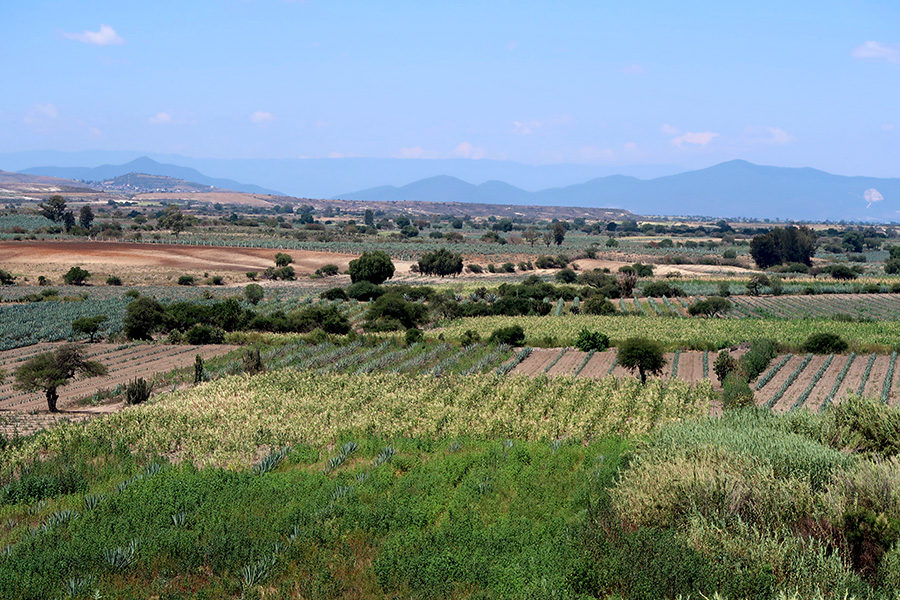
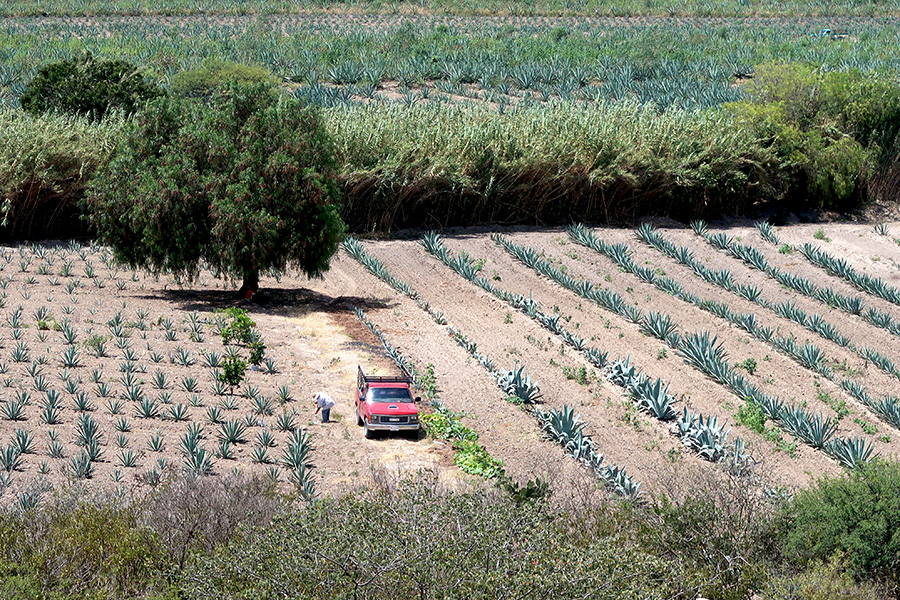
It’s been several years (thanks, Covid and bloqueos) since blogger buddy Chris and I made a road trip along our favorite mezcal route. From the city we headed southeast on highway 190 — passing Tlacolula de Matamoros and Santiago Matatlán and marveling at the proliferation of agave fields along the way.
We turned west on the San Dionisio Ocotepec/Ocotlán de Morelos road, en route to San Baltazar Chichicapam and the palenque of Faustino García Vázques — a palenquero we have known for many years. There was no answer as we rapped several times on the portón, so we ventured a few doors down to his home, knocked, and were rewarded with the familiar face of his wife opening the gate. How lovely it was to sit in their expanding family compound and catch up on their life and business. And, then there was the mezcal.
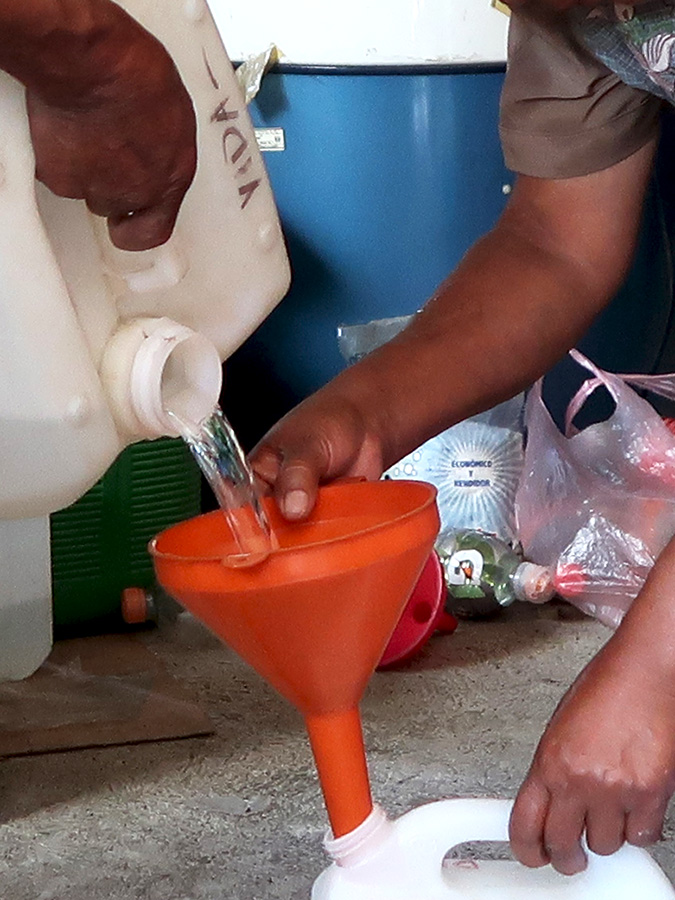
After being offered a tasting from a jicara of Faustino’s 2023 espadin, we each bought 5 liters of this most excellent mezcal. He poured it into our plastic containers that, once home, would be decanted into glass bottles — some to be stored in our liquor cabinets and others to be stashed away for gifts. By the time we turned north onto highway 175 at Ocotlán de Morelos, hunger beckoned. Lucky for us, Los Huamuches, our “go to” roadside restaurant between Santo Tomás Jalieza and San Martín Tilcajete, wasn’t far away.
We each ordered our “usual” — costillas (ribs) for my blogger buddy and a tlayuda with tasajo for me. It was a delicious and delightul day!
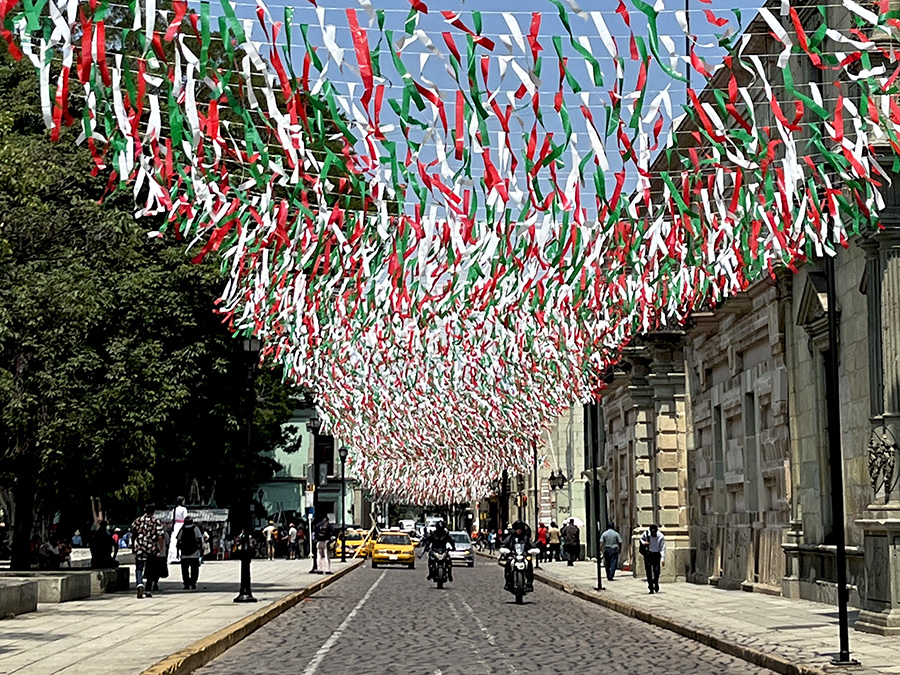
Last night El Grito de Dolores, also known as El Grito de la Independencia (the Shout of Independence), rang from government buildings throughout the country — recreating Don Miguel Hidalgo y Costilla’s call to arms in 1810 announcing the start of the ten-year long war for independence from Spain. In my neighborhood, green, white and red decorations can be seen around every corner and flying from rooftops.
Today, crowds will line sidewalks from the Palacio de Gobierno to Parque El Llano to cheer on their favorite contingents as a patriotic parade takes to the streets of Oaxaca. Mexican pride on display. ¡Viva México!
Here in Mexico, ’tis the season for displaying the green, white, and red colors of the Mexican flag. The entire month of September, Mes de la Patria (the month of the homeland), Mexico celebrates her successful war of independence from Spain — a war which began on September 16, 1810 and finally ended on September 27, 1821. Late at night on September 15, throughout Mexico bells will sound as the Grito de Dolores will echo from government balconies — mayors, governors, and the president recreating Father Hidalgo’s call to arms for independence.
In the meantime, beginning at the end of August, everything is coming up green, white, and red…
August 31, 2023 – State of Oaxaca’s government palace.
August 31, 2023 – Avenida de la Independencia, Oaxaca de Juárez.
There will also be a patriotic parade through the main streets of Oaxaca on September 16. However, for the foodies among us, the best part is the fleeting presence of Chiles en Nogada on restaurant menus. As Cristina Potters of the Mexico Cooks! blog explains, this is the season when its iconic ingredients are harvested and we are presented with the green of a poblano chile stuffed with a picadillo of seasonal ingredients (not to mention, green of the parsley garnish), covered with a white walnut sauce, and topped with bright red pomegranate seeds.
PS: Cristina also provides a recipe in the link above. ¡Buen provecho!
I got out of Dodge (aka, San Diego) last Friday morning, August 18, 2023 — just in time. Happiness was missing the historic arrival in California of Tropical Storm Hilary. Whew!!!
August 19, 2023 – walking down 5 de mayo in Barrio de Jalatlaco on my way to buy produce at Xiguela.
August 19, 2023 – Evening wedding calenda in Barrio de Jalatlaco.
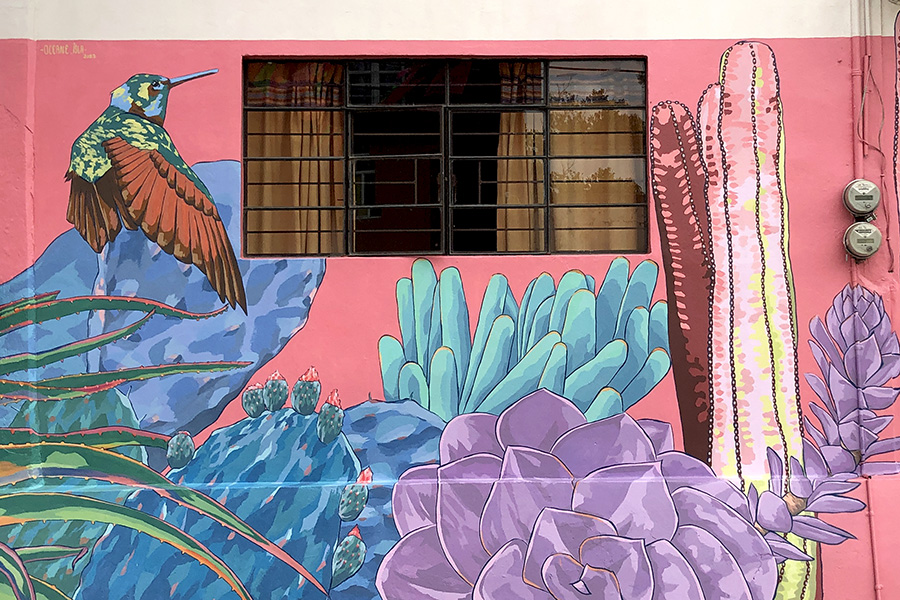
August 20, 2023 – mural seen on the way to Mercado de la Merced.
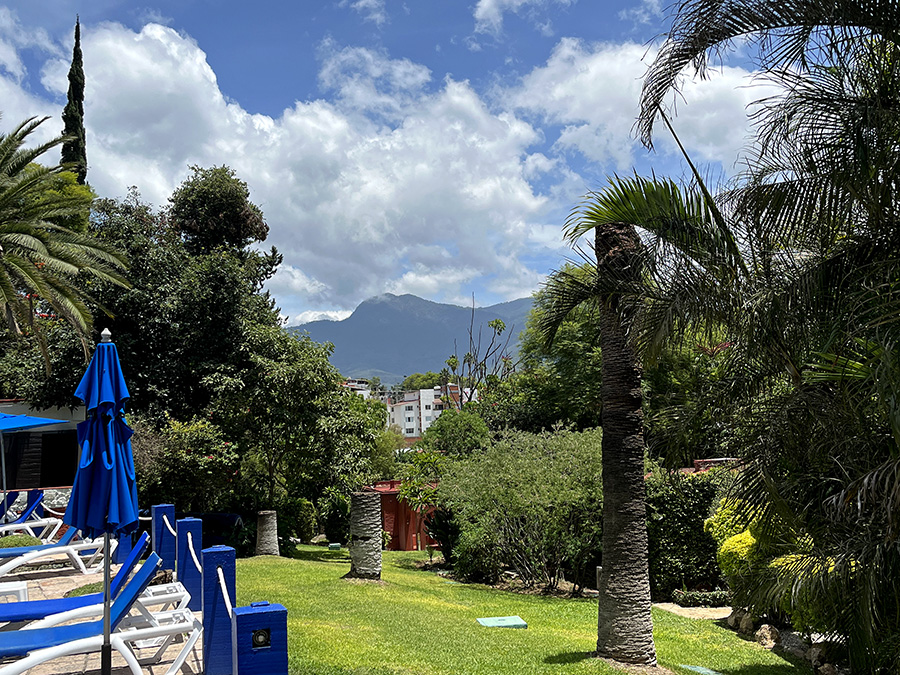
August 23. 2023 – View from the swimming pool of Hotel Victoria.
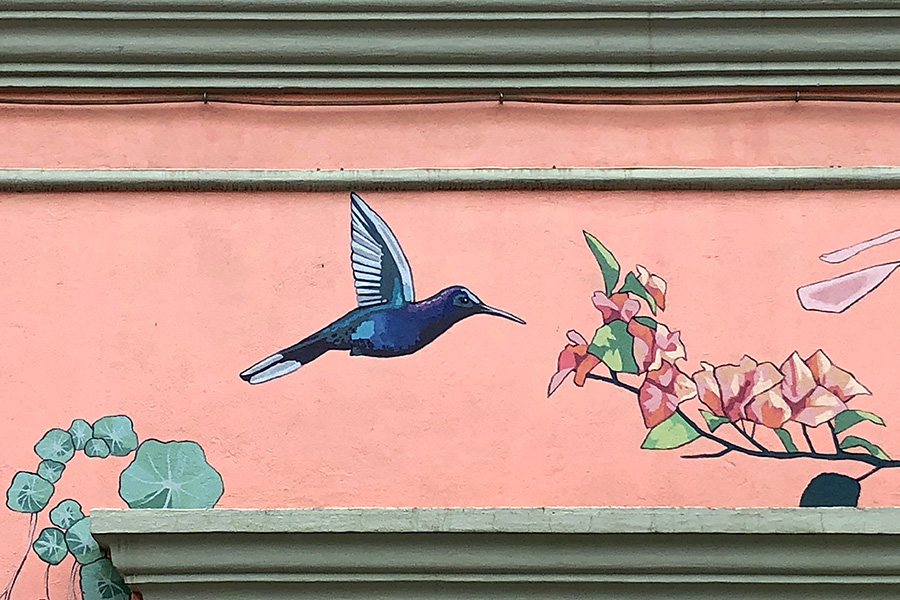
Life has been pretty good up here in el norte. The joy of having my whole family together has been immeasurable and the weather has been unusually, for this time of year in the San Francisco Bay Area, spectacular. (For those unaware of Northern California coastal weather, I give you the line attributed, albeit falsely, to Mark Twain, “The coldest winter I ever spent was a summer in San Francisco.”) Given the sun, blue sky, and warm temperatures, I’ve spent a lot of time outdoors — gardening, eating, and sitting watching the hummingbirds — just like Oaxaca! But I miss the colibries that also can be found on the walls of my neighborhood.
Three-plus weeks in el norte has me eating well but missing the flavors of Oaxaca. Thus, my blogging fingers and thoughts have turned back to the Cena de Honor Beny Galguau, a dinner honoring traditional ceremonial dishes, that I attended on May 25, 2023 at the Centro Gastronómico de Oaxaca.
First the Entradas (Appetizers)…
Tostadita Ejuteca.
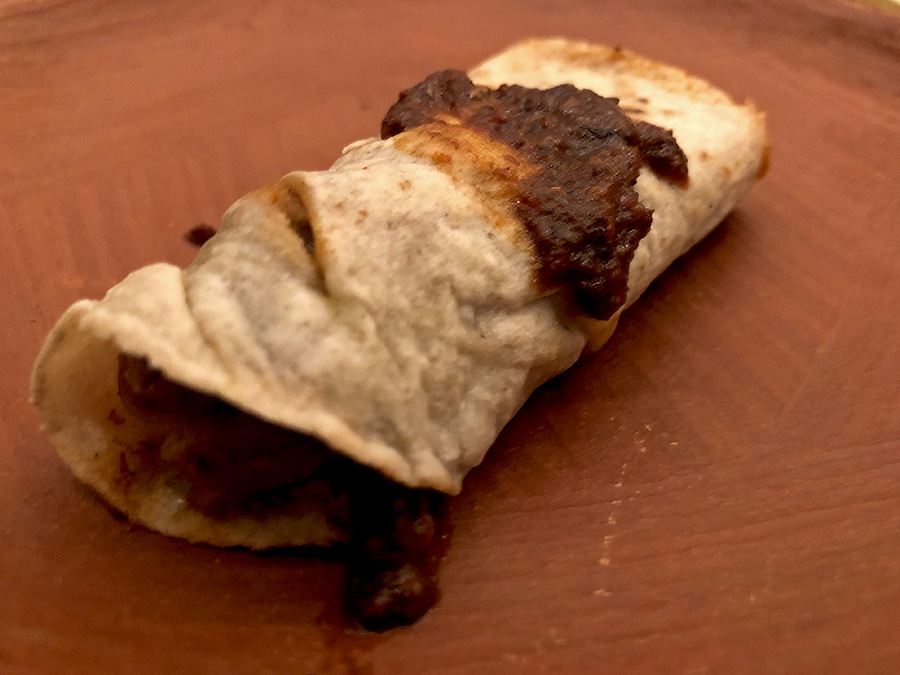
Bocado crujiente de maíz nuevo con queso de puerco.
Empanadita de San Antonino Castillo Velasco con chilito de agua.
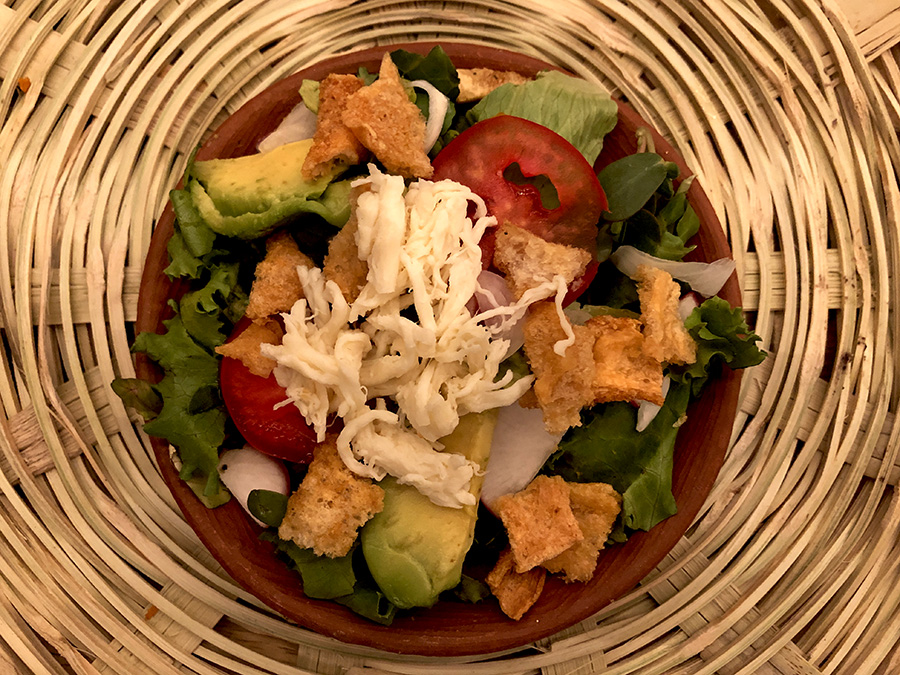
Ensalada fresca de lechuga, verdolagas, berro y aderezo de mermelada de chile.
Espesado de guías cono elotitos tiernos de milpa.
Followed by the Platos Fuertes (Main Dishes)…
Costilla de cerdo en su batea de salsa de chapulín.
Festín de moles (coloradito y negro).
Finally, as if we all weren’t already stuffed, the Postres (Desserts)…
Nieve de limón con tuna y brisa de albahaca; Nicuatole en hoja de totomoxtle; Gaznate de Etla con turrón y miel.
And, there were traditional bebidas (beverages), both alcoholic and non: Mezcall Diamante Zapoteco, Mezcal El Joven Viejo, Cerveza de Piña, Agua de Limón Rayado en su Punto, Café de Olla con Perfume de Canela, Té de Poleo (which was a perfect palate cleanser), Tejate de Cacao, and Chocolate Atole con su Espuma de Cacao.
Cocineras tradicionales.
Needless to say, the traditional cooks were the shining lights of the evening.
In Teotitlán del Valle, as part of their three year commitment, each member of the Danza de la Pluma group and, especially their family, is responsible for taking a turn hosting one of the four yearly festivals. It includes several days of serving traditional foods at sit-down breakfasts, lunches, and dinners to the danzantes, band, families, godparents, village officials, and church leaders. For Danza de la Pluma Promesa 2022-2024 danzante, Capitán 2, Hugo Santiago Jimenez’s family, this entailed months of preparation, three pigs and one bull meeting their maker, and days of cooking for over 300 people.
Grupo Danza de la Pluma Promesa 2022-2024 entering Casa Santiago.
Hot chocolate with traditional breads.Grinding chocolate on metates for atole de espuma.Atole de espuma waiting to be served.Hugo Santiago Jimenez and Félix Contreras Ruiz eating higadito.
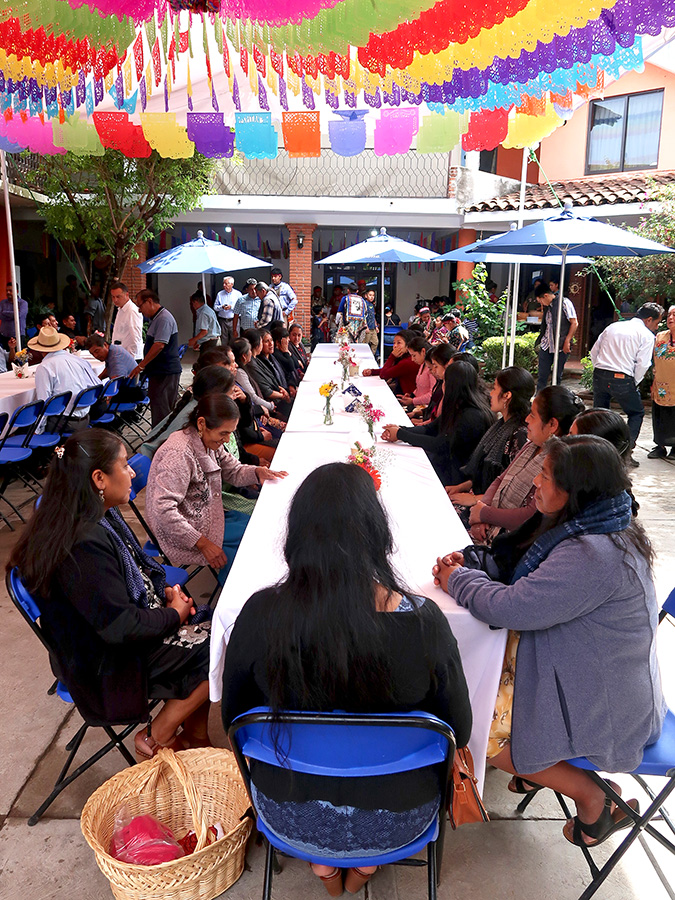
The women’s table waiting for breakfast at Casa Santiago. Yes, there is a men’s table — separate tables is traditional.
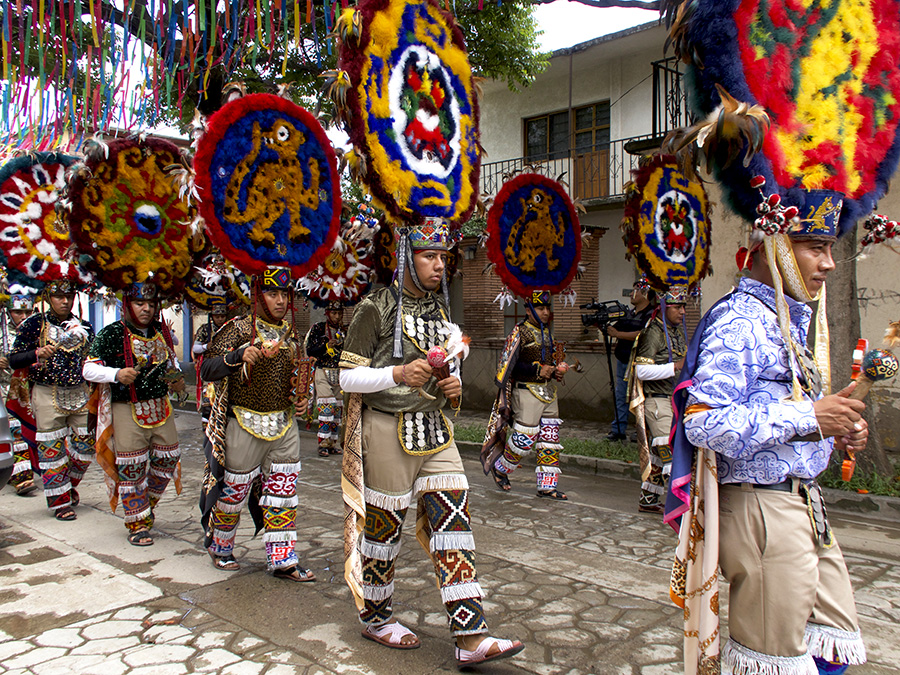
Two days before winging my way to California, I had the privilege of attending the breakfast given by Hugo’s family at the family compound, Casa Santiago. After the meal, tables were folded, chairs were moved to surround the courtyard, danzantes took their places, the band began to play, and Hugo and his fellow Capitán, Félix Contreras Ruiz commenced to dance. Following their dance, the entire group performed and then, led by the band, they took to Teotitlán’s main street to process up to the atrium of the church where they would perform the Danza de la Pluma for almost eight hours.
Papel picado at the fiesta hosted by the family of Capitán 2, Hugo Santiago Jimenez, at Casa Santiago.
Some of the women behind the days of feasting.
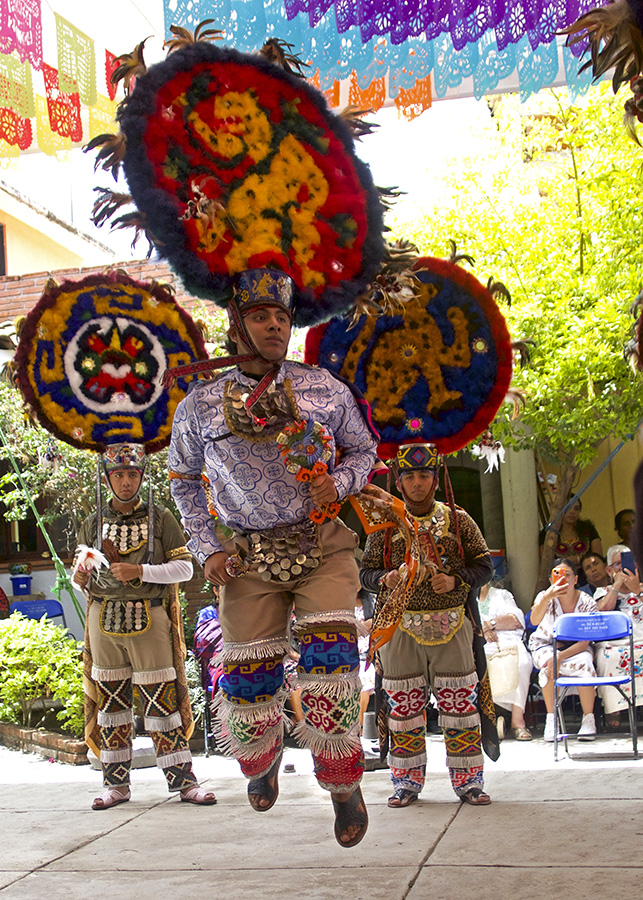
Hugo Santiago Jimenez dances in the courtyard of Casa Santiago.
Family watching as Hugo Santiago Jimenez dances in the courtyard of Casa Santiago.
Band leads the way back to the Templo de la Preciosa Sangre de Cristo.
Grupo Danza de la Pluma Promesa 2022-2024 processing back to the Templo de la Preciosa Sangre de Cristo.
Muchisimas gracias to the people of Teotitlán del Valle and, especially, Hugo and his family for inviting me and for being so welcoming and gracious. And, to my readers, CORTV will be streaming tomorrow (July 24, 2023) evening’s Danza de la Pluma performance by Teotitlán’s danzantes at La Guelaguetza (5 PM Mexico; 4 PM PDT; 7 PM EDT).
It’s Guelaguetza time in Oaxaca. And, I know, I should have written this blog post several days ago, but I have the best of excuses for my tardiness — I’m in el norte for a family reunion, thus a little distracted! However, better late than never, Guelaguetza 2023!
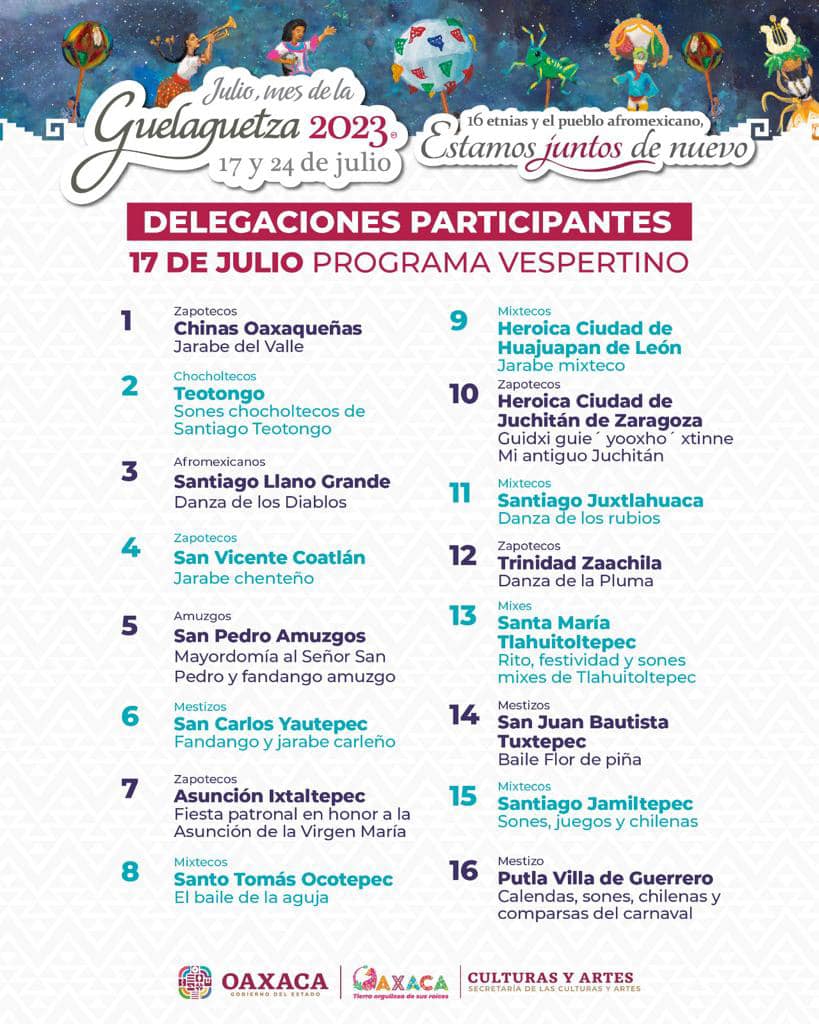
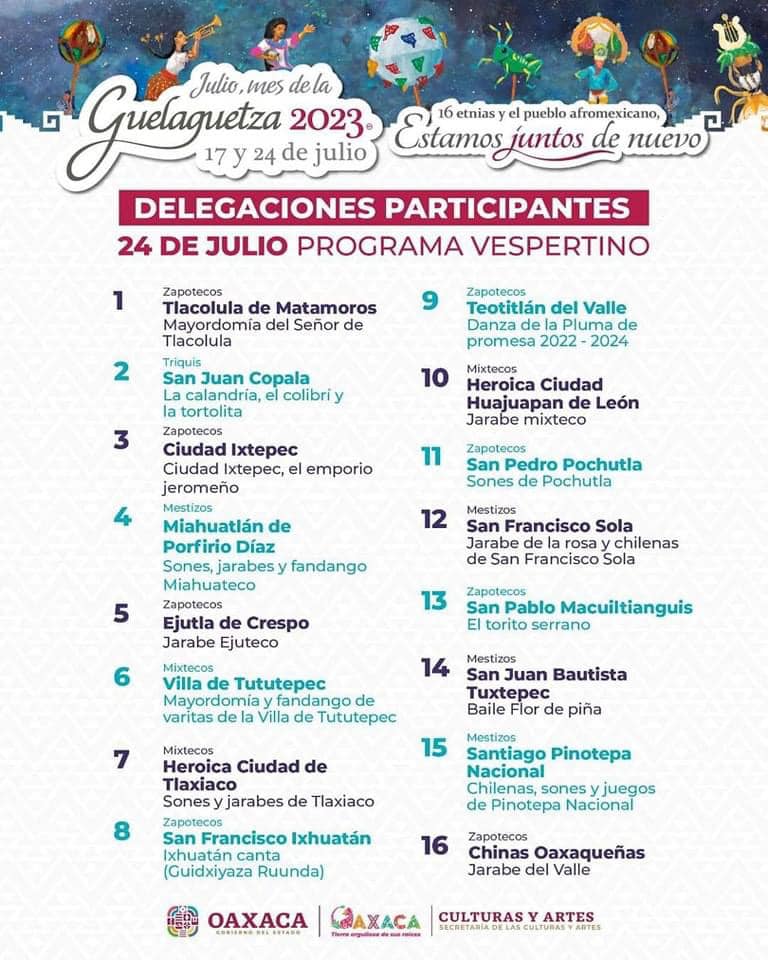
See below for the list of delegations by date, time, and the dance they will be performing. Performances will be streamed on CORTV’s YouTube channel.
July 17, 2023 – 10:00 AM
July 17, 2023 – 5:00 PM
July 24, 2023 – 10:00 AM
July 24, 2023 – 5:00 PM
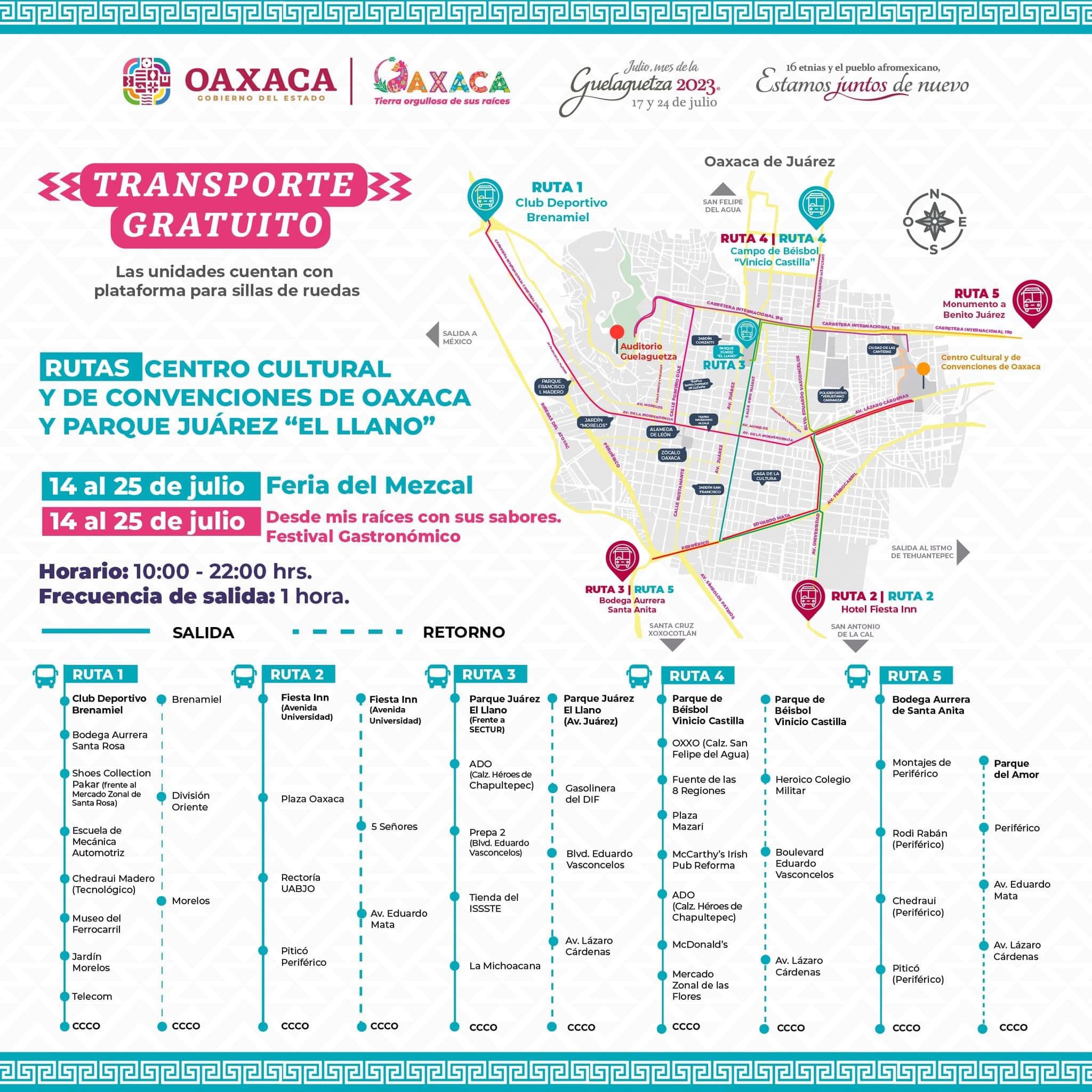
Activities are spread throughout the city with free transportation available between event sites.
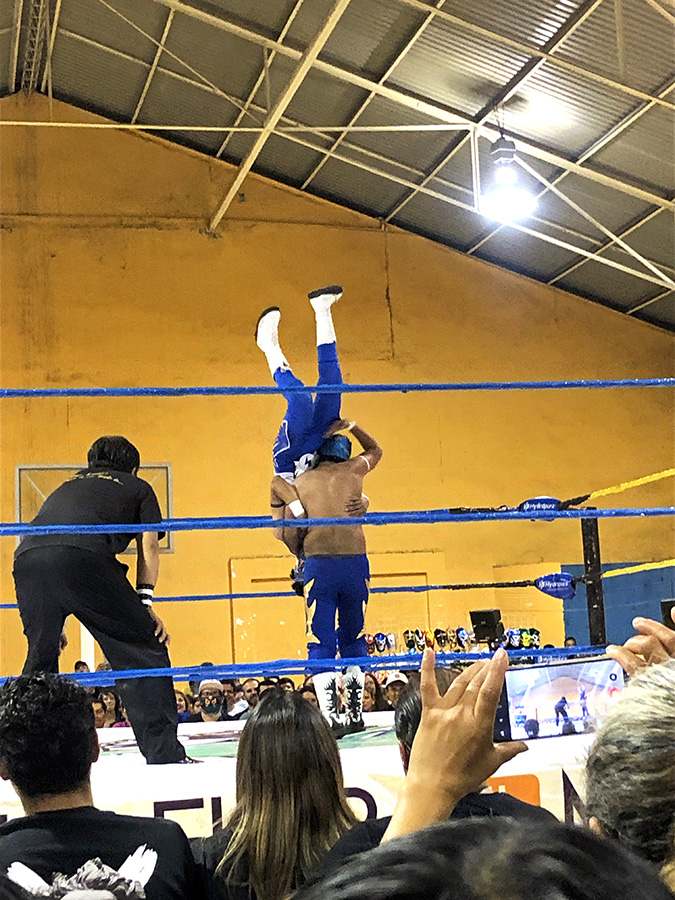
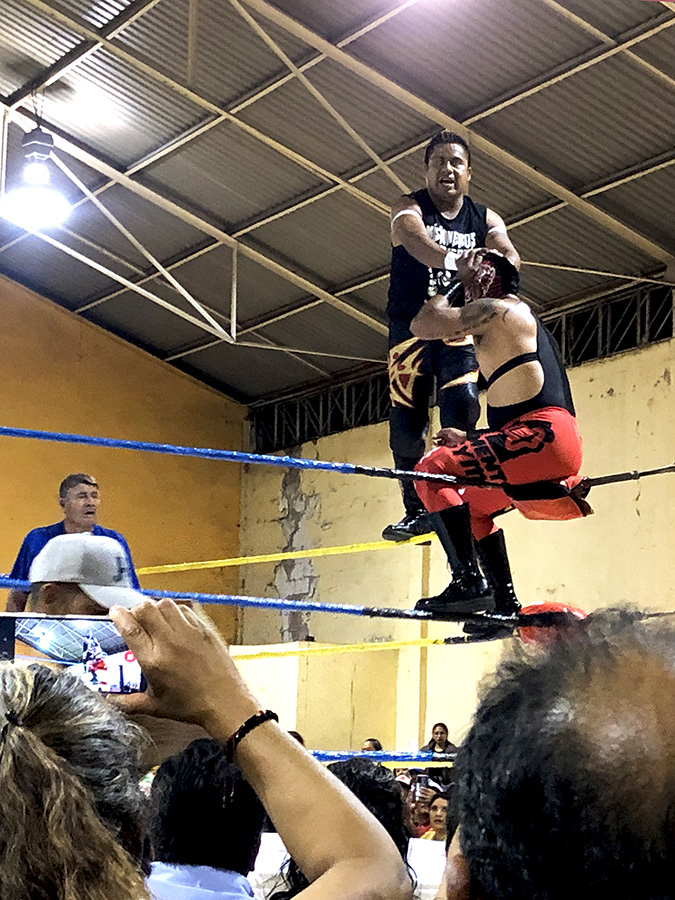
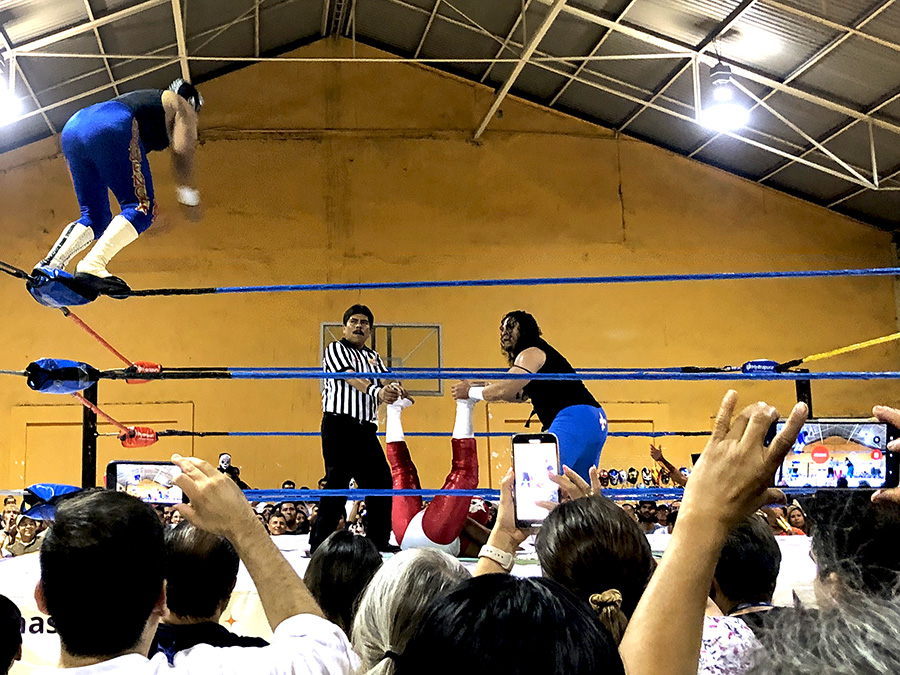
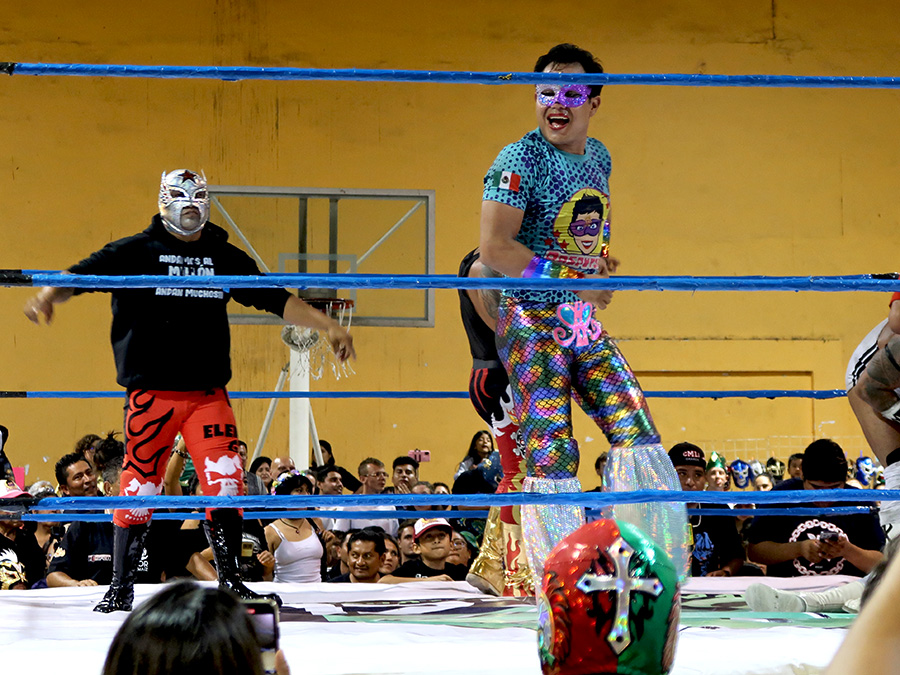
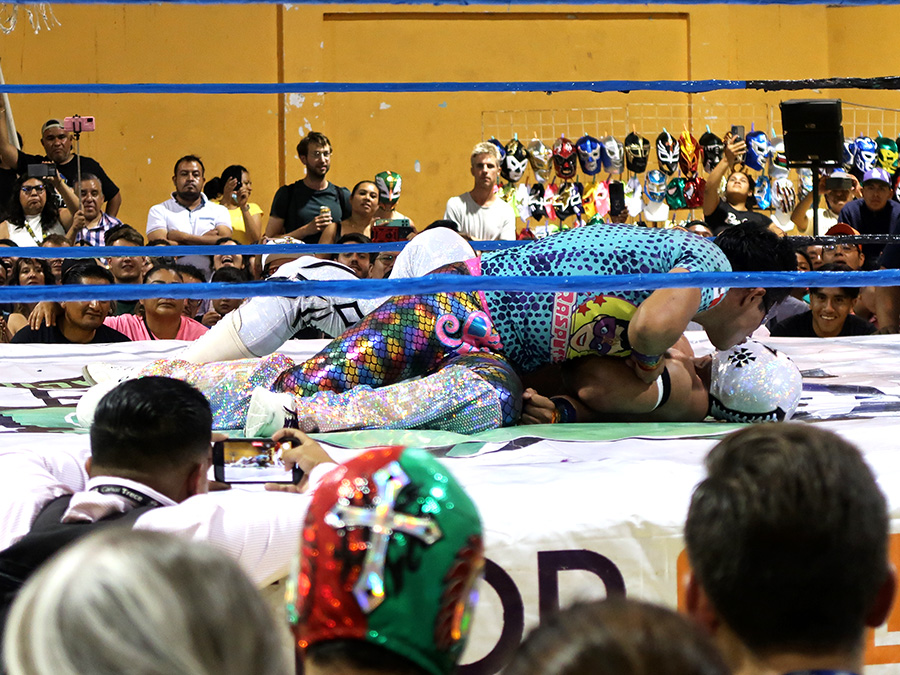
After fourteen years in Oaxaca, along with several of my neighbors, I finally attended my first Lucha Libre spectacle. And a true spectacle it was — a three hour extravaganza of colorful costumes, menacing masks, aerial acrobatics, ostentatious overacting, and an abundance of hilarity.
The ring — at Casa de los Deportes.
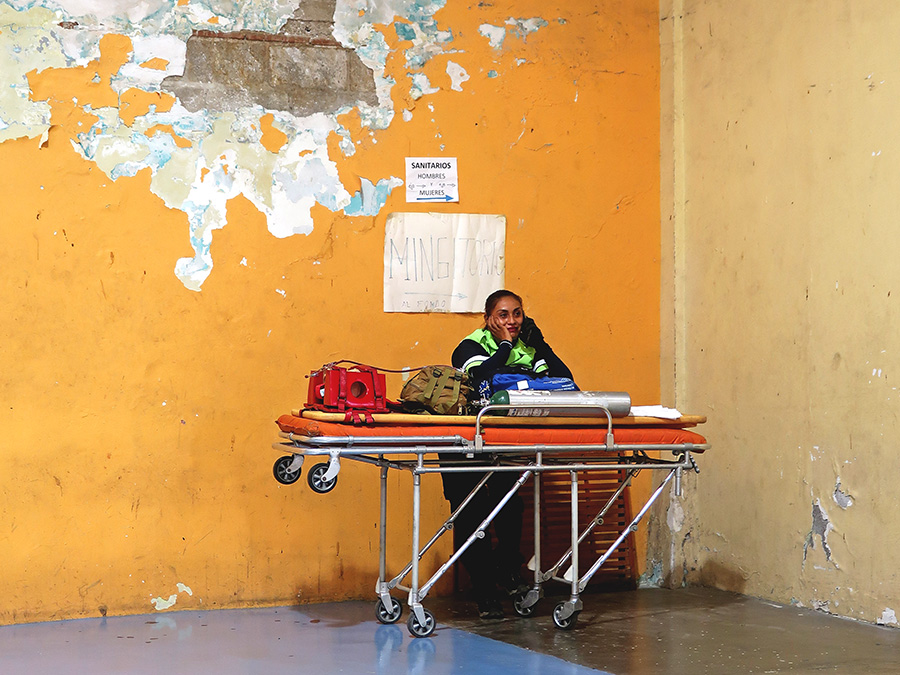
The Emergency Medical Technician.
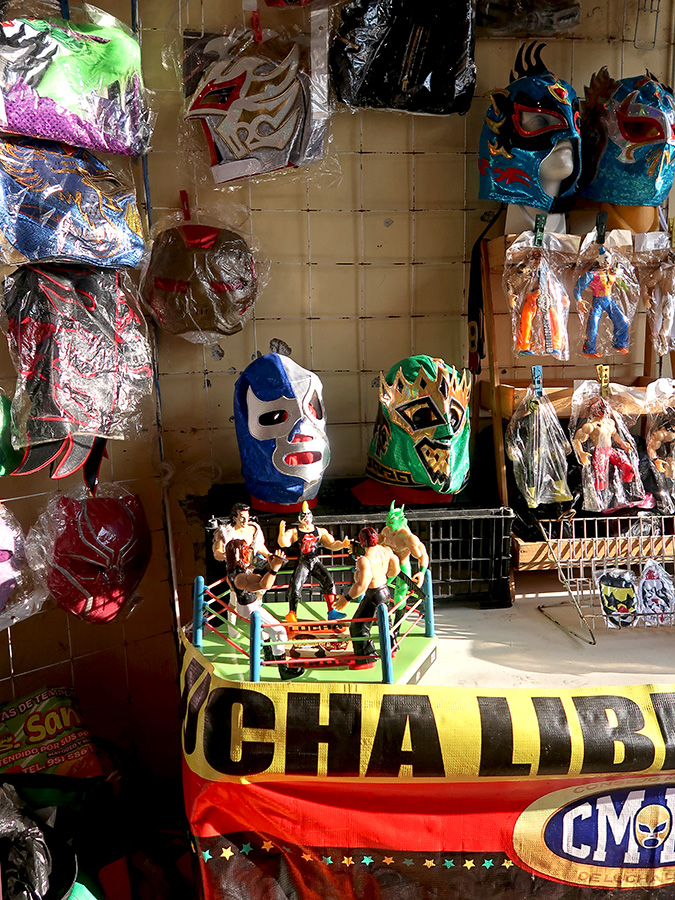
The masks and more.
The Rasputín merch.
The fans and their cell phones.
The kids in the ring between matches.
The evening’s entertainment consisted of five matches of three rounds each. Each team of two won a round with the third round deciding the winner. I’m not sure why the winners won and I’m not entirely certain the whole thing, including round three, wasn’t scripted. And, did I mention, the referees play favorites and occasionally get in on the action?






































 Mexican Peso Converter


