Feeds:
Posts
Comments

Archive for the ‘Religion’ Category

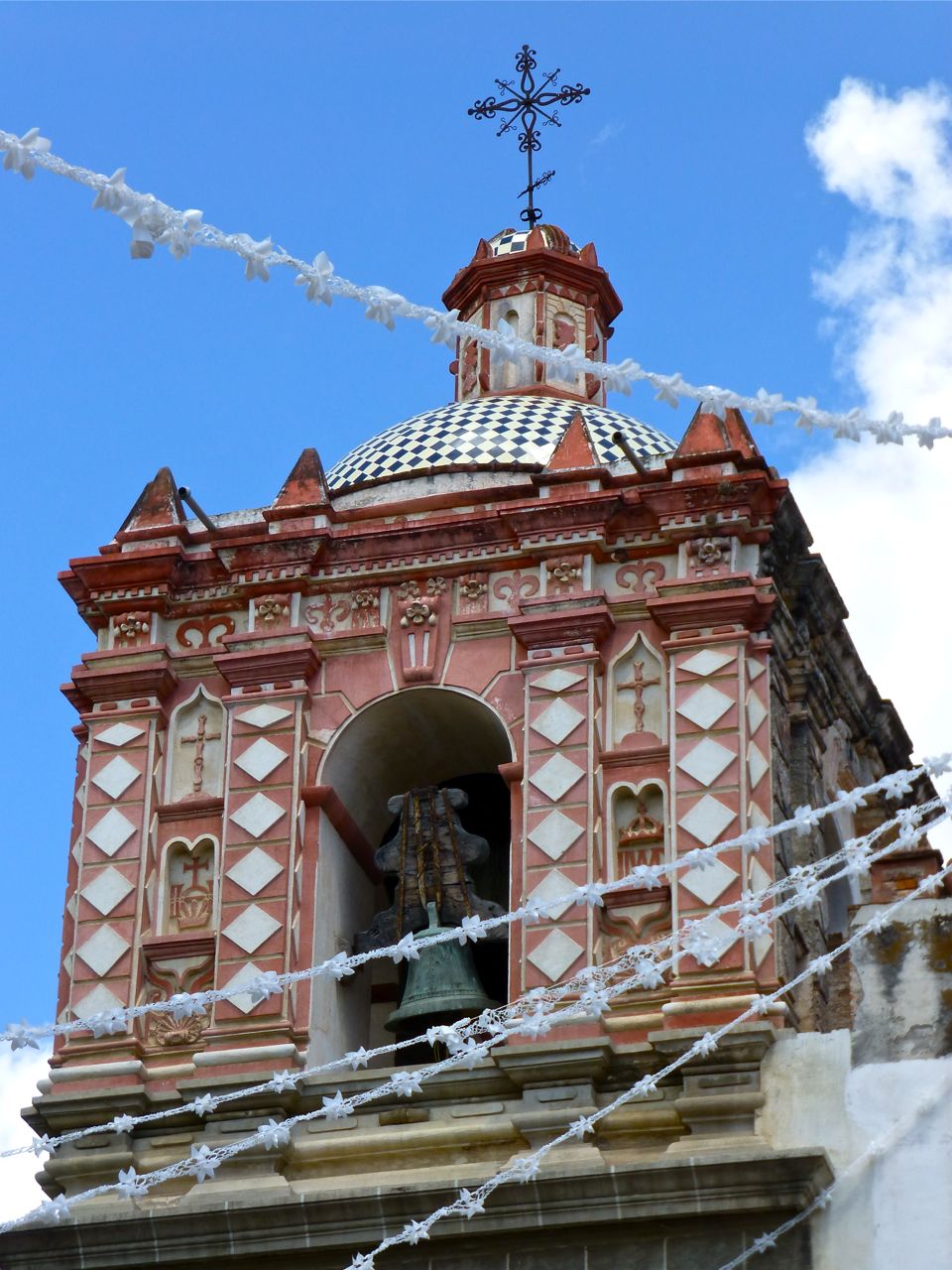
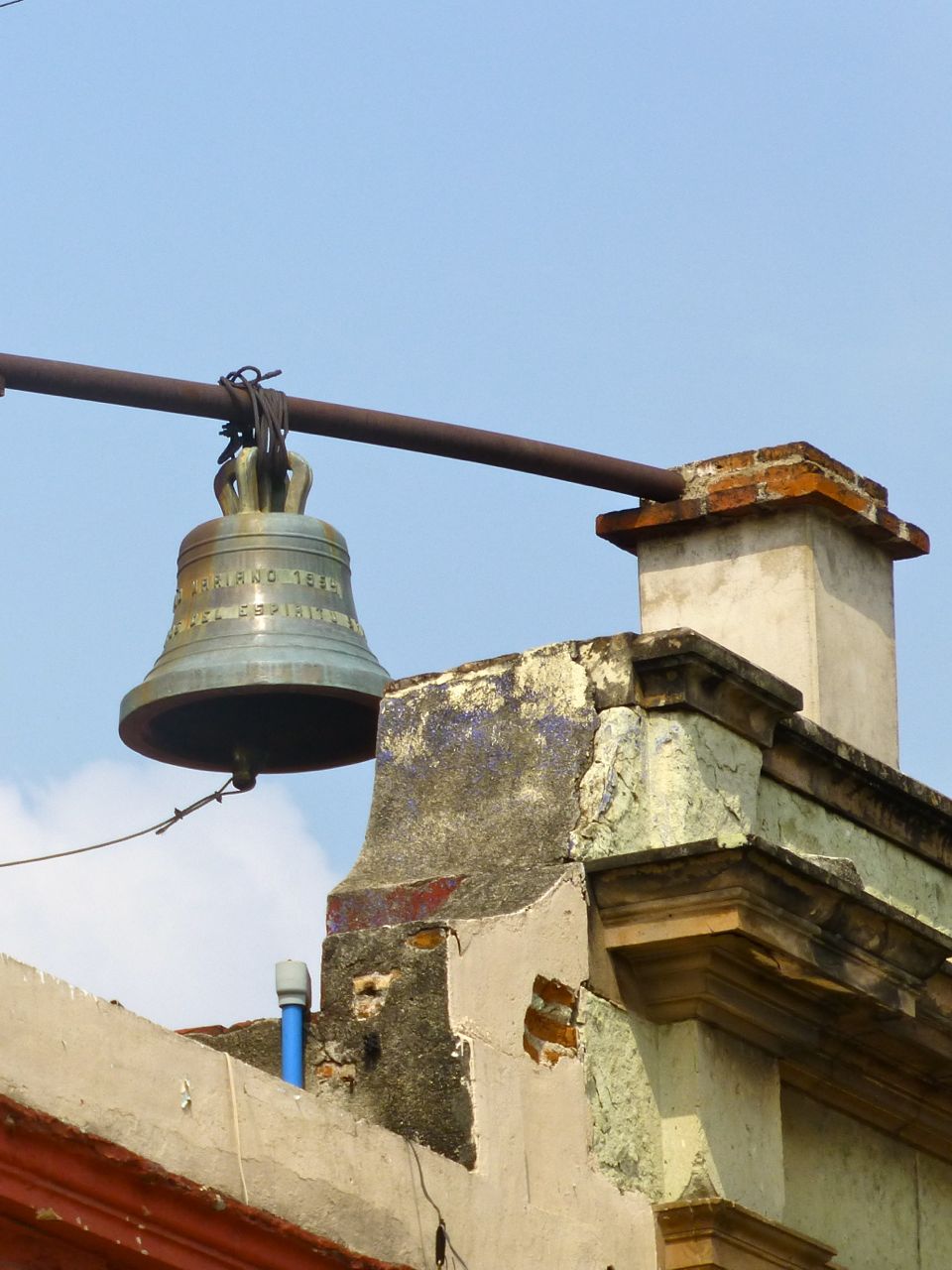
Awaking to the sounds of church bells chiming.  I must be back in Oaxaca.

Templo del Carmen Bajo, Oaxaca de Juárez, OAX

Templo del Carmen Bajo, Oaxaca de Juárez

Iglesia de la Asunción de Nuestra Señora, Tlacolula de Matamoros, OAX

Iglesia de la Asunción de Nuestra Señora, Tlacolula de Matamoros

Parroquia de San Juan de Dios, Oaxaca de Juárez, OAX

Parroquia de San Juan de Dios, Oaxaca de Juárez

Church bell tower

Church somewhere between San Baltazar Chichicapam and Oaxaca de Juárez

Anyone know the name and location of this church?  I think maybe I should turn on my camera’s GPS!

And, just one more…

Templo de San Cosme y San Damian, Oaxaca de Juárez

Templo de San Cosme y San Damian, Oaxaca de Juárez

Read Full Post »

Yesterday, we returned to Teotitlán del Valle to join in their annual Día de la Santa Cruz hike up El Picacho, the sacred mountain that watches over this incredibly special pueblo.  This year, instead taking the route up the mountain directly from downtown like we did last year (and it kicked our a$$), we drove to the presa (dam) and headed up a surprisingly well-marked trail from there.  A symphony of cicadas (cigarras or chicharras, en español), serenaded us as we climbed, young people passed us, and Templo de la Preciosa Sangre de Cristo, off in the distance, got smaller.  However, after more than an hour, we sighted our first pack burro (they bring up the food and drink) and knew we had almost reached our destination.

We were welcomed at the top by the family hosting the gathering and given cups of agua de jamaica — just what the doctor ordered!  There were even more people than last year, music blared from large speakers the aforementioned burros must have carried up the mountain, a new cross had replaced the one that had been hit by lightning last year, and, of course, the views were breathtaking.

But, with spectacular views in all directions, why was most everyone looking down toward the road from the village to the presa?

A foot race!  From what we could understand, there were 3 classes of runners; one that ran all the way from mercado in the center of Teotitlán and other two “only” ran up from the presa.  Whichever route they took, as one of the runner’s t-shirt says, they were all “chingon!”

And so was this gal, who was on her way up as we were coming down.

Woman carrying basket on head

Muchisimas gracias, yet again, to the people of Teotitlán del Valle for another unforgettable experience.

Read Full Post »

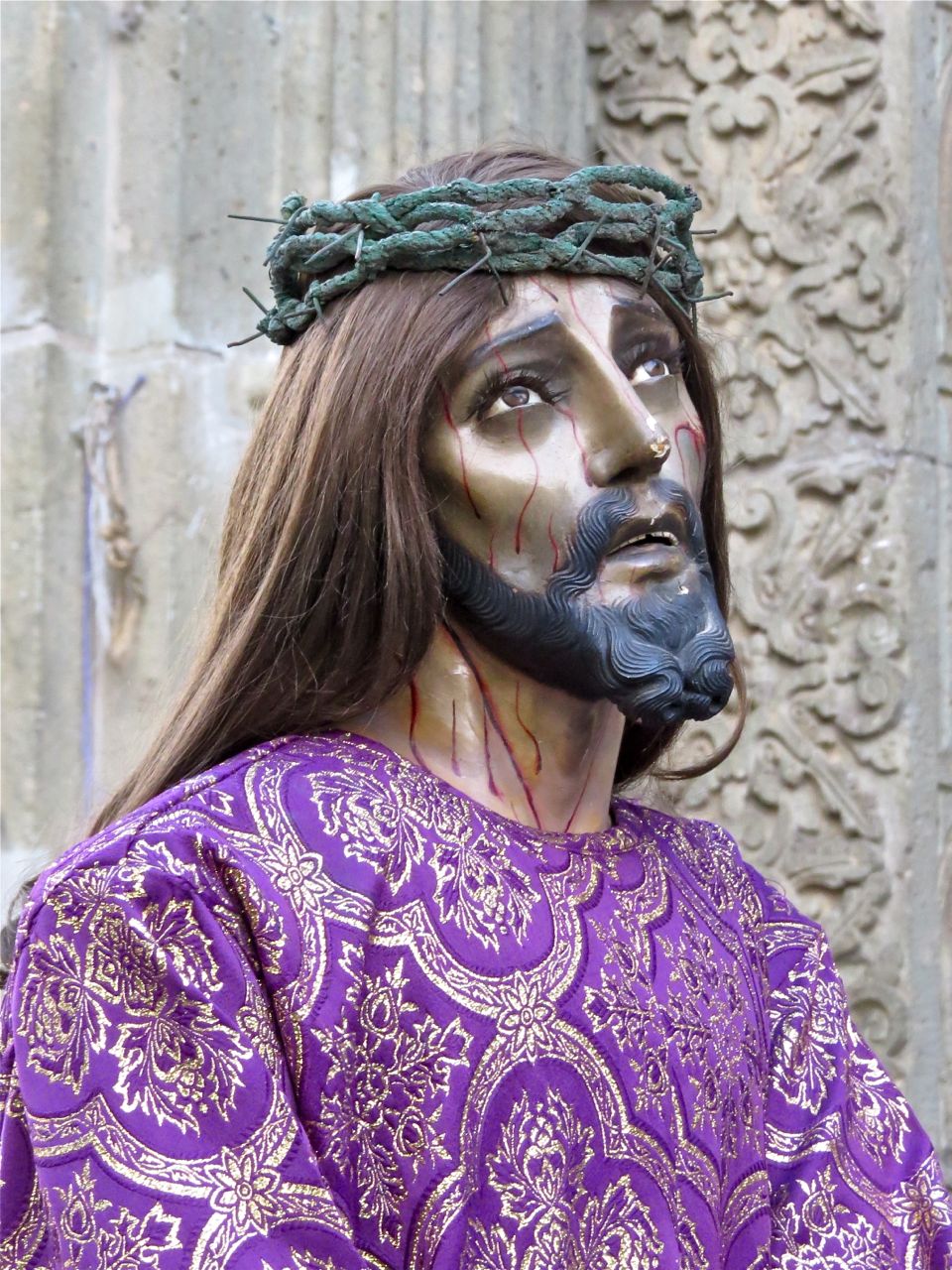
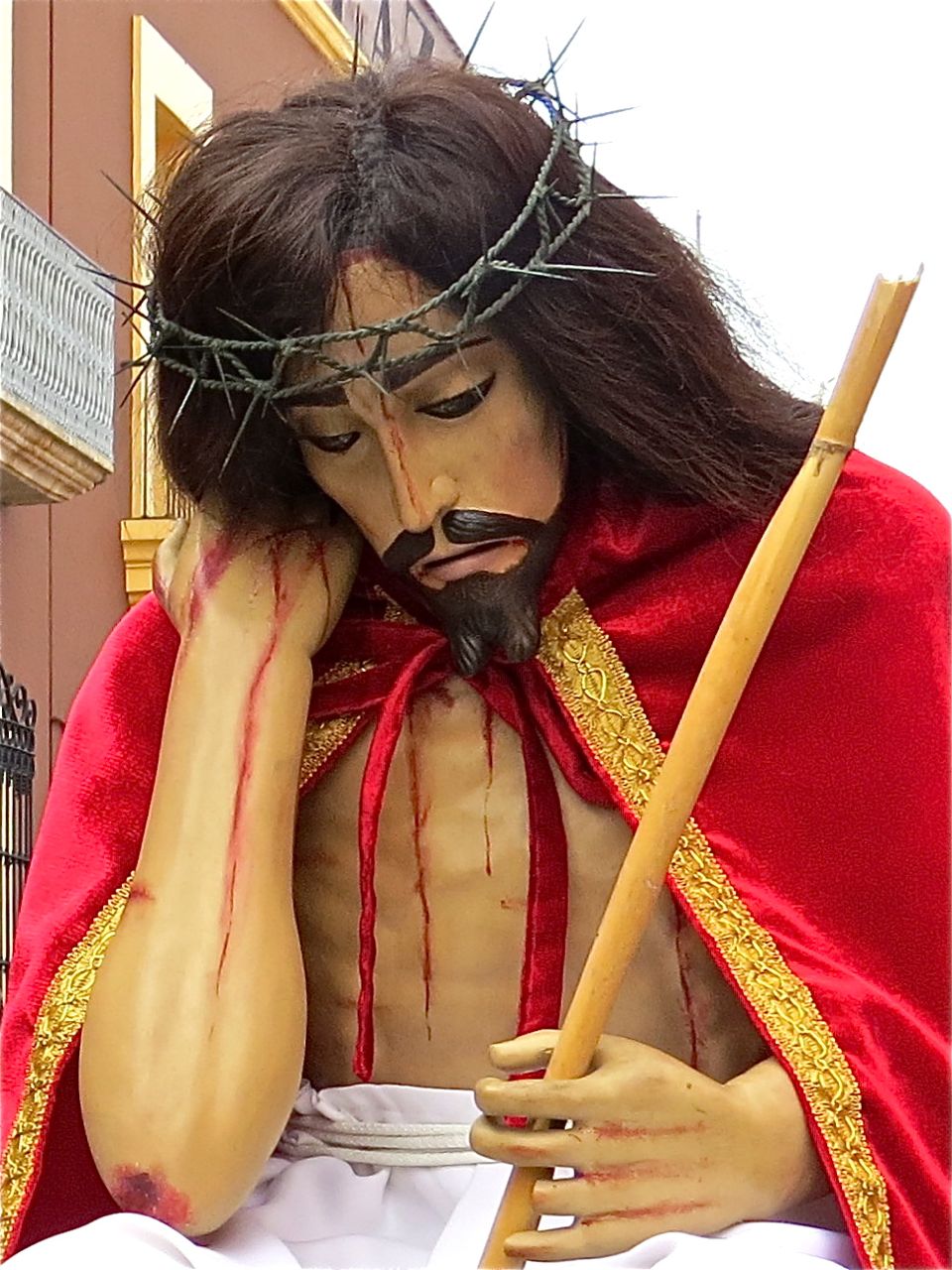
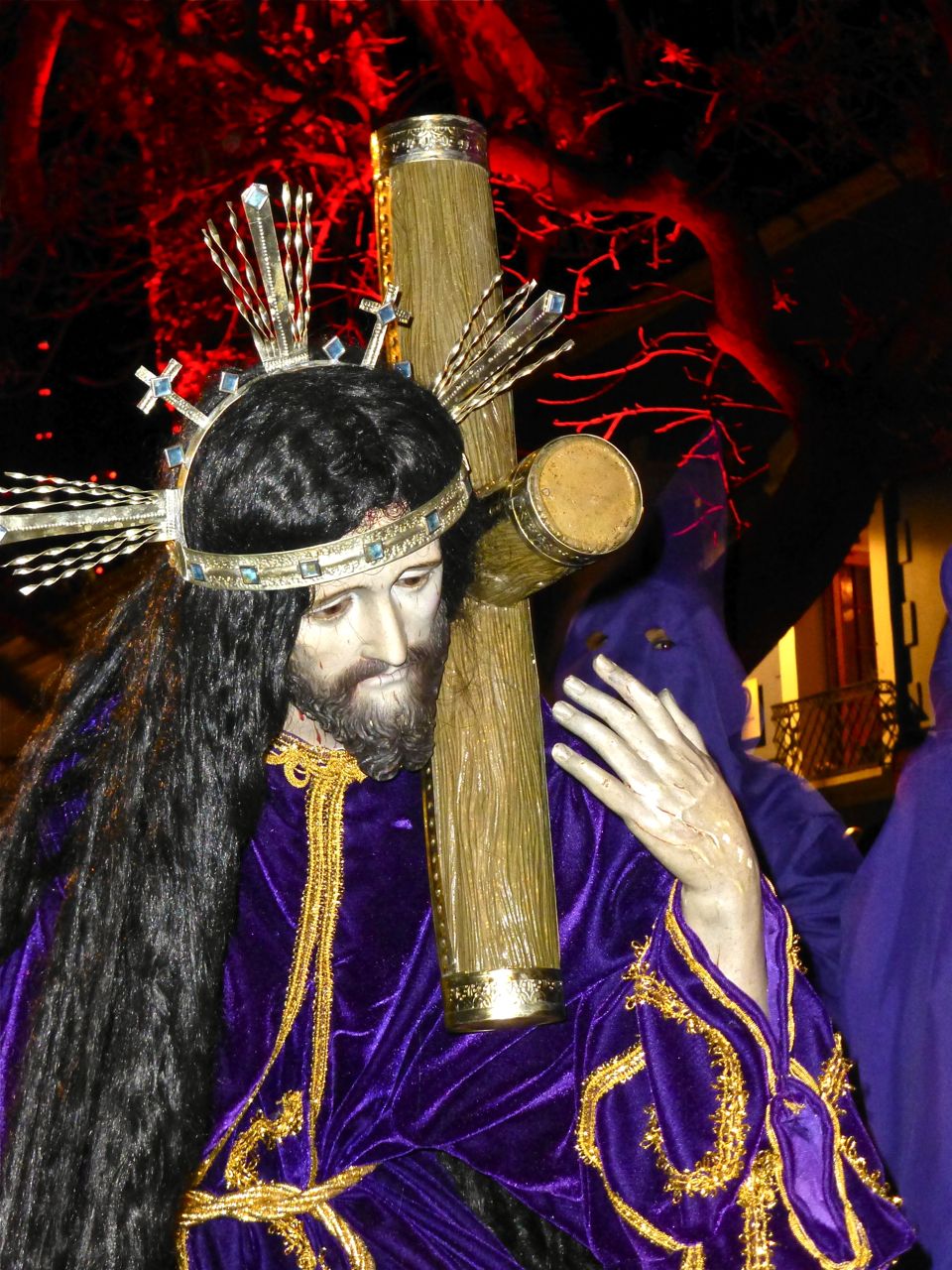
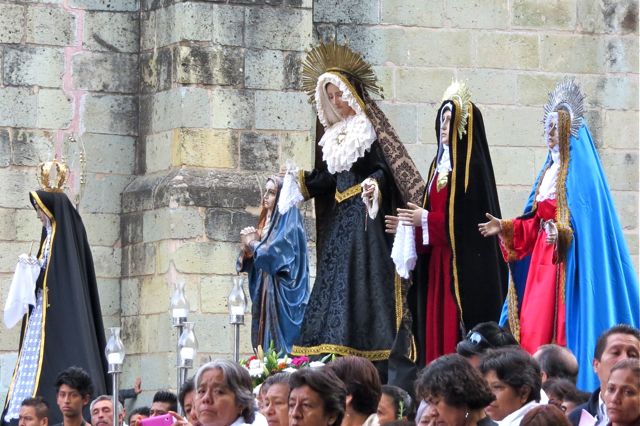
Good Friday wasn’t all about Mary.  Viernes Santo processions present larger-than-life images of Jesús in all his piety and suffering.

IMG_3270

IMG_3273

IMG_3444

IMG_3496

P1030621

P1030667

Jesus Christ, Jesus Christ
Who are you? What have you sacrificed?
Jesus Christ Superstar
Do you think you’re what they say you are?

Superstar, lyrics by Andrew Lloyd Webber

Read Full Post »

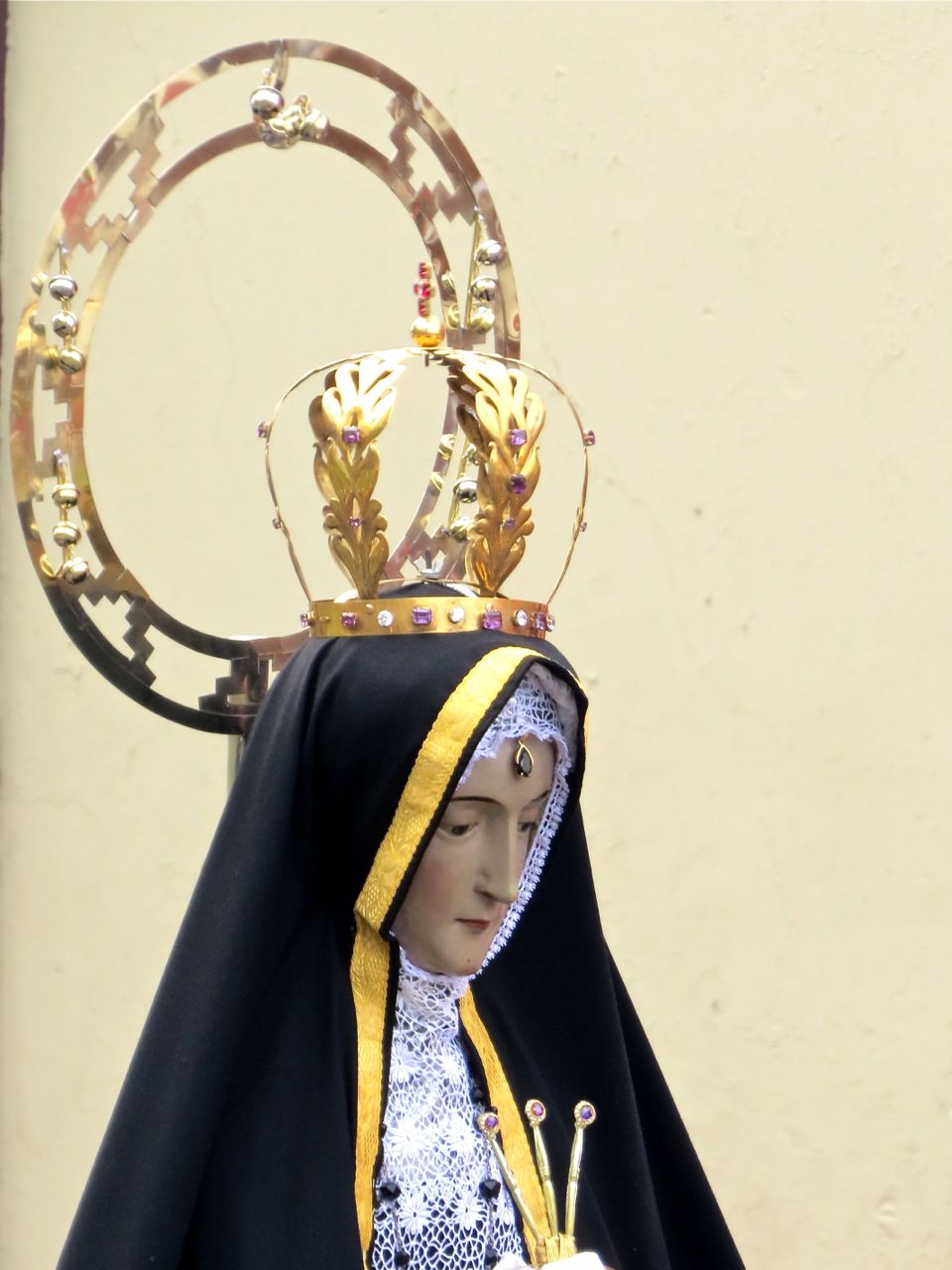
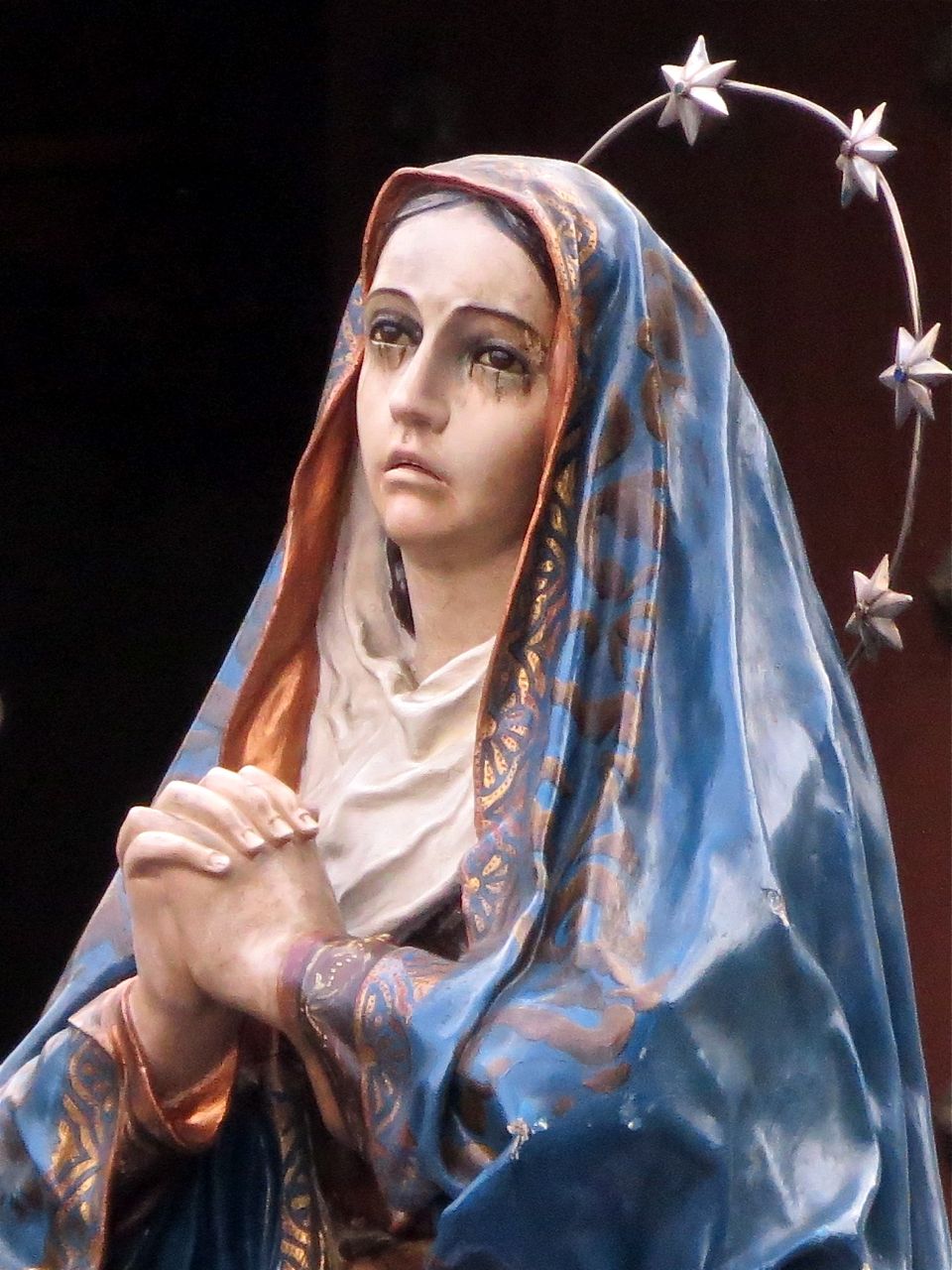
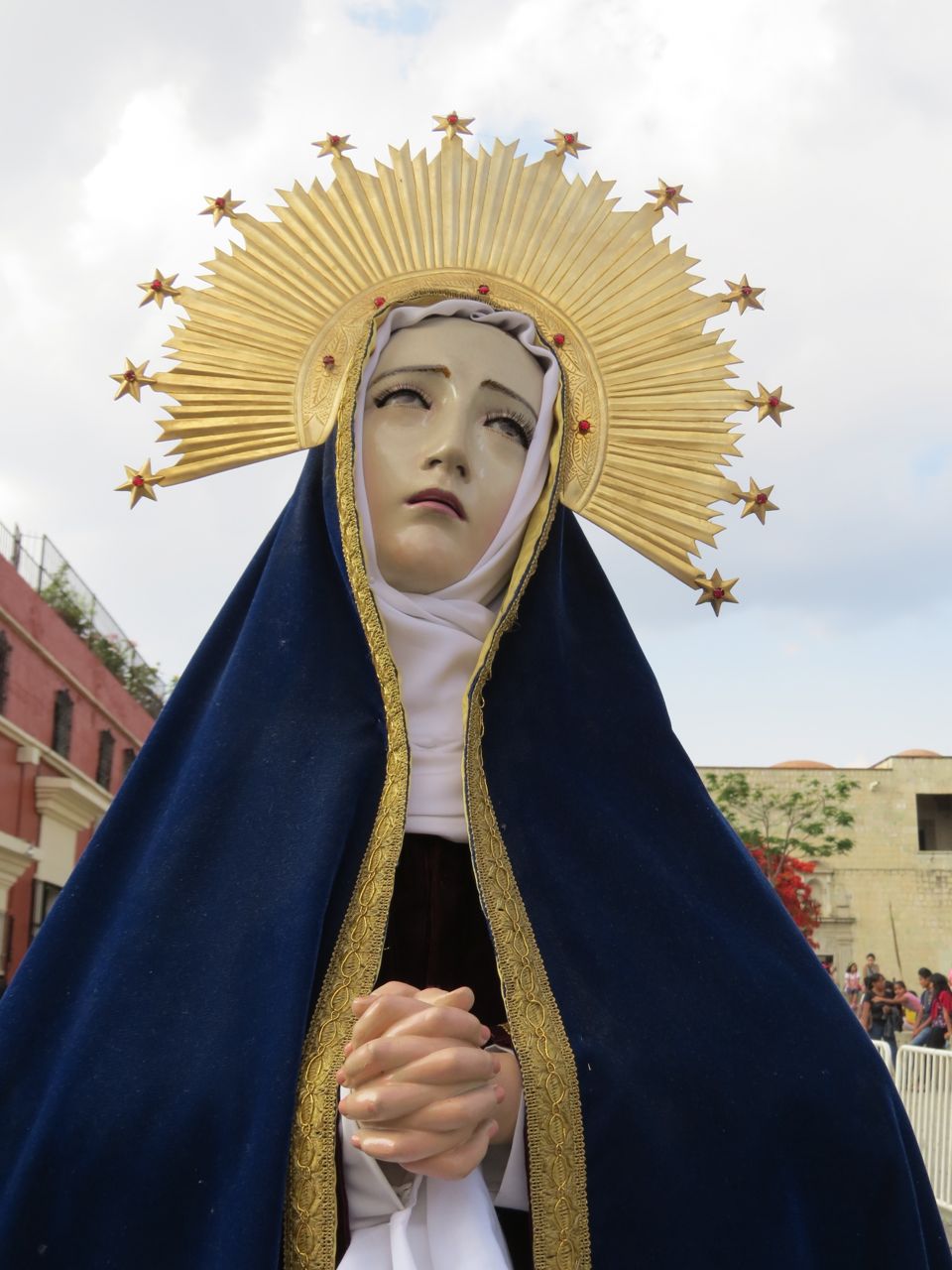
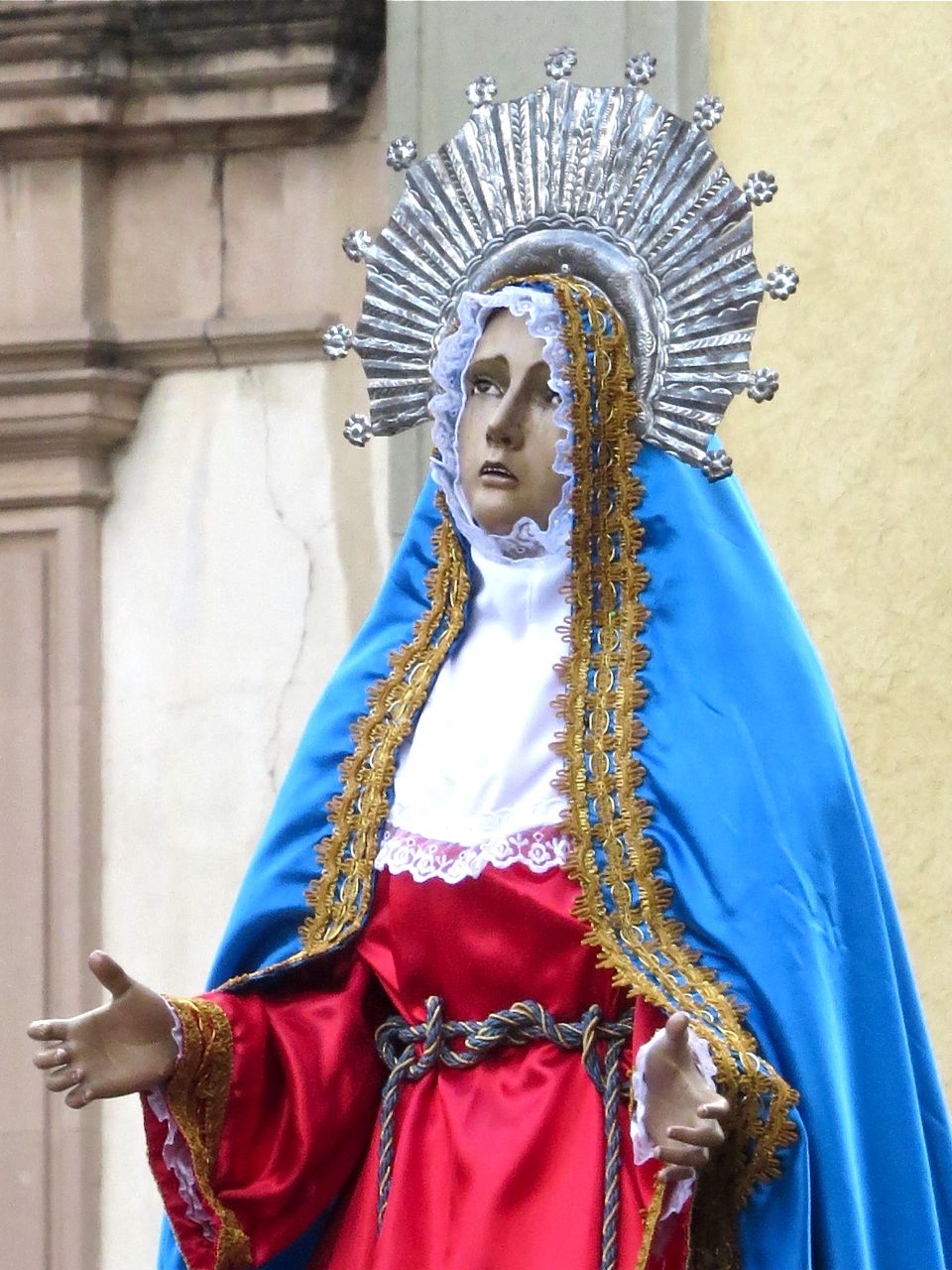
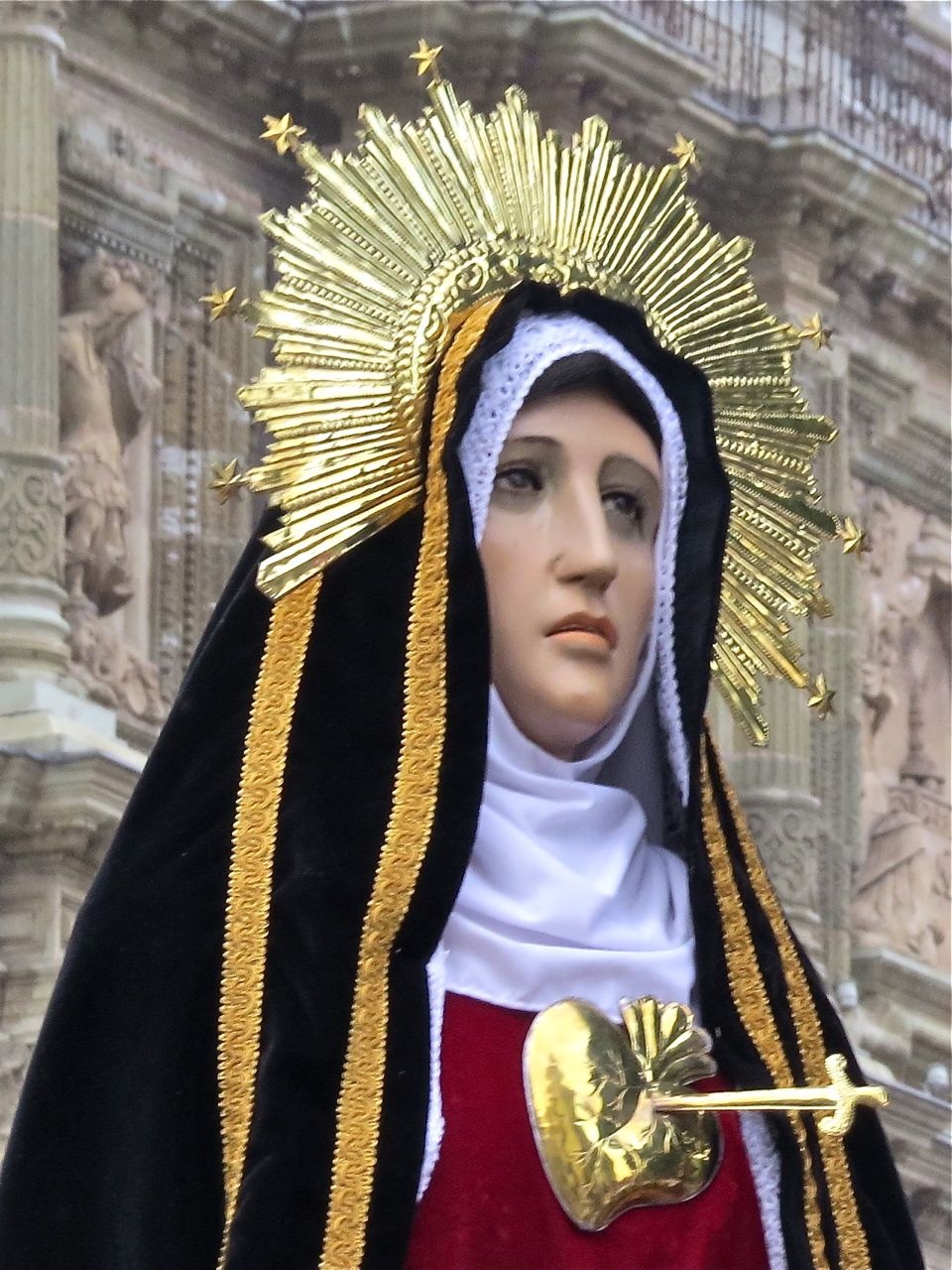
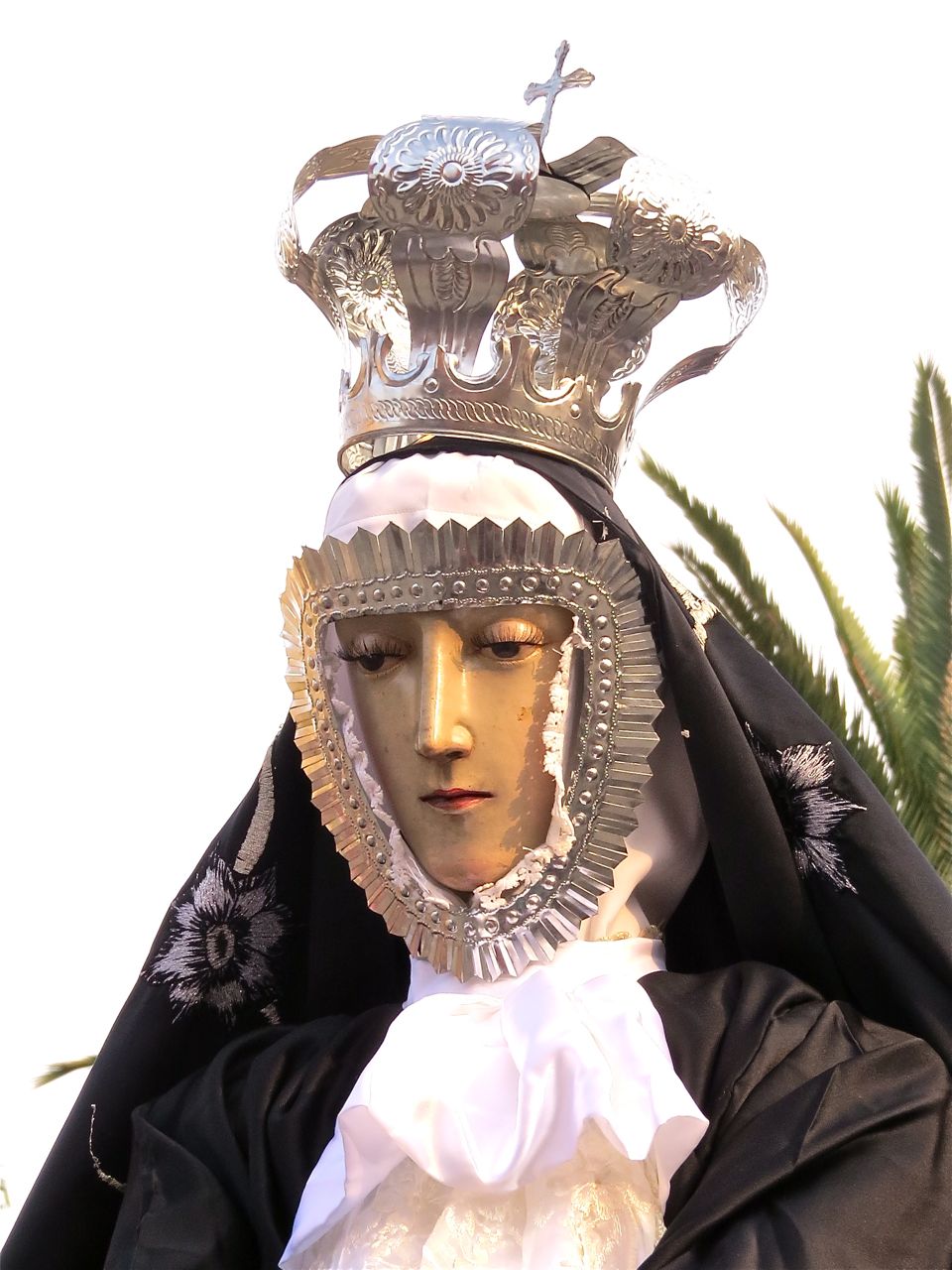
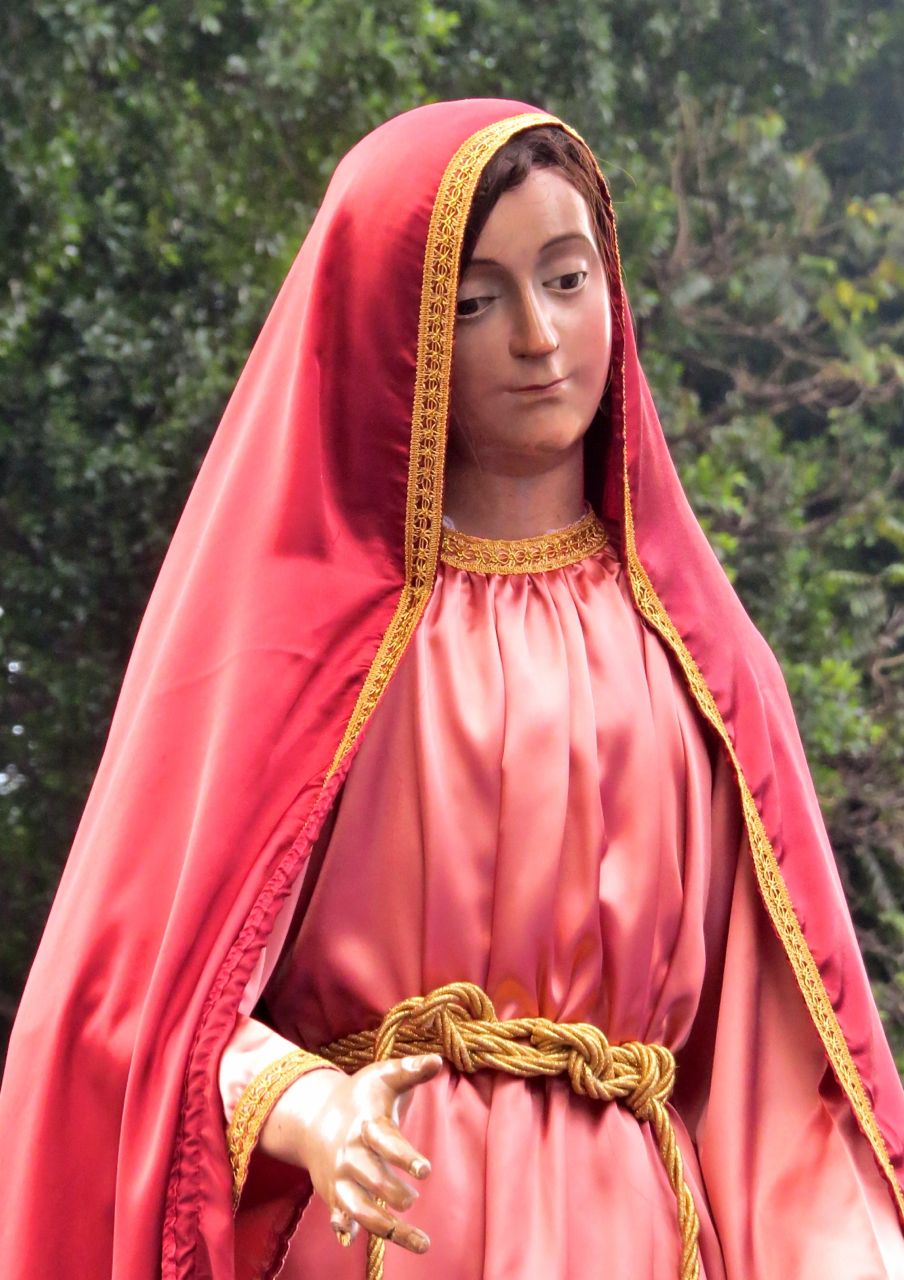
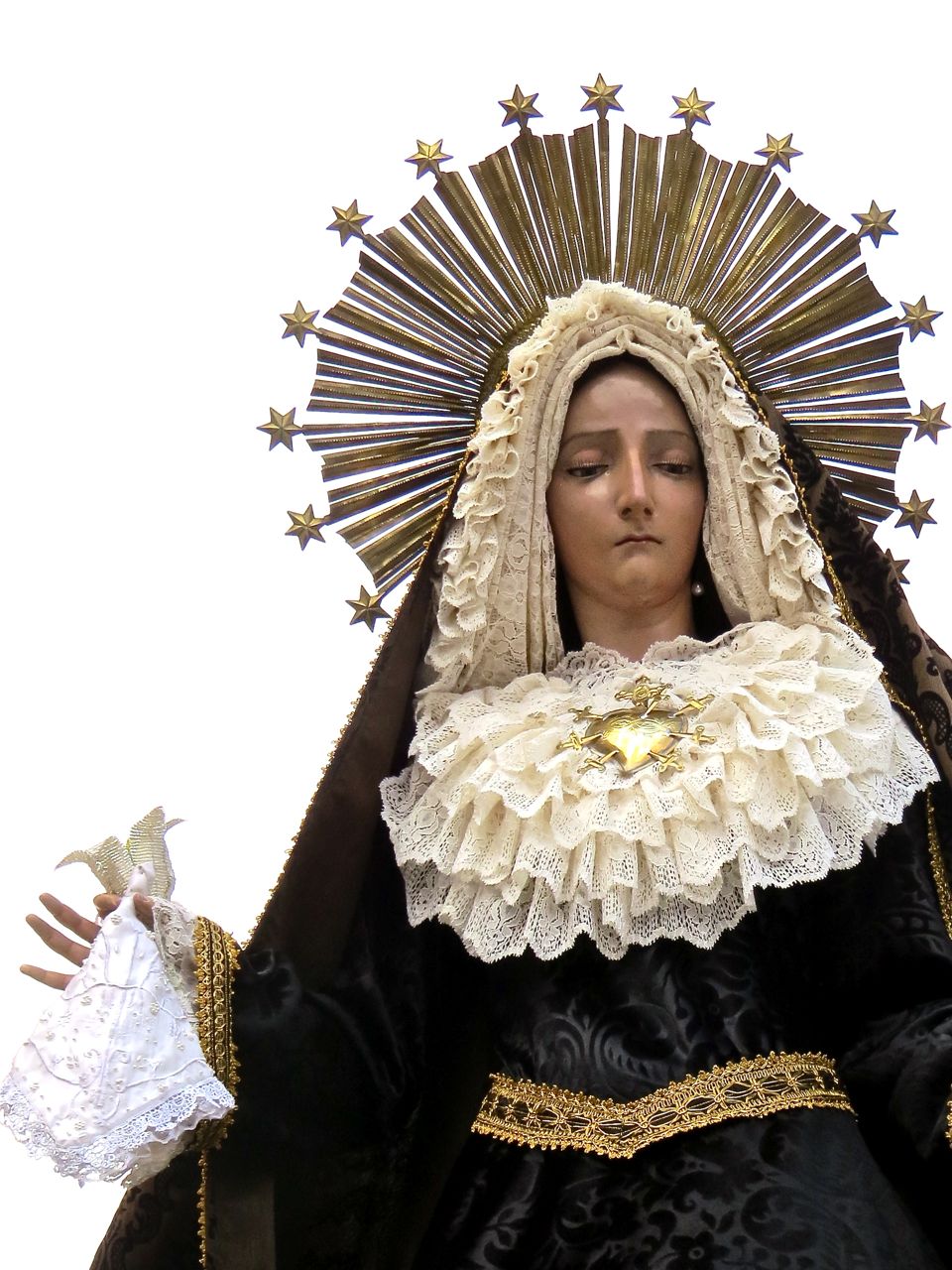
Good Friday in Oaxaca… Jesús may be the one who they say was crucified and resurrected, but María is never far from his side.

IMG_3412

IMG_3309

IMG_3439

IMG_3313

IMG_3378

IMG_3535

IMG_3363

IMG_3450_copy

From frequent traveler to Oaxaca, Liza Bakewell’s book, Madre:  Perilous Journeys with a Spanish Noun:

One can travel all over Spain and its former viceroyalties and never see as many elaborately bedecked and bejeweled Virgins as one will see here in Mexico — neither in number, nor in glory.  Yes, in Peru there are many famously ornate ones.  In Colombia, too.  Argentina, Chile, Bolivia, Ecuador have their share.  The Philippines is a runner-up.  But Mexico has all of them beat.  Marian devotion, the worship of the Virgin Mary in all her forms through song, prayer, writing painting, sculpture, and shrines, went wild in Mexico.  (p. 169)

Read Full Post »

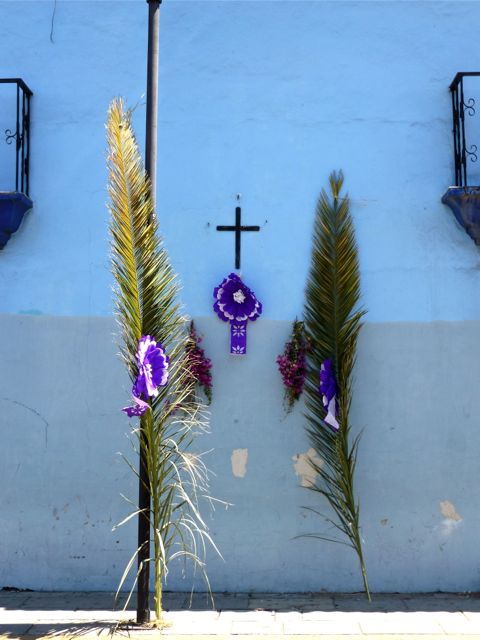
From the streets of Oaxaca today, wishing you happy Easter Sunday…

Palm fronds and cross against blue wall

Four Twenty Day

Caps with Bob Marley image & marijuana leaves

almost Earth Day…

T-shirt "Local food = primary care"

And, though nothing seen around the streets of the city, a happy Passover!


Read Full Post »

Last night, fortified by tostadas, guacamole, and a little vino, a gal pal and I set out for the Jueves Santo (aka:  Holy Thursday and Maundy Thursday) tradition of visiting seven churches.  According to that fount of knowledge, Wikipedia, “The tradition of visiting seven churches on Holy Thursday is an ancient practice, probably originating in Rome.”

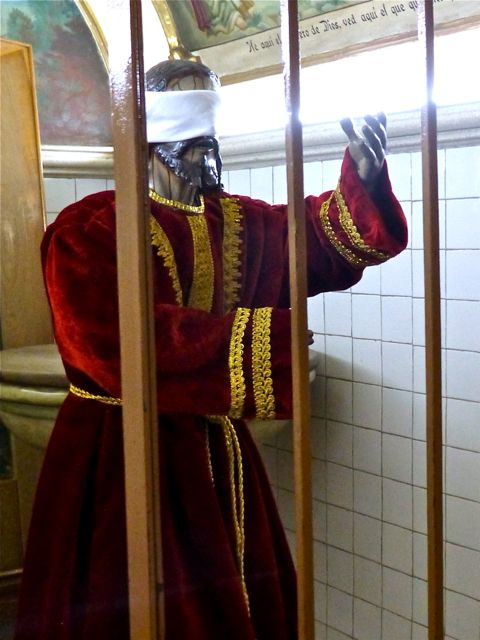
We purchased our bag of Pan Bendito (bread that had been blessed) and set off.  As always, the sidewalks were teeming with people in a combination of a semi-solemn pilgrimage, street festival, family night at the fair, and date night.  (Of course, there was canoodling.)  And, despite the “Entrada” and “Salida” signs on the doors of many of the churches, foot traffic was often gridlocked.  I didn’t help matters when I stopped short.  Jesus wearing a blindfold?

Blindfolded statue of Jesus

At another church, another blindfolded Jesus…

Blindfolded Jesus behind bars

And, another…

Blindfolded statue of Jesus behind bars

Holy Thursday, Batman, how could I have missed these blindfolded Jesus figures in 2010, 2011, 2012, and 2013???

(For those, like me, who are clueless where this blindfold business comes from:  According to the Gospels of Luke (22:64) and Mark (14:65), Jesus was blindfolded, mocked, and beaten following his trial and before his crucifixion.)


Read Full Post »

And so, Viernes Santo began…

Procession

Processions from churches in the Historic District began at 7:00 AM.

IMG_3281

They converged at the Alameda, on the south side of the Cathedral,

IMG_3336

where “our Lord meets his most Holy Mother going towards Calvary.”

IMG_3316

The faithful, now as one, then proceeded east on Independencia…

People dragging wooden crosses

along with the images of Mary and Jesus…

Statues of Mary and Jesus

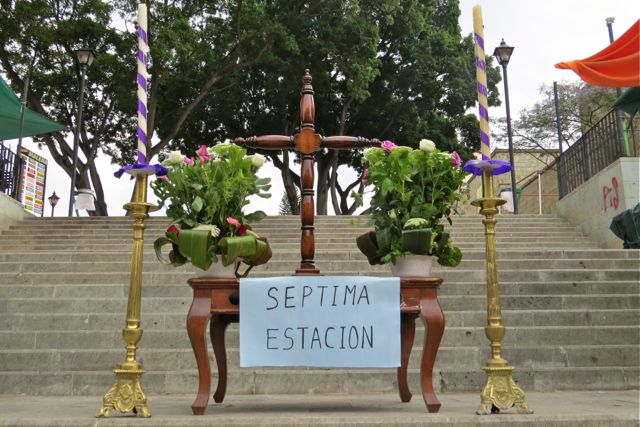
stopping along the way at Stations of the Cross.

Septima Estacion - altar on outside stairs

I left at 9:30 AM — they were still going.  Early this evening, all will again gather for the Procession of Silence.  No rest for the faithful or weary bloggers!

Read Full Post »

San Antonino Castillo Velasco continues to enchant.  What’s not to like about a village known for growing flowers, decorating graves with designs created with flor inmortal (immortal flowers) during Día de los Muertos, and floral designs executed in exquisite embroidery?!!

Then there is Palm Sunday and the tradition of gathering at the panteón, loading El Señor del Burrito with locally grown bounty, blessing by the priest, an incense led procession carrying it to the church, and then selling it to raise money for a local orphanage.

It never ceases to amaze!  The produce loaded onto the Little Burro, along with the overflow, was fantastic — enormous cabbages, the whitest of white cauliflower, perfect roses, cacao beans, squash, fruits, and on and on…

Then there are the people… young and old, they are always gracious and welcoming. And this year, under temperatures threatening 90ºF, women were circulating throughout the gathering crowd, offering thirst quenching aguas to stave off dehydration.

Oh yes, there were also kids and animals — and sometimes together!  As I think I’ve mentioned before, children in these indigenous communities seem to always be included and when old enough (5 and up, I’m guessing), given responsibilities — joy and exuberance, along with patience and commitment, abound.

I loved watching the little boys wrangling the goats as the procession proceeded from the panteón to the church.


Read Full Post »

Today is the sixth Friday of Lent and Oaxaca is commemorating Viernes de Dolores, the Friday of Our Lady of Sorrows.

The Municipality of Oaxaca, the Ministry of Tourism, and Hotel Quinta Real Oaxaca extended an invitation to a free Concierto Viernes de Dolores in the Ex Convento de Santa Catalina de Siena.  The less than one-hour program included a description of the altar (including the sprouted chia — yes, the original Chia Pets); a powerful poem relating the story of the celebration that alternated with a musical program sung by Coro de la Ciudad de Oaxaca, under the direction of Israel Rivera Cañas, that included the traditional, Stabat Mater de Juan Matís, a 13th-century Catholic hymn about the Sorrows of Mary.

At the Cross her station keeping,
stood the mournful Mother weeping,
close to her Son to the last.

Stabat Mater

The acoustics of Santa Catalina de Siena were wonderful, the horchata and agua de chia, served at the conclusion of the program, were refreshing, and it was a much welcome and tranquil way to spend an hour on a busy Friday.


Read Full Post »

If you are in Oaxaca and it’s the fourth Friday of Lent, it must be Día de la Samaritana (AKA, el Día de las Aguas) — a uniquely Oaxacan celebration.  It is inspired by the Gospel of John story in the New Testament:  At noon, a tired and, apparently, thirsty Jesus, on his way to Galilee, asks a Samaritan woman at Jacob’s Well in Sychar for some water.  His request was highly unusual because, according to the Old Testament, “Jews regarded the Samaritans as foreigners and their attitude was often hostile.”  The woman complied with his request and the rest is history.

By noon, this past Friday in Oaxaca, the thermometer had already reached 90º F in El Centro Histórico and people of all ages, from small children to abuelos, were already lined up at bougainvilla and palm decorated booths in front of churches, schools, and businesses for the traditional Día de la Samaritana free aguas.  It wasn’t just plain water they were waiting on, it was for divinely flavored aguas frescas made with fresh fruits and flowers — jamaica, horchata, chilacayota, tamarindo, sandia, and others.  However in front of the churches, prior to the offering of aguas, there was a reenactment of Jesus and the Samaritana, as well as a priestly blessing — and an article in Noticias reported that, given the blazing hot sun, some in the crowd became a little impatient.

This slideshow requires JavaScript.

All were eventually served and the streets were filled with smiling people drinking a rainbow of aguas.  Within an hour the serving pots, pitchers, bowls, and buckets were empty and all that remained were garbage containers filled to overflowing with plastic cups.

By the way, talking to my friend Sam, who teaches at Universidad José Vasconcelos de Oaxaca, they had an aguas frescas contest — memorable combinations of watermelon with strawberries and lime; atole with tuna nieve; and coconut with strawberries.  However, I was informed the day’s winner was the piña colada — alas, minus the rum, I’m thinking.

Read Full Post »

Meet the new gals in town…

Virgin of Guadalupe painted on yellow wall

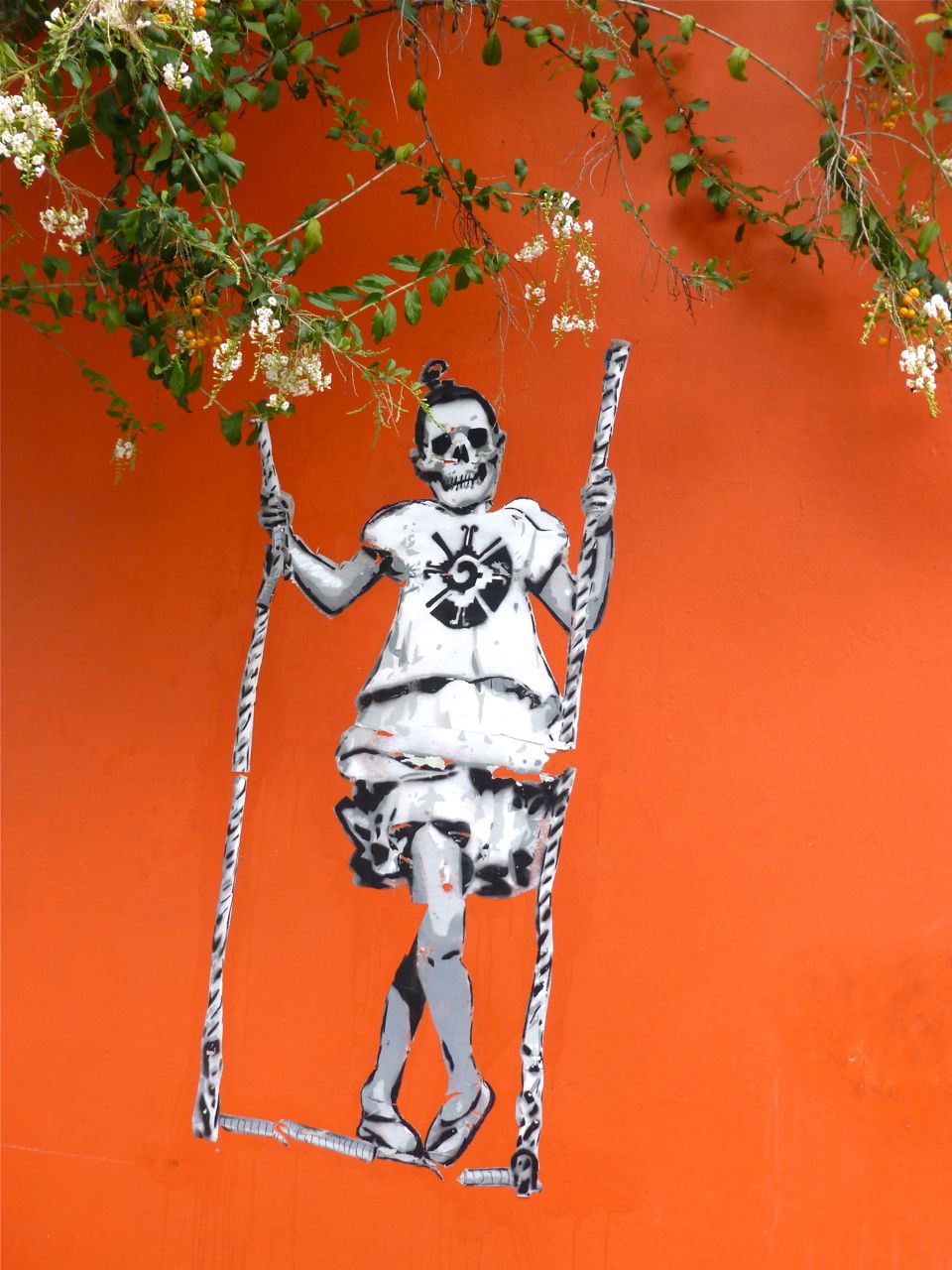
Skeleton on swing painted on orange wall

Life and death in Oaxaca.

Read Full Post »

Another day… another celebration… another adventure!  Yesterday was Día de Carnaval (aka, Fat Tuesday, Mardi Gras, Carnival), a day to let the good times roll before the sacrifices of the Lenten season.

As you have probably surmised, the Spanish brought the tradition to Mexico.  Like many other seasonal celebrations, it conveniently coincided with indigenous festivals celebrating the “lost days” of the Mesoamerican calendar, “when faces were covered to repel or confuse evil.”  Apparently, it caught on “because it was one time when normal rules could be broken especially with the use of masks to hide identities from the authorities.”

And so, off we went for Día de Carnaval in San Martín Tilcajete (28 km south of the city), a village known for its fancifully painted wood-carved alebrije and masks.  We are still doing May weather in March and, thus, it was hot and shade was in short supply.

In the morning, a bride and groom were chosen, villagers gathered for a boisterous and hilarious ceremony in the courtyard, they danced, and then all processed through the streets of San Martín Tilcajete to a designated location where the happy “couple” knelt before a jolly looking “priest.”  By the way, those beautiful “women” in gorgeous gowns aren’t what they seem!

Young and old, the “guests” were a colorful crowd.  Many of the diablos and diablillos covered their faces with colored pigments and their bodies with red or black oil — rumor has it, motor oil is sometimes used.  Yuck!

I’d been to San Martín Tilcajete many times — to go from one workshop to another in search of the perfect alebrije for a gift or to add to my collection — but never before for Carnaval.  It was great fun and the photo ops were endless.

As they say in New Orleans, “Laissez les bons temps rouler!”

Read Full Post »

It’s amazing how sometimes light, shade, and a pristine backdrop can come together to highlight something you have looked at hundreds of times, but have never really seen.

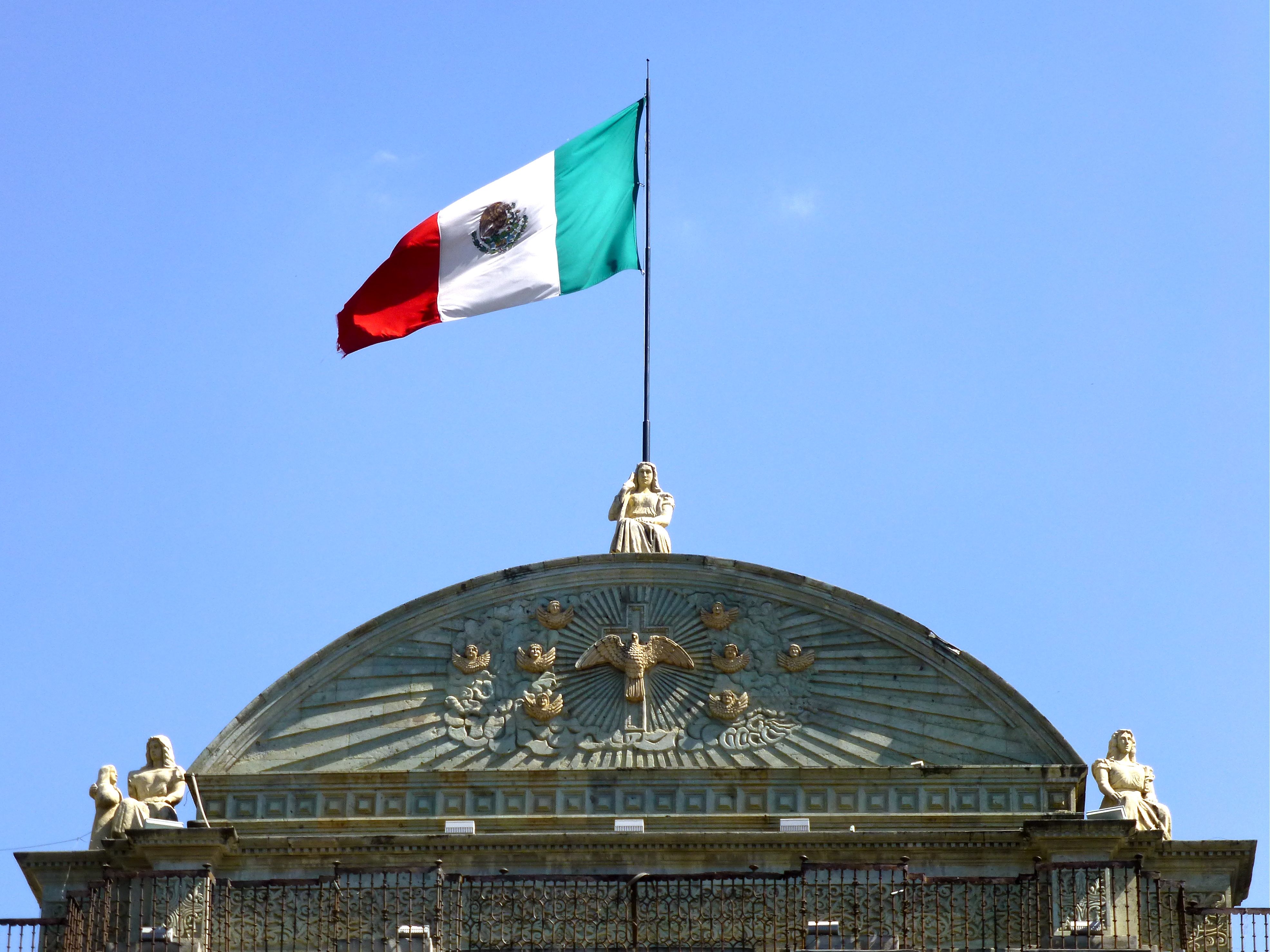
Early last week, on a stunningly clear blue sky day, I passed the La Catedral de Nuestra Señora de la Asunción (the Cathedral of Our Lady of the Assumption) and stopped dead in my tracks.

Mexican flag atop Cathedral

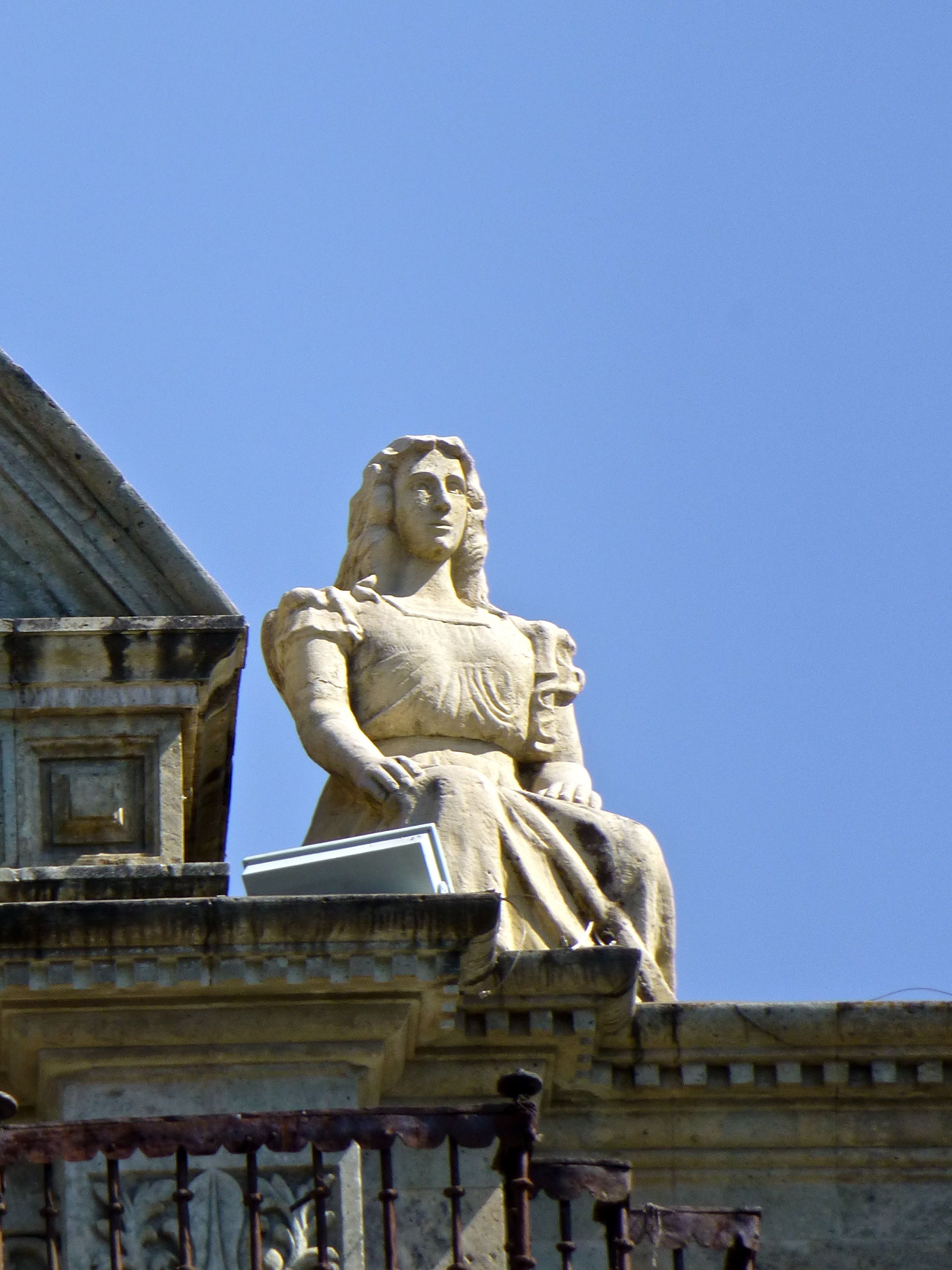
The flag must have been what initially caught my attention — it’s not an everyday occurrence — but what held my gaze were the three gals atop the Cathedral.

Seated female statue on top of Cathedral

I wondered, are they new?

Standing female statue on top of Cathedral

Once home, I scrolled through old photos I’d taken and sure enough there they were in every photo of the Cathedral’s facade.

Seated female statue with arm around child on top of Cathedral

Hmmm…  How could I have missed their imposing presence?

Now to find out who they represent.  (You can take the librarian away from the reference desk, but you can’t take the reference questions away from the librarian!)  Anybody out there have any answers???

Read Full Post »

Today, Día de la Candelaria (aka, Candlemas, Presentation of Jesus at the Temple, and Feast of the Purification of the Virgin), marking the end of the Christmas season, is being celebrated.  Families dress their Niño Dios (baby Jesus) figurines in new clothes and bring them to church to be blessed.

2 Niño Dios in window of store

Niño Dios dolls come in a variety of sizes and are sold throughout the year at the ubiquitous shops that sell religious articles.  I spotted these across Independencia while dining on my previously mentioned nieves.

Read Full Post »

As promised, the fireworks on Sunday night at Templo del Carmen Alto celebrating Señor de Esquipulas were, indeed, espectacular!  But, you may be asking, “Who is he and why does he deserve such celebration and veneration?”

Esquipulas refers to a town in Guatemala where, prior to the arrival of the Spanish, the peoples of Mesoamerica worshiped the god Ek Chua.  After the Conquest, in 1594, Quirio Cataño was commissioned to carve a sculpture of Jesus on the cross for Esquipulas.  Legend has it that Cataño used dark wood so that it looked more like the indigenous residents of the area.  Another version of the story has the sculpture turning dark overnight to “please the children from the village of Esquipulas.”  However, during a recent restoration of the image it was determined that it was centuries of smoke from candles and being touched by the faithful that turned the original light wood, dark.
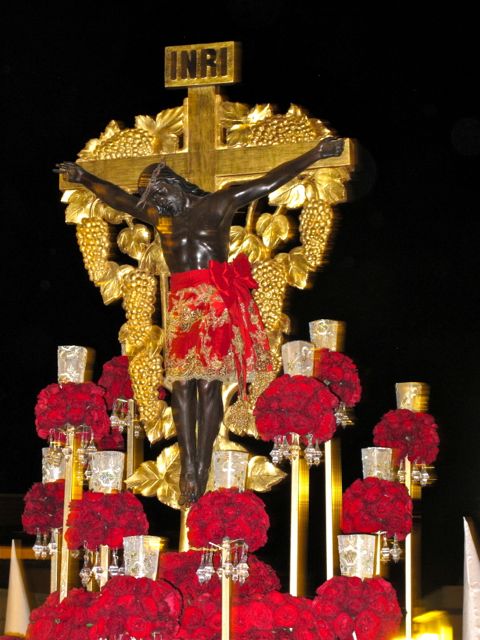
Señor de Esquipulas during the Procession of Silence, Good Friday 2013

Señor de Esquipulas from Templo Carmen Alto, Oaxaca — Procession of Silence, Good Friday 2013

Various miracles have been attributed to Señor de Esquipulas and pilgrims descend on the small Guatemalan village from Central America and Mexico to venerate the Black Christ.  He has a long reach and replicas have been commissioned in Costa Rica, El Salvador, Mexico, Nicaragua, and even as far away as Venezuela for the faithful to worship.

I’m not sure how Carmen Alto in Oaxaca came to house a Señor de Esquipulas, but it does and they go all out celebrating.  Processions and special masses have been held during the week.  However, the big festival day is January 19 and it began with early morning rockets at 6 AM — Alegres mañanitas in honor of the Señor de Esquipulas.   The eucharist was celebrated at 7 AM, 8 AM, and 12 PM — the latter “For the peace of the world and for all the infirmed.”  Cultural events were held during the day and there was another eucharist at 7 PM.  Following the evening eucharist, Señor de Esquipulas was carried through the streets of the parish, accompanied by a band, monos, and believers.

Once they returned to Carmen Alto’s courtyard, it was “torito” time.  The little bull holding up part of the castillo-under-construction in my last blog post, was ready to take center stage.  Encircled by a brave crowd, for twenty to thirty minutes he danced and ran around the plaza spewing sparks at those in the line of fire.

Next up was two castillos, multi-story structures wired for a major sensory experience — light, sound, and much welcome heat, on a chilly night.  Peace seemed to be a theme this year, with wheel appendages spelling out, “Violence no more” and “All united for peace.”  This year there was even a prerecorded soundtrack.  A young couple, on a cycling trip from Vancouver to Argentina, recognized it as music from a movie that I hadn’t heard of — however, they seemed quite surprised and delighted.

The flaming tops of each castillo eventually spun off into the night, as a fabulous fireworks display lit up the sky.

The show put on for Señor de Esquipulas was spectacular!

Read Full Post »
« Newer Posts - Older Posts »