Feeds:
Posts
Comments

Archive for the ‘Holidays’ Category

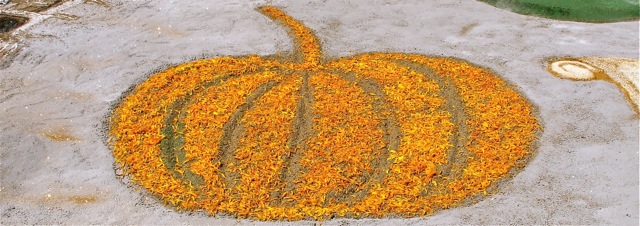
San Antonino Castillo Velasco, a Zapotec community near Ocotlán, is a village known for its flowers.  They are, no doubt, the inspiration for beautifully embroidered linens and clothing sold in the mercados and found in museum collections.  And, a specialty is the “flor inmortal” (immortal flower), so named because, even when dried, it retains its brilliant colors.  They are used to create intricately designed figures on display December 23 in the city of Oaxaca, during Noche de Rábanos and to decorate the graves of  loved ones during Días de Muertos in San Antonino.

This slideshow requires JavaScript.

As I’ve previously mentioned, each village seems to have its own unique traditions for the Days of the Dead.  Villagers here mix the area’s very fine dirt with water, cover the graves, use a trowel to smooth it, outline designs and religious imagery into the dried coating, and then use flowers (fresh and dried), to paint the scene.  Entire families are involved, young and old, and the atmosphere is filled with joy, purpose, and most of all… Love.

For a very special moment, that is a metaphor the two days spent at San Antonino, see Chris’s post, Moments make a life..
Read Full Post »

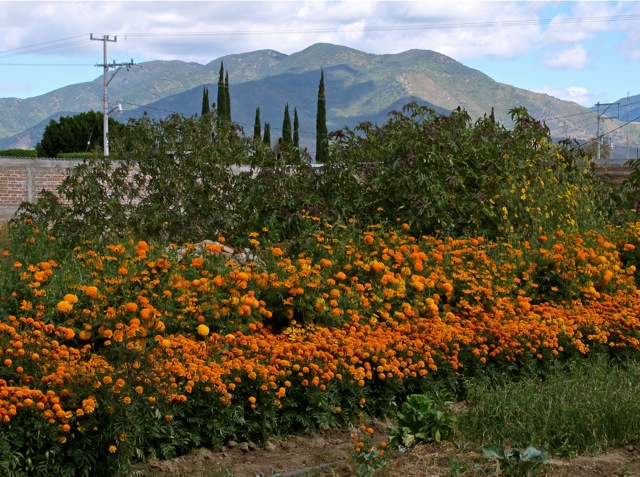
San Antonino Castillo Velasco, to be precise. Young and old converged on the municipal cemetery to decorate the graves with the magenta of cockscomb and yellow to orange to rust of marigolds (cempazúchil or zempoalxochitl) grown in nearby fields.

Field of marigolds with mountains in background

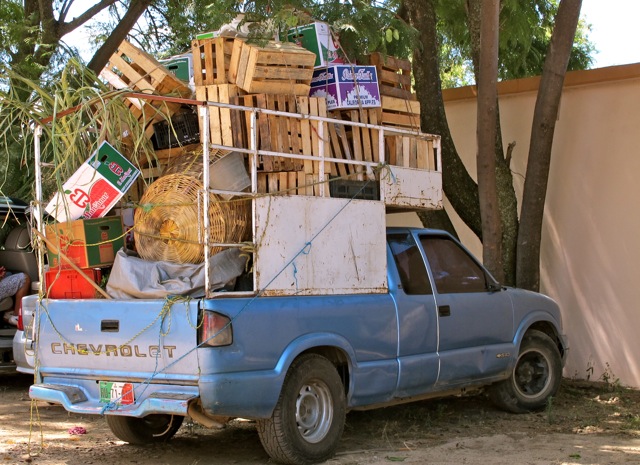
They came by car and truck…

Blue pick-up truck piled high with empty crates and baskets

By horse (note wooden saddle)…

Horse with saddle tied to a tree

By pedal-powered cart…

Green cart powered by a bicycle

By horse-powered cart.

Young girl riding in a horse pulled cart.

And, on foot…

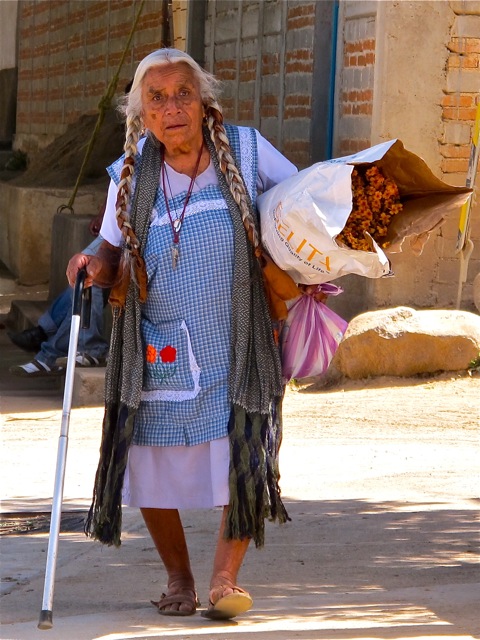
Elderly woman walking with cane and carrying a bundle of flowers

Laughter, artistry, and pride followed.  Stay tuned for images of their meticulous labors of love.

Read Full Post »

On the road during los Días de muertos led us to Santiago Apóstol in the municipality of Ocotlán de Morelos…

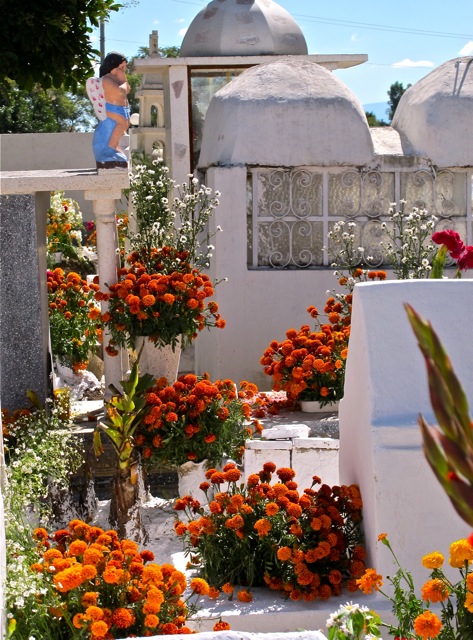
Profusion of flowers against whitewashed graves

Entering their Panteón, the play of light and shadow and explosion of greens, reds, oranges, yellows, and magentas against whitewashed graves was stunning.

Multicolored flowers surrounding whitewashed tomb

Unique artistry was evident in each of the cemeteries we visited.

Multicolored flowers surrounding a grave

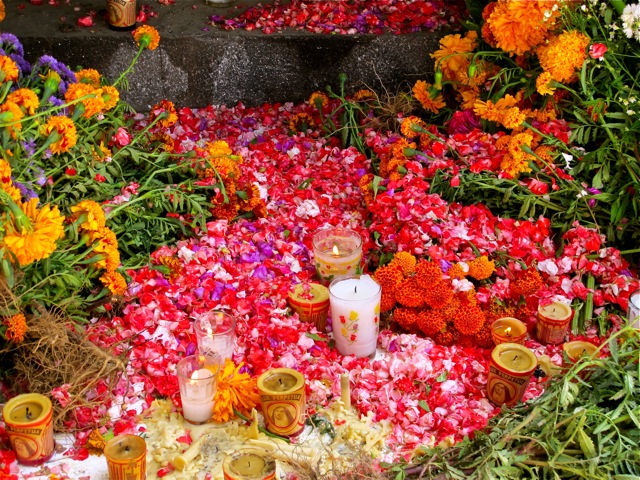
One of the special and fragrant features here was the rose petals scattered atop graves.

Pink and red rose petals covering a grave

Have I mentioned…  No matter where one seems to go in Oaxaca, the senses are filled!

Over view of whitewashed graves and the profusion of flowers

More to come…

Read Full Post »

And then there were the impossibly cute kids taking part in the comparsa…

This slideshow requires JavaScript.

Read Full Post »

… to the fabulously fabulous and ridiculous; a traditional comparsa on the morning of November 2, 2011.  After hiking up to the top of the hill in Vista Hermosa (beautiful view), Etla, following the sound of music, a surreal sight unfolded…

This slideshow requires JavaScript.

We tagged along with the band, dancers, and their friends and neighbors, up and down the hills, navigating steep dirt paths, as they played, danced, drank mezcal, and stopped in front yards for much-needed rest and refreshments of caldo de pollo (chicken soup), pan de muerto (Days of the Dead bread), and mezcal… of course!

By the way, did I mention, these guys and (one) gal, had been playing and dancing all night long?!!

Read Full Post »

I’m still trying to wrap my mind around the last 48 hours.  It’s been a profusion of sensations… sights, sounds, smells, and tastes.  Today in Teotitlán del Valle…

This slideshow requires JavaScript.

Much more to come!

Read Full Post »

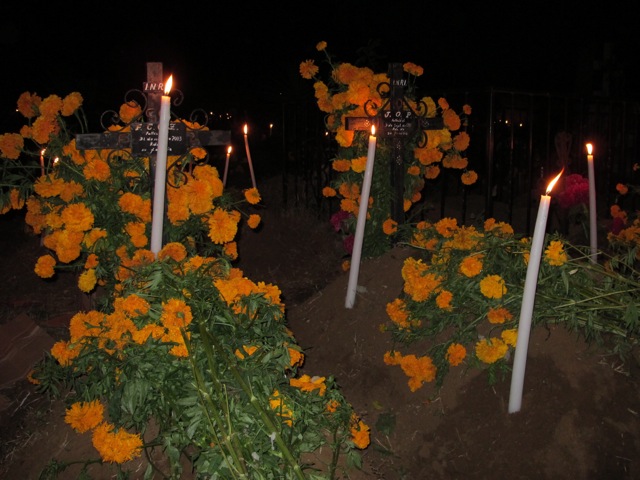
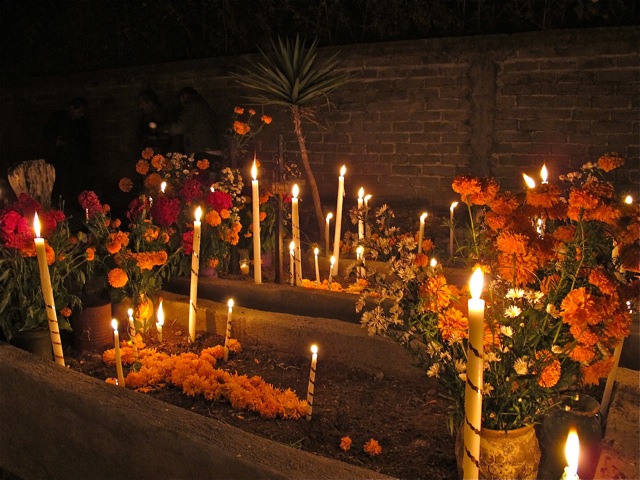
I don’t have words to express “being” last night in the Panteón of Santa María Atzompa…

Marigolds and tall candles grave

Elderly man and woman in cemetary with candles

Tall candles and flowers in cemetary

Mother holding child, illuminated by candles

Elderly woman bending over grave with tall candles and marigolds

Feeling so incredibly privileged.

Read Full Post »

Pan de muerto is the traditional Days of the Dead sweet yeast bread.  It is decorated and placed on ofrendas (altars), along with candles, flowers, fruit, pictures, mementos, other foodstuffs, and beverages, as offerings to the departed.

This slideshow requires JavaScript.

The intricately decorated pan de muerto are from the Tlacolula Valley, and reference the geometric designs and mosaic fretwork found in the archeological sites in and around Mitla, a photo of which I’m using as browser background on this blog.

Read Full Post »

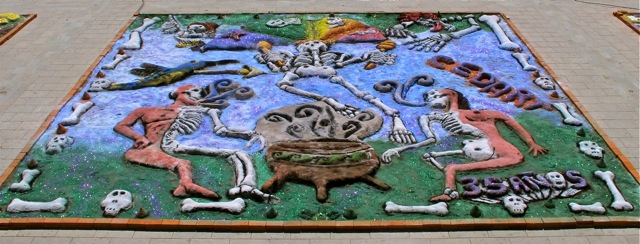
The tapetes de arena are finished and cover the stone flooring of the Plaza de la Danza.  Always difficult to photograph, the following are an experiment in cropping.

Centro de Educación Artística Miguel Cabrera

Casa de Cultura de Tlacolula de Matamoros

Escuela de Bellas Artes de la Universidad Autónoma Benito Juárez de Oaxaca

Several other organizations participated and among the unsigned are tapetes de arena from Casa de las Artesanías de Oaxaca, Sociedad Civil de Maestros Oaxaqueños del Arte Popular, and Grupo Colectivo Camaleón.

Walk with us…

And for those in el norte…

A happy and safe Halloween!


Read Full Post »

Work on the Días de Muerto tapetes de arena (sand paintings) began this morning…

This slideshow requires JavaScript.

By the way, this year they are in the Plaza de la Danza and, as I write, the music of the Orchestra Infantil Libertad (a children’s orchestra) is serenading the completed tapetes de arena, the audience gathered at the Plaza de la Danza, and yours truly, sitting comfortably at her desk.

Read Full Post »

Decorations have begun going up around town and, at this time of year, La Olla offers the complete dining experience…

Skeleton in pink skirt and feather boa seated on a bench

A warm welcome from the hostess.

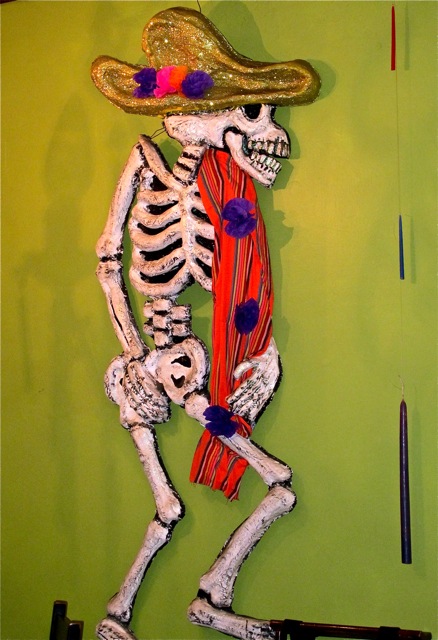
Skeleton with sombrero hanging on wall.

Waiters standing ready to take your order.

Day-glo orange butterfly skeleton hanging in a tree.

And, una mariposa hanging out, ready to wish you “¡buen provecho!”

Read Full Post »

Today is Día de la Raza (Day of the Race) in Mexico. A stroll around town revealed…

This slideshow requires JavaScript.

Like almost everyday in Oaxaca, La Raza are working incredibly hard!

Read Full Post »

On the morning of September 16, the sidewalks of Trujano, leading to Oaxaca’s Zócalo, were lined with people.  Traffic was blocked on Trujano and many of the side streets, as contingents of soldiers, state police, municipal police, transit police, fire fighters (bomberos), paramedics, schools, and charros gathered to participate in the desfile cívico militar (civic and military parade) marking 201 years of independence from Spain.

This slideshow requires JavaScript.

Like most patriotic parades throughout the world, the military component dominated the civic.  And here, even the school contingents march in military fashion.  The use of Mexico’s military is controversial, not to mention the roles played by the state and municipal police in Oaxaca.  Onlookers clapped for various contingents, but I didn’t catch the subtleties of support, other than the big hand the bomberos received.

This was the other side of the green, white, and red fervor, and I’ve spent a lot of time contemplating what I thought of the parade and what I wanted to say.  However, as a guest in this country, I’m going to let the photographs speak and readers may interpret them as they wish.

Read Full Post »

More color from around town this past week…

This slideshow requires JavaScript.

Read Full Post »

Octavio Paz, writing about the Mexican independence movement in The Labyrinth of Solitude:

The eighteenth century prepared the way for the Independence movement.  In fact, the science and philosophy of the epoch… were necessary intellectual antecedents of the Grito de Dolores.  [p. 118]

…the insurgents vacillated between Independence (Morelos) and modern forms of autonomy (Hidalgo).  The war began as a protest against the abuses of the metropolis and the Spanish bureaucracy, but it was also, and primarily, a protest against the great native landholders.  It was not a rebellion of the local aristocracy against the metropolis but of the people against the former.  Therefore the revolutionaries gave greater importance to certain social reforms than to Independence itself:  Hidalgo proclaimed the abolition of slavery and Morelos broke up the great estates. 

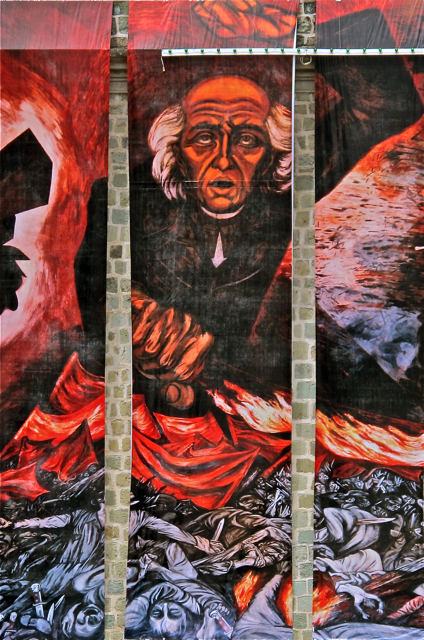
Banner on Oaxaca's Municipal Building; reproduction of mural by José Clemente Orozco of Miguel Hidalgo y Costilla.

The Revolution of Independence was a class war, and its nature cannot be understood correctly unless we recognize the fact that unlike what happened in South America, it was an agrarian revolt in gestation.  This is why the army (with its criollos like Iturbide), the Church and the great landowners supported the Spanish crown… [p. 123]

Paz, Octavio.  The labyrinth of solitude, the other Mexico; Return of the labyrinth of solitude; Mexico and the United States; The philanthropic ogre.  New York:  Grove Press, 1985

Read Full Post »

« Newer Posts - Older Posts »