Lurking around the corner from the birds. Perhaps this is what they were talking about.

Hmmm… Could this be the cat that swallowed the canary?
Posted in Creativity, Culture, Neighborhoods, Travel & Tourism, tagged cat images, Jesus Flores (artist), Mexico, murals, Oaxaca, photos, popular travel destinations, street art, urban art, wall art, Walpaq (muralista) on May 23, 2020| 4 Comments »
Lurking around the corner from the birds. Perhaps this is what they were talking about.
Hmmm… Could this be the cat that swallowed the canary?
Posted in Creativity, Culture, Neighborhoods, People, Travel & Tourism, tagged bird images, Colibríes, hummingbirds, Jesus Flores (artist), Mexico, murals, Oaxaca, photos, popular travel destinations, street art, urban art, wall art, Walpaq (muralista) on May 20, 2020| 20 Comments »
Wandering around the streets and alleys of the Marcos Perez / Lic. José Vasconcelos neighborhood, I began to see birds gathering — and they seemed to be talking.

“Ahhh, what a comfortable perch.”
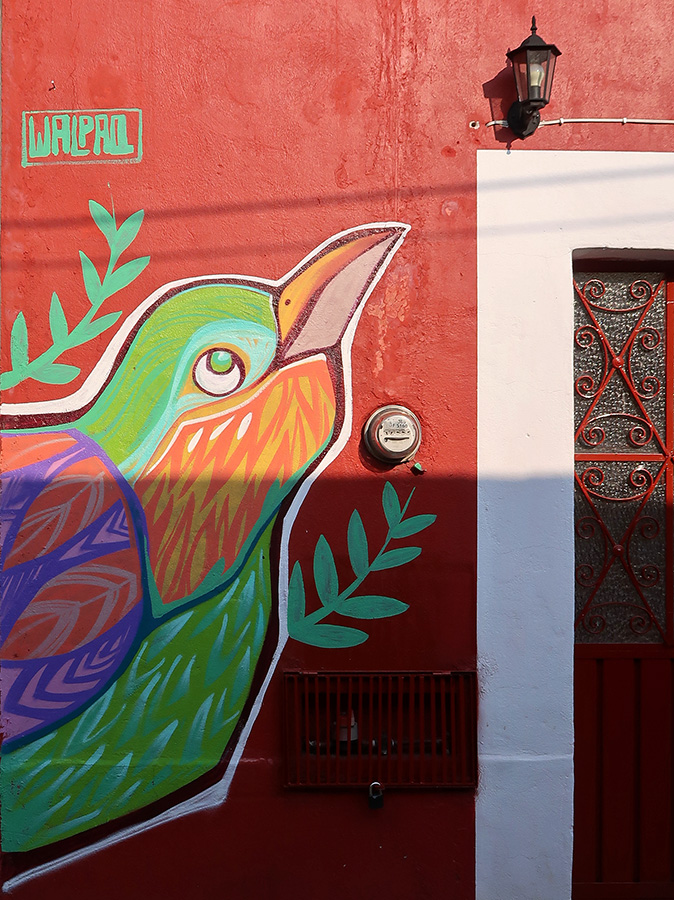
“Is anybody home?”

“What did you say?”
And then there were the hummingbirds…
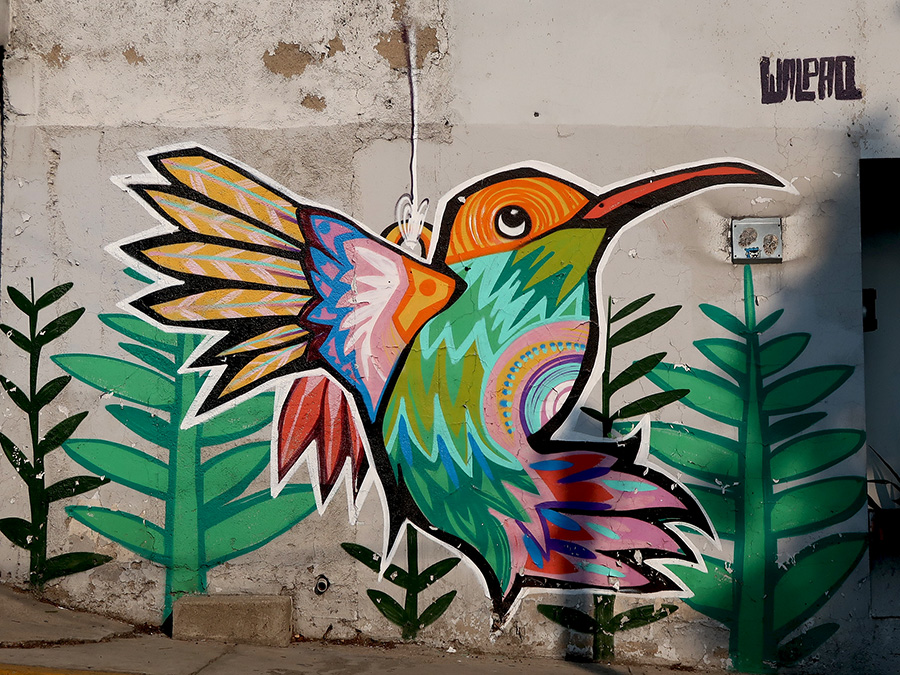
“Please don’t tie me down!”

“Come fly with me.”
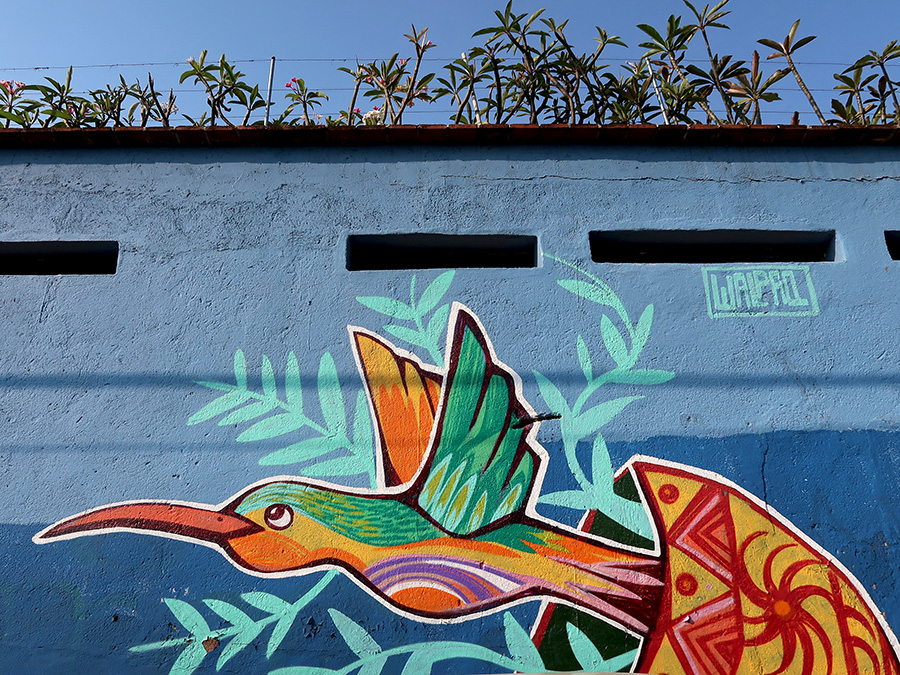
“I’ll race you!”
What delightful gifts the Argentinian artist Jesus Flores (aka, Walpaq) has left for the people of Oaxaca!
Posted in Creativity, Culture, Neighborhoods, Travel & Tourism, tagged Mexico, murals, Oaxaca, photos, popular travel destinations, street art, urban art, wall art, Zempasuchil Studio on May 14, 2020| 6 Comments »
The culture, color, and magic of the murals of Panorámica del Fortín.
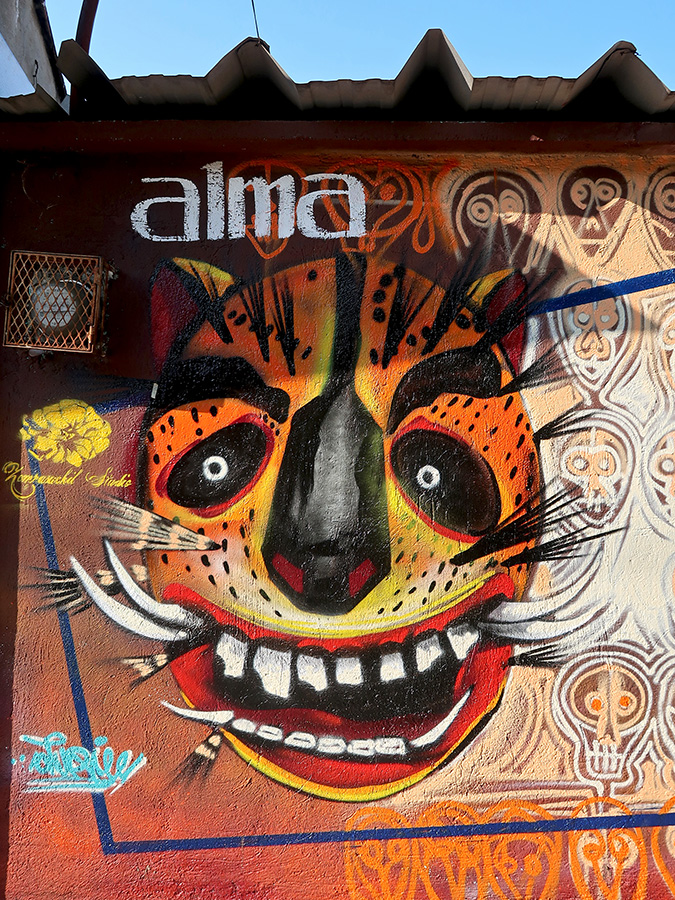
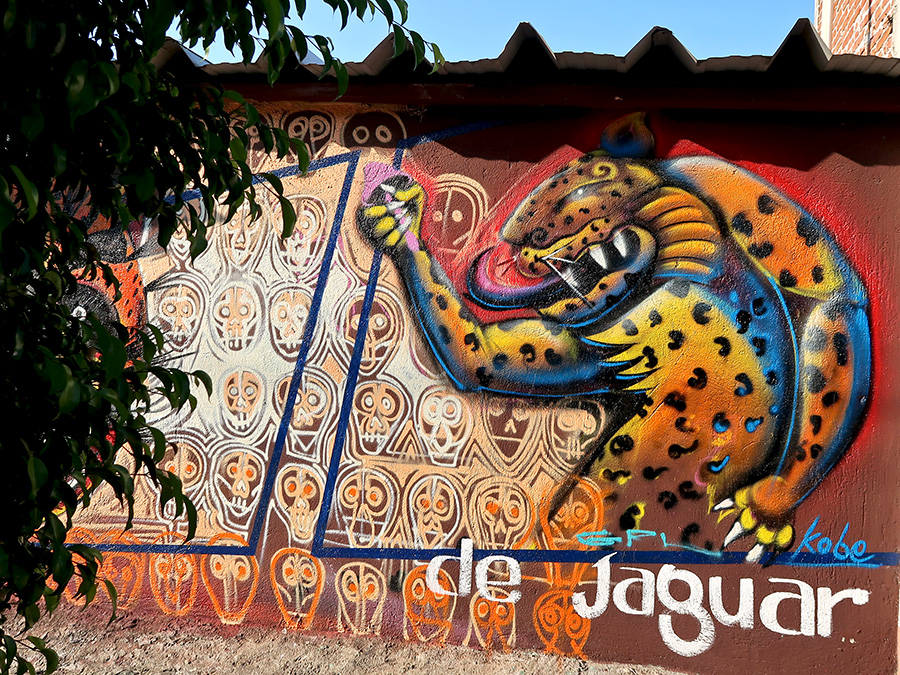
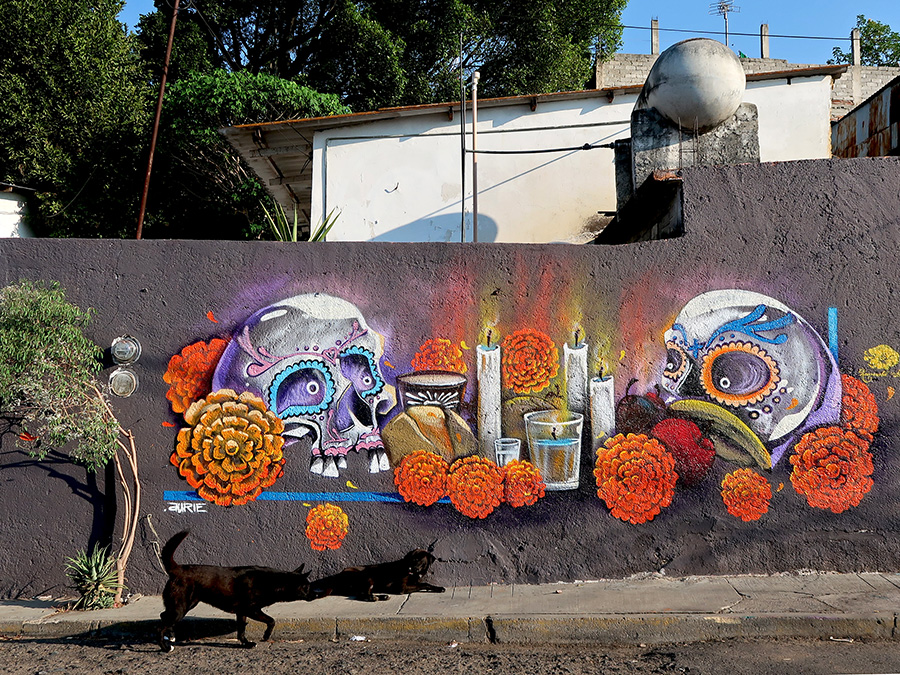


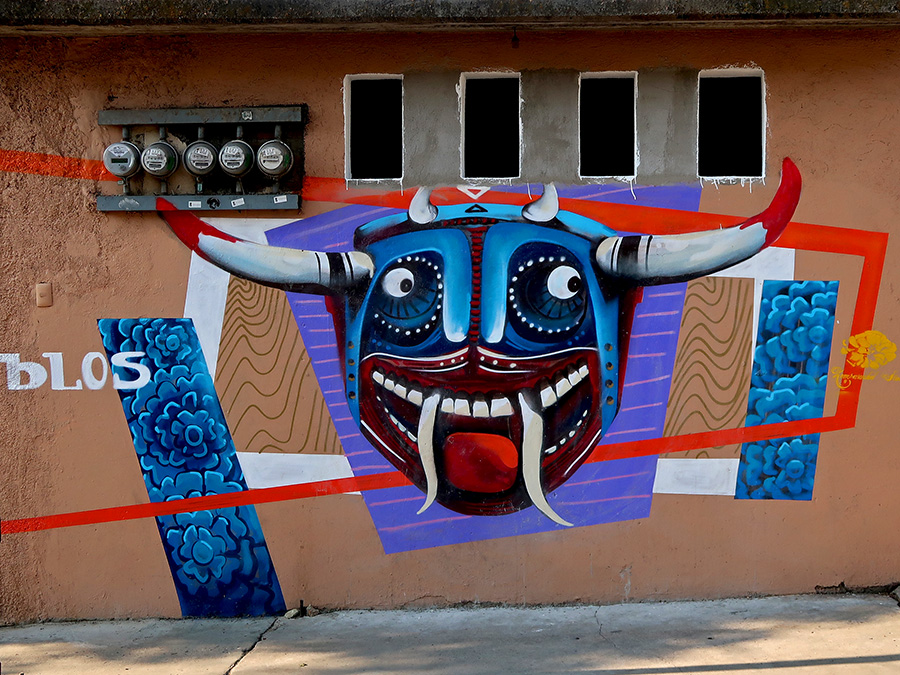
Thank you to the artists of the Zempasuchil Studio for brightening our days.
Posted in Creativity, Culture, Markets, Signs, Travel & Tourism, tagged coronavirus fallout, COVID-19 fallout, Mercado IV Centenario, mercados, Mexico, Oaxaca, photos on May 8, 2020| 8 Comments »
Informational: Symptoms and methods of prevention.

Advertising: Stay at home, Café Lavoe offers you home delivery.

Service: A hand washing station at the Av. de la Independencia entrance to Mercado IV Centenario.

It’s my favorite — a quintessential example of the Oaxacan ingenuity and creativity!
Posted in Buildings, Creativity, Culture, Neighborhoods, Travel & Tourism, tagged graffiti, Mexico, murals, Oaxaca, photos, playgrounds, shadows, shrines, street art, views, vistas, wall art on May 5, 2020| 2 Comments »
More from Sunday’s stroll along Panorámica del Fortín…

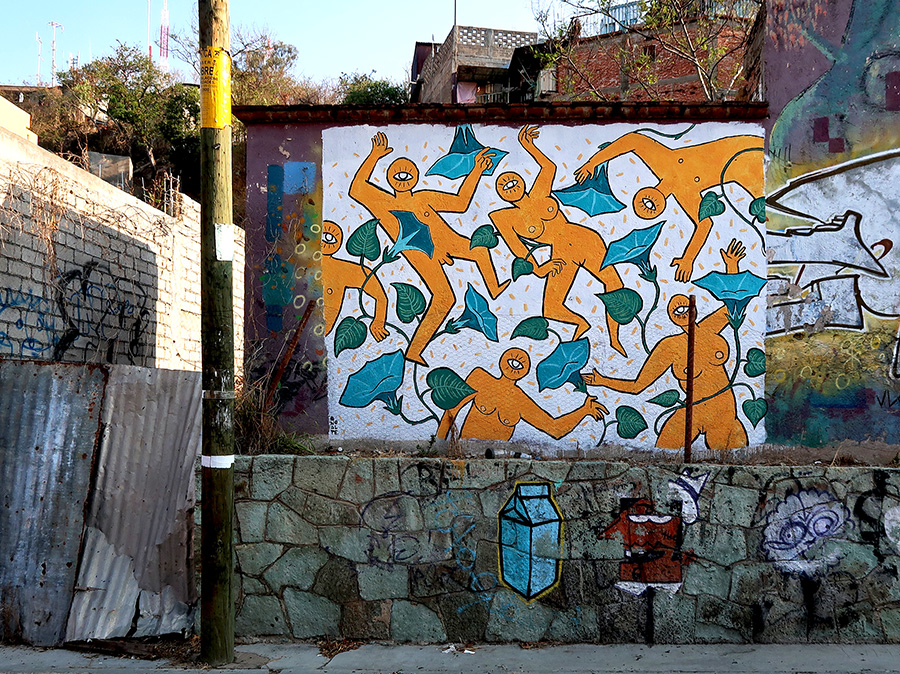


Oaxaca, even in these days of Covid-19, is always alive.
Posted in Celebrations, Creativity, Culture, Holidays, Religion, Travel & Tourism, tagged carrizo cross, cohetes, Day of the Holy Cross, Día de la Santa Cruz, Día del Albañil, Mexico, Oaxaca, photos, popular travel destinations, rockets on May 3, 2020| 2 Comments »
Since early this morning, rocket explosions, up close and in the distance, have been breaking the Sunday silence. That’s odd, I thought. While in normal times, the jarring sound of cohetes is a frequent player in the soundtrack of life in Oaxaca, these days, like clanging church bells, their booms and bangs have been absent from the orchestra. So, why today? I wondered. It wasn’t until I downloaded this photo from this morning’s walk, that it dawned on me.

Looking south from Panorámica del Fortín, Oaxaca de Juárez
May 3rd in Mexico is Día de la Santa Cruz (Day of the Holy Cross) and Día del Abañil (Day of the mason/stonemason/bricklayer). Tradition calls for construction workers to erect crosses festooned with flowers at the highest point on building sites — but construction in Oaxaca, in this time of Covid-19, has been at a standstill for several weeks. I guess the building trades’ workers aren’t going to let a lethal virus interfere with their “macho rivalry” tradition. From an article in Mexconnect:
The first dramatic volley of thousands of joyful cohetes (sky rockets) begins at midnight as each crew attempts to be the first to announce the celebration of the Day of the Holy Cross. This macho rivalry between workers continues sporadically all night and for the entire 24 hours of May 3 with each crew hoping to set off more sky rockets than their competitors to remind one and all that this is a special day.
Posted in Celebrations, Children, Culture, Holidays, Travel & Tourism, tagged children, Children Will Listen (song), Children's Day, coronavirus fallout, costumes, COVID-19 fallout, Day of the Child, Día del Nino, festivals, Mexico, Oaxaca, photos, popular travel destinations, traje on April 30, 2020| 14 Comments »
Today in Mexico is Día del Niño (Day of the Child). However, this year, in the time of Covid-19, there will be no school parties, no large community gatherings, and, with no income for many, there will be fewer (if any) toys and treats given by parents. We all look forward to the days when we hear the sound of squeals and cheers coming from playgrounds, see children gathered with their friends laughing and talking, and again being a part of the traditional dances, parades, and celebrations. On this day as I was compiling this photo essay, I couldn’t get this song out of my head…
Children Will Listen
(sung by Bernadette Peters)
lyrics and music by Stephen Sondheim
How do you say to your child in the night?
Nothing’s all black, but then nothing’s all white
How do you say it will all be all right
When you know that it might not be true?
What do you do?


Careful the things you say
Children will listen
Careful the things you do
Children will see and learn
Children may not obey, but children will listen
Children will look to you for which way to turn
To learn what to be
Careful before you say “Listen to me”
Children will listen


Careful the wish you make
Wishes are children
Careful the path they take
Wishes come true, not free


Careful the spell you cast
Not just on children
Sometimes the spell may last
Past what you can see
And turn against you
Careful the tale you tell
That is the spell
Children will listen


How can you say to a child who’s in flight
“Don’t slip away and I won’t hold so tight”
What can you say that no matter how slight Won’t be misunderstood
What do you leave to your child when you’re dead?
Only whatever you put in its head
Things that your mother and father had said
Which were left to them too


Careful what you say
Children will listen
Careful you do it too
Children will see
And learn, oh guide them that step away
Children will glisten
Tamper with what is true
And children will turn
If just to be free


Careful before you say
“Listen to me”
Children will listen
Children will listen
Children will listen
Posted in Culture, Food, Restaurants, Signs, Travel & Tourism, tagged Catedral Restaurante, coronavirus fallout, COVID-19 fallout, culinary lovers, Gastronómicos, Mexico, Oaxaca, photos on April 27, 2020| 4 Comments »
Painted on the front of Catedral Restaurante, a message to Oaxaca food lovers…

Posted in Creativity, Culture, Health, People, Travel & Tourism, tagged Batman, Benito Juárez, coronavirus fallout, COVID-19 fallout, cubrebocas, Elise Rubin, face masks, masks, Mexico, Oaxaca, photos, press conferences, stencils, street art, tapabocas, urban art, wall art, Yescka on April 23, 2020| 6 Comments »
It’s official, face masks (cubrebocas/tapabocas) are mandatory. At today’s press conference, the governor of Oaxaca announced the steps the state government is taking now that Mexico has entered Phase 3 of its Covid-19 emergency plan. I must say that I was impressed by the visuals as I watched — reporters, the governor’s team of experts, and even the governor at one point were modeling good mask behavior.


And, street artists have been plastering the walls of the city with mask-wearing messages.
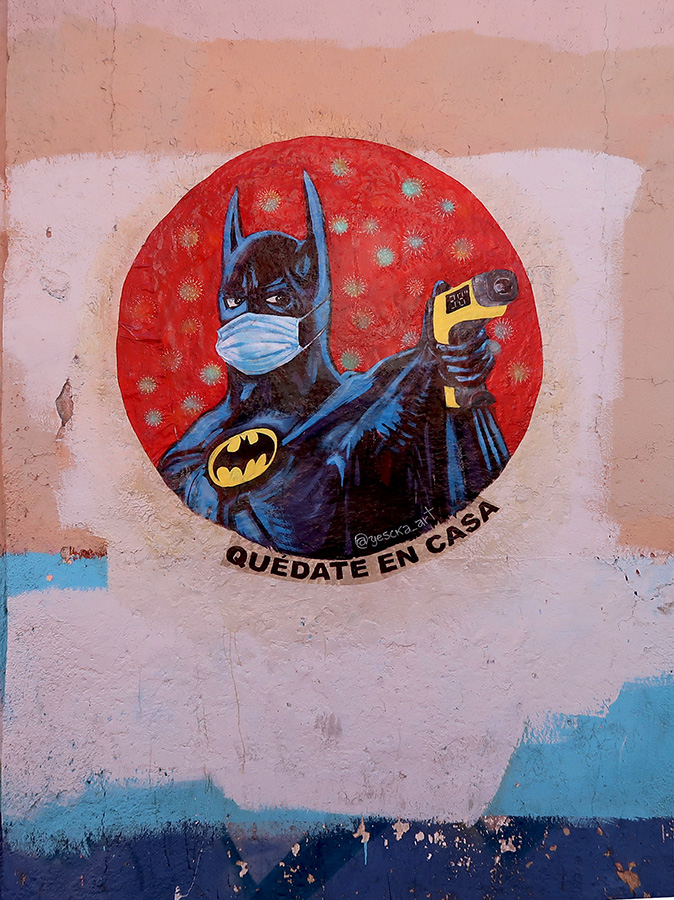
A medical masked Batman says, “stay in the house” — by the artist, Yescka.

Former Governor of Oaxaca and beloved former President of Mexico, Benito Juárez rocking a mask.
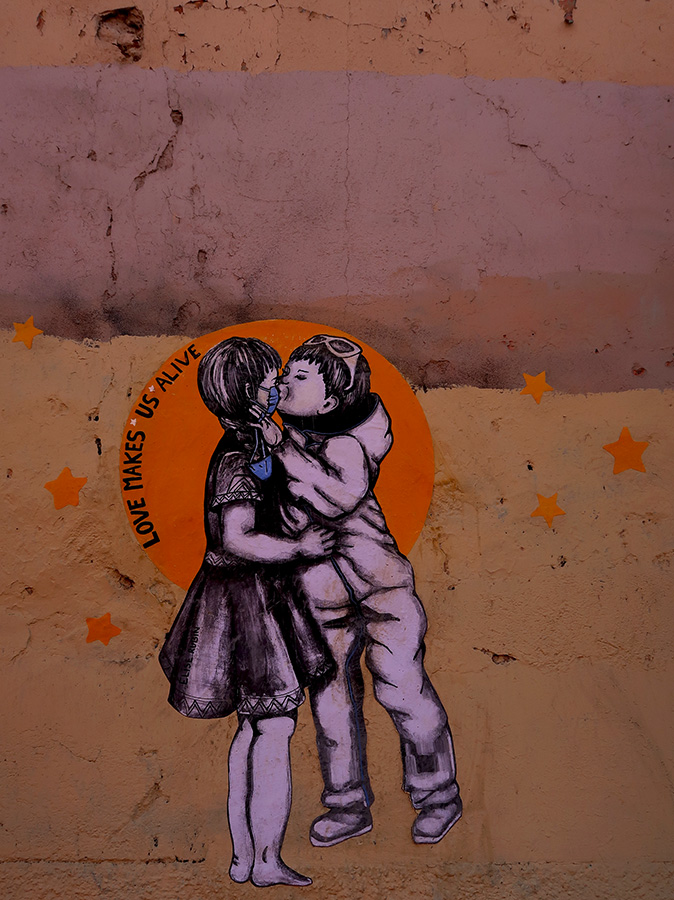
Not sure this couple is practicing proper mask protocol, not to mention, sana distancia (physical distancing) — by artist Elise Rubin.
Unfortunately, this last image represents what I have observed in my wanderings through the empty streets of the city. On today’s outing to my neighborhood produce truck and then to various tiendas (corner stores) in search of mineral water, eggs, and butter, at least 30% of the people I encountered were not wearing masks. For the most part, it’s not because they are not available. They are selling for ten pesos each (40¢ US) and there are numerous projects making and distributing free cloth masks, including those spearheaded by my amiga Norma Schafer over at Oaxaca Cultural Navigator. I brought a couple of extra masks with me and offered one to the gal at the produce truck, but she declined, saying she already had one. I responded that it was really important that she wear it, but she just shrugged. It’s frustrating!
Posted in Buildings, Creativity, Culture, Travel & Tourism, tagged building colors, Mexico, Oaxaca, paint colors, photos, wall colors on April 19, 2020| 10 Comments »
Posted in Creativity, Culture, Travel & Tourism, tagged Callejón Hidalgo, Mexico, murals, Oaxaca, photos, street art, urban art, wall art on April 16, 2020| 6 Comments »
I think I’m not alone…

Callejón Hidalgo, Oaxaca de Juárez – (Signed by, “Prost”)
If you need a haircut, raise your hand.
Posted in Buildings, Culture, Flora, Neighborhoods, Travel & Tourism, tagged Barrio de Jalatlaco, Mexico, natural art, Oaxaca, painted walls, photos, plants, still life on April 13, 2020| 2 Comments »
More from Sunday morning social distance strolling in this time of Covid-19…

Calle Manuel Garcia Vigil, Oaxaca de Juárez

Barrio de Jalatlaco, Oaxaca de Juárez
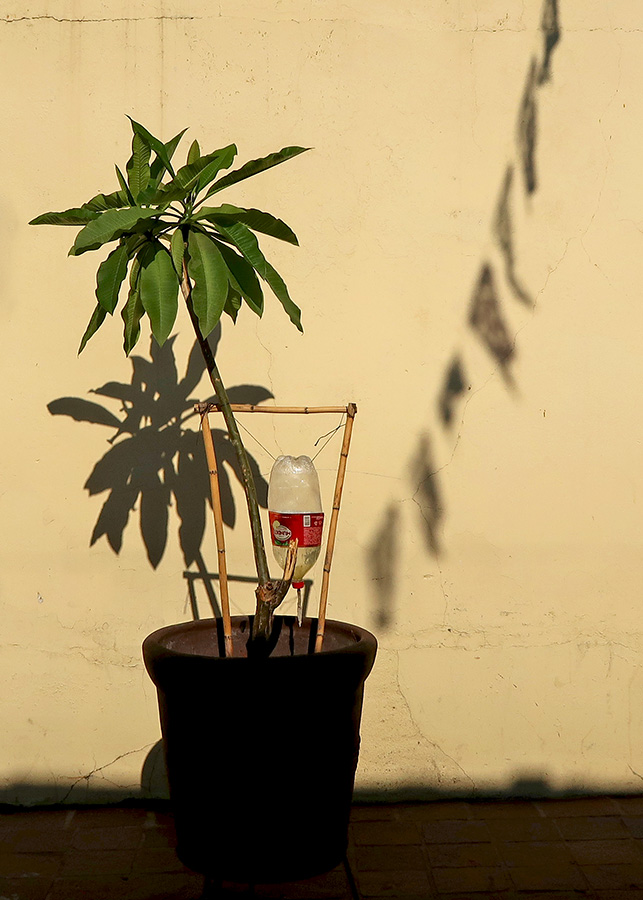
Barrio de Jalatlaco, Oaxaca de Juárez
There is life and there is beauty.
Posted in Celebrations, Culture, Holidays, Religion, Travel & Tourism, tagged Easter, estandartes, Good Friday, Holy Week, Jesus, Mexico, Oaxaca, Pascuas, penitents, photos, Procesión del Silencio, Procession of Silence, religious banners, Viernes Santo, Virgin Mary on April 10, 2020| 8 Comments »
The sights and sounds of Good Friday in Oaxaca have gone missing. Weeks ago, the archbishop canceled all public Semana Santa (Holy Week) celebrations. Jesús, María, San Pedro, Penitents, religious banners, and devotees are not processing through the streets to the rhythmic beat of a tambor, high-pitched tones of a chirimía, and the sputtering sounds of a rachet. While not religious, I miss it and this year last year’s photos will have to suffice.


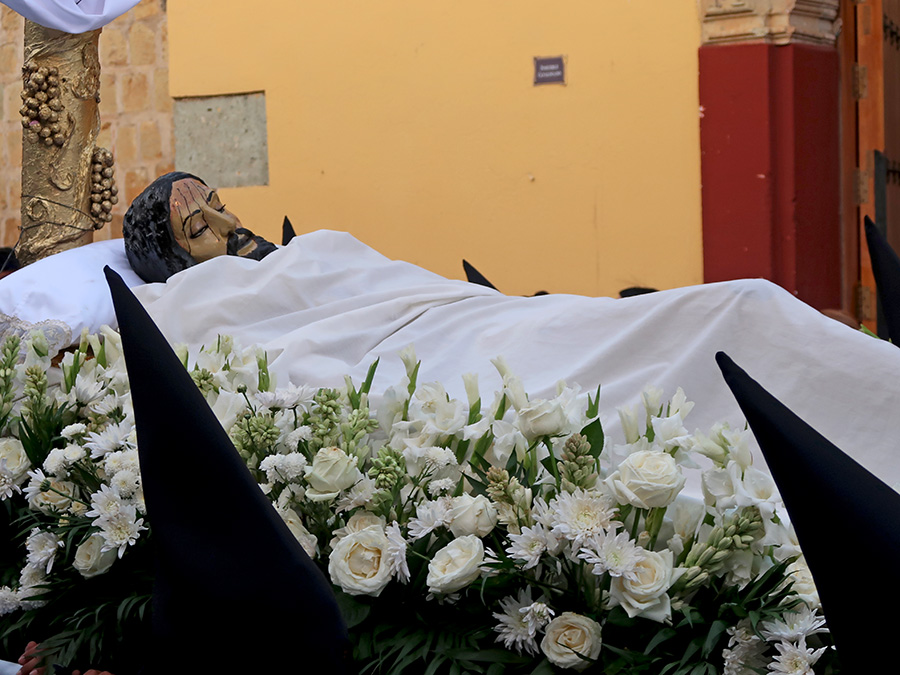


The streets are empty, as Viernes Santo has gone silent.
Posted in Celebrations, Churches, Creativity, Culture, Religion, Travel & Tourism, tagged churches, Domingo de Ramos, La catedral de Nuestra Señora de la Asunción, Mexico, Oaxaca, palm fronds, Palm Sunday, papel picado, photos, popular travel destinations, San Antonino Castillo Velasco, San Salvador image, Templo de San Matías Jalatlaco, Templo de Santo Domingo de Guzmán on April 5, 2020| 2 Comments »
It’s Domingo de Ramos and in pre-COVID-19 times, from my terrace I would hear an outdoor morning mass being said in the atrium of the Basilica de Nuestra Señora de la Soledad. And then, for the past eight years, blogger buddy Chris and I would drive to San Antonino Castillo Velasco for one of the most magical days of the year. However, all was silent this Palm Sunday. So, donning my mask, I went for early Sunday morning walk with my neighbor K. Lonely and poignant scenes met us everywhere our wanderings took us.
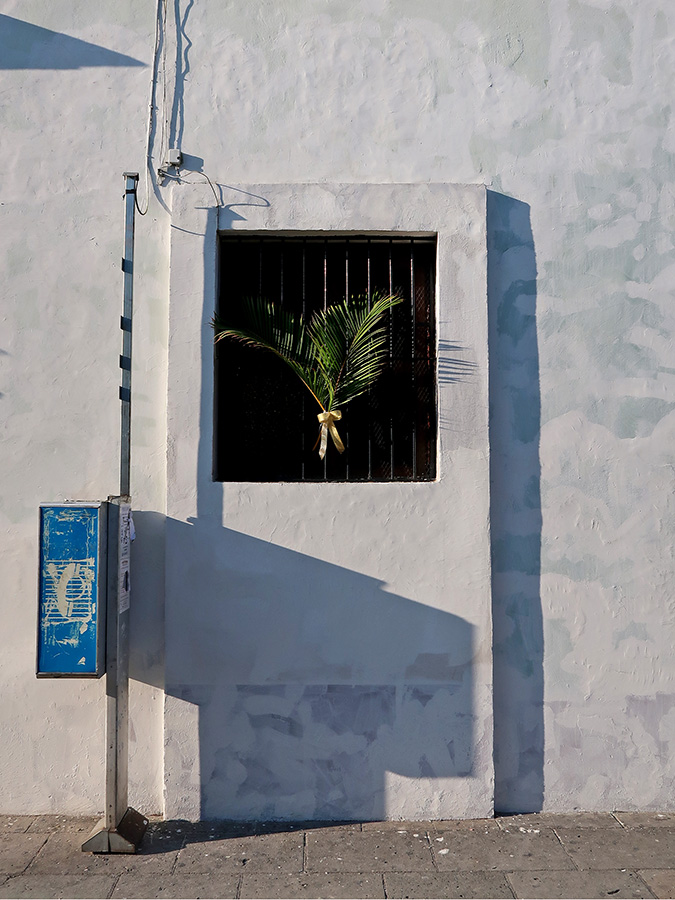
Lonely palm fronds in window of Hospital Ángel Vasconcelos on Av. José María Morelos
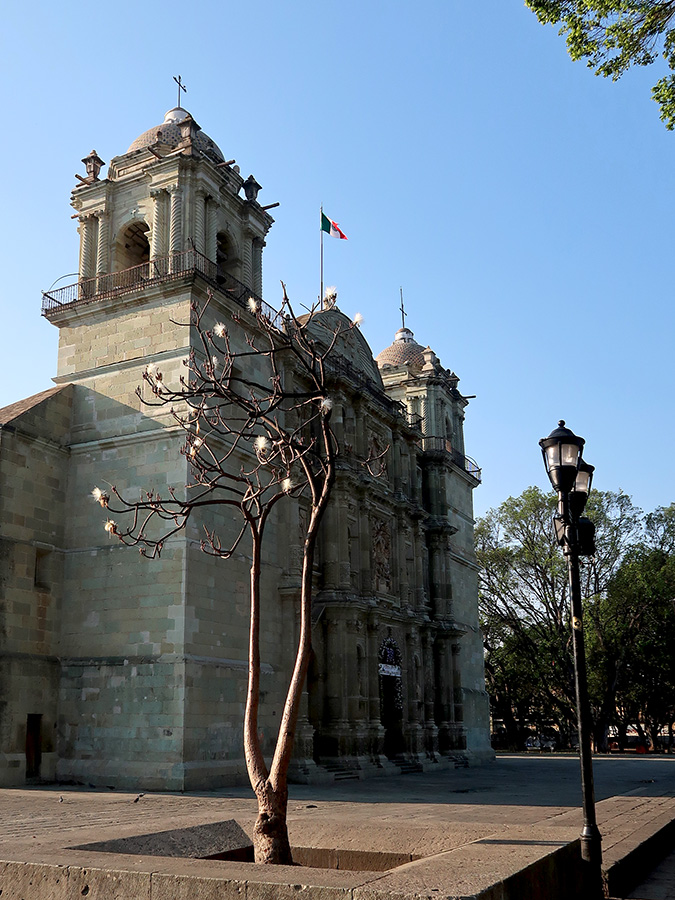
Doors of Catedral de Nuestra Señora de la Asunción were shuttered.
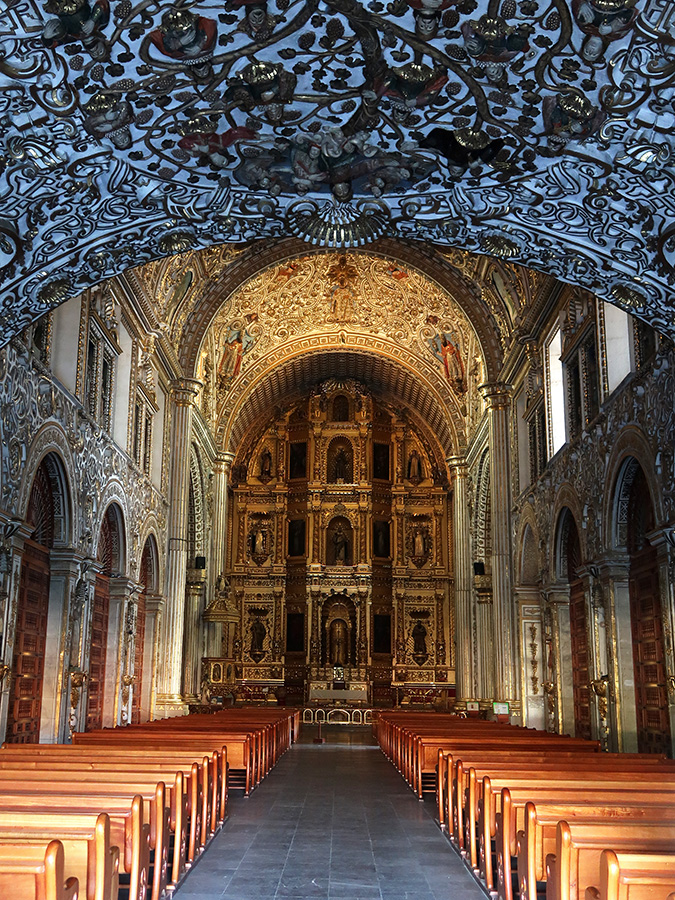
The doors of Templo de Santo Domingo de Guzmán were open, but nary a soul was in sight.
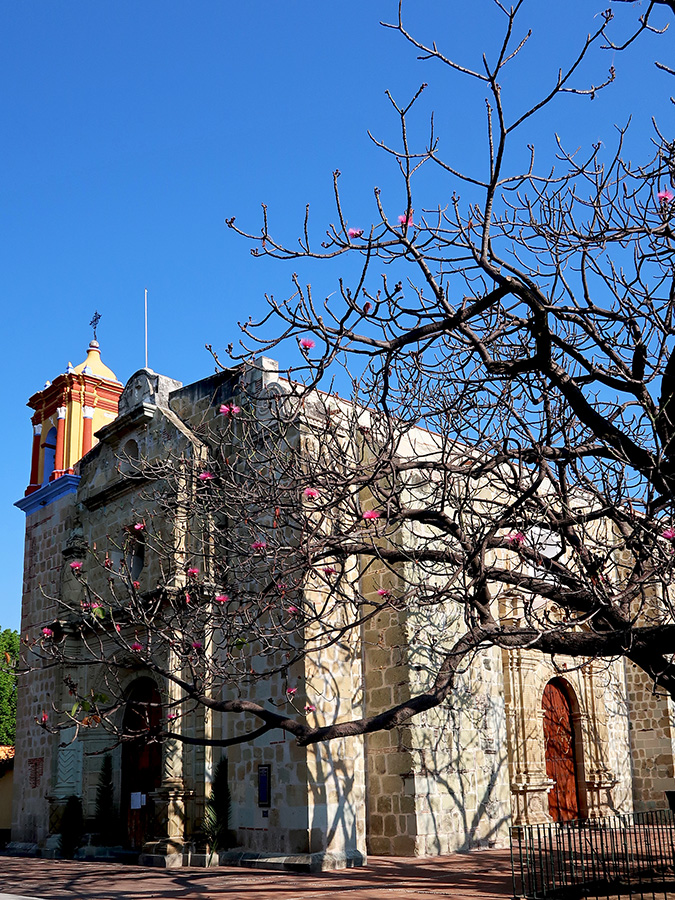
A mass was being said at Templo de San Matías Jalatlaco, but the doors were shut tight.
However, no sight we saw this morning was as moving as this one posted to the San Antonino Castillo Velasco Facebook page.

San Salvador bereft of his usual bounty stands alone in the atrium of the church in San Antonino Castillo Velasco.
To see San Salvador in his usual Domingo de Ramos splendor and the village procession that takes him, laden with donated fruits, vegetables, herbs, and bread, from the panteón to the church, click HERE.
Posted in Casita Colibrí, Creativity, Culture, Gardens, Travel & Tourism, tagged coronavirus humor, COVID-19 humor, devil mask, garden decor, mascaras, masks, Mexico, Oaxaca, photos, terrace garden, wood carving on April 3, 2020| 8 Comments »
My mask is hanging by the front door, ready to be called into service when I have to run those unavoidable errands.
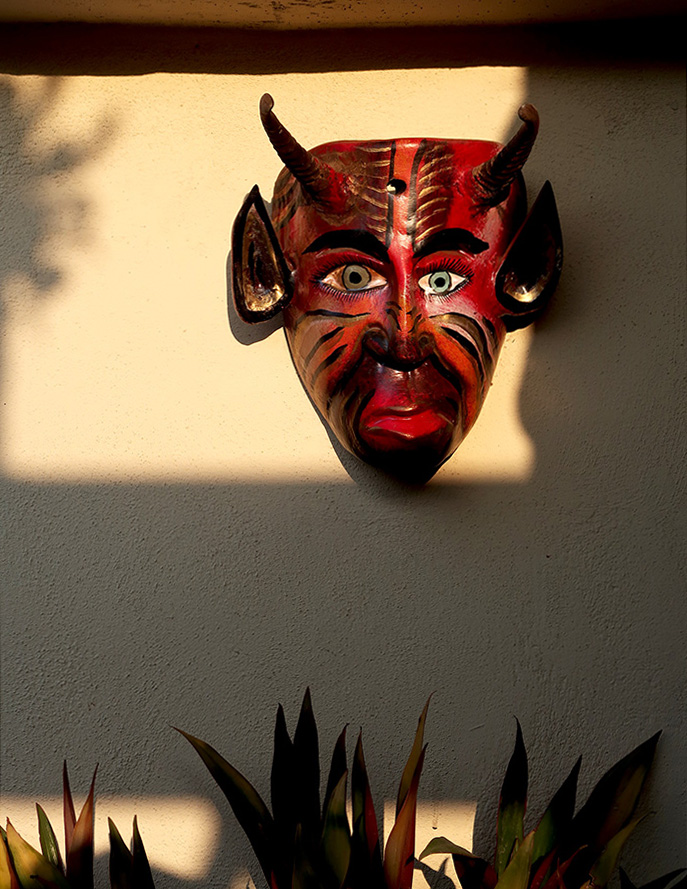
If nothing else, I’m hoping it will scare folks into realizing that I’m serious about physical distancing!


 Mexican Peso Converter
 View From Casita Colibrí