Feeds:
Posts
Comments

Posts Tagged ‘Día de Muertos’

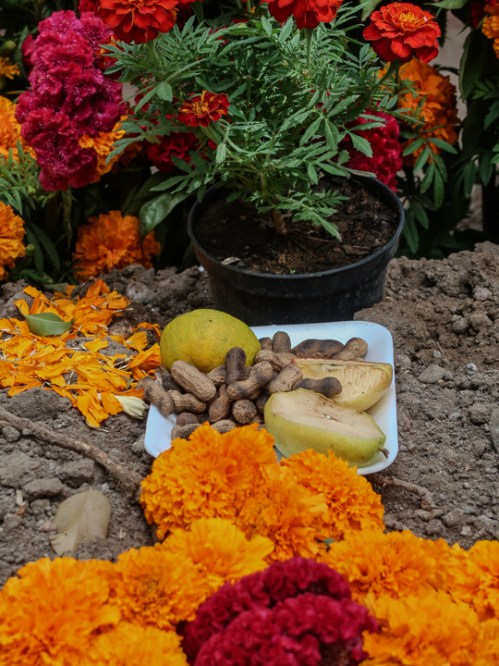
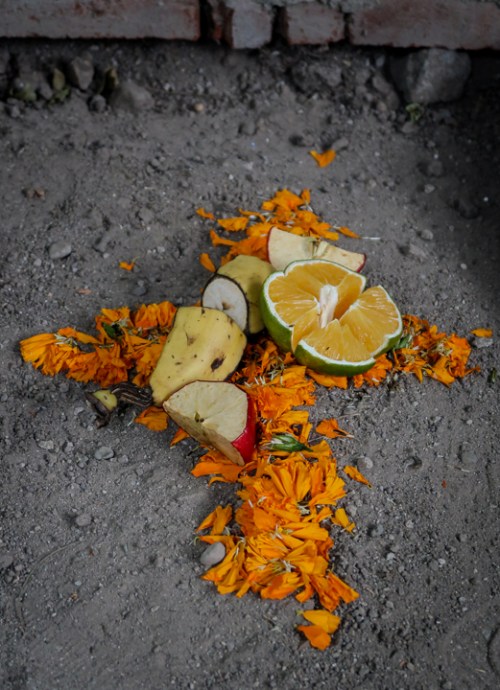
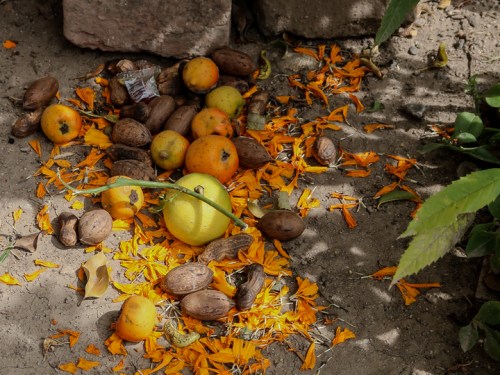
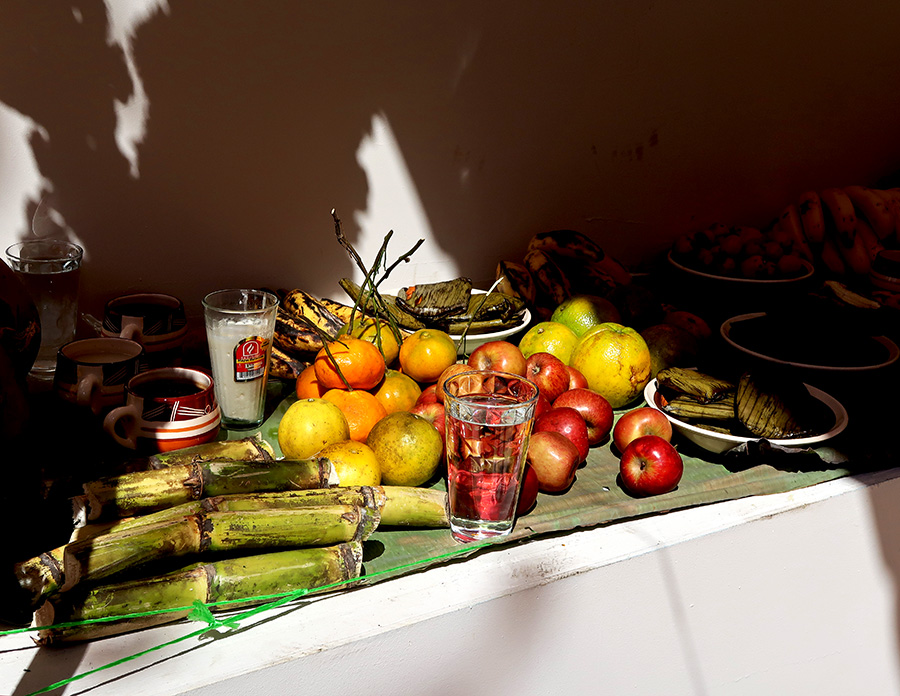
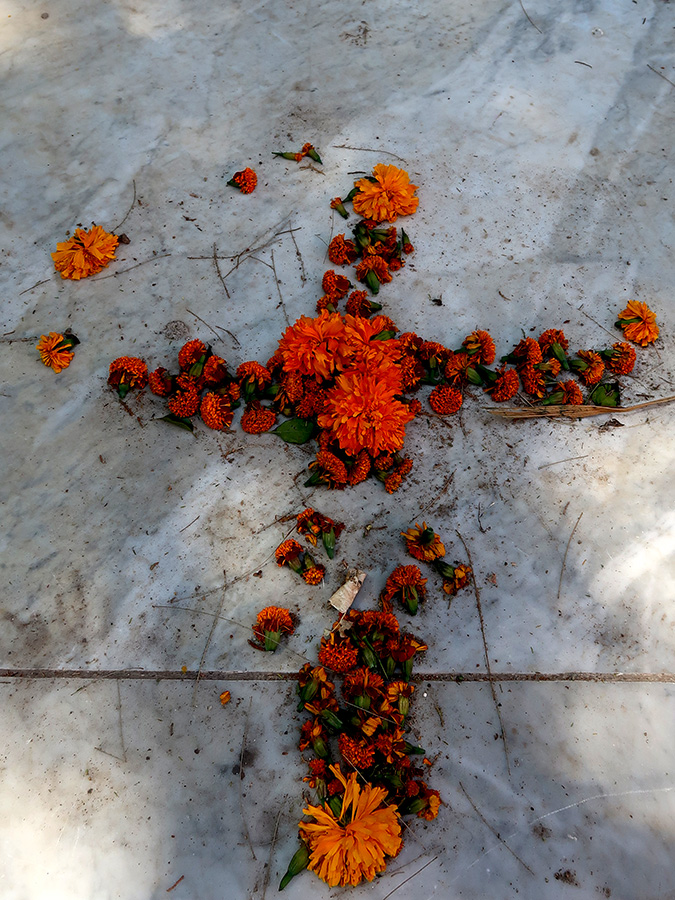
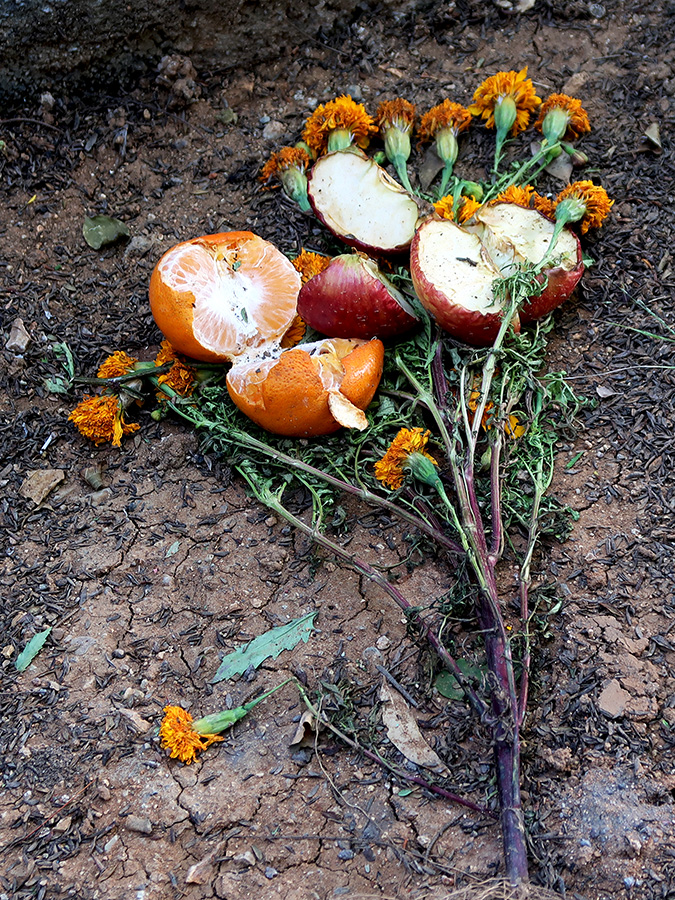
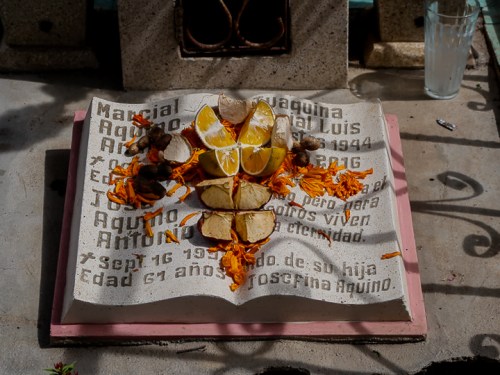
During Día de Muertos (Day of the Dead), under the sun dappled light filtering through graceful several centuries old ahuehuete trees in the panteón of Tlacolula de Matamoros, the living offer the scent of cempasúchil (marigolds) to guide their departed home. And, to nourish them during their journey between the worlds of the living and the dead, fruit (thoughtfully opened), along with nuts and beverages are provided.

The fruit and flowers during Día de Muertos also beckon me to this Zapotec village in the Valley of Oaxaca and they nourish my soul.

Read Full Post »

The Zapotec village of San Antonino Castillo Velasco is known for its flowers. Their difuntos (departed) await them on November 3, as they understand their living loved ones have been occupied in providing flowers to decorate the altars and graves of neighboring villages in the valley of Oaxaca. I returned yesterday and my senses were filled with the beauty and aroma. However, as I was carefully navigating a winding route among the tumbas to leave, the sound of a lone saxophone beckoned me.

And, I was overcome with gratitude for the privilege of being present to experience that time and that place.

Read Full Post »

A few days ago, I completed my Día de Muertos shopping — mandarinas (mandarin oranges), manzanas (apples), cempasuchil (marigolds), cresta de gallo (cockscomb), chocolate, and pan de muerto (Day of the Dead bread), thus allowing construction of my ofrenda to begin. I unwrapped photographs of my parents, grandparents, and extended family members; selected some of their favorite things to put on my ofrenda; placed fruit, nuts, bread, and chocolate among the photos; positioned candles, flowers, and incense; and poured my departed a copita (little cup) of water and another of mezcal.

Tonight, the candles and incense have been lit — all to beckon, entertain, and sustain my departed during their brief stay. However, this year, because Muertos falls on the weekend, I choose to believe, like the folks in Teotitlán del Valle, that my loved ones will being staying for 48 hours instead of only 24 hours.

An ofrenda is an offering and I’m hoping my very dearly departed, after their long journey to southern Mexico, will find it warm, welcoming, and nourishing.

Read Full Post »

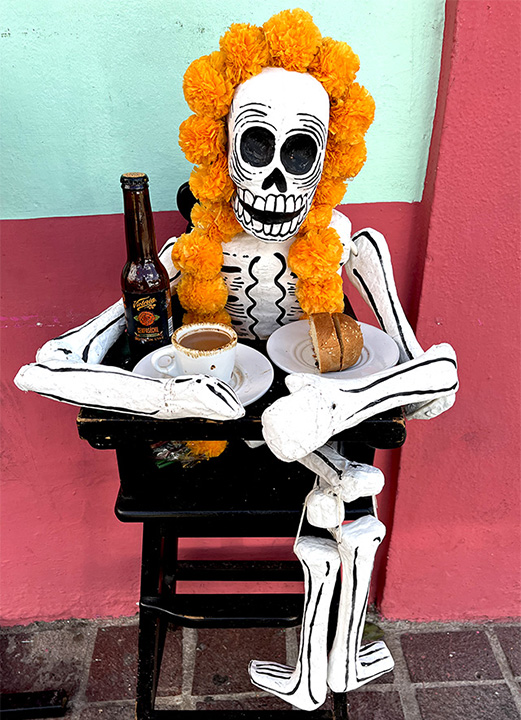
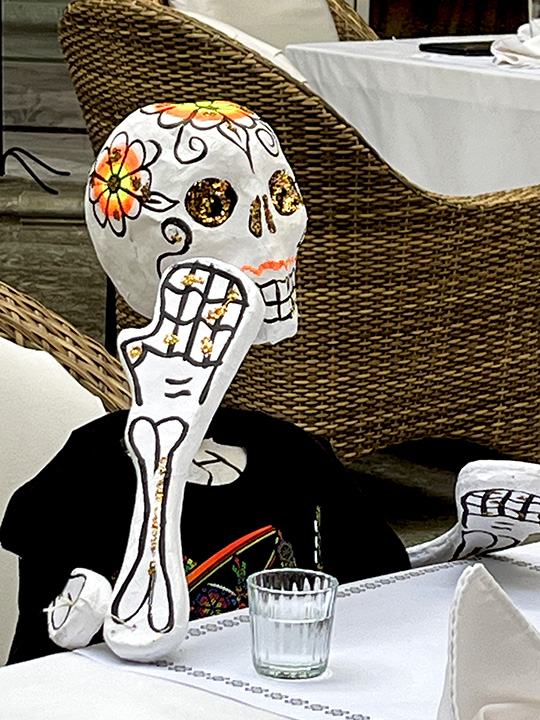
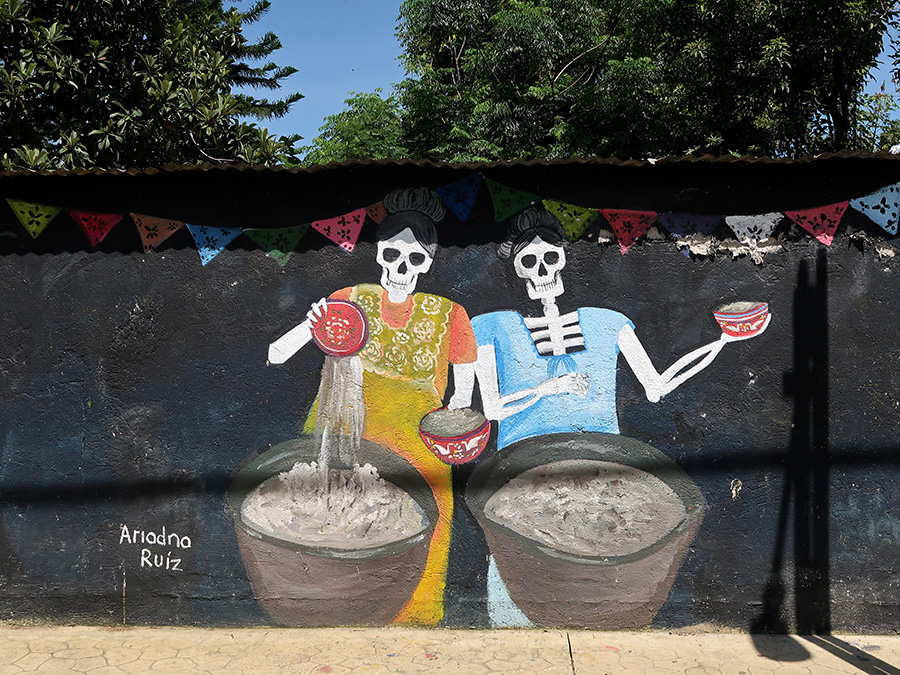
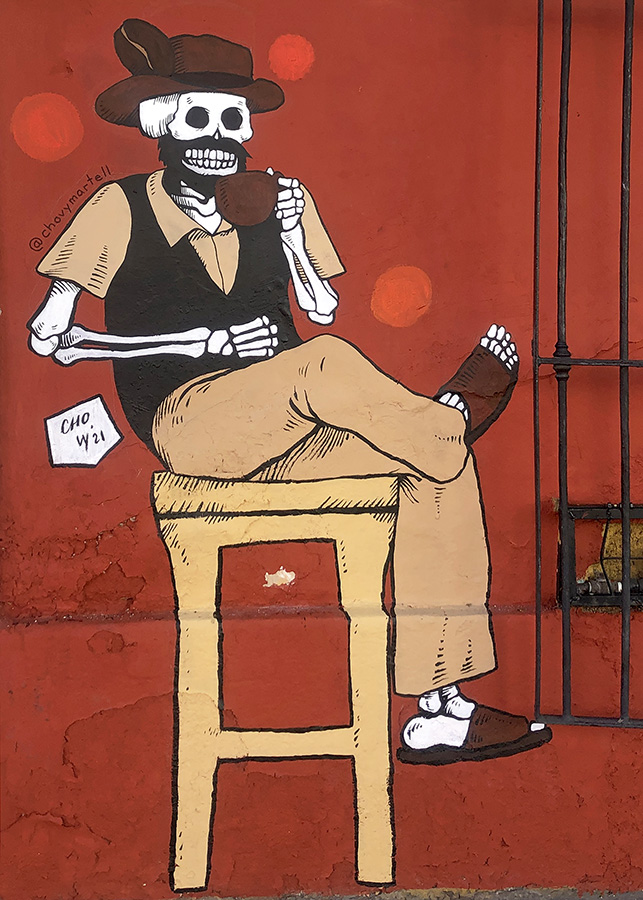
It’s Halloween time up here in el norte and the occasional house features spiders poised to pounce in webs strung across bushes, witches with broomsticks guard front gates, and pumpkins decorate entries signaling trick or treaters are welcome. A few skeletons have moved into the neighborhood but none are as well dressed and accessorized as those seen last year loitering on sidewalks, hanging out on walls, and dining in the restaurants of Oaxaca during Día de Muertos (Day of the Dead).

What can I say? I’m missing these guys and gals inhabiting Oaxaca this time of year.

Read Full Post »

On November 3rd, K and I headed to San Antonino Castillo Velasco — a Zapotec community 24 miles south of Oaxaca city. It is a village known for growing flowers and for the floral embroidery decorating its traditional blouses and dresses. 

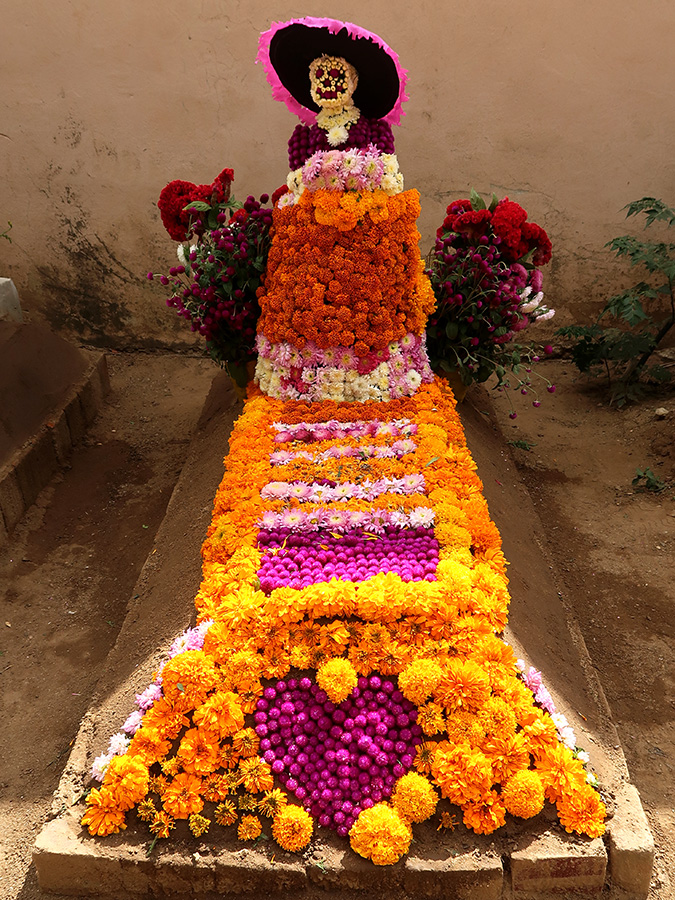
Their difuntos (departed souls) understand their families are busy providing flowers for altars and tombs in the surrounding villages in the valley and wait until November 3-4 to return and spend time with their living loved ones. Because floral design plays such an important role in the traditions and commerce of the village, it is carried over to the elaborate decorating of the tombs in the panteón (cemetery).

One of the flowers grown is the “flor inmortal” (immortal flower), so named because, even when dried, it retains its brilliant colors. Artisans in the village use these flowers to create intricately designed figures on display December 23 in the city of Oaxaca during Noche de Rábanos and to decorate the graves of loved ones during Día de Muertos.

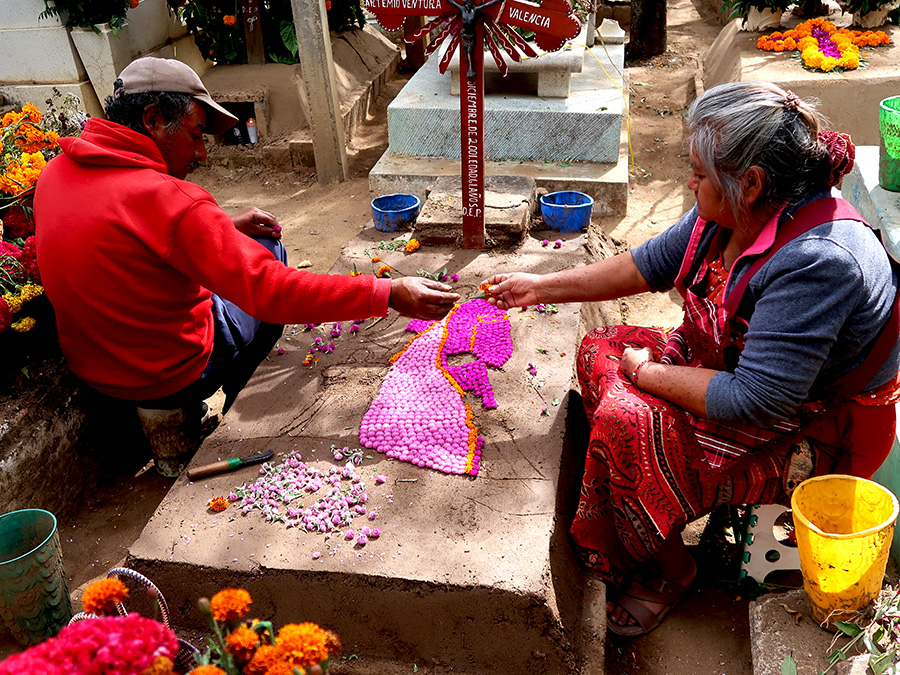
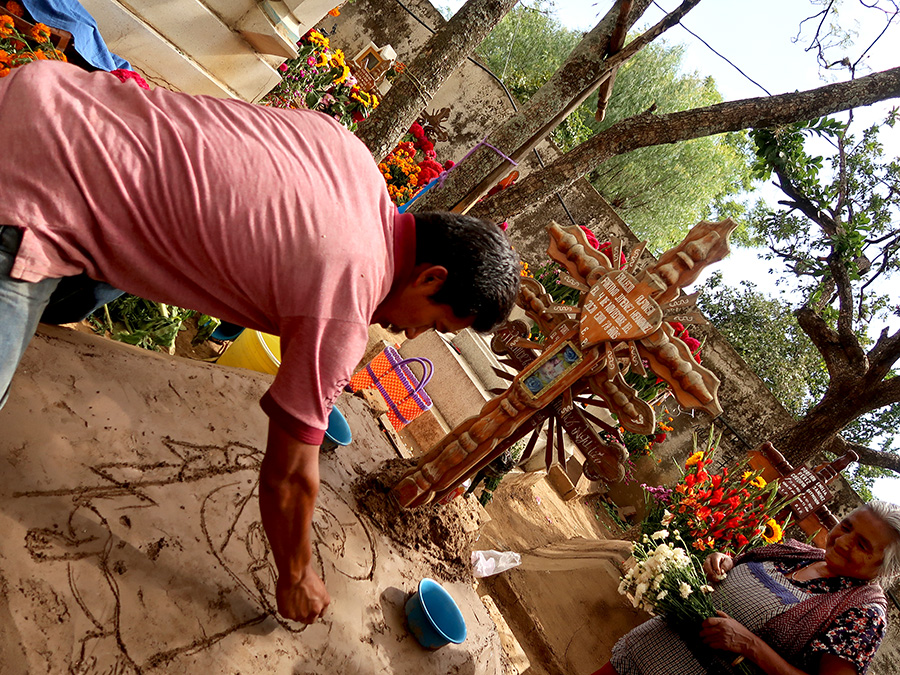
In the cemetery villagers mix the area’s very fine dirt with water, cover the graves with this damp mud, and use a trowel to smooth it. Once dry, they outline designs and religious imagery into this mud canvas and use flowers (fresh and dried) to paint the scene. Entire families are involved — male and female, young and old. It is a labor of love and incredibly moving to behold.

Read Full Post »

There is a duality surrounding the celebration of Día de Muertos (Days of the Dead) in Oaxaca. While most every home and many public buildings and businesses construct altars with ofrendas brimming with flowers, candles, bread, chocolate, fruit, nuts, beverages, copal incense, and often photos of the departed, there is a distinct difference between the traditions of the more mestizo communities (Oaxaca city and the Etlas, for example) and those of the indigenous communities. The former often includes raucous comparsas (parades) called muerteadas with costumes, masks, painted faces, music, and “adult beverages.” According to the book, Day of the Dead: When Two Worlds Meet in Oaxaca, the muerteada allows the dead “to ‘occupy’ a living body, either a muerteada participant or an audience member, for a time, and therefore enjoy the entertainment directly rather than vicariously.”

However, in the indigenous villages these days are more solemn, filled with ritual, and are family oriented. I lean toward this more spiritual observance, so I escaped the craziness of the daily comparsas and drunken crowds in the city and went to stay in the Zapotec village of Teotitlán del Valle with my compadres (including comadre K) and to shop in Tlacolula for pan de muertos (bread), candles, and flowers to take to the ofrendas of families K and I have a relationship with in Teotitlán and San Pablo Villa de Mitla.

Tlacolula de Matamoros – Vendors of caña (sugar cane) used to create an arch over ofrendas.
Tlacolula de Matamoros – Ofrenda in the Templo de Santa María de la Asunción.
Tlacolula de Matamoros – Tapete de arena (sand painting) in Templo de Santa María de la Asunción.
San Pablo Villa de Mitla – Store front.
San Pablo Villa de Mitla – Ofrenda on home altar.
San Pablo Villa de Mitla – Detail from a public ofrenda.
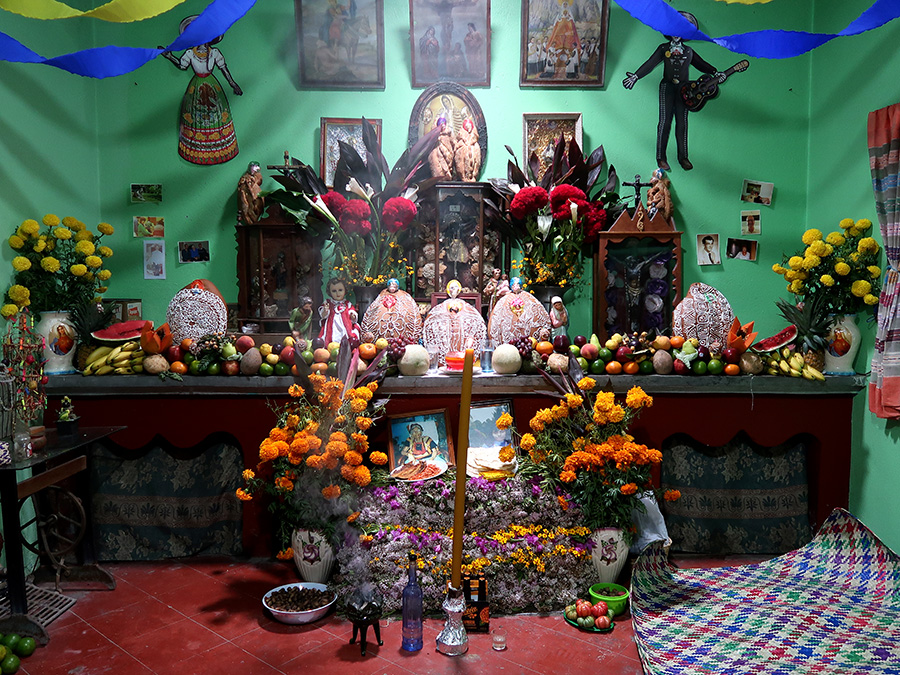
Teotitlán del Valle – Ofrenda (offerings) on home altar.
Teotitlán del Valle – Tamales amarillo traditionally served on November 1.
Teotitlán del Valle – Panteón (cemetery) early evening on November 2.

While the Día de Muertos observances may differ, the bottom line in both city and pueblo is to provide a welcome worthy of both the living as hosts and the dead as honored guests.

Read Full Post »

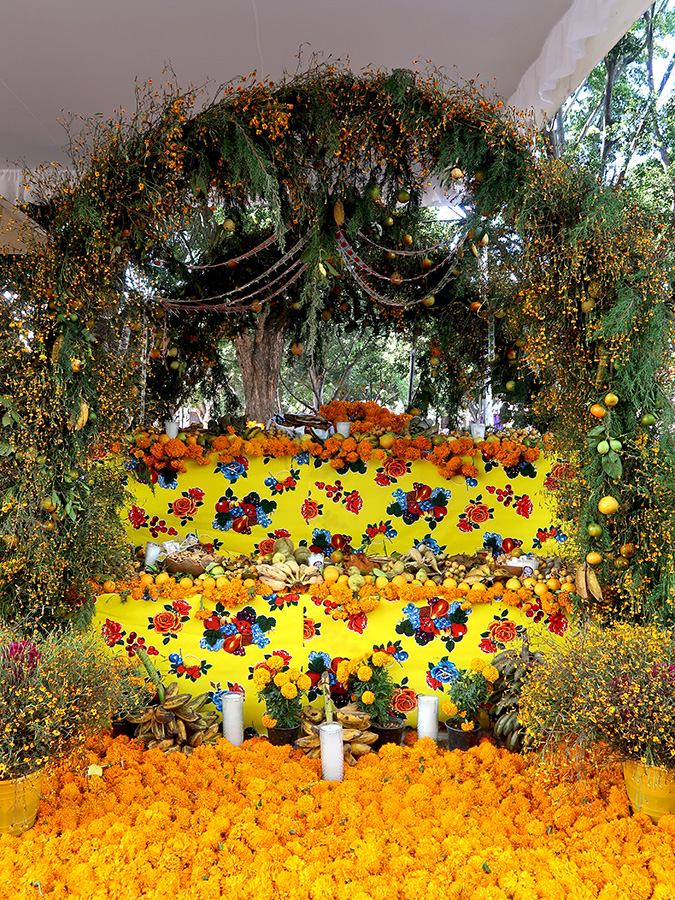
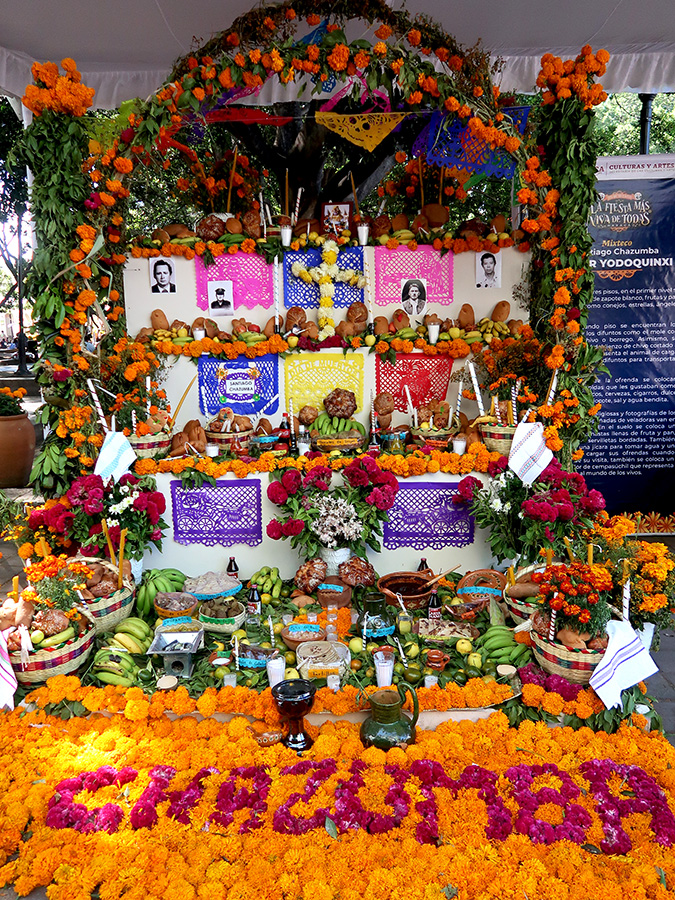
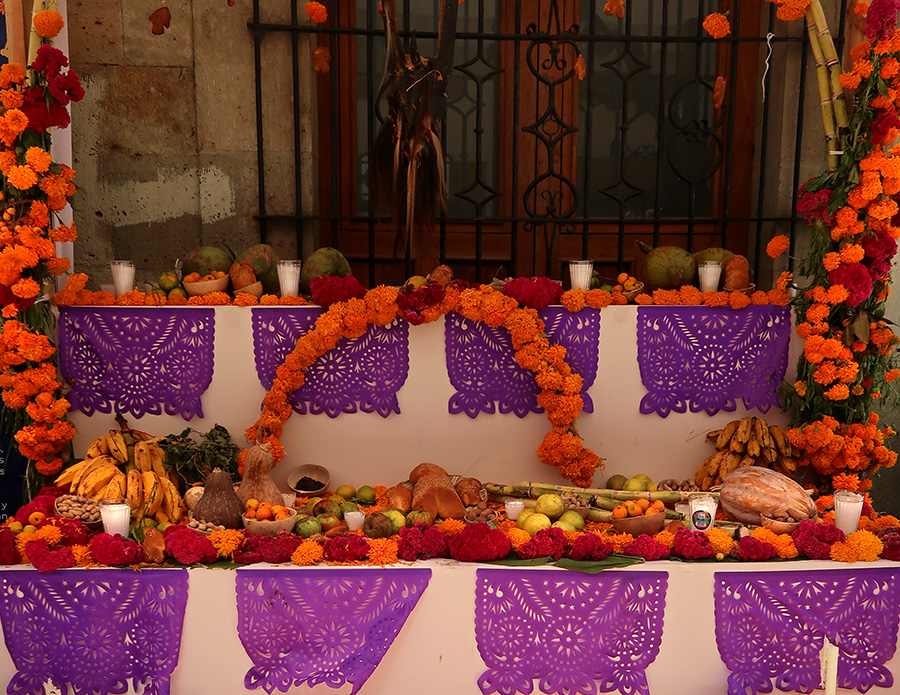
Oaxaca is alive with preparations for Día de Muertos and the Zócalo is filled with altars from her indigenous and Afromexican communities.

Zapoteco – San Melchor Betaza, Oaxaca – Altar Bkog Tse Bene Wat
Náhuatl – Santa María Teopoxco, Oaxaca – Tlamanal-Miquilistle
Cuicateco – San Juan Bautista Cuicatlán, Oaxaca – Altar Cuicateco
Amuzgo – San Pedro Amuzgos, Oaxaca – Altar Ncué Ndó’ Tzjón Noán
Mixe – Santa María Tlahuitoltepec, Oaxaca
Zapoteco – Santo Domingo Tehuantepec, Oaxaca
Mixteco – Villa de Tamazulápam del Progreso, Oaxaca
Mazateco – Huautla de Jiménez, Oaxaca – Altar El Portal
Mixteco – Santiago Chazumba, Oaxaca – Altar Yodoquinxi
Chatino – Santiago Yaitepec, Oaxaca – Mesa de las Ánimas
Mixtecos Ñuu Savi – Santiago Ixtayutla, Oaxaca
Chontal – Santiago Astata, Oaxaca
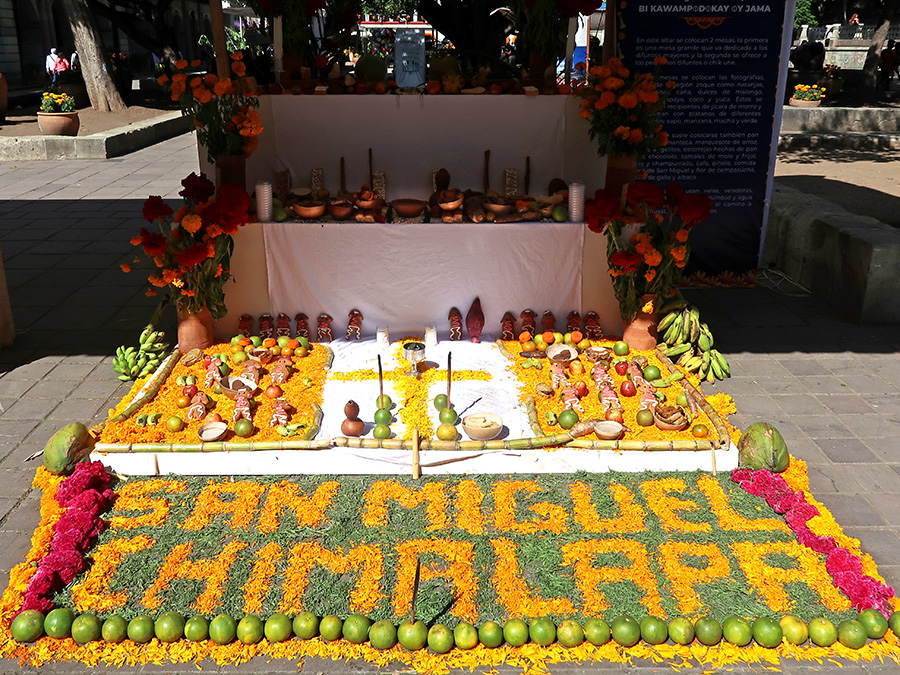
Zoque – San Miguel Chimalapas, Oaxaca – Bi KawampΦdΦkay Φy Jama
Chinanteco – San Juan Bautista Valle Nacional, Oaxaca – Altar Tradicional Chinanteco
Triqui – San Juan Copala, Oaxaca – Altar Se Inaj Xhi Aj
Mazateco – San Pedro Ixcatlán, Oaxaca – Altar Autóctono
Ikoots – San Mateo del Mar, Oaxaca – Altar De Tikambaj
Pueblos Afromexicanos – Altar de los Pueblos Afromexicanos de la Costa de Oaxaca

The scent of cempasúchil (marigolds) fills the air and beckons the difuntos (souls of the departed) to eat, drink, and be merry with their living loved ones.

Read Full Post »

Under the sun dappled light filtering through the 500 year old ahuehuete trees, there was stillness and peace.

November 2, 2022 in the panteón of Tlacolula de Matamoros.

Read Full Post »

Every Día de Muertos, I love seeing the artistry of public ofrendas, feel honored being welcomed into the homes of friends and placing pan de muertos on their very personal ofrendas, and enjoy assembling my own ofrenda to departed loved ones. (Click on each image to see the details.)

Mitla – Ofrenda in the home of master weaver Arturo Hernandez Quero.
Mitla – Public ofrenda in the main plaza. Note the intricately decorated pan de muertos.
Teotitlán del Valle – Ofrenda of the weaver Pedro Montaño and cocinera Carina Santiago family in the Tierra Antigua restaurant and gallery.
Teotitlán del Valle – Ofrenda in the family home of weaver Zacarias Ruiz and Emilia Gonzalez.
Barrio de Jalatlaco – Private ofrenda open for public viewing at the corner of 5 de mayo and La Alianza.
Barrio de Jalatlaco – Family adding the finishing touches to their ofrenda. (They graciously gave me permission to take the photo.)
Casita Colibrí – My ofrenda in the daylight.
Casita Colibrí – My ofrenda at night awaiting the arrival of my departed.

I love the spicy and welcoming scents of cempasúchitl (marigolds), lacy flor de muerto from the Sierra Norte, pan de muertos, and incense of copal.

Read Full Post »

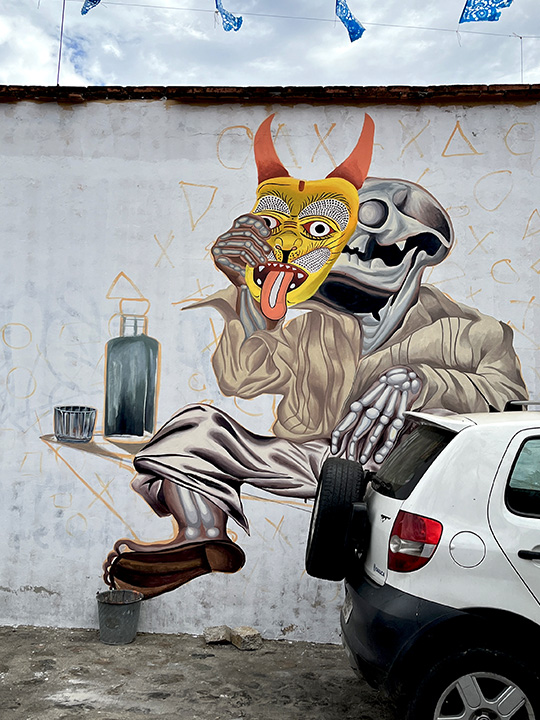
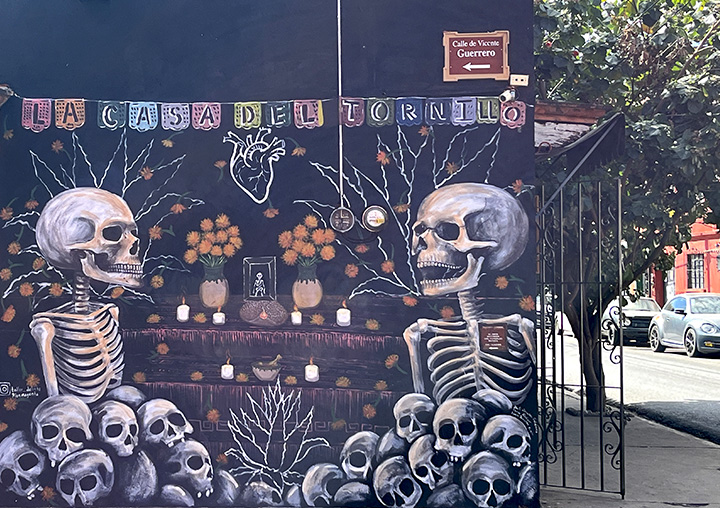
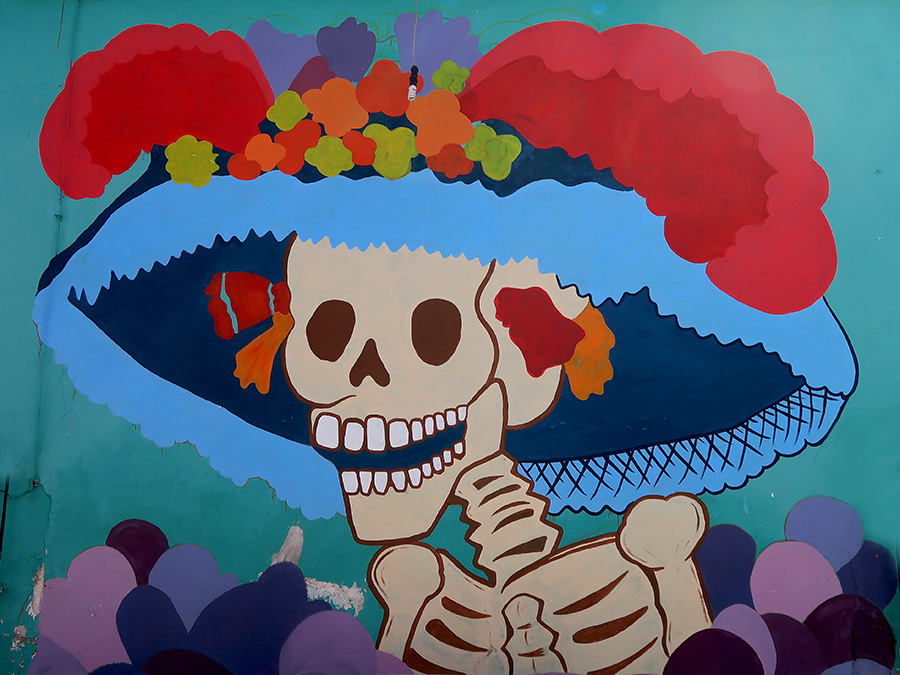
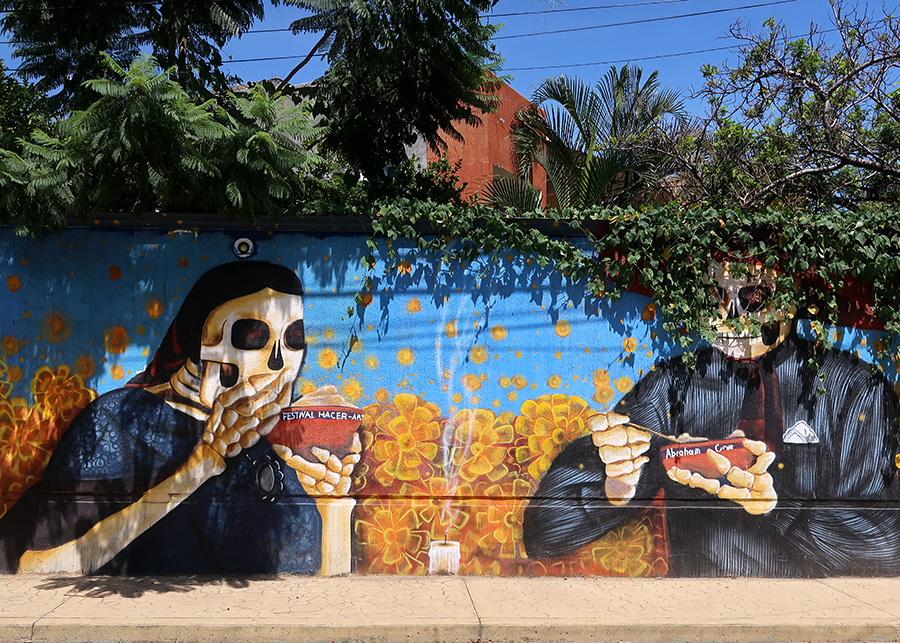
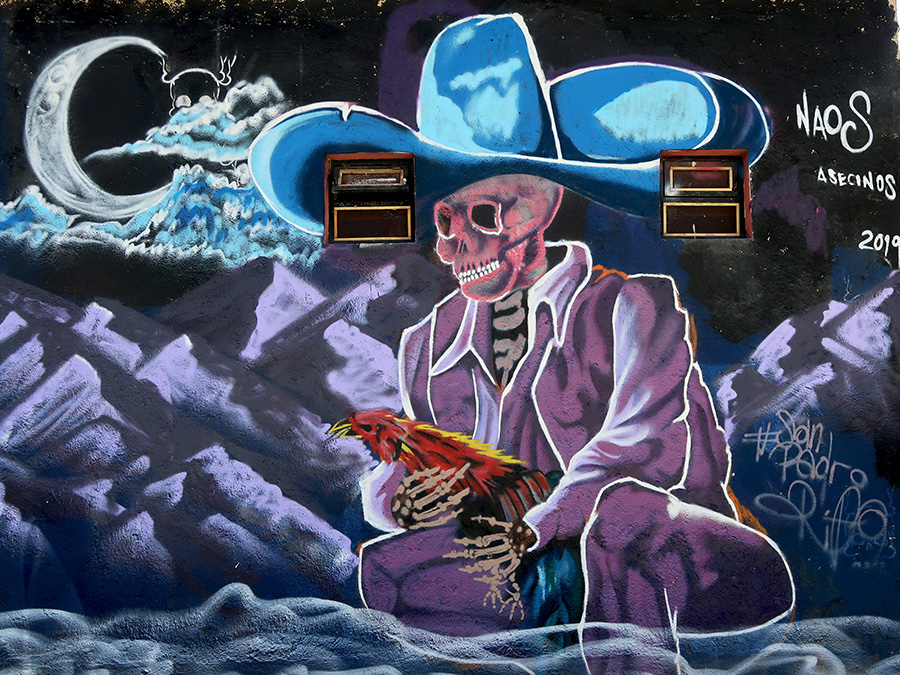
The Día de Muertos murals in my Barrio de Jalatlaco neighborhood continue to go forth and multiply…

As do the crowds. Love the former. No comment about the latter.

Read Full Post »

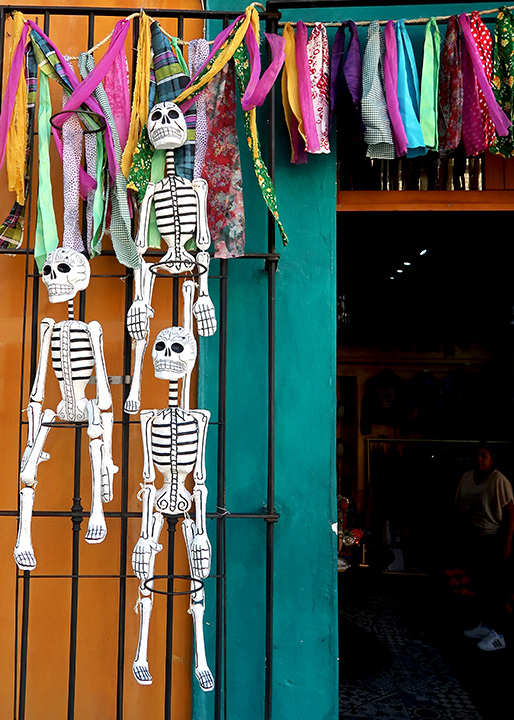
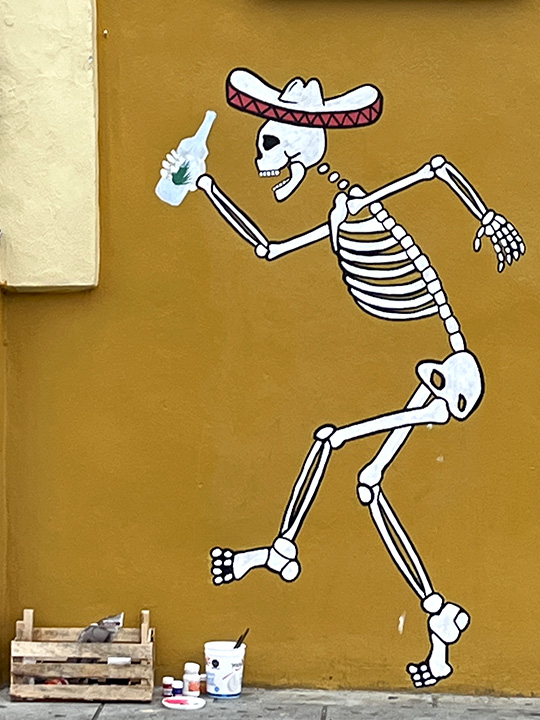
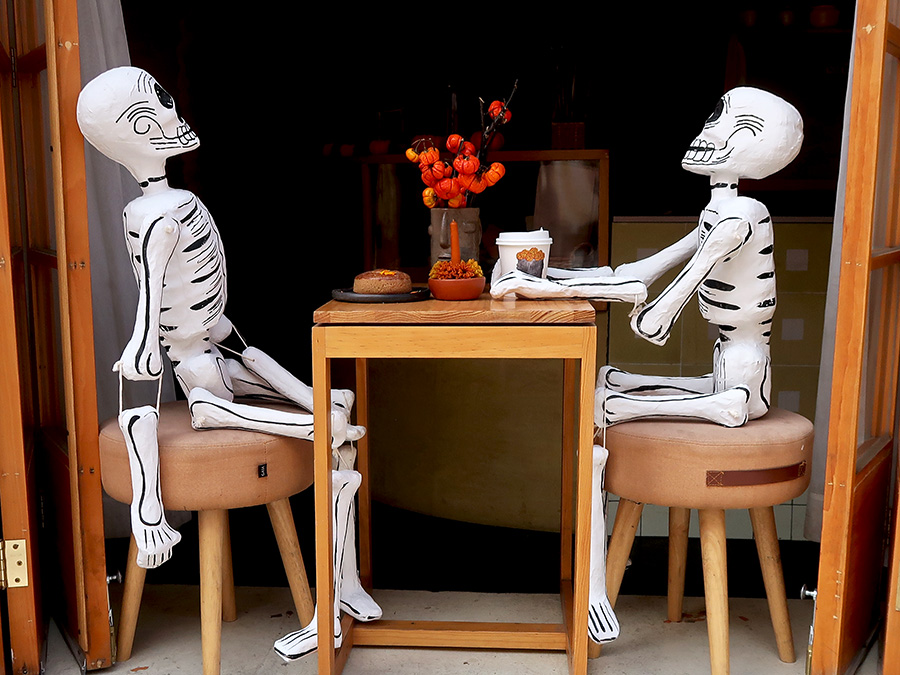
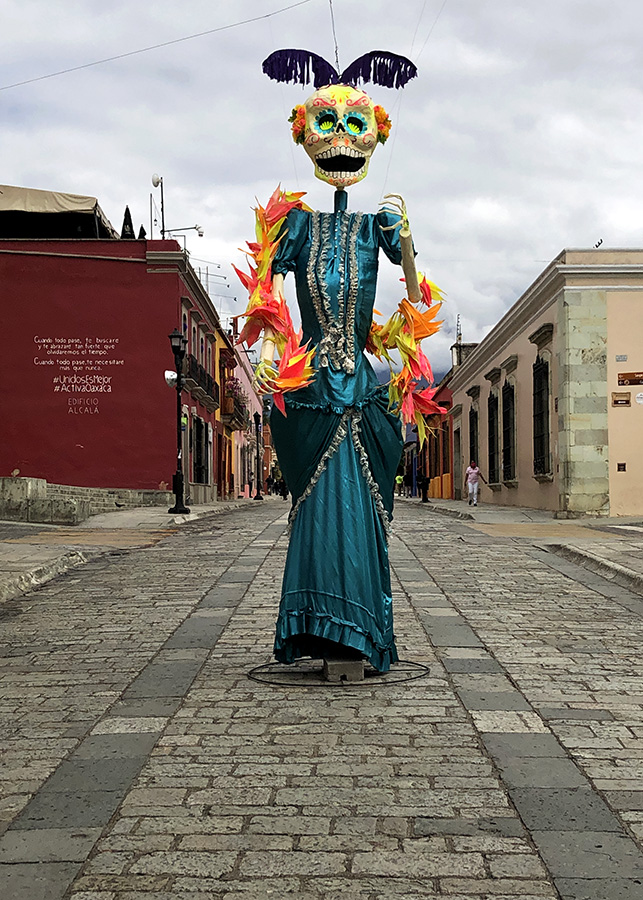
Everywhere one looks, skeletons can be seen hanging around my Jalatlaco neighborhood.

They are even floating above us.

At least they order something when they enter a restaurant.

All in all, they look pretty happy, even if some of their poses look mighty uncomfortable.

Hmmm, I wonder what they are waiting for. Día de Muertos, perhaps?

Read Full Post »

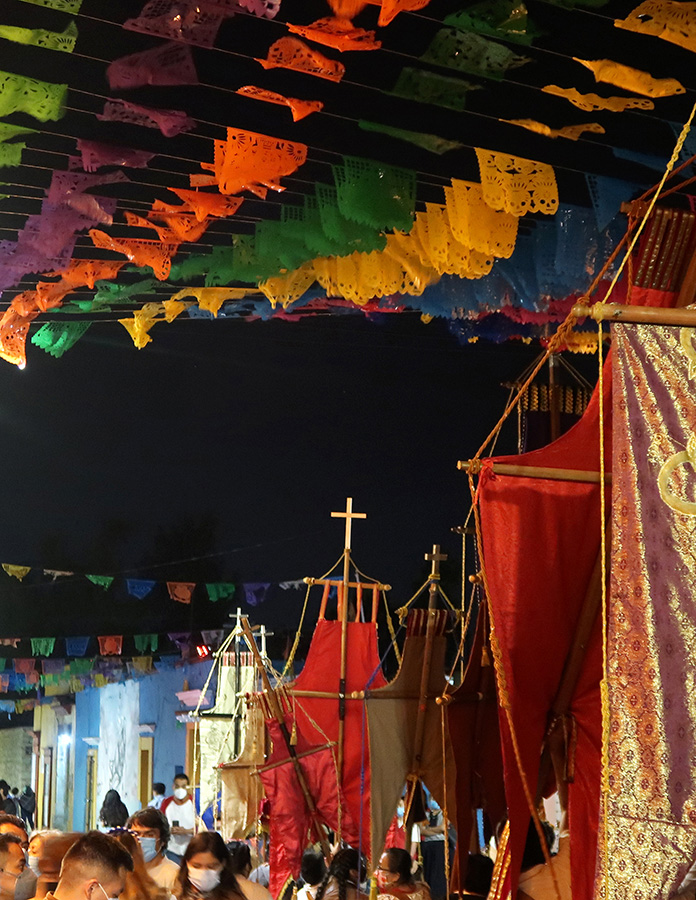
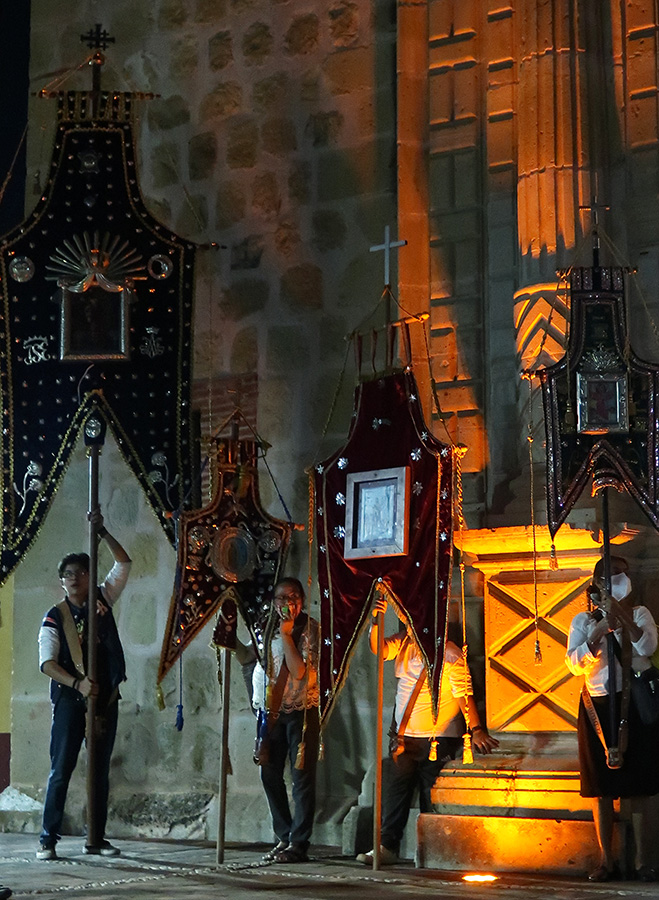
The evening of October 31, I heard the unmistakable sounds of a procession coming down the street — but not the raucous cacophony of a muerteada which, given the date, I was expecting. No, this was the slow dirge-like and repetitive hymn of a religious procession. Needless to say, I grabbed my camera, keys, and cubreboca (mask) and headed out the door. The Catholic church has dedicated the month of October to honor the Virgin Mary with the recitation of the Holy Rosary. This being the last Sunday of October, María traveled through the streets of Barrio de Jalatlaco through the generous mayordomía (stewardship) of the families Robles Tamayo and García Robles.

Upon her return to Templo de San Matías Jalatlaco, she was greeted by a less than solemn scene of Día de Muertos revelers in costumes and face paint, no doubt looking for a muerteada (aka, comparsa). According to the book, Day of the Dead: When Two Worlds Meet in Oaxaca, the muerteada allows the dead “to ‘occupy’ a living body, either a muerteada participant or an audience member, for a time, and therefore enjoy the entertainment directly rather than vicariously.” I suspect for some, it was just an excuse to party.

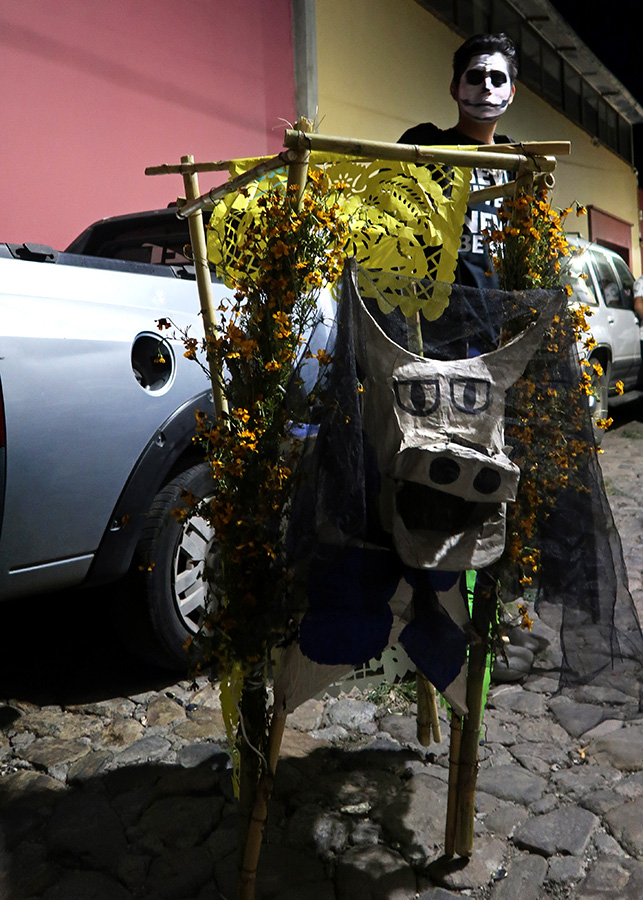
However, a muerteada did come to my neighborhood the following night. Again, I grabbed camera, keys, and cubreboca and ventured out to check it out. The craziness was only just getting started and would undoubtedly go on most of the night. Besides, not even half the people were wearing masks, so, after twenty minutes and twenty plus photos, I went home.

The sacred and profane that is Mexico.

Read Full Post »

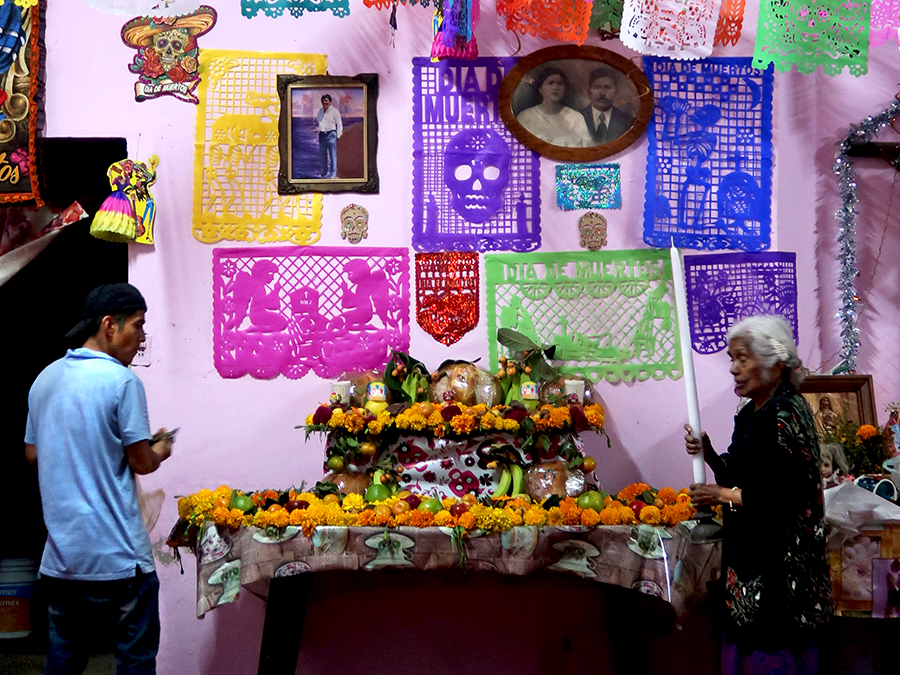
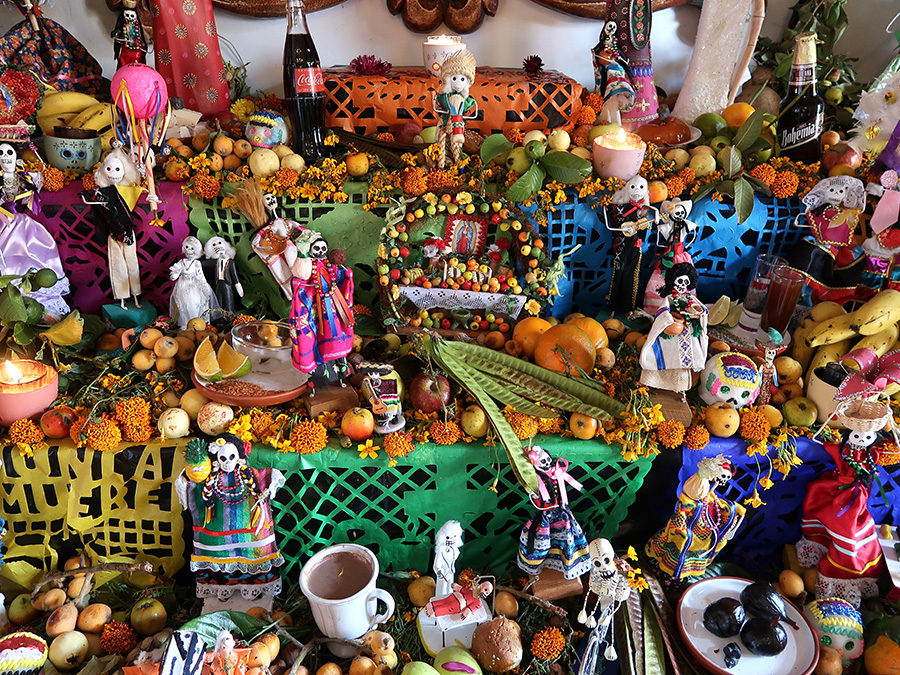
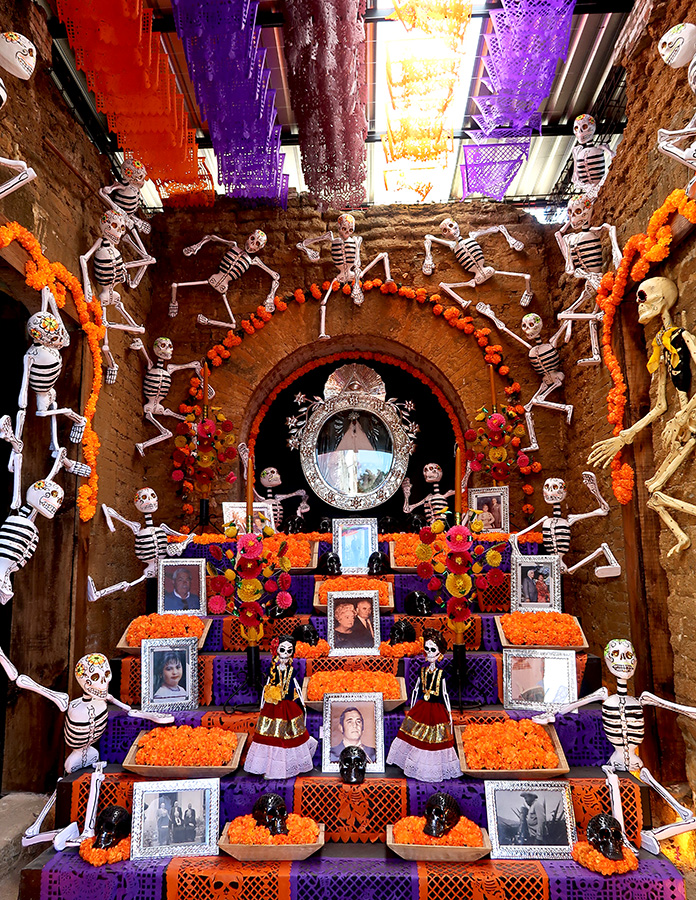
Day of the Dead altars and their offerings to the departed vary from region to region and, within those regions, from family to family. Ofrendas (offerings) are an integral part of Día de Muertos. They are a beacon to the departed, an ephemeral work of art, and the sum of their lovingly chosen parts. As you can see from the photos below from several in Barrio de Jalatlaco, even on public display, they are intensely personal and creative.

Galería Shadai – Flowers, papel picado, candles, incense, pan de muertos, fruit, nuts, a casserole, and beverages.

And, there is a catrina tapete de arena (sand carpet) made of sand, beans, and flowers.

However, the only photo is of Maestro Francisco Toledo placed on a side pedestal.

Los Pilares Hotel and Restaurant – Flowers, papel picado, catrinas and catrins, candles, fruit, pan de muertos, and beverages.

And, there is a beautiful floral arch.

No photos of loved ones, but it’s a love story to the state of Oaxaca.

Family ofrenda – 5 de mayo at the corner of La Alianza. Family photos of the departed take center stage with papel picado, cempasúchitl (marigolds), and skeletons playing supporting roles.

Then there are those magnificent floral candles like one sees in Teotitlán del Valle.

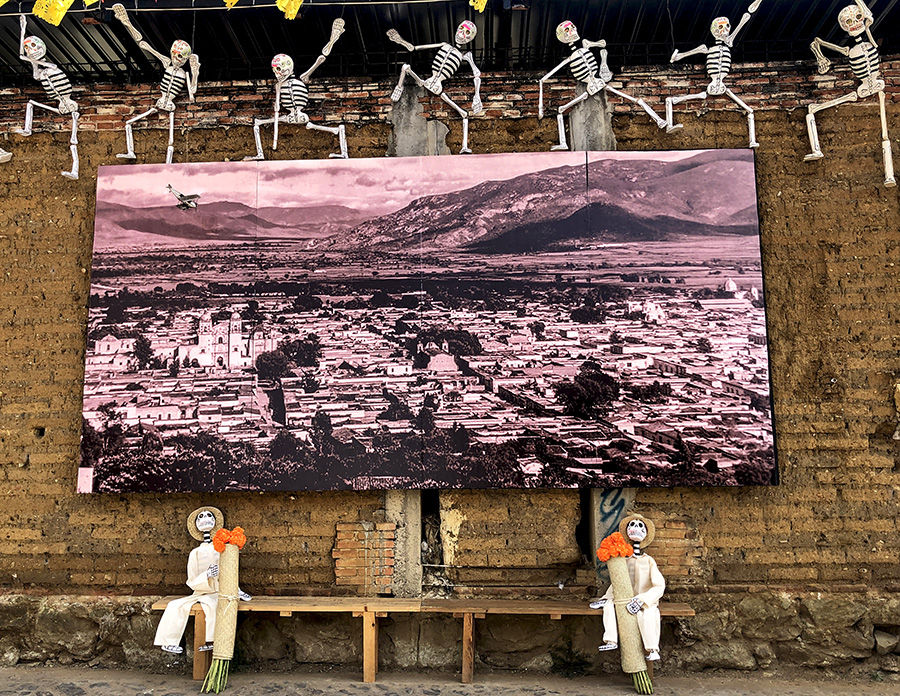
And, lest the departed can’t find their way home in the greatly expanded city, an old photo and skeletons await outside the altar alcove to show the way.

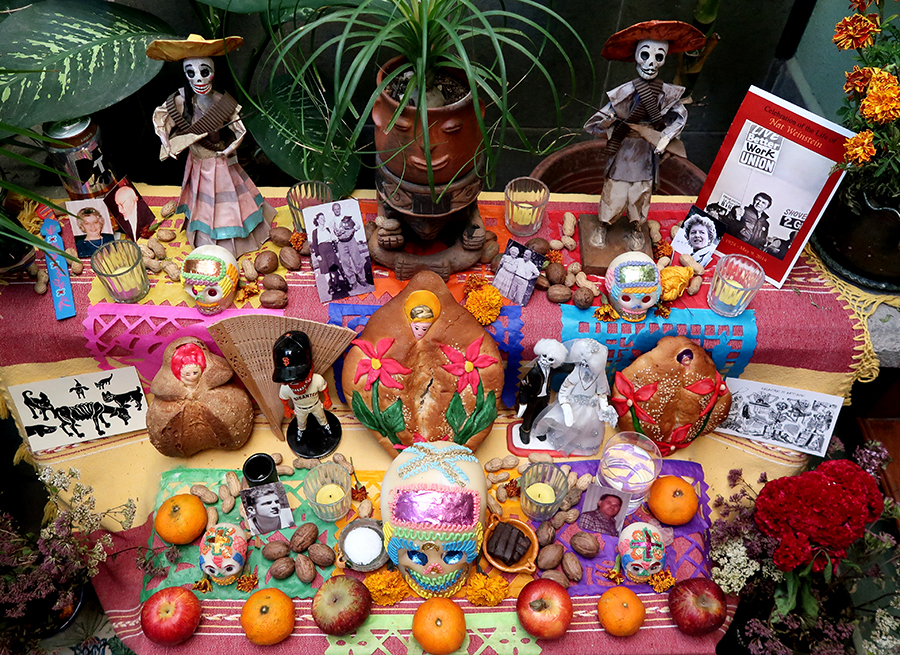
Last but not least, my altar and offerings. It was a creative challenge to set up in the new Casita Colibrí.

It’s smaller than previous years, but I have figured out a way to make it bigger and better next year.

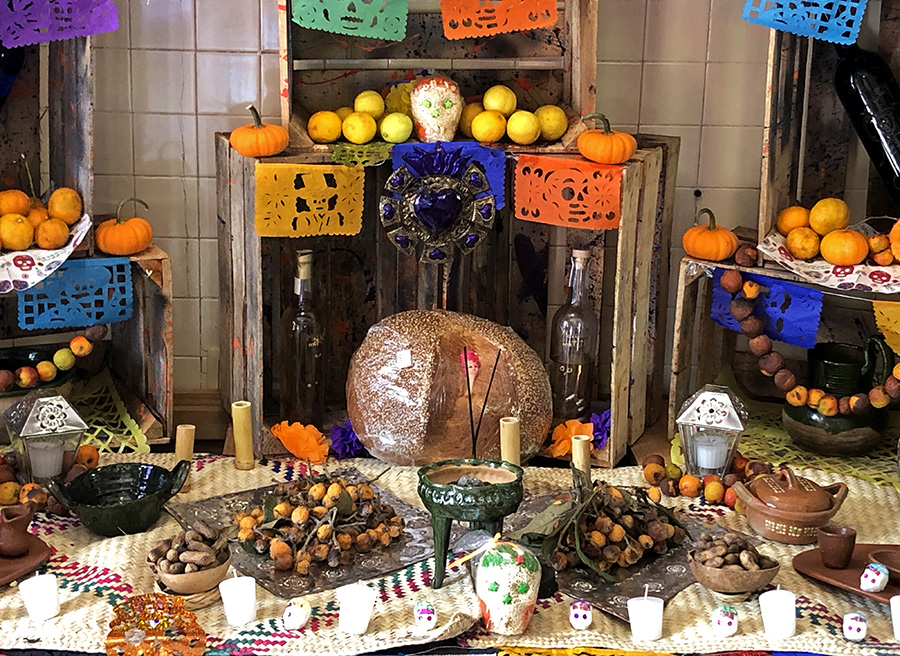
A yellow (color of death in pre-hispanic southern Mexico) tablecloth; papel picado (cut tissue paper) signifying the union between life and death; cempasúchitl (marigolds) and flor de muerto from the Sierra Norte, their scent to guide the spirits; and cresta de gallo (cockscomb) to symbolize mourning. There is salt to make sure the souls stay pure and chocolate, peanuts, pecans, apples, mandarin oranges, and pan de muertos (Day of the Dead bread) to nourish them. The sweet smell of copal incense and its smoke help guide my loved ones to the fiesta I have prepared for them. There is water to quench their thirst, as they travel between worlds, not to mention mezcal and cervesa (beer). And, there are the tangible remembrances of my departed — photos and some of their favorite things.

With candles lit and incense burning, I’m loving it and hoping my very dearly departed will find it warm, nourishing, and welcoming.

Read Full Post »
My new neighborhood, Barrio de Jalatlaco, has a long history — one that predates the arrival of the Spanish. Community spirit and traditions are strong, including making her departed feel welcome during Día de Muertos. Thus the bright orange and spicy scent of the flor de muerto, cempasúchitl (flower of the dead, marigolds) are everywhere.

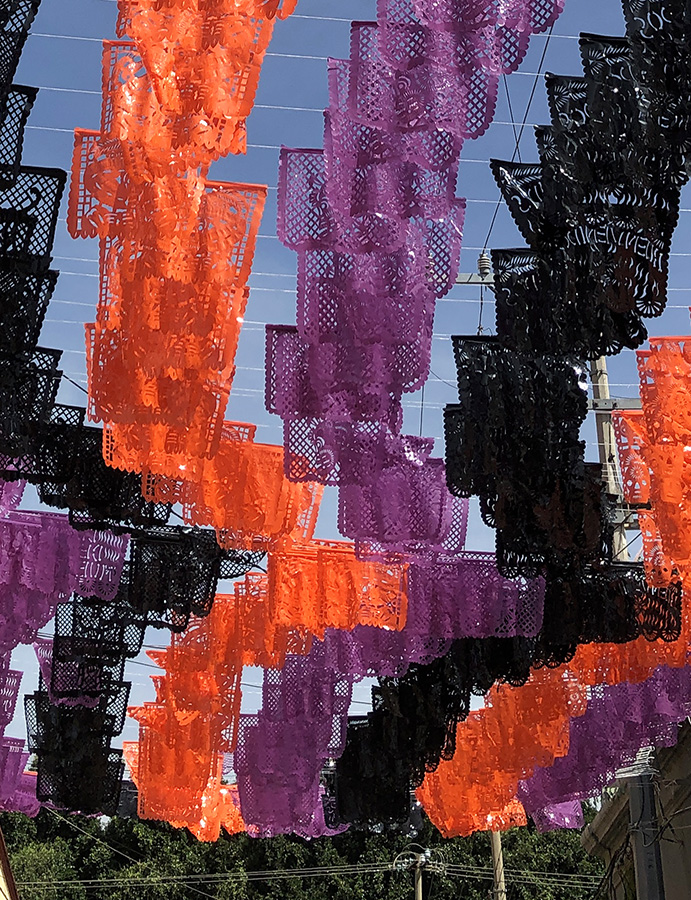
Papel picado, in seasonal colors, ripple above the streets and cast fluttering shadows.

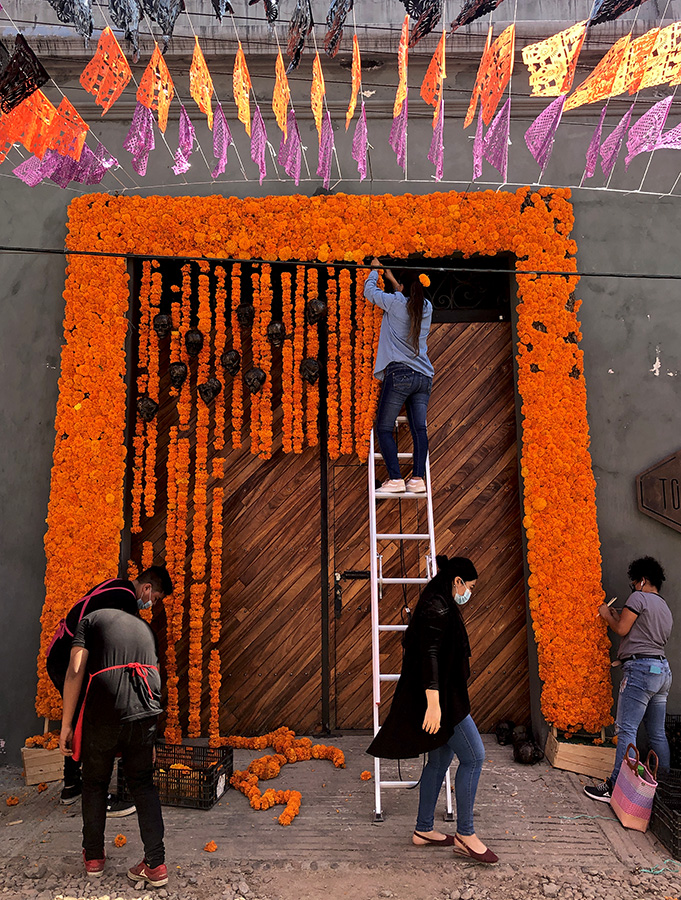
Floral arches welcome the living and the departed.

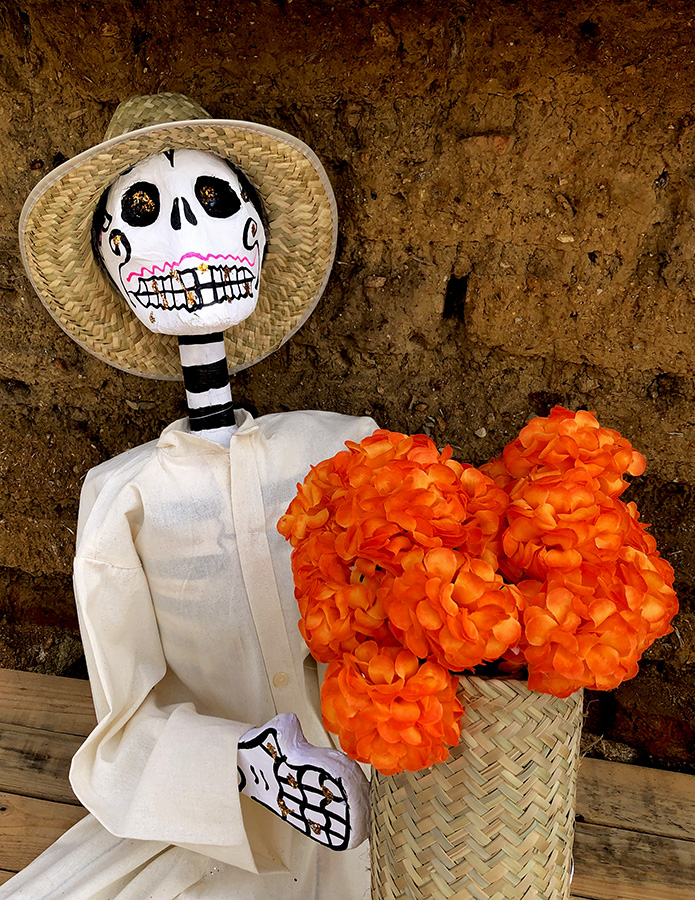
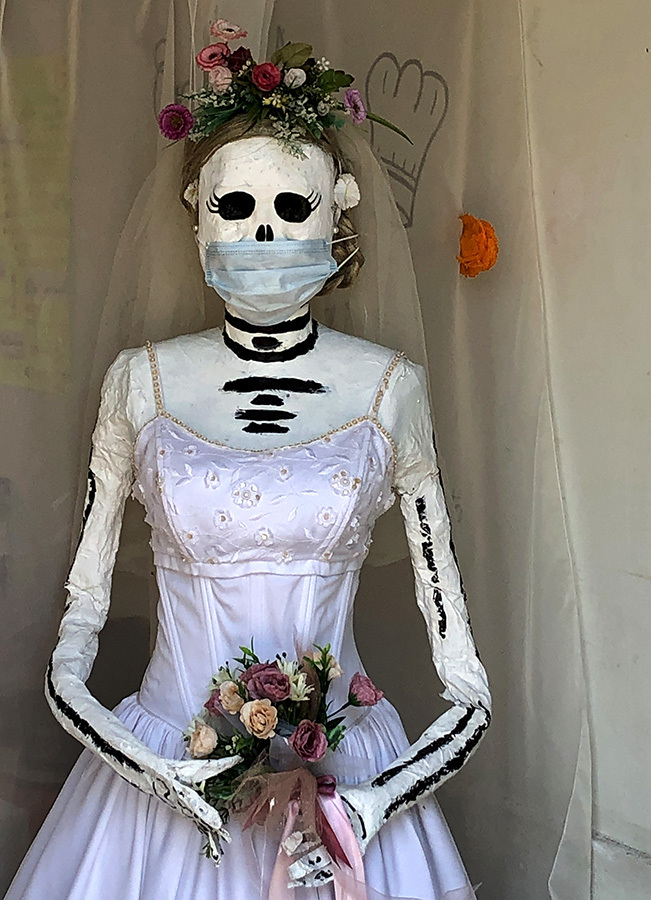
And skeletons are seen hanging out in doorways, windows, and sidewalks.

Tomorrow, altars and their offerings.

Read Full Post »
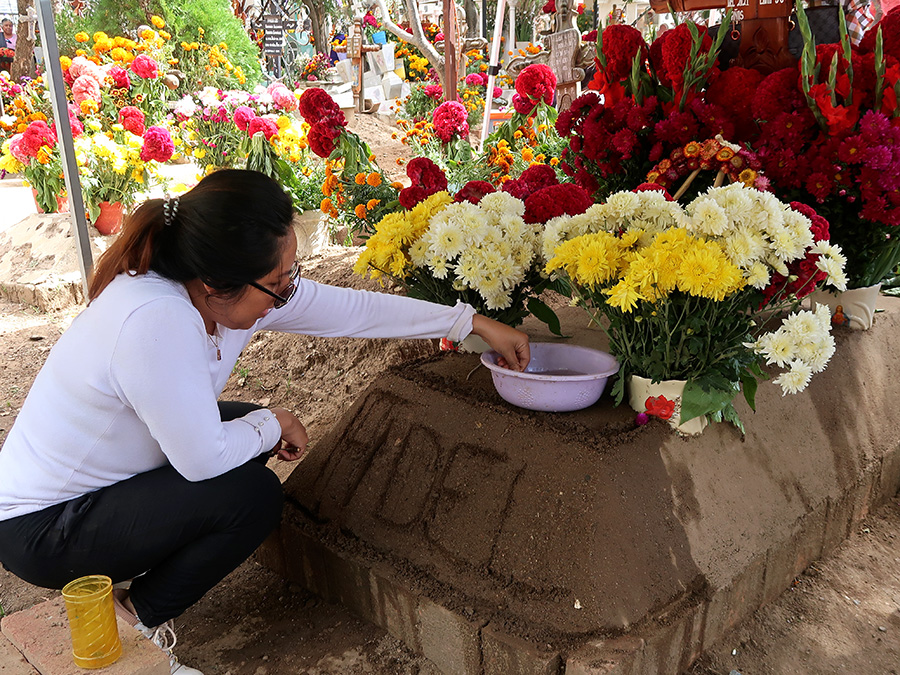
Oaxaca is getting ready for the annual arrival of her difuntos (souls of the dead), so a pause in the Day in the country posts is in order. Blue sky or grey, ran or shine, and village or city, they come…

Oaxaca City
Villa de Zaachila
Villa de Zaachila

They come to eat and drink…

Villa de Zaachila
Oaxaca City
Villa de Zaachila

They come to sing and dance, contemplate life and death, and be with loved ones.

Villa de Zaachila
Villa de Zaachila
Oaxaca City

Our hearts are filled with joy to welcome them to the fiesta we have lovingly prepared in their honor.

Read Full Post »

Older Posts »