Feeds:
Posts
Comments

Posts Tagged ‘danzantes’

When last I posted, much-needed rains had come to Teotitlán del Valle, sending La Santísima Virgen María de la Natividad (the Sainted Virgin Mary of the Nativity) convite participants, spectators, and photographers dashing for cover and yours truly, home.  However, prior to the deluge, little boys patiently waited.P1130813 P1130772

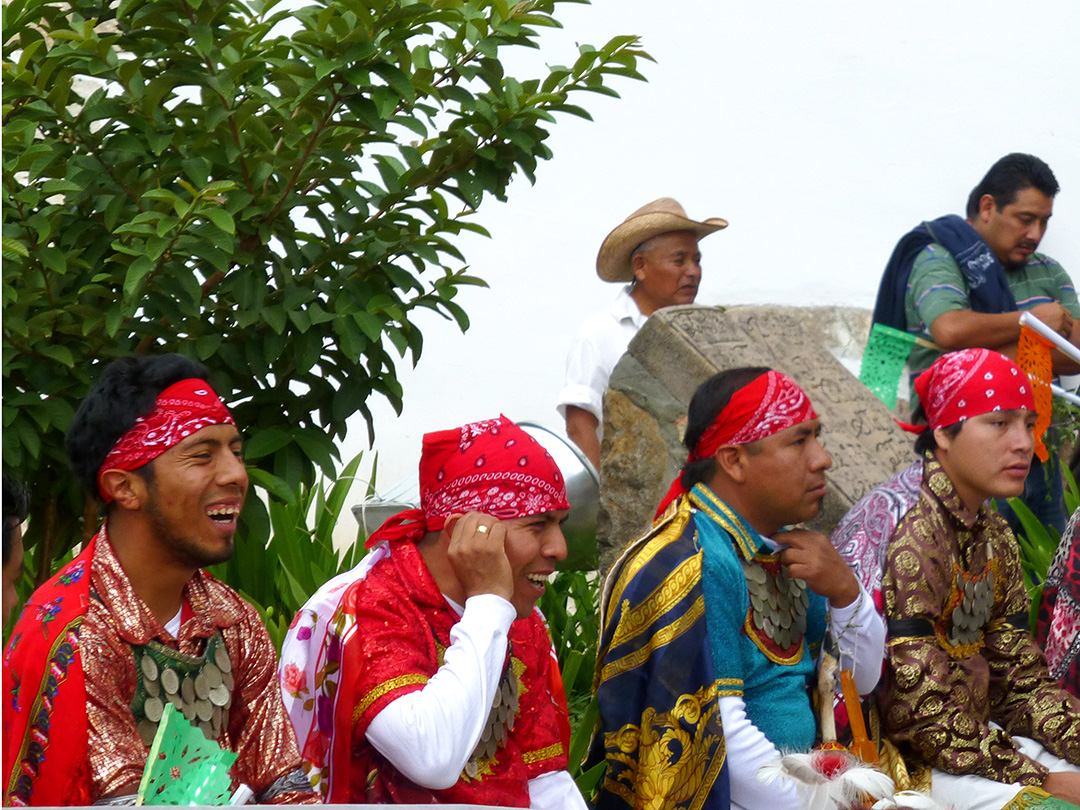
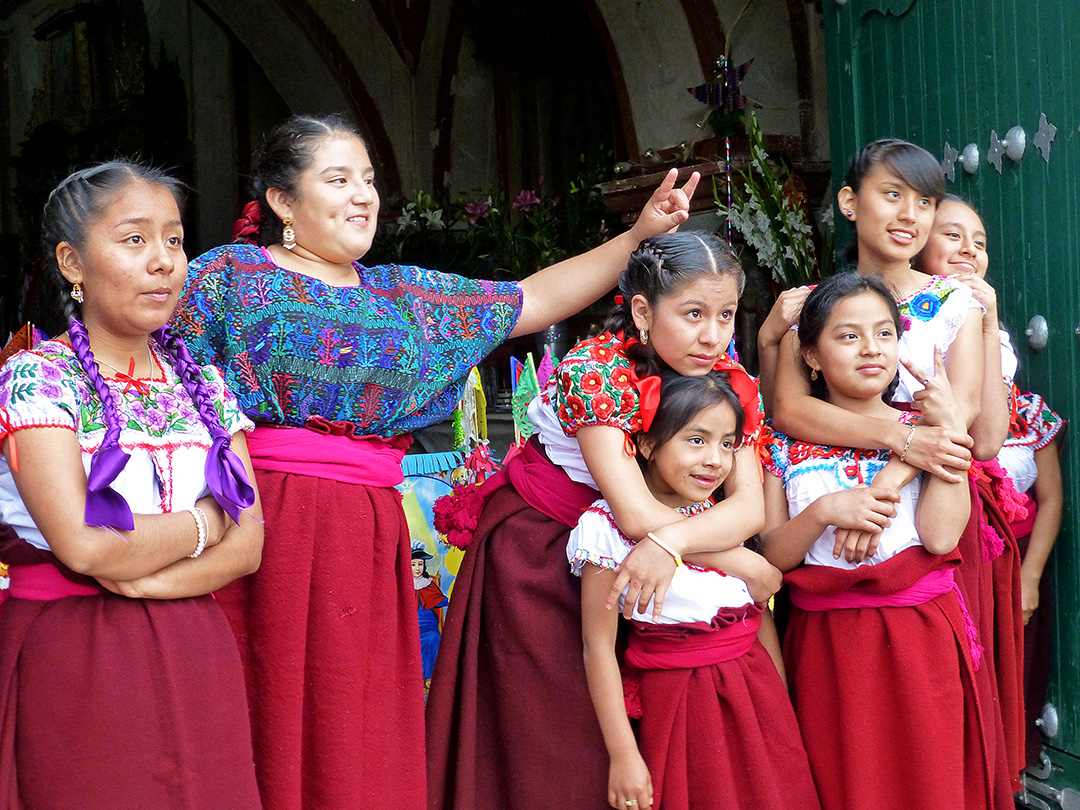
The band led the Danzantes into the plaza in front of the Templo de la Preciosa Sangre de Jesucristo, where they, too, waited.P1130801 (1) P1130804 P1130815P1130819The unmarried women and girls, wearing their traditional red woolen faldas (skirts) and elaborately embroidered blusas (blouses), posed for friends, family, and strangers while waiting for the procession to begin.P1130825 P1130786 P1130791

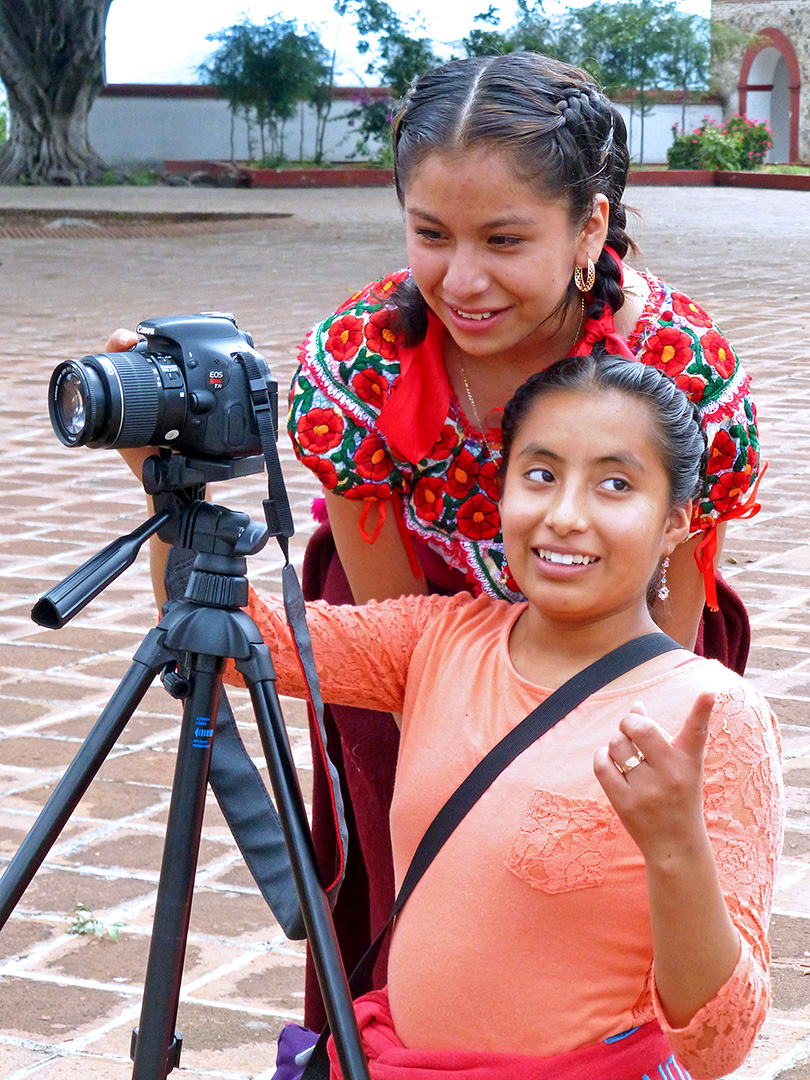
And, Beatriz got her shot!

Read Full Post »

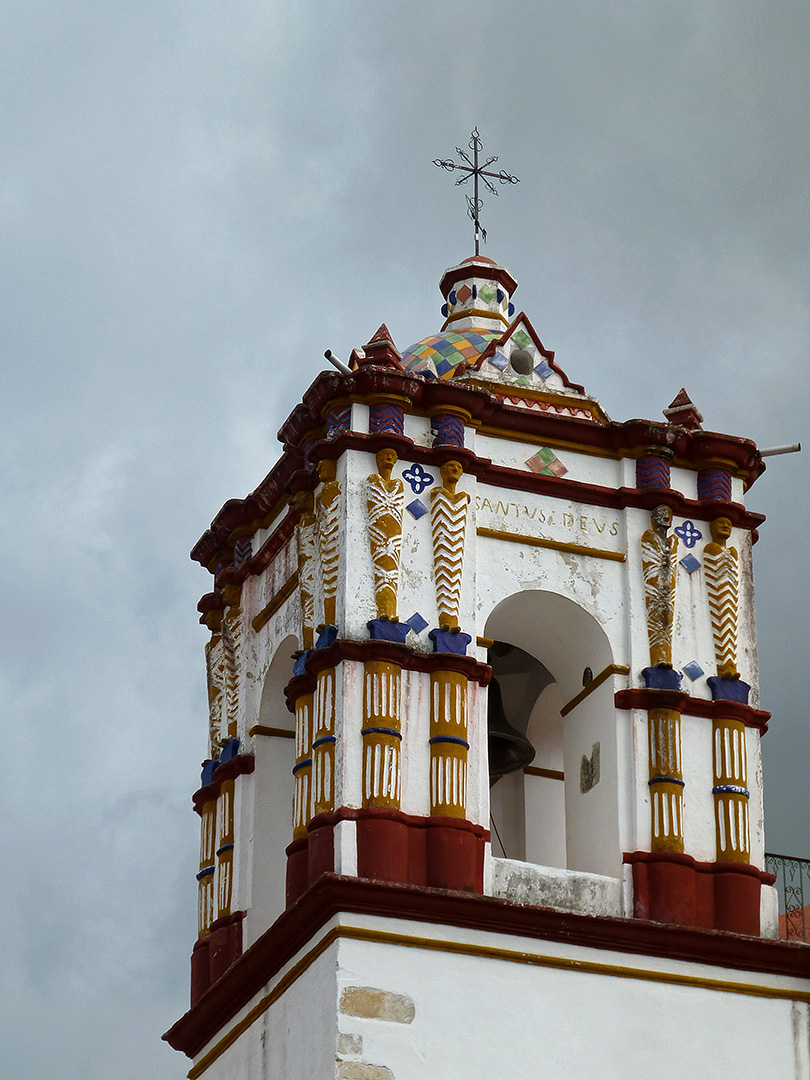
Yesterday, we returned to Teotitlán del Valle for the convite in honor of La Santísima Virgen María de la Natividad (the Sainted Virgin Mary of the Nativity).  Alas, from our point of view, the gods were not cooperating and it threatened to rain on the parade.  The sky surrounding the Templo de la Preciosa Sangre de Jesucristo was getting grayer and darker by the minute and professional and amateur photographers alike were challenged to some up with good shots.

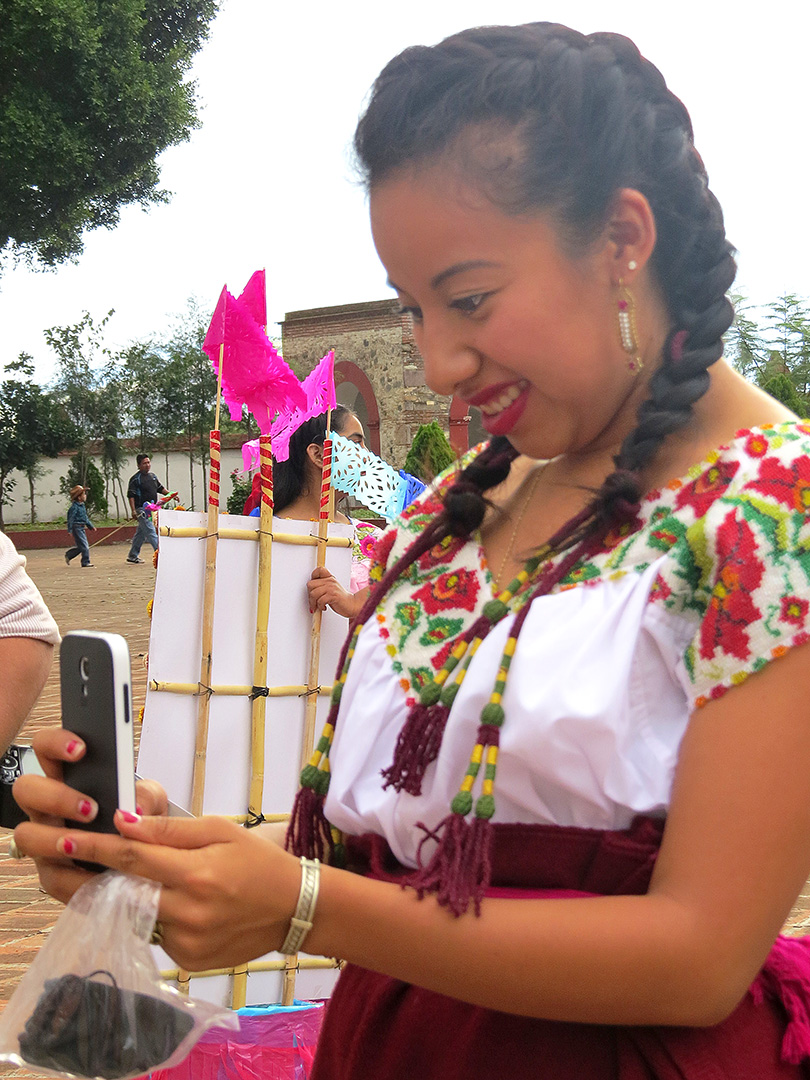
Bell towerThe lovely and accomplished photographer, Luvia Lazo was going to march in the procession this time, but couldn’t resist pulling out her cell phone for a shot or two.  By the way, I recently learned that the earrings she is wearing are traditional and unique to Oaxaca and the design is known as, gusano (worm)!Luvia LazoSome of the Danzantes also whipped out their phones for some photos.  Their 3-year commitment ends in December and I suspect most want to savor these last performances.

P1130823And, then there was the daughter of friends and budding photographer, 12-year old Beatriz Ruiz.  Here she is setting up a shot.

P1130788Doesn’t she look professional?  She’s been traveling from Teoti into the city to take classes at the Centro Fotográfico Manuel Álvarez Bravo for almost two years.  A photograph she took of her two kittens is currently part of a student exhibition at the museum and is included in the slideshow of photos on their website.  Blogger buddy Chris, who has known her since she was very young, has a very sweet blog post about Beatriz and her interest in photography.

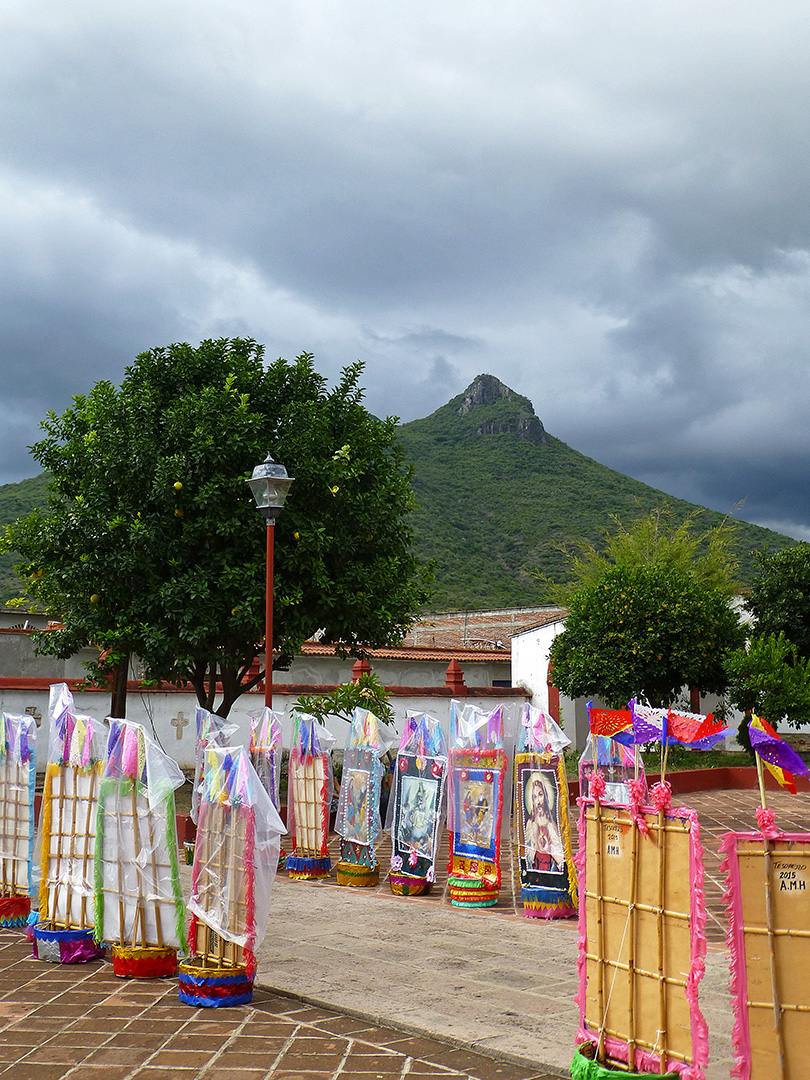
Plastic covered canastasGiven the state of the corn crop, due to lack of rain during this rainy season, there have probably been many offerings and much praying to the gods Cocijo (lightning and rain) and Pitao Cozobi (maiz).  They won the day and the rains did come.  And we, being fair-weather fans, departed.  However, according to one of the Teotitlán del Valle Facebook sites, the show did go on!  We are returning today for the Danza de la Pluma and tonight’s fuegos artificiales (fireworks) and castillo.  Needless to say, we are keeping our fingers crossed!

Read Full Post »

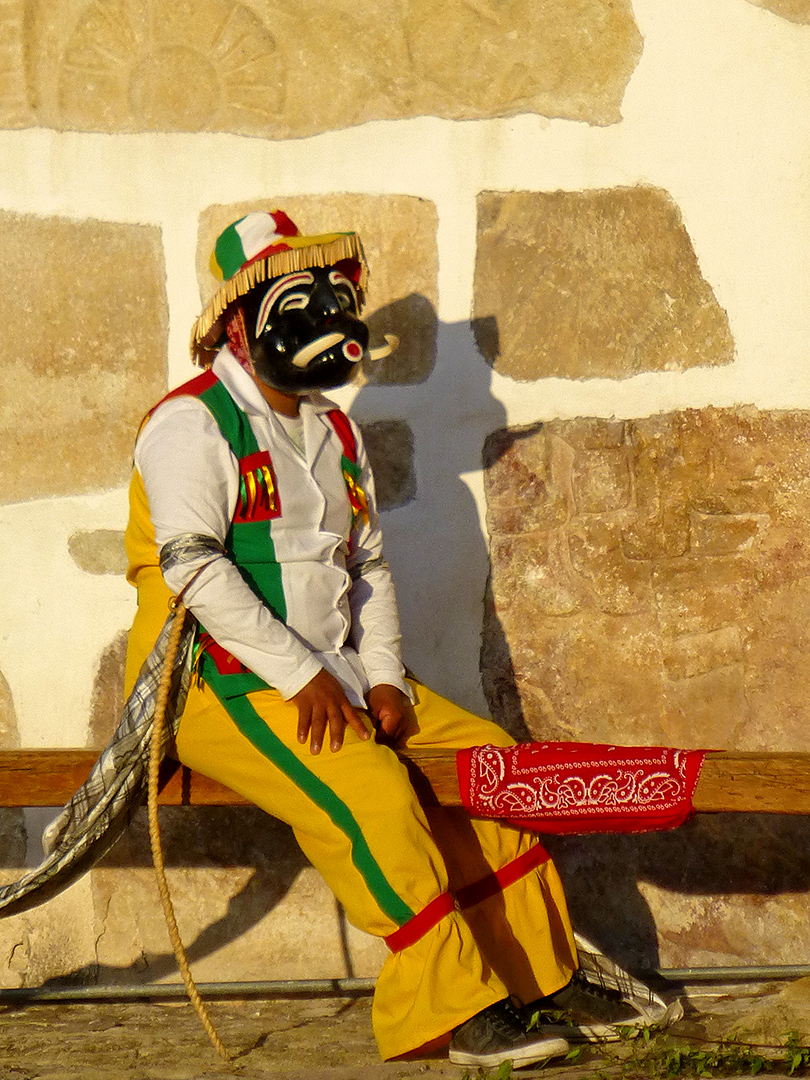
Storm clouds were gathering on Tuesday afternoon, as we drove out to Teotitlán del Valle for this year’s first performance of the Danza de la Pluma.  However, the clouds were chased away and the plaza in front of Templo de la Preciosa Sangre de Jesucristo was bathed and blessed with the light and shadows of the golden hour.

P1100717P1100713P1100725P1100756Ahhh…

(ps)  For a Moctezuma eye view of the dance, check out Chris’s Moctezuma Cam post.

Read Full Post »

Defining the terms…

According to Harrap’s Spanish and English Pocket Dictionary, convite means reception.  However, if I drag my weighty Larousse Standard Diccionario down from the shelf, convite translates to “invitation” or “banquet.”  And, if one turns to Google or Bing translation programs, a convite is a “treat.”

All pretty much agree, the English translation for cochinilla is cochineal.  As Wikipedia explains, “Cochineal is probably from French cochenille, Spanish cochinilla, Latin coccinus, meaning ‘scarlet-colored,’ and Latin coccum, meaning ‘berry (actually an insect) yielding scarlet dye.'”  It has been called, A Perfect Red and was much sought after by Europeans.  Home to said insect is the nopal cactus and guess who and where it was probably first cultivated?  In the valley of Oaxaca by her indigenous people, long before the Spanish set foot on the continent.

Which brings us to last Saturday (September 6) in Teotitlán del Valle, under the watchful eye of el Picacho, the sacred brother/sister mountain, for the convite that precedes the Virgen de la Natividad (Nativity of Mary) festival day, held annually on September 8…

This slideshow requires JavaScript.

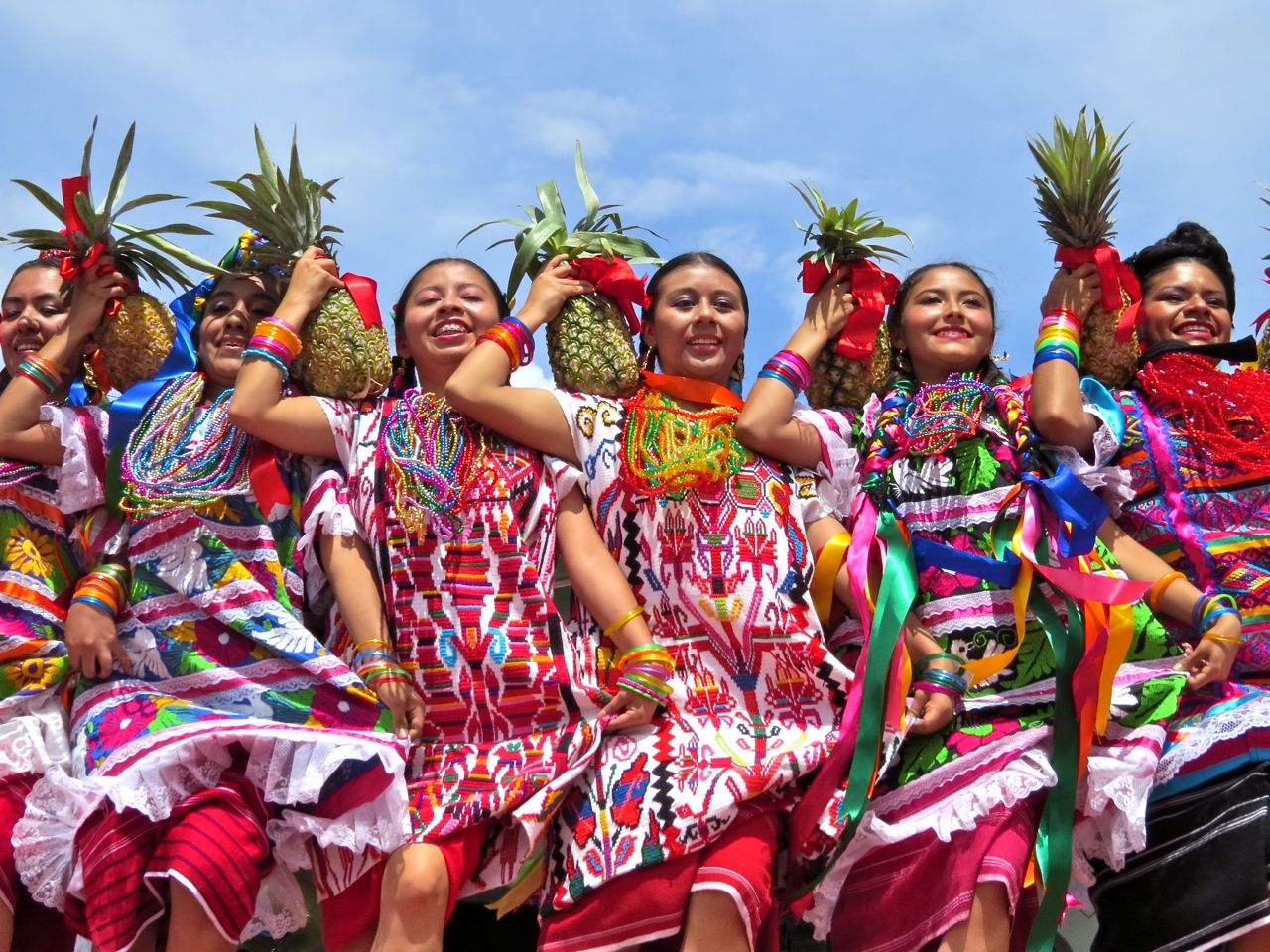
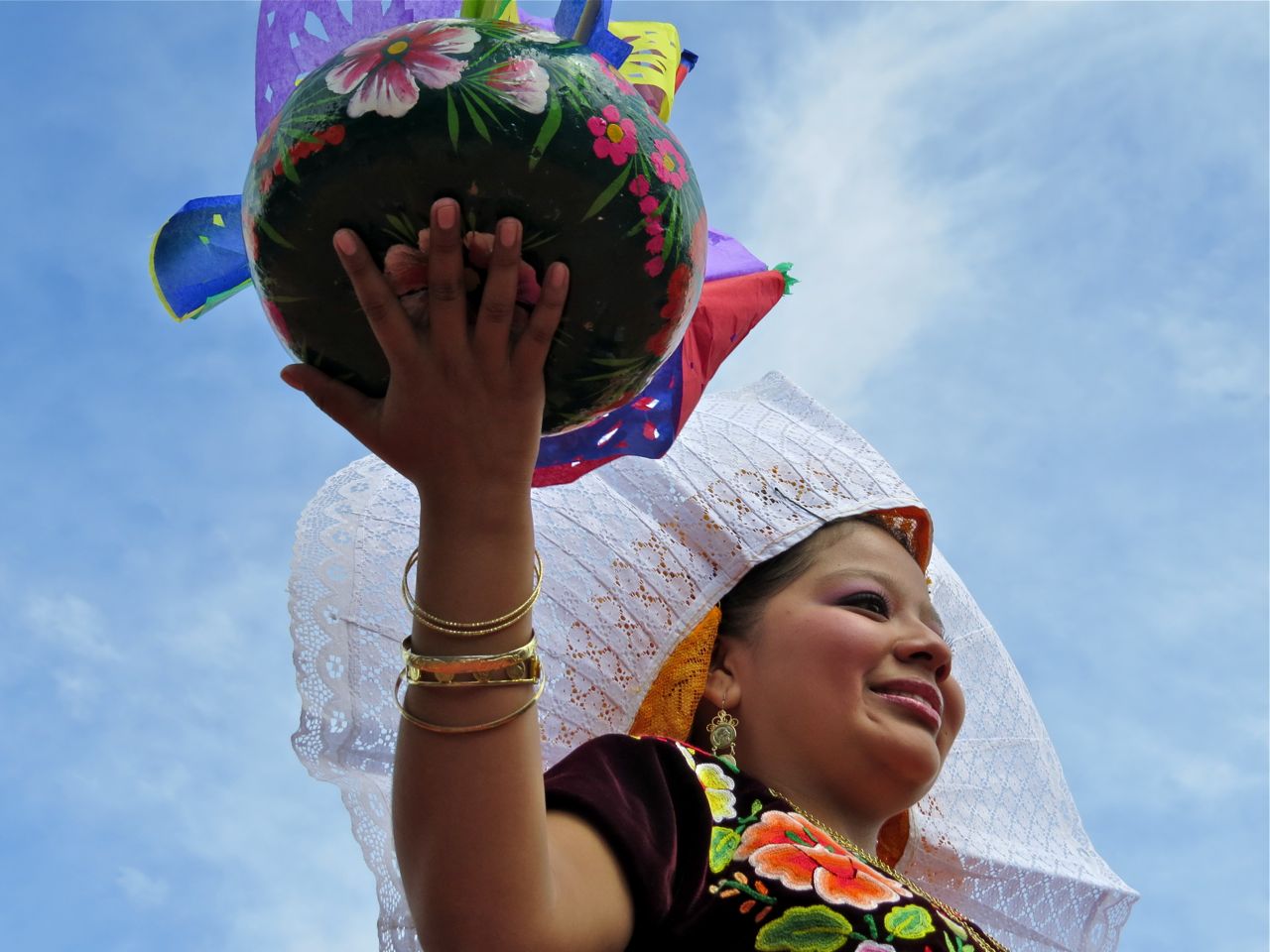
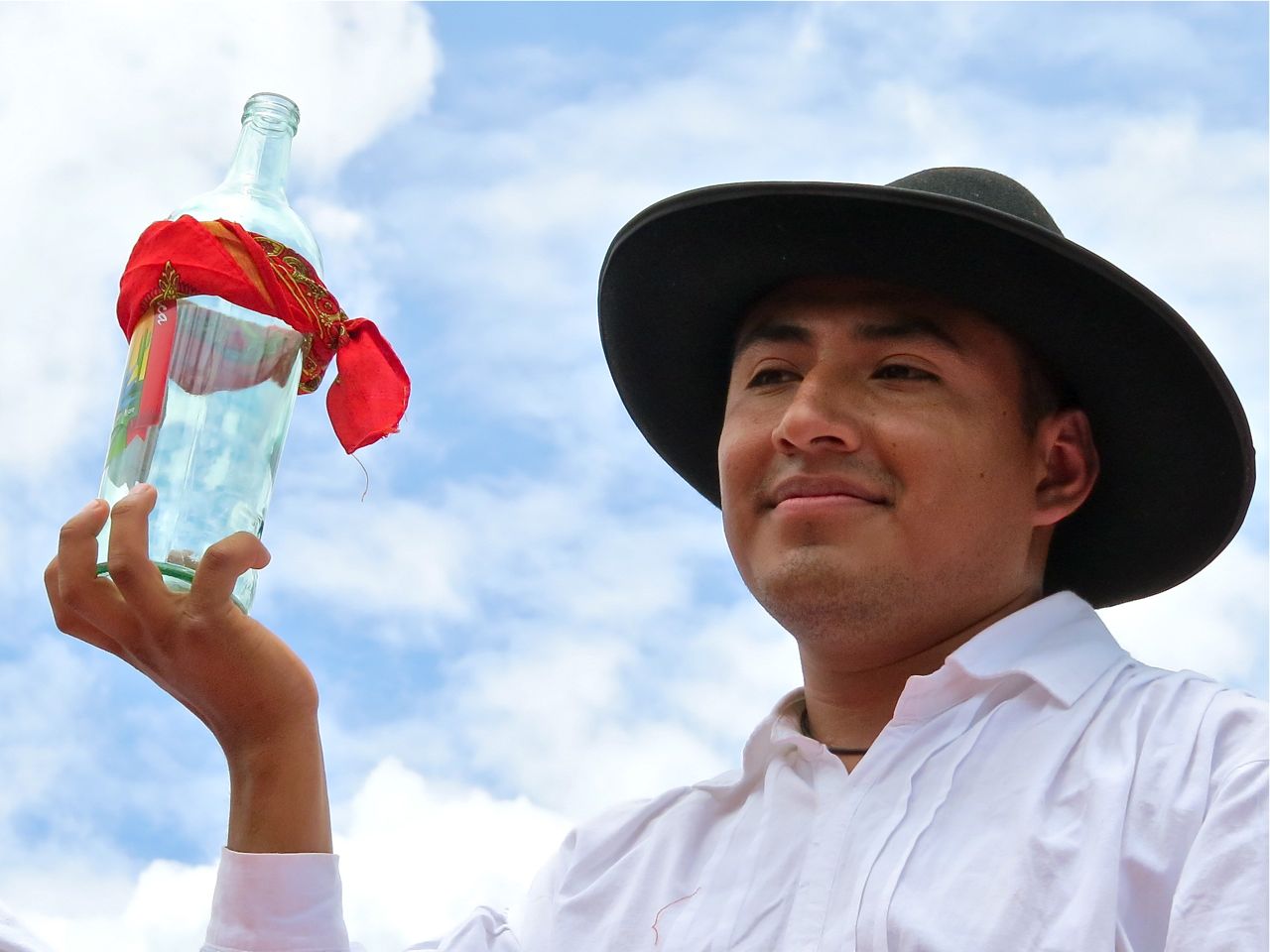
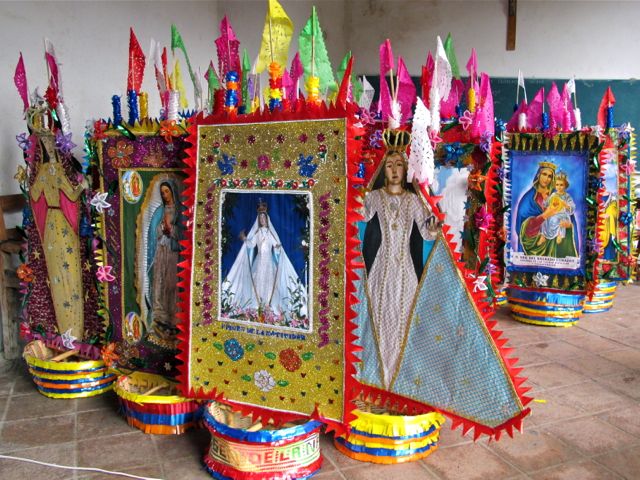
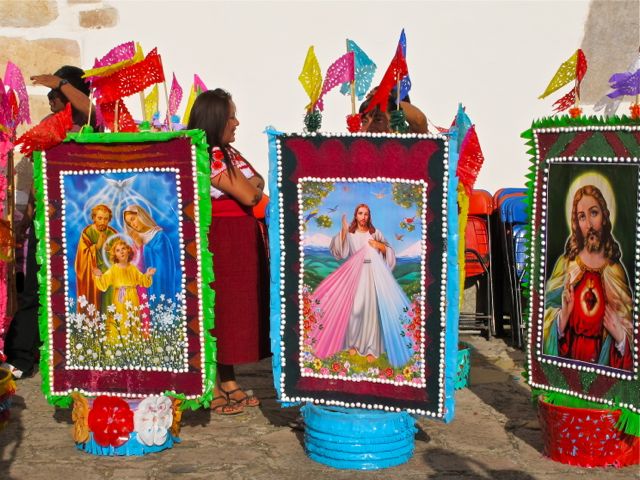
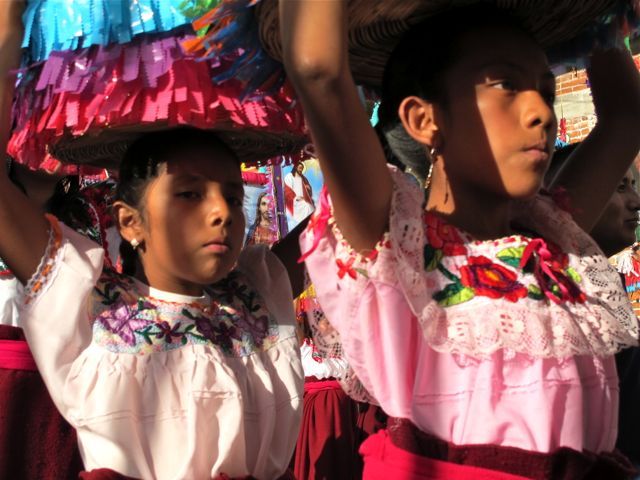
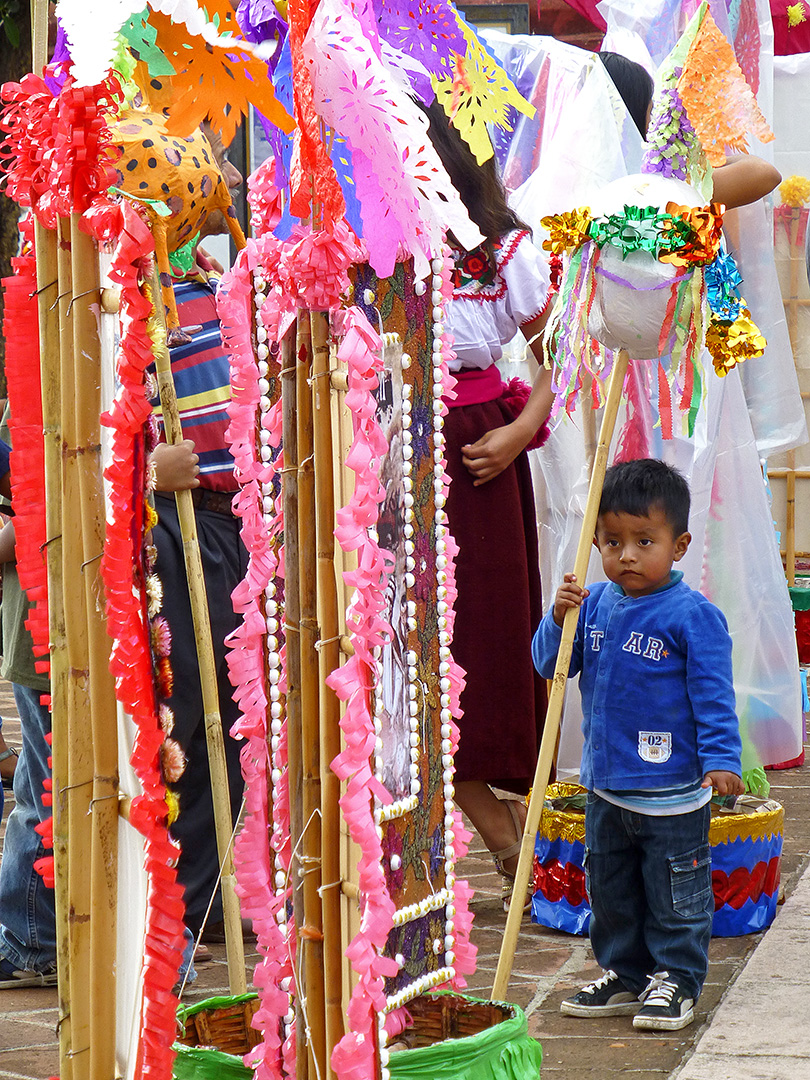
It is the custom in this Zapotec village for the unmarried women of the village to process through the streets two days before this (and a couple of other) important religious festivals, elegantly balancing handmade canastas (baskets), decorated with Catholic and Zapotec imagery, on their heads.  They wear brightly embroidered blusas (blouses) and, in this village known worldwide for its weaving, enredos, hand-woven red wool wrap skirts — the yarn dyed red with cochinilla.  They are accompanied by bands, men carrying enormous (and heavy!) marmotas (cloth globes), little boys carrying poles topped with miniature marmotas, sheep, and airplanes (the significance of the latter is a mystery to me), fearless pirotécnicas announcing the convite’s progress by shooting thunderous rockets into the air, and the dancers who will be performing the Danza de la Pluma in the church courtyard during the following two days’ of festivities.

Borrowing from the definitions above of convite, I would like to think of these processions as a lovely treat, an invitation to the impending fiestas/feast (banquet) days for the saints venerated by the village.  The beauty of the welcoming faces of the young, old, male, and female in the convite provide a warm reception to villagers, visitors, Catholic saints, and Zapotec ancestors, alike.

Read Full Post »
Last Monday, L and I had a leisurely hike up the hill from my apartment to the Guelaguetza Auditorium, sat in stadium seats almost 20 rows up, looking down on the enormous circular concrete stage with the city and mountains providing a picturesque backdrop.

Yesterday, I hopped on a bus, heading for another Guelaguetza performance, this time in Villa de Etla.  However, a bloqueo (blockade) by Sección 22 of the teachers’ union had the bus turning around, doubling back, and taking a circuitous route that eventually wound its way through the narrow streets of Santa Rosa.  Once we got back on the main road, I transferred to a colectivo and arrived in Etla just as the dancing was about to begin — this time on a small temporary wood-plank stage, that seemed to shake with every dance step.  The setting wasn’t quite as spectacular, but, there I was, within an arm’s reach of the dancers!

IMG_5387

IMG_5566

IMG_5497

Danza de la Pluma

Danza de la Pluma


IMG_5640

IMG_5515

Flor de Piña

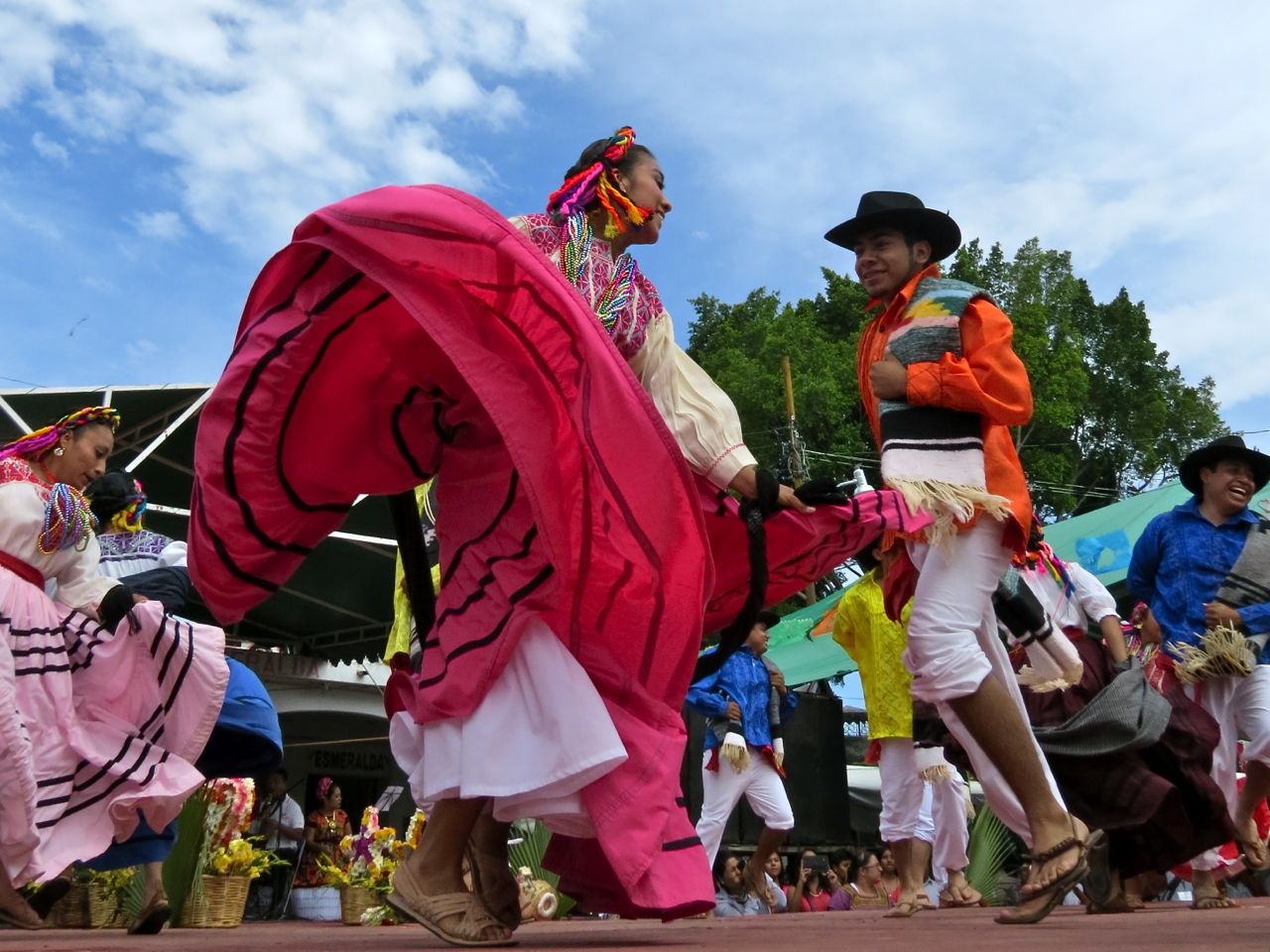
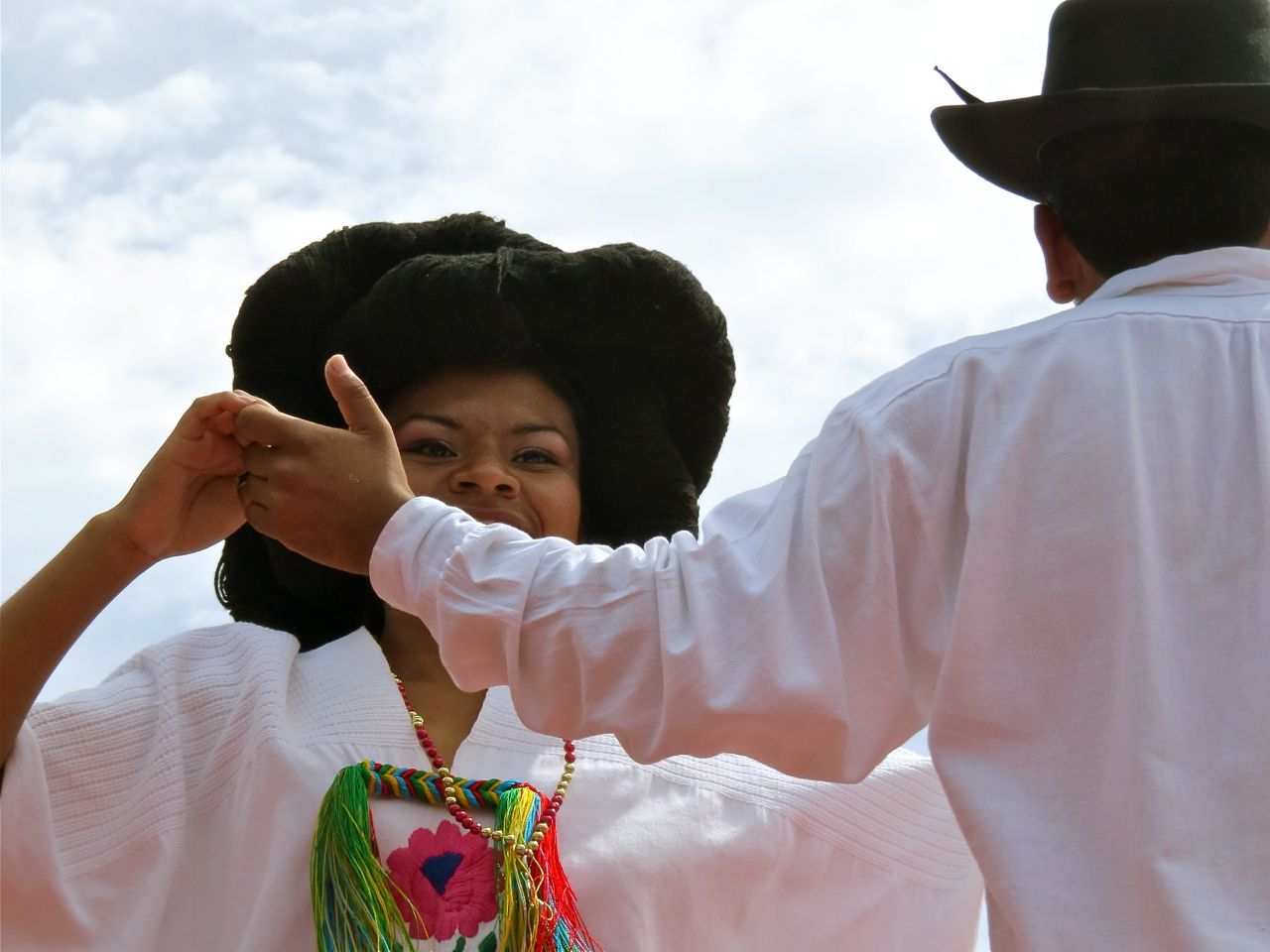
With the exception of the Danza de la Pluma, these dancers are from a folkloric group that performs each of the traditional regional dances.   As you can see from their faces, they dance with as much joy and pride as the delegations from the villages at the big Guelaguetza.

IMG_5432

IMG_5584

IMG_5426

IMG_5582

IMG_5357

IMG_5320

Returning home was its own adventure.  Last week, L and I only had to navigate sidewalks, pathways, and stairs along with the other 11,000 attendees.  Yesterday, Chris (see his Guelaguetza in Etla – 2014 post) gave me a ride to a bus stop where, after about 10 minutes, I caught the bus that would deposit me a half block from Casita Colibrí.  Alas, the best laid plans…  Just before the intersection up to Cerro Fortín, masked maestros (teachers) surrounded the bus, our driver shrugged, opened the doors, and off we passengers got.  It was hot, I was tired, but what else was there to do?  I hoofed it to halfway between the Museo del Ferrocarril (Railroad Museum) and Morelos Park, when another bus materialized, I climbed aboard, giving my feet a much-needed rest, and let the driver navigate the clogged streets that took me back to home sweet home.

It was a fun and frustrating AND exhilarating and exhausting kind of day.

Read Full Post »

Do you remember the Danzantes in training from two weeks ago?  All that practice by folkloric dancers from eight villages in the valleys of Oaxaca, was for last night’s “monumental” opening of the Muestra Internacional de Danza Oaxaca.

The dance festival lasts through next Saturday (April 12, 2014), with events taking place at venues throughout the city, AND all are free!

By the way, I’d received an email notice of the dance festival, but it was the comment, “Hope to see us this coming Saturday” from “the danzante with the orange penacho and green shirt” seen in a photo from my blog post, Speaking of Danzantes, that had me making a special point to attend.  Muchisimas gracias a Abdiel for the tip.  I hope you see this post!

Read Full Post »

Reason number 579 why I love Oaxaca…

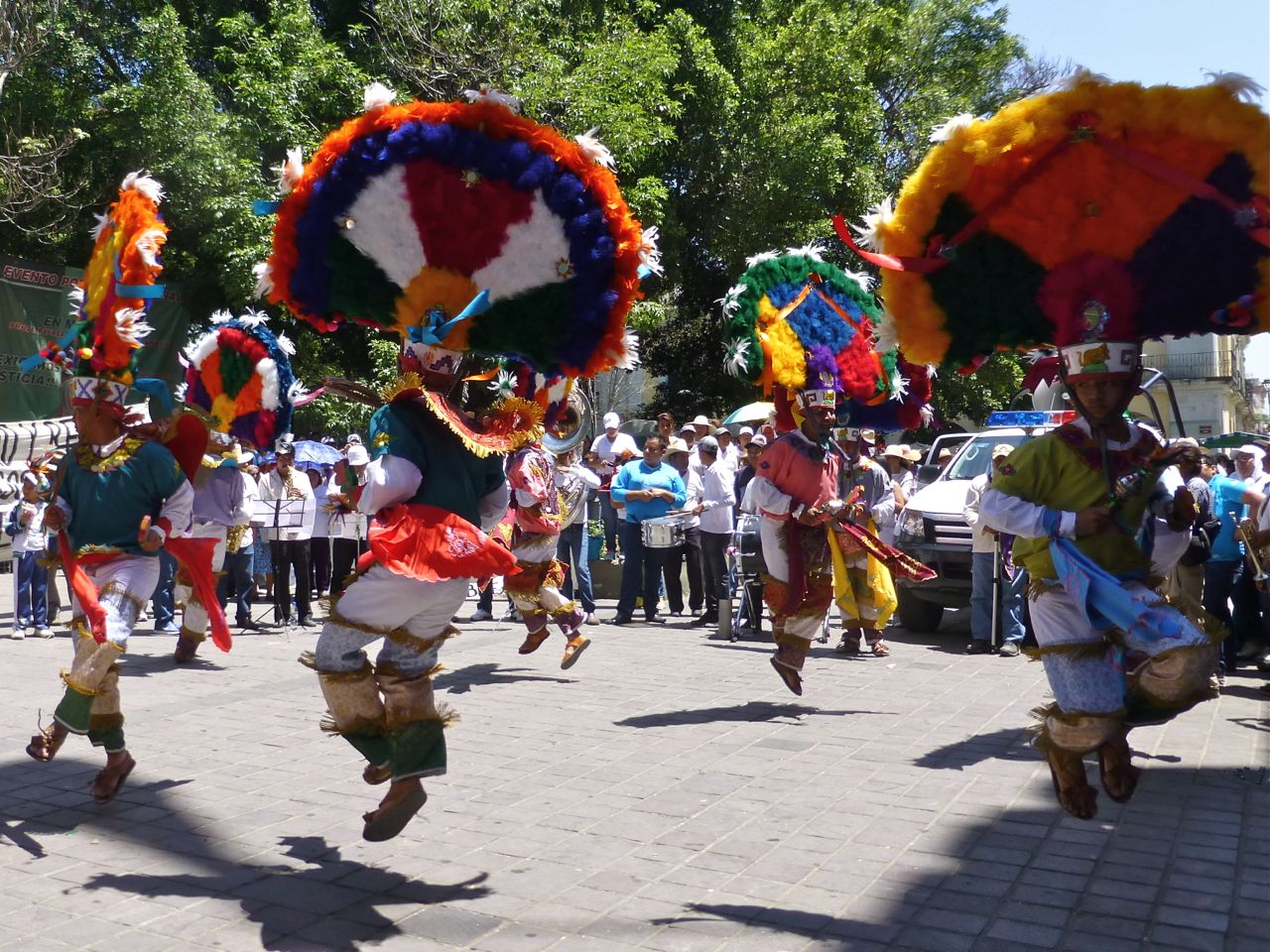
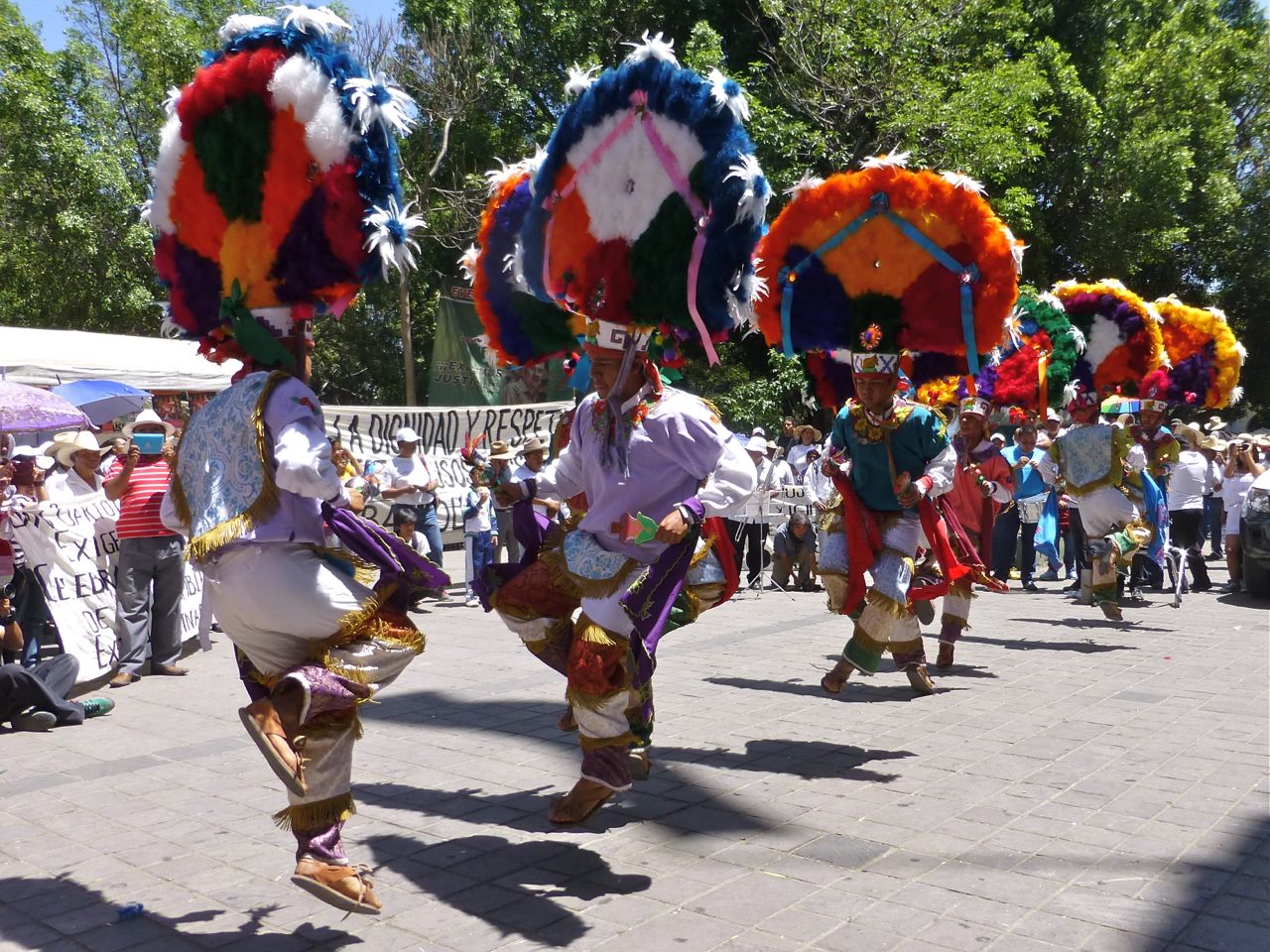
Today was the first day of a way-too-short first time visit to Oaxaca by a couple of California gal pals — an orientation walk through El Centro was the order of the day.  And what did we stumble upon in front of the Government Palace?  Danzantes waiting to perform a couple of the dances from the Danza de la Pluma.

P1020718

They began dancing and I flashed on Saturdays’ blog post, Danzantes in training.  However, these guys definitely weren’t apprentices — they had the steps and jumps down WITH those heavy and seemingly unwieldy penachos on their heads — and the crowd cheered.

P1020715

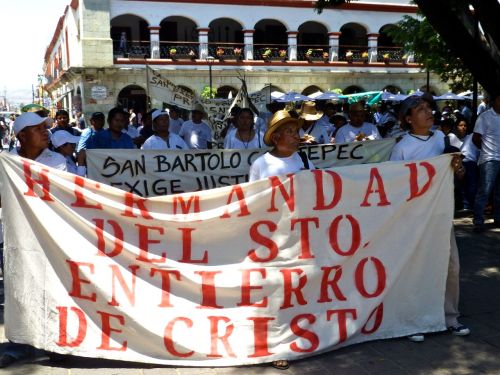
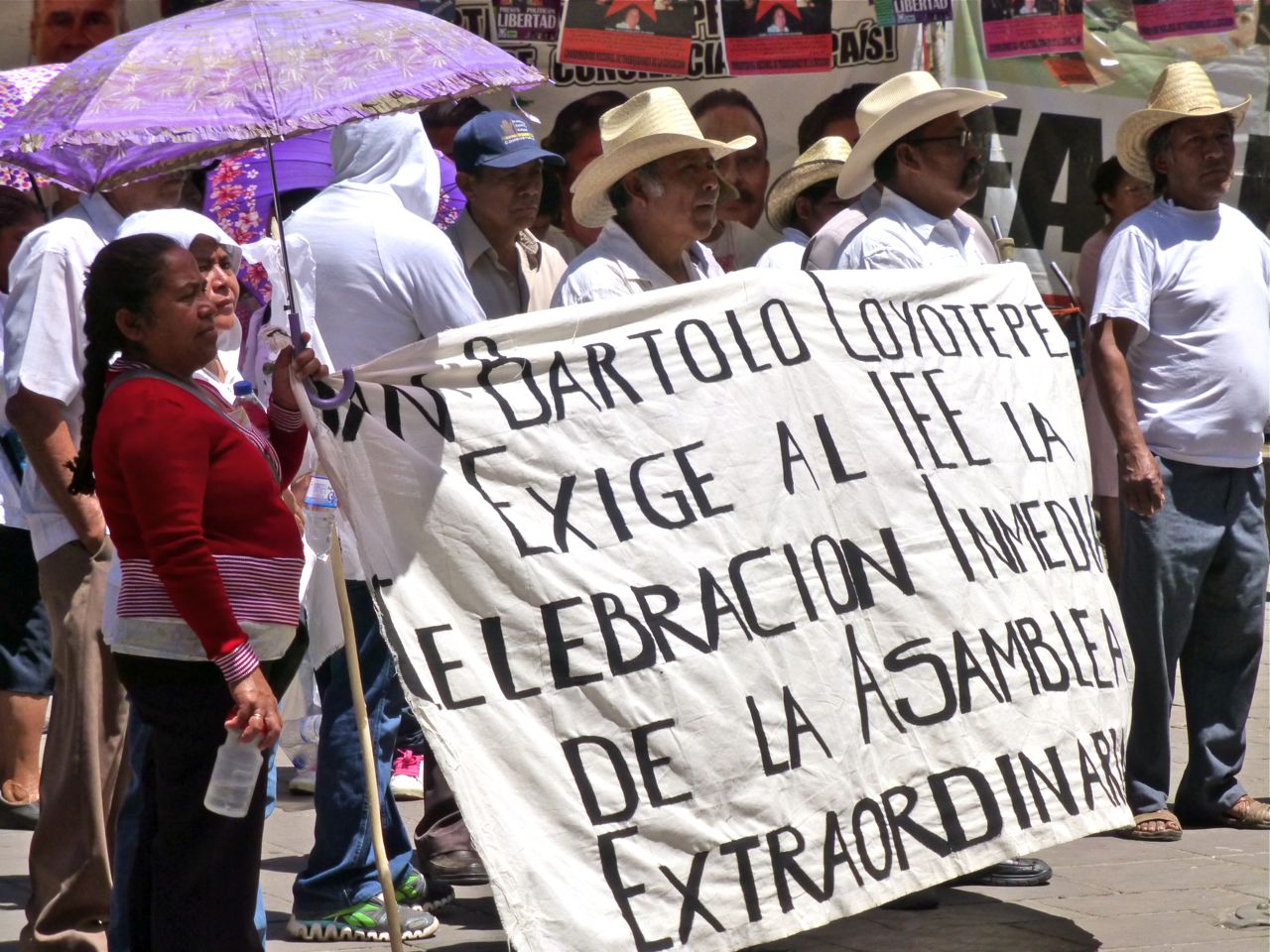
The danzantes and most of their gathered audience were from San Bartolo Coyotepec, about 15 km south of the city.  It’s a village known for the artisans who make black pottery.  However, along with the band and dancers, there were banners and protestors.

P1020723

According to this article (in Spanish), “they arrived at the presidential palace in the main square of the city to demand the replacement of the elections because the process was considered seedy and does not represent the will of the community.”

P1020702

Culture and politics… I couldn’t have arranged a more quintessential Oaxaca experience, if I had tried.  And my friends, what did they think?   They loved it all!

Read Full Post »

This morning, as I was getting ready to go to my local mercado, I heard the unmistakable sounds of the Danza de la Pluma (feather dance).  I’ve seen it often enough in Teotitlán del Valle to know the music.  While it is performed throughout the valley and is always one of the big hits during July’s Guelaguetza, Teotitlán del Valle is one of only two villages where it is performed as a religious ritual during their three major yearly festivals.

As I approached the Plaza de la Danza, the music got louder and louder.  Once there, I looked down to see 75 – 100 dancers in jeans and t-shirts practicing one of the (forty-one) dances of the Danza de la Pluma.  They were danzantes in training from various folkloric groups in the valley of Oaxaca.

As you can see from the video, the footwork is complex and the steps require a lot of stamina.  And, just wait until they put on the penachos (headdresses)!

I often wonder and worry that the traditional dances will eventually be lost.  Today’s encounter with these young dancers gave me hope.

Read Full Post »

Yippee, I’m back in Oaxaca!  Last night’s flight was smooth, on-time, and mostly empty.  I have to admit to always getting a goofy grin as the little Embraer comes in over the lights of the city and the smile continues through immigration and baggage claim.  It usually falters and turns to a grimace when I have to hoist my 50 pound suitcase up onto the x-ray conveyor belt.  However, last night the grin returned when I pressed the “to search or not to search” button, got the green light, and was able to proceed directly to the booth to buy my colectivo ticket —  60 pesos for door-to-door service to the historic district ‘hood.  An easy return to home.

Unpacking done, late this morning I walked down to my local mercado to restock the larder with some basics:  2 perfect avocados, 1 pristine white onion, a bunch of unblemished small and sweet bananas, half kilo of quesillo (Oaxacan string cheese), and 6 freshly made tamales (mole, rajas, and verde).  I’d actually asked for 4, but my regular tamale gal threw in 2 extras.  How often does that happen in el norte?   A welcoming return to home.

This afternoon, blogger buddy Chris and I drove out to Teotitlán del Valle for the performance of the Danza de la Pluma.  We stepped up onto the plaza of Templo de la Preciosa Sangre de Cristo and it was like emerging into the middle of a technicolor movie.  We’ve been there countless times, but today we were blown away by the scene.  Mother Nature had conspired to use her enhance wand on the sky, clouds, sun, and costumes.   A spectacular return to home!

The recent trip to California was to sign papers finalizing the sale of the house my grandparent’s built in 1957.  Prior to relocating to Oaxaca, it had been my home for 30 years, where I’d raised my kids and made many wonderful memories.  Needless to say, selling it was an emotionally challenging ordeal and it has engendered a lot of thinking about the notion of “home.”

However, these past 24 hours have reinforced my belief in bumper-sticker wisdom seen many years ago, “When you live in your heart, you are always home.”  It’s good to be home!

Read Full Post »

The convite (covered in the Uplifting post) is only one of the traditions of the patronal festival of La Preciosa Sangre de Cristo.  During the five days of the celebration, the church is filled with floral arrangements and believers stream in and out clutching flowers; the Danza de la Pluma (with Moctezuma, Cortez, Malinche, Doña Marina, danzantes, and soldados) is performed several times; and the cargo holders of the community preside, are honored, and presented with fresh fruits, vegetables, sacred herbs, and beverages.

This slideshow requires JavaScript.

Sunday was another amazing day in Teotitlán del Valle.  And I haven’t even mentioned the tacos and tamales we devoured during our three visits this past week!

Read Full Post »

Late yesterday afternoon, we returned to Teotitlán del Valle for the convite (parade) of unmarried young women and girls, a part of the annual patronal festival of La Preciosa Sangre de Cristo.  The sun was shining, the rains of two days before were nowhere to be seen, and the sacred mountain, El Picacho, gracefully, but commandingly, presided as the soldados and danzantes entered the church courtyard.

Soldados and danzantes with the mountain in the background

Bands also arrived to take part…

Band with tuba in front; mountain in background

Canastas (baskets) were lined up, ready to be carried…

Canastas with images of the Virgen Mary lined up.

3 canastas with images of Jesus

Canasta with Virgen de la Navidad woven into the design

The young men of the village gathered…

Young men sitting on a ledge

Young men in profile

Family and friends awaited…

Women standing and facing down the street

And then the young unmarried women and girls, the stars of the evening, raised the canastas over their heads…

Young women and girls in red skirts and white blusas carrying canastas on their heads lined up and

3 young women carrying canastas on their heads

Close-up of 2 young women carrying canastas on their heads

Balancing the canastas, they processed from the courtyard, down several long and cobblestone blocks, turned left, and headed back up another street to where they had begun, to be greeted by proud family and friends, who had gathered to acknowledge and celebrate the young women and girls of Teotitlán del Valle.

For some inexplicable reason, we never cease to feel moved and uplifted by this ritual.

Read Full Post »

« Newer Posts