Feeds:
Posts
Comments

Archive for the ‘History’ Category

Fascinating and revealing… from Upside Down World.  I encourage you to read the full article.

Defying the Myth of Native Desolation: Cultural Continuity in Oaxaca
Written by Kathleen Melville
Friday, 09 December 2011 15:56

Woman grinding masa on stone matate

“There is no remedy, and the Indians are coming to an end.” – Don Felipe Huamán Poma de Ayala, 1615 (quoted in Restall, 100)

Despite the passage of nearly four hundred years, Huamán Poma’s dismal pronouncement remains the sad ending to many popular narratives of the conquest. In classrooms throughout the United States, students learn that the arrival of Columbus spelled the end of Native American civilization and that the Spanish conquest obliterated indigenous culture and society in the Americas. As Matthew Restall notes in “The Seven Myths of the Conquest”, this pervasive “myth of native desolation” (102) obscures the strength and vitality of indigenous people throughout history and into the present.

In Oaxaca, Mexico, the lives and work of indigenous people belie the myth of native desolation and attest to thousands of years of continuous, evolving culture. In July, over 30 educators from the United States convened in Oaxaca for a summer institute funded by the National Endowment of the Humanities. Our goal was to better understand the histories and cultures of indigenous people in the region so that we might help illuminate and preserve them through our teaching. With unit plans that we designed and shared, we hope to disturb and diminish the myth of native desolation and to enrich our students’ perspectives on native culture.

<snip>

Globalization and transnational corporations also pose a significant threat to indigenous cultural continuity. Artisans in Oaxaca complained that Asian companies have been mass-producing textiles and wood carvings abroad and then undercutting the tourist market locally. As documented in several articles on this site, the agricultural corporation Monsanto aims to expand its reign into Oaxaca and eliminate small maize farms like the Vicente family’s. Drug cartels, their own breed of transnational organization, also jeopardize indigenous culture by increasingly luring young people into lives of violence far from home. These giants make for formidable foes in the fight for cultural survival, but the indigenous communities of Oaxaca have faced formidable foes in the past. From the Aztec conquest to the Spanish conquest to the present day, indigenous communities in Oaxaca have endured and evolved, defying the myth of native desolation and defining a culturally sustainable future for themselves.  [Full article]

(FYI:  I just had first-hand experience with the threat cheap imports pose to the livelihoods of Oaxaca’s artisans.  I do all my Christmas shopping in Oaxaca (so much more enjoyable than hitting the malls in the USA) and purchased backscratchers for stocking-stuffers that “looked” like they were made from the ubiquitous carrizo found anywhere a trickle of water is found in Oaxaca.  However, there they were in a bin at one of the chain drug stores here in el norte!  I’m thinking they were made in China.  Wood carvers, potters, and weavers, the conversation is the same; business is down and these creative and talented folks are being forced to return to work in the fields.)  — casitacolibrí

Read Full Post »

On December 18, Oaxaqueños celebrated the feast day of the Queen of Oaxaca, La Santísima Virgen de La Soledad (Virgin of Solitude).  There are several minor variations to her story, but there is no doubt that in the State of Oaxaca, she is venerated in a manner similar to the Virgin of Guadalupe and is carried through the streets of the city during many religious celebrations.

Virgen de La Soledad being carried through the streets with plain purple cape

Virgen de La Soledad in her traveling clothes

According to one legend:  In 1620 a mule train bound for Guatemala camped outside the city of Oaxaca discovered an extra mule which did not belong to anyone in the group. The mule refused to move and when prodded rolled over and died. When the pack it carried was opened, it was found to contain the statue of the Virgin of Soledad. Taking this as a sign from heaven, the inhabitants built first a shrine, later a church and finally the imposing basilica which stands today on the spot where the statue first appeared.

Another story:  a muleteer from Veracruz in route to Guatemala noticed he had one too many mules in his pack upon his arrival in Oaxaca. Outside the San Sebastian hermitage, the mule collapsed under the burden it was carrying. All attempts by the muleteer to get it back on its feet were futile; so to avoid punishment he notified the authorities. When he lifted the load off the mule, it got up and died instantly. The burden was inspected, and they found an image of the Virgin accompanied by Christ on it, along with a sign that said, “The Virgin by the Cross.” Faced with this momentous event, Bishop Bartolome Bohorquez ordered a sanctuary built in honour of the divinity.

Still another legend:  a heavily laden burro of mysterious origin appeared outside of town in 1534, fell to the ground, spilling its load next to a rock (still onsite) containing the beautifully carved Virgin (thought to be carved in Guatemala or the Philippines) and a chapel was built on the spot. However, apparently there was an adobe shrine to the Virgin of Solitude atop Cerro Fortín as early as 1532 — and the rock may have even been moved from the mountain in 1617 to the current site (immediately to the right, along the wall as you enter).

She became the patron of not only the city but the entire state, as well as of the mariners who sailed to and from her ports. She wears a purple velvet cape, and her vestments are encrusted with pearls, 600 diamonds, and she wears a 4-lb gold crown.

Virgin of Solitude with purple cape encrusted with pearls and diamonds

Virgen de La Soledad her glass enclosed home at the Basilica

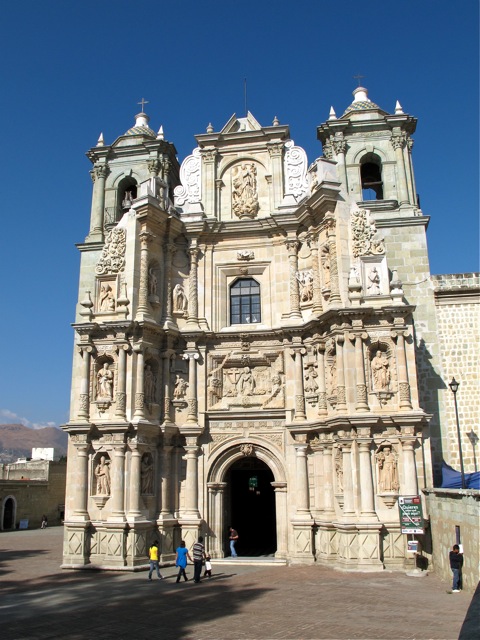
She resides in the church dedicated to her, the Basílica de Nuestra Señora de la Soledad.  Construction began in 1682, it was designed by Father Fernando Méndez, sanctioned by the Viceroy Tomas Aquino Manrique de la Cerda, and consecrated in 1690 by Bishop Isidro Siraña y Cuenca.  The current baroque style facade was built between 1717-1719 and is unusual because it faces east (Photos are best in the AM).  It was built with the green cantera and a pinkish stone, used in the facade.  If one looks carefully, several ways in which the indigenous masons and carpenters introduced their own “pagan” symbology and pantheon into the wood and stone are in evidence.

Facade of the Basílica de Nuestra Señora de la Soledad

East facing facade

It was intentionally built with low spires and towers, to better withstand earthquakes.  The atrial courtyard is enclosed and fitted with two simple access portals, one facing south, and the other east. The latter leads to the Socrates Garden (currently undergoing a major renovation) and the Plaza de la Danza.

References:

Read Full Post »

Yesterday’s trip to Zaachila began with the archaeological site, located right above the Church of Nuestra Señora de la Natividad.

View of Church of Nuestra Señora de la Natividad from Zaachila archaeological site

Zaachila, named for the pre-Columbian Zapotec king, Zaachila Yoo, was the last Zapotec capital, following the demise of Monte Alban.  It was eventually conquered by the Mixtecs, who were still there when the Spanish conquistadors appeared on the scene.

Entrance to Zaachila archaeological site

First excavated by archaeologist Roberto Gallegos in 1962, only a small fraction of the site has been uncovered.  However, visitors have access to two small tombs in mound A.

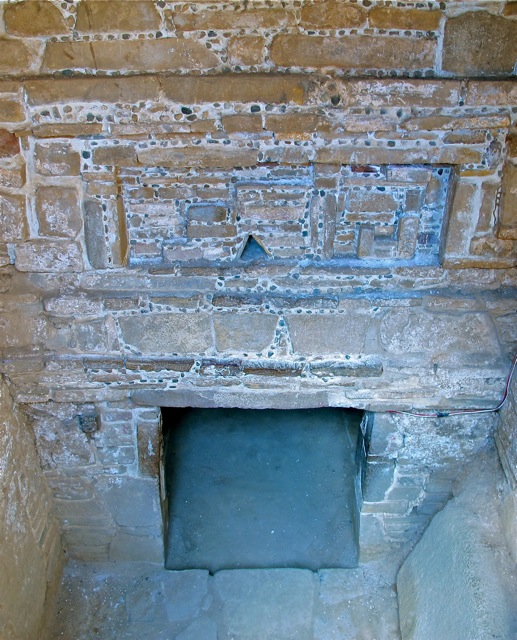
Facade of Tomb 2

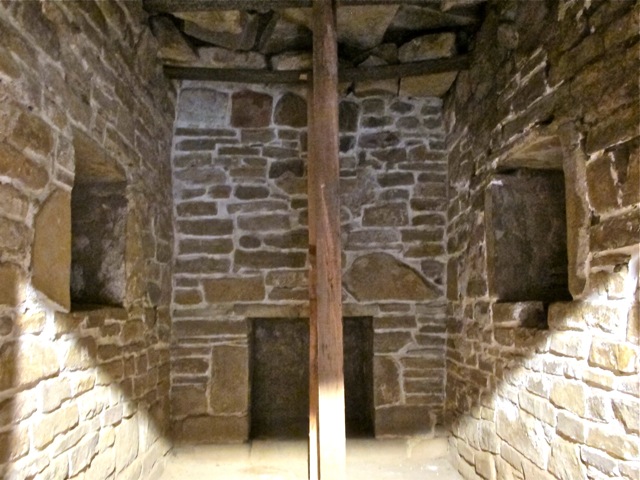
Tomb 2 is the much less decorative of the two, though it apparently once held jewelry and other valuable offerings, many, of which can be found in the Instituto Nacional de Antropología e Historia in Mexico City.

Interior of Tomb 2

According to the brochure available for purchase (10 pesos), Tomb 1 was constructed in the epoch III-A (250-650 CE) and reused in the Post-classic era (950-1521 CE).

Facade of Tomb 1

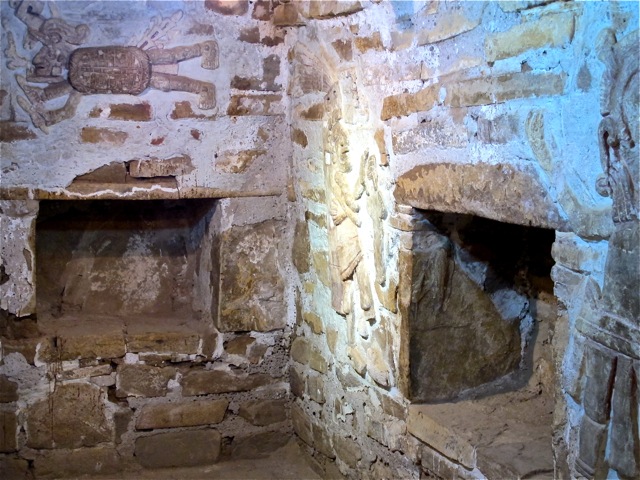
Seven figures adorn the walls of Tomb 1.

Figure of Yahui on far wall of Tomb 1

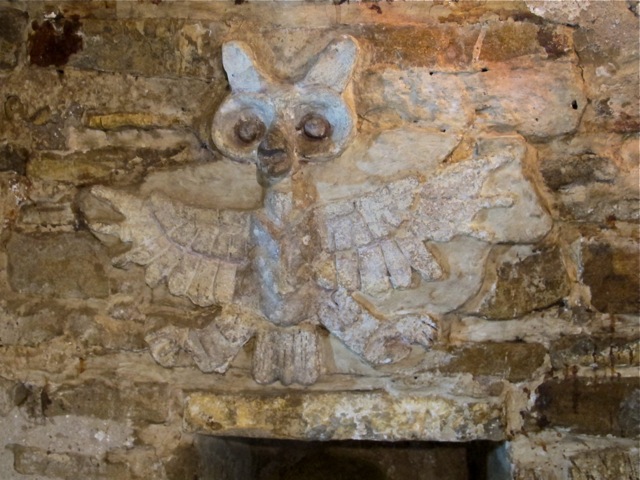
Figure of Búho (owl) on left wall of Tomb 1

Figure of Bújo (owl) on right wall of Tomb 1.

Figure on right wall of Tomb 1

Figure of Bezelao (a supreme god) on left wall of Tomb 1

Figures of 5 Flower and 9 Flower are also depicted but I couldn’t lean far enough over the barrier to photograph them.

The site recently reopened after being closed for several months.  Work continues…

Piles of stones under trees

The site is open Monday through Sunday from 8 AM to 6 PM.  A small museum collects the 31 peso admission fee, displays photos of many of artifacts removed from the site and on display in Mexico City, reproduction of parts of the Codex Zouche-Nuttall (housed in the British Museum), and photographs from other archaeological sites in Oaxaca.

For more information on the Mixtec Group Codices, take a look at the Foundation for the Advancement of Mesoamerican Studies website.

Read Full Post »

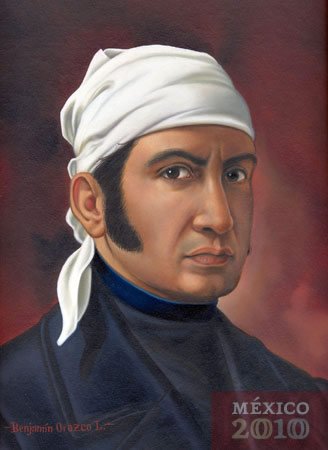
196 years after his execution, Generalísimo José María Morelos y Pavón has returned to Oaxaca.  Filming is underway on the film tentatively titled “Morelos,” chronicling the last three years of the life of one of Mexico’s most revered heroes

José María Morelos y Pavón painting

Costumes hang ready for quick costume changes.

Men's costumes hanging on rolling rack.

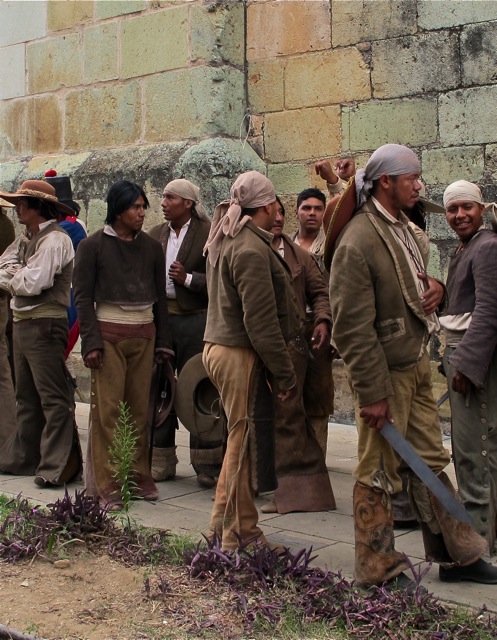
Mexican independence fighter extras await the Spanish language equivalent of ACTION!

Male actors in freedom fighter costumes stand on sidewalk

Serious cameras are ready to film the action.

Large professional film camera

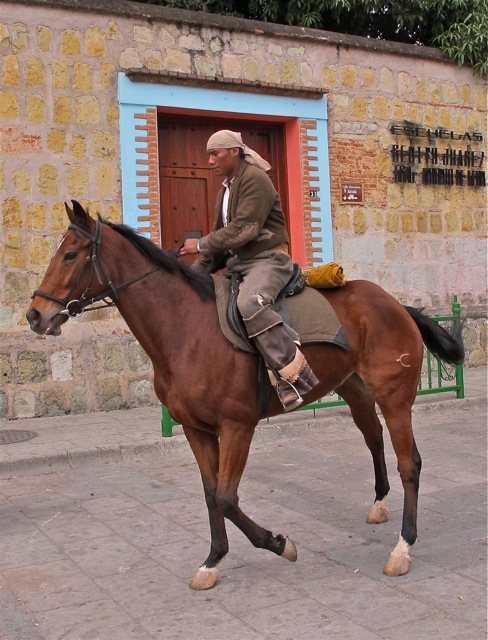
Horses and their riders have taken over the surrounding streets.

Man in freedom fighter costume riding a horse

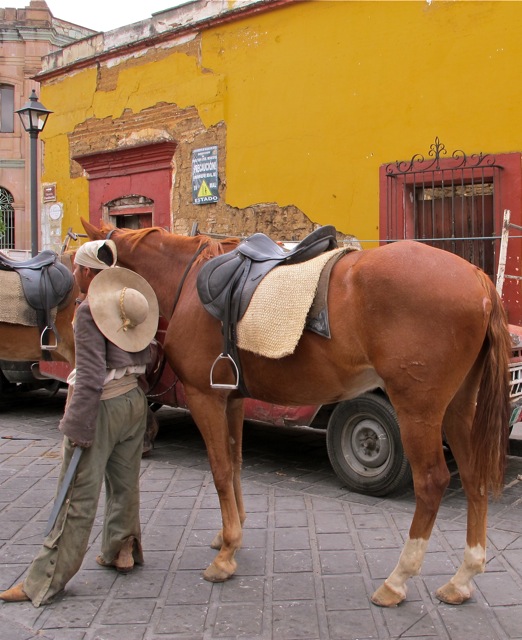
Like all movie sets, it’s, hurry-up and wait!

Independence fighter standing next to horse.

Muy guapo, is all I can say!  The horses… the horses…

Independence fighter walking towards camera, horse in background

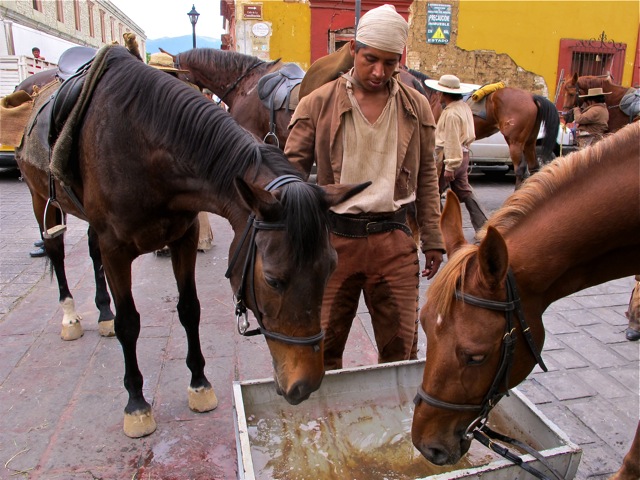
You can lead a horse to water…

Independence fighter in between two horses drinking water from a trough

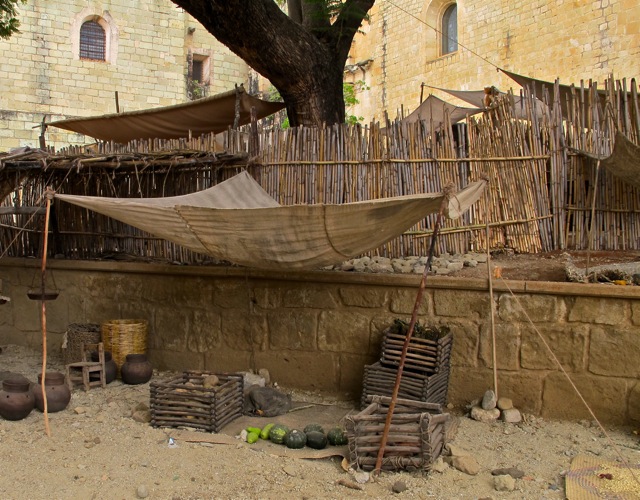
The set designer has taken Constitución back two hundred years…

Camp site

The newly paved cobblestone street and sidewalks have been covered in dirt and buildings and even trees have been aged.

Dirt sidewalk and aged looking buildings and tree.

Though the film covers a time in the life of Morelos that is distinguished more by politics than military action, “dead bodies” line Constitución.

Three "dead" dummies on dirt street

“Morelos” is directed by Antonio Serrano and stars Dagoberto Gama, in the title roll.  Filming is also scheduled to take place in Veracruz, Tlaxcala, Puebla, Hidalgo, Morelia (named for Morelos), and Mexico City.   It is produced by Luis Urquiza and los Estudios Churubusco, with support from Conaculta, Imcine, and the governments of the states.

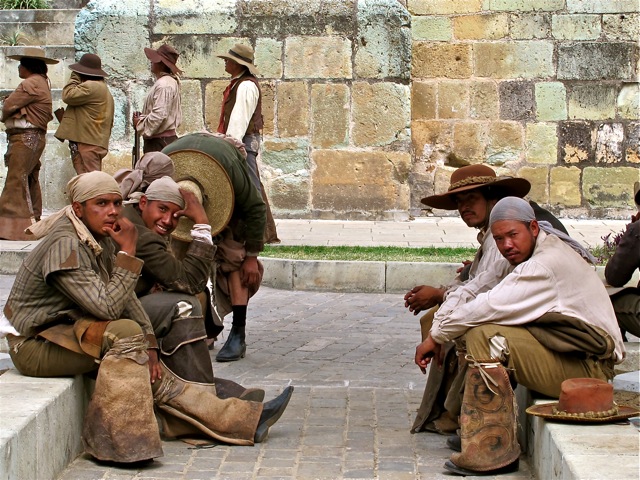
Freedom fighters sitting and waiting

I imagine it’s release will be a major event… can’t wait!

Read Full Post »

Today is Día de la Raza (Day of the Race) in Mexico. A stroll around town revealed…

This slideshow requires JavaScript.

Like almost everyday in Oaxaca, La Raza are working incredibly hard!

Read Full Post »

On the morning of September 16, the sidewalks of Trujano, leading to Oaxaca’s Zócalo, were lined with people.  Traffic was blocked on Trujano and many of the side streets, as contingents of soldiers, state police, municipal police, transit police, fire fighters (bomberos), paramedics, schools, and charros gathered to participate in the desfile cívico militar (civic and military parade) marking 201 years of independence from Spain.

This slideshow requires JavaScript.

Like most patriotic parades throughout the world, the military component dominated the civic.  And here, even the school contingents march in military fashion.  The use of Mexico’s military is controversial, not to mention the roles played by the state and municipal police in Oaxaca.  Onlookers clapped for various contingents, but I didn’t catch the subtleties of support, other than the big hand the bomberos received.

This was the other side of the green, white, and red fervor, and I’ve spent a lot of time contemplating what I thought of the parade and what I wanted to say.  However, as a guest in this country, I’m going to let the photographs speak and readers may interpret them as they wish.

Read Full Post »

Octavio Paz, writing about the Mexican independence movement in The Labyrinth of Solitude:

The eighteenth century prepared the way for the Independence movement.  In fact, the science and philosophy of the epoch… were necessary intellectual antecedents of the Grito de Dolores.  [p. 118]

…the insurgents vacillated between Independence (Morelos) and modern forms of autonomy (Hidalgo).  The war began as a protest against the abuses of the metropolis and the Spanish bureaucracy, but it was also, and primarily, a protest against the great native landholders.  It was not a rebellion of the local aristocracy against the metropolis but of the people against the former.  Therefore the revolutionaries gave greater importance to certain social reforms than to Independence itself:  Hidalgo proclaimed the abolition of slavery and Morelos broke up the great estates. 

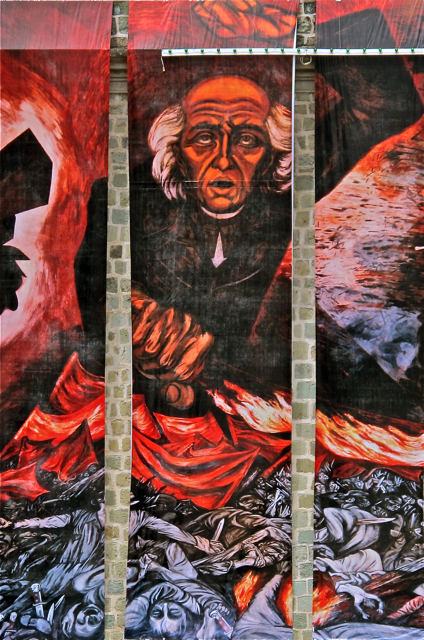
Banner on Oaxaca's Municipal Building; reproduction of mural by José Clemente Orozco of Miguel Hidalgo y Costilla.

The Revolution of Independence was a class war, and its nature cannot be understood correctly unless we recognize the fact that unlike what happened in South America, it was an agrarian revolt in gestation.  This is why the army (with its criollos like Iturbide), the Church and the great landowners supported the Spanish crown… [p. 123]

Paz, Octavio.  The labyrinth of solitude, the other Mexico; Return of the labyrinth of solitude; Mexico and the United States; The philanthropic ogre.  New York:  Grove Press, 1985

Read Full Post »

In Mexico, from small pueblos (villages) to large ciudades (cities), most all have calles (streets) named Morelos and Hidalgo — some, like Oaxaca, have more than one, which can be very confusing when trying to find an address, to say the least!  The names Vicario and Ortiz de Domínguez aren’t nearly so commonplace.

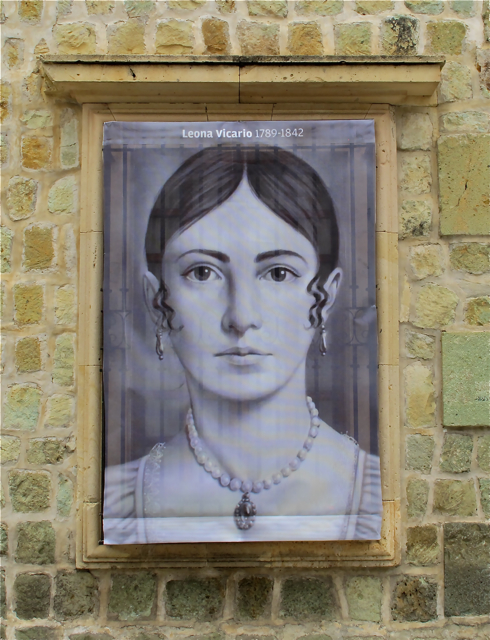
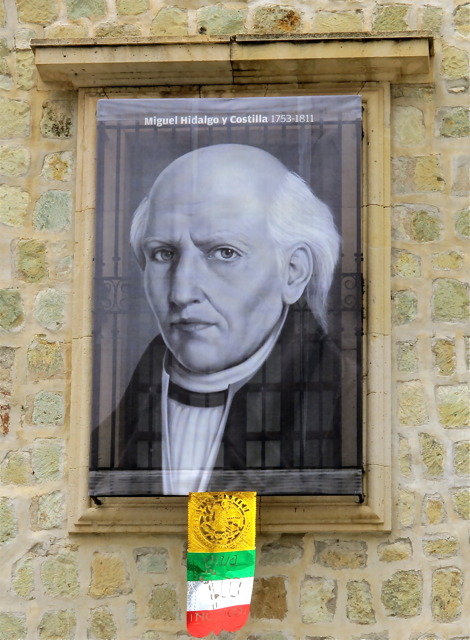
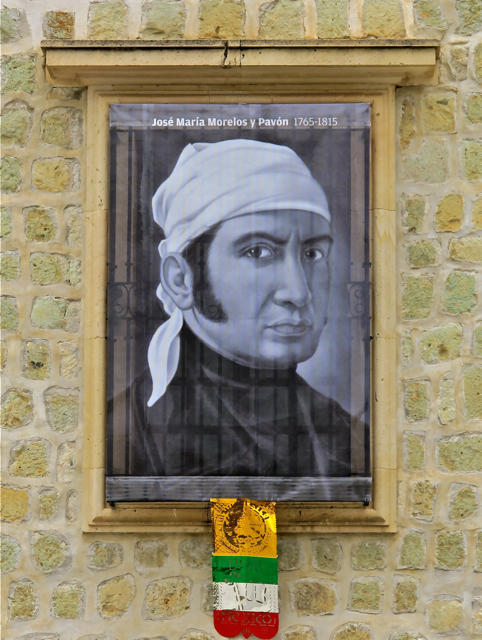
However, two of the women (among countless unsung heroines) who played a major role in the struggle for independence from Spain were Leona Vicario and Josefa Ortiz Domínguez.  In a fitting tribute to their importance to the Independence movement, their giant portraits currently hang on the outside wall of the Municipal Building overlooking the Plaza de la Danza, along with those of Miguel Hidalgo de Costilla and José María Morelos y Pavón.

Portrait of Leona Vicario

Leona Vicario, 1789-1842

Leona Vicario provided money and medical support, helped fugitives, and served as a messenger.  After escaping from prison, she helped her husband, Andrés Quintana Roo, plan strategies on the battle field.

Portrait of Josefa Ortiz de Domínguez

Josefa Ortiz de Domínguez, 1773-1829

Confined to house arrest after a co-conspirator betrayed the upcoming plans for revolt by the Independence movement, Josefa Ortiz de Domínguez was able to smuggle a message out, warning of the betrayal.

Portrait of Miguel Hidalgo y Costilla

Miguel Hidalgo y Costilla, 1753-1811

As a result, in the early morning of September 16, Miguel Hidalgo y Costilla rang the church bells in Dolores, rallying the rebels, and issuing, what has come to be known as Grito de Dolores (Cry of Dolores), the signal to begin the War of Independence from Spain.  It is an event that is recreated all over Mexico at 11 PM on September 15.  (See the link re why it isn’t done in the early morning of September 16.)

Portrait of José María Morelos y Pavón

José María Morelos y Pavón, 1765-1815

The last portrait on the wall is that of José María Morelos y Pavón, of Afro-mestizo heritage, and, like Hidalgo, also a priest.  He was a capable military commander who assumed leadership of the independence movement after Hidalgo was executed.  For a local connection, on November 25, 1812, in what is thought of as a brilliant victory, Morelos, along with the support of Mariano Matamoros and Miguel Bravo, took the city of Oaxaca.  Fittingly, the streets Morelos and Matamoros run parallel and M. Bravo intersects them just a few blocks from the Municipal Building and the Plaza de la Danza.

(ps)  These portraits are painted directly on fine mesh screen… thus, the window bars showing through.

Read Full Post »

El Grito de la Independencia is coming!  Vendors of everything green, white, and red have set up their carts on Oaxaca’s busiest street corners and Mexican flags are flying everywhere.

A little slice from yesterday’s grocery shopping trip around town…

This slideshow requires JavaScript.

Definitely more to come!


Read Full Post »

Currently at the Museo Nacional de Antropología

Spanish conquest still “open wound in Mexico,” curator says

Banner for La Conquista a sangre y fuego

Mexico City, Mexico (NTN24 Wires) – The Spanish conquest continues to be “an open wound in Mexico” five centuries later, the curator of the National Museum of Anthropology’s “La Conquista a sangre y fuego” (The Conquest by Fire and Blood) exhibition, Francisco Gonzalez-Hermosillo, said.

“There have been all kinds of reactions, but, especially, there are many who leave very hurt after seeing the bloody images that speak of the violence there was during that period in history,” the researcher told Efe.

The paintings, codices and arms that make up the exhibition show the cruel methods used by the Spanish to impose their rule on Mesoamerica, Gonzalez-Hermosillo said.

The exhibition was organized to mark the 490th anniversary of the conquest of the Aztec city of Tenochtitlan, where Mexico City is situated, by Spanish conquistador Hernan Cortes.

The goal of the exhibition is not to “change perceptions of history” but to give the Indians’ view of the conquest because it is “so seldom taken into account,” Gonzalez-Hermosillo said.  [Read full article]

Fifty-three percent of Mexico’s indigenous population lives in Oaxaca (Sipaz report).  One can only hope Oaxaca is on the itinerary for this traveling exhibit.


Read Full Post »

Op-ed piece from that appeared on Miller-McCune.com.  Grrr… anger-inducing, frustrating, and disappointing to this librarian!

How Google Disrespected Mexican History

Opinion: Anything can happen when Google gets involved in digitizing national treasure troves of archived information, warns a frustrated scholar.

Excerpt from article:

Paper of Record is a Canadian website that boasts of building the world’s largest searchable archive of historical newspapers. It was conceived, appropriately enough, in a Mexican restaurant in Ottawa by R. J. (Bob) Huggins. Paper of Record is, to my knowledge, the most extensive searchable archive of Mexican historical newspapers in the world. There are more than 150 logged newspapers, some dating as far back as the 1840s. Paper of Record became, outside of the National Newspaper Library of Mexico, the single most important resource of its kind for scholars like me working in Mexican history — in Mexico, the United States, anywhere. With an excellent user interface and powerful search engine, Paper of Record made a vast collection of what had been nearly unusable and generally inaccessible primary sources searchable and exploitable, at no charge to users. For some scholars, especially those of us doing commercial, political or economic history, Paper of Record became literally indispensable.

Then Google bought it.  [Read full article]

Link:  National Newspaper Library of Mexico (Hemeroteca Nacional de México) mentioned above.Masthead from Hemeroteca Nacional de México

Read Full Post »

This review just popped up on my Google Mexico News:  Straight-shooting documentary details history of U.S.-Mexico relations,  should be required viewing for two distinct American audiences: U.S.-born Latinos who came to know the stoic faces of Mexican revolutionary icons solely from seeing them painted on the sides of Mexican-oriented grocery stores, and anyone who wants a peek at the roots of 100 years’ worth of U.S.-Mexico relations.

Iconic stencil of Emiliano Zapata on a building wall in Oaxaca

The 2-hour PBS documentary, The Storm That Swept Mexico,” premieres on May 15, 2011 in the USA.  I’ve got to get a friend to DVR it for me!

Read Full Post »

Oaxaca is old!   As a cursory glance at Mixtec and Zapotec history and their descendants will tell, this valley has been settled for thousands of years.

Dancers

However, yesterday the city celebrated its founding as a colonial city, marking the 478 years since Spanish settlers (their bloody way paved by Hernán Cortés and his conquistadores) successfully petitioned the Queen of Spain for a land grant of 1 square league.  The colonists had already established their own town on the site of Huaxyacac, renamed it Antequera (after an old Roman city  in Spain) and received a Royal Charter from King Charles I of Spain.  However, Cortés had successfully gotten the entire Valley of Oaxaca (hundreds of thousands of acres) declared as his own private marquisate and, his greed knowing no bounds, kept trying to evict the colonial townspeople.  By obtaining the queen’s charter, this end-run around Cortés insured the rights of the townspeople to the land.   Thus, April 25th continues to be celebrated as Oaxaca’s birthday.

City elite

Saturday night I had a ringside seat on my terrace for fuegos artificiales (fireworks) — first emanating from the vicinity of the ex-convento of Santo Domingo (6 blocks to the NE), followed by those sent up into the night sky from La Basílica de Nuestra Señora de la Soledad (AKA:  my backyard).  Sunday morning, I was awakened at 6:05 to the sounds of Lady Soledad’s bells chiming — more musical than the usual clang-clang-clang — for a full 5 minutes, along with the rat-ta-tat-tat of firecrackers, adding exclamation points!

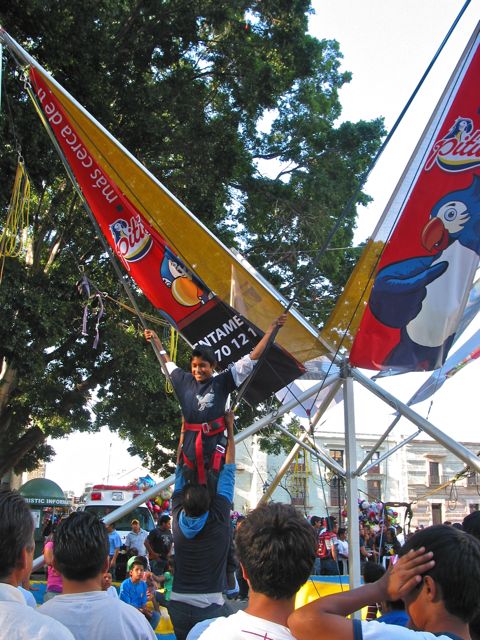
Bungee contraption -- ready for lift off.

I went down to the Zócalo a little before 6pm — the calenda (parade) hadn’t yet arrived, but the place was teeming with people (mostly all Mexican).  Payasos (clowns) were in abundance, but the big hit was a bungee cord contraption suspended above a trampoline.  A guy would harness a kid to the cord, jump up and down on the trampoline with his arms around said kid and once momentum was achieved, let go and send the kid sling-shot-like up into the sky.  Yikes, the way several of the kids were flaying around, I thought someone was going to break a back.

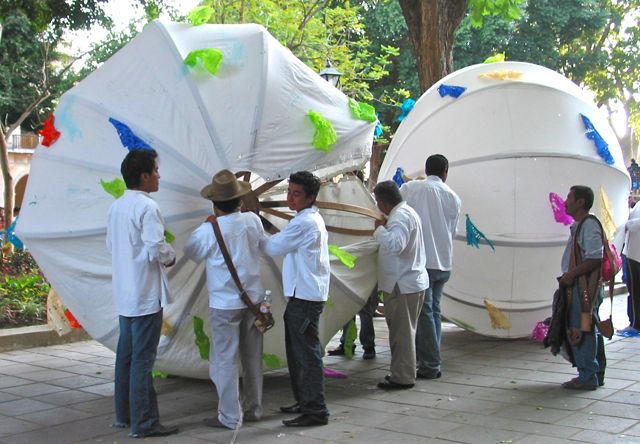
Marmota leading the way

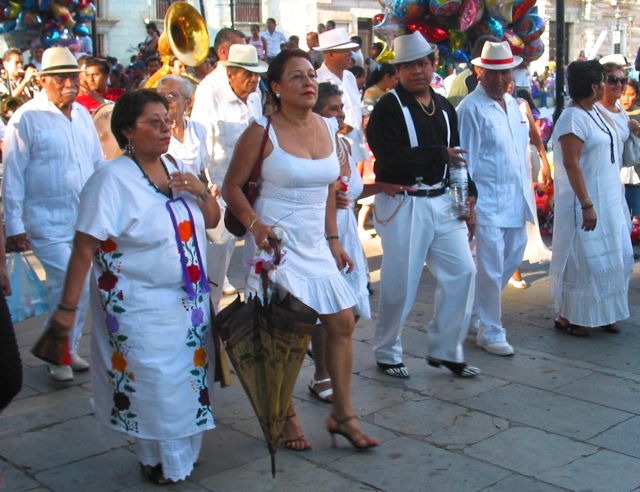
For the 3rd day in a row, temperatures continued to be in the high 90s, unseasonably hot even for Oaxaca so, for the second day in a row, I hit the ice cream shop — this time for a scoop each of peach and banana (in a cup, no cone this time… less messy as it melted) — a great combination!  The calenda eventually arrived with all the usual suspects — several brass bands, municipal honchos, dancers in costume, monos (giant puppets — see above photo), etc.  Did I mention, it was really hot?  There I was, dripping wet, confining myself to the shade of the Zócalo’s 135+ year old towering Indian laurel trees, and eating ice cream when these participants (of all ages, I might add) had walked, played, and danced their way under the blazing sun for 13 blocks from Llano Park!

Little girl dancer

After 13 blocks, she didn't look any worse for wear!

Participants unmasked

Guys unmasked.

Couple drinking water

Feeling the heat... the pause that refreshes!

Disassembling balloons.

That's all folks!

Read Full Post »

« Newer Posts