Feeds:
Posts
Comments

Archive for the ‘Culture’ Category

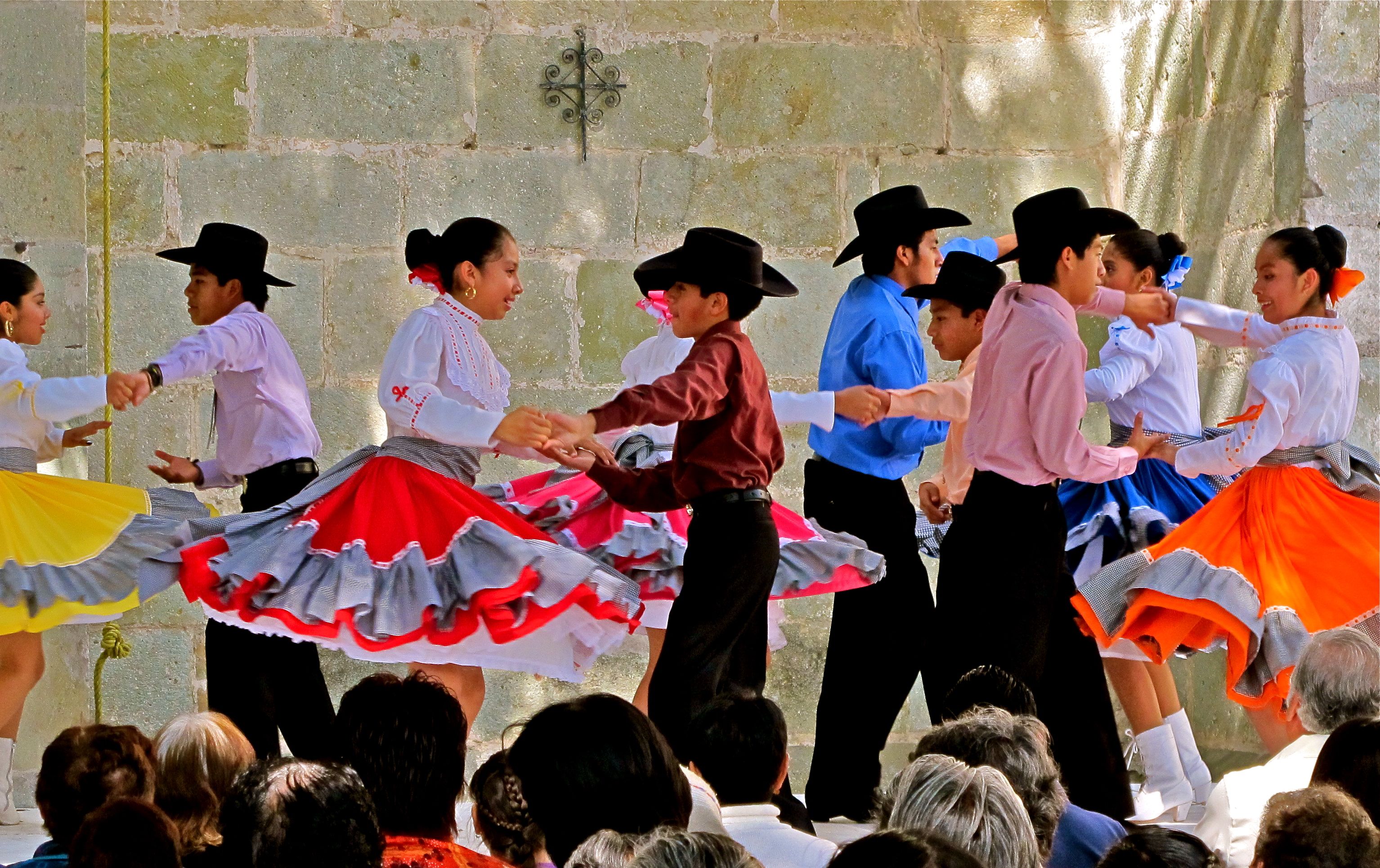
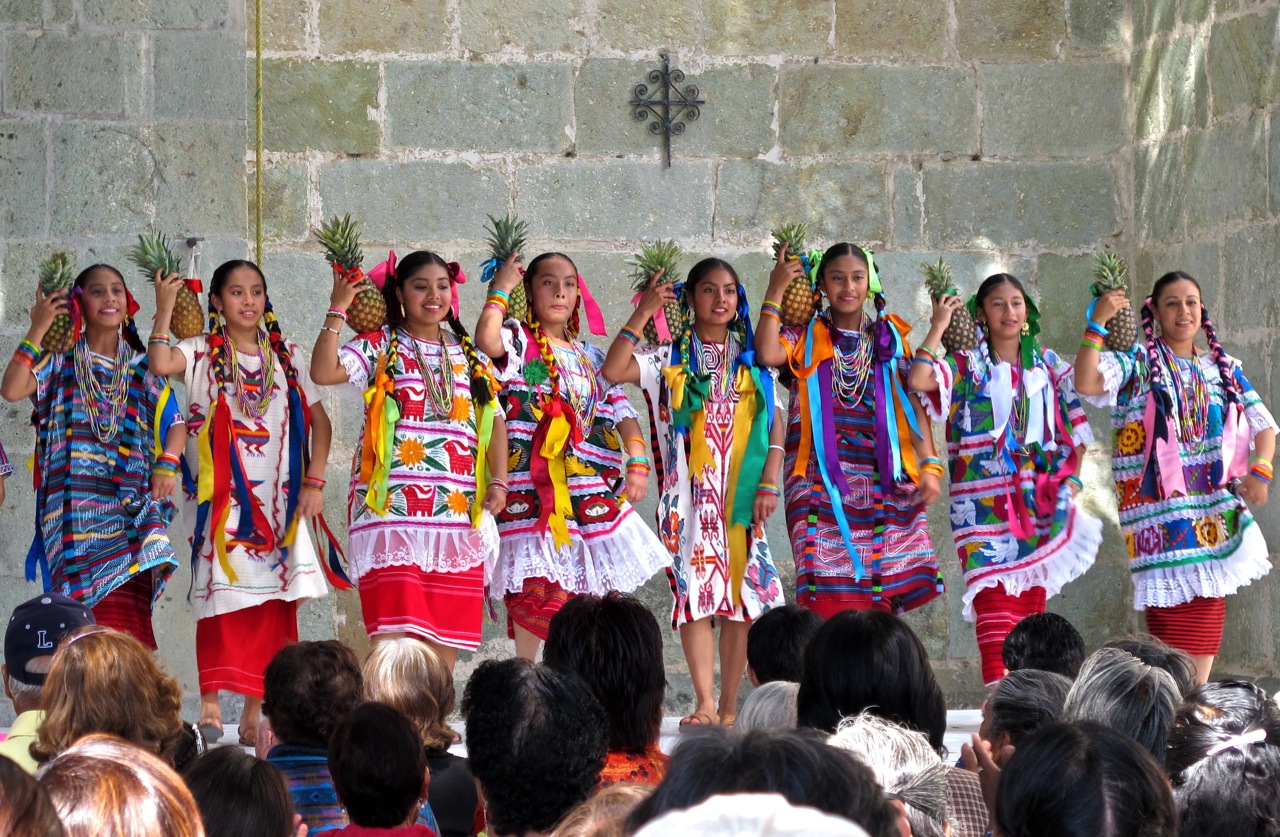
Yesterday, I opted for the smaller and more intimate Guelaguetza in the Villa de Etla, about 12 miles northwest of Oaxaca city.  As far as I could tell, seven of the eight regions of the state of Oaxaca were present; only the Sierra Sur was missing.  FYI:  In the photos below, I purposefully left out the Plume dancers, who represented the Valles Centrales, as you will find plenty of photos of the Danza de la Pluma in my postings from the Fiesta de Preciosa Sangre de Cristo in Teotitlán del Valle.  By the way, Chris at Oaxaca-The Year After posted a terrific Guelaguetza Guide to assist in identifying the regions of Oaxaca.  It’s in Spanish, but even a non-Spanish speaker can learn quite a bit.

On a more serious note… I was reminded today by a Oaxaqueña friend, Guelaguetza in the city of Oaxaca is controversial.  Tickets (available through TicketMaster, I might add) for reserved seating to the official performances on Cerro Fortín at the (newly renovated and hotly disputed) Guelaguetza Auditorium are beyond the reach of most Oaxaqueños, some events are sponsored by Coca Cola, hundreds of thousands of pesos of tax payer monies have been spent on the sound and light show (spectacular, as it is), nightly fireworks, bringing in celebrities, and slick, though often inaccurate, publicity.  All is geared (well, not the inaccuracies) toward tourists; a boon to the restaurants and hotels around the zócalo.  But…

Unfortunately, what is lost is that the Guelaguetza is supposed to be a celebration that brings together the extremely diverse indigenous communities, from the various regions of the state to share their crafts, food, dance.  It wasn’t supposed to be crass commercialism that caters to tourists and well-heeled locals, at the expense of peoples who originated the tradition.  And, my friend asked, along with admiring their costumes and colorful dances, wouldn’t a portion of the pesos be better spent attending to the real and extremely pressing needs of the poverty stricken indigenous communities, especially with regard to infrastructure and education?

However, yesterday in Etla, I caught, perhaps, a glimpse of the original meaning of Guelaguetza.  Admission was free and open to one and all.  Free tamales and beverages (alcoholic and non) were offered to the standing-room only crowd, along with the sombreros, baskets, fans, whisk brooms, tlayudas, and fruit that each of the delegations of dancers tossed to the audience at the end of their performances.  After it was over, fellow blogger Chris and I looked around and realized, we were probably the only gringo and gringa in attendance.  What an honor and privilege!
Read Full Post »

The rain held off long enough today for the conclusion of  Oaxaca’s Sexto (6th) Festival Nacional de Danzón.  Like last year, I was captivated by young and old, feet and faces, formality and style, intensity and joy; and everything in between coming together under the laurels of the Zócalo.

This slideshow requires JavaScript.

Hmmm…  I wonder if I can work up the nerve to inquire about dance lessons at the studio around the corner???

Read Full Post »

Just strolling along Constitución en route to and from the Oaxaca Lending Library.  First en la mañana…

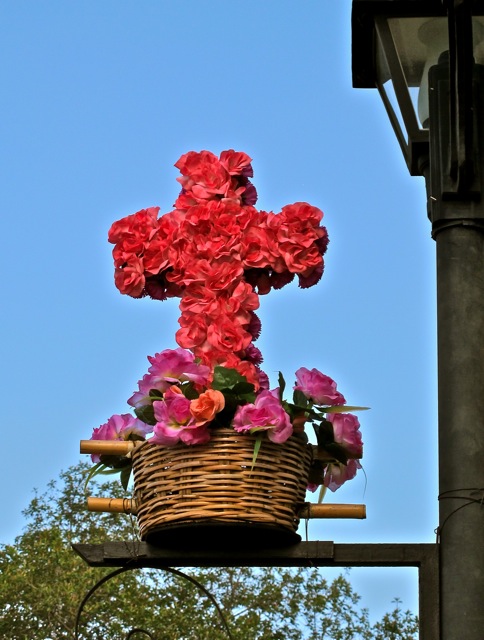
Cross of flowers extending from a lamp post

and across Reforma, pasted on one of the previously mentioned Old and dangerous buildings.

Poster pasted on side of building advertising "Tianguis Cultural; Libertad y Resistencia; Plazuela del Carmen Alto; 25 Julio - 01 Agosto"

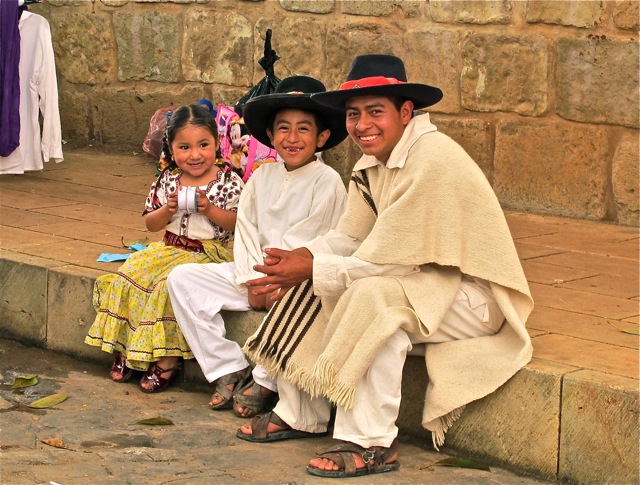
And then, en la tarde… father, son, and daughter waiting to perform on a stage set up at the Jardin El Pañuelito.

Father, daughter, and son dancers sitting on sidewalk waiting to perform

Going from here to there is never just going from here to there!

Read Full Post »

Last night I, along with thousands of others, gathered on the Alameda, with eyes gazing upwards at the “espectáculo” being projected on the facade of the Cathedral.

Three projectors allowed alebrijes to march across the front of the Cathedral, tapetes to hang from the rooftop, and tin ornaments to be displayed, as if they were on a wall in a mercado waiting to be purchased.  Buildings collapsed and were rebuilt, vines reclaimed a pyramid, and so much more.  It was accompanied by music familiar to anyone who has spent more than a day in Oaxaca.  And, at the end, Flor de Piña was heard as fireworks erupted over the Cathedral.

This slideshow requires JavaScript.

And so, for whatever role they may have played, my hat is off to the two guys hanging around in their hammocks, mentioned in my July 20 and July 24 posts.  The Sinfonía de Luz y Sonido was, indeed spectacular!
Rumor has it that it is being streamed, though I haven’t discovered the link as yet.  If I find it, I promise to add it to this post.

Read Full Post »

For the first time, live internet streaming of today and tonight’s (and presumably next Monday’s) Guelaguetza performances  at:  http://www.telmex.com/guelaguetza

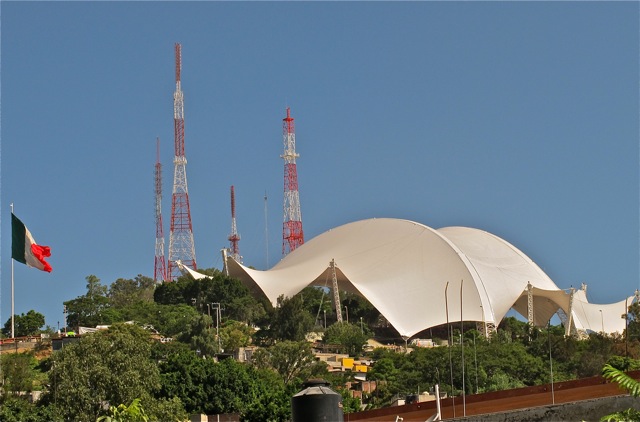
Guelaguetza Auditorium

As you can see from the photo I just took of the Guelaguetza Auditorium, it is a stunning blue-sky Oaxaca day.

Read Full Post »

Aha!  So this is what the guys in the hammocks mentioned a few days ago are guarding:  It’s the gear for a sound and light show being projected on the Cathedral.  Noticias has cleared up the mystery and posted a video snippet to lure readers:

Sinfonia de luz en la Catedral oaxaqueña

It worked… I’m going!!!

Read Full Post »

Guelaguetza… the offering and sharing has begun!  Under cloudy skies, with the occasional torrential downpour, buses bringing dancers and bands began arriving for the Desfile de Delegaciones Regionales, tonight’s hour-long parade down the Alcalá to the zócalo.

This slideshow requires JavaScript.

Parade has ended, I’m back at Casita Colibrí, the sky has cleared, a 200-piece youth orchestra from the central valleys of Oaxaca has finished playing traditional Oaxacan music in the Plaza de la Danza, and the third round of fireworks has just erupted from the zócalo.  Ahhhh… this place is amazing!!!

For more information on Guelaguetza:

Read Full Post »

After the two days spent in Teotitlán del Valle last week, I’ve been thinking a lot about the following article, written for the Guardian International Development Journalism competition.

Theme: What stops children in rural areas going to school? sponsored by the David Rattray Memorial Trust

Elena Gonzales folds yarn between her fingers. Her tapestry is woven in an intricate pattern of ochre and indigo, with fibre that has been dyed using moss and bark, fruit and flowers. Here in the hills of Oaxaca, in southern Mexico, indigenous Zapotec communities have been weaving rugs for more than two thousand years. Elena spins the loom and the centuries fall away.

Like many Zapotec children growing up in the 1980s, Elena did not attend school. Faced with a primary curriculum that took no account of Zapotec language or culture, her parents decided that she should be educated by her community. She was taught to weave by her grandmother. Self-sufficiency is the historic norm in Oaxaca, but in recent decades as rural life has become increasingly entretejidos – interwoven – with the modern market economy, Zapotec children who have not gone to school are finding themselves on the wrong side of an urban-rural education divide that excludes them from employment and contributes to deepening poverty.  [Read full article]

Multicolor tapete

Tapete purchased in Teotitlán del Valle by a friend. It was woven by Demetrio Bautista Lazo but was started by his young son.

Read Full Post »

Today, the fourth Friday of Lent, is Día de la Samaritana, also known as el Día de las Aguas, and a uniquely Oaxacan celebration.  It is inspired by the Biblical story of the woman at the well who offered water to Jesus.  And so, here in Oaxaca churches, schools, and businesses offer passersby free cups of  horchata, aguas frescas, and some, even ice cream.

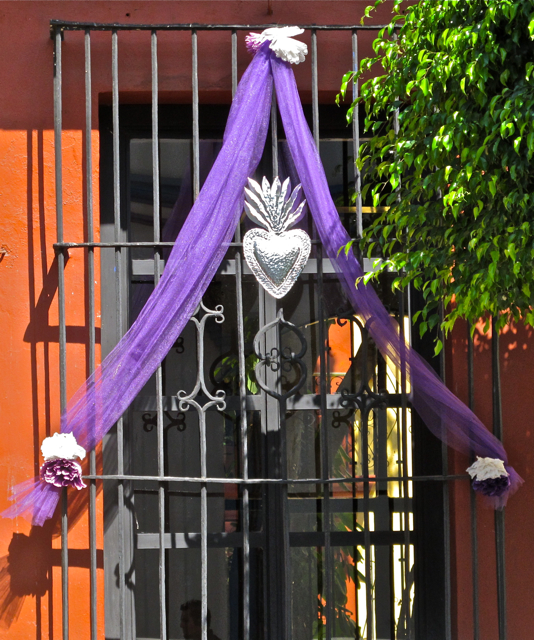
Decorations began going up around town yesterday…

window decoration: purple tule, tin heart, and flowers

Sidewalk stands are set up,  some more elaborate…

Purple decorations hanging from lona

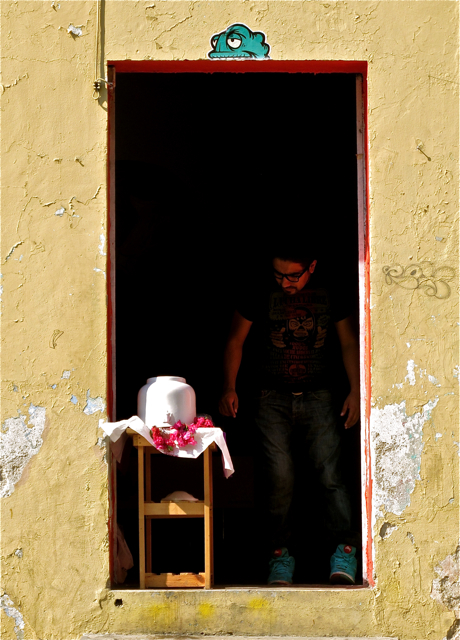
than others…Small agua fresca stand

And, what does one do with the empty (and not-so-empty) cups?

Empty cups on window sill

Decorate a window sill, of course!

Read Full Post »

As I write there are 18 upcoming activities listed on the Oaxaca Lending Library website — and these are just for the remainder of February through March. I know, because I put them there and there are several more events waiting in the wings for me to add!

Snowbirds and full-time residents alike, can fill their days by attending classes and book talks, touring nearby crafts villages, enjoying spa pampering, exploring ecotourism, and more…


The energy, creativity, dedication, and hard work by a multitude of volunteers at the library is a sight to behold. You name it, they will organize it!

Read Full Post »

Juxtapositions…

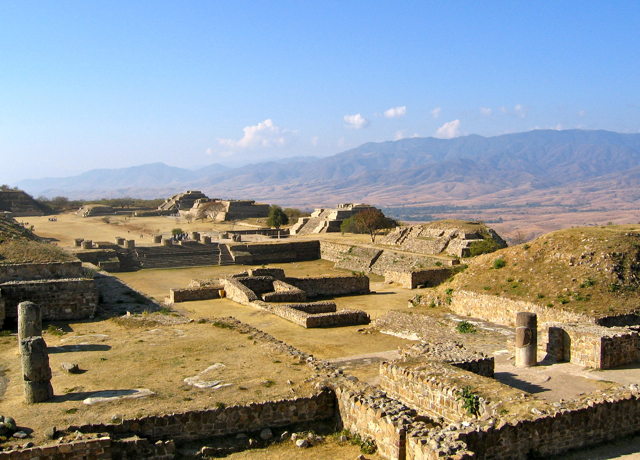
Early yesterday morning, standing on my terrace, I gazed up, beyond the twin bell towers and dome of the Basílica de Nuestra Señora de la Soledad, at a hilltop only a few miles to the west… platforms of the ancient Zapotec capital of Monte Albán, one of the four Classic cities of Middle America, visible in the clear mountain air. It’s one of those sights that takes my breath away and I never cease feeling privileged to be living here, among its descendants.
Monte Albán
Then there was last night… At the base of this ancient city that once commanded the Y-shaped valley of Oaxaca, a gringo friend and I sat in my apartment, again looking west, but this time, not at the hills beyond, but at the TV in the immediate foreground. Instead of imagining those early ballgames played up on Monte Albán, we were engrossed by the modern day skills, of the Green Bay Packers and the Pittsburgh Steelers, played under a dome in a $1.2 billion dollar stadium.
TV showing 2011 Super Bowl
For you non (American) football fans, it was Super Bowl Sunday. The game was exciting… the Packers won (yay!)… and members of the losing team weren’t ritually sacrificed!

This particular juxtaposition seems to be developing into a pattern… Last year, a friend and I cheered as the New Orleans Saints defeated Indianapolis Colts in Super Bowl XLIV…
Hotel TV showing 2010 Super Bowl in Palenque
… from our room, in a hotel carved out of the jungle, just a couple of miles from the stunning Mayan ruins of Palenque.
Palenque
Hmmm… I wonder where I will be next year?

Read Full Post »

A musician friend recently told of hearing a young Oaxaqueña singer with a breathtakingly beautiful voice. And, the current front page of the Oaxaca Times announces, Alejandra Robles: the new oaxacan voice. I don’t know if this is who he was referring to, but in the words of the article, “her powerful voice reflects her training in Opera but her style is traditional Mexican with a rhythmic flare.”

Alejandra Robles - photo from Oaxaca Times


Alejandra Robles
is following in the immensely talented and extremely popular steps of Oaxaqueña vocalists, Lila Downs

Lila Downs - photo from Wikipedia

and Susana Harp, who have carved out successful careers celebrating their Oaxacan roots.

Susana Harp - photo from Wikipedia

I haven’t knowingly heard Alejandra Robles sing; I say “knowingly” because music is everywhere and often free… you just never know when and where you will round a corner to find it. This past November, from the comfort of my terrace, I had a ringside seat for a free Lila Downs concert a block away at the Plaza de la Danza. And, the previous May, I wandered down to the zócalo to hear Susana Harp performing (for free) with the Oaxaca State Band under the shade of the laurel trees.

And then there was this unknown singer…

Unknown singer at the Plaza de la Danza

In September, her beautiful clear and powerful voice drew me off the rooftop and over to the Plaza de la Danza where she and her talented band were performing to an audience of less than 100 people… part of events celebrating the Bicentennial. Regretfully, I was too shy to try out my limited Spanish and ask, “¿Quién es?” I searched the local newspapers and cultural calendars, but never was able to figure out who she was. Anyone know?

Update:  She is Natalia Cruz, a proud Zapoteca from Ixtaltepec in the Isthmus of Tehuantepec.  Muchisimas gracias to one of my readers!

Read Full Post »

Sunday, in the Plazuela de Carmen Alto, celebrations honoring the Christ of Esquipulas (Black Christ) were in full swing. I was awakened at 6 AM to the sound of fuegos artificiales (fireworks) and eventually drifted off to sleep after 11:30 PM, as fireworks’ explosions resumed.

Festivities lasted all day and I couldn’t resist heading up to the church courtyard to see what was happening.

When I arrived, seats in the shade were filled and a small crowd was gathered behind a barricade; a castillo, laying on its side in three parts, was being constructed; a teenage Oaxacan brass band, with the requisite tuba towering over the other instruments and their players, was waiting to play; and young dancers were performing with a combination of earnestness and joy.

Skirts flying

Dance always seems to be an integral part of celebrations both secular and religious, and, in reflecting on my love for this, at times, perplexing and contradictory place, dance is one of the things that resonates the most.

Piña Dancers

A small stage set up under the trees; dancers, their handmade and unique costumes; energetic music; choreographed steps passed down through generations spirited me back to my childhood…

Mom and me

Let’s dance!

Read Full Post »

November 5th was opening day of the inaugural Oaxaca International Independent Film and Video Festival. Having volunteered at the Mill Valley Film Festival for eight years and attending it for many more, I enthusiastically poured over the nine-day schedule and made sure to arrive at the newly reopened Auditorio Ariel for the first film a half an hour early. Of course, the theater wasn’t open, no line had formed, and the only other people not sporting official film festival badges or wearing official volunteer t-shirts, were other gringos. When will I ever learn?!!

Other days and films followed, including the wonderful documentary, Awakening From Sorrow: Buenos Aires 1997. The voices of the now grown children of the disappeared, tortured, and murdered during Argentina’s “dirty war” of the late 1970s and early 1980s, are woven, along with haunting artwork, music and archival film footage into an exquisite “tapestry of remembrance” in their quest for justice. And, come to find out, it screened at last year’s Mill Valley Film Festival.

In addition to the films, the festival also featured an English language and a Spanish language literature competition. The Oaxaca Lending Library, where I volunteer, underwrote the English competition, including bringing the winner, Charles Whipple, to Oaxaca from his home in Japan(!) and hosting a reception on Nov. 11. The evening temperatures were mild, perfect for gathering in the courtyard of the stately 17th century home of the Rufino Tamayo Museo de Arte Prehispanico de Mexico, savoring the delicious canapés created by Jean-Michel Thomas of ¿Donde esta el chef?, and listening to Charles Whipple read his awarding winning story, A Matter of Tea.

The evening closed with the Mexican premiere of, Twenty Five Hundred & One, a documentary chronicling Oaxacan-born artist, Alejandro Santiago’s sculptural tribute to the thousands of men and women who have left his pueblo almost deserted, in their search for jobs. Alejandro Santiago and several of his family members and the crew who help create the 2,501 sculptures were present, as was director, Director, Patricia Van Ryker. It was a lovely way to spend an evening…

Photos from the reception can be found in a photo album on the Oaxaca Lending Library’s website.

Read Full Post »

November has come and now is almost gone. Time accelerated.  Where did it go?  Retired life… I thought it would slow down… apparently not when one lives in Oaxaca. There’s too much to see and experience!

Los Días de Muertos

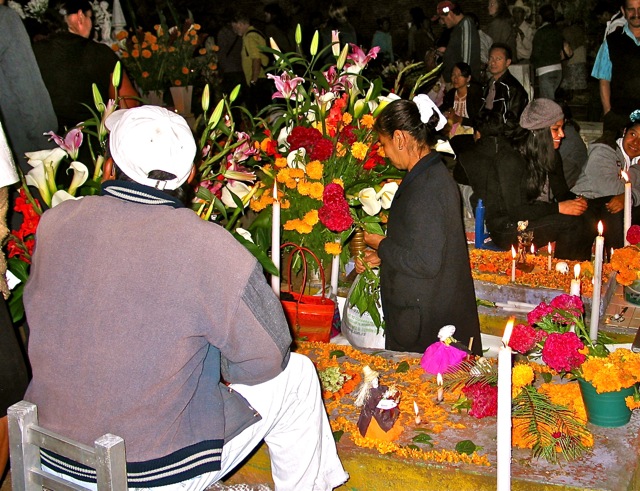
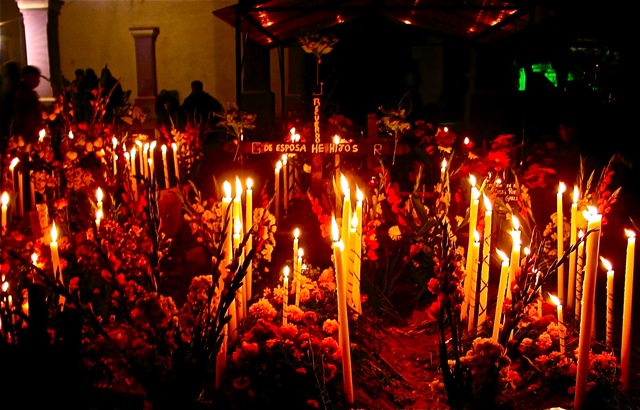
The month began with Los Días de Muertos. I signed-up to accompany my extraordinarily energetic Spanish teacher, Laura Olachea, on two “field trips.” About 30 of us (her students and their guests) boarded a bus the night of Oct. 31, bound for the old and new cemeteries of Xoxocotlán. Tens of thousands of tourists (overwhelmingly Mexican) seemed to have descended on this small village, the bus was forced to park 8-10 blocks away on a dirt side street, the sky was pitch black, and there were no street lights. Somehow, we all managed to keep up with our tiny maestra as she lead us through the crush of people and vendors (food, drink, sugar skulls, candles, you name it!) to the old cemetery.

Panteón de Xoxocotlán 2010

I plunged in. Heeding Laura’s advice to travel in groups of 3-4, I tagged along with a couple, chosen because he was at least 6 feet tall and I figured he would be easy to keep in eye range. The scene was like nothing I’ve ever seen before… a cornucopia of candles, by the thousands, flickering in the darkness; of color from the marigolds, cockscomb, and lilies; and of hundreds of families gathered around lopsided graves, drinking, sitting, laughing, and sharing in a ritual that recognizes that death is part of life. The scene was repeated at the new cemetery, before we stumbled our way back to the bus, which spirited us to the tiny pottery village of Atzompa and its panteón, well after midnight: Stage and dance floor, band playing, couples dancing, flowers, candles glowing in the darkness, families, few tourists, deeply personal, and magical… I felt like an intruder.

Panteón de Atzompa 2010

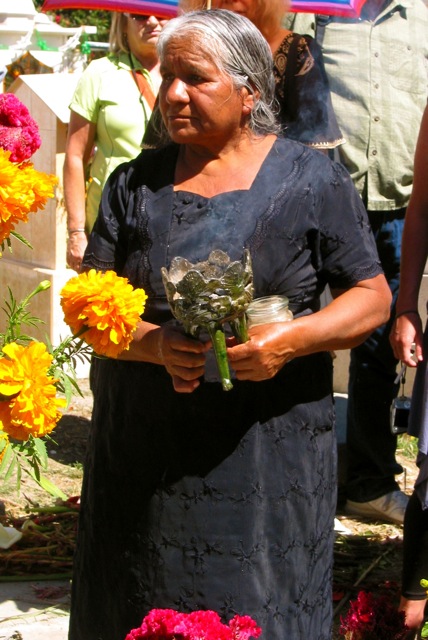
Though it was close to 1:30 AM when the bus dropped me off a block and a half from Casita Colibrí, I was up and back on the bus at 10 AM, for the ride to Mitla with Laura and our gang. We had the privilege of being guests of the García family, invited to participate in their Zapotec Day of the Dead traditions. We were welcomed to their home, a traditional family compound, with rooms surrounding an enormous dirt courtyard, with clotheslines holding newly dyed skeins of yarn (this is a family of weavers). Cervesas were offered, and then, in accordance with age-old custom, we followed the recently widowed family matriarch through the dusty streets to the Panteón Municipal. Here, holding the three-legged incense burner, the sweet and seductive smell of the burning copal perfuming the air, Doña Garcia performed a ceremony with words spoken in Zapotec.

Doña Garcia with copal burner

Mezcal and cigarettes were passed around. Joining the others, I drank the Mezcal and deposited my cigarette on the grave of the departed, where it joined several others — smoked and, like mine, un-smoked. With fireworks erupting periodically, we retraced our steps, following Doña Garcia and the smoke of the copal, as she brought the spirit of her late husband, Rutilio Garcia, back home to share the day with his family.

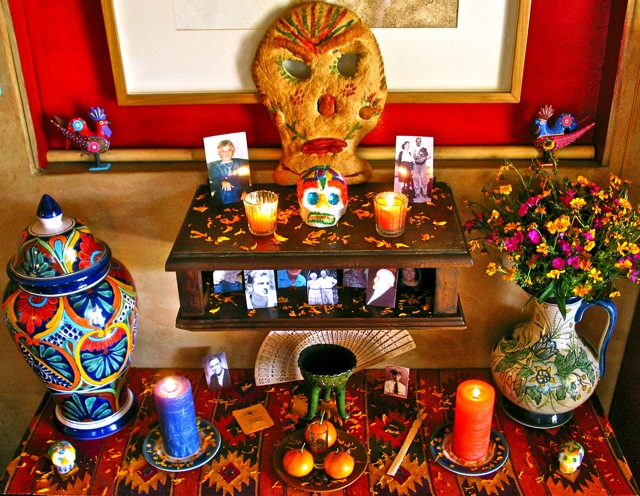
We returned to the lovingly assembled altar set-up by Doña Garcia. It was here, in front of this colorful altar, laden with flowers and food, including the intricately decorated pan de muertos that echoes the designs of the archeological ruins in Mitla, words were spoken in Zapotec and Spanish and tears traveled down many cheeks. Following this extremely moving ceremony, chairs were set up around several long tables where we joined the family in drinking Oaxacan hot chocolate, feasting on pan de muertos and mole negro, served, of course, with tortillas.

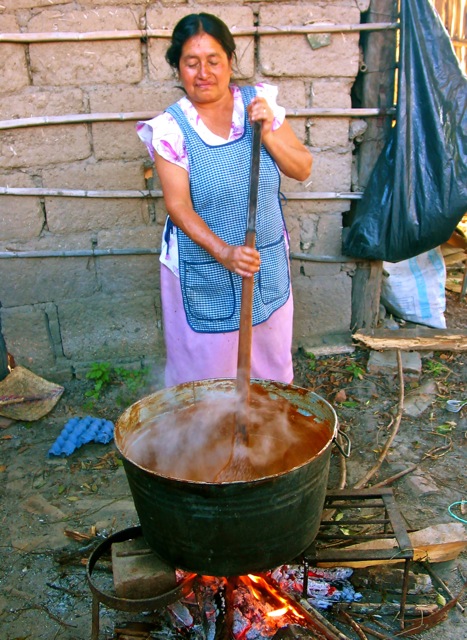
Satiated, it was probably a good thing that we were then led on a walking tour through this City of the Dead, to visit several other altars. Gracious families ushered our group through courtyards. At one, we paused to marvel at a woman, standing over an open fire (on this 80+ degree day), stirring a massive cauldron of mole,

Woman stirring cauldron of mole.

We gathered in modest homes where families “introduced” their departed and proudly explained the significance of items on their altars. Hot, exhausted and deeply moved, a much quieter crowd returned to the García home. We were offered a final shot of mezcal, said our heartfelt thank-yous, and boarded the bus for the trip back to the city.

I returned home in time to watch my San Francisco Giants win their first World Series crown since 1954, when they were the New York Giants. After my initial hurrahs, my head couldn’t help but turn from the TV to my small Day of the Dead altar; where, along with photos of my parents, mother and father-in-law, and departed friends, my eyes settled in the center of the altar, to a photo of my grandparents.

They had moved next door to my childhood home in Mill Valley about the same time the Giants moved to San Francisco, and it was then that Grandpa introduced me to baseball. We listened to Russ Hodges and Lon Simmons call the games and I put up a team photo (Willie Mays, Orlando Cepeda, Juan Marichal, Willie McCovey, Felipe Alou, Stu Miller, Mike McCormick, Jose Pagan, Jimmy Davenport, Hobie Landrith…) on the wall of my bedroom; grandfather and granddaughter cheering, agonizing, and bonding. I took my Giants cap off, walked over, and put it on the altar.

Read Full Post »

« Newer Posts - Older Posts »