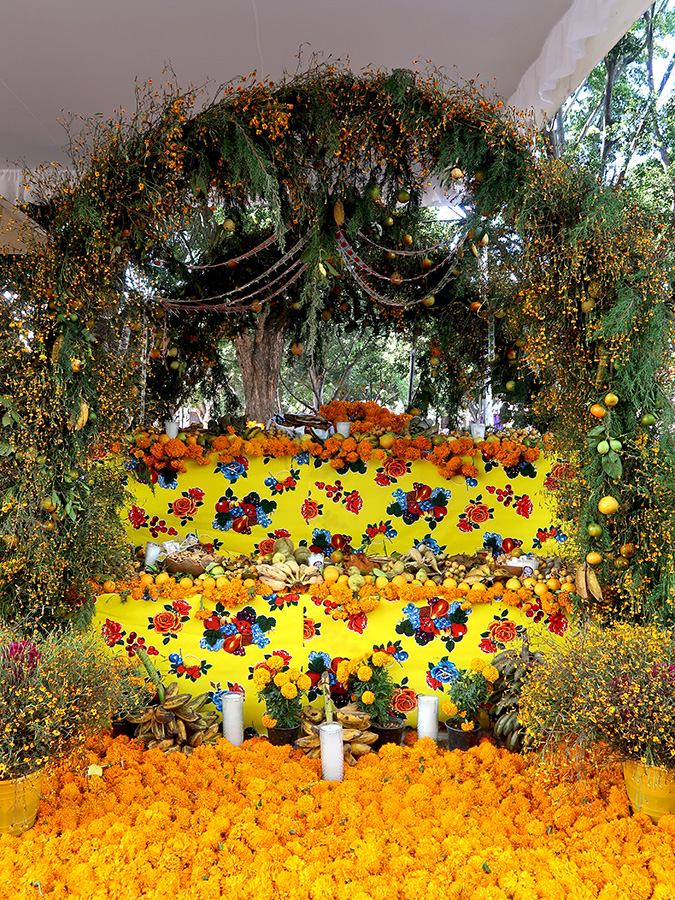
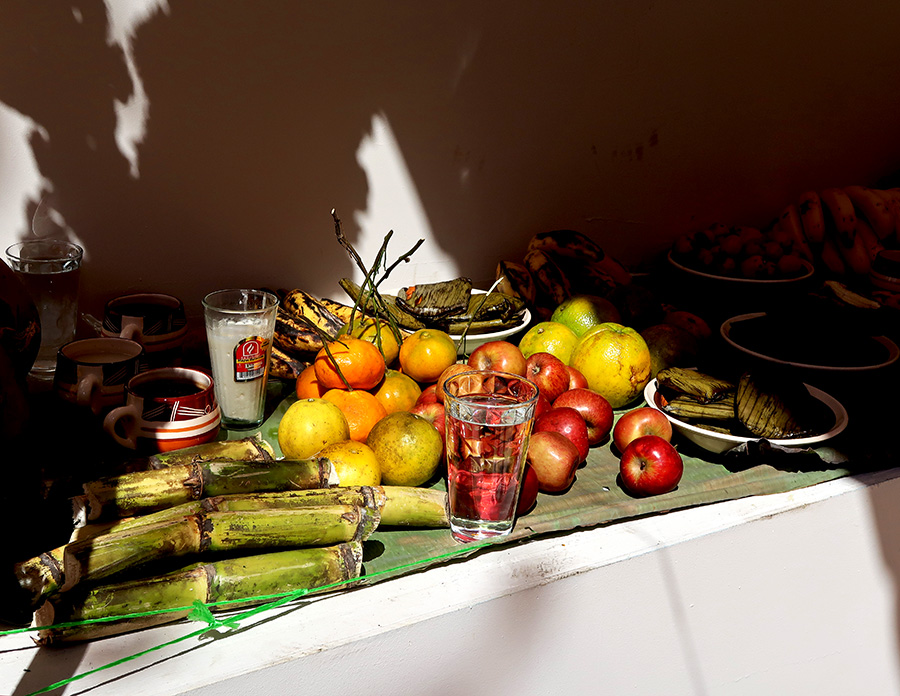
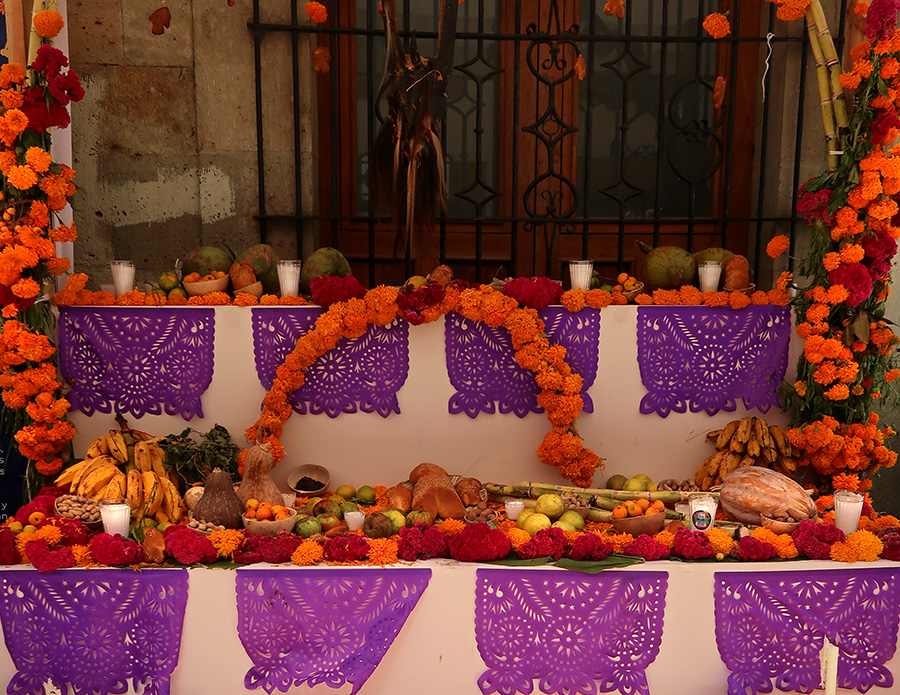
Oaxaca is alive with preparations for Día de Muertos and the Zócalo is filled with altars from her indigenous and Afromexican communities.
Zapoteco – San Melchor Betaza, Oaxaca – Altar Bkog Tse Bene Wat
Náhuatl – Santa María Teopoxco, Oaxaca – Tlamanal-Miquilistle
Cuicateco – San Juan Bautista Cuicatlán, Oaxaca – Altar Cuicateco
Amuzgo – San Pedro Amuzgos, Oaxaca – Altar Ncué Ndó’ Tzjón Noán
Mixe – Santa María Tlahuitoltepec, Oaxaca
Zapoteco – Santo Domingo Tehuantepec, Oaxaca
Mixteco – Villa de Tamazulápam del Progreso, Oaxaca
Mazateco – Huautla de Jiménez, Oaxaca – Altar El Portal
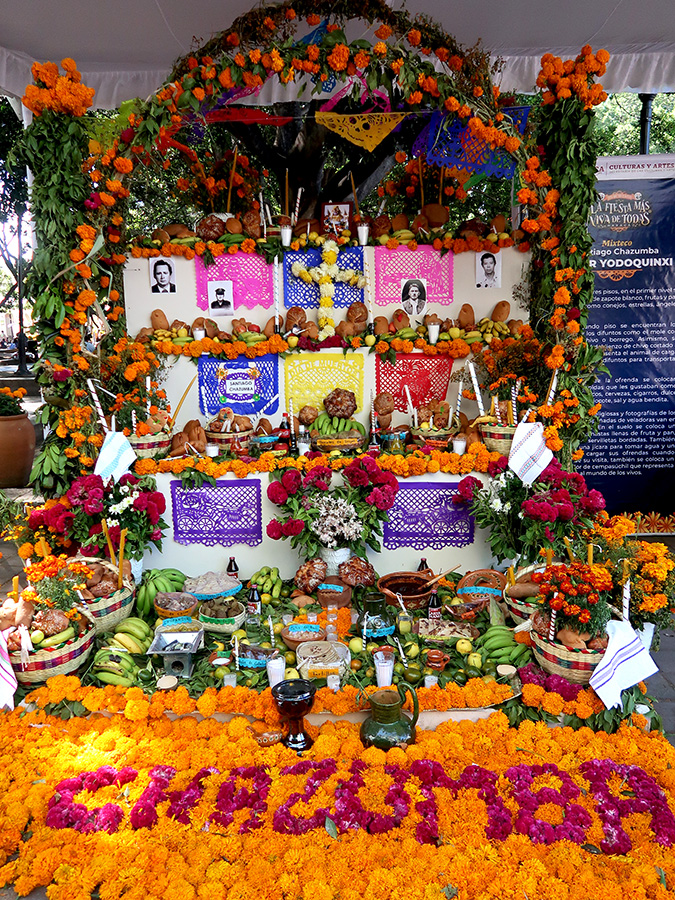
Mixteco – Santiago Chazumba, Oaxaca – Altar Yodoquinxi
Chatino – Santiago Yaitepec, Oaxaca – Mesa de las Ánimas
Mixtecos Ñuu Savi – Santiago Ixtayutla, Oaxaca
Chontal – Santiago Astata, Oaxaca
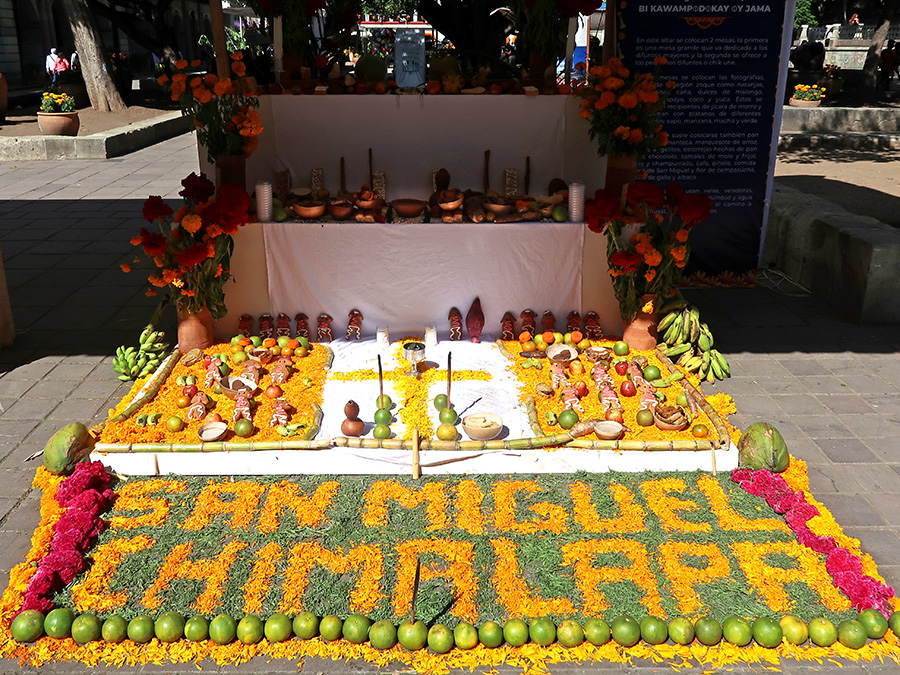
Zoque – San Miguel Chimalapas, Oaxaca – Bi KawampΦdΦkay Φy Jama
Chinanteco – San Juan Bautista Valle Nacional, Oaxaca – Altar Tradicional Chinanteco
Triqui – San Juan Copala, Oaxaca – Altar Se Inaj Xhi Aj
Mazateco – San Pedro Ixcatlán, Oaxaca – Altar Autóctono
Ikoots – San Mateo del Mar, Oaxaca – Altar De Tikambaj
Pueblos Afromexicanos – Altar de los Pueblos Afromexicanos de la Costa de Oaxaca
The scent of cempasúchil (marigolds) fills the air and beckons the difuntos (souls of the departed) to eat, drink, and be merry with their living loved ones.
Attention residents and visitors: After a much lamented three year absence, Amate Books has once again opened its doors to book lovers — this time at Aldama 318, in the hip and happening Barrio de Jalatlaco. Yes, my neighborhood, so I’m especially happy.
The new store is bright and welcoming with well stocked shelves of (mostly) English language fiction, nonfiction, and children’s books. In addition, as in the past, there is a carefully curated selection of folk art, small gift items, and (drum roll, please) postcards.
Even La Catrina, in her sartorial splendor, has returned to welcome patrons, old and new.
Today, stepping through the door, being greeted by the smiling face of longtime employee Carmen, and surrounded by knowledge and imagination, I felt a sense of peace and tranquility from the chaos of today’s world. If or when you are in town, make sure to stop by and support this local treasure. The store is open daily. (I’ll post the hours when I know for sure.) In the meantime, a big thank you to Henry Wangeman for reopening Amate Books!
This past weekend, the city held a three-day celebration of Mole de Caderas — a traditional seasonal Mixtec dish from Huajuapan de León, Oaxaca and nearby Tehuacán, Puebla. It is only served during the fall, when the goats are made to make the ultimate sacrifice — and it is absolutely delicious!
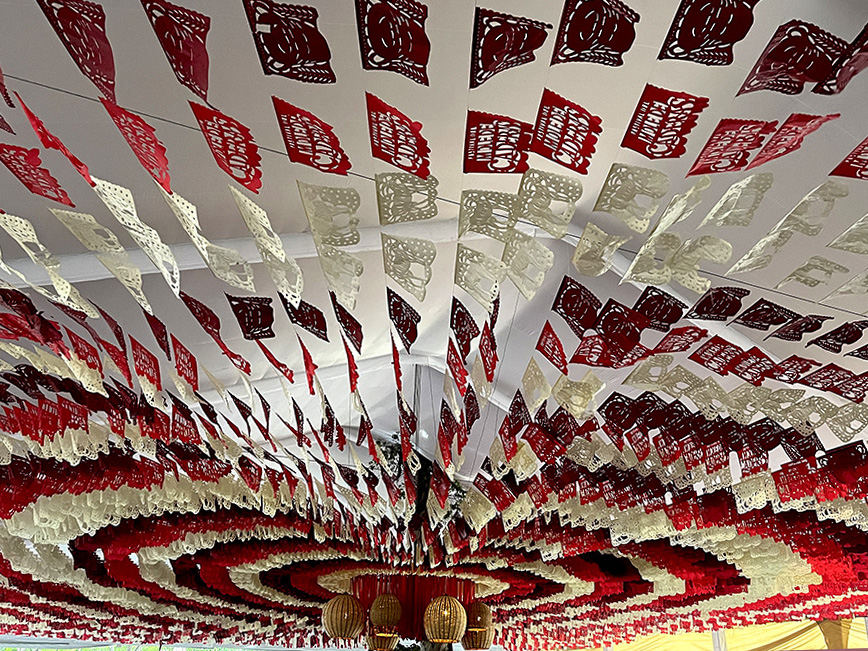
Papel picado cut into images of goats and ollas and the words “Festival del Mole de Caderas,” hung from the rafters of the tent.
This special dish is made from the hip (caderas) and the spine of goats that have been raised for one and a half years. Starting in July they are fattened on the forage unique to the hills of the Mixteca, large amounts of salt, and a little water — this is what provides the meat with fat, softness, and juiciness and gives the broth its distinctive flavor. In early fall, when the shepherds have brought the goats back to the farms, there is a ritual filled celebration that includes offerings, incense, music, and dancing, including a dance with the goats — all in honor of the goats who were about to give their lives to feed the population.
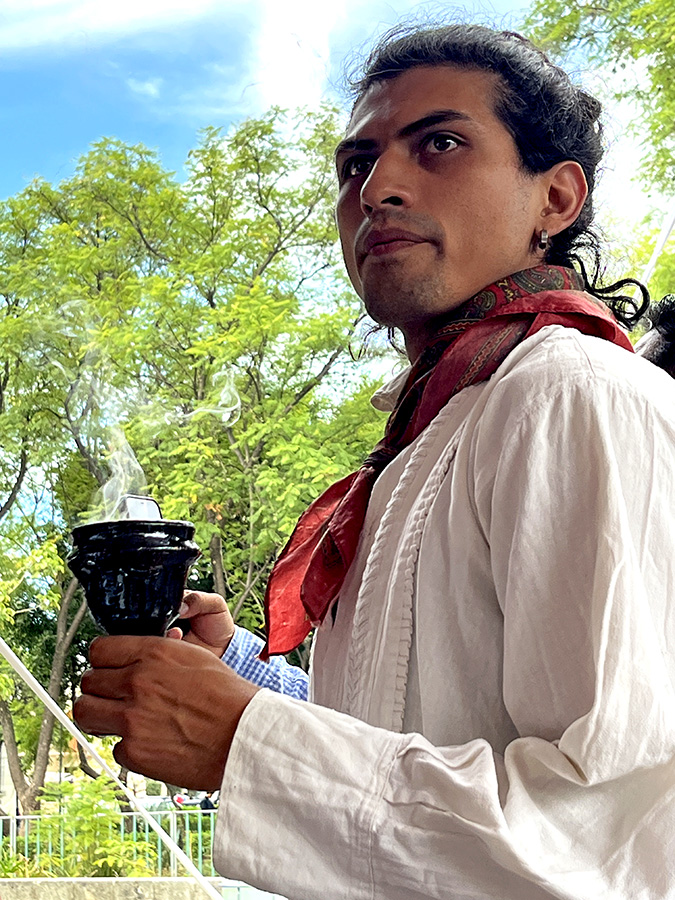
Incense carried in the opening procession.
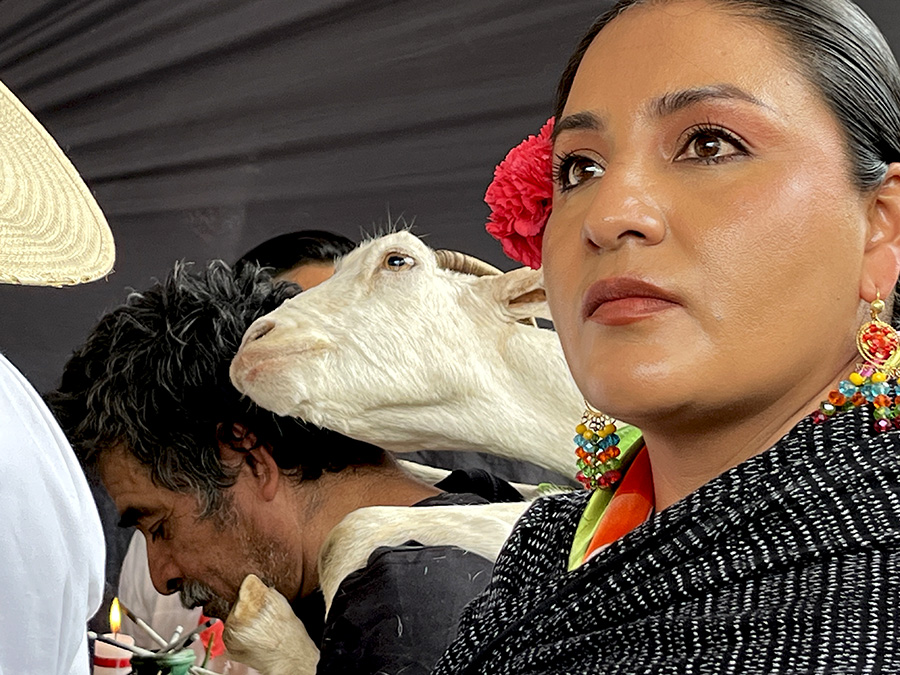
Matancero carrying el chivo (the goat) and a Mixtec dancer waiting for the procession to begin.
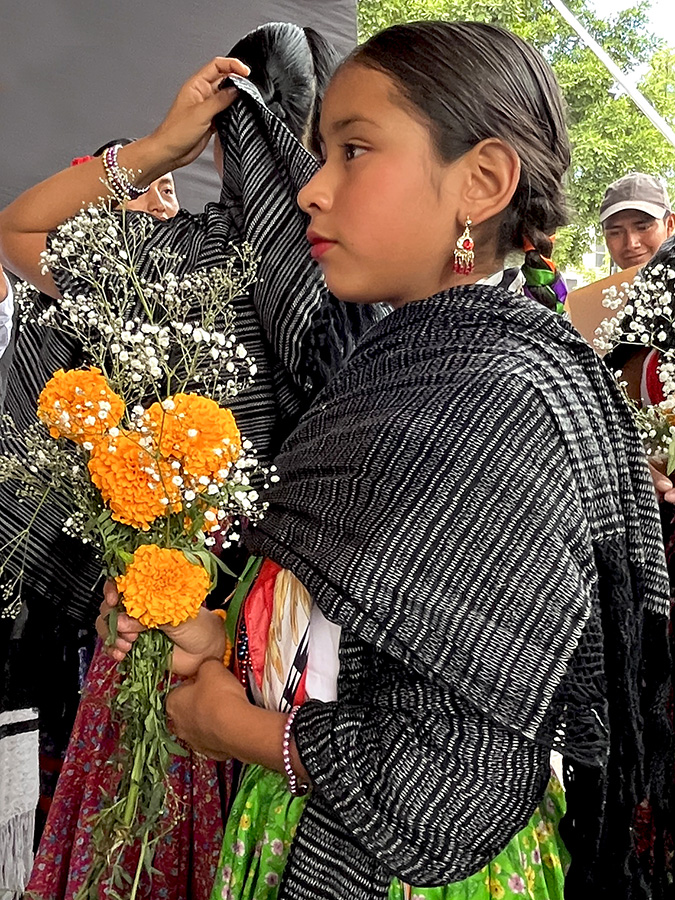
Young Mixtec dancer waiting for the procession to begin.
At last Friday’s opening of the festival, there were dignitaries galore (including the governor of Oaxaca), multiple speeches, and a moving procession with two goats to the tune of Canción Mixteca, a song which always brings tears to my eyes. It was followed by a dance with the goats and a stylized reenactment of the ritual killing of the goats (no actual blood was spilled).
We were then funneled through a palapa decorated tunnel to the tented dining area, where traditional cooks from Huajuapan de León and Oaxaca city waited proudly behind booths displaying ollas (clay pots) filled with steaming Mole de Caderas and Huaxmole de Caderas. Hmmmm… I wondered what the difference was between Huaxmole de Caderas and Mole de Caderas.
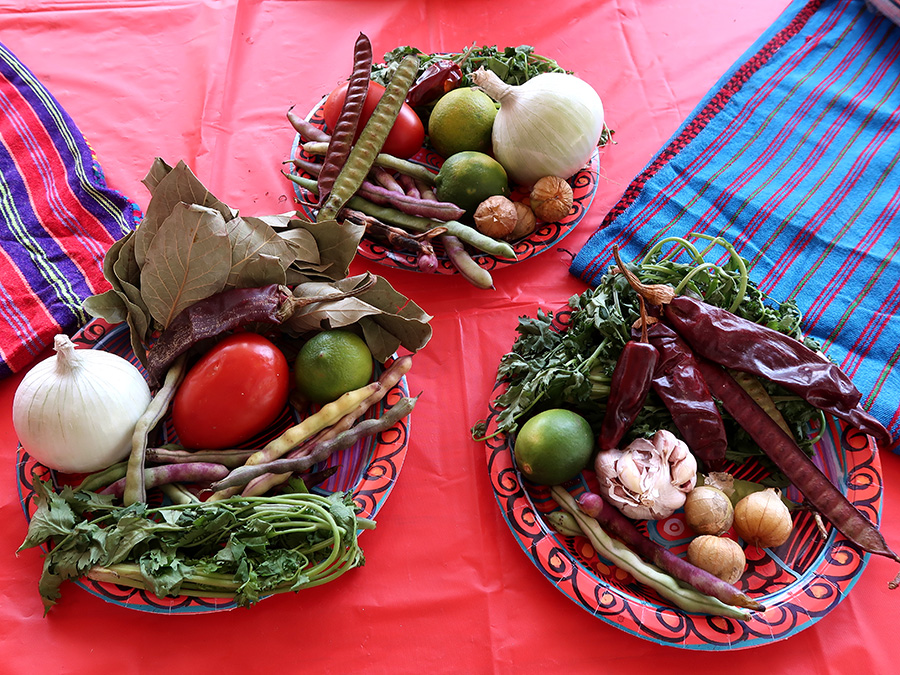
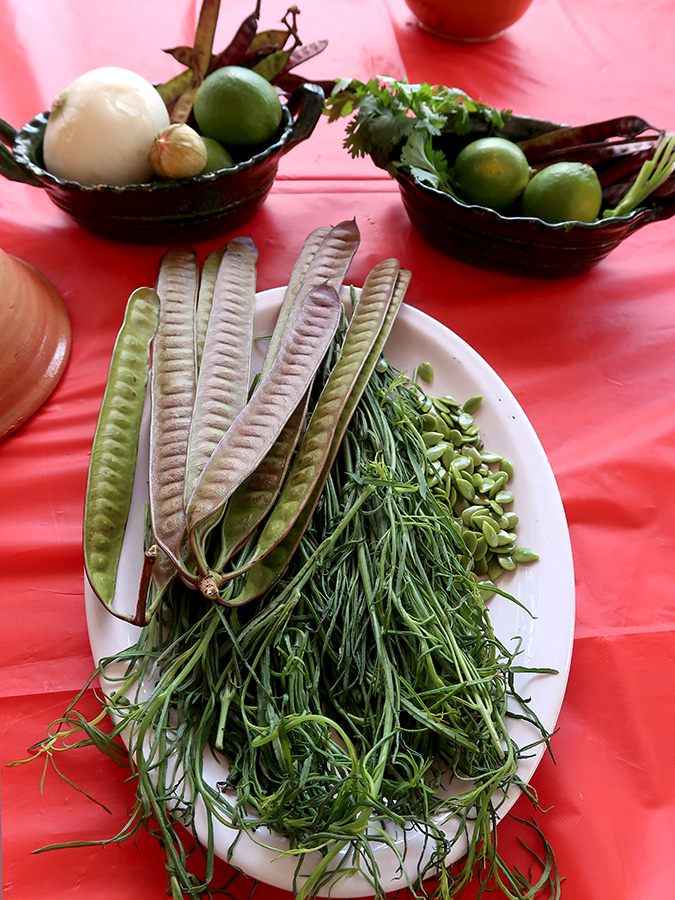
Ingredients used in making Mole de Caderas and Huaxmole de Caderas.
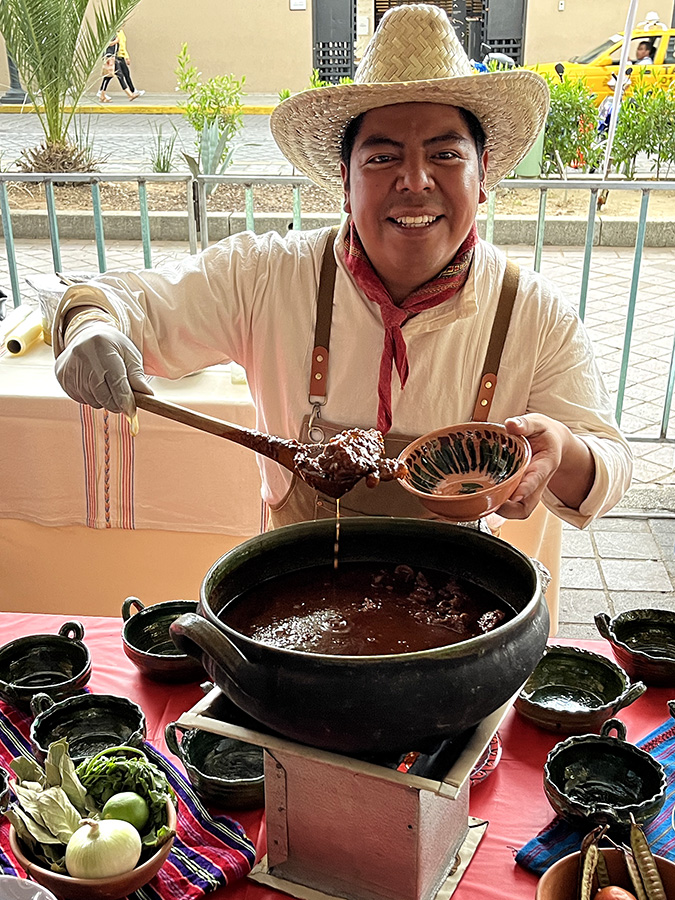
Wilver Vásquez López serving what his booth labeled, Mole de Chivo.
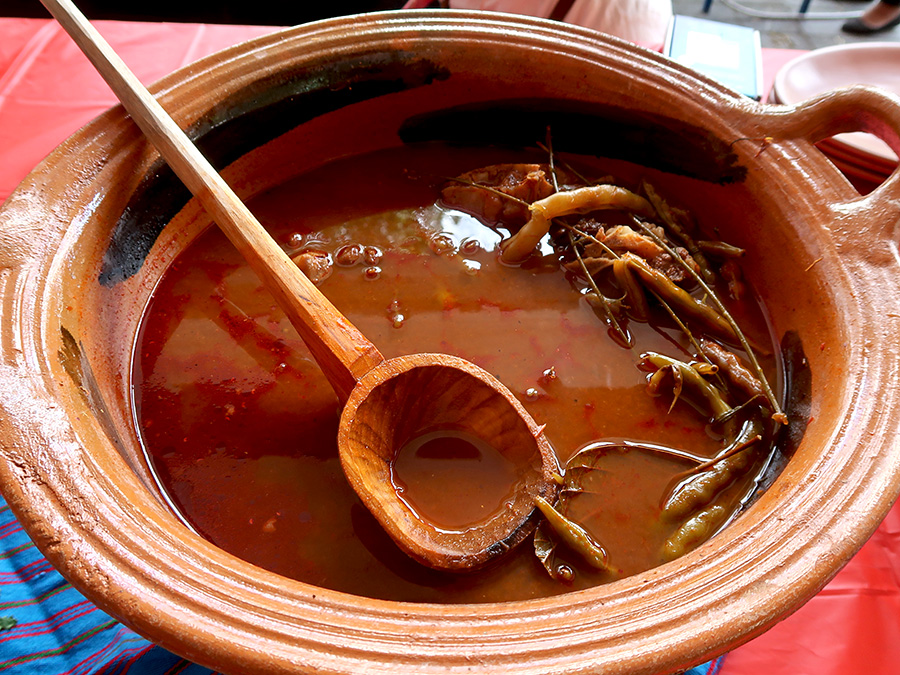
Huaxmole de Caderas.
Once home, a little research ensued (I am a librarian, after all) and I found that both dishes share common preparation and major ingredients. However, Huaxmole de Caderas is distinguished with the addition of toasted seeds from the huaje (also spelled guaje) tree — the tree that gave Oaxaca its name. Whereas, Mole de Caderas is prepared with green beans. However, if huajes are added to the latter, it is considered Huaxmole de Caderas. The herb, chepiche (aka, pepicha) is also used and, at the festival, both chepiche and huaje were used to garnish the plates.
Huaje and chepiche.
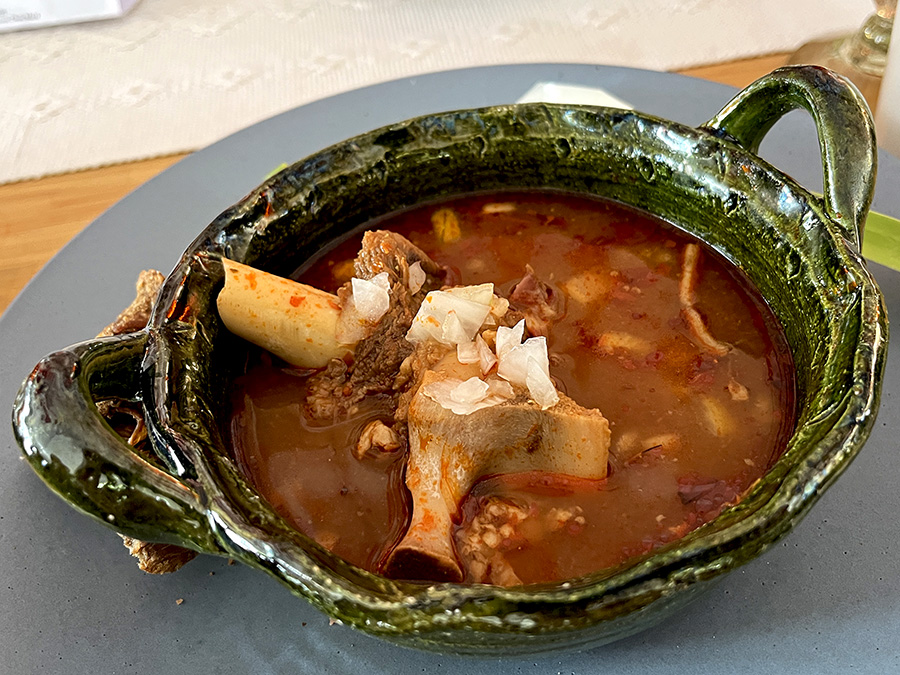
Mole de Caderas.
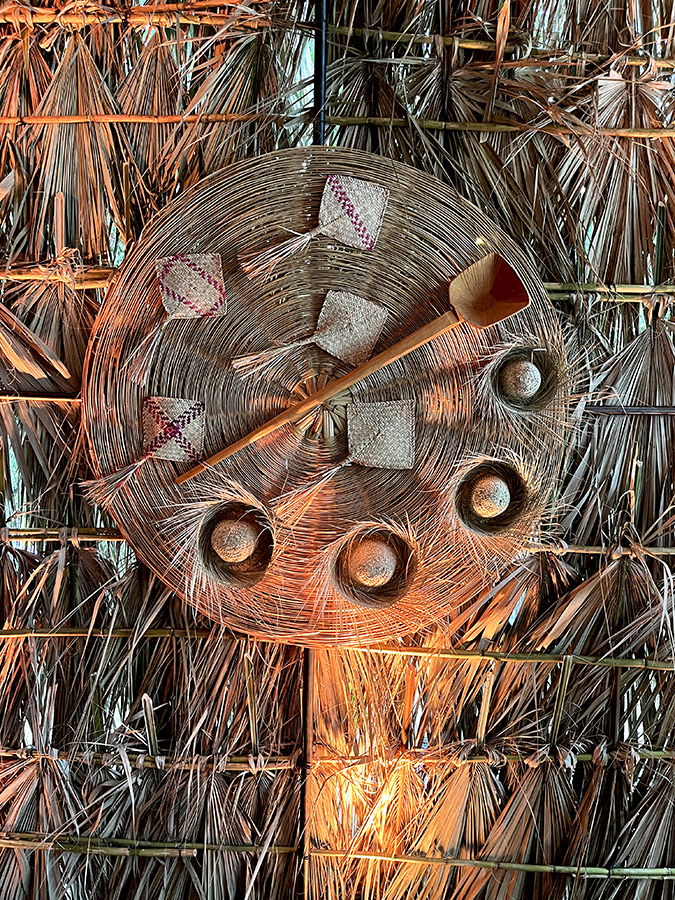
Interior of the palapa covered entrance to the Festival del Mole de Caderas.
By the way, there were also fresh tortillas, hot off the comal, and booths offering goat tacos, sweets, aguas, and mezcal from the Mixtec region.
Oaxaca is a walking city and, even when running mundane errands, there is always something to see, something to make me smile, and something to make me think.
“The journey of a thousand miles begins with a single step.” — Lao Tzu
“If you are in a bad mood go for a walk. If you are still in a bad mood go for another walk.” — Hippocrates
“Walking is the rhythm of life.” — Gary Snyder
“An early morning walk is a blessing for the whole day.” — Henry David Thoreau
“Walking takes longer…than any other known form of locomotion except crawling. Thus it stretches time and prolongs life. Life is already too short to waste on speed.” — Edward Abbey













 Mexican Peso Converter

 View From Casita Colibrí