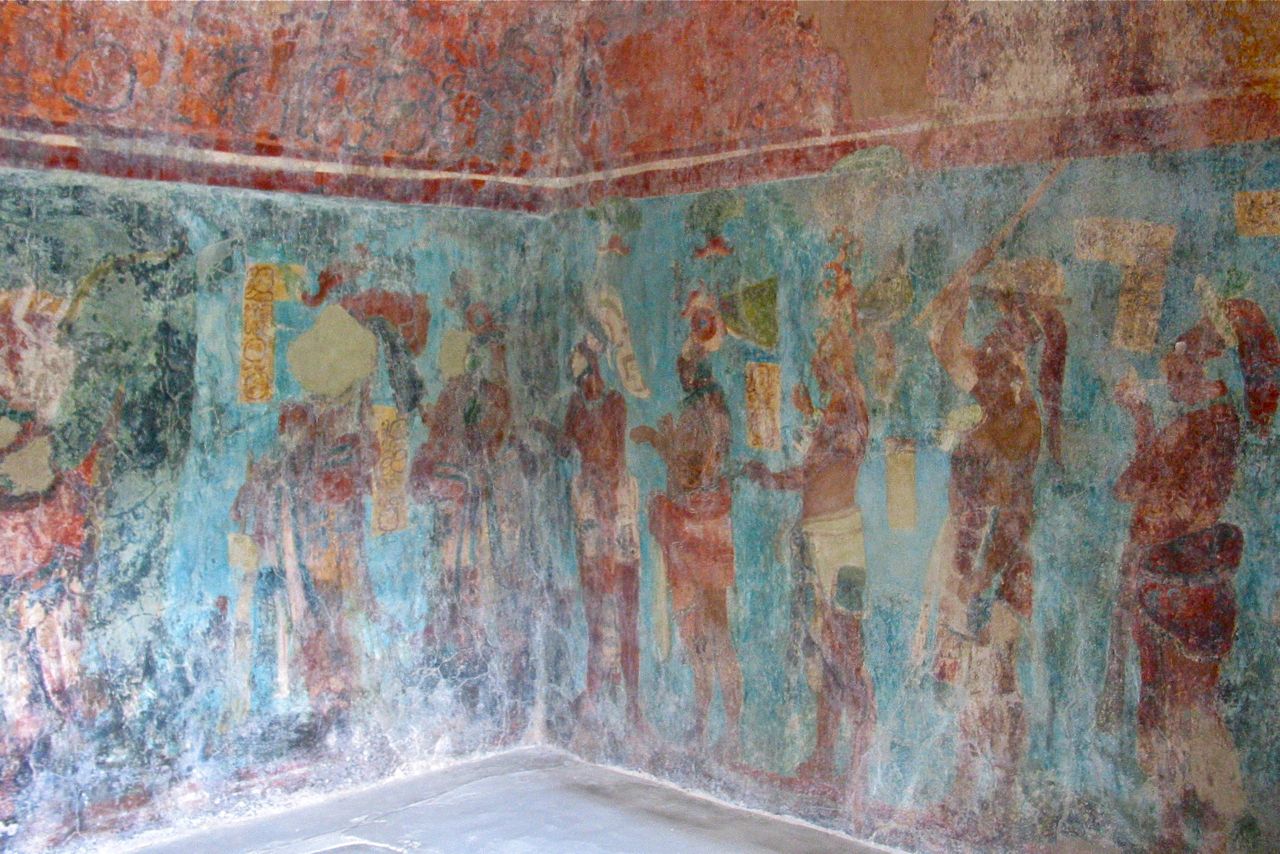
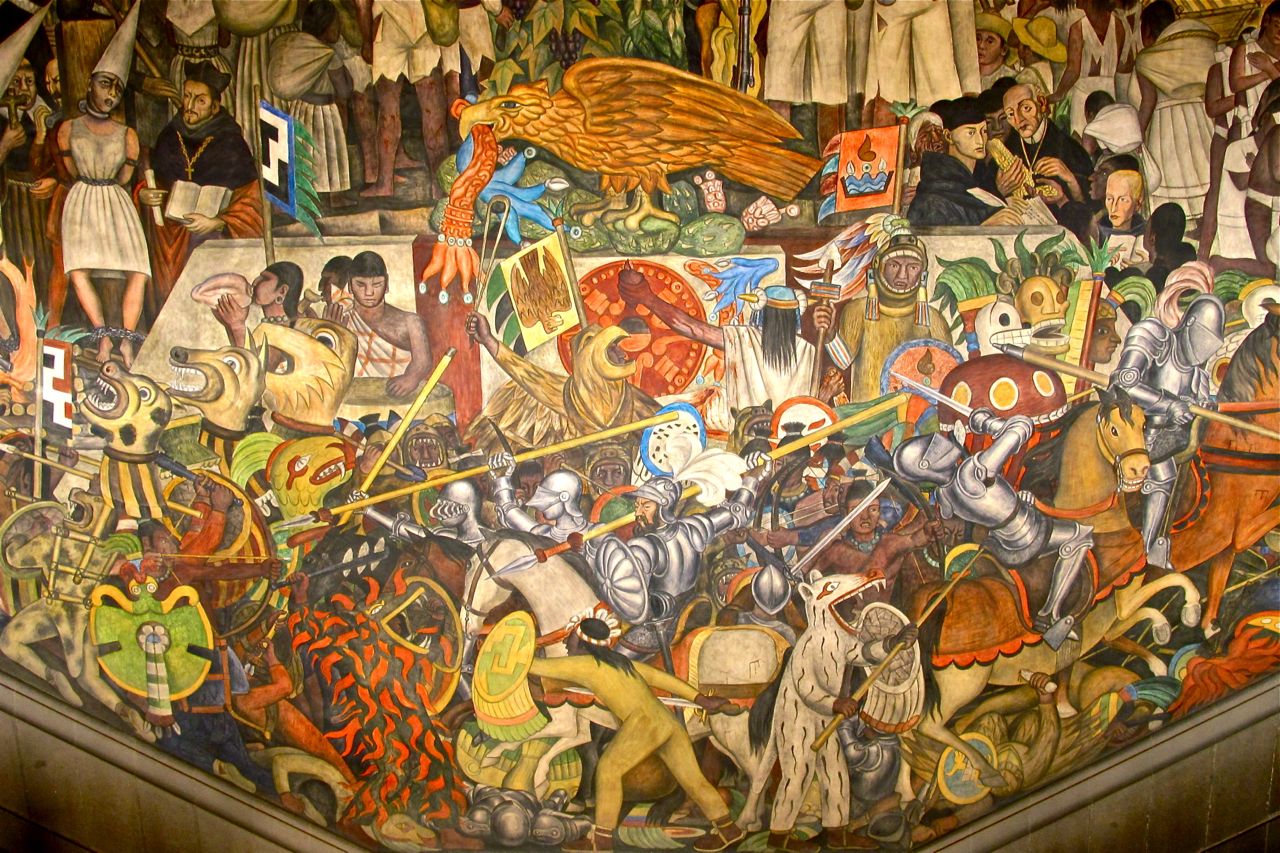
Mexico has a long and important place in the history of communication through murals — from stories related by pre-Hispanic civilizations…

Maya fresco circa 790 C.E. – Bonampak, Chiapas.
through the world-renowned and influential Mexican muralists of the twentieth century: Orozco, Rivera, Siqueiros, and others.
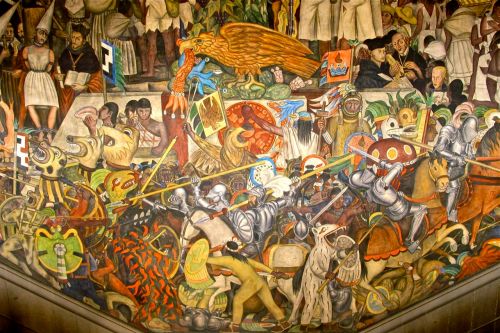
History of Mexico by Diego Rivera, 1931 – National Palace, Mexico City.
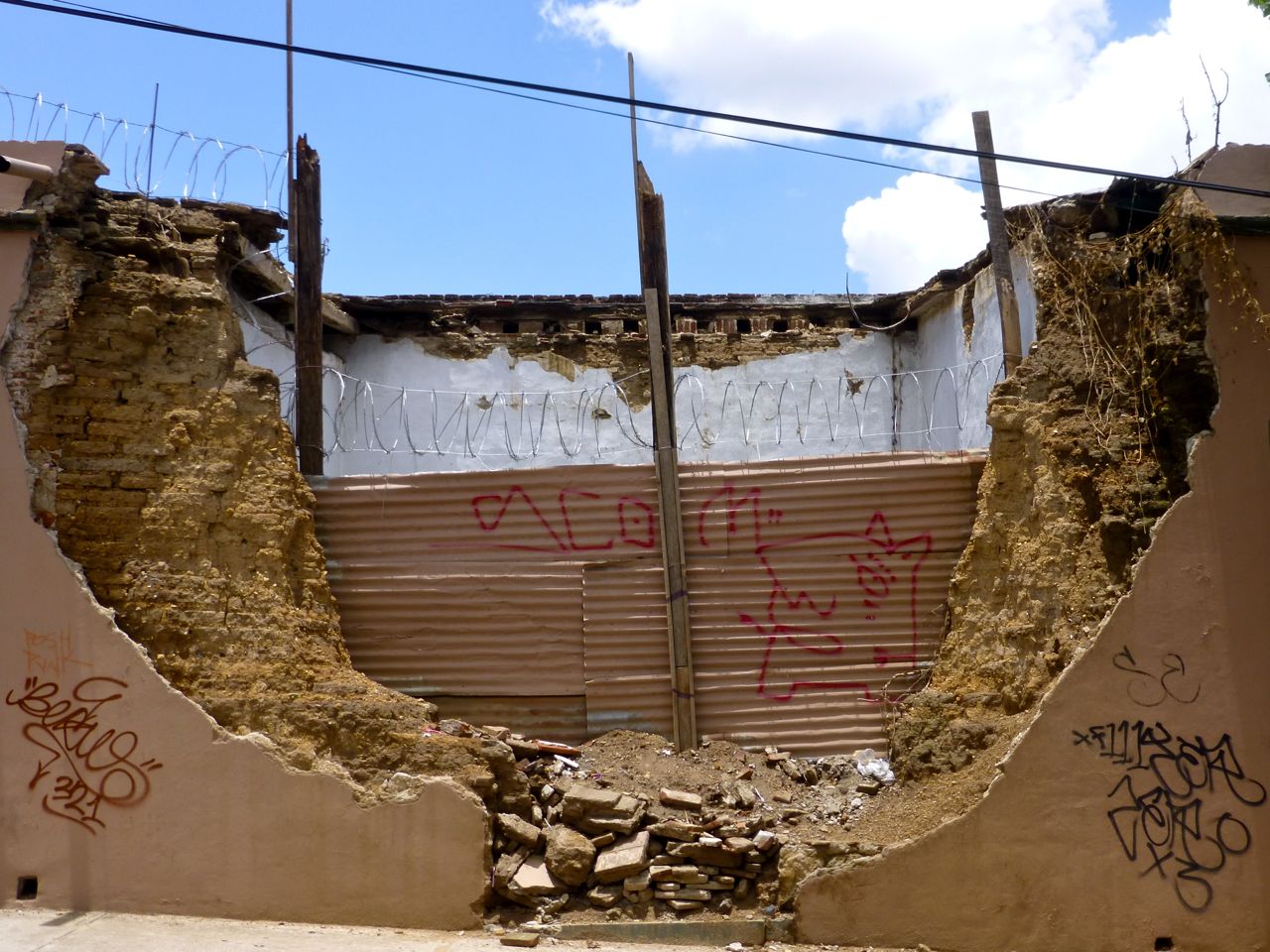
And, as many of you know, murals on the walls of Oaxaca are part of the urban landscape, authorized or not, like them or not, they celebrate…

One of several murals in the pedestrian tunnel to the Guelaguetza auditorium in Oaxaca city.
educate…

San Antonino Castillo Velasco, Oaxaca.
reveal past and present — and hopes and fears for the future.

Calle Tinoco y Palacios, between Vasconcelos and Niños Héroes, Oaxaca city.
Those found on the streets we expect to be ephemeral, but commissioned work, both inside and outside of buildings, we hope would have a longer and more permanent lifespan. Of course, the Rockefeller family’s destruction of Diego Rivera’s Rockefeller Center mural showed differently. And, more recently, my friend and artist, Mike Alewitz experienced the obliteration of his mural on the side of the Pathfinder Building, also in New York. Both were instances of political differences and, while distressing, perhaps not too surprising.
However, today Mike is leading a battle in defense of his students’ murals. According to NBC Connecticut:
Central Connecticut State University (CCSU) has built up one of the largest mural collections in the country since the program started in 2001. But Professor Mike Alewitz, who oversees CCSU’s mural painting program, said that collection is at risk.
The school has painted over six of the murals without notice and plans to do the same with another 12, Alewitz said Richard Bachoo, director of operations, confirmed. He said he hopes an appeal to the university and community support will protect the remaining murals.
“It made them feel part of the larger world, that they weren’t looking at blank walls inside an institution, but they were looking at the hopes and dreams of young people,” Alewitz said. “We found out that 18 murals were scheduled to be destroyed.”
<snip>
He says in the 14 years the mural program has existed, the policy has never been implemented in this way. Alewitz said in a statement that this is “the largest destruction of public art in recent history.” While administrators have removed murals in the past, they normally consult with the art department first, he said.
“The real policy has been that people love the murals, so when they’ve been painted, they’ve stayed up,” Alewitz said.
Oaxaca would lose much of her character and lessons would be lost, if we were to wake one morning and find all her murals disappeared. The story is the same at CCSU. For the full article, click HERE. To send messages of protest and to see some of the amazing student murals that enliven the walls and stimulate thinking at CCSU but are slated for destruction, click HERE. And, Why Bureaucrats Fear Art, is a letter to students and fellow artists, by Mike Alewitz.
Read Full Post »













 Mexican Peso Converter

 View From Casita Colibrí
They ARE different
Posted in Culture, Economics, Education, Politics, Protests, tagged education, educational reforms, graffiti, Mexico, Oaxaca, photographs, photos, political commentary, protests, street art, Teachers union, United States legislation, wall art on October 11, 2013| 13 Comments »
Expats and Mexicans alike, are watching in amazement at the nonsense (as in, making NO sense) taking place in the hallowed halls of Washington DC. And, since many of the expats are retired, we are holding our collective breath over the possibility social security checks will not be forthcoming in November and a tanking stock market that flushes our nest eggs away. Of course, Mexico is in the middle of its own mess, “educational reforms” and economic proposals that will hurt Mexico’s working class and rural populations the most.
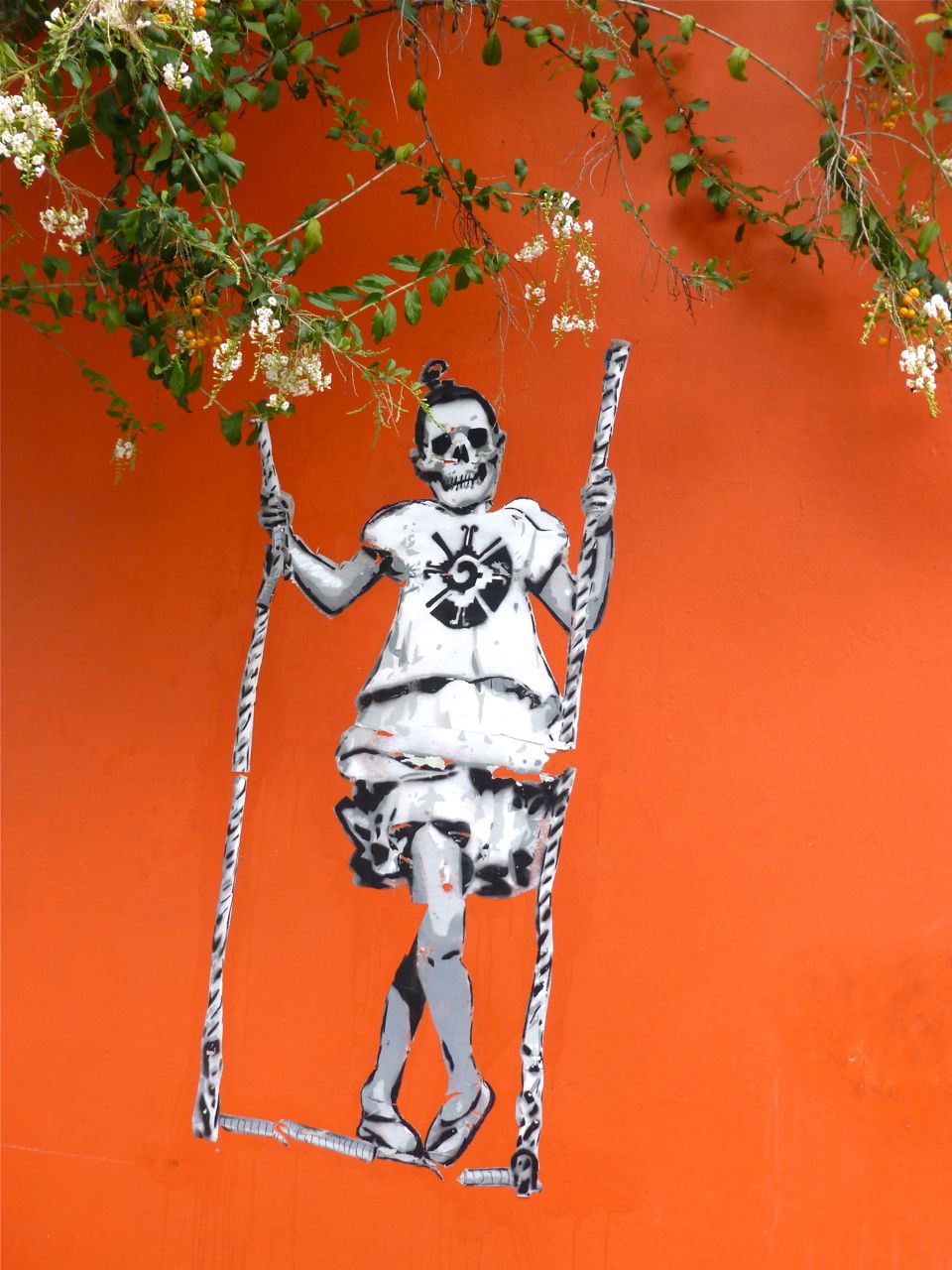
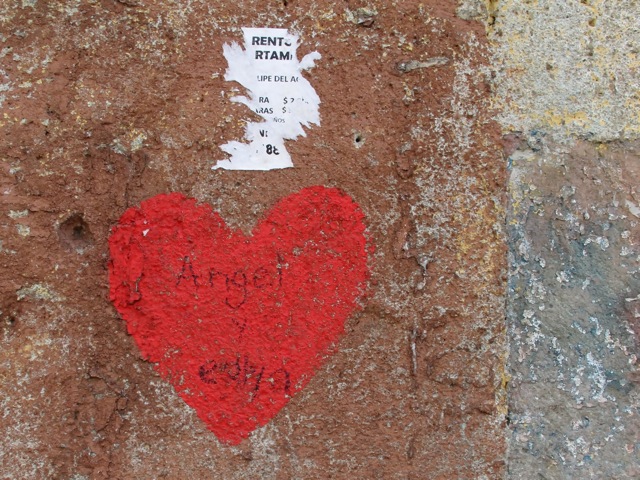
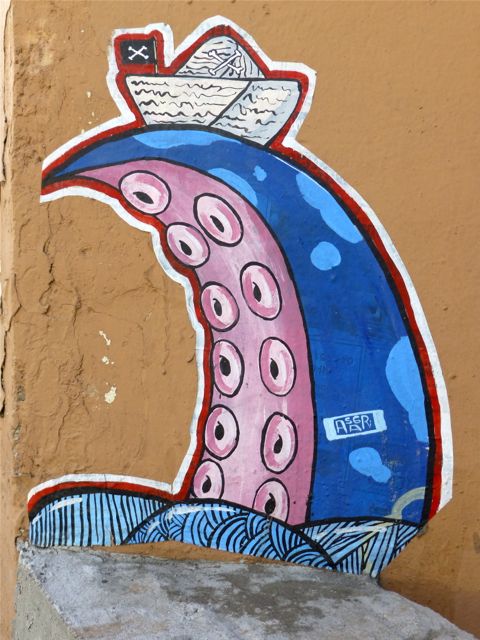
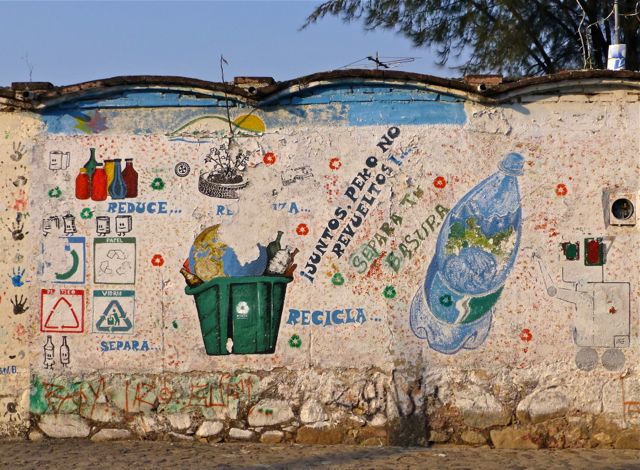
Wall in Oaxaca city.
In a New York Times article two days ago, Carlos Puig explains the reality of the material conditions that have forced the teachers of Oaxaca to take the drastic action of abandoning their classrooms to lead massive and extremely disruptive protests in Mexico City against the “No Child Left Behind” style reforms that the Peña Nieto led government has proposed and passed. (Read a critique of the US education “reform” by Diane Ravitch, former “No Child Left Behind” proponent, here.)
Oaxaca is 500 kilometers from Mexico City, yet the real distance is much bigger. The state’s G.N.P. per capita is one-quarter the average for the country. Oaxaca ranks second-to-last among all states in infrastructure. More than half its population lives in towns of fewer than 2,500 people.
Being a teacher in Oaxaca means sometimes having to travel for an entire day to reach your school in a tiny community, teach for three days — to children of all grades — and travel back home for the weekend. It means having to deal with children who speak more than 20 different dialects.
Being a teacher in Oaxaca means operating in a different universe — and under different rules.
Banner hanging in front of a school in Oaxaca city
However, as in the USA, the incomprehensible words coming out of the mouths of the 1% and their elected representatives are mind-boggling in their obliviousness to the adverse consequences their behavior and policies cause. And, we scratch our heads in amazement… McClatchy journalist, Tim Johnson, has repeatedly blogged about the exceedingly “bad” behavior exhibited by Mexico City’s rich and powerful directed at those they consider “below” them — most recently, Las Ladies, episode 7. And, just last week in Oaxaca, most were aghast to read that an indigenous woman, in the advanced stage of labor, was turned away from a hospital and forced to give birth on the hospital lawn.
Daniel Goleman had a revealing piece in the New York Times a few days ago that helps explain where this lack of empathy the ruling elite exhibit, that results in callous social policy, comes from. He explains in Rich People Just Care Less that, by necessity, “the poor, compared with the wealthy, have keenly attuned interpersonal attention in all directions…” And that, “A growing body of recent research shows that people with the most social power pay scant attention to those with little such power” and, “In politics, readily dismissing inconvenient people can easily extend to dismissing inconvenient truths about them.”
Okay, now we know why the rich care less, so what are we going to do about it?
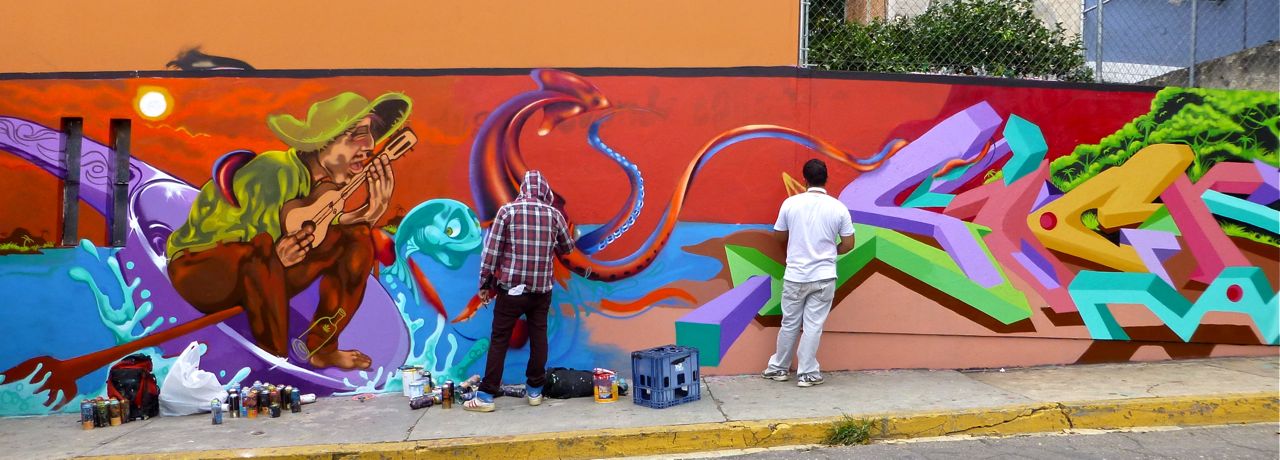
Part of a mural on Niños Heroes in Oaxaca city.
Share this:
Read Full Post »