On this Valentine’s Day, I’m celebrating with Oaxaca’s walls that speak of things we love.
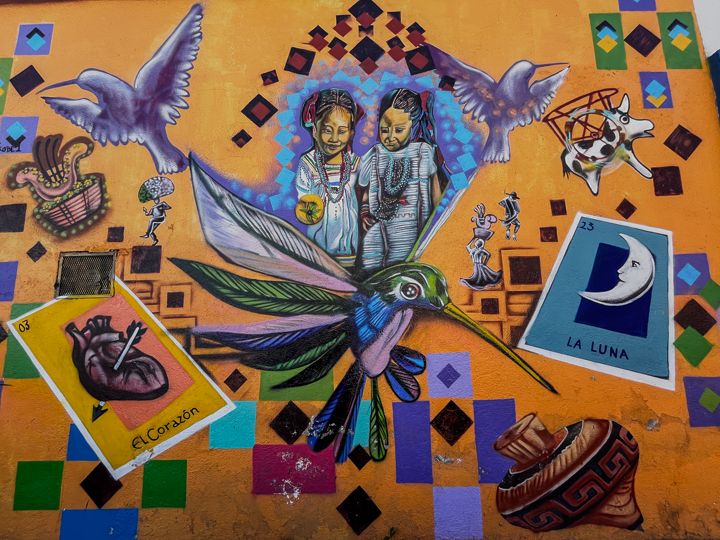

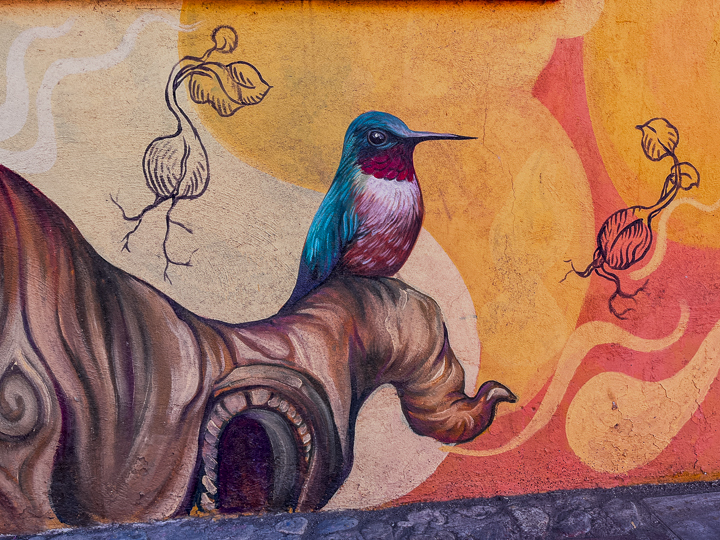
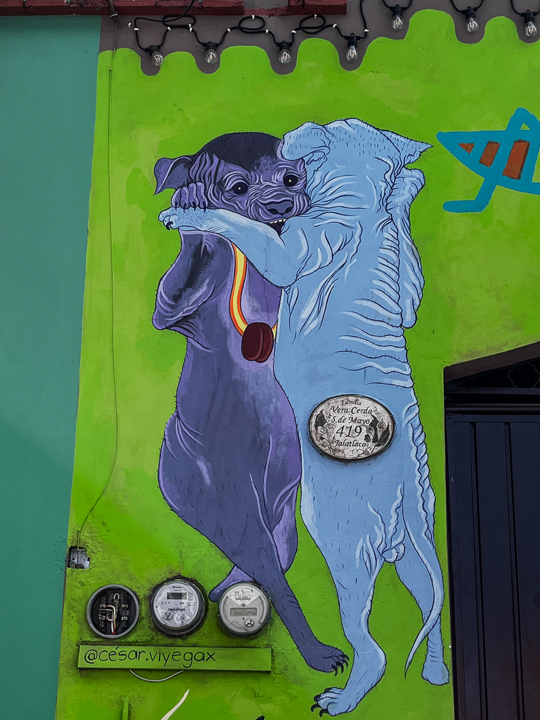
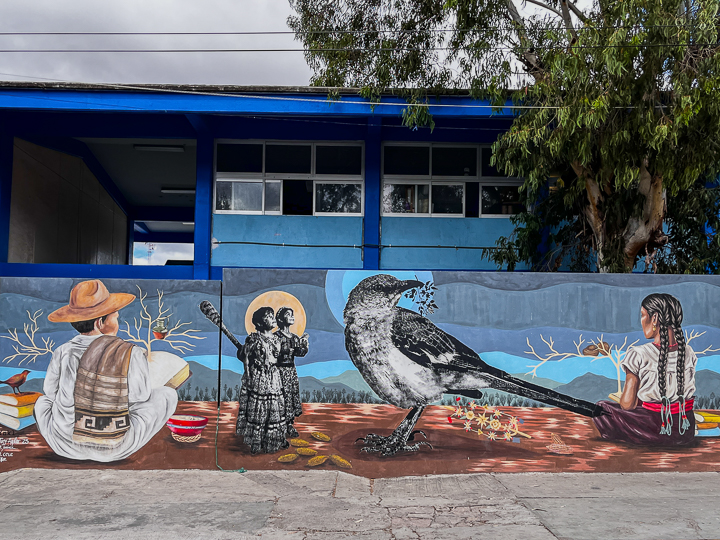
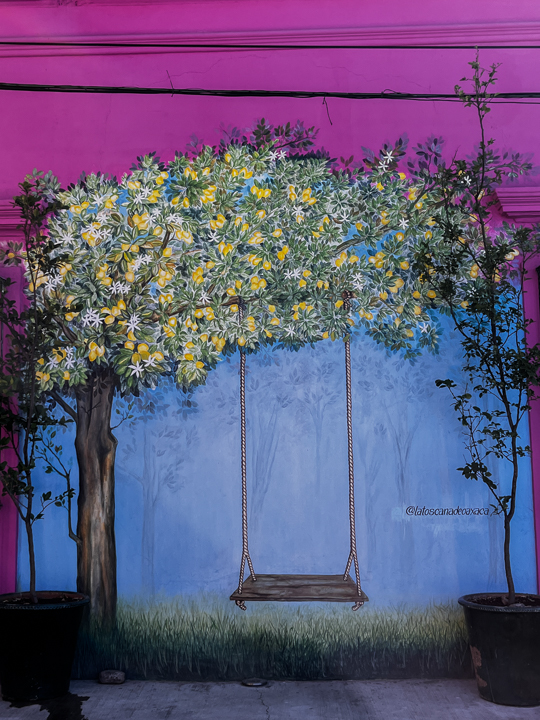
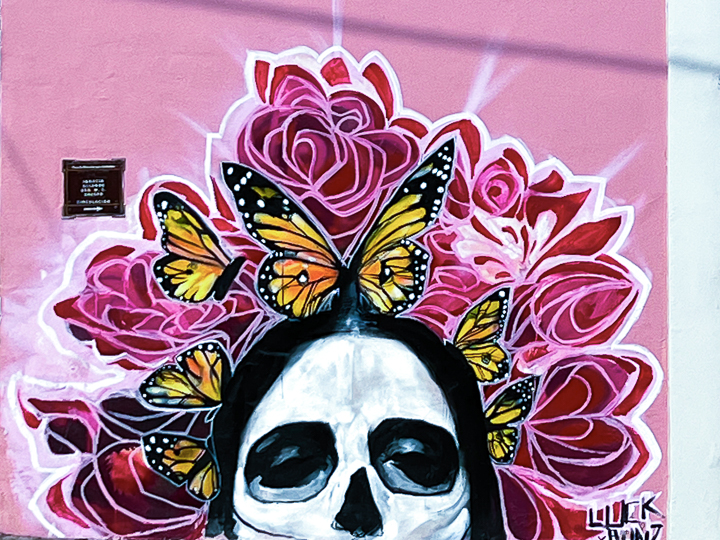
In Mexico we say, ¡Feliz Día del Amor y la Amistad! (Happy Day of Love and Friendship!)
Posted in Creativity, Culture, Holidays, Travel & Tourism, tagged Día del Amor y la Amistad, murals, Oaxaca, photos, popular travel destinations, street art, urban art, Valentine's Day, wall art on February 14, 2026| 5 Comments »
On this Valentine’s Day, I’m celebrating with Oaxaca’s walls that speak of things we love.
In Mexico we say, ¡Feliz Día del Amor y la Amistad! (Happy Day of Love and Friendship!)
Posted in Celebrations, Creativity, Culture, History, Holidays, Travel & Tourism, tagged 493rd anniversary, Happy Birthday Oaxaca, Mexico, murals, Oaxaca, photos, popular travel destinations, street art, street sweepers, trees, urban art, wall art on April 25, 2025| 2 Comments »
Ah, Oaxaca. Another year, another birthday. Today, marks the 493rd anniversary of the elevation Oaxaca de Juárez to the rank of a city by Charles V of Spain. It was a political move by villagers to keep Antequera, as it was then called, out the hands of the Marquis, Hernán Cortes, who controlled the surrounding territory and villages. And, in honor of her birthday, I’m posting some of my favorite recent Oaxaca sights.


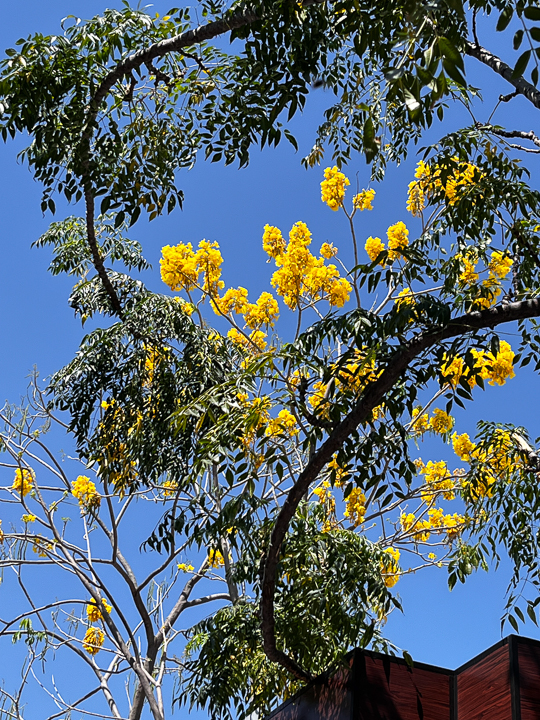

Of course, we know Oaxaca’s history goes back thousands of years before Spain even existed. Her past is still present and that’s one of the things I love most about Oaxaca.
Posted in Creativity, Culture, Travel & Tourism, tagged Día Internacional de la Mujer, International Women's Day, Mexico, Oaxaca, photos, popular travel destinations, stencil art, street art, Subterráneos Art Collective, urban art, wall art on March 6, 2025| 7 Comments »
Four weeks in my home sweet Oaxaca home provided a much needed escape from the chaos that now reigns supreme here in the USA. The warm smiles and greetings of ¡Qué milagro! (What a miracle!) from vendors I hadn’t seen in over a year warmed my heart. However, try as I might, I can’t seem to write an upbeat blog post about the wonderful time I had in Oaxaca. The menacing clouds of el norte are casting their dark shadows over my words. For now, I’ll let the walls of Oaxaca speak for me.

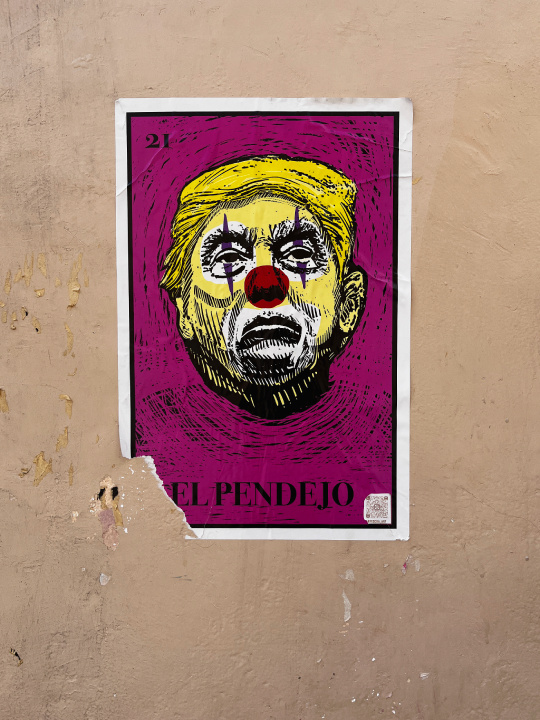
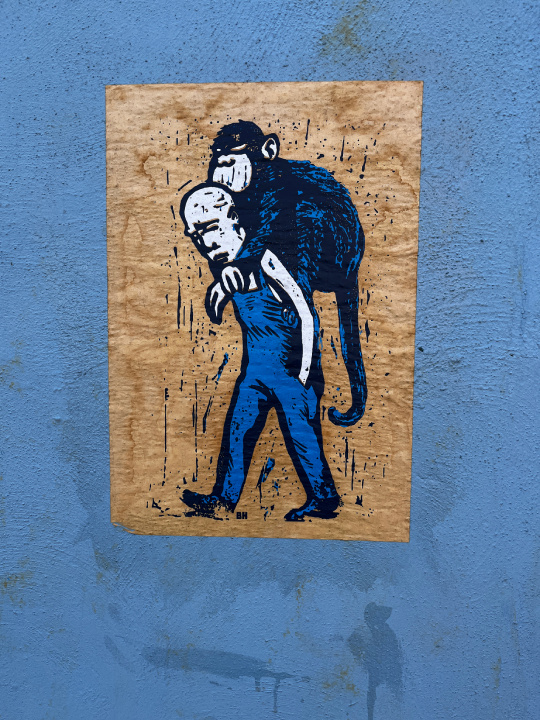
However, to end on a positive note and in honor of International Women’s Day on March 8th…
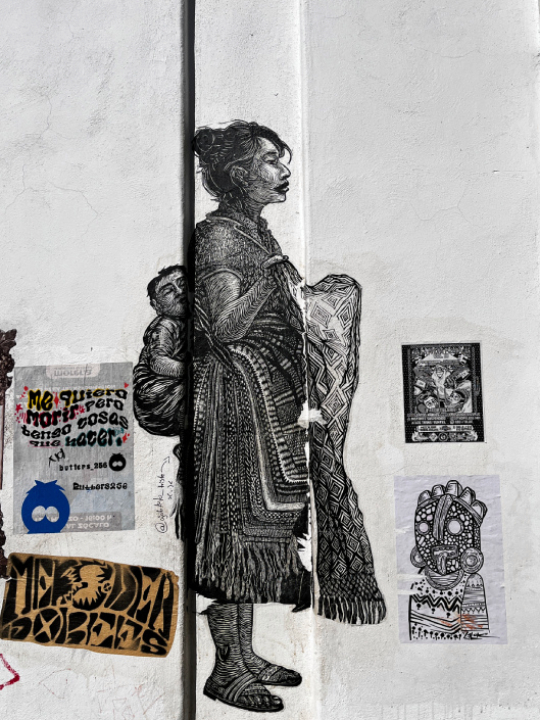

Despite suffering setbacks and facing countless attempts to block, divide and undermine us throughout history, feminist, LGBTI+ and grassroots movements keep marching forward. — Amnesty International’s Secretary General, Agnés Callamard
And, that includes Oaxaca, where NVI Noticias lists some of the actions taking place in celebration of Día Internacional de la Mujer.
Posted in Creativity, Culture, Holidays, tagged Día del Amor y la Amistad, hearts, Mexico, Oaxaca, photos, popular travel destinations, recycling hearts, street art, urban art, Valentine's Day on February 14, 2025| 2 Comments »
¡Feliz día del amor y la amistad!

Happy day of love and friendship to all my wonderful readers from the front of a plastics recycling bin!
Posted in Animals, Casita Colibrí, Creativity, Culture, Food, Travel & Tourism, tagged cats on a roof, flowers in a vase, Mexico, murals, Oaxaca, papel picado, photos, popular travel destinations, street art, tamales, urban art, wall art on January 31, 2025| 10 Comments »
After being in el norte for an entire year (by far the longest I’ve been away from Oaxaca since I relocated 15+ years ago), I’m back! It’s been mostly a smooth return — well, except for my refrigerator’s failed fuse, causing a freezer full of tamales, mole, and soup stocks to spoil. Thankfully, my neighbors discovered it the day before my return and emptied and cleaned the refrigerator and an electrician replaced the fuse a mere ten hours before my arrival. Since then, this past week has been spent restocking the larder, cleaning, attending to the garden, catching up with friends, and enjoying my home, my neighborhood, and the flavors of Oaxaca — including…
The murals…

The streets…

The door-to-door flower vendor…
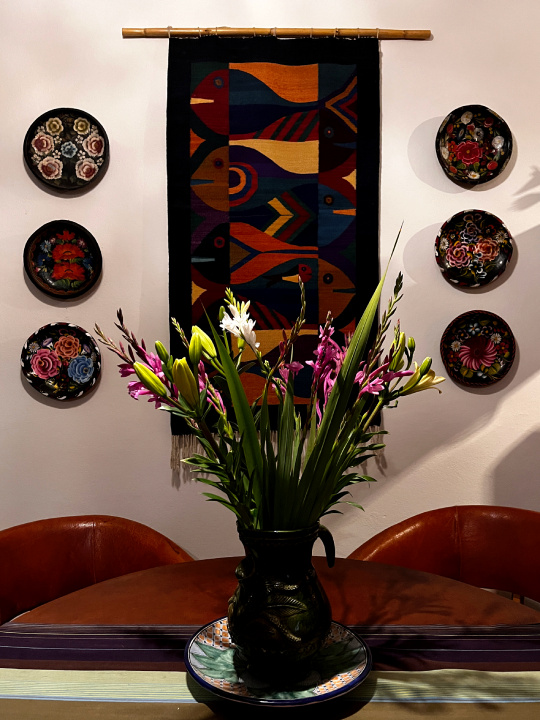
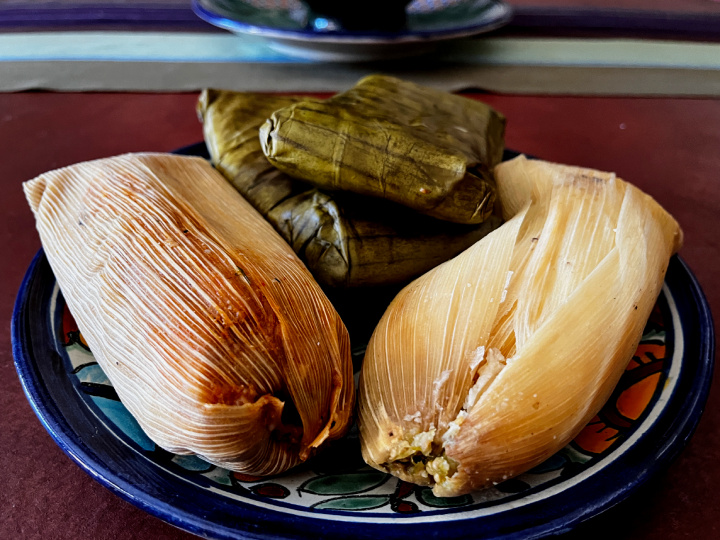
The comida…
And, let’s not forget, the view from Casita Colibrí!

It’s SO good to be back — alas, if only for a month. However, I intend to relish every moment!
Posted in Celebrations, Creativity, Culture, Religion, Travel & Tourism, tagged Día de la Virgen de Guadalupe, Día de la Virgen de Juquila, Dia de la Virgen de la Soledad, festivals and fiestas, Mexico, murals, Nuestra Señora de la Soledad, Oaxaca, photos, popular travel destinations, religious celebrations, street art, urban art, Virgen de Guadalupe, Virgen de Juquila, Virgen de La Soledad, Virgin of Guadalupe, Virgin of Juquila, Virgin of Solitude, wall art on December 7, 2024| 6 Comments »
If you don’t like clanging bells, fireworks bursting in air, and navigating procession-blocked streets (at all hours of the day and night), you might want to avoid being in Oaxaca in December. The month heralds seemingly round-the-clock joyous, sometimes solemn, and mostly noisy celebrations. This month, honoring the feast days of the Virgins of Juquila, Guadalupe, and Soledad elicits some of the most enthusiastic, lengthy, and loud festivities of the year.

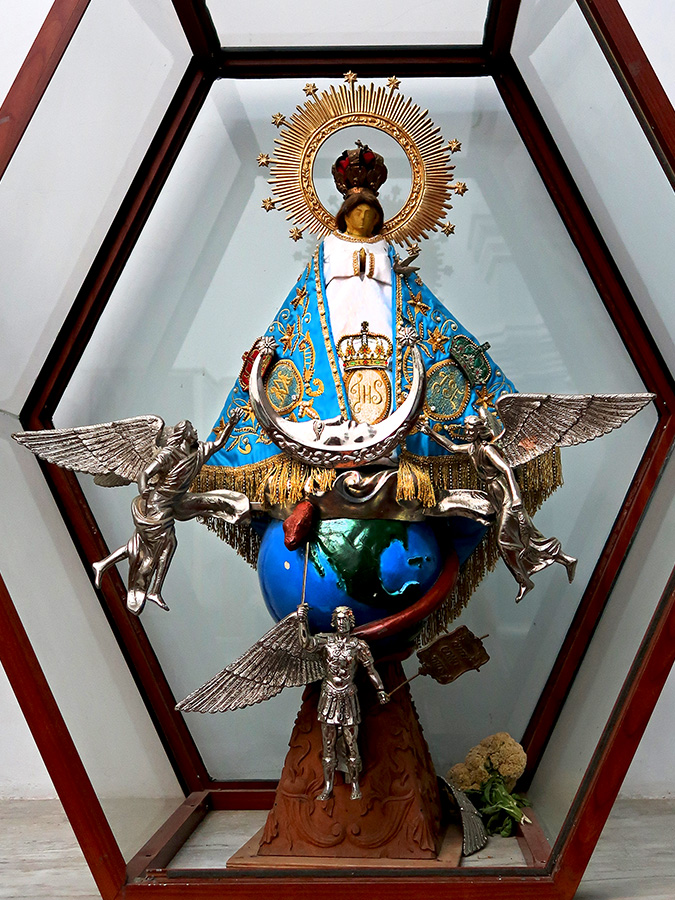
December 8 marks Día de la Virgen de Juquila — the first of the three virgins being celebrated this month. Observances began weeks ago as pilgrims began their peregrinations to her tiny Chatino village of Santa Catarina Juquila. And, in Oaxaca city, processions began filling the streets, cohetes (rockets) began exploding, and church bells sounded announcing special misas (masses).
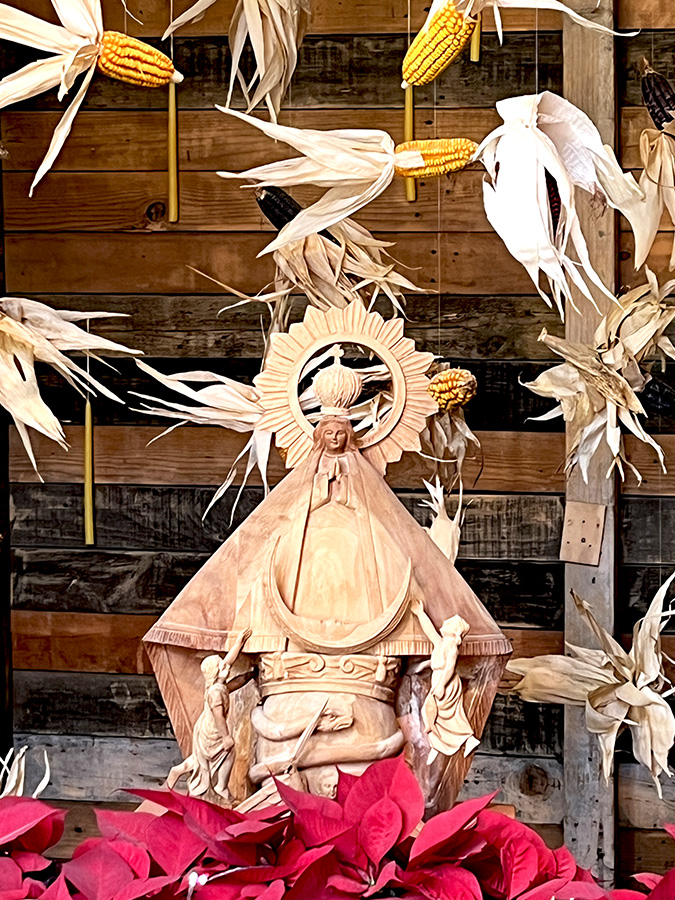
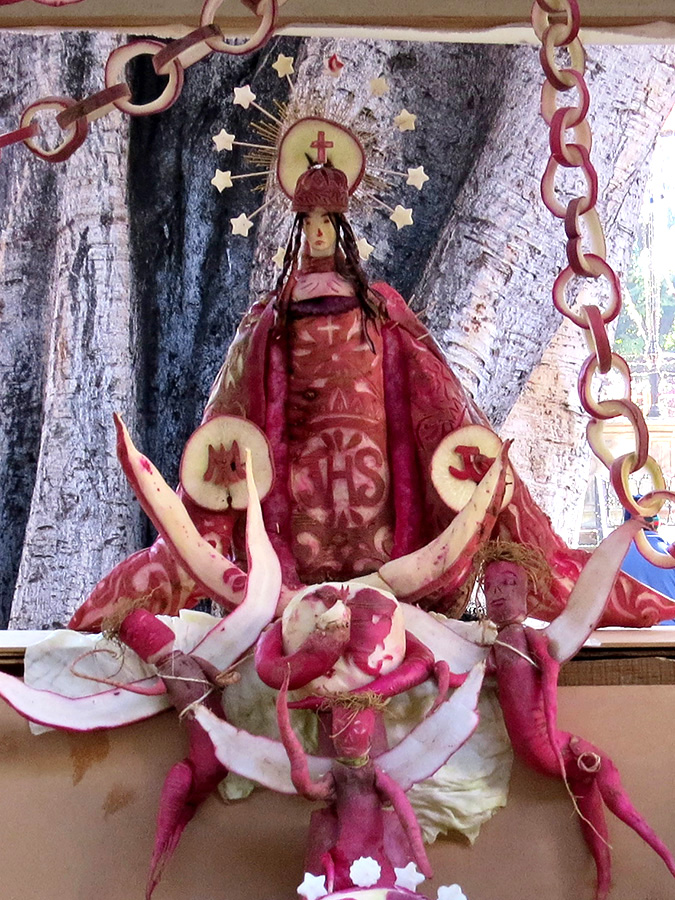
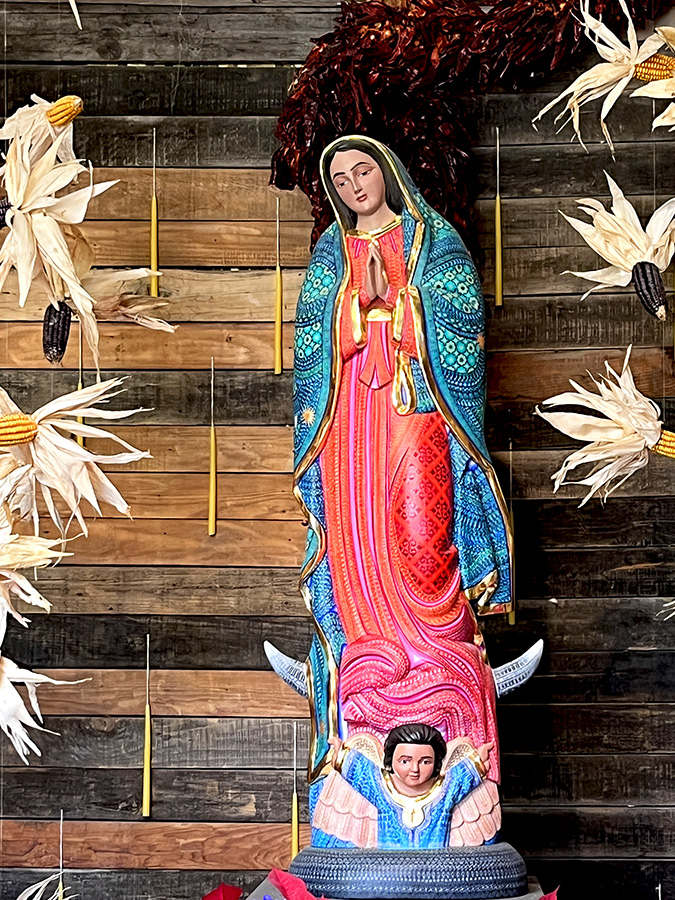
Next on the on the calendar is the more widely known date of December 12, honoring la Virgen de Guadalupe, aka, Queen of Mexico, Empress of America, and patron saint of México. However, the celebrating has already begun and besides fireworks, processions, and church bells chiming, professional photographers set up “Guadalupe grottos” outside Oaxaca’s Templo de Nuestra Señora de Guadalupe so, after being blessed inside the church, parents can have their little boys and girls, dressed in traditional traje (costume), photographed. Once finished, all can partake in the rows upon rows of food stalls, carnival rides, and puestos selling toys, Santa hats, Christmas lights.
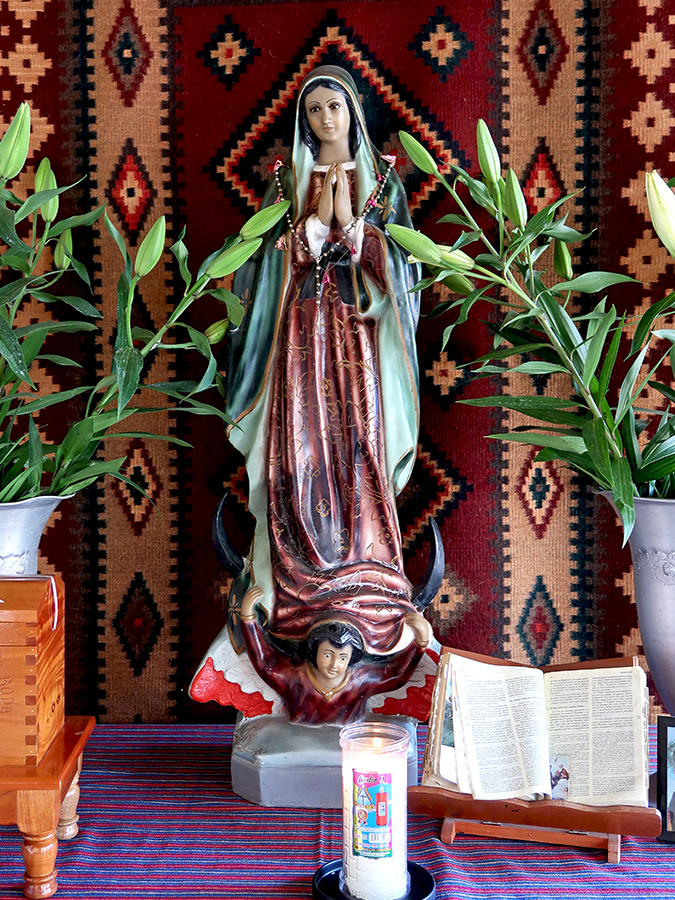


Last, but not least for Oaxaqueños, is December 18, the feast day of the much loved and revered, Queen of Oaxaca, La Santísima Virgen de La Soledad (Virgin of Solitude). Festivities with special religious rites, processions, and fireworks usually begin in early December, overlapping with Juquila and Guadalupe. Soledad’s celebration culminates with hundreds of her devotees camping out in the atrium of her church, the Basílica de Nuestra Señora de la Soledad, on the night of December 17 — with musical entertainment throughout the night, afternoon cultural performances the next day, and several outdoor masses from before dawn to nightfall on the 18th. Food stalls take over the stairs leading to the Basílica and the street below (Independencia) is closed for several blocks with carnival rides and stalls selling more sweets and savories, religious tchotchkes, clothing, and much more. It’s lively, crowded, and loud!


I’m still in el norte and all is quiet. While it makes for a better night’s sleep, I’m missing the raucous and joy-filled cacophony that fills Oaxaca’s days and nights in December.
Posted in Churches, Creativity, Culture, Travel & Tourism, tagged Iglesia de Los Siete Príncipes, Mexico, murals, Oaxaca, photos, popular travel destinations, street art, Templo y exconvento de los Siete Príncipes, urban art, wall art on November 23, 2024| 7 Comments »
Last January, I needed to go to the Aragal shipping facility to pick up a Christmas present — two jars of Salsa Macha made for me by K, best gal pal and former neighbor who was my personal cocinera (cook) during those dark days of Covid. The salsa made a circuitous journey from K’s kitchen in Teotitlán del Valle to my kitchen in Barrio de Jalatlaco. The route included being tucked in the back of our friend’s van while we all enjoyed a day trip to Ocotlán and San Antonino Castillo Velasco, once back in the city, being forgotten as I scrambled out of the van amidst bumper-to-bumper traffic, venturing up over the mountains to Puerto Escondido in said van, belatedly being remembered, and thus shipped by my van-owning friend back to me in Oaxaca.
And so, two weeks after it began its journey, I found myself walking south to Aragal to retrieve my errant gift. This is not a route I normally traverse and it’s definitely not in a touristy part of the city. However, being Oaxaca, there was no end of sights to surprise and delight — from the sacred of the Templo de los Siete Príncipes to the profane of the street art along the way.
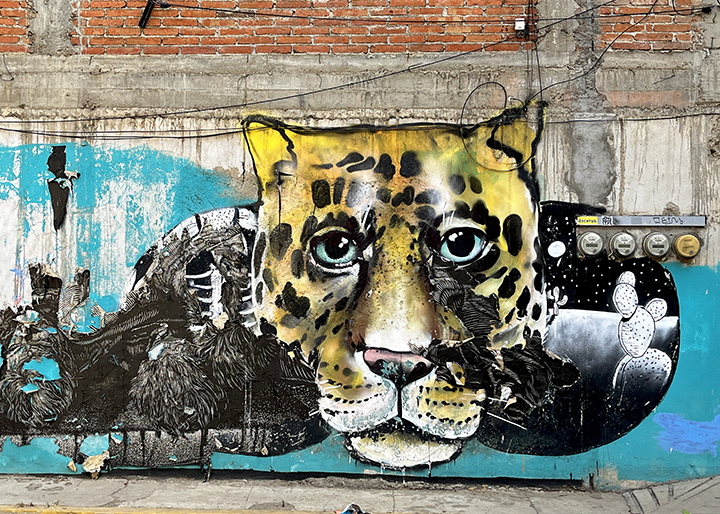
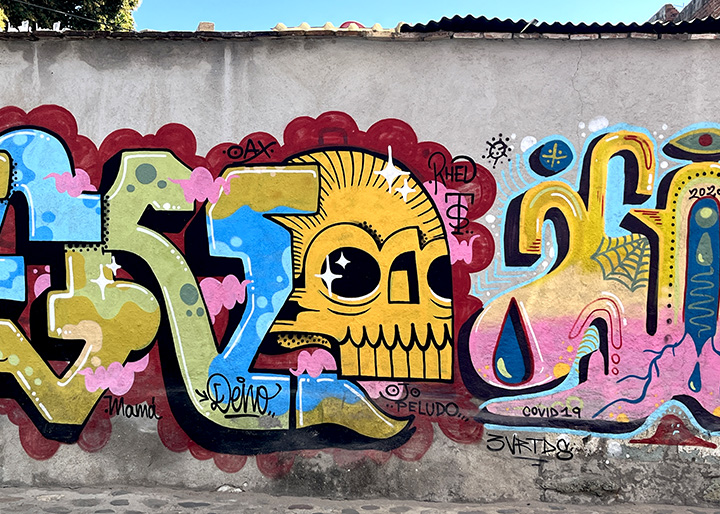


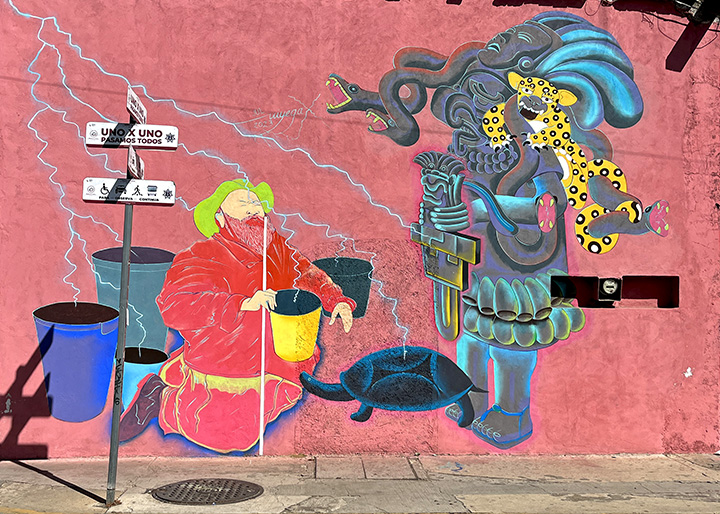
The two glass jars of Salsa Macha made it intact with only a tiny bit of leakage. Whew! And, no surprise, the salsa was super delicious.
Posted in Celebrations, Creativity, Culture, Holidays, Travel & Tourism, tagged calacas, Catrinas, Day of the Dead, Day of the Dead decor, Día de Muertos, Mexico, murals, Oaxaca, photos, popular travel destinations, skeletons, street art, urban art, wall art on October 27, 2024| 9 Comments »
It’s Halloween time up here in el norte and the occasional house features spiders poised to pounce in webs strung across bushes, witches with broomsticks guard front gates, and pumpkins decorate entries signaling trick or treaters are welcome. A few skeletons have moved into the neighborhood but none are as well dressed and accessorized as those seen last year loitering on sidewalks, hanging out on walls, and dining in the restaurants of Oaxaca during Día de Muertos (Day of the Dead).
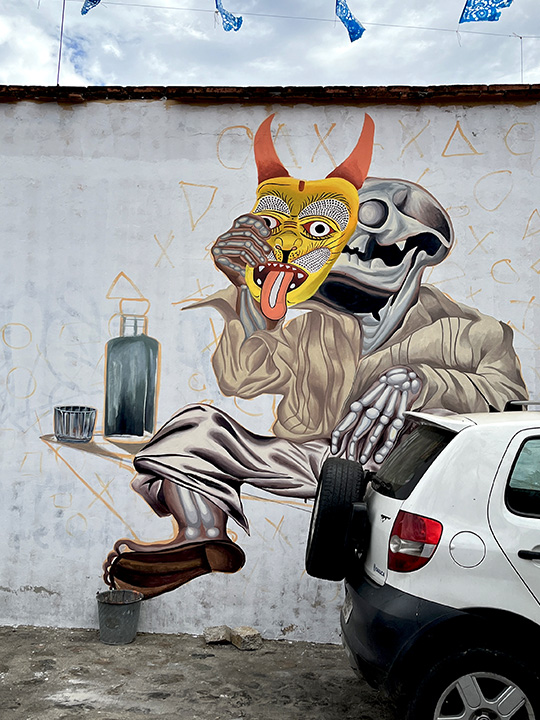
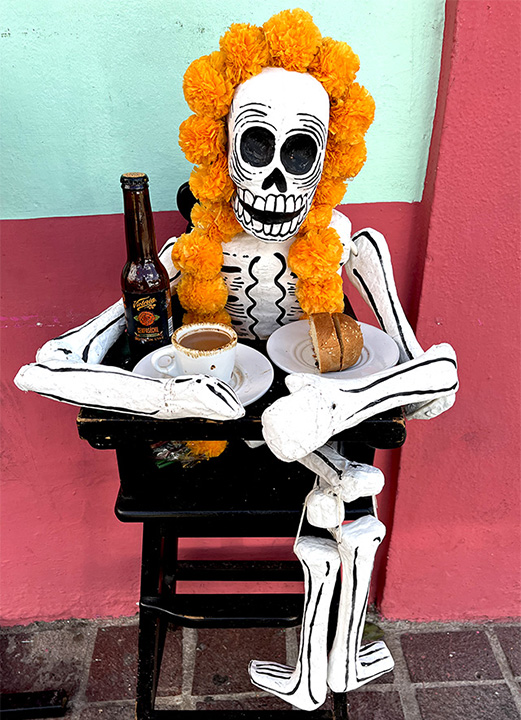

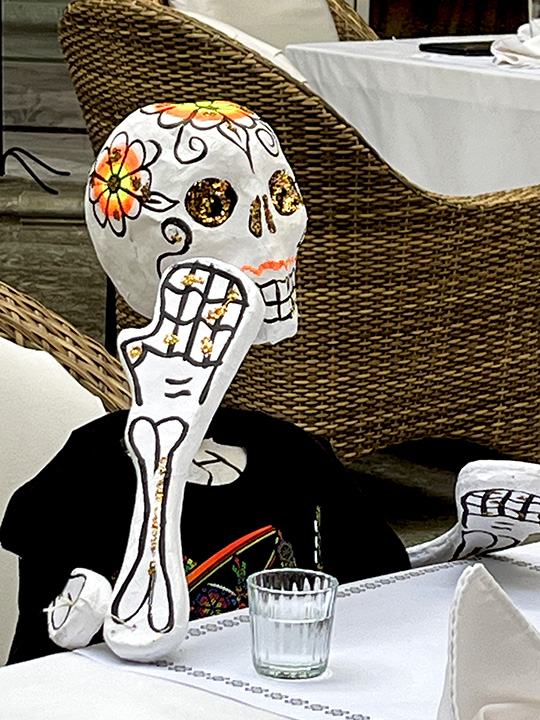

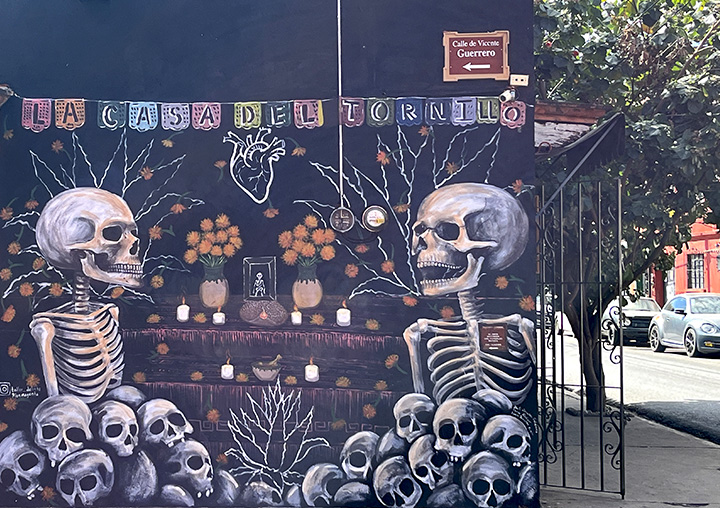
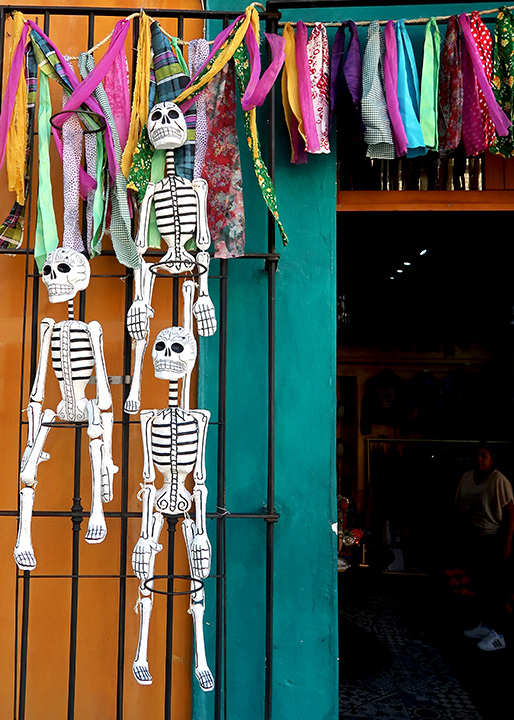
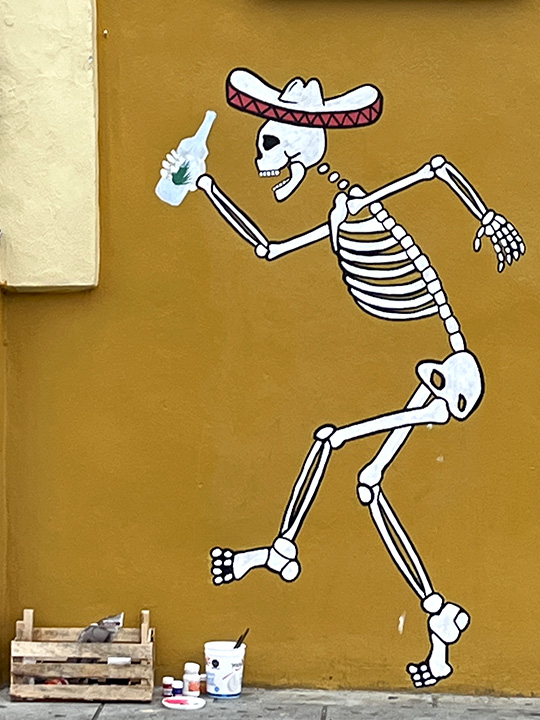
What can I say? I’m missing these guys and gals inhabiting Oaxaca this time of year.
Posted in Creativity, Culture, Environment, Travel & Tourism, tagged environmentalism, Mexico, Mill Valley, murals, Oaxaca, photos, recycling bins, street art, Teotitlán del Valle, urban art on October 15, 2024| Leave a Comment »
The world is your home. Take care!
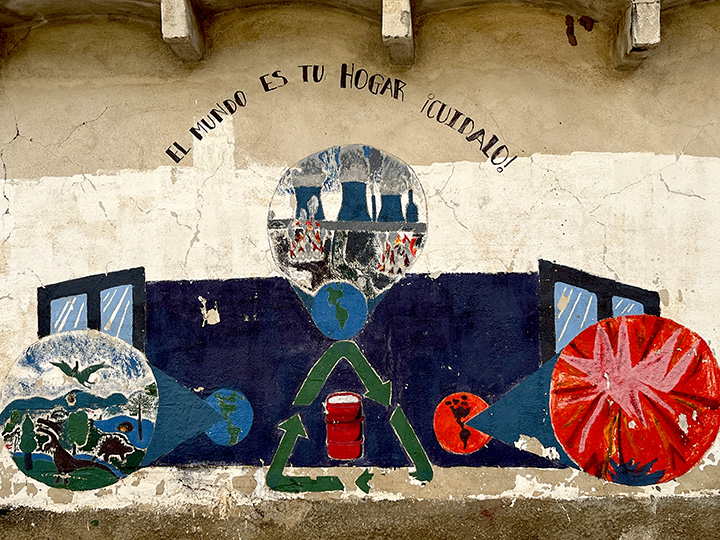
Never forget…

No matter where one lives, the fate of the earth is in our hands.
Posted in Creativity, Culture, Education, History, Politics, Protests, Tragedy, Violence, tagged Ayotzinapa, demonstrations, disappeared, Escuela Normal Rural Raúl Isidro Burgos, graphic arts, Guerrero, Iguala, marches, Mexico, Oaxaca, photos, stencil art, street art, student teachers, urban art, wall art on September 25, 2024| 8 Comments »
It’s been ten excruciating and heartbreaking years since the horrific events during the night of September 26 to 27 unfolded on the streets of Guerrero in the town of Iguala. The murder that night of three students, wounding of several more, and disappearance of 43 students all from Escuela Normal Rural Raúl Isidro Burgos, a teachers’ college in Ayotzinapa, Guerrero, has continued to haunt Mexico’s national conscience, much like the 1968 Tlatelolco massacre in Mexico City — a commemoration the students were enroute to attend.
As news of that unspeakable night ten years ago spread, demonstrations were organized throughout Mexico — and soon the world — calling for justice and the return of the missing 43 student teachers (normalistas). Artists, as they have done throughout history, used their talent to give visual voice to the grief, outrage, and resolve to uncover the truth. And, I began documenting what I saw on the streets of Oaxaca.


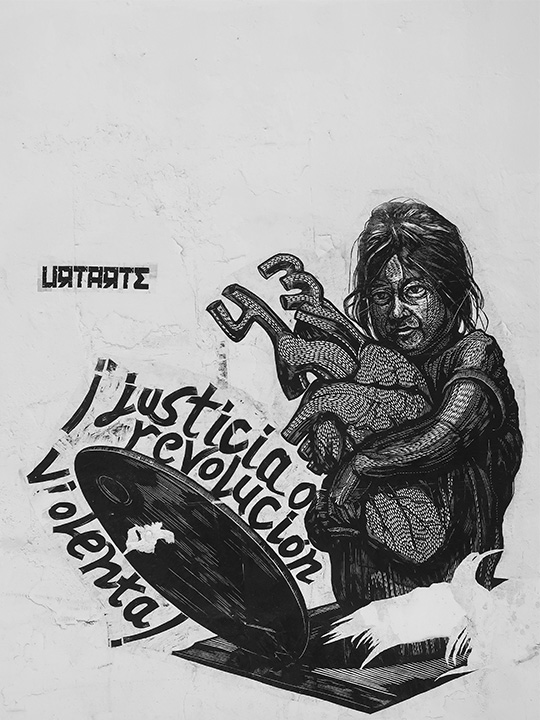
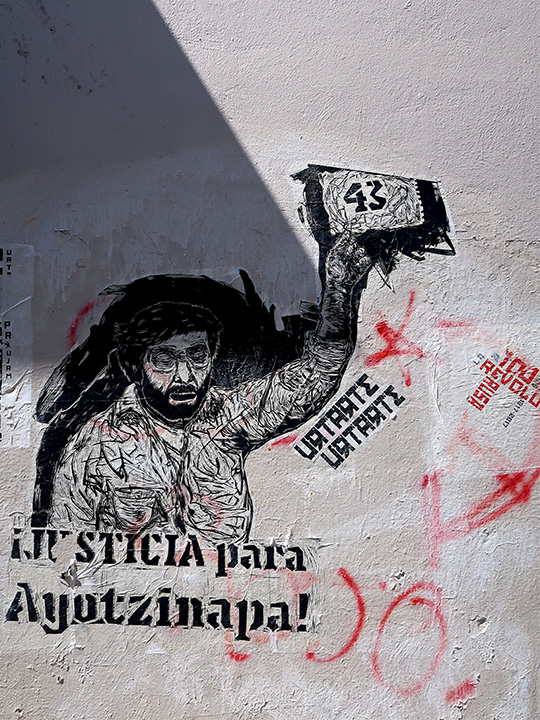
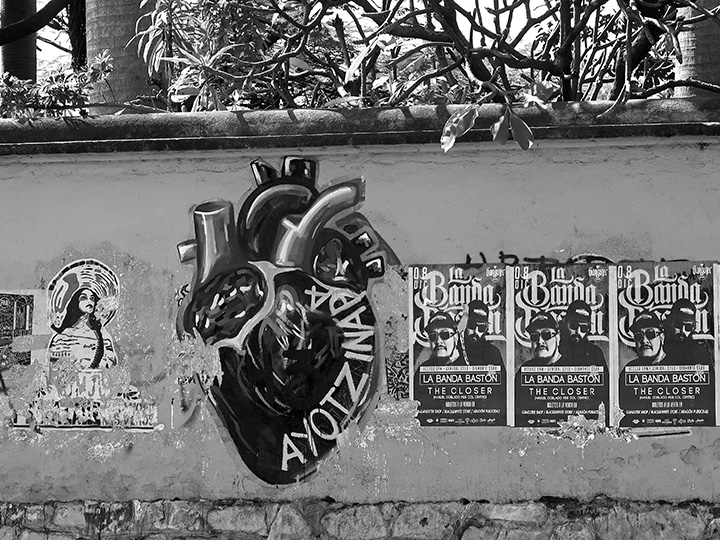
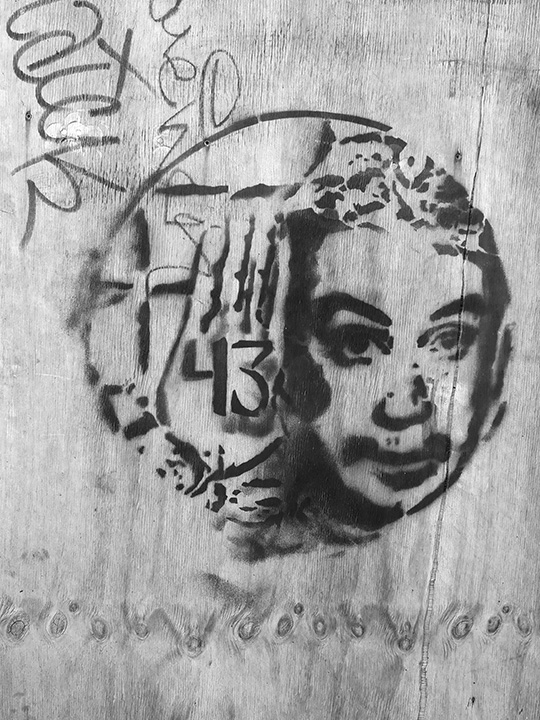
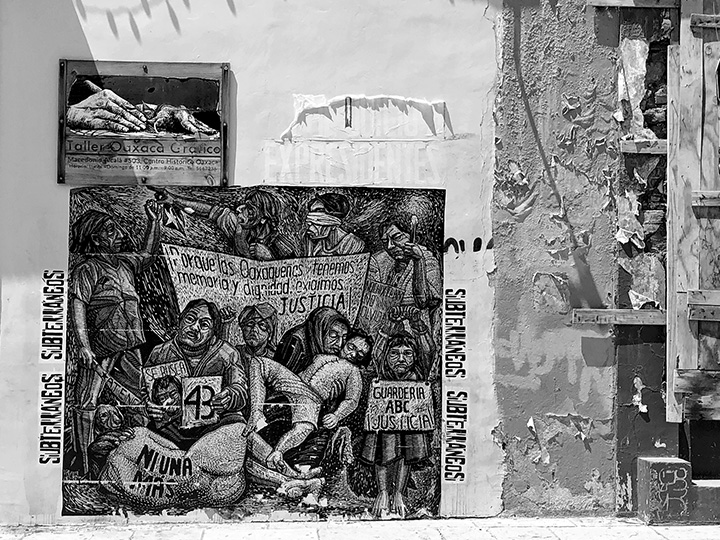
Here we are ten years later and the missing 43 are still missing, the heartbreak continues, the truth remains hidden, and justice has yet to be served. However, no one has forgotten. On this tenth anniversary, protest marches are being held, conferences have been organized, articles continue to be written, artists continue to create, families continue to mourn, and the people vow they will not be silent and the Ayotzinapa 43 will never be forgotten.
For more information in English:
Posted in Creativity, Culture, Travel & Tourism, tagged Mexico, murals, Oaxaca, photos, popular travel destinations, street art, urban art, wall art on August 11, 2024| 5 Comments »
On the streets of Oaxaca, you never know when you will see…


…close encounters of the mural kind.
Posted in Creativity, Culture, Transportation, Travel & Tourism, tagged car, Mexico, motorcycles, murals, Oaxaca, photos, popular travel destinations, street art, urban art, wall art on April 4, 2024| 4 Comments »
Sometimes the sights along the streets of Oaxaca make me chuckle.


And, I just have to stop and record the scene.
Posted in Creativity, Culture, Holidays, Travel & Tourism, tagged Armarte, Mexico, Oaxaca, photos, political messaging, popular travel destinations, stencil art, street art, urban art, wall art, women graffiti, women's faces on March 8, 2024| Leave a Comment »
Celebrating March 8, International Women’s Day, with women speaking from the walls of Oaxaca.
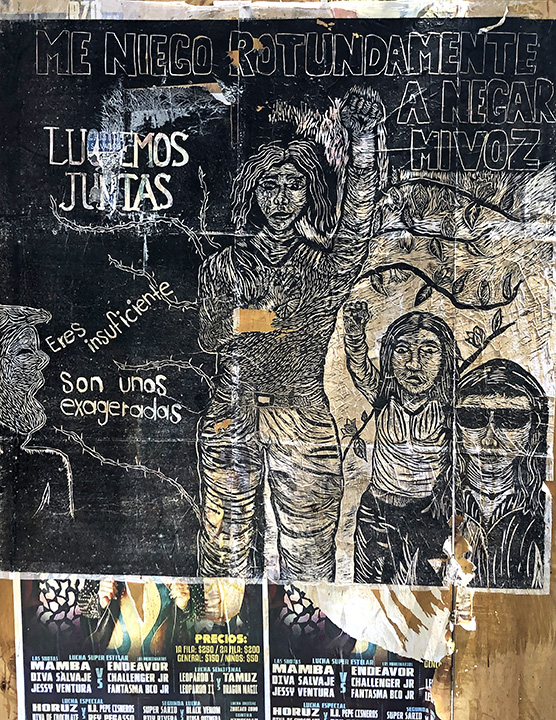

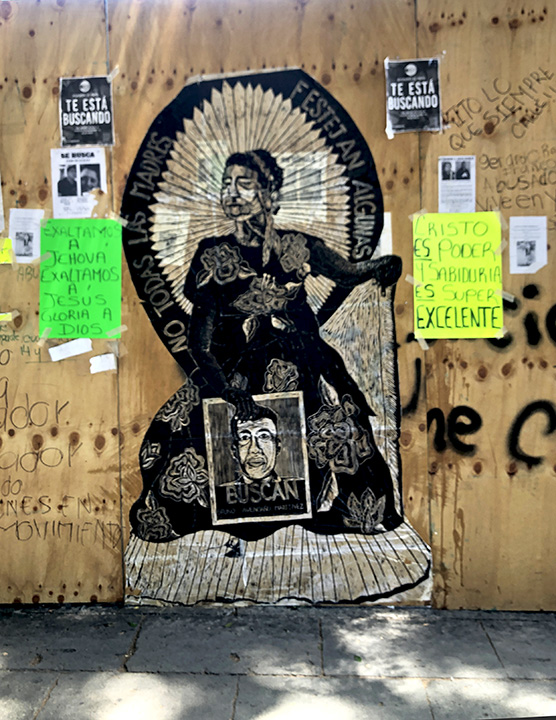
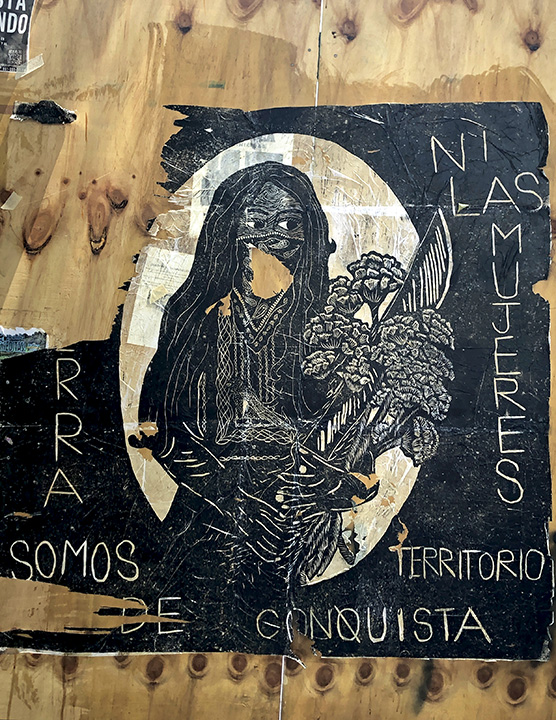
From ARMARTE, a women’s collective dedicated to using the arts as a tool for social transformation.
Posted in Creativity, Culture, Music, Neighborhoods, Travel & Tourism, tagged Barrio de Jalatlaco, Dios nunca muere, Macedonio Alcalá, Mexico, murals, Oaxaca, photos, popular travel destinations, street art, urban art, wall art on February 23, 2024| 4 Comments »
Another mural in progress by Bouler in Barrio de Jalatlaco.

The paint, brushes, and song by Macedonio Alcalá (sung by Javier Solis) may proclaim…
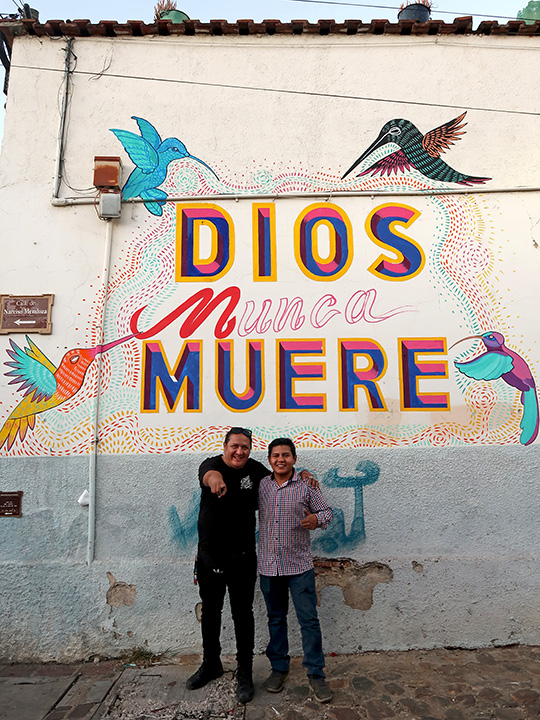
God never dies…

But, I think art never dies.
Posted in Celebrations, Creativity, Culture, Holidays, Travel & Tourism, tagged Day of Love and Friendship, Día del Amor y la Amistad, hearts, Mexico, Noel Gómez Lorenzo, Oaxaca, Paulina Solís Ocampo (choreographer), photos, popular travel destinations, street art, urban art, Valentine's Day on February 14, 2024| Leave a Comment »
On this gray Valentine’s Day in the “City By the Bay,” I left my heart in Oaxaca…
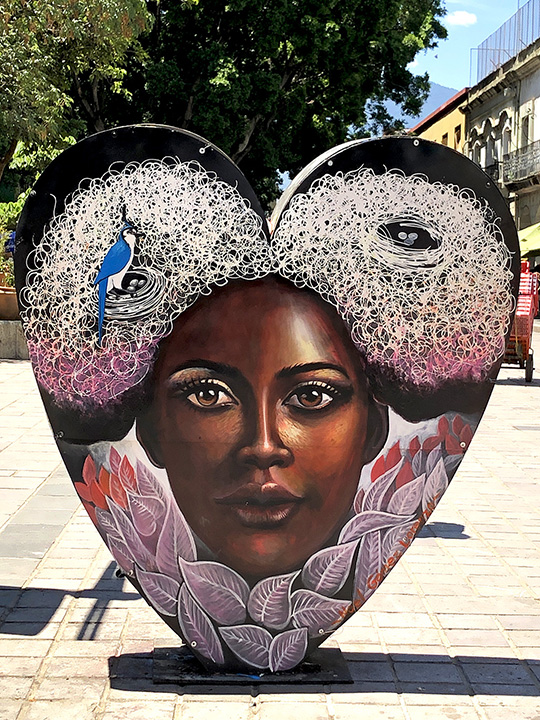

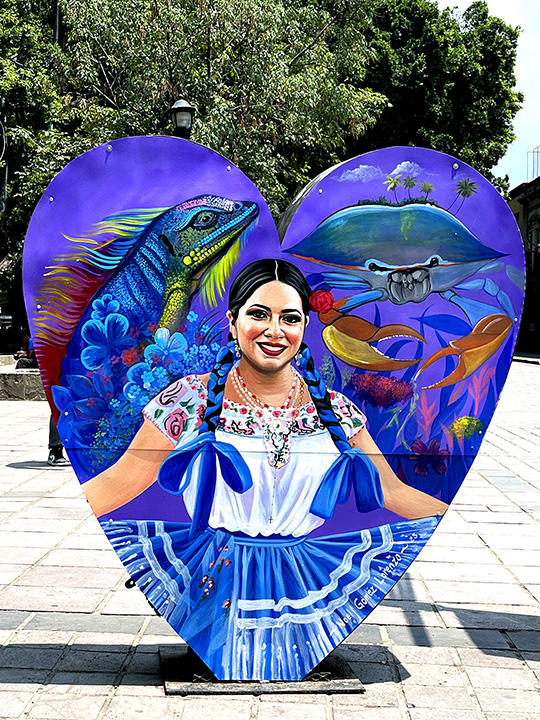
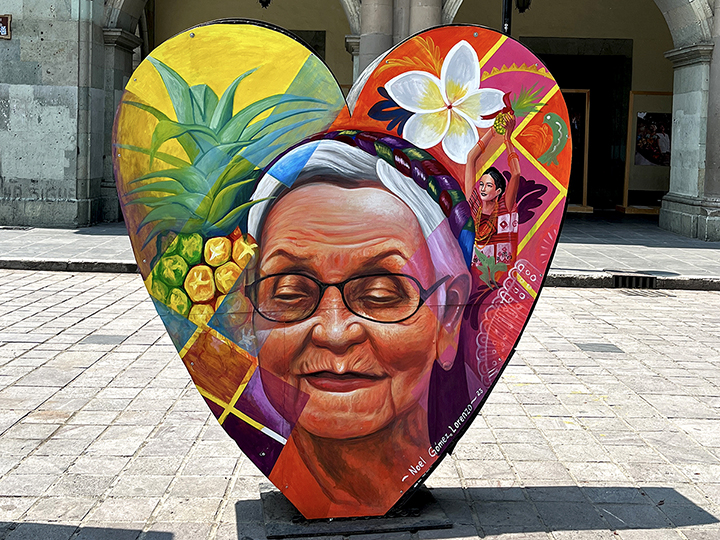
¡Feliz Día del Amor y la Amistad! Happy Day of Love and Friendship!


 Mexican Peso Converter
 View From Casita Colibrí