Feeds:
Posts
Comments

Posts Tagged ‘tombs’

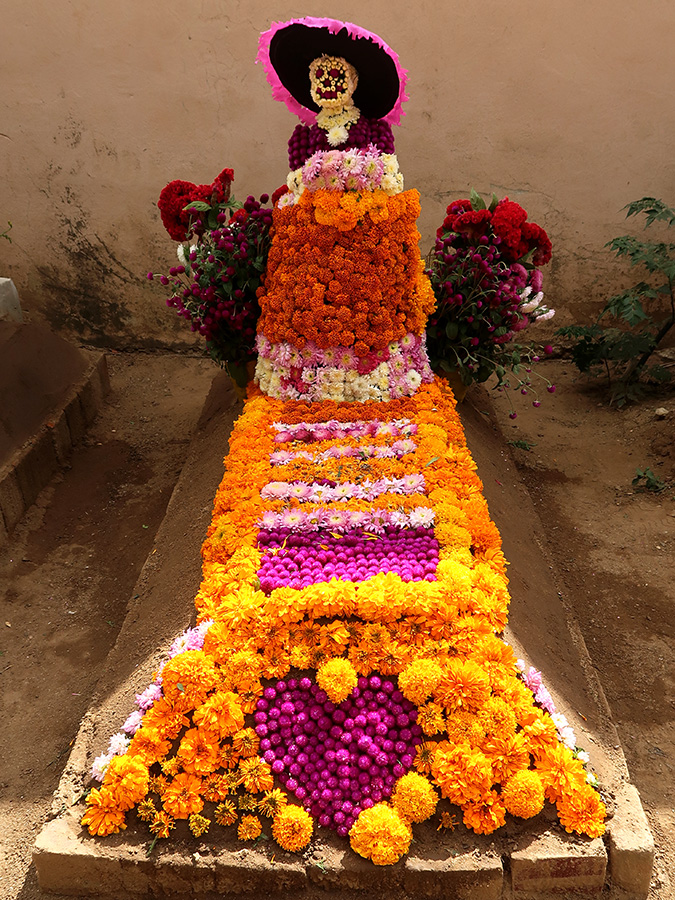
On November 3rd, K and I headed to San Antonino Castillo Velasco — a Zapotec community 24 miles south of Oaxaca city. It is a village known for growing flowers and for the floral embroidery decorating its traditional blouses and dresses. 
Their difuntos (departed souls) understand their families are busy providing flowers for altars and tombs in the surrounding villages in the valley and wait until November 3-4 to return and spend time with their living loved ones. Because floral design plays such an important role in the traditions and commerce of the village, it is carried over to the elaborate decorating of the tombs in the panteón (cemetery).

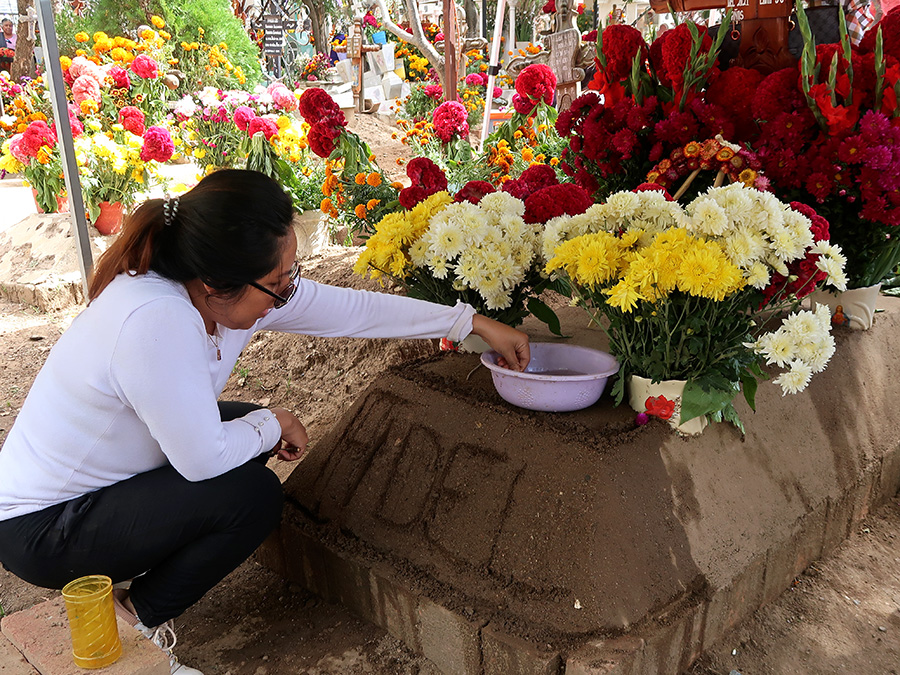
One of the flowers grown is the “flor inmortal” (immortal flower), so named because, even when dried, it retains its brilliant colors. Artisans in the village use these flowers to create intricately designed figures on display December 23 in the city of Oaxaca during Noche de Rábanos and to decorate the graves of loved ones during Día de Muertos.
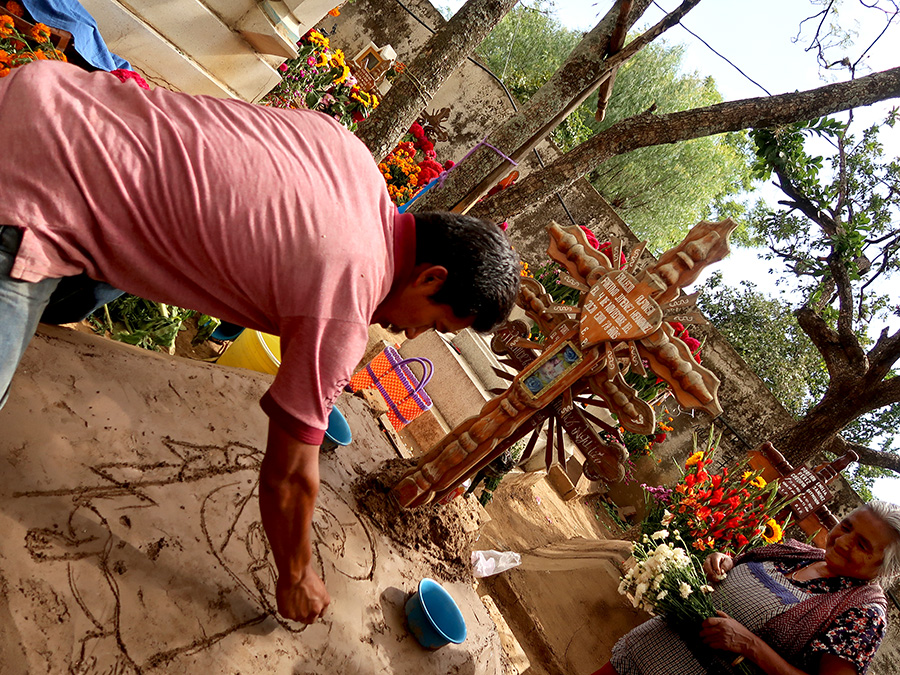
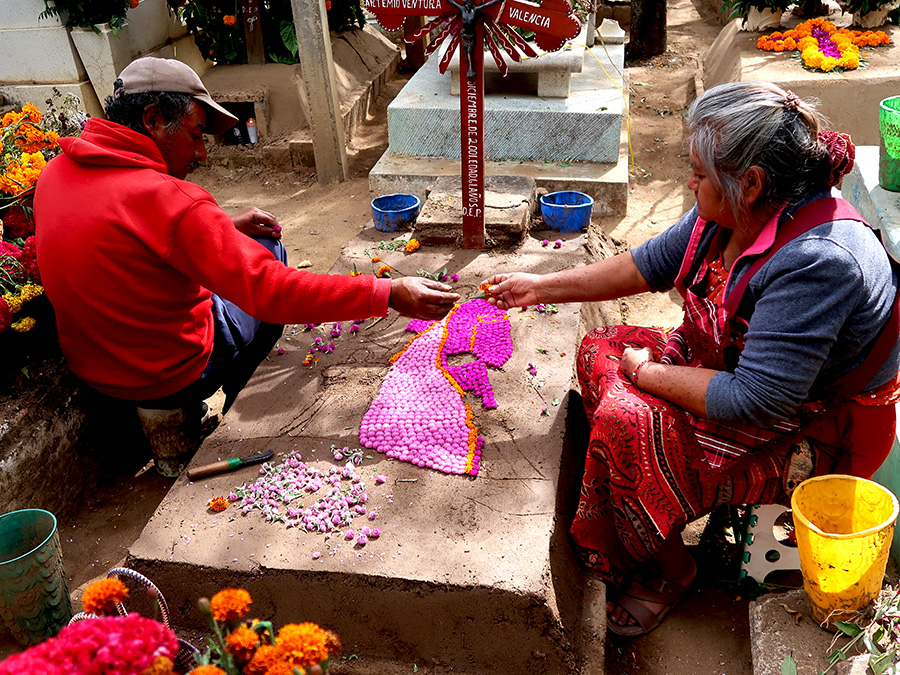
In the cemetery villagers mix the area’s very fine dirt with water, cover the graves with this damp mud, and use a trowel to smooth it. Once dry, they outline designs and religious imagery into this mud canvas and use flowers (fresh and dried) to paint the scene. Entire families are involved — male and female, young and old. It is a labor of love and incredibly moving to behold.
Read Full Post »

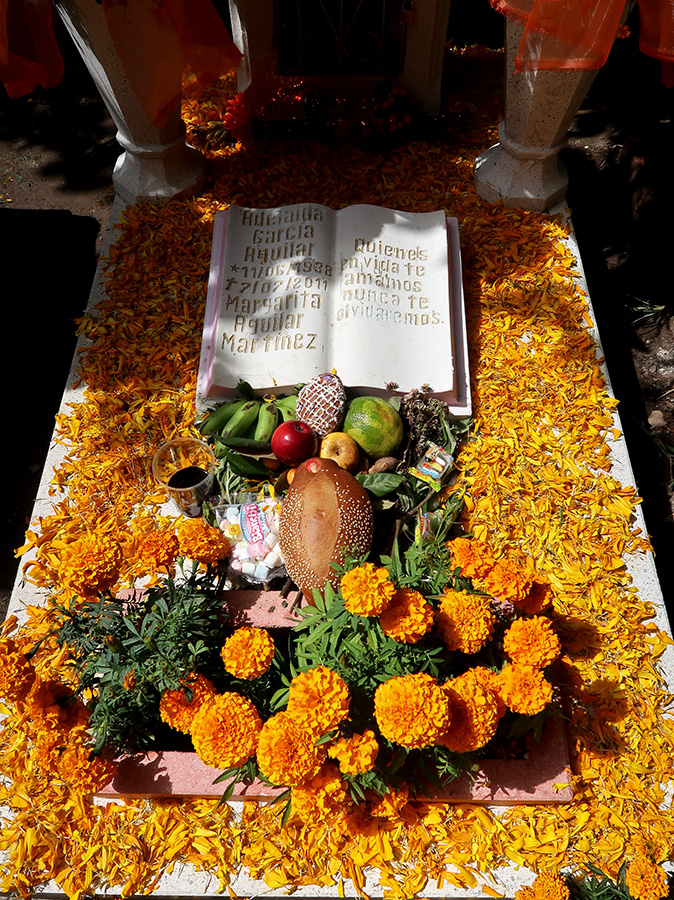
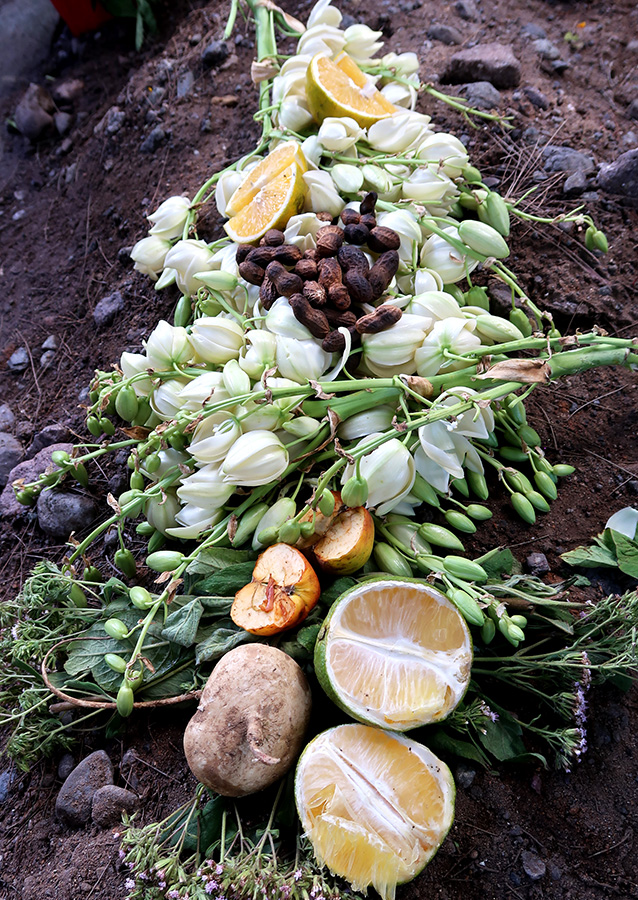
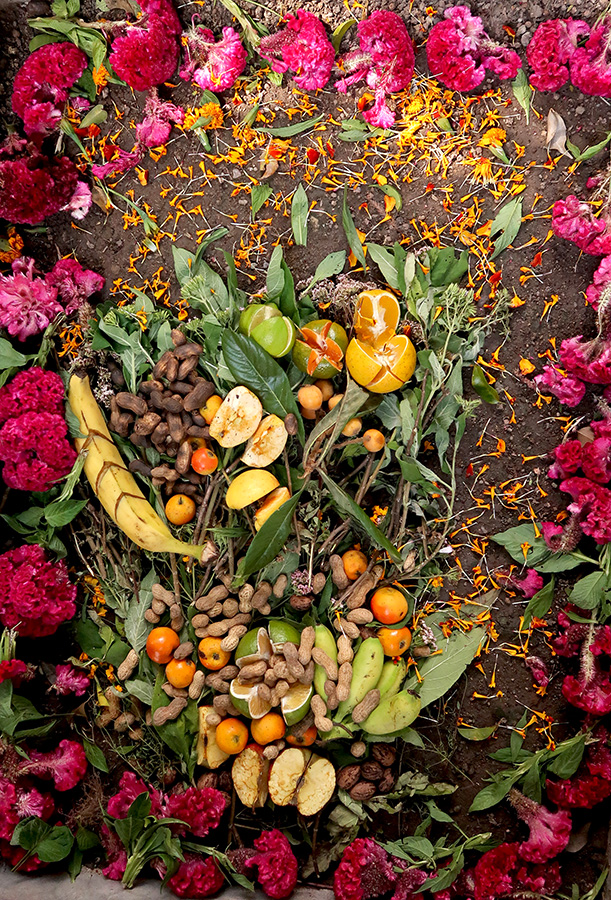
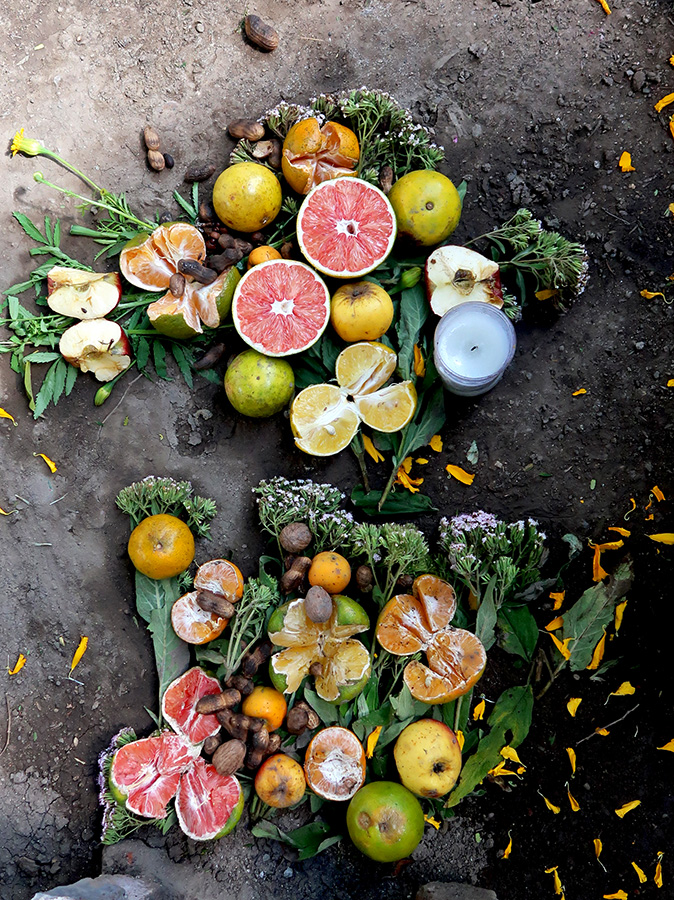
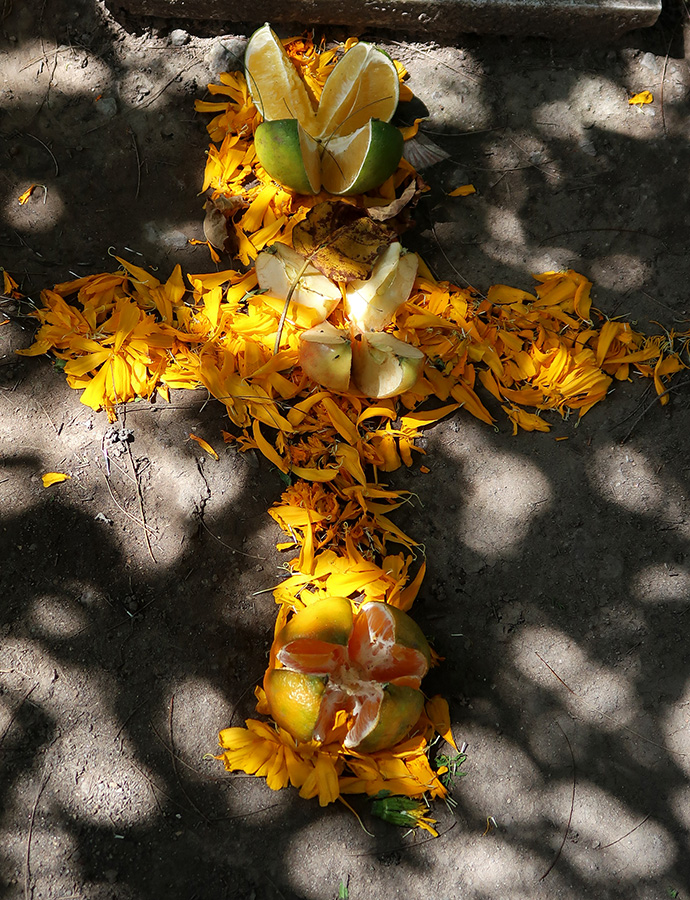
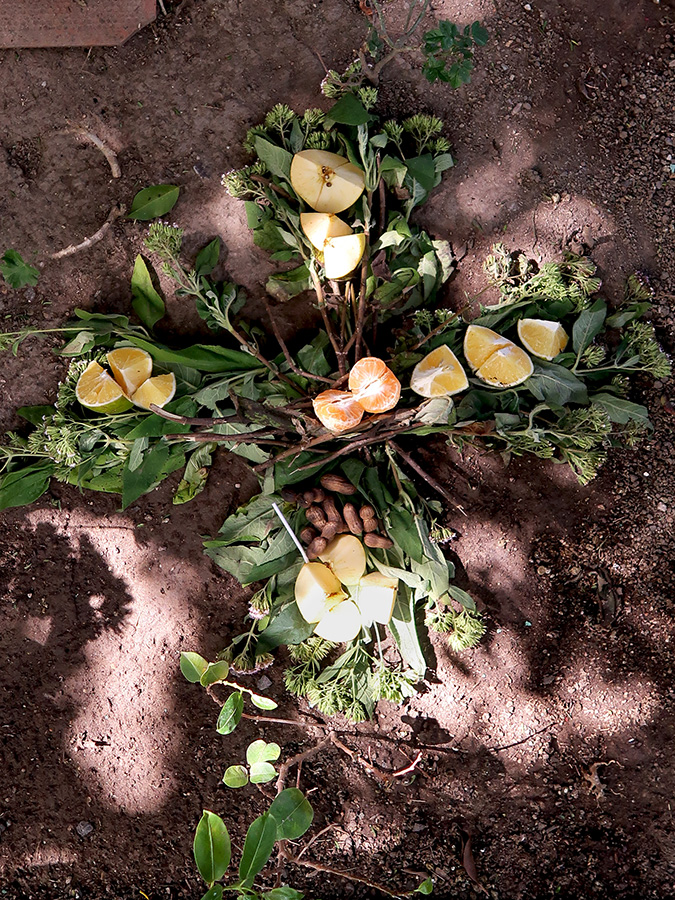
The difuntos have begun arriving and, like every year on November 1, I escape the tourist craziness of the city to spend time in the tranquility of the panteón in Tlacolula de Matamoros. Under the dappled sunlight of early afternoon, families clean, bring flowers, and celebrate. The departed must have nourishment for their travel between the world of the living and dead, thus fruit, nuts, bread, and beverages are placed on the graves.

The difuntos also seem to appreciate artistry.

Read Full Post »

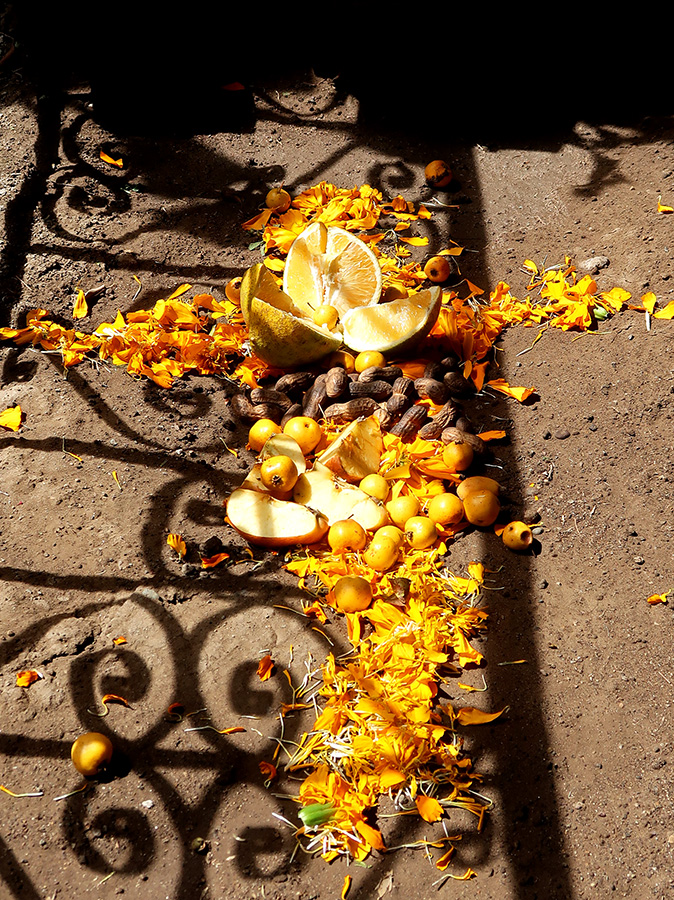
Under the dappled sunlight filtering through the 500 year old ahuehuete trees in the panteón of Tlacolula de Matamoros, lovingly placed fruit and nuts nourish the souls.  (Click on images to enlarge)


In the afternoon, when the light and shadows dance on the graves, beautiful still lifes greet the departed, their living family, friends, and visitors.  It is a tranquil setting to contemplate the words of Octavio Paz (The Labyrinth of Solitude, the other Mexico, and essays, Grove Press, 1985, p. 54)

The opposition between life and death was not so absolute to the ancient Mexicans as it is to us.  Life extended into death, and vice versa. Death was not the natural end of life but one phase of an infinite cycle.

Read Full Post »

The dead don’t arrive in the valley of Oaxaca all at once.  The cosmic difunto air traffic controller has scheduled their arrival at different times on different days, from October 31 through November 3, to avoid celestial congestion.

Santa María Atzompa’s departed are among the first to return, arriving on the night of October 31.  Flower and food vendors line the walkway leading to the panteón as grandparents, parents, teens, and small children stream in with arms full of flowers, candles, buckets, and brooms.  Because is built on a slope and there are almost no paths, footing can be treacherous, especially in the dark when only candles on the graves light the way.  At one time, perhaps tombs were positioned on a grid, but no more and it seems to be filled to capacity.  I guess that’s why one side of the panteón has been opened up (one of the walls removed), the field beyond leveled, and a new wall around the field, connected to the old, constructed.  (You can click on images for a larger view.)

On November 1, in the early afternoon, it has become our custom to visit the cemetery in Tlacolula de Matamoros, before bringing pan de muerto and mezcal to the home of friends in Teotitlán del Valle.  In contrast to the higgledy-piggledy of Atzompa, the panteón in Tlacolula emanates a sense of order and serenity.  I wonder, could the tranquility come from the 500 year old ahuehuete trees (hijos of el Tule, we were told) that reign over the tombs of the departed and make for an amazing play of light and shadow throughout?

On November 2, we returned to Teotitlán, but I will save that for another blog post.  However, that was not the end of the road.  In the category of, no rest for the living, the following day we drove south to San Antonino Castillo Velasco.  This is the village known for their beautiful flowers and exquisite floral embroidery.  And, it is said that because the living are so busy providing flowers to other parts of the valley, the departed wait until November 3 to return. (See the book, Day of the Dead: When Two Worlds Meet in Oaxaca by Shawn D. Haley and Curt Fukuda.)  I’m sure, like we, the difuntos are dazzled by the intricacy of floral designs that family members have created to decorate their tombs in welcome.

Octavio Paz writes in The Labyrinth of Solitude, “Life extended into death, and vice-versa.  Death was not the natural end of life but one phase of an infinite cycle.”

Read Full Post »

Young and old, male and female…

it’s a family affair, labor of love…

as the tombs of San Antonino Castillo Velasco are painstakingly decorated on November 3.

Read Full Post »