Feeds:
Posts
Comments

Posts Tagged ‘stencil art’

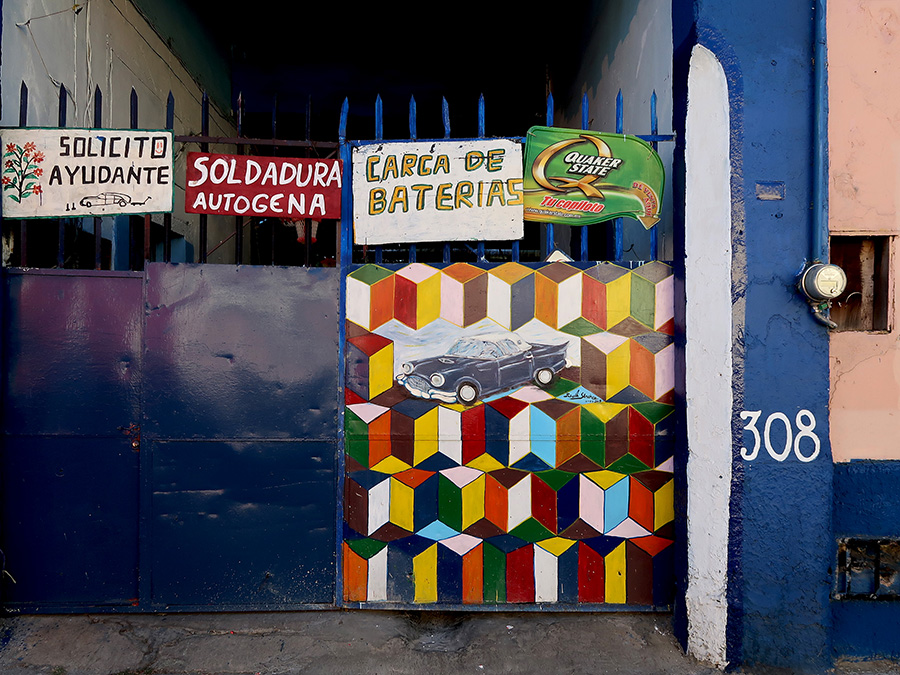
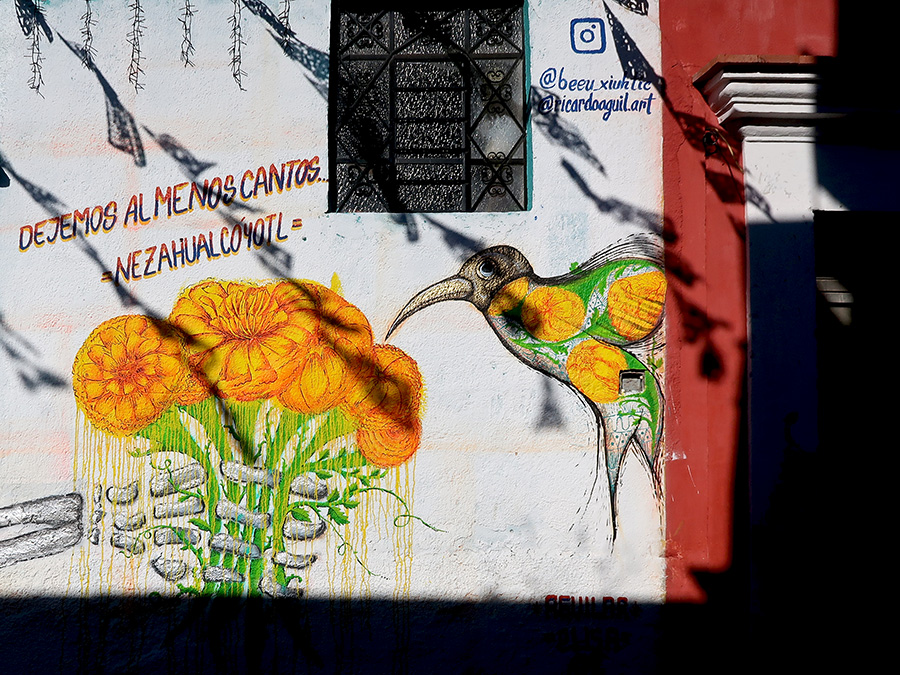
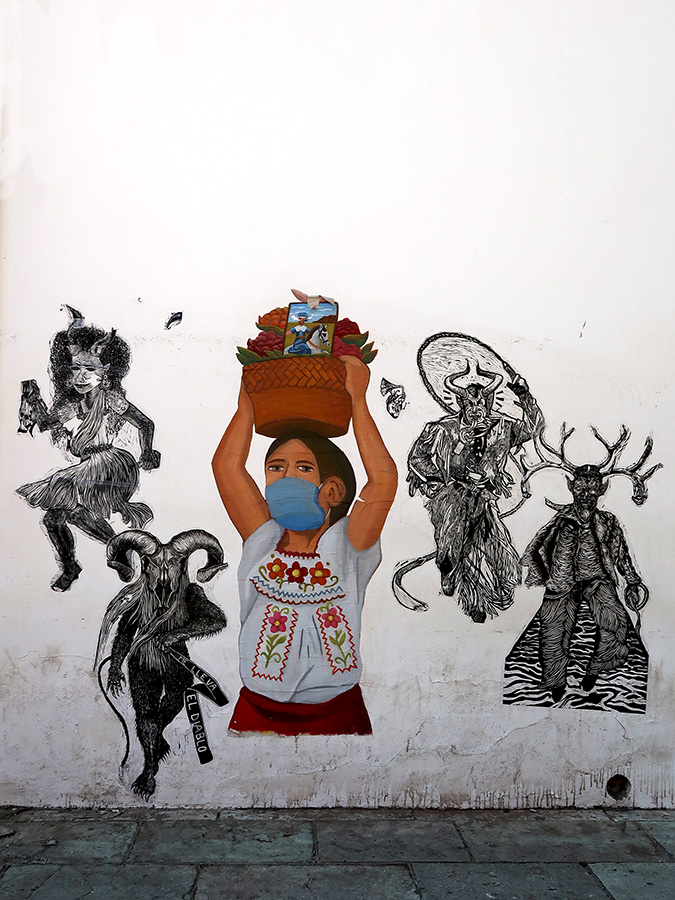
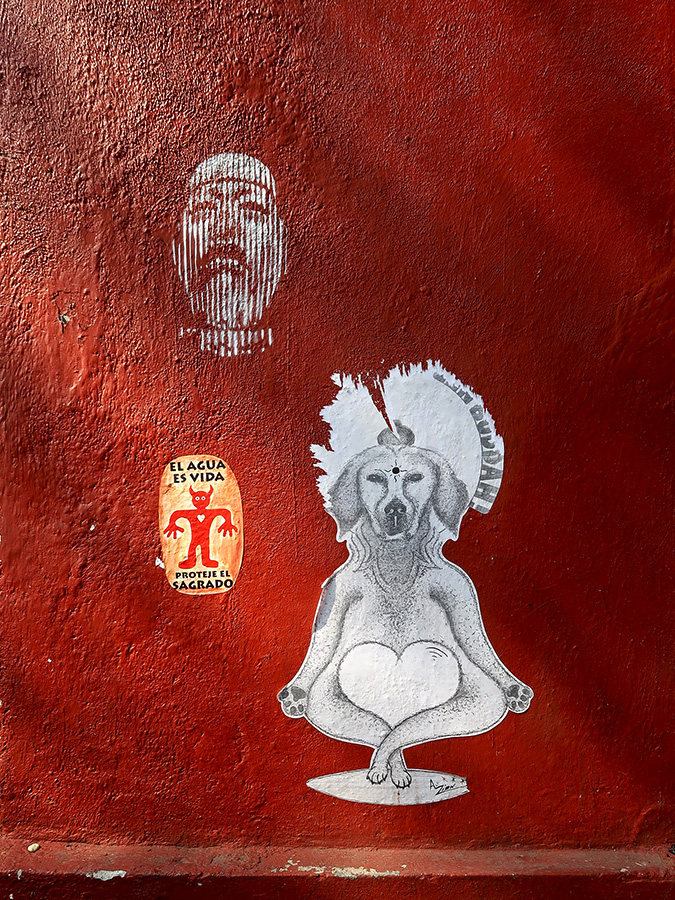
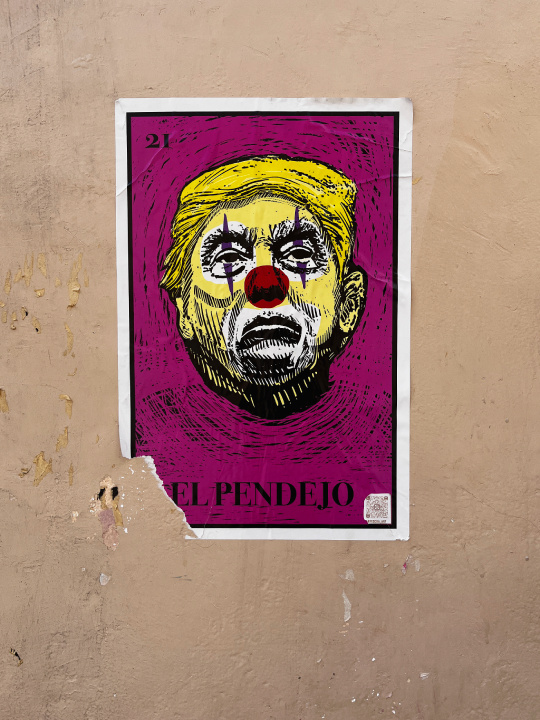
Four weeks in my home sweet Oaxaca home provided a much needed escape from the chaos that now reigns supreme here in the USA. The warm smiles and greetings of ¡Qué milagro! (What a miracle!) from vendors I hadn’t seen in over a year warmed my heart. However, try as I might, I can’t seem to write an upbeat blog post about the wonderful time I had in Oaxaca. The menacing clouds of el norte are casting their dark shadows over my words. For now, I’ll let the walls of Oaxaca speak for me.

However, to end on a positive note and in honor of International Women’s Day on March 8th…
Despite suffering setbacks and facing countless attempts to block, divide and undermine us throughout history, feminist, LGBTI+ and grassroots movements keep marching forward.Amnesty International’s Secretary General, Agnés Callamard

And, that includes Oaxaca, where NVI Noticias lists some of the actions taking place in celebration of Día Internacional de la Mujer.

Read Full Post »

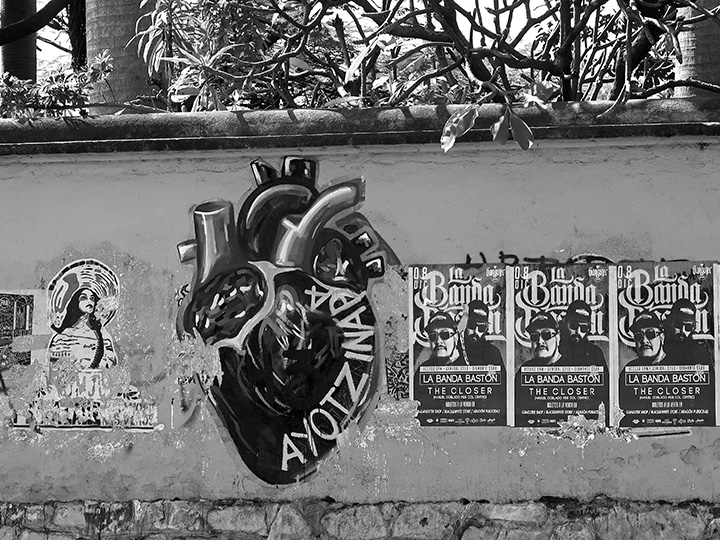
It’s been ten excruciating and heartbreaking years since the horrific events during the night of September 26 to 27 unfolded on the streets of Guerrero in the town of Iguala. The murder that night of three students, wounding of several more, and disappearance of 43 students all from Escuela Normal Rural Raúl Isidro Burgos, a teachers’ college in Ayotzinapa, Guerrero, has continued to haunt Mexico’s national conscience, much like the 1968 Tlatelolco massacre in Mexico City — a commemoration the students were enroute to attend.

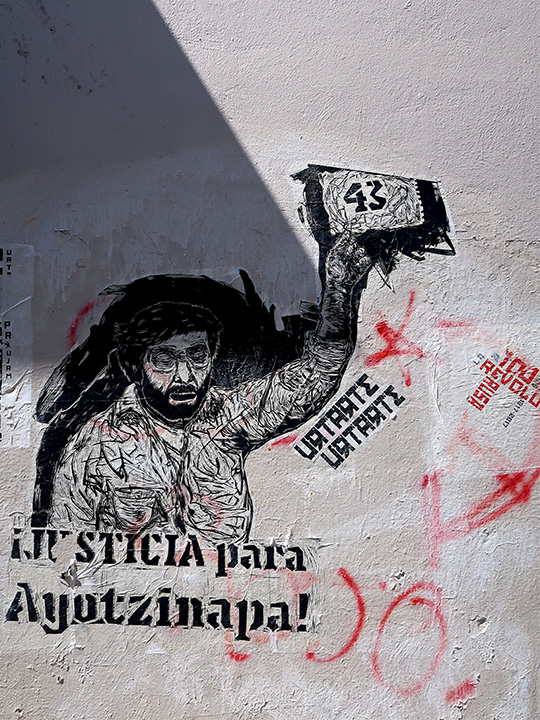
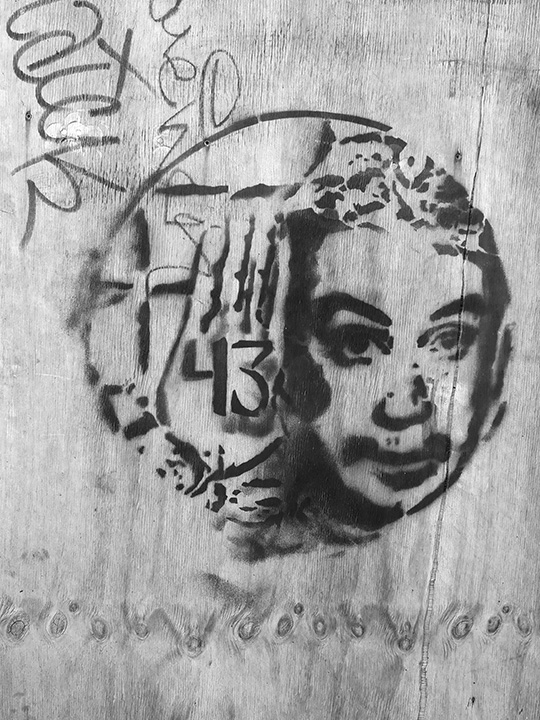
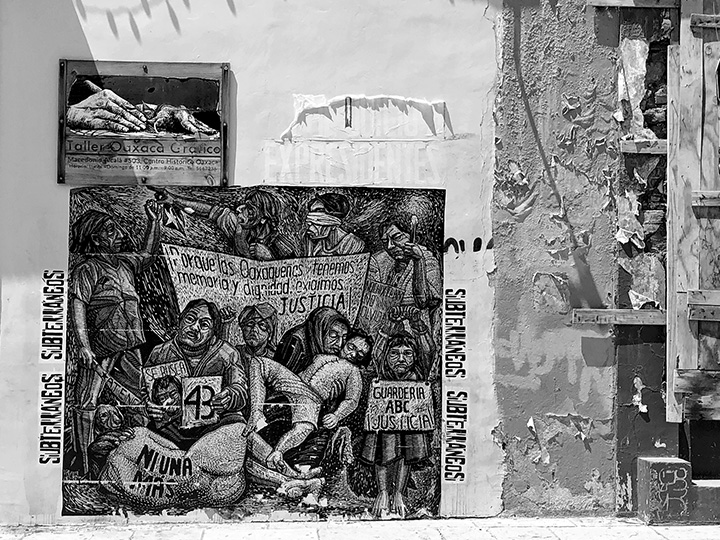
As news of that unspeakable night ten years ago spread, demonstrations were organized throughout Mexico — and soon the world — calling for justice and the return of the missing 43 student teachers (normalistas). Artists, as they have done throughout history, used their talent to give visual voice to the grief, outrage, and resolve to uncover the truth. And, I began documenting what I saw on the streets of Oaxaca.

October 8, 2014 — massive march through the streets of Oaxaca. “Wretched are the people who remain silent when their children are killed WAKE UP.”
October 21, 2015 – Images of the missing 43 normalistas hang above Oaxaca’s Zócalo.
June 18, 2016 – Face of one of the 43 missing students stares out from a wall in the city.
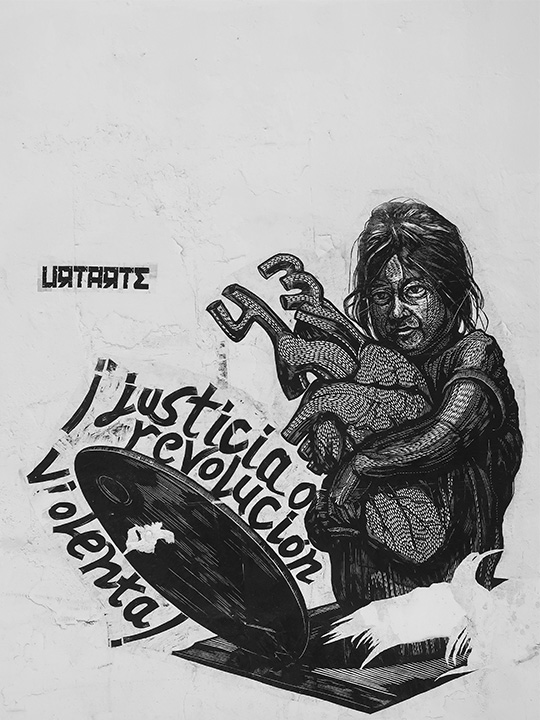
October 26, 2017 – One of the many stencils by the revolutionary artist collective URTARTE.
February 7, 2018 – Stencil by URTARTE calling for justice for the Ayotzinapa 43 missing students.
February 12, 2019 – On a wall near the corner of highway 190 and Av. Benito Juárez.
February 13, 2020 – On a wooden barricade blocking the sidewalk at a construction site.
October 6, 2021 – Stencil by the Colectivo Subterráneos stating, “Because we Oaxacans have memory and dignity, we demand justice.”

Here we are ten years later and the missing 43 are still missing, the heartbreak continues, the truth remains hidden, and justice has yet to be served. However, no one has forgotten. On this tenth anniversary, protest marches are being held, conferences have been organized, articles continue to be written, artists continue to create, families continue to mourn, and the people vow they will not be silent and the Ayotzinapa 43 will never be forgotten.

For more information in English:

Read Full Post »

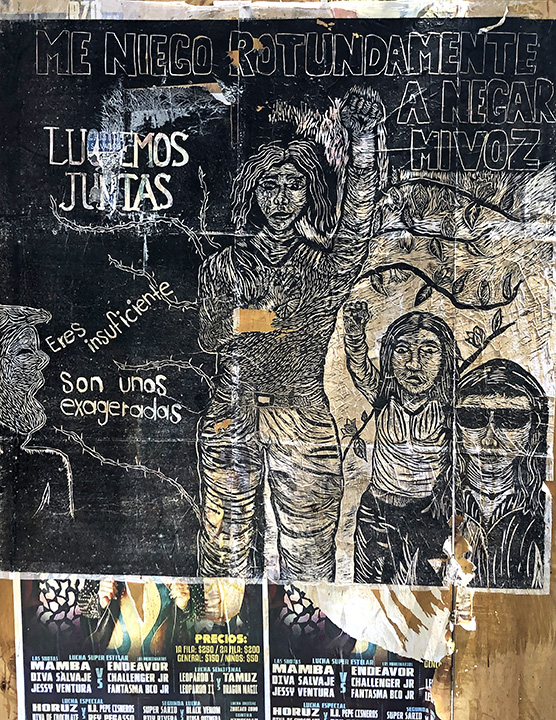
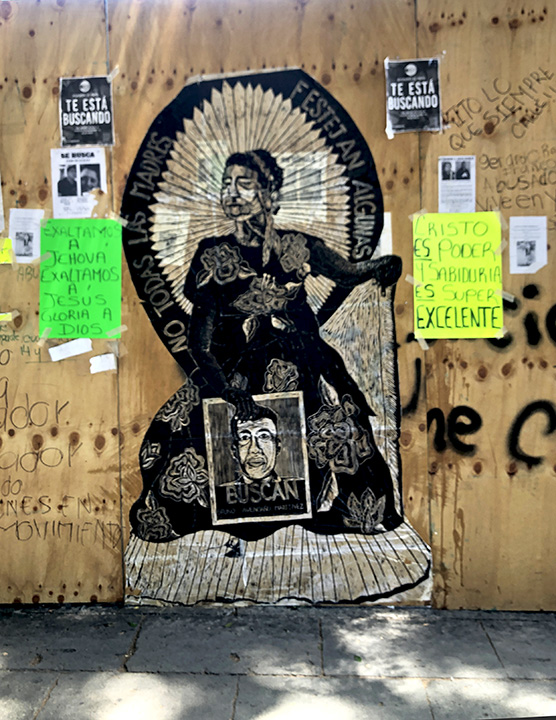
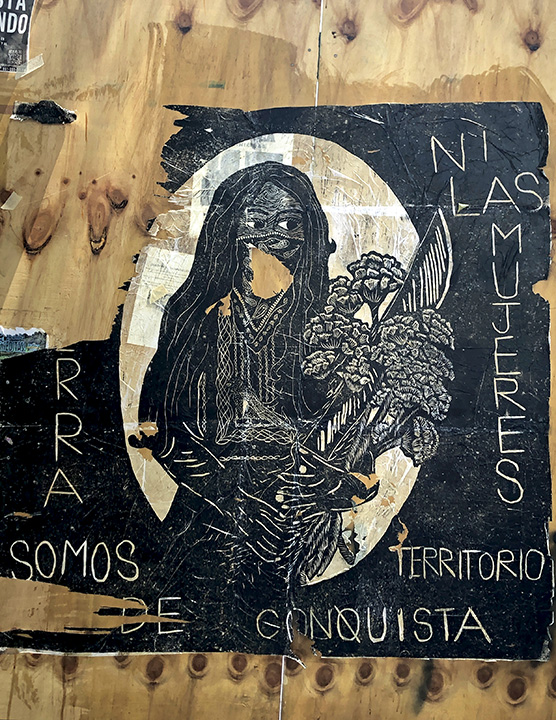
Celebrating March 8, International Women’s Day, with women speaking from the walls of Oaxaca.

I absolutely refuse to deny my voice. Let’s fight together [against voices saying] you are insufficient, they are exaggerated.
Faces we see, feelings we don’t know. We were born to be happy.
Not all mothers celebrate, some look for [their missing children].
… Not even the women …

From ARMARTE, a women’s collective dedicated to using the arts as a tool for social transformation.

Read Full Post »

It feels so good to be back in this walkable city where simple errands offer the opportunity for exercising one’s body and mind.

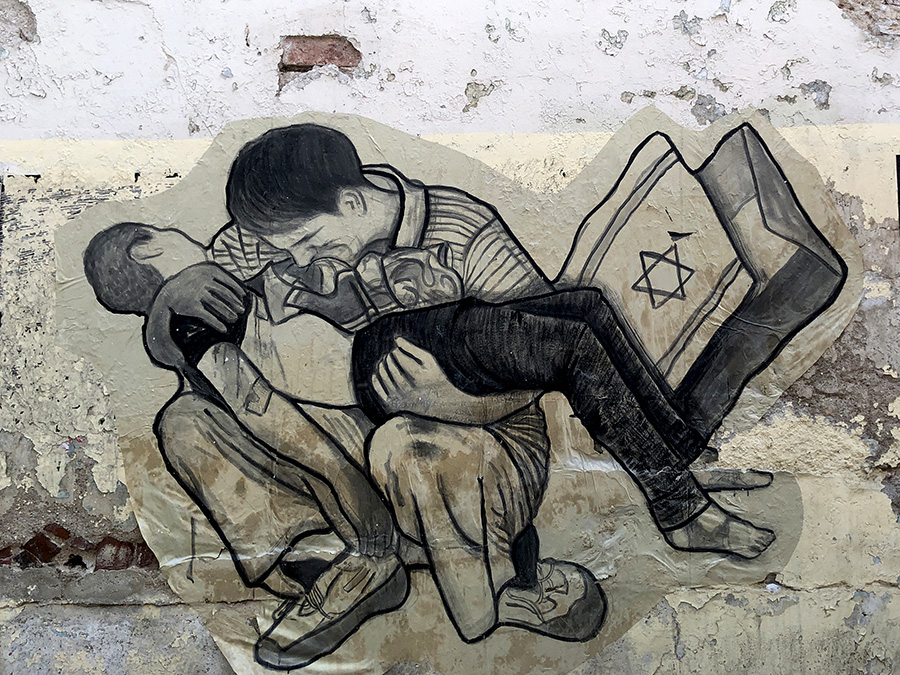
“Free Palestine! Colombia lives!”

Connections are made and internationalism lives.

Reading the walls of Oaxaca is like reading the news.

Read Full Post »

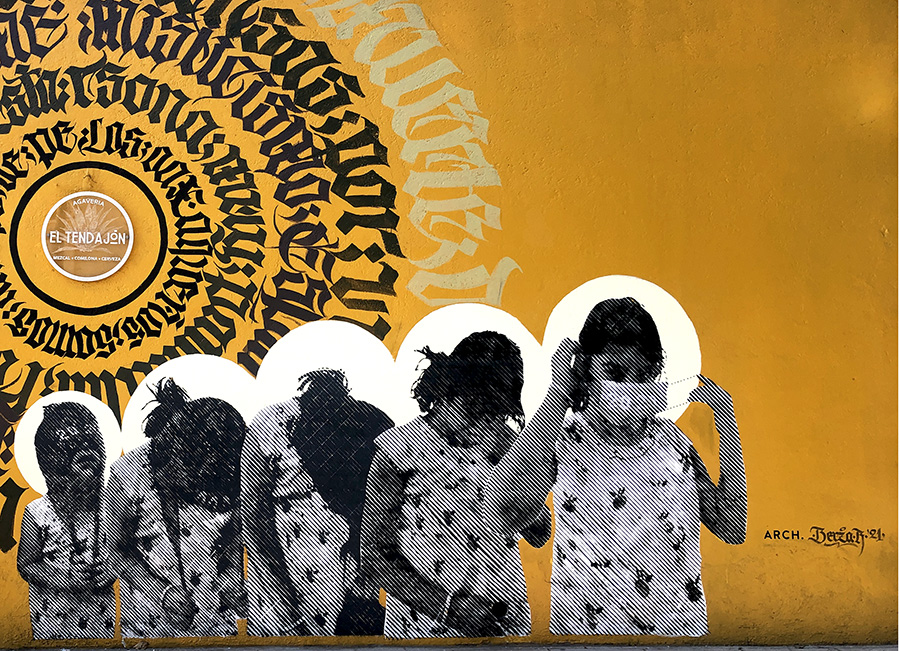
The headline in NVI Noticias announced, despite an increase in COVID-19, the federal government declared that, as of tomorrow, Oaxaca will move from semáforo amarillo (yellow traffic light)…

Art by Berza and ARCH on the Calle Constitución side of El Tendajón.

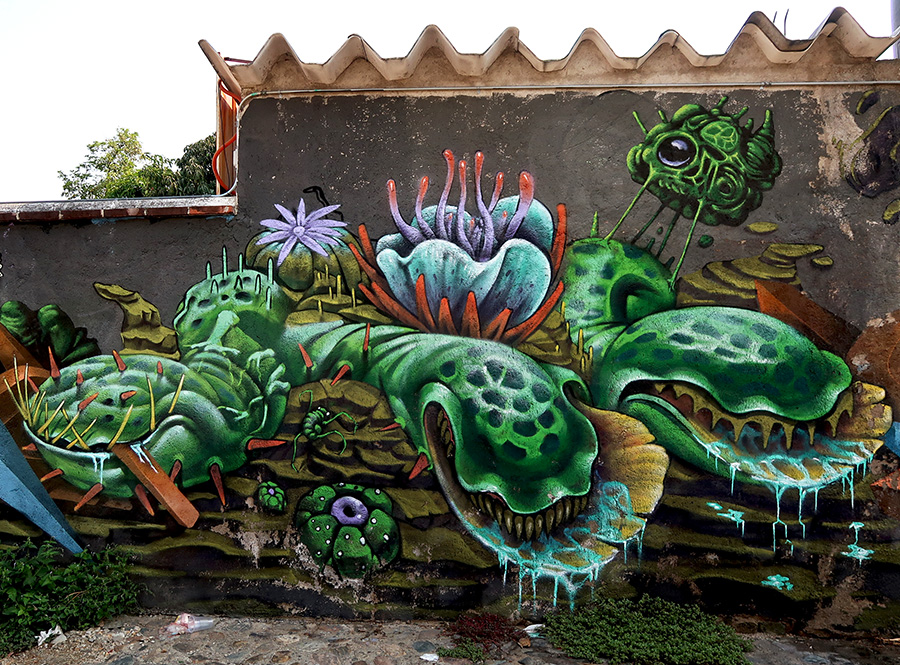
… to semáforo verde (green traffic light).

Mural signed by Hiko in Barrio de Xochimilco.

Inquiring minds are wondering if the downgrading of COVID-19 risk has anything to do with the upcoming elections on June 6.

Read Full Post »

March 8 is International Women’s Day. In the words of a recent article by Nancy Rosenstock, a woman I knew back in the day, “In these challenging times, all women — from those of us who were involved in second-wave feminism to those just entering the struggle — need to come together as equal fighters and chart a course forward.”

We may have come a long way, but the struggle for equal rights, respect, freedom from violence, and control of our own bodies continues and the women of the walls of Oaxaca are not silent.

Many of the images also carry a written messages. Below, Nuestros sueños no caben en sus urnas / Our dreams do not fit in their ballot boxes carries an indictment against the capitalist political parties.

The next one lets the symbols of the ancestors speak.

From a women’s graphic campaign that seeks to express “what our bodies go through every day and what we are seeking when we scream: Vivas Nos Queremos / We Want Ourselves Alive.

And, a promise that women will not be silenced and will march forward Sin miedo / Without fear.

Then there is the mural, La Patria / The Homeland, which adorns the wall of a school in Barrio de Jalatlaco. La Patria, originally a painting by Jorge González Camarena of an indigenous woman surrounded by patriotic imagery, graced the covers of textbooks from the 1960s into the 1970s.

To honor and celebrate International Women’s Day, on March 8, La Mano Magica Gallery/Galería inaugurates an exhibit of women artists, Exposición de Arte Colectiva Mujeres Artistas, curated by Mary Jane Gagnier, at their gallery in Oaxaca and online on their Facebook page.

Read Full Post »

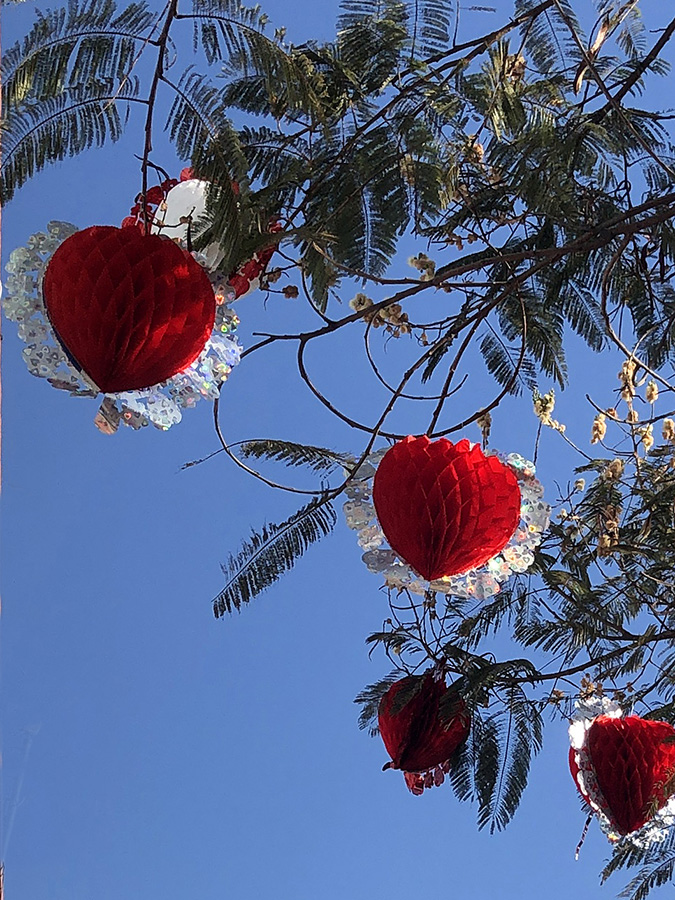
February 14th isn’t just a day for lovers. In Mexico, Valentine’s Day is known as the Día del Amor y la Amistad — Day of Love and Friendship.

By the artist known as ARCH

Decorations have gone up and I have no doubt kilos of chocolate, bouquets of flowers, and heart shaped balloons with confessions of amor will be purchased.

Unfortunately, with the virus continuing to rapidly spread and Oaxaca still under semáforo naranja/orange traffic light (though many think it should be rojo/red), I’m not sure restaurants will or should be filled to capacity with friends, sweethearts, and families.

By the artist known as Efedefroy

Given the trauma and uncertainty the world has experienced over the past year, I hope we have learned to cherish our friends and family and to let them know how much they mean to us every day. Let us celebrate days of love and friendship and not just limit it to one day a year.

And, if you would like to say I love you (te amo) in 7 of the 69 indigenous languages spoken in Mexico — including several spoken in the state of Oaxaca — click HERE.

Read Full Post »

Last Sunday’s first Sunday of 2021 walk…

Going to and from Barrio de Jalatlaco, there is always something old and new to see.

Read Full Post »

Mountain biking in the city.
Benito (Juárez) knows best.
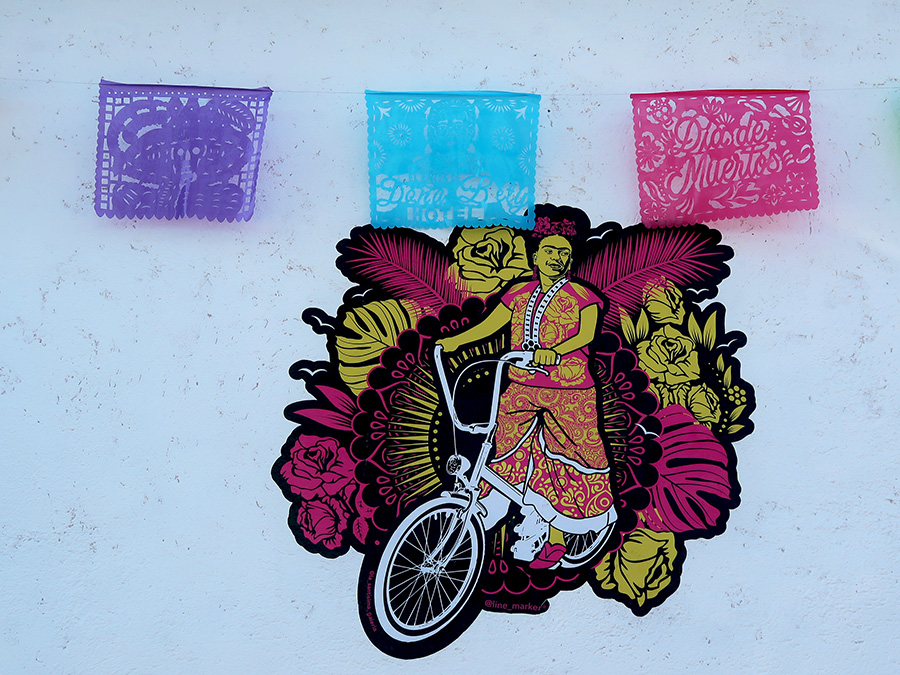
Riding with the queen (Frida Kahlo).
Masked, they’ll be dancing in the street (with the “Rubios” of Santiago Juxtlahuaca).

Read Full Post »

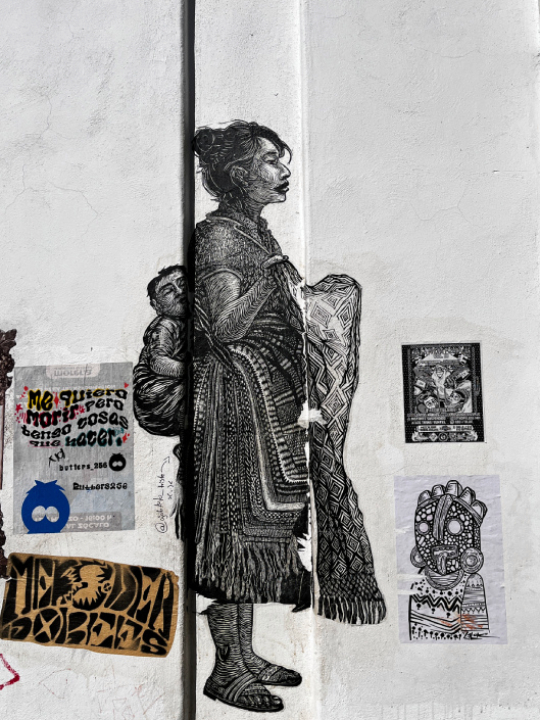
The stencil, seen on Sunday’s walk along Av. José María Morelos, may be of women from San Miguel del Valle, but the words speak to women everywhere.

We are the struggles won by our ancestors.

Read Full Post »

Another Sunday, another walk through Barrio de Jalatlaco…

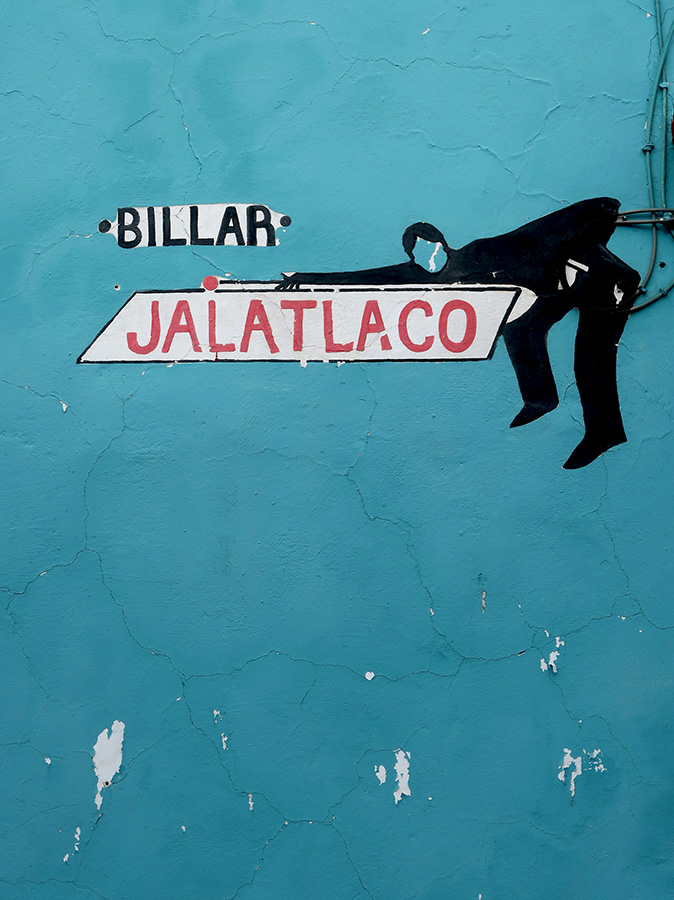
Billar Jalatlaco pool hall.

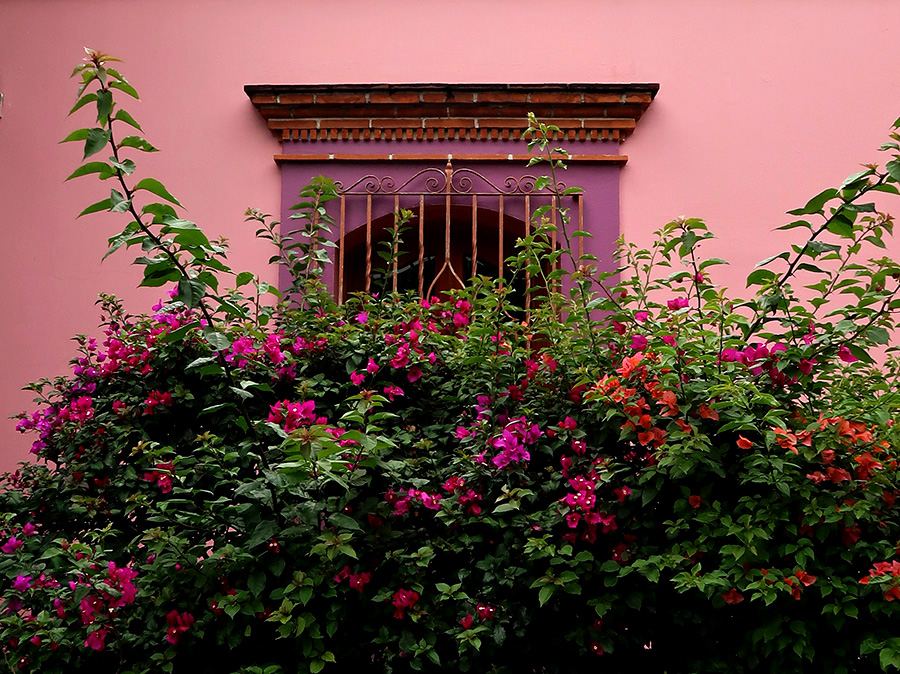
Bougainvillea in Barrio de Jalatlaco.

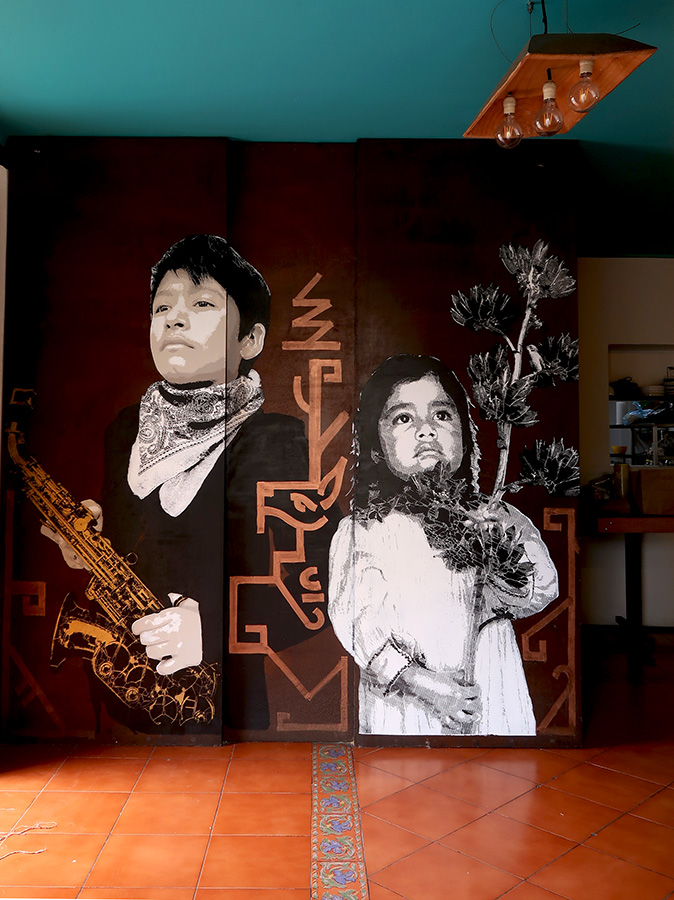
Inside the door of El Tendajón, the work appears to be by Lapiztola.

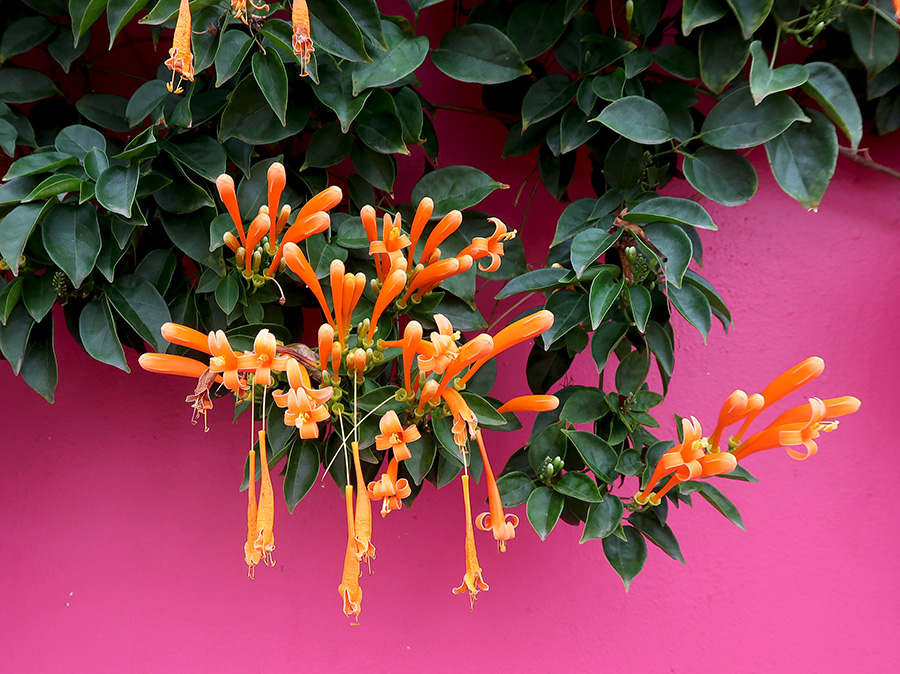
Orange trumpet vine in Barrio de Jalatlaco.

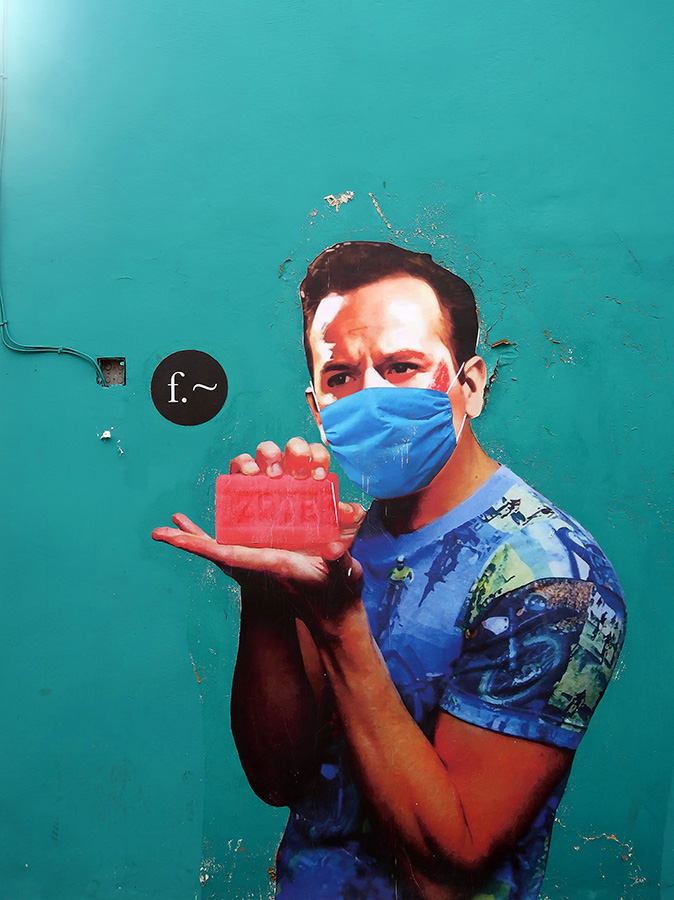
Wear a mask and wash your hands with ZOTE soap — by Efedefroy.

Read Full Post »

Conventional wisdom in Oaxaca: “For everything bad, drink mezcal; for everything good, you also should.”

Lest we forget, the walls of Oaxaca are always there to remind us.

My copitas (little cups) by maestro Vicente Hernandez are always ready for a gotita (a little drop) or two on good days, bad days, and especially days when friends stop by.

Day trips to my favorite mezcal making villages and their mezcaleros, like Berta Vásquez (above) in San Baltazar Chichicapam, were frequent enough to keep the liquor cabinet stocked with a variety of artisanal mezcal made from one or more kinds of maguey (AKA, agave) — arroqueño, barril, cuixe, espadín, jabalí, tepeztate, tobalá, and tobasiche, to name a few!

Alas, since Covid-19 hit the scene, many of the villages are closed to outsiders and, even if they were open, I wouldn’t go — for their health and safety and mine.

However, mezcal aficionado and tour guide Alvin Starkman came to the rescue. Through him, I was able to buy five bottles of mezcal from several different villages and he delivered!

In the event you are trying to read the labels, left to right: Tobalá, Manuel Méndez, San Dionisio Ocotopec; Mezcal destilado con mota (yes, it’s a thing), Rodolfo López Sosa, San Juan del Río; Arroqueño, Fortunato Hernandez, San Baltazar, Chichicapam; Tepeztate, Manuel Méndez, San Dionisio Ocotepec; Espadín, Celso Martinez, Santiago Matatlán.

¡Para todo mal, mezcal; y para todo bien, tambíen!

(ps) This just in! Mezcal Tour Supports Advancement of Indigenous Women — an article about the wonderful ongoing work the above mentioned Alvin Starkman, his wife Arlene, and Mezcal Educational Excursions of Oaxaca are doing.

Read Full Post »

A moment of Zen…

Brought to you by a wall in Oaxaca.

Read Full Post »

Back in April, I received a message from my hometown library with the request, Help us tell the story of what happened during the COVID-19 pandemic in Mill Valley. A light bulb turned on, my brain went into librarian/archivist mode, and I thought, we should do that here in Oaxaca. What better way to bring the Oaxaca Lending Library community, both here in Oaxaca and those currently scattered around the world, together and provide a venue to share thoughts and feelings, document daily life, and unleash creativity. And, when this nightmare is over, the OLL will have joined an international effort by public and academic libraries, archives, historical societies, and museums to preserve slices of life from this historic time for future community members and researchers to ponder.

Thus, we formed a small committee, met remotely, and issued our own call for submissions. Members and friends, be they here or there, have been asked to submit photographs, stories in prose or verse, and videos. The response has been beyond my wildest dreams and I invite you to view the most recent edition of Archiving the Pandemic in Oaxaca: How will this time be remembered? The contributions are revealing in a variety of happy, sad, challenging, generous, and talented ways.

July 30, 2020 – Calle de Adolfo Gurrión at 5 de mayo, Oaxaca de Juárez.

The project is ongoing; alas, the pandemic’s end is not in sight. However, my heart is lifted in seeing, reading, and sharing experiences with my Oaxaca Lending Library community and knowing we are part of an international effort to help shape the telling of a community story.

(ps) The QR codes on the image above link to the following articles exposing issues medical personnel are facing battling the virus in Oaxaca:

Read Full Post »

Today, March 8, women around the world are celebrating International Women’s Day with marches, forums, exhibitions, and more. The mass media is filled with stories about extraordinary women and companies catering to women are using references to International Women’s Day in their advertising, though, I might add, very few mention its revolutionary past.

However, it isn’t today’s demonstrations, expositions, and other special events that has women in Mexico talking. It is the call for women to disappear for a day to protest the staggering amount of violence perpetrated against them. Government statistics report that 3,825 women met violent deaths last year, 7% more than in 2018. That works out to about 10 women slain each day in Mexico, making it one of the most dangerous countries in the world for females. Thousands more have gone missing without a trace in recent years.

Using the hashtags #ParoNacionaldeMujeres (National Women’s Strike), #UnDíaSinNosotras (A Day Without Us), and #UnDíaSinMujeres (A Day Without Women), organizers have reached out to the women of Mexico that on Monday, March 9, nothing moves: Don’t go out, don’t shop, don’t go to school, and don’t consume — become invisible, simulating the thousands of women who have been murdered or disappeared.

As three female legislators wrote in an article expressing their support for the strike, Women are responsible for about half of the compensated economic activity in the country, and relied upon disproportionately for unpaid work in the home, which is roughly equivalent to 15% of Mexico’s GDP. In exchange, our rights are impaired or ignored. Women have become the protagonists of thousands upon thousands of stories of violence and impunity at the hands of men who, in public and in private, feel they have a right to decide over our lives and our bodies…. That and many, many reasons more are why Mexico’s women will march in protest on March 8, and stop everything – stop working, stop asking, stop accepting – on March 9.

Read Full Post »

Older Posts »