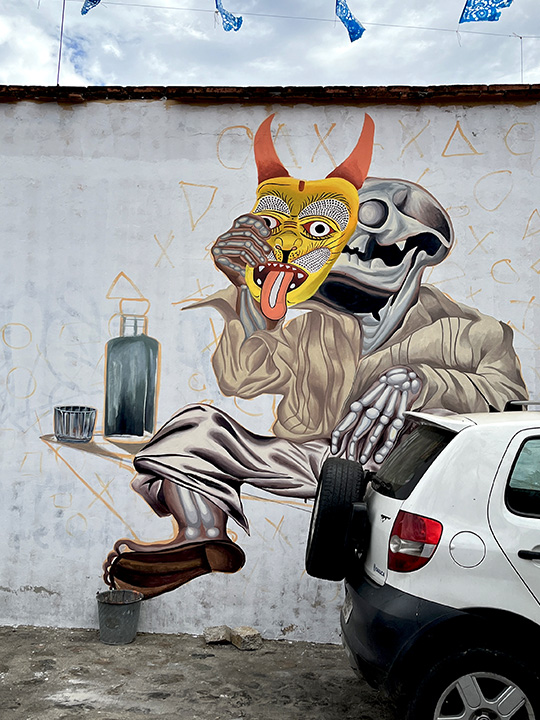
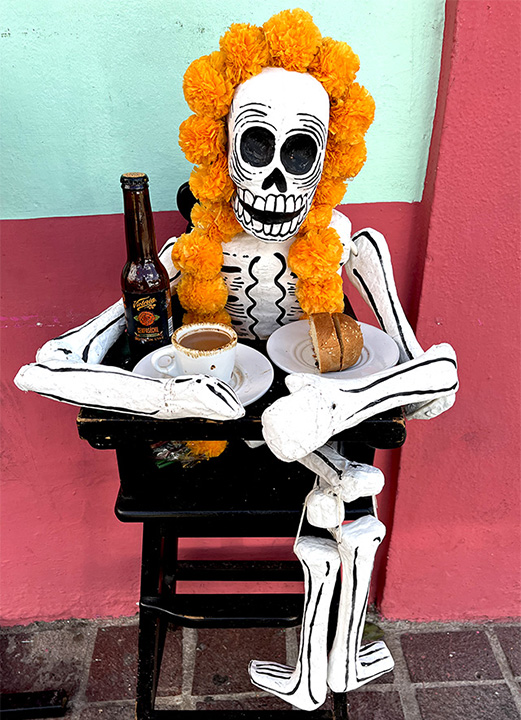
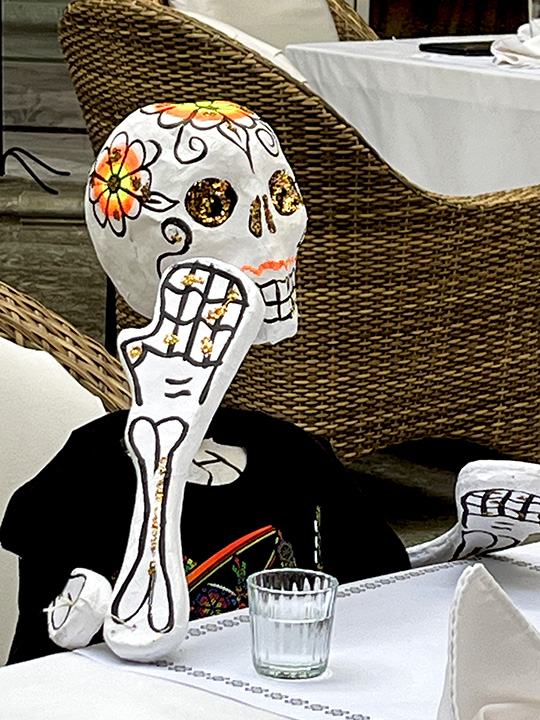
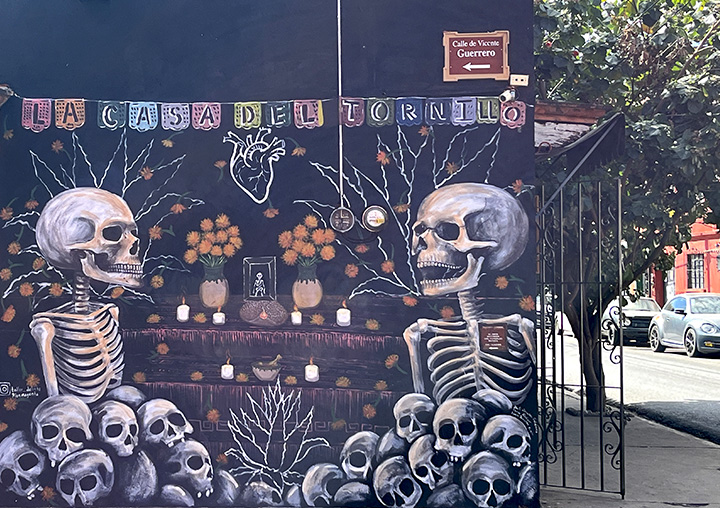
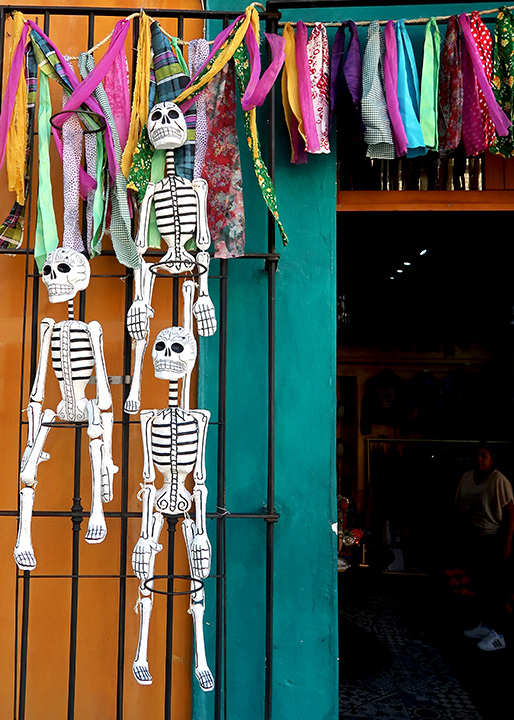
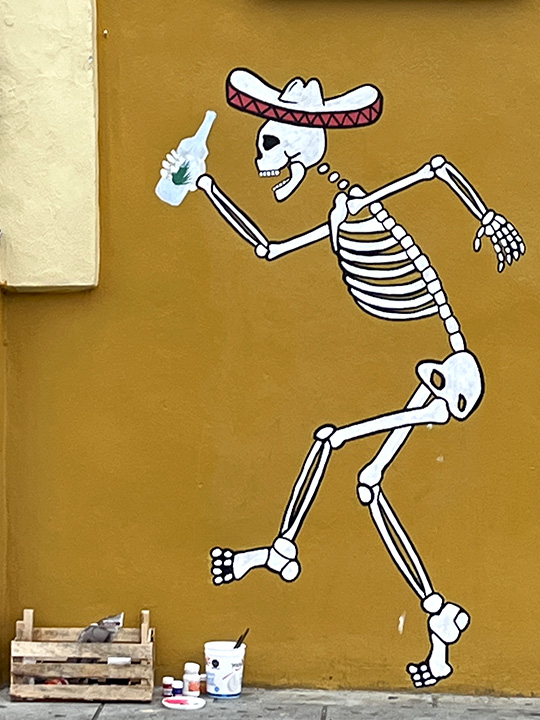
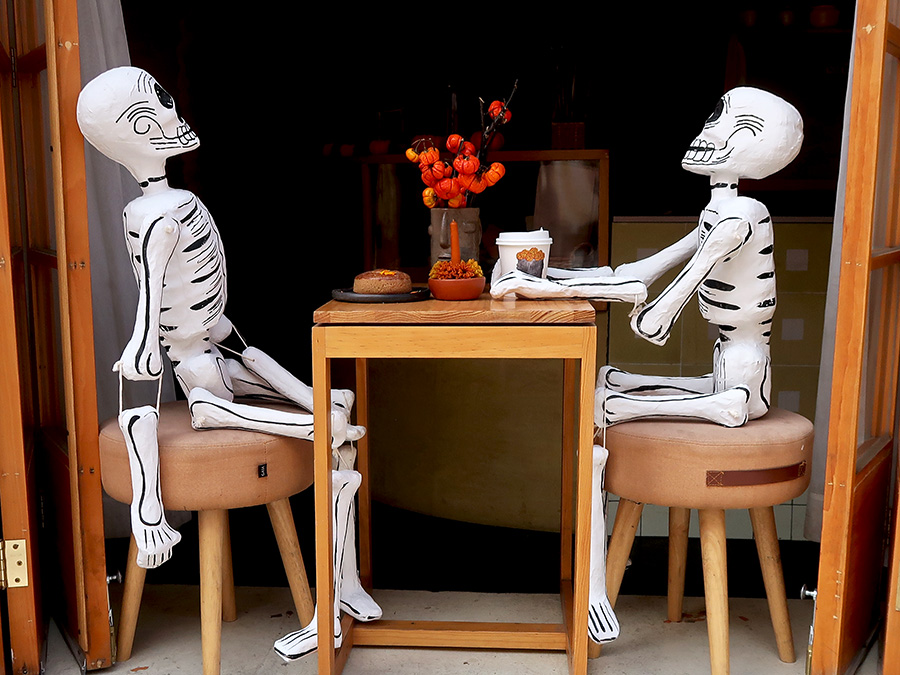
It’s Halloween time up here in el norte and the occasional house features spiders poised to pounce in webs strung across bushes, witches with broomsticks guard front gates, and pumpkins decorate entries signaling trick or treaters are welcome. A few skeletons have moved into the neighborhood but none are as well dressed and accessorized as those seen last year loitering on sidewalks, hanging out on walls, and dining in the restaurants of Oaxaca during Día de Muertos (Day of the Dead).
What can I say? I’m missing these guys and gals inhabiting Oaxaca this time of year.
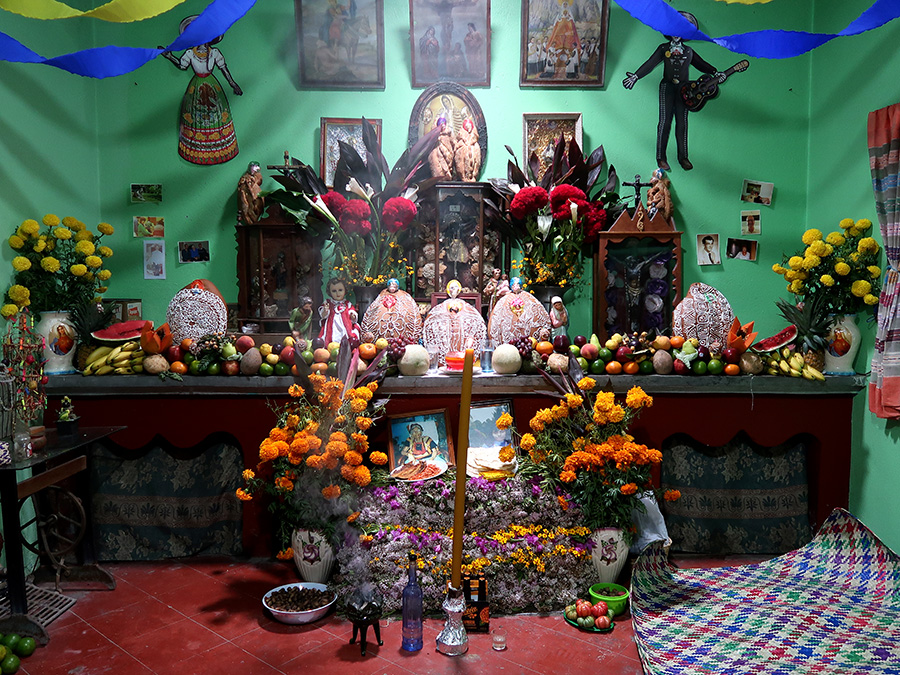
There is a duality surrounding the celebration of Día de Muertos (Days of the Dead) in Oaxaca. While most every home and many public buildings and businesses construct altars with ofrendas brimming with flowers, candles, bread, chocolate, fruit, nuts, beverages, copal incense, and often photos of the departed, there is a distinct difference between the traditions of the more mestizo communities (Oaxaca city and the Etlas, for example) and those of the indigenous communities. The former often includes raucous comparsas (parades) called muerteadas with costumes, masks, painted faces, music, and “adult beverages.” According to the book, Day of the Dead: When Two Worlds Meet in Oaxaca, the muerteada allows the dead “to ‘occupy’ a living body, either a muerteada participant or an audience member, for a time, and therefore enjoy the entertainment directly rather than vicariously.”
However, in the indigenous villages these days are more solemn, filled with ritual, and are family oriented. I lean toward this more spiritual observance, so I escaped the craziness of the daily comparsas and drunken crowds in the city and went to stay in the Zapotec village of Teotitlán del Valle with my compadres (including comadre K) and to shop in Tlacolula for pan de muertos (bread), candles, and flowers to take to the ofrendas of families K and I have a relationship with in Teotitlán and San Pablo Villa de Mitla.
Tlacolula de Matamoros – Vendors of caña (sugar cane) used to create an arch over ofrendas.
Tlacolula de Matamoros – Ofrenda in the Templo de Santa María de la Asunción.
Tlacolula de Matamoros – Tapete de arena (sand painting) in Templo de Santa María de la Asunción.
San Pablo Villa de Mitla – Store front.
San Pablo Villa de Mitla – Ofrenda on home altar.
San Pablo Villa de Mitla – Detail from a public ofrenda.
Teotitlán del Valle – Ofrenda (offerings) on home altar.
Teotitlán del Valle – Tamales amarillo traditionally served on November 1.
Teotitlán del Valle – Panteón (cemetery) early evening on November 2.
While the Día de Muertos observances may differ, the bottom line in both city and pueblo is to provide a welcome worthy of both the living as hosts and the dead as honored guests.








 Mexican Peso Converter

 View From Casita Colibrí