Feeds:
Posts
Comments

Posts Tagged ‘Carnival’

Fat Tuesday (aka, Shrove Tuesday and Mardi Gras), the day before the 6+ weeks of Lent begins, means Carnaval in scattered parts of Mexico.  I was supposed to be spending it on the Costa Chica — where Spanish Catholicism meets Mixtec meets Amuzgo meets Chatino meets Chontal meets Zapotec meets Afro-Mexicano — a region with some pretty unique ways of celebrating Carnaval.  Alas, illness (not me) has postponed that trip until next year.

In the meantime, the show must go on!  Thus, we returned to San Martín Tilcajete, one of the villages in the valley of Oaxaca, known for fantastical wood carving and surreal decorative painting, that result in alebrije and masks.

P1160651

IMG_0518

P1160540

P1160667

IMG_0522

P1160605

P1160628

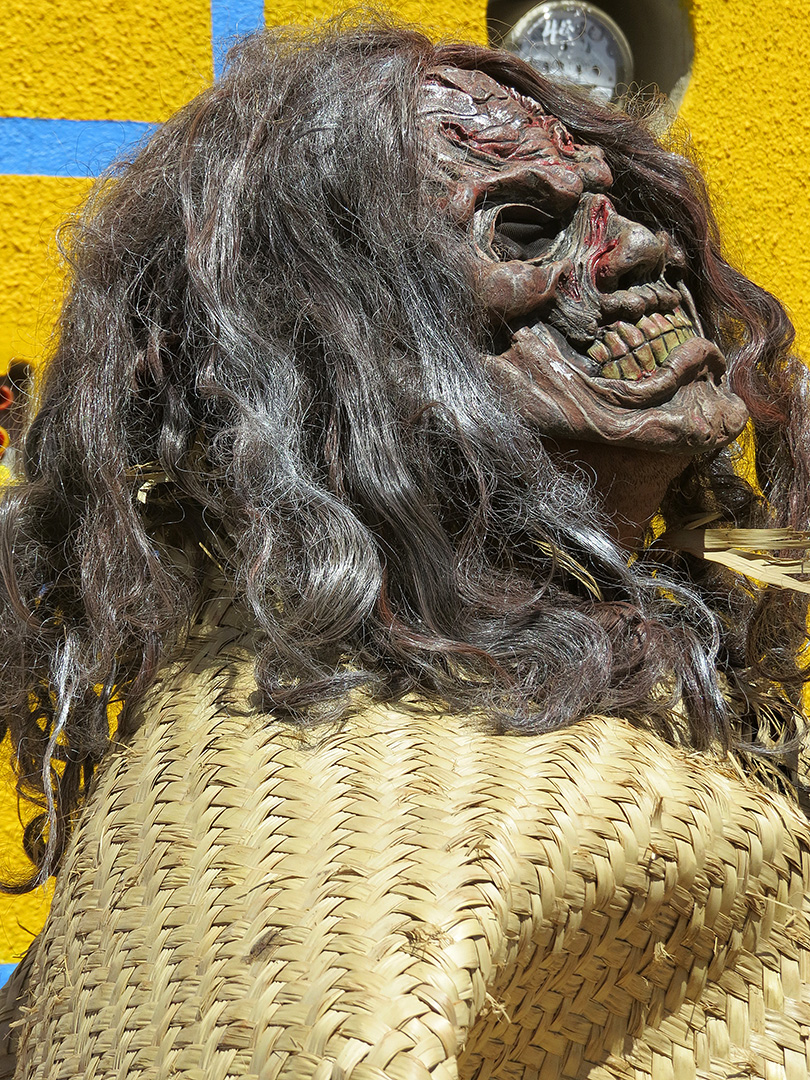
And, it’s the masks that take center stage during Carnaval.

Read Full Post »

The day before Lent in San Martín Tilcajete, Oaxaca.

P1160647

Stay tuned… More masks and mayhem to come!

Read Full Post »

It’s Carnaval time in Teotitlán del Valle.  Yes, I know, Easter was last Sunday and Lent is over.  However, like many other things (e.g., not going on Daylight Saving Time), this Zapotec village does things their own way.  Thus, instead of celebrating Carnaval the day before Lent begins, they celebrate for the five days following Easter!  As I’ve written about previously, Carnaval in Teotitlán is a major production that indeed takes a village; young and old, female and male all have parts to play in the festivities that include music, masked men, mezcal, and mouthwatering mole.

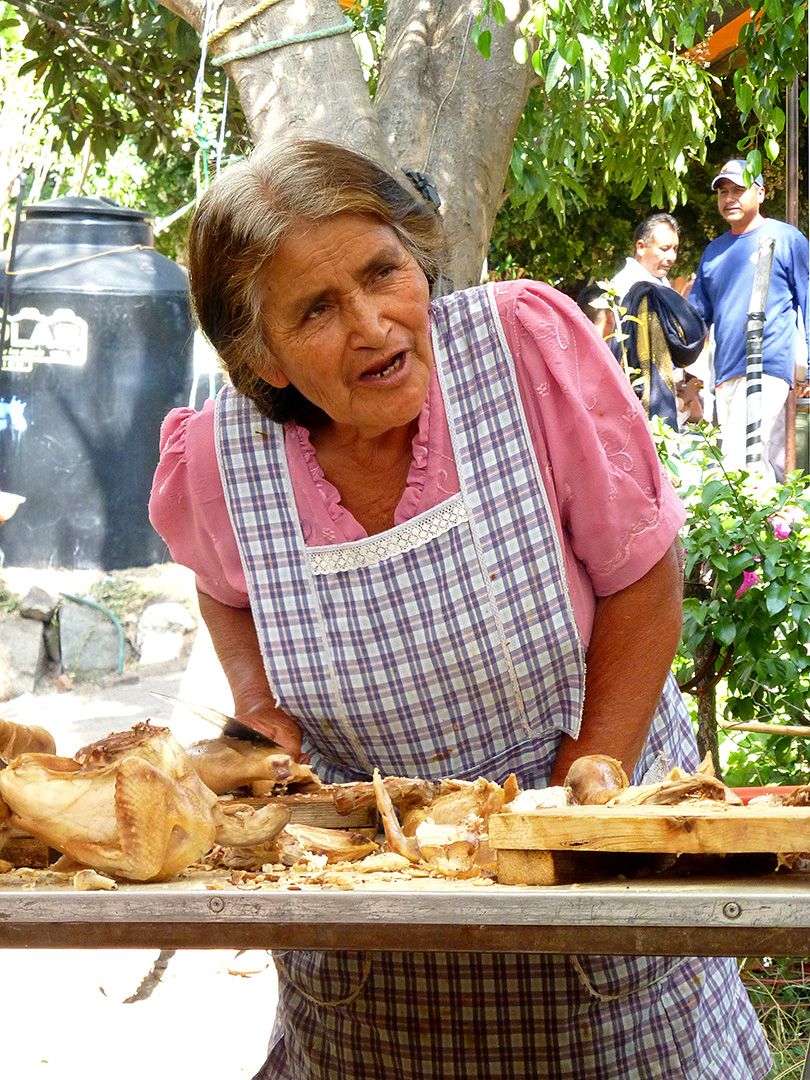
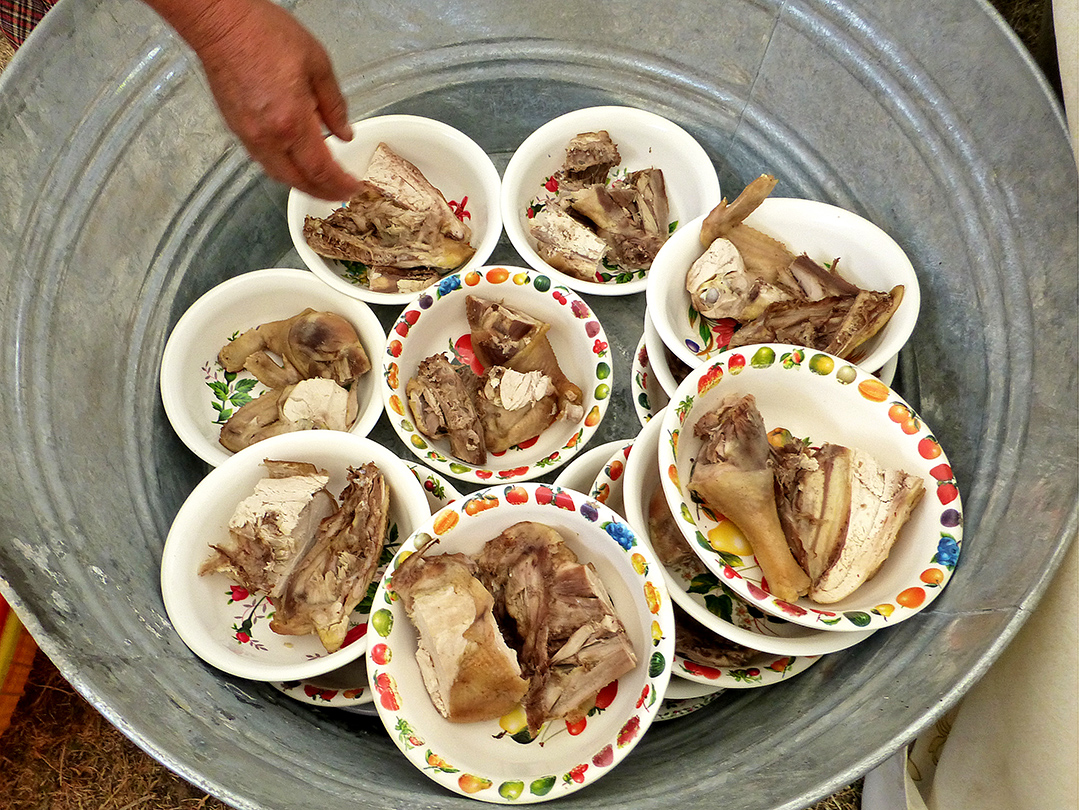
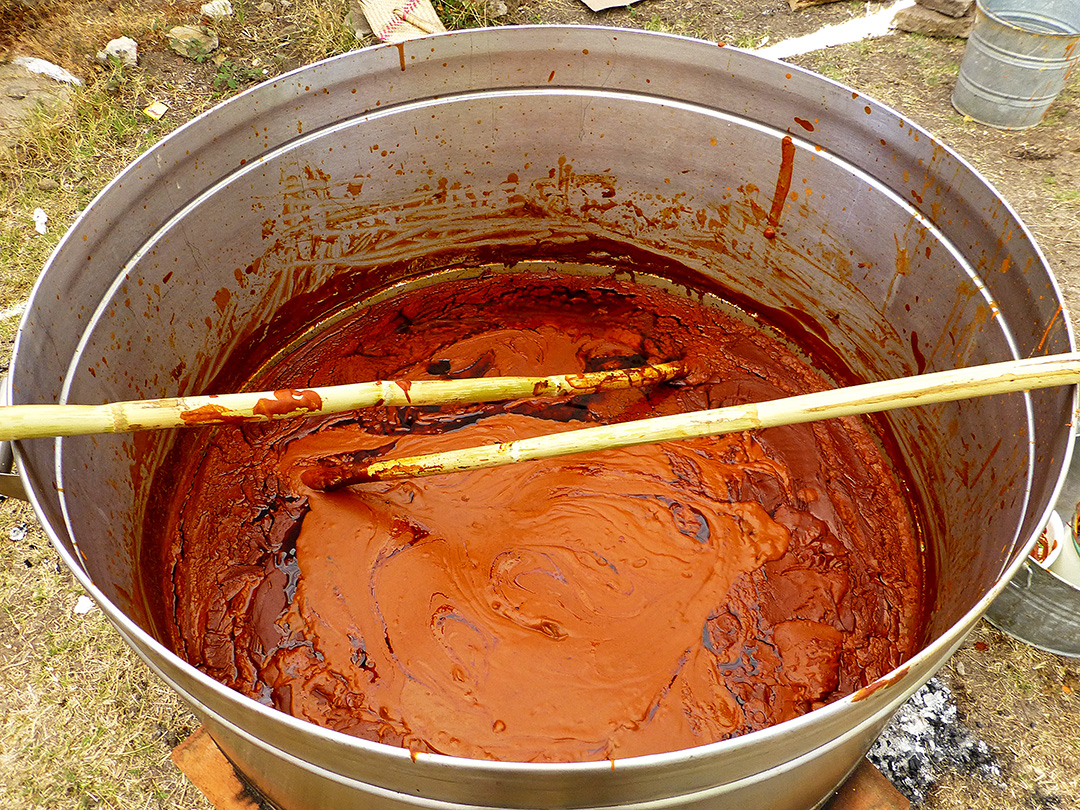
Yesterday, rather than sitting with the men and scattering of male and female extranjeros, gal pal J and I hung out with the women and children in the outdoor kitchen that had been set up in the back of the large earthen courtyard.  There the women prepared enough chicken, mole amarillo, and tortillas to feed one hundred!

P1080563

P1080561 crop

P1080556

The seemingly always well-behaved kids played and took care of the babies while their mamas and abuelas worked.

P1080560

P1080566

P1080569

P1080568

Muchisimas gracias to the women and children of Teotitlán del Valle’s Segunda Sección for being so gracious and welcoming.

Read Full Post »

Carnaval in San Martín Tilcajete means devils…

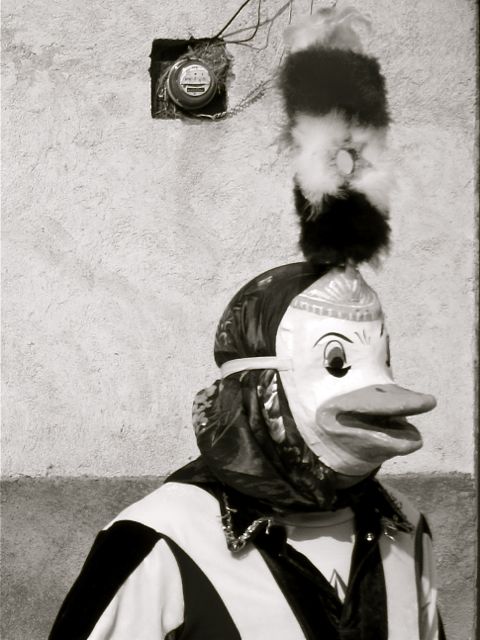
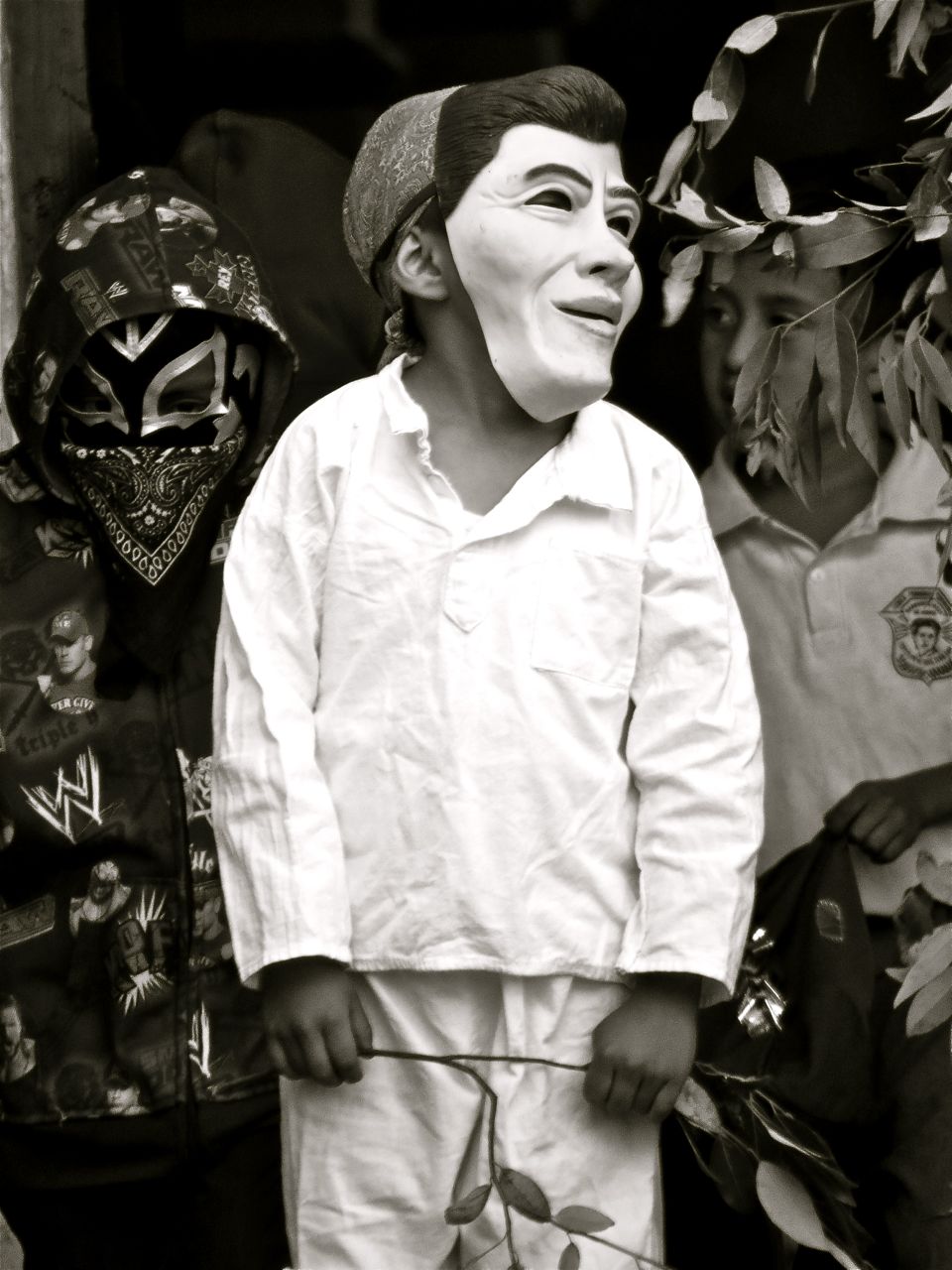
Pirates and clowns…

Unknown creatures from the imaginative minds of their creators…

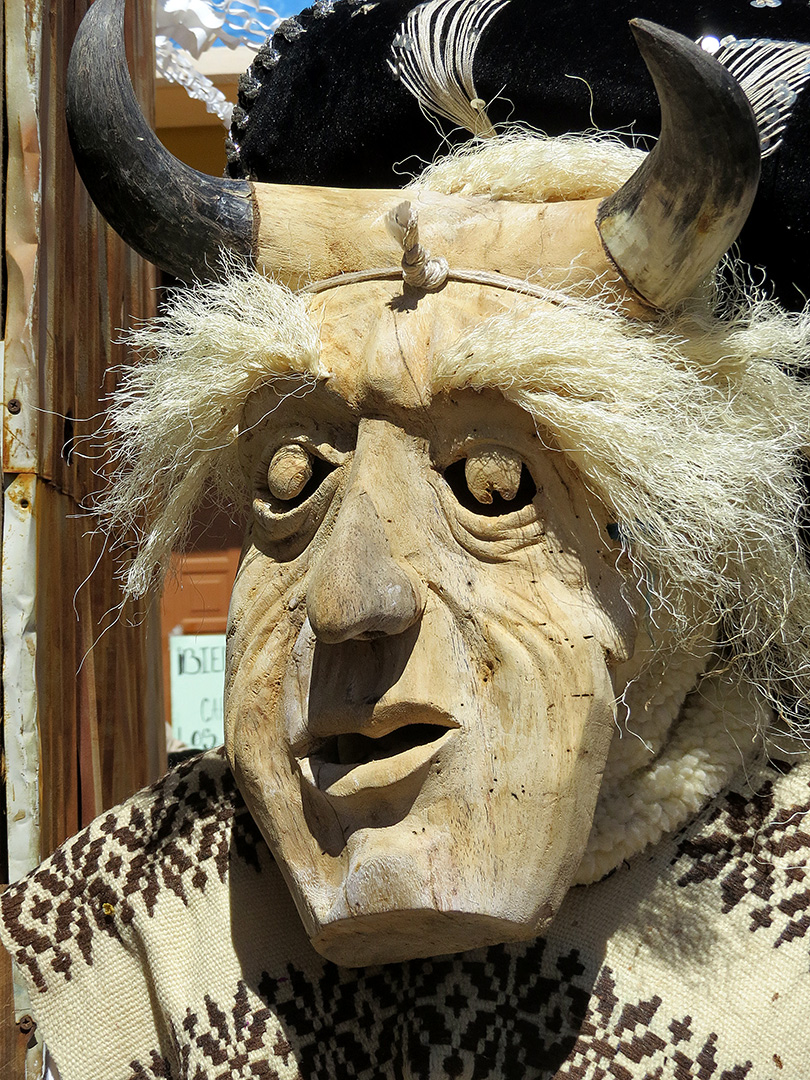
And these masterpieces from this village known for its wood carving…

Carnaval in San Martín Tilcajete also means men dressed as women, a mock wedding, and young men covered in motor oil running through the village with belts of cowbells ringing.  Stay tuned…

Read Full Post »

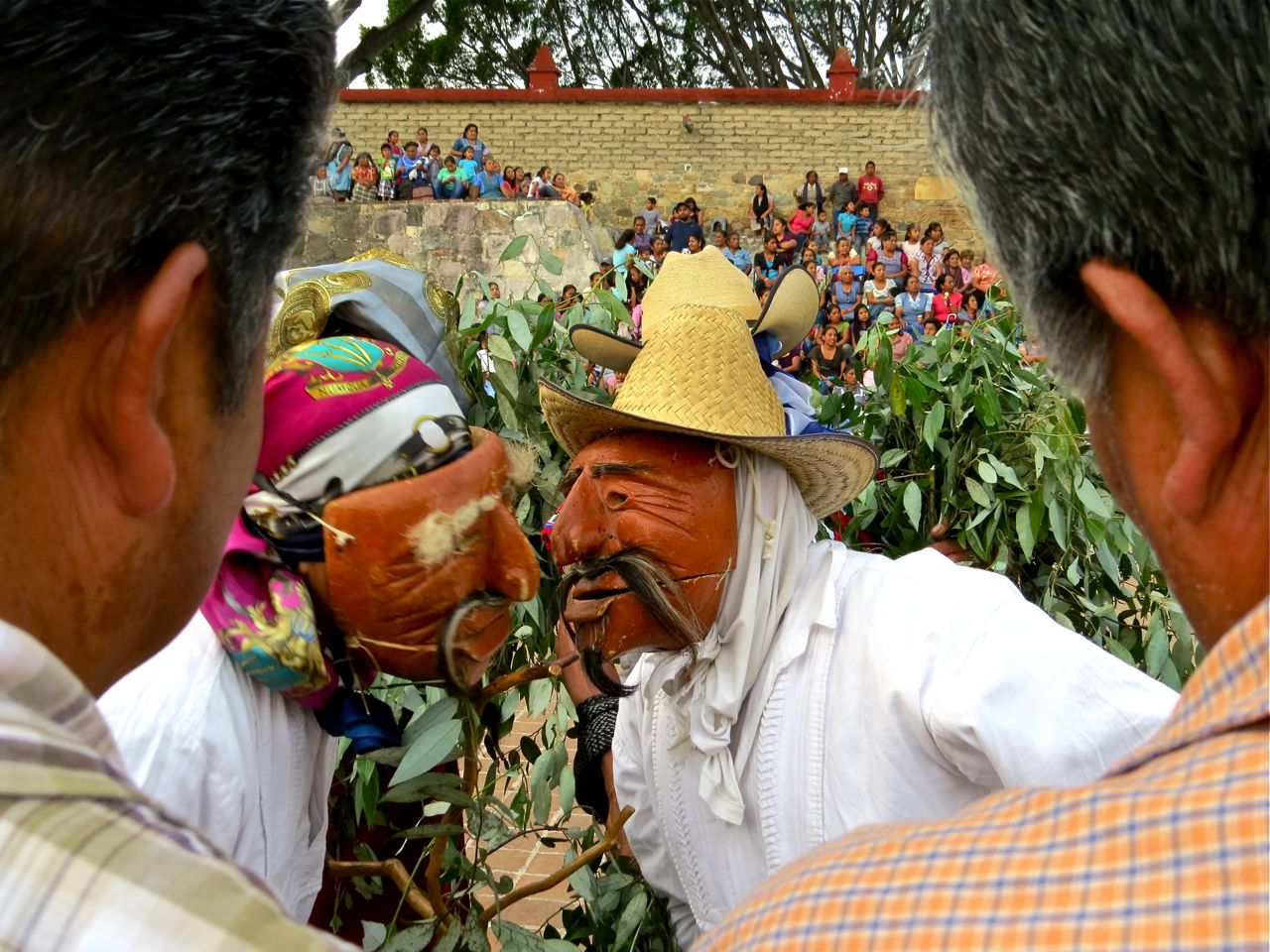
2 viejitos, nose to nose

Tête-à-tête between Viejitos (I know, I’m mixing languages), seen between the shoulders of two municipal leaders, on the Municipal Plaza in Teotitlán del Valle during this year’s previously mentioned Carnaval.

Read Full Post »

True confession:  I’m not in Oaxaca!  I arrived in the San Francisco Bay Area a week ago for a 3-week visit.  While I love seeing family, friends, “my” mountain (Mt. Tamalpais), and the Pacific Ocean, it also means bone-chilling summer fog, driving instead of walking most everywhere, and the absence of my regular blog fodder — no calendas, ferias, festivals, saints days, bandas, and urban art.  (Though, I will probably head to San Francisco for the latter!)

However, this break-in-the-action gives me time to look back through thousands of photos and create posts that had been put on the back-burner when something bigger, better, or more timely cropped up.

3 viejitos

So, here we go, back to Friday, April 24, 2014 — the last of five days of Carnaval in Teotitlán del Valle.

Chihuahua

While there are masks, costumes, men dressed as women, and merriment, this is not your Christian pre-Lenten Fat Tuesday/Mardi Gras Carnival.

Man wearing female mask, wig, and clothing

This is a pre-Hispanic celebration that happens the Monday through Friday after Easter, not before Lent.

Close-up of viejito

Via El Baile de Los Viejitos (the Dance of the Old Men), it brings the community and elected leadership together to remind each of their social contract — in an extremely humorous way.

Young viejito

A procession, gathering participants along the way, leads to the Municipal Plaza, where it seems as if the entire village assembles.

2 elderly women watching Dance of the Old Men

And, of course, the dance and ritual continue late into the night…

Read Full Post »

Another day… another celebration… another adventure!  Yesterday was Día de Carnaval (aka, Fat Tuesday, Mardi Gras, Carnival), a day to let the good times roll before the sacrifices of the Lenten season.

As you have probably surmised, the Spanish brought the tradition to Mexico.  Like many other seasonal celebrations, it conveniently coincided with indigenous festivals celebrating the “lost days” of the Mesoamerican calendar, “when faces were covered to repel or confuse evil.”  Apparently, it caught on “because it was one time when normal rules could be broken especially with the use of masks to hide identities from the authorities.”

And so, off we went for Día de Carnaval in San Martín Tilcajete (28 km south of the city), a village known for its fancifully painted wood-carved alebrije and masks.  We are still doing May weather in March and, thus, it was hot and shade was in short supply.

In the morning, a bride and groom were chosen, villagers gathered for a boisterous and hilarious ceremony in the courtyard, they danced, and then all processed through the streets of San Martín Tilcajete to a designated location where the happy “couple” knelt before a jolly looking “priest.”  By the way, those beautiful “women” in gorgeous gowns aren’t what they seem!

Young and old, the “guests” were a colorful crowd.  Many of the diablos and diablillos covered their faces with colored pigments and their bodies with red or black oil — rumor has it, motor oil is sometimes used.  Yuck!

I’d been to San Martín Tilcajete many times — to go from one workshop to another in search of the perfect alebrije for a gift or to add to my collection — but never before for Carnaval.  It was great fun and the photo ops were endless.

As they say in New Orleans, “Laissez les bons temps rouler!”

Read Full Post »

Sometimes color seems like a distraction, so an experiment in de-saturation from the last day of Carnaval in Teotitlán del Valle.

For some outstanding up-close and full color photos, head over to Oaxaca-The Year After.

Read Full Post »

Friday we returned for another extraordinary day — the last day of Carnival.

This slideshow requires JavaScript.

Again, muchisimas gracias to the gracious and generous people of Teotitlán del Valle.

Read Full Post »

I’m playing catch-up with blog posts.  After the Good Friday Procession of Silence, I thought life would slow down a little.  That’s what’s happened in years past — I caught up on the “to do” list on the home-front, leisurely plowed through the hundreds and hundreds of photos from Semana Santa, did a little research and a lot of thinking about what I’d just seen and experienced, and then crafted a few blog posts.

That was before we found out that Teotitlán del Valle celebrates 5-days of Carnival after Easter, not before Lent!  A little levity after the solemnity of Semana Santa and in one of our favorite places was not to be resisted.  And so, blogger buddy Chris and I set out on Monday afternoon in search of the house in Sección 1 (the village is divided into 5 geographic areas) that was hosting the daytime fiesta that precedes the evening festivities in the Municipal Plaza.

We returned yesterday for the Sección 5 fiesta, so more to come.  Now it’s off to Tlacolula for the Nieve, Mezcal y Gastronomia Festival.

FYI:  For a more detailed explanation of this Carnival celebration and photos from last year by a professional photographer, check out Ann Murdy’s website.

Read Full Post »

« Newer Posts