Feeds:
Posts
Comments

Archive for the ‘Churches’ Category

The back of the official 26th anniversary t-shirt for the Good Friday, Procesión del Silencio, doesn’t come close to telling the tale.

Back of T-shirt: Face of Jesus; text "1986 Procesion del silencio 2012"

Images of belief add texture to the ritual procession of mourners grieving the crucifixion and death of Jesus, as related in the New Testament of the Christian Bible.

Close up of a bleeding Jesus head and torso on a cross

But it’s the eyes of believers…

purple hooded face with only eyes showing

that gives the narrative a silent voice.

Virgin Mary statue with halo from shoulders up.

And, grieving mothers everywhere understand.

Profile of a woman wearing black veil and glasses.

No matter where one lands on the belief continuum, it’s hard not to be moved.

(ps)  For lots more terrific photos, take a look at Chris’s posting, The Procession of Silence.

Read Full Post »

Man in purple hood, leaning against large wooden cross.

Mary with praying over Jesus

Jesus seated; head leaning on hand; on arm resting on knee

In front of Preciosa Sangre de Cristo Templo on Viernes Santo (Good Friday), waiting for the Procesión del Silencio (Procession of Silence) to set off up the Álcala, down Garcia Vigil, and back up the Álcala to Sangre de Cristo.

Read Full Post »

Yesterday, under a full moon…

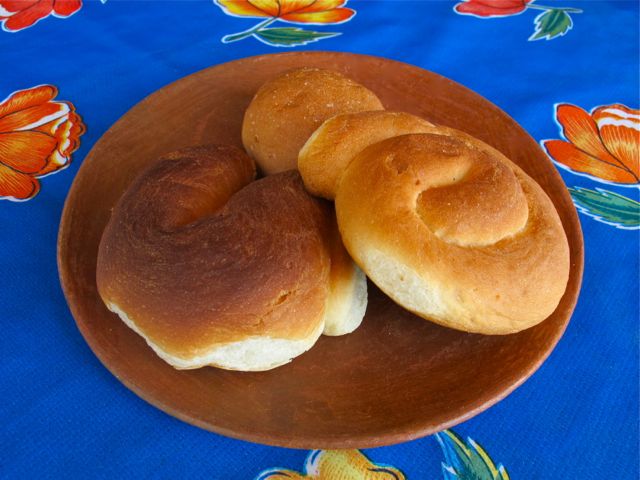
and clutching our “pan bendito” (blessed bread), we began our pilgrimage.  Jueves Santo (Holy/Maundy Thursday) tradition calls for visiting 7 churches (la visita de las siete casas) in the city with one’s pan bendito, which must be kept to offer to guests, should any grace our doorstep.  This all relates back to Jesus’s Last Supper, which this date commemorates.

3 buns on a plate

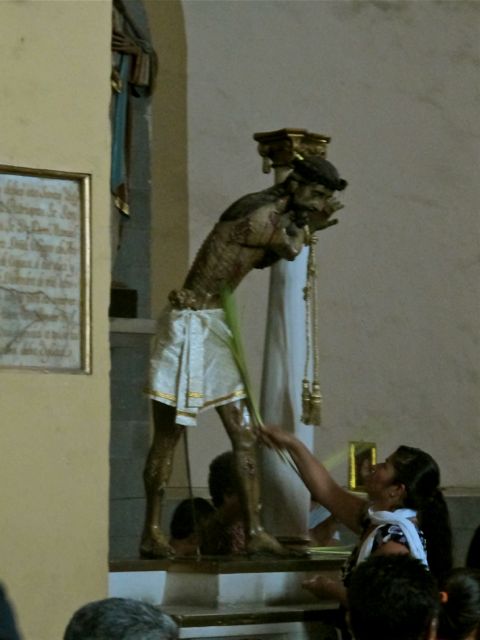
First stop was the nearby Templo de San José, where palm fronds were also distributed and believers used them to brush up and down the statue of Jesus.  Hands also ran down his legs and then were used to touch one’s face.

After emerging from the side door of the jam-packed church, we set off for Templo de San Felipe Neri (whose picturesque dome can be seen (left of center) on my blog banner-head).

Altar with candles and lights.

Next stop was Carmen Abajo

Altar with JHS on banner above altar

followed by the far right side chapel of the La Catedral de Nuestra Señora de la Asunción.  A plaque at the entrance of the chapel read, “El maestro esta aqui y te llama” (The teacher is here and calls you) and the multitude seemed to be heeding the call.

Altar with red banners reading, "De este pan no morirá; El pan de vida eterna"

We then strolled across the zócalo to the Jesuit, Templo de la Compañía de Jesus.

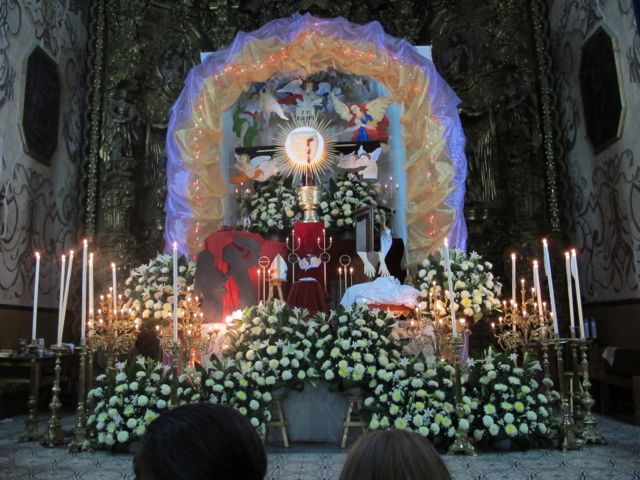
Altar with candles and flanked with yellow and white floral arrangements

We changed direction and headed north up the Álcala.  Big mistake!  A mosh pit (Chris, this WAS a mosh pit) surrounding a Tuna band that was playing in the middle of the street, causing gridlock and bringing us to an abrupt stop.  Eventually, following our blocker (my son, the lineman would be proud), we eventually found light and continued up to Preciosa Sangre de Cristo Templo, where we had earlier spent 1-1/2 hours (and it was still going on when we left!) at a mass where the priest reenacted Jesus washing the feet of his disciples at the Last Supper.

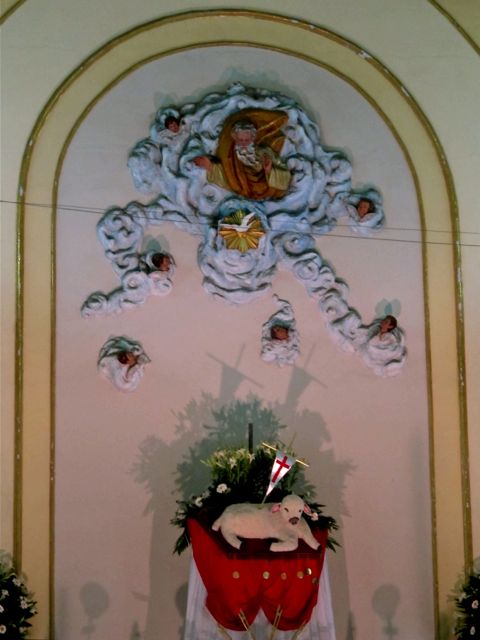
God in a cloud above a lamb on an altar, draped in red cloth.

Strolling across the Álcala to Santo Domingo was much less challenging. The aisle to Santo Domingo’s main altar was blocked and we were routed to a side chapel.  Hurray, we did it — this made seven churches visited!

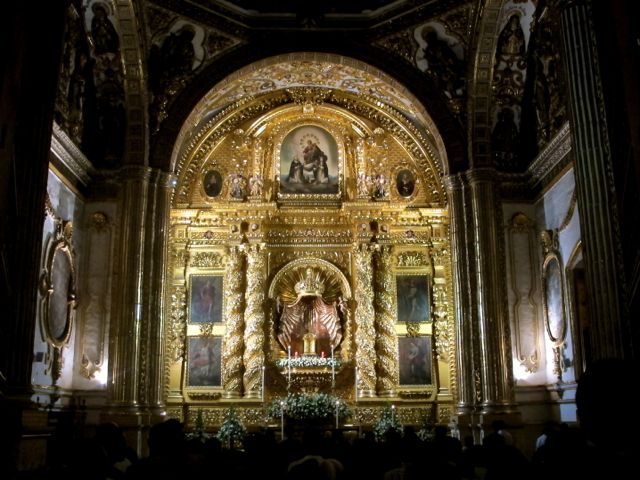
Gold encrusted altar

However, though bleary-eyed (as evidenced by the photo below), we opted for just one more, Carmen Alto.

White bearded man hovering in the clouds above lighted candles

Home beckoned…  and sleep came easily under the watch of the moon, now appropriately encircled by a halo.

Full moon with halo shining from behind clouds

Read Full Post »

Palm Sunday also brought us to the village of Santiago Apóstol and one of my favorite painted churches.

Facade of church at Santiago Apóstol

This beautiful facade was hidden behind a stage, presumably set up for outdoor masses during Semana Santa.

Large crucifix on the stage in front of the church

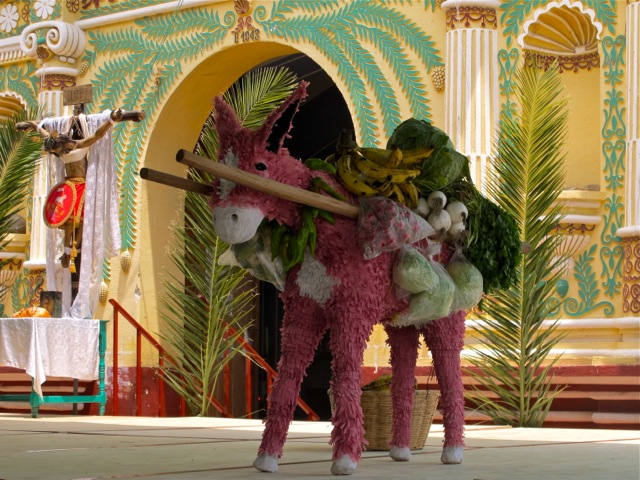
We weren’t the only ones who negotiated the dusty back roads out of San Antonino Castillo Velasco; Señor del Burrito was already there when we arrived.  Apparently, he knew a shortcut!

Señor del Burro on stage in front of church

Inside the empty church (pews had been moved outside), amidst the smoky incense filled haze, the ethereal voices of these women transported us…

7 women sitting in chairs in front of an altar, in the haze of incense.

This wasn’t the first time we had been enchanted in Santiago Apóstol.  During Días de muertos, the entire Panteón is whitewashed and filled with an explosion of red, orange, yellow, and magenta flowers.

Read Full Post »

Yesterday, I spent another magical day with friends in San Antonino Castillo Velasco (about 23 miles/1 hour  from the the city).  It was Domingo de Palmas (Palm Sunday) and San Antonino celebrates in its own unique, warm, and welcoming way.

Townspeople gather in the cemetery to decorate the “Señor del Burrito” with fruit, vegetables, flowers, and everything they sell or grow during the year.  In addition, livestock (goats, chickens, pigs, etc.), more foodstuffs, flowers, etc. are gathered and priced.  The pastor of the parish church arrives to bless the “Lord of the Little Burro” and offerings.  Palm crosses are distributed, all are invited to help carry the offerings to the church, 10-12 men hoist the burro (now laden up to his neck and weighing who knows what!), and a procession to the church commences, lead by a fast-tempo drum beat and punctuated by shouts warning the men carrying “Señor del Burrito” of upcoming topes (speed bumps) and telephone wires, which must be navigated.

This slideshow requires JavaScript.

At the church, “Señor del Burrito” has an honored place in the courtyard and the offerings are gathered and arranged.  Many then attend an hour-long mass inside the church, while others partake in yummy amarillo and pork empanadas, taste mezcal, and browse the wares of the artisan booths.  By the way, at least two of the “maestros” from the new, previously mentioned, book, Grandes Maestros del Arte Popular de Oaxaca were present:  Familia García Mendoza (ceramics)  and Antonina Cornelio, who makes the exquisitely embroidered clothing typical of San Antonino Castillo Velasco (and seen in one or two of the photos above).  Following the mass, the offerings are sold, with the proceeds going to an orphanage in the village.

Muchisimas gracias to the people of San Antonino Castillo Velasco for being so gracious and allowing us to share this special day with them.

Read Full Post »

Yesterday (February 2) was the Christian holy day, Día de la Candelaria (aka, Candlemas, Presentation of Jesus at the Temple, and Feast of the Purification of the Virgin).  In Mexico, tradition calls for families to bring their figurines of niño Dios (baby Jesus) to the church to be blessed.

Niño Dios comes in all sizes — the ones brought to the Church of Guadalupe (north end of Llano Park in Oaxaca) last night, ranged from four inches up to a foot and a half.   All were dressed with care, creativity, and attention to detail.  They were carried and displayed with obvious pride by both young and old and men and women — though, in truth, mostly women.  Several angelic young girls led the procession into the church, while the priest stood in the doorway sprinkling each niño Dios with holy water.

This slideshow requires JavaScript.

As mentioned in my Of kings and babies… post, the other (very yummy) aspect of Candelaria in Mexico is the tamale party that follows — tamales courtesy of the person who found a tiny baby Jesus figurine in their slice of Rosca de Reyes.  To protect all those who partied hardy after the mass, photos will not be posted of the fiesta I attended.  All I will say is the tamales were delicious and wine, mezcal, and hot chocolate flowed freely.  Muchisimas gracias to all who made it happen!

Read Full Post »

On December 18, Oaxaqueños celebrated the feast day of the Queen of Oaxaca, La Santísima Virgen de La Soledad (Virgin of Solitude).  There are several minor variations to her story, but there is no doubt that in the State of Oaxaca, she is venerated in a manner similar to the Virgin of Guadalupe and is carried through the streets of the city during many religious celebrations.
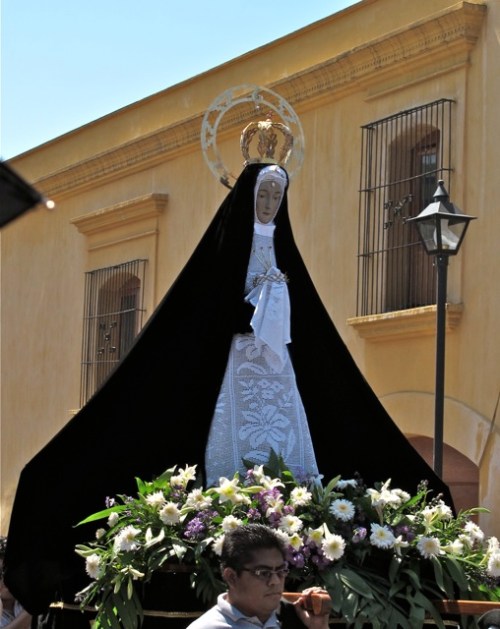
Virgen de La Soledad being carried through the streets with plain purple cape

Virgen de La Soledad in her traveling clothes

According to one legend:  In 1620 a mule train bound for Guatemala camped outside the city of Oaxaca discovered an extra mule which did not belong to anyone in the group. The mule refused to move and when prodded rolled over and died. When the pack it carried was opened, it was found to contain the statue of the Virgin of Soledad. Taking this as a sign from heaven, the inhabitants built first a shrine, later a church and finally the imposing basilica which stands today on the spot where the statue first appeared.

Another story:  a muleteer from Veracruz in route to Guatemala noticed he had one too many mules in his pack upon his arrival in Oaxaca. Outside the San Sebastian hermitage, the mule collapsed under the burden it was carrying. All attempts by the muleteer to get it back on its feet were futile; so to avoid punishment he notified the authorities. When he lifted the load off the mule, it got up and died instantly. The burden was inspected, and they found an image of the Virgin accompanied by Christ on it, along with a sign that said, “The Virgin by the Cross.” Faced with this momentous event, Bishop Bartolome Bohorquez ordered a sanctuary built in honour of the divinity.

Still another legend:  a heavily laden burro of mysterious origin appeared outside of town in 1534, fell to the ground, spilling its load next to a rock (still onsite) containing the beautifully carved Virgin (thought to be carved in Guatemala or the Philippines) and a chapel was built on the spot. However, apparently there was an adobe shrine to the Virgin of Solitude atop Cerro Fortín as early as 1532 — and the rock may have even been moved from the mountain in 1617 to the current site (immediately to the right, along the wall as you enter).

She became the patron of not only the city but the entire state, as well as of the mariners who sailed to and from her ports. She wears a purple velvet cape, and her vestments are encrusted with pearls, 600 diamonds, and she wears a 4-lb gold crown.

Virgin of Solitude with purple cape encrusted with pearls and diamonds

Virgen de La Soledad her glass enclosed home at the Basilica

She resides in the church dedicated to her, the Basílica de Nuestra Señora de la Soledad.  Construction began in 1682, it was designed by Father Fernando Méndez, sanctioned by the Viceroy Tomas Aquino Manrique de la Cerda, and consecrated in 1690 by Bishop Isidro Siraña y Cuenca.  The current baroque style facade was built between 1717-1719 and is unusual because it faces east (Photos are best in the AM).  It was built with the green cantera and a pinkish stone, used in the facade.  If one looks carefully, several ways in which the indigenous masons and carpenters introduced their own “pagan” symbology and pantheon into the wood and stone are in evidence.
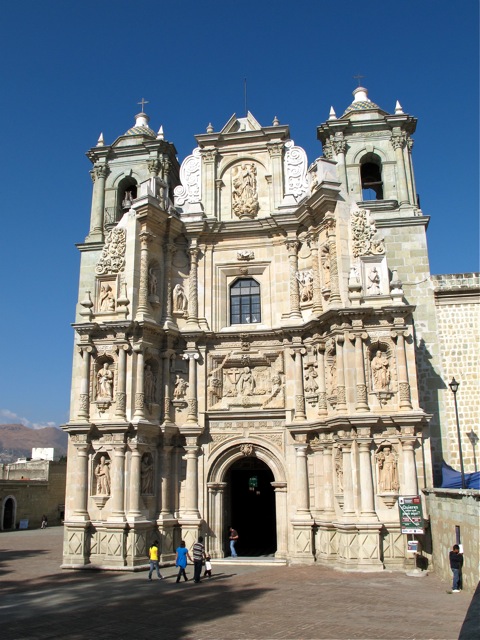
Facade of the Basílica de Nuestra Señora de la Soledad

East facing facade

It was intentionally built with low spires and towers, to better withstand earthquakes.  The atrial courtyard is enclosed and fitted with two simple access portals, one facing south, and the other east. The latter leads to the Socrates Garden (currently undergoing a major renovation) and the Plaza de la Danza.

References:

Read Full Post »

December seems to be quite a month for the Virgins of Oaxaca.

December 8, I was awakened by cohetes (rockets… all bang, no bling) at 4:45 AM.  They continued sporadically until about an hour later, when wildly clanging church bells heralded a non-stop barrage of more cohetes for several minutes… they eventually faded away, but a banda was heard in the distance.

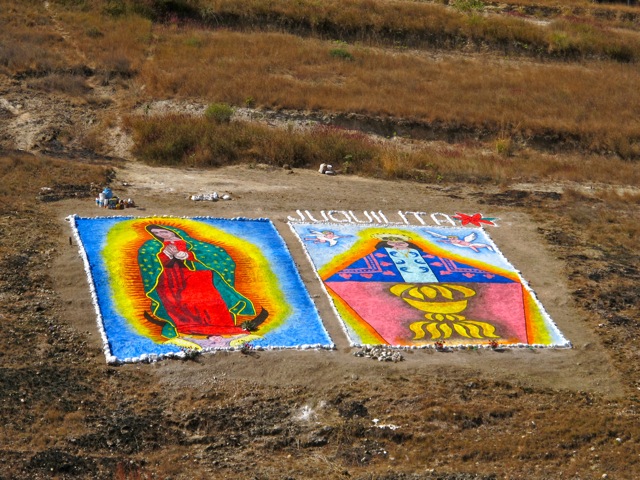
It was the feast day of the Virgin of Juquila (La Virgen de Juquila), one of Oaxaca’s own.  According to legend, in 1633, when a fire burned the small Chatino village of Amialtepec to the ground, a small statue of the Virgin Mary was rescued amidst the ashes. It was a miracle; she was undamaged, save for her light skin color, which was permanently darkened by the smoke… causing her to look more like the Chatino people, who revered her.

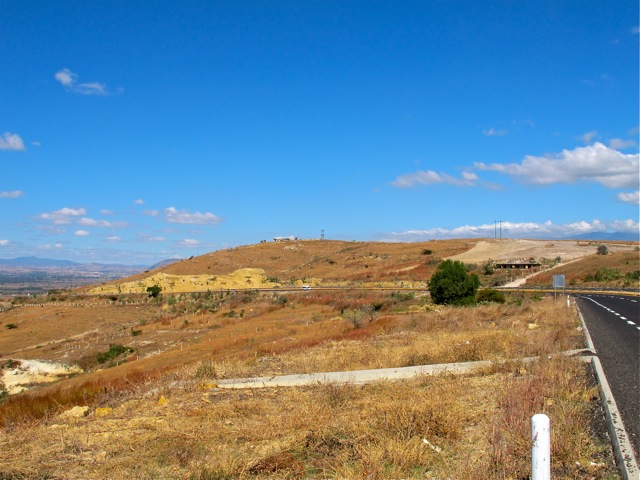
Here she is, in a field alongside La Virgen de Guadalupe, almost at the crest of the new carretera between Oaxaca and San Martín Tilcajete.

Brown fields next to highway at crest of hill

La Virgen de Guadalupe on the left and La Virgen de Juquila on the right.

Sand paintings of the Virgin of Guadalupe and the Virgin of Juquila on a mountainside.

The Virgin of Guadalupe had her day only four days later, on December 12.  La Virgen de Guadalupe is known as the Queen of Mexico and Empress of America, and is the patron saint of México.  Reports estimate that 5.8 million of the faithful made the pilgrimage this year to Basilica of Our Lady of Guadalupe in Mexico City to honor the dark-skinned virgin who appeared to Indian peasant Juan Diego on Dec. 12, 1531 near what is now Mexico City.

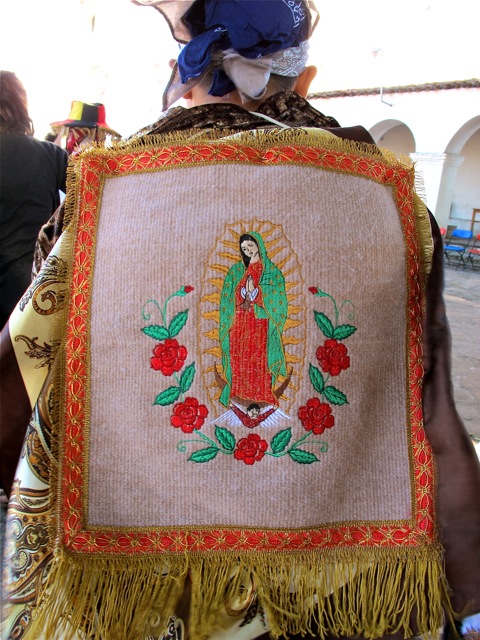
In Oaxaca, worshipers flocked to the Chapel of Guadalupe at the north end of Llano Park and a carnival filled the park for all the little Juan Diegos and girls in period costume to be entertained.  However, I headed out to Teotitlán del Valle to see this Zapotec village honor La Virgen de Guadalupe with their traditional Danza de la Pluma.  Several of the Danzantes (dancers) were wearing capes woven and embroidered especially for this day…

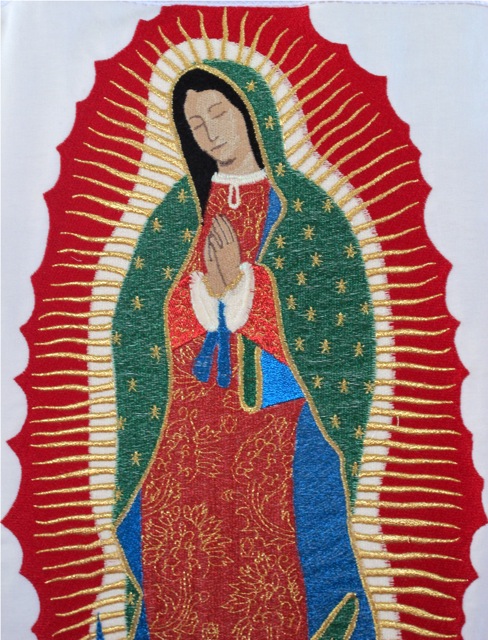
Virgin of Guadalupe embroidered on the back of the cape of a Danzante.

The weaving and embroidery were spectacular!

Closeup of the Virgin of Guadalupe on the back of Moctezuma's cape.

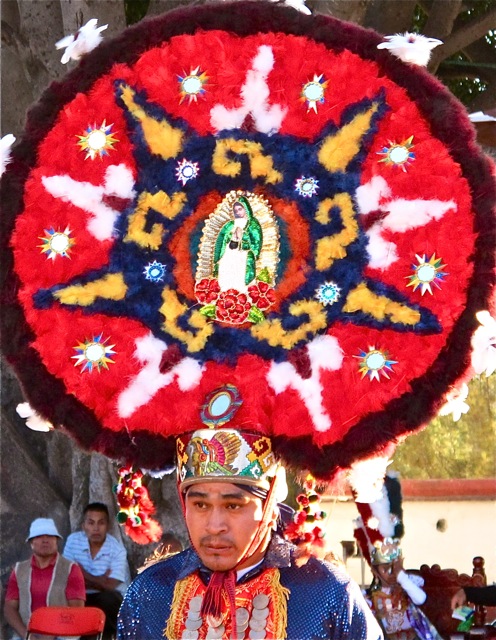
And, at least one of the Danzantes had an image of the Virgin of Guadalupe in the middle of his corona (feathered headdress).

Feathered headdress with image of the Virgin of Guadalupe  in the center.

Malinche and Doña Marina also had similar images on the skirts of their dresses.  To see those and several other photos of the dancers, you should take a look at what Chris has posted at, Oaxaca-The Year After.

Next on the “Virgin” calendar is December 18, the feast day of La Virgen de la Soledad (the Virgin of Solitude), Oaxaca’s patron saint.  Stay tuned…

Read Full Post »

In August 2011, Vive Oaxaca launched a campaign to showcase the best of the state through a series of video shorts.  Two have already been released online:

Esto es Zaachila

and, Esto es Guelaguetza

I’m looking forward to Monday night’s online release of, Esto es Oaxaca de Juárez.  I guess you know what my Tuesday morning blog post will be!

Read Full Post »

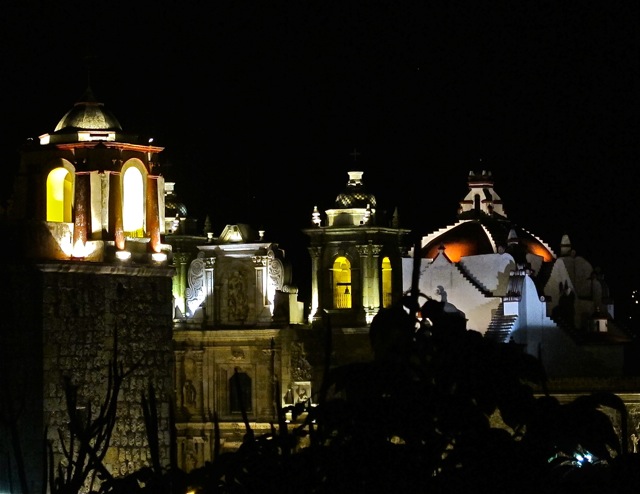
Iglesia de San José and Basílica de la Soledad from my terrace last night…

Bell tower of Church of San José and bell tower, facade, and dome of Basílica de la Soledad

Ahhh… another reason I love it here.

Read Full Post »

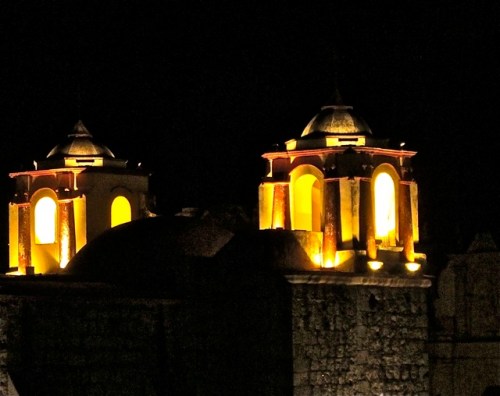
Apparently, the end result of much of the work noted in my Día de la Raza post is the difference between day…

Workmen atop a cupola of Iglesia de San José against blue sky.

and night…

Lighted cupolas of Iglesia de San José against black night sky.

As fellow blogger Chris revealed, the word around town is… Let there be light!

Read Full Post »
6 AM this morning, I awoke to fireworks and riotously clanging church bells coming from the cathedral, calling my attention to the October 23rd annual fiesta of Señor del Rayo.  Like Guelaguetza, Noche de Rabanós (Night of the Radishes), and Día de la Samaritana (Good Samaritan Day), it is an “only in Oaxaca” celebration.

This image of Christ on the Cross was brought to Oaxaca during the 16th century.  It was placed in the temple of San Juan de Dios, a church which had adobe walls and a straw (or possibly wood) roof.  Legend has it that lightning struck the church and everything was destroyed, save for this statue.  Un milagro!

The statue became known as Señor del Rayo (Lord of Lightning), eventually was moved to his own chapel in the newly built cathedral, and has been much venerated ever since.  However, on October 21, in anticipation of his special day, the statue is moved to the main altar of the cathedral, the cathedral is filled with lilies (the scent “breathtaking”), and the faithful flock to pray before Señor del Rayo.

This slideshow requires JavaScript.

Flowers are daily sprayed with water, to keep them fresh… BUT, as the signs say, please do not uproot and carry them away.

Read Full Post »
Another brilliant blue sky day…

Purple, white, and red flag flying atop Santo Domingo

But where did that purple, white, and red flag on top of Santo Domingo de Guzmán come from???

Read Full Post »
Sunday, in the Plazuela de Carmen Alto, celebrations honoring the Christ of Esquipulas (Black Christ) were in full swing. I was awakened at 6 AM to the sound of fuegos artificiales (fireworks) and eventually drifted off to sleep after 11:30 PM, as fireworks’ explosions resumed.

Festivities lasted all day and I couldn’t resist heading up to the church courtyard to see what was happening.

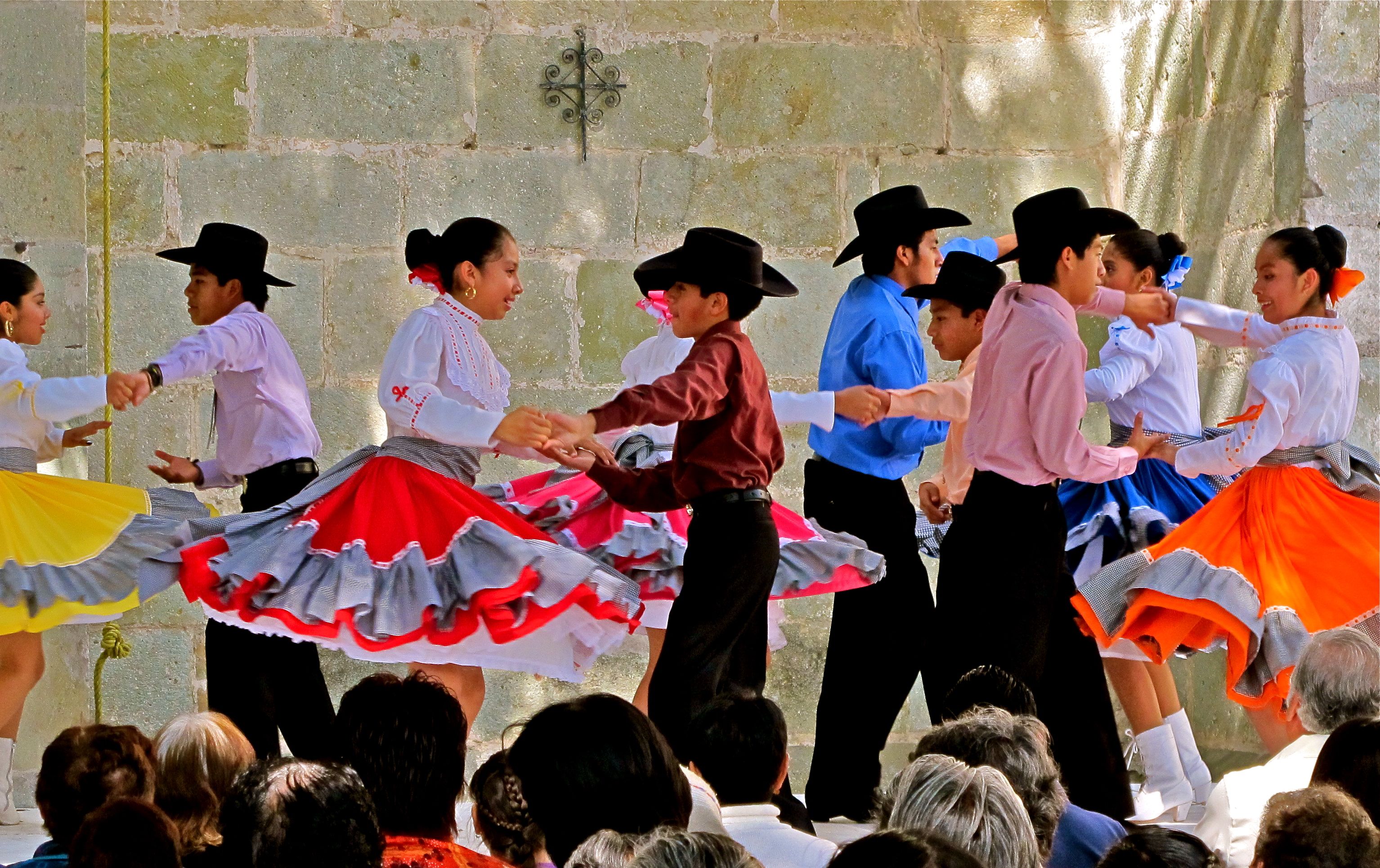
When I arrived, seats in the shade were filled and a small crowd was gathered behind a barricade; a castillo, laying on its side in three parts, was being constructed; a teenage Oaxacan brass band, with the requisite tuba towering over the other instruments and their players, was waiting to play; and young dancers were performing with a combination of earnestness and joy.

Skirts flying

Dance always seems to be an integral part of celebrations both secular and religious, and, in reflecting on my love for this, at times, perplexing and contradictory place, dance is one of the things that resonates the most.

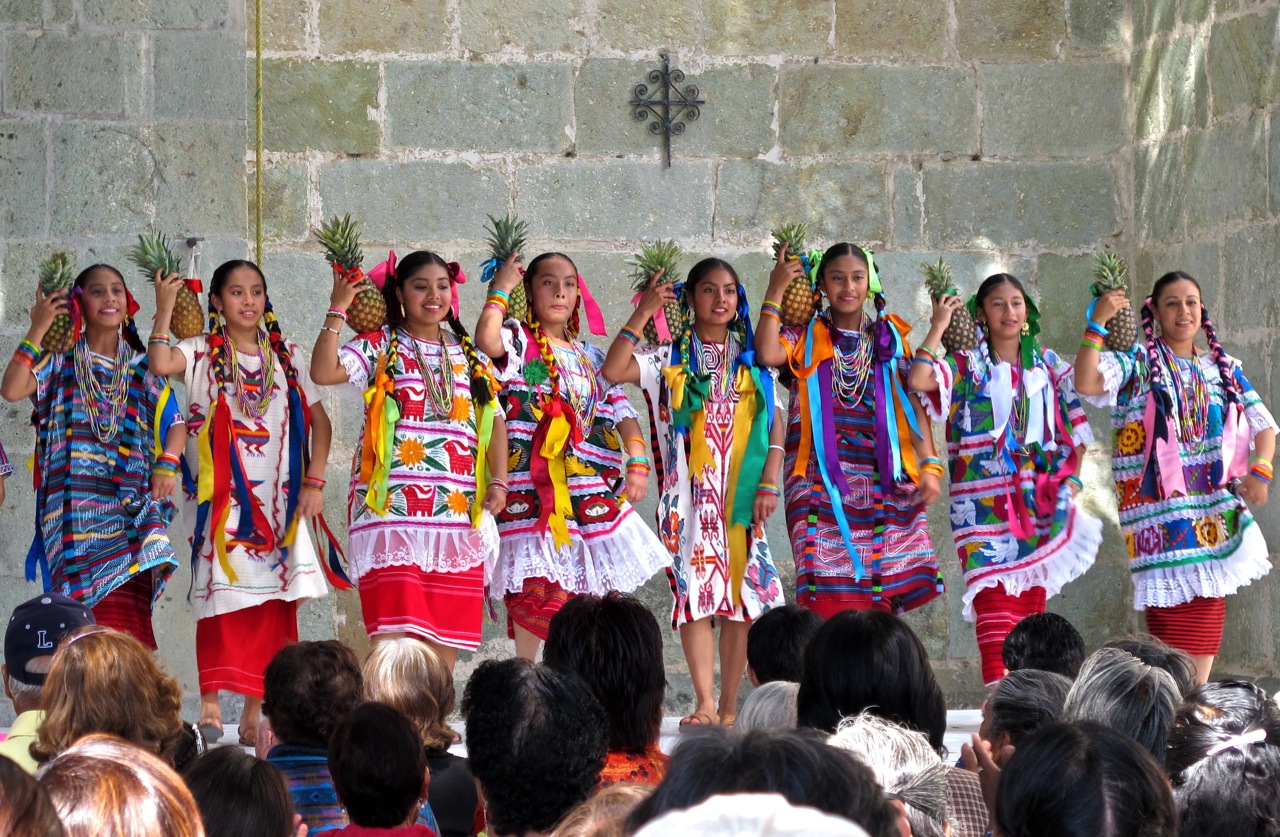
Piña Dancers

A small stage set up under the trees; dancers, their handmade and unique costumes; energetic music; choreographed steps passed down through generations spirited me back to my childhood…

Mom and me

Let’s dance!

Read Full Post »
« Newer Posts